Up to 37% in savings when you subscribe to hi-fi+
hifi-logo-footer

Begin typing your search above and press return to search. Press Esc to cancel.

Vinius Audio TVC-05

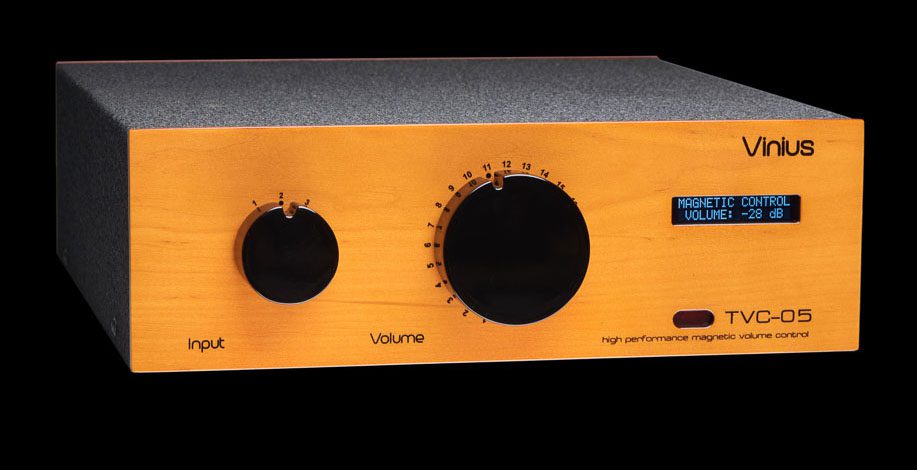
If there is ever an audiophile medal of honour, owners of passive preamps should be the first recipients. The Vinius Audio TVC-05 is probably one of the most approachable examples of the breed. However, compared to a modern full-function preamplifier, this Polish-built “high-performance magnetic volume control” has rudimentary functionality, making it great!

You have a choice of TVC-05 in a balanced or single-ended version. One has three XLR inputs and one output, and the other has RCAs. There’s a motorised magnetic induction-controlled volume control, and the circuit has a transformer wired to Vinius’ patented design. There are no electronic components in the basic TVC-05 RCA version. The RCA+Remote and the XLR versions have a remote volume driven by an Apple handset. This also has the briefest of displays. There’s an even more hair-shirt version of the TVC-05 called the TVC-05 Special Edition. This one even looks at input switching as a form of musical heresy. Just one RCA input, one output and a volume knob. Set against that, the ‘standard’ TVC-05 positively bristles with extra features.

Popularity contest

Passive preamplifiers have been an alternative for the audio hardcore for decades. However, in the early days, they were beset with problems, the biggest of which was high-frequency roll-off. Because there are no gain stages, the connection between a source and an amp can be as simple as a couple of lengths of wire separated by a potentiometer. The moment you construct something like that, you are at the mercy of the length and construction of the wire—mostly length.

Something too long or too capacitive, and the high frequencies roll off fast. In the worst cases, “too long” could mean less than a few inches. Combine this with even minor impedance mismatches between the components, and it becomes nightmare fuel. The passive preamp was always at the core of the most immediate, unforced, and effortless-sounding systems, but this meant next to nothing if the system was too undynamic and rolled off in the treble.

Fortunately, the early days of ‘pot in a box’ gave rise to more sophisticated transformer-coupled and passive magnetic preamplifiers. While these still don’t have the gain of an active line stage, they have the transparency of passive designs without the deal-breaking high-frequency roll-off. The TVC-05 continues that trend. However, the absence of gain (and additional features like a balance control or an array of lights) means they still represent a highly specialised choice and have never broken significant ground in places like the US.

Care and feeding

A passive in any guise is still not as easy to put into a system as active components. You still need to be careful in the choice of components and cables. It’s a popular partner with a tube power amplifier, partly because the input sensitivity and impedance of many all-valve power amp designs are a good match for the output of a passive design. Ground lift is also an important consideration in XLR versions. The TVC-05 has a ground lift switch on the rear panel. Try it… it can make your system even quieter.

I don’t know why, but there seems to be a rule amongst passive preamp makers. The better the product, the further it gets from modern aesthetics. In fairness, I like the wooden finish to the front and rear and the big shiny black knobs, but I’m not sure others will find the 1970s retro look as appealing. However, the finish is rich and deep in the flesh and doesn’t look quite so mid-century G-Plan.

Matryoshka doll

Given its relative paucity of functions, it’s a deceptively heavy, well-made product packed like a Russian Matryoshka doll. The TVC-05 is tightly packed in a bag, in a box that also houses the Apple remote and the power supply, which is packed in a box within a box. All of which means it could survive a few miles in a courier’s van unscathed. Impressive… but a flight case would be even better!

That big black central knob has 24 click stops, each with a 2dB step. These steps relate to the EI 105 transformers wound to Vinius own patented design. If we started listing the components chosen or selected by Vinius because of sonic performance, this review would have to list every part in the TVC-05. Small-brand artisan obsession drives its build quality. Thanks to its chassis, it’s galvanically isolated. Given that hum from ground loops is a real concern on any passive preamp or volume control, the more the TVC-05’s internal organs are shielded from the outside world, the better. Despite this, I would still hesitate to stack the Vinius directly on the top plate of your source (or especially the power amplifier).

It’s a long story

As described above, the days of very short interconnects to prevent signal loss are gone. However, I would still avoid using cables that are more than a metre long. This might also explain why passive preamps never ‘broke’ the US market, as many American audiophiles prefer a system layout that physically sites the sources and preamps along the side wall (near the listening position) and the power amps close to the loudspeakers. As this often requires up to 5m cables, even an XLR-equipped volume control like the TVC-05 might struggle to keep the treble in place.
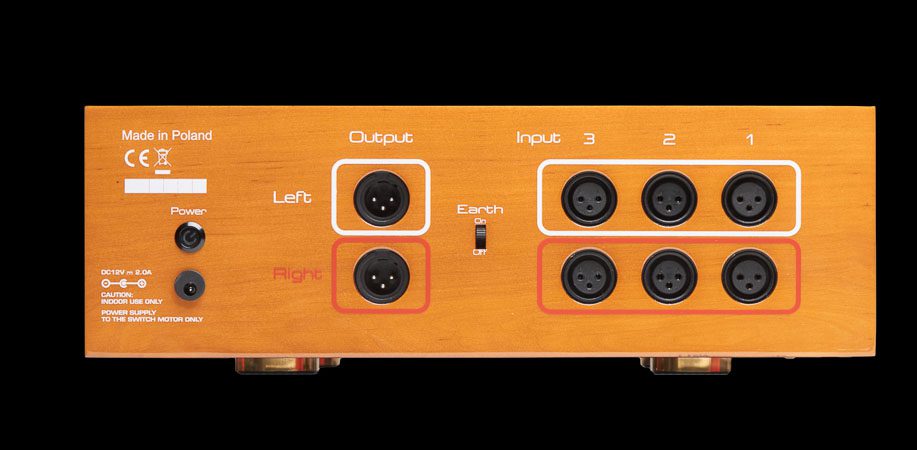
Vinius Audio TVC-05

Fortunately, that kind of layout isn’t so popular elsewhere. People either have the entire system between the loudspeakers or have it away from them and rely on longer lengths of loudspeaker cable. Such systems can highlight what the TVC-05 does so well. And that can be summed up in a single word: clarity.

The Vinius Audio TVC-05 is so clear and transparent that – were it not for the volume attenuation – you could be forgiven for thinking you had forgotten to plug it in. To some, it’s your source… attenuated. To others, it’s your power amplifier… attenuated. Either way, when you hear how much the gain stages of even a good preamp ruin the relationship between source and amplifier, you can’t help but be impressed by the TVC-05. That’s the big point of the TVC-05; other preamps – even good ones – sound like they are introducing their own characteristics to the overall sound. The TVC-05 never does that. Ever.

I can’t overstress that last part. Even by the standards of other passive preamplifiers and transformer-coupled devices, the Vinius Audio TVC-05 introduces so little of its own character as to make it simply the most honest part of your system.

Keep it clear

The TVC-05 also brings clarity to the party! That clarity means the Vinius Audio TVC-05’s sonic performance hangs on to that of the devices in front and after it, but its sonic invisibility means that’s a good thing.

Pick whatever musical trigger yanks your audiophile chain. It might be detail, soundstaging, vocal clarity and articulation, dynamic range, microdynamics, bass depth and/or resolution, or treble detail… you name it, the TVC-05 does it and does it exceptionally well.

I find myself drawn to products that cope well with changes in scale as you move through recordings. A small jazz venue differs from La Scala, so why do many systems try to impose a single sense of scale? As you spend time with the TVC-05, you quickly learn that the main protagonist in the scale-compromising game is the preamp, and when faced with just the best volume control between source and amp, those scaling concerns go away fast.

Don’t go changing

The best part of the TVC-05 is how it doesn’t change the sound one iota as the volume rises or falls. OK, at very low levels, the absence of gain means you are digging deep into the source. The non-linearities of a power amplifier input at low levels will inevitably begin to emerge. Also, at very low levels, 2dB steps are more noticeable than regular listening levels; many gain stages stagger the step sizes to accommodate very low or very high listening levels. However, I’d take the more uniform 2dB steps if it means you get the sheer honesty of the TVC-05. And even here, the TVC-05 changes neither tone, scale, nor soundstage.

I am blown away by the absence of performance demonstrated by the Vinius Audio TVC-05. It does precisely what a good preamplifier should do: take the sound of a source and give it the right volume level with nothing getting in the way of that goal. Basically, it’s a volume control in a box, and that’s so rare. If you see that as ‘minimalism done right’ instead of a ‘hair-shirted gain-remover’, the Vinius Audio TVC-05 is not only for you but might be the best of the breed.

Technical specifications

  • TVC-05 with passive volume adjustment
  • A balanced or single-ended version with a remote control
  • Galvanic chassis ground separation
  • EI 105 transformers coiled following Vinius patent
  • Directivity-oriented enclosure
  • Motorized volume switch 24-level volume adjustment (2dB steps)
  • Input 3× XLR pair (XLR version), 3× RCA pair (RCA version), 1× RCA pair (Special Edition)
  • Output 1× XLR pair (XLR version), 1× RCA pair (RCA version, Special Edition version)
  • Maximum input signal 3,5V (XLR), 2.5V (RCA)
  • Product dimensions width 360mm, depth 400mm, height 125mm
  • Optimal directivity of the elements designed for minimizing sound quality loss
  • Weight 15kg
  • Price £8,500

Manufacturer

Vinius Audio

www.viniusaudio.pl

UK distributor Fi Audio

www.fiaudio.co.uk

+44(0)1563 574185
Back to Reviews

finite elemente pagode Signature mkII

finite elemente is the company that taught the European high-end community that equipment support can make a difference. Its pagode and pagode Signature ranges have stood the test of time. This is why you rarely see finite elemente equipment on the second-hand market. The new finite elemente pagode Signature mkII will not change that!

The recent rationalisation of the finite elemente range—and the return of Luis Fernandes as the brand’s head—has meant that many of the ‘nursery slopes’ products have disappeared. The company now focuses on its Cera products and just two pagode ranges. These are the top-end mkII Carbon Edition, Edition and Master Reference, and the Signature mkII.

This is likely a good idea; these intricate stands cannot easily scale down to ‘affordable’. Meanwhile, the lower-level finite elemente stands often struggled to compete with more mass-produced designs. By thinning the line, finite elemente can concentrate on the good stuff again. And Signature mkII is a drop of ‘the good stuff’.

Taking a new stand

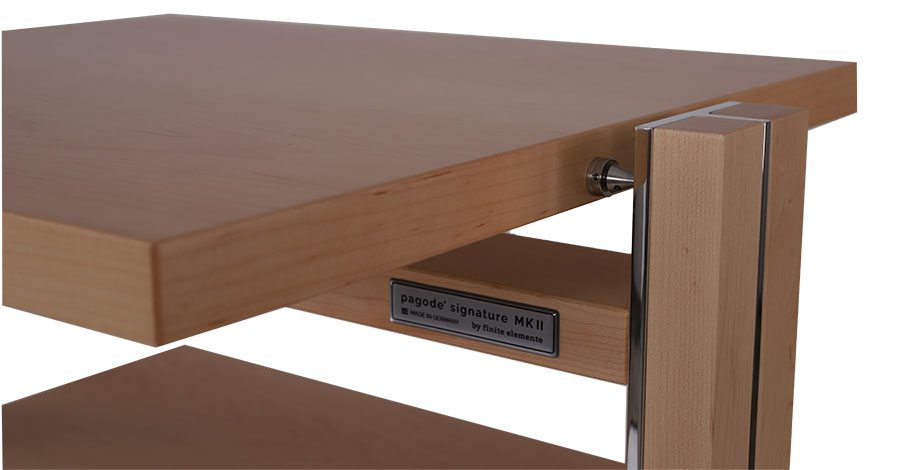
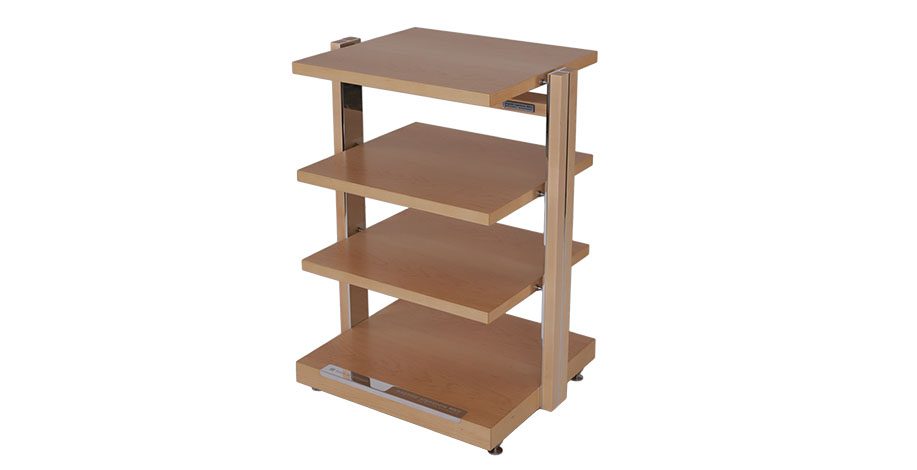
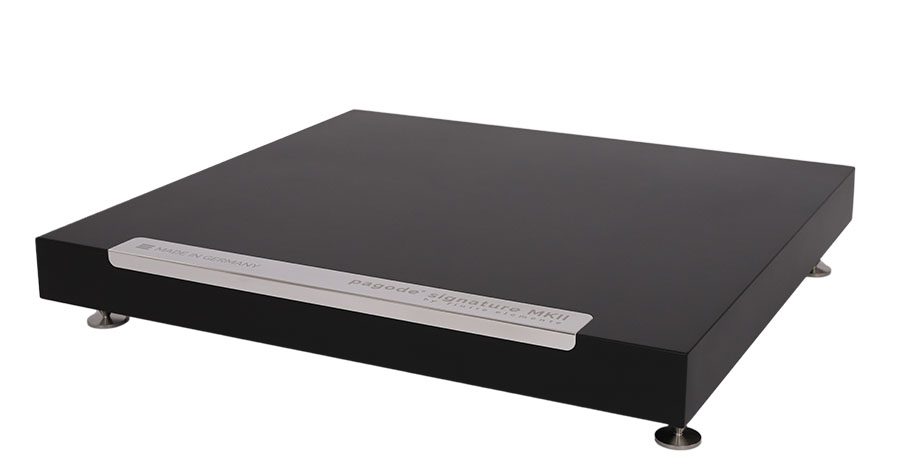
The finite elemente pagode Signature mkII is the latest product from Luis Fernandes. It uses much of what went into the Edition mkII. However, it does without the Resonator Technology featured in the more elaborate cost-no-object stands. However, pagode Signature mkII uses the new HCCT lightweight honeycomb core platforms and shelves. These are internally braced and replace the solid wood platforms of the original Signature. This uses a double honeycomb platform for the amplifier stand or the base of the multi-tier stands, with a single honeycomb platform used elsewhere. These platforms are clamped in place from the two upright arms (and crossbar) of the equipment stand; this is called ‘sidespike technology’ in finite elemente speak and is a very effective way of channelling vibrational energy at 90° to any possible means of transfer into or out from a product.

finite elemente pagode Signature mkII E14 four-tier rack

As with the mkII version of pagode Edition, the overall lines of the equipment support system have been cleaned up from the previous version. That is outstanding, as the lines of the original Signature were already good-looking. The previous version had platforms sitting in what looked like picture frames. It looks sufficiently similar to be able to sit next to the originals without drawing attention to itself, but also sufficiently different to form the start of a new relationship with finite elemente from scratch.

My new relationship starts with the E14 four-tier stand and the E21 amplifier platform. Both are easy to build, relatively quick to install and reassuringly heavy without being so heavy that light cannot escape its clutches.

The relaxed approach

In moving to mkII, finite elemente had to improve something that doesn’t intrinsically need improving. Fortunately, the move has only improved the stand and platform. But the reason why people didn’t want pagode Signature to change is it has one of the most graceful sounds you can get from a stand. And that is improved in the mkII version. It brings out the lithe sound of anything that rests on the stand. It’s almost a blood-pressure-reducing sound, although I think that’s asking a bit much for an equipment stand unless it’s made of beta blockers.

finite elemente pagode Signature mkII E21 platform

Also, where pagode Edition began to create more of a performance gap between Edition and Signature, the pagode Signature mkII has raised its game. Like the mkII Edition, there’s a improved transient response, although this is not in the same league as the Carbon Edition, finite elemente has clearly learned a few tricks in developing that platform. There is an improved dynamic range, a lower noise floor and a more actively neutral tonal balance. Of course, you need high-grade electronics to hear what the pagode Signature mkII does well. On the other hand, no one contemplating using a stand costing just shy of £5,500 will be using it with an entry-level amplifier.

Calming Influence

Used in the right context, pagode Signature mkII has a calming influence on good audio. Not that such audio is in any way ‘excitable,’ but it manages to ‘chill out’ audio components all the same. It brings a much-needed sense of calm and order to this unruly world, and the best audio is all the better for its degree of naturalness.

I think the pagode Signature mkII has significantly improved over its predecessor. It’s a step change, but there probably won’t be a sudden surge in second-hand finite elemente. If you’ve got the existing pagode Signature, the new mkII is better… and better in almost every way. It looks sharper, builds up slightly easier and is more detailed, tonally balanced, dynamic and ‘relaxed-focused’ than its predecessor. But the pagode Signature sets a very high standard that people will (mistakenly) think there isn’t much more to gain by upgrading. They are wrong. However, ‘upgrade your equipment support’ is not high on the audiophile list of priorities. This is in part because it usually means removing and replacing many heavy boxes.

This is a shame because many systems with pagode Signature could benefit from pagode Signature mkII.

Effortless neutrality

I like the new look of finite elemente pagode Signature mkII. Its clean lines, reassuring build quality, and the sort of effortless neutrality and focus it brings to high-end equipment make it one of the obvious choices for top-notch audio systems. Aside from the fun of lifting hundreds of kilos of audio electronics out of one rack and into another, there are no downsides. It also has this remarkable calming ability that can chill out all bar the most teeth-grinding of angry individuals. Your music sounds like it always did, but just a little more calm and relaxed when played on the pagode Signature mkII. And yet, if you think that leads to soporific and saccharine sounds, you are very much mistaken.

Price and contact details

finite elemente Signature Mk II E14 stand in any wood finish with anodised side pillars, £5,490. Optional high polished side pillars and logo insert, £550.

finite elemente Signature Mk II E21 support in any wood finished with anodised metal insert (Q or L version), £1,490. Optional high polished logo insert, £160

Manufacturer

finite elemente GmbH

www.finite-elemente.eu

UK distributor

Audiofreaks

www.audiofreaks.co.uk

+44(0)20 8948 4153

Read more from finite elemente

Back to Reviews

Pro-Ject X2 B/S3 B

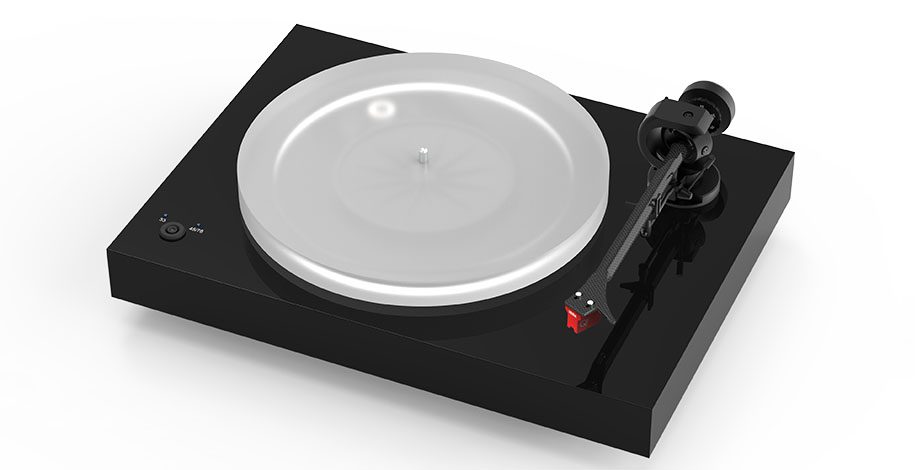
It’s long been known among record player cognoscenti that pick-up cartridges have an intrinsically balanced output. They have separate left and right grounds, blue for the left and green for the right. Yet it’s only in the more esoteric systems that anyone takes advantage of the potential noise reduction this promises. Pro-Ject is keen to change this with a range of turntables and phono stages equipped to make a genuine balanced connection possible. The Pro-Ject X2 B turntable/S3B phono stage is a prime example of this change.

This realisation occurred due to the company’s purchase of Musical Fidelity a few years ago. This move brought existing Musical Fidelity owners into contact with the engineers at Pro-Ject. Balanced ancillaries to suit components with the DIN connections was a frequent request. They realised it would be possible to bring balanced connections to a much wider audience by offering an appropriate input on their phono stages.

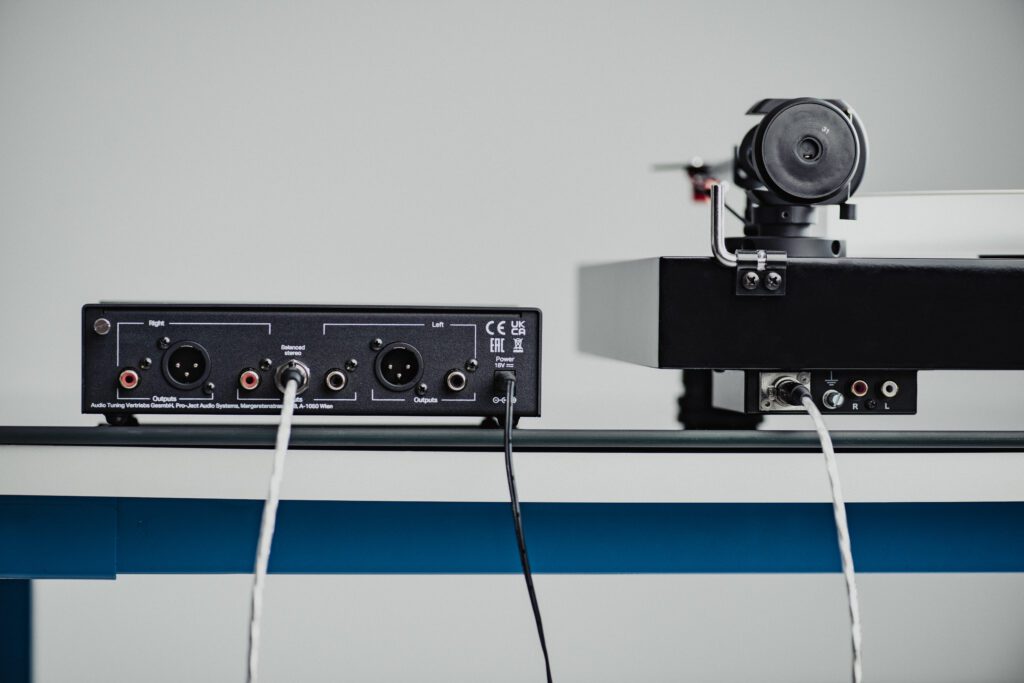
Normally, this would involve a pair of XLR sockets. However, such things are expensive and bulky in relation to the compact nature of Pro-Ject’s Box range of electronics. Pro-Ject instead chose the five-pin mini-XLR for the True Balanced Connection. The matching cable can carry separate signal and ground connections for the signal along with an earth for the tonearm. It replaces two RCA cables and an earth wire in one fell swoop. Only Pro-Ject turntables with a B suffix are equipped with a mini-XLR output. The company makes an adaptor cable with RCAs on one end and a mini-XLR on the other. If you buy the Pro-Ject X2 B turntable/S3 B phono stage with this connection on both, you get the mini-XLR cable gratis.

Anyone for a shellac revival?

A 50mm thick machined MDF plinth makes the X2 B a chunky turntable. It sits on three metal feet and has a 30mm thick acrylic platter. The latter is quite a luxury at this price point, and what’s more, Pro-Ject has had the good grace to supply a felt mat with it, which is always a good idea. Unusually for the brand, the X2 B has a sub-platter, so the motor and belt are not visible; most other Pro-Jects at this price have a perimeter drive belt.

Pro_Ject X2-B

The belt for 33 and 45rpm is flat, but a second round belt is supplied with a different pulley to get the platter up to 78rpm for the shellac enthusiasts out there. Speed switching is electronic with a button on top of the plinth, on/off for the motor is underneath the plinth in what has become a popular style. Power is provided by a 15V switched mode wall-wart supply, which means there is potential for an upgrade if you want it.

The nine-inch tonearm is made from aluminium and carbon fibre. It offers adjustment for VTA with a collet fixing in the base. Pro-Ject suggests that azimuth can be adjusted, but you’ll need to review the manual to see how it’s done. The bearing is a gimbal type, and downforce adjustment is achieved by turning the damped counterweight on a stub at the back. Given that this turntable is supplied with a specific cartridge, I was surprised that the counterweight ended up quite as far back as it did when the requisite 2.3g downforce was applied. As a rule, it’s best to keep the high mass of a counterweight as close to the bearing as possible so that the cantilever doesn’t have to counteract too great a force from the momentum of the weight.

Balanced connections

The cartridge supplied and fitted is an Ortofon Quintet Red moving coil. Apparently, you can use balanced connections with moving magnets. The Quintet Red is entry-level at £319 and has an ABS and aluminium body with an elliptical tip on the end of its cantilever. It’s nothing fancy but is clearly capable of decent results if this record player is any indication. The only unusual thing about the Quintet Red is that it likes low impedance loading, and the spec suggests 20 Ohms or more is suitable for its seven-ohm internal impedance characteristic.

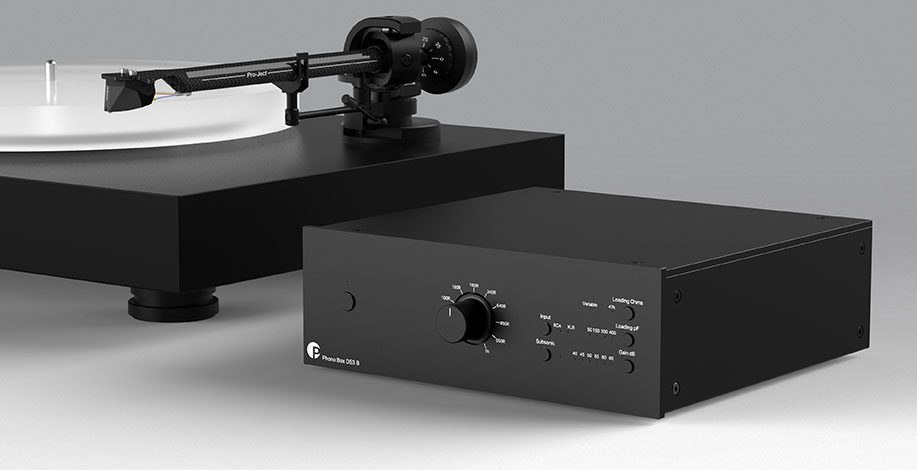
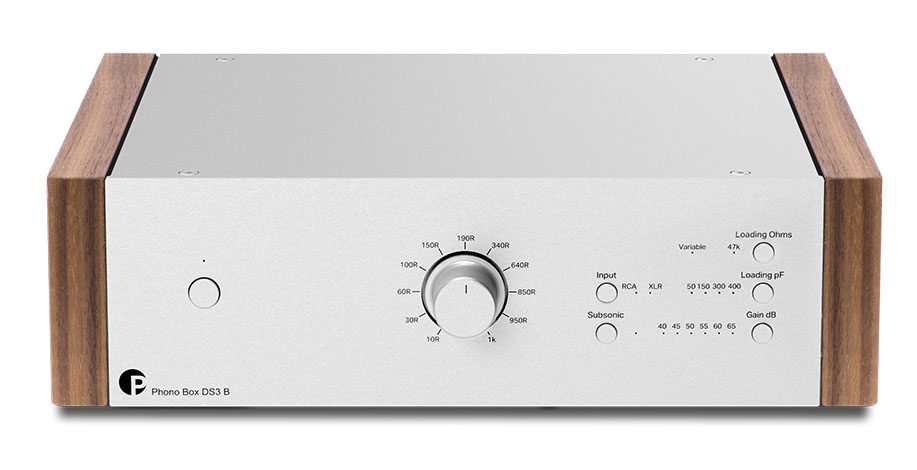
Pro-Ject Phono Box DS3 B

The S3 B Phono Box is a rather attractive compact unit for its asking price, I particularly like the pin hole LEDs that indicate input, gain and loading. There is a good array for each with a step-less 10 to 47k Ohm impedance range and a 40 to 65dB gain range. It could accommodate a wider range of cartridges than the enthusiast at this end of the market is likely to throw at it. Connections extend to balanced in- and outputs alongside the traditional RCA varieties. The outputs are on conventional XLR sockets with short XLR cables included in the box for those with balanced inputs to connect to. An SMPS wall-wart supplies power as per the turntable, but this time, it’s an 18V type.

Thread and weight

Setting up the X2 B involves putting the belt around the motor and sub-platter, fitting the platter, and putting the counterweight on the tonearm. The latter is slightly confused by the calibration of the weight, which, in this case, didn’t entirely agree with the figure given by a downforce scale. There’s a thread and weight anti-skate device to fit on the back of the arm and the mat to put on the platter, but that’s about it.

Using the X2 B is aided by a good lift/lower lever and a magnetic catch on the armrest, which gives you some confidence that it won’t jump off if the arm is accidentally brushed. The results were pretty decent with the supplied RCA cables. This is because it combines an even tonal balance with a good sense of timing; the latter was lacking with older models, and it was enough to undermine my enthusiasm for the brand. Now we have a reasonably priced Pro-Ject that can boogie with the best of them, well, almost.

Good levels of detail

the Pro-Ject X2 B turntable/S3 B phono stage package delivers good levels of detail. It’s adept at picking out the quieter elements in a mix coherently and engagingly. This is apparent in the spaces between instruments and voices. The backgrounds are quiet enough to open up the presentation. This means you can follow individual contributions while enjoying their combined effect. I particularly enjoyed Stevie Wonder’s ‘I Believe (When I Fall in Love It Will Be Forever)’, where the vocals are multiplied with Stevie singing “Lord please answer my prayer” behind the chorus, moving stuff.

Switching from the RCAs to the balanced mini-XLR connection provided a worthwhile uplift. It gives the immediate impression being one of increased volume. However, it soon became clear that this was because the noise level had dropped. It’s an increase in dynamic range rather than volume. This produces a calmer, more precise, and deliberate result. It’s a situation that enhances timing because everything is hanging together more coherently on the Dan Berkson track Unity, which starts to swing. The saxophone is more lyrical and engaged, rising to the next level.

Towers of dub

The deck serves the bass well. The decent platter mass clearly helps to give the sound some weight and impetus. I particularly enjoyed Select Cuts from Blood and Fire, Chapter Two, where the dub ebbed and flowed most cogently. The low bass remains articulate and tuneful regardless of how heavy the beats got, and on Yabby You’s ‘Rally Dub’, they get pretty meaty. These results are achieved with a near entry-level phono stage. I tend to pull out a reference phono stage in these situations to see what the turntable is capable of, but not here.

The overall result from the Pro-Ject X2 B turntable/S3 B phono stage was compelling. It has strong dynamics, high detail levels and excellent timing. The balanced connection is clearly a significant benefit. I wouldn’t work if the turntable and cartridge were not doing the right thing. However, they pull detail off the vinyl in a cohesive and even-handed manner. I’m happy to say that the X2 B does this very effectively. Also, the DS3 B Phono Box does nothing to undermine its efforts. The potential for upgrading the cartridge and power supplies also makes this an appealing proposition for those who enjoy a tweak or two. Even straight out of the box, this combination is a honey!

Technical specifications

X2 B turntable

  • Type Belt-drive turntable with arm & cartridge
  • Rotational Speeds 33⅓ RPM, 45 RPM, 78 RPPM
  • Supplied Tonearm Length 9-inch
  • Supplied Cartridge Ortofon Quintet Red
  • Drive Mechanism Flat rubber belt
  • Speed Control Electronic
  • Platter Type 12-inch acrylic platter with felt mat
  • Platter Weight Not specified
  • Bearing Type Stainless steel
  • Plinth Configuration solid MDF
  • Dimensions (H×W×D) 150 × 460 × 340mm
  • Weight 10kg
  • Price £1,399

Phono Box DS3 B

  • Type Solid-state, MM/MC phono stage with balanced input and 12v triggers
  • Phono inputs One pair single-ended (via RCA jacks), one balanced (via mini-XLR connector)
  • Analogue outputs One pair single-ended (via RCA jacks), one pair balanced (via XLR connectors)
  • Gain 40, 45, 50, 55, 60, 65 dB
  • Input impedance Stepless 10–1000 ohms or fix 47kOhms
  • Input capacitance 50, 150, 300, 400pF
  • Output impedance Not specified
  • Output level Not specified
  • RIAA linearity < 0,25dB/20Hz–20kHz
  • Distortion THD at 1 kHz < 0,001% MM, < 0,004% MC
  • Signal to Noise Ratio MC (60dB) 85dBV, 91dBV – ‚A‘ weighted. MM (40dB) 104dBV, 111dBV – ‚A‘ weighted
  • Dimensions (H×W×D) 72 × 206 × 194mm
  • Weight 480g without PSU
  • Price £529

Manufacturer

Pro-Ject Audio Systems

www.project-audio.com

UK distributor

Henley Audio

www.henleyaudio.co.uk

+44(0)1235 511166

Read more from Pro-Ject

Back to Reviews

ELAC Unveils Debut 3.0 Speaker Lineup: Legendary Sound Meets Elevated Style

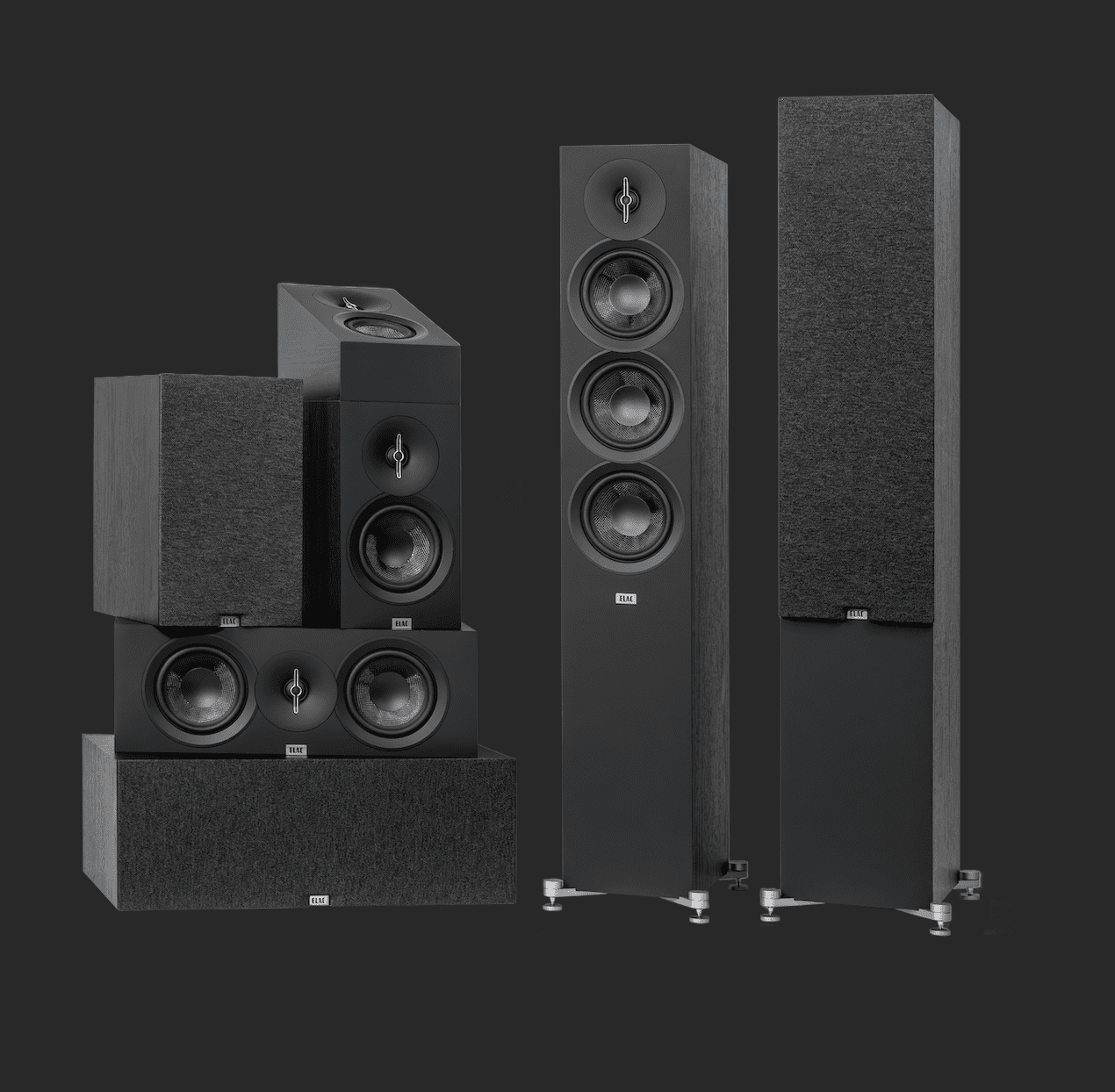
June 6th, 2024 – ELAC, a leading global provider of high-performance speakers and electronics, is thrilled to announce the Debut 3.0 line of home speakers. Building upon the success of previous generations in the Debut Family, this new series incorporates a variety of innovative features, advanced technologies, and refined aesthetics.

The creation of the ELAC Debut 3.0 series is a testament to the company’s commitment to delivering exceptional sound and unmatched style at accessible prices. This new line was designed not just to offer superior audio performance, but to also blend legendary acoustics with sophisticated design seamlessly. The Debut 3.0 series stands as a benchmark in the affordable audio market, highlighting that remarkable style and legendary sound quality can be attainable for all audio enthusiasts.

“Our team has poured their creativity, energy, and dedication into this series, pushing the boundaries of what’s possible in affordable home audio,” said Joe Riggi, President at ELAC.

Key Features of the Debut 3.0 Speakers:

Aluminum Dome Tweeter

The newly developed aluminum dome tweeter in the ELAC Debut 3.0 speakers significantly enhances audio performance. Renowned for its stiffness and lightness, aluminum allows the tweeter to reproduce high frequencies with remarkable clarity and detail. This results in a precise and immersive listening experience, faithfully capturing the delicate nuances in vocals and instruments. Additionally, the tweeter’s integrated aluminum phase plug provides a controlled dispersion pattern, delivering consistent sound quality throughout the listening environment.

Aramid Fiber Woofers

The inclusion of the newly developed aramid fiber woofers in the ELAC Debut 3.0 speakers elevates the overall audio experience. Aramid fiber is exceptionally strong and rigid, making it an ideal material for woofer construction. This enables precise and impactful bass reproduction, with a high stiffness-to-weight ratio ensuring tight and accurate bass response. The result is punchy and well-defined low frequencies with minimal distortion.

Internal Bracing

The internal speaker bracing in the ELAC Debut 3.0 speakers is a critical design feature that enhances audio performance. By reinforcing the speaker cabinet, internal bracing reduces unwanted vibrations that can color and distort sound. This ensures a more accurate reproduction of audio, with sound primarily emitted from the speaker drivers rather than the cabinet itself.

Luxurious Cosmetics with Magnetically Attached Grilles

The ELAC Debut 3.0 series has undergone a significant cosmetic upgrade, enhancing both visual appeal and functional design. The magnetically attached grilles offer a clean, hardware-free look that integrates seamlessly into any home audio setup. This feature allows for quick removal and attachment of the grilles, catering to those who prefer the look of exposed drivers. The overall aesthetic was further refined with a sleek cabinet finish, contributing to the speakers’ modern and elegant appearance.

Easy to Drive

The entire Debut 3.0 lineup requires less power from an amplifier to achieve the same volume level as lower impedance speakers, making them more efficient and compatible with a wider range of amplifiers, including those with lower power ratings. This is particularly advantageous in- home audio setups where space or budget constraints limit the choice of amplification.

The ELAC Debut 3.0 series embodies the perfect fusion of legendary sound and elevated style, setting a new standard for affordable high-performance audio.

For more information about the ELAC Debut 3.0 line of home speakers, please visit www.elac.com.

The Debut 3.0 series will be available in the Fall through our nationwide network of dealers.


ModelDescriptionFinishRetail

Price

DB53-BKDebut 3.0 5-1/4” Bookshelf Speakers (Pair)Black Ash$349.98
DB63-BKDebut 3.0 6-1/2” Bookshelf Speakers (Pair)Black Ash$449.98
DF53-BKDebut 3.0 3-Way Triple 5-1/4” Floorstanding Speaker (Each)Black Ash$449.98
DF63-BKDebut 3.0 3-Way Triple 6-1/2” Floorstanding Speaker (Each)Black Ash$499.98
DC53-BKDebut 3.0 Dual 5-1/4” Center Speaker (Each)Black Ash$299.98
DC63-BKDebut 3.0 Dual 6-1/2” Center Speaker (Each)Black Ash$399.98
DA43-BKDebut 3.0 4” Dolby Atmos Enabled/On-Wall Speaker (Pair)Black Ash$499.98

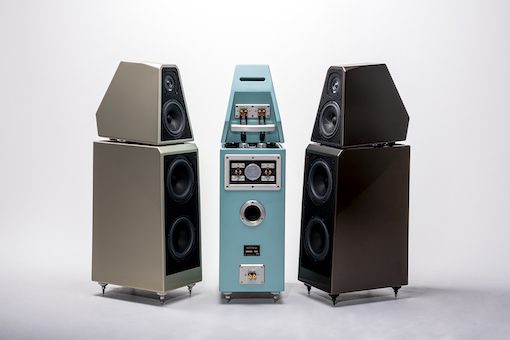
Return of a high-end icon – The WATT/Puppy by Wilson Audio

June 2024 – The WATT/Puppy is not only the most iconic model in the star-studied history of Utah-based high-end speaker specialist Wilson Audio; it also pushed the envelope of upscale loudspeaker design across the industry, becoming the world’s bestselling speaker above $10,000 – and so it remains to this day.

The original concept was sparked by company founder Dave Wilson’s desire to build a portable monitor for his recording projects that would exceed the resolving power of the established models of the time, with a firm focus on maximising performance without costs constraints. Such was the demand for the resulting custom-made WATT (Wilson Audio Tiny Tot) two-way monitor that Wilson decided to create a separate bass enclosure to transform it into a full-range floorstanding loudspeaker system. This bass enclosure was dubbed the Puppy, and thus in 1986 the WATT/Puppy was born.

The WATT/Puppy continued in Wilson Audio’s range for 25 years, undergoing eight extensive revisions until its eventual retirement in 2011. This year, as Wilson Audio celebrates its 50th anniversary, this most iconic of high-end loudspeakers is reborn in entirely remastered form, designed with a singular intention: to create the WATT/Puppy that the late Dave Wilson would have built if he had the resources then that Wilson Audio has now.

The new model, called ‘The WATT/Puppy’, was unveiled at the HIGH END audio show in Munich in May and receives its global launch today (7th June).

Key features

  • Thorough evolution of the original WATT/Puppy’s separate mid/treble (WATT) and bass (Puppy) enclosure design and iconic angular shape
  • Wilson Audio’s proprietary ‘X-material’, ‘S-material’ and ‘V-material’ composites deliver enclosures that are inherently inert
  • Original features retained and enhanced, including the WATT’s rear handle – a nod to its heritage as a portable studio monitor
  • The WATT incorporates Wilson Audio’s 1-inch Convergent Synergy Carbon treble driver and 7-inch AlNiCo QuadraMag midrange driver
  • The Puppy houses two 8-inch bass drivers with homogenous cellulose composite cones
  • Adjustable spikes allow precise time-domain alignment of the WATT module
  • Benefits from Wilson Audio’s relentless pursuit of perfection, right down to its proprietary AudioCapX-WA capacitors
  • Incorporates contemporary Wilson Audio features such as the built-in bubble level and easy-access resistor panel for maintenance and customisation
  • WilsonGloss enclosure colours, grille colours and hardware colours can be specified individually, providing hundreds of colour combinations
  • Rear resistor panel incorporates a limited-edition medallion commemorating Wilson Audio’s 50th anniversary – available exclusively throughout 2024
  • Delivers exceptional sonic detail, dynamic range, transient speed and soundstage focus to ensure an engrossingly realistic musical performance

Price and availability

Lovingly crafted in Provo, Utah and finished in Wilson Audio’s automotive-class paint facility, The WATT/Puppy is now available to order.

The UK RRP for the standard range of WilsonGloss colour options is £41,998 per pair, including VAT and installation. Premium and custom colours are also available.

UK contact for consumers

Absolute Sounds – sole UK distributor of Wilson Audio loudspeakers

W: absolutesounds.com T: 020 8971 3909

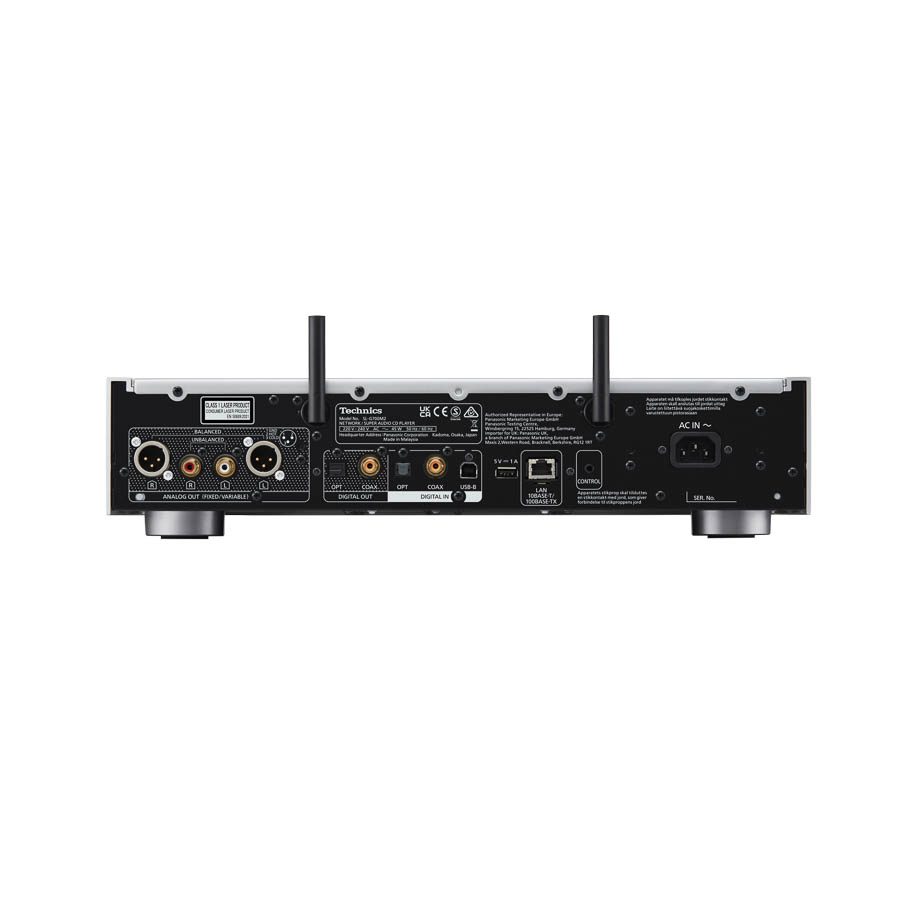
Technics SL-G700 Mk2

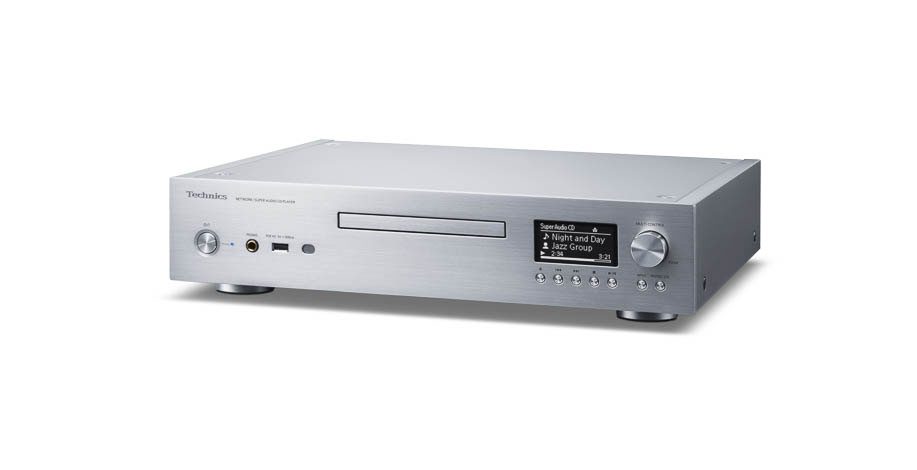
We need to talk about Technics. Technics is a premium audio brand within a huge consumer electronics corporation. It has the resources and wherewithal to make first-rate products in every branch of high-performance audio. And its products—including everything from loudspeakers to amps and digital front-ends—are extremely well-engineered. They are good-sounding devices ideal for high-end domestic use. Yet, in the public domain, Technics is still ‘that DJ turntable company’. Products like the SL-G700 Mk2 are given less consideration than they deserve.

Let’s set the record (no pun intended) straight. If the SL-1200 turntable and its kin had never existed, everyone would praise Technics for its excellent SL-G700 Mk2. They would say how it single-handedly navigates the modern digital audio landscape. OK, so if the SL-1200 had never existed, the chances are that Technics would have stayed on the back burner. But, the fact remains the SL-G700 Mk2 is one of those rare-for-2024 products that can both play CD/SACD discs and is very good at local and online streaming too.

No favours?

Of course, Technics does itself no favours by making the SL-G700 Mk2 look almost identical to its predecessor and making both products look like ordinary—if heavy and well-built—disc spinners. But it’s so much more than that.

Technics SL-G700 Mk2

Once you get past the disc drawer on the front, you begin to see an impressive spec sheet. More accurately, you look for absences on the spec sheet… and keep looking. OK, for the pedantic, it doesn’t support multichannel Blu-ray Audio because it only has two channels. It also doesn’t support DVD-A because it’s not 2002 anymore. It also doesn’t have an HDMI port because it’s a resolutely audio-oriented device. The HDMI pathway still has video content. Everything else (including Chromecast on-board, MQA and MQA disc replay, streaming across Bluetooth or through a network connection, AirPlay 2… the works) is ready to rock.

Strict rules of fairness

In fairness, the original Technics SL-G700 sported many of these functions. And while we are staying under strict ‘in fairness’ rules, some of the motivation for making an SL-G700 Mk2 comes down to the non-availability of chips in the wake of the AKM factory fire. However, Technics adopted the ‘when life gives you lemons, make lemonade’ maxim to its fullest effect here.

Technics switched to an ESS9026PRO digital converter in the SL-G700 Mk2, but it’s used novelly as befits a company that returned to the drawing board with this one. The ESS chip runs in balanced, dual mono mode but also uses a custom-designed filter (which, when speaking to the people at Technics about, my transcription software saw as ‘philtre’, suggesting the SL-G700 Mk2 is filled with medieval love potions). This filter derivates the load-adaptive phase calibration concept used in Technics amplifiers instead of a simple low-pass filter. Technics also discusses a ‘Coherent Processing’ system where a pre-process minimises amplitude and phase deviations of incoming digital signals. This could be classed as a pre-DAC filter or ‘philtre’ as my software says. Perhaps it is a love potion, after all…

Upgrades

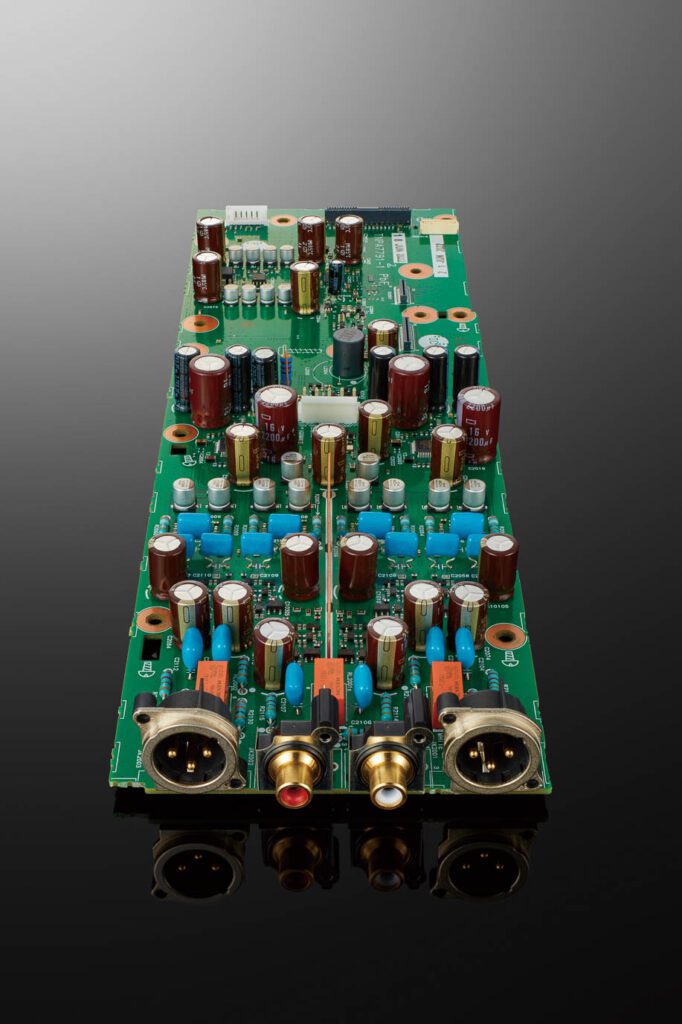
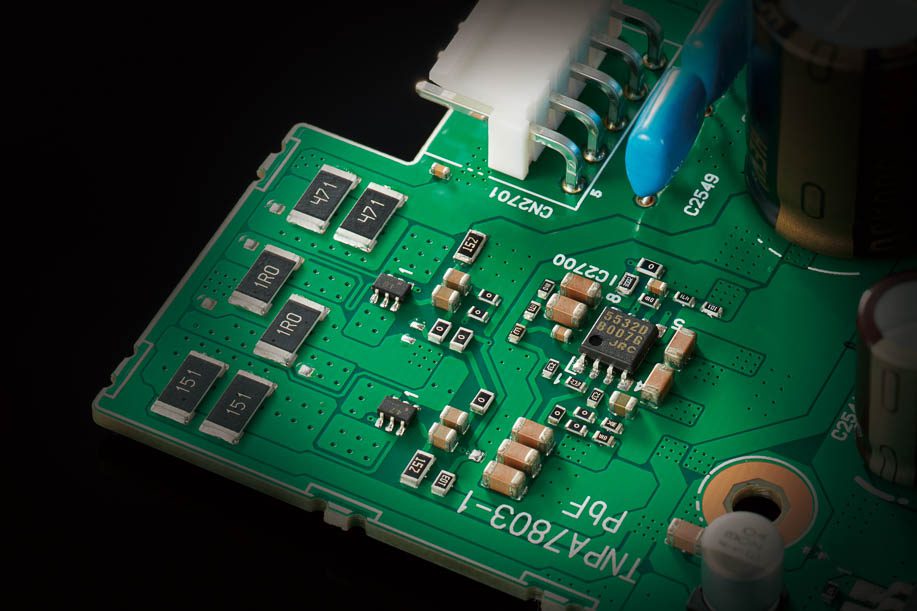
Technics has been clever with the SL-G700 Mk2 in several other ways, all of which pull in aspects of product design from elsewhere in the company to make a better product. For example, it uses a switch-mode power supply from elsewhere in the Technics stable but raises its operating speed from 100kHz to 300kHz, so it has no impact at digital audio frequencies. It also comes with active (phase-inverting) noise cancellation for the same reasons.

Technics SL-G700 Mk2


Some in the audio world break out in hives at the thought of a switch-mode power supply in anything to do with hi-fi. However, Technics has been making these supplies for the longest time and doing so based on a barrage of listening tests. The company claims its switch-mode power supply is at least as good as – and in many respects better than – a well-made analogue linear PSU in terms of noise and accuracy.

That’s hard to test on a finished product, especially if you are not inclined to send back a review sample that looks like it was used in several seasons of Game of Thrones. As such, we’ll rely on our own listening tests… and found it to be a faultless and blameless component within a very good player. And while part of that falls to the discrete output stages, the power supply provides a good deal of that performance.

Chonky Lad

The Technics SL-G700 Mk 2 weighs over 12kg, which puts it somewhere between ‘chonky lad’ and ‘absolute unit’ regarding disc player mass. It’s put on about 100g between the original and Mk2 versions, so, like its exterior design and construction, you would be hard-pressed to tell them apart. As so many makers hide minimal internal changes and sonic improvements with big changes to the chassis, the fact Technics has done the exact opposite bodes well for its performance.

One of the big changes between the SL-G700 and SL-G700 Mk2 is the speed of operation. The original was a little ‘glacial’ in use as if it was constantly multitasking, but in its latest guise, either it has more firepower in the processing department or better code. So, when you press the ‘eject’ button, it thinks for less than half a second before ejecting a disc.

Technics SL-G700 Mk2

Getting the network side up and running requires using Google Home thanks to that Chromecast backbone. Then use the ‘Technics Home Center’ app for iOS or Google. This is a good basic app (especially for phone users), although it lacks the more advanced functionality of some of the best. As so much of how we interact with network players revolves around how the app works, I’d like the Technics to have something with the slick interface and flexibility of AURALiC’s Lightning App. Let’s put this into perspective, though; the app is still good and a major improvement on anything used five years ago, except Sonos.

Sound quality

In a way, there are two reviews in one here, joined in common sound quality. First, the CD and SACD player side. The operation is good, although it requires the remote handset instead of the app. It works with majestic grace, matched in its sound quality, detailed, refined and effortless. When it comes to dynamic range, it’s more about shade and texture than scale and bombast.

It’s not that the SL-G700 Mk2 is undynamic; the SL-G700 Mk2’s a punchy and rhythmic sounding player and with enough energy and drive to pump out the title track from Infected Mushroom’s I’m The Supervisor [YoYo] to make you want to play loud and proud. It also kicks along with a great sense of rhythm. However, where the SL-G700 Mk2 is at its best is when it is playing something where musical elegance is paramount because it brings out that grace and space that is so often the preserve of the high-end.

Technics SL-G700 Mk2

A similar conclusion could be drawn with the streaming side, although, if anything, the streaming section is perhaps still more elegant and refined. I used the same track three ways; ‘Animales Hambrientos’ by Bebe [Cambio de Piel, Warner Spain]. This is useful because I don’t speak Spanish, so I can focus on vocal articulation. Rather than let my brain fill in the blanks in English words. It’s also an exceptional recording. I have it on CD, my home server, and most streaming services. The sound from all three was remarkably close. The disc player was the most expressive and immediate; arguably, the online services came last. The gap was close, though; closer than many can achieve.

Cohesive agility

There’s lots to like about the Technics SL-G700 Mk2’s sound. It tries hard not to have a sound of its own! It’s an agile and cohesive-sounding player. It can also deliver potent bass lines when called for and the deftest touch when required. The problem with describing sound quality in written terms is that it sounds like two different aspects of performance. However, Technics is adept at tying the sound together beautifully.

This is an excellent performer by Technics. It’s the perfect bridge between disc playing and streaming, doing both with equal grace and force. That ‘disc and streaming’ solution usually needs at least two boxes. Those that pull both together usually do so at great cost or by compromising the overall performance. The SL-G700 Mk2 doesn’t compromise!

Technical specifications

  • Type Network Streaming CD/SACD player
  • Disc formats Super Audio CD (2 ch area only), CD, CD-R, CD‑RW
  • Digital inputs Coaxial Digital × 1, Optical Digital × 1, USB-A × 2(Front/Rear), USB-B ×1, LAN 100 Base-TX, 10-Base T
  • Digital outputs Coaxial Digital × 1, Optical Digital × 1
  • Analogue outputs 1× pair RCA unbalanced, 1× pair XLR balanced, supports variable level output
  • Digital audio formats Super Audio CD (Single/Hybrid 2ch)/CD Playback, Network Supports to High-res Digital Audio Files Including MQA, MQA-CD Playback, Chromecast built-in™ Works with Google Assistant, Spotify Connect, Amazon Music, Deezer, TIDAL, Qobuz, Internet Radio, AirPlay 2, Bluetooth (AAC, SBC)
  • WiFi IEEE 802.11 a/b/g/n/ac, 2.4 GHz/5 GHz Band
  • Digital precision PCM, to 32-bit, 384kHz, DSD to 11.2MHz
  • Frequency Response Super Audio CD: 2 Hz to 50 kHz (-3 dB)/CD: 2Hz to 20 kHz (-3 dB)
  • Dynamic Range Super Audio CD, balanced: 110db (IHF-A)/unbalanced: 110db (IHF-A) CD: balanced: 98db (IHF-A)/unbalanced: 98db (IHF-A)
  • Signal/Noise Ratio Super Audio CD: balanced: 121dB/unbalanced: 118dB, CD: balanced: 121dB/unbalanced: 118dB
  • Dimensions (W×H×D) 430 × 98 × 407 mm
  • Weight 12.3kg
  • Price £2,899.99

Manufacturer

Technics

www.technics.com

Tel (UK only): 0333 222 8777

Back to Reviews

Music Feature: Jim Bob

Thanks For Reaching Out, the new solo album by Jim Bob, one half of ‘90s ‘punk Pet Shop Boys’ and indie-rockers, Carter the Unstoppable Sex Machine, is a great collection of anthemic and satirical songs, from angry guitar pop tunes to big ballads, that are influenced by The Teardrop Explodes, Buzzcocks, Dexys Midnight Runners and Slade, and take a swipe at a wide range of subjects, like Vladimir Putin (‘The Day of Reckoning’), the Taliban (‘This Is End Times’), billionaires with their sights set on space travel (‘Billionaire In Space’) and US gun crime (‘goesaroundcomesaround’).

“Most of the songs were very topical when I wrote them – it was almost as if I was reporting on what happened in the news that week. It’s my Have I Got News For You album,” he says, laughing.

Jim Bob is talking to hi-fi+ over Zoom, shortly after the coronation of King Charles III. Funnily enough, there’s a song on the album, which is the third in a trilogy, called ‘Prince of Wales’, but it’s named after a pub where Jim Bob and a protagonist are drinking large amounts of tequila. So, how does he feel about the monarchy and the coronation?

“Before the Queen died, I didn’t have any massive opinions on it. For a long time, I’ve found the whole thing ridiculous, but towards the end of the Queen’s life, I started to find it more and more ridiculous,” he says.

“As the nation prepared for her dying, we started to become very pro-monarchy – there seemed to be a massive PR campaign, especially on the BBC. It was relentless. I felt that should’ve been the end of it, or there should’ve been some sort of radical change – now, it just seems mental. If I think about it, I almost can’t cope with the daftness of someone bowing to anybody. It’s like someone winning I’m A Celebrity… having a £150 million coronation for it, shutting down the city and arresting anybody who doesn’t like it. What’s the difference?”

Jim Bob

We’re better off all going down the pub and drinking tequila, aren’t we?

“Absolutely.”

SH: This is your twelfth solo studio album…

JB: I’ll have to take your word for it.

There’s a great bit in the press release for the record which says that after you sent your manager the demos, you got a WhatsApp message back that said: ‘I bet this is how Tony Defries felt when Bowie sent him Ziggy Stardust.’ Ten minutes later, he sent you another message: ‘Make sure you don’t mess it up in the studio.’

That sums up my manager in two simple sentences – he’s very enthusiastic about stuff, but also incredibly cynical.

But you didn’t mess it up – it’s a great album and I love the sound of it. You worked with producer Jon Clayton at One-Cat studios in Crystal Palace, South London…

I’ve done the last four albums there.

When did you record the album?

I can’t remember when it was.

Was it pre-or post-COVID-19?

It was post-COVID-19. I did two albums before it – the first one was just pre-COVID-19, but still done in a weird way, because the bass player was going halfway around the world for six months – we essentially recorded the bass first. Everyone wasn’t together.

I do fairly elaborate demos, so we’ve all got something to play to. The second of the three albums – they’ve all been done with the same musicians – was done in the middle of one of the serious, heavy lockdowns, with one person coming in at a time. So, this album was the first one where we were all together – we did a small amount of working out the songs beforehand, so when we came into play, they weren’t all brand new to everyone. Simple things, like doing backing vocals with everyone together, makes it so much better.

You’ve said that the new album is the third in a trilogy. Did you set out to make a series of three?

Definitely not. With the first one in this supposed trilogy, I was just making an album – it never occurred to me that there would be anything beyond that, but it did really well, and I enjoyed the whole process and playing with the band, so I wanted to do another one, hence the second one came quite quickly afterwards.

It was Chris T-T [Thorpe-Tracey], who has played piano on my records for years, that put the idea of a trilogy in my head.

So, I’ve kind of gone with it, to the extent that I’ve almost started to believe – like a joke to myself – that the first album is Ziggy Stardust, the second one is Aladdin Sane and this one is Diamond Dogs. Therefore, I am Ziggy Stardust, Aladdin Sane and the guy from Diamond Dogs – Halloween Jack.

You could’ve done the interview with some big hounds sat beside you…

They’re just out of shot.

There are a lot of great arrangements on the new album – you worked with Terry Edwards (saxophone and trumpet) and Kate Arnold (violin) again…

Yeah – they’re friends of Jon Clayton’s. He suggested Terry – I think he’d worked with absolutely everyone except for me. He was amazing – he worked it all out and it didn’t take him that long.

It was the same with Kate – her style of music is miles away from what I do. She did some Indian scales – I would never have come up with that. Or I might’ve done, but I wouldn’t know what it was called.

That’s the difference between me and everybody else in the band – most of them are slightly more musically trained than me. Sometimes they’ll say things and I feel like the most stupid person in the room, even though I’ve been doing it the longest. I just do stuff and don’t really know what it is.

How do you write songs?

It’s pretty much always on guitar, but I’ve written a few things that have come from a keyboard, when I’m mucking around on an iPad. I find writing music pretty easy, but it might be because I’m limited to a certain amount of chord progressions. I can write two songs that to me sound completely different, but somebody will point out to me that they sound exactly the same.

What did you want this record to sound like?

I wanted this record to sound different to the two before – I wanted it to sound like the band.

When we did the first album, we’d only done one gig, but by this one we’d established a live sound – drums, bass, two guitars, piano, an organ and synths.

We didn’t go in and jam anything – I’m not into that at all. I wanted it to sound like my record – the band we were at that time – and then added strings and brass to send it in a direction that pleases me. It might not end up sounding like it, but you get things like The Teardrop Explodes and Dexys.

One song, ‘Bernadette’, was starting to sound so much like Slade’s ‘Coz I Luv You’ that Jon and I kept on making it sound more and more like it, with violin on it. If you listen to it, I don’t think it sounds like Slade, but without Slade it couldn’t sound like that.

Let’s talk about the first single, which is also the title track and the opening song. It bookends the album, as it appears again as a reprise. It’s a great brassy, anthemic pop song. On a record that’s often quite angry and political, it’s a positive and hopeful song. What inspired it?

It’s unusual, in that, unlike most songs, I had a title – I usually don’t. I wanted to write a song called ‘Thanks For Reaching Out.’ I think it was probably the first song I wrote for the album, and it took shape fairly naturally. I didn’t know what it was about as I was writing it, but it’s kind of a thank you song to someone you love.

I’ve been in the same relationship for most of my life, so it’s difficult to write songs about it that aren’t just ‘we’re still together, it’s great, isn’t it?’

So, from a love song to one that’s about Putin getting his comeuppance and meeting his maker – ‘The Day of Reckoning…’

[laughs] I wrote it at the beginning of the Ukraine war. I was aware of Putin coming across as being very religious, but I thought if people are religious and they’re that awful… I don’t believe in the afterlife, but he does and if it turns out to be true, he’s really f***ed himself over, hasn’t he?

One of my favourite songs on the album is ‘We Need To Try Harder (We Need To Do Better).’ It’s a great track – a big, atmospheric, sombre post-pandemic ballad that’s written in waltz time…

Since the days of Carter, I’ve always done waltz songs – it’s a good time signature for talking songs. I love Tom Waits and he always has songs like that.

Storytelling songwriters, like Brecht and Brel, often use waltzes. You can write a lot of lyrics to a waltz – because you’re not singing them, they can rhyme but they don’t need to strictly scan.

Also, I don’t usually write songs that have a lecturing message. I don’t like those songs that suggest that I’m telling people what to do, so it’s more, ‘it’s pretty bad, isn’t it? We could do better than this.’

That song is a great example of everyone being together to do the backing vocals – all the band creating harmonies. Jen Macro sings on that song and one other one on the album – she has an amazing voice.

For someone who writes political and topical songs, the past few years have been a gift, haven’t they? You couldn’t make it up…

I don’t listen to all music, so I could be totally wrong, but I’m surprised that more people don’t write about it, in pop music especially. It’s all insular, me-me-me stuff – ‘this is my most personal album yet and it’s about my wife and our breakup…’

It’s fair enough, but I don’t know… The other day I stupidly said on Twitter that in these troubled times it seems quite selfish to make a personal album.

A couple of people had a go at me about it, but it seems weird that there’s all this interesting stuff that could be written about, but instead it’s a lot of songs about relationships, or vague songs that could be about absolutely anything, but, at the same time, nothing. I think it’s fear and, more so now than ever, if you want to make any money or want your music to be used in adverts, you can’t go and write a song about Putin.

When you were in Carter USM, you wrote a song called ‘Growing Old Disgracefully.’ Do you find that you’re angrier as you get older? The new album is quite angry at times…

I tend to channel my anger into the songs, but I don’t think I get as angry as I used to. Things irritate me, but I don’t get so frustrated – I don’t punch walls anymore and I used to do that a lot. Maybe I’ve just got weaker and more worried about injuring myself.

Thanks For Reaching Out is out now on Cherry Red Records. It’s available on vinyl, CD, cassette and digital platforms.

The vinyl is purple in a gatefold sleeve, and the CD version comes with a second disc, This is My Mixtape, a collection of cover versions.

www.jim-bob.co.uk

Back to Music

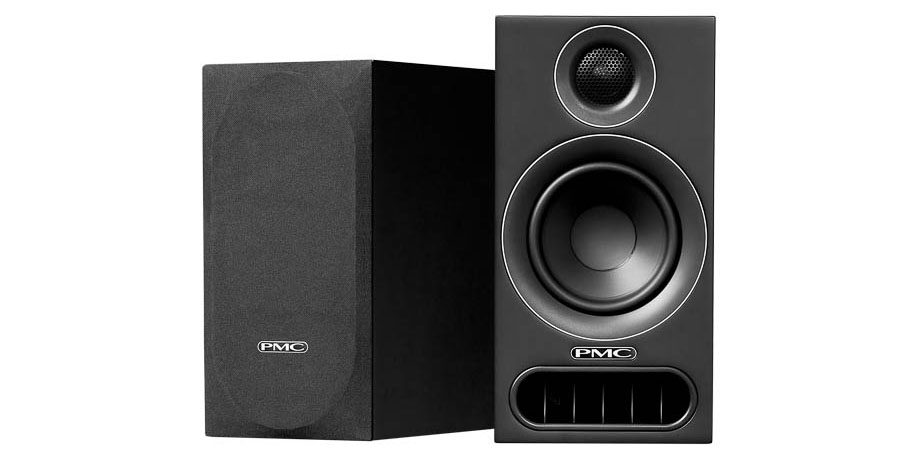
PMC prodigy1

A phenomenon that affects the manufacture of pretty much anything more complicated than a sandwich is ‘creep.’ Over the time that a device is in production, both the price it is sold at and the specification it offers tends to increase over time. The recently departed Ford Fiesta entered the automotive sector weighing less than a ton and offering such niceties as a heater and left it 47 years later weighing over fifty percent more, fitted with gadgets that even the best sci-fi writers didn’t see coming, and costing more than the houses its ancestor was parked outside.

In the audio industry, creep is as omnipresent as it is anywhere else but it comes with extra wrinkles that aren’t necessarily applicable elsewhere. Ranges of products can increase in price and specification over time but the industry does not move up with them. This means that manufacturers can find themselves at a point where their ‘entry level’ product isn’t contesting the entry level it once was. When you compete with companies that sell products for less than you and then go on to offer entirely compelling reasons to stay with them as you upgrade, this is a significant issue.

Lineup creep

The PMC prodigy1 is PMC seeking to undo some of the creep in their own lineup. It is still made in the UK and is designed to include all the features that make a PMC a PMC but it enters the market costing over a grand less than the Twenty5 21i, which was the previous starting point. If the prodigy1 appeals, the speakers further up the range will embody the same characteristics, and keep you ‘team PMC’ until you own a pair of Fenestrias… and an unspecified level of personal debt to service as a result.

In order to be a PMC, the prodigy1 needs an ATL (Advanced Transmission Line) and its effective line length here is 6’3”. If you measure it with a tape measure, it is slightly shorter than 6’3”, but the damping and absorption add to that length. Regardless, that occupies a considerable amount of the cabinet’s internal volume. It displaces the crossover to a location roughly behind the tweeter as it requires the lower section of the cabinet to wind in a U-shaped profile before looping underneath and exiting under the driver at the front. The exit is via a simplified version of the company’s Laminair port designed to disperse better eddy currents that form as air departs the cabinet.

PMC prodigy1

PMC has turned to their other product lines for the drivers and selected two units that have not previously been partnered. The tweeter is a 27mm soft dome device used in the result6 active nearfield monitor. The unit has been tweaked for operation in a passive speaker to run a lower crossover of 1.7kHz. It hands over to a 130mm natural fibre cone with a long throw and inverted cap which has seen extensive use in the Ci range of on-wall speakers. As these models also use a transmission line, it has not needed substantial alteration for use in the prodigy models.

Where PMC has expanded a considerable amount of development time is in the crossover that ties these drivers together. Some early experiments with minimalist arrangements were wholly unsuccessful (and, going back to the idea of the prodigy1 being the essence of PMC, even if it had worked, it would have been at odds with other models) so the design team returned to the basic layout of the twenty5i series as the starting point for the prodigy crossover. The final result is a simplified version that accepts a 12dB per octave slope (by comparison, the Twenty5 21i has a 24dB per octave slope) and that uses components selected on a tighter budget to give as close a listening experience to the more expensive models. Connection to the outside world is via a single set of terminals that are bespoke to the prodigy models and that look and feel fairly smart.

Simplified cabinet

The cabinet is also simplified, and it is the part of the prodigy1 that is most visible different to the twenty5i models. Gone are the non-parallel edges of the more expensive range, resulting in a speaker that is flat sided all the way around. The overall construction is simplified internally too. A prodigy1 tips the scales at over a kilo less than the similarly sized twenty5 21i and this does mean that when you compare it to some rivals at this approximate price point; Q Acoustics’ Concept 30 being the one that springs to mind, the prodigy1 doesn’t feel as substantial when you heft it out of the box. Externally, the wood veneer of the more expensive models has been replaced with a black sheen effect.

This doesn’t tell the whole story though. To this set of eyes the flat sides of the prodigy1 give it rather less of a Frank Gehry quality than its more expensive brethren and make for a classically handsome bit of kit. While it is notionally less substantial, the manner in which it is constructed stills feels fastidious and it would be a stretch to call the PMC anything other than well made. Something that has been taken from the more expensive models is a pair of thin trim rings around the drivers. I’m not a huge fan of the Twenty5i models but here it adds just enough detail to avoid the speaker looking too austere. As standard, the PMC does not come with grilles. They are a £100 optional extra (and make use of magnetic trim tabs for neatness) but, as the tweeter is fitted with its own grille that both protects it and helps with dispersion, I suspect that most owners will do without.

PMC prodigy1

In keeping with the ideal of the prodigy1 being a true PMC, the quoted measurements are largely in keeping with the 21i. A frequency response of 50Hz-25kHz at +/- 3dB is achieved with an impedance of 6 ohms and 87.5dB/w sensitivity. These are not enormously trying measurements so I started testing using a Mission 778X integrated amp which is less than half the price of the PMC and disposes of 45 watts into 8 ohms. I’d been impressed at how the Mission performed with the company’s own 700 stand-mount which is fairly similar in price to the prodigy1 (albeit a little easier to drive) so it felt like a good place to start.

First things first, the prodigy1 is very much a PMC when it comes to setup. This is not a plonk and play device and needed a little fettling on the supplied stands which PMC has worked with Custom Design to produce a recommended set rather than building them in house. Once you have a level of toe in that has the convergence point a metre or so behind your head, the speaker starts to show what it can do. Without this, the stereo image is somewhat diffuse and doesn’t meet in the middle.

With this done, the PMC begins to deliver a performance that is both entirely in keeping with the asking price and that has strong elements of the company house sound to it. This is instantly noticeable in the bass response which delivers the sort of extension that I’ve come to expect from the company. This has always been about more than out and out impact; indeed, compared to something like a KEF LS50 Meta, the prodigy1 doesn’t have anything like the same low end shove. What it does instead is effortlessly fill in from the lower midrange down. The bass in Emilíana Torrini’s Gun [Rough Trade] has a presence and weight that really brings it to life.

Underpinning

This underpins the rest of the frequency response which is no less convincing. Torrini is the focus of your attention, her tone and breathing all recreated in a way that helps the suspension of disbelief. The handover between the two drivers is seamless and, considering how much work that the tweeter is doing, the top end is a well judged balance of detail, energy and refinement. It’s possible to play the entertaining but gruesomely mastered Performance & Cocktails by the Stereophonics [V2] and not find yourself backing the volume off which is a hallmark of civility. For all of PMC’s professional heritage, their more recent domestic models have been usefully benign and the lower entry price of the prodigy1 has not affected this.

Even so, it becomes clear that the PMC has more to offer than the Mission can extract from it. Good though the 778X is, it doesn’t exert the grip over the prodigy1 that it really needs to shine. Substituting NAD’s retro styled but entirely modern C3050, which is much the same price as the PMC yields some immediate benefits. There isn’t more bass than there was before but there is a control and definition to the low end that helps the PMC sound more tangible than it did on the end of the 778X. The NAD really serves to highlight the benefits of the Laminair port which gives the PMC models a speed and articulation that they didn’t always possess before. The complex and deep bass on Board’s of Canada’s Telephasic Workshop [Warp] are delivered as a series of tight ‘thuds’ rather than the longer ‘whoomph’ noise associated with air audibly leaving a port. This combination of the NAD’s greater grip and this decent air management makes for an impressive performance from a small box.

PMC prodigy1

There is still more to be had from the PMC too. Connecting up an AVID Accent integrated amp (which is technically less powerful than the NAD but features the sort of current delivery you might normally associate with an electric welder) and the prodigy1 responds to the extra grip and the AVID’s unburstable sense of scale and drive very positively indeed. What is already a detailed performance gains further nuance and subtlety which is stitched into the performance without becoming the sole focus of your attention. This isn’t a necessarily a simple shot in the arm for a system of affordable electronics but it certainly has the scope to handle some further upgrades once it is in your system.

Plain good fun

Beyond absolute technical accomplishment, the PMC also manages to be plain and simple good fun. Listening to the hugely entertaining The Breaks by Jules Buckley, the Heritage Orchestra and Ghost Note [Decca] on the PMC is a genuine pleasure. The absolutely sensational performance of Rated X is something that absolutely flies along, demonstrating the fleetness of foot that the PMC shows with smaller scale recordings. At the same time, it manages to really convey the feeling of a mass of musicians working together and operating as a group. This is helped by the soundstage effortlessly extending beyond the speakers themselves and creating a space that feels large enough to have an orchestra perform in. Really lean on the prodigy1 and it will harden up and start to sound strained but you need to be mechanically unsympathetic to achieve this.

What results is unquestionably a PMC in terms of how it behaves and sounds and, given the saving that the prodigy1 represents over the 21i, that is a considerable achievement. You can choose it knowing that it exhibits qualities that are refined and honed but never significantly changed in the more expensive models so it performs the role of being a ‘first rung’ on the ladder with considerable panache. To see the prodigy1 as something you will dispense with in order to savour more concentrated doses of PMC is to do it a disservice though. At the asking price, there is no shortage of extremely talented rivals, some of which might look smarter or offer more exciting technology and materials in their construction. The principles of the prodigy1 are good enough though that it more than holds its own against anything I’ve tested at this level. PMC has fought back against creep and it has done so very convincingly indeed.

Technical specifications

  • Type: Two-way stand-mount Advanced Transmission Line loudspeakers
  • Drivers: PMC 27mm soft dome tweeter, PMC 133mm natural fibre long-throw bass driver
  • Effective ATL™ Length: 1.91m
  • Frequency Response: 50Hz–25kHz (-3dB)
  • Sensitivity: 87.5dB SPL 1w/1m
  • Impedance: 6Ω
  • Peak SPL: 123dB SPL
  • Crossover frequency: 1.7kHz
  • Directivity (vertical/horizontal): 80°
  • Dimensions (H×W×D): 32 × 16.5 × 23.7cm
  • Weight:4.5kg
  • Price: £1,250 per pair/$1,699 per pair
  • Grilles: £99/$139

Manufacturer

Professional Monitor Company Ltd

www.pmc-speakers.com

+44(0)1767 686300

Back to Reviews

Purist Audio Design Jade

Purist Audio Design is flourishing after 35 hard-earned years in the high-end audio business. Riding out many industry ups and downs over the decades, Purist has successfully kept improving and introducing a deep lineup of products centred around cabling and power conditioning solutions. Purist’s three-decade-long march to the drumbeat of innovation has resulted in an exciting new gateway drug at an entry-level price point. The Jade cable product line is Purist’s offering for those with lofty expectations but is still attainable for mortals who must live on a budget. Ahh, budget is the most un-sexy and un-satisfying of all high-end audio concepts. Who wouldn’t want to jump in a thrilling fantasy Ferrari joy ride with your pal and mine, Mr. Walter Mitty, riding shotgun on a $25,000 set of speaker cables? When your joy ride is over, you will be glad to know the Purist is still ready to get your blood pumping at entry-level pricing that will make you feel like you are still driving over the speed limit.

Pulses… quicken

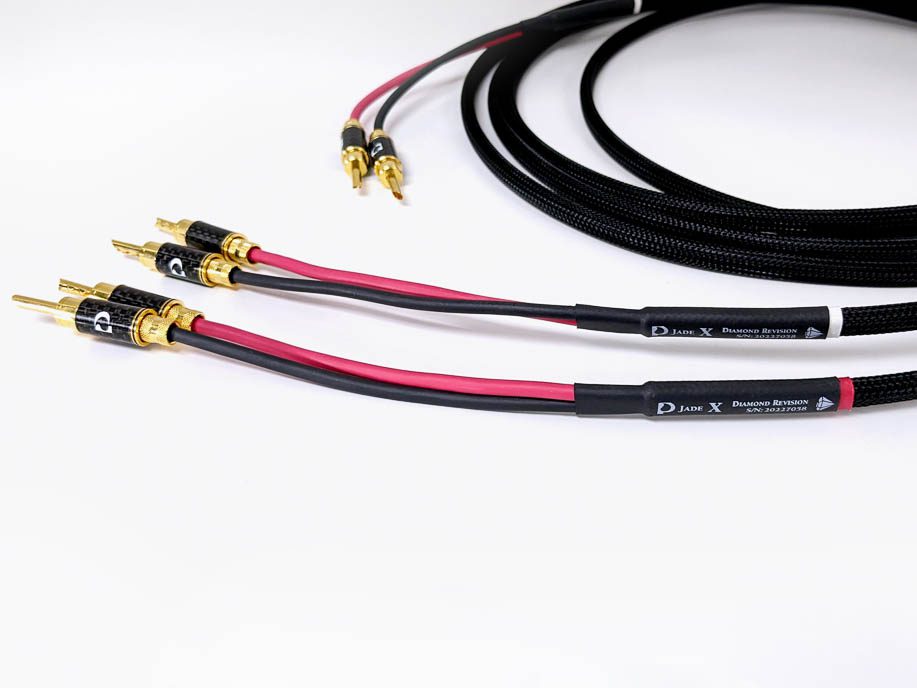
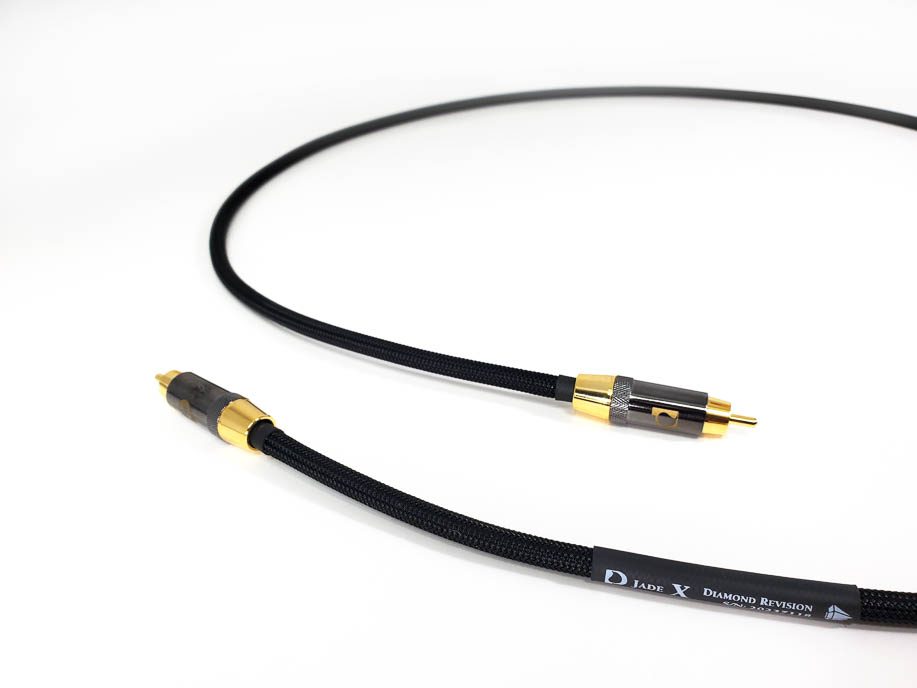
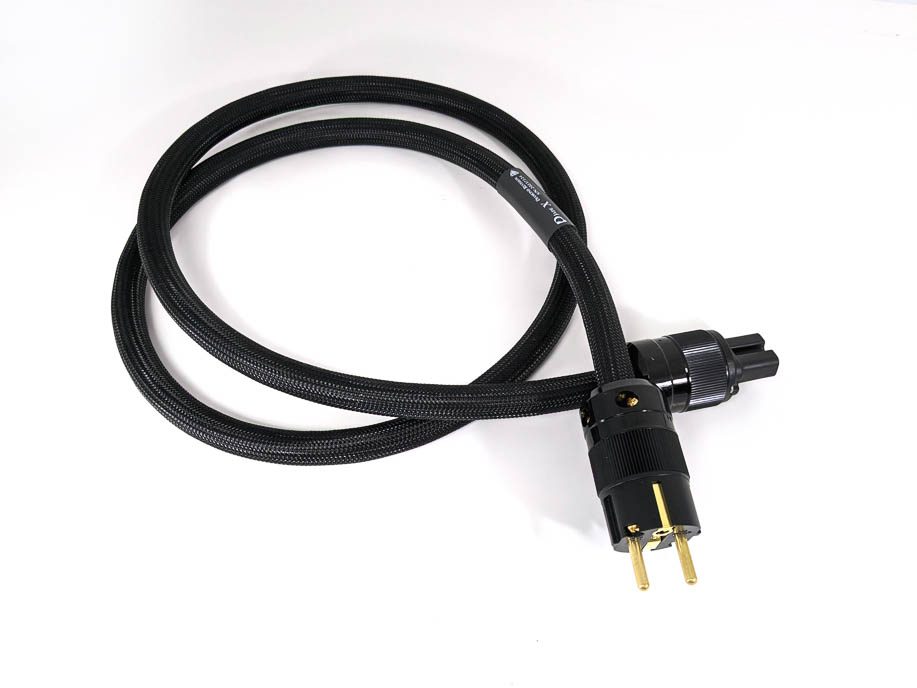
Purist’s Jade line started to quicken my pulse the minute I unboxed my review loom of the cables, which included speaker cables, interconnects, and power cords. The cables were neatly packaged in handsome resealable Velcro pouches that had enough room to make storing the cables a breeze instead of what is often a trial. Upon close inspection, the sleek ½’’ thin cables oozed craftsmanship and possessed a cool confidence set on avoiding unnecessary attention. Seeing that my philosophy for cables at this price point is usually a desire for them to get the hell out of the way and let the music talk, the Jade line review was off to a running start in my book. The cables were also quite easy to move and manipulate around my equipment, so cursing was at a bare minimum during set up, which always feels like a win. The Jade loom did not have an obvious spot in my checklist where it was clear Purist was cheaping out to attain the reasonable price point of around $3,500 for the entire loom. The cables were equipped with Purist’s exclusive and newly designed banana connections, made from pure beryllium copper with silver plating and a final gold plating. The cable conductors are oxygen-free copper, have a polyvinyl Chloride dialectic material and are treated three times over proprietary Cryomag treatment.

Purist Audio Design Jade

The Cryomag process used on all the Jade cables endeavours to use a controlled cooling process to manipulate and lower the atomic energy structure within the cable. Once the cable’s energy level is lowered through the process, the materials are subjected to magnetic fields to create a non-polarized orientation within the atom structure of the materials. This extensive process takes days of preparation, several hours of processing, and over a full day to reacclimate. After that extensive effort, the full process is repeated three times for each set of cables to create the optimum atomic balance, allowing the cumulative spins of the electrons in the high energy bands to polarise in a better-unified presentation. So much for Purist trying to make a quick buck. Purist seems to have gone the opposite direction taking their sweet ass time to ensure a delicately highly unified crystalline structure which they believe to be central to final sound quality.

Cryo jargon

I have done a couple of cable loom reviews in the past few years, and I am sure you know from my previous efforts (Moon Audio & High Fidelity Cables) that I’m always down for researching exciting new cable tech. While pausing momentarily to muse whether that was a joke, let me be clear about my true thoughts. Cryo jargon be damned if a cable can not deliver that immediate stinging sonic haymaker putting me right on the ropes. Without that punch in the teeth, I’m driving as fast as my fake Ferrari can take me right back to my hi-fi dealer to audition a different cabling system. Well, rest easy because as soon as the Purist cables were integrated into my system, it was clear that the garage door would be staying closed through an extended audition. Jade’s benefits were palpable even before the 200-hour break-in mark was achieved. Intertwined into my system, the Jade line had many brilliant effects, and yes, I do think brilliant is the right adjective in this case.

Purist Audio Design Jade

As a general descriptor, my playback seemed flooded with glowing new energy. This striking new energy was intoxicating in driving rock music like the final track ‘November Hotel’ by Mad Season (Seattle’s least known and most underappreciated supergroup) on their sole album Above [Columbia]. My beautifully recorded and pressed original vinyl release of the track starts soft and low with brooding tom-tom drums but quickly heats up and transforms completely into a lightning storm of building energy that I have rarely found to be matched in any genre. The Jade cables unleashed a new kinetic dimension to the track’s shredding guitar thunderstorm. I love ‘November Hotel’s full-speed-ahead driving force, and Jade’s signature gave me an indelible experience that a new place in my sound stage had been cut wide open, revealing new waves of simultaneously shimmering and decaying textures from Mike McCready’s unholy wah-wah guitar lead. The Jade experience was nothing short of gripping, and I mean that I was on my couch gripping the cushions, trying to hold on with a big smile.

Jade’s undeniable strength was enhancing energetic music, but over the extended audition, as I transitioned to playing more intimate pieces, I felt the Jade cables did start to show me some limitation in their ability to finesse measured and quieter musical passages. In comparison with my similarly priced Moon Audio cable loom that was posted to the hi-fi+’s website in November 2020, I found that on Jazz selections primarily focused on acoustic instruments, the Jade line tended to slightly inflate the instruments to where they were crowding together in the soundstage. I do not think this is a knock on the Jade line, and I stick to my earlier assertion that cables are extremely system-dependent, so this observation must be taken with a grain of salt considering the characteristics of my system. For example, I will reference Wayne Shorter’s composition House of Jade from my recently acquired Music Matters 45RPM copy of Juju [Blue Note]. The MM vinyl presentation is already a crystal clear version of the recording that creeps up to the clinical line but never seems to walk past the threshold. In my reference set-up, the MM presentation pushes the instruments exceedingly far into your living space with a wonderful cool-ish-sounding three-dimensional effect.

Purist Audio Design Jade

To its credit, the Jade line stayed consistent and enhanced this effect enough that the listening experience made me reminisce about my initial disorientation seeing high-definition TV for the first time many years ago. My listening impressions were something along the lines of being in the very front row of the venue and being blown over by the band’s power, wishing for a new seat towards the back of the room to get a little more space. However, as I became accustomed to the added edge over time, there was little in the way of looking back. People don’t revert back from their HDTVs for a reason, and I think this is exactly where I landed with the Jade cable loom. Once you hear the brilliant detail and the added punch with the Jade loom, it’s hard to unhear, and I felt myself looking for it when jumping between my Moon Audio reference set.

Don’t believe me…

Cables are unavoidably system-dependent. I would caution you against taking the word of any reviewer of cables suggesting they can tell you definitively how any particular line sounds. You need to experiment, and perhaps you have a “gloomier” system presentation that needs a kick in the rear end. If this in any way describes your thoughts relating to your personal rig, I think you must audition for the Jade Cable line. It could be just the shot in the arm that pushes your existing gear into a new stratosphere.

If you find yourself leaning into your speakers trying to extract minute details, well, my friend, sit back and let the Jade cables do the work for you. The price is right, the build quality is there, and the cutting-edge tech is there. You just need to place yourself “there” for a lengthy audition, and I think it’s quite likely your search for an entry-level cable will have quickly concluded.

Technical specifications

  • Jade Power cord: $487/£487 (2m)
  • Jade Loudspeaker cables: $1,139 (4.5m pair)/£980 (5m pair)
  • Jade RCA Interconnect cables: $439/£439 (2m pair)
  • Jade Diamond 20cm Speaker Jumpers: $550/£550 set

Manufacturer

Purist Audio Design

www.puristaudiodesign.com

UK distributor

HMF Solutions

www.hmfsolutions.com

 +44(0)208 771 7106

Back to Reviews

Milan Karan – 1965-2024

Shortly after hearing the sad news of the death of Milan Karan, we asked Branko Bozic of Audiofreaks, the UK Karan distributor, to provide us with some words about Milan. 

On the 10th of April the high-end audio world has lost a precious and gifted designer and artisan when Milan Karan left us at an early age of 58 in his native Novi Sad (Serbia) after a relatively short and ruthless illness. And, much more than that, the world in general and I personally have prematurely lost a good fellow human being, long-standing and close Friend and brother in arms. Instead of Living (Only) Twice, we just live only once…or less.

I have known Milan Karan since just before the turn of the last century and the current millennium. His very first ‘proper’ creation – the KA I 180 integrated amplifier arrived into my life and music room. It did not take long to sense and absorb the enormous sonic potential and already highly musical sound. The rest, as they say, was and will remain history. As we grew to know each other better, less and less needed to be said about how the next, improved, iteration of an existing design or a completely new one, should look, be made or sound. And get even closer to the ever-escaping ultimate musical truth of a live performance. And so it was, from the KA I 180 to the apotheosis of Milan’s creative life – the Master Collection of preamplifiers and power amplifiers. Unique just as the person who brought them into life. Life which he could not extend anywhere as much as anyone deserves or should be able to.

Our thoughts and sympathy are with the Karan family and friends. The knowledge Karan Acoustics will firmly live on in capable hands of Milan’s son Emil, give an invaluable hope that the unique opus of Milan Karan will be cherished and enjoyed for years to come. RIP.

Read Karan Acoustics Reviews Here


Davone Audio Launches Reference Two

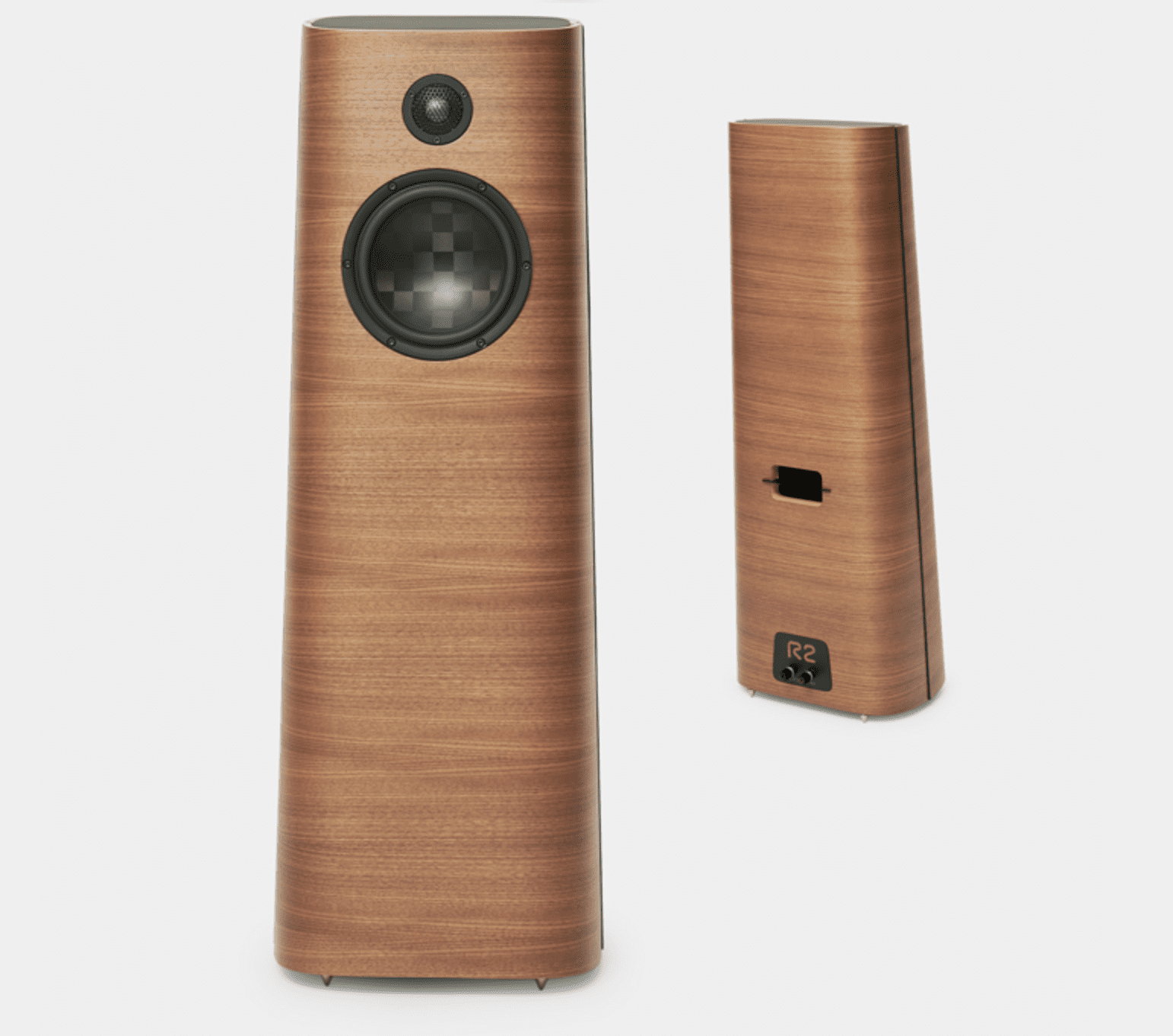
Værløse Denmark (May 27, 2024), Davone launches the Reference two loudspeaker.

With its roots in the award winning Reference One, the Reference Two is of similar no compromise acoustic design. Despite its more compact design, the sound similarities are uncanny, a testament to the design quality. The best way to describe the R2 is revealing yet easygoing, with a very well-controlled bass. Once you start listening, you’re hooked.

Main features:

  • 1” Beryllium tweeter, flush mount, narrow surround, magnetic flux near theoretical limit, very natural sound
  • 5” Textreme asymmetric and very stiff membrane that spreads and minimises break up modes for a clean and natural midrange, customized
  • Cabinet optimised for two way bass reflex.
  • Asymmetric acoustic wave reflector behind woofer spreads and reduces resonances in mid range
  • Internal bracing designed for optimal free airflow for the low frequencies
  • Internal Helmholtz absorber, minimal internal damping materials
  • Oversized linear bass reflex port with port entry near woofer for maximum efficiency
  • Curved baffle for minimal diffraction from 25mm thick form pressed wood
  • A very high tonal quality of
  • Minimalistic Scandinavian design, available with selected quarter cut walnut
  • 38-30.000Hz -3dB
  • 87 dB/2,83V/m
  • 21 kg
  • Height, width, depth: 97 / 34 / 31 cm
  • Retail price €12.000 / $14.000 /£10.000

Davone Audio

Munich High-End 2024: Final Round-Up

Munich High-End, an exclusive event for audio enthusiasts and industry professionals, is a must-attend. Spanning over two trade and two public days, three exhibition halls, two filled atria, and two floors of listening rooms – along with numerous trade booths and off-shoot shows in the nearby Motorworld, HiFi Deluxe and off-piste events around the city, it’s a sensory overload. The sheer magnitude of the event ensures that no one can cover it all, adding to its allure and exclusivity.

With such a grand event, it’s inevitable that some major launches might go unnoticed. Despite our best efforts to task our reviewers to each find their top five (Part One. Part Two), there are still hundreds that deserve attention. These are not just any products; they are the ones that will shape the future of high-end audio and deliver exceptional performance. They all made the cut, but when forced to pick five or ten products, some gems might have been missed, adding to the intrigue of what’s out there.

These are not ‘the best of the rest’. They are ‘the rest of the best!’

Accustic Arts

Accustic Arts

German audio electronics expert Accustic Arts had the new Power V integrated amplifier on display. This new 520W per channel €27,900 integrated amplifier comes complete with a DAC capable of sampling to DSD 512 and 32bit, 768kHz PCM; it includes a high-performance headphone amplifier, a surround bypass, and even an MM/MC phono option, which brings the price to €29,900. The company also showed a prototype form of its reference digital converter, the DAC V, which will be available in solid-state and tube form.

Audiovector

Audiovector

We’ve covered this new loudspeaker extensively here and here, but Munich High-End was the first public outing of the Trapeze by Danish audio expert Audiovector and it didn’t disappoint! Harking back to the company’s first great success – the Trapez – the new €17,000 Trapeze Reimagined was one of the show’s stars. This might have had something to do with a musical selection that covered everything from opera to techno without fear or favour; perhaps it was because it is a loudspeaker that was made for real-world rooms, or maybe it was because it sounded consistently excellent! Whatever it was, Audiovector’s high-wire act did not need a safety net!

AURALiC


Teased just before Munich High-End 2024, the €1,999 AURALiC ARIES S1 streaming processor, the €1,999 VEGA S1 streaming DAC and matching €999 S1 Purer Power power supply were shown for the first time to the general public. The smaller form-factor of the S1 range belies an impressive performance, as the design is based around the company’s Tesla G3 streaming platform, uses the brand’s Lightning DS app, and will give its rivals a serious run for the money!

AVM

AVM


AVM had a big year, with several new products on show. Its new €5,500 Evolution PH5.3 is a phono preamp with tube stage (€3,900 for the otherwise identical pure solid-state PH3.3). The PH5.2 has three inputs and remote adjustment of cartridge settings, EQ curve, and cutting lathe time constants. They come in a choice of finish, too! The biggest and heaviest newcomer is the Ovation SA 8.2 Master Edition stereo power amplifier. This chunky amp pumps out 390W per channel and can be supplied either as a pure solid-state amplifier, as shown or with a tube stage. Its display includes fast-acting VU meters and is priced at €13,000. It cannot be driven as a bridged mono amplifier. The company also showed its new PC3.3 and PC5.3  power conditioners.

Burmester

Burmester


Burmester‘s new BX100 represents a bold departure from the brand’s regular loudspeaker design school. The central AMT folded ribbon tweeter—long a staple of Burmester’s top loudspeakers—is freestanding, flanked by two mid-range front-firing drivers and side-firing drivers. The resulting four-way loudspeaker sounds remarkably lifelike and clear, and the €75,500 per pair loudspeakers (in the context of top-end Burmester Audio electronics, naturally) were one of the surprise stars of the show.

Chord Electronics

Chord Electronics

Chord Electronics‘ new Suzi modular amplifier system is a small, flexible system that can either be used as a plug-together pre-power amplifier with or without a headphone socket or with a Hugo 2 and even a 2go streamer to make an integrated streaming DAC amp system. The power amplifier is based on Chord Electronics’ Ultima platform—reduced to its smallest size. More details – including prices – will be available in the Autumn when this neat little system will launch, but as it sounded good through a pair of KEF LS50 Metas, it has a lot of promise!


D’Agostino Master Audio Systems

D'Agostino

D’Agostino Master Audio Systems launched the new €56,000 Momentum C4 preamplifier with its all-new, super clean-sounding Complementary Four circuit designed for the Relentless series and a bi-directional remote with a screen that echoes the famed ‘Captain Nemo’ display. An optional Digital Streaming Module is also available. In addition, D’Agostino announced the new Pendulum integrated amplifier. This 120W per channel integrated includes a built-in MC phono stage, full streaming options and even HDMI input. The expected cost is around ¢15,000 making the Pendulum a new entry point for the D’Agostino brand.

Gold Note

Gold Note

Over in Motorworld, Gold Note showcased its new ’10’ Series with three new models; the €2,850 IS-10 integrated amplifier, €1,800 CD-10 CD play and HP-10 headphone amplifier, price to be announced soon. Capable of driving a range of headphones in balanced and single-ended guise, with a clever display panel to show input and output options, the HP-10 is a welcome addition to the range. All three are in the company’s half-size case (in gold, silver or black) made famous by the Gold Note PH-10 phono stage.

Gryphon Audio Designs

Gryphon

Having already launched a new power conditioner at AXPONA three weeks before, Gryphon was not expected to launch anything new at Munich. How wrong we were! Gryphon Audio Designs made a strong play for the ultimate in high-end vinyl replay, with the launch of the new Apollo turntable (€128,000), which is built around a flagship design from Helmut Brinkmann. The two-motor design comes with one arm as standard, but as the image shows can accept two. The new €20,000 Black Diamond DLC moving magnet (supplied with the Apollo) is what happens when Gryphon takes Ortofon’s flagship MC Diamond and modifies it to Gryphon’s specifications, and the new two-box €58,000 Siren phono stage is the size of a pair of monoblock power amps. This takes phono to new levels.

HiFi Rose

HiFi Rose

First, taking the streaming world by storm with its RS150 and then doing the same with the great-looking, great-sounding RA180 integrated amplifier, the Korean HiFiRose has some ‘form’ in disruptive audio technology. The company’s upcoming RD160 DAC features a ‘hidden’ display that can highlight the pathway of the digital signal and show both its waveform and the output level when needed. It can display VU meters as a form of display ‘skin’. Under the skin, the CIM (Completely Isolated and Moduled) architecture with two DAC chips, NRA (Noise Reduction Analogue, not the other NRA…) filter, and three linear power supplies for a claimed low signal-to-noise ratio. The price is still to be confirmed but is expected to be around €6,000.

Ideon Audio/Baun

Ideon JMF Baun

Ideon Audio showed its new Sigma Wave USB isolator. It is designed to completely isolate the ground for the USB signal from input to output and is designed to be used with any USB audio system. This is expected to cost around €5,500 and performed extremely well in the context of a full Ideon Audio Absolute front end, into JMF Audio PRS 1.5 preamp and HQS 6002 power amp (with a RCD 302 conditioner) and prototypes of the upcoming Baun Audio loudspeakers, made in Greece but designed by Benno Baun Meldgaard, former loudspeaker designer for GamuT, Raidho, and Gryphon.

Kronos Audio

Kronos

Canadian turntablist Kronos Audio showed the new Perceptual turntable. This new $70,000 design pulls in a lot of technology first seen in the brand’s top $125,000 Discovery turntable, and its performance is said to come ‘very close’ to that range-topper. It sounded extremely good, especially when used with the company’s first phono preamp, the Discovery (which also costs $70,000) in the True Life Audio room; perhaps unsurprisingly, as the Greek amplifier company had input in the design of the Discovery preamplifier.

Lindemann Audio

Lindemann Audio

Lindemann Audio championed genuinely affordable, high-quality audio in a show where such products were extremely rare. The company showed its new Woodnote Combo streaming amplifier alongside its new Move Mini loudspeakers. These last take much of the performance of the current Move loudspeaker in a smaller form, with little loss of bass or volume. With the amp costing €1,980 and the loudspeakers just €2,180 per pair, this cost less than the fuses in some rooms, but sounded excellent.


MBL

MBL

The €624,700 flagship MBL Reference Line system was on song. Yet, alongside the usual €55,900 worth of CD transport 1621 A  and D/A Converter 1611 F, this system was fed by the new €8,950 C41 streamer from the company’s Cadenza Line. This sounded excellent when played through the recently uprated €330,000 per pair 101 X-Treme Mk II four-tower Radialstrahler loudspeakers. The sound didn’t disappoint. Not that you’d expect a six-foot-tall omnidirectional loudspeaker flanked by a similarly six-foot-tall subwoofer playing an extremely wide variety of music to disappoint, but even by their usual lofty standards, the new MBLs shone!


Nordost

Nordost


Nordost doesn’t change its products often, and the Leif line of cables represents the core of the company’s product lines. So, the move to Leif 3 is an important one. The key change in the proof-of-concept demonstration was the swap from a Red Dawn 2 power cord to a Red Dawn 3. This was a €560 power cord going into a D’Agostino Progression integrated amplifier. Although cycling the power on the Progression is a relatively slow change, the difference between the two cords was striking.

The changes to the new Leif 3 cables hold from White Lightning 3 to Red Dawn 3. Power cords receive a greater gauge size and an increased number of conductors, while the interconnects have better connectors, improved insulation, and the sort of mechanically-tuned construction previously limited to more upmarket Nordost designs. Prices have increased, but not significantly.

Orchestalls

Orchestalls

Korean brand Orchestalls showed its Zero Sound Energy Loss loudspeakers at AXPONA and repeated the experience in a smaller room in Munich. The company’s distinctive OCS1000CG five-way design (called Le Clavier at AXPONA) uses a series of steel enclosures held in place by ‘free revolving’ brackets sitting atop a bass reflex enclosure. Driven by the same Ella Class D amplification and HiFi Rose streamer seen in Chicago, the €250,000 loudspeaker was probably too wide-range for the room, but showed the same promise seen three weeks before!


Soulution Audio

Soulution Audio

Another company that launched one important product at AXPONA and then did it again at Munich, Soulution Audio followed up the new 300 series with its new flagship 717 stereo power amplifier (90,000CHF), replacing the 711. Its innovative new circuit design gives the 711 a 2MHz bandwidth and delivers 150W per channel into eight ohms, successfully doubling its power into four and two ohms. A perfect match for the 727 preamplifier (both technically and – in the room – sonically), the 711 can be used in bridged mode as a mono amplifier.

Tidal for Bugatti

Tidal for Bugatti

Priced squarely at the “if you have to ask…” end of the audio world, Jörn Janczak’s top system was more a meeting of minds than a car marque searching for an audio system. Tidal‘s already top-end audio designs were in no small part inspired by the cost-no-object engineering project known as Bugatti. The German loudspeaker company developed its flagship electronics and loudspeakers with the same uncompromising stance… and by chance, the two companies found one another. The result is the Tidal for Bugatti Royale MC-1 controller and Royal loudspeakers (€465,000); a system of such authenticity and musical grace was as much art as audio. I had a pre-show listening session to both Tidal and Tidal for Bugatti. The step up from one to the other showed how much could be got from music when played through sublime equipment. It was a few short minutes; I could have spent a week sitting in front of this, and it would have been ‘all too brief.’

Ubiqaudiolab

Ubiqaudiolab

Over in the HiFiDeluxe show in the Marriott Hotel in Schwabing (about 5km from the MOC), the Ljubljana-based Ubikaudiolab showed its Ubiquitous 300B hybrid preamplifier and Ubiquitous Mono power amps in an extremely revealing top-end system. These are cost-no-object designs, with the €70,000 hybrid preamplifier using a pair of 300B power triodes running at very low levels acting as an intermediate gain stage. This is coupled with the ultra-high-performance ALPS RK501 potentiometer as volume control driven by a precision stepper motor to deliver 333 volume steps. Meanwhile the Ubiquitous Mono can deliver 20W in pure class A or 800W in Class AB. These 73kg beefcake amps are not even the largest models in the range, and the price is €140,000 per pair.

Wattson Audio

Wattson Audio

A lot of Munich High-End 2024 doesn’t just scrape the stratosphere of audio pricing; it achieves low earth orbit. Wattson Audio could have been one of those brands, as the company is a part of the CH Precision group. However, the Swiss-made Madison LE System Controller preamp and new 50W Class AB Madison LE power amplifier are in a more down-to-earth price band. Played through a pair of €25,500 Apertura Enigma Mk II loudspeakers and an expensive loom of Luna cables, a €6,495 power should be holding the sound back. Still, this fully-differential, milled-from-solid amp was part of a system that sang sweetly!


Munich High-End 2024: The Top, top Fives!

Munich High-End 2024: The Top, Top Fives Part Two!

Back to Home