Up to 37% in savings when you subscribe to hi-fi+
hifi-logo-footer

Begin typing your search above and press return to search. Press Esc to cancel.

RENAISSANCE TO DEBUT AUDIOVECTOR’S TRAPEZE REIMAGINED LOUDSPEAKER AT THE NORTH WEST AUDIO SHOW

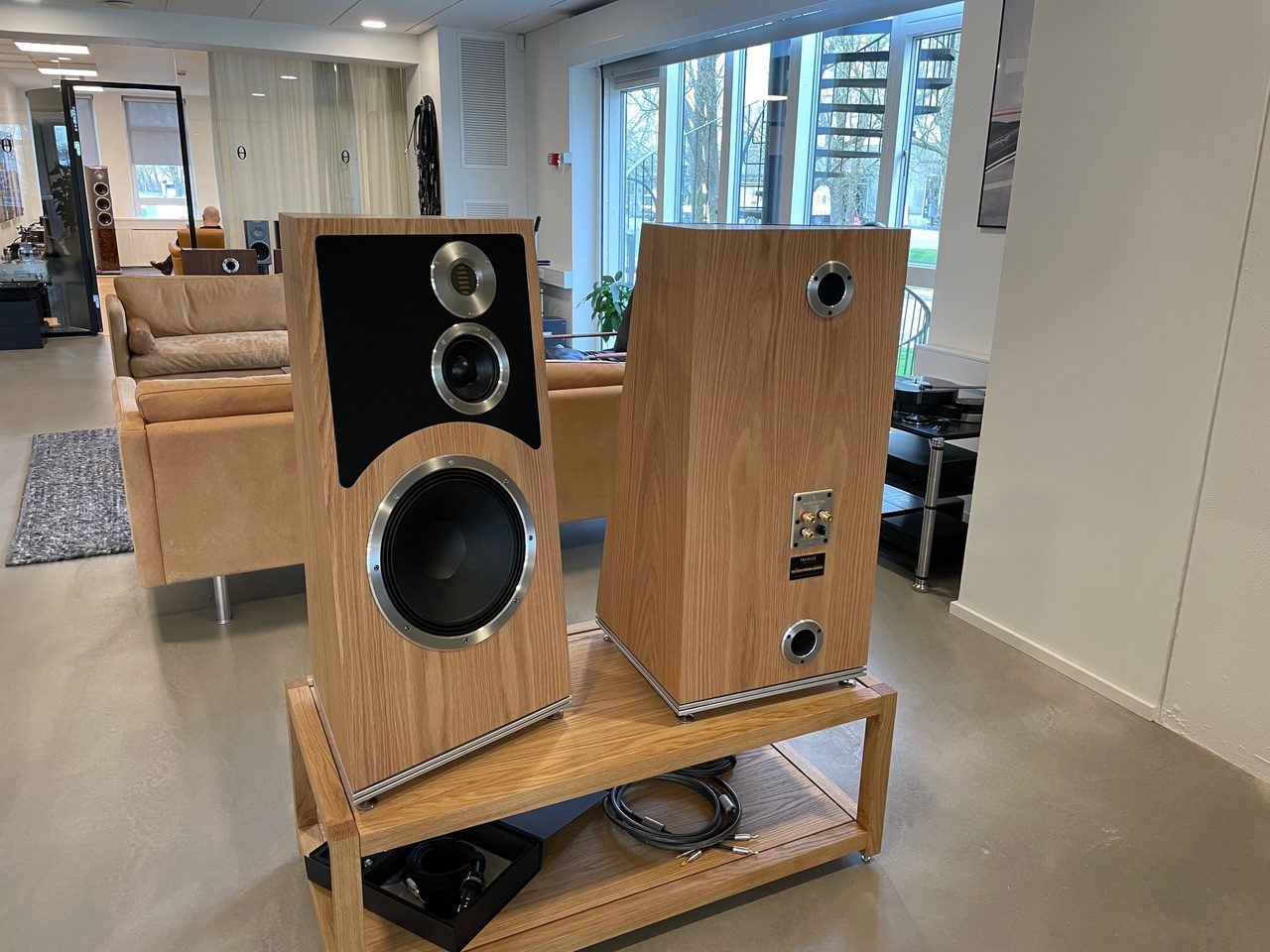
June 13th, 2024 – High-end audio distributor Renaissance is pleased to announce the UK debut of Audiovector’s Trapeze Reimagined loudspeaker. The stunning speaker will be showcased for the first time in the UK as part of an extraordinary system featuring products from MOON and Nordost at this year’s North West Audio Show.

The new Trapeze Reimagined is a classic piece of Danish design. It borrows its styling from 1979’s Trapez speaker and adds the latest audio technology to give an intoxicating performance that will captivate even the most difficult to please listener.

Renaissance’s system at the show will feature a pair of Trapeze Reimagined speakers driven by a pair of MOON 761 power amplifiers and a MOON 791 network player/preamplifier. A full loom of Nordost’s Valhalla 2 reference cables will unite the system and Nordost’s QBase Reference QB10 will manage the power distribution.

Valhalla 2 is Nordost’s Reference range of high-performance audio cables that are designed to allow a recording to be heard at its best. The QBASE Reference is a multifaceted, reference-level AC distribution unit that operates as a filter-less alternative to power conditioners, delivering pristine power to audio components.

The MOON 791 combines a high-performance streamer and an exceptional phono stage in a state-of-the-art analog preamplifier with a brilliant new colour display for album cover art, track details, and set-up functions. Its abundance of features is surpassed only by its unmatched build and sound qualities. The MOON 761 power amplifier effortlessly produces every detail in a recording with authoritative finesse and transparency. The 791 and 761 are a natural pairing which perfectly complements the Trapeze Reimagined.

Renaissance Managing Director, John Carroll, said, ‘Audiovector’s Trapeze Reimagined is one of the most versatile loudspeakers that I have ever heard. I was at its press launch in Copenhagen earlier this year and the performance put a smile on everyone’s face. In creating a system that also features MOON and Nordost reference products, we plan to present the best sound at the show.’

The North West Audio Show takes place on Saturday 22nd and Sunday 23rd June at De Vere Cranage Estate, Byley Lane, Holmes Chapel, Cheshire CW4 8EW
Opening Hours: Saturday: 9:30 – 18:00, Sunday: 10:00 – 17:00

 Renaissance will be in room Stephenson 4

 For more information, visit: www.renaissanceaudio.co.uk

 Renaissance distributes Audiovector, MOON, Nordost & VPI Industries products in the UK and Ireland.

Audio-Technica sets new standard for vinyl excellence with AT-ART1000X cartridge

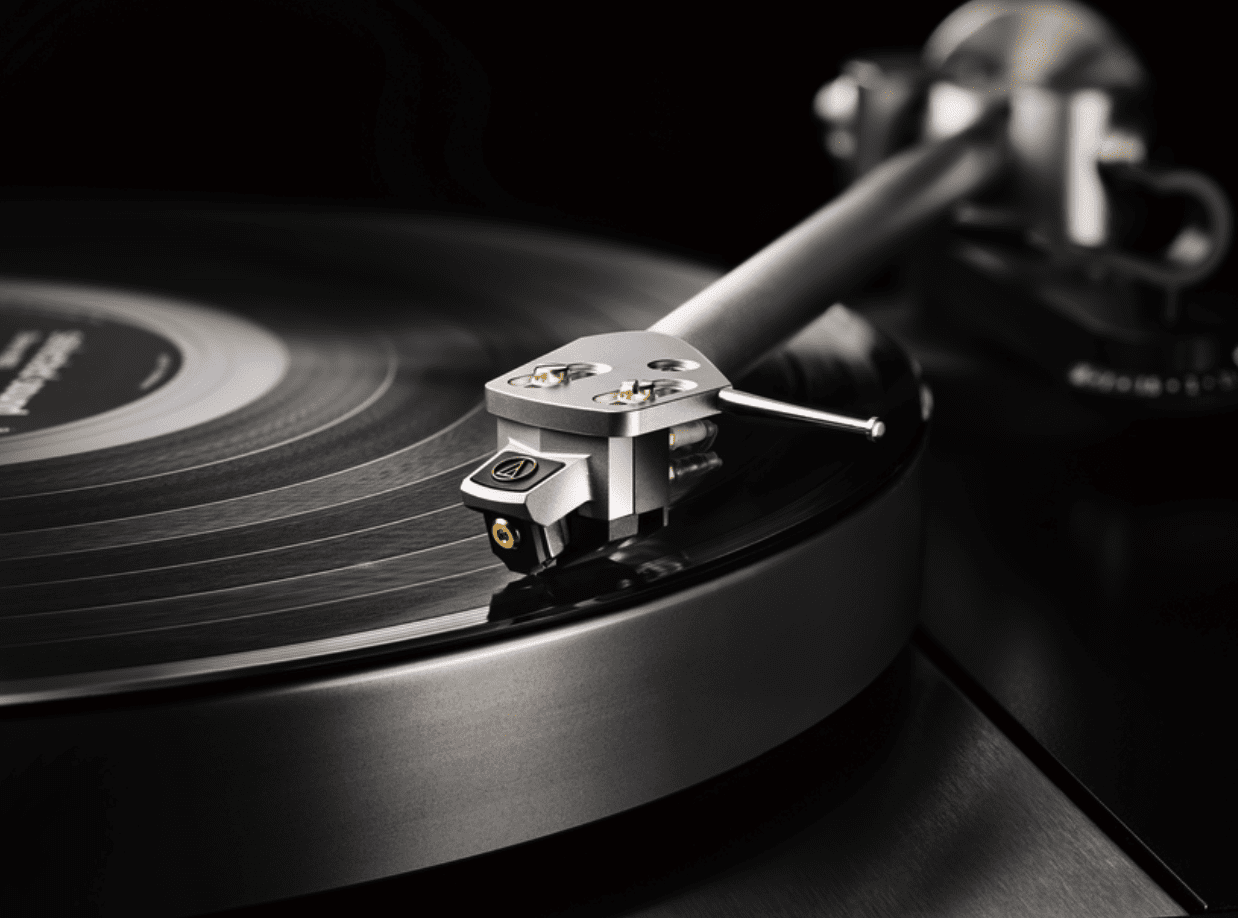
Thursday 13th June 2024  Today, Audio-Technica reveals the AT-ART1000X – the brand’s most advanced cartridge to date and the pinnacle of more than 60 years spent crafting the world’s finest turntable components.

Developed and manufactured in Japan, the AT-ART1000X has been designed to deliver an unparalleled analogue music listening experience for discerning audiophiles.

Harnessing the philosophy and design of the acclaimed AT-ART1000, the next generation cartridge takes Audio-Technica’s pursuit of sonic excellence to new heights, with a more refined direct power system for improved efficiency and enhanced bass reproduction.

Like its predecessor, the AT-ART1000X’s direct power system places the dual moving coil directly above the stylus tip, rendering even the most subtle details in music and ensuring the audio quality is uncompromised by the cantilever’s length and material.

The newly developed coils for the AT-ART1000X are rectangular rather than round, positioning more of their surface area in the magnetic field. The result is an improved output voltage and an expanded low frequency range for rich, powerful, and supremely accurate bass.

Each non-magnetic core coil is constructed of 20 μm (0.79 mil) diameter PCOCC (Pure Copper by Ohno Continuous Casting) wire, hand-wound exactly eight times by skilled experts to create the innovative rectangular shape. The coils are contained in an ultra-thin 25 μm (0.98 mil) special film and placed in the tiny 0.5mm (0.020″) gap of a powerful magnetic circuit, enabling each coil to generate an output voltage of 0.22 mV with a coil impedance of 3.5 Ω, despite having a non-magnetic core.

The AT-ART1000X retains the high-performance line contact stylus and solid boron cantilever of the previous model to deliver an exceptionally precise reading of the record groove. Meanwhile, the sturdy titanium base provides consistent playback and works in tandem with the cartridge’s rigid cover and aluminium housing to disperse resonance that would negatively affect sound quality.

Designed to last, a special coating protects the magnetic circuit from corrosion for a stable performance throughout the cartridge’s lifetime.

Features

  • An innovative direct power system for an unsurpassed transient response, resulting in reproduction of even the most subtle sonic details
  • Newly designed rectangular coils to improve the cartridge’s efficiency and extend low-frequency output
  • Threaded mounting holes for easy installation with a headshell or integrated tonearm
  • Special line contact stylus and solid boron cantilever with a 0.26mm diameter to ensure an extremely accurate reading of the record groove
  • Non-magnetic core coils to provide exquisite, full-dimensional audio reproduction
  • A titanium base for the magnetic circuit, hard plastic cover, and aluminum housing to disperse unwanted resonance
  • PCOCC (Pure Copper by Ohno Continuous Casting) coil for pure signal transfer
  • A special coating to protect the magnetic circuit from corrosion for stable performance throughout the life of the cartridge
  • Developed and manufactured in Japan by skilled experts

The Audio-Technica AT-ART1000X will be available from 13th June 2024, RRP £4,700 / €5,500. Find out more at www.audio-technica.com.

Buchardt Audio Anniversary 10

There’s been no end of compact, active, wireless speaker systems flooding the market over the past half-decade or so. There’s been no shortage of excellent, even landmark products in this sector either – though always with the qualifier ‘within its category’. The majority of these models are designed to bridge the gap between these largely convenience-driven middle-market wireless speaker systems and serious high-end audiophilia – and many of them are still cost several thousand Pounds, Dollars or Euros, Denmark’s Buchardt Audio seeks to do much the same at a keener price point.

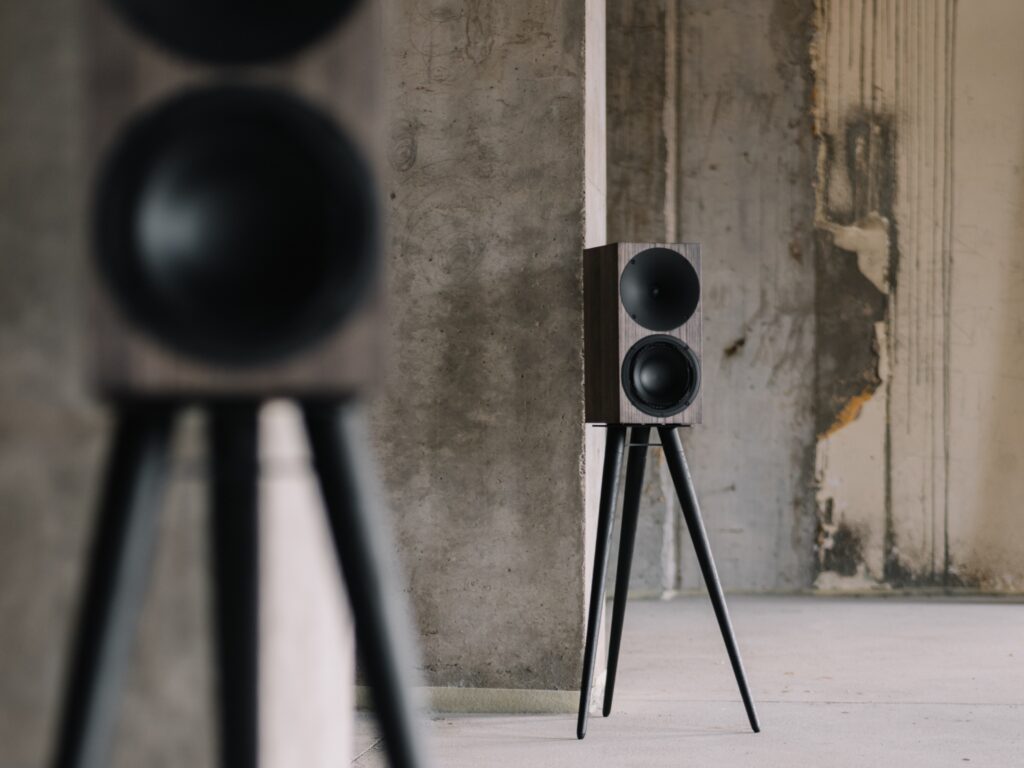
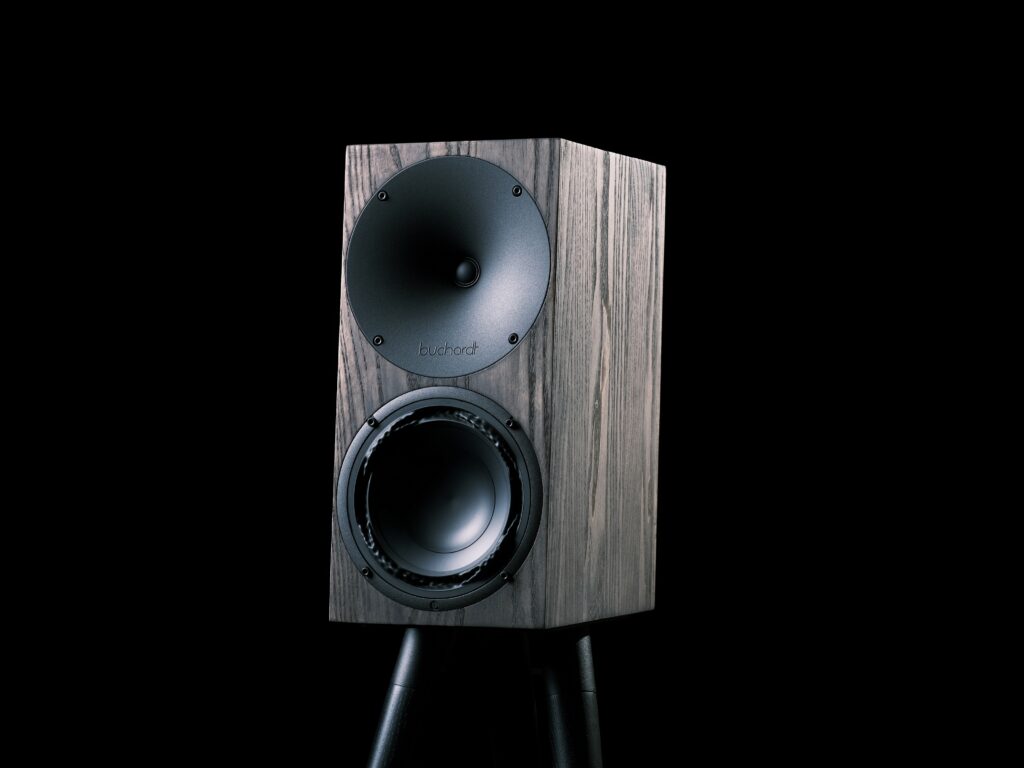
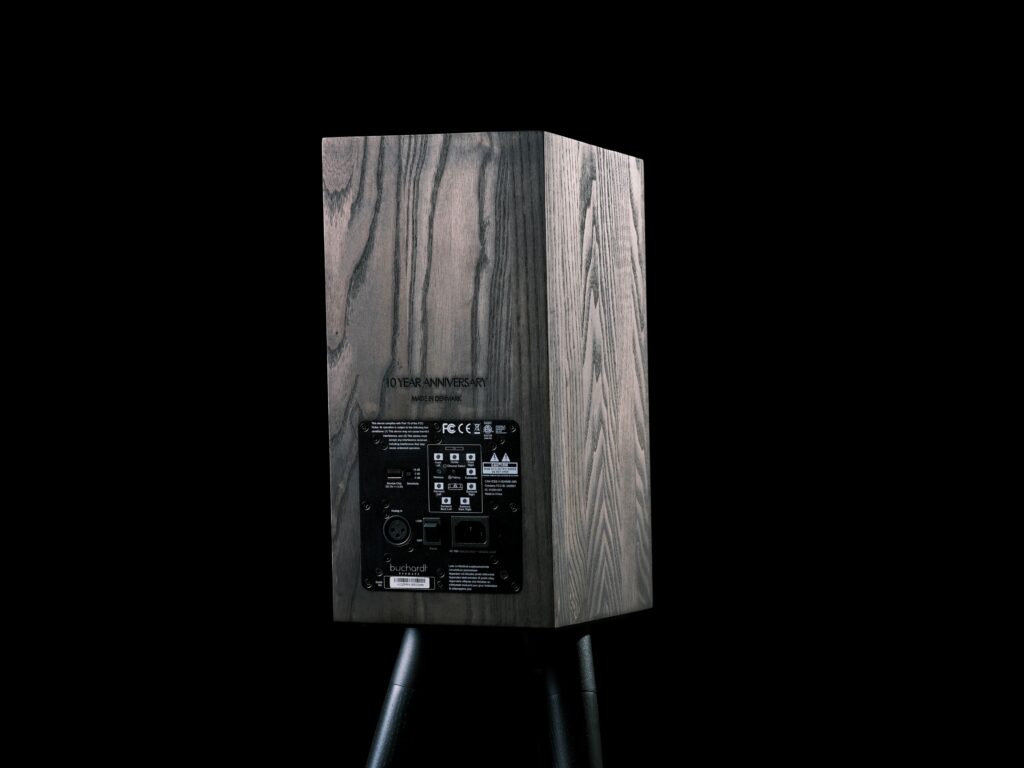
The A(nniversary) 10 not only marked the tenth anniversary (who’d have thought?) of Mads Buchardt’s eponymous company (the anniversary was actually in 2023), but also represents a departure in several ways. Despite the rear panel containing the inputs and controls reading ‘Made in China’ (which only applies to the electronics, which are by Platin Audio, a division of Hansong Technology), in fact these are the first Buchardt speakers built in Denmark. Unusually at any price, the cabinets are hand-crafted out of CNC-machined pieces of solid wood.

Huge margins

The A10 uses the latest RFA 19 aluminium dome high-frequency unit made for Buchardt by fellow Danes SB Acoustics with the huge CDC-profiled aluminium waveguide that already featured on previous Buchardt designs; the woofer in this two-way system is a bespoke triple voice coil version of the Purifi Audio PTT6.5W04 (a unit that retails for well over €400 on its own) – according to Mads Buchardt “the best woofer in the world by a huge margin.” For a speaker in this price range, also including 200 Watts of amplification and a quad-core DSP processor, that’s some going…

The key to this level of material value for money must lie in the company’s worldwide direct sales model. When you place an order, the price includes all local taxes, import duties, and shipping. From the day the speakers arrive on your doorstep, you have 45 days to decide whether you want to keep them, although Buchardt does charge €100 if you return them.

Buchardt Audio Anniversary 10

The upshot is that Buchardt Audio, through a myriad of online audio magazines and YouTube channel reviews, comes across as a new-age brand firmly rooted in the digital domain (though Buchardt does offer passive as well as active and wireless speakers) finding acceptance in circles of streaming listeners and amateur music producers, a demographic which is more varied of age (and on average rather younger) than the typical visitor to bricks and mortar high-end stores.

As someone who does nearly all his ‘serious’ listening from physical media, most of it being analogue records, disposing of a sizeable music collection and a myriad of ancillary equipment, my main interest has been to find out how well the A10 aligns with those sensibilities (the people bought their first ‘real’ hi-fi  – turntable or CD player, amp, speakers, cables – as a college student back in the 1980s) – that is, how far you can take them in sonic terms as loudspeakers in the context of a high-end setup, in addition to assessing them as an all-in-one, digital/wireless system.

Haptic delight

After all, there’s two ways to use the A10s – wireless using the Platin Hub that Buchardt kindly provided with the speakers along with a Zen microphone to be used for automatic room correction (or, alternatively, with a Primare SC15 Mk II streamer/preamp if you are willing to spend a modest 1,000 euro more) by plugging a line-level signal directly into the single XLR input (per channel) on the back of the speakers. Unlike the speakers themselves and the provided remote (which is made out of metal and a haptic delight), the Platin Hub is a relatively insubstantial looking and feeling plastic box which provides USB Audio, HDMI, coaxial and three optical digital inputs plus a single stereo pair of analogue RCA line inputs and has Bluetooth connectivity as well as supporting Spotify Connect, Apple AirPlay, Google Chromecast, DLNA and Roon.

For the Platin Hub to work, you must install the Google Home app, which works seamlessly on my Android phone. Pairing the speakers and assigning them to left and right channels (the Stereo Hub, despite its name, also supports multichannel set-ups) was a bit fiddly. While the remote features a volume control, the USB input is configured to maximum volume by default—something I only realised as soon as LFO from the eponymous techno outfit was blasting from the speakers at full tilt!

Buchardt Audio Anniversary 10

This neatly brings me to the focal point of many a YouTube A10 review: the bass. Buchardt claims an essentially flat response from 28Hz upwards, which sounds like one of Elon Musk’s outlandish claims for his upcoming products and projects when you realise this is a sealed design of which the internal volume in litres is in the single figure range, sporting a single 6.5-inch low-frequency driver. The thing is, the claim is probably accurate. Buchardt chose to exploit the extreme capabilities of the Purifi woofer – in particular, the ability to move lots of air for a driver of this size by way of their ultra-long stroke, with very low total harmonic and intermodulation distortion figures – by digitally EQ’ing it to within an inch of its life to drop down to regions where no six and a half-incher is supposed to go, especially one that’s working against such a tiny air volume that has nowhere to go.

Fast, not thick

The bass doesn´t just go low – it’s also fast with no discernible hangover or thickening of the sound, exceedingly well controlled and seamlessly integrates with the rest of the frequency band. What it doesn´t achieve is the pure effortlessness of a quartet of 12-inch drivers working a large vented enclosure – ideally a horn – tuned to give the same frequency response au naturel. It also means that despite having that superhero bass driver, this is not a speaker to be taken way out of its context by putting it in a huge auditorium and expecting it to handle large orchestral works at realistic levels or shake the walls when playing dub reggae. It is, after all, a stand-mount monitor – albeit an overachieving one. Its comfort zone remains smaller to midsize rooms, and sound pressure levels comfortably the social side of those at an AC/DC stadium concert. Of course, you could add a subwoofer (Buchardt offers a downloadable ‘Master Tune’ that features a 60Hz low pass for this purpose, as well as several others for specific sets of conditions and listening preferences) – not, in this case, to make it go deeper still, but to free up some dynamic bandwidth.

As a second and rather significant observation, the Buchardts do everything you want from them (and, in some ways, more) as a wireless speaker system using the Platin Hub, but they really come alive when foregoing the wireless capability (and with that, the option for room correction using the Zen microphone (you can still use the alternative Master Tunes, though) and connecting a properly good preamp – in this case, a custom Pink Faun job based on their last-version Tube Pre – direct with their XLR inputs. With a front end consisting of Michell Gyro SE/TecnoArm 2A turntable, Hana Umami Blue cartridge and Allnic H-1500 II SE phono stage and placed on their optional tripod stands using Omex Symphony 2A isolating devices between speakers and stands, about 0.8 metres from the rear walls and a metre (give or take) from the sides in a medium-sized room, the A10s displayed the sort of precision and transparency, and the wide open soundstage making the speakers effectively disappear – that one expects (but far from always gets) from all-star casts with cumulative price tags deep into six figures.

Layers

It delivers this kind of clarity, unravelling layer after layer of even very complex and dense arrangements effortlessly without being ‘forward’ or displaying a hint of aggressiveness – its treble is as well-behaved as it is well-extended – is all the more impressive. Razor flat, full-range frequency response and very good dynamics (up to a point) notwithstanding, what they don´t do is emulate the scale, weight and drama of a really large high-end speaker system in an appropriate room; they are no substitute for Wilson ALEXXs or Avantgarde Trios – even when you might occasionally marvel at a detail on a recording you thought you knew well that had previously flown under the radar on such ‘big’ systems. They might be small monitors on steroids, but as monitors, they are empathic.

Buchardt Audio Anniversary 10

Not that this matters a jot to those at whom the Buchardt’s are aimed – those vast majority of music people who need their speakers to work in spaces that have more in common with the infamous hotel rooms at hi-fi shows than the halls were the big hitters of the industry tend to reside, rooms where speakers large enough to achieve a similar low-frequency extension naturally, are almost guaranteed to result in a soggy mess of a sound. For them, the sheer transparency, soundstaging capability and incisiveness of the A10 combined with an inability to sound nasty while delivering all that, must be manna from heaven. They can be the best wireless all-in-one or desktop monitor system you ever had, or go a big step further than that on the end of a serious high-end system (less power amps). Either way and also considering their classy, essentially Scandinavian appearance and build – real wood is so much more interesting and tactile than any veneer – their value for money is pretty much off the scale.

Technical specifications

  • Type: two-way, stand mount, sealed box design, active loudspeaker with WISA wireless capability
  • Driver Complement: 1×19 mm SB Acoustics aluminium dome tweeter, 1×165 mm Purifi midbass speaker with triple voice coils
  • Amplification: Texas Instruments Power DAC, 3 x 50W Class D (midwoofer), 1x 50W Class D (tweeter)
  • Frequency Response: 28 – 40,000Hz (+/-1.5 dB)
  • Dimensions (H x D x W): 37 x 17.8 x 24.5 cm
  • Weight: 6.8 kg
  • Price: €3,800 – €4,050 per pair (depending on finish); Platin Hub €300 when bundled with the speakers

Manufacturer

Buchardt Audio

Home Page: www.buchardtaudio.com

Product Page: https://buchardtaudio.com/collections/active-speakers/products/anniversary-10

Contact Buchardt Audio: https://buchardtaudio.com/pages/contact

Back to Reviews

Read more Buchardt reviews here

NORDOST LEIF 3 CABLES AVAILABLE THIS SUMMER

June 11th, 2024 – High-end audio distributor Renaissance is pleased to announce the availability of the first cables in Nordost’s new Leif 3 range. The Leif 3 series represents the latest evolution of Nordost’s entry-level cables, which have set benchmarks in the hi-fi industry for over three decades. This new range is the result of years of technological breakthroughs and advancements in craftsmanship, utilising optimal materials, unique geometry, and filter-less technology to deliver dynamic, low-loss, and lifelike performances from any audio system. The Leif 3 line includes four ranges: White Lightning, Purple Flare, Blue Heaven, and Red Dawn, each offering power cords, interconnects, and loudspeaker cables.

Leif 3 Power Cords provide a better foundation than ever. Benefiting from Nordost’s trickle-down technology, they utilize FEP extrusion, as well as Nordost’s proprietary Micro Mono-Filament technology to deliver the brand’s signature sound. Each range within the Leif 3 series benefits from heavier gauge sizes and updated connectors. The improvements include expanded dynamic expression, increased musical nuance, and realistic precision in timing.

Leif 3 Interconnects boast a complete redesign. Their silver-plated, solid core OFC conductors are arranged in twisted pairs to reduce noise interference. Each pair is then individually shielded before being bundled and secured in a second braided shield, providing 95% coverage. Leif 3 Interconnects have been further upgraded with Profi Neutrik gold-plated RCAs, ensuring the same great RCA and XLR termination is available throughout both the Leif and Norse families, from White Lightning to Tyr 2. The new Leif 3 Interconnects enhance the textural aspects of music reproduction, intensified by the quiet background they provide.

Leif 3 Loudspeaker Cables continue to offer the radically thin, durable and flat cable design of their celebrated predecessors. However, Leif 3 Loudspeaker Cables now provide even more. Extra conductors, and heavier gauge sizes improve the drive and dynamic realism of the music that these cables produce.

Renaissance Managing Director, John Carroll, said, ‘The new Leif 3 range delivers a performance improvement that is literally another level: the new Blue Heaven series is now as good as the old Red Dawn series. Whether you are a long-term audiophile with an elite system or you are taking the very first steps in making entry-level upgrades to your setup, there is a Leif 3 cable for you.’

Manufacturer’s Suggested Retail Price (MSRP): Power cords starting from £250, Interconnects from £320, and Speaker Cables from £450.

For more information, visit: www.renaissanceaudio.co.uk/nordost

Joe Armon-Jones and Maxwell Owin: Archetype

Joe Armon-Jones and Maxwell Owin may not be household names, but in and around the bustling, incredibly vibrant south London underground music scene they enjoy headliner status. Producer and DJ Owin operates in the grimier, more urban end of the musical spectrum, while Armon-Jones is best known as a permanent member of pioneering London Jazz outfit Extra Collective, where he provides exquisitely funky keys to complement the bold brass and exquisite percussion the group are famed for. But he has also appeared on recordings by Moses Boyd, Binker Golding and as part of the house band on Giles Peterson’s excellent, London-scene-focused MV4 album.

Together they promise a heady mix of Jazz, Hip-Hop and the UK’s own Grime and Dubstep. This is an incredibly fertile musical space right now, with crossovers, guest appearances and mutual respect very much the order of the day. All of which is to the listener’s benefit, because there are some cracking records coming out of there.

The dynamic duo first worked together on 2017’s Idiom EP, with Armon-Jones on keyboards and Owin on production duties, plus the exceptional Nubya Garcia on tenor sax on one of the tracks. The six-track offering was purely instrumental and more focused on Armon-Jones’s undoubted ability on the keys; but it definitely suggested that the pair should collaborate again.

A full five years on we have Archetype, a 12-track LP that takes that early promise and doubles down on it magnificently. However, Archetype takes a different approach to Idiom. There are still Jazzy elements in there, and London Jazz master Shabaka Hutchins appears on the track Rago’s Garage, but the softer tones of his clarinet playing (he claims to have now given up the saxophone) are a far cry from Garcia’s sax on Idiom.

From the opening title track, electronic beats, the sound of sirens (subtly in the background) and considerably more loops than keyboards let you know this isn’t going to be another album of Armon-Jones simply doing his thing. Alongside this, the addition of vocals add considerably to the overall feeling of a move away from Jazz, while also anchoring the record solidly south of the Thames. Vocalists include the excellent Lex Amor, who on the track Grief delivers one of the standout performances of the whole album, and Rocks FOE, a French-Ghanaian Hip-Hop artist who brings his own intense styling to the excellent 4Seasons.

One track that is solidly Jazz-based and does feature vocals is the wonderful Don’t Tip Me Over featuring Fatima. It also boasts some of Armon-Jones’ most dexterous keyboard work on the album, with a subtle waterfall of notes perfectly accompanying the sensational soul-fused vocals.

Elsewhere, Pedal Bike takes the intensity down a notch or two, away from the clubs and into the chill out tent – it even has the chirping of birds and nature to calm things down. It’s a beautiful moment and provides a well-crafted respite before things start to heat up again.

The closing Adrenaline/Oxygen rounds things off in the same manner they started. A hectic, punchy finisher that clocks in at nine minutes but still manages to leave you wanting more – both in the sense of getting that first disc of this double LP out again and going back to the title track, but also to hear just how far this pair of creative powerhouses can push our understanding of established genres, in a way that makes us want to both dance and cry.

Back to Music

Vinius Audio TVC-05

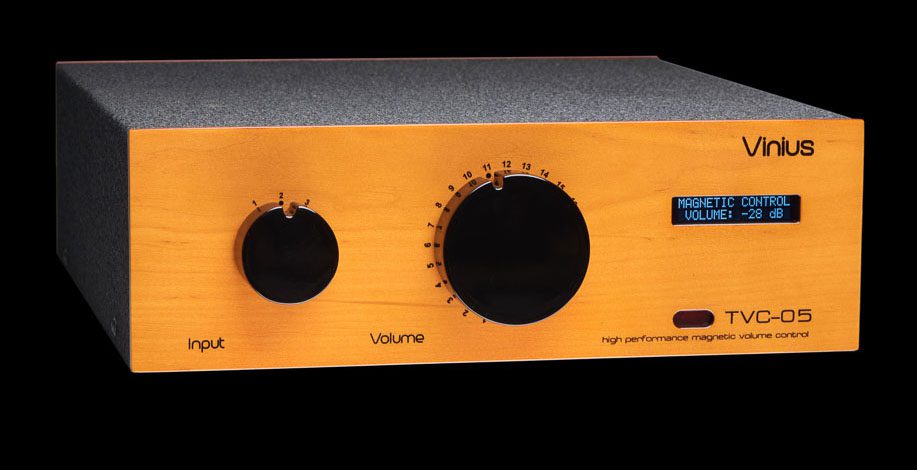
If there is ever an audiophile medal of honour, owners of passive preamps should be the first recipients. The Vinius Audio TVC-05 is probably one of the most approachable examples of the breed. However, compared to a modern full-function preamplifier, this Polish-built “high-performance magnetic volume control” has rudimentary functionality, making it great!

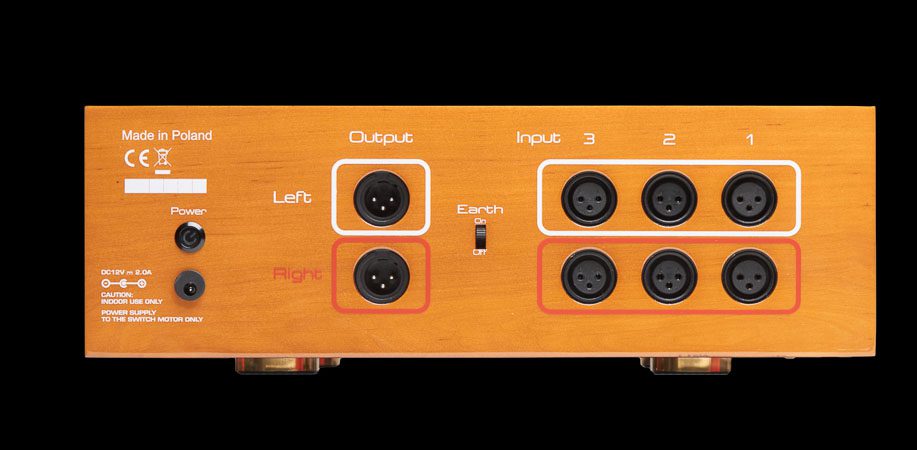
You have a choice of TVC-05 in a balanced or single-ended version. One has three XLR inputs and one output, and the other has RCAs. There’s a motorised magnetic induction-controlled volume control, and the circuit has a transformer wired to Vinius’ patented design. There are no electronic components in the basic TVC-05 RCA version. The RCA+Remote and the XLR versions have a remote volume driven by an Apple handset. This also has the briefest of displays. There’s an even more hair-shirt version of the TVC-05 called the TVC-05 Special Edition. This one even looks at input switching as a form of musical heresy. Just one RCA input, one output and a volume knob. Set against that, the ‘standard’ TVC-05 positively bristles with extra features.

Popularity contest

Passive preamplifiers have been an alternative for the audio hardcore for decades. However, in the early days, they were beset with problems, the biggest of which was high-frequency roll-off. Because there are no gain stages, the connection between a source and an amp can be as simple as a couple of lengths of wire separated by a potentiometer. The moment you construct something like that, you are at the mercy of the length and construction of the wire—mostly length.

Something too long or too capacitive, and the high frequencies roll off fast. In the worst cases, “too long” could mean less than a few inches. Combine this with even minor impedance mismatches between the components, and it becomes nightmare fuel. The passive preamp was always at the core of the most immediate, unforced, and effortless-sounding systems, but this meant next to nothing if the system was too undynamic and rolled off in the treble.

Fortunately, the early days of ‘pot in a box’ gave rise to more sophisticated transformer-coupled and passive magnetic preamplifiers. While these still don’t have the gain of an active line stage, they have the transparency of passive designs without the deal-breaking high-frequency roll-off. The TVC-05 continues that trend. However, the absence of gain (and additional features like a balance control or an array of lights) means they still represent a highly specialised choice and have never broken significant ground in places like the US.

Care and feeding

A passive in any guise is still not as easy to put into a system as active components. You still need to be careful in the choice of components and cables. It’s a popular partner with a tube power amplifier, partly because the input sensitivity and impedance of many all-valve power amp designs are a good match for the output of a passive design. Ground lift is also an important consideration in XLR versions. The TVC-05 has a ground lift switch on the rear panel. Try it… it can make your system even quieter.

I don’t know why, but there seems to be a rule amongst passive preamp makers. The better the product, the further it gets from modern aesthetics. In fairness, I like the wooden finish to the front and rear and the big shiny black knobs, but I’m not sure others will find the 1970s retro look as appealing. However, the finish is rich and deep in the flesh and doesn’t look quite so mid-century G-Plan.

Matryoshka doll

Given its relative paucity of functions, it’s a deceptively heavy, well-made product packed like a Russian Matryoshka doll. The TVC-05 is tightly packed in a bag, in a box that also houses the Apple remote and the power supply, which is packed in a box within a box. All of which means it could survive a few miles in a courier’s van unscathed. Impressive… but a flight case would be even better!

That big black central knob has 24 click stops, each with a 2dB step. These steps relate to the EI 105 transformers wound to Vinius own patented design. If we started listing the components chosen or selected by Vinius because of sonic performance, this review would have to list every part in the TVC-05. Small-brand artisan obsession drives its build quality. Thanks to its chassis, it’s galvanically isolated. Given that hum from ground loops is a real concern on any passive preamp or volume control, the more the TVC-05’s internal organs are shielded from the outside world, the better. Despite this, I would still hesitate to stack the Vinius directly on the top plate of your source (or especially the power amplifier).

It’s a long story

As described above, the days of very short interconnects to prevent signal loss are gone. However, I would still avoid using cables that are more than a metre long. This might also explain why passive preamps never ‘broke’ the US market, as many American audiophiles prefer a system layout that physically sites the sources and preamps along the side wall (near the listening position) and the power amps close to the loudspeakers. As this often requires up to 5m cables, even an XLR-equipped volume control like the TVC-05 might struggle to keep the treble in place.

Vinius Audio TVC-05

Fortunately, that kind of layout isn’t so popular elsewhere. People either have the entire system between the loudspeakers or have it away from them and rely on longer lengths of loudspeaker cable. Such systems can highlight what the TVC-05 does so well. And that can be summed up in a single word: clarity.

The Vinius Audio TVC-05 is so clear and transparent that – were it not for the volume attenuation – you could be forgiven for thinking you had forgotten to plug it in. To some, it’s your source… attenuated. To others, it’s your power amplifier… attenuated. Either way, when you hear how much the gain stages of even a good preamp ruin the relationship between source and amplifier, you can’t help but be impressed by the TVC-05. That’s the big point of the TVC-05; other preamps – even good ones – sound like they are introducing their own characteristics to the overall sound. The TVC-05 never does that. Ever.

I can’t overstress that last part. Even by the standards of other passive preamplifiers and transformer-coupled devices, the Vinius Audio TVC-05 introduces so little of its own character as to make it simply the most honest part of your system.

Keep it clear

The TVC-05 also brings clarity to the party! That clarity means the Vinius Audio TVC-05’s sonic performance hangs on to that of the devices in front and after it, but its sonic invisibility means that’s a good thing.

Pick whatever musical trigger yanks your audiophile chain. It might be detail, soundstaging, vocal clarity and articulation, dynamic range, microdynamics, bass depth and/or resolution, or treble detail… you name it, the TVC-05 does it and does it exceptionally well.

I find myself drawn to products that cope well with changes in scale as you move through recordings. A small jazz venue differs from La Scala, so why do many systems try to impose a single sense of scale? As you spend time with the TVC-05, you quickly learn that the main protagonist in the scale-compromising game is the preamp, and when faced with just the best volume control between source and amp, those scaling concerns go away fast.

Don’t go changing

The best part of the TVC-05 is how it doesn’t change the sound one iota as the volume rises or falls. OK, at very low levels, the absence of gain means you are digging deep into the source. The non-linearities of a power amplifier input at low levels will inevitably begin to emerge. Also, at very low levels, 2dB steps are more noticeable than regular listening levels; many gain stages stagger the step sizes to accommodate very low or very high listening levels. However, I’d take the more uniform 2dB steps if it means you get the sheer honesty of the TVC-05. And even here, the TVC-05 changes neither tone, scale, nor soundstage.

I am blown away by the absence of performance demonstrated by the Vinius Audio TVC-05. It does precisely what a good preamplifier should do: take the sound of a source and give it the right volume level with nothing getting in the way of that goal. Basically, it’s a volume control in a box, and that’s so rare. If you see that as ‘minimalism done right’ instead of a ‘hair-shirted gain-remover’, the Vinius Audio TVC-05 is not only for you but might be the best of the breed.

Technical specifications

  • TVC-05 with passive volume adjustment
  • A balanced or single-ended version with a remote control
  • Galvanic chassis ground separation
  • EI 105 transformers coiled following Vinius patent
  • Directivity-oriented enclosure
  • Motorized volume switch 24-level volume adjustment (2dB steps)
  • Input 3× XLR pair (XLR version), 3× RCA pair (RCA version), 1× RCA pair (Special Edition)
  • Output 1× XLR pair (XLR version), 1× RCA pair (RCA version, Special Edition version)
  • Maximum input signal 3,5V (XLR), 2.5V (RCA)
  • Product dimensions width 360mm, depth 400mm, height 125mm
  • Optimal directivity of the elements designed for minimizing sound quality loss
  • Weight 15kg
  • Price £8,500

Manufacturer

Vinius Audio

www.viniusaudio.pl

UK distributor Fi Audio

www.fiaudio.co.uk

+44(0)1563 574185

Back to Reviews

finite elemente pagode Signature mkII

finite elemente is the company that taught the European high-end community that equipment support can make a difference. Its pagode and pagode Signature ranges have stood the test of time. This is why you rarely see finite elemente equipment on the second-hand market. The new finite elemente pagode Signature mkII will not change that!

The recent rationalisation of the finite elemente range—and the return of Luis Fernandes as the brand’s head—has meant that many of the ‘nursery slopes’ products have disappeared. The company now focuses on its Cera products and just two pagode ranges. These are the top-end mkII Carbon Edition, Edition and Master Reference, and the Signature mkII.

This is likely a good idea; these intricate stands cannot easily scale down to ‘affordable’. Meanwhile, the lower-level finite elemente stands often struggled to compete with more mass-produced designs. By thinning the line, finite elemente can concentrate on the good stuff again. And Signature mkII is a drop of ‘the good stuff’.

Taking a new stand

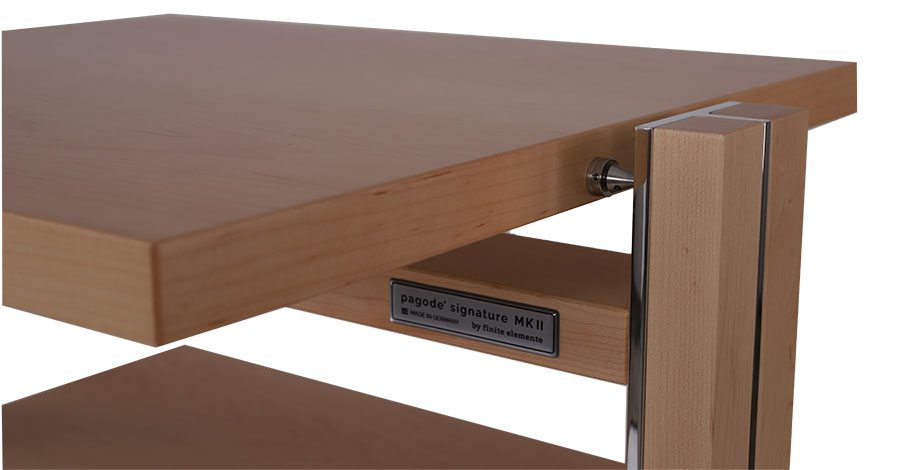
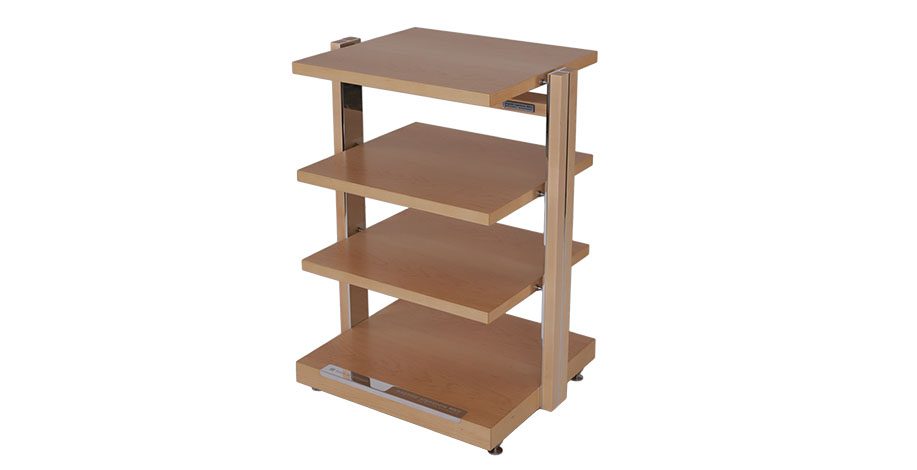
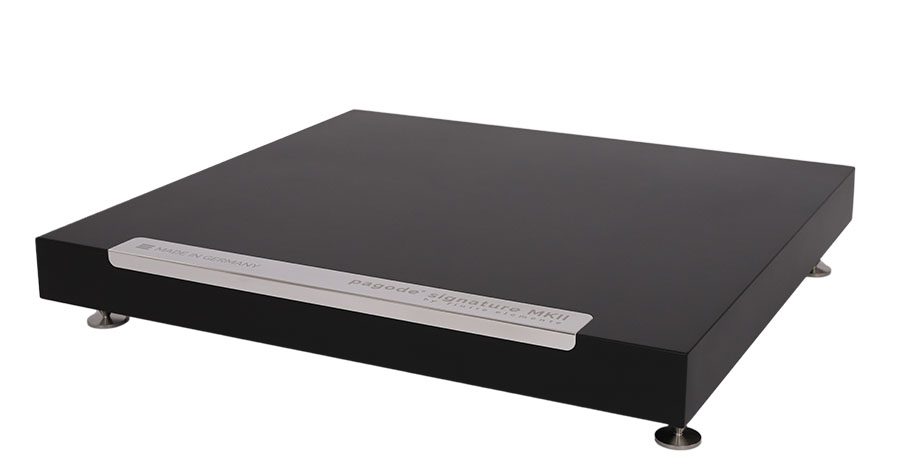
The finite elemente pagode Signature mkII is the latest product from Luis Fernandes. It uses much of what went into the Edition mkII. However, it does without the Resonator Technology featured in the more elaborate cost-no-object stands. However, pagode Signature mkII uses the new HCCT lightweight honeycomb core platforms and shelves. These are internally braced and replace the solid wood platforms of the original Signature. This uses a double honeycomb platform for the amplifier stand or the base of the multi-tier stands, with a single honeycomb platform used elsewhere. These platforms are clamped in place from the two upright arms (and crossbar) of the equipment stand; this is called ‘sidespike technology’ in finite elemente speak and is a very effective way of channelling vibrational energy at 90° to any possible means of transfer into or out from a product.

finite elemente pagode Signature mkII E14 four-tier rack

As with the mkII version of pagode Edition, the overall lines of the equipment support system have been cleaned up from the previous version. That is outstanding, as the lines of the original Signature were already good-looking. The previous version had platforms sitting in what looked like picture frames. It looks sufficiently similar to be able to sit next to the originals without drawing attention to itself, but also sufficiently different to form the start of a new relationship with finite elemente from scratch.

My new relationship starts with the E14 four-tier stand and the E21 amplifier platform. Both are easy to build, relatively quick to install and reassuringly heavy without being so heavy that light cannot escape its clutches.

The relaxed approach

In moving to mkII, finite elemente had to improve something that doesn’t intrinsically need improving. Fortunately, the move has only improved the stand and platform. But the reason why people didn’t want pagode Signature to change is it has one of the most graceful sounds you can get from a stand. And that is improved in the mkII version. It brings out the lithe sound of anything that rests on the stand. It’s almost a blood-pressure-reducing sound, although I think that’s asking a bit much for an equipment stand unless it’s made of beta blockers.

finite elemente pagode Signature mkII E21 platform

Also, where pagode Edition began to create more of a performance gap between Edition and Signature, the pagode Signature mkII has raised its game. Like the mkII Edition, there’s a improved transient response, although this is not in the same league as the Carbon Edition, finite elemente has clearly learned a few tricks in developing that platform. There is an improved dynamic range, a lower noise floor and a more actively neutral tonal balance. Of course, you need high-grade electronics to hear what the pagode Signature mkII does well. On the other hand, no one contemplating using a stand costing just shy of £5,500 will be using it with an entry-level amplifier.

Calming Influence

Used in the right context, pagode Signature mkII has a calming influence on good audio. Not that such audio is in any way ‘excitable,’ but it manages to ‘chill out’ audio components all the same. It brings a much-needed sense of calm and order to this unruly world, and the best audio is all the better for its degree of naturalness.

I think the pagode Signature mkII has significantly improved over its predecessor. It’s a step change, but there probably won’t be a sudden surge in second-hand finite elemente. If you’ve got the existing pagode Signature, the new mkII is better… and better in almost every way. It looks sharper, builds up slightly easier and is more detailed, tonally balanced, dynamic and ‘relaxed-focused’ than its predecessor. But the pagode Signature sets a very high standard that people will (mistakenly) think there isn’t much more to gain by upgrading. They are wrong. However, ‘upgrade your equipment support’ is not high on the audiophile list of priorities. This is in part because it usually means removing and replacing many heavy boxes.

This is a shame because many systems with pagode Signature could benefit from pagode Signature mkII.

Effortless neutrality

I like the new look of finite elemente pagode Signature mkII. Its clean lines, reassuring build quality, and the sort of effortless neutrality and focus it brings to high-end equipment make it one of the obvious choices for top-notch audio systems. Aside from the fun of lifting hundreds of kilos of audio electronics out of one rack and into another, there are no downsides. It also has this remarkable calming ability that can chill out all bar the most teeth-grinding of angry individuals. Your music sounds like it always did, but just a little more calm and relaxed when played on the pagode Signature mkII. And yet, if you think that leads to soporific and saccharine sounds, you are very much mistaken.

Price and contact details

finite elemente Signature Mk II E14 stand in any wood finish with anodised side pillars, £5,490. Optional high polished side pillars and logo insert, £550.

finite elemente Signature Mk II E21 support in any wood finished with anodised metal insert (Q or L version), £1,490. Optional high polished logo insert, £160

Manufacturer

finite elemente GmbH

www.finite-elemente.eu

UK distributor

Audiofreaks

www.audiofreaks.co.uk

+44(0)20 8948 4153

Read more from finite elemente

Back to Reviews

Pro-Ject X2 B/S3 B

It’s long been known among record player cognoscenti that pick-up cartridges have an intrinsically balanced output. They have separate left and right grounds, blue for the left and green for the right. Yet it’s only in the more esoteric systems that anyone takes advantage of the potential noise reduction this promises. Pro-Ject is keen to change this with a range of turntables and phono stages equipped to make a genuine balanced connection possible. The Pro-Ject X2 B turntable/S3B phono stage is a prime example of this change.

This realisation occurred due to the company’s purchase of Musical Fidelity a few years ago. This move brought existing Musical Fidelity owners into contact with the engineers at Pro-Ject. Balanced ancillaries to suit components with the DIN connections was a frequent request. They realised it would be possible to bring balanced connections to a much wider audience by offering an appropriate input on their phono stages.

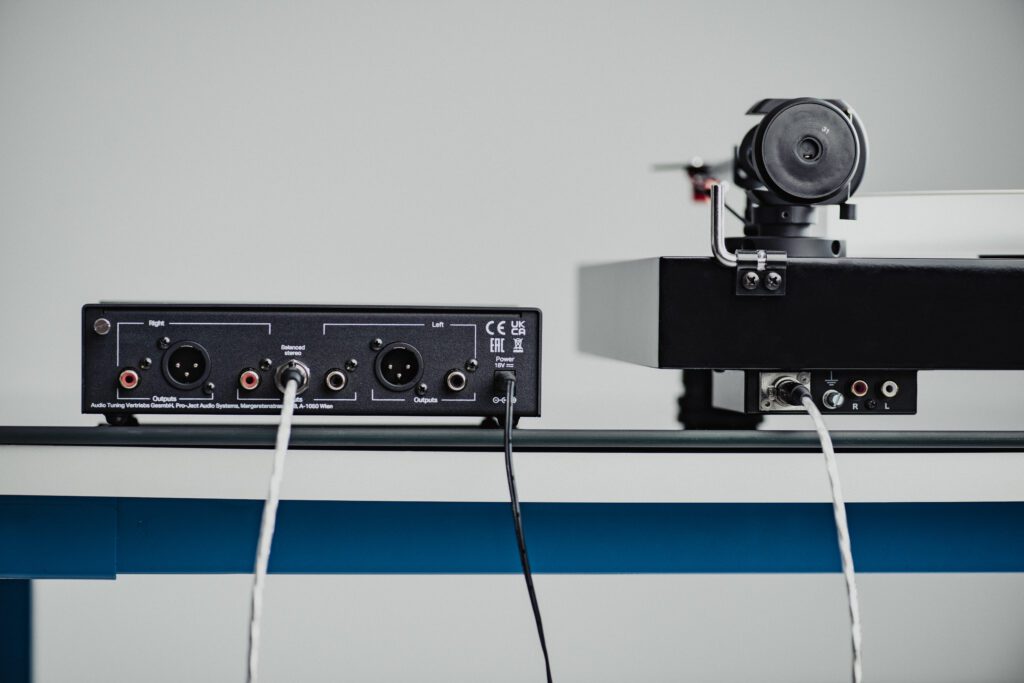
Normally, this would involve a pair of XLR sockets. However, such things are expensive and bulky in relation to the compact nature of Pro-Ject’s Box range of electronics. Pro-Ject instead chose the five-pin mini-XLR for the True Balanced Connection. The matching cable can carry separate signal and ground connections for the signal along with an earth for the tonearm. It replaces two RCA cables and an earth wire in one fell swoop. Only Pro-Ject turntables with a B suffix are equipped with a mini-XLR output. The company makes an adaptor cable with RCAs on one end and a mini-XLR on the other. If you buy the Pro-Ject X2 B turntable/S3 B phono stage with this connection on both, you get the mini-XLR cable gratis.

Anyone for a shellac revival?

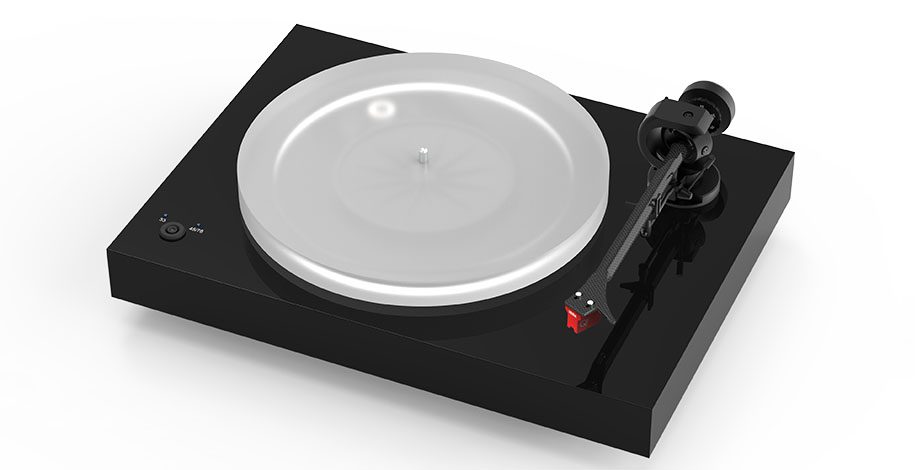
A 50mm thick machined MDF plinth makes the X2 B a chunky turntable. It sits on three metal feet and has a 30mm thick acrylic platter. The latter is quite a luxury at this price point, and what’s more, Pro-Ject has had the good grace to supply a felt mat with it, which is always a good idea. Unusually for the brand, the X2 B has a sub-platter, so the motor and belt are not visible; most other Pro-Jects at this price have a perimeter drive belt.

Pro_Ject X2-B

The belt for 33 and 45rpm is flat, but a second round belt is supplied with a different pulley to get the platter up to 78rpm for the shellac enthusiasts out there. Speed switching is electronic with a button on top of the plinth, on/off for the motor is underneath the plinth in what has become a popular style. Power is provided by a 15V switched mode wall-wart supply, which means there is potential for an upgrade if you want it.

The nine-inch tonearm is made from aluminium and carbon fibre. It offers adjustment for VTA with a collet fixing in the base. Pro-Ject suggests that azimuth can be adjusted, but you’ll need to review the manual to see how it’s done. The bearing is a gimbal type, and downforce adjustment is achieved by turning the damped counterweight on a stub at the back. Given that this turntable is supplied with a specific cartridge, I was surprised that the counterweight ended up quite as far back as it did when the requisite 2.3g downforce was applied. As a rule, it’s best to keep the high mass of a counterweight as close to the bearing as possible so that the cantilever doesn’t have to counteract too great a force from the momentum of the weight.

Balanced connections

The cartridge supplied and fitted is an Ortofon Quintet Red moving coil. Apparently, you can use balanced connections with moving magnets. The Quintet Red is entry-level at £319 and has an ABS and aluminium body with an elliptical tip on the end of its cantilever. It’s nothing fancy but is clearly capable of decent results if this record player is any indication. The only unusual thing about the Quintet Red is that it likes low impedance loading, and the spec suggests 20 Ohms or more is suitable for its seven-ohm internal impedance characteristic.

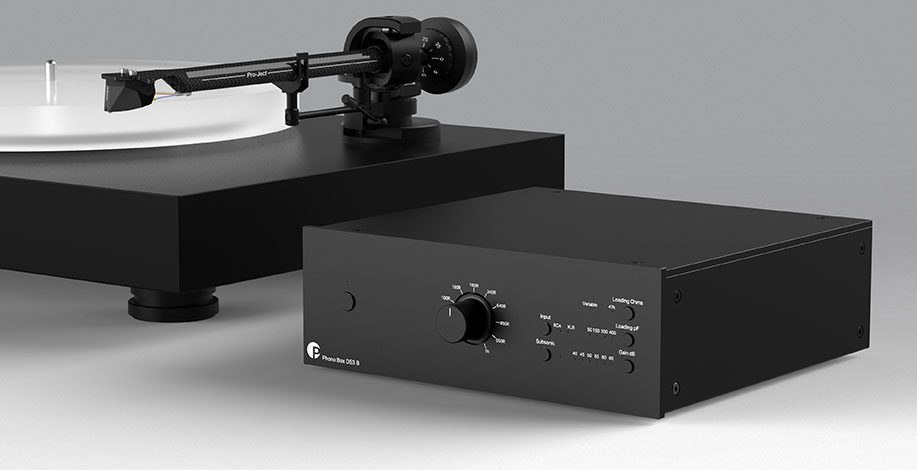
Pro-Ject Phono Box DS3 B

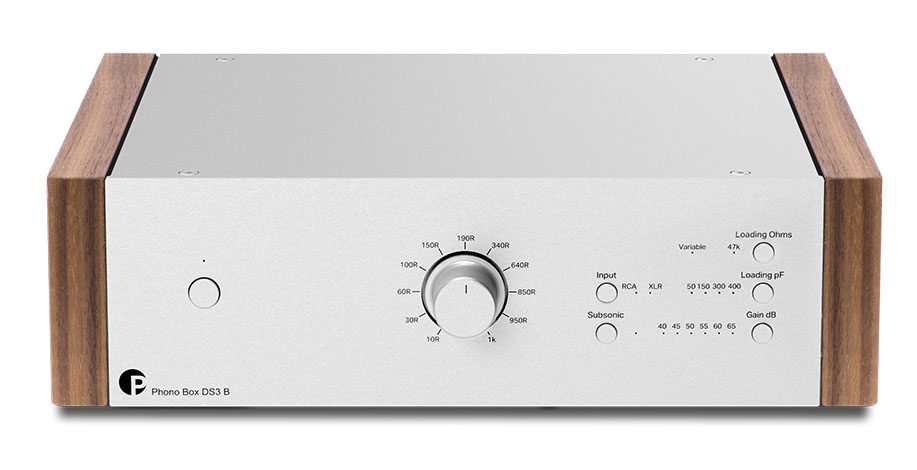
The S3 B Phono Box is a rather attractive compact unit for its asking price, I particularly like the pin hole LEDs that indicate input, gain and loading. There is a good array for each with a step-less 10 to 47k Ohm impedance range and a 40 to 65dB gain range. It could accommodate a wider range of cartridges than the enthusiast at this end of the market is likely to throw at it. Connections extend to balanced in- and outputs alongside the traditional RCA varieties. The outputs are on conventional XLR sockets with short XLR cables included in the box for those with balanced inputs to connect to. An SMPS wall-wart supplies power as per the turntable, but this time, it’s an 18V type.

Thread and weight

Setting up the X2 B involves putting the belt around the motor and sub-platter, fitting the platter, and putting the counterweight on the tonearm. The latter is slightly confused by the calibration of the weight, which, in this case, didn’t entirely agree with the figure given by a downforce scale. There’s a thread and weight anti-skate device to fit on the back of the arm and the mat to put on the platter, but that’s about it.

Using the X2 B is aided by a good lift/lower lever and a magnetic catch on the armrest, which gives you some confidence that it won’t jump off if the arm is accidentally brushed. The results were pretty decent with the supplied RCA cables. This is because it combines an even tonal balance with a good sense of timing; the latter was lacking with older models, and it was enough to undermine my enthusiasm for the brand. Now we have a reasonably priced Pro-Ject that can boogie with the best of them, well, almost.

Good levels of detail

the Pro-Ject X2 B turntable/S3 B phono stage package delivers good levels of detail. It’s adept at picking out the quieter elements in a mix coherently and engagingly. This is apparent in the spaces between instruments and voices. The backgrounds are quiet enough to open up the presentation. This means you can follow individual contributions while enjoying their combined effect. I particularly enjoyed Stevie Wonder’s ‘I Believe (When I Fall in Love It Will Be Forever)’, where the vocals are multiplied with Stevie singing “Lord please answer my prayer” behind the chorus, moving stuff.

Switching from the RCAs to the balanced mini-XLR connection provided a worthwhile uplift. It gives the immediate impression being one of increased volume. However, it soon became clear that this was because the noise level had dropped. It’s an increase in dynamic range rather than volume. This produces a calmer, more precise, and deliberate result. It’s a situation that enhances timing because everything is hanging together more coherently on the Dan Berkson track Unity, which starts to swing. The saxophone is more lyrical and engaged, rising to the next level.

Towers of dub

The deck serves the bass well. The decent platter mass clearly helps to give the sound some weight and impetus. I particularly enjoyed Select Cuts from Blood and Fire, Chapter Two, where the dub ebbed and flowed most cogently. The low bass remains articulate and tuneful regardless of how heavy the beats got, and on Yabby You’s ‘Rally Dub’, they get pretty meaty. These results are achieved with a near entry-level phono stage. I tend to pull out a reference phono stage in these situations to see what the turntable is capable of, but not here.

The overall result from the Pro-Ject X2 B turntable/S3 B phono stage was compelling. It has strong dynamics, high detail levels and excellent timing. The balanced connection is clearly a significant benefit. I wouldn’t work if the turntable and cartridge were not doing the right thing. However, they pull detail off the vinyl in a cohesive and even-handed manner. I’m happy to say that the X2 B does this very effectively. Also, the DS3 B Phono Box does nothing to undermine its efforts. The potential for upgrading the cartridge and power supplies also makes this an appealing proposition for those who enjoy a tweak or two. Even straight out of the box, this combination is a honey!

Technical specifications

X2 B turntable

  • Type Belt-drive turntable with arm & cartridge
  • Rotational Speeds 33⅓ RPM, 45 RPM, 78 RPPM
  • Supplied Tonearm Length 9-inch
  • Supplied Cartridge Ortofon Quintet Red
  • Drive Mechanism Flat rubber belt
  • Speed Control Electronic
  • Platter Type 12-inch acrylic platter with felt mat
  • Platter Weight Not specified
  • Bearing Type Stainless steel
  • Plinth Configuration solid MDF
  • Dimensions (H×W×D) 150 × 460 × 340mm
  • Weight 10kg
  • Price £1,399

Phono Box DS3 B

  • Type Solid-state, MM/MC phono stage with balanced input and 12v triggers
  • Phono inputs One pair single-ended (via RCA jacks), one balanced (via mini-XLR connector)
  • Analogue outputs One pair single-ended (via RCA jacks), one pair balanced (via XLR connectors)
  • Gain 40, 45, 50, 55, 60, 65 dB
  • Input impedance Stepless 10–1000 ohms or fix 47kOhms
  • Input capacitance 50, 150, 300, 400pF
  • Output impedance Not specified
  • Output level Not specified
  • RIAA linearity < 0,25dB/20Hz–20kHz
  • Distortion THD at 1 kHz < 0,001% MM, < 0,004% MC
  • Signal to Noise Ratio MC (60dB) 85dBV, 91dBV – ‚A‘ weighted. MM (40dB) 104dBV, 111dBV – ‚A‘ weighted
  • Dimensions (H×W×D) 72 × 206 × 194mm
  • Weight 480g without PSU
  • Price £529

Manufacturer

Pro-Ject Audio Systems

www.project-audio.com

UK distributor

Henley Audio

www.henleyaudio.co.uk

+44(0)1235 511166

Read more from Pro-Ject

Back to Reviews

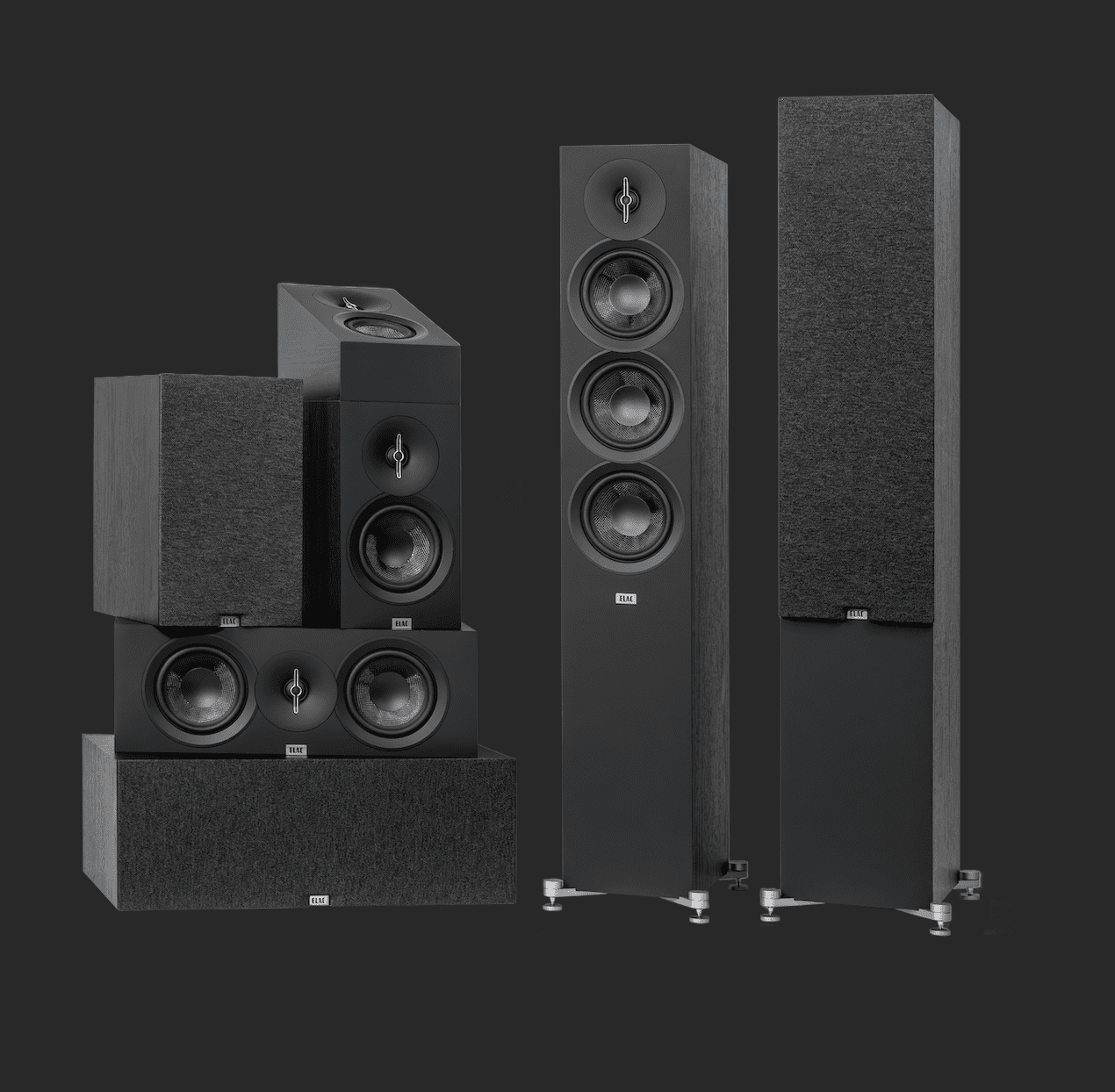
ELAC Unveils Debut 3.0 Speaker Lineup: Legendary Sound Meets Elevated Style

June 6th, 2024 – ELAC, a leading global provider of high-performance speakers and electronics, is thrilled to announce the Debut 3.0 line of home speakers. Building upon the success of previous generations in the Debut Family, this new series incorporates a variety of innovative features, advanced technologies, and refined aesthetics.

The creation of the ELAC Debut 3.0 series is a testament to the company’s commitment to delivering exceptional sound and unmatched style at accessible prices. This new line was designed not just to offer superior audio performance, but to also blend legendary acoustics with sophisticated design seamlessly. The Debut 3.0 series stands as a benchmark in the affordable audio market, highlighting that remarkable style and legendary sound quality can be attainable for all audio enthusiasts.

“Our team has poured their creativity, energy, and dedication into this series, pushing the boundaries of what’s possible in affordable home audio,” said Joe Riggi, President at ELAC.

Key Features of the Debut 3.0 Speakers:

Aluminum Dome Tweeter

The newly developed aluminum dome tweeter in the ELAC Debut 3.0 speakers significantly enhances audio performance. Renowned for its stiffness and lightness, aluminum allows the tweeter to reproduce high frequencies with remarkable clarity and detail. This results in a precise and immersive listening experience, faithfully capturing the delicate nuances in vocals and instruments. Additionally, the tweeter’s integrated aluminum phase plug provides a controlled dispersion pattern, delivering consistent sound quality throughout the listening environment.

Aramid Fiber Woofers

The inclusion of the newly developed aramid fiber woofers in the ELAC Debut 3.0 speakers elevates the overall audio experience. Aramid fiber is exceptionally strong and rigid, making it an ideal material for woofer construction. This enables precise and impactful bass reproduction, with a high stiffness-to-weight ratio ensuring tight and accurate bass response. The result is punchy and well-defined low frequencies with minimal distortion.

Internal Bracing

The internal speaker bracing in the ELAC Debut 3.0 speakers is a critical design feature that enhances audio performance. By reinforcing the speaker cabinet, internal bracing reduces unwanted vibrations that can color and distort sound. This ensures a more accurate reproduction of audio, with sound primarily emitted from the speaker drivers rather than the cabinet itself.

Luxurious Cosmetics with Magnetically Attached Grilles

The ELAC Debut 3.0 series has undergone a significant cosmetic upgrade, enhancing both visual appeal and functional design. The magnetically attached grilles offer a clean, hardware-free look that integrates seamlessly into any home audio setup. This feature allows for quick removal and attachment of the grilles, catering to those who prefer the look of exposed drivers. The overall aesthetic was further refined with a sleek cabinet finish, contributing to the speakers’ modern and elegant appearance.

Easy to Drive

The entire Debut 3.0 lineup requires less power from an amplifier to achieve the same volume level as lower impedance speakers, making them more efficient and compatible with a wider range of amplifiers, including those with lower power ratings. This is particularly advantageous in- home audio setups where space or budget constraints limit the choice of amplification.

The ELAC Debut 3.0 series embodies the perfect fusion of legendary sound and elevated style, setting a new standard for affordable high-performance audio.

For more information about the ELAC Debut 3.0 line of home speakers, please visit www.elac.com.

The Debut 3.0 series will be available in the Fall through our nationwide network of dealers.


ModelDescriptionFinishRetail

Price

DB53-BKDebut 3.0 5-1/4” Bookshelf Speakers (Pair)Black Ash$349.98
DB63-BKDebut 3.0 6-1/2” Bookshelf Speakers (Pair)Black Ash$449.98
DF53-BKDebut 3.0 3-Way Triple 5-1/4” Floorstanding Speaker (Each)Black Ash$449.98
DF63-BKDebut 3.0 3-Way Triple 6-1/2” Floorstanding Speaker (Each)Black Ash$499.98
DC53-BKDebut 3.0 Dual 5-1/4” Center Speaker (Each)Black Ash$299.98
DC63-BKDebut 3.0 Dual 6-1/2” Center Speaker (Each)Black Ash$399.98
DA43-BKDebut 3.0 4” Dolby Atmos Enabled/On-Wall Speaker (Pair)Black Ash$499.98

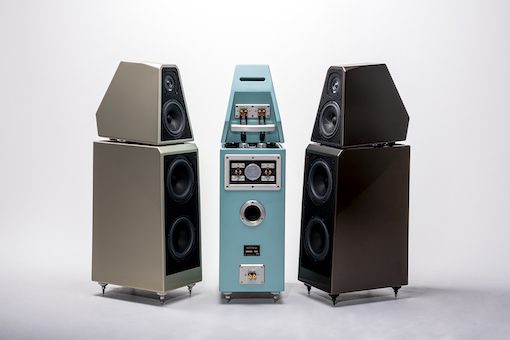
Return of a high-end icon – The WATT/Puppy by Wilson Audio

June 2024 – The WATT/Puppy is not only the most iconic model in the star-studied history of Utah-based high-end speaker specialist Wilson Audio; it also pushed the envelope of upscale loudspeaker design across the industry, becoming the world’s bestselling speaker above $10,000 – and so it remains to this day.

The original concept was sparked by company founder Dave Wilson’s desire to build a portable monitor for his recording projects that would exceed the resolving power of the established models of the time, with a firm focus on maximising performance without costs constraints. Such was the demand for the resulting custom-made WATT (Wilson Audio Tiny Tot) two-way monitor that Wilson decided to create a separate bass enclosure to transform it into a full-range floorstanding loudspeaker system. This bass enclosure was dubbed the Puppy, and thus in 1986 the WATT/Puppy was born.

The WATT/Puppy continued in Wilson Audio’s range for 25 years, undergoing eight extensive revisions until its eventual retirement in 2011. This year, as Wilson Audio celebrates its 50th anniversary, this most iconic of high-end loudspeakers is reborn in entirely remastered form, designed with a singular intention: to create the WATT/Puppy that the late Dave Wilson would have built if he had the resources then that Wilson Audio has now.

The new model, called ‘The WATT/Puppy’, was unveiled at the HIGH END audio show in Munich in May and receives its global launch today (7th June).

Key features

  • Thorough evolution of the original WATT/Puppy’s separate mid/treble (WATT) and bass (Puppy) enclosure design and iconic angular shape
  • Wilson Audio’s proprietary ‘X-material’, ‘S-material’ and ‘V-material’ composites deliver enclosures that are inherently inert
  • Original features retained and enhanced, including the WATT’s rear handle – a nod to its heritage as a portable studio monitor
  • The WATT incorporates Wilson Audio’s 1-inch Convergent Synergy Carbon treble driver and 7-inch AlNiCo QuadraMag midrange driver
  • The Puppy houses two 8-inch bass drivers with homogenous cellulose composite cones
  • Adjustable spikes allow precise time-domain alignment of the WATT module
  • Benefits from Wilson Audio’s relentless pursuit of perfection, right down to its proprietary AudioCapX-WA capacitors
  • Incorporates contemporary Wilson Audio features such as the built-in bubble level and easy-access resistor panel for maintenance and customisation
  • WilsonGloss enclosure colours, grille colours and hardware colours can be specified individually, providing hundreds of colour combinations
  • Rear resistor panel incorporates a limited-edition medallion commemorating Wilson Audio’s 50th anniversary – available exclusively throughout 2024
  • Delivers exceptional sonic detail, dynamic range, transient speed and soundstage focus to ensure an engrossingly realistic musical performance

Price and availability

Lovingly crafted in Provo, Utah and finished in Wilson Audio’s automotive-class paint facility, The WATT/Puppy is now available to order.

The UK RRP for the standard range of WilsonGloss colour options is £41,998 per pair, including VAT and installation. Premium and custom colours are also available.

UK contact for consumers

Absolute Sounds – sole UK distributor of Wilson Audio loudspeakers

W: absolutesounds.com T: 020 8971 3909

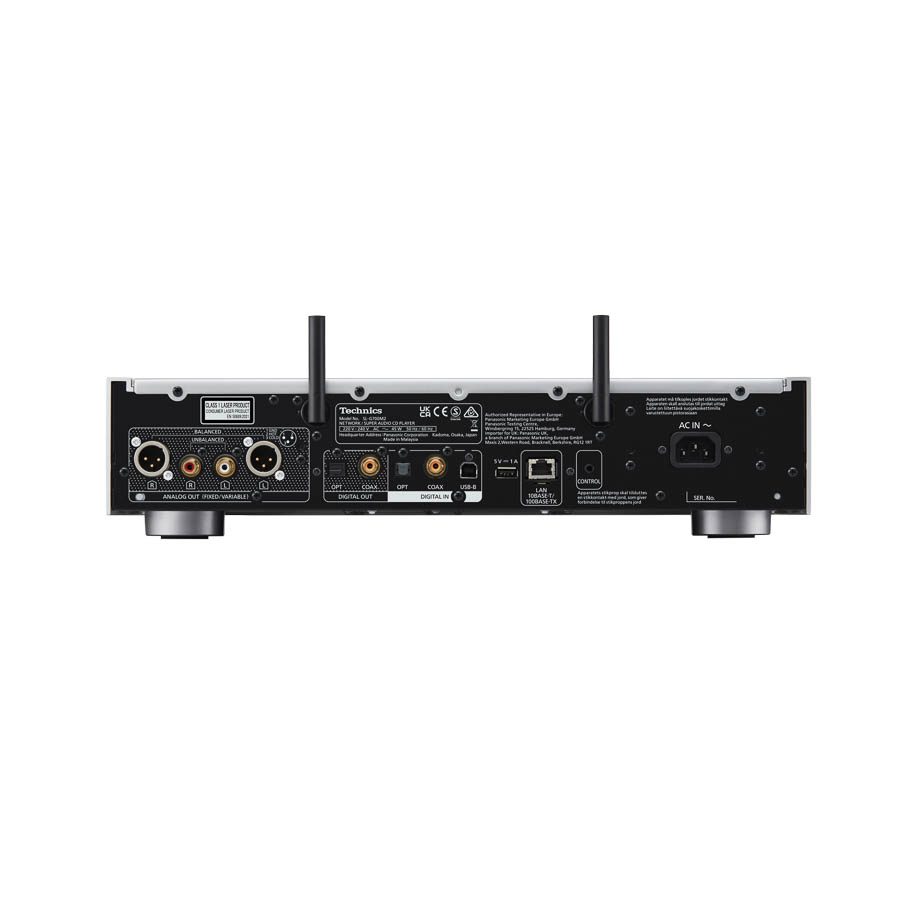
Technics SL-G700 Mk2

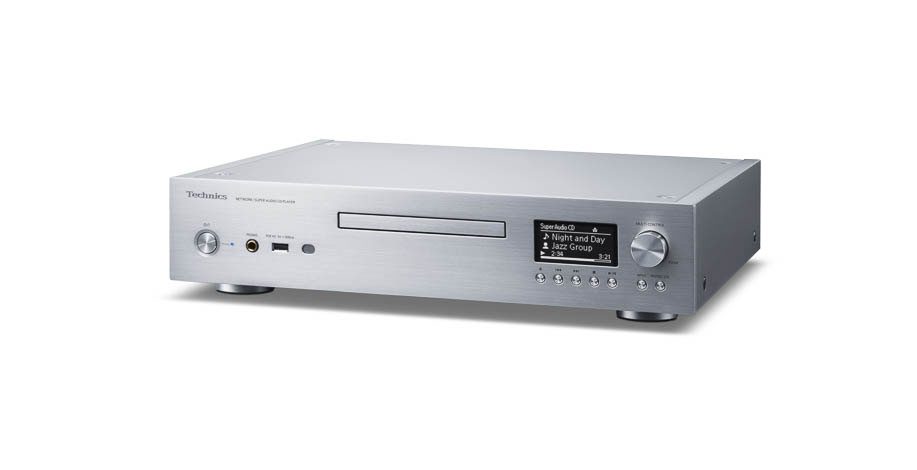
We need to talk about Technics. Technics is a premium audio brand within a huge consumer electronics corporation. It has the resources and wherewithal to make first-rate products in every branch of high-performance audio. And its products—including everything from loudspeakers to amps and digital front-ends—are extremely well-engineered. They are good-sounding devices ideal for high-end domestic use. Yet, in the public domain, Technics is still ‘that DJ turntable company’. Products like the SL-G700 Mk2 are given less consideration than they deserve.

Let’s set the record (no pun intended) straight. If the SL-1200 turntable and its kin had never existed, everyone would praise Technics for its excellent SL-G700 Mk2. They would say how it single-handedly navigates the modern digital audio landscape. OK, so if the SL-1200 had never existed, the chances are that Technics would have stayed on the back burner. But, the fact remains the SL-G700 Mk2 is one of those rare-for-2024 products that can both play CD/SACD discs and is very good at local and online streaming too.

No favours?

Of course, Technics does itself no favours by making the SL-G700 Mk2 look almost identical to its predecessor and making both products look like ordinary—if heavy and well-built—disc spinners. But it’s so much more than that.

Technics SL-G700 Mk2

Once you get past the disc drawer on the front, you begin to see an impressive spec sheet. More accurately, you look for absences on the spec sheet… and keep looking. OK, for the pedantic, it doesn’t support multichannel Blu-ray Audio because it only has two channels. It also doesn’t support DVD-A because it’s not 2002 anymore. It also doesn’t have an HDMI port because it’s a resolutely audio-oriented device. The HDMI pathway still has video content. Everything else (including Chromecast on-board, MQA and MQA disc replay, streaming across Bluetooth or through a network connection, AirPlay 2… the works) is ready to rock.

Strict rules of fairness

In fairness, the original Technics SL-G700 sported many of these functions. And while we are staying under strict ‘in fairness’ rules, some of the motivation for making an SL-G700 Mk2 comes down to the non-availability of chips in the wake of the AKM factory fire. However, Technics adopted the ‘when life gives you lemons, make lemonade’ maxim to its fullest effect here.

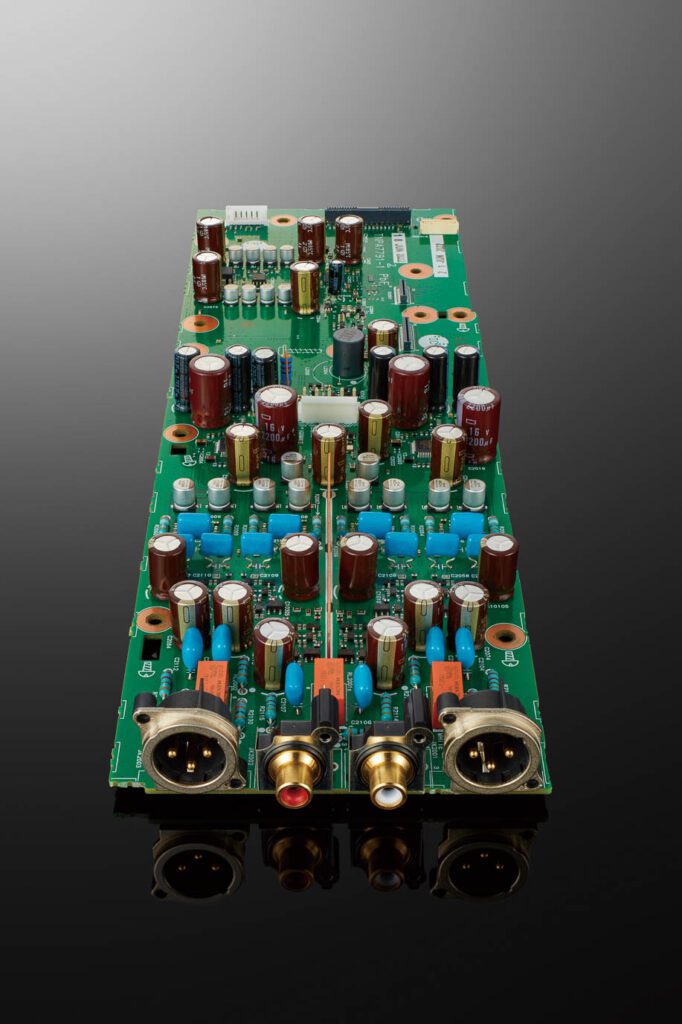
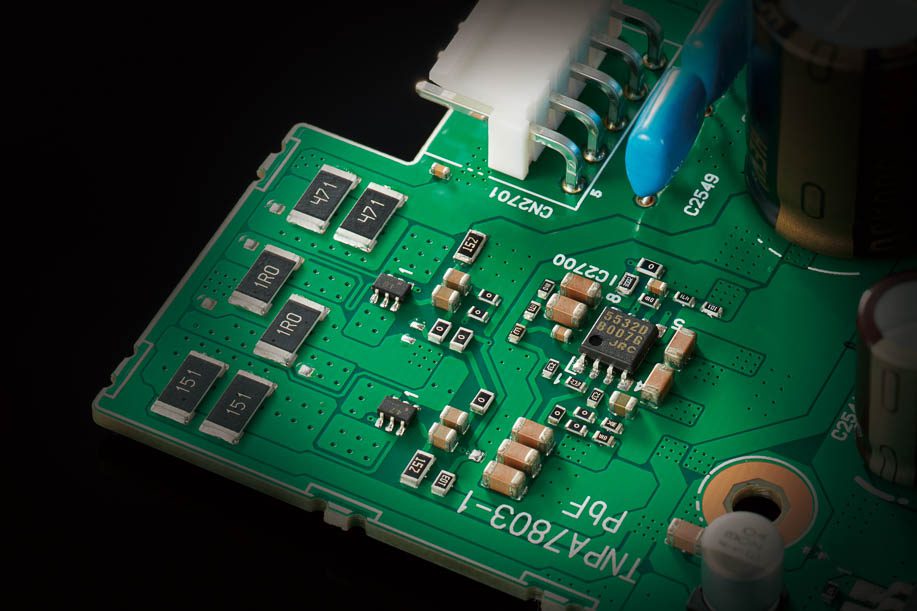
Technics switched to an ESS9026PRO digital converter in the SL-G700 Mk2, but it’s used novelly as befits a company that returned to the drawing board with this one. The ESS chip runs in balanced, dual mono mode but also uses a custom-designed filter (which, when speaking to the people at Technics about, my transcription software saw as ‘philtre’, suggesting the SL-G700 Mk2 is filled with medieval love potions). This filter derivates the load-adaptive phase calibration concept used in Technics amplifiers instead of a simple low-pass filter. Technics also discusses a ‘Coherent Processing’ system where a pre-process minimises amplitude and phase deviations of incoming digital signals. This could be classed as a pre-DAC filter or ‘philtre’ as my software says. Perhaps it is a love potion, after all…

Upgrades

Technics has been clever with the SL-G700 Mk2 in several other ways, all of which pull in aspects of product design from elsewhere in the company to make a better product. For example, it uses a switch-mode power supply from elsewhere in the Technics stable but raises its operating speed from 100kHz to 300kHz, so it has no impact at digital audio frequencies. It also comes with active (phase-inverting) noise cancellation for the same reasons.

Technics SL-G700 Mk2


Some in the audio world break out in hives at the thought of a switch-mode power supply in anything to do with hi-fi. However, Technics has been making these supplies for the longest time and doing so based on a barrage of listening tests. The company claims its switch-mode power supply is at least as good as – and in many respects better than – a well-made analogue linear PSU in terms of noise and accuracy.

That’s hard to test on a finished product, especially if you are not inclined to send back a review sample that looks like it was used in several seasons of Game of Thrones. As such, we’ll rely on our own listening tests… and found it to be a faultless and blameless component within a very good player. And while part of that falls to the discrete output stages, the power supply provides a good deal of that performance.

Chonky Lad

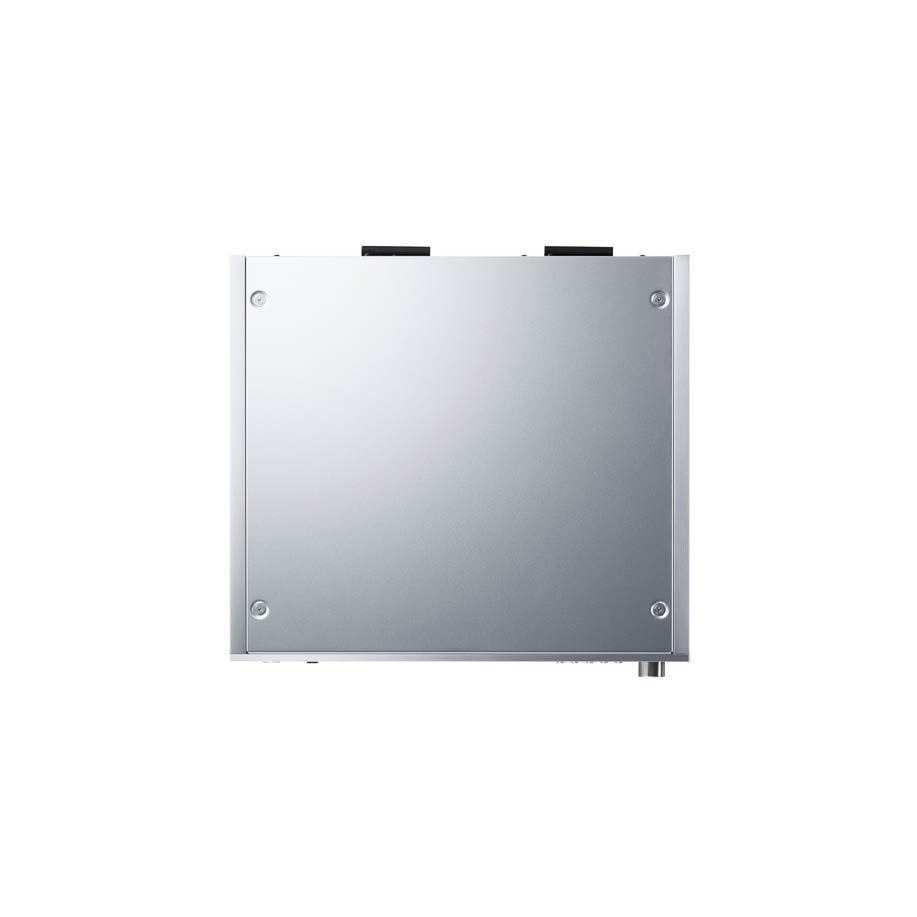
The Technics SL-G700 Mk 2 weighs over 12kg, which puts it somewhere between ‘chonky lad’ and ‘absolute unit’ regarding disc player mass. It’s put on about 100g between the original and Mk2 versions, so, like its exterior design and construction, you would be hard-pressed to tell them apart. As so many makers hide minimal internal changes and sonic improvements with big changes to the chassis, the fact Technics has done the exact opposite bodes well for its performance.

One of the big changes between the SL-G700 and SL-G700 Mk2 is the speed of operation. The original was a little ‘glacial’ in use as if it was constantly multitasking, but in its latest guise, either it has more firepower in the processing department or better code. So, when you press the ‘eject’ button, it thinks for less than half a second before ejecting a disc.

Technics SL-G700 Mk2

Getting the network side up and running requires using Google Home thanks to that Chromecast backbone. Then use the ‘Technics Home Center’ app for iOS or Google. This is a good basic app (especially for phone users), although it lacks the more advanced functionality of some of the best. As so much of how we interact with network players revolves around how the app works, I’d like the Technics to have something with the slick interface and flexibility of AURALiC’s Lightning App. Let’s put this into perspective, though; the app is still good and a major improvement on anything used five years ago, except Sonos.

Sound quality

In a way, there are two reviews in one here, joined in common sound quality. First, the CD and SACD player side. The operation is good, although it requires the remote handset instead of the app. It works with majestic grace, matched in its sound quality, detailed, refined and effortless. When it comes to dynamic range, it’s more about shade and texture than scale and bombast.

It’s not that the SL-G700 Mk2 is undynamic; the SL-G700 Mk2’s a punchy and rhythmic sounding player and with enough energy and drive to pump out the title track from Infected Mushroom’s I’m The Supervisor [YoYo] to make you want to play loud and proud. It also kicks along with a great sense of rhythm. However, where the SL-G700 Mk2 is at its best is when it is playing something where musical elegance is paramount because it brings out that grace and space that is so often the preserve of the high-end.

Technics SL-G700 Mk2

A similar conclusion could be drawn with the streaming side, although, if anything, the streaming section is perhaps still more elegant and refined. I used the same track three ways; ‘Animales Hambrientos’ by Bebe [Cambio de Piel, Warner Spain]. This is useful because I don’t speak Spanish, so I can focus on vocal articulation. Rather than let my brain fill in the blanks in English words. It’s also an exceptional recording. I have it on CD, my home server, and most streaming services. The sound from all three was remarkably close. The disc player was the most expressive and immediate; arguably, the online services came last. The gap was close, though; closer than many can achieve.

Cohesive agility

There’s lots to like about the Technics SL-G700 Mk2’s sound. It tries hard not to have a sound of its own! It’s an agile and cohesive-sounding player. It can also deliver potent bass lines when called for and the deftest touch when required. The problem with describing sound quality in written terms is that it sounds like two different aspects of performance. However, Technics is adept at tying the sound together beautifully.

This is an excellent performer by Technics. It’s the perfect bridge between disc playing and streaming, doing both with equal grace and force. That ‘disc and streaming’ solution usually needs at least two boxes. Those that pull both together usually do so at great cost or by compromising the overall performance. The SL-G700 Mk2 doesn’t compromise!

Technical specifications

  • Type Network Streaming CD/SACD player
  • Disc formats Super Audio CD (2 ch area only), CD, CD-R, CD‑RW
  • Digital inputs Coaxial Digital × 1, Optical Digital × 1, USB-A × 2(Front/Rear), USB-B ×1, LAN 100 Base-TX, 10-Base T
  • Digital outputs Coaxial Digital × 1, Optical Digital × 1
  • Analogue outputs 1× pair RCA unbalanced, 1× pair XLR balanced, supports variable level output
  • Digital audio formats Super Audio CD (Single/Hybrid 2ch)/CD Playback, Network Supports to High-res Digital Audio Files Including MQA, MQA-CD Playback, Chromecast built-in™ Works with Google Assistant, Spotify Connect, Amazon Music, Deezer, TIDAL, Qobuz, Internet Radio, AirPlay 2, Bluetooth (AAC, SBC)
  • WiFi IEEE 802.11 a/b/g/n/ac, 2.4 GHz/5 GHz Band
  • Digital precision PCM, to 32-bit, 384kHz, DSD to 11.2MHz
  • Frequency Response Super Audio CD: 2 Hz to 50 kHz (-3 dB)/CD: 2Hz to 20 kHz (-3 dB)
  • Dynamic Range Super Audio CD, balanced: 110db (IHF-A)/unbalanced: 110db (IHF-A) CD: balanced: 98db (IHF-A)/unbalanced: 98db (IHF-A)
  • Signal/Noise Ratio Super Audio CD: balanced: 121dB/unbalanced: 118dB, CD: balanced: 121dB/unbalanced: 118dB
  • Dimensions (W×H×D) 430 × 98 × 407 mm
  • Weight 12.3kg
  • Price £2,899.99

Manufacturer

Technics

www.technics.com

Tel (UK only): 0333 222 8777

Back to Reviews

Music Feature: Jim Bob

Thanks For Reaching Out, the new solo album by Jim Bob, one half of ‘90s ‘punk Pet Shop Boys’ and indie-rockers, Carter the Unstoppable Sex Machine, is a great collection of anthemic and satirical songs, from angry guitar pop tunes to big ballads, that are influenced by The Teardrop Explodes, Buzzcocks, Dexys Midnight Runners and Slade, and take a swipe at a wide range of subjects, like Vladimir Putin (‘The Day of Reckoning’), the Taliban (‘This Is End Times’), billionaires with their sights set on space travel (‘Billionaire In Space’) and US gun crime (‘goesaroundcomesaround’).

“Most of the songs were very topical when I wrote them – it was almost as if I was reporting on what happened in the news that week. It’s my Have I Got News For You album,” he says, laughing.

Jim Bob is talking to hi-fi+ over Zoom, shortly after the coronation of King Charles III. Funnily enough, there’s a song on the album, which is the third in a trilogy, called ‘Prince of Wales’, but it’s named after a pub where Jim Bob and a protagonist are drinking large amounts of tequila. So, how does he feel about the monarchy and the coronation?

“Before the Queen died, I didn’t have any massive opinions on it. For a long time, I’ve found the whole thing ridiculous, but towards the end of the Queen’s life, I started to find it more and more ridiculous,” he says.

“As the nation prepared for her dying, we started to become very pro-monarchy – there seemed to be a massive PR campaign, especially on the BBC. It was relentless. I felt that should’ve been the end of it, or there should’ve been some sort of radical change – now, it just seems mental. If I think about it, I almost can’t cope with the daftness of someone bowing to anybody. It’s like someone winning I’m A Celebrity… having a £150 million coronation for it, shutting down the city and arresting anybody who doesn’t like it. What’s the difference?”

Jim Bob

We’re better off all going down the pub and drinking tequila, aren’t we?

“Absolutely.”

SH: This is your twelfth solo studio album…

JB: I’ll have to take your word for it.

There’s a great bit in the press release for the record which says that after you sent your manager the demos, you got a WhatsApp message back that said: ‘I bet this is how Tony Defries felt when Bowie sent him Ziggy Stardust.’ Ten minutes later, he sent you another message: ‘Make sure you don’t mess it up in the studio.’

That sums up my manager in two simple sentences – he’s very enthusiastic about stuff, but also incredibly cynical.

But you didn’t mess it up – it’s a great album and I love the sound of it. You worked with producer Jon Clayton at One-Cat studios in Crystal Palace, South London…

I’ve done the last four albums there.

When did you record the album?

I can’t remember when it was.

Was it pre-or post-COVID-19?

It was post-COVID-19. I did two albums before it – the first one was just pre-COVID-19, but still done in a weird way, because the bass player was going halfway around the world for six months – we essentially recorded the bass first. Everyone wasn’t together.

I do fairly elaborate demos, so we’ve all got something to play to. The second of the three albums – they’ve all been done with the same musicians – was done in the middle of one of the serious, heavy lockdowns, with one person coming in at a time. So, this album was the first one where we were all together – we did a small amount of working out the songs beforehand, so when we came into play, they weren’t all brand new to everyone. Simple things, like doing backing vocals with everyone together, makes it so much better.

You’ve said that the new album is the third in a trilogy. Did you set out to make a series of three?

Definitely not. With the first one in this supposed trilogy, I was just making an album – it never occurred to me that there would be anything beyond that, but it did really well, and I enjoyed the whole process and playing with the band, so I wanted to do another one, hence the second one came quite quickly afterwards.

It was Chris T-T [Thorpe-Tracey], who has played piano on my records for years, that put the idea of a trilogy in my head.

So, I’ve kind of gone with it, to the extent that I’ve almost started to believe – like a joke to myself – that the first album is Ziggy Stardust, the second one is Aladdin Sane and this one is Diamond Dogs. Therefore, I am Ziggy Stardust, Aladdin Sane and the guy from Diamond Dogs – Halloween Jack.

You could’ve done the interview with some big hounds sat beside you…

They’re just out of shot.

There are a lot of great arrangements on the new album – you worked with Terry Edwards (saxophone and trumpet) and Kate Arnold (violin) again…

Yeah – they’re friends of Jon Clayton’s. He suggested Terry – I think he’d worked with absolutely everyone except for me. He was amazing – he worked it all out and it didn’t take him that long.

It was the same with Kate – her style of music is miles away from what I do. She did some Indian scales – I would never have come up with that. Or I might’ve done, but I wouldn’t know what it was called.

That’s the difference between me and everybody else in the band – most of them are slightly more musically trained than me. Sometimes they’ll say things and I feel like the most stupid person in the room, even though I’ve been doing it the longest. I just do stuff and don’t really know what it is.

How do you write songs?

It’s pretty much always on guitar, but I’ve written a few things that have come from a keyboard, when I’m mucking around on an iPad. I find writing music pretty easy, but it might be because I’m limited to a certain amount of chord progressions. I can write two songs that to me sound completely different, but somebody will point out to me that they sound exactly the same.

What did you want this record to sound like?

I wanted this record to sound different to the two before – I wanted it to sound like the band.

When we did the first album, we’d only done one gig, but by this one we’d established a live sound – drums, bass, two guitars, piano, an organ and synths.

We didn’t go in and jam anything – I’m not into that at all. I wanted it to sound like my record – the band we were at that time – and then added strings and brass to send it in a direction that pleases me. It might not end up sounding like it, but you get things like The Teardrop Explodes and Dexys.

One song, ‘Bernadette’, was starting to sound so much like Slade’s ‘Coz I Luv You’ that Jon and I kept on making it sound more and more like it, with violin on it. If you listen to it, I don’t think it sounds like Slade, but without Slade it couldn’t sound like that.

Let’s talk about the first single, which is also the title track and the opening song. It bookends the album, as it appears again as a reprise. It’s a great brassy, anthemic pop song. On a record that’s often quite angry and political, it’s a positive and hopeful song. What inspired it?

It’s unusual, in that, unlike most songs, I had a title – I usually don’t. I wanted to write a song called ‘Thanks For Reaching Out.’ I think it was probably the first song I wrote for the album, and it took shape fairly naturally. I didn’t know what it was about as I was writing it, but it’s kind of a thank you song to someone you love.

I’ve been in the same relationship for most of my life, so it’s difficult to write songs about it that aren’t just ‘we’re still together, it’s great, isn’t it?’

So, from a love song to one that’s about Putin getting his comeuppance and meeting his maker – ‘The Day of Reckoning…’

[laughs] I wrote it at the beginning of the Ukraine war. I was aware of Putin coming across as being very religious, but I thought if people are religious and they’re that awful… I don’t believe in the afterlife, but he does and if it turns out to be true, he’s really f***ed himself over, hasn’t he?

One of my favourite songs on the album is ‘We Need To Try Harder (We Need To Do Better).’ It’s a great track – a big, atmospheric, sombre post-pandemic ballad that’s written in waltz time…

Since the days of Carter, I’ve always done waltz songs – it’s a good time signature for talking songs. I love Tom Waits and he always has songs like that.

Storytelling songwriters, like Brecht and Brel, often use waltzes. You can write a lot of lyrics to a waltz – because you’re not singing them, they can rhyme but they don’t need to strictly scan.

Also, I don’t usually write songs that have a lecturing message. I don’t like those songs that suggest that I’m telling people what to do, so it’s more, ‘it’s pretty bad, isn’t it? We could do better than this.’

That song is a great example of everyone being together to do the backing vocals – all the band creating harmonies. Jen Macro sings on that song and one other one on the album – she has an amazing voice.

For someone who writes political and topical songs, the past few years have been a gift, haven’t they? You couldn’t make it up…

I don’t listen to all music, so I could be totally wrong, but I’m surprised that more people don’t write about it, in pop music especially. It’s all insular, me-me-me stuff – ‘this is my most personal album yet and it’s about my wife and our breakup…’

It’s fair enough, but I don’t know… The other day I stupidly said on Twitter that in these troubled times it seems quite selfish to make a personal album.

A couple of people had a go at me about it, but it seems weird that there’s all this interesting stuff that could be written about, but instead it’s a lot of songs about relationships, or vague songs that could be about absolutely anything, but, at the same time, nothing. I think it’s fear and, more so now than ever, if you want to make any money or want your music to be used in adverts, you can’t go and write a song about Putin.

When you were in Carter USM, you wrote a song called ‘Growing Old Disgracefully.’ Do you find that you’re angrier as you get older? The new album is quite angry at times…

I tend to channel my anger into the songs, but I don’t think I get as angry as I used to. Things irritate me, but I don’t get so frustrated – I don’t punch walls anymore and I used to do that a lot. Maybe I’ve just got weaker and more worried about injuring myself.

Thanks For Reaching Out is out now on Cherry Red Records. It’s available on vinyl, CD, cassette and digital platforms.

The vinyl is purple in a gatefold sleeve, and the CD version comes with a second disc, This is My Mixtape, a collection of cover versions.

www.jim-bob.co.uk

Back to Music