Up to 37% in savings when you subscribe to hi-fi+
hifi-logo-footer

Begin typing your search above and press return to search. Press Esc to cancel.

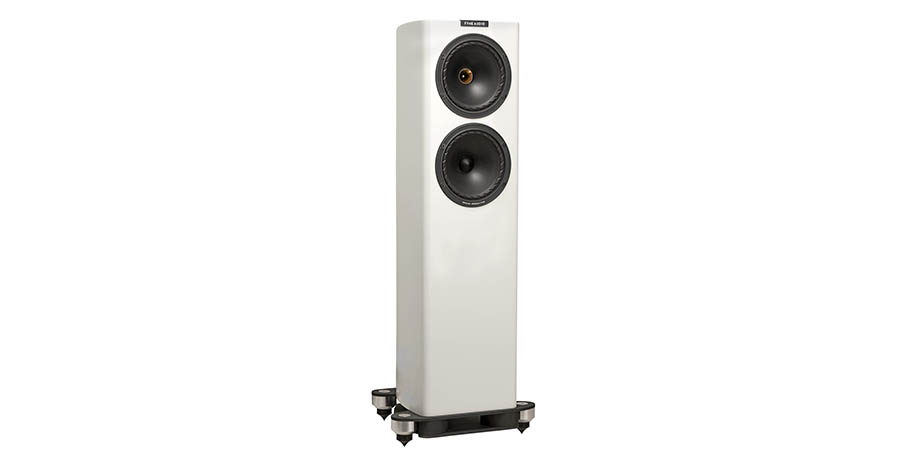
Lyngdorf Audio introduces the FR-2, a floor standing speaker specially designed and tuned to be placed against the wall

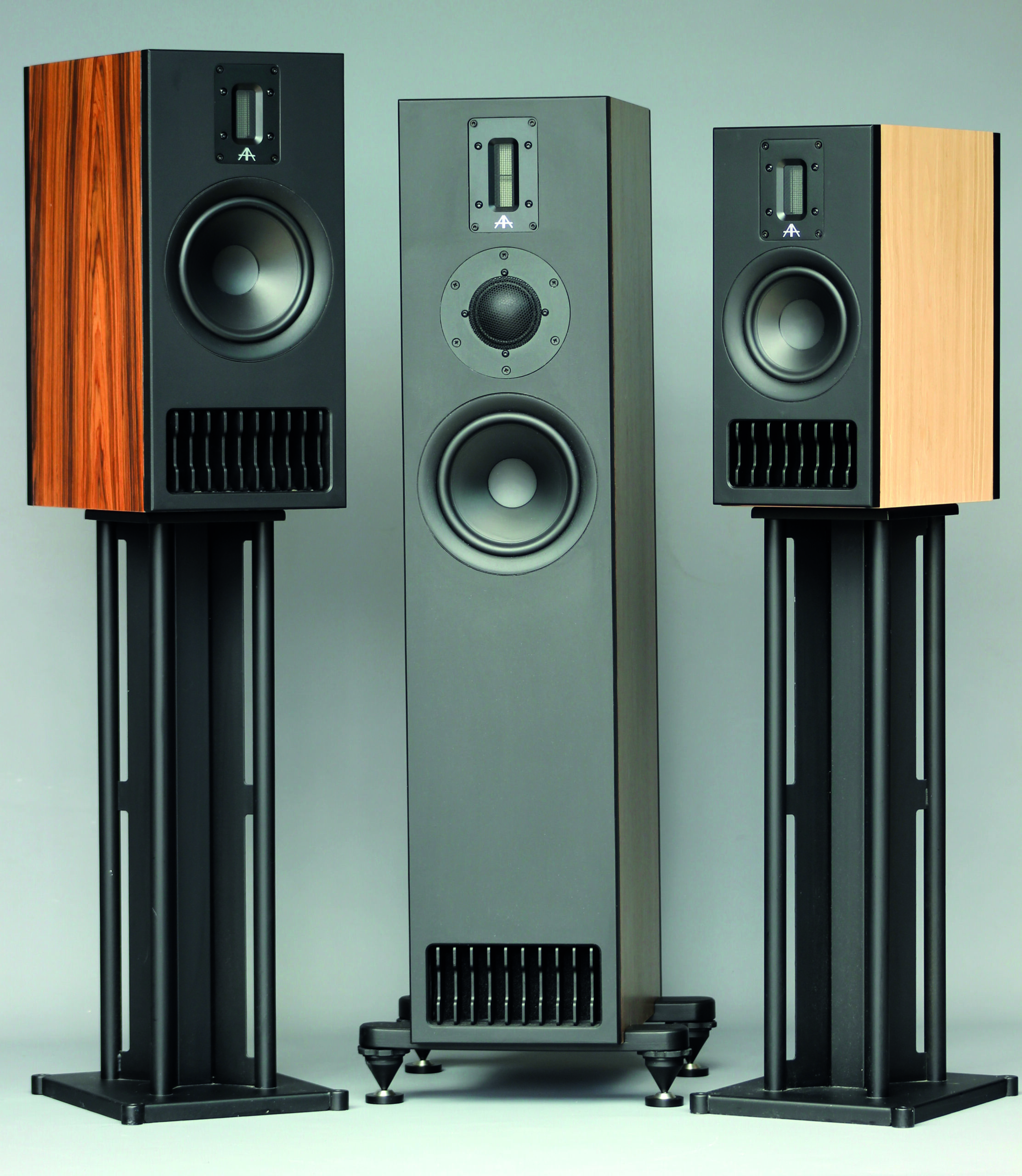
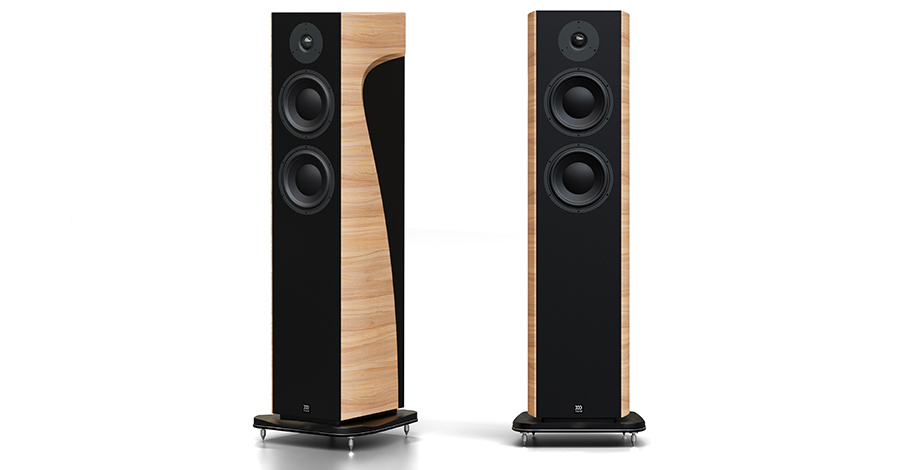
Skive, Denmark – 25 October 2024 – Lyngdorf Audio launches the new FR-2, a high-performance floor standing loudspeaker that has been designed for placement against the wall to ensure a visually and acoustically ideal room integration. The speaker has been tuned for best sound performance close to a wall, while the very shallow cabinet shape and the choice of colors and fabric covers allow a space-saving integration in modern homes.

Lyngdorf Audio from Denmark is known for its digital amplifiers, multichannel processors, and RoomPerfect™ calibration. The FR-2 is the company’s 18th model in its current speaker and woofer portfolio. FR stands for Full Range, and the FR-2 is the second full-range on-wall speaker model, joining the FR-1. The FR-2 also marks a new era for establishing Lyngdorf Audio’s new in-house cabinet production and lacquering in Denmark.

The FR-2 has its premiere at the Audio Video Show 2024 in Warsaw, Poland.

Best sound performance through wall placement
The FR-2’s drive units are integrated into an unusually shallow speaker design that takes advantage of room acoustics instead of working against them. The FR-2 has been specifically tuned for wall placement, with the woofers located as close as possible to the wall behind the speaker. This leads to an ideal impulse response in the low frequencies and results in a surprisingly tight and powerful bass, unheard of with most freestanding speakers.

High-performance woofers and tweeters
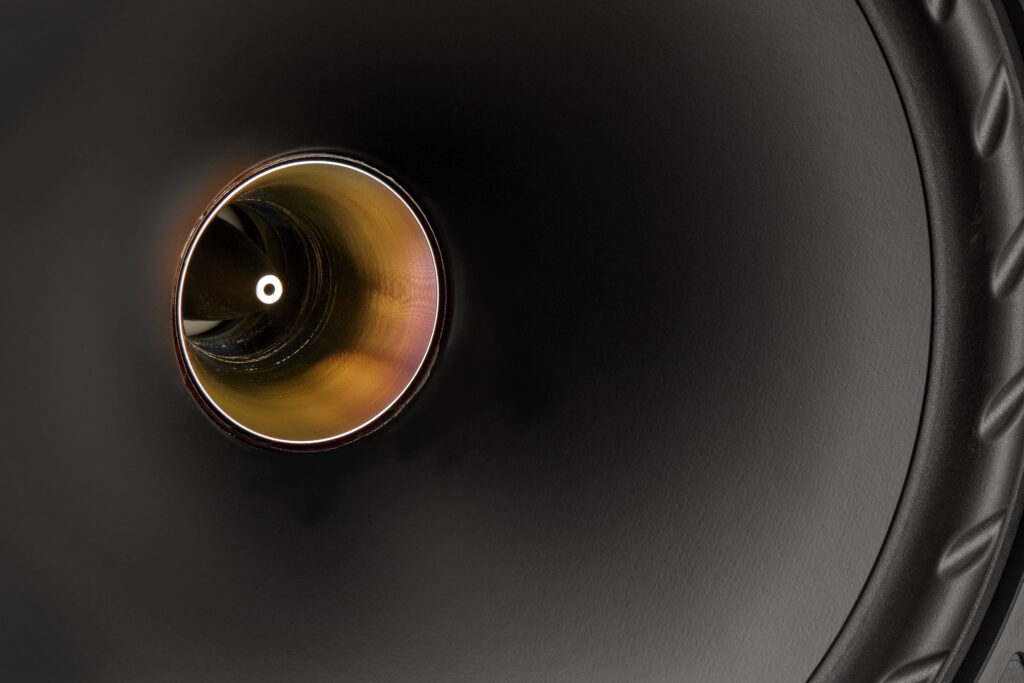
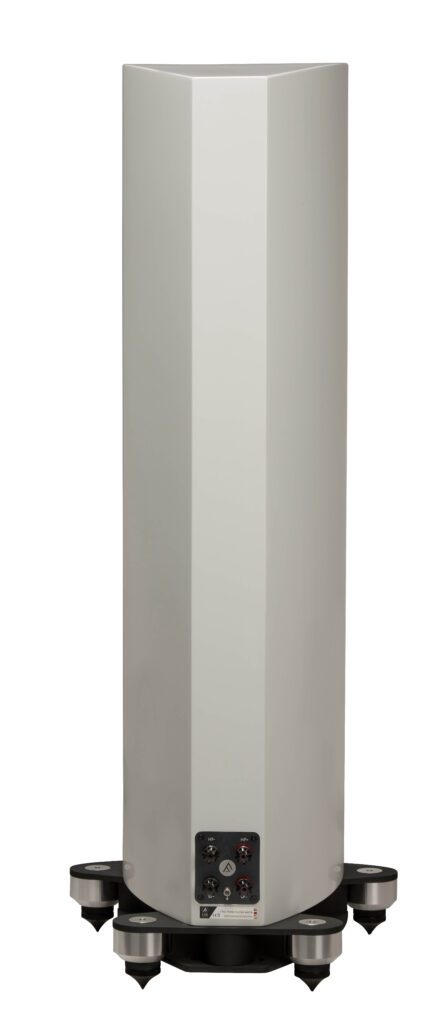
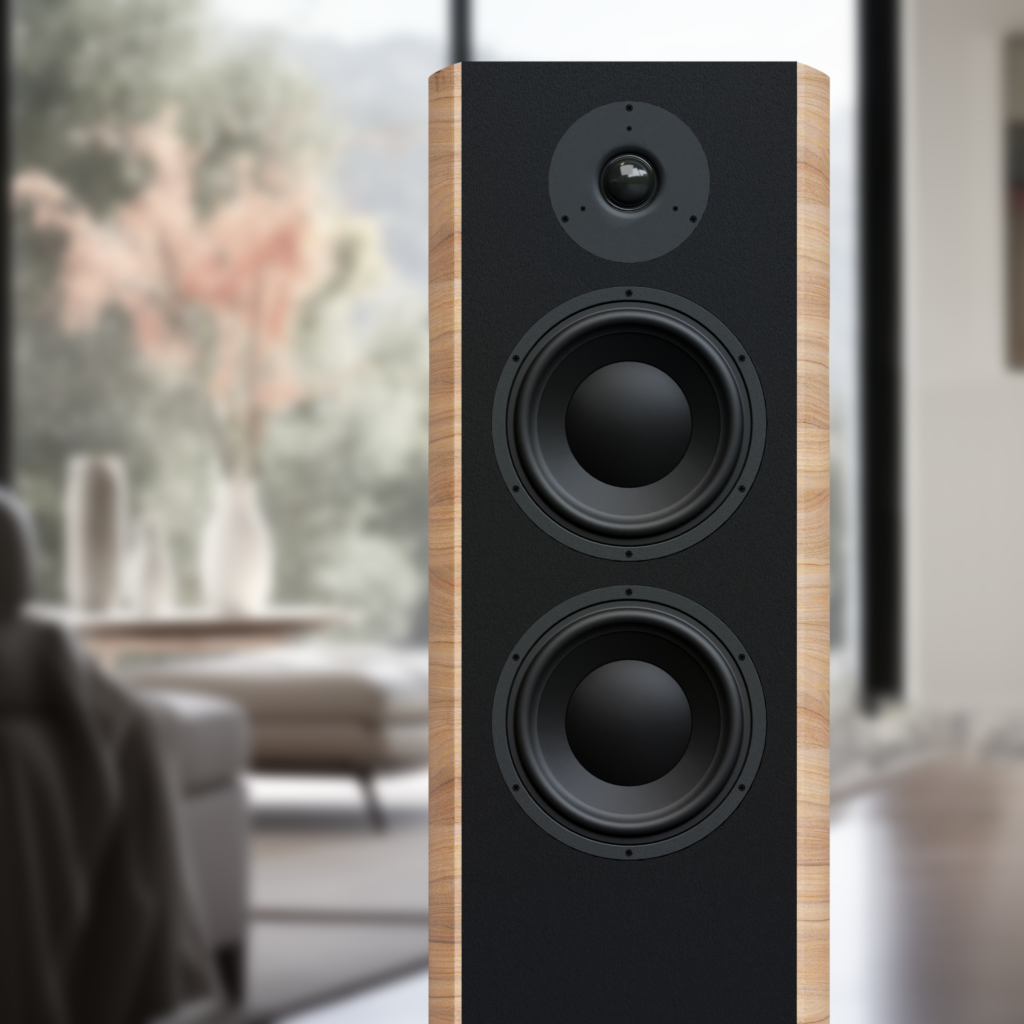
The FR-2’s two high-performance 6.5” / 18cm woofers are equipped with a rigid, vented die-cast basket, an extra-strong and large magnet, and a very light aluminum cone, while the soft-dome tweeter also uses an extra powerful magnet. This provides the highest efficiency and a high maximum volume level while keeping the distortion low. The very linear impedance (around 4 ohm) allows any amplifier to perform at its best. The bass reflex port is placed downward facing, which hides it from view and acoustically always keeps the same ideal distance to the floor boundary and wall corner.

Modern colors and exchangeable fabric covers
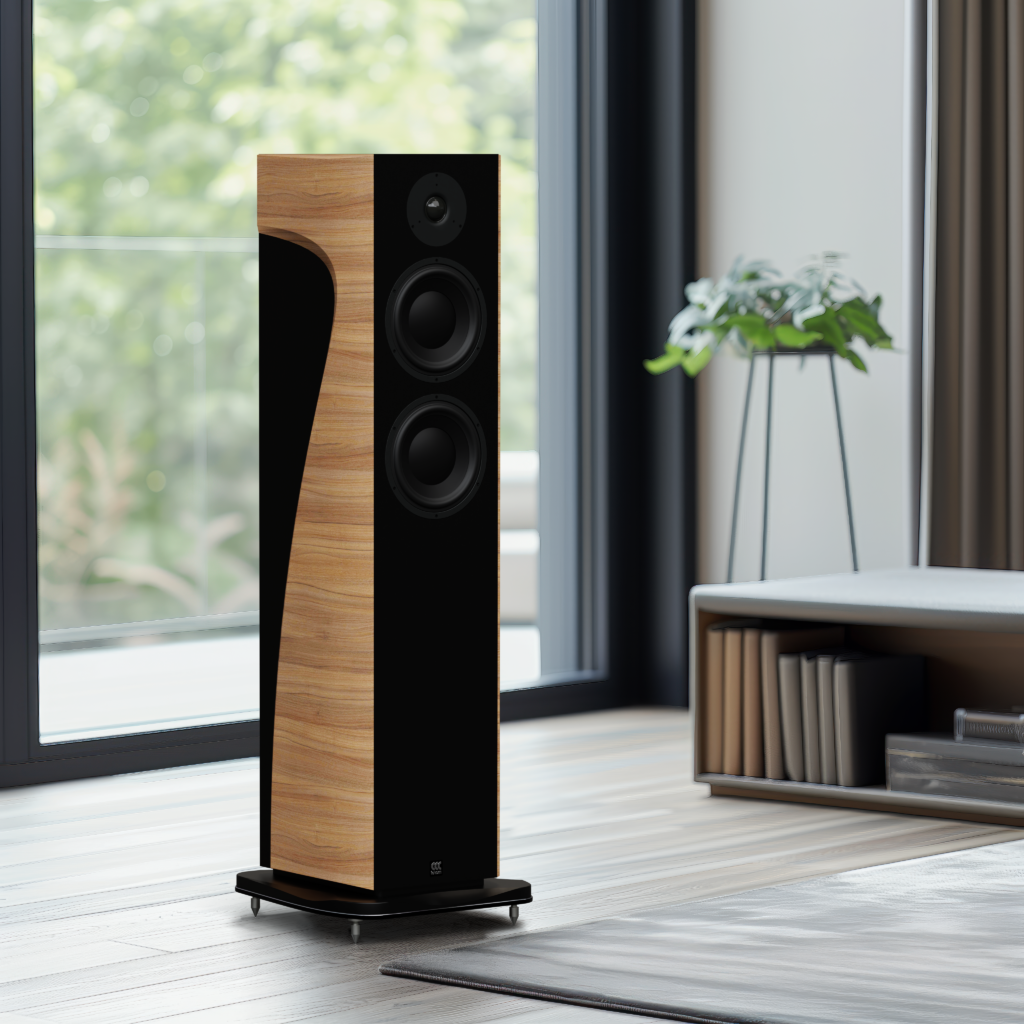
The FR-2 is not only tuned for the best sound performance close to a wall, but also shaped for this purpose. The speaker is unusually shallow, while the smooth, rounded edges, the front baffle merging into the top, three modern satin-matte color options, and two optional exchangeable fabric covers from Danish specialist Gabriel let the FR-2 blend into every living room. The speaker can either stand on the floor or use the optional wall mount for the smallest footprint. The FR-2 enclosure is made and lacquered in-house at Lyngdorf Audio’s new cabinet factory in Denmark.

The FR-2 production will start in November 2024 at Lyngdorf Audio in Skive, Denmark.

Statements from the team

“With the Lyngdorf FR-2, we expand our portfolio of floor standing speakers. Last year, we introduced the Cue-100, with no compromises in design or technology. Now we elevate the on-wall concept to a floor standing Lyngdorf product. We know this concept well from our Steinway & Sons range, and we are confident that our sales channels and customers will embrace this solution for its acoustic advantages and space saving room placement benefits.” Anker Haldan, CCO

“When looking at today’s loudspeaker market, it is surprising how many conventional hifi box speakers there are, and how few loudspeakers are made for living rooms in a modern and elegant way. The new Lyngdorf FR-2 is unusually shallow, specially designed and tuned to be placed right against the wall. It works with the room acoustics rather than against them, and it also features modern colors and fabric covers.”  Roland Hoffmann, Product Marketing Director

“The basic shape of any on-wall speaker is very rectangular and flat against the wall, so we gave the middle part of the FR-2 an extra shape, which also covers all screws and driver baskets. With this design element, the speaker looks much more elegant and slimmer. The fabric grill is placed instead of the baffle, so it is totally flush with the speaker front.” Brian Nielsen, Mechanical Designer

VPI INTRODUCES NEW MODEL ONE TURNTABLE

25 October 2024 – VPI is pleased to unveil Model One, the first turntable in its new Forever Series. Drawing on over 45 years of experience in high-end audio manufacturing, VPI’s design and engineering team has crafted this stunning new turntable. The Forever Series ushers in a new era of performance and modularity, offering products that can evolve with the user.

At the heart of the Model One is the new motor drive and platter module. This module is mounted on a thick aluminium plate and features resonance-cancelling damping to reduce vibrations and enhance sound clarity. The belt-driven motor operates at 500 rpm and features a two-speed pulley for precise speed control. Its inverted bearing minimises surface area contact between the platter and bearing, reducing friction and boosting performance.

A standout feature of the Model One is the new VPI S-Tonearm Module, which offers enhanced precision and build quality. This 10-inch, S-shaped, statically balanced tonearm features solid aluminium architecture to eliminate tube resonances, ensuring pure sound reproduction. Vertical Tracking Adjustment in the arm base allows for precise height adjustments, while Azimuth adjustment is available in the headshell. ABEC 5 bearings provide ultra-low friction, eliminating chatter and ensuring long life. One continuous length of VPI high-purity copper wire runs from the headshell to the RCA connection, delivering a pure signal.

The Model One also introduces VPI’s new 3-Point Floating Suspension system, designed for superior isolation from external vibrations. This advanced 3D isolation system stabilises the turntable, minimising motor noise and reducing both external and internal vibrations.

The turntable retains VPI’s classic aesthetic, with a black ash veneer offering a timeless appearance, while a hinged clear dust cover protects the platter.

The modular design of the Motor Drive and Platter Module allows users to easily service, adjust, package, replace, or upgrade the system. Future upgrades or new models will seamlessly integrate with this platform. This flexible upgrade path will allow the owner to upgrade their Model One to Model Two or Model Three specifications as they become available. The Model One comes with a 10-year warranty, ensuring that VPI’s customers can trust their investment, knowing their turntable is built to last. These features are what give the Forever Series its name.

Renaissance distributes VPI products in the UK and Ireland. Its Managing Director, John Carroll, said: “To create the new Forever Series, VPI asked its customers what they wanted from a premium turntable, as well as how they would like it to look and sound. This feedback, combined with the company’s expertise in audio craftsmanship, has resulted in three incredibly special turntables. I was thrilled when I first heard Model One and immediately knew it would be extremely popular. The sound reproduction is detailed and accurate, showcasing all of VPI’s best qualities. In fact, its performance is reminiscent of the VPI Signature turntable – which costs almost twice as much.”

Manufacturer’s Suggested Retail Price (MSRP): £4,990 inc. VAT, US$5,250 exc. sales tax.
For more information, visit: www.renaissanceaudio.co.uk/vpi

Musical Fidelity A1

Dame Shirley Bassey’s catchy collaboration with the Propellerheads, ‘History Repeating,’ could be the soundtrack to recent developments in two-channel audio. Mining your heritage for something that makes us hark back to a time when things were less awful (or at least, the passage of time and some judicious rose tinting convince us it was less awful) is big business. The latest company to feel the pull of the past is Musical Fidelity. It has resurrected the Musical Fidelity A1 integrated amplifier. 

The A1 integrated amplifier wasn’t entirely ‘normal’ when launched. Designed by the late Tim de Paravicini, it was a solid-state amplifier that owed more than a little to his more widely known work with valve designs. The Musical Fidelity A1 operates in Class A for a significant portion of its operating envelope. It then ‘slides’ rather than ‘switches’ into Class AB operation at high outputs. However, combining not-inconsequential operating temperatures and cost-effective components gave it a reputation for fragility it never truly deserved.

Musical Fidelity A1

The relaunched version has the same basic design as the original. However, a selection of detail (and one reasonably significant) alterations achieve the level of performance that the basic design was capable of. The significant difference is that the new model is slightly larger. The extra size allows the casework to radiate the heat better away from the electronics. This is relative, though. A hot surface warning is the first thing that greets you when you open the A1 box. It’s not there for a laugh. The review sample ran at around sixty degrees after an hour, meaning it will need its shelf in any setup.

Detail changes

The detail changes are more interesting. Revising the internal layout and upgrading components like the volume pot result in higher performance and reliability. It is also motorised. This allows adding a small but nicely finished remote to adjust the volume and mute the Musical Fidelity A1. What once was the tape monitor button on the front panel was repurposed into a gain switch. The gain switch lets you bypass the gain stage built into the preamp. This is less crucial in a world where source equipment routinely pumps out 3v. 

Musical Fidelity A1 remote

Tape monitor aside, connectivity remains the same as before. Bluetooth or digital inputs are far too 21st century for the Musical Fidelity A1. Instead, you get four line inputs, a phono stage that supports both MM and MC operation, and the tape loop mentioned above. This makes connecting a headphone amp a little easier, as the A1 doesn’t have one. At a price where many rivals hover near the point where they can be described as an all-in-one system, the A1 is an old-school amplifier. 

1980s aesthetics

This impression only deepens when the aesthetics are taken into account. The A1 didn’t look like anything else on the market when it came out. Intervening decades have done nothing to change this. The A1 is still governed by its need to dissipate heat, giving it a functionally brutal air with a whiff of retro-futurism. I like it, but this comes with the caveat that I am something of a sucker for eighties things which means I’m probably not a wholly impartial judge. The overall build standard is excellent, though, and while this relaunched A1 is pricier than its ancestor, it feels like solid value. 

Like the original, the Musical Fidelity A1 disposes of 25 watts per channel, available to a single pair of binding posts. Just like the original, this goes somewhat further than you might expect. I have done considerable listening with the Neat Petite Classic, whose six-ohm impedance and 87dB/w sensitivity might suggest a challenge, but the results have been outstanding. Scratch that. The results have been an unadulterated joy. With a Chord Electronics Qutest tipped on its side at one end of the A1 (rather than being gradually baked on the top) serving as a source, the result is greater than the sum of its parts.

Exceptionally unmechanical

The key to what made the Musical Fidelity A1 such a favourite was its exceptionally unmechanical sense of power delivery, which is replicated perfectly in the new version. The volume control feels more like a regulator that allows more flow from a supply of boundless musical energy. The spellbinding ‘Mining For Gold’ that opens The Trinity Sessions by The Cowboy Junkies [RCA] arrives at the ear with nothing so base as the mechanical process being present at any stage. Give the A1 a good recording, and it’s an astonishingly natural performer. Margo Timmins never feels embellished or enhanced. She’s just there in a way that I don’t always experience with somewhat more expensive amps. 

Musical Fidelity A1 rear

You can frequently replicate these attributes with a well-engineered EL84 amp, but the A1 kicks on because it has a potency and sheer grunt that can sometimes be a genuine surprise. Listening to Love by The Cult [Beggars Banquet] on the A1 delivers an unlikely performance for a 25-watt amplifier. ‘Big Neon Glitter’ pounds along with a level of bite and attack that would keep even the most flat-earth adherent listener happy.

Fast and dextrous

This is a fast and dextrous amp with much more out-and-out punch than you might give it credit for. Listen through the eighties sheen, though, and Ian Astbury still sounds natural and engaging, and the soundstage, while not genuinely enormous, gives the music space to breathe. 

I enjoyed digital audio played through the Musical Fidelity A1, but the phono stage is realistically the best way to enjoy the performance. I have found that all but the lowest output MC carts have not required me to use the preamp gain stage in this listening space, and the result feels very much like an organic extension of the main amplifier. Crucially, it gets all the basics right. There is little to no background noise and sufficient gain for most applications. I feel that the developments in moving magnet cartridges that have occurred since the A1 launched mean that the MM side is the more logical choice for most owners, but having the option is welcome. 

Compelling naturalness

The performance has the same compelling naturalness as the rest of the amp. Listening to To Dream is to Forget by Hidden Orchestra [Lone Figures], the A1 is a good amp without caveats. Tonal realism is impressive. That same infectious energy ensures you are not simply a spectator to what the Musical Fidelity A1 does. You are an engaged participant. Change tack entirely and go for a spirited blast through the riotous Electricity by Ibibio Sound Machine [Merge]. The A1 captures the energy and power of the piece in a wholly convincing way.

Musical Fidelity A1 detail

Musical Fidelity’s A1 was on hand simultaneously with the beautiful DeVore Fidelity O/Baby. The results of running the two together were wholly and wonderfully enjoyable. The A1 has slightly rolled-off frequency extremes and won’t supply you with the last ounce of fine detail. However, the A1 does a great job of ensuring you ignore these aspects of your overall performance. 

The Musical Fidelity A1 isn’t a no-brainer choice in 2024, but it wasn’t in the 1980s. This is a curious-looking, minimally specified device that runs like a hotplate. It would bring tears to anyone engaged in energy efficiency certification. However, the performance is sufficiently arresting that many people won’t care. The A1 remains an absurdly talented amp that will beguile a new generation of listeners. History repeating indeed. 

Technical specifications

Type: Integrated Amplifier with phono input 

Inputs: Four line RCA inputs, one MM/MC phono stage

Outputs: Tape out 

Rated power output: 25w into 8 ohms 

Dimensions: 68.3 × 440 × 283mm 

Weight: £0.5kg

Price: £1,499/$1,699 

Manufacturer

Musical Fidelity

www.musicalfidelity.com

UK distributor

Henley Audio

www.henleyaudio.co.uk

+44(0)1235 511166

More Musical Fidelity Reviews

Back to Reviews

Introducing the Marantz Horizon and Marantz Grand Horizon: A New Statement in Wireless Speaker Design

22 October 2024 | New York: For over 70 years, Marantz has led the way in high-performance audio products that combine innovative technology and effortless musicality with beautiful, luxurious and intuitive design. Now, the brand is bringing its unique expertise to the wireless speaker category thanks to two radically advanced new models that will transform customer expectations in the market.

Introducing the Marantz Horizon and its larger sibling, the Marantz Grand Horizon; two luxurious new wireless speakers crafted for passionatke, discerning listeners who demand both exceptional sound and timeless elegance.

A new statement in audio design

The embodiment of modern luxury statement audio, both Horizon and Grand Horizon elevate and seamlessly integrate the timeless elements of Marantz’s design ethos into their design DNA, incorporating instantly recognizable elements such as the brand’s iconic circular porthole motif. Here, the porthole is reimagined as the core element of each speaker’s unique circular form.

Combined with carefully arranged lighting and elevated trim materials that highlight Marantz’s characteristic architectural symmetry, the result is a tactile audio experience you can see, hear,  and feel.

Wrapped in style

Both Horizon and Grand Horizon use thoughtfully conceived materials throughout. Each model is wrapped in Marantz RadianceTM 360o Seamless Ecofiber, a bespoke, sustainable fabric made from recycled ocean plastics. The three-color fabrics have a glowing, luxurious feel thanks to embedded gold lurex elements, further enhancing the unique warmth of Marantz’s design and sound.

Three finishes are available: classically dark Midnight Sky, subtly bright Moon Ray and iconically warm Marantz Champagne. Each is complemented by a beautifully finished natural marble base that is color-matched to accentuate the elegance of each design. For users who prefer alternative solutions to incorporating wireless speakers into their home, Marantz also offers a beautifully

finished American walnut tripod floor stand as an optional accessory for Horizon, while wall brackets will also be available for both models if desired. Even the unboxing experience has been carefully considered, including an elegant protective case that cocoons each product in its box.

The new shape of sound

Both Horizon and Grand Horizon are powerful single-speaker wireless solutions able to fill even substantial rooms with full-range sound. Each model is designed around a unique configuration of high-frequency and midrange drive units that radiate outwardly from a single central subwoofer, ensuring a spacious listening experience.

Key to this powerful sound is proprietary Marantz RiseTM amplification, based around highly responsive and thermally efficient GaN FET technology and offering a prodigious 310W of output in Horizon and 370W in Grand Horizon (FTC power output rating). This muscular core propels an array of high-quality Marantz GravityTM drive units, each of which employs powerful neodymium magnets for the ultimate combination of accuracy, responsiveness and low distortion. At the heart of Horizon is a 165mm (6.5in) subwoofer, which is complemented by two 25mm (1in) silk-dome tweeters and three 50mm (2in) full range drive units. Grand Horizon, as the larger speaker in the line-up, scales that to a 200mm (8in) subwoofer, three 25mm (1in) tweeters and four 76mm (3in) midrange drive units.

Uniquely, the sonic characteristics of this sophisticated acoustic platform can be optimised to suit both your mood and your music using the powerful on-board Marantz MirageTM DSP. Accessible via the HEOS® app, the Mirage digital signal processing allows for a customisable listening experience, with selectable options that can tailor the clarity, spaciousness and warmth of the sound to each user’s tastes. There’s even the option to select Sound Master mode, allowing listeners the chance to experience the sound of Horizon or Grand Horizon exactly as Yoshinori Ogata, the Marantz Sound Master, intended it to be heard.

Magical and intuitive user experience

Horizon and Grand Horizon have both been designed to reward the senses in more ways than one. Simply approach either product and its unique on-board proximity sensors will magically bring the speaker to life. Marantz AuraControlTM user interaction combines 100 carefully concealed LEDs with proximity and ambient light sensors to create a seamless symphony of light and sound. Just touch the illuminated ring around the central subwoofer to indicate your preferred volume and AuraControl will instantly bring the speaker up to the point you have chosen, clearly indicating the volume level with markings that reference the classic Marantz Star logo.

Fully featured, completely connected

Both Horizon and Grand Horizon have been designed as contemporary and completely connected wireless speakers able to meet the needs of every modern luxury consumer. Built around Marantz’s HEOS® wireless music platform, they can access music content from a wide range of supported streaming providers including Amazon Music, Deezer, Spotify and TIDAL, with more services planned to follow. For added convenience with mobile devices, Apple AirPlay2 and Bluetooth are also included, and even physical connected sources are well catered for. Horizon and Grand Horizon include analog, optical and even HDMI inputs, and can also access music from locally connected USB-C music drives. Onboard Dolby decoding ensures full compatibility with Dolby Atmos supplied via HDMI, too.

Of course, as part of the HEOS® ecosystem, Horizon and Grand Horizon can join other HEOS-enabled products to create an extensive whole-home multiroom music system. Listeners can also choose to pair Horizons and Grand Horizons together to create a substantial two-speaker system for the ultimate music-listening experience in very large spaces.

The Marantz Horizon and Marantz Grand Horizon will be available from January 14th 2025. Experience the iconic design and transformative sound of the Marantz Horizon and Marantz Grand Horizon from select retailers and Marantz.com.

Marantz Horizon – Wireless streaming speaker – $3500 | £3250 | €3800

  • 310W amplification (FTC Power Output Rating), 745W peak (This rating was not tested under the FTC standard)
  • 2x 25mm (1in) tweeters, 3x 50mm (2in) full-range drivers, 1x 165mm (6.5in) subwoofer
  • Stereo RCA in x1, Optical in x1, HDMI eARC x1, USB-C x1
  • HEOS Built-in including Bluetooth, AirPlay2, Spotify Connect and support for numerous streaming services
  • 364 x 210 x 5mm, 14.33 x 8.27 x 15.26in (H x W x D)

Marantz Grand Horizon – Wireless streaming speaker – $5500 | £5250 | €6000

  • 370W amplification (FTC Power Output Rating), 860W peak (This rating was not tested under the FTC standard)
  • 3x 25mm (1in) tweeters, 4x 76mm (3in) full-range drivers, 1x 200mm (8in) subwoofer
  • Stereo RCA in x1, Optical in x1, HDMI eARC x1, USB-C x1
  • HEOS Built-in including Bluetooth, AirPlay2, Spotify Connect and support for numerous streaming services
  • 493 x 255 x 2mm, 19.41 x 10.04 x 20.83in (H x W x D)

Dan Clark Audio Corina

Unlike the slow-moving hi‑fi stream, the personal audio world is a place of movement and energy. Electrostatic headphones are the perfect example of this. A dozen years ago, ‘electrostatics’ meant Stax and nothing more. Today, myriad companies are adding their take to the electrostatic headphone concept. Amid that proliferation, the Dan Clark Audio Corina electrostatic headphones stand out.

This is not Dan Clark Audio’s first electrostatic rodeo. That honour goes to the Voce of 2018. Voce arrived with all the pomp and circumstance expected from the first electrostatic headphones from the brand. Corina that replaces it launched with little fanfare. That might make people think Corina is little more than a redressed Voce. It’s a thought only reinforced by the Corina using the same 88mm electrostatic panel as its predecessor. However, that’s like saying that because two cars share the same size alloy wheels, they are the same car.

Added tension

That 88mm driver is now subject to a new tensioning system. This first appeared in Dan Clark’s planar magnetic headphones and now reaches the electrostatic panel. It has a more uniform tension across the panel, which makes for a more linear sound. Although the large stator is like the Voce before it, the Corina is less efficient than some of its rivals. Therefore, it needs a more muscular amplifier behind it.

Also resulting from Dan Clark Audio’s latest planar magnetic designs, Corina benefits from the company’s Advanced Metametal Tuning System (AMTS). This makes the Corina better damped and gives it a slick look and feel. AMTS is the honeycomb-like pad that sits between the stator panel and the outer pattern of the Corina ear cup. This clever and sophisticated wave-guide system can act as a Helmholtz resonator at specific frequencies. This is tuned – and therefore different – for each drive unit.

Good Damping

There is plenty of damping in the higher frequencies in Corina’s place. This shows in the listening… in a good way! The circular ear cup is retained, but the new protective guard no longer needs to protect the stator. As a result, it looks a lot more elegant and refined, whereas the Voce just looked like another high-end electrostatic headphone.

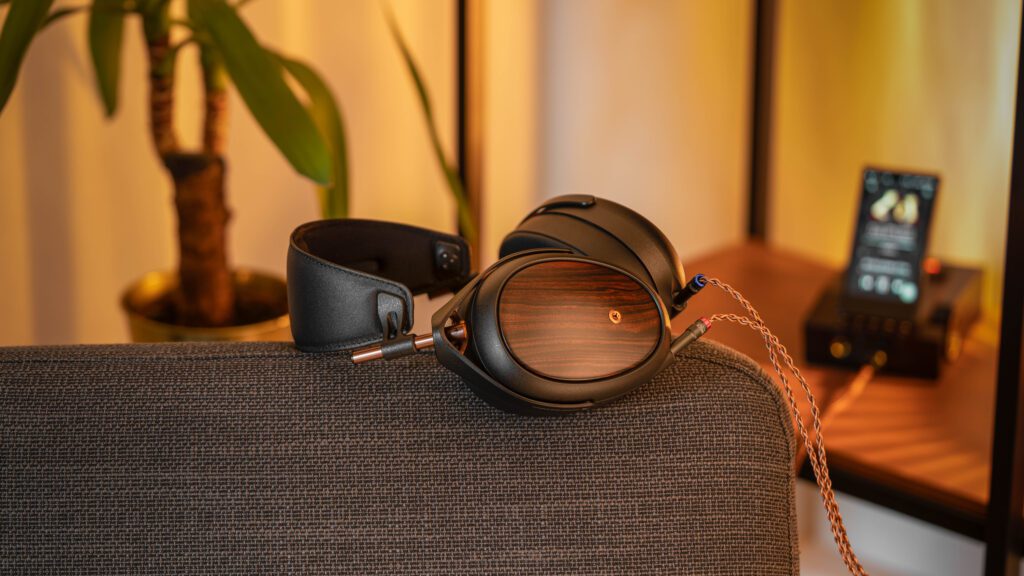
If you look at the headband, the Corina shares similar design concepts seen in the Expanse and Stealth planar magnetics and losing the adjuster blocks. It’s also changed from a silver and black finish to a richer and more luxurious black and gunmetal, with a very comfy leather headband and hybrid cups.

It is a slightly heavier design than its predecessor, and at 465g it’s still one of the lightest electrostatic headphones on the market. The Dan Clark Audio Corina is also extremely comfortable and great for long listening sessions. The headband auto-adjusts to your head and the pads seem more breathable than many similar designs. I had no problems settling in for hours of listening without the least discomfort. The way the headband works makes it feel far light on the ears.

Amp matching

As discussed earlier, the 88mm electrostatic driver means the Dan Clark Audio Corina is less efficient than many designs. This isn’t too big a deal, but it slightly limits the choice of amplifiers. Then again, if you are thinking of spending almost five grand on a pair of headphones, you will probably not be searching for discount energisers and amplifiers. Stax is a good starting place. 

Dan Clark Corina with Blue Heaven amp

The fascinating thing about the Corina is that it is and isn’t what you would expect from an electrostatic headphone. It’s got that stunning resolution and lightning-fast speed of attack and release that we have come to expect from an electrostatic, but it also has bass. Surprisingly deep, meaty bass. That’s a rare find in electrostatics, whether headphones or loudspeakers. You often find hybrid electrostatic loudspeakers with dynamic bass drivers, and companies like MartinLogan have spent decades trying to integrate the two seamlessly. The Corina does that bass like no other electrostatic I’ve heard. Whether that’s down to the AMTS, the tightened diaphragm or both is immaterial; it makes the bass deeper and more powerful than its rivals.

Tonally, the Corina is darker-sounding than most electrostatics and falls more into line with Dan Clark Audio’s other products, only with significantly greater resolution and detail. That’s a conscious voicing but also a very natural one. I’ll be honest: I’ve backed away from headphone reviews recently partly because I’ve found many to be too treble-accented and bright, but the Corina is exceptionally well-balanced.

Natural Sounding

The treble is extremely natural sounding, without too strong an emphasis to make it artificial. Voices extend organically from midrange to the highest frequencies, sounding detailed and precise, yet not so brightly lit that they aggressively show every flaw in a recording. The information is all there – Joyce DiDonato’s powerful mezzo-soprano is beautiful here, both in clarity and range – but that detail is never presented in a way that undermines the musical intent. 

That effortless treble, which combines extension without sounding forward or bright, sets the tone for the entire frequency range of the Dan Clark Audio Corina electrostatic headphones. I tend to overuse the terms ‘natural’ and ‘musical’ for products that I like the sound of, and my listening notes were crammed with those two words on almost every other line. But of particular note was the timbral accuracy of the Corina; it got the ‘shape’ of the voice or instrument just about spot on every time. 

This is so important because it doesn’t favour any musical genre. We can never know a synthesiser’s ‘natural’ sound because it’s inherently electronic and infinitely adjustable. Still, we can cross-reference that sound against known acoustic instruments and have an intrinsic way of knowing when something sounds a bit ‘off’. You could feed the Corina the most wubbly-wub three-fat-drifting-Minimoog-oscillator bass line and then swap that for a beautifully recorded Bach cello suite, and the headphone takes both in its stride. That comes from nailing the timbre of the instruments, not simply their tone. 

Back wub

I’m going to come back to that bass, though. Because those wubbly-wub synth sounds need some deep reinforcement. When you play something from Trentmøller or Aphex Twin, the bass notes need to hit you on something closer to an atavistic level; these are sounds that, if you heard in nature, would be running away from whatever made those sounds because it will probably eat you. Those sounds typically need to move a lot of air, which means in most electrostatic headphone systems, the scary, rumbles and the monsters they hint at remain just out of reach. However, Corina can hit those lower notes with the same speed and clarity in the midrange and treble. And that’s a very scary experience. 

Strangely, and this is the first time I’ve experienced this on any headphone system, our bodies seem to compensate when the bass is that deep, that fast and that well integrated. You get to feel the bass in your stomach, not just between your ears. That’s how good the Corina is!

There’s one last bonus to Corina’s performance: its soundstaging properties. This is where traditional loudspeaker users often score a win because the stage tends to sit around your head rather than fill a virtual room in front of you. The Dan Clark Audio Corina makes for something altogether more expansive and spatially accurate. You feel that the band or the orchestra is ‘out there’, and there’s a sense of space and dimensionality often so lacking in the personal audio space. 

Impressed? You bet!

I want to say I’m impressed by the Dan Clark Audio Corina, but that doesn’t go far enough. This is one of the finest personal audio experiences you can get right now, and the headphones combine the benefits of dynamic driver-like bass with electrostatic clarity, speed, and detail across the board. They are worth the price of admission for the bass alone because the speed, depth, and precision it brings to bass is unparalleled. And they do all of these things in style and comfort. The lone trade-off is that a relatively powerful amplifier is needed to drive them. 

In making the Corina, Dan Clark Audio has excelled; I didn’t log that many hours with the Voce, but I do recall it being slightly below the performance of the best electrostatic headphones. The Corina is several jumps ahead of that performance in absolute terms. That spookily good bass depth and integration places it at the current apex of what electrostatic headphones are capable of. With the possible exceptions of Sennheiser’s Orpheus and the HiFiMAN Shangri-La, I would struggle to find a pair of headphones that get close to doing what Corina does so well. They set the standard. 

Technical specifications

  • Type: Electrostatic headphones
  • Driver: 88mm diameter
  • Capacitance with 2m cable: 135pF
  • Dimensions: 18 × 14 × 19cm (in case)
  • Weight: 465g
  • Price: £4,800/$4,499.99


Manufacturer

Dan Clark Audio

www.danclarkaudio.com

UK distributor

Electromod

www.electromod.co.uk

+44(0)1494 956558

More Dan Clark Reviews

Back to Reviews

Luphonic H2 turntable

German turntable brand Luphonic is a relatively recent arrival on the hi-fi scene. The Luphonic H2 turntable is its most recent product. The brand was established by Thomas Luh in early 2020, just four weeks before the COVID-19 pandemic took hold. 

His desire to realise his ideas drove him to take this bold step at such a challenging time. He also wanted to offer the market new products with an attractive price/performance ratio. On its website, Luphonic explains how Luh wanted to make products “free from dogma and clichés” regarding form factor and the materials used. Luphonic says such elements are chosen based on technical merit rather than being an end in themselves.

Reflecting philosophy

The H1 and H2 models reflect that philosophy with their interesting mix of materials and H-shaped chassis. They were Luphonic’s first products to market, launched at the Munich High-End Show in 2022.

The entry-level H1 has a lightweight but stiff (460g) high-pressure-laminated foam (HPL) chassis. The Luphonic H2 turntable has a three-layer chassis. This is a sandwich of a vibration-damping rubber layer between two solid surface material Corian layers. You may have seen this material used for kitchen worktops. It uses natural minerals mixed with an acrylic polymer.

Luphonic H2 side

The H2 is priced at £3,950, while the H1 is £2,900. Auden in the UK supplies both with an Audiomica Henat 1m interconnect cable worth over £700. The H2 has two phono output sockets on the chassis so the user can change or upgrade the cable. Above the H models sit the R2 at £4250, introduced at Munich this year, and the R3 at £4750, launched at the event in 2023. Fitted with the 9.5in K2 tonearm, the R3 retails for £5550, with the 12in K2 arm it will set you back £5750, and without any arm, its £4750. The R models eschew a H-shaped chassis. The R2, like the H2, has a Corian/rubber/Corian construction, while the R3 has three layers of Corian and two layers of cellular rubber.

But why Corian? I asked Thomas Luh, who explained that he chose it because of its high density and low resonances and vibrations. It can also be highly polished for a durable, attractive finish and easily crafted into any shape. It also uses Corian for the turntable platter.

Layered construction

The sandwich construction minimises disturbances and interference to the arm/cartridge from motor vibrations or footfall in the room. The AC synchronous motor itself is attached to the lower layer of Corian. At the same time, the arm/cartridge fixes to the top layer with an isolating layer of cellular rubber between the two. The motor control circuitry sits in a metal housing attached to the lower layer. 

The Luphonic H2 turntable was admirably resistant to any disturbance from my heavy-footed progress across the rather bouncy floor in my living room. The turntable is belt-driven, with the main Corian platter on an aluminium subplatter and a captive steel spindle running on a ceramic ball bearing. The whole thing sits on four POM (polyoxymethylene) thermoplastic feet.

An unusual aspect of the H2 is how you change speed. It offers both 33rpm and 45rpm, selectable using a separate circular ‘puck’ that is white on one side and black on the other. When you turn the H2 on, the display built into the Corian chassis (Corian is translucent and can be backlit) will show the H2, followed by the version of the installed software.

Pick a side

To start the platter rotating, you place the puck on the white illuminated circle – black side uppermost for 33rpm and white side up for 45rpm. Moving the puck off the white marker will stop the turntable. The puck system also appears on the R2 and R3. Make sure you keep that puck in a safe place, though. Without it, you won’t play any albums until you order a new one for the princely sum of £20. 

Luphonic H2 speed control puck

All Luphonic turntables are designed and made in-house in its German factory, as is the K2 tonearm. It has a gimbal bearing and a carbon fibre arm tube, which Luphonic says it chose because of its low resonances and ‘tonal strengths’. The headshell construction features a sintered polyamide filled with tiny glass spheres. The bearing housing is anodised aluminium. The K2 is suitable for cartridges weighing between 5g and 14g. Loosening the retaining bolts in the base and raising or lowering the arm makes for easy VTA (vertical tracking angle) adjustment. At the same time, it is also possible to adjust the angle of the headshell so it sits parallel to the record surface.

Auden Distribution supplied the review sample pre-fitted with a high-end moving magnet VM760SLC cartridge from Audio Technica. However, the turntable comes without a cartridge as standard. I left the VM760SLC in for my listening, as it is actually a very good cartridge.

Good mover

To listen to the Luphonic H2 turntable, I hooked it up to an Avid Accent integrated amplifier, which has an excellent phono stage. I used two sets of speakers during my listening – the Russell K. Red 120Se and Audio Note’s AN-J LX Hemp.

I sat down for some brief initial impressions before starting my protracted evaluations. The H2 had good inner detail and tonality on the guitar and saxophone, letting you hear the interplay between the musicians exceptionally well. The sound had great pace and agility. Bass lines really moved, and the H2 enthusiastically conveyed the spirited drum play, which let the music move and flow.

The Luphonic spurred me on to try some of my favourite tracks, and the first I reached for was ‘No One Emotion’ from George Benson’s superb 20/20 album. This track really motors along at a blistering tempo, and the H2 captured the energy and dynamics of the track well, with a good grip on the bass line that drives the track. Benson’s vocals were open and articulate, while drums and percussion were crisp and detailed, which again helped the track gel rhythmically. And that breathtakingly brilliant electric guitar solo from Michael Sembello had the bite and presence it should have but without any glare or harshness.

No mucking about

I never knew Canadian singer/songwriter/guitarist Stephen Fearing before Rega recorded an album with him. If you do not know him, I strongly recommend you check him out. His superbly recorded album with Rega,
The Secret of Climbing, is a great place to start. It was simply recorded with two mics and no mucking about in post-production.

On my favourite track from that album, ‘Red Lights in the Rain’, the H2 captured his vocal’s power, range, emotion and character very well, not cramping his style whenever he really let rip on a note. The same is true for how the Luphonic H2 turntable captured the essence of his lovely custom Manzer Cowpoke acoustic guitar, with good insight into how he was playing and shaping each note, his fingers sliding on the strings, and the body and weight of the instrument. 

Contrasting that very pure acoustic sound, the H2 also shone when I played ‘Jack and Diane’ from John Cougar’s (a.k.a. John Cougar Mellencamp) American Fool album. This song has a very upfront, dynamic guitar and drum sound, which suits the rocky feel of the song. The H2 handled it with a great sense of dynamics, energy, and power and captured Cougar’s vocal style well.

An album that will blow your socks off is Double Vision, the superb collaboration between keyboard ace Bob James and sax legend David Sanborn. The bass line from Marcus Miller on the opening track, ‘Maputo’, is exceptionally powerful and tight and drives the number along, and the H2 handled that with verve and vigour. James’s keyboards were nicely highlighted and not lost in the mix while ably rendering Sanborn’s epic power and skilful technique on sax.

Impressive performance

Turning in an equally impressive performance on ‘The Girl from Ipanema’ from the Joao Gilberto/Stan Getz album and rocking along on ZZ Top’s ‘Gimme All Your Lovin’,’ the H2 took it all in its stride and when I compared it with a couple of well-respected competitors at a similar price, the H2 more than held its own.

The Luphonic H2 turntable is an excellent buy at the price. It is impressively well made, sounds great, and is nicely finished. If you are in the market for a turntable at this price level, it would be a mistake not to put the H2 on your shortlist. I highly recommend it. 

Technical specifications

  • Type: Belt-driven turntable with AC synchronous motor controlled by microprocessor
  • Speeds: 33rpm and 45rpm, electronically selectable
  • Chassis: Corian solid surface material sandwiched with
    cellular rubber
  • Speed accuracy: 0.04% WRMS DIN
  • Platter: Corian
  • Tonearm: 9.5in K2 arm with gimbal bearing, carbon fibre arm tube and polyamide headshell filled with glass spheres
  • Arm lead supplied: Audiomica Henat 1m
  • Dimensions (HxWxD): 140mm x 440mm x 360mm
  • Weight: 6.9kg
  • Price: £3,950, €3,490, no US distribution at the time of writing

Manufacturer

Luphonic Labs GmbH

Homepage https://luphonic.de/en/

Product https://luphonic.de/en/modellh/

Dealers  https://luphonic.de/en/haendler/

UK distributor

Auden Distribution

www.audendistribution.co.uk

+44(0)7917 685759

Back to Reviews

WK Audio TheRed interconnect cable

We’ve been following the story of WK Audio’s TheRed cables for some time. Two years ago, the TheRed power cord was the first product out of the WK Audio doors. TheRed loudspeaker cables followed a year later. Finally, the WK Audio TheRed interconnects (digital and analogue signal) cables have arrived, starting with XLR connections tested here. 

To recap, WK Audio is the brainchild of Polish architect and audiophile Witold ‘Witek’ Kamiñski. The power cord was a COVID lockdown project, with Witek putting those months of isolation to good use. He used that time to develop the optimum structure, geometry and materials needed to create a damn fine audio cable. Each cable design takes Witek months to create, as he realised that what works in one category doesn’t apply universally. They have a family resemblance in looks, sound, and build. But each cable design results from months of meticulous fine-tuning and listening.

Simply red

The distinctive, red-woven outer braid hides a hand-made cable. Three cores of high-purity, oxygen-free silver-plated copper form each conductor. These cores have different designs and cross-sections with a custom, hand-made, woven layout. The cables use special (read: it’s a secret) vibration-damping materials. These minimise any resonance from outside sources or even between the cores of a conductor. The aluminium couplers also check external vibration at the end of each cable. As a bonus, they act as strain-relief blocks for the cable. Witek suggests the installation and placement of these couplers are crucial. He thinks poorly adjusted couplers act like de-tuning the strings of a violin in terms of cable tensioning.

Now that we (hopefully) don’t have lockdowns to contend with again in this lifetime, Witek could expand his listening test protocols, this time including many of the best ears in the Polish audio community. Prototypes of TheRed interconnect were installed in Roger Adamek’s RCM Audio system. When not making high-grade phono stages, Roger distributes many of the best audio around, giving TheRed another high-end crucible of evaluation. RCM Audio also supplies the Furutech connectors WK Audio prefers.

Excellent in every way

The listening tests worked because WK Audio’s TheRed interconnects are excellent. It’s a detailed and expressive cable on its own. Combined with WK Audio’s other ‘TheRed’ products, the interconnects let the system’s inherent dynamic range and energy pour through the loudspeakers. It’s also exceptionally detailed, and a lot of information is coming through the system, especially spatial information that gives instruments a sense of physicality and shape in the room. However, this information is not presented in a cold or sterile way; you always feel a strong sense of engaging with the musicality of the recording rather than some analytical breakdown of what the recording or system is doing. TheRed leads from the midrange, with a strong sense of authority to voices and instruments, but don’t mistake that for roll-offs in the bass and treble. The smoothness of that midrange extends up and down with ease.

Dressing down audio

TheRed demands a lot of the equipment it connects with. Weaknesses elsewhere in the system will manifest fast when TheRed is in the signal chain. However, not by sounding harsh, hard, edgy, or even imbalanced. Instead, TheRed gives those underperforming products a sonic dressing down; you feel disappointed in those products not pulling their weight.

This is a gateway to WK Audio. The combination of dynamic range, outstanding – yet always musical – detail and excellent soundstaging is an attractive paring that might make some see red in a good way. You may find this is not the last WK Audio cable in your system; don’t be surprised if TheRed comes to dominate your system’s connections throughout. I’ve said it before, but WK Audio’s TheRed interconnects are audio’s best little secret. 

Price and contact details

  • TheRed interconnect: €5,500/1.5m pair XLR (as tested)

Manufacturer

WK Audio

www.wkaudio.com

Search for more WK Audio reviews

Back to Reviews

Katarzyna Thörner to Lead WBT­ lndustrie GmbH

From Katarzyna Thörner

After the passing away of my husband, Wolfgang B. Thorner, the founder and owner of WBT­ lndustrie GmbH, the future of our company is now in my hands. I already worked in our company during his lifetime. First as an authorised representative and later as co-managing director, I helped shape the development of WBT-lndustrie GmbH in recent years.

WBT was my husband’s passion, and his tireless commitment to the company inspired us all. He passed on his extensive knowledge and innovative spirit not only to the employees, but also to me. I will now continue this inspiration and the values that he brought to the company.

My aim is to continue the successful development of WBT and to advance the innovations that he initiated. In these challenging times, I want to honour my husband’s legacy and at the same time provide new impulses. I am convinced that the combination of tradition and modern approaches is the key to WBT’s continued success. Together with my team, I look to the future with optimism and am ready to tackle the challenges that lie ahead.

Nothing will change for you – you will continue to receive the same level of support and quality that you are used to. Nothing essential will change for our employees either – they will retain their current responsibilities and continue to work in their respective positions.

Innuos offer new ZEN & ZENith Nex-Gen Trade-Up Campaign

Faro, Portugal | 18 October 2024 – Innuos is offering customers a remarkable opportunity to substantially upgrade their audio experience. For a limited time, Innuos customers can tradein their existing ZENith Mk3, PULSAR, or ZENith SE models for a generous discount on a brand-new ZEN Next-Gen or ZENith Next-Gen music server and streamer.

The percentage of discount is based on the age of the unit, as outlined below:

innuos discount chart 2024

“We understand the desire for continuous improvement in audio experience. This campaign reflects our dedication to both innovation and customer satisfaction. By offering attractive trade-in values for their existing models, together with our esteemed dealers, we support our customers to seamlessly transition to new higher-end units which offer increased flexibility and, even more importantly, higher-end sound quality”, says Innuos Chief Executive Officer Amelia Santos.

This campaign aligns seamlessly with our commitment to sustainability and longer product lifecycles. Upgrade paths we strive to provide across our different models, complemented by our regular software updates full of new features – offered without additional cost to Innuos customers, are other examples of our commitment to increasing product longevity and relevance, reinsuring customers on their investment in our products”, she added.

For more details, customers should contact a participating dealer of the Innuos ZEN & ZENith Next-Gen Trade-Up Campaign, which can be found in

Innuos.com. Please note that new dealers might be added to this list throughout the campaign. Terms & Conditions apply. Please find more information in Innuos.com.

Music Review: Rachmaninov: The Four Piano Concertos; Rhapsody on a Theme of Paganini

Rachmaninov: The Four Piano Concertos; Rhapsody on a Theme of Paganini

Yuja Wang, Piano;, Los Angeles Philharmonic orchestra; Gustavo Dudamel   Deutsche Grammophon 4864759  D × 2, vinyl × 3, download

Recording  Music 

Back in 2011, Yuja Wang’s debut concerto recording for DG featured Rachmaninov’s second concerto and Paganini Rhapsody under Claudio Abaddo. It announced her as a hugely gifted pianist. This new account demonstrates the fulfilment of that early promise.

The fearsome technical difficulties of Rachmaninov’s concertos hold no terrors for the fleet-fingered Yuja Wang. She plays these challenging works with breath-taking bravura. But thankfully her performances are more than just virtuoso displays of technique and endurance. The clarity of Wang’s fingerwork allows much subtle detail to tell. Time and again she draws your attention to passages that would normally just pass by. The performances aren’t especially lyrical or expansive, but always there’s plenty of forward momentum and brio, with tempi on the fast-side. 

The third concerto is also a work Yuja Wang previously recorded for DG in 2013. Tempi are broadly similar in both accounts, with the new one being a tad slower in the first movement, and slightly faster in the second and third movements. 

Here, the first and fourth concertos are a touch hard-driven at times, the playing in the third concerto is more relaxed and lyrical. But, as ever, Yuja Wang is a bit like a coiled spring!

Her new performance of the third concerto is more mature and deeply-considered than the 2013 account. You sense it’s a work she knows intimately and adores. As with her earlier version, Wang chooses Rachmaninov’s shorter cadenza and plays it with considerable finesse and dexterity. 

You’d think she’d be more attracted to the longer cadenza with its greater opportunities for virtuoso display, but no… Some pianists feel the longer cadenza is excessive and risks upstaging the work. Didn’t the composer himself choose to play the shorter cadenza?

The finale – taken at a hell of a pace – is hugely exciting. But, in the heat of the moment, are fences being rushed? Despite some moments of relaxation (around 3m 10s, for example) there’s a driving impulsive headlong quality that’s almost manic in its unremitting forward-momentum.

The Paganini Rhapsody is a great virtuoso showpiece, full of pianist delights, and Wang and Dudamel play the piece for all it’s worth. It’s a terrific performance – one that (heard live) would bring the house down and have audience members out of their seats clapping and cheering at the end. 

The recordings, made in the Walt Disney Concert Hall, sound vivid and forward, but rather ‘loud’. Average levels are around 6dB to 8dB higher than DG’s set with Daniel Trifonov – though peak levels are only 2dB or so louder. The booklet mentions an ‘Immersive Mix’ engineer…

Maybe that explains it. The sound seems to have been compressed (like many pop recordings) to give the impression of immediacy and impact. The sound is bold, forward, big-boned, forthright and full-bodied; subtle and delicate it ain’t. 

While the recording isn’t bad, everything comes out at consistent mezzo-forte, rather than having wide extremes between loud and soft. But perhaps that’s appropriate; the persistent forwardness of the sound emphasises the swagger and self-assurance of the performances. 

For those tempted by the LPs (which I’ve not heard), this kind of slightly compressed balance may well suit vinyl more than CD or streaming. Think of it as a clean sophisticated modern-day Decca Phase Four sort of balance, where everything is captured in X-Ray detail. 

So, while not the last word on these works, or the only way of playing them, Yuja Wang’s take on the Rachmaninov concertos remains hugely exciting and viscerally engaging. It’s a set of performances that represent a new benchmark for virtuosoity. Most definitely worth hearing.

Back to Music

Rockna Audio Wavelight Server

It’s taken a few years, but the Rockna Audio Wavelight Server is finally here. This matches the Wavelight DAC/preamplifier. This makes for a two-box streaming replay system that could take over all your front-end duties, but the Wavelight Server faces some stiff competition.

Server and DAC

Rockna Audio’s Wavelight Server (WLS) is the obvious partner for the Rockna Wavelight DAC, and bears some resemblance to the Wavedream NET but without the CD transport or display. It runs an AMD 7 series FPGA as its audio engine meaning firmware is easy to upload, and it runs a low-power 2/4 core CPU with 8GB of RAM on-board. The sample we received had a 2TB solid-state storage solution, but you can go as high as 16TB on-board, as well as adding Network Attached Storage boxes on the Ethernet network it runs on.

Like many servers, it runs on the Linux operating system, but is best used with Roon Core. As it stands, the best way to operate the Wavelight Server is entirely under Roon’s wing, but Rockna’s own app and the promise of a greater set of digital audio options said to be unlocked soon (including CD ripping and Internet radio) means the Wavelight Server will only grow with time.

Development time!

The outputs speak to Rockna Audio wanting people to use the Wavelight Server with Wavelight DACs. It has one LAN/Ethernet port, thee USB connections (one USB 3.0, the others USB 2.0) and outputs for TOSlink and RCA under the S/PDIF standard, an XLR connector for AES/EBU and a HDMI connection designed specifically for Rockna I2S connections. Although the superior digital connection (it’s like speaking digital without even a hint of an accent), I2S is notable by lacking a standard, or a standardised port. The ‘Rosetta Stone of digital’ appeals to engineers, but its lack of standardisation means of the two models sporting I2S transmission protocols, one uses the Ethernet RJ45 connector, and this one features HDMI, meaning they are not easily compatible. There are work-arounds and kludges, but that does make I2S-related products stay in their lane. Also, because the Wavelight Server is designed to only see USB for its expansion properties, it’s purpose as a DAC connector takes a back seat. USB output is therefore non-upsampling, and this isn’t the sort of thing that will get upgraded with a firmware boost. This is why the Wavelight DAC, with its matching HDMI-compatible I2S port, begins to look very alluring to Wavelight Server customers.

Almost automagic for the people

The joy of the Rockna is it is largely self-configuring. Plug in a network connected LAN cable and a power button and it sets itself up, with a colour-coded centre logo depicting what the device is doing. The important ones are white (indicting everything is working fine) and pulsating turquoise (indicating it’s booting up). If this glows red, the Ethernet cable isn’t plugged in and if orange, it means it can’t access an IP address. Once booted, the server can be explored through its control interface by typing its local address into any computer’s browser on that network. Everything is established almost automagically… Although you need to manually enter that address on that browser window. While there are easier server installations (Innuos springs to mind), the Rockna strikes a good balance between the overly simple plug ‘n’ play systems – which often trade functionality for simplicity – and complex, made for installer devices that might be infinitely configurable, but are far beyond the skills of most domestic users.

Rockna Audio Wavelight Server

 Then there’s the easy expandability. Rockna is a relatively small company, and its product roll-outs are slow, but thorough. Sure, there will be those who will insist that today’s server be packed with tomorrow’s upgrades, but Rockna provides the server as a lot more than a work-in-progress and customers today are not beta-testers. The Server as a Roon platform works extremely well, the dedicated app is well executed too (although few apps have the slickness of either Roon or Sonos… that only comes when you have more people working on the app than most audio companies have in their whole team).

The two future features I want unlocked soon though are an ability to access Internet Radio and the ripping software. Even this last doesn’t seem the deal-breaker it was a few years ago; most people listening to locally streamed music today are getting it from online sources, and an even greater number stream direct from online servers.

Let’s put it this way. A friend who a few years ago approached me to find a good solution to rip his hundreds of discs admitted something to me at the end of last year. He said that he hadn’t noticed his NAS box storing all those discs had crashed for almost six months. Roon simply directed him to his musical happy place (Qobuz) and he streamed music from there and never once looked to his own collection. It was only when looking for a particular Eric Burdon and War track that wasn’t on Qobuz at the time that he noticed his NAS box wasn’t responding. Maybe the ability to rip discs is more something ‘we like the idea of’ rather than something we actually ‘use’ these days.

All that upcoming software additions have to remain just beyond arm’s reach at this time. It’s best to think of the Wavelight Server as either the logical next step in the Wavedream NET’s evolution or one of the best Roon Core products out there. Or possibly both. One thing is clear; it sounds great. While this server is a logical proposition for Wavelight DAC owners – to the point where the Wavelight Server would need to be physically broken before it would fail to get their seal of approval – I wanted to see how it performed in the wild. So, it got hooked to the AES/EBU input of the Moon by Simaudio 791 Network player preamplifier that featured in issue 227. And it was a perfect partner.

In a way, it was so good a partner, it became effectively invisible, just making excellent music. The sound it produces is both extremely transparent and has a strong sense of detail to the point where it will easily expose less than ideal recordings with ease. It doesn’t suffer musical fools gladly and any track with a little too much compression or those recordings that stick a little bit too much syrupy thickness in the bottom end to fill out a male voice (or tweak the 3kHz-7kHz region to make a female vocal a tad too much) and you’ll know. On the other hand, play something really well recorded and you’ll know that too. You’ll be met with a precision of spatial property, a solidity that increases that sense of ‘being there’ and surprisingly excellent dynamic range from a network-enabled device.

Swapping inputs

The Wavelight Server is also sensitive enough to make the changes between digital input clear and easy to define. Switching to S/PDIF on the same DAC elicited a less full-bodied but arguably more responsive musical delivery, with a slightly foreshortened soundstage compared to the AES/EBU input. USB… not a fan. There are better systems available if you have to use that connection; it comes over as slightly anaemic by comparison.

Of course, those going full Wavelight are in for a treat, as I2S really is the way to go. Regrettably, I didn’t have the chance to use this connection here, but casting my mind back to the sound between Wavedream products, the AES/EBU and S/PDIF sounds were in line with those on the Wavelight, and I2S made for a tighter, more controlled and also more exciting performance in every aspect.

But even in its worst use-case, the Wavelight Server is always a ‘deft’ and ‘detailed’ performer in every aspect of performance. It made me want to explore music more and did so with such equanimity, that it applied equally to every genre. While it doesn’t leave bad and compressed recordings any place to hide, it’s never less than exceptionally detailed, dynamic and open sounding, and even the worst recordings can benefit from that. I can only report what I have heard, and what I have experienced in my room. And when the recording is in the top class, the experience is about as good as it gets. I can’t wait to see what the future unlocks for the Wavelight Server and how it sounds beyond Roon.

The Rockna Audio Wavelight Server is simply a ‘must have’ for any owners of Wavelight DACs, and will probably occupy many shelves that were intended for the Wavedream NET, too. If you don’t play CDs, the Wavelight Server is arguably the better proposition. But beyond the Rockna fraternity, the Wavelight Server makes a strong case for itself as tomorrow’s musical home for many digital systems. Your recordings will thank you for the Rockna!

Technical specifications

  • Type Music Server, optional audio end point
  • Server side 2/4 core low-power CPU, 8GB RAM, 2TB–16TB storage
  • Audio Engine AMD 7 series FPGA
  • Clock system 2× CCHD957
  • PSU linear 2× toroidal transformers
  • Input Ethernet(LAN)
  • Outputs I2S, AES/EBU, S/PDIF, Toslink, USB (no upsampling)
  • Software Roon Server, Music Player Daemon, Roon Bridge, UPnP AV Renderer, OpenHome Renderer, HQPlayer NAA, Airplay Renderer
  • Upcoming software release LMS core, CD ripping, room correction, direct streaming, radio
  • Finish Black, Silver
  • Price £5,999 (with 2TB HDD)

Manufacturer

Rockna

www.rockna-audio.com

UK distributor

Audiofreaks

www.audiofreaks.co.uk

+44(0)208 948 4153

Read more Rockna reviews here

Back to Reviews

Network Acoustics Tempus

Just as an F1 car is nothing without the team behind it, a streaming system cannot deliver high resolution without the proper equipment behind the scenes. It has become increasingly apparent that the sound quality limitations in a streaming system are not only found in the streamer or DAC but in the amount of noise that connections to the network bring in.

The name ‘Network Acoustics’ gives you a vital clue about this company’s angle. It started out making filters like the eno and muon that are designed to reduce the amount of noise getting to a streamer and has expanded gradually into almost all the other aspects of network audio save for streamers themselves. Network Acoustics is Rich Trussell and Rob Osbourn. Both are obsessive in their quest for the absolute streaming sound, and they seem to have a good ear for doing the job correctly. Their muon2 USB cable is the best that I have come across, as is the muon pro Ethernet filter; there is a lot of competition in both arenas but Rich and Rob remain at the front of the field.

Tempus time

Last year, Network Acoustics launched the Tempus network switch, the first fully-fledged piece of electronics to bear the brand. Anyone who has a wired streaming system should have a switch between the network and the audio system; even the cheapest computer-grade example will provide a degree of isolation from interference that runs around the Ethernet in any home. It is the least expensive upgrade available, but doing the job properly is not easy. Melco proved the point with its S100 a few years back and followed that with the S10, essentially the same switch with a separate power supply, a year or so later. Both products proved that if you pay attention to reducing noise in the switch, the streaming system will benefit to a significant degree.

Network Acoustics Tempus Black

I asked Rob Osbourn why sound quality is affected by Tempus to the extent that it is; he explained that it comes down to separating power from the signal; there is electrical noise in the AC power, which will pollute the signal itself if not adequately filtered. And that’s assuming you have a decent power supply in the first place. Computer-grade switches have basic switching supplies that add to the noise problem.

Network Acoustics’ experience building Ethernet filters must have come in handy when devising a means of reducing noise on the mains. Still, the company also decided to build a dedicated power supply for the purpose, because this element needs to complement the electronics in the switch if the results are as good as possible. Inconveniently, the high speed of operation required within a switch means that the go-to audiophile solution, a linear power supply, is not entirely appropriate. So Rich Trussell designed a hybrid power supply employing a combination of linear and switching techniques to produce 12V of the cleanest power at the desired frequency.

Excessive power

Network Acoustics also gave Tempus an excessive amount of processing power. Just as a high-power amplifier doesn’t have to try when it comes to controlling a loudspeaker, an over-specified processor will produce a cleaner signal because it does not have to work hard. Clocks, I am told, do not make a tremendous difference to network switches; a variety of types were tried, and Network Acoustics found that the standard variety gives the same results as the audiophile types found in streamers and DACs.

The company also found that offering multiple ports had no negative impact on results. Some brands take an eight-port switch and put it in a nice box with just one connection, but this is just pandering to the ‘less is more’ leanings of hi-fi junkies. Network Acoustics’ feeling is that by offering a good range of ports, Tempus can be used to benefit AV systems and TVs as well as the audio system, which, if the advantages seen when adding an Ethernet filter to a TV are anything to go by, could be significant.

Network Acoustics Silver Tempus Rear

Tempus has eight RJ45 ports, four SFP ports, and a sleek aluminium chassis. Network Acoustics has provided the SFPs for future products, presumably of the optical to electrical conversion variety, but doesn’t recommend this connection on sound quality grounds as things currently stand. There are no flashing lights as on conventional switches, just a single green LED to let you know that it’s powered up. LEDs produce noise, so the fewer, the better. The power supply inhabits a matte black acrylic case and is supplied with a usefully long 1.25m connecting cable.

The network

The support system behind my Lumin U2 mini streamer consists of a Cisco Catalyst 2960 S1 switch feeding the computer and Ubiquity wireless access point, which is connected to an English Electric 8Switch with a Chord Ground ARAY noise reduction device and an iFi Power X supply, this connects to the streamer and Melco N10 server with a Network Acoustics muon pro filter between switch and Lumin. So, it was reasonably well sorted before I substituted Tempus for the 8Switch, which it should be said is a considerably more affordable switch at £500, albeit the Ground ARAY adds another £550.

Tempus PSU

The Tempus effect was not subtle; it was like going from 2D to 3D; the sound was projected into the room with a visceral presence; it was no longer trapped between the speakers but opened up with palpable realism. Once the change in imaging had sunk in, I noticed that dynamics had increased without any volume change as well, Tempus brings the music closer and makes it more accurate and solid. The bass on John Martyn’s ‘Glory Box’ (The Church with One Bell) gained weight without any loss of articulation.

Timing, too, stepped up a notch and made the genius of Joni Mitchell’s ‘Don’t Interrupt the Sorrow’ (Hissing of Summer Lawns) even more apparent, while an excellent recording of chamber music gained room to breathe, making the previous rendition seem compressed, it was captivating. Further listening revealed that this was happening because the background grunge, essentially the noise floor, had dropped, which takes away hardness and replaces it with calm quietness, a much cleaner three-dimensional canvas for the sound to be painted on. There is more dynamic range because the noise is lower and this allows the quieter sounds to be more clearly resolved, the lyrics on ‘How Much a Dollar Cost’ (Kendrick Lamarr, To Pimp a Butterfly) are razor sharp, not sonically but in their acuity, and the extra transparency that Tempus brings to the presentation allows this to be more easily appreciated.

Outside in

With music streamed from Qobuz rather than the Melco server the results are very similar, the Tempus allowing an ease and clarity that the 8Switch and Ground ARAY can’t get close to. More surprising perhaps is that the timing improves with the Network Acoustics in charge of signal routing. This is a strong point of the English Electric, yet the bigger switch allows notes to stop and start more quickly and cleanly, presumably because there is less blurring of the spaces between them. Voices have distinct acoustics that often contrast with those of other instruments in a band, and this becomes easier to spot, as do the harmonics produced by acoustic instruments thanks to the big reduction in background fug.

I tried Sinatra’s ‘Fly Me to the Moon’ (Live at the Sands Hotel and Casino), which describes the quality of timing. It can sound loud and brash if timing isn’t on the money, but when you have a Tempus, keeping the backgrounds clean, it really swings, and it becomes easy to hear why the tune has stood the test of time. This switch also illustrated how much cleaner the highs are; the flute no longer shrieks but sounds open and natural. Tempus also managed to make a recent purchase sound a lot more interesting than it had previously seemed; what was bland became three-dimensional and engaging, and that, in my book, is the ultimate upgrade.

You need a decent streamer and DAC to fully appreciate the qualities that the Network Acoustics Tempus brings to the party, but nothing outrageous nor much more expensive than the switch itself, for that matter. It proves that how the signal is dealt with in its network state is just as important as how the streamer unpacks it, and the DAC converts it. Don’t think of a network switch as an optional extra. Think of it as the gateway to great streaming sound, for that is undoubtedly what Tempus is.

Technical specifications

  • Type: Streaming audio network switch
  • LAN Ethernet ports: Six at 1GB, two at 100Mb (via RJ45).
  • Fibre optic ports: Four possible via SFP modules.
  • Packet data buffer: 4MBits.
  • Features: Multi stage power filtering, hybrid dynamic power supply
  • Finish: Anodised silver or black.
  • Dimensions (HxWxD):
  • Tempus: 57 x 230 x 300mm
  • Hybrid PSU: 57 x 220 x 180mm
  • Tempus DC cable: 1.25m
  • Weight:
  • Tempus: 2.4kg
  • Hybrid PSU: 1.3kg
  • Price: £3,995, $4,200
  • Manufacturer

Network Acoustics

www.networkacoustics.com

+44 (0)2380 615 627

Read more Network Acoustics here

Back to Reviews