Up to 37% in savings when you subscribe to hi-fi+
hifi-logo-footer

Begin typing your search above and press return to search. Press Esc to cancel.

Amphion Krypton3X floorstanding loudspeakers

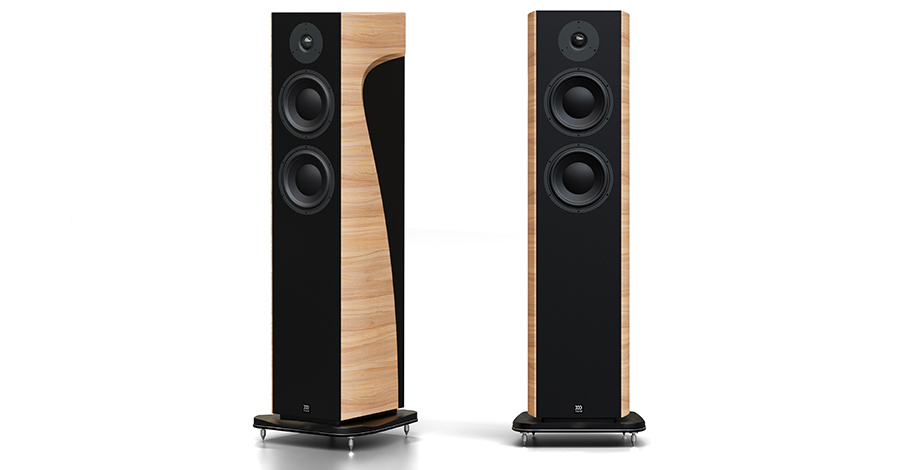
I’ve spent much time with its loudspeakers, so I think I know what Amphion’s house sound is like. However, much of what I thought I knew doesn’t apply here. The largest speaker in the pantheon has always been somewhat different, and the latest iteration, the Amphion Krypton3X floorstanding loudspeakers, takes some of those differences closer to their logical conclusion, so it isn’t entirely surprising. This, then, is a statement speaker in many respects. It represents what Amphion wants us to know they are capable of when cost constraints, or likely partnering equipment, aren’t so limiting.

And on that note, it’s also a significant departure from Amphion’s usual, budget-friendly pricing: a pair of Amphion Krypton3X floorstanding loudspeakers will set you back almost £18,000, three-and-a-half times the price of the next model down, the Argon7LS floorstanders. That’s a big gap, but you get a lot of loudspeaker for your money, more than 20cm taller, over 10cm deeper, and almost three times the weight of the Argon7LS. Part of the need for the size is that, unlike the Argon, the Krypton3X is a 3-way design. 

Familiarity

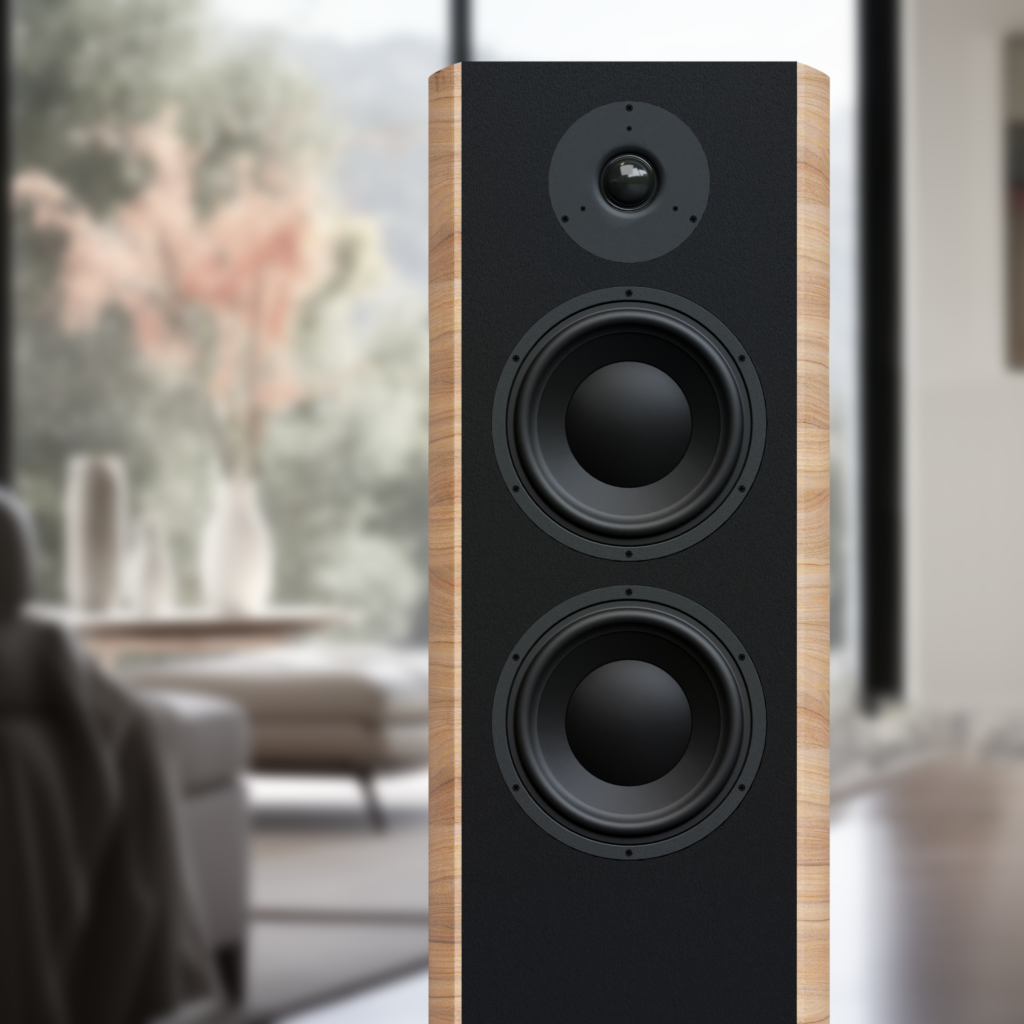
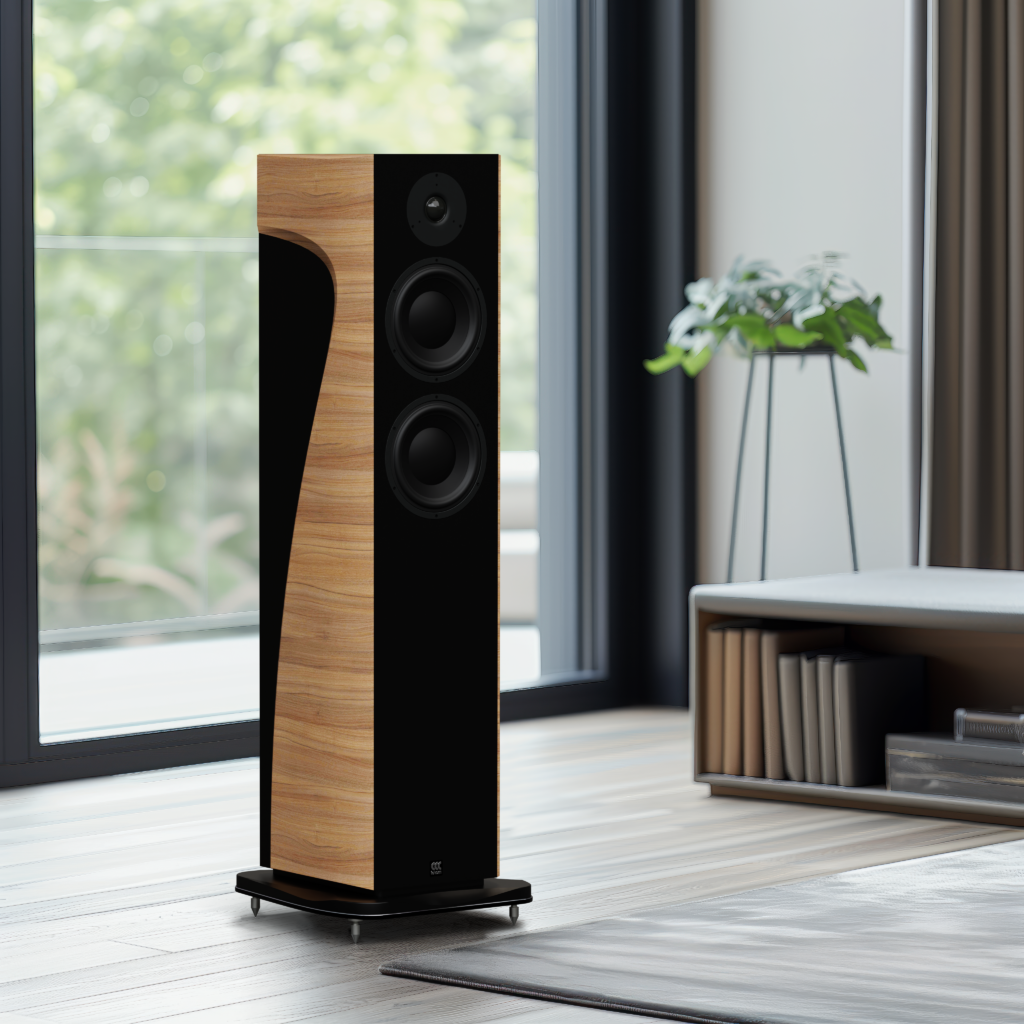
There’s the familiar tweeter, set back in its waveguide, albeit this one is a very high-performance, robust, 25mm titanium dome specially built for the Krypton3X, with a giant magnet for low distortion and wide frequency extension. This is flanked by a pair of 8” paper-papyrus midrange units in Amphion’s familiar d’Appolito arrangement. Still, in the Amphion Krypton3X floorstanding loudspeakers, these are augmented by a sideways-firing 10” bass unit. The midrange cones are ribbed. This makes them perform more like a 4” unit in the critical 600Hz-2kHz range, with the speed, responsiveness and detail that implies, but with the benefits of the larger diaphragm for moving air. 

Amphion Krypton3X White

The midrange arrangement is also unusual in that numerous small holes perforate the sides of the cabinet. These form neat triangular vents behind each of the 8” drive units. These drivers sit in their isolated chambers, and the vents control their dispersion into a cardioid pattern, the better to integrate the midrange with the waveguide-controlled treble unit. The 10” aluminium woofer with its large double-magnet motor sits in the bottom half of the cabinet, vented by a pair of small, rear-facing reflex ports positioned high up behind the tweeter. It’s strictly a low-frequency unit, whose directionality isn’t critical so the sideways-firing configuration integrates somewhat better than similar designs with smaller units that reach higher. Finally, there’s the crossover and, true to form, it’s also a bit different. 

A lot different

Well, it’s a lot different conceptually because it’s a series design. Nearly all passive crossovers are parallel circuits. You build a low-pass and a high-pass filter network, and these split the low and high frequencies as they enter the network and route the signal, in parallel, to the relevant drivers. The series crossover is a more elaborate construct, especially tricky to implement for a three-way design, but it offers some worthwhile advantages. 

Essentially, the low-frequency driver’s high-frequency response is damped by a capacitor’s decreasing impedance, while an inductor’s decreasing impedance damps a high-frequency driver’s resonant frequency. The capacitors and inductors change in impedance as the signal moves outside their operating range, acting as a shunt for the relevant driver, damping it more effectively than a parallel circuit ever could, and where they need it most (ie, outside their design frequency band). In a parallel crossover, by way of contrast, the drivers become decreasingly damped, as you depart from their operating range. 

The Amphion Krypton3X floorstanding loudspeakers use a second-order series crossover, with a bass passband below 160Hz, and midrange passes to tweeter at a low 1600Hz, the better to keep the crossover activity outside the ear’s most sensitive region between 2-4kHz. Amphion proudly claim that the series crossover integrates the Krypton3X drivers into one coherent system in a way that no other filter network possibly can, also providing a balanced load for the amplifier, thereby improving stability and damping over the audio band.

Organised sound

It’s fair to say that probably the most noteworthy early impression, on a first listen, was how the sound is so spatially and temporally organised. There’s soundstaging, and then there’s Krypton3X soundstaging: depth and spaciousness to orchestras you feel you can walk around, and a stability and structural integrity to the music, however complex or layered, that just inspires confidence. Take Henry Purcell, Funeral Music for Queen Mary (Decca), there’s a cavernous acoustic space, and the sense of the funeral procession getting closer in the opening march is effective. The brass is very clearly delineated and the bass drum is sonorous and solid. Dynamics are natural, with little sense of compression. There’s a sense of solemnity and, well, majesty. 

Amphion Krypton3X walnut

The polyphony of the following Canzona is easy to appreciate because of the sheer level of definition, tonally and spatially, of the separate parts. If this is what a series crossover brings to the party, it’s a neat trick. And I’m sure the superb tweeter in its waveguide, the cardioid midrange and d’Appolito configuration, and the bass unit that only operates in that bottom three octaves, all contributes to a level of coherence and cohesiveness you rarely get in a large, three-way design at this price.

Not just large scale

It’s not just large-scale music that benefits from the Krypton3X’s ability to organise things. Hiromi’s work with a string quartet on the Silver Lining Suite (Telarc), a piece about the Covid pandemic, brings to life the interplay and contrasts between Hiromi’s playful, freewheeling piano and the controlled, tight, structured playing from the quartet. 

The first track, ‘Isolation’ builds, instrument by instrument and each has its own discrete space; as the music gets more complex and interwoven, these spaces are preserved, you hear how the music builds and develops, and there’s that satisfying moment of payoff when a complex line comes to its conclusion with all players in lockstep. The piano has mass and body, strings have texture and grain, the rhythmic tapping and slapping in ‘Fortitude’ is tight, together and true to life. The speakers are clearly in their comfort zone as the music is not overly lit, just naturally presented.

Understated

The review pair came in Amphion’s smart, understated black, a satin finish that reflects just enough light to tone it down to something more like a dark charcoal grey. They did dominate my modest sized listening room somewhat, visually at least; more than one visitor was moved to remind me of the monolith from 2001 A Space Odyssey. Amphion recommends installing the speakers so the bass units fire inwards, but if you’ve got a large space to fill, you could set them up with the bass units firing outwards for a more expansive, but perhaps less focussed sound. 

My room is approximately 20m2 so we really tested Amphion’s claim that their loudspeakers are very adaptable to smaller spaces, and inward firing was very much the preferred option.

Tweaking

But to be fair to Amphion’s claim, after a little tweaking of position and support (I settled on a pair of AcouPlex slabs below the plinths, which is when they really began to show their mettle) they integrated into this smallish space, sonically, really rather well.

In Abdullah Ibrahim’s ‘African Marketplace’ (Enja), the music starts chaotically, a melody emerges from this chaos, then the chaos returns, the piano imposes order and calm, and then the chaos returns. There’s a story arc here, easily missed without the levels of organisation of the Amphion Krypton3X floorstanding loudspeakers. How this is brought out often escapes notice. An example is how soloists integrate their work with the NDR Big Band. In this most exuberant of pieces, there’s unfettered enthusiasm. However, it’s under control. It’s free but not loose; dynamics are bold and expressive but always in proportion. The difference between ‘unfettered, and ‘uncontrolled’ isn’t always obvious, but the big Amphions let the musicians walk that line remarkably well.

A keeper

Overall, whether it’s the Hiromi string quintet, a big band playing jazz, or a large orchestra in full flight, there’s a sense of collective effort resolved to the level of individual parts, but neither deconstructed nor spotlit. The Amphion Krypton3X’s ability to spatially and temporally organise the disparate elements, with a surefootedness that eludes many rivals, means there’s a profound sense of being present at an event, of being in the space, not just experiencing a recording. If I had a bit more room, these might just be a keeper.

This last sentence also hides a bonus to the Amphion Krypton3X floorstanding loudspeakers. The reason why I say “if I had a bit more room” has nothing to do with the sonics; it’s that a loudspeaker this physically large in a relatively small space can look imposing, especially in the review sample’s dark grey livery. However, from a pure sound quality perspective, the Krypton3X manages to achieve the near impossible; it works in rooms far smaller than it should, as well as spaces far larger than you might expect. Bad pun time; small rooms are usually Kryptonite to big speakers. But not here. That speaks to the sophisticated engineering and design criteria applied by Amphion. And that’s why it’s a keeper after all. 


Technical specifications

  • Type: Three-way, vented, floorstanding loudspeaker
  • Driver complement: 1 x 1” titanium tweeter; 2 x 8” paper midrange; 1 x 10” aluminium bass.
  • Crossover frequency: 160Hz and 1.6kHz
  • Crossover type: Single-wired, passive second-order series design
  • Power handling: 100-300W (recommended)
  • Frequency response: 21Hz-55kHz (-3dB)
  • Impedance: 4Ω
  • Sensitivity: 89dB @ 2.83V / 1 metre
  • Dimensions (HxWxD): cabinet: 137 x 33 x 478cm 
  • Weight: 70Kg each
  • Finishes: White; Black; Walnut veneer
  • Price: £17,600, $24,000, €20,000 (White/Black) per pair; £18,600, $25,000, €21,000 (Walnut veneer) per pair

Manufacturer

Amphion Loudspeakers Ltd

www.amphion.fi 

UK distributor

Auden Distribution

www.audendistribution.co.uk 

+44 (0)7917 685759

More Amphion reviews

Back to Reviews

Audes ST-900DC power conditioner

It’s not often that you look up a less-than-famous brand’s history and find that it has existed since the 1930s. There are very few hi-fi brands still in existence today that can make such a claim. One reason why Audes is not better known is that for much of that time, its market was limited to the Soviet Union. This was not limiting in itself, but it was not so good for international exports. Based in Estonia, Audes is a conjugation of Audio Estonia. The company was a substantial concern in its heyday. It made all manner of audio electronics, including radiogrammes, turntables, CD players, you name it, under the Estonia brand. Today Audes makes drive units and complete loudspeakers, valve amplifiers and power conditioners, including the Audes ST-900DC.

The ST-900DC is the smallest conditioner in the Audes range, but it’s a proper unit nonetheless. Weighing in at 18 kilos, it has five outlets and a balanced toroidal transformer that is good for up to 900 Watts. The largest Audes conditioner is the ST-3000 with eight outlets that weighs nearly twice as much as the 900. I’m glad I didn’t have to unpack that one. The company’s long history means it is well acquainted with transformer design and makes a wide range of devices. These include single and triple-phase types alongside transformers with different core technologies supplied on an OEM basis. It’s not hard to see why it makes valve amplifiers, as they often need at least three transformers per stereo chassis.

Transformer reliance

The Audes power conditioners rely on a transformer to isolate the outlets from noise on the mains, rather than re-generating the required voltage or using techniques to clean the mains. A transformer is a tried and trusted way of keeping the high frequency noise that besets the grid at bay. The transformer in this case acts as a low pass filter, blocking frequencies above 800Hz where this noise typically resides. We’re not talking about noise that you hear directly through the loudspeakers but very high frequency electrical pollution whose effect is tangible in a background hash that raises the noise floor on the signal that comes out of the speakers. 

The Audes filtering effect is achieved by self-inductance in the “very large core” of the transformer. Another benefit to this DC version of the ST-900 is that any DC offset present on the mains supply is also blocked. DC offset is hard to stop without compromising current flow and can be heard as transformer buzz in audio components, it not only produces a noise in itself but undermines the performance of affected devices. The Audes ST-900DCC also addresses the current flow issue that can affect conditioners and DC blockers by virtue of having a low DC output impedance. This is achieved with the aforementioned large core and a large amount of turns in the primary winding. Conditioners of this kind rely almost exclusively on the quality of transformer inside the chassis and Audes scores well here. 

SMPS, no thanks

The ST-900DC has five power outlets with, in this case, 13A sockets with a 16A rating which should therefore be capable of supplying pretty well any component you can think of. The only component type that Audes does not recommend connecting are those with switched mode power supplies, which given the popularity of such things seems a bit strange. It’s not that the conditioner won’t work with them but that the noise that such supplies inject back into the unit pollutes all of the outlets. Audes suggests either connecting such devices directly to the mains or using a second conditioner.

Audes ST-900DC rear

The case on the Audes ST-900DC is built around a steel chassis with an MDF cover, the latter is very nicely machined and finished and could pass for aluminium if it were a bit colder to the touch. On the back are five 13A sockets in a traditional orientation, I tried conventional 13A plugs and Furutech types where the cable exits backwards, the latter had a tendency to pull out slightly under the weight of the cable, suggesting that the sockets could do with more grip. The meters on the front show incoming voltage and outgoing amperage. In my system the amperage didn’t get to one amp, even with a substantial power amplifier in use. The power inlet has an illuminated switch, the only light on the device, and this provides an easy way to switch off everything at once.

Go down easy

Listening commenced by comparing the system plugged directly into the wall with the Audes ST-900DC using a set of fairly ancient Russ Andrews Powermax cables on a system consisting of a music server, streamer, DAC, preamplifier and 150W power amp. The change brought about by introducing this conditioner was not small, in fact it was quite a transformation with the most obvious improvement being in ease and openness, the soundstage expanded in depth and scale, the ‘air’ in the recording being reproduced in such impressive fashion that the sense of presence was doubled. There was more timbre and depth to each voice on Crosby, Stills and Nash’s ‘Helplessly Hoping’ and the singers seemed a lot more real as a result.

With a classical piece, Mendelsohn Octets, the melodic flow was much stronger and the tonal colour of the instruments much less grey, essentially more rich and vibrant, they sounded like gut and wood rather than a facsimile thereof. All of which made the music significantly more involving, a characteristic that was apparent on Felix Laband’s ‘Red Handed’ where there was more depth in the voice and in pretty well every note for that matter. Here the speed and dynamics of the bass line improved thanks to greater precision, this also enhanced timing because the leading edges were cleaner and clearer. The Audes brought about an all round upgrade that would be hard to match for the price in what was quite a pricey system (c£50k).

DC offset problems

I do have problems with DC offset on my mains supply so it’s likely that the DC blocking capabilities of the Audes ST-900DC were helping, the Longdog Audio power supply on my Lumin streamer is inclined to buzz under normal circumstances, so it was likely enjoying its removal. Moving over to a vinyl source of Rega P10 turntable and Tom Evans Groove+ SRX phono stage and contrasting that between wall and Audes also proved to be highly worthwhile. Here the benefit came in the form of greater three dimensionality of imaging with sounds being much more solid in the air, there was also a greater sense of the space or reverb in the recording. Timing was likewise enhanced, with the playing of Michael Franks’ super slick band (The Art of Tea) gaining clarity and separation. 

With a rather more up to date pressing in the form of Tord Gustavsen Trio’s The Other Side the transformation was even more pronounced when the ST-900DC was put in the power chain. Here the timing jumped several notches in quality, making the raw power version sound incoherent and clunky by comparison. If I didn’t already have some form of power conditioning I would have made Audes an offer there and then. The fact that I was using DALI’s very revealing Epikore 11 speakers and Bricasti amplification undoubtedly makes such changes more obvious but I suspect that they would be clear on most decent systems.

Tiglon factor

I tried similar comparisons using some much fancier TPL-2000A power cables from Japanese brand Tiglon, these made the system sound much better overall when connected to the wall but the benefits of adding the Audes conditioner were still very clear. The changes wrought with the streaming system were very similar to those achieved with the Russ Andrews cables, the definition of leading edges being perhaps the most obvious. Now the highs were clearer and cleaner and this opened up the soundstage, brought out low level detail and balanced the dynamic characters of the various instruments within a mix. Once again the Tord Gustavsen Trio piece gained a big timing uplift, the way that the three musicians work their magic together becoming more cohesive and engaging.

Finally I tried the Audes with Hegel’s big H600 streaming amplifier, a 300W beast that does everything in one box. Here the result was very much in the conditioner’s favour, the sound opening up and relaxing in equal measure whilst retaining the snap of the percussion on Joni Mitchell’s ‘The Drycleaner from Des Moines’ (Mingus). This fabulous tune became more immediate and exciting with the horn blasts really jumping from the system and the extra resolution brought to the bass playing making it clear that Jaco Pastorius really was that good, especially when he played with Joni.

I think it’s safe to say that if your system is plugged into the wall the Audes ST-900DC will lift its performance in no small measure. There are plenty of alternatives on the market of course but this one does a very good job for the money and appears well built and finished. 

Technical specifications

  • Type: AC mains power conditioner.
  • Outlet: Five outlet 13A UK or EU. No US version available at this time.
  • Dimensions (H×W×D): 130 × 477 × 347mm
  • Weight: !8kg
  • Price: €2,850

Manufacturer

Audes LLC OÜ

https://audes.ee

+372 33 95 651

Back to Reviews

Warsaw Audio Video Show 2024

Bright, sunny days toward the end of October are not a common feature in Warsaw. It’s usually cold and gloomy. But Warsaw was pleasant T-shirt weather for most of Warsaw’s Audio Video Show 2024. That didn’t deter the crowds, and one of the most vibrant audio shows worldwide continued to pull in people of all kinds.

Audio Video Show 2024 crowd at entrance

Warsaw Audio Video Show 2024 divides between three venues—two hotels and the country’s main stadium across town. It has grown to become virtually three events in one. The show has a more conventional hotel-room-based exhibition at the Radisson Blu Sobieski. This attracts smaller local brands and some international start-ups.

The Radisson Blu Sobieski and the nearby Golden Tulip Hotel also have larger conference room spaces. Higher-end brands and distributors occupy these, but often those with more of a traditional enthusiast vibe.

Meanwhile, many of the audio industry’s big names reside at the PGE Nardowy stadium. This is the place for home cinema demonstrations from brands such as Philips and JBL. It’s also home to a wealth of personal audio equipment. We concentrated on the new two-channel audio products because there was so much to see. However, we have not priced the products we saw. This is because we got prices in Polish Zloty, Euro, US Dollars and UK Pounds. Here are our highlights!

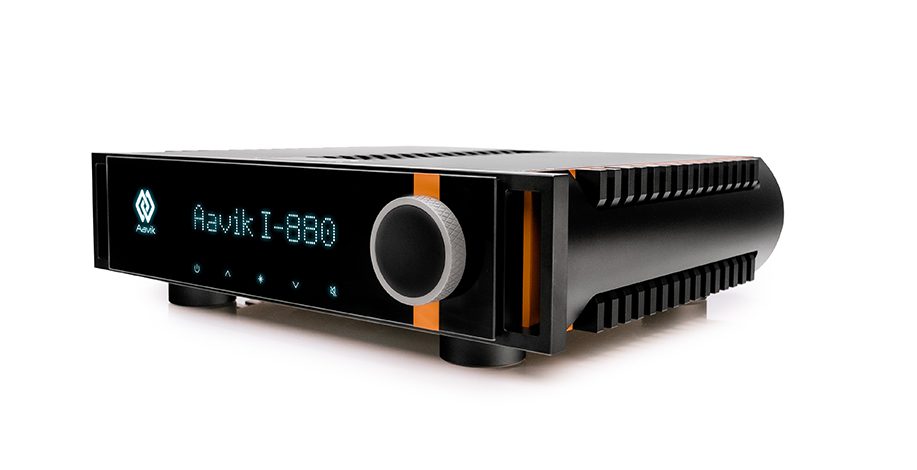
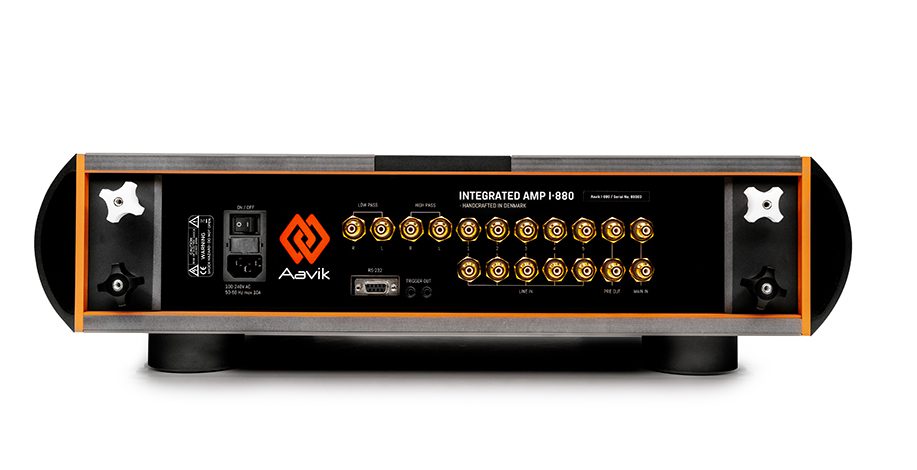
Aavik

Aavik R-880

A new state-of-the-art phono stage has just joined Aavik’s top-line amplifiers. The R-880 supports MM, MC, and even DS-Audio optical cartridges. It allows extensive on-the-fly cartridge setting adjustment. There is also technology that will filter down through the Aavik and Axxess ranges.

Arcam

Arcam SA35

Sickly orange light notwithstanding, Arcam’s new does-everything SA35 streaming integrated amp delivered a lovely sound. It was connected to Spendor Classic 2/3 loudspeakers and hooked up with Cardas Audio cable. The smaller of Arcam’s two new integrated amps, the SA35 still packs a healthy 120W punch. A matching streamer is also available.

Avantgarde

Avantgarde Trio G3

The latest version of Avantgarde’s flagship loudspeaker, the Trio G3 exploits the company’s ‘bionic’ horn system to the extreme. The new model extends the frequency range and reduces distortion over previous models. It is joined by the new SpaceHorn, a more modular replacement to the company’s BassHorn system. This was playing through a full Kondo system, from Ginga turntable to Kagura 2i mono power amps.

AVM

AVM PC 5.3

AVM’s new PC 5.3 and 3.3 power conditioners have individually filtered outlets: two high and four low power outlets on the 3.3 and double those figures on the 5.3. Both models actively monitor the incoming power to detect power fluctuations and changes in the AC phase and filter DC directly at the device input to reduce mechanical noise and crosstalk.

Audio Research

Audio Research Reference 330M and system

In one of the larger rooms shared with Wilson Audio (the Alexx V, shown for the first time in its new ‘fx’ livery), dCS Vivaldi, Shunyata Research and D’Agostino Audio, this was one of the first public outings of the new Reference 330M from Audio Research. These tube monoblocks represent the pinnacle of Audio Research amplifiers and sound great too!

Cambridge Audio

Cambridge Audio EXA100 and EXN100

Launched just a few weeks ago, Cambridge Audio’s EX Series fills the gap between its CX and Edge ranges. The 100W Class AB EXA100 uses technology drawn from the company’s Edge M flagship mono power amps. It adds Bluetooth aptX HD and HDMI eARC connectivity and features an on-board ESS Sabre DAC. It’s joined by the EXN100 Network Player, which brings both locally stored and online streaming services to the party. The duo sounded great through a pair of Acoustic Energy Corinium loudspeakers.

Clarisys Audio

Clarisys Audio Atrium

Played in the LampizatOr room (more on that later), the new Atrium is Clarisys Audio‘s flagship panel loudspeaker. Originally designed as a full repair service for Apogee loudspeakers, Clarisys speakers use the technology of the legendary Apogee ribbon speakers in their designs. Few are larger than the Atrium. With panels the size of surfboards, the high-impedance multi-panel loudspeaker is sensitive enough to be played by valve amplifiers.

DALI

DALI Epikore 9

The top model in a trio of new Epikore models from Danish speaker experts DALI, the Epikore 9 borrows much from the company’s Kore flagship. The four-way Epikore 9 uses the Evo-K dome tweeter/ribbon supertweeter arrangement found across the range, with a 165mm midrange and a pair of 200mm bass drivers. This was driven by Classé Delta pre and mono powers and delivered a sophisticated and powerful sound.

Devialet

Devialet Astra

Replacing Devialet’s entire Expert line of amplifiers at a stroke, Astra combines a new version of the company’s ADH amplifier technology with greater integration with wired, wireless and online music providers. This is the most radical redesign of the platform since the original D-Premier of 2010. The 300W Astra has a standard light bronze finish and a gold-leaf Opéra de Paris version. It can also run in twin-amp mode or multi-amp mode for active loudspeakers.

Dynaudio

Dynaudio Contour Legacy

First shown in prototype form at Munich earlier this year, the Dynaudio Contour Legacy exceeds expectations. This homage to Dynaudio’s classic floorstanders combines the best of the company’s history with its latest drive unit technology. These loudspeakers might be designed to sit in regular-sized listening rooms, but they worked very well even in an ample conference space in the Golden Tulip hotel.

EllaSonika

EllaSonica Ella Power Slim

One of my finds of the show is the Korean company EllaSonika, which makes a range of full-digital amps that sound decidedly tube-like and have loudspeakers that match. The Ella Power Slim is a small digital amp with balanced and unbalanced inputs as well as USB and S/PDIF digital inputs. It includes a range of EQ settings to recreate a tube, ‘cool’ and ‘bass’ mode. It’s joined by the three-way Ella Speak floorstander which has an two-inch dome midrange and eight-inch bass. These two products were high in value stakes and sounded lovely. They were hooked together by another show discover; Athena muse cable, also from Korea. Distributors… beat a path to these Korean company’s doors, now!

Ferrum Audio

Ferrum WANDLER/HYPOS

Like any overnight sensation, Ferrum Audio took decades to become what it is today. Its parent company, HEM, has been in business for over twenty years, building OEM digital audio products for others. In the 2020s, HEM boss Marcin Hamerla fully implemented his Ferrum designs. Best known in the personal audio space, the WANDLA DAC/Preamp (in standard or Golden Sound Edition guise) and HYPSOS power supply also represent a powerful digital hub and front-end for traditional two-channel enthusiasts, as evidenced by their use with an ATC power amp and loudspeaker system playing effortless sound in the stadium.

Ken Kessler/TechDAS

TechDAS Air Force 10

In the RCM Audio room—which held several turntable gems, including the new TechDAS Air Force 10 combination air/conventional bearing tonearm—legendary reviewer Ken Kessler extolled the virtues of open-reel tape.

Ken Kessler

With pre-recorded tapes from the mid-50s onwards, he made a strong case that everything else was an audio misstep. A commercial tape of the Beatles’ Sgt Pepper was truly stunning, sounding through a Studer open reel, Vitus audio electronics, and Gauder Acoustics loudspeakers.

LampizatOr

LampizatOr Horizon360

The LampizatOr Horizon360 replaces the top-of-the-line Horizon and has a record-breaking DSD 1024 and 32-bit, 1520kHz PCM conversion on board (but is not currently activated). It also supports an XDMI link for Taiko Olympus users, has one extra transformer and a new remote, and unlocks the company’s next 20 years of upgrades. Owners of existing Horizon DACs can also upgrade to the new Horizon360.

Magico

Magico M7

The Magico M7 doesn’t come out to play that often because it’s a physically imposing loudspeaker that needs a good, big room and careful system matching to show what it’s capable of. However, it can redefine your expectations of what good audio can do. In most shows, companies try to impress by playing music at ear-splitting volumes, but one of the M7’s strengths is playing at more real-world and even low levels. The M7, helped by a Taiko streamer feeding EMM and MSB digital, an Acoustic Signature turntable, Pilium amplification all on finite elemente Carbo platforms, produced a ‘none more black’ appeal.

Marantz

Marantz Horizon

The urge to come up with a ‘New Horizons’ line for the two new Marantz products is irresistible. Marantz Horizon and Grand Horizon are wireless active loudspeakers, using the company’s Rise amplifier system, DSP system, transducer system, and even wireless module are all proprietary. Sadly, they were ‘showing’ rather than ‘playing’, but they show promise.

McIntosh Labs

McIntosh Mc2.1kW Anniversary

McIntosh Labs has been in business for 75 years. To celebrate, the company’s new Mc2.1kW Anniversary flagship mono amplifier has two power supplies and an amplifier module per chassis. As the name suggests, this 180kg amp delivers over 2kW of continuous power. It was shown with the MCD12000 Anniversary CD/SACD player, the C12000 Anniversary preamp, and Rockport Orion loudspeakers in the stadium’s ‘millionaire’s row’ of brands!

Oephi

Oephi Reference 3.5

Oephi usually demonstrates its smaller loudspeakers, showing people what’s possible from a stand-mount loudspeaker when appropriately made. At Warsaw, however, Oephi showed its flagship Reference 3.5 towers, this time demonstrating that a big speaker in a smaller room can work well. With a large ribbon tweeter coupled to a Purifi midrange and two Purifi woofers, all hooked up with a point-to-point crossover, this gently back-swept bass-reflex floorstander held all the sonic aces. They sounded especially good through hARt Lab amplification from Greece. I have the feeling we are going to hear more from hARt…

Opera Loudspeakers

Opera Loudspeakers Prima v2 and Quinta v2

Opera Loudspeakers premiered the new versions of its popular Prima bookshelf loudspeakers and Quinta floorstanders. These v2 versions change practically everything from the 2015 versions, while retaining and improving on the elegant looks and refined sonics of the originals. They are joined by the equally elegant Black Edition amplifiers of the company’s sister brand, Unison Research

Peak (Consult)

Peak El Diablo

Peak (also known as Peak Consult) has been having something of a renaissance. Per Kristoffersen range of loudspeakers combines traditional high-end design values with excellent performance. The new version of Peak’s El Diablo goes more than some way to explain why the brand is back! It was playing with Extraudio electronics from Holland.

Silent Pound

Silent Pound Bloom

We saw the first Challenger loudspeaker from Lithuania’s Silent Pound at the 2022 Warsaw show. The Challenger II is a slight evolution of the original, but the Bloom three-way stand-mount is all new. The 40kg loudspeaker with integrated stand focuses on constant directivity, and balances a coaxial midrange and high-frequency driver with a pair of dipole bass units. Both Challenger and Bloom are designed to be untroubled by room acoustics, and are exciting designs we hope to see more of.

Sonus faber

Sonus Faber Suprema

Sonus faber’s new Suprema flagship is a four-box design with two main units, twin subwoofers, and an external electronic crossover. Used with a lot of top-end Classé amplification in one of the stadium’s larger rooms, this wasn’t just muscular high-end audio; it was almost steroidal! Sonus faber wanted to show just what high-end can do, and the company wanted to impress. It certainly did just that.

SoundClub

SoundClub Saturday system

This Polish high-end distributor, SoundClub, wasn’t content with just one system. They changed amps and speakers for each day of the show. The Wadax digital and Brinkmann analogue front-ends and Air-Tight preamplification remained constant. However, the room had Boulder and EgglestonWorks one day, Halcro and Marten the next, and Göbel loudspeakers on the third. It was an ambitious plan!

Storgaard & Vestskov

Storgaard & Vestskov Gro

A new name on the loudspeaker scene, this Danish family-run company has three excellent loudspeakers the Storgaard & Vestskov line-up: the two-way Frida stand-mount, the two-way Gro floorstander and the (too large for the room) top of the range Fenja three-way tower. These loudspeakers are built to exacting standards using five-layer solid tiger bamboo cabinets with aircraft-grade CNC-milled aluminium front baffles. With custom-made drivers, high-grade components in the crossover and shock-absorbing feet as just part of the deal, this start-up hits the ground running!

Wilson Audio

Wilson Audio WATT/Puppy

One of the show’s highlights was the combination of Gryphon electronics and the recently reborn Wilson Audio WATT/Puppy loudspeakers. Fed by the new Gryphon Apollo turntable (itself heard for the first time in Europe since its Munich 2024 launch), this was the first public outing for the WATT/Puppy at a European show. The combination had a ‘play anything’ stance… I even got to play some drum ‘n’ bass! While there was a general move toward the audiophile standards across the show, hearing Grant Green was a rare jazz find, and it sounded excellent!

WK Audio

WK Audio TheRay

We’ve been following WK Audio‘s cable designs for some time. The Polish brand’s TheRed line of cables is one of the best… but it doesn’t come cheap. TheRay, WK Audio’s new line, streamlines much of the technology used in TheRed, houses the cable in a single light blue braid, and delivers much of the performance for half the price. We’ve long said WK Audio is the secret sauce of European high-end; with TheRay, maybe more people will find out just what we mean!

Zellaton

Zellaton Plural EVO

We missed the launch of the Zellaton Plural EVO floorstanding loudspeaker at the Munich show, but it was on display, coupled with a Goldmund Eidos front-end, Mimesis Excellence preamp and Telos 800 power amp. The Plural EVO uses a unique rigid-foam membrane developed decades ago and has been completely redefined for a new generation for the last five years.

Back to Home

Aardvark in-line network filter

Outside of audio applications, aardvarks are insect-eating mammals native to sub-Saharan Africa. In audio, however, Aardvarks are noise-eating filters native to Argentina. With the Aardvark in-line network filter, I think we won the battle.

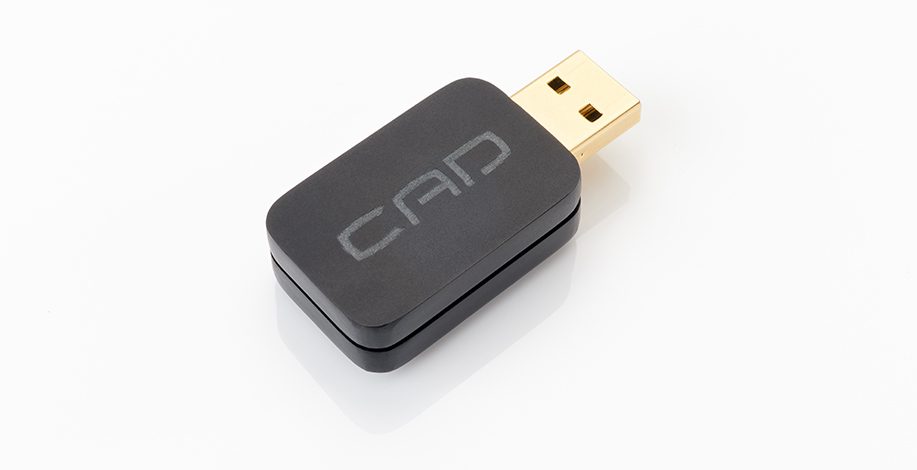
The product itself couldn’t be more straightforward. You plug it between your Ethernet cable and your streamer or server. The RJ45 connector goes into your audio device. Your Ethernet cable (and the outside world) plugs into the rectangular box. 

The female end of the Aardvark (the bit in the box) is transformer-coupled. It also has two coils in that box, transmitting data via inductance, with no electrical connectivity between them. That means proper, entirely passive galvanic isolation. It’s that simple.

Of course, ‘it’s that simple’ is never that simple. The Aardvark in-line network filter relies on high-grade micro transformers, hard-wired using silver alloy solder, and carefully selected cables. Selected for its shielding properties, the RJ45 connector is hand-built and encased in its anti-vibration case.

It’s also the result of hours upon hours of listening tests. Months of evaluation ensued for every component in the Aardvark. This inflexible little dongle is a labour of love. No sensible human being would create the Aardvark in-line network filter in the quest for a fast buck. 

Nerd toothpaste

The alpha nerds who make the Aardvark supply it in bubble wrap and a white card case. This is similar in size and shape to toothpaste packets but with less garish colours. It does have what looks like a wax seal with a little aardvark in place of a royal crest. The box has a pithy mission statement printed on two faces; “because digital audio is about time and silence.” I’d cranked up my sarcasm catapult to say something snide about this statement, but it damn well holds in the performance of the Aardvark in-line network filter.

There are two sides to its evaluation. Does it work? And, if it does, does it work better than an audiophile network switch, and by how much? The TL:DR answers are ‘yes’, ‘mostly’ and ‘it depends’. The Aardvark unquestionably works as a bulwark against noise distributed along an Ethernet cable. If you have shifted to fibre optic Ethernet, what the Aardvark does no longer applies.  

Funny ha-ha or funny peculiar

My grandfather worked on what became known as ‘Hobart’s Funnies’ before discovering he was allergic to torpedoes. ‘Funnies’ were highly specialised armoured fighting vehicles, each built on a converted tank. They included mine-sweeping flails, amphibious landing tanks for laying pathways, armoured bulldozers, and more. 

I mention this because the Aardvark in-line network filter joins a plethora of audio ‘funnies’ designed to do a specific task well—in this case, keeping the network noise nasties outside the system. There are many products that do the same thing, but few are quite as small, simple, or elegant as the Aardvark, and only a handful do the job as competently. 

It’s very simple. The Aardvark in-line network filter strips away whatever it is in Ethernet performance that seems to make it appear artificial and flat-sounding compared to CD versions and allows the music to spring back to life. This was an easy test to make, as I have several ripped CDs stored on a NAS drive and comparing them to the original CD played through a CD player exposes the differences easily, clearly, and quickly. Notionally, the CD should sound inferior to the ripped version as its error correction is performed on the fly and is nothing like the bit-perfect ripped track. However, in reality, the CD sounds more alive and vivid, while the stored music has a flat soundstage and often sounds musically dull. 

The Aardvark goes a long way toward levelling that playing field. It gives recordings life, space, and vibrancy that were missing before. 

Unflattening sound

Another helpful test is running a local music server directly into the streamer. Then, compare the sound of recordings with those taken from online music libraries. If the home server sound is ‘flat’ compared to the CD original, then external streamed sources have suffered a bizarre steamrollering accident. And here, the Aardvark in-line network filter really comes into its own. I’m surprised just how much of what we think is poor-quality streaming sound is actually the bit between the outside world and your streamer filling the DAC with ‘meh!’. 

The Aardvark snuffles out noise like its African namesake does with ants and what’s left is clean, vivid and three-dimensional. Playing ‘Drive Home’ by top progster Steven Wilson on his The Raven That Refused to Sing album [Kscope] highlights the benefits. This track maxes out on the atmosphere and demands a lot of detail, space, and soundstaging. These are traditionally aspects streaming nails, but played through the Aardvark, there’s a holographic quality that is sorely missing elsewhere.

Like the best of the ‘Funnies’, the Aardvark in-line network filter knows no fear. It’s untroubled by the recording scale and is equally comfy when used with lower and very high-end equipment. I’ve also used this with several decent network switches (in particular, the Melco S100 data switch). While it doesn’t raise the musical bar as high as it might when keeping the noise from some low-cost Netgear switch at bay, there is still improvement.

Bringing vibrancy back

Once again, this is mainly in the soundstage, bringing vibrancy back to the music. Sometimes, that’s more literal than figurative, as it polishes up the tonal colour of a recording. But it often strips away the musical flattening that comes with the network territory. Instead, it breathes new life into the recording.

This is one of the most surprising products I’ve heard all year—in a good way. The Aardvark in-line network filter might look small and simple, but it knows how to maximise networked audio. 

Price and availability

Aardvark In-line RJ45 Filter: £499/ $449

Manufacturer

Aardvark

www.aardvark.com.ar

UK distributor

The AudioWorks

www.theaudioworks.co.uk

+44(0)161 428 7887

Back to Reviews

iFi Audio iCAN Phantom

Reviews like this one tend to follow a formula. They offer some context, rundown the product specs, and follow up with an impression of said performance. The iFi Audio iCAN Phantom, though, is going to be a problem. I could fill the whole review with a list of its components and specs.

I mean, look at that photograph. The iCAN Phantom looks like two pieces of equipment crashed into each other, right? And where features and functions are concerned, the iCAN Phantom is the equivalent of two pieces of equipment minimum.

Reimagine that

This is an analogue headphone amplifier. It’s a reimagining of the original Pro iCAN headphone amplifier. It also incorporates technology from the company’s Pro iESL (a standalone electrostatic headphone energiser). So, it’s capable of dealing with (inevitably power-hungry) electrostatic headphones as well as IEMs of every sensitivity, regular dynamic driver designs, and planar magnetic models. By way of an encore, it can also function as a preamp with a power amp (or powered speakers). 

iFi Audio iCAN Phantom front on

The bottom portion of this weirdly proportioned product is matte black and finned to assist with heat dissipation. At the front, it deals with inputs and outputs. It has separate ‘electrostatic’ and ‘standard’ outputs. 

The ‘electrostatic’ section features two five-pin outputs—one is at ‘normal’ bias, and the other is customisable. The bias voltage of electrostatic headphones can vary quite a bit. So, iFi supplies a selection of bias voltage data cards (that look like SD cards). These cover 500V, 540V, 580V, 620V, and 640V voltage electrostatics. A magnetic cover that attaches to the main body of the Phantom houses the cards. 

The ‘standard’ outputs, meanwhile, consist of a couple of 6.3mm unbalanced outputs (one positive phase, the other inverted phase), a 3.5mm unbalanced output (featuring iFi’s ‘S-Balanced’ technology that’s claimed to reduce distortion by 50 per cent), left and right 3-pin balanced XLRs, a 4-pin balanced XLR and a 4.4mm balanced output. 

Inputs and outputs

The iFi Audio iCAN Phantom’s analogue inputs are on the rear. It has three pairs of stereo RCAs and a pair of balanced XLRs. It also keeps its pair of balanced XLR and stereo RCA preamp outputs.

iFi Audio iCAN Phantom (rear)

On the lip where the black bottom section meets the silver top section, there are a few control buttons that deal with ‘bias voltage’, offer different impedances, switch ‘IEM matching’ on or off, and scroll through the various stages of iFi’s beloved ‘XSpace’ and ‘XBass’ algorithms. 

On the front of the Phantom’s upper tier, there are two large knobs. One looks after power and input selection, and the other handles volume. Between is a big, bright display and a couple of small switches. One takes care of gain (0dB, 9dB and 18dB), and the other switches between valve modes. 

Valve modes

Oh yes, valve modes. The iFi Audio iCAN Phantom has two input stages. One is valve-based, and the other is solid-state. The user has three options and can switch between them on the fly. Each option – according to iFi – has a distinct sonic character. According to the company, solid state is all about “pace and immediacy”. If that sounds a bit hectic, ‘tube’ mode focuses more on “fluidity and a free-breathing dynamic quality”, while ‘tube+’ is the most traditionally valve-y and will deliver a “spellbinding romantic warmth”. I think we can all agree this sounds pretty enticing.

The valves are GE5670s and are good for around 10,000 hours. They’re visible, along with some other components, through the Phantom’s smoked glass top panel. This panel can be removed when replacing valves. 

Significant

The entire thing measures a significant 185 × 256 × 120mm (H×W×D), weighs a healthy 4.2kg, and sits on four ‘doubled-damped anti-vibration feet’. If you crave the sort of rack presence that’s half ‘purpose’ and half ‘oddball’, you’ll have to go a long way to beat the iFi iCAN Phantom. 

The iFi Audio iCAN Phantom is controlled from the fascia or its remote control handset. This has big buttons and multiple colours. In its way, it’s just as odd a device as the Phantom itself. There’s also the option of the iFi ‘Nexis’ control app that’s free for iOS and Android. The iCAN Phantom is the first iFi product to incorporate the Nexis nodule, and its current functions extend beyond being a ‘super remote control’*. It displays diagnostic information, monitors the Phantom’s condition, and is the gateway to firmware updates. The company intends to expand the app’s functionality for multiple iFi devices.

*(My experience was of an app that located the iCAN Phantom via Bluetooth and then spent a lot of time ‘initialising’ without ever quite getting around to it. These are the nursery slopes for the Nexis app, though, so hopefully, it will prove its worth in the future.)

Speedboat, not pedalo

A Naim Uniti Star music streamer/amplifier using QED cables connected to the iCAN Phantom. The Naim connected to a Cambridge Audio Alva TT v2 via a Chord Huei phono stage. Various headphones (HiFiMAN electrostatics, Sennheiser IEMs and FiiO planar magnetics) were hooked to the appropriate outputs. These all used product-appropriate settings and left ‘XBass’ and ‘XSpace’ well alone. And it takes next to no time to establish that, at the very least, the iCAN Phantom compares to the integrated headphone amplification of the Naim in much the same way a speedboat compares to a pedalo.

iFi Audio iCAN Phantom multi-layer PCBs

No matter if it’s playing the smooth and soothing sounds of Vieux Farka Touré et Khruangbin’s Ali [Dead Oceans], the punishing electronic attack of Clark’s eponymous 2014 album [Warp] or the heretical (at the time) jazz fusion of In a Silent Way by Miles Davis [Columbia], the Phantom is always an absorbing, revealing, vaultingly dynamic and forensically insightful listen. It’s possible to fiddle around the edges of its performance. There are differences between the three input stage settings. However, nothing as profound as iFi suggests. But at its core, the sound of the iFi is consistent. If you take headphone listening as seriously as the cost of the Phantom insists you must, is a good thing. 

So focused

The Phantom’s sound might appear slightly undemonstrative at the very first listen. Then you notice its tonal reproduction is focused, controlled and unswervingly accurate. It delivers recordings with assurance and positivity that makes them sound utterly natural. 

The iFi is uncolored across the frequency range. However, it’s also alive with detail regarding tone and texture. An antique recording like What a Little Moonlight Can Do by Billie Holiday [Clef/Verve] sounds nuanced and confident.

Dynamic headroom is stratospheric, rhythmic expression is wholly assured, the soundstage it can create is wide, deep and unarguable in its layout. Detail retrieval is fanatical, and the Phantom manages to contextualise even the most transient occurrences in a recording with complete confidence. 

Not showy

If needed, the Phantom can hit with iron-fisted authority. However, its prodigious low-frequency presence is never showy. It’s held in reserve for those moments when a recording requires it. Then, the iFi deploys that power without impacting the rest of the frequency range. And it does it with no drop-off in resolution. 

This mad-looking device makes headphones sound instinctively correct. No headphones are too tricky for it to drive with total authority. Also, no recording is so truculent that an order can’t be imposed on it. The iFi iCAN Phantom is an absolute masterclass of headphone amplification.


Technical specifications

  • Type: Fully balanced, solid state/valve headphone amplifier/preamplifier
  • Inputs: Three stereo pairs (via RCA), one stereo balanced (via dual 3-pin XLR jacks)
  • Outputs: Two five-pin electrostatic outputs (one at normal voltage bias, one customisable ), two 6.3mm unbalanced outputs (one positive phase, one inverted phase), one 3.5mm unbalanced output, stereo balanced 3-pin XLR outputs, one 4-pin balanced XLR output, one 4.4mm balanced output, stereo single-ended preamp output (via RCA), one stereo balanced output (via dual 3-pin XLR)
  • Frequency response: 0.5Hz–500kHz (-3dB)
  • THD & N: Solid state – < 0.0015% (balanced);
    < 0.007% (unbalanced); Tube – < 0.002% (balanced);
    < 0.006% (unbalanced); Tube+ – < 0.012% (balanced);
    < 0.2% (unbalanced)
  • Dimensions (H×W×D): 185 × 256 × 120mm
  • Weight: 4.2kg
  • Price: £3,749/$3,749

Manufacturer

iFi Audio

www.ifi-audio.com

UK distributor

KS Distribution

www.ksdistribution.co.uk

+44(0)1903 768919

More on iFi Audio

Back to Reviews

Mola Mola Lupe

Dutch manufacturer Mola Mola makes the new ‘archive-grade’ Lupe phono preamplifier. Lupe has the comprehensive functionality we might expect of a pro-audio device. However, assuming that only professionals must pay attention to it would be a mistake.

In addition to supporting the regular RIAA equalisation curve. The Lupe has a fully customisable EQ setting plus 43 pre-set named alternatives. Do you want to use the correct EQ curve to play any recording from yesteryear? The Lupe – like Mola Mola, a name from a book about Hawaiian fish – will oblige. It also accepts four tonearm inputs simultaneously, three RCA and one balanced. Each input can have different loading, gain and EQ values.

Sure footed

Impressive, though all this is, it would count for little if the sound were produced below par. However, Mola Mola’s Lupe can make a compelling case on sonic grounds alone. There are technical reasons for this that I’ll return to shortly. For now, it’s sufficient to observe that once it had gone through a rather extended burn-in, the brand-new review sample proved more than competitive sound quality-wise against a selection of its £ for £ peers. This means that its Swiss Army Knife flexibility effectively comes for free.

Mola-Mola-Lupe-front-1

The Lupe has the same half-width form factor that Mola Mola employs for its Tambaqui DAC and Makua monoblocks. Its black sides contrast with a swoopy matt aluminium top. All the input and output connections on offer make the rear panel somewhat crowded. However, it is not so densely packed that the setup requires exceptionally nimble fingers. The front panel has four buttons for manual source selection and a black-and-white dimmable display that shows the current configuration. 

Below the EQ selection

The Mola Mola Lupe comes with an infrared handset that controls essential functions. Deeper settings need Mola Mola’s Android or iOS Bluetooth app. Below the EQ selection drop-down in the app are three further drop-downs: bass turnover, low shelf, and roll-off. These are the time constants used by individual record labels to achieve their own house EQ curves before RIAA became the global standard.

If we use the app to select, for example, Decca’s 1934 78 RPM curve, or any of the 42 others, we see the time constant values change in the app. As the new values apply, you hear relays click inside the Lupe. The three parameters can also be changed in any combination on the fly. Some buyers might use this ability to boost weak bass, or tame an over-bright recording. The app also controls individual channel phase, mono or stereo output, and the subsonic filte.

More stages

Most phono preamplifiers designed both for moving magnet and moving coil operation use one gain stage to amplify MM cartridge output, with a second gain stage daisy-chained to the first in order to provide the additional amplification required by low-output MC cartridges. The Mola Mola Lupe differs by having two entirely separate Class A gain stages, one designed exclusively for MM cartridges, the second just for MC. Both are fully discrete designs and are followed by an active analogue filter. The filter uses relays to switch capacitance and resistance in and out to achieve the different time constant values and, thereby, EQ curves.

Each gain stage is optimised for the best possible performance; in MC, where the lowest voltage noise (and highest gain) is required, and for MM cartridges, where the lowest current noise is desirable. The result of this no-compromise approach is a claimed A-weighted signal to noise ratio on MM (45dB @ 1V output, 1kHz) of 86dB and on MC (52dB @ 1V output, 1kHz) of 92dB and a bandwidth of more than 80kHz. In the listening chair those impressive figures prove to be of more than academic importance. 

The reference

I used the Mola Mola Lupe with my current reference turntable, an Origin Live Sovereign S fitted with the company’s Agile tone arm and a Soundsmith Paua II moving iron cartridge (0.4mV output). The first of Lupe’s three RCA inputs was designated a moving coil input, its load resistance set to 400 Ohms from 60 to 1kOhms, and gain sensitivity set to 72dB from 52dB to 87 dB.

Buyers will need to be patient. Mola Mola suggests that the Lupe might take some 300 hours to stabilise. While that’s relatively unexceptional, remember it’s needle-time rather than simply powered-up time that counts here. Once it had stabilised sonically, as expected from its claimed signal-to-noise measurements, the Lupe proved to be almost preternaturally quiet, able to transcribe a forensic level of detail due to the relative silence from which musical events emerge. But this does not imply that Lupe’s presentation is sterile and unengaging. 

Mola-Mola-Lupe-back-1

Some years ago, an audio manufacturer particularly invested in using ultra-high-quality full-sized discrete components told me that ‘small components mean small sound.’ The Lupe – which, like most contemporary audio products, makes liberal use of miniature surface-mounted discrete components – debunks that assertion rather more articulately than I could. It delivers Big Sound with a muscularity that is musically very satisfying. 

Agile weight

Well-recorded baritone voices, stand-up bass, piano and floor toms, for example, have a weight that, combined with crisp, dynamic agility, fine texture, and tonal density, make instruments sound more extant and natural than I have heard with any phono stage of my acquaintance, up to and beyond twice the price. The Mola Mola Lupe transcribes the highest note on an 88-key piano with equally convincing percussive energy at the other end of the audio band and the piano keyboard. Its soundstaging abilities are of a high standard. This results in the confident placement of instruments and voices in an apparent performance space with notable front-to-back depth.

The amount of fine detail resolved by Lupe drove me to revisit the setup. Something wasn’t quite right with the Soundsmith Paua II on the Origin Live Agile tonearm. Half an hour later, I’d satisfied myself that the cantilever alignment, azimuth, and tracking weight were spot-on. However, adjusting VTA to lower the back of the arm removed a fleeting edginess to some female voices. I had previously assumed this was pressed into some tracks. The last two phono stages I tried glossed over this setup fault, but the Lupe telegraphed it.

Another indication that Lupe declined to editorialise is that it showed the vast disparity between recordings. It’s not the first audio component to have done this, but the outcome is always the same. It results in a re-evaluation and sometimes re-arrangement of the remembered hierarchy from good to bad. 

Added acuity

The added acuity does not spoil the enjoyment, even of recordings that are, from an engineering perspective, real stinkers. Yes, we hear the result of poor microphone placement, mixing, and sloppy production. However, we also hear with more clarity subtle details of the tonal and timing choices made by the musicians. In a way, we hear past the faults and attend more quickly to the music.

It takes a component of exceptional value to justify the purchase. Mola Mola’s Lupe has done just that, and it is now my reference phono stage. In common with, I suspect, most buyers, I’ll not be using Lupe’s remarkable flexibility to its fullest extent. The review system has one turntable with one arm. Also, my record collection includes little vinyl older than the late 50s. No matter. Mola Mola’s phono stage has earned its place on the kit table. This is because it is a sonic over-achiever for the RRP and is benchmarked against its peers. 

Technical Specifications

  • Input noise (MC): 0.35nV/rtHz
  • Input noise (MM): 0.9pA/rtHz
  • Sensitivity: Variable from 30uV to 5mV
  • THD, IMD: Not measurable
  • RIAA conformance: ±0.1dB
  • Subsonic filter: -3dB @20Hz
  • Four fully programmable inputs
  • Mola Mola Remote app (Android and iOS)
  • Dimensions: 200mm (W) × 110mm (H) × 320mm (D) 
  • Weight: 5.1kg
  • Price: £7,300/$9,850

Manufacturer

Mola Mola 

www.mola-mola.nl

Distrubutor

Sound Design Distribution

www.sounddesigndistribution.co.uk 

+44 (0)800 0096213

Back to Reviews

Bricasti M1 Series II

Bricasti Design is of New England origin despite the Italian-sounding name. That New England heritage is reflected in the restrained nature of the brand’s aesthetics. Brian Zolner and Casey Dowdell combined their Christian names to create Bricasti, a brand with a 20-year history. Both men worked with Lexicon and Madrigal Labs when the latter made Mark Levinson products. One suspects that this is where they got their ideas for styling. Today, Bricasti makes a range of digital and analogue electronics recently joined by the M19 SACD transport. Here, we’re testing the Bricasti M1 Series II. This is the latest version of the DAC that put Bricasti on the audio map.

The M1 Series II looks like a reasonably simple digital-to-analogue converter. Its front display and the back panel reveal it is more complex. This DAC is a streamer, digital preamplifier, and very competent converter. You will notice the large feet underneath its precisely machined chassis. If you pick it up, you might notice they are two-part isolation feet made by Stillpoints. This indicates the attention to detail Bricasti has brought to this component. It’s a DAC with point-to-point wiring between multiple circuit boards and dedicated linear power supplies for each channel. This indicates that the M1 Series II is a dual-mono converter with separate circuitry for each channel. The placement of analogue outputs at the flanks of the back panel reveals this internal separation almost as effectively as a picture of the internal layout of the DAC.

Dual core

The heart of the Bricasti M1 Series II is the MDx digital processor. This contains the USB receiver, master clock, D/A converter chips, and dual-core Analog Devices DSP processors. These handle upsampling and filter options and essentially run all of the functions this DAC provides. The M1 Series II also converts DoP to DSD, includes clock synchronisation, and all of Bricasti’s work to reduce jitter and distortion.

Bircasti M1 Series II Internals

Connectivity is a strong point on this DAC. It has the usual array of digital inputs, including coaxial S/PDIF on RCA and BNC sockets, AES, Toslink and USB. An RJ45 socket marked Network is provided for streaming purposes. However, it also has a secondary function as an I2S input. This is for use with the M19 transport, which has a matching output. I’ve not come across I2S via this ethernet connector before. However, Bricasti could use any connector they liked as a proprietary signal transmission system.

Internal signal routing

I2S is generally only used for internal signal routing within digital components. Still, it has become a fashionable way of connecting sources and DACs. Typically, these must be from a single manufacturer, as there is no standard for I2S connections.

The M1 Series II has a compact metal remote control with buttons marked level, input, filter and status. It also has up-down keys, allowing users to scroll through each option. The display shows the filter or input selected. It can also show the volume level when this DAC is connected directly to a power amp. The connections are via single-ended or balanced analogue outputs. The same function buttons are on the front of the machine but I didn’t get much use out of those, albeit the rotary saw some action when the Bricasti was controlling volume, it’s a smooth turner as you might expect. 

DSD filters

This DAC is unusual in having filter options for DSD and PCM signals, as the M19 can provide a native DSD signal over the I2S connection, and streaming sources can deliver DoP (DSD over PCM). Three DSD filter settings offer different degrees of noise attenuation: filter zero is a pass-through, filter one has a gentle roll-off between 32k and 64k, and filter two starts at 28k and reaches a stop band at 48k. There are 15 PCM filters split into nine linear phase and six minimum phase options. You can use these on the fly, albeit with a short silence between each.

Bricasti M1 Series II front panel

I ignored these at first but regretted doing so as soon as I discovered the quality of timing via the minimum phase filters. These don’t have the purity of tone produced by the linear phase options, but the sense of engagement is greatly enhanced. There are apparent tonal and image-related differences between the various settings, and it’s interesting to try different ones with different types of music. The linear phase filters work well with some speakers and presumably genres of music. The important thing is that you have the choice and can compare the options on your sofa.

Fine touch

The Bricasti M1 Series II is one of the most natural and delicate-sounding DACs I have enjoyed using. It has an analogue-like transparency that lets oodles of detail through and presents it in an extraordinarily coherent and engaging form. It delivers a richness of detail that you don’t get with more affordable converters. This is, of course, dependent on the quality of the signal. Still, I found that this result was on offer with a streamer and the M19 mentioned above transport, so long as the original recording had a depth of information to present the M1 Series II delivered it in a precise yet effortless form.

Other high-end DACs deliver more apparent power and dynamics at the expense of low-level resolution. They can’t resolve the fine details that combine with the fundamentals and make the music more three-dimensional and real. This Bricasti shows you the timbre and shape of the instrument as well as the acoustic signature of the room in which it was recorded.

Before a note is played

With an excellent recording such as Chasing the Dragon’s Mendelsson Octets, you can feel the atmosphere in the room before the first note is played. It’s an exceptional experience that requires excellent D/A conversion to appreciate fully, and this is an extremely good and highly finessed conversion. 

I tried both AES and USB inputs from the same Lumin U2 mini streamer and heard the characteristics clearly; the AES delivered smooth fluency, while the USB had more detail but didn’t sound quite as relaxed. I ended up combining the two by putting a Mutec MC3+ USB reclocker in the signal path with USB in and AES out to the Bricasti, and that worked a treat, somehow combining the qualities of both connection types and allowing the DAC to deliver greater stereo solidity and image depth. The M1 Series II is excellent for imaging due to the depth of information it reveals, so any improvements made to the incoming signal in this respect were immediately noticeable.

Ins and outs

I also contrasted the I2S input with AES using Tiglon cables supplied by the Bricasti distributor Connecting Music. It should not have been a surprise that the I2S proved superior, albeit the difference was smaller than that between USB and AES (via Network Acoustic cables). What struck me was just how phenomenal a good recording could sound on DSD; I have not been a big fan of the format because it always seemed a bit ethereal and had poor timing compared to PCM.

Bricasti M1 Series II rear

However, that must have been due to hardware limitations, as the M19/M1 Series II combination delivered superb timing and a full-scale, 3D presence in spades. I don’t think that Jeff Buckley’s Grace has ever sounded as good as the SACD did via these components; the sense of presence produced by the close-miked vocal put me in the studio to uncanny effect. This album alone has made me revise my opinion of DSD, not to mention illuminating just how much Led Zeppelin influence there is in that fabulous album.

You know the rules, and so do I

Not everything played sounded this good, of course. The M1 Series II can only work with what it’s given… and Rick Astley’s ‘Never Going to Give You Up’ was not made for high-end systems, not even those made in the eighties. That said, it’s surprising how much better a lot of music sounds when converted by a DAC of this calibre. The Bricasti has so little ‘digital’ sound that only the absence of analogue source characteristics indicates a digital element involved.

The best analogue components produce huge differences between recordings. Few do so with such a low noise floor and in such a tonally even fashion. I have to say that I had a brilliant time with this Bricasti. Still, I fear that recalibrating for the relatively affordable converter that is my everyday entertainment will be painful. 

Technical specifications

  • Type: Solid-state high-resolution PCM and DSD-capable digital-to-analogue converter/preamplifier
  • Digital Inputs: One AES/EBU, two coaxial (via RCA & BNC), one Toslink, one USB 2.0, one Ethernet/ I2S (via RJ45) 
  • Analogue Outputs: One stereo single-ended (via RCA jacks), one balanced (via XLR connectors). Both outputs are configurable for fixed or variable-level operation
  • DAC Resolution/Supported Digital Formats: All PCM from 44.1KS/s to 384KS/s with word lengths up to 24-bit, DSD64, DSD128 and DSD256
  • Frequency Response @44.1kHz: 10Hz–20kHz, + 0dB, -0.2dB
  • Distortion (THD + Noise): < 0.0006%, 20Hz–20kHz at -30dBFS
  • Output Voltage: 5.2Vrms at maximum via XLR, 1.2Vrms via RCA
  • User Interface: Remote control, OLED display
  • Dimensions (H×W×D): 114 × 432 × 317mm
  • Weight: 6.8kg
  • Price: £15,000/$12,000

Manufacturer

Bricasti Design

www.bricasti.com

UK distributor

Connecting Music Distribution

www.connectingmusic.co.uk

+44 (0) 131 221 9753

More from Bricasti

Back to Reviews

Lyngdorf Audio introduces the FR-2, a floor standing speaker specially designed and tuned to be placed against the wall

Skive, Denmark – 25 October 2024 – Lyngdorf Audio launches the new FR-2, a high-performance floor standing loudspeaker that has been designed for placement against the wall to ensure a visually and acoustically ideal room integration. The speaker has been tuned for best sound performance close to a wall, while the very shallow cabinet shape and the choice of colors and fabric covers allow a space-saving integration in modern homes.

Lyngdorf Audio from Denmark is known for its digital amplifiers, multichannel processors, and RoomPerfect™ calibration. The FR-2 is the company’s 18th model in its current speaker and woofer portfolio. FR stands for Full Range, and the FR-2 is the second full-range on-wall speaker model, joining the FR-1. The FR-2 also marks a new era for establishing Lyngdorf Audio’s new in-house cabinet production and lacquering in Denmark.

The FR-2 has its premiere at the Audio Video Show 2024 in Warsaw, Poland.

Best sound performance through wall placement
The FR-2’s drive units are integrated into an unusually shallow speaker design that takes advantage of room acoustics instead of working against them. The FR-2 has been specifically tuned for wall placement, with the woofers located as close as possible to the wall behind the speaker. This leads to an ideal impulse response in the low frequencies and results in a surprisingly tight and powerful bass, unheard of with most freestanding speakers.

High-performance woofers and tweeters
The FR-2’s two high-performance 6.5” / 18cm woofers are equipped with a rigid, vented die-cast basket, an extra-strong and large magnet, and a very light aluminum cone, while the soft-dome tweeter also uses an extra powerful magnet. This provides the highest efficiency and a high maximum volume level while keeping the distortion low. The very linear impedance (around 4 ohm) allows any amplifier to perform at its best. The bass reflex port is placed downward facing, which hides it from view and acoustically always keeps the same ideal distance to the floor boundary and wall corner.

Modern colors and exchangeable fabric covers
The FR-2 is not only tuned for the best sound performance close to a wall, but also shaped for this purpose. The speaker is unusually shallow, while the smooth, rounded edges, the front baffle merging into the top, three modern satin-matte color options, and two optional exchangeable fabric covers from Danish specialist Gabriel let the FR-2 blend into every living room. The speaker can either stand on the floor or use the optional wall mount for the smallest footprint. The FR-2 enclosure is made and lacquered in-house at Lyngdorf Audio’s new cabinet factory in Denmark.

The FR-2 production will start in November 2024 at Lyngdorf Audio in Skive, Denmark.

Statements from the team

“With the Lyngdorf FR-2, we expand our portfolio of floor standing speakers. Last year, we introduced the Cue-100, with no compromises in design or technology. Now we elevate the on-wall concept to a floor standing Lyngdorf product. We know this concept well from our Steinway & Sons range, and we are confident that our sales channels and customers will embrace this solution for its acoustic advantages and space saving room placement benefits.” Anker Haldan, CCO

“When looking at today’s loudspeaker market, it is surprising how many conventional hifi box speakers there are, and how few loudspeakers are made for living rooms in a modern and elegant way. The new Lyngdorf FR-2 is unusually shallow, specially designed and tuned to be placed right against the wall. It works with the room acoustics rather than against them, and it also features modern colors and fabric covers.”  Roland Hoffmann, Product Marketing Director

“The basic shape of any on-wall speaker is very rectangular and flat against the wall, so we gave the middle part of the FR-2 an extra shape, which also covers all screws and driver baskets. With this design element, the speaker looks much more elegant and slimmer. The fabric grill is placed instead of the baffle, so it is totally flush with the speaker front.” Brian Nielsen, Mechanical Designer

VPI INTRODUCES NEW MODEL ONE TURNTABLE

25 October 2024 – VPI is pleased to unveil Model One, the first turntable in its new Forever Series. Drawing on over 45 years of experience in high-end audio manufacturing, VPI’s design and engineering team has crafted this stunning new turntable. The Forever Series ushers in a new era of performance and modularity, offering products that can evolve with the user.

At the heart of the Model One is the new motor drive and platter module. This module is mounted on a thick aluminium plate and features resonance-cancelling damping to reduce vibrations and enhance sound clarity. The belt-driven motor operates at 500 rpm and features a two-speed pulley for precise speed control. Its inverted bearing minimises surface area contact between the platter and bearing, reducing friction and boosting performance.

A standout feature of the Model One is the new VPI S-Tonearm Module, which offers enhanced precision and build quality. This 10-inch, S-shaped, statically balanced tonearm features solid aluminium architecture to eliminate tube resonances, ensuring pure sound reproduction. Vertical Tracking Adjustment in the arm base allows for precise height adjustments, while Azimuth adjustment is available in the headshell. ABEC 5 bearings provide ultra-low friction, eliminating chatter and ensuring long life. One continuous length of VPI high-purity copper wire runs from the headshell to the RCA connection, delivering a pure signal.

The Model One also introduces VPI’s new 3-Point Floating Suspension system, designed for superior isolation from external vibrations. This advanced 3D isolation system stabilises the turntable, minimising motor noise and reducing both external and internal vibrations.

The turntable retains VPI’s classic aesthetic, with a black ash veneer offering a timeless appearance, while a hinged clear dust cover protects the platter.

The modular design of the Motor Drive and Platter Module allows users to easily service, adjust, package, replace, or upgrade the system. Future upgrades or new models will seamlessly integrate with this platform. This flexible upgrade path will allow the owner to upgrade their Model One to Model Two or Model Three specifications as they become available. The Model One comes with a 10-year warranty, ensuring that VPI’s customers can trust their investment, knowing their turntable is built to last. These features are what give the Forever Series its name.

Renaissance distributes VPI products in the UK and Ireland. Its Managing Director, John Carroll, said: “To create the new Forever Series, VPI asked its customers what they wanted from a premium turntable, as well as how they would like it to look and sound. This feedback, combined with the company’s expertise in audio craftsmanship, has resulted in three incredibly special turntables. I was thrilled when I first heard Model One and immediately knew it would be extremely popular. The sound reproduction is detailed and accurate, showcasing all of VPI’s best qualities. In fact, its performance is reminiscent of the VPI Signature turntable – which costs almost twice as much.”

Manufacturer’s Suggested Retail Price (MSRP): £4,990 inc. VAT, US$5,250 exc. sales tax.
For more information, visit: www.renaissanceaudio.co.uk/vpi

Musical Fidelity A1

Dame Shirley Bassey’s catchy collaboration with the Propellerheads, ‘History Repeating,’ could be the soundtrack to recent developments in two-channel audio. Mining your heritage for something that makes us hark back to a time when things were less awful (or at least, the passage of time and some judicious rose tinting convince us it was less awful) is big business. The latest company to feel the pull of the past is Musical Fidelity. It has resurrected the Musical Fidelity A1 integrated amplifier. 

The A1 integrated amplifier wasn’t entirely ‘normal’ when launched. Designed by the late Tim de Paravicini, it was a solid-state amplifier that owed more than a little to his more widely known work with valve designs. The Musical Fidelity A1 operates in Class A for a significant portion of its operating envelope. It then ‘slides’ rather than ‘switches’ into Class AB operation at high outputs. However, combining not-inconsequential operating temperatures and cost-effective components gave it a reputation for fragility it never truly deserved.

Musical Fidelity A1

The relaunched version has the same basic design as the original. However, a selection of detail (and one reasonably significant) alterations achieve the level of performance that the basic design was capable of. The significant difference is that the new model is slightly larger. The extra size allows the casework to radiate the heat better away from the electronics. This is relative, though. A hot surface warning is the first thing that greets you when you open the A1 box. It’s not there for a laugh. The review sample ran at around sixty degrees after an hour, meaning it will need its shelf in any setup.

Detail changes

The detail changes are more interesting. Revising the internal layout and upgrading components like the volume pot result in higher performance and reliability. It is also motorised. This allows adding a small but nicely finished remote to adjust the volume and mute the Musical Fidelity A1. What once was the tape monitor button on the front panel was repurposed into a gain switch. The gain switch lets you bypass the gain stage built into the preamp. This is less crucial in a world where source equipment routinely pumps out 3v. 

Musical Fidelity A1 remote

Tape monitor aside, connectivity remains the same as before. Bluetooth or digital inputs are far too 21st century for the Musical Fidelity A1. Instead, you get four line inputs, a phono stage that supports both MM and MC operation, and the tape loop mentioned above. This makes connecting a headphone amp a little easier, as the A1 doesn’t have one. At a price where many rivals hover near the point where they can be described as an all-in-one system, the A1 is an old-school amplifier. 

1980s aesthetics

This impression only deepens when the aesthetics are taken into account. The A1 didn’t look like anything else on the market when it came out. Intervening decades have done nothing to change this. The A1 is still governed by its need to dissipate heat, giving it a functionally brutal air with a whiff of retro-futurism. I like it, but this comes with the caveat that I am something of a sucker for eighties things which means I’m probably not a wholly impartial judge. The overall build standard is excellent, though, and while this relaunched A1 is pricier than its ancestor, it feels like solid value. 

Like the original, the Musical Fidelity A1 disposes of 25 watts per channel, available to a single pair of binding posts. Just like the original, this goes somewhat further than you might expect. I have done considerable listening with the Neat Petite Classic, whose six-ohm impedance and 87dB/w sensitivity might suggest a challenge, but the results have been outstanding. Scratch that. The results have been an unadulterated joy. With a Chord Electronics Qutest tipped on its side at one end of the A1 (rather than being gradually baked on the top) serving as a source, the result is greater than the sum of its parts.

Exceptionally unmechanical

The key to what made the Musical Fidelity A1 such a favourite was its exceptionally unmechanical sense of power delivery, which is replicated perfectly in the new version. The volume control feels more like a regulator that allows more flow from a supply of boundless musical energy. The spellbinding ‘Mining For Gold’ that opens The Trinity Sessions by The Cowboy Junkies [RCA] arrives at the ear with nothing so base as the mechanical process being present at any stage. Give the A1 a good recording, and it’s an astonishingly natural performer. Margo Timmins never feels embellished or enhanced. She’s just there in a way that I don’t always experience with somewhat more expensive amps. 

Musical Fidelity A1 rear

You can frequently replicate these attributes with a well-engineered EL84 amp, but the A1 kicks on because it has a potency and sheer grunt that can sometimes be a genuine surprise. Listening to Love by The Cult [Beggars Banquet] on the A1 delivers an unlikely performance for a 25-watt amplifier. ‘Big Neon Glitter’ pounds along with a level of bite and attack that would keep even the most flat-earth adherent listener happy.

Fast and dextrous

This is a fast and dextrous amp with much more out-and-out punch than you might give it credit for. Listen through the eighties sheen, though, and Ian Astbury still sounds natural and engaging, and the soundstage, while not genuinely enormous, gives the music space to breathe. 

I enjoyed digital audio played through the Musical Fidelity A1, but the phono stage is realistically the best way to enjoy the performance. I have found that all but the lowest output MC carts have not required me to use the preamp gain stage in this listening space, and the result feels very much like an organic extension of the main amplifier. Crucially, it gets all the basics right. There is little to no background noise and sufficient gain for most applications. I feel that the developments in moving magnet cartridges that have occurred since the A1 launched mean that the MM side is the more logical choice for most owners, but having the option is welcome. 

Compelling naturalness

The performance has the same compelling naturalness as the rest of the amp. Listening to To Dream is to Forget by Hidden Orchestra [Lone Figures], the A1 is a good amp without caveats. Tonal realism is impressive. That same infectious energy ensures you are not simply a spectator to what the Musical Fidelity A1 does. You are an engaged participant. Change tack entirely and go for a spirited blast through the riotous Electricity by Ibibio Sound Machine [Merge]. The A1 captures the energy and power of the piece in a wholly convincing way.

Musical Fidelity A1 detail

Musical Fidelity’s A1 was on hand simultaneously with the beautiful DeVore Fidelity O/Baby. The results of running the two together were wholly and wonderfully enjoyable. The A1 has slightly rolled-off frequency extremes and won’t supply you with the last ounce of fine detail. However, the A1 does a great job of ensuring you ignore these aspects of your overall performance. 

The Musical Fidelity A1 isn’t a no-brainer choice in 2024, but it wasn’t in the 1980s. This is a curious-looking, minimally specified device that runs like a hotplate. It would bring tears to anyone engaged in energy efficiency certification. However, the performance is sufficiently arresting that many people won’t care. The A1 remains an absurdly talented amp that will beguile a new generation of listeners. History repeating indeed. 

Technical specifications

Type: Integrated Amplifier with phono input 

Inputs: Four line RCA inputs, one MM/MC phono stage

Outputs: Tape out 

Rated power output: 25w into 8 ohms 

Dimensions: 68.3 × 440 × 283mm 

Weight: £0.5kg

Price: £1,499/$1,699 

Manufacturer

Musical Fidelity

www.musicalfidelity.com

UK distributor

Henley Audio

www.henleyaudio.co.uk

+44(0)1235 511166

More Musical Fidelity Reviews

Back to Reviews

Introducing the Marantz Horizon and Marantz Grand Horizon: A New Statement in Wireless Speaker Design

22 October 2024 | New York: For over 70 years, Marantz has led the way in high-performance audio products that combine innovative technology and effortless musicality with beautiful, luxurious and intuitive design. Now, the brand is bringing its unique expertise to the wireless speaker category thanks to two radically advanced new models that will transform customer expectations in the market.

Introducing the Marantz Horizon and its larger sibling, the Marantz Grand Horizon; two luxurious new wireless speakers crafted for passionatke, discerning listeners who demand both exceptional sound and timeless elegance.

A new statement in audio design

The embodiment of modern luxury statement audio, both Horizon and Grand Horizon elevate and seamlessly integrate the timeless elements of Marantz’s design ethos into their design DNA, incorporating instantly recognizable elements such as the brand’s iconic circular porthole motif. Here, the porthole is reimagined as the core element of each speaker’s unique circular form.

Combined with carefully arranged lighting and elevated trim materials that highlight Marantz’s characteristic architectural symmetry, the result is a tactile audio experience you can see, hear,  and feel.

Wrapped in style

Both Horizon and Grand Horizon use thoughtfully conceived materials throughout. Each model is wrapped in Marantz RadianceTM 360o Seamless Ecofiber, a bespoke, sustainable fabric made from recycled ocean plastics. The three-color fabrics have a glowing, luxurious feel thanks to embedded gold lurex elements, further enhancing the unique warmth of Marantz’s design and sound.

Three finishes are available: classically dark Midnight Sky, subtly bright Moon Ray and iconically warm Marantz Champagne. Each is complemented by a beautifully finished natural marble base that is color-matched to accentuate the elegance of each design. For users who prefer alternative solutions to incorporating wireless speakers into their home, Marantz also offers a beautifully

finished American walnut tripod floor stand as an optional accessory for Horizon, while wall brackets will also be available for both models if desired. Even the unboxing experience has been carefully considered, including an elegant protective case that cocoons each product in its box.

The new shape of sound

Both Horizon and Grand Horizon are powerful single-speaker wireless solutions able to fill even substantial rooms with full-range sound. Each model is designed around a unique configuration of high-frequency and midrange drive units that radiate outwardly from a single central subwoofer, ensuring a spacious listening experience.

Key to this powerful sound is proprietary Marantz RiseTM amplification, based around highly responsive and thermally efficient GaN FET technology and offering a prodigious 310W of output in Horizon and 370W in Grand Horizon (FTC power output rating). This muscular core propels an array of high-quality Marantz GravityTM drive units, each of which employs powerful neodymium magnets for the ultimate combination of accuracy, responsiveness and low distortion. At the heart of Horizon is a 165mm (6.5in) subwoofer, which is complemented by two 25mm (1in) silk-dome tweeters and three 50mm (2in) full range drive units. Grand Horizon, as the larger speaker in the line-up, scales that to a 200mm (8in) subwoofer, three 25mm (1in) tweeters and four 76mm (3in) midrange drive units.

Uniquely, the sonic characteristics of this sophisticated acoustic platform can be optimised to suit both your mood and your music using the powerful on-board Marantz MirageTM DSP. Accessible via the HEOS® app, the Mirage digital signal processing allows for a customisable listening experience, with selectable options that can tailor the clarity, spaciousness and warmth of the sound to each user’s tastes. There’s even the option to select Sound Master mode, allowing listeners the chance to experience the sound of Horizon or Grand Horizon exactly as Yoshinori Ogata, the Marantz Sound Master, intended it to be heard.

Magical and intuitive user experience

Horizon and Grand Horizon have both been designed to reward the senses in more ways than one. Simply approach either product and its unique on-board proximity sensors will magically bring the speaker to life. Marantz AuraControlTM user interaction combines 100 carefully concealed LEDs with proximity and ambient light sensors to create a seamless symphony of light and sound. Just touch the illuminated ring around the central subwoofer to indicate your preferred volume and AuraControl will instantly bring the speaker up to the point you have chosen, clearly indicating the volume level with markings that reference the classic Marantz Star logo.

Fully featured, completely connected

Both Horizon and Grand Horizon have been designed as contemporary and completely connected wireless speakers able to meet the needs of every modern luxury consumer. Built around Marantz’s HEOS® wireless music platform, they can access music content from a wide range of supported streaming providers including Amazon Music, Deezer, Spotify and TIDAL, with more services planned to follow. For added convenience with mobile devices, Apple AirPlay2 and Bluetooth are also included, and even physical connected sources are well catered for. Horizon and Grand Horizon include analog, optical and even HDMI inputs, and can also access music from locally connected USB-C music drives. Onboard Dolby decoding ensures full compatibility with Dolby Atmos supplied via HDMI, too.

Of course, as part of the HEOS® ecosystem, Horizon and Grand Horizon can join other HEOS-enabled products to create an extensive whole-home multiroom music system. Listeners can also choose to pair Horizons and Grand Horizons together to create a substantial two-speaker system for the ultimate music-listening experience in very large spaces.

The Marantz Horizon and Marantz Grand Horizon will be available from January 14th 2025. Experience the iconic design and transformative sound of the Marantz Horizon and Marantz Grand Horizon from select retailers and Marantz.com.

Marantz Horizon – Wireless streaming speaker – $3500 | £3250 | €3800

  • 310W amplification (FTC Power Output Rating), 745W peak (This rating was not tested under the FTC standard)
  • 2x 25mm (1in) tweeters, 3x 50mm (2in) full-range drivers, 1x 165mm (6.5in) subwoofer
  • Stereo RCA in x1, Optical in x1, HDMI eARC x1, USB-C x1
  • HEOS Built-in including Bluetooth, AirPlay2, Spotify Connect and support for numerous streaming services
  • 364 x 210 x 5mm, 14.33 x 8.27 x 15.26in (H x W x D)

Marantz Grand Horizon – Wireless streaming speaker – $5500 | £5250 | €6000

  • 370W amplification (FTC Power Output Rating), 860W peak (This rating was not tested under the FTC standard)
  • 3x 25mm (1in) tweeters, 4x 76mm (3in) full-range drivers, 1x 200mm (8in) subwoofer
  • Stereo RCA in x1, Optical in x1, HDMI eARC x1, USB-C x1
  • HEOS Built-in including Bluetooth, AirPlay2, Spotify Connect and support for numerous streaming services
  • 493 x 255 x 2mm, 19.41 x 10.04 x 20.83in (H x W x D)

Dan Clark Audio Corina

Unlike the slow-moving hi‑fi stream, the personal audio world is a place of movement and energy. Electrostatic headphones are the perfect example of this. A dozen years ago, ‘electrostatics’ meant Stax and nothing more. Today, myriad companies are adding their take to the electrostatic headphone concept. Amid that proliferation, the Dan Clark Audio Corina electrostatic headphones stand out.

This is not Dan Clark Audio’s first electrostatic rodeo. That honour goes to the Voce of 2018. Voce arrived with all the pomp and circumstance expected from the first electrostatic headphones from the brand. Corina that replaces it launched with little fanfare. That might make people think Corina is little more than a redressed Voce. It’s a thought only reinforced by the Corina using the same 88mm electrostatic panel as its predecessor. However, that’s like saying that because two cars share the same size alloy wheels, they are the same car.

Added tension

That 88mm driver is now subject to a new tensioning system. This first appeared in Dan Clark’s planar magnetic headphones and now reaches the electrostatic panel. It has a more uniform tension across the panel, which makes for a more linear sound. Although the large stator is like the Voce before it, the Corina is less efficient than some of its rivals. Therefore, it needs a more muscular amplifier behind it.

Also resulting from Dan Clark Audio’s latest planar magnetic designs, Corina benefits from the company’s Advanced Metametal Tuning System (AMTS). This makes the Corina better damped and gives it a slick look and feel. AMTS is the honeycomb-like pad that sits between the stator panel and the outer pattern of the Corina ear cup. This clever and sophisticated wave-guide system can act as a Helmholtz resonator at specific frequencies. This is tuned – and therefore different – for each drive unit.

Good Damping

There is plenty of damping in the higher frequencies in Corina’s place. This shows in the listening… in a good way! The circular ear cup is retained, but the new protective guard no longer needs to protect the stator. As a result, it looks a lot more elegant and refined, whereas the Voce just looked like another high-end electrostatic headphone.

If you look at the headband, the Corina shares similar design concepts seen in the Expanse and Stealth planar magnetics and losing the adjuster blocks. It’s also changed from a silver and black finish to a richer and more luxurious black and gunmetal, with a very comfy leather headband and hybrid cups.

It is a slightly heavier design than its predecessor, and at 465g it’s still one of the lightest electrostatic headphones on the market. The Dan Clark Audio Corina is also extremely comfortable and great for long listening sessions. The headband auto-adjusts to your head and the pads seem more breathable than many similar designs. I had no problems settling in for hours of listening without the least discomfort. The way the headband works makes it feel far light on the ears.

Amp matching

As discussed earlier, the 88mm electrostatic driver means the Dan Clark Audio Corina is less efficient than many designs. This isn’t too big a deal, but it slightly limits the choice of amplifiers. Then again, if you are thinking of spending almost five grand on a pair of headphones, you will probably not be searching for discount energisers and amplifiers. Stax is a good starting place. 

Dan Clark Corina with Blue Heaven amp

The fascinating thing about the Corina is that it is and isn’t what you would expect from an electrostatic headphone. It’s got that stunning resolution and lightning-fast speed of attack and release that we have come to expect from an electrostatic, but it also has bass. Surprisingly deep, meaty bass. That’s a rare find in electrostatics, whether headphones or loudspeakers. You often find hybrid electrostatic loudspeakers with dynamic bass drivers, and companies like MartinLogan have spent decades trying to integrate the two seamlessly. The Corina does that bass like no other electrostatic I’ve heard. Whether that’s down to the AMTS, the tightened diaphragm or both is immaterial; it makes the bass deeper and more powerful than its rivals.

Tonally, the Corina is darker-sounding than most electrostatics and falls more into line with Dan Clark Audio’s other products, only with significantly greater resolution and detail. That’s a conscious voicing but also a very natural one. I’ll be honest: I’ve backed away from headphone reviews recently partly because I’ve found many to be too treble-accented and bright, but the Corina is exceptionally well-balanced.

Natural Sounding

The treble is extremely natural sounding, without too strong an emphasis to make it artificial. Voices extend organically from midrange to the highest frequencies, sounding detailed and precise, yet not so brightly lit that they aggressively show every flaw in a recording. The information is all there – Joyce DiDonato’s powerful mezzo-soprano is beautiful here, both in clarity and range – but that detail is never presented in a way that undermines the musical intent. 

That effortless treble, which combines extension without sounding forward or bright, sets the tone for the entire frequency range of the Dan Clark Audio Corina electrostatic headphones. I tend to overuse the terms ‘natural’ and ‘musical’ for products that I like the sound of, and my listening notes were crammed with those two words on almost every other line. But of particular note was the timbral accuracy of the Corina; it got the ‘shape’ of the voice or instrument just about spot on every time. 

This is so important because it doesn’t favour any musical genre. We can never know a synthesiser’s ‘natural’ sound because it’s inherently electronic and infinitely adjustable. Still, we can cross-reference that sound against known acoustic instruments and have an intrinsic way of knowing when something sounds a bit ‘off’. You could feed the Corina the most wubbly-wub three-fat-drifting-Minimoog-oscillator bass line and then swap that for a beautifully recorded Bach cello suite, and the headphone takes both in its stride. That comes from nailing the timbre of the instruments, not simply their tone. 

Back wub

I’m going to come back to that bass, though. Because those wubbly-wub synth sounds need some deep reinforcement. When you play something from Trentmøller or Aphex Twin, the bass notes need to hit you on something closer to an atavistic level; these are sounds that, if you heard in nature, would be running away from whatever made those sounds because it will probably eat you. Those sounds typically need to move a lot of air, which means in most electrostatic headphone systems, the scary, rumbles and the monsters they hint at remain just out of reach. However, Corina can hit those lower notes with the same speed and clarity in the midrange and treble. And that’s a very scary experience. 

Strangely, and this is the first time I’ve experienced this on any headphone system, our bodies seem to compensate when the bass is that deep, that fast and that well integrated. You get to feel the bass in your stomach, not just between your ears. That’s how good the Corina is!

There’s one last bonus to Corina’s performance: its soundstaging properties. This is where traditional loudspeaker users often score a win because the stage tends to sit around your head rather than fill a virtual room in front of you. The Dan Clark Audio Corina makes for something altogether more expansive and spatially accurate. You feel that the band or the orchestra is ‘out there’, and there’s a sense of space and dimensionality often so lacking in the personal audio space. 

Impressed? You bet!

I want to say I’m impressed by the Dan Clark Audio Corina, but that doesn’t go far enough. This is one of the finest personal audio experiences you can get right now, and the headphones combine the benefits of dynamic driver-like bass with electrostatic clarity, speed, and detail across the board. They are worth the price of admission for the bass alone because the speed, depth, and precision it brings to bass is unparalleled. And they do all of these things in style and comfort. The lone trade-off is that a relatively powerful amplifier is needed to drive them. 

In making the Corina, Dan Clark Audio has excelled; I didn’t log that many hours with the Voce, but I do recall it being slightly below the performance of the best electrostatic headphones. The Corina is several jumps ahead of that performance in absolute terms. That spookily good bass depth and integration places it at the current apex of what electrostatic headphones are capable of. With the possible exceptions of Sennheiser’s Orpheus and the HiFiMAN Shangri-La, I would struggle to find a pair of headphones that get close to doing what Corina does so well. They set the standard. 

Technical specifications

  • Type: Electrostatic headphones
  • Driver: 88mm diameter
  • Capacitance with 2m cable: 135pF
  • Dimensions: 18 × 14 × 19cm (in case)
  • Weight: 465g
  • Price: £4,800/$4,499.99


Manufacturer

Dan Clark Audio

www.danclarkaudio.com

UK distributor

Electromod

www.electromod.co.uk

+44(0)1494 956558

More Dan Clark Reviews

Back to Reviews