Up to 37% in savings when you subscribe to hi-fi+
hifi-logo-footer

Begin typing your search above and press return to search. Press Esc to cancel.

Bowers & Wilkins 801 Signature

If you compare the way that smaller hi-fi companies regularly upgrade and tweak their products with the almost regimented way that the bigger ones release a new version every few years you will realise that both types of organisation make discoveries about improving their products on a regular basis. But those that are tied to large scale manufacturing do not have the option to make what are called running changes. Bowers & Wilkins are very much in the latter camp, once a loudspeaker is in production very little will be changed if anything, and such changes that there are will be made for manufacturing efficiency rather than sonic improvement.

The current 800 D4 series of Bowers & Wilkins loudspeakers, its flagship range, were released in 2021 and will not change until the next iteration comes along in 2026 or thereabouts. But in the two years or so between finalising that range and the release of two Signature versions last summer, the Bowers & Wilkins research and development team made some interesting discoveries that have fed into the Signature models. Not least among these is a new tweeter mesh which first saw the light of production at the opposite end of the cost spectrum in the 600 series models.

The tweeter uses a more open mesh with enhanced dispersion characteristics that costs no more than the one seen on 800 D4, yet a demonstration of the 805 D4 against the 805 Signature revealed a significantly more open presentation. It’s a small thing but not an insignificant one. The Signature models are typically based on iterative changes like this, things that on their own don’t seem very important but which offer a tangible sonic upgrade which becomes more significant when combined with others.

Head rest

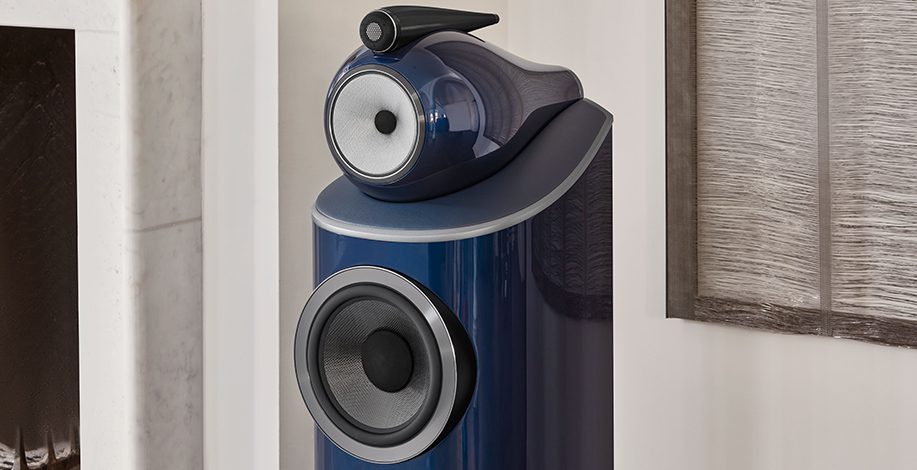
Another change for Signature relates to the collar that surrounds the ‘Turbine Head’ that holds the midrange driver on the 801, this is still in Connolly leather as per the standard model but the moulding which the leather is upholstered onto has been damped with a material called Tecsound. This former has lattice work underneath it to provide stiffness and Bowers & Wilkins engineers found that by adding Tecsound to this they could eliminate vibration in the plastic. This is something that you wouldn’t expect to be audible given the padded leather above it but apparently it brought benefits in the listening room. Likewise the structural aluminium collar that supports the substantial ‘head’ has had holes machined into it to reduce its mass without compromising rigidity, this pushes the frequency at which this piece of metal wants to vibrate up higher and further away from the resonant frequency of the cabinet to which it is bonded. This is another thing that you wouldn’t expect to make an audible difference and yet it does. This is especially true if you use these speakers at the balls out volume levels that I recall from the days when the company would demonstrate its wares in the R&D test facility.
Bowers & Wilkins 801 D4 Signature

The drivers in the tweeter and midrange remain as per an 801 D4 with a diamond dome covering the highest frequencies and a Continuum cone in Bowers & Wilkins’ ultra slim FST surround covering the range between tweeter and bass drivers. The latter using the biomimetic suspension in place of a regular spider that is now found on the majority of Bowers & Wilkins’ midrange drivers. The substantial aluminium Turbine Head is also damped with Tecsound and braces the midrange in such a way that it’s highly unlikely that anything else will vibrate apart from the cone itself. The tweeter is housed in a long aluminium ‘solid body’ enclosure that damps rearward energy from the dome and which is capped by the aforementioned super open mesh cover to protect the fragile diamond from reviewers and children alike.

Heavy metal

The final and rather less visible change to the 801 Signature is in the reflex port which is in the base of the substantial bent ply cabinet. The base itself is a thick aluminium plate and in the standard 801 this houses a flared plastic reflex vent, one that looks similar to the dimpled examples you can see on the back of smaller models. The engineering department decided to see if the extra rigidity that a metal vent would add to this part of the cabinet would effect performance, the fact that the Signature version has a metal casting here indicates that it does. Given the large 100mm diameter of this opening it’s not surprising that this is the case, the only question is how loud would you need to be playing to hear it.
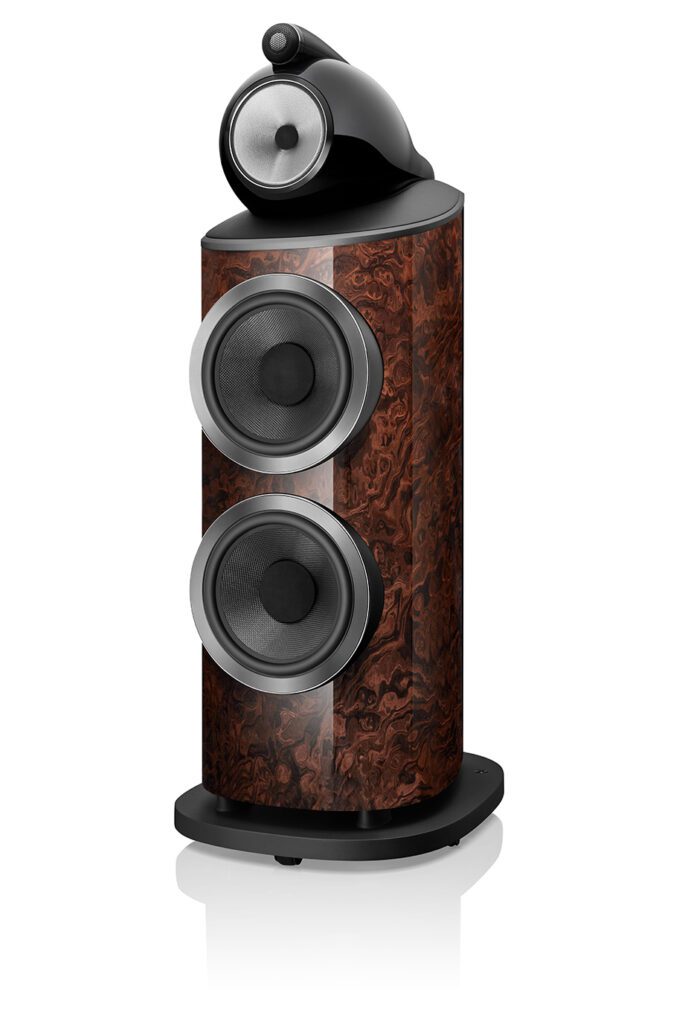
Bowers & Wilkins 801 Signature California Burl Gloss

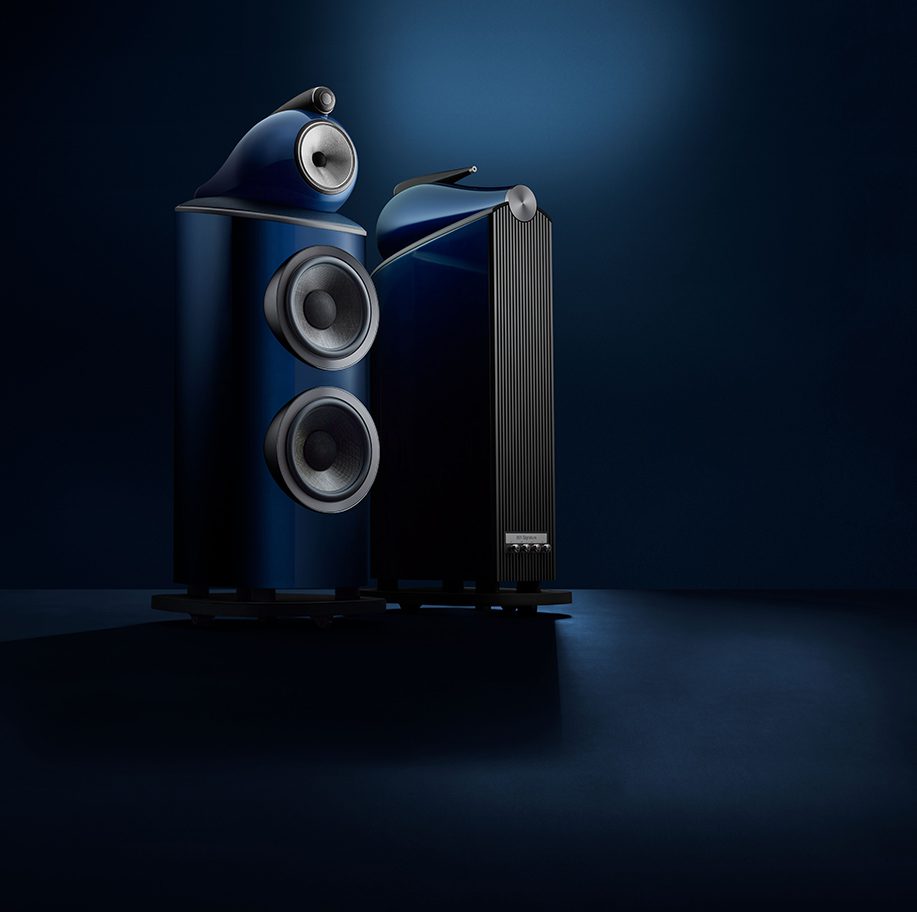
Finish has always been a key indicator of Signature status, these models have always had a luxurious feel to them and that is very much the case with the 801 Signature. It is available in a Midnight Blue metallic paint or California Burl wood veneer, both of which have a deep gloss coating that means that they are even more plush than the piano black of a regular 801. In the Midnight Blue option the Turbine Head and tweeter body has the same finish while in the veneered version these are a contrasting black that is equally glossy. All of this costs money of course, the 801 Signature comes in £10,000 above the 801 Diamond but you are getting the very best that Bowers & Wilkins can do. This is quite probably the largest high-end loudspeaker company on the globe and it has advantages of scale that few can compete with in this sector. All of the 800 Diamond models are made in the Worthing, West Sussex factory, and that includes cabinet construction from raw laminate all the way to the lengthy and class leading finishing process. A product of this build and finish would cost significantly more if built in the sort of numbers usually associated with high end manufacturing.

Roll up

Setting up this 100 kilo plus beast would be very difficult if it was conventionally shod. One of the benefits of the sizable metal plinth on the 801 is that it hides not only a set of substantial spikes but when these are retracted there are four rollers that mean you can move the speaker around with relative ease. Bringing the spikes down and levelling is a bit more of a palaver and strictly speaking a two man job but it can just about be done by a reviewer and a suitable lump of wood so long as the wind is in the right direction. I used the magnetic spike pucks so that my floor wasn’t punctured and joined up the bi-wire terminals with supplied jumper leads for a single wire connection using Townshend F1 Fractal cable.

Given their not insubstantial girth the 801 Signatures have an uncanny ability to disappear in an acoustic sense, all that work on eliminating vibration pays off when you play a half decent recording and close your eyes. All you can hear is the music in the room, there is no sense of where it’s emanating from. This is recording dependent of course, anything with a voice or instrument recorded in a single channel will be fixed in that channel. Fortunately voices rarely are recorded this way and get proper stereo treatment which means that they exist in the air between the speakers, and when those speakers are as good as this the sense of a living, breathing three dimensional person singing in front of you is powerful, sometimes very much so. My listening seat is only three metres from each speaker so less than ideal for such a substantial design yet the imaging had a depth and solidity that was palpable on a wide range of material.

Blur

This quality is produced by the absence of cabinet and driver colorations that allow the 801 Signature to reveal the finest details, the quietest reverb tails that when combined with the fundamentals form a much more complete reproduction of the original sound. The reverb on the snare on John Martyn’s beautiful version of ‘Glory Box’ is a good example, this is usually masked by louder sounds on other speakers but these Bowers & Wilkins not only add little if anything of their own to the sound but also stop and start when each note does, with no blur or overhang. It’s this ability to reveal the spaces between the notes as well as the full notes themselves that makes this speaker so good. It lets the music do the talking in a way that even high-end alternatives struggle to compete with.
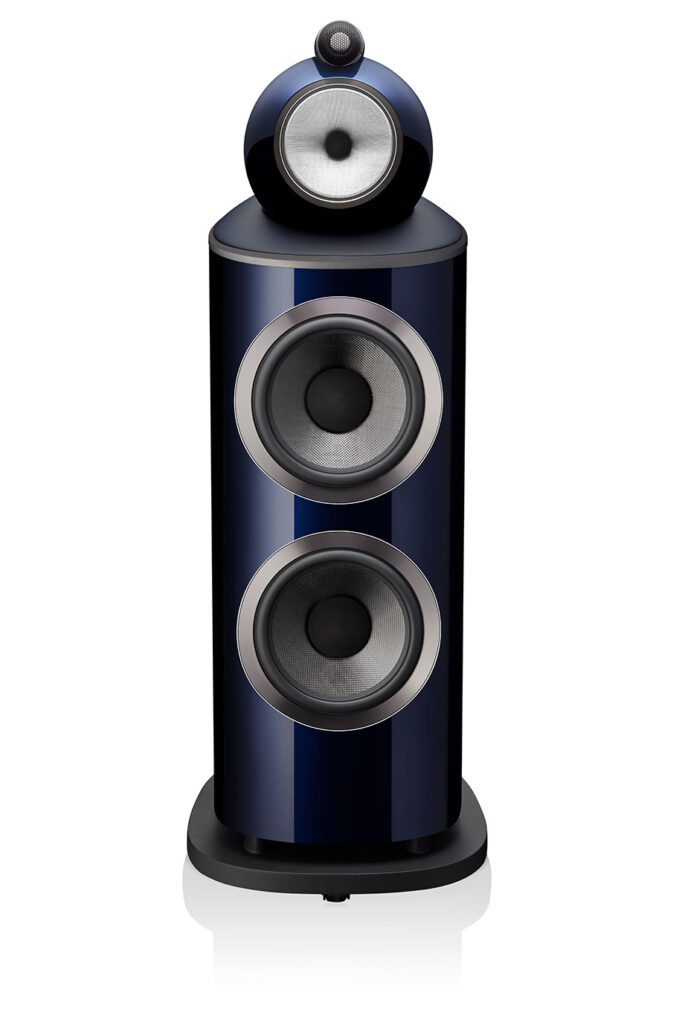
Bowers & Wilkins 801 Signature Midnight Blue Metallic

The bass is also interesting, as it is as fast and agile as the mid and treble. Bass is often thickened in a not unattractive way by cabinet vibrations and colourations from drive units, so we don’t necessarily pick up on problems at this end of the spectrum. But when a speaker comes along that’s this clean in the bass it delivers more in all sorts of ways, in Laura Marling’s ‘Soothing’ (Semper Femina) it means you can hear the way that the bass riff moves from one channel to the other, it is accompanied by a drum and played so fluently that many speakers do not make this clear but there was no missing it here. Most of my listening was with a streamer and DAC but things got more interesting still with a Rega Planar 10 turntable which has a clear edge over the digital alternative. Here that edge was made even more plain, and even with an ancient mono release from Charles Mingus (The Clown) the climax of ‘Haitian Fight Song’ is delivered like a cry of ecstasy and packs a powerful emotional punch thanks to the degree of clarity and coherence on offer with these Bowers & Wilkins.

On Little Feat’s ‘Cold Cold Cold’ (Feats Don’t Fail Me Now) the separation of guitars, drums and vocal is stark with only the voice in full stereo and very natural reverb on the instruments, the beauty of the backing vocals from Bonnie Raitt and Emmylou Harris pushing the performance into the stratosphere and fully clarified by these speakers.

The B factor

About half my listening was done with a Moor Amps Angel 6 power amplifier but when B audio delivered a pair of B mono amps (issue 225) it became clear that the 801 Signatures had more to give. Amp/speaker matching is always critical and when the speaker is as revealing as this it’s even more so and this combination really hit it off, both components are capable of resolving the finest details and the amp has the power reserves to keep the Bowers & Wilkins under control without imposing a sense of unnatural grip. Now the bass seemed to extend further and have more character, more of the bass detail in each piece of music was clear and the sense of speed was enhanced. This made for maximum light entertainment with a wide variety of music, the piano on Joe Chamber’s ‘Dance Kobina’ from an album of the same name has never stood out so well before. Drum sounds were also now in the top league, with power and dynamics that sounded so real that it was easy to feel that you were there in the control room or the audience. There’s absolutely no thickener but neither is the sound lean, it’s just clean, tight and fast.
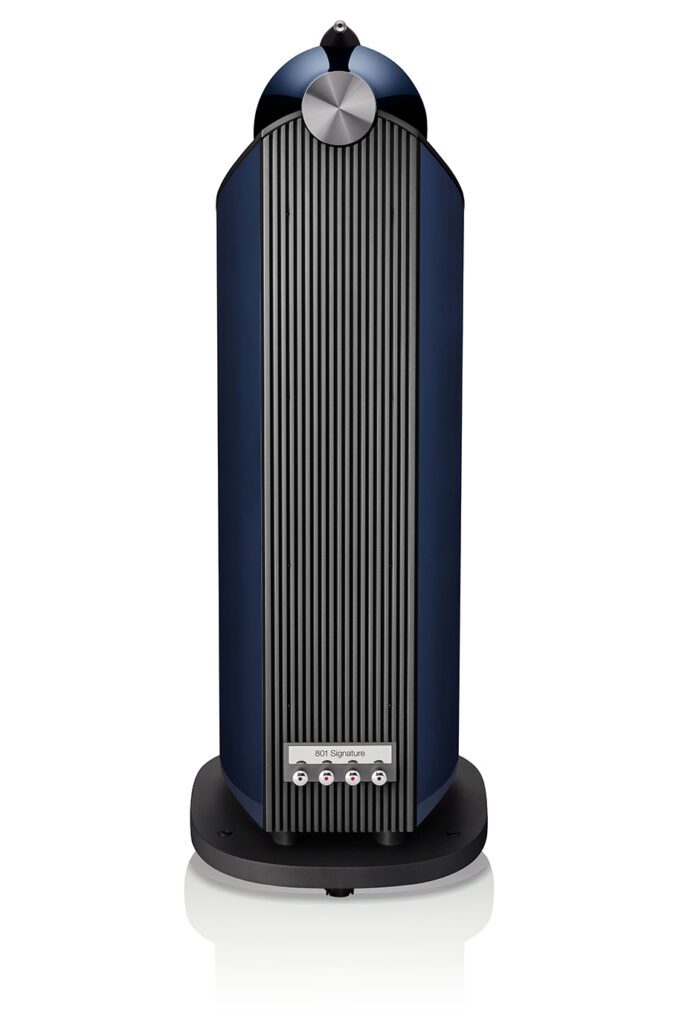
801 Signature Midnight Blue Metallic Rear

It’s not just about power and control however, voices are frequently arresting because the 801 Signatures are so clean and revealing. You might expect that this degree of analysis and neutrality would lead to a cold and emotionally dry result but nothing could be further from the fact. This speaker is all about veracity, it delivers the truth about every recording and when those contain an emotionally charged vocal it hits you like a freight train. All that work, all those small refinements combine in this loudspeaker to reveal the beauty and glory of the music you love in a way that few can match even at this exalted price. The 801 Signature may be the results of small refinements but those changes build upon a very well sorted foundation, the result is pretty damn spectacular.

Technical specifications

  • Type Three-way, four-driver, floorstanding speaker with reflex loaded enclosure
  • Driver complement One 25mm diamond dome tweeter; one 150mm (6 inch) Continuum cone FST midrange driver; two 250mm (10 inch) Aerofoil cone bass drivers
  • Crossover frequencies Not specified
  • Frequency response 15 Hz–28 kHz (+/-3dB from reference axis)
  • Impedance 8 Ohms (minimum 3 Ohms)
  • Sensitivity 90dB at 2.83Vrms at 1m
  • Dimensions (H×W×D) 1221 × 451 × 600mm
  • Weight 100.6kg/each
  • Finishes Midnight Blue, California Burl.
  • Price £45,000/$50,000 per pair

Manufacturer

Bowers & Wilkins

www.bowers-wilkins.co.uk

0800 232 1513 (UK only)

Read more Bowers & Wilkins reviews here

Back to all reviews

Chord Electronics BerTTi

Does anyone truly understand model numbers? Of course ‘Px7 S2e’ means something, just as surely as ‘QE65QN90CATXXU’ means something. It’s just that you’d have to have been in the planning meetings to find out exactly what those model numbers – real model numbers, relating to real audio/video products you can buy right now – refer to. The ‘consumer electronics’ industry in general, and the ‘hi-fi’ industry in particular, tends to take itself pretty seriously, in much the same way that the National Association of Funeral Directors takes itself seriously – hence impenetrable, important-sounding model names to describe otherwise-straightforward products. If you’re looking for ‘levity’, you haven’t really come to the right place.

There is bound to be an exception, though – otherwise, could we really call it a rule? The most obvious exception is Chord Electronics. Oh, this is a company that is as serious and high-minded as they come where the performance of its products is concerned – but unlike its numerous nominal competitors, Chord Electronics likes to enjoy itself when it comes to the look and, especially, the names of its products. Not for Chord Electronics the likes of ‘GS1000i’ or even ‘Master Reference’, oh dear me no. ‘Qutest’ or ‘Hugo’ or ‘DAVE’ are the sort of thing that Chord Electronics likes to call its products. Or ‘BerTTi’.

Ultima trickle down

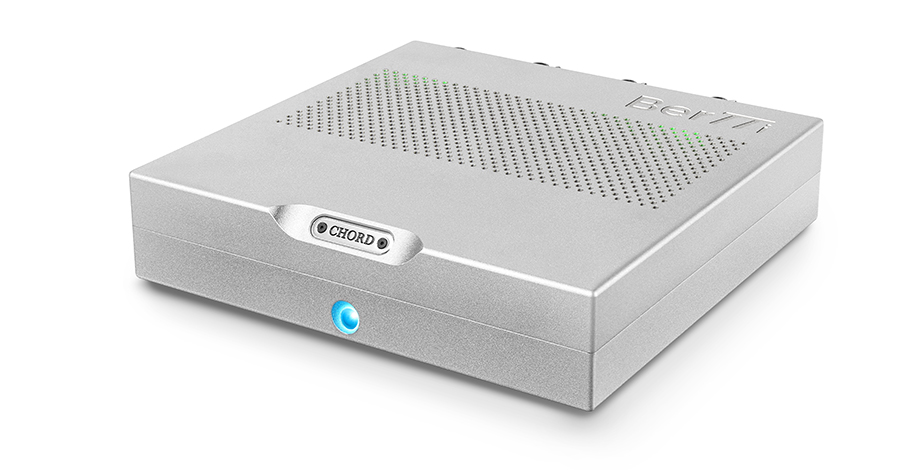
To be honest I’m not even surprised. The moment that Chord Electronics decided to let its ground-breaking ‘Ultima’ amplifier topology trickle down to its relatively affordable ‘Table Top’ range of components, and conjure a replacement for that range’s ‘TToby’ stereo power amplifier, the die was cast – and so here’s a brand new compact stereo power amplifier to complement the ‘Hugo TT2’ DAC/pre/headphone amp and ‘Hugo M Scaler’ table-top components. It’s called ‘BerTTi’, because of course it is.

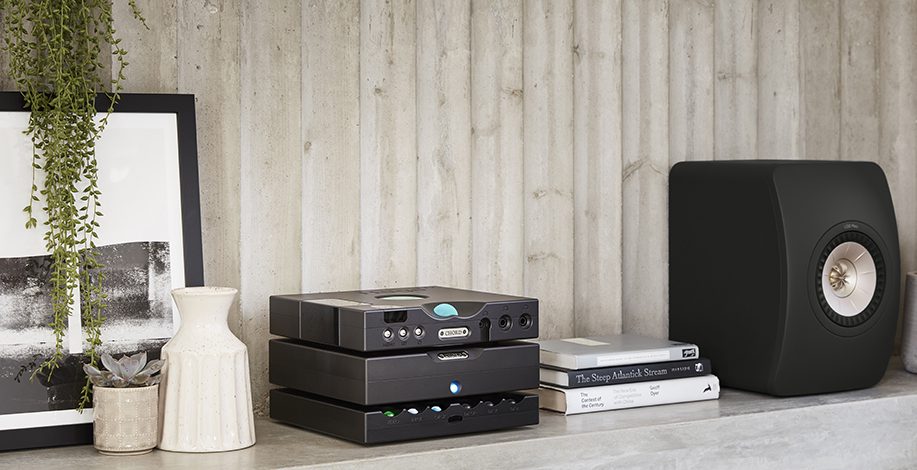
Chord Electronics BerTTi and friends

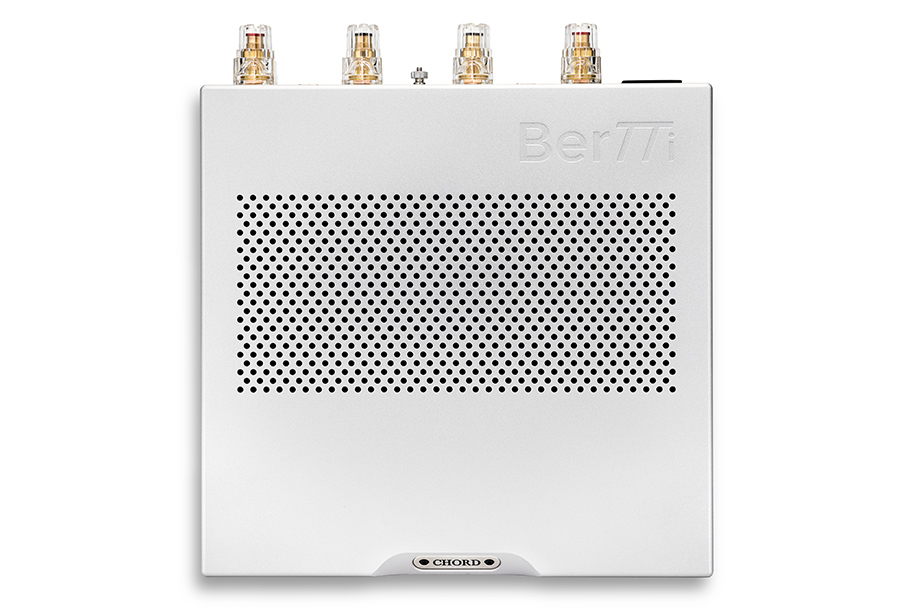
Even Chord Electronics has to concede that a stereo power amplifier of usefully compact, table top-friendly dimensions (59 × 235 × 256mm, H×W×D) is no place to be experimenting with form or aesthetics, though. The company is usually almost as keen on an assertive look and a carefully complicated user interface as it is oddball model name, but BerTTi looks (whisper it) quite sensible. It’s a beautifully finished box built of aircraft-grade aluminium, and is available in (‘jett’) black or (‘argent’) silver. Aside from a recess bearing the manufacturer’s logo and a single polycarbonate sphere functioning as a power switch (and which glows in one of just two colours depending on what’s what, power-wise), BerTTi is an anonymous and consequently most unChord-like looking box.
Rational panel

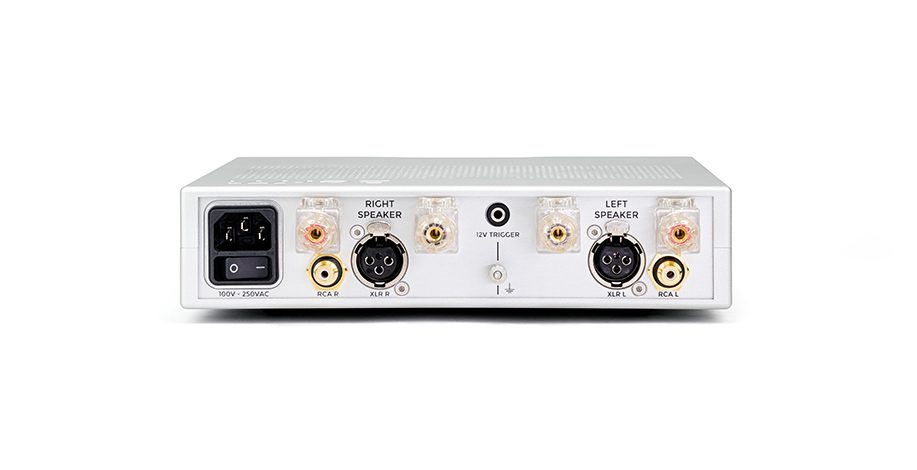
Things are no less rational on the rear panel. Connections consist of balanced XLR and unbalanced RCA inputs, two pairs of high-current speaker-binding terminals, a 12v trigger and a kettle-lead input for mains power. Design flourishes and impenetrable control options are conspicuous only by their absence.

On the inside, though, we start to get a bit more of a Chord Electronics flavour. This is the smallest and most affordable ‘Ultima’ amplifier Chord has delivered until now, but it seems the need to make it both relatively compact and relatively inexpensive hasn’t prevented the company implementing it properly.

‘Ultima’ amplifier topology is designed for power, speed and high peak output current. It continuously monitors the electrical and thermal performance for each MOSFET power device, adding an extra layer of control in the power components’ topology and lowering every distortion mode. It’s intended to drive even unhelpfully demanding loudspeakers, to serve up instantaneous power, and to eliminate any possibility of signal degradation. An additional auxiliary power rail at the front end provides additional voltage to drive those custom-made MOSFETs, and Chord’s advanced error-correction technology monitors and instantly corrects the input signal ahead of the output stage.

The result is a fully balanced stereo power amplifier that can muster 75 watts of Class A/B power (into an 8Ω load) for each channel. And that only occupies half of a regular hi-fi rack shelf.

As The Maker intended

Some of the testing here is conducted as The Maker intended – with BerTTi doing its thing only after a signal from a Rega Apollo CD player (via its digital optical output) and from a Samsung Galaxy S21 Ultra smartphone (using aptX Bluetooth) has been attended to by an M-Scaler and Hugo TT2. This, I’m confident, constitutes a wildly overspecified desktop audio system – and so the rest of the testing happens with BerTTi providing amplification for a Cambridge Audio CXN v2 streaming preamp using the same source equipment. In each case, the Chord is connected to a pair of Bowers & Wilkins 705 S3 loudspeakers bolted to their dedicated FS-700 S3 stands using QED Signature Revelation speaker cable.

BerTTi_REAR

While this is, by Chord Electronics’ standards, an affordable little power amplifier, it is by any realistic measure an expensive piece of equipment. But it doesn’t require an awful lot of listening to reveal that BerTTi, frivolous model name notwithstanding, is a thrillingly capable and endlessly listenable device that makes an extremely sturdy case for costing what it does.

There’s a thoroughly agnostic attitude to BerTTi that means its specific sonic talents aren’t restricted to any particular genre or style of music – in fact, it’s difficult to establish if it even has a preference. No matter if it’s CDs of Fridge’s The Sun [Text Records] or The Complete Matrix Tapes by The Velvet Underground [Universal Music], no matter if it’s wireless streams of Arooj Aftab’s Vulture Prince [New Amsterdam] or The Record by Boygenius [Interscope], when it’s amplified by BerTTi it seems unlikely in the extreme you’re not getting a full, vividly rendered picture.

There isn’t an aspect of music reproduction at which this Chord doesn’t excel. Its tonality is supremely neutral – there’s no overcooking or understating here, just a naturalistic and convincing rendition of a performance at the precise temperature at which it was recorded. This is particularly evident in the lower frequencies – BerTTi delivers bass sounds with plenty of substance and no little momentum, but is deft enough to allow the finest details as much expression as the broad strokes. Authority over the low end is absolute – this amplifier fairly snaps into the leading edge of low-frequency events. Rhythmic expression, therefore, sounds instinctive in its correctness – BerTTi is an extremely persuasive listen.

Seamless integration

Integration with the rest of the frequency range is so smooth as to be seamless. The top end balances crunchy substance with shine and, when necessary, bite – and it’s as loaded with detail as the opposite end. If there’s a harmonic overtone, a transient occurrence at the back or the edge of the stage, the Chord is on it like a hawk – and it’s adroit enough to give each of these instances the proper weight and context.

BerTTi_TOP

BerTTi’s powers of communication through the midrange are what’s most compelling, though. Every singer it comes into contact with sounds exquisitely recorded, in an emotional state approaching transcendence, and as eloquent as WB Yeats. Detail retrieval is flat-out fanatical here – if there is information available regarding technique, breath-control, palate noises, you name it… the Chord will notify you. And as a result, even those vocal performances you’re entirely familiar with will be illuminated.

What else? Well, despite its unremarkable 75 watts per channel of power this amplifier is capable of putting significant distance between the dynamic extremes of ‘quite quiet’ and ‘bloody loud’ that some recordings are founded on, and it’s just as adept when it comes to identifying the less overt but no less significant harmonic variations that are sometimes present in the ‘quite quiet’ sections. There’s no stress or even effort apparent when it turns up the wick, either – the BerTTi just tracks dynamic fluctuations faithfully, and doesn’t alter its sonic characteristics in the slightest as it does so.

Locking in place

It’s able to create a large, organised and persuasive soundstage, too, locking individual elements of a recording in place but allowing them to interact with all the others at the same time. It makes it easy to identify specific strands of a recording, but the positivity of its layout is such that the sensation of ‘performance’ is tangible – even if a recording is as much about silences and absences as it is the actual occurrences.

In all honesty, BerTTi is an overspecified overachiever if it’s truly to be considered a ‘table-top’ device. But as is surely apparent by now, Chord Electronics isn’t about to let considerations regarding appropriate applications get in the way of either its ability to engineer an extraordinarily accomplished stereo power amplifier nor the opportunity to give it an inane name.

Technical specifications

  • Type Class AB stereo power amplifier
  • Analogue inputs One pair gold-plated unbalanced RCA jacks; one pair gold-plated balanced XLR jacks; one 12v trigger input (Chord Electronics auto-start)
  • Analogue outputs One pair high-current gold-plated speaker terminals
  • Power output 75 watts RMS per channel @ 0.005% THD into 8 Ohms
  • Input impedance 100kΩ unbalanced/balanced
  • Gain 30dB
  • Total Harmonic Distortion 0.008%
  • Signal to Noise Ratio 87dB (A-weighted)
  • Dimensions (H×W×D) 59 × 235 × 256mm
  • Weight 3.75kg
  • Price £3,995, $5,250

Manufacturer

Chord Electronics

https://chordelectronics.co.uk/

+44(0)1622 721444

Read more Chord Electronics reviews here

Back to Reviews

Cyrus Audio introduces the 40 Series

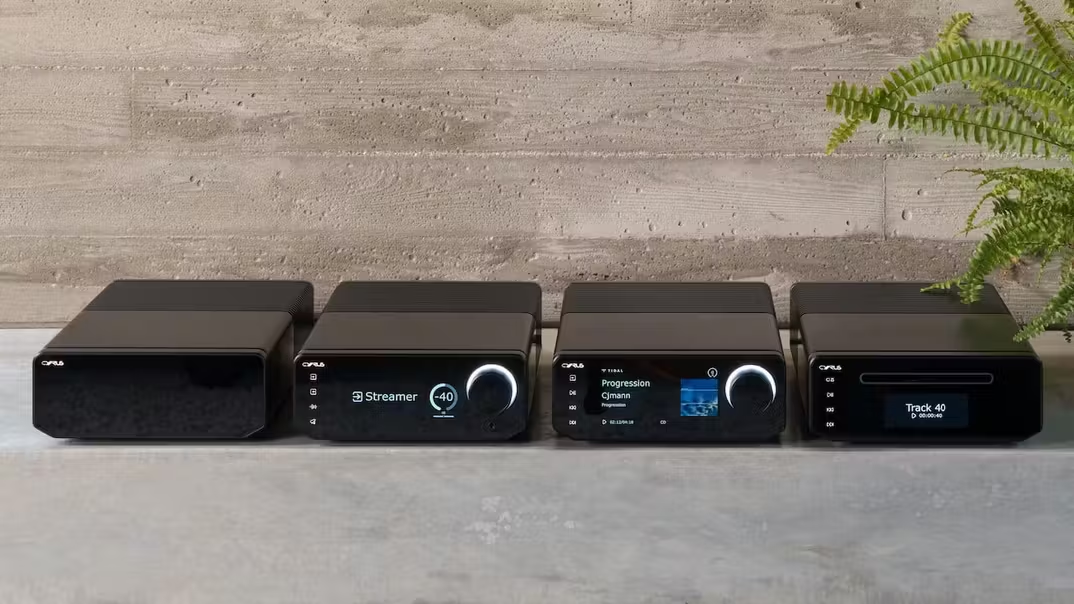
October 2024 – Cyrus Audio, the much-loved and renowned British audio brand has today announced the arrival of the 40 Series, a new beginning in the story of Cyrus Audio. Focussed around four core models, the 40 series provides the listener with a streamlined premium audio experience that will fit seamlessly into the home of today’s music lovers while offering an exceptional audio performance. Engineered from anodised aluminium and with all key components custom designed, the 40 series is proud to be made in Britain, the home of Cyrus.

The first thing you’ll notice about the 40 series, and it is impossible to miss, is the all-new sleek design, and what a good job they have made of it. The front panel is uncluttered, with a headphone connection and a beautiful edge to edge glass finish that hides a high-resolution TFT display, bringing full colour album art to all you streaming fans out there.

It is good to see that the attention to detail did not stop there, with the main chassis being made from aluminium, and finished in an eye catching anodised brushed black. The volume control has been given the level of attention not normally seen, having been custom designed from five separate elements and also engineered from solid aluminium, providing very positive feedback to the user.

Cyrus have also designed a brand-new remote control for the 40 series, which perfectly matches the finish and fits perfectly into your hand for easy control from the comfort of your sofa. If you prefer your hi-fi to blend into the background, they have also covered that with the ability to auto turn-off the display which then comes to life when you approach the unit. You also won’t see the normal amount of visible screw heads across the 40 Series, in fact the only place you will see any on show is the rear panel, with the main body being held together via the very cleverly designed feet.

The changes aren’t only on the outside, with the 40 Series being treated to a brand-new DAC design from Cyrus. Based upon the latest offering from ESS, the Sabre ES9039Q2M chipset and HyperStream IV Dual DAC technology has been analysed by their engineering team and the board layout fully optimised to tune the DAC so that the 40 series can achieve the highest possible performance.

When we were discussing the new 40 Series with Chris Hutcheson, Head of Marketing at Cyrus, Chris wanted to make it very clear that this is not an anniversary range of products. “Yes, we are celebrating our 40th anniversary this year, but the 40 Series demonstrates a new beginning at Cyrus under the leadership of Nick Clarke. This is just the beginning of some very exciting plans at Cyrus.”

We are very happy to see that Cyrus has retained the half width design that is so synonymous with the brand, but by adding a centimetre here and there, the products definitely stand out on the shelf stronger than previous products. The team at Cyrus have been working on the 40 series for the past 2 years, which began with a 360° review of their sales trends over the past 10 years. Chris explained “we are a small but very talented team here at Cyrus. We need to make sure that we have a clear and focused direction, so that we are designing and launching products that are in demand from our customers.”

Hopefully that explains why the 40 series is made up of an integrated amplifier, integrated cd player, network streamer and external power supply. The team are also working on a brand-new phono preamplifier, which we have been told will be available later next year. The very exciting news is that the 40 Series is only ‘part one’ of Cyrus’ new beginning product roadmap. We cannot wait to see what else is on its way from the team at Cyrus in 2025.

Nick Clarke said.

“It fills me with immense pride to be part of the Cyrus story, one that now spans over 40 years of audio excellence. The core brand values of providing value for money with great sound quality achieved with good, solid engineering have never been so important to the team here.  We continue to engineer and build in the UK as it allows us the best control over the entire process of bringing these products to the end customer. I sincerely hope that when you listen to any Cyrus product, you appreciate the skill, dedication and hard work that has gone into each one and it helps connect you to the music that you love.”

40 AMP – Integrated Amplifier

Whether you are a digital or analogue fan, the 40 AMP was designed to be at the centre of your home audio and provide the perfect partner regardless of your preferred playback source. Delivering the level of exceptional performance expected from today’s music fans, this integrated amplifier has the capabilities to drive even the most demanding of loudspeakers. With 100 watts per channel into 6 ohms, and a generously over-specified power supply the 40 AMP is capable of reproducing the scale and drama of the musical performance in your own home.

Encased in the sleek design of the 40 series aluminium casing with a 5” hi-resolution full colour TFT display, the 40 AMP has been designed to fit into today’s modern lifestyle. Sitting at the centre of this multi-functional amplifier is an electronic circuit that has been designed entirely by the R&D team at Cyrus. The DAC is based upon the latest chipset from ESS, the ES9039Q2M, and has been reworked to provide an audio signal that replicates the artists original recording to a level not seen in a Cyrus product before.

As well as multiple digital and analogue connections, the 40 AMP has a low noise MM phono stage which inherits many of its design features from the award-winning Classic PHONO. The phono stage performs at a level way above its class, featuring low background noise and high dynamic range, providing the perfect complement for a quality vinyl turntable.

The features of the 40 AMP do not stop with your love of music, now with the addition of the latest HDMI eARC input, your home audio now provides the opportunity to enjoy your favourite films or TV series through your chosen loudspeakers, putting the 40 AMP well and truly at the centre of your home entertainment.

40 ST – Streaming Music Player

If your music is digital, then the 40 ST, Cyrus’ highest performing network streamer is the product for you. Powered by the user-friendly and popular BluOS hi-res streaming platform and presented in the sleek design of the 40 series aluminium chassis, you will experience your favourite music at up to 24-bit/192kHz at lightning-fast speeds across your home network with minimal lag and zero loss in sound quality.

The 40 ST is packaged with the new Cyrus remote but is ultimately controlled with the intuitive BluOS app, available for iOS, Android, Kindle, Mac or PC computers. Providing direct access to over 20 natively integrated streaming services, thousands of radio stations from around the world, and even your own music library on a network drive. The 40 ST also supports Roon, Airplay 2 and allows for MQA decoding.

With their best performing DAC, based on the ESS ES9039Q2M on board, the 40 ST not only provides uncompromising sound quality, coupled with the convenience and ease of use of the BluOS streaming platform. The 40 ST becomes far more than just a streamer, allowing you to connect any digital device via the coaxial and optical inputs, so that the performance of the 40 ST stretches far beyond just music.

40 CD – Integrated CD Player

Cyrus is well known for designing award winning cd players, so it comes as no surprise that they have included one in this new range. Ten years ago, they developed what they call ‘servo evolution’ which is centred around the philosophy of extracting the data on the disc as accurately as possible the first time to create an almost silent noise-floor.

So, with such a rich history of high performing cd players to choose from, Cyrus could easily have relied on a previous model for the 40 CD. Lucky for us, they have done just the opposite. Taking the brand-new 40 series DAC, Cyrus have continued to push the boundaries in what is possible with digital to analogue conversion, and they have also redesigned the 40 CD power supply to minimise interaction between the complex mix of signals which includes fast digital audio, sensitive analogue audio, high current servo and system controls.

By completely segmenting these circuits the digital control circuits run from a dedicated, high-efficiency supply, whilst other parts of the player are powered from an over-specified universal power supply. Nine individual stage regulators smooth and distribute power within the player according to demand, which Cyrus boasts has taken CD playback to another level. We cannot wait to hear these improvements for ourselves.

40 PSU – External Power Supply

Cyrus have been designing external power supplies since the launch of the PSX back in the 80s, and the 40 PSU continues that strong tradition with what can only be described as a very intelligent little black box! Incorporating its own on-board micro-processor, the 40 PSU can be attached to all products available in the 40 series, communicating directly to consistently provide the best configuration of power from a full range of voltage output levels.

Providing multiple supplies, all the output voltages from the 40 PSU are digitally controlled internally, so are extremely stable and virtually noise free. Something else that is very good news for owners of current Cyrus products is that the 40 PSU and PSU-XR can be used across both ranges, so that has got to be something to smile about.

To find out more about the 40 series, please visit www.cyrusaudio.com.

Melco Announces S1 Flagship Audio Network Switch

9th October 2024 – Melco Audio, the Japanese digital music experts, is proud to announce the launch of its flagship S1 Audio Network Switch. With new dedicated electronics, this pre-programmed managed switch is designed to extract the best possible audio performance regardless of the network connectivity or architecture. Delivering extreme technical performance and great versatility, the S1 sets new standards for data switches in audio systems, epitomising Melco’s absolute goal to create the very finest digital audio platform available.

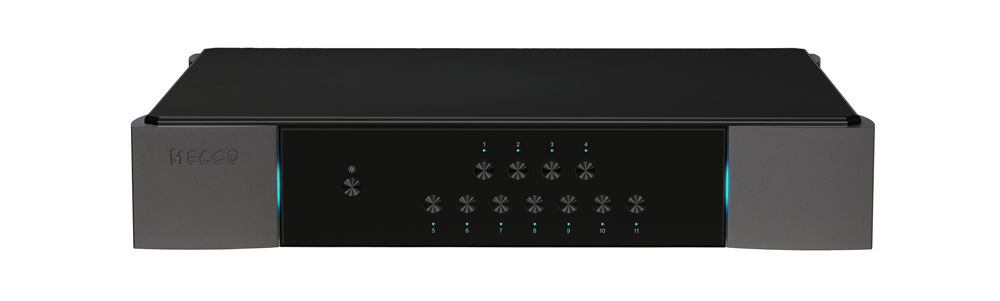
Offering a combination of four SFP+ ports and seven RJ45 ports, all with front panel user configuration of link speed, the Melco S1 will accommodate Optical SFP+, Copper SFP+ Direct Attach (for example Melco C1) and all standard RJ45 interconnects.

Uniquely, the Melco S1 gives the user capability to fine tune each data port for Link Speed directly from the front panel in real time. The front panel buttons mirror the back panel layout with each port having a single button to select Link Speed, which is confirmed by colour coded feedback of the button illumination.

In this way, the user can configure the status of each port for the environment and hardware that it connects to. Additionally, any unused port can be selected to be OFF, releasing processing power for the remaining active ports to further enhance sound quality.

Rear panel Link / Act LEDs can be disabled to increase sound quality, and there is also a convenient rear panel power-only USB connector for accessory devices, such as a Wi-Fi adapter or ADOT audiophile-grade optical fibre isolation kit.

There is also an external 10MHz clock input for future upgrade potential.

Professional grade Neutrik RJ45 connectors assure reliable connectivity and the internal electronics is built around dedicated audio-optimised technology with high grade internal NDK clock, and low noise linear power supply with condenser bank as used in the Melco N1 Music Library.

Also similar to the N1 is the extremely ridged chassis, which combines thick steel with aluminium panels, providing the perfect platform for the electronics.

Commenting on the launch of the Melco S1, Alan Ainslie, General Manager of UK Distributor ADMM, said, “Building on the technology developed for the S100 and S10 switches has created what we feel is the ultimate no compromise platform for digital audio aficionados. The S1 switch further enhances Melco’s reputation as the experts of digital music technology, and we know that those that experience it will be just as enthralled as we are.”

 Available now in black or silver, the Melco S1 Audio Network Switch has an SRP of £12,499.00 / €13,999.00 and comes with a two-year warranty.

UK Hi-Fi Show Live 2024

Ascot Racetrack is one of the most salubrious places to hold an event. It’s a racecourse that is the playground of the rich and famous. It’s home to Royal Ascot in June – one of the dressiest events in the UK social calendar. The grandstand is also home to the annual UK Hi-Fi Show Live (run by Hi-Fi News magazine) in the grandstand (also known as the Royal Enclosure during Royal Ascot). The grandstand is very grand indeed. It is occupied by the sort of people who own stables – or in the case of the Royal Family, own countries – so each room gets five-star treatment. However, even off-season this means the rooms are subject to the whims of their owners and not every room is available to audio companies for the UK Hi-Fi Show Live.

This is both good and bad for show-goers. It means each room is free from noise pollution as their nearest neighbour might be three or four doors along a corridor. However, it also means long walks down seemingly empty corridors full of closed doors, and few companies can guarantee their ‘spot’ from year to year. In addition, the sheer size of Ascot Racetrack’s grandstand soaks up show-goers; the rooms might be full, but the walkways and corridors seem sparsely populated when a few thousand people turn up to a place that can hold 10,000 with ease. However, this gives the often-unfounded impression of a ‘soulless’ event.

The UK Hi-Fi Show Live is home to many new product launches, especially as it has a close link with the EISA awards ceremonies. Many companies use the show to highlight what’s going to be on the equipment stands of this season’s audio buyers.

Here are a few highlights of the event:

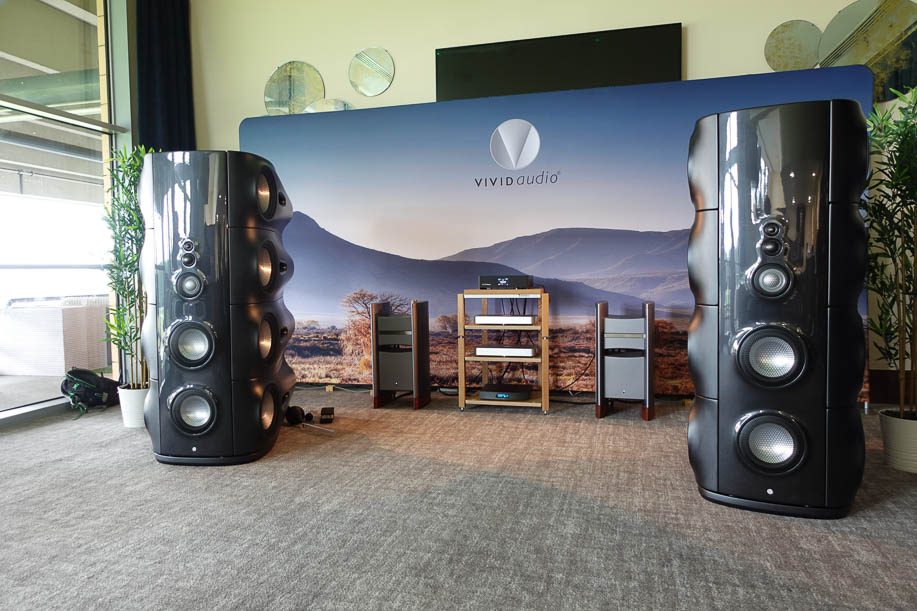
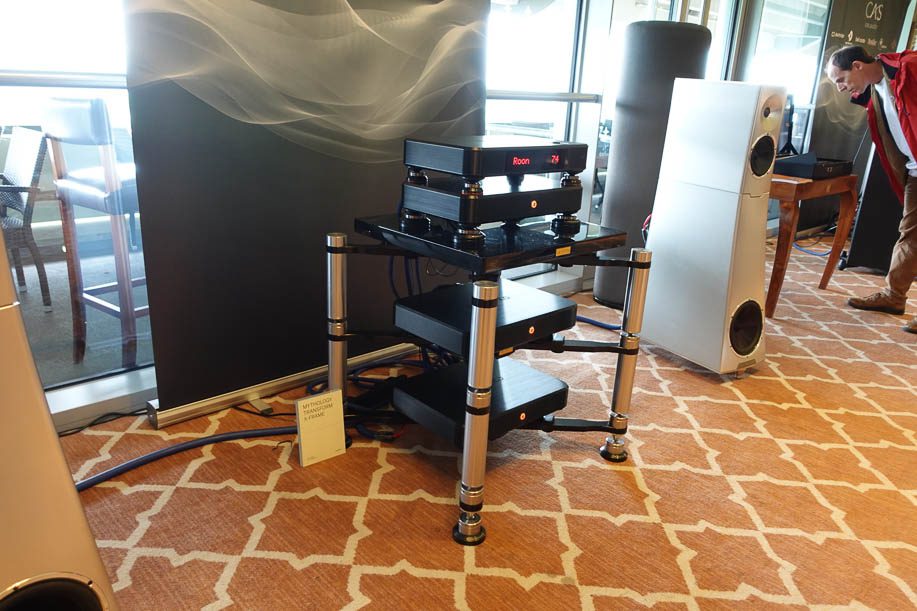
Sound Design Distribution has taken on the prestigious Vivid Audio and Halcro lines. The company used a Grimm Audio MU1 media player fed by a Lumin D3 server and Silent Angel’s network products (all sitting on a Lateral stand) into a pair of Halcro Eclipse Mono power amps and Vivid Audio’s Moya M1 flagship loudspeakers, all fed by Accusound cables. This was a room large enough to do these big, powerful speakers justice!

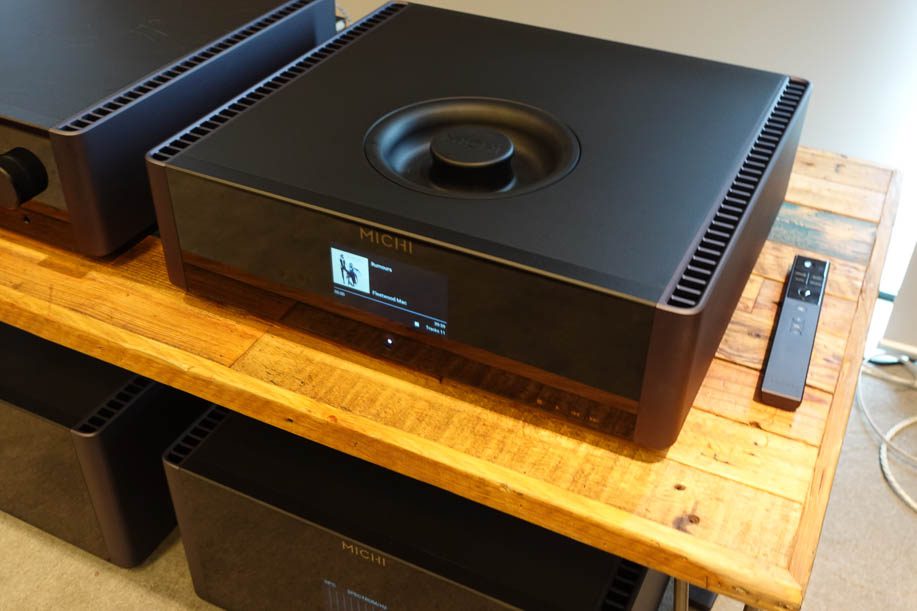
New CD players are thin on the ground these days, but the luxury brand Michi (Rotel’s high-end division) bucks the trend with its Q5 top-loading CD player. Built around the company’s CNC milled aluminium CD mechanism and featuring an ESS ES9028PRO DAC at its heart, the player includes digital inputs and MQA support, but is designed primarily as a damn good CD player!


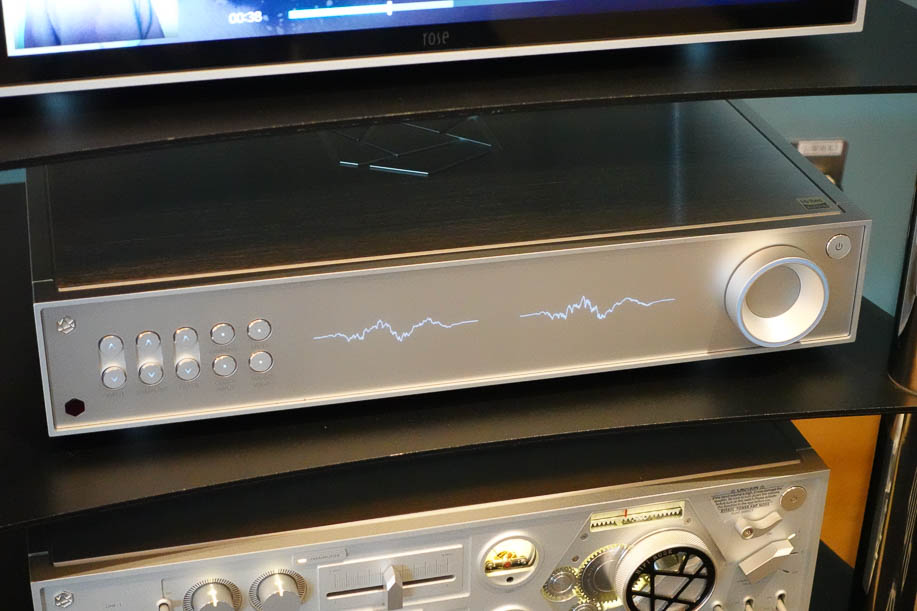
Henley Audio has a working prototype of the upcoming HiFi Rose RD 160 DAC. This striking new DAC features two different AKM-based DAC pathways (for PCM and DSD), a high-precision OXCO clock and a ‘stealth’ OLED front panel display that can show a range of options, from internal architecture to a graphic display of the sound output. Final samples should be available very soon.


Henley Audio also recently announced it had taken on the distribution of Piega loudspeakers from Switzerland. The distributor is focusing primarily on the Coax Gen 2, ACE and ACE Wireless designs, rather than Piega’s more esoteric Master series models, but it’s great to see this brand back in the UK and supported by a distributor that will give the company the gravitas it deserves.

Seen for the first time anywhere, Bel Canto showed its uprated Black range of products. The main change is a move to fibre-optic connections between the devices, allowing for distortion and noise-free connections between the devices. A new integrated amplifier and the complete controller and mono amp system were on demonstration.

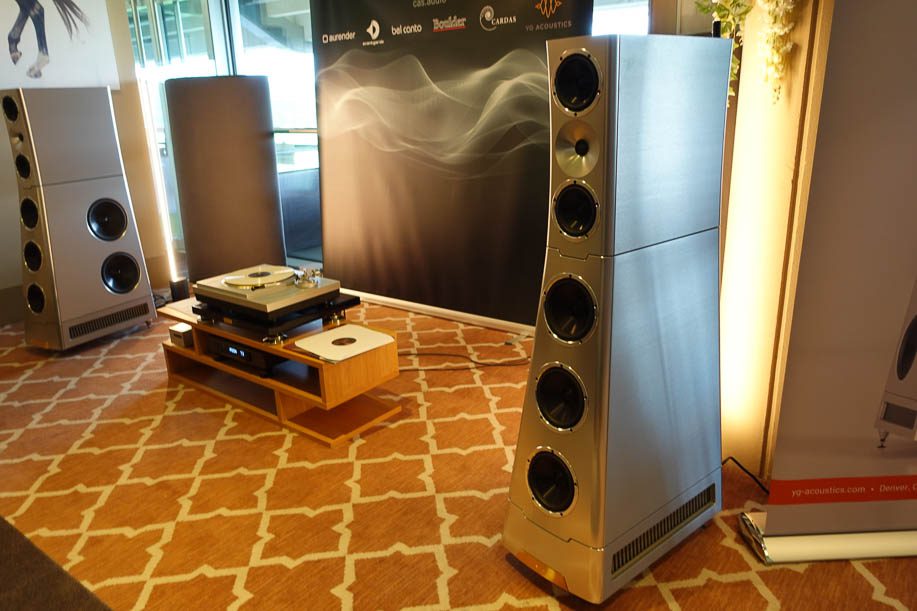
YG Acoustics had a complete line on demonstration, but the most exciting product was the XX3 Live system. This comprises two four way, eight driver loudspeakers with built in amplification and separate controller that can connect to a range of digital and analogue sources. It’s a complete turn-key system at a very high-end (over £250,000) price!

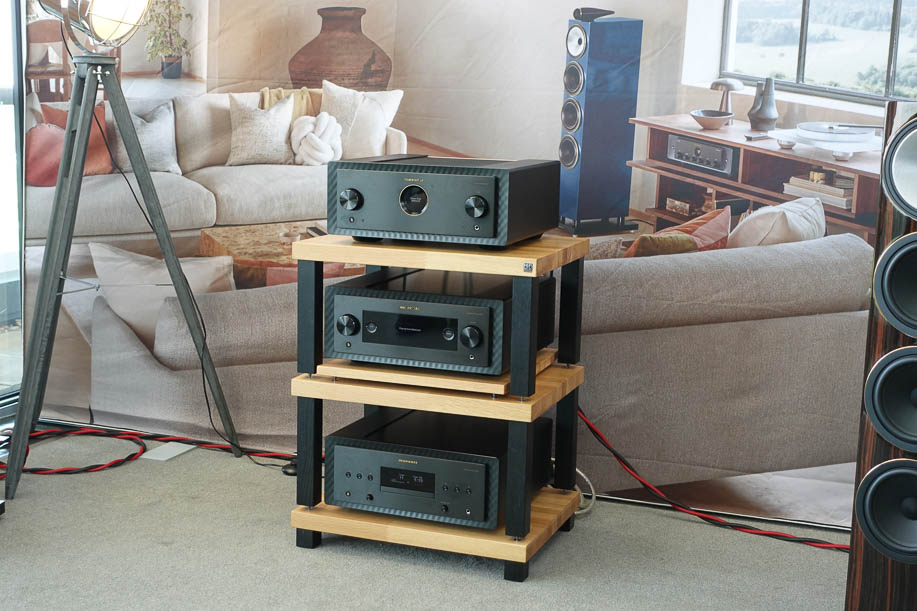
Sound United – the parent to Bowers & Wilkins, Definitive Technology, Denon, Marantz, and Polk – showed off the new Marantz 10 Series. Comprising SACD 10 CD/SACD player, Link 10 network player and Model 10 integrated amplifier, these three represent the flagship of the company, and sounded very good when played through a pair of Bowers & Wilkins 702 S3 Signature floorstanders.


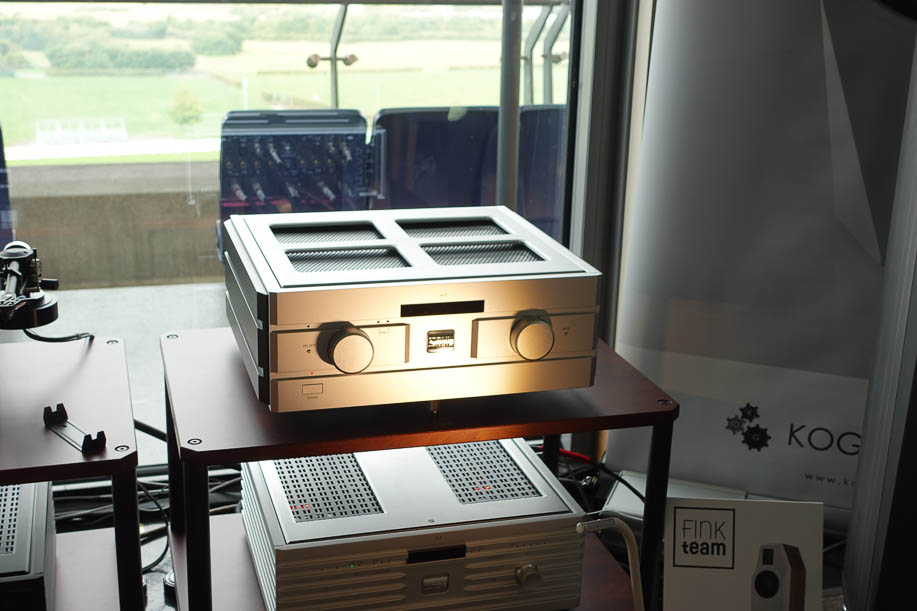
Picking up a lot of attention, Kog Audio’s featuring Soul Note’s A3 integrated amplifier and the Finkteam Borg Episode 2 floorstanding loudspeakers sounded particularly good. Kog had recently announced the distribution of German turntable legend Transrotor and was demonstrating the Massimo Nero model with great success. However, back-lit black turntables and cameras do not mix!


Signature Systems showed off an entire PS Audio system, complete with the new Aspen FR5 stand-mount loudspeakers. This filled a surprisingly large room with sound, given its diminutive stature. That it was driven by the best PS Audio electronics and power products possibly helped!

Signature Systems also showed off two new distribution agencies. Udo Besser from AVM was at the show to welcome Signature into the family, and showed the company’s CS8.3 Black all-in-one system. At the same time, Signature Systems showed the Matrix Audio line, including the excellent MS-1 Music Streamer. This extremely configurable streamer supports any input or output, and can be driven by the Matrix App.


While photographing black things without a flash in a back-lit environment never works well, this small MBL system – featuring the MBL 126 Radialstrahler stand-mount loudspeaker – showed it’s possible to play good omnidirectional sound in even the smallest rooms. This was something of a surprise as I’ve long suspected such systems need more ‘breathing space’ than this very small room offered.


Although best known for its Hylixa loudspeakers, Node Audio also makes a fine line of support components, Called SS1, this range of support systems can be used to hold everything from equipment on racks to speaker cables. A-B demonstrations at a show are usually a sure sign of failure, but these ones worked successfully, suggesting Node Audio might be onto something…


Clearaudio teamed up with guitar legend Al Di Meola to create a turntable shaped like his Gibson Les Paul Custom that featured on his Elegant Gypsy LP. Elsewhere, Clearaudio and DS Audio distributor Sound Fowndations showed off the new tube-based version of its popular equaliser for the company’s optical cartridge system.


Russ Andrews has joined the network audio filter club with its new Network Purifier. This passive filter uses eight of Russ Andrews ‘MiniZap’ filters to prevent the ingress of network nasties from your switch to your media player.


Last, but by no means least, Absolute Sounds takes the largest section at the show and had several new products both on demonstration and display. Some of the most notable demonstrations came from the combination of Audio Research’s new Reference 330M mono power amplifier and the re-born Wilson Audio WATT/Puppy.


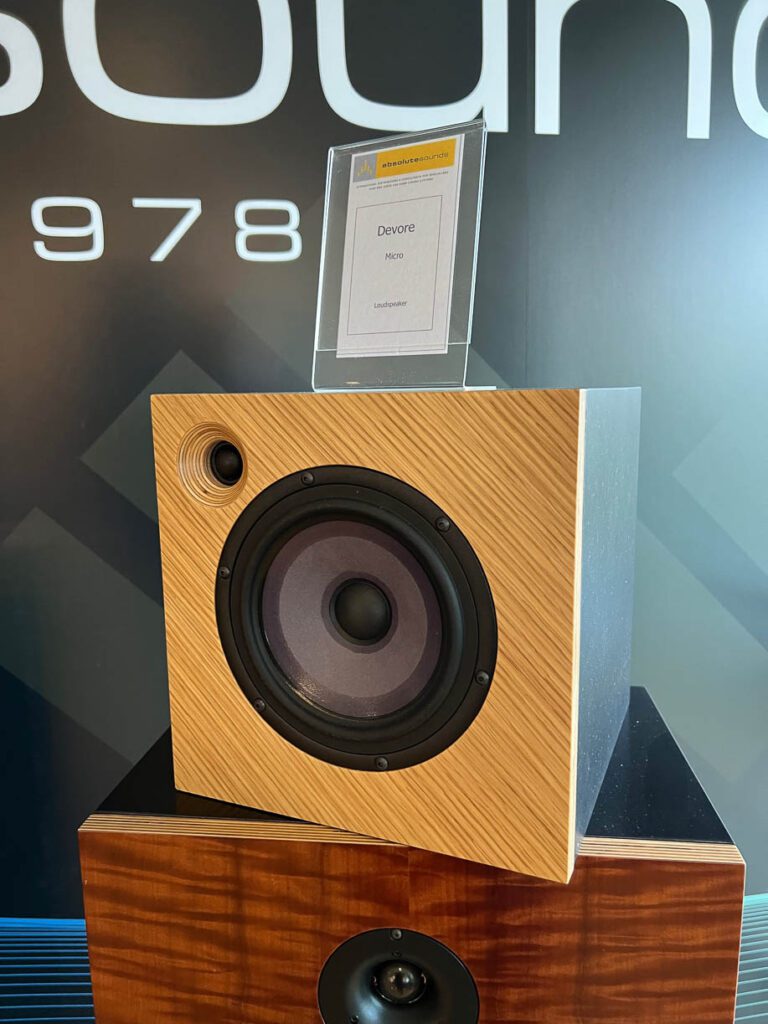
An unexpected new product on display at the Absolute Sounds stand was the Devore Micr/O bookshelf loudspeaker. We hope to hear more from this pocket rocket soon.


There were some other big launches at the show. The new dCS Varèse five-box digital front-end was on display and Arcam’s new Radia series were both impressing people, but their mirrored front panels both managed to fox my camera’s autofocus system and the results in picture form were very blurry! My apologies for the lack of good images.

This remains an important show with many new products on display and demonstration and – despite the fact that you could put 5,000 people in the grandstand and it still look ’empty’, the show often delivers above-average sound. It’s well worth a day at the races!

Back to Home

High End & Smart Home Show 2024

Dubai is growing at a rate seldom seen in the West. Everywhere you look, there are building works, and the city’s population – Emirati and especially expatriates – is increasing at a double-digit pace. And yet, traditionally, Dubai has been more a place for custom-installed audio/video systems than conventional audio. However, that is changing and like everything in Dubai, it’s changing fast.

That’s why Dubai held its first audio show ever in September this year; the High End & Smart Home Show, 2024. While this is still – understandably – a small event, it has two strong things up its sleeve. Rivalries were set aside, with local distributors and dealers (often both, such as Bon HiFi, Dubai Audio and Pult, Raw Music Store) working together to improve Dubai’s place on the worldwide audio map. And it was incredibly well organised. Most shows take a few years to get this professional, but the High End & Smart Home Show hit the ground running.

As the name suggests, the show was split between traditional two-channel audio and home cinema systems on display to the public and a showcase and seminar event for connected home installers, all running from the Radisson Red Hotel in the Dubai Silicon Oasis. This meant the event was a 30-minute cab ride from Downtown Dubai. Most of the audio show took place on one floor of this hotel with the custom install section taking the adjacent conference space, but there was a lot of through-flow between the events. And, in a city that has more five-star hotels than anywhere apart from London, the Radisson Red is a more down-to-earth, artsy, pet-friendly, millennial-chummy four-star place.

While there’s nothing wrong with this, especially as a business-to-business location, the rooms weren’t the largest or most salubrious around. The trendy room décor also meant the rooms were a little bright sounding in general. But, if the show proves as successful as its first outing suggests, it will likely outgrow the venue quickly. With more than 2,000 attendees over the two-day event, there is a market for such products in Dubai. And while this wasn’t the venue to launch new products, that sentence feels like it should end with a very exciting “…yet!”

The regulars who spend their lives moving from show to show can be a cynical bunch. Their excitement at travelling to some seemingly exotic location to set up an event is tempered by spending months on end living out of a suitcase. But even those seasoned audio professionals with enough air miles to get their own Airbus came away impressed by the High End & Smart Home Show. No one expected this show to be so good, so well attended, and the rooms have such a vibe. We’re expecting great things from the High End & Smart Home Show.

Here’s some of the best in show in Dubai this year:


Kalista Dreamplay XC

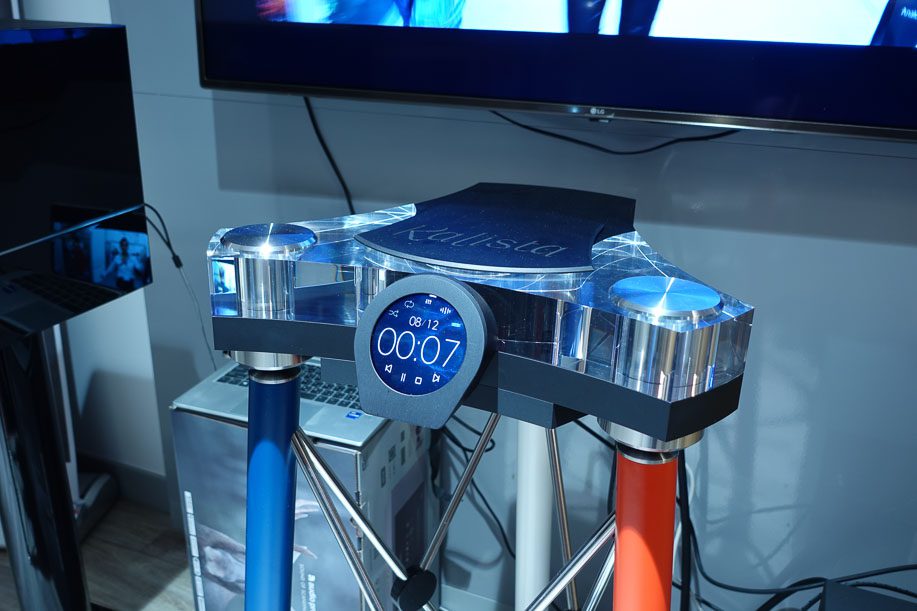
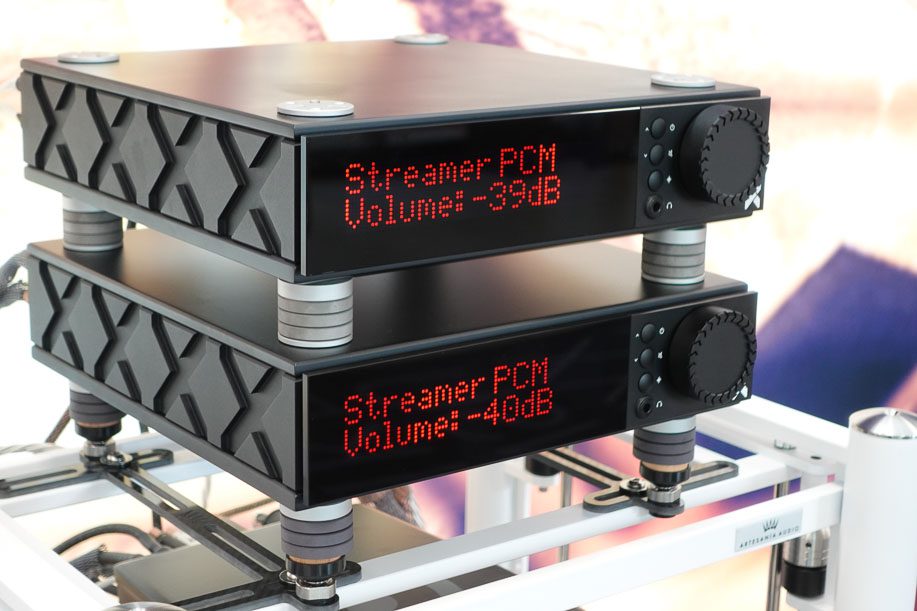
If the show is new, then so is the Kalista Dreamplay XC streaming DAC preamplifier, looking great on a dedicated stand made by Artisania Audio in a custom tricolour finish. Jean-Marie Clauzel of Metronome/Kalista was on hand to discuss the company’s new flagship. Kalista is distributed by Qualia in Dubai.

Bon hifi AVM

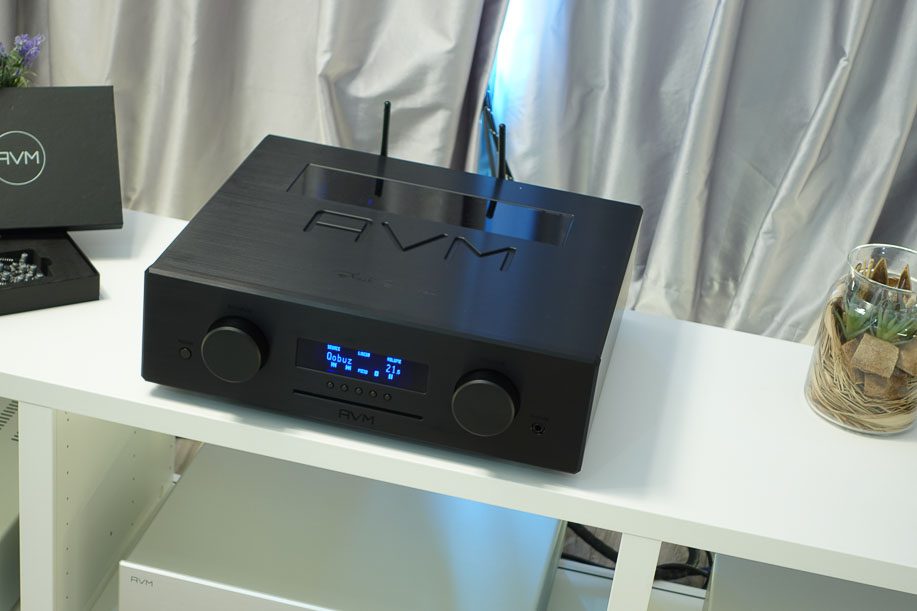
BonHiFi distributes many of the best-known European brands into Dubai, including AVM, Canton, Focal, Inakustik, and Naim. The company took several rooms at the show, dividing between hi-fi and home cinema systems. The AVM Ovation CS8.3 Black Edition was launched earlier this year and this was one of its first public outings.

Alpha Audio Burmester Classé Monitor Audio


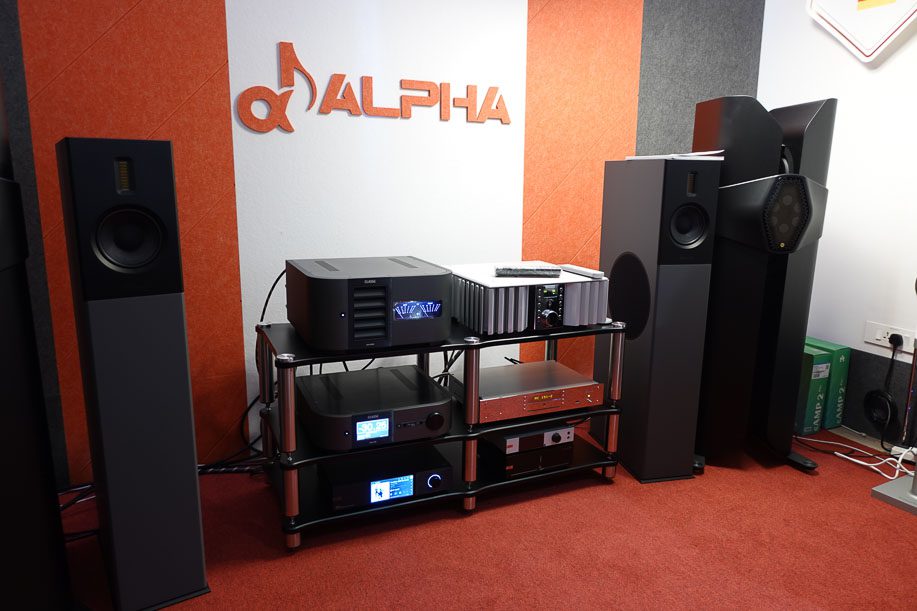
Founded in 2002, Alpha Audio is one of the longest-running distributors in the region. It carries a broad range of hi-fi, home cinema and custom installation products around, as this combination of Burmester, Classé and Monitor Audio’s Hyphn loudspeakers ably demonstrates.

Dubai Audio D'Agostino

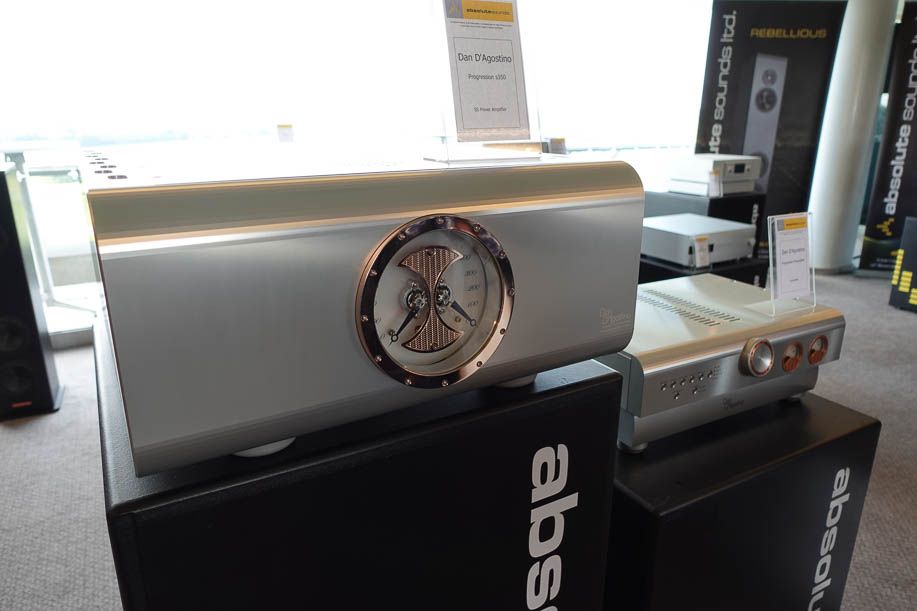
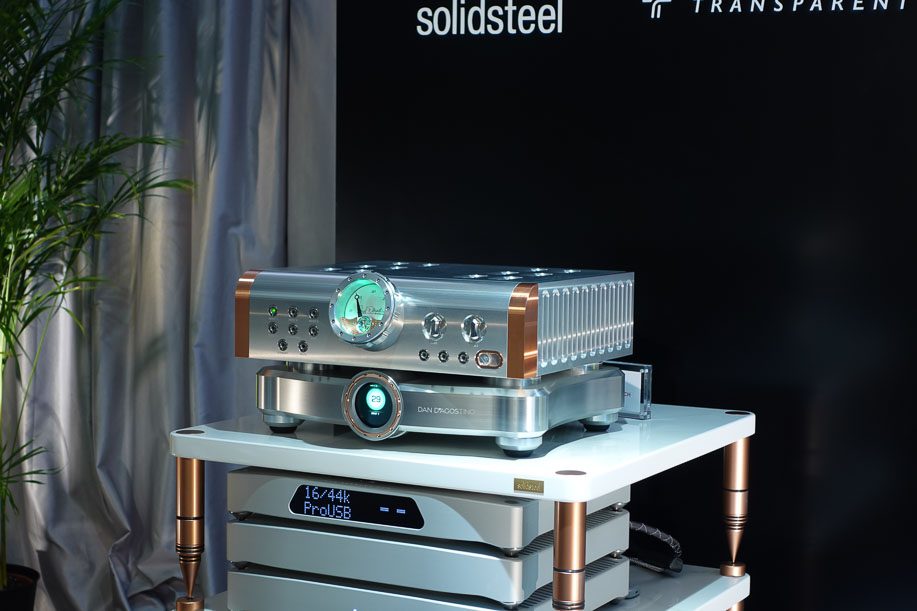
The high-end scene is well catered for by Dubai Audio. The company has retail outlets in several locations (including a destination store in the Dubai Hills Mall) and lists many of the leading high-end brands in its line-up. This was one of the first public outings for the D’Agostino Momentum C2 preamplifier, and D’Agostino’s President, Bill McKiegan was on hand to showcase its many strengths. This was demonstrated with an MSB digital front-end, Momentum mono power amps and the reborn Wilson Audio WATT/Puppy loudspeakers, all fed by a Stromtank power supply.

Dubai Audio mbl

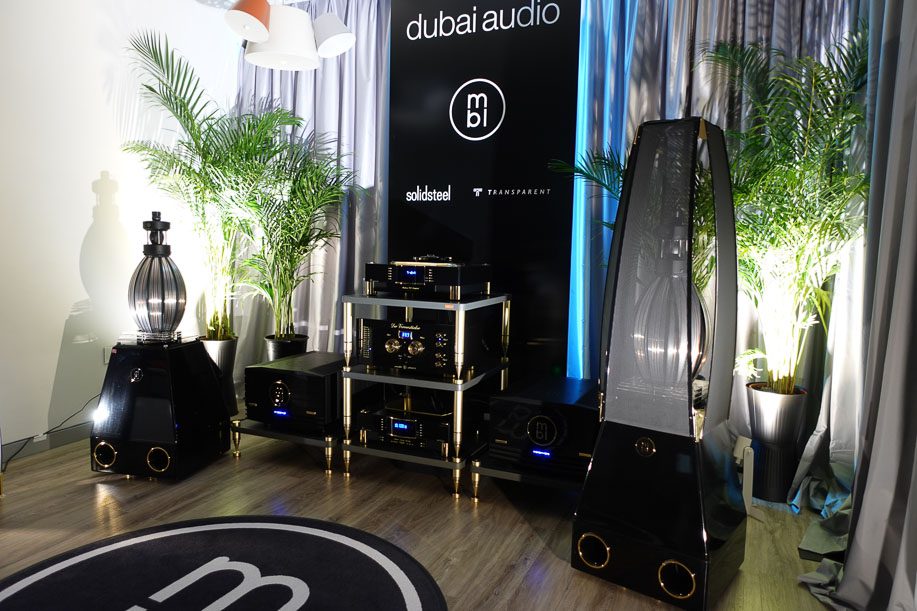
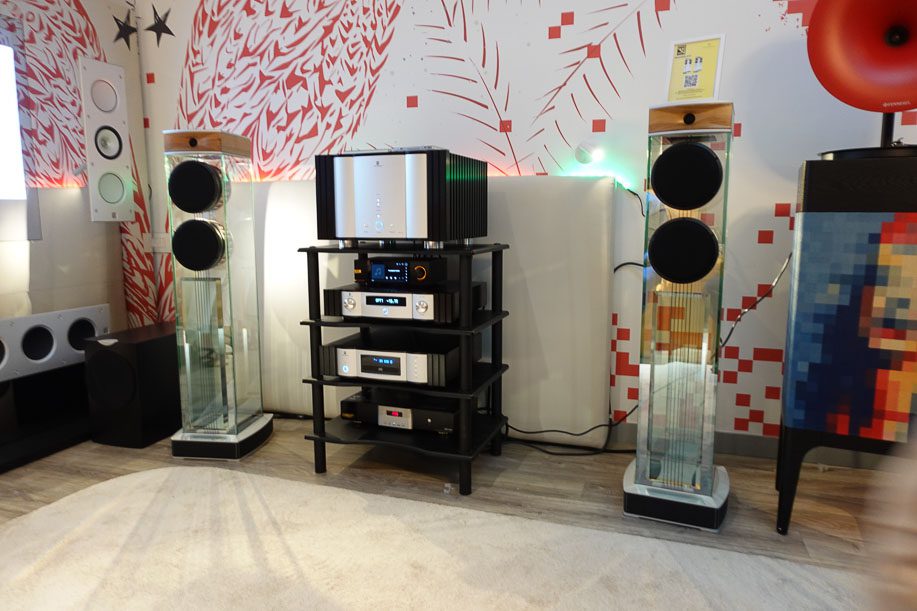
As an example of the scope of Dubai Audio’s portfolio, the company also showed a fill MBL system, comprising CD transport, DAC, preamp and mono power amplifiers from the company’s top Reference Line coupled to a pair of Radialstrahler 101E Mk II loudspeakers. Antoine Furbur, MBL’s Sales Director was on hand to talk through the design of this distinctive system.

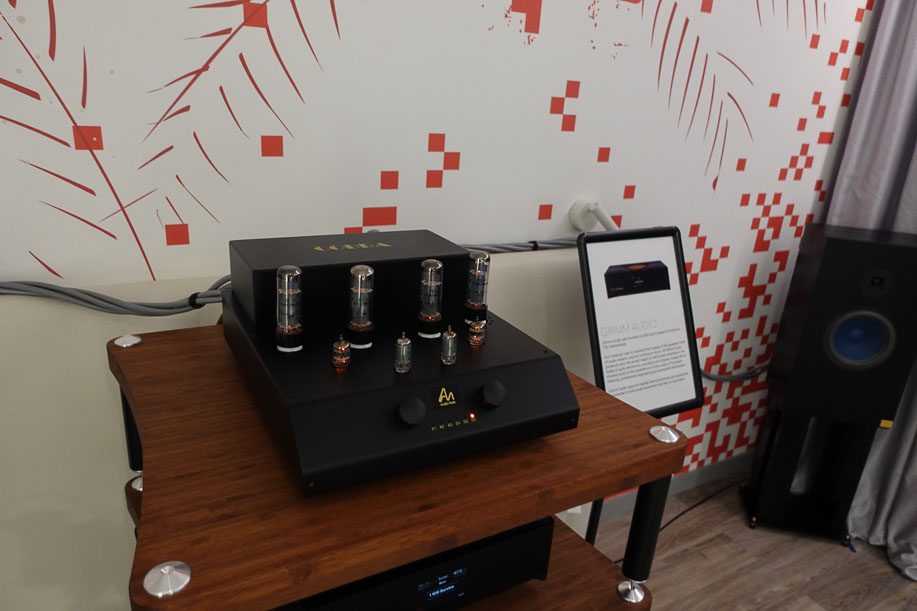
Unlike most branches of Audio Note, Audio Note Dubai also distributes other lines in addition to the tube-based brand, including Lindemann Audio and Grimm Audio. But it was perhaps the back-to-basics approach with the new Audio Note Cobra integrated amplifier playing into AN-J/D loudspeakers with hemp bass cones that showed what the company can do best: approachable music!

MHB Bespoke

MKB Bespoke held an eclectic range of products, including the new Niagra XT2 glass floorstanding loudspeakers from Waterfall Audio. These new towers sounded good, and were the perfect foil for the art that adorned every room in the Radisson Red hotel.

Dr Head DALI NAD

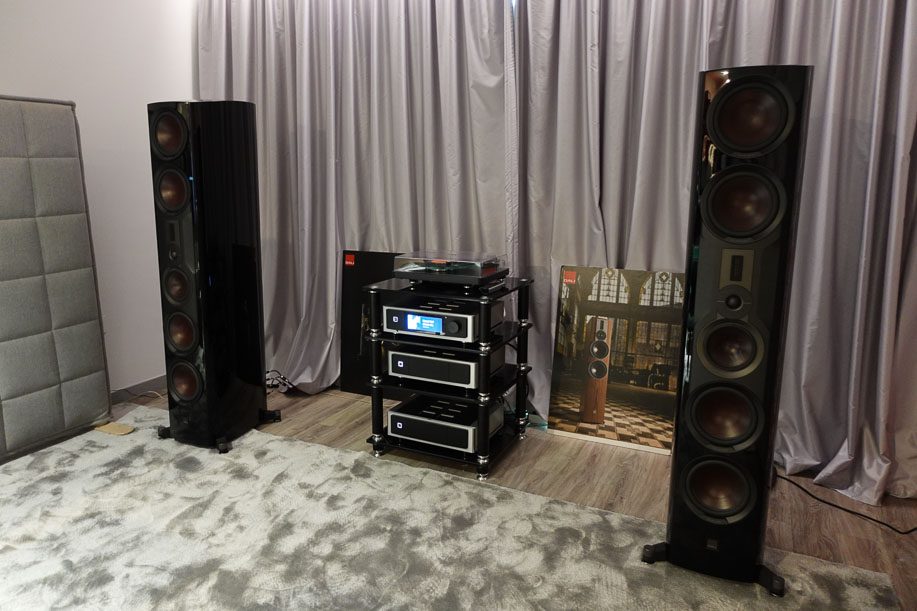
To prove it is not simply a personal audio specialist, Dr Head also showed off a complete NAD Masters system running DALI’s Epikore 11 standmount loudspeakers. It was also running some excellent headphone demonstrations, but these were constantly occupied, in a very busy room.

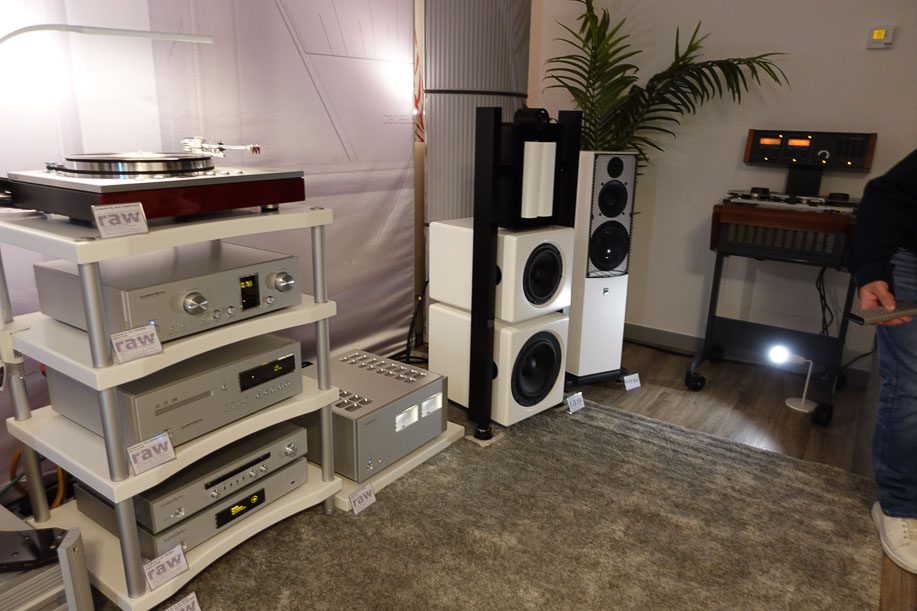
Raw Music Store began live as Dubai’s only record store. It has grown to become one of the mainstays of high-end audio in the city. It is the distributor and retailer of brands like ATC, Luxman, Gold Note and more. Such is the success of Raw Music that it had many international representatives at the show. One of the highlights of the show was playing open-reel master tape through a high-performance – and long discontinued – Studer.

Raw music store

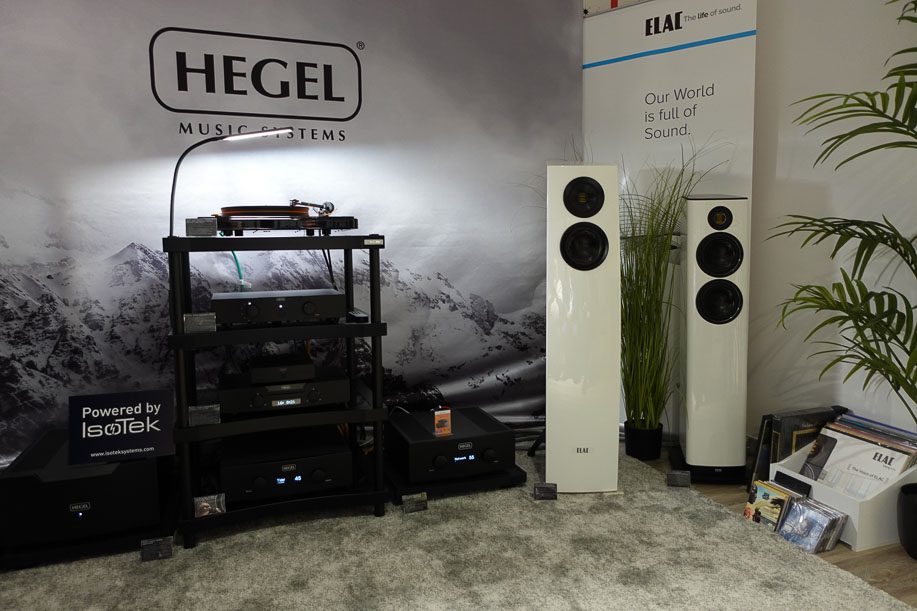
Perhaps more familiar to European readers, Raw Music Store also demonstrated a fine-sounding room comprising a broad range of Hegel’s electronics and two sets of Elac floorstanding speakers, powered by IsoTek power conditioners and featuring the sunburst Fender X turntable from MoFi Electronics. Representatives from all three companies attended the show, too.

In Lexa Lifestyle’s larger, but challenging, room, Audio Group Denmark showcased the company’s portfolio of brands, including Aavik, Ansuz, Axsess and Borresen. The company demonstrated a complete Axxess, including two Forte amplifiers, the matching Axxess cable line and new L1 stand-mount loudspeakers.

Back to Home

Wilson Audio Watt/Puppy – exclusive Scottish Launch with Loud & Clear

7 October 2024 – Loud & Clear Glasgow are delighted to be hosting the official Wilson Audio Watt/Puppy Scottish launch on 23rd October 2024 in the Lower Library of the historical Royal College of Physicians & Surgeons of Glasgow on Wednesday 23rd October 2024.

It’s a bit of a double celebration as it will be 28 years and a day since they first opened the doors of Loud & Clear in Finnieston.

With welcome drinks and canapés from 6.30pm, the main presentation will start around 7.30pm.

Loud & Clear will be showcasing this “reimagining” of the iconic WATT/Puppy loudspeakers, combining the original 2 box concept from the late Dave Wilson with all the advances in loudspeaker technology from Wilson Audio’s 50 year history.

With a SRP of £42,998 these amazing loudspeakers combine delicacy, detail and accuracy with scale, slam and real presence.

Presented within a true reference system: The WATT/Puppy will be combined with the dCS Rossini streaming DAC and Master Clock, darTZeel amplification and a full loom of Nordost cabling.

Tickets are free – but spaces are strictly limited
Please click through to Eventbrite to book your space

1599 at the Royal College of Physicians & Surgeons 
232 – 242 St Vincent St
Glasgow
G3 5RJ

Trafomatic Audio Rhapsody

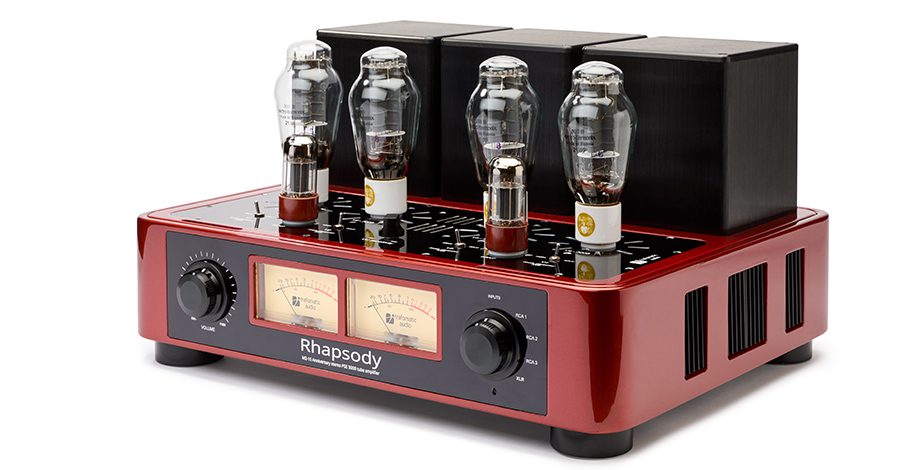
There are two kinds of people in audio: those who only look at the price and power output of the Trafomatic Audio Rhapsody and those who’ve heard it. The former group shake their collective heads at the stupidity of audiophiles. Who else would spank down twenty grand on a twenty-watt integrated amplifier? Meanwhile, the latter are too busy laying down the cash to care what the others think. This 20W, parallel-single-ended, 300B-driven integrated amplifier looks the part. Be an idiot and just look at the spec sheet if you like, but if you want your music to sound like music and not vaguely organised noise, this sits at the top of the list.

To give the Trafomatic Audio amp its full name, it’s the ‘Rhapsody M2-15 Anniversary Stereo PSE 300B tube amplifier’, but that’s a bit of a mouthful. It does, however, do a lot of explaining. Launched in 2022, the amp celebrated twenty-five years of Trafomatic Audio. The Serbian brand was founded in 1997. It’s a stereo amp, using two pairs of 300B tubes per side in a classic parallel single-ended layout. And the ‘15’? Initially, Trafomatic Audio expected to make just 15 samples of this amplifier. Then, people started hearing just what it can do, and it’s now a firm fixture in the Trafomatic Audio line-up.

The clue is in the name

A layer above the full designation for the Trafomatic Audio Rhapsody, the company’s name itself is telling. ‘Traffo’ is a contraction of the word ‘transformer’. So the name ‘Trafomatic Audio’ speaks of a company that knows its way around a transformer. It’s one of the few companies that makes its transformers from scratch. It doesn’t ‘spec’ them to a transformer manufacturer (or claim it specifies custom transformers while using off-the-shelf models). It builds its transformers in-house. That puts Trafomatic Audio in a tiny, very elite group of manufacturers.

Trafomatic Audio Rhapsody top

Making your own power and output transformers comes into its own when you make tube/valve amplifiers. This is even more true when the company decides to make its 25th anniversary project its first-ever 300B design.

The choice of tubes/valves is relatively straightforward, with just two 6SN7 drivers and two pairs of 300B power triodes. Unlike amplifiers with more exotic (read: unattainable) devices where replacement is punishingly expensive and unpredictable, these are well-known and widely available devices.

Tube rolling

This affords the Trafomatic Audio Rhapsody owner tube-rolling options and allows them to use both newly manufactured and New Old Stock classics. As we’ve had a hiatus in obtaining new Russian valves recently, knowing the Rhapsody’s valve seats will never go empty is a bonus.

However, do not mistake a straightforward choice of output device for simplicity of circuit. This is not some 1930s cinema amplifier reborn and painted bright red. A toggle switch marked ‘mesh’ or ‘solid’ sits before each 300B. This is because not all 300B power tubes are alike. Originally, the 300B used a mesh control grid between the plate and the cathode. There are many examples still in circulation, but buying two matched pairs of Western Electric triodes will set you back around three thousand (in dollars, pounds or euros). Many other extremely good (and more modern) 300B designs have a solid control grid instead.

Anode dissipation

The difference is a change in anode dissipation voltage: 28 watts in the ‘solid’ setting and 22 watts in ‘mesh’. Most modern 300B designs choose the higher voltage or fluff the matter by going for a 25/26V dissipation. Unfortunately, I don’t have many different brands of 300B to hand, but by toggling between them, you could hear when the tube and dissipation voltage matched.

The other significant change from re-imagined old amp designs is using Panzerholz in the chassis. Typically, amps are made of pressed steel or aluminium billets. Sometimes, they are made from bits of copper (to help conduct heat) or even silver or titanium (for the super-rich). But the Trafomatic Audio Rhapsody is made out of hyper-compressed – and bulletproof – plywood. This extremely heavy ‘tankwood’ is an excellent material to machine and finish and is also remarkably good at controlling resonance. This is why it’s becoming popular in manufacturing turntable plinths and even some loudspeaker enclosures.

The downsides to Panzerholz in these settings are its cost and weight and that – in a loudspeaker setting – it’s often too good at its resonance-control job, creating a cabinet that can sound overdamped and dead. However, these properties make it an ideal proposition for a tube amp, where any prospective microphony robs the sound of its sonic purity. The chassis isn’t completely made of Panzerholz. There are internal metal panels, too, but they are there more for safety reasons than as part of the physical structure of the design.

Red ones go faster!

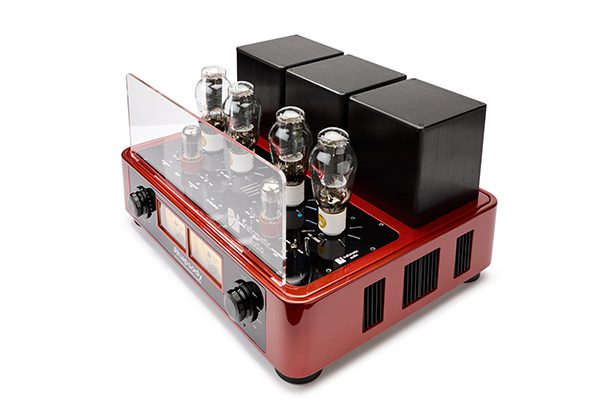
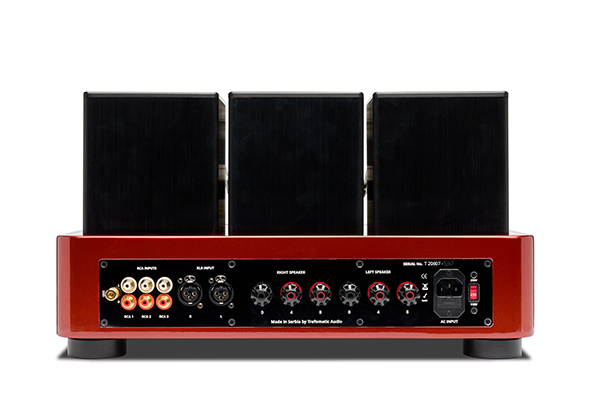
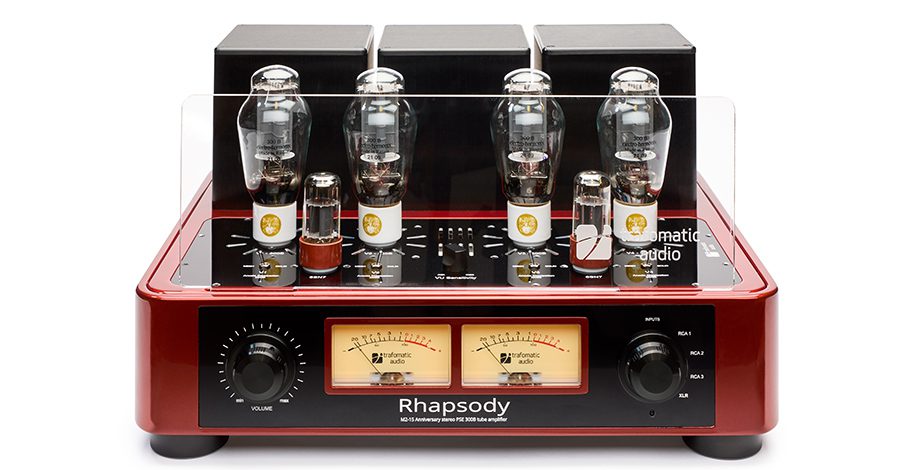
On the subject of ‘design’, the Trafomatic Audio Rhapsody is certainly a ‘looker’. The combination of red and black with the contrasting off-white twin VU meters on the front panel gives the Rhapsody a timeless and classy appearance. A near-total absence of hard edges (thanks again, Panzerholz) only adds to its visual appeal. Other amplifiers hide their valves away with an ugly tube cage that is often removed. The Rhapsody has an understated Perspex screen with the logo in the bottom right corner.

Trafomatic Audio Rhapsody Front Straight On

I think most people will shy away from this to get the most from the amplifier’s elegant lines, but if some kind of shielding from the tubes is required, this is a good solution. This isn’t the kind of amplifier that ends up being hidden away in a cupboard. A matching remote handset joins it with limited functionality but is similarly easy on the eye. Of course, the Trafomatic Audio Rhapsody’s colour scheme is fixed, so if bright red is not your bag, this is not your amplifier, but in fairness, it’s one of those products that looks better in the flesh than even the most retouched photos can do credit. But, yes… bright red is not for shrinking violets.

It is a minimalist design, however, with just four inputs (three single-ended, one pseudo-balanced), WBT terminal taps for four and eight-ohm loudspeaker loads and nothing in the way of built-in DACs, phono stages, or even balance controls. You turn it on or off with a switch at the side, and aside from a volume and source selector, that’s it! There’s not even bias adjustment. It’s just a pure, damn good amplifier in bright red livery.

Sound per pound

There is a rule of thumb that holds surprisingly well throughout ‘hollow state’ audio: the heavier a product is, the better. Some logic backs this up. The heaviest parts of a tube amplifier are typically its transformers; the more iron in those transformers, the better.

The issue is clouded slightly here by the added mass of the Panzerholz chassis. Still, despite that extra weight, the load is uneven, and the transformers contribute much to the Trafomatic Audio Rhapsody’s ‘healthy’ 32kg weight. Bear this in mind when extracting it from its packing crate!

Typically, amplifiers with 300B tubes come with a set of ‘riders’ or limits on their choice of speaker partner. Often, they are used with large horn loudspeakers, not just because of the comparatively low power of single-ended triode 300B designs but because the lack of iron in those transformers inevitably gives them a lightweight sound. This has become such a signature sound of the tube, it’s easy to think that this bass-light performance is intrinsic to the 300B design.

Just a few bars into music played on the Trafomatic Audio Rhapsody, and you know just what the 300B is capable of, and we’ve been sold a lie about its bass. This tube is capable of great speed and refinement, but both aspects extend further than you ever thought possible. And those 20 watts… they pack a punch too! While this isn’t an amplifier you would use on an insensitive loudspeaker in a large room, it quickly passes the 90% rule; it’s all you need in 90% of systems in 90% of rooms. In other words, to paraphrase Paul Rudd in Anchorman: The Legend of Ron Burgundy; sonically, ninety per cent of the time, it works every time!

Confession time

I must confess something about the Trafomatic Audio Rhapsody; I was not looking forward to it. Yes, it received some glowing reviews. And I heard it briefly sounding excellent with a pair of DeVore Fidelity loudspeakers (I can’t remember which models). I’ve never liked 300B designs because of their low power and bass lightness. They always sounded lithe in the midrange and clean right across the board, but the leanness of the sound put me off. And now I have to retrace my steps because the Rhapsody is one of those amplifiers that sounds so damn lovely, it makes you reconsider everything you thought you knew about audio. Thanks to the Rhapsody.

What makes it so unique? It’s the combination of an expressive and occasionally shockingly ‘real’ dynamic range, that almost magical sense of a live musical experience in your listening room, an innate sense of melody that draws you into the musical mix, and an over-arching sense of sonic accuracy. A few good amplifiers might manage to nail one or at most two of these aspects of performance, but the ones that get them all right are either the Trafomatic Audio Rhapsody… or cost as much as an Aston Martin.

Shocking, twice over

That dynamic range is shocking, in a good way, twice over. It’s surprising in that even music you know well – Rachmaninov’s Symphonic Dances, for example [Zinman, Telarc] – can sneak up on you and send your pulse racing when the orchestra strikes. But what’s also shocking is just how much dynamic range is on fine recordings, and how little we get through most systems. The Rhapsody gets out of the way of the music and lets it dance around the room. This, in part, contributes to that ‘you are there’ sense of being in the live space with the musicians themselves.

Trafomatic Audio Rhapsody Rear

I don’t want to make the association with classical or jazz recordings in case people draw the wrong conclusion and type-cast the Rhapsody as a ‘not for rock’ amplifier. It does rock well (it has to; designer Sasa Cokic is a keen rock guitarist, and his team looks like they will be playing a four-night gig at the Marquee soon). It’s just that when you get recordings of live, unamplified instruments in a natural, physical space through the Trafomatic Audio Rhapsody, the hairs on the back of your head start to stand up. And here, Chet Baker was in the room with me. That was remarkable.

Jack of all trades, master of most!

And then out came ‘How To Disappear Completely’ by Radiohead [Kid A, Parlophone]. I don’t talk about Kid A as much as I should. It’s one of those albums I play for listening and not critical listening. Nevertheless, it’s a superbly recorded album, and this track, in particular, is outstanding. I returned to the first track – ‘Everything In Its Right Place’ – and played the entire album. Then, I did it again in stunned silence.

The ‘stunned silence’ was because I hadn’t heard that much from the album since the first time I played it. It was so impressive through the Rhapsody and as a recording in its own right. Stepping down from Mount Trafomatic and playing the same album showed how fleeting this stunned feeling was. It had left me, and it was just another good album.

Downsides? You will need relatively efficient loudspeakers to get the most out of Rhapsody. They might be the meatiest 20W you’ll ever get from a pair of 300Bs per side. But 20W is not 200W or 2kW, and that will limit the pool of first-class loudspeakers. And, if you play PA-loud in a big room, that power ceiling also applies.

But such things miss the point of the Trafomatic Audio Rhapsody. Just as dismissing it as ‘an amplifier for the refined’ is missing the point. The Trafomatic Audio Rhapsody is a class act. Cherry red case aside, it draws attention to itself purely through the music. The Rhapsody plays with such a vivid ‘realness’ that you might never want to listen to anything else.

Technical specifications

  • Output power 2×20W
  • Operation Parallel Single-Ended (class A)
  • Tubes complement 4× 300B, 2× 6SN7
  • Inputs 3×RCA + 1×XLR
  • Outputs 4 – 8 ohm
  • Input sensitivity 0.5V rms THD % 0.55% – 1W
  • Frequency bandwidth 10Hz-75KHz (-3dB)
  • S/N Ratio 80dB
  • Input impedance 100K
  • Size 470 × 370 × 260mm
  • Weight 32kg
  • Price £19,998

Manufacturer

Trafomatic Audio

www.trafomaticaudio.com

UK distributor

Absolute Sounds

www.absolutesounds.com

+44(0)208 971 3909

Read more Trafomatic Audio reviews here

Back to Reviews

WiiM Mini, Pro and Pro Plus Streamers

The collapse in the cost of capable digital sources over the course of the century has been widely recorded but every now and again, something turns up for consideration that rams the point home with quite astonishing force. The three streamers that you see here have a combined cost of £460 which is considerably less than the bulk of the cabling we test. Each one of them is a fully equipped network audio player that has functionality periodically absent in considerably more expensive devices.

The company that builds them is WiiM Audio, an offshoot of LinkPlay technology and a relatively new arrival in the audio sector. All three streamers; the £90 Mini, £149 Pro and £219 Pro Plus are built on the same software platform and control app available for both iOS and Android and it’s a very comprehensive one. Qobuz, Tidal, Deezer, Amazon Music, Spotify, Napster TuneIn, Calm, VTuner, Soundcloud and Pandora are all natively supported, backed up by the ability to access a local library. There is then AirPlay and Chromecast as well as Alexa integration.

Multiple streaming

WiiM isn’t done there either. Multiple streamers can be tied together in the same app for straightforward multiroom and there is a clever latency measuring system that makes use of built in microphones that allows the WiiMs to adjust their output to counter reflectivity and to sync themselves across a house of multiple devices. It bears repeating that I have tested considerably more expensive devices that cannot do anything like that.

"</p

The three streamers all use this software but differ in their processing and decoding. The Mini is fitted with a DualCore A7 processor with 128mb of flash memory and uses a Texas Instruments PCM5121 DAC to support sample rates up to 24/192kHz. The Pro uses exactly the same DAC and has the same sample rate handling although it adds what WiiM intriguingly describes as ‘partial’ MQA support that seems to be entirely capable of handling the bits of Tidal that have yet to migrate away from the format.

Where the Pro differs is that it makes use of an ARM A53 processor and 512mb of memory. This boost in decoding horsepower means that the Pro is markedly faster accessing large music libraries and the results from its calibration felt more pronounced than the Mini’s did. The extra decoding oomph also allows for the Pro to function as a Roon Endpoint which makes it one of the more affordable such options I can think of.

All my Ex’s Live in Texas

The Pro Plus uses the same processing hardware as the Pro but dispenses with the Texas Instruments DAC and replaces it with an AKM 4493. This imbues the Pro Plus with a maximum sample rate handling of 768kHz PCM and adds DSD support to DSD512. These is as near to the notional state of the art as makes little difference and means there’s not much that can match the spec of the Pro Plus under £500. At the time of testing, the Pro Plus had not yet been Roon certified but it will be in due course.

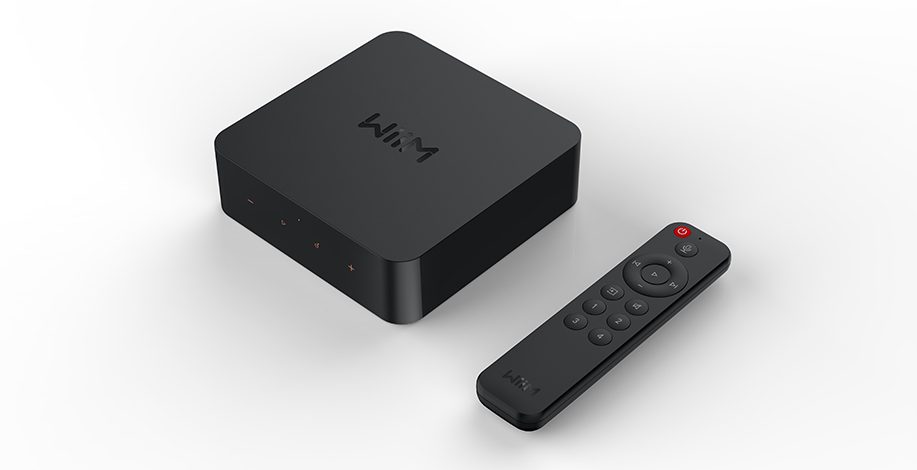
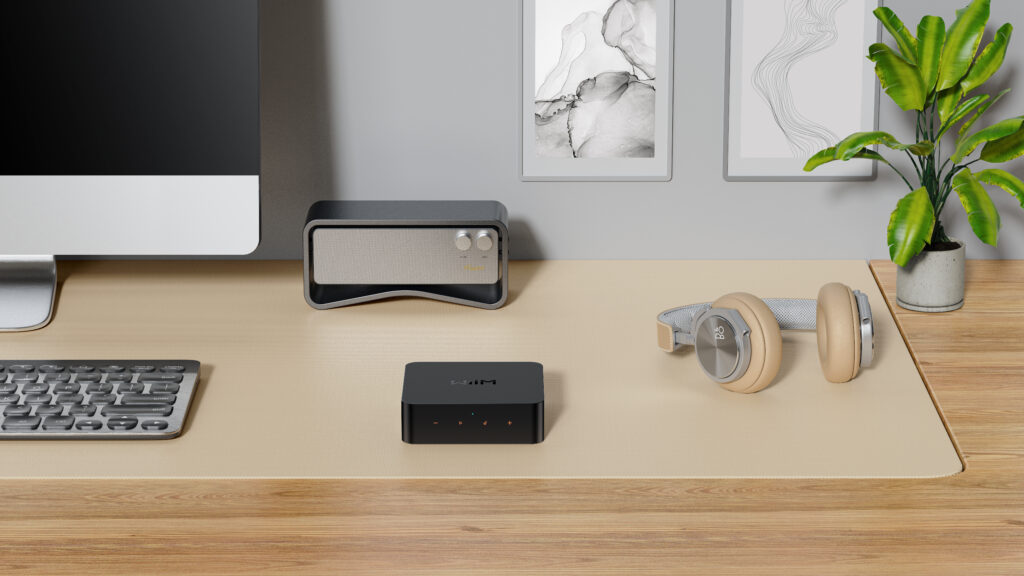
As you might expect, none of these streamers come in the sort of casework that will withstand small arms fire but they’re more than acceptably finished for their asking price. In some ways, the Mini is actually the neatest design of the three. It’s a compact device that looks more like a hockey puck than anything else. It’s small enough to be hidden away if you wish but perfectly appealing to have out on display too. The two Pro models are arguably less attractive with their square chassis made of grey plastic.

Useful connectivity

Where the Pros are rather more useful is their connectivity. The Mini makes do with a variable level analogue out on a 3.5mm minijack supported by an optical output. Unusually, there is also an analogue and optical line in as well. What there isn’t is any form of wired internet connection. Under test the Mini has been entirely stable but the Pros both have ethernet connections for extra resilience. This is partnered with RCA outputs, a coaxial out in addition to the optical one and the matching analogue input also being upgraded to an RCA connection. While the Pro and Pro Plus are materially identical, the Pro Plus gains a remote control with a selection of useful commands which is a £20 option on the Pro while the Mini is app only.

"</p

I found myself willing to forgive the Mini limitations to its connectivity and control though. For starters, the app is a decent one; stable and logically laid out and equipped with the features we might reasonably expect. More than the humdrum, if important business of how it is to use, the Mini sounds quite ridiculously good for a sum of money I have made disappear on an evening out to no material gain. The rather wonderful The Returner by Allison Russell [Fantasy] is reproduced with its lush and vivid production beautifully captured. When Russell herself begins singing on the opener Springtime, the effect is gratifyingly immediate and impressively convincing.

£90 limitations!

There are limitations, there could hardly be otherwise at £90 but they do need to be mentioned. I found that the internal volume does soften the frequency extremes when used at lower levels and the absolute bass extension isn’t as potent as some pricier but still fairly budget rivals. The fact that the Pro makes use of the same basic decoding hardware doesn’t auger well for there being significant changes but- beyond the aforementioned improvements to speed and responsiveness, the bass response used side by side with the Mini listening to Hidden Orchestra’s To Dream is to Forget [Lone Figures], the Pro ekes out more low end from Hammered than the Mini can while maintaining that charmingly vivid tonal balance in the upper registers.

I would really encourage you to forego another night in the pub though and spring for the Pro Plus. In a way, WiiM has played a bit of a blinder keeping this in the same casework as the Pro because the surprise it springs when you begin listening to it is all the more delightful.

Step up

There is a step up in tonality, scale and sheer realism that has you initially taken away from enjoying the sound and wondering quite how you make a device that does this much and sounds this impressive for £220.

Return to the sound though and the Pro Plus continues to deliver. A spirited blast through This New Noise [Test Card Recordings], the latest effort from Public Service Broadcasting is a genuinely impressive experience. There is a point in Broadcasting House where the piece goes from near silence to the full orchestra coming in and the manner in which the Pro Plus handles this massed rank of instruments is enormously impressive. The string section is a perceivable as a rank of individual instruments that function as a cohesive whole and even at peaks, the whole performance is admirably free of congestion with enough space around the recording to be wholly convincing.

No Pro discount

This is not to discount the Pro entirely though. Used via their coaxial outputs as a source for a Chord Electronics Qutest, the Pro and Pro Plus are completely identical and this makes the Pro a genuinely excellent network transport. The Mini arguably exploits an even more covetable niche. Ever since the Chromecast Audio ceased production, bringing older devices and Bluetooth speakers into a stable wireless ecosystem has been that little bit harder and more expensive. This is the closest spiritual successor to the Chromecast Audio in terms of what it does, how it does it and how much it costs that I can remember testing.

It’s the flagship that enthuses me most though. What the Pro Plus does is lift the WiiM platform from something I’m enthusiastic about because it’s cost effective, capable and engaging and elevates it to something that I’d describe as genuinely hi-fi with a straight face and that is hi-fi without making a single concession to user friendliness, functionality or flexibility. As and when the Roon certification is ready (and given WiiM and Roon share a UK distributor, I am sure that a little gentle pressure is being applied there), this will be an out and out bargain that has to be one of the best I have seen in some time. The price of truly capable digital remains impressively low and companies like WiiM seem extremely determined for it to remain that way.

Technical specifications

WiiM Mini

  • Type Bluetooth, voice-controlled wired and wireless streamer
  • Audio formats MP3, AAC, ALAC, APE, FLAC, WAV, WMA, OGG, to 24bit, 192kHz
  • Inputs/Outputs Aux line in/out, Optical output
  • Dimensions (W×H×D) 69 × 24 × 69mm
  • Weight 40g
  • Price £89.98

WiiM Pro

  • Type Bluetooth Network streamer
  • Audio formats MP3, AAC, ALAC, APE, FLAC, WAV, WMA, OGG, to 24bit, 192kHz
  • Inputs/Outputs Aux line in/out, Optical in/out. S/PDIF coaxial output to 32bit, 384kHz
  • Chip Ti Burr Brown PCM5251
  • Dimensions (W×H×D) 140 × 42 × 140mm
  • Weight 300g
  • Price £149

WiiM Pro Plus

  • Type Bluetooth Network streamer
  • Audio formats MP3, AAC, ALAC, APE, FLAC, WAV, WMA, OGG, to 24bit, 192kHz
  • Inputs/Outputs Aux line in/out, Optical in/out. S/PDIF coaxial output to 32bit, 768kHz and DSD512
  • Chip AKM4493SEQ
  • Dimensions (W×H×D) 140 × 42 × 140mm
  • Weight 400g
  • Price £219

Manufacturer

Linkplay Technology

www.winhome.com

UK distributor

Henley Audio

www.henleyaudio.co.uk

+44(0)1235 511166

Read more Henley Audio reviews here

Back to Reviews

SVS Launches 17-Ultra R|Evolution Subwoofers – A Quantum Leap Forward in Subwoofer Design

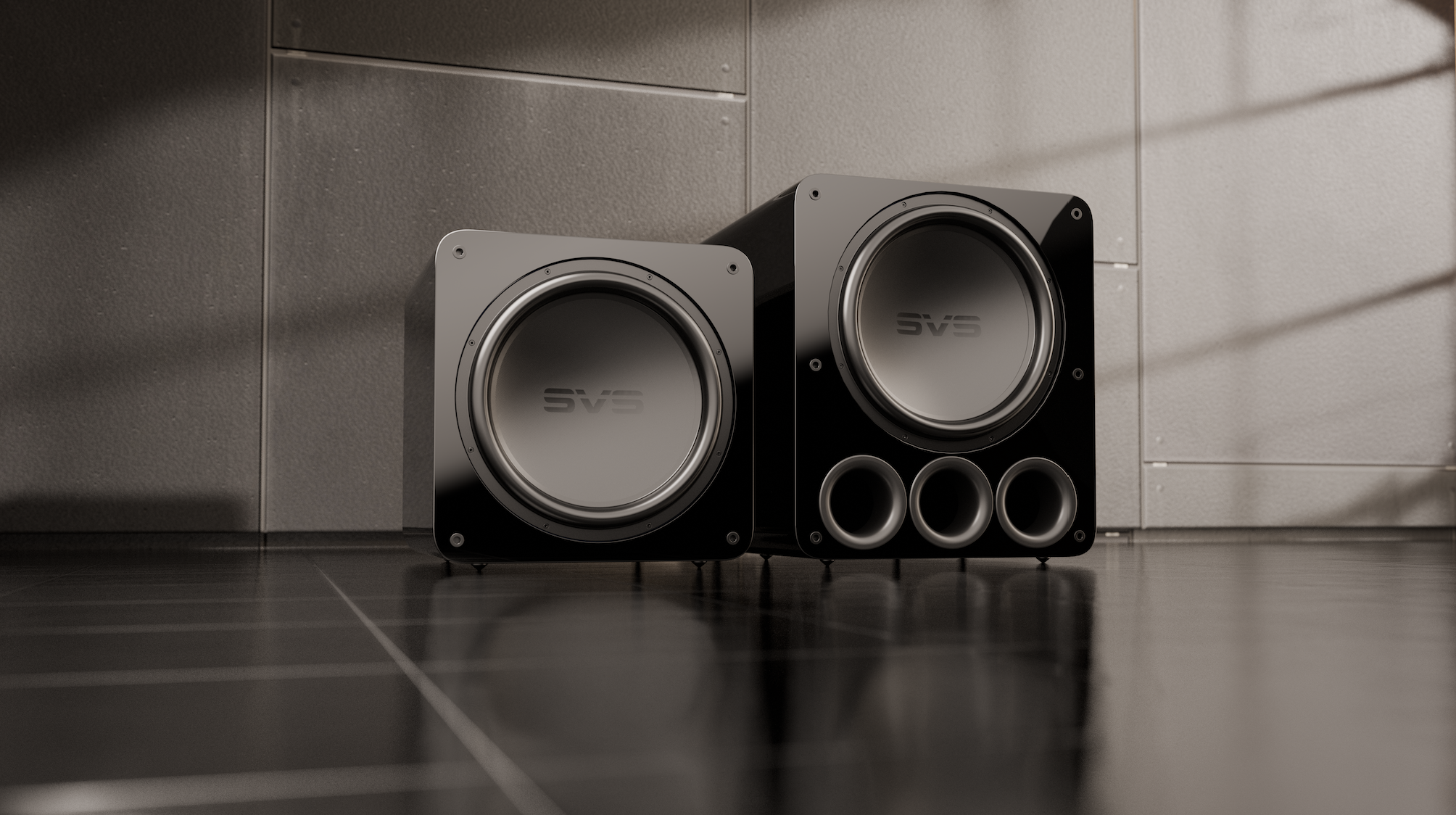
1 October 2024 – Youngstown, OHSVS, leading manufacturer of high-performance speakers, subwoofers, and accessories, proudly announces a new flagship subwoofer series, 17-Ultra R|Evolution. A complete reimagining of subwoofer design for the Ohio-based audio brand, innovations abound in the new series making it the most powerful, sophisticated, and user-friendly SVS subwoofers ever introduced to the consumer market.

Starting with the driver, it was a ground-up process engineering the largest, most formidable driver ever deployed in an SVS subwoofer. To ensure stable transfer of electro-magnetic current from the dual mono-amplifier to the 55lb toroidal ferrite magnet motor, SVS designed the first ever dual eight-inch voice coil resulting in effortless output with exacting control over the 17-inch driver. Copper clad aluminum voice coil wire combines the best properties of both elements, yielding ideal thermal capacity and magnetic field strength in the motor.

An all new high-excursion 17-inch driver features a glass fiber composite cone, long-throw catenary SBR rubber surround, and toroidal ferrite electromagnetic motor round out the driver design. This combination generates massive sound pressure levels well below the threshold of human hearing (15Hz for SB17-Ultra and 12Hz for PB17-Ultra) with frequency response accuracy and acoustic linearity.

Generating the sonic muscle behind the most powerful and highest fidelity SVS subwoofers ever is a unique dual mono-block STA-2800D Class-D amplifier with MOSFET output stage. Each amplifier drives one of the dual voice coils to increase the power into the motor while asserting pinpoint control and maximizing output potential. Eight 60 Amp 200 Volt MOSFETs deliver extreme high current for reference-level output with maximum efficiency.

Given the amplifier’s output potential, SVS designers needed an equally capable power supply to accommodate the limits of a typical 15-amp home AC circuit.17-Ultra R|Evolution subwoofers have an answer for this too. An onboard AC line conditioner with power factor correction stabilizes the incoming voltage, corrects waveform distortions, and eliminates electromagnetic and radio interference. By doing so, it continuously optimizes signal quality while ensuring the subwoofers remain impervious to voltage fluctuations.

While DSP remains absent from many subwoofers in the market, SVS integrated the most sophisticated DSP ever to optimize all aspects of performance and usability. The 295MHz Analog Devices DSP orchestrates every function of the amplifier to shape in-room response and stabilize AC voltage delivery while managing a multi-point thermal and current monitoring system for optimal performance and efficiency. In addition, advanced digital audio processing and DACs (Digital-to-Analog Converters) with 120 dB Signal-to-Noise Ratio provide greater headroom, lower noise, and pristine fidelity.

Calibration of the 17-Ultra R|Evolution series is managed via the most comprehensive subwoofer control smartphone app available. The SVS app features controls for volume, low pass filter, phase, polarity, six parametric equalizers, room gain compensation, port tuning (PB17-Ultra R|Evolution only), power management settings, and more. There are also three convenient memory presets for fast and easy system adjustments to match your listening preferences.

Also new to the 17-Ultra R|Evolution subwoofers is the intuitive Auto EQ Subwoofer Room Correction. Using the SVS app and the built-in microphone on a user’s smartphone, the feature applies equalization filters, capitalizes on available room gain, and optimizes in-room frequency response at main listening positions for optimal in-room performance. The simple process requires just a few steps and achieves pristine fidelity by resolving all the acoustic issues caused by your room in a few easy steps. Auto EQ Subwoofer Room Correction will be available via an over-the-air app and firmware update coming soon.

“SVS is a restless company. We are never satisfied with making modest improvements just for the sake of launching a new product,” said Gary Yacoubian, SVS President. “That restlessness is what fueled the top to bottom advancements of our flagship 17-Ultra R|Evolution subwoofers. Literally every part of the ecosystem was reimagined to achieve an unprecedented level of low frequency performance and world class user experience. They truly represent a quantum leap forward in subwoofer design and I could not be prouder of what our team accomplished.”

Details and U.S. pricing are below, both models are now shipping in the US.

  • SB17-Ultra R|Evolution – sealed cabinet – $2,499.99
  • PB17-Ultra R|Evolution – ported cabinet – $2,999.99

Finish options include Piano Gloss Black and Premium Black Oak Wood Veneer finishes.

All SVS products are backed by a five-year unconditional warranty, 45-day in-home trial, fast and free shipping, expert lifetime support, SoundPoints loyalty program, and all the guarantees of the SVS Customer Bill of Rights.

DALI launches EPIKORE series of speakers featuring ultra-low distortion SMC Gen-2 technology

1 October 2024 – With the new EPIKORE Series, DALI draws upon its expertise in over 40 years of loudspeaker research and development. ​ The natural evolution of the acclaimed DALI EPICON series — inheriting several innovative technologies from the DALI KORE flagship speaker — the EPIKORE Series of loudspeakers combines ultimate audio realism with luxurious craftmanship to create a truly exceptional musical experience.

Three new models have been released to sit alongside the highly respected EPIKORE 11 4½-way floorstander: The EPIKORE 3 3-way stand-mount, EPIKORE 7 3½-way floorstander, and EPIKORE 9 4-way floorstander. ​

The EPIKORE series are available in three exclusive premium finishes — High Gloss Black, High Gloss Walnut, and High Gloss Maroon — and share several key technologies. These include the EVO-K™ Hybrid Tweeter module, comprising a 35 mm soft-dome tweeter and a 55 x 10 mm HF planar element; SMC™ Gen-2 technology for ultra-low distortion; custom-made in-house drivers, and Clarity Cone™ paper and wood fibre cone structure bass/mid-range drivers.

The EPIKORE Series of loudspeakers incorporate low-loss technology to deliver effortless dynamic response, from the subtlest of micro details to the grand scale of a live concert. In addition to introducing new concepts and refinements in speaker engineering, the new EPIKORE Series takes all that DALI has learned in over four decades and invests it into extraordinary electro-acoustic performance and audio realism, combined with luxurious craftsmanship.

The EPIKORE Series creates an exceptional visual and musical experience.

EPIKORE SERIES Key Features:

  • Four exclusive models
  • EVO-K™ Hybrid Tweeter module, comprising a 35 mm soft-dome tweeter and a 55 x 10 mm HF planar element
  • 1 x 6½-inch EPIKORE midrange with SMC™ Gen-2 and Clarity Cone paper and wood fibre cone structure.
  • 8-inch EPIKORE woofers with SMC™ Gen-2
  • NEW 7-inch EPIKORE bass/midrange drivers with SMC™ Gen-2 and Clarity Cone™ paper and wood fibre cone structure.
  • SMC™ Gen-2 technology for ultra-low distortion
  • SMC-KORE™ crossover inductors
  • Custom-made in-house drivers
  • Titanium voice coil formers
  • Adjustable aluminium outriggers
  • Continuous-flare bass reflex ports
  • Die-cast baffles
  • Advanced luxury cabinets
  • Danish design
  • Three exclusive high-gloss finishes
  • Custom made high-end binding posts
  • High-end crossover components

Evolution Through KORE Technologies

The EPIKORE series sets new standards for low-distortion high-end loudspeaker performance in listening spaces ranging from small to very large. Each speaker in the line-up utilises DALI’s second-generation Soft Magnetic Composite (SMC Gen-2™) magnet material — as well as the EVO-K™ variant of DALI’s Hybrid Tweeter Module borrowed directly from the DALI KORE.

When using conventional magnets in a speaker design, it is not unusual to experience a phenomenon known as hysteresis. This introduces an unintended resistance to the voice-coil, which can lead to unwanted distortion in the audio signal. Designed to significantly reduce hysteresis, SMC Gen-2™ is the next generation of DALI’s patented SMC magnet material technology.

Introduced in their flagship DALI KORE loudspeaker, SMC Gen-2™ is incorporated into the EPIKORE Series’ bass and midrange drivers, as well as in the crossover inductor cores, offering significantly enhanced characteristics over the first-generation SMC. The result is a further reduction in hysteresis, flux-modulation and eddy currents in the magnet system. This translates to even lower loss and distortion, allowing the speakers in the EPIKORE Series to deliver a highly dynamic and authentic sound reproduction.

In addition, the EPIKORE Series of loudspeakers all feature DALI’s signature Clarity Cone™ paper and wood fibre cone structure, which serves to control cone behaviour without adding additional mass. With wood fibre cone technology, the EPIKORE Series is able to produce the finest musical detail and dynamics.

Developed originally for the DALI KORE, the EVO-K™ Hybrid Tweeter module combines a large, in-house developed 35 mm Soft Dome Tweeter and an improved version of DALI’s ultra-thin, high performance planar magnetostatic tweeter element. Together with the extremely powerful neodymium magnet motor systems, they ensure an astonishingly smooth and effortless high-frequency reproduction — at any volume level.

EPIKORE 3 brings DALI KORE technology to the compact stand-mount loudspeaker format and smaller listening spaces. Its 3-way architecture combines a low-loss, 7-inch DALI bass/midrange driver with the unique DALI EVO-K™ Hybrid Tweeter module. A curved, real-wood veneer stand-mount cabinet completes the EPIKORE 3 package to create an exceptional visual and musical experience.

DALI have developed optional EPIKORE STAND for the EPIKORE 3. Available in matte black, this sand-fillable stand features internal cable routing and is the perfect solution for those wishing to stand mount their EPIKORE 3.

EPIKORE 7 is a compact floorstander evolution of the DALI EPICON and DALI KORE. Its 3½-way format combines two muscular, low-loss 7-inch DALI bass/midrange drivers with the unique DALI EVO-K™ Hybrid Tweeter module. Impeccable aesthetic quality combines with the finest DALI electro-acoustic technology to deliver a world-class visual and musical performance for medium to large sized rooms.

EPIKORE 9 is a 4-way floorstander offering a high-performance audio experience for large listening spaces. It constitutes a sophisticated and elegant high-end loudspeaker evolution of the DALI EPICON and DALI KORE. The EPIKORE 9 combines two, low-loss SMC™ Gen-2 8-inch woofers, a low-loss SMC™ Gen-2 6½-inch Clarity Cone Technology™ midrange driver, and the unique DALI EVO-K™ Hybrid Tweeter module to create remarkable wide-bandwidth, low distortion music.

The advanced construction curved cabinet combines Continuous Flare port reflex loading with immense rigidity and the beauty of real wood completes the EPIKORE 9 package.

EPIKORE 11 is an exceptional, 4½-way, floor-stand, wide-bandwidth system, the EPIKORE 11 incorporates four, low-loss 8-inch SMC™ Gen-2 woofers, a low-loss SMC™ Gen-2 6½-inch Clarity Cone Technology™ midrange driver, and the signature DALI EVO-K™ Hybrid Tweeter module.

The EPIKORE 11 sets new standards for low-distortion high-end loudspeaker performance in very large listening spaces.

Pricing (per pair)

The DALI EPIKORE 3 is available from October 1st, priced £9,999 / €9,999

The DALI EPIKORE STAND is available from October 1st, priced £1,999 / €1,999

The DALI EPIKORE 7 is available from October 1st, priced £19,999 / €19,999

The DALI EPIKORE 9 is available from October 1st, priced £29,999/ €29,999

The DALI EPIKORE 11 is available now, priced £39,998 / €39,998

Luxman adds entry model to popular Z series integrated amps

BALLSTON SPA, New York, September 2024 – Luxman completes the Z Series line of integrated amplifiers with the introduction of the L-505Z. The new model represents the latest development in a series of 505 models going back to the L-505f of 2001, while introducing significant upgrades including the Luxman Integrated Feedback Engine System (LIFES1.0) and the Luxman Electronically Controlled Ultimate Attenuator (LECUA). “The Z Series is now complete, in anticipation the company’s 100th anniversary in 2025,” commented Jeff Sigmund, president of Luxman America. “The global community of reviewers, resale partners, and music lovers has welcomed our Z Series. We’re looking forward to introduce the L-505Z’s level of performance to a wide range of listeners.”

The L-505Z is intended to replace the popular L-505uXII and completes the Z Series joining the L-507Z and 509Z. Upgrades from its predecessor also include an improved moving magnet/moving coil phono preamp, LECUA controlled LR balance adjust function, 12-volt triggers, parallel headphone output jacks including a “Pentaconn” balanced type and 7-segment LED volume level-VU meter display.

The L-505Z integrated amplifier is available now at a suggested retail price of $5,995.

LUXMAN Integrated Feedback Engine System (LIFES1.0)

The LIFES1.0 power amp stage is the latest expression in Luxman’s multi-decade quest to combine the expressive power of negative-feedback-free amplifiers with the ultra-low distortion that feedback enables. Previously, feedback has been considered a double-edged sword. While it plays a central role in reducing distortion, even minuscule inaccuracies in its application can compromise musicality. It was to overcome this paradox that Luxman created the Only Distortion Negative Feedback (ODNF) circuit in 1999 and refined it through five generations up to 2021. LIFES1.0 supersedes even these proud achievements, with a completely redesigned circuit featuring improvements in distortion detection, regulation, and thermal stability. The result is a rare combination of exceptionally low distortion and the natural sound quality associated with “non-feedback” type circuits.

The L-505Z combines high power and superb linearity, thanks to bipolar transistors in triple paralleled Darlington push-pull configuration. The highly regulated power supply boasts a massive, 540 VA EI-type transformer and an array of four new-generation type 10,000 µF filter capacitors. The Class AB output stage is conservatively rated at 100W+100W at 8 ohms and 150W+150W at 4 ohms. The result is exceptional sound quality with an abundance of energy.

Luxman Electronically Controlled Ultimate Attenuator (LECUA)

Unassuming and often overlooked, the volume control can be the source of subtle and not-so-subtle sonic degradations. Conventional, variable-resistor volume controls often introduce noise. And left/right tracking errors can unintentionally shift the stereo balance as the user adjusts volume. For these reasons, Luxman has long avoided the variable resistor in favor of carefully crafted attenuator circuits, improved over generations. The LECUA system is built around a custom solid-state IC precision attenuator. It delivers meticulous volume adjustment across 88 discrete steps while minimizing distortion. The traditional rotary volume knob interface achieves a satisfying, weighty tactile response.

LECUA technology is also applied to the balance control.

Luxman paid meticulous attention to vinyl playback with an advanced phono equalization circuit featuring a parallel first stage for effortless musicality. The circuitry accommodates both moving magnet and moving coil cartridges via a front-panel selector. To maintain the integrity of delicate musical signals while enhancing the energy of the output, Luxman engineers have long considered the preamplifier stage as a “power amp driver.” For this reason, the last stage of the preamplifier is fitted with discrete buffer circuitry and high-current supply.

Other enhancements

The new amplifier also features a precise 7-segment LED display, making it easy to see volume level from any listening position. Instantaneous output is displayed on large, highly-sensitive VU meters which are now illuminated by white LEDs for optimum viewing. To help listeners concentrate on the music, both the LED display and VU meter lighting can be deactivated by the supplied remote control. The 4.4 mm, five-conductor, balanced headphone jack provides independent left/right grounding for improved stereo separation. It supplements the standard 6.3 mm jack. Rear-panel 12-volt trigger input and output accommodate compatible home automation systems. Control input and output terminals coordinate operation with compatible Luxman components. Preamp output and power amp input enable flexible system configurations including bi-amping and powered subwoofer connection.

To suppress airborne and shelf-borne vibration that can blur the micro-dynamics of quiet musical passages, the L505Z is uncommonly robust, weighing in at 50 pounds (22.5 kg).

Refined circuit topology, supplied remote control

To protect the purity of music reproduction, Luxman engineers gave careful thought to signal routing and input/output terminals. Beeline topology minimizes internal signal runs. Oxygen-free copper (OFC) wiring helps ensure uncommon musicality. The internal cables further protect the signal with spiral wrap shielding for each non-plated core wire. Because slight variations in ground impedance can have a subtle smearing effect on the music, Luxman engineers adopted a loop-less chassis structure.

Even the printed circuit boards reflect Luxman’s thoroughgoing approach: round-cornered asymmetric printed circuit traces ensure smooth current transmission while resisting interferences. Luxman also provides 18-mm spacing between input terminals to accommodate high-grade interconnects. The inline speaker terminals offer ample spacing for large gage speaker cables and Y terminators.

The supplied RMA-17A wireless remote control also operates Luxman digital players released after 1996.