Up to 37% in savings when you subscribe to hi-fi+
hifi-logo-footer

Begin typing your search above and press return to search. Press Esc to cancel.

Markaudio-Sota Viotti One standmount loudspeaker

Every now and then, we get a product that claims to be international in outlook, which normally means it’s designed in one part of the world, and built in another. The Viotti One from Markaudio-Sota is different and lives up to the international claim. It’s designed by two Englishman (one living in Hong Kong), using Japanese drive unit technology, with an Italian industrial designer for the visuals, and Asian build and backing. That design process has so many air miles Markaudio-Sota should fly everywhere club class!

The Viotti One is an elegant, two-driver standmount loudspeaker, designed to work on its own matching stand. It is front-ported and single-wired, with a boat-backed design design whose sides stand slightly proud of the front plate, which itself extends to the top-plate. The five-way binding posts are a pain to use if you use spade lugs. The speaker is available in four finishes.

The bluff description of the basic parameters of the loudspeaker is there for a reason. It’s not a normal loudspeaker by any description. Even the design process is atypical: Englishman #1 (Mark Fenlon) comes up with the basic concept for a loudspeaker, unbound by commerical or financial constraints, from his Hong Kong base (the ‘Markaudio’ bit). He then looks to Japanese speaker maker Sota to create the right drive units to fit the part. Englishman #1 approaches Englishman #2 (Dr Scott Lindgren) to design the crossover and tune the port, again with performance rather than bottom line in mind. The company then approaches Italian designer Andrea Ponti to come up with the looks. Finally, prototypes are shipped around the world for listening tests. The Markaudio-Sota Viotti One is the result, broadly following the Field of Dreams rule (“if you build it, they will come”). For a small company, ‘follow your dreams’ is often going to create better products than ‘follow the money’, because larger speaker multinationals already do that, and will do it better than the little guy.

The Sota connection is two high-grade, aluminium cone drive units designed specifically for the task: the Sota 5 wide-range ‘tweeter’ and the Sota 11 wide-range ‘mid-bass’. The quotes around the terms are there because although they act as tweeter and mid-bass drivers thanks to the crossover, the drivers are both wide-range designs and share the same cone profile. You could put the Sota 5 into a small box and run it as a tiny, crossoverless, full-range unit (the company’s Tozzi loudspeakers do just that). The crossover network on each drive unit is simple, high quality, low order, and gentle. Space does not permit describing the nuance between ‘wide’ and ‘full’ range drive units (like those of the late Ted Jordan), but the Markaudio-Sota people think their full-range drivers introduce more problems than they resolve.


The Sota loudspeakers take some time to bed in – dozens of hours rather than months on end – but the speakers don’t tend to sound shut in during the warm up process. And, although they are best used without large amounts of motive force from the amplifier in their early outings, they simply start hanging together more over extended hours of playing.

A big feather in the Viotti One’s cap is its wide dispersion, for three good reasons. First, it makes the speaker easy to install. Next, it makes the soundstage good for more than just the ‘sweet spot’ listener, and third, it’s perfect for those difficult small, solid rooms in which we British listen. This is the perfect loudspeaker for people listening in rooms less than 4m wide, and less than 5m long; in other words, all those listeners in suburban houses on the outskirts of big cities, where space comes at a costly premium.

If you are expecting something like the conventional sound of a two-way, cone-and-dome standmount – or you are expecting the sound of full-range single drivers or even dual concentrics –  you are in for a surprise. The Viotti One ‘mostly’ doesn’t sound like that. Yes, it has the excellent dispersion properties of dual concentrics and the like, meaning the imaging is very much a ‘sit anywhere’ soundstage, and the need for careful installation and toe-in is reduced. But similarities end there.

The Viotti One – defined through conventional loudspeaker terms – is like an electrostatic meets a dynamic design, and not in the style of a MartinLogan hybrid. Instead, it simultultaneously combines the ultimate transparency of an electrostatic with the more ‘meaty’ sense of driving force of a dynamic right across the board. Ultimately, on balance this is perhaps more dynamic than electrostatic, because there remains a cabinet adding a touch of resonance, but the sort of ‘phase purity’ across the frequency range that the Viotti One brings is very electrostatic-like and beguiling.

This loudspeaker has an inherent linearity and intelligibility of voice, tone, and timbre that works from the midrange out. Listening to ‘Memphis Soul Stew’ from King Curtis Live at Filmore West [ATCO], the sense of this being a live recording is perfectly recreated, and that integrity shines through. There is a distinct tonal balance to the Viotti One, however; the guitar playing of Cornell Dupree perfectly matches the Viotti One’s character, and consequently his Fender Telecaster guitar through a Fender Twin Reverb amp is more insistent and ever-present in the mix. This Telecaster sound is more Telecaster-y than you will hear through most loudspeakers, and Dupree’s clean, in-the-pocket chops cut through the mix. However, they do so at the expense of being able to follow Jerry Jemmott’s storming bass line or Bernard Purdie’s lively, powerful drumming. They are still there, still impressive, but it’s as if they are pushed back in the mix slightly.

The same applied almost universally. ‘The Lover of Beiruit’ from The Astounding Eyes of Rita by Anouar Brahem [ECM] produced this incredibly atmospheric, almost delicate depiction of Oud and bass clarinet, to the point where other loudspeakers sound almost distorted by comparison, and Björn Meyer’s bass and Khaled Yassine’s bendir playing (a hand frame drum, similar to an Irish bodhrán, but played without a beater) were more to the back of the mix.

This take on music does create an ‘interesting’ interpretation of reggae or dub. Vocals, guitar parts, cymbals, and percussion on Steel Pulse’s outstanding Handsworth Revolution album [Island] all have remarkable fluency and fluidity, but the all-important bass line is more a distant echo than a forceful underpinning.


Rather than sounding like an incomplete loudspeaker, though, what the Viotti One does (for some people, at least) is ask a difficult question – are loudspeakers focused on the wrong things in music? Certainly the sound of Brahem’s Oud playing made more ‘sense’ than it can do through some far more expensive, yet more conventional designs, making the typical ‘cone and dome’ box sound more contrived, and slow.  This is about delivering the atmosphere and subtlety of tone within music, and that seems to interpret melody and harmony with an effortless ease.

I like these loudspeakers, even though they aren’t for everyone. In fact, I think I like these loudspeakers because they aren’t for everyone. An increasing amount of audio represents ‘me-too-ism’, with every company making uniform products that do the same thing and sound almost identical because they use the same parts, the same design programs, and the same marketing strategies. The Viotti One didn’t come out of a strategy meeting citing a need to fill a gap in the market, it isn’t a range-filler, and it isn’t a stretched or shrunk version of a popular model. The Markaudio-Sota Viotti One is a work of passion in a market that has become increasingly passionless, and that’s a good thing. Not everyone will share the same passion – that’s the price a company pays for not going for the ‘me-too’ option – but those who like what the Viotti One does will not find it its equal in audio.

TECHNICAL SPECIFICATIONS

  • Type: Two-driver, bass-reflex standmount loudspeaker
  • Drive units: 1x Sota 5 wide-range 5cm aluminium cone tweeter, 1x Sota 11 wide-range 11cm aluminium cone mid-bass unit, acoustically isolated in cabinet
  • Crossove: 2.4kHz, second order built into stand
  • Frequency response: 40Hz-25kHz (anechoic)
  • Sensitivity: 88.5dB (1W, 1m)
  • Impedance: 8ohms
  • Power handling: 5W-100W
  • Connections: five way, single wire loudspeaker terminals
  • Finish: light and dark oak, high-gloss white and black
  • Dimensions (WxHxD): 25x101x34cm
  • Weight: 16.4kg per loudspeaker
  • Price: £2,400 per pair

Manufactured by: SotaAcoustics Ltd
Unit 609-610, 6/F.,
Bio-Informatics Centre,
No.2 Science Park West Avenue,
Hong Kong Science Park, N.T.
Hong Kong

URL: www.markaudio-sota.com

Tel: +852 2605 2811

Distributed in the UK by: Dr Scott Lindgren

email: [email protected]

Back to reviews

Read more Markaudio-Sota reviews here

Exclusive First Listen – Wilson Audio Specialties WAMM Master Chronosonic

There are several things worth noting here. In our 1,000th posting on our website, we’d thought we’d come up with a sneak preview of one of the most significant high-end loudspeakers of 2017: The Wilson Audio WAMM Master Chronosonic. And, while a loudspeaker that costs more than many people’s houses might seem like a bit of a reach on the ‘significance’ stakes, the story – and the back story – make this statement more justifiable.

Back in 1980, Dave Wilson’s first loudspeaker sold to the public was the WAMM. It was first show to the public in 1981 and immediately sold two pairs, despite its then eye-watering $32,000 price. The WAMM continued on through several revisions for the next two and a bit decades, but was finally retired when faced with competition from within, in the shape of the Alexandria XLF. Despite the high price (it was closer to a quarter of a million dollars at its close), Wilson Audio did sell 53 pairs of the original WAMM. And the idea never went away.

If the WAMM was Dave Wilson’s first loudspeaker as Wilson Audio, the WAMM Master Chronosonic is his swansong at the helm of the company, because earlier in the year Dave handed over the keys to the company to his son, Daryl. Dave Wilson has no intent of simply retiring, however; he is now the ‘WAMMbassador’, leaving his son to the simple tasks of designing loudspeakers, running the company, and the rest. In a way, the WAMM marks a true transition, as it’s as much Daryl’s first loudspeaker launched with him in the big chair (although technically, that’s the Yvette), and so much of the design parameters, testing, and listening have come down to Daryl.

The new Wilson WAMM Master Chronosonic might sound like a wristwatch, but the reality is those invented words are more than just there for show. ‘Chronosonic’ (‘time and sound’) expresses much about what is so (literally and figuratively) pivotal about the WAMM, as the mid-range and beyond is extraordinarily precisely time and phase aligned in the listening room, for the listener’s precise position. This has been a constant theme in all Wilson Audio loudspeakers from the Sasha upward for some time, but the level of precision in these adjustments is taken to a new level in this multi-way, basketball-player tall loudspeaker system, and the results speak for themselves.

In a way, this is merely a teaser to a more full review of the Wilson Audio WAMM Master Chronosonic that will appear in an upcoming edition of the magazine. There will also be an exclusive Meet Your Maker session and a complete walk-through of the Wilson Audio factory. But let’s just park that. The loudspeaker challenges all your perceptions of what you thought possible from an audio system; even those of us used to really high-grade audio and exceptional loudspeakers will find themselves wondering precisely how the WAMM is extracting that much musical information from even the most humble CD recordings. This isn’t a subtle, nuanced difference. Music played through these loudspeakers just has that ‘right’ sound that is more like real music and less like there are electronics involved in the signal chain.

The difficulty we as reviewers face here (aside from reconciling listening to normal audio in the wake of a loudspeaker that costs $685,000 per pair) is one of terminology. We simply don’t have the words. That isn’t just the superlatives; it’s the basic terms. Our descriptive powers have inherent constraints (when we talk about the dynamic range of a system, there is an in-built assumption that the dynamic range is constrained compared to the original), and the WAMM has less of them than we’ve encountered before. A lot less. Making this more like the real thing than anyone who hasn’t visited a very nice room in Provo, Utah has yet to experience from recorded music. But the terms will come. Just give it time.

I’m normally on the loquacious side. Give me half a minute of dead air in a room and I’ll fill it. I may not fill it with Shakespearean prose, but I will chatter and gossip and talk, and talk. Not this time. I was truly humbled in front of these masterpieces, and almost three weeks later, I’m still processing the experience.

Sadly, this isn’t the kind of loudspeaker many of us will hear in the wild. They won’t be at shows, they won’t be doing much of a dealer tour, and you probably need to be one of the handful who would be in the market for a loudspeaker of this magnitude to even experience one, unless you expend much of your Editor magic powers. But, if you can, you will have the same humbling musical experience.

This is as real as it gets!

The more things change, the more they stay the same!

The iconic UK audio brand SME Ltd moved from family ownership. Cadence Group, an Indian-based operation that also has controlling interests in Spendor Audio Systems, Siltech Audio, Crystal Cables, and the Audio Lounge in London recently acquired the Steyning-based turntable experts.

Normally, such back-room discussions would be of limited interest to readers, but this one’s possibly a little different. The SME brand has been in the Robertson-Aikman family for 70 years, the brand being handed from father to son after founder Alistair Robertson-Aikman’s passing in 2006.

Cadence founder Ajay Shirke is an industrialist from Pune, India, has serious audiophile credentials, and is no asset stripper when it comes to brands like SME. In fact, the reverse is true, as he gives the individual brands within the group a significant amount of autonomy, and provides investment to grow the company.

To this end, Cadence has appointed a new CEO to head up the turntable company; Stuart McNeilis. McNeilis comes from an aerospace background and recognises good engineering practices, so is determined not to instigate change for change’s sake. Nevertheless, he brings fresh eyes and newer production methodologies to SME, which – if we are being entirely honest about its recent internal structure – has failed to put growth, investment, and transition plans in place (in other words, the company has an older workforce working to time-honoured – but sometimes no-longer relevant – engineering practices).

I spoke with McNeilis soon after taking the keys to the factory gates, and he had already had discussions with local schools and colleges to investigate apprenticeship schemes, was re-establishing SME’s reputation as a precision engineer of parts for more than just the audio sector, and even looking at possible future designs. “The company has been going for 70 years,” he said, “if that isn’t worth an anniversary turntable, what is?”

Naturally, there have been those who have viewed SME’s acquisition with foreboding and dread – SME is quintessentially English, like bungalows, pyjamas, or sipping punch on the veranda… and not Indian, like the words ‘bungalow’, ‘pyjama’, ‘punch’, and ‘veranda’. But those who delight in misery will do so no matter what. Cadence has taken on SME and all its staff as a going concern with no intention of undermining the good reputation of the brand, and no desire to prune the staff in the factory. Of course, as many of the engineers at SME have been with the company for decades, there will be retirements and replacement engineers to consider, but the brand will not be treating its staff as ‘walking overheads’.

SME has also returned to pure manufacture, and no longer sells direct to dealers in the UK and Ireland. Instead, the company has appointed Padood to distribute the line alongside its imports of Analysis Plus, Bel Canto, Boulder, and YG Acoustics.

We were worried about SME. It seemed to be going nowhere. What it needed was something more than a safe pair of hands, and with the combination of Cadence, McNeilis, and Padood, that seems like precisely what it got.

Vivid Giya G4

The day after these little Giyas arrived designer Lawrence ‘Dic’ Dickie was off to Durban in South Africa to set up a test and measurement facility in Vivid’s new factory. But the company was not due to move to said factory unitl the day after he arrived and he had two weeks in which to create the perfect environment for R&D and make serious progress with a new model. And I thought my life was hectic!

The G4 was created in response to demand from Japanese audiophiles for a smaller Giya, but that was the story with both the G2 and G3, it seems that small(er) is indeed beautiful when it comes to curvy speakers. The G4 is not that much smaller than the G3; it is just 101cm in height, although you can buy a set of wild teak blocks from Vivid that bring the G4s’ height up by 100mm, which puts the tweeters at ear level, but means the speaker is no longer quite so diminutive.

Pictures do the Vivid some justice, but don’t express its scale well. The Giya G1 seems to have lodged into the audiophile psyche and people mistakenly think ‘smaller’ means ‘a little smaller’ because the shape of the G1, G2, G3, and now G4 are similar. In the flesh, however, the block-free G4 really is small; coming up to hip height or so on most people. This has a slight ‘Ames room’ because the G4 looks like it should be 2m tall and yet is half that height in reality.

Apparently the G3 is the most popular model in the Giya range, so maybe Vivid has gone small enough with the G4. But still the question of whether there will be a G5 had to be asked. Dic, “cannot think of any reason to go smaller” and has, “no intention of making a four-way G5”. However, a three-way “should not be ruled out” in future.

A more significant difference between the G3 and G4 is that the G4 has a slimmer baffle, a change that meant that the 125mm lower midrange driver used on the G3 could not be employed, so Dic designed a new driver for this application with a 100mm cone called the C100S. Like its predecessor, the C100S has an aluminium alloy cone with a computer FEA optimised profile that pushes the first break up mode up to a point where it’s safely out-of-band. As in the case of the bass drivers, the crossover slope ensures that this is well below audibility. The bass drivers on the G4 are the same size as those on the Vivid B1 Decade reviewed in issue 137, and they have the same cone, but that’s where the similarity ends. In the G4 there are two side-firing bass drivers placed back-to-back so that they oppose one another’s actions in the widest part of the cabinet; these are C125L drivers, where the suffix stands for long throw. The voice coils are copper rather than copper plated aluminium so that they are heavier and have greater heat dissipating capabilities, which means they can be driven harder and thus go louder for longer. The G4 may look like a ballerina, but just like such dancers it is actually as hard as nails, and plays nearly as loud as the nine inch variety.


The tweeter and upper midrange driver are Vivid’s unique catenary dome types with a more oval section than a regular hemispherical dome. All three of the front firing drivers have the tapered tube rear loading that Dickie developed for the B&W Nautilus. You can spot the tubes that cross the hole for tweeter and upper mid but the rear vent for the lower mid actually curves up into the ring shape that distinguishes the Giya design. These tubes absorb rearward output without reflection, leaving the driver free to respond to the signal. The domes also feature a carbon fibre reinforcement ring that pushes the first break-up frequency up by over fifty per cent according to Vivid. The cabinet itself is not only remarkably elegant and devoid of flat planes or corners so as to avoid refraction but is made of end grain balsa in a sandwich of glass reinforced composite skins, making it light yet exceptionally rigid and also allowing the distinctive form. That form is not merely aesthetic either, but is based on the need to provide the same tapered absorption to the bass system as the other drivers. What’s really clever about this design is that it combines this approach with ports that augment the low frequency output, which is not something that you see on the Nautilus, or anywhere else for that matter.

Essentially Vivid has its own take on almost every aspect of loudspeaker design and technology; this makes construction expensive but results in loudspeakers that consistently have lower perceived distortion than most of the competition. At £21,000, the smallest Giya is an expensive speaker yet it shares the incredible resolving powers and undiscernible distortion of its rangemates. The B1 Decade is extraordinarily good, but the G4 is more transparent still, so that every tweak you make to what goes before it is easy to hear and every nuance in the music played through them is clear as day. But finding a source and amplification that is quiet, dynamic, resolute and well timed enough to be a suitable partner is tricky for the less well heeled reviewer. Fortunately I had a Bryston SST 4B3 power amplifier on hand to provide oodles of clean, dynamic, and transparent power. The G4 needs a bit of grip; its 86dB sensitivity is not a serious challenge but if you want controlled low end then a decent 100 Watter or more would be a good idea. But quality is as ever the key, if you don’t intend on ragging it at every opportunity you could get away with less. Source wise I used the CAD CAT server and both a Primare DAC 30, plus the Rockna Wavedream DAC reviewed next month. Volume control and input selection was catered for as ever by the Townshend Allegri.

The G4 also has rather more prodigious bass capabilities than the B1, which was made abundantly clear with one of the finest renditions of Infected Mushrooms’ ‘Avratz’ [Converting Vegetarians, Yo-Yo]. This electronic track usually impresses with the power and extension of the bass, but here it went beyond that and came out as musically engaging as well. It’s easy to deliver loads of bass but considerably harder to do so in an articulate and clean fashion. Most speakers impress at first, but you quickly tire of the aural display because distortion levels, particularly in the bass, undermine the experience; that was not the case with the G4. Alongside this is an ability to totally defy the scale of the box and produce full-size imagery, so that room size is really the only limiting factor when it comes to perceived stage height, width, and depth. This is more subtle with voices and acoustic instruments, which are placed precisely in a remarkably solid, three dimensional acoustic that convinces you it’s an accurate facsimile of the studio or hall where the recording was made. Mozart’s Violin concerto in D major [DSD64, 2L] made a very good case for its format with scale that again extended to the room boundaries and delivered fabulous instrumental timbre. There really is no sense of the metallic with this speaker. The highs are nothing short of spectacularly real and extended, which makes reproducing instruments like violin an unusually pleasant experience. I tried 2L’s DSD128 version of this piece as well, and discovered greater depth of image, increased realism, and presence.


Presence is the operative word here, and virtually everything played sounded like it was in the room. By eliminating edges from the cabinet Vivid has built a speaker that recreates the original acoustic with negligible trace of its own existence. There is literally no sense of a traditional, resonant box-type enclosure in play. The absence of vibrating wooden panels makes that relatively easy and this factor combined with the G4’s extension at both ends creates a sound that blends the best of dynamic and panel speaker qualities.

I dropped some vinyl onto the Rega RP8 to see whether the benefits of analogue would be apparent or whether the unerring transparency would highlight the limitations of the format. What I got was a frank reflection of the quality of recording and software, and one favourite album that I have clearly played to death sounded more that way than usual, though a far newer and better recorded one completely blew me away. This was Vivaldi’s ‘The Four Seasons’ by Interpreti Veneziani [Chasing The Dragon], a direct-to-disc recording that usually sounds good but became a living, breathing experience with this Giya. I’ve rarely heard tone or presence like it, and never realised just how much texture and variety there is in the lower notes. These are early and thus more earthy sounding instruments but the G4 doesn’t let this get in the way of musical communication; the piece has spirit and vitality aplenty.

The same could be said of Binker and Moses playing sax and drums on the Dem Ones album [Gearbox]. This recent cut delivers real dynamics from the drums, so much so that you can’t help but utter ‘wow’ when the sticks hit the skin. The speed of the snare, clank of the cowbell, and warm sax notes on ‘Man Like GP’ are all in the room, in the here and now. As someone in Aswad once said, “you know what live and direct mean? It mean live and direct”; that’s what a great recording sounds like on this speaker. It has an immediacy that is rare, formed from the combination of well-controlled drive units with a cabinet that has little ability to store energy, meaning that when notes stop the sound from the speaker stops. This is extremely hard to do with wood because wood naturally resonates at audio frequencies and it is very difficult to stop it adding a tiny bit of sound to that produced by the driver. This has a smearing effect on the signal and masks detail, the louder and busier the music the more extreme the effect – hence the simple, easy tunes used in many demonstrations.

Going back to the digital source was not so difficult, it’s hard to get the transparency but that is offset by a flat response and with a piece like Dave Holland and Pepe Habichuela’s ‘Subi La Cuesta (Tangos)’ [Hands, Universal] makes it pretty painless with this speaker. This track is a room filler of extraordinary, er, vividness in the G4’s hands, with the musicians placed in front of the speakers in totally realistic scale.

At this point I tried an alternative power amplifier in the shape of Naim’s NAP 300 DR. At 90 Watts its output is not particularly prodigious but it more than makes up for this with a musical fluency that is totally engaging. The aforementioned Infected Mushroom track wasn’t as tight but it was considerably more banging, giving the sensation of being ‘off your face on Es and Whizz’ without the chemical stimulants or need to visit a rave (should such things still exist!). The slightly more sophisticated ‘Sharangati’ from Bugge Wesseltoft’s OK World! [Jazzland] is likewise highly involving, the tempo of the tabla and percussion precisely defined in a musically coherent fashion that is irresistible. The sound is not perhaps as precise or transparent to detail as it is with more powerful amps, but it’s ultimately more enjoyable. Separation of instruments and voices remains superb; even on deliberately vague recordings like Radiohead’s A Moon Shaped Pool [XL], it’s easy to hear the layering of different elements within the soundstage. And even easier to get caught up in the songs, too.

By bringing new thinking to everything from the shape of the drive units, the magnet systems, ventilation, cabinet shape, and material, Vivid has carved out an enviable niche in the high end. The quality of build, finish, and ultimately sound puts them in the same league as the very best brands in the business. Although not in the bargain basement, I highly suspect that if this was a Magico, a Wilson, or a Focal it would be considerably more expensive. It is very rare to hear a loudspeaker that’s as revealing as the G4; the bigger Giya models add greater dynamics and replay levels to the mix, but this diminutive entrant delivers an awful lot of what makes the series so special. If you are looking for the very best but have limited space to enjoy it in then this curvy beauty should be very high on your must hear bucket list.

TECHNICAL SPECIFICATIONS

  • Type: 4-way, five-driver, floorstanding speaker with reflex loaded enclosure
  • Driver complement: One 26mm alloy catenary dome with isolating compliant mount tweeter; one 50mm alloy catenary dome with isolating compliant mount midrange; one 100mm alloy cone unit with short-coil long-gap motor design lower midrange, two 125mm alloy cone with short-coil long-gap motor bass drivers in reaction cancelling compliant mount.
  • Crossover frequencies: 250Hz, 1kHz, 4kHz
  • Frequency response: 39Hz – 33kHz
    (+/- 2 dB)
  • Impedance: 6 Ohms
  • Sensitivity: 86dB/W/m
  • Dimensions (H×W×D):
    1011mm × 300mm × 460mm
  • Weight: 32kg/each
  • Finishes: Piano, Pearl, Sahara, Arctic silver, Oyster, Borollo.
  • Price: £21,000/pair (optional wild teak plinth – £1,000)

Manufacturer: Vivid Audio

Tel: +27 (0) 31 705 4168

URL: www.vividaudio.com

Distributor: Vivid Audio UK

Tel: +44 1403 71 3125

URL: www.vividaudio.com

Back to reviews

Read more Vivid Audio reviews here

Focal Sopra No.3 Loudspeaker

Focal’s elegant, striking, and strikingly different Sopra No.2 has quickly established a reputation as the sweet spot in the entire Focal range. Offering the right size, at the right price, with more than a hint of what makes the Utopias look and sound so special, it has just enough bass, is easy to accommodate and easy to drive: it offers that perfect blend of virtues in a speaker that sounds instantly impressive, goes the distance, and stands well apart from the crowd. If that doesn’t tick all the boxes then someone has been adding extra boxes I haven’t noticed. Judging from sales and the almost universal acclaim the speaker has received, no one else has noticed those boxes either.

So what are we to make of the Sopra No.3? Launched at Munich earlier this year it had the assembled press scratching their collective heads: 100mm taller, 50mm wider and another 50mm deeper might not sound like much – indeed, unless you stand the two speakers side by side, in a big space it can be hard to tell them apart – but it makes for a substantially larger and more physically as well as visually imposing speaker once you get it into a domestic environment. That’s fine if what you are getting is more, much more of what makes the No.2 so special, but a quick glance at the numbers and that’s when the confusion starts. All that extra volume and the use of 210mm as opposed to 180mm drivers doesn’t seem to have delivered an awful lot. Basic speaker theory dictates a three-way linkage between the size of the cabinet, the system bandwidth, and its efficiency: increase one and you impact the others, so in theory the No.3’s increase in cabinet volume and acoustic power should translate into greater efficiency, increased bandwidth, or both. Instead, the bigger box, bigger drivers, 25% increase in weight, and bigger price-tag deliver one paltry extra Hertz of bandwidth and a whole half a decibel of sensitivity. Notice how I slipped the P-word in there? That’s what really had us all confused: the No.3 seemed to undermine all the practical and domestic benefits of the No.2 while hiking the price from £10,500 to a whopping £15,750 – a 50% increase that doesn’t just break but shatters the critical £10K price barrier. Somehow, somewhere, those numbers – 1Hz, 0.5dB, £5,250 – just don’t add up and in commercial terms one has to wonder what Focal were about? On the face of it, either whoever came up with the concept got it wrong or the sales and marketing team should have said something, either the performance or (being one’s normal, cynical self) the figures should have been massaged – unless of course Focal knew (or knows) something we do not.


All in all, this was just too intriguing a conundrum to pass up. Here’s a speaker that looks outwardly identical to its smaller brother, employs the same mid and treble drivers, uses similar innovative high-frequency loading, and implements the same technological advances to improve the linearity and out of band performance on the bass and mid drivers. Having reviewed, really liked, and subsequently lived with the Sopra No.2, the temptation to put the No.3 alongside its smaller, more affordable brother and figure out just what on earth is going on was too tempting to resist – not least because Focal weren’t just willing but positively enthusiastic at the prospect.

It’s not until you actually get hands on with the Sopra No.3 that you really appreciate just how much bigger and heavier it is than its little brother. Awkward to handle with all those shiny, curved surfaces you’d think that it would also be awkward to set up, but here’s the first surprise – once you’ve got the beast roughly in place, aligning it for the best performance is actually significantly easier than for the No.2, a function of the bass voicing which is cleaner, clearer, and more articulate, allowing you to hear just what’s going on that much more easily and achieve better balance and integration as a result. There’s less of a weight against clarity/speed trade off at play here than there is with the smaller speaker, while the most critical parameter is rake angle, a function of the extra height. Fortunately, one thing the 2 and 3 have in common is their substantial spikes, which are readily hand adjusted from above, making attitudinal adjustments quick, simple, and effective.

Once you start listening, it soon becomes obvious that, in practice the sonic and musical differences between Focal’s Sopra No.3 and the smaller No.2 are just as apparent as the physical ones. Just as the No.2 has enough bass to satisfy, not so much as to get it into trouble, so it is with detail and dynamics. But as balanced a performer as the No.2 demonstrably is, the bigger model easily betters it in terms of scale, presence, dynamics, and detail – something it achieves despite using those identical drivers for the midrange and treble. The bigger speaker’s musical presentation is bolder and capable of more dramatic musical shifts – but also possesses greater subtlety, separation, texture, and brings more individual character to voices and instruments, a function of its far more sophisticated harmonic development. With the No.3, it’s not about the quantity of bass, but its quality and how that affects the rest of the musical range, bringing impact and transparency that extends up through the critical mid-bass and that opens up and fills out the mid-band. That’s down to the amount of air moved by its bigger bass drivers and the ease with which they do it. The real difference between these speakers rests in the realm of dynamics and the way the 3 lets performers and performances breathe, bringing additional texture, expressive range, and energy to proceedings. The result is a bigger, more dimensional acoustic, more solidity to images, and more dynamic impact and contrast. If the true measure of a successful audio system or component is its ability to sound like people, then the No.3 sounds much more like real people, in the room with you, than its little brother – and the bigger the room, the bigger the difference. Although the No.3 works really well in moderate spaces that you might think would cramp its style – further evidence of the quality and control it offers at low-frequencies – there’s no ignoring the way its performance expands once you give it some elbow room.


How big is that difference and perhaps more critically, how much is it worth? Like the answers to most questions in audio, the answer to this one is, “It depends…” What it depends on is which way your system and speaker purchase is looking – up or down? Or to put it another way, are you buying a speaker to finish a system or one to grow with a system that’s still a work in progress? The real beauty of the No.2 lies in just how much it delivers from even relatively modest electronics. In that context, the No.3 is better, but not superior enough to make sense of or justify the £5K difference in price. But, start cranking up the quality of the electronics and the gulf between the two speakers starts to open and ultimately to yawn as the No.3’s performance grows to fill the room with energy and a living, breathing musical presence. If you already have serious amplification, or you’re looking to upgrade while keeping the same speakers, then the case for the Sopra No.3 becomes compelling.

Let’s start putting a few more meaningful (and familiar) numbers on this, numbers that relate to the rest of the Focal range and even stable-mate, Naim. The commercial imperative to demonstrate and sell the partner brands alongside each other was always going to lead to a period of uncomfortable transition while the two ranges sized each other up, the sonic marriage resembling two porcupines mating. In many ways the Sopra range represents (along with the DR series of Classic Naim amps) the meeting point between the two brands. If you own anything up to a NAP-252DR or NAP-300DR, the No.2 will offer a perfect match, just as it does with lesser Naim amps. But the Utopias are a rather spikier proposition. As demanding of space as they are of set up and partnering electronics, Naim has struggled to provide effective partners for the flagship speakers, both in philosophical and performance terms – at least until the introduction of Statement and latterly, the DR series power amps.


Which is what makes the contrast between the Sopra No.2 and No.3 so interesting. If the No.2 is a speaker that looks like a Utopia but works in real-world rooms and with real-world (particularly Naim) systems, the No.3 is the speaker that reaches upwards towards the flagship range, offering much of its quality (musically and aesthetically) at a far more approachable price in a much less demanding package. The wonderful but hyper critical Scala Utopia V2 weighs in well the wrong side of £20K – and demands considerably more space and application than the No.3. The biggest Sopra might not represent the same astonishing balance of virtues as the No.2 – or be quite the bargain that the No.2 most definitely is – but its ability to dig deeper into the recording, to get closer to the original event and bring that performance to life makes it significantly more impressive and engaging than its smaller brother, once you hang it on the end of a high-end system. I used it with both ARC and Berning amplifiers and never managed to outrun its capabilities. While the traditional, performance related numbers on the spec sheet might not explain this, perhaps the less obvious ones do. Run the dimensions and you come up with a 30% increase in cabinet size over the No.2: size clearly matters – just not in the way you necessarily supposed. 


As somebody (sadly, not Einstein) once said, “Not everything that can be counted counts, and not everything that counts can be counted.” Which is another way of saying that, when it comes to audio equipment, the numbers really are only a tiny (and often misleading or irrelevant) part of the picture. One inescapable conclusion is that, as far as music is concerned, our brain and our ears are far more capable than any measuring device we’ve ever made and that, when it comes to Focal’s Sopras, the numbers don’t even begin to hint at the scale or the nature of the musical differences between these models. I could point out that the extra cabinet volume and larger drivers bring gains not in bandwidth but in dynamic response and discrimination, harmonic development and texture – with all the musical benefits that go with them. I could suggest that whereas the Sopra No.2 represents Electra-Plus, the No.3 is much more Utopia-Lite. I could certainly observe that the No.3 finally (and very successfully) fills the gap in Focal’s range, a price and performance stepping-stone to the Utopia line.

Alternately, I could simply conclude that the Sopra No.3 is one darned fine speaker that easily justifies its elevated price and simply leave it at that. Focal’s brave decision to put the numbers out there, front and centre, certainly invites us to place this speaker in the context of the rest of the range – as well as provoking lively debate. Having spent time with the Sopra No.3 it’s easier to understand why they did so with such confidence. Listen to it and you quickly realise that this is one loudspeaker with nothing to prove and everything to say.

Technical Specifications

  • Type: Three-way reflex loaded loudspeaker
  • Driver Complement: 1× 27mm tweeter, 1× 165mm midrange, 2× 210mm woofers
  • Bandwidth: 33Hz – 40kHz ±3dB
  • Sensitivity: 91.5dB
  • Impedance: 8 Ohms (3.1 Ohms minimum)
  • Dimensions: 402 × 1264 × 595mm
  • Weight: 70kg ea.
  • Price: £15,750 per pair

Manufacturer: Focal

URL: www.focal.com

Tel: +44 (0) 8456 602 680

Back to reviews

Read more Focal reviews here

Hegel Music Systems

Based in Oslo, Norway, for the longest time, Hegel Music Systems recently outgrew its post-war prefabricated office and moved to larger premises nearby. ‘Larger’ is possibly not the best choice of phrase here; perhaps ‘slightly larger’ fits better. Nevertheless, the company has now taken up residence in an office in Oslo’s main wood testing laboratory. This little factoid hides a little secret about Hegel; the company’s small team have a sly sense of humour. If you are reading this as a member of Oslo’s top wood investigation science team (think of it like ‘CSI: Fir Tree’), it was those Hegel guys who dummied up a fictitious cover of ‘Wood Tester Monthly’ magazine, complete with the headline “Yes, It’s definitely wood!” and pinned it to the noticeboard. Best of all, it took almost three months for any of the wood testing boffins to notice. 

Taking a small floor of the laboratory, Hegel Music Systems has almost doubled the square footage of its premises. However,  given the team at Hegel is small enough that they could all go for a drive in the same car, the new Hegel Music Systems nerve-centre is only slightly bigger than the size of a large two bedroom apartment. Hegel doesn’t need anything considerably larger. Still, it’s better than the last place, which used to be the staff housing for a nearby mental hospital! So, no “You don’t have to be mad to work here, but it helps!” signs in Hegel’s small office complex old or new.


The reason why Hegel can keep small is it neither builds nor warehouses products in its office. This has been something of a bone of contention among audiophiles trying to second-guess precisely where Hegel products are made. But regardless, Hegel’s HQ is dedicated to design, development, sales, and marketing. Three-fifths of the staff in Hegel’s head office are dedicated to design and development. The other two guys work in sales and marketing, and that means there is always at least 20% of the total workforce out of the office at any one time. If you were planning to drift into a corporate environment where you could move unnoticed through the ranks, or one of those freeloading jobs where you can phone it in and take the odd day out of the office, Hegel is not your company. They may have a strong sense of humour running through the corporate ethos, but it’s all strictly business!

 Central to the Hegel concept is Bent Holter, chief designer and company top dog. An electronics engineer of note, Holter holds a postgraduate degree in semiconductor physics from the Technical University in Trondheim (NTNU, an acronym that is held in ‘MIT’ standing in Norway) and worked in broadcast engineering, until his early-years call to music and the sound it makes drove him back to making audio components. This was something of an inevitability; while still a student, Holter built six 250W power amplifiers for sound reinforcement in one of the local haunts. Five of them are still in use almost 28 years later, while the last is in Hegel’s own factory in a kind of hall of fame that is shared with boxes of transformers, a year’s supply of toilet roll, ten years of accounts and a plush toy pig – it’s that kind of company. 

Bent’s first development in the audio field was his SoundEngine system, a feed forward technology which allows the output transistors’ operating parameters to be adjusted, as the waveform continually changes its characteristics, compared to most other typical class A/B operating amplifiers that set static operating parameters that cannot account for the changing conditions inherent to music. This was developed while Bent was working for the Norwegian SINTEF technical research institute. One of SINTEF’s backers was so impressed, he invested in Bent’s then new Hegel brand from the outset. Since then, Hegel’s business plan has been built upon a constant stream of technical innovations, many of which are shared across the entire Hegel range. These innovations are themselves subject to development and innovation, which often leads to the latest product also being the best, regardless of where it sits in the line-up; for some time, the entry-level H80 was an intrinsically better sounding amplifier than many of the company’s top-flight designs. 


Fast-forward to 2016, though, and adding innovations to amplifiers isn’t enough. We are fast moving into an Internet-of-Things world, where products ‘talk’ to one another and the internet. A company making a product line today needs to think of its future competitiveness. And this can crush many smaller companies, because the R&D needed to create a robust app-based digital front-end is significant. Having such a small team actually works in Hegel’s favour, however, because it stops the company from spending man-years developing digital ‘folly’ that is outmoded and sidelined as it launches.

Instead, the company looks to better integrate its products into that future, than attempt to re-draw the future in its own image. So it’s perhaps no wonder that the company’s new listening room in its haven of wood-testing is one of the first places I’ve seen (outside of the USA) that was trying out the Amazon Echo. This clever device – about the size of two Coke cans stacked one on top of the other – is like a more open-ended version of Apple’s Siri or Android’s Hey Google! voice recognition app. Echo allows the user to command any wireless connected device by voice, and even allows you to scan the internet and have it read headlines back to you. And Hegel’s input in all this; making sure that, if you say ‘Hey Alexa! Play Metallica’, Echo/Alexa knows how to operate the amplifier, switch it to the correct input, and raise or lower the volume level at the sound of your voice. This isn’t app control, it’s system integration!

This was the main reason for the visit. Alongside the Mohican CD player (reviewed in issue 139), Hegel is keen to discuss its upcoming Röst amplifier. Röst (pronounced ‘raust’) is an old Swedish term meaning ‘sounds uttered from the mouth’) and the amplifier is a new departure for the brand. It’s a 75 watt per channel amplifier, using a new version of the SoundEngine error cancellation system, but it is also the most digitally connected device the company has made to date. It is expected to connect to AirPlay, UPnP, wired and wireless Ethernet, and use full Control 4 automation for Smart Home connectivity, as well as usual amplification duties. This white-fronted design is meant to draw new people to the Hegel brand, and into high-performance audio in general. So, it’s the logical extension of Röst’s basic concept to partner it with a talking Coke can that is able to access all your music if you ask it nicely. Best of all, the amplifier is set to arrive late this year with a price point of around £2,000.


Along with a few Nordic journalists, I had a unique opportunity to hear the prototype Röst – and the excellent Mohican – in Hegel’s new listening room. It’s still early days for the room, and is something of a work in progress (the bar, however, is fully functional – Northern Europeans have their priorities), but made differences fairly clear. As it transitions from ‘office space’ to ‘listening room’ over the coming months, I’m sure it will develop even more. Hegel have kitted the room out ambitiously, however, as it features a pair of large Magico S5 floorstanders (a tough challenge for a £2,000 amplifier), a variety of Nordost cable (Blue Heaven for the demonstration), and the UK’s own Audio Cabinet equipment stand, decked out in Hegel’s vivid orange. 

What was surprising about the £2,000 Röst was just how well it worked with £35,000 worth of relatively hard-to-drive Magico S5, and how it challenged products like the popular (and more expensive) H160 in sound quality terms. This could, so easily, be a triumph of marketing and product placement, with relatively poor sound and lots of functions, but instead ushers in yet another step-change in the performance of Hegel designs. And it worked as expected from a connectivity point of view, too. 

The company is named after German Idealist philosopher Georg Wilhelm Friedrich Hegel (1770-1831). Although I can’t see him doing something like brandishing a rubber chicken on a stick, I think an idealist would fit right in at Hegel! 

Purist Audio Design 30th Anniversary USB Cable

Back in the mid 1980s, nuclear physicist and audiophile Jim Aud had a smart idea: why not use fluid or gel dielectrics in audio cables? Despite an early ‘huh?’ factor from some, the Purist Audio Design cables that arose from that smart idea were very well received. Times and tastes change, but Purist has stuck to its guns, and this outstanding USB cable is a part of the company’s new 30th Anniversary range. This not only highlights just how long Purist Audio Design has been around, but shows just how much it’s possible to extract from the USB pathway when it’s done properly.

The technology has moved on in part thanks to developments in materials science and the recent Luminist Revision of the company’s lines is a fine example of such improvements. However, the strictures imposed by the tightly specified USB design prevent more complex dielectrics. Purist Audio Design instead opts for the largest conductors it can specify and the 30th Anniversary cable builds upon the company’s Ultimate USB, with strong isolation between the power and data lines in the cable itself, and a large tuned ferrite ring mid-way along the cable to provide passive filtering that is useful for the +5V and 0V conductors. Unlike the more ‘bling’ designs, Purist’s black braided sleeve is refreshingly ‘purposeful’ rather than ‘elaborate’. The cable takes a considerable amount of time to burn in, although ours came somewhat ready prepared by time as Purist’s demonstrator.

One of the great criticisms of USB (by the CD and the UPnP streaming communities) is that the sound lacks ‘body’ or ‘weight.’ These people have never heard what the Purist Audio Design 30th Anniversary USB cable can do! The overall sound with this cable is just the right side of ‘dark’ to be full of musical gravitas rather than ‘moody’, and is also powerful, weighty, and monumental when it needs to be. Even when moving from sweeping Sibelius to bouncy Brubeck, the overarching impression is one of detail coupled with solidity of instruments and players.

Yet, for all this weight and solidity, the Purist cable wants for nothing in terms of soundstage retrieval and detail; and detail across the board, too. The high frequencies had none of that quasi-artificial ‘high-end shimmer’ (which is, in fact, often inaccurate note decay), but instead revealed the nature of the recording right down to the reverb tails on background instruments. Mids had the same accuracy, and bass lines were full and yet tight and taut when needed. In short, this is about as good as it gets!

Purist Audio Design’s 30th Anniversary is a year of great maturity and extremely good products, if the USB cable is anything to go by. This is a cable that does all the right things for computer music. Very highly recommended.

Price and contact details

Product: Purist Audio Design 30th Anniversary USB cable

Length as tested:1.5m

Price: £1,500

Manufactured by: Purist Audio Design

URL: www.puristaudiodesign.com

Distributed by: HMF Solutions

URL: www.hmfsolutions.com

Tel: +44(0)7740 799753

Back to reviews

Read more Purist Audio reviews here

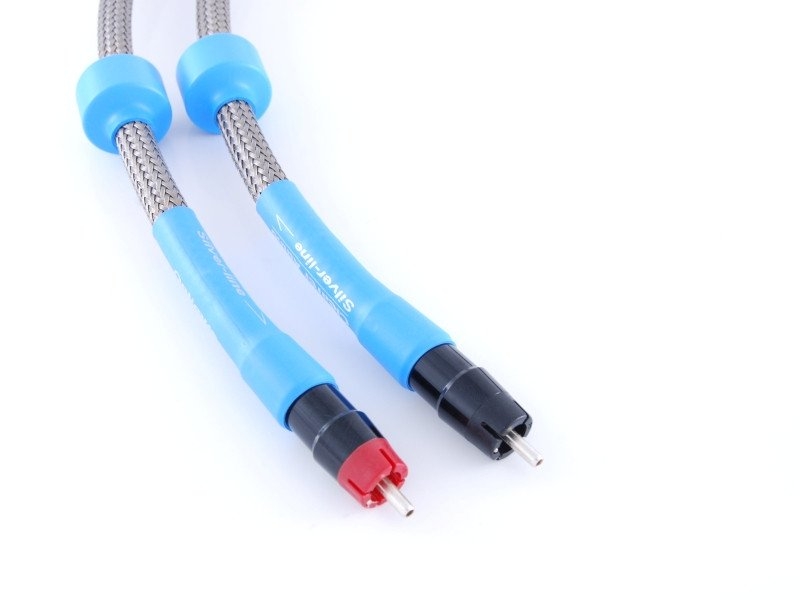
Clearer Audio Silver-line Optimus Reference interconnect cable

Optimus Reference does sound like something exploding from one of Michael Bay’s abysmal yet lucrative Transformers movies, but it’s the current flagship of Clearer Audio’s range, topping out the best-of-breed Silver-line group of pure silver and silver-plated copper cables from the brand.

A pseudo, quad-balanced design, Optimus Reference uses 99.9999% pure silver conductors throughout, all made using the Ohno Continuous Cast process more commonly found in pure copper rather than pure silver wire. The cable uses a hybrid of seven solid-cores in a concentric stranded geometry to form each conductor core. The conductors are then insulated in foamed polyethylene, chosen for its outstanding dissipation factor, low dielectric constant, and low capacitive effect (or permittivity). Only free air and Teflon come close to these features, but using air alone as an insulator is impractical and Teflon doesn’t sound as good, according to Clearer Audio.

The two send and two return conductors in each cable are twisted around a cotton filler rod to reduce inductance and RFI, and then the whole cable itself is shielded using a seven layer braid/foil arrangement of silver-plated copper and pure copper. Yet more RFI and other spurious noise is caught thanks to the ferrite rings at each end of the cable, coated in the distinctive electric blue found covering the strain relief of the Eichmann Bullet RCA plugs, a popular plug choice among audiophiles in the know about such things. Clearer Audio burns the cables in for 60 hours on an audiodharma Cable Cooker, but recommends an additional 50-100 hours of bedding in time in a system.

This is a cable full of vim and vigour. The sense of energy – especially in that open and expressive midrange – is impossible to ignore, and it Optimus Reference’s equivalent of its signature dish. But, the same applies to the treble and bass, too: it just takes you longer to parse these because the midband is so expressive and immediate. The clarity of the treble can be a test for some systems, as the cable doesn’t suffer high-frequency fools gladly; zingy metal dome tweeters and thin-sounding sources played through the Optimus Reference are left exposed, rather than politely overlooked. But when the system is well balanced, the Optimus Reference will reward you with the kind of purity of sound that is hard to ignore and impossible to live without once experienced first hand. It is good enough that it makes you think you upgraded source, amp, and speakers. What is really surprising here is the temporal precision: this cable has much of that ‘right’ note attack of Nordost’s best.

The name may be a bit of a mouthful, but Clearer Audio’s Silver-line Optimus Reference interconnect cable is one of the very best audio cables out there, regardless of cost. Highly recommended for well-sorted systems.

Price and contact details

Product: Clearer Audio Silver‑line Optimus Reference interconnect cable

Price: From £895/0.5m pair, £230 per additional 0.25m

Manufactured by: Clearer Audio Ltd

URL: www.cleareraudio.com

Tel: +44(0)1702 543981

Back to reviews

Read more Clearer Audio reviews here

APL DSD-S digital converter

Comparatively little known outside its native Bulgaria, APL Hi-Fi, Ltd has actually been around since 1988. The company’s chief designer, Alex Peychev, exploits his decades working in professional and broadcast electronics to create a comprehensive line of audio equipment, spanning digital front-ends, phono stages, amplifiers, and even loudspeakers. APL is also no stranger to either hollow or solid-state technology, with designs that include both valve and transistor devices.

We focused on APL’s digital side and the middle of three DACs made by the company: the DSD-S from the company’s ‘Illumi-Fi’ series. This is a more full-function converter than the USB only, 24/192 DAC-X (currently the only product in API’s ‘Hi-Fi’ range) but lacking the tube output stage and the considerably higher price of the ‘Illumi-Fi Reference’ DSD-M digital converter. I’ve not had chance to audition either of the other DACs in the APL range, but the smart money from those in the know is thet the DSD-S is in something of a sweet spot in the line.

This is a carriage-built design, truly boutique in outlook and handmade to order: an ambitious concept when it comes to making a DSD-based DAC, because that usually requires a lot of engineering teams. But that’s not the case here; it really is bespoke. Open the player up and you are met with six separate APL-designed PCBs: power supply filtration, power distribution, input block, digital conversion, output block, and display. The digital input block sports the popular XMOS transceiver for USB and some useful crystal clocking circuitry, but the real story on the inside is the use of some classic components inside both the DAC and output stages. The DAC itself is made up of a quartet of Cirrus Logic DSD-chummy chips that are no longer available.

This DAC is controlled by custom code written into an FPGA. Similarly, in the output stage board, the main output MOSFETs are the highly desirable – and long discontinued – Toshiba designs. These are some of the best sounding output devices ever made, and are still used today by companies like Constellation Audio because nothing made this millennia comes close. The board also sports two classic Lundahl coupling transformers, and the closer you get to the output stage, the more the PCBs move from surface mount devices to classic hand-soldered resistors, capacitors, and transistors. It’s not all pre-millennial technology though; alongside that USB input, there are special relay-controlled DC servos in the actual amp stage. Nevertheless, this is a DAC built by someone who knows his way around quality components.


Principally, however, APL is a company that has a terrific amount of skill in analogue audio design, while also knowing what goes into making a good DAC. This seems like a better way of making a good bespoke converter than the digital engineer who thinks analogue output stages are ‘easy’ and then botches the bit of the electronics that connects their masterwork to the outside world. However, the key element is being able to get both parts right. Peychev’s skills lie in building and modifying the output stages and key digital modules in classic CD and SACD players, as well as a great deal of work on analogue circuit design in all kinds of audio components. This is the true art of the bespoke maker in audio – not making a more expensive version of a standard product that can be purchased for less from mass-market rivals, but producing a pure artisan product that by its very nature is the produce of years of audio hot-rodding. The downside to this is sometimes the result is only pleasing to the designer and his immediate family, while the rest of the world beats a path to any other door. However, when they get it right – as is the case in Peychev’s APL products, based on this model – it can sound extremely good, and completely unlike anything else made in modern audio.

The audio press loves a good analogy, but will happily settle for a mediocre one. We are all keen to compare audio to bikes, cars, cameras, watches… basically any middle-aged adult-male plaything that doesn’t land the writer in jail or the divorce court. I am not one to break with tradition, but at least I can add a bit of a twist. So if I can liken the audio world to a 1980s Coming of Age movie – and I think I can – then many audio companies are like the decorative, yet vacuous cheerleader the protagonist spends the first reel lusting after at a distance. A few are the bookish, more intellectual and interesting love interest that is completely forgotten about until their makeover in the final reel. And that sums up the APL DSD-S: it’s Ally Sheedy at the end of The Breakfast Club.

Where I’m going with this rapidly self-destructing analogy is there are many products that deliver an immediate, yet ultimately unrewarding experience, but the ones that take time to divulge their inner beauty are the ones you want to spend the longest time listening to. And that perfectly describes the APL DSD-S. This is not a race through your music collection, this is a smooth, satisfying ramble around your musical tastes, and a ramble that sustains as well.

Sophistication seems to be a word that is fast falling out of fashion in the audio world. Instead, products look great and sound shiny, bright, and forward. The APL DSD-S resolutely refuses to play that game, instead making a sound that is as inviting as it is insightful and detailed. Moreover, rather than opting for the big and impressive soundstage, this DAC produces a tighter, more natural-sounding soundstage that sits in the room between the loudspeakers. This invites you to explore the elements of that soundstage, rather than let tingit wash over you. With big soundstages (Mahler’s Eighth Symphony, played by Solti and the Chicago SO on Decca), the soundstage is still large, but not exaggerated or over-extended. It’s just ‘right’ sounding.

Removing the bright, forward sound intrinsic to many digital devices today does an odd thing: it makes the music sound more detailed. There is a mistaken idea that bright sounding equipment is supposed to appear ‘detailed’, and the APL DAC exposes this as nonsense. It is extraordinarily detailed. I played Donny Hathaway’s cover of ‘Misty’ on his 1972 album Everything is Everything [Atco] – not necessarily one of my reviewing test discs, but a fine album featuring a brilliant, fractured man with the voice of an angel. I know this album backwards, and yet I was hearing subtle new sounds within the recording that can be heard on a good pressing of the record, but typically aren’t there on the digital file. The APL cut through all to make these spring to life. Brilliant!


All this being said, I don’t think the DAC is completely tonally neutral, as there is a slight bloom in the mid-bass. It’s hard to detect; it’s the sound of a tenor, only slightly more full and expressive. That’s not needed with someone like Domingo singing arias on Opern-Gala [DG], but fortunately the APL stays just the right side of ‘warming the sound up’ to make this seem over-rich. Think instead, ‘consistently musically delightful’, which is what the APL is (and does).

The APL DSD-S isn’t for everyone, so deep runs the clarion call of forward sounding electronics and a bright sound. However, if you are seeking the mature and sophisticated digital choice, rather than the immediate gratification of some players, I urge you to try the APL DSD-S. In fact, try it for a few days and then switch back. If your digital files now sound ‘thin’ and ‘forward’, the DSD-S has you in its sights. Recommended if you are willing to nurture your musical experience!

TECHNICAL SPECIFICATIONS

  • Type: Digital to analogue converter
  • Digital Inputs: Two S/PDIF Coaxial digital inputs with WBT RCA connectors. One Toslink S/PDIF connection. AES/EBU professional standard balanced digital input. USB B. Proprietary DTR input for APL digital transport.
  • Analogue Outputs: 2× single-ended WBT RCA sockets
  • Output impedance: approx. 15Ω
  • Digital formats supported: (S/PDIF) PCM up to 24-bit, 192kHz. (USB and DTR) PCM up to 32-bit, 384kHz, DSD64 and DSD128. All PCM formats upsampled to DSD64 or DSD128, user selectable
  • Attenuation: Analogue, in 0.5dB steps
  • Frequency response: not specified
  • THD+N: not specified
  • Signal to noise ratio: not specified
  • Dimensions (W×D×H): 45×28×11cm
  • Weight: 8.5kg
  • Price: £6,500

Manufactured by: APL Hi-Fi, Ltd

URL: www.aplhifi.com

Distributed in the UK by: Epicurean Audio

URL: www.epicureanaudio.com

Tel: +44(0)780 556 7630

Back to reviews

Read more APL Hi-Fi reviews here

Dan D’Agostino Master Audio Systems Momentum Integrated amplifier

The Dan D’Agostino Master Audio Systems Momentum Integrated amplifier is effectively two boxes in one. The lower, base chassis doubles up as the power supply, and a short, green, braided, four-pin connector cable connects this to the main amplifier stage. The amplifier itself sits on this baseboard supply using four sharp screw-in spikes. And the reason for the bluff introduction instead of some florid prose is because the amplifier is so powerfully built it needs no such flummery. It’s a ‘get on with it’ amplifier. So we will!

There are six colour-coded inputs (both as push-buttons on the front panel, and replicated on the unique round remote control handset) and these are all balanced inputs, fed by a central sextet of XLRs inset into the centre of the rear panel. It also features fully defeatable bass and treble controls. There is also a rear mounted headphone jack alongside the solid multi-way speaker terminals (not WBTs, as anything plastic-jacketed is just not ‘deep time’ enough for the D’Agostino). There’s even an RS232 port and a mini-jack for the well-machined IR extender supplied in the box. Although ‘box’ actually means ‘velvet-lined aluminium flight case complete with rolling luggage wheels and handle’ – it’s that kind of product.

We’re dancing round the subject here. It’s the look and the build quality that makes the biggest impression. In silver or black (as per the review sample) with those contrasting copper heatsink bands, this product is machined to look the part. It’s fearsomely heavy for a relatively small box (54.4kg for the two boxes) and runs very warm, but you won’t care. This is one of the most distinctive and powerfully designed amplifiers out there. The green glowing central volume display (inspired by watchmaker Breuget) is a talking point, as is the volume control wheel that flanks this display. This dial supposedly took an age for D’Agostino to get right, but it immediately pays off in ‘engineered quality’ the first time you use it.

Beneath the elegant casework, the amplifier is a discreet, fully balanced very wide bandwidth Class AB design delivering a healthy 200W into eight ohms that perfectly doubles its load to 400W into four ohms and again, delivering 800W into two ohms. This is a useful indicator of the amplifier’s power supply design, as a less ‘stiff’ power supply will never be able to double its power into the lower impedance load. This also helps it to drive tougher loudspeaker loads without effort. Our sample arrived with many miles on the clock, so any questions about running in began and ended long before we took delivery. As a consequence, the Momentum Integrated sounded excellent as soon as we recovered from lifting it out of the case, although a true running in phase may be required.


We had at first intended to review the M-Life – the variant of the Momentum that includes a streamer in place of the tone controls – but events conspired against us (D’Agostino can’t make them fast enough, apparently). But the Momentum Integrated also opens up a new line of ‘system curation’ in the wake of distributor Absolute Sounds taking on UK digital experts dCS because the combination of D’Agostino amplification and dCS sources is an internationally popular mix. This is also a good choice because the balanced output of any of the three current dCS digital sources makes a lot more sense than trying to turn a single-ended source pseudo-balanced. Factor in a pair of Wilson Audio loudspeakers and runs of Transparent Audio (plus some Stillpoints equipment supports and a few Tube Traps) and you have a turn-key high-end system that will take on anything the rest of the high-end world can throw at it.

The ‘take on everything’ factor is perhaps the most obvious and immediate fix on the Momentum integrated’s performance: absolute authority. The amplifier’s other sonic benefits (and there are many) resolve out over the first few hours spent in its company, but that first impression is of an amplifier in complete control of its environment. It combines the fast-twitch reading of the audio terrain like a fighter pilot and the ‘the skies are mine’ confidence of the admiral of an aircraft carrier fleet. The result is an amplifier that has no challengers, except for more of the same from D’Agostino’s own preamp and power amplifiers. Even if ultimately you take a different audio direction, you cannot help be a little in awe of that confidence and sheer control over the proceedings the Momentum integrated displays.

This confidence is most notable in the bass, where the D’Agostino has the perfect combination of power, precision, and performance. You could add ‘punch’ there too, because that almost visceral gut-punching force really hits home in the bass making your loudspeakers sound deeper and more powerful than you expected. This isn’t just for dub bass lines or thundering cannons (although it certainly helps make bass-oriented elements take on an authenticity and energy that is refreshing). In fact, it’s the more surprising bass textures, like the way Sam Jones’ upright bass just hangs in the room like the real deal on ‘Love For Sale’ on the classic Cannonball Adderley album Somethin’ Else [Blue Note]. Every pluck of the strings, every finger squeal as he moves around the neck, the precision of his playing is brought perfectly to the fore. This is an album I know backwards, and have used it as a test recording for listening for years. I know the shape and texture of that walking bass line extremely well, and I know how it sounds through tightly controlled amplifiers and amps. Regardless, the D’Agostino Momentum shows new insights.

For all the Momentum’s power, control, and deep bass, D’Agostino also gave this amplifier the kind of temporal precision one might expect of a small, fast British amplifier. Viewing this with a kind of mid-Atlantic balance, the American’s Fear of Timing meets the Englishman’s Fear of the Watt, and often the criticism levelled at more powerful amplifiers is they don’t have the quicksilver temporal precision of a fast-paced sub-100 watter. When you hear what the Momentum Integrated can do with a beat, you realise this temporal precision has nothing to do with power output, but a lot to do with good amplifier design. One of the best recordings to highlight this is one of the worst recordings I have: ‘Addis Black Widow’ by Mulatu Astatke & the Heliocentrics from their Inspiration Information Vol 3 album [Strut]. This Ethopian-based slice of ethno-jazz funk is all about the drumming, featuring some of the most out the pocket and off the wall rhythms you will hear. Think that rhythmically lazy but actually ‘inside the song’ drumming of a young Ringo Star, but seemingly with six arms and four feet. On an amplifier that plays music simply for the size of the soundstage or the precision of the detail, this track sounds like someone is throwing a drum kit down a very long flight of stairs. On the D’Agostino, however, you get a sense of rhythm just kept together to give the track a malevolent undercurrent: precisely what it should be doing.

Couple this ability to tease out the most complex rhythms well with the sheer amount of detail, the precision of the dynamic range (both in resolving small changes within a passage of music, and dealing with those more broad dynamic brushstrokes you get with Bruckner or Mahler), the functionally perfect sense of coherence that makes a string quartet seem almost psychic, and the ‘wide, high, and deep as the record permits’ soundstaging properties, and the D’Agostino is something really special.


We mentioned the M-Life earlier, but having used the Momentum Integrated for some time, I’d actually find it hard to lose the tone controls, because they are possibly more useful than ever. They help tailor the sound of modern recordings, taking some of the edge off bright recordings and a bit of bass boost can help flesh out some of those ‘Mastered for iTunes’ bass-light albums.

The D’Agostino Momentum Integrated is one of those rare products that stands out even among highly-respected rivals. It’s one of those designs where the only thing better than the Momentum is more Momentum; a move to separate preamp and mono amps – even the pre and stereo amp might be a bit of a sideways move rather than a leap forward. If you are looking for what is quite simply the best integrated amplifier out there – and have the shelves to take it – the Momentum Integrated is the heavyweight champion. Very highly recommended!

TECHNICAL SPECIFICATIONS

  • Type: Integrated balanced operation amplifier
  • Inputs: six XLR only, RS232 port, 3.5mm jack for IR extender (supplied)
  • Outputs: five-way loudspeaker terminals, rear-mounted ¼” TRS headphone jack
  • Power Output: 200W per channel into 8Ω, 400W per channel into 4Ω, 800W per channel into 2Ω
  • Frequency Response: 0.1Hz-1MHz, -1dB, 20Hz-20kHz ±0dB
  • Distortion (full output): < 0.1%, 20Hz-20kHz
  • Signal to Noise ratio: -95dB, unweighted
  • Power consumption at standby: 20W
  • Finishes: Silver and black
  • Dimensions (H×W×D): 10.9×45.7×40.6cm (amplifier), 10.2×45.7×40.6cm (PSU, base)
  • Weight: 54.4kg
  • Price: £45,000

Manufactured by: D’Agostino LLC

URL: www.dandagostino.com

Distributed in the UK by: Absolute Sounds

URL: www.absolutesounds.com

Tel: +44(0)20 8971 3909

Back to reviews

Read more Dan D’Agostino reviews here

T+A Elektroakustik AMP 8 power amplifier

T+A’s awesome HV electronics are mighty beasts, but like most might beasts in audio, they are not exactly ‘cheap’. You do get your money’s worth with the HV series amplifiers, but you still need a lot of money in the first place. In an ideal world, there would be an amplifier that uses a lot of what makes those HV amplifiers so good, at a more affordable level, and that’s precisely where the AMP 8 comes in.

The AMP 8 is part of T+A’s two-strong smaller form factor products, the other component being the DAC 8. It’s logical to think of the two as a pairing, with the DAC 8 as processor and digital preamp hub and the AMP 8 as ‘just’ the power amplifier. Which is why we broke them apart like this. The AMP 8 is pretty far removed from being ‘just’ a power amplifier, and its small case and top line 2× 80W into eight ohms, 110W into four ohms specification might easily make it an afterthought in any review of the pairing. In fact, what the AMP 8 does is provide the perfect ‘straight wire with gain’ style power amplifier for any sophisticated system builder who is not keen on spending tens of thousands on a stereo power amp.

The overall circuit design of the AMP 8 is very similar to the German company’s PA 3000 HV integrated amplifier, in that the input and voltage amplifier stages operate at much higher voltage potentials than usually found in domestic amplifiers. In the case of the AMP 8, the input stage is a cross-coupled J-FET cascode amplifier, while the voltage amplifier stage is a single-ended Class A FET cascode amplifier, of a design first thought up by Dr Malcolm Hawksford, Emeritus Professor of Engineering at the University of Essex. In a high-voltage amp design like this, the output stage is responsible for current amplification, and the AMP 8 sports high performance ‘ThermalTrak’ audio-specific transistors designed for bias point stability and freedom from inertia effects.

Another T+A innovation, the voltage and current amplifier stages are completely separated from one another, even to the point of not sharing the same power supply. This is more than just electronics overkill, it prevents any feedback from the loudspeakers affecting the more sensitive and sonically vital voltage amplifiers. This circuit design is known as an Isolated Current Amplifier (ICA) circuit and has been used by the brand for several years, and was first seen in its R-Series. This inherent isolation of individual stages makes for an amplifier with low circuit track inductance, and a design that doesn’t need high levels of global negative feedback to create a linear, wide bandwidth amplifier, and this is evidenced by the AMP 8 having a bandwidth of more than 200kHz.

The amplifier features an over-specified, low-field leakage toroidal transformer, claimed to generate up to 400W and this, coupled with a large local capacitive reservoir across the output stage acting as buffer, means this relatively small amplifier can deliver a surprisingly powerful sound to surprisingly difficult loudspeaker loads. Naturally, the T+A bristles with high-grade electronics components including non-magnetic Vishay resistors and high quality WIMA and ELNA audio-grade capacitors. There is also a down-firing case fan, which remains silent until needed under duress and even then runs slow and quiet enough for it not to be troublesome for listeners.


In a way, despite the fact the AMP 8 costs about one-seventh the cost of the HV designs, there is a lot of HV gene pool inside this amp. The way it keeps the costs down is more to do with simplifying the design rather than significant compromise, so the AMP 8 places the entire amplifier circuit on a single board instead of the mother/daughter board layout in more upscale designs. Yes, in absolute terms this does slightly compromise ultimate performance, but you would need to be up at the HT level even to hear such compromises, so this is an entirely relevant way of keeping costs down.

The AMP 8 is signal sensing, and very quick to sense a signal, too. So it will sit there perfectly contented until something electrical comes down the phono cables and will then spring to life almost instantly. Unless you are determined to hear that abrupt first opening drumbeat of REM’s ‘It’s the End of the World As We Know It’, the AMP 8 will spring to life. It’s sensitive enough to wake up even at the turn of a passive preamplifier, and this combination is something well worth considering. It will power down after 20 seconds of no signal. There are also options for triggering the AMP 8 using an external trigger voltage, or – obviously – the DAC 8.

The amp is small and purposeful looking, yet has provision for both XLR and RCA inputs (don’t be ‘clever’ and use both inputs to try and make one amp serve two masters – the auto-sensing circuit doesn’t take kindly to cheaters) and has a set of very nice WBT style five-way speaker terminals as standard. From the front, though, it’s just three LEDs denoting power on status, play mode, and whether the speakers are receiving signal – a blinking LED at this point denotes either short amp warm up or something darker at play. In fairness, though, this is possibly one of the most unburstable amplifiers out there, so the blinking LED is invariably gain stages warming up for a few seconds.

I’m drawn to the inevitable comparison with classic Quad power amps like the 303. The AMP 8 is a lot more powerful of course, but it has the same intrinsically ‘right’ sound and build quality that keeps the 303 in circulation and still commanding fair prices when they come up for sale. In Quad speak, both amplifiers are attempts at that notional ideal of a ‘straight wire with gain’ although maybe the Hippocratic Oath is more accurate: ‘first, do no harm’. This is exactly what you want from a power amplifier – sources, preamps, loudspeakers, even cables can add a flavour to the sound quality of a system, but a power amplifier should do nothing more than amplify. Of course this is an oversimplification, and if this were the beginning and end of the amplifier quest then valve amps would disappear overnight. But, notionally at least, the power amplifier should influence the sound less than other devices, and this is what the AMP 8 does so well.

An amplifier that does nothing and does it right is not the stuff of exciting reviews, because it’s like writing about the different tastes of spring water. But there are aspects of amplifier performance where many fall short and the AMP 8 shows their limitations. Dynamic range is one of the most noticeable improvements the AMP 8 has over many of its rivals. The amplifier simply has better dynamics than its rivals. Not heaps better, and there’s no sense of ‘inky blackness’ and lowered noise floors. It’s just that, in playing Shostakovich’s Fifth Symphony [Haitink, Concertgebouw Orchestra, Decca], the sense of high drama in the opening bars is played more to the limit.


This track also highlights the excellent transient response of the AMP 8. Shostakovich is not something to be taken lightly and any diminishing of the force of the orchestra, whether in terms of leading edge attack or the weight of the playing, undermines the intensity of the piece. The AMP 8 – in the context of an excellent and matching system – retained this energy and the fast attack and decay needed to cope with an orchestra at full stretch made this a welcome addition to the home system. In all other aspects, that ‘first, do no harm’ approach pays off, because in all other perspectives the amplifier is simply doing its job without exaggeration or diminution. This is a good amplifier!

You need to make a considered buying decision when thinking of the T+A AMP 8 as your next power amplifier. Many use a paper-thin excuse of the amplifier ‘getting on in years’ to spark the search for a new amplifier every four or five years. This isn’t that sort of amplifier. It’s built to last and last, and that excuse simply won’t wash. If you buy this amplifier, it’s a decade long commitment to a design that will not age, falter, materially change, or in any other way fall to bits for the next two dozen years at least. To me, that’s a highly attractive prospect, but I know people who change equipment with the seasons and they will find this unbreakable nature challenges their decision making process. Recommended for the long game!

TECHNICAL SPECIFICATIONS

  • Type: Solid-state stereo power amplifier
  • Inputs: 2× XLR balanced, 2× RCA single‑ended line inputs, optical ‘CTRL’ input for electrical triggering for DAC 8 use
  • Outputs: 2× five way speaker terminals
  • Power output: 80W per channel (8Ω), 110W per channel (4Ω)
  • Frequency Response: 1Hz-200kHz
  • Slew rate: 60V/µS
  • Damping factor: >170
  • Signal to noise ratio: >103dB
  • Distortion: < 0.009%
  • Dimensions (W×H×D): 27×9.5×27cm
  • Weight: 7kg
  • Price: £1,632

Manufactured by: T+A Elektroakustik

URL: www.ta-hifi.de

Distributed in the UK by: Kog Audio Ltd

URL: www.kogaudio.com

Tel: +44 (0)24 7722 0650

Back to reviews

Read more T+A Elektroakustik reviews here

WIN! Prism Sound Callia headphone DAC preamplifier worth £1,794!

We have collaborated with the smart people from Cambridgeshire professional digital experts Prism Sound to give one lucky winner the chance to win a fantastic Callia headphone DAC preamplifier.

Alan Sircom reviewed the Callia in issue 139 of Hi-Fi+. He wrote, “In terms of technology, Prism goes with an ARM Cortex digital processor, but relies heavily on Prism Sound’s own circuit architecture and reclocking stages. The last is the deliciously named CleverClox hybrid phase-locked loop to act as clock recovery taken from either local or S/PDIF input.” He concluded the review with, “An honest, solid, and extremely accurate recommendation”.

Prism Sound have been building studio-grade A-D and D-A converters for more than 25 years and have built an enviable reputation for performance and technical excellence. Much of your favourite music and movie scores will have been recorded, mixed or mastered with Prism Sound professional A/D and D/A converters. Now with CALLIA, home users can enjoy true studio sound quality!

Here’s what Elton John’s producer Gus Dudgeon said about Prism Sound’s technology after the first remastering for CD of Elton’s “Goodbye Yellow Brick Road”:

“The very nature of analogue recordings being transferred to vinyl demanded major compromises. With (Prism Sound) digital sound these constraints are removed, and the recordings can be heard much closer to the reproduction we had originally intended.”

The outstanding Callia would normally cost £1,794 including VAT, but thanks to Prism Sound, here’s how you can win your next super headphone DAC preamplifier! 

Competition Question

What did Elton John’s producer say after remastering “Goodbye Yellow Brick Road” with Prism Sound technology?

A. “Phew!”

B. “Fabulous!”

C. “… the recordings can be heard much closer to the reproduction we had originally intended.”

To answer, please visit Prism Sound’s dedicated competition page at http://www.prismsound.com/hfpcomp Alternatively, send your answer on a postcard (including your name, address, and contact details) to HiFi Plus competition, Prism Sound, The Old School, 49 High Street, Stretham, Ely, Cambridgeshire, CB6 3LD, UK

Competition Rules

The competition will run from December 1st 2016 until February 2nd 2017. The competition is open to everyone, but multiple, automated or bulk entries will be disqualified. The winner will be chosen at random from all valid entries, will be contacted via email (where possible) and their name will be published in the magazine. The Editor’s decision is final and no correspondence will be entered into. No cash alternative will be offered. Absolute Multimedia (UK) Ltd. is compliant with the Data Protection Act and UK laws apply. Our policy is such that we will not pass on your details to any third party without your prior consent.