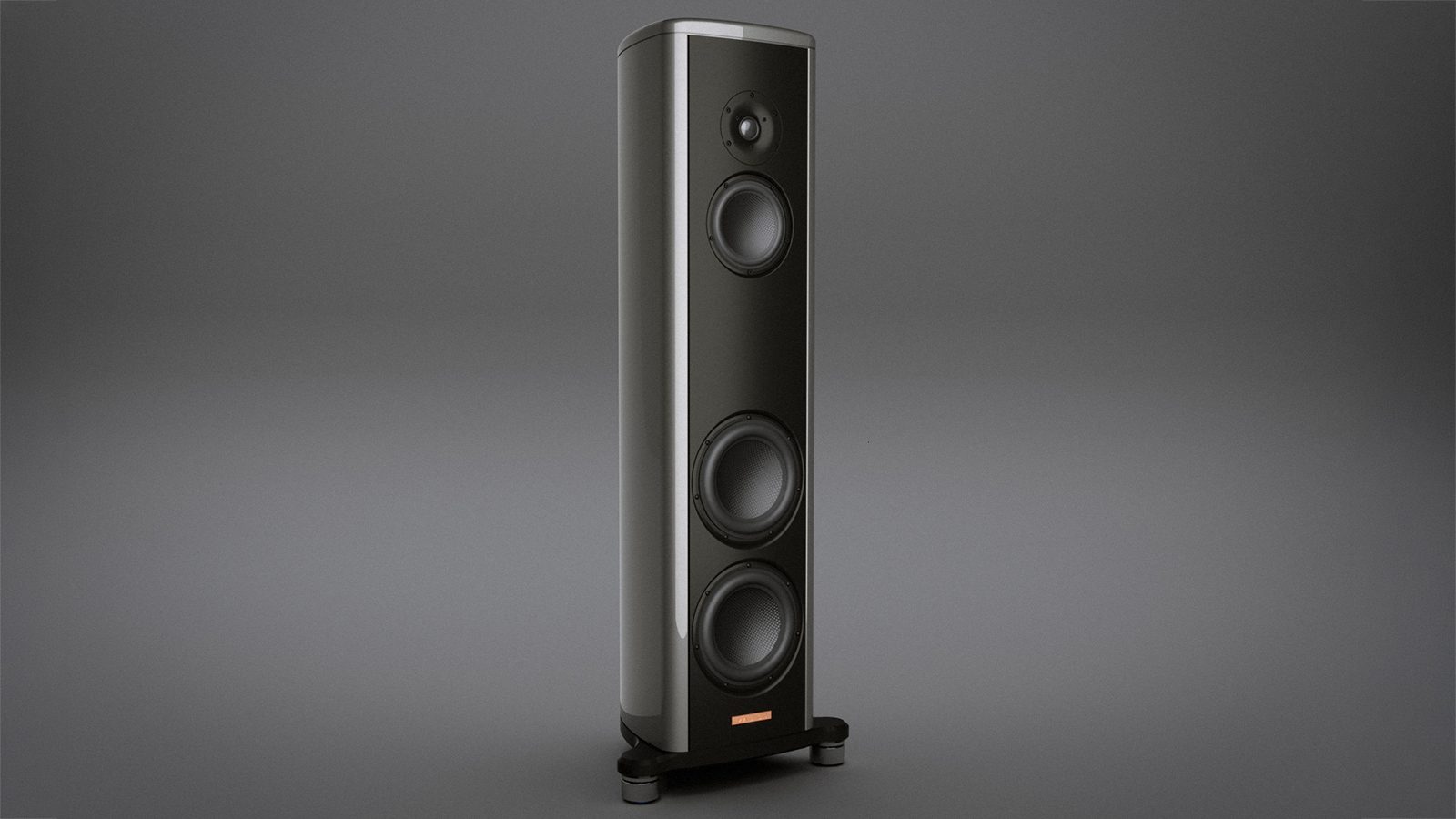
There are two conflicting forces in high-end audio, and neither is directly about price. On one side, you want to get the best possible performance from a system. On the other side, there is the room. The Magico S2 is one of the more elegant ways to address both challenges simultaneously. It’s one of – or perhaps even the – best high-end loudspeakers ever created for city-dwellers.
Some enthusiasts have no problems with trying to slam a quart into a pint pot. They often live in dense urban sprawls, where adding extra square footage to their listening space is physically impossible. Squeezing a full-range loudspeaker with its large footprint can look a little silly (it’s like being in the room with the world’s largest headphones, or the crazy guitar amp from the start of the first Back to the Future movie). It also works against good audio performance. Often, such full-range systems put far too much energy into smaller rooms, leading to uneven, often bass-heavy sound. In addition, few full-range loudspeakers are designed for the near field. This means that in a small to medium-sized room, the listener is always going to be too close to the loudspeaker’s front baffle to hear an integrated sound.
Size is important
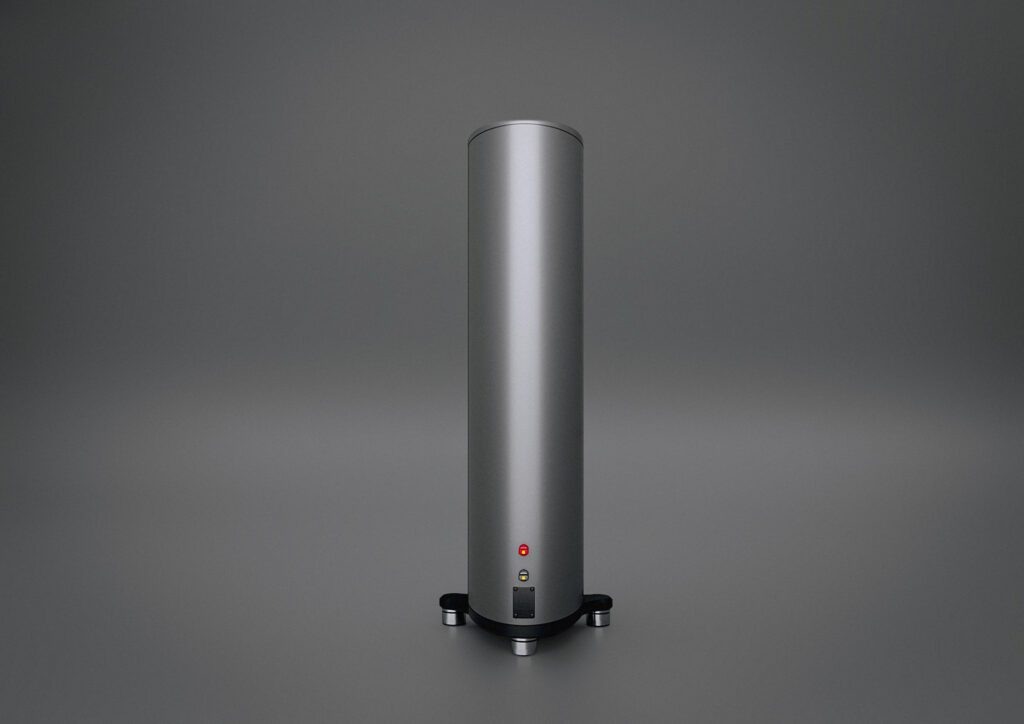
The Magico S2 addresses that problem head-on. Magico already had some significant real-world audiophile hits with the A Series. Still, in the S2, the intention is to make a loudspeaker worthy of carrying the S-Series name. Then, it was to build a three-way, four-driver sealed-box design with all the benefits it offers. Finally, it was to build a three-way S-Series Magico that has the physical properties that make it fit into real-world living spaces rather than giant ‘man caves’. That’s no simple task, but Magico got there.
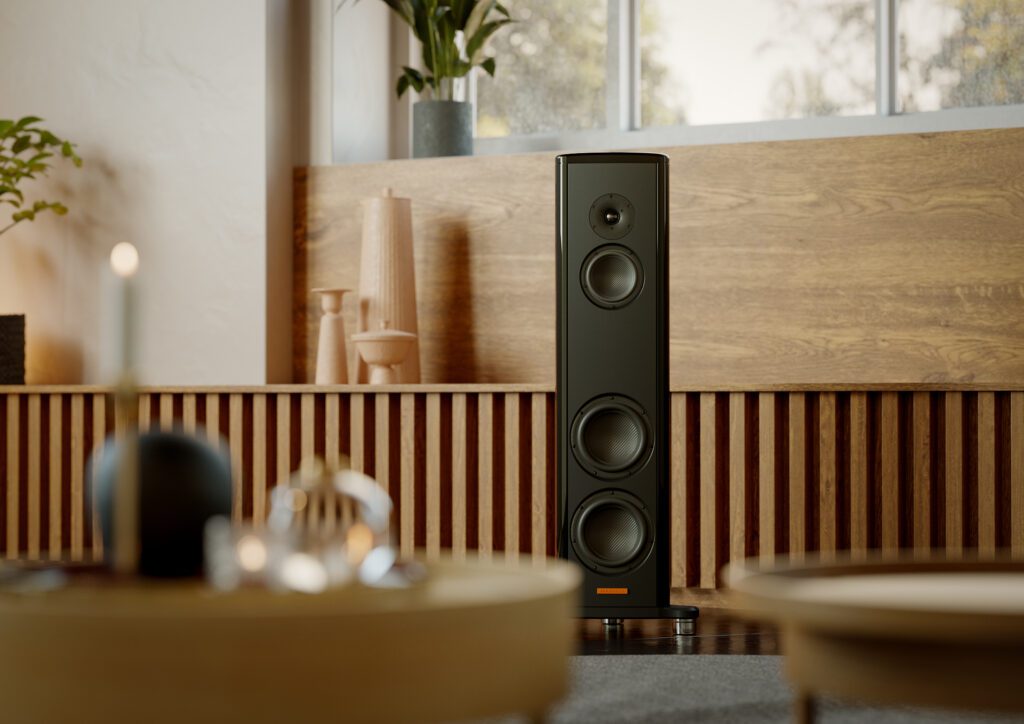
Unlike the recently radically reworked S3 and S5, the S2 has no predecessor to build upon. Magico started this project from scratch. Well… sort of. The parameters for a modern S-Series design – from the aluminium extrusion enclosure, through the drive units and crossover, right through to the choice of feet and finish – are all part of the design brief. That’s not a ‘constraint’; it’s like saying ‘here, take all the best things we can do and run with them!’
As above, so below
Yes, in Magico’s world, there is a whole M-Series above and beyond even the S-Series. There is an M2 three-way, four-driver floorstander in that range, too. But that loudspeaker has a larger footprint and increased low-frequency energy. That places it in slightly larger settings than those where the S2 works comfortably. As a result, irrespective of price, the S2 wins the whole size-to-performance ratio game. For those city-dweller rooms, that counts for a lot.
Usually, trying to scale down larger loudspeakers means compromise. That’s a word with absolutely no meaning to Magico. Every project goes through the same no-holds-barred research and development cycles, rather than ‘make it a bit smaller’. So, although extensive vibration measurements were conducted on S-Series cabinets, a Polytec Laser Vibrometer was used to measure the vibration of the S2’s cabinet panels during development, just in case the smaller dimensions changed the rules. The company also used the latest 3D simulation programs to address potential resonance issues early in the design process.
Difficult third album syndrome?
Often, by the time a company gets to the third model in a line, it’s assumed the simulations are functionally identical. So, resonance problems are ‘fixed in post.’ To use the inevitable car analogy (and I think it’s relevant, given there’s more aluminium in the S2 than most car engines), this is like precise panel beating in comparison to applying filler or Bondo. The result is the S2’s compact, extruded aluminium enclosure — which, like other S-Series models, is designed to minimise diffraction and maximise strength.
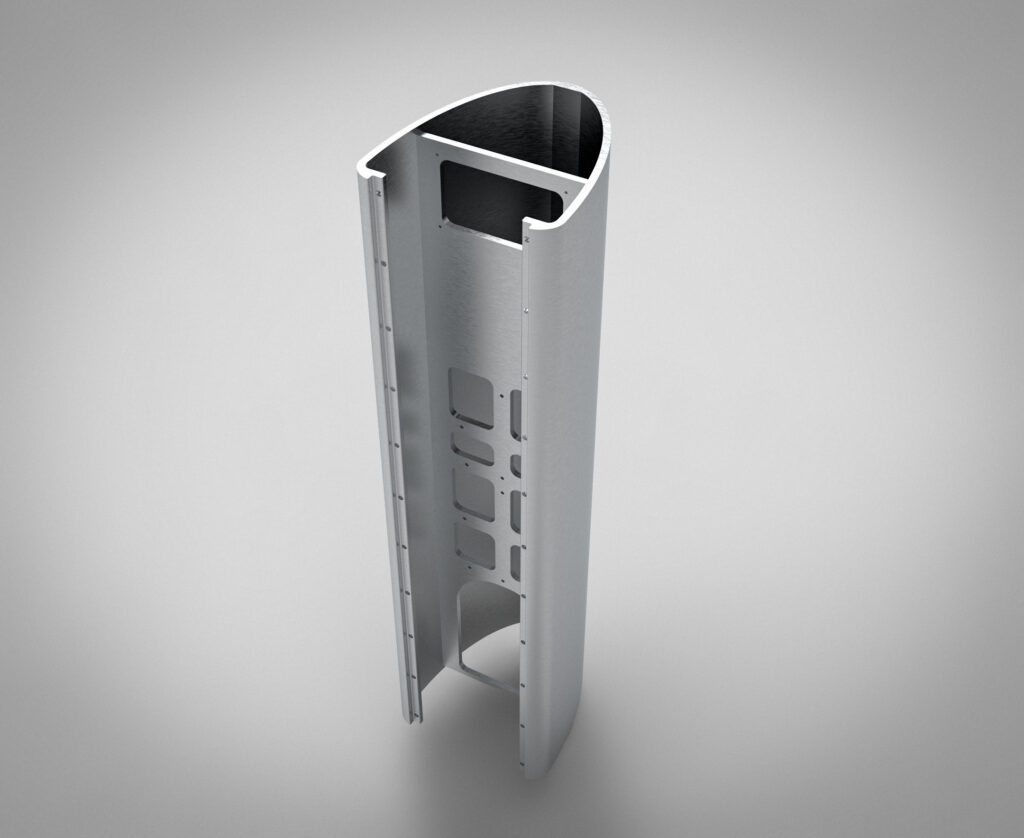
In developing the S2, Magico ended up building the enclosure around the largest single-piece aluminium extrusion it has ever produced. It features a full-length vertical brace as an integral part of the extruded cabinet. Whether the S2 is the theoretical limits of single-piece extrusion, or previews the next generation of even stiffer cabinets, only time – and a considerable amount of research – will tell. That’s not to say the bigger models in the S-Series have less rigid and stiffer cabinets than the S2 (they don’t: they are among the most rigid enclosures Magico has ever built). Still, that single-piece extrusion is as impressive from a manufacturing sense as it is stiff.
The cabinet is also subject to Magico’s comprehensive optimal damping strategies. Many loudspeaker makers – including some surprisingly high-end brands – consider ‘stuffing the box with wadding’ to be a damping strategy. Magico takes internal damping seriously. That being said, Magico takes everything seriously. Regardless, the net result is that the enclosure is designed to contribute as little as possible to the sound.
Taking drivers seriously
Just as the enclosure receives due diligence in Magico’s uncompromising approach to loudspeaker design, so too does the company take its drivers seriously. Once again, it would be very easy to assume the parameters that apply to the larger S-Series models also work in the S2, but like ‘compromise’, ‘assume’ has no meaning in Magico’s lexicon. Once again, Magico’s tireless engineering team dedicated many, many hours to research and development to deliver the drivers that power the S2. Some of this is ensuring a driver from elsewhere in the range is the perfect fit for the S2, and some of it is all new technology. The S2 is another example of these efforts.
When the drivers and crossover were close to ideal, Magico deployed its high-precision Klippel Near-Field Scanner. This optimises the acoustic output of the S2’s four drive units by measuring the 3D sphere around the speaker. This provided Magico with data to further refine the performance, creating excellent driver-to-driver coherence and near-perfect acoustic performance both on- and off-axis. This $160,000 scanner was a key part of Magico’s recent heavy investment in R&D. Of course, as with any measurement protocol, the results and the findings that derive from them are only as good as the people running the test and interpreting the results. But, with people like CTO Yair Tammam, Magico has got that covered too.
Very metal!
The S2’s sophisticated 28mm tweeter is based on the flagship M9’s and uses a diamond-coated beryllium diaphragm with a neodymium-based motor system. This low-distortion driver features across the new S-Series models and reaches up to 50kHz.<p>Like the S3 and S5 before it, the S2 benefits from the Gen 8 Nano-Tec driver cone, which features an aluminium-honeycomb core sandwiched between graphene-reinforced carbon-fibre skins. The cone’s core structure—possible only with recently developed manufacturing techniques—enables lower thickness, lighter weight, and more effective damping. This might have taken three years to build, but ‘Gen 8’ has resulted in an even lower distortion driver than the already super-low distortion from previous iterations.
The S2’s 130mm midrange was first used in the S3. This unit has a Gen 8 Nano-Tec cone and is housed in a third-generation chassis. This chassis improves force distribution, enables a better suspension design, and supports a dual-post configuration that balances dynamic tensile wire forces. It also has a notionally ideal balance of stiffness and damping, minimises acoustic contribution by reducing modes, and maximises airflow.
Two magnets
This midrange uses a neodymium-based motor system with two large magnets to create a highly stable magnetic field within a 16mm air gap. It uses a full-copper cap and a pure-titanium 75mm voice coil, but without the usual fibreglass tape, which Magico suggests creates uncalled-for damping.
In the S2, Magico introduced the first 180mm bass driver to feature this Gen 8 Nano-Tec development. Like the midrange unit, it also uses a 75mm voice coil and a third-generation chassis. A single driver would be sufficient, but two deliver undistorted low frequencies with a maximum SPL of 109dB at 55Hz measured at 1 metre, thanks in part to the S2’s three-way 24dB per octave Elliptical Symmetry Crossover (ESXO).
As with other models in the S-Series, the S2 employs a full range of cutting-edge components from Mundorf of Germany, including M-Resist Ultra foil resistors, which offer greater power handling, enhanced transparency, and more sonic fluidity than p
revious parts. Even the three-footer support system uses constrained-layer damping and premium materials for better sonic performance.
Commonly used words
Some commonly used words appeared in the notebook when listening to S2. ‘Clean’, ‘undistorted’, ‘accurate’, ‘correct-sounding’ kept springing up on every piece of music I listened to through the S2S. Given the name, if there is ‘magic’ in the music, it comes from the music itself, not the S2’s imprint on the sound. It gets out of the way of the music far better than most.
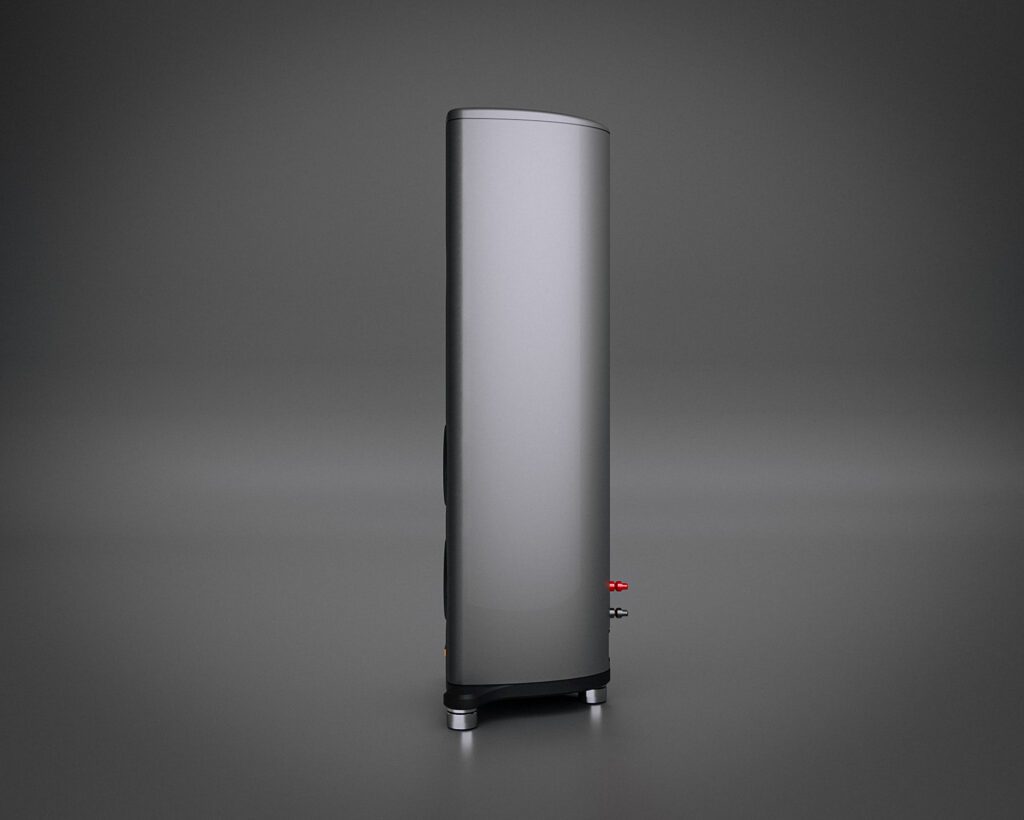
That sounds like it should make for a difficult product to discuss; it’s setting benchmarks at a very high level, akin to bigger S-Series and even M-Series models. But in fact, it’s easy. It’s how that opening paragraph suggested; this is the ultimate high-end sound for real-world rooms. The loudspeaker’s footprint is small enough not to look out of place in even the smallest room (well, almost… I knew of someone who tried to squeeze a pair of large floorstanders in a room that was 6’ x 6’. It didn’t go well), and its sealed, resonance-free cabinet helps.
Exceptional
Bass and dynamics are exceptional for what, by high-end standards, is a medium-sized floorstander. Rachmaninov’s Symphonic Dances [Zinman, Telarc] bounces along with pace and depth; the sudden dynamic swells almost make you jump out of your seat. Similarly, the bass depth is impressive, both in delivery and control. This last is key given the size and intention; a ‘flubby’ sounding bass will easily overdrive a small room, but the S2’s taut, focused delivery means even old-school dub (‘King Tubby Meets Rockers Uptown’ from the Yard album of the same name) is played with pace and power.
There’s also a sense of scale to both the soundstage and the instruments that adapts to the recording. This is a sure sign of the S2’s undistorted nature. It’s not a magnifying glass on jazz bands in small, smoky halls, nor does it shrink down a full orchestra. The S2 ‘right sizes’ recordings as they were laid down in the studio or concert hall. It’s a disappearing act.
Similarly, the overall coherence of S2 is first-rate. Music has a sense of integrity as a result. It’s easy to hear that almost supernatural interplay between the musicians on ‘Autumn Leaves’ [Cannonball Adderley, Somethin’ Else, Blue Note]. You also feel your blood pressure lowering fast when listening to Bill Evans’ ‘Peace Piece’ [Everybody Digs Bill Evans, Riverside]. Anything that can work on your autonomic nervous system that fast is more than just another loudspeaker!
Torn
Usually, when listening to a top-end loudspeaker, I’m torn between ‘audiophile’ sensibilities, ‘musical’ traits and ‘rhythmic’ properties. Most have a balance between the three, which is a polite way of saying ‘trade-off’. The audiophile-friendly loudspeaker is often musically adjacent at best and rhythmically challenged. Meanwhile, the musically adept loudspeaker usually doesn’t quite cut it in the soundstage or ‘microdynamics’ department. And so on. However, the S2 comes extremely close to covering all the bases. The ‘Pace, Rhythm and Timing’ element is perhaps the only short-fall. Even here, it’s in the ‘outstanding’ class rather than the ‘perfect’ category. I would also struggle to find a loudspeaker that scores an ‘outstanding’ in that category, which can also replicate the Magico S2’s musical integrity and transparency. In short, it’s a loudspeaker of balance and poise.
There’s only one point to note with the Magico S2. It might be a small loudspeaker by high-end standards, but it is a demanding one. Install it carefully, and feed it well, and it will reward you with fantastic sound. Skimp on the setup, especially the amplifier, and you might never know why I’m so impressed by this loudspeaker. In particular, it needs power; good, well-crafted power.
Bigly small
The Magico S2 is the most miniature high-end loudspeaker that still offers big sound. It represents the European high-end loudspeaker that Europe should have produced but never did. Perhaps more than any other loudspeaker in Magico’s S-line, this is the most significant high-end speaker in recent years. It genuinely combines the best features of Magico’s larger designs, making them suitable for smaller spaces. If you desire the best but live in a stylish apartment in New York, London, Paris, or Tokyo, the Magico S2 is ready to meet your needs. This is high-end audio for the next generation.
Technical specifications
- Configuration: 3-way, 4-driver floorstanding loudspeaker
- Drivers: 28mm pure-beryllium, diamond-coated diaphragm tweeter, 130mm midrange driver, 2x 180mm bass driver
- Sensitivity: 86.5dB
- Impedance: 4 ohms
- Frequency Response: 26Hz—50kHz
- Recommended power: 50W—300W
- Finish: 6x Softec, 6x high-gloss
- Dimensions (HxDxW): 110.4×34.5×39.5cm (with outriggers)
- Weight: 60kg
- Price: Softec finish £41,500 per pair; High Gloss finish £49,998 per pair
Manufacturer
Magico Loudspeakers LLC
UK distributor
Absolute Sounds
+44(0)208 971 3909
Trending Articles
See all
Acoustic Energy Corinium floorstanding loudspeaker
- Dec 23, 2024
Trending Articles

By Alan Sircom
More articles from this author
Read Next From Review
See all
Reiki Audio SuperSwitch X/Pro X PSU
- Oct 06, 2026

Audiobyte SuperVOX
- Oct 06, 2026
Unitra WSH-805
- Sep 29, 2026
Wilson Audio Sabrina V
- Sep 29, 2026