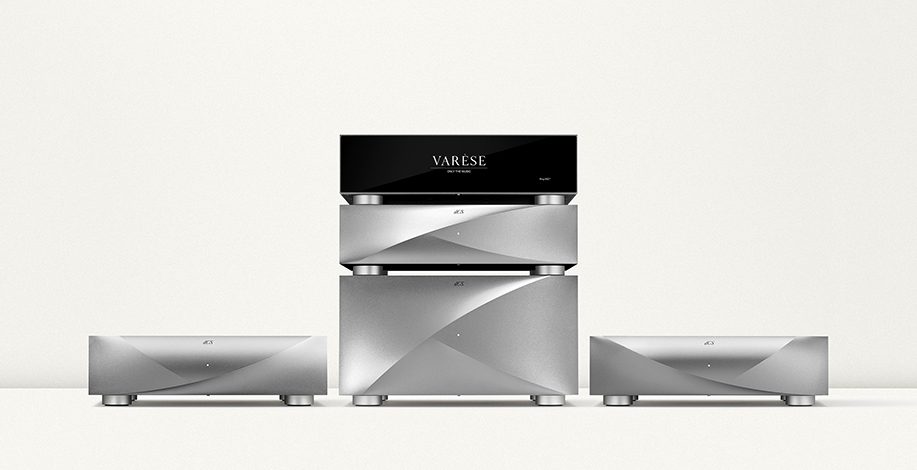
The Cambridge-based digital expert dCS names its products after noted classical composers. We’ve seen Scarlatti, Paganini, Puccini, Debussy, and even Elgar for those with long memories. Until the end of 2023, the current range included Bartók, Rossini, and Vivaldi (all now in APEX form). Then – in a break with tradition – Lina. And now there’s dCS Varése digital system at the absolute pinnacle of what the company can currently achieve.
Edgard Varèse differs slightly from the other composers that dCS uses in their nomenclature. He was been dubbed ‘the Father of Electronic Music.’ Moreover, Henry Miller described Varèse as “The stratospheric Colossus of Sound.” Why is that important? Because I don’t think I could sum up the dCS Varèse better than Henry Miller’s quote. It is a stratospheric Colossus of Sound. On the other hand, while Varèse might be a fitting name for dCS’s new range-topper, his music is best described as ‘hard work’. This is in stark contrast to the five-box system that carries his name.
One boxier
Five boxes? Isn’t the dCS Vivaldi APEX, with its four-box configuration, sufficient? Well, no. The dCS Varése digital system goes ‘one louder’ for a reason. That reason is to reconsider the fundamental workflow of a digital signal from first principles. Our traditional view of digital audio playback is a relatively linear progression from input to output. This is entirely understandable, as it stems from our conceptualisation of digital as an extension of the spinning disc. Data is extracted from the disc and subjected to error correction. The resulting datastream is then passed on to upsampling (if necessary) and to digital processing. From there, it heads to digital-to-analogue conversion, filtering, and subsequently to a set of analogue outputs. Aside from a few power supply and clock inputs, this forms a direct line from spinning the disc to the output.
Varèse reconsiders this from a conceptual ‘what if?’ perspective. What if the data didn’t require such extensive manipulation? What if, instead, the digital audio layout operated more like a client/server system? Or, what if devices such as the User Interface carried out their specialised tasks remotely? What if all the digital heavy lifting occurred within the same core device? What if a DAC could be just a DAC?
The dCS Varése digital system results from rethinking digital audio beyond conventional approaches. It emerges when conventions are set aside and a fresh start is made. Well, almost fresh; the Ring DAC, a crucial component of every dCS converter since the brand’s inception, remains present. However, even here, the boundaries are pushed.
Core values
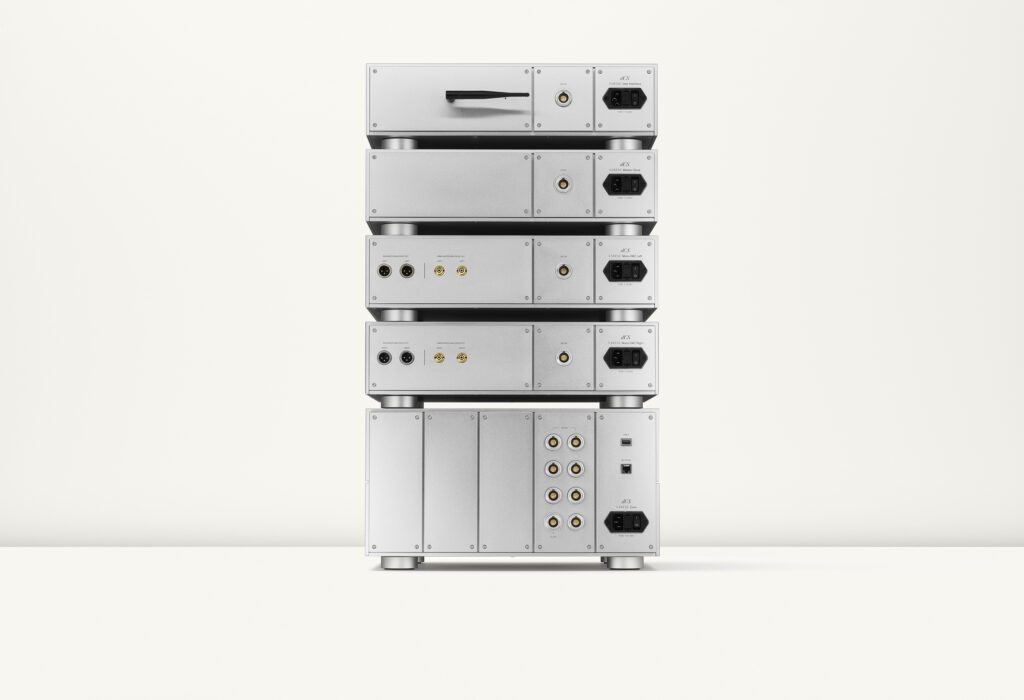
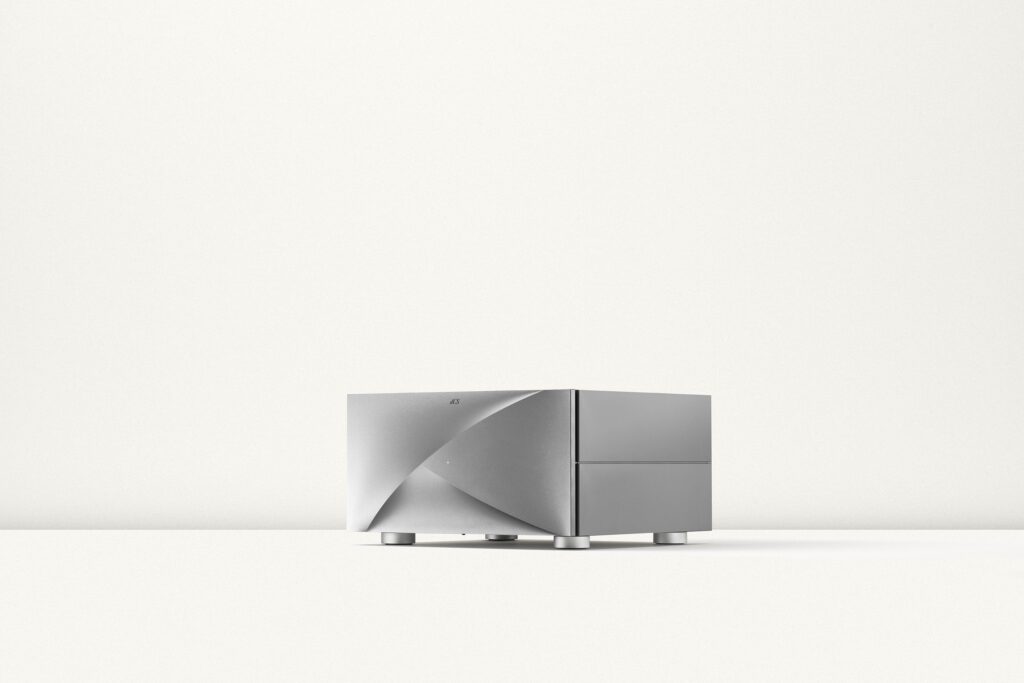
The largest of the five boxes is the Core. As the name suggests, it is also the centre of operations. This section is where files are imported, noise-shaped, filtered, and prepared for conversion and output. It features only an Ethernet and USB input as standard, alongside eight LEMO-equipped ACTUS cable connectors. For an additional £11,500, dCS will install an Input/Output module for those wishing to connect other sources. Furthermore, a Varèse-grade CD/SACD transport (which utilises ACTUS) was released after this review was originally published.
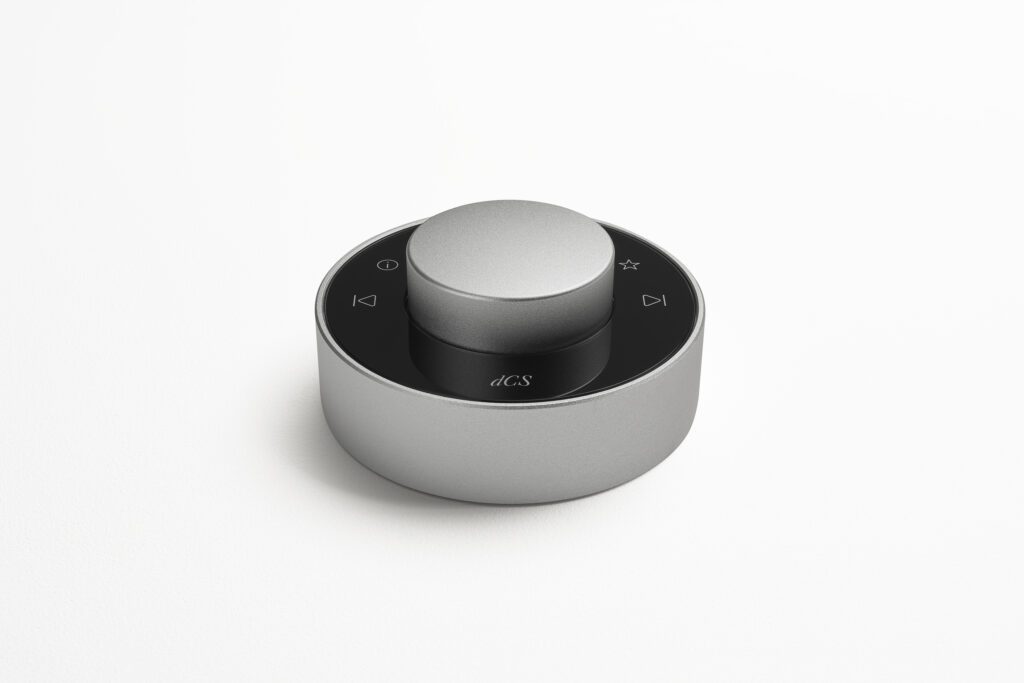
Core interacts with the external environment through the User Interface box, which boasts a configurable front panel display. This works in tandem with the Varèse Remote; a round, CNC-milled aluminium handset with capacitive glass hotkeys. These keys encircle a central dial that controls both track functions and volume. The device charges via USB-C and connects to the dCS Varèse through Bluetooth, with the aerial positioned at the rear of the User Interface.
Back to DAC
Varèse’s Mono DACs are the ultimate result of the most successful lockdown project in audio: the Ring DAC APEX. Most of us were learning not to bake sourdough bread or failing to learn a language during the COVID-19 lockdowns. At the same time, Chris Hales (dCS Director of Product Development) spent time re-evaluating the Ring DAC. This was itself the subject of many years of refinement.
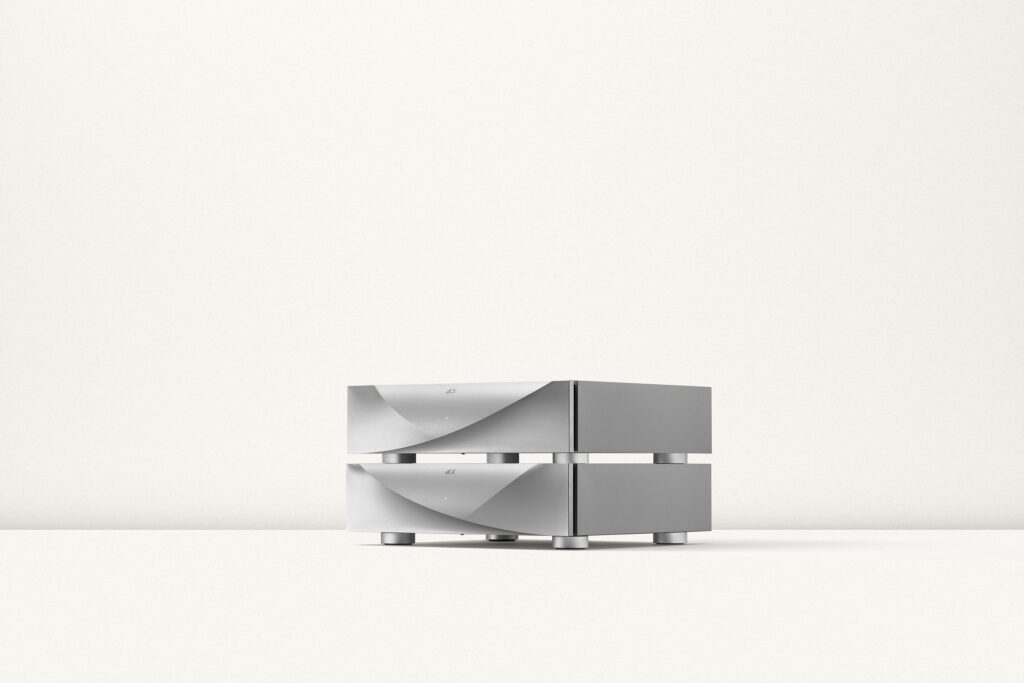
The developments that led to APEX in 2022 and transformed dCS’s existing line-up of digital converters also paved the way for the creation of a mono Differential Ring DAC. I mean, creating a Ring DAC with twice the current sources and operating in differential mode… surely that involves quite a bit of digital jiggery-pokery. No big deal? In fact, creating this Differential Ring DAC is quite challenging; it represents the single largest change to dCS’s central architecture in a generation and resembles the company’s Manhattan Project more than a leisurely weekend with the CAD/CAM package. However, were it not for that APEX lockdown project, ‘hard’ would likely have been ‘functionally impossible’.
Clocking on
As dCS pursued a monophonic DAC approach, it soon became clear that synchronising two DACs is a challenging task. To tackle this, the dCS Varèse incorporates a Master Clock featuring its innovative and patented dCS Tomix clocking technology. The company claims that this delivers “unrivalled jitter performance,” building on decades of dCS Master Clocks. During the development of Varèse, dCS found that “no existing technology allowed us to achieve perfect synchronicity when transmitting signals via IP link.” The Tomix-equipped Master Clock connects to the system through a single two-way ACTUS connection from Master Clock to Core.
We continue to refer to ACTUS because it is the proprietary connection infrastructure that links every aspect of Varèse together. The term is an acronym for ‘Audio Control Timing Unified System’. ACTUS connects each of the five components with a single, custom cable that terminates in multi-pin LEMO connectors. Given that the various digital cables between the four boxes of a dCS Vivaldi APEX have been known to exceed the cost of the hardware, transitioning to a single link between the devices is a welcome change.
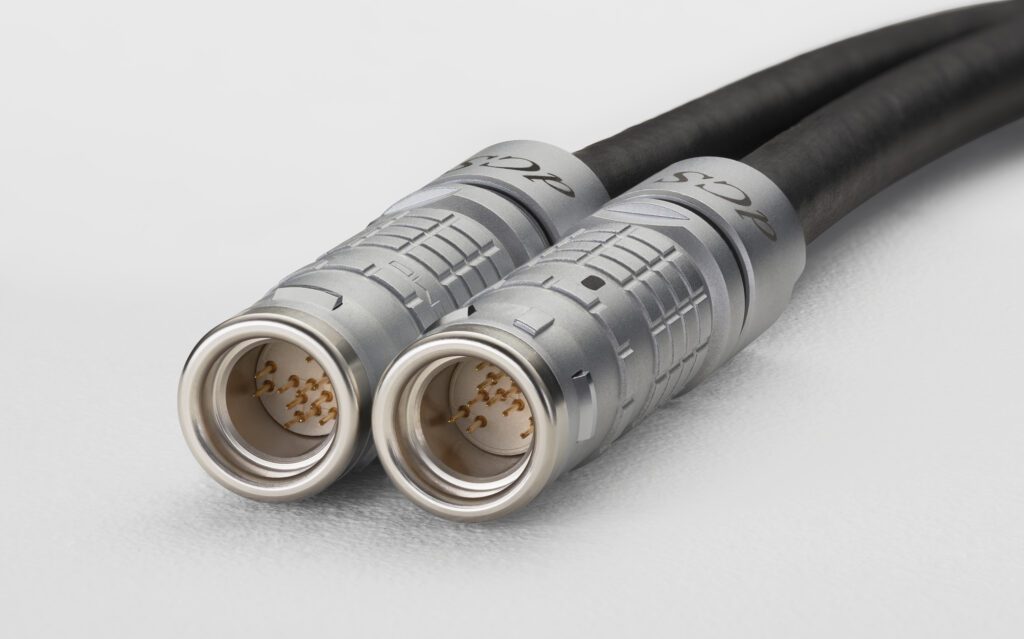
A high-quality power cord is still necessary for each box (ACTUS does not transfer power from one device to another). I also suspect that aftermarket ACTUS cables will soon emerge, but the era of complex wiring diagrams for the rear panels is over for Varèse. I’m confident this won’t be the last time we encounter ACTUS in a dCS system. Even dCS’s own Mosaic app receives a boost with Mosaic ACTUS, a variant currently unique to Varèse.
Remarkable
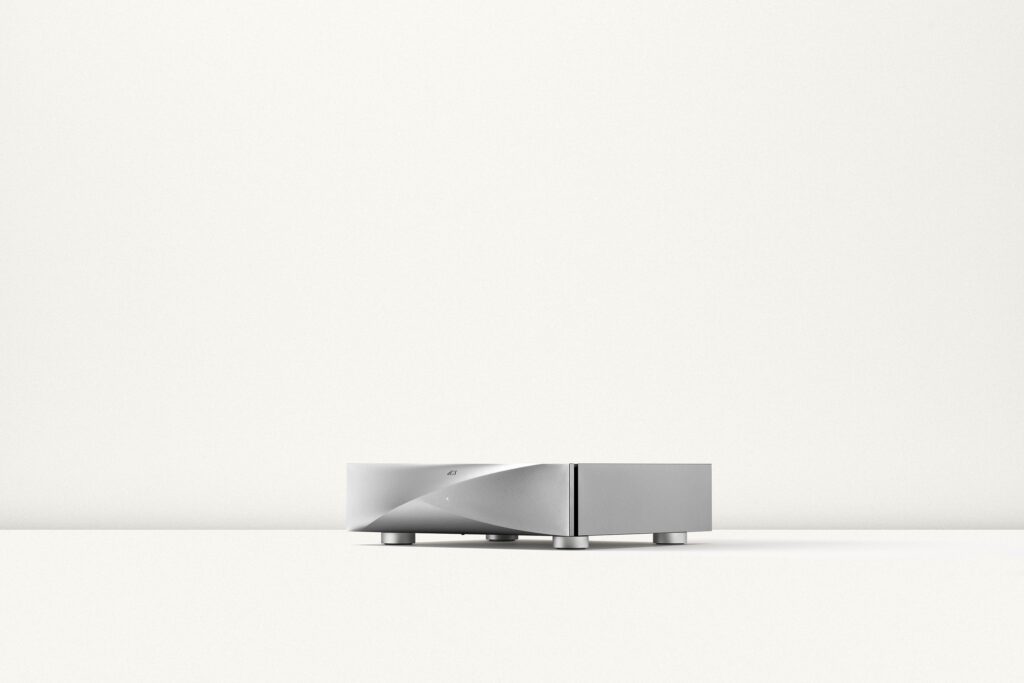
When it comes to industrial design, dCS has certainly achieved something remarkable here. The dCS Varése digital system reflects many of the design elements seen in the Vivaldi and Rossini APEX, featuring a User Interface box that draws heavily from the Lina, but on a larger scale. The ‘handed’ front panels of the Mono DACs are a particularly nice touch, so understated that you may not notice them until someone points them out, yet they make perfect sense when placed in front of you.
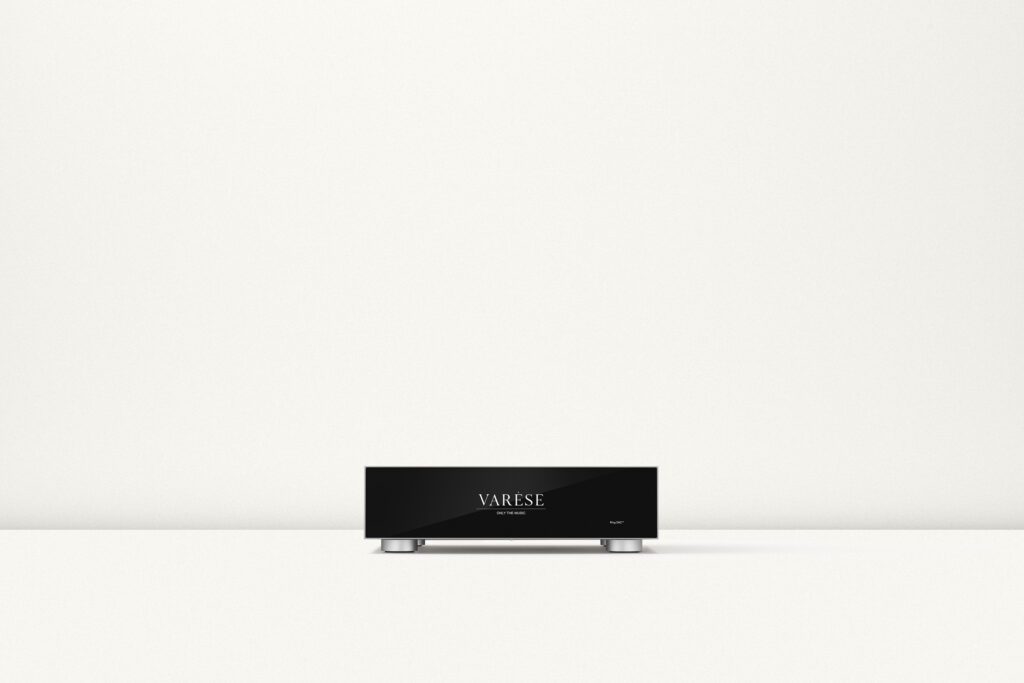
I’d argue that Varèse does such an excellent job of shifting the dCS styling needle that it makes Vivaldi and Rossini APEX suddenly seem dated. These are fine products launched in 2012 and 2015 respectively, and despite firmware updates, the DACs, and a few modifications to the choice of CD transport, they possess a certain timelessness in their design. Or so I thought; in the wake of Varèse, those small clusters of tiny buttons appear rather tired compared to the elegant remote handset and button-free panels of the Varèse.
Subtle curves
The subtle curves of the front panels now seem less elegant and refined when juxtaposed with the Varèse’s understated look. Of course, this is understandable; the Varèse’s price point and the time that has passed would render the newcomer more representative of a 2020s project than models that have been in the catalogue for a decade or more, yet the speed at which the Vivaldi APEX transitioned from ‘timeless state-of-the-art’ to ‘it’s showing its age’ was quite remarkable.
The dCS Varèse reveals the potential of digital audio, but its capabilities rely on proper care and attention. The ACTUS cabling system means you don’t need to spend a small fortune on digital interconnects between devices, and the money saved should be directed towards a truly exceptional server. I used this with the Antipodes Audio Oladra tested in Issue 239, and it’s a perfect match.
No words
It’s a bit of a ‘fail’ for an audio reviewer; I find myself at a loss for words when it comes to sound quality. That’s not entirely accurate; I have the words, but it all comes down to one word; that f-bomb running through my notes. My audio vocabulary peaked with the dCS Varèse, prompting me to exclaim a series of expressions. There were two reasons for this: I’d never experienced that piece of music in such a way before, and unless I happened to get lucky in the lottery, I probably won’t hear anything quite like it again.
Nothing can prepare you for this. It’s nothing like digital or analogue. It feels like being in the studio. You are closer to the music and the musicians playing it. I tried to analyse my reaction to this sound, and at first, I thought it was the lifelike dynamic range. But that’s not it. I turned to ‘Smoke on the Water’ from Made In Japan by Deep Purple [Purple] because the dCS Varése digital system unlocks your inner teenager. It’s a visceral experience; you are there.
It’s the percussion—closer, more precise, faster, with every snare hit and all that hi-hat work. Wonderful. It’s almost a musical onslaught, and nothing’s hidden from view. If it were just the better dynamic range, I might have wanted to play air guitar, but this was a full-on air band event. I was hammering that Hammond like Jon Lord, smashing that hi-hat like Ian Paice, and pounding that bass like Roger Glover. I was about to attempt singing like Ian Gillan, but I realised that would probably cause something to burst.
Resonating hat
In all that, it was the hi-hat that truly resonated with me. It didn’t sound like a recording; it felt as if Ian Paice were sitting on a drum throne right in front of me, playing the hi-hat. It sounded authentic. The dynamic element was the snare, but that sense of timing… that was something beyond typical audio, digital or otherwise.
Everything I played after that— and I played a considerable amount of music following Deep Purple— reconfirmed those initial impressions, adding to them along the way. It was the little things; with everyone talking about Dylan at the moment, I played ‘Masters of War’ [The Freewheelin’ Bob Dylan, Columbia]. It’s astounding. Like a time machine. You instantly begin to ponder how all that talent could have been packed into one brain at such a young age. His voice remains distinctly Dylan’s, but no matter how skilled Chalamet is at mimicking him, he simply isn’t him, and that’s abundantly clear here.
Then there’s ‘West End Blues’ by Louis Armstrong [Hot Fives & Sevens, JSP]. It’s 97 years old and I’ve played it to pieces. It’s probably the best three minutes of music in history. I know it backwards, and I connected with it directly, just like the first time I played it.
Terminology fail
The same thing happened whether I played any genre of music. Interestingly, my notepad never contained the usual terminology. There were no discussions of dynamics, staging, or details; it was all about the music and how it made me feel. This was because those aspects of performance had been so well executed that they ceased to be a concern.
It’s the duty of a reviewer to identify any shortcomings in a product’s performance, but that’s not my role here. The only observation I would offer is this: be mindful of what you choose to listen to during that initial session. This isn’t due to your system’s inability to cope, nor is it because the Varèse is unkind to musical novices. It’s that your emotions are laid a bit more bare than you might expect by how this dCS stack presents music. If you play something evoking strong feelings, you have to confront those emotions.
I was listening to ‘Go!’ by Public Service Broadcasting from the 2015 album The Race For Space [Test Card]. For those unfamiliar with this album, it beautifully blends samples from 1960s US and Soviet space missions with indie dance electronica. ‘Go!’ captures the sound of Mission Control as the Eagle module of Apollo 11 approaches the lunar surface. It usually evokes strong emotions, but this time, I experienced both the ‘lump in the throat’ moment and a sudden urge to kick a moon landing conspiracy theorist down a flight of stairs. I should have left it there.
Ugly cry
Instead, I went bleak. I put on ‘Old Shep’ by Elvis Presley. You know the one; boy meets dog, dog gets old, boy shoots dog. It’s always been a bit of a tearjerker, but with the dCS Varèse, it becomes a full-on ‘ugly cry’ moment. So, be careful; this equipment unlocks emotions in ways that most other audio devices can’t.
There’s one more observation. I believe this settles the ‘analogue vs. digital’ debate. The dCS Varèse elevates digital audio to such a high level that record collection need no longer be an essential part of your daily musical ritual. While it’s still enjoyable to play and collect LPs, if you focus solely on the music rather than collecting for its own sake, you might find your trips to record stores becoming a bit less frequent. Naturally, it’s not an ‘either/or’ situation, and the existence of the Varèse doesn’t diminish the value of listening to music on LP; rather, those LP listening sessions can finally transition to digital.
Many elephants
Of course, there’s an elephant in the room; 217,000 elephants to be exact, and closer to a quarter of a million elephants when you include the I/O module. That’s a price tag that requires a bit of a run-up. And yet, when you spend time in front of it, that price ceases to be the focus of attention.
If, like most of us, you can’t afford it, merely sitting in front of it for a few minutes isn’t tormenting you; it’s indicating the direction of digital audio’s travel. It will take time for what the dCS Varèse achieves to filter down to increasingly practical levels, but it will occur. Yes, you return home and enjoy digital audio with a sense of regret that you can’t attain that peak just yet, but it exemplifies what can be accomplished, and perhaps it will inspire innovation to achieve that goal at every level.
Put your name down!
On the other hand, even if this is achievable for you, put your name down, now! This is what digital audio is meant to be. It’s not a false, overly warm analogue sound, nor that thin and shrill detail machine that most people mistakenly believe represents digital at its best. The dCS Varése digital system is something much more than that. It’s a lens on your music, not a microscope on a musical experiment. In audio terms, this is reminiscent of the first time you heard music that truly moved you, whether it was Beethoven, the Beatles, Metallica, or Miles Davis.
This is why we entered this hobby in the first place: a chance to experience a piece of music as the musicians or composers intended. If achieving that requires five boxes, a multitude of LEMO-connected cables, and costs as much as a house, then so be it. Returning to Public Service Broadcasting, this is our Apollo space mission, and no one approaches a Saturn V booster rocket and says, ‘Meh! I bet I can create one cheaper!’
A grave problem
My biggest criticism has nothing to do with the size, the number of boxes, the price, or the cabling. Nope. It’s that blasted grave; I keep spelling it ‘Varése’ instead of ‘Varèse’. It’s trivial, but getting to that grave on the keyboard is much more complicated than simply adding an acute accent. Even though I must have written ‘Varèse’ dozens of times now, I still get it wrong!
Saying that the only issue with a £217,000 digital player is the need to type a grave accent over a letter is likely to provoke apoplexy in some. However, it’s the only criticism I have of the dCS Varèse. It resets your listening criteria so effectively that you feel humbled in its presence, and your usual methods of contextualising an audio product become obsolete.
The wonderful thing is, you don’t care! That dCS Varése digital system experience resembles that unforgettable moment from years ago. It’s sneaking into your friend’s dad’s listening room and enjoying music on his extraordinary audio system. That system was likely far beyond your comprehension and budget, resembling musical science fiction.
Lifelong journey
Nevertheless, it set you on a lifelong journey. We have all been attempting to recapture that experience, and the dCS Varèse accomplishes just that! There will be individuals showing up at exhibitions solely to demonstrate what a bunch of fools we audiophiles are. We should be turning up with burning torches and pitchforks for a dCS Varèse demonstration. They, too, will leave with silly grins on their faces, delighting in music with child-like joy.
We’re at a pivotal moment in audio. The dCS Varése digital system demonstrates the capabilities of digital audio. That is worthy of the highest praise for dCS, but that’s only the start. Varèse is such a step change in digital that it throws down a gauntlet to other digital audio manufacturers. And not just those in the stratosphere. Now, it’s the turn of the rest of the digital audio world to catch up!
Technical specifications
- Type: Digital Music System
- Digital Inputs: Ethernet on RJ45 connector for network streaming. USB Type A connector for mass storage devices (navigated using Mosaic ACTUS).
- If the Digital I/O Module is fitted to the Varese Core: USB 2.0 interface on B-type connector, 3x AES/EBU inputs on 3-pin female XLR.
- Analogue Outputs: 2x pair balanced outputs on 4x XLR connectors. Output impedance: 1.5Ω. 2x pair unbalanced outputs on 4x RCA connectors. Output impedance: 52Ω.
- Maximum load: 600Ω (10k-100kΩ is recommended).
- Output levels: 0.2V, 0.6V, 2V, 6V rms for a full-scale input, set in the menu.
- Digital Outputs: If the Digital I/O Module is fitted to the Varese Core: 1 x S/PDIF interface on RCA Phono connector,
- Wordclock I/O: If the Digital I/O Module is fitted to the Varese Core: 1 x Word Clock Output on 1x BNC connector.
- Sample Frequencies and Formats: 44.1-384kHz up to 24 bits, DSD/64, DSD/128, DSD/256, DSD/512, Native DSD + DoP, FLAC, WAV, AIFF
- Residual Noise: Better than 118dB0, 20-20kHz
- Spurious Responses: Better than -115dB0, 20-20kHz
- Finish: Silver
- Dimensions (HxWxD):
- User Interface: 13.1 x 44.4 x 45cm
- Master Clock: 13.1 x 44.4mm x 43.7cm
- Mono DAC: 13.1 x 44.4mm x 43.7cm per channel
- Core: 24.4 x 44.4 x 43.8cm
- Weight:
- User Interface: 14.6kg
- Master Clock: 15.7kg
- Mono DAC: 18.7kg per channel
- Core: 33.1kg
- Price: £217,000 (without Digital I/O module)
Manufacturer
dCS
UK distributor
Absolute Sounds
+44(0)208 971 3909
Trending Articles
See all
By Alan Sircom
More articles from this author
Read Next From Review
See all
Reiki Audio SuperSwitch X/Pro X PSU
- Oct 06, 2026
Audiobyte SuperVOX
- Oct 06, 2026
Unitra WSH-805
- Sep 29, 2026
Wilson Audio Sabrina V
- Sep 29, 2026