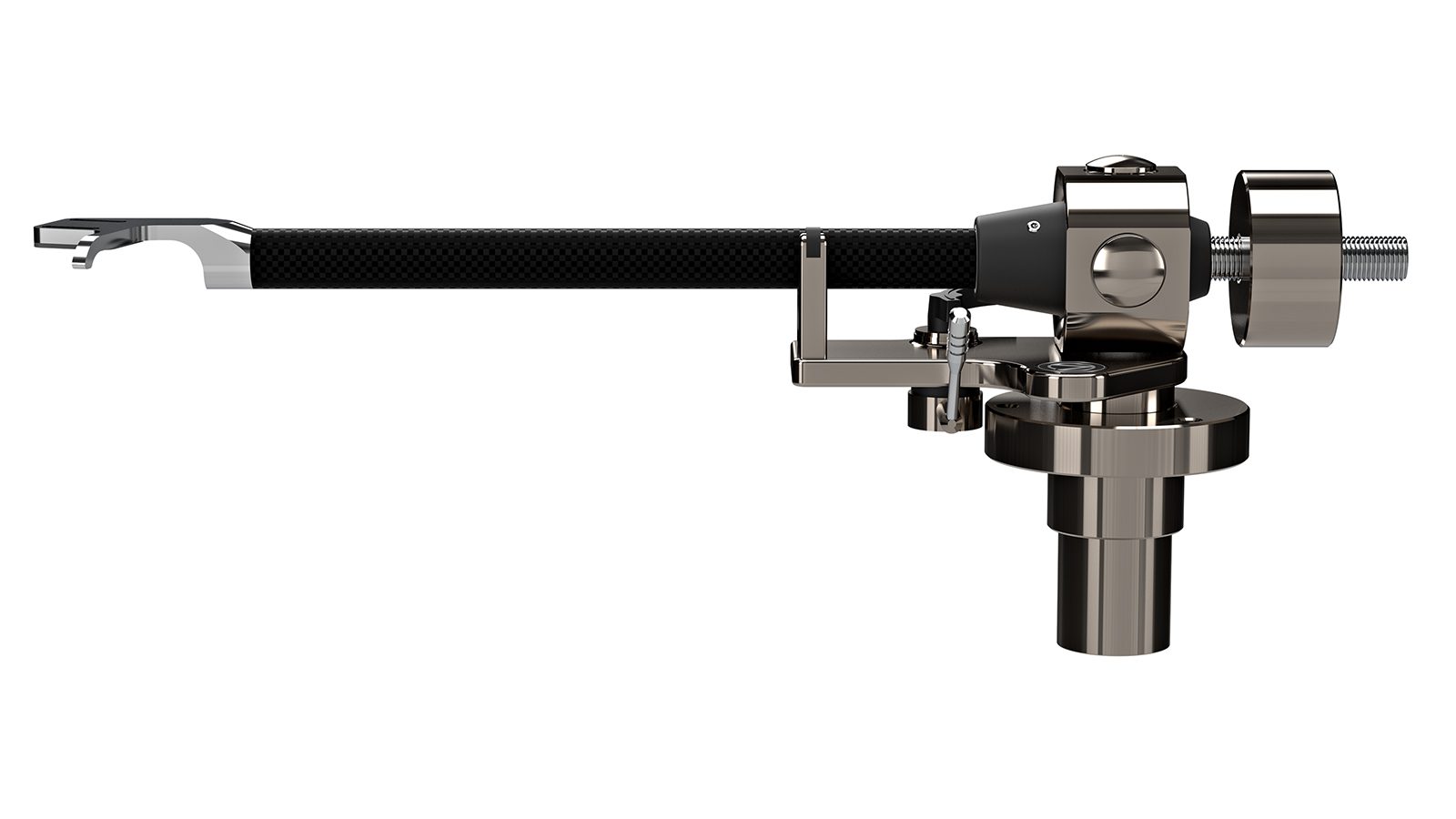
Turntables are the last remnant of how hi-fi used to be. Speakers were once a combination of drivers you selected. These were placed in a cabinet you either specified or built. Even further back, your amplifier came as a set of parts in a box that you assembled yourself. And you did this with specific components of your choosing. Over time, this has evolved to the point where most components arrive as finished products, complete with warranties and better packaging. Now, turntables are starting to shift in this direction, too. But… well… if you prefer, you can still select your deck, arm, and cartridge individually as a nod to the old ways.
For those who adopt this approach, Audio Origami has been delivering compelling solutions for the arm section for over a decade. The PU7 has been a great success and has become a highly regarded option. This prompted the company to develop the basic design into the PU8, while also upgrading the PU7 to ‘GTS’ standard. Like the PU7, the PU8 traces its roots back to the Syrinx PU2 tonearm from the late seventies. However, just as disassembling a new Porsche 911 Turbo S won’t reveal many VW Beetle parts, the PU8 should be considered ‘inspired by’ rather than ‘based on’ the Syrinx arm.
Two arms, both alike in gimbal
The PU8 is a gimbal tonearm available in effective lengths ranging from 9” to 14”. Most choose 9” and 12” arms. The first major modification involves the metal bearing surround. High-grade stainless steel is used in the gimbal, pillars and mount. This increases mass in areas that do not alter the effective arm mass. However, they significantly improve resonance damping. The bearing housing, situated between the armtube and the metal structure, is made of Delrin for better resonance control. This is also where an azimuth adjustment is fitted, allowing the armtube to be gently rotated.
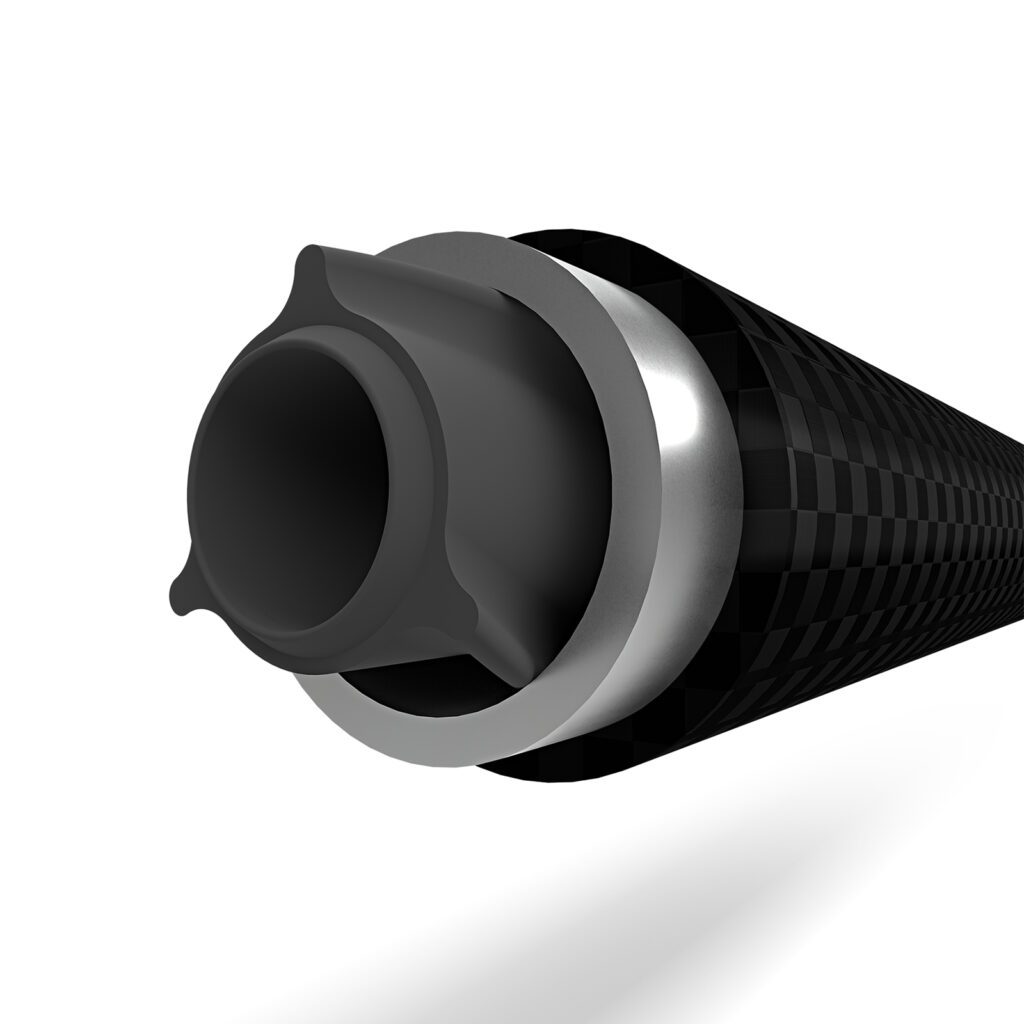
The armtube itself is made of a composite of carbon and aluminium, with an aluminium tube encased in a carbon fibre outer layer. This design is both stiff and lightweight, while reducing resonances that could affect an armtube made from a single material.
M.M.A.D.S. world
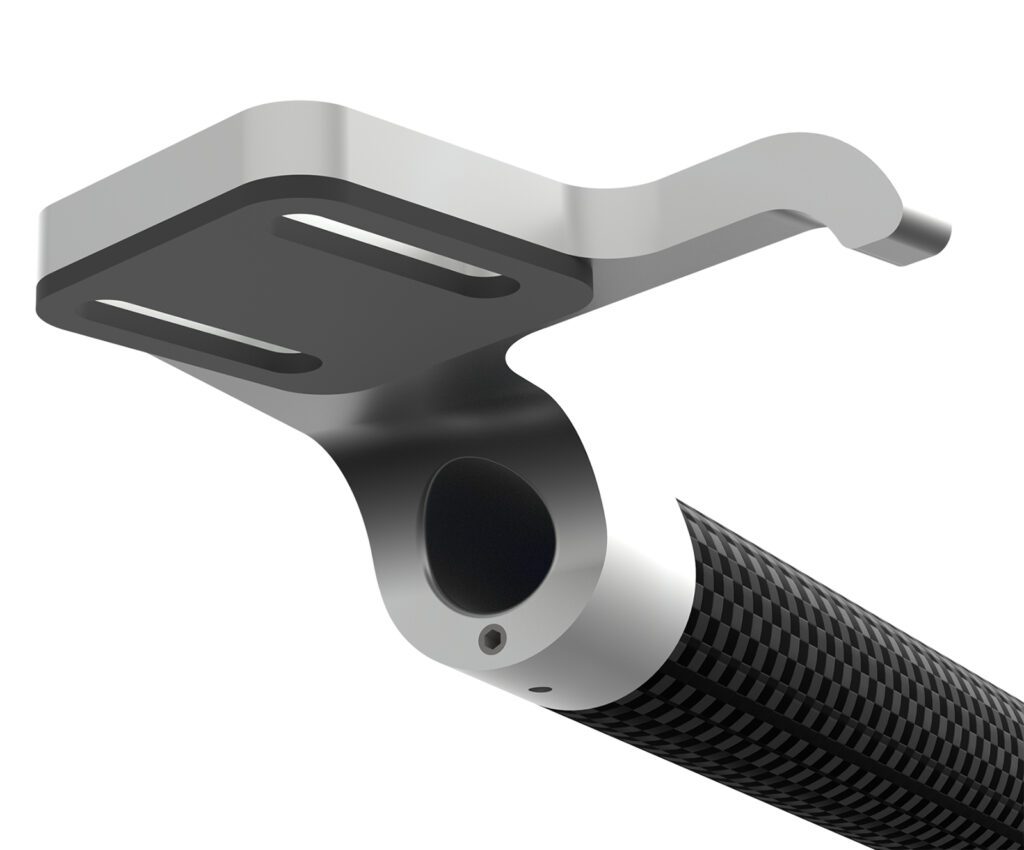
Inside the tube, Audio Origami has used the latest version of their M.M.A.D.S (Meta Material Armtube Damping System). M.M.A.D.S isolates internal vibrations by floating the internal wiring and decreasing any remaining armtube resonance. The headshell is aluminium and includes an integrated Cartridge Enhancer, which the company also sells separately. The internal wiring comprises Cardas Clear cables that terminate in a five-pin mini-DIN connector, allowing the use of balanced cables if desired.
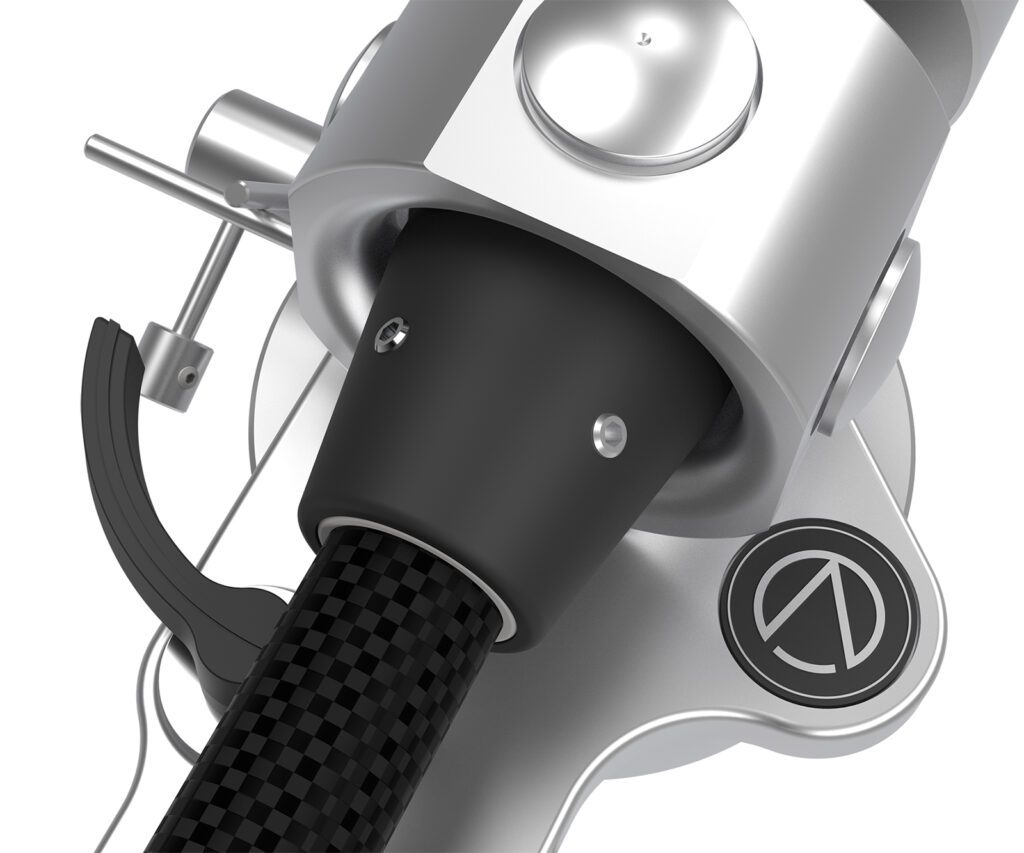
Also new for the PU8 is a revised anti-skate system. A bar on the left-hand side of the bearing housing acts against a rotating bar and weight assembly. The weight can be moved relative to the rotating point to adjust the resistance. This is an admirable improvement over line and weight systems because there is little mechanical contact at work and the system can’t snag or do anything else untoward. I also like that the PU8 ships with two different counterweights (one for heavier carts), which can be adjusted very accurately on a threaded stub.
Meticulous concern
In fact, everything about the PU8 reflects a high level of meticulousness and concern for its appearance and feel. It can be used with either Rega or Linn fittings, and the Rega sleeve supplied, which was designed to fit the GyroDec armboard, fits perfectly and allows for very precise VTA adjustment within the sleeve itself. The headshell is spacious and easy to handle, and I appreciate that Audio Origami has joined the growing list of companies that supply thumb bolts for cartridge attachment, recognising that very few people are born with three arms. You also receive some useful tools in the box along with documentation written by humans for humans. No tonearm is ever going to be entirely easy to fit, but Audio Origami comes closer than most.
And once it’s fitted, you can enjoy a truly beautiful piece of engineering. The PU8 is elegant and visually appealing, mainly because it lacks any fiddly protrusions or anything that seems poorly done. In fact, the whole device feels more polished and better finished than you might expect from a relatively small company’s product.
Having installed the PU8 on the resident Michell GyroDec, I used the same Van den Hul DDTII cartridge that normally resides at the end of an SME309 on the Michell. The relatively light tracking force and high compliance design of these cartridges can pose a challenge for some arms, and Audio Origami themselves describe the PU8 as being intended for medium and low compliance designs, so I was unsure how this would turn out.
Rising silence
I needn’t have worried. The opening of Kessoncoda’s Outerstate [Gondwana] rises from silence to a fairly lively level in about a minute, demonstrating that the PU8 has not affected the Gyro’s very low noise floor. It also shows there’s no problem for the DDTII to handle the dynamic moments smoothly. More than that, the PU8 acts just like an extension of Van den Hul’s qualities. It provides a tonal realism and musical fluency that keep you utterly focused on the music. And not the hardware producing it.
Request the livelier IV by Black Mountain [Jagjaguwar], and the PU8 offers an impressive balance, capturing the grit and impact of this seventies homage without losing that effortless sense of smoothness. At my most critical, I don’t believe the deep bass extension from this setup is as profound as what the SME can achieve in similar conditions, but I never feel there’s a lack of bass, and the clarity and precision it provides are superior. The SME also cannot match the airiness and palpable three-dimensionality that the PU8 delivers, even on this relatively dense, congested track.
I’ve also discovered that the articulation and agility provided ensure that even very fast-paced material is delivered in a way that imparts a sense of order and coherence to the music without compromising speed or the raw impact. Listen to Frontier by Dead Can Dance [4AD]. The effect is swirling and relentless as Perry and Gerrard intended. However, there is a clear sense of order and cohesion to the music that highlights Gerrard’s soaring vocals over the tribal drumming. At no point does it feel like the music is being deconstructed. Rather, it is delivered in a way that significantly delays—and sometimes completely eliminates—any feeling of congestion.
Into the Mystic
Tests using a Vertere Mystic moving coil cartridge, which has tracking force and compliance more consistent with most commercial models, show that the PU8 maintains its qualities just as with the Van den Hul. Listening to the eponymous album by The Olympians [Daptone] reveals that the Audio Origami effortlessly adopts Vertere’s behavioural traits. While some of the lushness of the DDTII is reduced, there is a regain in bass depth. The ongoing impression is that no mechanical processes influence the sound becomes even stronger. Furthermore, since both cartridges balanced easily with the smaller counterweight, it suggests that quite substantial weights can be used with the larger one attached.
Of course, with an asking price two rounds of drinks below six grand, you would expect the PU8 to be good. And there are unquestionably some very talented options currently vying for your attention. What has won me over about the PU8 is its simple operation. There’s also a strong sense of quality that arises from interacting with it. At a time when the market sees the return of extremely complex solutions to questions of geometry and tracking errors, the PU8 reminds us of the effectiveness of the ‘basics’ when executed to a high standard. For those looking to build a turntable that precisely meets their needs, this effortlessly capable design will be a very strong contender.
Learn more about Audio Origami
Technical specifications
- Tonearm Type: Modern Gimbal
- Effective Length: 9 inches (as tested)
- Effective Mass: 15g
- Mount: Rega / Linn
- Base: Stainless Steel
- Armtube: Composite Carbon Alloy
- Headshell: Aluminium
- Gimbal Housing: Delrin
- VTA: Adjustable
- Azimuth: Adjustable
- Anti-Skate: Adjustable
- Damping: Meta Material
- Internal Wiring: Cardas Clear
- External Wiring: Zavfino 5-Pin DIN
- Counterweight: Threaded Steel
- Colour: Silver and Black
- Price: £5,950, €7,590, $6,900 (9 inch) £6,350, €8,090, $7,495 (12 inch)
Manufacturer
Audio Origami
+44(0)7894 945 787
Tags: AUDIO ORIGAMI PU8 TONEARM
Trending Articles
See all
By Ed Selley
More articles from this author

Read Next From Review
See all
Eversolo T8
- Oct 13, 2026
Acoustic Energy AE Active
- Oct 13, 2026
Reiki Audio SuperSwitch X/Pro X PSU
- Oct 06, 2026
Audiobyte SuperVOX
- Oct 06, 2026