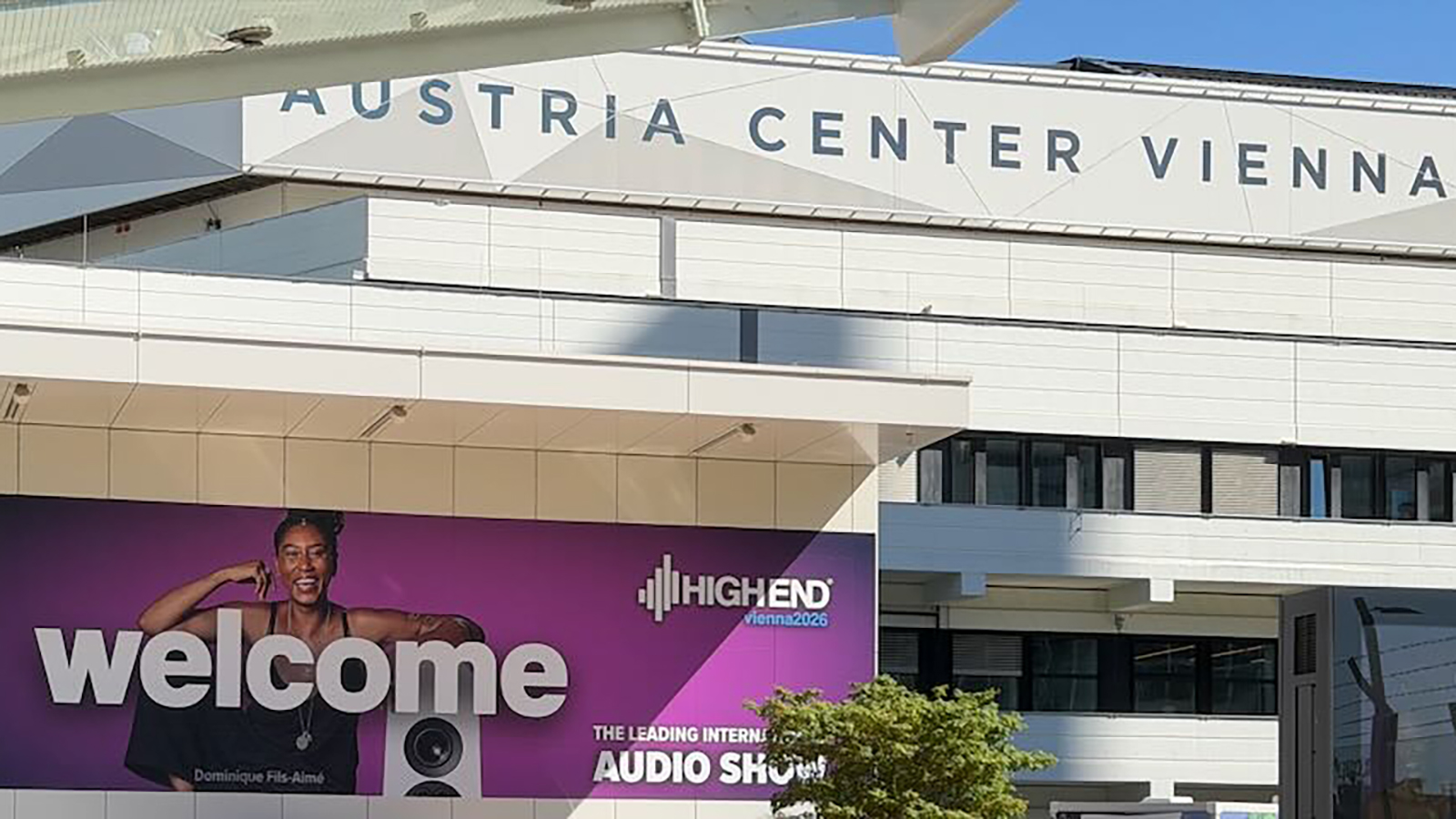
It’s no secret, but the Austria Center Vienna has replaced the MOC in Munich as the venue for the annual High-End show. While not without its teething troubles, the move has been mostly well received by consumers and the audio industry.
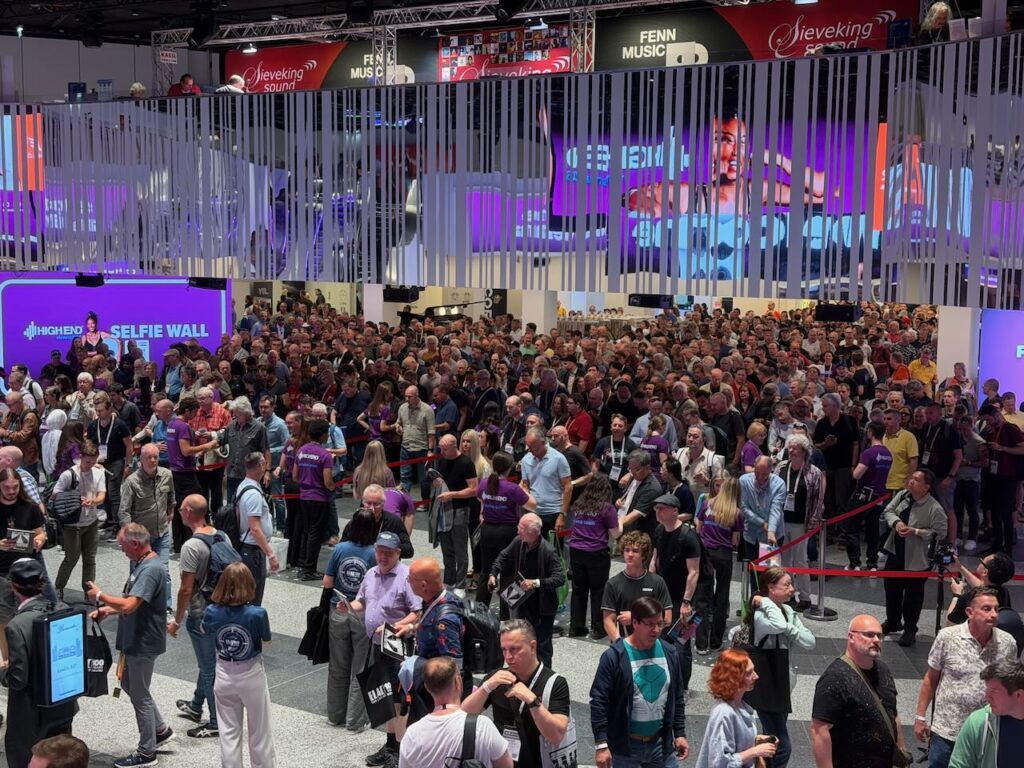
The space is larger and slightly harder to navigate. This means most of the corridors are wide enough to avoid bottlenecks and allow those who want to talk business to do so away from the music playing in the room. It also reduced noise pollution from nearby exhibitors. However, it also meant that several floors of near-identical white corridors made it easy to get a little lost. I stepped out of the elevators onto the wrong floor several times and didn’t notice for a few minutes. However, as I went to a Miele store across town instead of the Melia Hotel for DALI’s off-site launch, maybe I’m not the best judge of geography.
Regardless, Manufacturers will inevitably learn from this and introduce greater signage outside their rooms.
There also probably needs to be a larger central display welcoming visitors to the event. There was a large atrium just after guests entered the show, and inside that atrium was just a Burmester-equipped S-Class Mercedes. While a great show-opener, a ‘best of’ display with samples (or high-quality mock-ups) of some of the most high-profile products at the show would make it seem more ‘show-like ‘.
No number of preliminary visits to an event can accurately determine a room’s acoustic dynamics. While many were making good sound at the ACV, I think it’s best to suspend criticism of bad sound for this year. Once again, manufacturers learn what works and what doesn’t fairly quickly, so that free pass expires for next year, but there were a couple of systems I expected to be excellent and didn’t quite cut it. I know of at least one manufacturer who completely redesigned their room at the last minute to (successfully) improve the sound quality, and Goldmund traded places with Raidho on either side of the first floor because they preferred their respective rooms. This led people to call it ‘Goldmundilocks’, but the end result worked out well for both.
The number of main rooms was reduced slightly compared to Munich. There were many smaller rooms on the top floor of ACV, but these were largely used by companies fielding smaller systems than typically seen at the High-End shows of the past. This gave rise to several nearby satellite shows, including HiFiDeluxe, all situated a few hundred metres from the main event. While each has its own organiser, they might be wise to at least work together in the same venue, rather than having four rooms in one building, four rooms in another and so on. Even with the satellite shows, there were still some notable absences, including KEF and Rockport. We hope to see them back in some form next year.
Over the next couple of weeks, we’ll bring you the best we saw and heard at Vienna.
Bowers & Wilkins
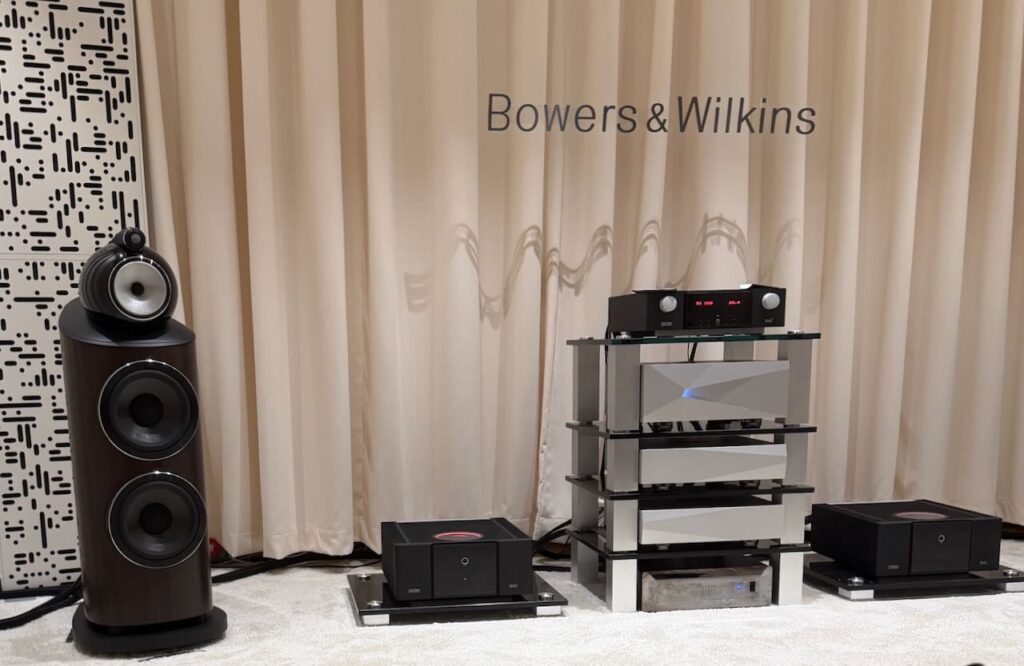
Bowers & Wilkins returned to show-going with the announcement of its fifth generation of the brand’s flagship 800 Series. With one stand-mount, two centre channels, three floorstanders and the 801 D5 flagship in the line, this was a celebration of the company’s 60th anniversary as well as a mighty set of loudspeakers. Retaining many of the styling cues of previous models, the 800 Series bristle with new innovations, including a new Space Frame Bracing (that bolts directly to the rear of the now-enhanced Matrix inside the cabinet) to increase internal stiffness and reduce vibration and cabinet-borne resonance. This bracing also acts as a frame to hold the new crossover mounting plate. There are also improved tuned-mass plinths, revised aluminium top plates, and grilles and drive unit motors taken from the Signature version of the previous model. New finishes are also on show, with Dark Walnut, Light Walnut and Warm White joining the portfolio. Prices start at £10,000/€10,000/$12,000 for the 805 D5 stand-mount and rise to £43,000/€50,000/$65,000 for the 801 D5.
Cambridge Audio
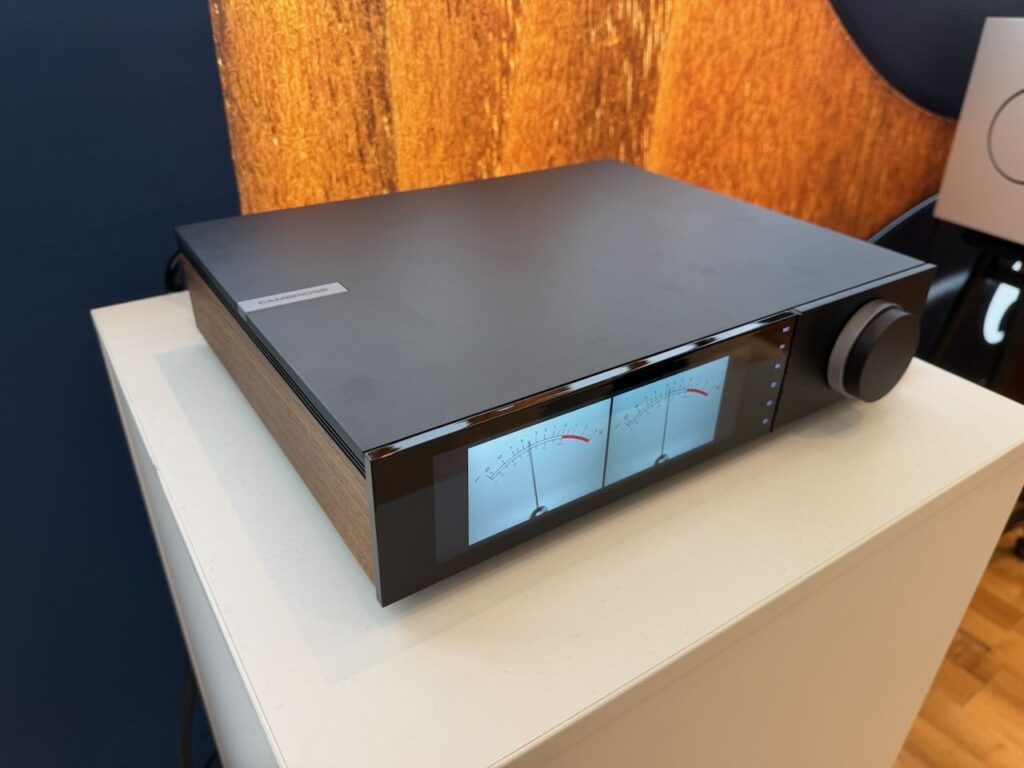
The new Evo 300 from Cambridge Audio is the brand’s most advanced streaming amplifier. This is a bold statement from a company that has been making streaming amplifiers for some time, but the 300W per channel integrated amplifier (using Hypex NCOREx Class D amp modules at its core) makes a strong musical and performance-based case. Built around a balanced preamplifier stage with separate analogue volumes for each channel, the amp builds on the performance of the company’s current top streaming integrated, the Evo 150 SE. It also features an ESS Sabre ES9038Q2M DAC and the company’s one StreamMagic Gen 4 platform, and a 7.8 in screen. This £3,499/€3,999/$3,999 integrated amplifier offers much.
Dan D’Agostino Master Audio Systems
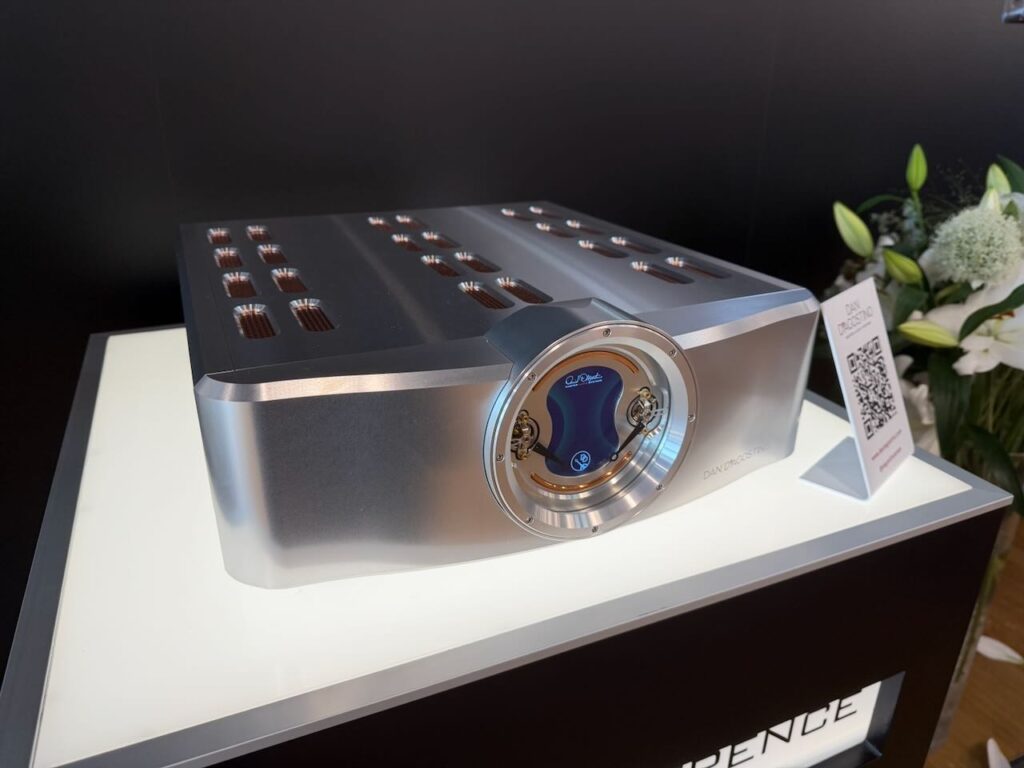
Not content with announcing the Momentum Z mono power amplifiers earlier in the year, Dan D’Agostino Master Audio Systems announced several new products that utilise the Z topology designed to improve the interface between preamp and power amplifier, by carefully addressing power supply, input stage, thermal design and system monitoring. The Relentless Z Preamplifier, Relentless 800Z mono power amplifiers, and Relentless Epic 1600Z mono power amplifiers all benefit from these Z circuit design developments.
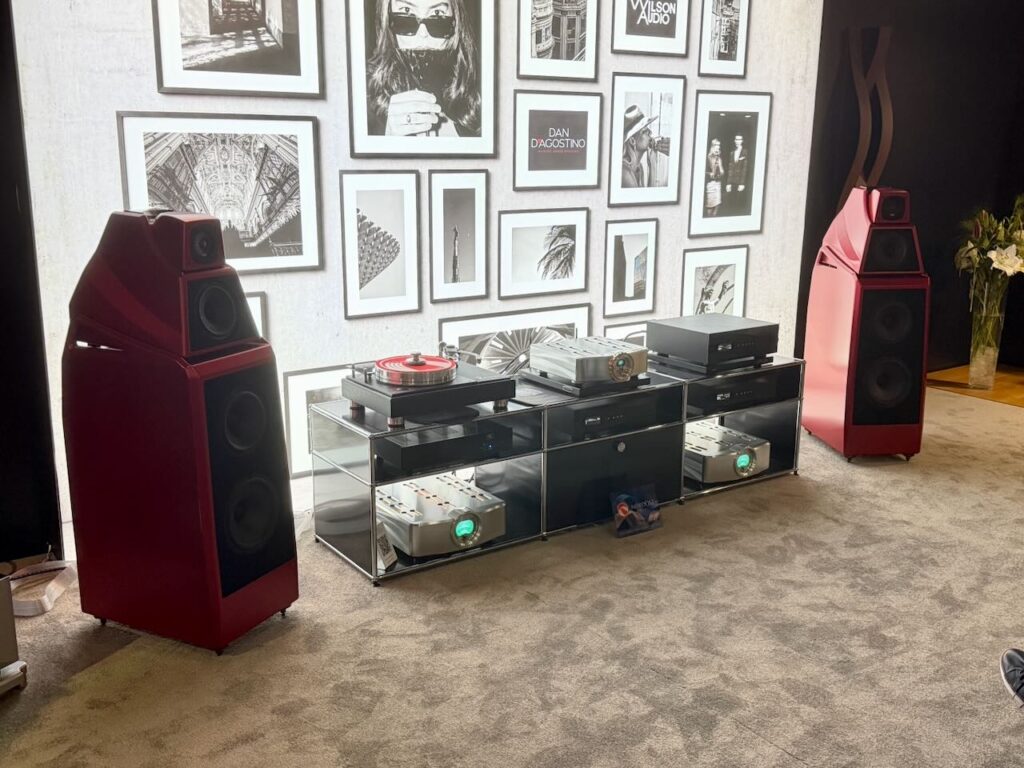
But, perhaps even more significantly, there has been an entire refresh of D’Agostino’s more attainably priced Progression series. The new Progression Neo preamp and both stereo and mono power amplifiers have a bold new styling – one that still carries much of the D’Agostino classic cues into a very ‘now’ look – but draws it’s circuitry from the higher-end Momentum and Relentless range. With a preamp featuring a JFET input stage (like the Relentless) and power amplifiers with output concepts developed for the Momentum Z mono amps, these were delivering an extremely impressive sound through a pair of Wilson Alexia Vs in Audio Reference’s outstanding demonstration space. Fed by dCS and VPI, these amps had ‘grip’ by the bucketload. Prices are still to be confirmed.
DALI
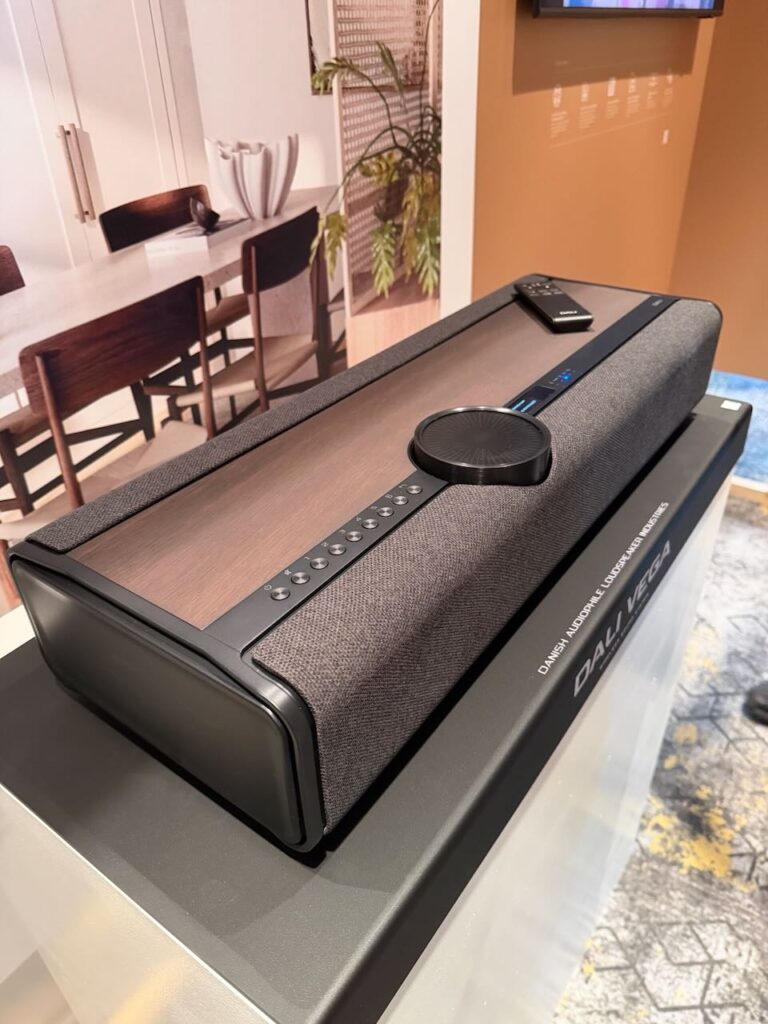
An all-in-one is not the first thing to consider as one of the stars of a high-end show, but stay with me. DALI’s new VEGA system includes BluOS and its own, in-house DSP. The VEGA features four soft-dome tweeters with 25mm membranes and neodymium magnets and four 110mm mid-bass drivers placed back-to-back with an ABR system. The hefty system is designed to be used on a table or a wall, and can be vertically or horizontally mounted (or even moved from one position to the other using a special rotator mount). With presets for playlists and radio stations – all accessed through the BluOS ecosystem – it’s designed as an easy way to get good sound into other parts of the home than just the man cave. The price is €3,000, and is expected to be around £2,600 and $4,500 when launched in September.
Gryphon
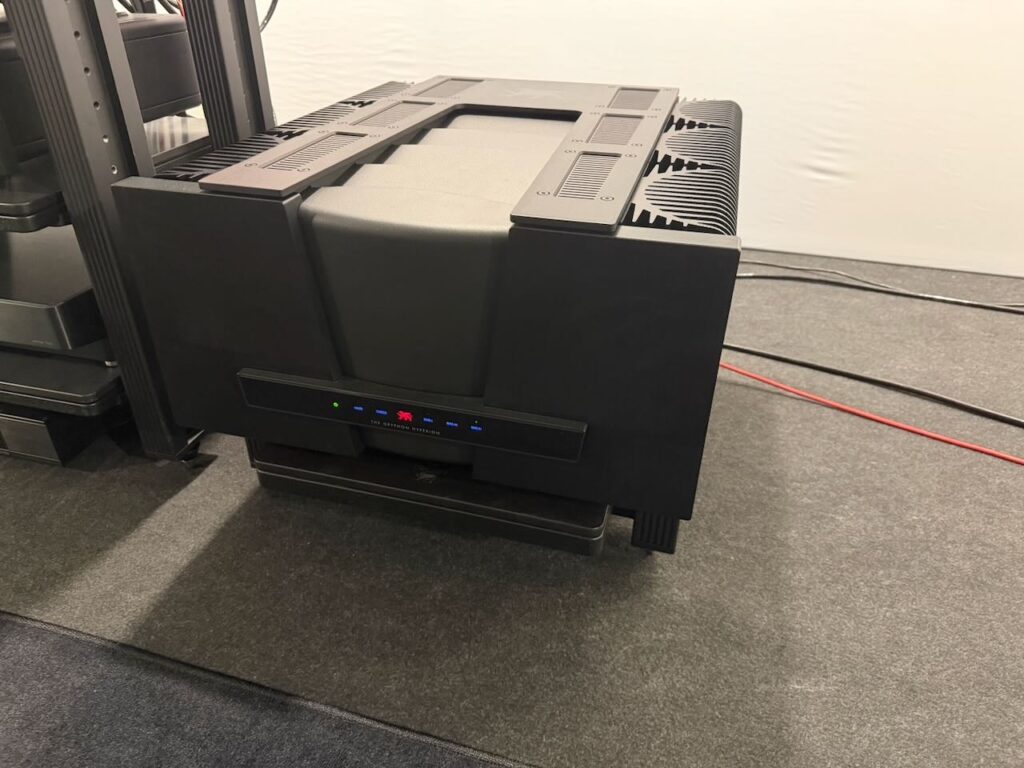
Designed to replace the mighty Mephisto, Gryphon’s new €59,800 Hyperion power amplifier is a bold project from a bold high-end brand. Dressed in the company’s typical ‘none more black’ livery, this truly dual mono 126kg, 180W Class A amplifier runs hot, requires two 20A power inputs, and can pack a 720W Class A punch into two-ohm speaker loads. And playing LPs in a full Gryphon system, it sounds like it lives up to the reputation of the amplifier it replaces!
Ideon
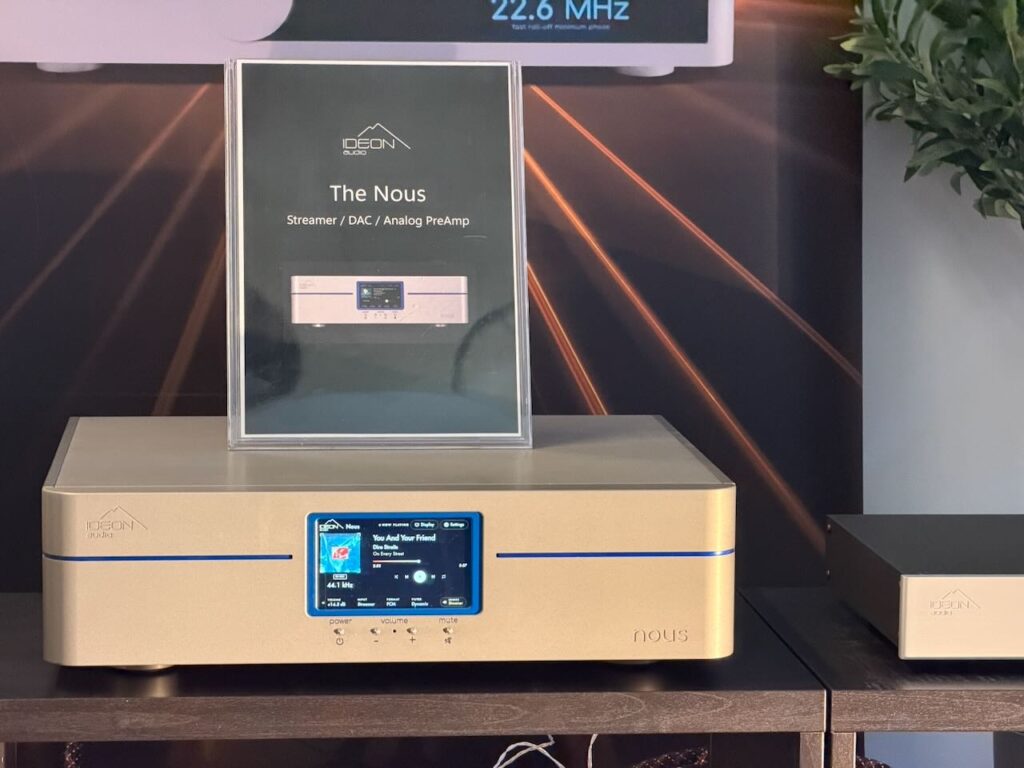
Greek digital experts Ideon have been busy of late. Not content with developing the remarkable Axiom digital system in time for AXPONA this year, the company just announced the Nous, a complete high-end streaming and playback system. Available with or without a line-level preamplifier, the Nous differs from conventional streamer-based products by being designed as a purpose-built audiophile environment where streaming, digital processing, clock management, DAC conversion, analogue amplification, and power regulation all act as one. Its performance is said to be closer to that of the Absolute DAC from the brand. The fully balanced Nous costs $32,000 with preamp, and $29,900 as streamer alone.
Moon
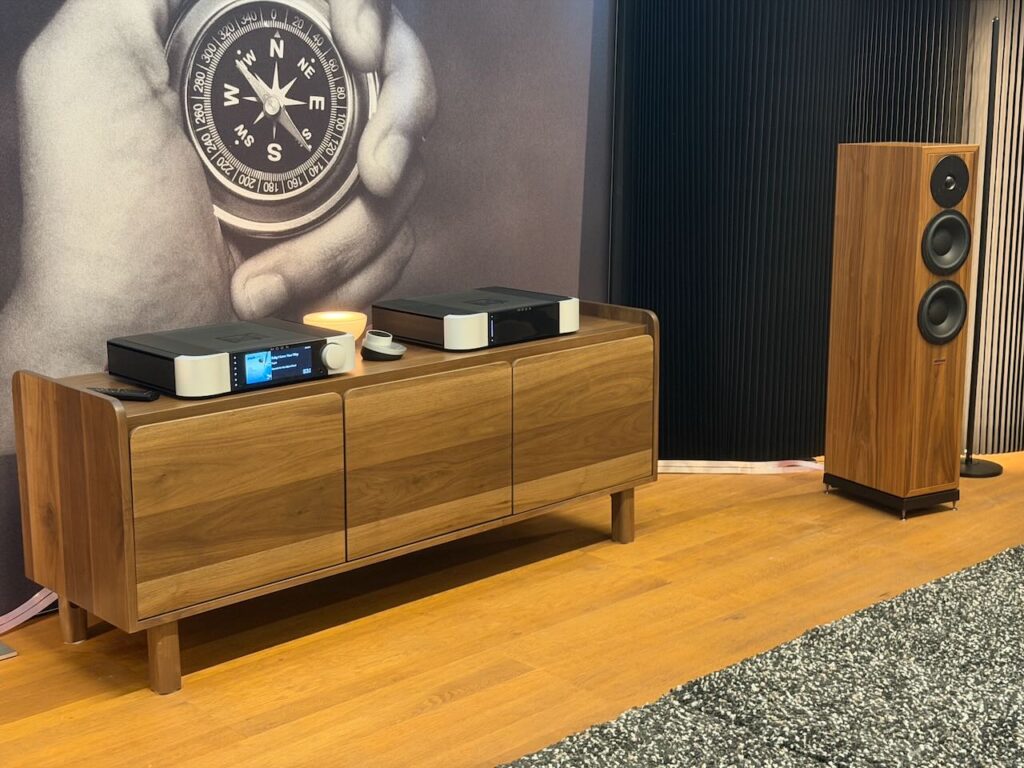
It would have been easier for Moon to take the popular 371 integrated streaming amplifier from the Compass range and split it into two separate components. Instead, Moon listened to its better angels and went with a vastly more flexible and powerful pairing. With all the inputs and outputs you could ever need and a highly flexible MM/MC stage, the £5,950/$6,500 491 uses the more sophisticated volume control and hybrid linear/switch mode power found on the brand’s higher-end devices. Meanwhile, the £4,450/$5,000 power amplifier uses even more of the hybrid power supplies to deliver its 150W per channel. This can be driven in bridged or bi-amp mode.
While we’ve said we won’t be discussing sound too much at this show as it’s new to everyone, this system – coupled with Dynaudio’s Contour Legacy loudspeakers and Nordost Heimdall 2 cables – was a true star, with plenty of drive and energy.
Wadax
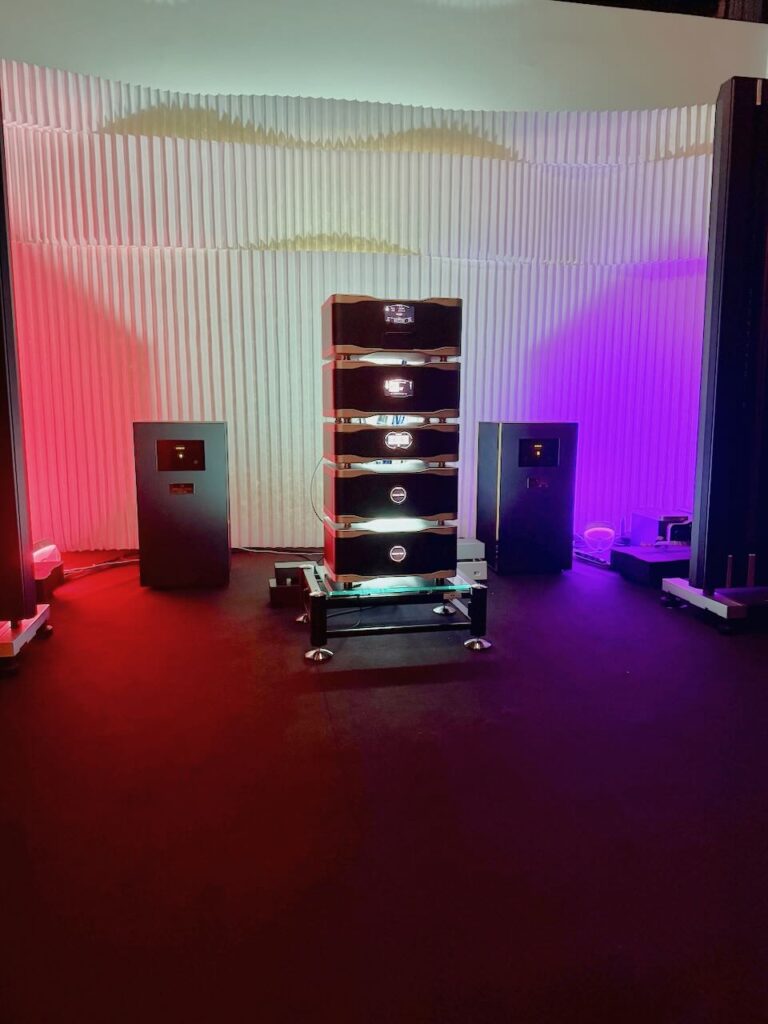
2024’s Wadax Studio Player was always intended to be a part of a Studio Collection. That Collection was joined by the Studio Clock, Studio PSU and Akasa cabling system last year. At Vienna, the Wadax Studio Collection is completed by the addition of a Studio Transport and Studio DAC. As the name suggests, this includes a dedicated CD/SACD transport and a dual-mono DAC, taking full advantage of the low-noise, high-speed architecture of the Studio Player (and leveraging technologies from the mighty Atlantis by Wadax), while adding greater connectivity and flexibility to the Wadax Studio ecosystem. The DAC also marks Wadax’s first headphone-related product. Prices for the new models are set at $42,950 for the Transport and $39,500 for the DAC.
Trending Articles
See all
Acoustic Energy Corinium floorstanding loudspeaker
- Dec 23, 2024
Xavian Unica
- Apr 07, 2026


By Alan Sircom
More articles from this author
Read Next From Show
See all
Hong Kong High-End Audio Visual Show 2026
- Aug 10, 2026

High-End Vienna 2026, Final Thoughts
- Jun 23, 2026
Audio Show Deluxe 2026
- Mar 30, 2026

Bristol Hi-Fi Show 2026
- Feb 24, 2026