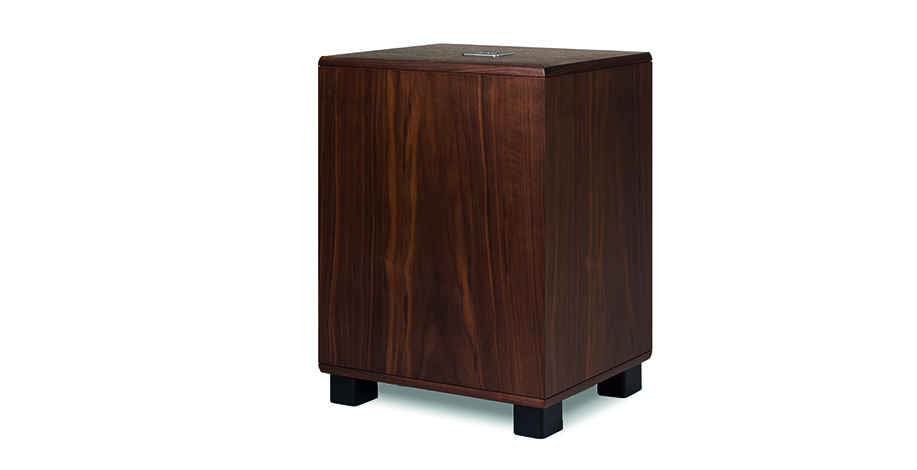
Anyone who has ever considered adding a subwoofer to their system will be familiar with the name REL. When the new REL Classic 99 was released early last year, we made sure to grab one for review.
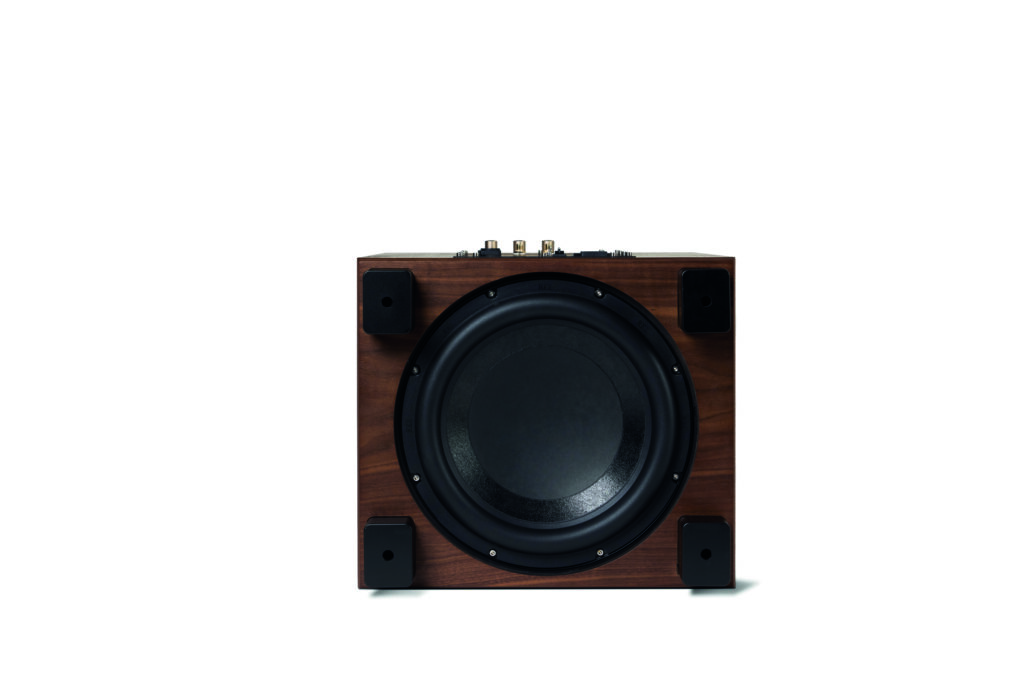
The REL Classic 99, priced at £1,799, is a development of the Classic 98. It was designed for use with the growing number of small, high-quality retro speakers, such as the LS3/5a. The Classic 99 is specifically designed for larger retro speakers, such as the Wharfedale Linton and JBL L100 Classic, or speakers of a similar size. Additionally, it is approximately 30% larger than the 98. It features a 12-inch downward-firing paper driver, as opposed to the 98’s 10-inch driver. The 99 also features a 450-watt amp, compared to the 98’s 300 watts. Moreover, it is available in any finish as long as it is walnut.
REL started in Bridgend, Wales, in 1990. It was born from Richard Edmund Lord’s dissatisfaction with the subwoofers of the day. He invented REL’s unique ‘High Level’ connection system (more on that shortly). By 2005, he was seeking someone to take the company to the next level. He wanted someone true to his ideas and vision. That person was John Hunter, who owned high-end US distributor Sumiko, along with Donal Brody. As a result, all REL design is now carried out at its US headquarters, with manufacturing in China.
High Level
Although connecting a REL subwoofer is easy, it differs from connecting other subwoofers. Typically, subwoofers receive their input from the preamp or amplifier’s subwoofer output sockets. The REL Classic 99 can also do this. However, it derives its signal from the positive speaker output terminals of the amp (or one or both of the speakers, if that is easier). The cable provided plugs into the Neutrik socket on the rear of the subwoofer. Consequently, the subwoofer receives the same signal as your main speakers. According to UK sales director Rob Hunt, this facilitates integration. REL says you will get the best results using the High-Level connection.
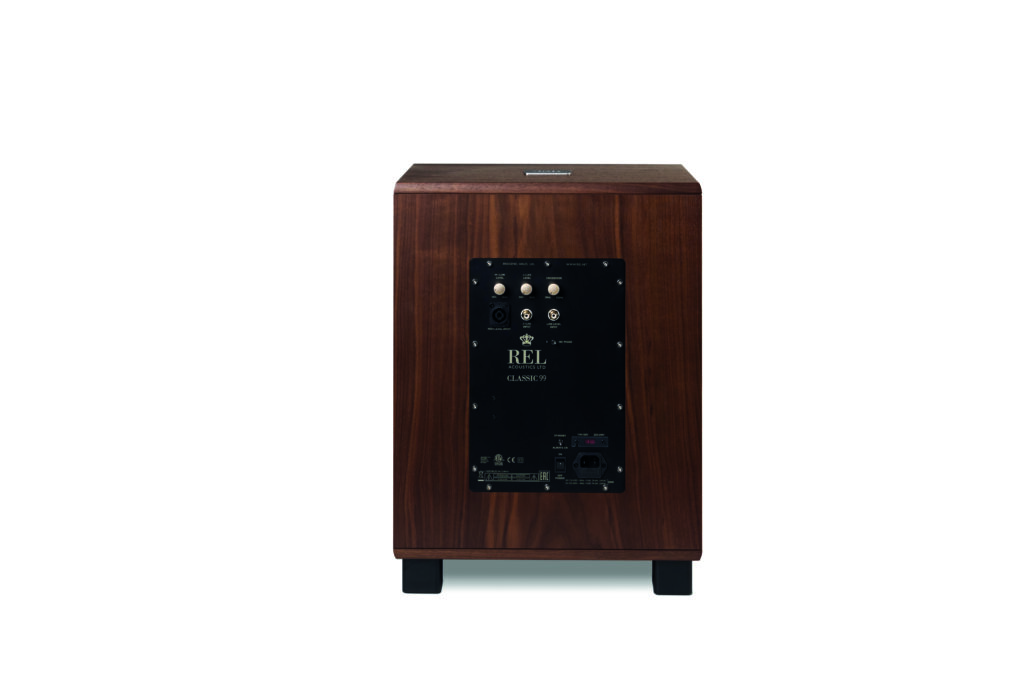
No digital signal processing, often used to achieve a flat response, is used in any REL subwoofer. This is because one of REL’s main design criteria is impulse response. They believe that DSP is too slow. As owner John Hunter told me: “I say to people, ‘Do you know how slow DSP is?’ Our subwoofers are blindingly fast. If we’re not faster than the [main] speakers, then we’re holding the parade up.”
Rob Hunt ran me through the setup process. He first adjusted the phase of the sub (in my system, best at 180º), then gain, which worked best in my room (19ft x 13ft) and system (Audio Note Meishu Tonmeister amp and Russell K Red 120Se speakers) five clicks up from zero. Finally, he adjusted the crossover frequency. REL do not disclose what frequency that is, but for me, two clicks up from zero did the trick. However, don’t worry; your retailer will handle all this for you. If not, there are helpful videos available on the REL website. Every setup and configuration is different, so don’t expect yours to be the same as these settings.
Epiphany
I have to admit that throughout my reviewing career, I took little interest in subwoofers. I thought, “I don’t need more bass.” But when I attended a recent public demo by Rob at my local retailer, I was astonished at how the sub improved the system musically throughout the whole frequency band. It also made it easier to follow delicate cymbal and hi-hat riffs. A subwoofer improving cymbals?! This is why I was so keen to try the REL Classic 99 in my system.
I asked REL owner John Hunter how their subs improve more than just the bass. He said that if you let things roll off from around 40Hz, many fundamentals in the music and all the harmonics that derive from them are lost. All notes, he says, have a low-frequency component.
Proof of the pudding
From the first few notes of every track I played, the inclusion of the subwoofer brought a noticeable improvement. On Bruce Springsteen’s ‘Racing in the Streets’ from Darkness on the Edge of Town, the piano was more real, with more space around it. His voice was cleaner and more emotive. Drum rimshots were crisper and sharper. When the bass line kicked in, it was not only deeper but also tighter and easier to follow.
Next, I deliberately chose Stephen Fearing’s “Fear of Climbing” (from Rega), which features just voice and acoustic guitar, with no bass guitar or bass synth. On ‘Red Lights in the Rain’, his voice was far more open, and you could hear how his voice wavered in places. You could also hear how he pushed specific notes, while his guitar was more open. I could also listen more closely to how the notes were shaped, his fingers moving along the strings, and when he slapped the guitar body. The guitar also had far more body and weight.
Similarly, on Linda Ronstadt’s ‘Lo Siento Mi Vida’, the two guitars on the intro had more presence and space around them. There was more note-shaped detail. Meanwhile, her vocals were more open and natural, revealing the nuances of her delivery and conveying the power when she pushed a note, with less harshness.
On a favourite track from sax legend Dave Koz, I could not only hear more of how he was shaping each note. I could also hear more fine percussion detail. The bass line, of course, had more weight and was tighter, moving along better. That degree of insight into what musicians are playing also shone through on guitarist Peter White’s ‘I Can See Clearly Now’ (from Groovin’). Fast runs of notes became more precise and better defined.
It’s not just about the bass
If you need to improve your system’s bass quality or quantity, then of course, the REL Classic 99 can do that with ease. However, I suspect most people do not realise that it will also improve the sound as a whole. It lends more insight and presence to the percussion, drum kit, sax, guitar, and vocals on tracks you thought you knew well.
It’s not all about the bass. As John Hunter told me: “We are talking about wholesale improvements of the entire system. Just making deeper bass would be a thousand times easier than what we do.”
The REL Classic 99 does all of this for a remarkable £1,799. You could spend twice that much on cables! If you have not yet discovered what a sub can do for your system, try the Classic 99. I am confident it will not disappoint, and I recommend it wholeheartedly.
Technical specifications
- Type: Sealed box subwoofer with built-in amplifier
- Driver complement: 12in amended pulp-on-paper downward-firing woofer with steel chassis and carbon fibre centre cap
- Frequency response: -6dB at 24Hz
- Input connectors: High Level Neutrik Speakon, low level RCA, LFE RCA
- Amplifier: 450 watt Class D
- Wireless capability: HT-Air MkII wireless or AirshipII (sold separately)
- Dimensions (HxWxD): 534mm x 400mm x 350mm
- Weight: 22.4kg
- Finishes: Walnut veneer only
- Accessories supplied: Mains lead, 10m Neutrik Speakon lead
- Price: £1,799, €2,199, $1,899
Manufacturer
REL Acoustics Ltd
+44(0)1656 768777
Tags: REL CLASSIC 99 SUBWOOFER
Trending Articles
See all
By Chris Frankland
More articles from this author
Read Next From Review
See all
Eversolo T8
- Oct 13, 2026

Acoustic Energy AE Active
- Oct 13, 2026
Reiki Audio SuperSwitch X/Pro X PSU
- Oct 06, 2026

Audiobyte SuperVOX
- Oct 06, 2026