Up to 37% in savings when you subscribe to hi-fi+
hifi-logo-footer

Begin typing your search above and press return to search. Press Esc to cancel.

Pro-Ject VC-S3

If you’re passionate about vinyl, you should invest in a record cleaning machine (RCM) sooner rather than later. Anyone buying used vinyl that is dusty, dirty, or marked with fingerprints must wet-clean their pre-owned LPs. Pro-Ject’s VC-S3 is an excellent and reasonably priced option. Constructed from aluminium-composite panels, it is very sturdy, measures 41.5 x 32.5 x 27.2 cm, and weighs 8kg. Washing records on the VC-S3 is entirely a manual process; it is not automatic. 

Pro-Ject provides a brush and cleaning fluid with the VC-S3. However, what primarily distinguishes various record cleaning machines is how the record is dried after wet cleaning. You can either allow a wet, freshly cleaned record to dry naturally or use a blower fan to expedite the process. 

Sucking doesn’t suck

However, using a suction pump to vacuum off the liquid is most effective. It removes dirt and debris from the grooves. The VC-S3’s suction head vacuums the entire surface dry in three or four revolutions—approximately four to eight seconds. That’s about as fast as it gets. 

The VC-S3 is user-friendly and hassle-free. Simply place an LP on the turntable, apply cleaning fluid, and use the brush to spread the liquid evenly over the surface. A magnetic clamp securely holds the disc in position without needing any tightening.

For the vast majority of records, wetting the grooves should be sufficient. However, very dirty LPs will require a more rigorous pre-wash. Once washing is complete, move the vacuum head into position and start the suction motor (with the platter rotating). 

You have a choice of clockwise or anti-clockwise rotation. The suction is powerful, so the fluid will be removed within three to four full revolutions. Repeat the process for side two. The vacuum head has a thin velvet pad surrounding the air slot to prevent marking LP surfaces. 

At some point, this pad will wear out and need replacement. Fortunately, a spare pad is included, along with an acrylic template to help you align it accurately. This is the only maintenance required by the user, aside from possibly needing to empty the used water tank occasionally. 

Fan power

The total power consumption is approximately 815W. The turntable motor consumes about 15W, while the powerful suction fan uses 800W. The fan generates considerable noise—around 69dB when measured at a distance of 1m. In contrast, the (considerably more expensive) Degritter ultrasonic cleaner typically produces noise around 49 dB. 

The VC-S3’s fan noise is not only 20dB louder, but it also sounds sharper. On the positive side, you’ll only need to endure the fan noise for about four to eight seconds. In contrast, the drying process with a Degritter takes much longer, ranging from four to ten minutes, depending on fan strength. 

Letting your LPs dry naturally in free air might take 15 to 20 minutes or longer. My Keith Monks (KMAL) Pro RCM had a motorised suction arm that took 52 seconds to traverse an LP side from label to edge. The cheaper KMAL Prodigy also has a motorised arm, but it is slower, taking around two minutes and 40 seconds per side. 

Simply wetting the record is usually enough to remove around 70% of the dust and dirt from the grooves. However, those looking to give their discs a thorough pre-wash should consider a cleaning bath, like Spin-Clean or Knosti’s Disco-Antistat. An ultrasonic bath is even more effective.  

Longer washing times should improve sound quality, particularly if an ultrasonic bath is included in the process. LPs with many ticks and pops may need longer washing or soaking times to soften the deposits – much like dirty dishes with burnt-on food.  

However, surface noise can sometimes result from groove damage, and no amount of cleaning can fix this. I attempted to deep clean an old, dirty, worn copy of Van Morrison’s Astral Weeks as thoroughly as possible. Unfortunately, despite my best efforts, much surface noise remained… 

Nevertheless, after cleaning, the album sounded far more listenable. Subjectively, the surface ticks and pops were less irksome, and the music seemed to stand out from the noise with greater clarity and solidity. 

All LPs benefit from cleaning

Even new or relatively recent LPs benefit from a wash. After wet cleaning, the sound typically becomes fresher, offering improved low-level detail and greater clarity. Once you experience this for yourself, you’ll likely want to clean almost every LP you own, whether it’s new or old.

After washing an LP, I always place a small round sticky label in the top left corner of the sleeve to indicate that it has been cleaned. I use one sticker for regular wet cleaning and two stickers for LPs that have been ultrasonically cleaned. 

Inevitably, extending the pre-clean process takes more time and risks turning the entire washing procedure into somewhat of a hassle. However, for very dirty LPs and/or musically important albums, the extra effort is well worth it. You’ll hear the difference…

It’s a great advantage to quickly wash an LP just before listening. Imagine sitting down to enjoy an LP, only to play it for a few seconds and realise it needs cleaning. With many wet-clean systems, the full washing and drying process can easily take 8 to 15 minutes, or even longer. 

That’s quite a delay before you can finally listen. However, with a VC-S3, you can clean both sides in under four minutes. Of course, you can also batch-clean a selection of LPs in advance. The choice is yours. 

The operation is straightforward, but first, I practise cleaning and drying an unimportant LP to get the hang of it. To avoid leaving a faint radial line of water after drying, I switch off the vacuum pump while the record is still spinning and then lift the suction arm a second or two later. 

Closer to the edge

If the KMAL RCM had a weakness, it was its ability to dry the outer edge of an LP. The suction nozzle on the KMAL worked better on LPs with a flat edge compared to those with a raised one. The VC-S3 is more effective at drying the edge but is not as efficient in the central area near the label. You can’t win!

Once the drying cycle is complete, if a few droplets remain in the area near the label, gently buff the surface dry using a soft cotton cloth. If you notice a few slightly misty patches, leave the record out to air dry for a few minutes before placing it in its sleeve. 

Wet cleaning eliminates dust and debris while also removing the mould release agent. This agent aids in the manufacturing process by helping the stamper separate more easily from the newly pressed vinyl LP. Washing away any residue leaves the grooves feeling smoother and reduces friction. 

I’m convinced that playing wet-cleaned LPs helps extend the lifespan of your pickup cartridge. With less ‘pull’ on the stylus, music reproduction sounds more relaxed and effortless. You’ll notice improved left/right channel separation and cleaner results toward the edges. 

Unfortunately, ‘peak level’ cleanliness isn’t permanent. Vinyl ‘sweats’ over time, causing the grooves to gradually become slightly grungy again. I’ve particularly noticed this with LPs I’ve cleaned very thoroughly; they tend to lose their pristine cleanliness after about a year.

So, even if you always handle your LPs with care, avoid touching the surfaces, and don’t leave discs out to gather dust, freshly washed vinyl will not remain 100% perfect forever. However, this is quite specific; these discs will still be exceptionally clean by most standards… 

Both sides now…

Based on my experience, I suggest playing both sides of an LP immediately after cleaning rather than placing it directly into its sleeve. Playing an LP right after washing is likely to dislodge any dirt or debris still trapped in the grooves before it can become too firmly embedded. This physical cleaning with the stylus is most effective with pickups that track at 1.8g to 2g or higher. 

In retrospect, the ‘noisy LP surfaces’ that troubled many enthusiasts in the ‘60s and ‘70s were largely caused by phono cartridges that tracked at ultra-low downforces. Playing at less than 1g left the stylus very vulnerable to dust and debris…   

Incidentally, Pro-Ject cautions that the VC-S3 is intended for home use only; it’s not meant for record shops cleaning perhaps 50 or more albums daily. Nevertheless, the unit itself feels sturdy and well-constructed, even if it isn’t designed for rigorous professional use.

Having mentioned the KMAL professional RCM, I’m saddened to report that mine finally died in early 2024; the motor used for suction stopped working. It was at least 50 years old, and I had owned it for over 35 years, so I got plenty of use from it…

Unfortunately, the large motor (engine!) is no longer available, so I worry that it can’t be repaired. I need a replacement machine, but the Pro KMAL RCM is a tough act to follow. Therefore, I can pay the Pro-Ject VC-S3 no higher compliment when I say it has stepped into some pretty big shoes and filled them.

Simply put, the Pro-Ject VC-S3 is an exceptional record cleaning machine that meets all requirements. Priced at just £429, it offers great value, is quick and easy to use, and produces excellent results. For the price, you won’t find a better option… 

Technical specifications

  • Cleaning speed: 30 RPM
  • Included accessories: Brush, Vacuum Arm, Self-Adhesive Arm Strip, Magnetic clamp, Wash it 2 (100ml), Power cable
  • Power connection: 110/120 or 230/240 Volt; 50 or 60 Hz
  • Dimensions (W x H x D): 41.5×32.5×27.2cm
  • Weight: 8kg  
  • Price: £429, $799, €699

Manufacturer

Pro-Ject Audio Systems

project-audio.com

UK distributor

Henley Audio

henleyaudio.co.uk

+44(0)1235 511166

More Pro-Ject reviews

Back to Reviews

2026 Awards – Stand-mount Loudspeaker £5k – £10k

Welcome to a very special hi-fi+ Awards. Fate (and producing a dozen issues a year) has colluded to make this issue a combination of our 250th edition and our annual Awards special edition. We have scoured the last 12 months of issues to find the best products we’ve seen across a range of categories.

In the past, we had very fixed categories for our annual awards, but that doesn’t fully reflect the current shape of the audio industry. While some categories remain constant, others change and branch out into new avenues. For example, a few years ago, there were so few streaming integrated amplifiers that the category did not need to exist. Now, we have enough to make them distinctly different from integrated amplifiers, without the need for a streamer or DAC. It’s not that one has eclipsed the other; it’s not that one is obsolete and the other state-of-the-art. These are now two divergent lines of ‘integrated amplifier’ that demand their own Awards. To lump them all together as ‘integrated amplifiers’ does the reader no favours, as it adds to confusion rather than pointing out the best we’ve tested.

Similarly, we have sometimes found categories where new products were commonplace a few years ago have reached a zenith. Thus, the category hasn’t received as many new products this year. Portable Audio DACs are a fine example. There are doubtless new models coming soon, but there aren’t enough yet for us to choose an example this year.

Each year we say this, but it’s worth repeating. The best in each category may or may not combine to build the best systems. There have been many cases over the years of people buying an Award-winning source, amplifier, and loudspeakers only to find the pairing a sonic mismatch. Our view of our awards is that they are a finger pointing the way. That finger often points to a good dealer who can assemble a system around that component, blending it with other devices like a master cocktail mixologist.

This is also why we include Highly Commended products. Not everyone likes the same things, and not every component works beautifully with every other. Our Highly Commended products are the result of the audio world being so good at its job, picking the very best from the already excellent is sometimes a very nuanced decision. By including Highly Commended products, we introduce a wider selection of outstanding devices to your next shortlist.

Awards and celebrations

Combining this Awards issue with our 250th also means we get to think about past masters in audio. There’s an interesting question surrounding the best of the past with today’s finest products. How do they compare? I think in many respects, the outstanding products this year are as good as we can get at the moment. They hold no comparison with even the finest past glories of 26 years ago; things have moved so far forward.

Sonically speaking, the very best in digital audio today leaves everything from even five years ago in the dust, so looking back to the last century is almost not worth it. And while things might seem less clear-cut in other aspects of audio design, I still maintain that today’s audio outperforms nearly everything from the 1990s, and today’s best is the best you’ll ever hear. Hopefully, that trend continues, and the sound of good audio in five or ten years keeps getting better.

We’re still a long way from achieving sonic realism in the home, and even the best audio systems cannot fully replicate the whole live experience. But they get ever closer; the top-end has the drama, scale, detail and dynamics to take your breath away, but even the most affordable audio gets closer than ever now!

One thing is sure: your next hi-fi product is on the following pages of this magazine! I hope you enjoy the search for the best as much as we did.

2026 Awards – Floorstanding Loudspeaker £50k – £100k

Welcome to a very special hi-fi+ Awards. Fate (and producing a dozen issues a year) has colluded to make this issue a combination of our 250th edition and our annual Awards special edition. We have scoured the last 12 months of issues to find the best products we’ve seen across a range of categories.

In the past, we had very fixed categories for our annual awards, but that doesn’t fully reflect the current shape of the audio industry. While some categories remain constant, others change and branch out into new avenues. For example, a few years ago, there were so few streaming integrated amplifiers that the category did not need to exist. Now, we have enough to make them distinctly different from integrated amplifiers, without the need for a streamer or DAC. It’s not that one has eclipsed the other; it’s not that one is obsolete and the other state-of-the-art. These are now two divergent lines of ‘integrated amplifier’ that demand their own Awards. To lump them all together as ‘integrated amplifiers’ does the reader no favours, as it adds to confusion rather than pointing out the best we’ve tested.

Similarly, we have sometimes found categories where new products were commonplace a few years ago have reached a zenith. Thus, the category hasn’t received as many new products this year. Portable Audio DACs are a fine example. There are doubtless new models coming soon, but there aren’t enough yet for us to choose an example this year.

Each year we say this, but it’s worth repeating. The best in each category may or may not combine to build the best systems. There have been many cases over the years of people buying an Award-winning source, amplifier, and loudspeakers only to find the pairing a sonic mismatch. Our view of our awards is that they are a finger pointing the way. That finger often points to a good dealer who can assemble a system around that component, blending it with other devices like a master cocktail mixologist.

This is also why we include Highly Commended products. Not everyone likes the same things, and not every component works beautifully with every other. Our Highly Commended products are the result of the audio world being so good at its job, picking the very best from the already excellent is sometimes a very nuanced decision. By including Highly Commended products, we introduce a wider selection of outstanding devices to your next shortlist.

Awards and celebrations

Combining this Awards issue with our 250th also means we get to think about past masters in audio. There’s an interesting question surrounding the best of the past with today’s finest products. How do they compare? I think in many respects, the outstanding products this year are as good as we can get at the moment. They hold no comparison with even the finest past glories of 26 years ago; things have moved so far forward.

Sonically speaking, the very best in digital audio today leaves everything from even five years ago in the dust, so looking back to the last century is almost not worth it. And while things might seem less clear-cut in other aspects of audio design, I still maintain that today’s audio outperforms nearly everything from the 1990s, and today’s best is the best you’ll ever hear. Hopefully, that trend continues, and the sound of good audio in five or ten years keeps getting better.

We’re still a long way from achieving sonic realism in the home, and even the best audio systems cannot fully replicate the whole live experience. But they get ever closer; the top-end has the drama, scale, detail and dynamics to take your breath away, but even the most affordable audio gets closer than ever now!

One thing is sure: your next hi-fi product is on the following pages of this magazine! I hope you enjoy the search for the best as much as we did.

2026 Awards – Phono Stage over £5k

Welcome to a very special hi-fi+ Awards. Fate (and producing a dozen issues a year) has colluded to make this issue a combination of our 250th edition and our annual Awards special edition. We have scoured the last 12 months of issues to find the best products we’ve seen across a range of categories.

In the past, we had very fixed categories for our annual awards, but that doesn’t fully reflect the current shape of the audio industry. While some categories remain constant, others change and branch out into new avenues. For example, a few years ago, there were so few streaming integrated amplifiers that the category did not need to exist. Now, we have enough to make them distinctly different from integrated amplifiers, without the need for a streamer or DAC. It’s not that one has eclipsed the other; it’s not that one is obsolete and the other state-of-the-art. These are now two divergent lines of ‘integrated amplifier’ that demand their own Awards. To lump them all together as ‘integrated amplifiers’ does the reader no favours, as it adds to confusion rather than pointing out the best we’ve tested.

Similarly, we have sometimes found categories where new products were commonplace a few years ago have reached a zenith. Thus, the category hasn’t received as many new products this year. Portable Audio DACs are a fine example. There are doubtless new models coming soon, but there aren’t enough yet for us to choose an example this year.

Each year we say this, but it’s worth repeating. The best in each category may or may not combine to build the best systems. There have been many cases over the years of people buying an Award-winning source, amplifier, and loudspeakers only to find the pairing a sonic mismatch. Our view of our awards is that they are a finger pointing the way. That finger often points to a good dealer who can assemble a system around that component, blending it with other devices like a master cocktail mixologist.

This is also why we include Highly Commended products. Not everyone likes the same things, and not every component works beautifully with every other. Our Highly Commended products are the result of the audio world being so good at its job, picking the very best from the already excellent is sometimes a very nuanced decision. By including Highly Commended products, we introduce a wider selection of outstanding devices to your next shortlist.

Awards and celebrations

Combining this Awards issue with our 250th also means we get to think about past masters in audio. There’s an interesting question surrounding the best of the past with today’s finest products. How do they compare? I think in many respects, the outstanding products this year are as good as we can get at the moment. They hold no comparison with even the finest past glories of 26 years ago; things have moved so far forward.

Sonically speaking, the very best in digital audio today leaves everything from even five years ago in the dust, so looking back to the last century is almost not worth it. And while things might seem less clear-cut in other aspects of audio design, I still maintain that today’s audio outperforms nearly everything from the 1990s, and today’s best is the best you’ll ever hear. Hopefully, that trend continues, and the sound of good audio in five or ten years keeps getting better.

We’re still a long way from achieving sonic realism in the home, and even the best audio systems cannot fully replicate the whole live experience. But they get ever closer; the top-end has the drama, scale, detail and dynamics to take your breath away, but even the most affordable audio gets closer than ever now!

One thing is sure: your next hi-fi product is on the following pages of this magazine! I hope you enjoy the search for the best as much as we did.

2026 Awards – Integrated Amplifier £5k-£14k

Welcome to a very special hi-fi+ Awards. Fate (and producing a dozen issues a year) has colluded to make this issue a combination of our 250th edition and our annual Awards special edition. We have scoured the last 12 months of issues to find the best products we’ve seen across a range of categories.

In the past, we had very fixed categories for our annual awards, but that doesn’t fully reflect the current shape of the audio industry. While some categories remain constant, others change and branch out into new avenues. For example, a few years ago, there were so few streaming integrated amplifiers that the category did not need to exist. Now, we have enough to make them distinctly different from integrated amplifiers, without the need for a streamer or DAC. It’s not that one has eclipsed the other; it’s not that one is obsolete and the other state-of-the-art. These are now two divergent lines of ‘integrated amplifier’ that demand their own Awards. To lump them all together as ‘integrated amplifiers’ does the reader no favours, as it adds to confusion rather than pointing out the best we’ve tested.

Similarly, we have sometimes found categories where new products were commonplace a few years ago have reached a zenith. Thus, the category hasn’t received as many new products this year. Portable Audio DACs are a fine example. There are doubtless new models coming soon, but there aren’t enough yet for us to choose an example this year.

Each year we say this, but it’s worth repeating. The best in each category may or may not combine to build the best systems. There have been many cases over the years of people buying an Award-winning source, amplifier, and loudspeakers only to find the pairing a sonic mismatch. Our view of our awards is that they are a finger pointing the way. That finger often points to a good dealer who can assemble a system around that component, blending it with other devices like a master cocktail mixologist.

This is also why we include Highly Commended products. Not everyone likes the same things, and not every component works beautifully with every other. Our Highly Commended products are the result of the audio world being so good at its job, picking the very best from the already excellent is sometimes a very nuanced decision. By including Highly Commended products, we introduce a wider selection of outstanding devices to your next shortlist.

Awards and celebrations

Combining this Awards issue with our 250th also means we get to think about past masters in audio. There’s an interesting question surrounding the best of the past with today’s finest products. How do they compare? I think in many respects, the outstanding products this year are as good as we can get at the moment. They hold no comparison with even the finest past glories of 26 years ago; things have moved so far forward.

Sonically speaking, the very best in digital audio today leaves everything from even five years ago in the dust, so looking back to the last century is almost not worth it. And while things might seem less clear-cut in other aspects of audio design, I still maintain that today’s audio outperforms nearly everything from the 1990s, and today’s best is the best you’ll ever hear. Hopefully, that trend continues, and the sound of good audio in five or ten years keeps getting better.

We’re still a long way from achieving sonic realism in the home, and even the best audio systems cannot fully replicate the whole live experience. But they get ever closer; the top-end has the drama, scale, detail and dynamics to take your breath away, but even the most affordable audio gets closer than ever now!

One thing is sure: your next hi-fi product is on the following pages of this magazine! I hope you enjoy the search for the best as much as we did.

2026 Awards – Server Under £15k

Welcome to a very special hi-fi+ Awards. Fate (and producing a dozen issues a year) has colluded to make this issue a combination of our 250th edition and our annual Awards special edition. We have scoured the last 12 months of issues to find the best products we’ve seen across a range of categories.

In the past, we had very fixed categories for our annual awards, but that doesn’t fully reflect the current shape of the audio industry. While some categories remain constant, others change and branch out into new avenues. For example, a few years ago, there were so few streaming integrated amplifiers that the category did not need to exist. Now, we have enough to make them distinctly different from integrated amplifiers, without the need for a streamer or DAC. It’s not that one has eclipsed the other; it’s not that one is obsolete and the other state-of-the-art. These are now two divergent lines of ‘integrated amplifier’ that demand their own Awards. To lump them all together as ‘integrated amplifiers’ does the reader no favours, as it adds to confusion rather than pointing out the best we’ve tested.

Similarly, we have sometimes found categories where new products were commonplace a few years ago have reached a zenith. Thus, the category hasn’t received as many new products this year. Portable Audio DACs are a fine example. There are doubtless new models coming soon, but there aren’t enough yet for us to choose an example this year.

Each year we say this, but it’s worth repeating. The best in each category may or may not combine to build the best systems. There have been many cases over the years of people buying an Award-winning source, amplifier, and loudspeakers only to find the pairing a sonic mismatch. Our view of our awards is that they are a finger pointing the way. That finger often points to a good dealer who can assemble a system around that component, blending it with other devices like a master cocktail mixologist.

This is also why we include Highly Commended products. Not everyone likes the same things, and not every component works beautifully with every other. Our Highly Commended products are the result of the audio world being so good at its job, picking the very best from the already excellent is sometimes a very nuanced decision. By including Highly Commended products, we introduce a wider selection of outstanding devices to your next shortlist.

Awards and celebrations

Combining this Awards issue with our 250th also means we get to think about past masters in audio. There’s an interesting question surrounding the best of the past with today’s finest products. How do they compare? I think in many respects, the outstanding products this year are as good as we can get at the moment. They hold no comparison with even the finest past glories of 26 years ago; things have moved so far forward.

Sonically speaking, the very best in digital audio today leaves everything from even five years ago in the dust, so looking back to the last century is almost not worth it. And while things might seem less clear-cut in other aspects of audio design, I still maintain that today’s audio outperforms nearly everything from the 1990s, and today’s best is the best you’ll ever hear. Hopefully, that trend continues, and the sound of good audio in five or ten years keeps getting better.

We’re still a long way from achieving sonic realism in the home, and even the best audio systems cannot fully replicate the whole live experience. But they get ever closer; the top-end has the drama, scale, detail and dynamics to take your breath away, but even the most affordable audio gets closer than ever now!

One thing is sure: your next hi-fi product is on the following pages of this magazine! I hope you enjoy the search for the best as much as we did.

Chord Electronics to UK-debut the revolutionary Quartet upscaler and ULTIMA PHONOSTAGE at the Bristol Hi-Fi Show

2 February 2026, Kent, England: British amplification and digital audio expert, Chord Electronics, is set to host the UK premieres of two highly anticipated flagship products: the Quartet digital upscaler and the ULTIMA PHONOSTAGE. The newcomers will be joined by the acclaimed ULTIMA PRE 3 and ULTIMA 3 (monoblocks) in a unique playback system. 

Both new products will be showcased in the Kent company’s premium ground floor demonstration space, the SS Great Britain 1 Suite, offering attendees the chance to hear the latest generation of Chord Electronics’ proprietary digital and analogue engineering. 

Quartet: a new benchmark in digital audio  

Eight years in development, the Quartet is Chord Electronics’ most ambitious digital audio project to date. A highly advanced two-box FPGA-based upscaler, the Quartet boasts an incredible five times the computing power of the partnering DAVE DAC. 

The Quartet’s unrivalled processing power centres around 5x 200T FPGAs with over two million lines of bespoke code; the Quartet redefines what is possible with transient timing reconstruction for unparalleled transparency, realism and fidelity.  

A dedicated external power supply features the Kent company’s most sophisticated RF filtering so far, ensuring total isolation from mains noise and partnering electronics. 

True lossless EQ customisation is offered from the device’s bespoke 108-bit, 705.6/768kHz lossless EQ technology which provides a 10-band shelf adjustment, delivering tonal flexibility across genre, format and recording quality, without the phase distortion typical of conventional equalisers.  

(Full details and images will follow when the device is formally launched later in 2026.) 

ULTIMA PHONOSTAGE: Chord Electronics’ most advanced phono stage in almost 40 years 

On the analogue side, the ULTIMA PHONOSTAGE distils decades of know-how from Chord Electronics’ founder and chief designer John Franks. It adapts the company’s acclaimed ULTIMA amplifier topology for vinyl replay, creating a new reference point for owners of high-performance turntables. 

The dual-mono design supports up to three tonearms or turntables simultaneously. Each input is independently configurable, with settings retained in memory after power-down. 

An innovative automatic gain reduction system protects speakers and prevents clipping by detecting signal spikes, such as accidental arm drops, adjusting gain instantly. 

Two locations at the Bristol Hi-Fi Show 

In addition to the main demonstration room, Chord Electronics will also occupy a further space in the Bristol Suite (Ground Floor) where visitors can experience the latest mobile and desktop solutions, including the latest-version Mojo 2, featuring the new 4.4 mm output and USB-C charging, the Hugo TT 2 desktop DAC/preamp and headphone amplifier, plus models from the highly versatile Qutest range.  

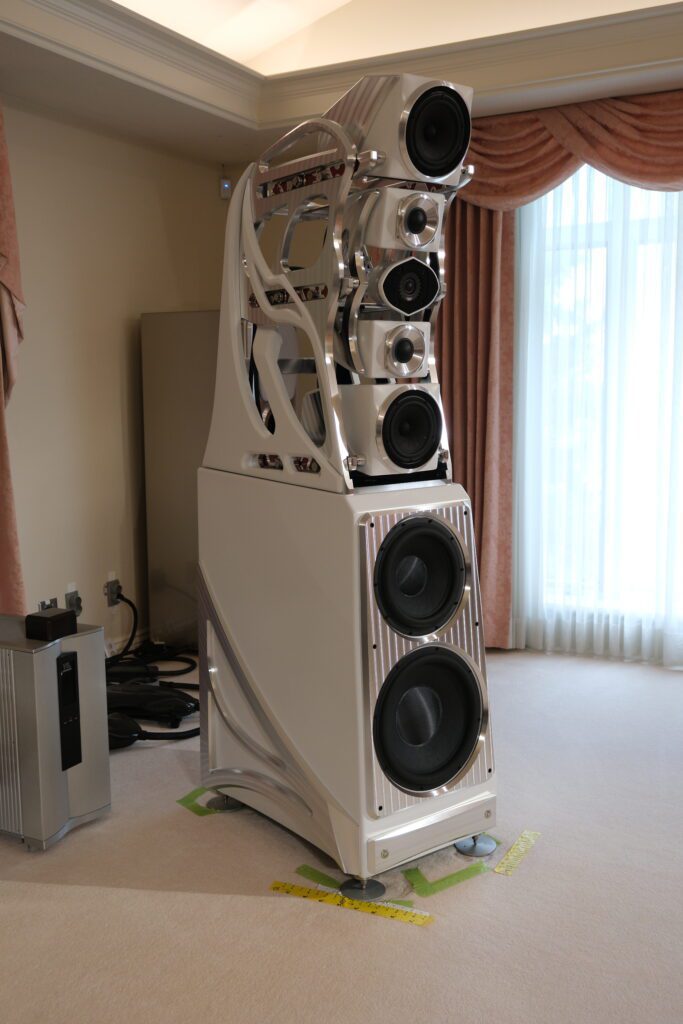
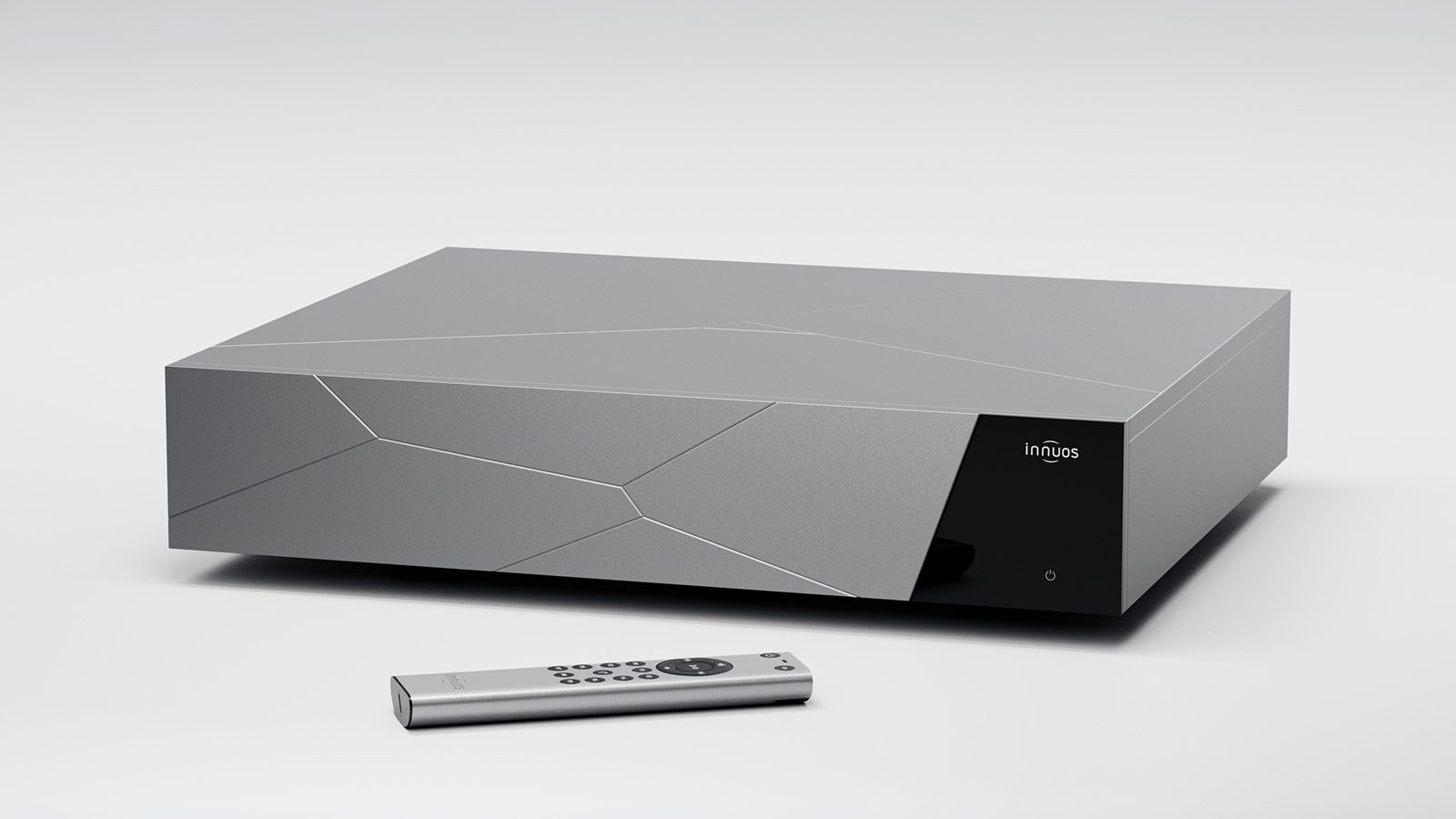
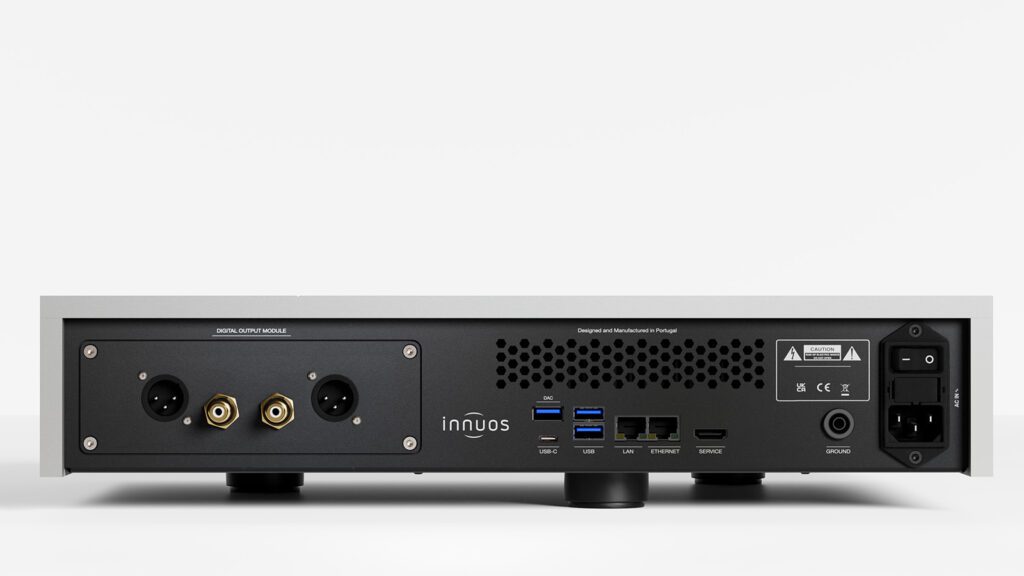
The playback system in the SS Great Britain 1 Suite will also feature Wilson Audio Sabrina loudspeakers, the latest Michell Gyro turntable, cables by fellow Brits Chord Company, plus a packed Innous music server. 

There will also be special show-only offers on the Mojo 2 (v1), Qutest and Hugo 2 DACs.

SDD INTROS THE OSSETRA MONO POWER AMP

28 January 2026: High-end audio distributor Sound Design Distribution is delighted to be introducing the Ossetra mono power amp to UK audiophiles. Marking a significant upgrade in Mola Mola’s proprietary Trajectum class D amplifier technology, the Ossetra is a 350W/8 Ohm fully-bridged mono power amplifier in the brand’s signature wave-shaped half-size chassis. 

Its design, which is fully balanced from input to output, features a newly engineered power supply, a new discrete class A input stage and all new discrete class A gain stages.  

The uprated power supply has allowed Mola Mola’s engineers to realise a significant reduction in noise while improving both dynamic and continuous output power, together with vastly increased current capabilities in a fully-bridged output stage, creating an amplifier which is able to drive practically any load. 

The new discrete class A, DC coupled input stage, similar to that deployed by the Mola Mola Makua preamplifier, delivers a high impedance input for the source or preamp, addsgain and ensures that no DC or other signal unrelated noise enters the power stage. In addition, shunt regulators draw from the power supply the current required to dynamically meet load demands across the entire audio band while achieving superior levels of noise rejection.  

Input stage distortion at approximately -150dB (~0,000003%) provides for an exemplary power stage performance involving new discrete class “A” gain stages, which generate the gain needed for the Ossetra’s high feedback amplifier design but with significantly reduced noise and distortion. An amplifier bandwidth of over 100kHz keeps the frequency response ruler flat within the audio band.  


Brief specifications: 

Output power: 350W @ 8Ω, 700W @ 4Ω, 900W @ 2Ω 

Gain: 22dB or 28dB (switchable) 

Unweighted Signal/Noise Ratio: 130dB 

Distortion (THD, IMD): <0.003 % (all frequencies and power levels) 

Input Impedance: 200kΩ 

Output Impedance: <0.002Ω (DF>4000), all frequencies 

Bandwidth: >100kHz 

I/O: Balanced and unbalanced input, selectable by a switch; 2 pairs of Furutech binding posts biwired directly to the amplifier PCB using Kubala-Sosna cable; Trigger input (3.5mm jack) 

Dimensions: 200mm (W) x 110mm (H) x 355mm (D including speaker terminals); Weight: 7 kg 


Mola Mola Ossetra Mono Amplifier typical UK retail price (inc VAT): £7,999.00 

Availability: January 2026 

Introducing the Børresen Bass Module 3 (BM3)

27 Jan 2026: Audio Group Denmark proudly introduces the Børresen Bass Module 3 (BM3) — a breakthrough in low-frequency performance. Designed and handcrafted in Denmark, the BM3 delivers deep, dynamic, and naturally detailed bass that integrates effortlessly with any high-end audio system.

Developed by Michael Børresen and Flemming Erik Rasmussen, the BM3 fuses advanced acoustic engineering with refined industrial design. Its very rare folded dipole architecture eliminates room pressurization, producing fast, controlled, and distortion-free bass that brings every musical performance to life. The opposing polarities of the folded dipole principle create the desirable in-room cancellation that effectively allows the BM3 to integrate far more easily with the listening environment than a conventional subwoofer.

Superior Bass Performance

Driven by a 2 × 300W Aavik UMAC amplifier and four custom 8” DCC8 Neo drivers arranged in a boxer engine configuration, the BM3 delivers extraordinary precision and depth. Its counteractive design eliminates self-generated vibrations, producing a sound that is both powerful and impeccably balanced—infusing every loudspeaker system with lifelike realism and emotional presence.

Børresen Technology Foundations

  • Folded Dipole Architecture
    for superior room integration

  • Fully Analog Crossover
    with an adjustable low-pass filter (30–80 Hz)

  • Ansuz Tesla Coil & Analog Dither Technologies
    for ultra-low noise

  • Advanced Cabinet Construction
    for optimal mechanical stability and performance

KEY TECHNOLOGIES

LIGHT, FAST, POWERFUL: THE BM3 BASS DRIVERS

The Børresen BM3 features four 8-inch Børresen DCC8 Neo drivers with spread-tow carbon fiber diaphragms reinforced by an extremely light aramid honeycomb core. This advanced composite delivers exceptional stiffness-to-weight ratio for ultra-fast transient response and minimal distortion. Paired with high-performance neodymium motors and double copper caps, the drivers produce deep, articulate bass with remarkable clarity, speed, and authority.

A HEART THAT SETS THE PACE

The BM3’s integrated amplifiers use the latest Pascal technology with high-speed UMAC switching modulation. With lower noise, reduced filtering requirements, and minimal output impedance, it delivers precise control over the four drivers, ensuring dynamic, accurate, and high-resolution bass performance across the full frequency range.

CROSSOVER TECHNOLOGY THAT REDEFINES BASS CONTROL

The BM3 incorporates an adjustable, fully analog low-pass crossover that integrates with virtually any loudspeaker, introducing no signal delay for perfect time alignment. It precisely filters higher frequencies so the BM3 reproduces only the intended bass range, shaping the roll-off to manage transitions, reduce overlap and distortion, and deliver tight, accurate, and seamlessly controlled low-end performance with enhanced overall clarity.

MSRP (Prices may vary by market):
Børresen BM3 € 18.000

Specifications

Børresen BM3

LINE INPUT
Maximum input 9V RMS (mono) or 4.5V RMS (stereo)
Input impedance 10kohm

VOLUME CONTROL
56 0.5dB steps

NOISE REDUCTION
Active Tesla Coils: 36
Active Square Tesla Coils: 72
Dither circuitry: 3
Anti Areal Resonance Coils: 3

POWER CONSUMPTION
Standby: <1W
Idle: <30W

INPUT VOLTAGE
100–240 V
Max current 10 A

ENCLOSURE IP RATING
IP20

DIMENSIONS
Height: 585 mm | Width: 399 mm | Depth: 429 mm
Height: 23.03 in | Width: 15.71 in | Depth: 16.89 in

WEIGHT
46,4 kg / 102.3 lbs

FREQUENCY RESPONSE
20 Hz – 120 Hz

INPUT IMPEDANCE
10kΩ

DRIVERS
4 × Børresen DCC8 Neo

FINISH
High gloss black w. carbon details

For more information, please contact:
[email protected]
audiogroupdenmark.com

2026 Awards – Phono Stage Under £5k

Welcome to a very special hi-fi+ Awards. Fate (and producing a dozen issues a year) has colluded to make this issue a combination of our 250th edition and our annual Awards special edition. We have scoured the last 12 months of issues to find the best products we’ve seen across a range of categories.

In the past, we had very fixed categories for our annual awards, but that doesn’t fully reflect the current shape of the audio industry. While some categories remain constant, others change and branch out into new avenues. For example, a few years ago, there were so few streaming integrated amplifiers that the category did not need to exist. Now, we have enough to make them distinctly different from integrated amplifiers, without the need for a streamer or DAC. It’s not that one has eclipsed the other; it’s not that one is obsolete and the other state-of-the-art. These are now two divergent lines of ‘integrated amplifier’ that demand their own Awards. To lump them all together as ‘integrated amplifiers’ does the reader no favours, as it adds to confusion rather than pointing out the best we’ve tested.

Similarly, we have sometimes found categories where new products were commonplace a few years ago have reached a zenith. Thus, the category hasn’t received as many new products this year. Portable Audio DACs are a fine example. There are doubtless new models coming soon, but there aren’t enough yet for us to choose an example this year.

Each year we say this, but it’s worth repeating. The best in each category may or may not combine to build the best systems. There have been many cases over the years of people buying an Award-winning source, amplifier, and loudspeakers only to find the pairing a sonic mismatch. Our view of our awards is that they are a finger pointing the way. That finger often points to a good dealer who can assemble a system around that component, blending it with other devices like a master cocktail mixologist.

This is also why we include Highly Commended products. Not everyone likes the same things, and not every component works beautifully with every other. Our Highly Commended products are the result of the audio world being so good at its job, picking the very best from the already excellent is sometimes a very nuanced decision. By including Highly Commended products, we introduce a wider selection of outstanding devices to your next shortlist.

Awards and celebrations

Combining this Awards issue with our 250th also means we get to think about past masters in audio. There’s an interesting question surrounding the best of the past with today’s finest products. How do they compare? I think in many respects, the outstanding products this year are as good as we can get at the moment. They hold no comparison with even the finest past glories of 26 years ago; things have moved so far forward.

Sonically speaking, the very best in digital audio today leaves everything from even five years ago in the dust, so looking back to the last century is almost not worth it. And while things might seem less clear-cut in other aspects of audio design, I still maintain that today’s audio outperforms nearly everything from the 1990s, and today’s best is the best you’ll ever hear. Hopefully, that trend continues, and the sound of good audio in five or ten years keeps getting better.

We’re still a long way from achieving sonic realism in the home, and even the best audio systems cannot fully replicate the whole live experience. But they get ever closer; the top-end has the drama, scale, detail and dynamics to take your breath away, but even the most affordable audio gets closer than ever now!

One thing is sure: your next hi-fi product is on the following pages of this magazine! I hope you enjoy the search for the best as much as we did.

2026 Awards – DACs over £10k

Welcome to a very special hi-fi+ Awards. Fate (and producing a dozen issues a year) has colluded to make this issue a combination of our 250th edition and our annual Awards special edition. We have scoured the last 12 months of issues to find the best products we’ve seen across a range of categories.

In the past, we had very fixed categories for our annual awards, but that doesn’t fully reflect the current shape of the audio industry. While some categories remain constant, others change and branch out into new avenues. For example, a few years ago, there were so few streaming integrated amplifiers that the category did not need to exist. Now, we have enough to make them distinctly different from integrated amplifiers, without the need for a streamer or DAC. It’s not that one has eclipsed the other; it’s not that one is obsolete and the other state-of-the-art. These are now two divergent lines of ‘integrated amplifier’ that demand their own Awards. To lump them all together as ‘integrated amplifiers’ does the reader no favours, as it adds to confusion rather than pointing out the best we’ve tested.

Similarly, we have sometimes found categories where new products were commonplace a few years ago have reached a zenith. Thus, the category hasn’t received as many new products this year. Portable Audio DACs are a fine example. There are doubtless new models coming soon, but there aren’t enough yet for us to choose an example this year.

Each year we say this, but it’s worth repeating. The best in each category may or may not combine to build the best systems. There have been many cases over the years of people buying an Award-winning source, amplifier, and loudspeakers only to find the pairing a sonic mismatch. Our view of our awards is that they are a finger pointing the way. That finger often points to a good dealer who can assemble a system around that component, blending it with other devices like a master cocktail mixologist.

This is also why we include Highly Commended products. Not everyone likes the same things, and not every component works beautifully with every other. Our Highly Commended products are the result of the audio world being so good at its job, picking the very best from the already excellent is sometimes a very nuanced decision. By including Highly Commended products, we introduce a wider selection of outstanding devices to your next shortlist.

Awards and celebrations

Combining this Awards issue with our 250th also means we get to think about past masters in audio. There’s an interesting question surrounding the best of the past with today’s finest products. How do they compare? I think in many respects, the outstanding products this year are as good as we can get at the moment. They hold no comparison with even the finest past glories of 26 years ago; things have moved so far forward.

Sonically speaking, the very best in digital audio today leaves everything from even five years ago in the dust, so looking back to the last century is almost not worth it. And while things might seem less clear-cut in other aspects of audio design, I still maintain that today’s audio outperforms nearly everything from the 1990s, and today’s best is the best you’ll ever hear. Hopefully, that trend continues, and the sound of good audio in five or ten years keeps getting better.

We’re still a long way from achieving sonic realism in the home, and even the best audio systems cannot fully replicate the whole live experience. But they get ever closer; the top-end has the drama, scale, detail and dynamics to take your breath away, but even the most affordable audio gets closer than ever now!

One thing is sure: your next hi-fi product is on the following pages of this magazine! I hope you enjoy the search for the best as much as we did.

Tech Talk: Stephen Cosh of Audio Origami

Audio Origami is one of the UK’s hidden audio gems. Stephen Cosh is an expert engineer in his own right and has been quietly making a range of vinyl-centric audio products for decades. The company is best known for its tonearms, a modern derivation of the evergreen Sphinx arm. Its sister brand, J7 Rewires, is famous for its ability to repair, rewire and refurbish all makes of tonearm.

We caught up with Stephen recently and asked him about his company, what goes into making a high-performance tonearm, and more…

Tell us a little about yourself!

We’re a 20-year-old tonearm manufacturer, also producing tonearm cables, bespoke turntable isolation systems, and custom hi-fi racks.

How did the PU8 come about?

The PU8 Reference tonearm resulted from two years of dedicated research into armtube damping, initially aimed at enhancing our PU7. Most tonearms utilise bare aluminium, titanium, or carbon-fibre tubes, all of which transmit ground, airborne, and groove-induced vibrations. After thoroughly studying these behaviours, we devised a repeatable, high-precision method for manufacturing a constrained-layer armtube: an outer carbon-fibre tube bonded to an inner aluminium tube with a specialised damping resin. This construction is considerably more resistant to vibration.

We then re-engineered our Meta Material Arm Damping System (M.M.A.D.S.) to function within this new tube. It provides additional damping and supports the internal wiring to reduce resonance and RF interference.

Because the armtube marked a significant advancement, we designed a completely new baseplate and gimbal to complement it. Both parts are machined from stainless steel and polished to a mirror finish.

When did development for PU8 begin?

Development started in late 2023 and finished with the PU8’s launch in 2025. The longer timeline shows our dedication to making every part (except the Japanese-made bearings) entirely in Scotland.

What challenges did you face in producing the PU8?

The most challenging aspect of production is achieving consistent quality in the constrained-layer armtube. Each one is handcrafted and takes about four hours if everything goes smoothly. Polishing the stainless-steel parts is equally labour-intensive, but the flawless finish is one of the first things customers comment on; photographs never quite capture it.

What are the tonearm’s strengths?

The PU8 Reference is our flagship tonearm. It provides exceptional stability, very low noise, and excellent tracking performance. Designed to safeguard the cartridge’s signal from groove to cable, it easily surpasses many tonearms priced two to three times higher. 

Manufacturer

Audio Origami

audio-origami.co.uk

+44(0)7894 945 787

Read more Audio Origami reviews here

Back to Reviews