Up to 37% in savings when you subscribe to hi-fi+
hifi-logo-footer

Begin typing your search above and press return to search. Press Esc to cancel.

Chord Electronics Ultima Integrated

A year ago, when I was visiting my local hi-fi dealer, he told me rather excitedly about a new integrated amplifier he had heard an early pre-production sample of. He was so enthusiastic that I made a mental note to get hold of one for review. That amplifier was the Ultima integrated amplifier from Chord Electronics.

It made its world debut at the Munich High-End Show last May but was only unveiled in the UK at the Bristol Hi-Fi Show in February. 

It has an interesting backstory because, in this model, we see the Ultima technology Chord Electronics introduced five years ago in its high-end amplifiers trickling down to an integrated amplifier for the first time. 

Chord Electronics started producing amplifiers for consumers and professional recording studio environments such as the BBC and Abbey Road. Since then, it has expanded into streamers, DACs, and phono stages.

Avionics background

John Franks, who founded the company in 1989, had a background in the avionics industry with the likes of Raytheon, AT&T, and Marconi Avionics. This experience, he told me, shaped the way he approaches design. 

Chord Electronics Ultima Integrated

I was interested in learning more about the Ultima and how it came about, so I went to talk to him at the Chord Electronics factory. Asked to summarise his design philosophy, Franks said: “Being prepared to go as far as you need to go to make the very best thing that the technology of the time can do. And technology is always improving. In avionics, you cannot short-change and compromise a design because, if you do, planes can depart from proper flight. You must be prepared to push the envelope, and I think I have brought that philosophy over from avionics. It’s no compromise. It’s what I always wanted to do, and it’s been a helluva ride.” 

The technologies that have trickled down to the new Ultima integrated are Chord Electronics’ dual feed-forward error correction and ultra-high frequency, switching power supplies.

Dual feed-forward

The dual feed-forward technology is based on a paper by the legendary Malcolm Hawksford at Essex University. It was then taken up and refined by Bob Cordell of Bell Labs before being further developed by Chord Electronics’ John Franks. Franks progressed Cordell’s dual feed-forward error correction topology and incorporated his own concepts in ultra-high-frequency power supplies that have underpinned Chord’s amplifier range since 1989.

As many regard the power supply as the beating heart of an amplifier, let’s look at that first. In a nutshell, the Chord Electronics switch mode power supply runs at 80kHz, which Chord says means it doesn’t interfere with any audio signals. The incoming power is filtered and rectified and then chopped using high-voltage MOSFETs. It is then passed on to a special ceramic-cored high-frequency transformer, rectified again and is then fed to Chord’s Dynamic Coupling system. 

This couples the amp’s positive and negative rails with a strong magnetic flux to help cope with any high demand. Running the power supply at 80kHz also means the transformer can be much smaller. 

Such power supplies were initially developed for use in the aerospace, telecommunications, and data processing industries where they needed high power in a space-efficient format. However, early variants used in the audio industry were often criticised for electrical noise, poor reliability, high engineering costs and generating electromagnetic interference.

Ten years after

In his white paper on his amplifier designs, Franks admits that it took him 10 years of “perseverance and innovative engineering” to overcome those problems, but he is adamant that this was the right approach.

He told me: “It is about controlling a drive unit rapidly and some of these 15in drivers are big and maybe have a compliant mass of 100g. It takes a lot to stop and start them within microseconds and you’ve got to draw down energy from your power supply very quickly. High-frequency switching power supplies can do that, whereas analogue supplies struggle. 

“Smaller capacitors are faster to respond and also the recharge time on a high-frequency power supply is so much faster. People think they always have RF noise, but there isn’t if they’re designed right. Analogue supplies are passing anything that’s on the mains, and that could be anything, and a lot of it could be RF. So it is a total misconception.”

For those reasons, Franks has stopped using huge storage capacitors in his power supplies and opted for multiple, smaller ones. He believes smaller capacitors respond faster to charging and discharging demands than larger ones. The Ultima boasts four high-power line input phase-corrected power supplies designed to deliver excellent transient response. 

Sliding bias

The amplifier operates as a Class AB sliding bias design, which means it operates in Class A most of the time, with Class B operation only coming into play in the most demanding situations. The output stages use Chord’s own metal-on-silicon MOSFET devices, made for them in an aerospace-sector fabrication house. They are a dual-die design, which means they are thermally coupled in production to match each other perfectly. 

Franks’s development of Hawksford and Cordell’s original dual feed-forward technology is the other exciting part of the amplifier circuit topology. The Ultima has two additional amplifier circuits that monitor and correct the difference between the output of the reference input, both inputs fed to the MOSFETs, and the output of the power MOSFETs. If this detects a discrepancy, the circuit will add a ‘difference signal’ to the input of the MOSFETs to correct it and provide an accurate output. This corrected output is then fed back as part of the amplifier’s overall global feedback.

Franks says that Class AB and B amplifiers have an Achilles heel. While more efficient than Class A designs, the N channel devices that handle the top half of the music waveform hand over to the P channel devices that deal with the negative part of the waveform, which is where crossover distortion is generated. The dual feed-forward circuitry is designed to minimise this.

Unboxing

As I unpacked and handled the Ultima, it exuded quality. It shares the same 28mm thick solid aluminium front panel with the recently introduced Ultima PRE 3 preamp. All of its casework is made from precision-machined, solid aircraft-grade aluminium.

It is a stunning piece of modern industrial design, and its reassuring solidity is complemented by the customary Chord Electronics light show supplied by an internal ring of LEDs. Although mainly cosmetic, Franks hinted when we spoke that any spurious RF can be dissipated within LEDs. 

The amplifier is minimalist in its styling, with just two large rotary knobs on the front panel to the left and right of the spherical on/off switch, which glows red when in standby mode and cycles from green to cyan to indicate it is ready to use. 

The left-hand knob controls the volume and, when pressed, allows input selection. It has a light circling that changes colour to denote the selected input. Input 1 is a balanced XLR while the other three RCA line inputs are unbalanced. It also has an XLR AV bypass and a balanced XLR preamp output on the rear panel. The right-hand knob controls balance and AV bypass.

You have chosen, wisely 

To evaluate the Ultima integrated I connected it to a pair of Russell K Red 120Se speakers, which are a favourite of mine. The Ultima, with its 125 watts of power, would drive them well. 

My music source was an Audio Note CDT-Five CD transport and DAC 5 Special, which provided a super-high-quality input. I did not use the balanced input, but anyone who has source components that provide a balanced output is well advised to do so.

Setting the Ultima up was child’s play. Controls are minimal, so you can’t go wrong. Inputs are clearly marked, and polarity is easy to discern, and with the coloured light that surrounds the volume/input selector knob easy to see even from a distance; once you have memorised which colour denotes which input, you should be ready for action. 

The remote control provided is also easy to use and responsive, so I used it throughout my listening. There is, of course, no phono input on the Ultima, but that is not unusual these days. Chord Electronics has its own to offer with the Huei MM phono stage and the Symphony if you have a moving coil cartridge.

Warmed to

I am pleased to say that the Ultima was one of those products that I warmed to from the very start. Straight in with a favourite track from guitarist Peter White, his version of the Johnny Nash classic ‘I Can See Clearly Now’, the Ultima impressed with its easy, detailed, layered, and dynamic presentation, portraying each player of this gorgeous instrumental in their proper place within the music. It was free from random fireworks or pitching elements at me that did nothing to enhance my appreciation of the music. No, the whole track hung together well, with great insight into how White played each note. The bass line was tight, tuneful and the Ultima conveyed its twists and turns beautifully. Drums and percussion were controlled and syncopated and the accordion part, often lost in the mix on poorer products, was well conveyed and separated.

Switching to the lovely ballad ‘Lo Siento Mi Vida’ from Linda Ronstadt’s Hasten Down the Wind album, the Ultima brilliantly conveyed the two guitars on the intro. It allowed you to hear the differences between them, while Ronstadt’s vocals came across as powerful yet sensual. The walk and growl of the bass line were well handled, and on the drumkit, you could hear various strikes of differing power and delicacy on snare or cymbals. And it all flowed beautifully with that dreamlike feel this track has.

Grabbing the Saxophonic album by sax ace Dave Koz, I was keen to play the track ‘All I See Is You’. The Ultima did not disappoint, conveying the body and ‘raunch’ of Koz’s tenor sax that gives it that typical quality you can only describe as ‘sexy’, and here it had all of that. The electric bass line that really drives the track along was conveyed with great pace and everything was in its place musically, playing its proper role in the appreciation of the track.

Ben Sidran is a favourite jazz singer/songwriter/pianist of mine and following up for me was ‘Sunny Side of the Street’ from his Enivré d’Amour CD. I know his voice well from seeing him live on many occasions and I can say the Ultima did justice to his style and sound. His vocals were expressive and characterful, while his Yamaha DX7 synth had the top-end sparkle and liveliness it should have. The excellent, raunchy bass line was tight and tuneful, while the saxophone was nicely voiced and articulated. The track moved and flowed well, and its staccato, lilting rhythm was conveyed well.

Mood change

Changing the mood, I reached for George Benson’s excellent 20/20 album and played the track ‘No One Emotion’. This track flies along at a breakneck pace and is unbelievably tight regarding the musicianship and arrangement, and the Ultima took it in its stride. Pacey, detailed, tuneful, dynamic, and controlled, it captured Benson’s immaculate vocals very well while that relentless synth bass line drove the track along at breathtaking speed. I could also savour Michael Sembello’s scorching guitar solo, which the Ultima pitched with just the right combination of raunch and poise.

Whether it was delicate guitar work from Larry Carlton or Earl Klugh, scorching sax from Dave Koz or David Sanborn, heartfelt vocals from Linda Ronstadt, or hardcore rocking from ZZ Top, the Ultima handled it all with control, detail rendition, and dynamics while holding it all together as a musical whole. 

The integrated amp market has heated up in recent years, and buyers are spoilt for choice for good-sounding amps. Thanks to the Ultima, things just got even hotter. If you are in the market at this price point, you should consider the Chord Electronics Ultima.

Technical specifications

  • Type: Sliding Class A/AB, 2-channel integrated amplifier
  • Analogue inputs Four line inputs. Three unbalanced (RCA) one balanced (XLR). One AV bypass (XLR)
  • Digital inputs: None
  • Analogue outputs: One balanced pre out (XLR)
  • Input impedance 100k ohms 
  • Power output 125Wpc @ 8 ohms 
  • Frequency response 10Hz-200 kHz ±3dB 
  • Distortion THD 0.01 % (20Hz-20kHz) 
  • Signal-to-noise ratio 90dB on all inputs 
  • Dimensions (WxHxD) with Integra legs 480mm x 130mm x 380mm 
  • Weight: 14.75 kg
  • Price: £8,500, $11,250

Manufacturer

Chord Electronics  

www.chordelectronics.co.uk

+44 (0) 1622 721444

More from Chord Electronics   

Back to Reviews

Reed Audio Muse 1C and 3P

There are times as a reviewer when I find myself thinking along the lines of US Patent Office Commission Henry Ellsworth, who noted in 1843; “The advancement of the arts, from year to year, taxes our credulity and seems to presage the arrival of that period when human improvement must end.” In the case of turntables in particular, we’ve been working on the basic design process for some time, and it doesn’t require a terribly negative attitude to find yourself thinking like Ellsworth did. 

Of course, for every Ellsworth, there is a Vidmantas Triukas; Founder, owner, and chief designer of Reed Audio. His work with Reed is a physical riposte to the notion that there are no new ideas in analogue. We have already looked at the genuinely innovative 5P tonearm in Issue 219. Now it’s time to look at what happens when Reed produces something more conventional… to a given value of conventional anyway. The Muse 1C turntable and 3P tonearm have a cumulative price that could, with a straight face, be called accessible. Does this dampen Reed’s endlessly innovative approach?

Simplicity

The short answer is, ‘not really.’ The Muse 1C is the brand’s most affordable turntable, and this has resulted in some simplification compared to the more ornate models, but less than you might expect. Key to this is how the 1C rotates its platter. While larger models have the option of both belt and idler drive, the 1C requires you to choose one of those options and have the 1C built to that format. While the belt drive is the less expensive of those options, the Reed 1C we tested uses the arguably more exciting choice.

Reed 1C

This is a take on an idler drive where two opposing DC motors act on the central spindle. Reed avoids the issue of the motors working against one another by running them at slightly different speeds and fitting one with a different-sized drive wheel to ensure the rotational force is equal at all points. The assembly is then phase-locked loop controlled to ensure that it is synced together. One additional benefit of this wholly custom approach is that the 1C can rotate at 16 and 78 RPM as well as 33 and 45. 

This drive unit, which looks for all the world like an oversized watch mechanism, acts on a Delrin platter that, at a whisker under 3kg, is relatively light by the standards of turntables at this price point. This is topped with a leather mat and sits semi-flush to the plinth. Given the relative potency of the motors and the lightness of the platter, the Muse is unsurprisingly pretty quick to spin up and has been utterly pitch-stable during the test. 

Birch ply

The plinth itself is made from layers of birch ply, which can be left in its natural finish or sprayed black. Power comes via a supplied SBooster unit that connects at the back of the plinth. It is somewhat utilitarian but doesn’t need to be anywhere near your line of sight. The 1C is wide enough to accommodate any arm between 9 and 12 inches in length and has a mounting plate that will accommodate pretty much anything. If you fancy a new idler drive but don’t want to part with your existing arm, I would be surprised to find it doesn’t fit. 

Of course, Reed’s reputation for tonearms means I suspect that most Muse 1Cs will be equipped with one of the company’s models, and any in the company portfolio will fit. As we have already looked at one of the more sophisticated Tangential 90-degree pivot designs, the 3P seen here is a simpler model with a conventional single pivot point. The wand itself is available in 9.5, 10.5, and 12-inch lengths, and the latter was supplied for testing. 

This being a Reed device though, the fact the 3P only pivots around a single point doesn’t necessarily mean I’d describe what results as simple. The bearing had the behaviour of a unipivot but was secured via three pivots and both vertical and horizontal axis magnetic stabilisers. The wand arrives detached from the mount, and while connecting it up is more straightforward than with the Tangential Pivot models, it is still not a task to undertake lightly. One little bonus is that the headshell can be detached to simplify the cartridge fitting. 

Necessary complexity

Part of the reason for this complexity is that the 3P scratches any itch you could conceivably have about setup and adjustability. I’ve seen arms with the means to adjust VTA on the fly, but the Reed trumps that with the ability to adjust azimuth in use, too. A small control that, more than anything else, resembles a tiny regulator allows for fine adjustment around the pivot point. A heavier counterweight is available for weightier cartridges, but the stock one could balance a relatively large and heavy Vertere XtraX without issue. Depending on your life choices, the lead-out cable can be captive or attached via a terminal block. 

Reed 3P

The combination of deck and arm appeals more the longer you spend with it. The two products are undoubtedly engineering-led in terms of their design; nothing here that  doesn’t need to be, but there’s a beauty to the Reed that manifests itself via the fastidious nature of its construction and implementation. The drive mechanism is beautiful, and the 3P arm is barely less wondrous to look at, bridging the gap between engineering and sculpture. You don’t need to know anything about turntables to know this one is special. My inner Puritan would probably choose the black finish over the naked birch, but you have at least both options.

Using the Reed is logical enough once set up. It takes a few days to get used to the first button above ‘stop’ being 16rpm; a speed I’m not inundated with content for. The 3P arm also only sits very gently in its armrest unless you tighten a small screw on the underside to lock it into place. There’s no cover as standard but this doesn’t put the Reed at any significant disadvantage to most rivals that also do without. 

Idler no idea

I had no clear expectations for what the Reed would sound like before I heard it, partly because my experience of idler turntables in my domestic listening environment is effectively none. To this end, I started listening to The Cinematic Orchestra’s Every Day [Ninja Tune] because the opening duo of tracks are firmly etched into my brain after two decades of use. From the moment the double bass in ‘All that You Give’ delivers its first plucked note, it becomes clear that the Reed does things in its way.

Those double bass notes have a heft and tangibility that, for a fleeting second, brings to mind direct drive but, just as quickly, has you noting that the Muse 1C is articulate in a way that isn’t always the case with such systems. The potency of the low-end is balanced against Fontella Bass sounding as delicate yet tangible as I can recall hearing her. As she pushes the peaks, the fractional waver and break in her voice are apparent in a way that isn’t always the case when she’s underpinned as effectively as this. 

Further listening reveals this ‘hefty delicacy’ consistently repeats itself across a broad swathe of listening material. The excellent reissue of Ray Charles in Person [Atlantic] benefits hugely from what Reed can do. As a period recording, this isn’t something you would look towards for spleen-wobbling low end, but in the hands of the Reed, there’s a weight to the delivery that means the sublime ‘What’d I Say’ is that bit more forceful. When Charles begins singing, he’s the instant focus of your attention. That same tangible energy across the midrange and upper frequencies ensues that the Reed brings the material to life rather than simply reproducing it. 

Walking the balance

The balance that the Reed Audio walks in terms of the accuracy of what it does is very carefully considered. Given the attention to detail that has gone into its engineering, it perhaps isn’t surprising that it tends to come down on the side of accuracy over and above out and out joy with most material you play on. While it was in on test, a copy of The Egg’s Albumen [Indochina] showed up after a spell of nostalgia-driven browsing on Discogs. Listening to this on the Reed back-to-back with the resident Vertere MG-1 MkII showed the differences in approach between the two. The Vertere is the more euphoric of the two devices. It’s keener to latch onto the time signature of what’s being played and slightly airier while it does it.

The Reed hits back – quite literally – with a low-end extension beyond what the MG-1 and, indeed, pretty much anything else at this price point can generate. It’s also easier to discern specific instruments. The flute refrain in ‘The Fat Boy Goes to the Cinema’ is a much more tangible and vibrant experience on the Reed. The more constrained feeling of space around the recording should not be confused with any reduction in the scale of the recording itself, which still has a good degree of separation and three-dimensionality. 

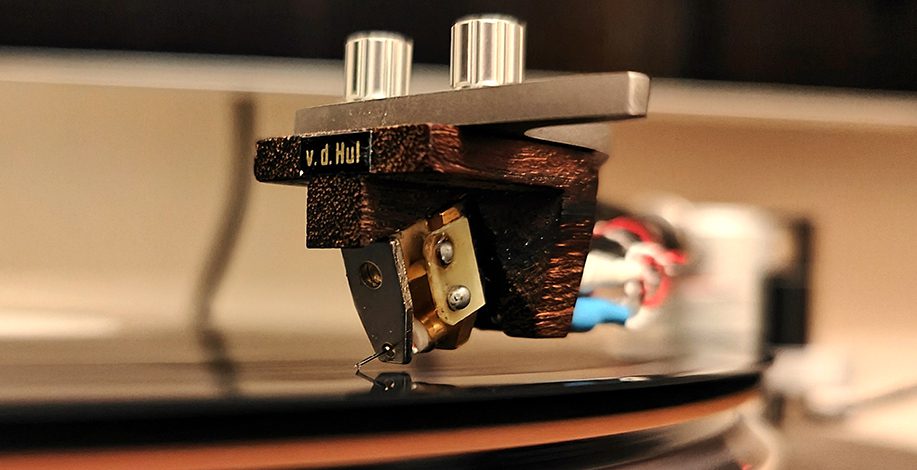
The tests with the Vertere cart had been helpful and a decent way of getting a handle on what the Reed can do, but it undersells what the 3P arm can do because it makes very few specific demands. Removing it and running with a substantially less expensive but significantly more idiosyncratic Van den Hul DDT II was a rather impressive demonstration of its functionality. The DDT II is capable of monumental performance for its relatively sane asking price, but only if its particular needs, which are perfect alignment, VTA, relatively light tracking force, and respectably high compliance, are met. The 3P effortlessly adjusted to these requirements and secured what realistically counts as the best performance I’ve ever had out of this particular DDT II in the many years it has lived here. 

The Whole Story

The character of the DDT II then makes itself felt in the Reed Audio Muse 1C/3P’s performance as a whole. It loses some of the utterly mesmerising bandwidth and accuracy of the Vertere. Still, listening to the brilliantly atmospheric Quatermass Seven by Little Barrie and Malcolm Catto [Madlib Invazion], there is a liveliness and richness that makes the Reed’s performance feel more natural and involving. It’s still the same balance the Reed struck before, but the gentle coloration of the Van den Hul works well in this instance. 

This absolute confidence and flexibility to respond to your ancillaries is the core of Reed’s abilities. The fastidious engineering and attention to detail have been done in a way that looks out rather than in. I suspect that any arm you mount to the Muse 1C, be it made by Reed or not, will deliver everything it is capable of without drama or issue and mounting a 3P on any deck that can accommodate it is likely to yield spectacular results, too. Together, they are ready for whatever the rest of the signal path holds without fear or favour.  

However intimidating it might appear at first glance, none of the engineering is here for the sake of being clever, and the more you use it, the more Reed’s Muse 1C and 3P’s distinctive way of looking at the challenges of analogue replay make sense. As long as the company keeps probing the limits of what turntables are capable of, I suspect any belief I might harbour that there is nothing more to achieve with vinyl can be put to bed.


Technical specifications

Reed Audio Muse 1C 

  • Type: turntable
  • Drive System: Friction, belt, two direct current (DC) motors
  • Speed: 16, 33, 45, 78 rpm; 78 rpm can be manually adjusted
  • Speed stabilisation: Quartz-based phase-locked loop (PLL). Max deviation ±0.05%
  • Inclinometer accuracy: 1mm per metre
  • Finish: Moonlit Black, Karelian birch
  • Packaging dimensions (LxWxH): 65x52x35cm
  • Weight: 15kg
  • Price: £9,998 (belt drive), £11,998 (idler drive)

Reed Audio 3P

  • Type: tonearm
  • Arm lengths: 9.5”, 10.5”, 12” (12” version tested)
  • Armwand options: Wenge, Makassar Ebony, Cocobolo, Teak (light, dark)
  • Mounting distance, mm: 205.5/266.1/283.8
  • Pivot-to-spindle distance, mm: 223/251.6/295.6
  • Overhang, mm: 17/15.4/13.4
  • Offset angle: 22.9°/20.7°/17.6°
  • Effective mass: depending on armwand
  • Price: £4,298

Manufacturer

Reed Audio

www.reed.lt

UK distributor

Absolute Sounds

www.absolutesounds.com

+44(0)208 971 3909

More from Reed

Back to Reviews

Out of the Box – BAYZ Audio

Our ‘Out of the Box’ Series features companies who might slip through the net from time to time. Companies with something more than hot air, who make loudspeakers but make them with a rare passion that drives them and shapes the products they design and build.

Bayz Audio are an independent manufacturer based in Hungary. We currently produce two loudspeaker models, the smaller Courante 2.0 and the bigger Counterpoint 2.0. Our loudspeakers come in a standard black matte finish. Custom finishes (different colour finish, black piano or carbon fibre enclosure etc) are available for a premium.

When did you start the company?

I have been designing high-end audio devices since 1982. I started working as an independent contractor in 1986 and founded BAYZ Audio in 1997. My first patent was in 1982 a power amplifier free of TIM distortion (Transient Intermodulation Distortion) with a slew rate above 100 V/µs, with open-loop bandwidth above 10 kHz, and class A operation with moving working point. I hold the patent for this solution.

Is making a loudspeaker an ‘art’ or a ‘science’?

I think that a good designer takes advantage of the possibilities offered by computer-aided design, modern measuring procedures and measuring systems. If the question concerns speakers as works of art, i.e. as musical instruments, then I must say that it is natural for the designer to shape his “work” to his own taste. Forty years of experience behind me helps me to use the two seemingly opposite directions in synergy. I always tried to get the best instruments as much as I could and I also went to many classical concerts, both of which helped my speakers to sound close to live music. If the question is about design, it is not for its own sake with my loudspeakers: completely rethinking the loudspeaker design with the opportunity provided the BRS (Bay Radial Speaker), the resulting form is absolutely functional, yet, fortunately, it also meets the taste of many, although the quite unconventional shape of the speaker also surprises a lot of listeners at first.

What makes your loudspeakers different to other brands?

First, I designed dynamic speakers, upright cabinets, then hybrid electrostatic, and broadband electrostatic speakers.   Then, I produced an electrostatic tweeter with 360-degree radiation, which was followed by its dynamic version, the BRS, which I patented throughout the world in 2011. Before 2017, I only sold my equipment in Hungary and Switzerland, mainly custom-designed systems; but then, I decided that the world needs to know about my tweeter. In 2018 I brought out my new carbon and composite-based speakers, which contain revolutionary new solutions. Not only the BRS, which is an extremely linear omni-directional tweeter with a bandwidth of 1-50 kHz without breakup mode. The arrangement of the speakers, the lowmass cabinet with its aerodynamic design are no everyday features either. The BRS gained me my reputation in the profession, but it is my current product line, the Courante and Counterpoint speakers, for which I am known by the general public throughout the world.

Where do you hope the company will be in five or ten years?

I have a big decision to make now in this respect. One option is to develop new electronics to advance the state-of-the-art. The other is to design a more reasonably priced loudspeaker for a wider audience using the same phenomenal BRS tweeter. I will probably go in both directions in the future, but, unfortunately, it is never as fast as we want.

Where can consumers hear about your products and find out more?

We have a dedicated website, a Facebook page – The Bayz Audio Lovers Group and any further information can be had through our extensive list of distributors throughout the world. In the UK, we are distributed by Hifi Traders based in Rye. They will be also happy to organise demo sessions in the comfort of one own’s living room (Contact number +44 (0)7842 126218 or dave@hifi guy.co.uk)

We also plan private presentations in our showroom in Hungary.

Bayz Audio Website


2025 Awards – Product of the Year, Innovation & Extreme Audio

Our annual Awards are a celebration of the best in audio. Specifically, we have seen the best audio products over the last 12 months. In most cases, that means products introduced between late 2023 and the final months of 2024. However, if they are new to us, that counts too!

Over the following pages, we’ve found what could well be your next great audio purchase. We’ve tried where possible to cover the broadest spread of product categories and prices. We have also listed both award winners and highly commended products in many categories. In these categories, we have been almost universally blown away by the performance of these products. It’s amazing to think that an industry as inherently mature as audio (the first audio products predate the widespread home electrification schemes of the 1910s and 1920s, and the first branch of ‘consumer electronics’ was all hi-fi related) can still produce innovative products that move the needle and improve audio performance. But, each year, we keep seeing improvements in almost every aspect of the replay chain, and often those improvements are significant.

It’s also fascinating to see how the audio industry changes over time, which can be seen by how our categories shift from year to year. Certain products remain perennial members of the Award roster; it’s unlikely that any audio Awards will ever exclude loudspeakers or integrated amplifiers. However, we’ve noticed that categories that almost didn’t exist a year ago are now a significant part of the audio landscape. Network Switch, Network Filter, and Active and Streaming Loudspeaker categories were all sections of the audio world that either didn’t exist or were way outside of hi-fi+’s purview to be considered until recently.

Selection

Selecting products for awards is never easy, but our product selection process makes it harder. We want to replicate the experience of those who enjoy their audio devices rather than those who approach every component with a face like a bulldog chewing a wasp. That means we have a two-step pre-review process before a product reaches the review stage. A potential review product is loaned to the reviewer; if they feel it isn’t the kind of product they would buy, it’s sent to another reviewer who might be more in step with how that product performs. If, at that point, we can find no one who likes what it does, we send it back. Why? The product may not have been suitable for any of our review team members. If not, and the product is just wrong, we find denying it the oxygen of exposure is better than people buying it because “it can’t be that bad!” Or worse, the review is subjected to careful and unscrupulous massaging; I come from a theatrical background. I’ve seen excoriating ‘crits’ of shows dressed up to sound upbeat on billboards. The same goes for audio. If it’s bad, it’s far better not to have our name by it, than someone buy it!

The crème of the crop

This means that every review in hi-fi+ has already made the grade. Our reviews are already the crème de la crème. So, our Awards are the crème de la crème de la crème! That’s damn crème-y! But even in a list of products that is so admirable, there are always some that stand above the rest.

Audio magazines seldom exist in isolation. Our team interacts with people in the industry and enthusiasts. Some products keep coming up because they have ‘a bit of a vibe’. An example of this (from last year’s Awards lineup) is Soul Note. If the name ‘Soul Note’ is brought into the conversation at an audio event, it’s usually followed by someone else saying, “Oooh… that stuff’s nice!” There are always a few products each year that keep getting mentioned in and around the audio business. Some of those ‘vibe’ brands are in the pages of our Awards, every year.

Regarding product shortlisting, we’ve found that relying on the review published at the time is often more critical than cross-examining the memory of the reviewer months after the product was shipped back to the manufacturer. While, once again, those ‘vibe’ products stick in the memory, a reviewer that might look at several products a month – and has done so for many years – is unlikely to remember the nuances of something they tested almost a year ago. As reviewers, we should look at each product with fresh eyes, so we should purge our memories of what came before (some of the least valuable reviews compare the 2024 model with long-discontinued previous designs from the last century). The review itself is more of a snapshot of what the reviewer felt while reviewing it.

Trickle down

Many of the products over the next pages are the stuff of dreams. And some dreams don’t always come cheap. While some are in the ‘affordable’ class, many of these products are at the ‘aspirational’ end of audio. Some are at the ‘astronomic’ (literally… one costs as much as a short space flight). But crucially, what we’ve seen over the years is that these products form the basis for more attainably priced products. The lessons learned in making something that costs a small fortune filter down into the real-world.

This is not simply an attempt to justify sky-high prices, it’s an understanding that the bandwidth of audio is expanding in more ways than one. By making products that cost a fortune, companies haven’t abandoned the entry-level products. They’ve ceded the floor to a new generation of manufacturers. And they are winning Awards!

HiFi Rose RS130

Viewed objectively, the arguments for dividing streamers into their front-end and decoding sections are good. All sonic and engineering ideals applied to splitting CD players into two boxes remain applicable. Still, they are augmented by ones specific to the streaming process. Over the years, I have tested several devices that have been sonically brilliant but about as pleasurable as a root canal to operate. Splitting off the front end of a streamer allows you to ensure you have an interface you can swear by rather than at and then choose the decoding to suit. 

HiFi Rose is one of the more consistent high achievers in terms of interface. The South Korean-based concern makes point-of-sale software, which benefits from stability and ease of use. Its Android-based streaming platform has some idiosyncrasies (more of which in a bit). Still, the platforms are ones borne of unique functionality rather than because the software was developed on a microscopic budget by a confused intern. For the most part, the company’s products include decoding on board (and, on occasions, amplification, too), but the RS130 is a transport only and will only output digital streams to the DAC of your choice. 

Impressive hardware

The hardware employed to achieve this is impressive. The RS130 employs a two-pronged method of ensuring signal integrity. The first concerns signal isolation. HiFi Rose has joined the increasing number of companies active in network audio in fitting an SFP-type network connection to the RS130. The principle behind this connection is that it avoids requiring a ‘PHY’ bus interface for a more conventional RJ45 connection. This reduces data errors and loss in the incoming stream. An adapter is supplied for those of us still muddling through on plain ethernet, and you can also use Wi-Fi via a dongle.

HiFi Rose RS130 

Neither is this the only means of cleaning up the incoming signal. The RS130 uses USB over fibre and HiFi Rose also produces the RSA720 USB hub that can have USB drives connected to it and then sent to the RS130 via a dedicated umbilical. Distributor Henley Audio supplied an example for testing, which was used in addition to my more conventional NAS library. Finally, you can simply connect a USB or SATA drive straight to the unit and it will index it. Anything that the RS130 plays is again buffered on a 256GB drive in the pursuit of signal stability. 

Clocks rock!

Having obtained the signal, the RS130 uses a high-precision OCXO 10MHz clock to maintain the sync and will also accept an external word clock feed (although HiFi Rose doesn’t make such a thing). The internal power supply is a 15v DC system and the board layout pointedly separates AC and DC sections to reduce the chances of interference. The signal is made available to optical, coaxial, AES/EBU and USB outputs, and you’ll need the latter if you want to stream the notional maximums of DSD512 and 768kHz PCM.   

Where the RS130 takes a swerve from normal streaming functions is the same as other members of the HiFi Rose family. In addition to accessing stored content and music streaming services (including Apple Music which remains a rare thing to find), the RS130 has an HDMI output that can send video content from a curated ‘Rose Tube’ channel or from Tidal while outputting the audio via the outputs. If you don’t want to connect a screen, show it on the whopping full-width 15.4” 1920 x 382 resolution LCD on the front panel. 

Love at first sight

This display dominates the visuals of the RS130, and not everyone who has encountered the review sample has been as enamoured with it as I am. I make no bones about the fact I love the RS130. It has a bit of visual drama that streamers are frequently devoid of, and it makes the RS130 a pleasure to use across the various ways you can interact with it. I find the app odd; the focus on video means it ‘flows’ a little differently from some rivals but is unconditionally stable and plays nice with Roon should you want to use that. Like everything I have ever tested from HiFi Rose, the build quality is peerless too. This is not a cheap device, but you can see where the money has gone. 

HiFi Rose RS130 silver

The bulk of testing for the RS130 has taken place with the resident Chord Electronics TT2 and M Scaler and these represent a stiff challenge for USB streaming transports.

Extensive reclocking

The extensive reclocking that the two devices do, Chord deliberately ‘aims off’ for indifferent quality USB connections and eschews all forms of external clock input as well, means that the effort that HiFi Rose goes to in the preservation of the signal ought to have a decidedly limited effect. It is a testament to the thoroughness of the engineering in the RS130 that this isn’t the case. 

What the HiFi Rose does, in comparison to running direct from a Roon Nucleus or going via a SOtM SMS-200 Neo, which are the two standard options here, is conspire to eke more order and coherence from the material being played. The ‘semi-live’ Disappear on Emily King’s Despite the Snow [Linn Records] is a raw and immediate recording that can start to sound slightly constrained as the scale builds. Some of this is baked into the recording itself, and removing it would sound wrong, but I was genuinely surprised at how long the RS130 delays the onset of it becoming apparent. 

Audio Decongestant

This effect is vaguely akin to an audio decongestant. Across a significant material selection, it allows specific passages of music you had long thought to be bandwidth-limited to reveal elements of their content you weren’t necessarily sure were present. I’ve also found it interesting that this is not consistently tied to the sample rate either. The 24/192 Qobuz stream of REM’s Automatic for the People [Warner] benefits from the gentle sense of order that the RS130 brings to proceedings where many 16/44.1kHz recordings don’t necessarily respond similarly.

HiFi Rose RS130 rear

Using the HiFi Rose with a Cambridge Audio Edge A, which has a decent digital board but one that is less absolutely committed to indifference over digital sources, the benefits of the RS130 are more repeatable and extend to a consistently greater sense of three-dimensionality and order to the material being played. Something else that is very repeatable is that using the RS130 as a Roon Endpoint and applying Roon upsampling settings to the RS130 to send on to the Cambridge Audio was consistently more enjoyable than running direct from the Nucleus. There’s an element of guesswork to this but I suspect that the effort that the RS130 goes to stabilise the signal before it is sent onwards for decoding does come into its own when the signal itself is being altered further up the chain.

Nuts and Bolts

And, even after the nuts and bolts of the performance of the HiFi Rose have been considered, the value-added elements still need to be considered. The USB over optical functionality did not yield an enormous step forward when tested here. However, this must be caveated by the admission that the drive in question is my NAS backup and was selected for resilience rather than sonic prowess. It sounds better via the RA720 hub than when connected directly to the back of the RS130. The video functionality is a more subjective area. I always enjoy playing with it when I have a HiFi Rose product here, but I honestly don’t know whether my enthusiasm would be sustained long-term. 

It’s important to stress that I think the RS130 is a convincing bit of kit, even if it never came within a mile of a television. This is a seriously proficient streaming front end that is a pleasure to operate and look at in a way that many rivals that can match the engineering at work can fall relatively short at. This device doesn’t forget the golden rule of network streaming, that the experience must match the cleverness and the result is a seriously impressive network front end that will drop into a wide selection of systems and delight with all of them. 


Technical specifications

  • Type: Network Streaming Transport
  • Inputs: USB+SATA, Wi-Fi (with dongle) and Ethernet (with SFP module), HDMI (video in and out)
  • Digital outputs: Coaxial, Optical, AES-EBU (XLR), USB, I2S
  • Master Clock Connections: 50Ω + 75Ω Input (10MHz input frequency)
  • Supported Streaming Services: Spotify Connect, Tidal, Qobuz, Apple Music, RoseTube and Rose Podcast Supported
  • Internet Radio: HiFi Rose Internet Radio App
  • Additional support: Apple AirPlay, MQA Renderer, RoonReady, Bluetooth V4.2 (with dongle)
  • Codecs Supported: WAV, FLAC, ALAC, AIFF, WMA, MP3, OGG, APE, DFF, DSF, AAC, CDA, AMR, APE, EC3, E-EC3, MID, MPL, MP2, MPC, MPGA, M4A Supported
  • Video formats supported: ASF, AVI, MKV, MP4, WMV, MPEG-1, MPEG-2, MPEG-4 H.263, H.264, H.265, VC-1, VP9, VP8, MVC,H.264/AVC (Base/Main/High/ High10 profile @ level5.1 up to 4Kx2K @ 30fps) H.265/HEVC (Main/Main10 profile @ level 5.1 High-tier up to 4Kx2K @ 60fps) Supported
  • CPU: Hexa Core: Dual-core Cortex-A72 up to 1.8GHz / Quad-core Cortex-A53 up to 1.4GHz with separate NEON coprocessor
  • Display: 15.4” TFT LCD & Capacitive Touch Screen (eDP)
  • Oscillator: High Precision OCXO Clock
  • Dimensions (WxHxD): 430 x 125 x 317 mm
  • Weight: 12kg
  • Price: £4,299, $5,195

Manufacturer

Hi-Fi Rose

www.hifirose.com

UK distributor

Henley Audio

www.henleyaudio.co.uk

+44(0)1235 511166

More from HiFi Rose

Back to Reviews
Tannoy Super Gold Monitor SGM10

There aren’t many loudspeaker or hi-fi brands that can truthfully say they have become a household name, but Tannoy is one of them. Tannoy has a phenomenal heritage, typified by models like the Super Gold Monitor SGM10 tested here. These are a re-working of a classic design from the Sixties.

Guy R Fountain kicked things off in 1926 by setting up the Tulsemere manufacturing company in London, but two years later he changed its name to Tannoy after the materials it used in its rectifiers – TANtalum and lead allOY. It started out with PA speakers but made the move into domestic speakers in the Thirties.

Landmark Moment

The landmark moment came when the company invented its dual-concentric drive unit in 1947. The original Monitor Gold Concentric range, which included the Super Gold Monitor, came along in 1967. Tannoy studio monitors have quite a pedigree and have been used on albums from artists such as Michael Jackson, The Eagles, Elton John, Billy Idol, Depeche Mode and Christina Aguilera.

All of this means that Tannoy will soon be celebrating 100 years in business. It has seen several changes of ownership, most recently in 2015, when the TC Group, of which it was a part, was acquired by Music Tribe, which is the parent company of Behringer and Burgera as well as British pro audio brands Midas, Turbosound and Klark Teknik.

In April last year, Tannoy appointed Symphony Distribution as its new UK distributor and in May launched the new Stirling III LZ Special Edition. They were followed in September by the Super Gold Monitor series – the standmount SGM10 at £5,995 with 10in dual concentric driver, and two floorstanders, the SGM12 (£8,249) with 12in driver and SGM15 (£11,495) with 15in driver. These were Tannoy’s first new speaker launches for seven years.

Revitalised

Tannoy’s global brand category leader David McCaffrey told me: “The UK market has been revitalised by the introduction of Symphony Distribution. Our strategic partnership has seen incredible growth and exposure within the UK. Tannoy turns 100 in 2026 and we have major plans for the future.” And to that end, he also revealed that Tannoy has plans for a new flagship premium series.

The Super Gold Monitor 10 is intended for stand mounting and features the 10in dual-concentric driver, where the tweeter is mounted at the centre of the bass/mid cone. It has a reflex-loaded cabinet with two forward-facing ports and, which is very unusual these days, two sets of adjustment to its frequency response by means of a screw-in knob that can be moved from hole to hole to tweak ‘Treble Roll Off’ and ‘Treble Energy’. The roll-off provides an adjustment of +2dB to -6dB from 5kHz to 30kHz, while the energy adjustment gives a shelved boost or cut of 3dB over a range of 1kHz to 30kHz. On the rear panel, two sets of high-quality gold-plated binding posts are provided so that the user can bi-wire or bi-amp them as required.

The speaker certainly has a presence about it, looking so different from the modern generation of tall, narrow-baffled designs. The 10in dual-concentric looks splendid with its classy gold-coloured mounting ring and those treble adjustment controls also give the speaker an unconventional demeanour. I guess you could say old-fashioned, but hey, this is a retro model, albeit a retro model brought up to date. 

Update

So what exactly has changed and how have Tannoy brought this Sixties design into the modern era?

One change is that the new cabinets are finished in real wood veneer as opposed to the melamine of the originals. They also use thicker, 19mm particle board and MDF inserts. Internal bracing has also been improved with plywood. The new model also sports a double sandwich front baffle brace, which is said to significantly reduce vibrations. The second reflex port is a new addition to help reduce internal standing waves. 

The 1.3in (33mm) aluminium/magnesium alloy dome tweeter sits in the middle of the 10in paper cone bass/mid driver and now uses a tulip wave guide as opposed to the old pepper-pot type, and its range has been extended up to 30kHz. The crossover network has also been brought up to date, using premium-grade polypropylene capacitors, high-power resistors and low-loss inductors that are hard-wired to avoid avoid the unwanted metal-to-metal contact of a circuit board.

But what remains the same is the philosophy behind the dual-concentric driver. The idea is that a more coherent and accurate sound can be achieved by integrating the tweeter into the centre of the main driver. This means that both high and low frequency sound waves emanate from a single point source, which Tannoy says helps to eliminate phase and time alignment issues that occur when sound waves from different drivers may not arrive at the listener’s ears at the same time.

Many Benefits

Tannoy says that the benefits include: point source imaging, coherent sound, wide dispersion for more uniform sound quality throughout the room, and a smoother fre-quency response.

So how do they sound? To find out, I hooked them up to my Audio Note TT3 turntable with Arm2/Io1 with S9 transformer and Meishu Tonmeister valve integrated amp. An Audio Note CDT-Five/DAC 5 Special CD front end was also on hand. And with 89dB sensitivity, the SGM10 is eminently suitable for partnering with the ever-growing roster of valve amplifiers now available, most of which have lower power output than transistor-based designs.

To begin with, I tried adjusting the treble energy and roll-off controls, but found that in my room, they were best left flat. It is worth experimenting though to get the best balance with your room and system. I also tried inserting the foam reflex port bungs, but I found these gave the music a more restricted and less open sound, so I left them out. I found the best balance in my room was achieved with the speakers around 18in from the rear wall and 12in from the side walls.

From the first few bars of music, I knew I liked the Tannoys. You might look at them and be afraid they are going to sound old-fashioned and coloured, but trust me, they aren’t. They are fun. They are dynamic, punchy, detailed and they really bring the music to life and got my foot tapping to the beat.

Friend of the Drummer

On the superbly recorded and very dynamic ‘It Didn’t All Come True’ from jazz singer/pianist Ben Sidran’s Bop City album, the first thing that hit me was how good the Tannoys are on drumkit. Drums had a real crack to them and when the drummer really hit those skins like he meant it, you knew it. The Tannoys also dealt with the delicate detail and nuances on cymbals and hi-hats. Sidran’s voice was open and articulate, and on fast piano runs when his fingers really flew along the keys, the notes were well separated and not blurred together. At the same time, the bass line was tight, deep and tuneful and really drove the track along with great pace.

I then reached for Linda Ronstadt’s ‘Hasten Down the Wind’ and the track Lo Siento Mi Vida. The SGM10 conveyed the body and inner detail of the guitars on the intro beautifully and Ronstadt’s voice came across with the emotion and power that I know and love. At the same time, I could follow what the pedal steel was doing and that is often lost in the mix on poor equipment. The bass line too was tight, deep and controlled.

With each subsequent track I played, I found myself warming to these speakers more. On Dave Koz’s ‘All I See Is You’ from the saxophonist’s Saxophonic album, his tenor sax was conveyed with great inner detail, power and its characteristic rasp and sensual edge, while the complex drum programming had great syncopation and the bass line moved well and drove the track along apace.

Touching Tribute

On George Benson’s touching tribute to the late, great John Lee Hooker on his That’s Right CD, the nuances and inner detail of each guitar note and his masterfully understated technique were well presented.

As impressed as I was with that guitar masterclass, so the vocal masterclass I was treated to on the track ‘So Amazing’ from Luther Vandross’s Give Me the Reason album also left me breathless. Luther is still my favourite vocalist of all time and the Tannoys captured his power, finesse, emotion and unique style very well.

These Tannoys are a thoroughly modern reworking of the Sixties original. They are dynamic, detailed, tuneful, fast and fun and they capture the essence and life of the music. They did not to me have any significant vices and I would not hesitate to recommend them at an exceptionally reasonable £5,995. You owe it to yourself to hear them. 

Technical specifications

  • Type: Two-way reflex-loaded stand-mount loudspeaker
  • Driver complement: One dual-concentric driver with 10in bass/midrange cone and 1.3in dome tweeter 
  • Frequency response: 40Hz-30kHz ±6dB
  • Treble adjustment shelving: ±3dB over 1kHz to 30kHz
    +2dB to-6dB slope over 5kHz to 30kHz
  • Crossover frequency: 1.2kHz
  • Impedance: 8 ohms
  • Sensitivity: 89dB/W/m
  • Dimensions (HxDxW): 350.5mm x 309mm x 523.2mm
  • Weight: 18.5kg
  • Price: £5,995/$7,267 per pair

Manufacturer

Tannoy

www.tannoy.com 

+44(0)1236 420199

UK distributor

Symphony Distribution

www.symphonydistribution.co.uk 

+44(0)7776 511691

More from Tannoy

Back to Reviews

AudioQuest system upgrades

Occasionally, we do a ‘system without a system’ review of the components in and around the audio chain. This test of AudioQuest system upgrades is one such review. This one doesn’t have an equipment support system. However, the power conditioner, power cables, interconnects (digital and analogue), and loudspeaker cables all come from the AudioQuest range. Most of them also come from the more affordable and attainably priced end of the brand’s extensive portfolio of products.

The point of the exercise is three-fold. First, does the notion of a coherent cable system still hold at less than atmospheric price levels? Next, what is the most logical point of entry if migrating from one cable system to another? Even the most ardent supporters of coherent cable systems argue that the digital domain has an ‘interrupt’. But is there?

Dramatis personae

Our AudioQuest signal cables for this test are the Cinnamon USB and Ethernet cables, Yukon RCA to RCA cable, and Rocket 33 loudspeaker cables. We also used NRG-Z3 power cords throughout. One is a three-metre cable connecting the wall to the Niagara 1200 power conditioner. The others are 2m cables to connect to the audio electronics. In the US, the PowerQuest 707 replaces the Niagara 1200. However, it remains current in the UK for the foreseeable future.

Note that I am being deliberately nondescript about the electronics and loudspeakers involved. For the record, the electronics varied from just one Primare-shaped component to some hot Melco-meets-Moon action. Meanwhile, the loudspeakers were Audiovector, Graham Audio and Revival Audio flavoured. The reason for the vagueness is the focus should be on resolving those three main questions, rather than be bogged down in discussing context. Especially as the results were consistent across the systems.

We’re also not going to get too caught up in the design criteria of all AudioQuest system upgrades in the system. The company’s website does a sterling job of explaining the materials science, the layout, the design and the ethos behind the designs and – as there are a lot of moving parts to this review – descriptions could move away from the purpose of the review itself.

Coherence

The easiest part to process across these AudioQuest system upgrades is coherence. The answer is at once ‘yes’, coherence applies across the cables and ‘yes-ish’ about how strongly this applies at the more affordable and attainable end. Ultimately, when you get to a really high-end level (and have a system with suitable resolving power to highlight the changes), having all the cables from the same ‘family’ makes even more difference, but even in more down-to-earth systems, taking a systematic approach still makes sense. Note that throughout I avoided using other brand cables with significant tonal shifts in performance; I wanted ‘similar but different’ instead of reporting on ‘cable as tone control’ changes. 

AudioQuest Rocket 33

Swapping out the loudspeaker cable for a more exotic one from a different brand, for example, changed the overall balance of the sound. It might have been more resolving or more detailed than Rocket 33, but the musical performance and even-handedness of the performance were lost in the process. The same applied with interconnects and power cords and held regardless of whether the ‘intruder’ cable was similarly priced, more, or less expensive. 

The largest deviation from that musical coherence was in the analogue interconnect, followed by power cords and then loudspeaker cables, but the drop in musical engagement was noticeable throughout. 

Point of entry

Given that changing the interconnect makes the biggest difference to the coherence of a system, it stands to reason the interconnect should be the first part of the cable system to change. Well… no! In fact, the first change remains outside the signal cables and begins with the power. Specifically, it begins with the power conditioner. Unfortunately, our ever-increasing reliance on mobile tech means more noisy power supplies are often left plugged in around the house. 

AudioQuest ThunderBird

The Niagara 1200 is a bulwark to keep noise that pollutes the AC mains supply from undermining your audio system. The NRG-Z3 power cords (that AudioQuest supplied) work in lockstep with the 1200. This has the greatest positive change to the sound, and as a very effective proof of concept, it’s not much of a jump from power to signal cables. Yes, there are good arguments to say what goes on before the IEC inlet is different to what happens after (which is why brands like IsoTek make power products but don’t encroach into signal-path cables), but there are equally valid sonic arguments that support a coherent approach from the wall to the speaker terminals. 

AudioQuest NRG-Z3

The digital divide

Of all the arguments about coherent cable systems, I feel the one that holds the most water is the difference between the digital domain and the rest of the system. The two Cinnamon cables worked exceptionally well – especially in the Ethernet cable case. However, they did not undermine the coherence of a rival brand’s analogue audio and power cord to anything like the same extent other ‘intruders’ could. Similarly, swapping out Cinnamon in the all-AudioQuest cable system did not undermine the performance like an analogue interconnect might. If I were to build an all-AudioQuest cable system, it would likely include AudioQuest cables in the digital domain. This is due to their excellent performance, consistency, and overall build. But it’s not a mandatory requirement.

AudioQuest Cinnamon

Note that throughout I have consciously and actively remained resolutely quiet on the rival brand. A lone cable as an ‘interloper’ in a coherent cable system is not showing its best side. If we were comparing cable systems, that would be different. 

Verdict

We’ve worked to ensure that getting all your cable ducks in a row makes a difference. Still, more profoundly than that, these AudioQuest system upgrades work exceptionally well on several musical levels. As described before, the main benefit of AudioQuest’s approach to making music is that it is inherently well-balanced. It’s a rich and detailed approach that doesn’t exaggerate. It creates a usefully large soundstage and nice clean yet deep bass. More than simply working well together, AudioQuest’s sonic approach benefits the broadest range of audio components. It’s far from just being an experiment to reinforce the coherence issue at a down-to-earth price point. These cables also just happen to be damn good and easy to recommend in almost any system! 

Prices and Contact Details

Cinnamon USB (Type A-B, 0.75m): £79/$99.95

Cinnamon Ethernet, 0.75m: £99/$109.95

Yukon RCA-RCA interconnects (1m): £459/$430

Rocket 33 loudspeaker cable (3m/8’ pair): £659/$669.95

NRG-Z3 power cords (2m): £309/$349.95

Niagara 1200 power conditioner: £1,099 

Manufacturer

AudioQuest

www.audioquest.com

+44(0)1249 848873

More from AudioQuest

Back to Reviews
Out of the Box – AudioSolutions

Our ‘Out of the Box’ Series features companies who might slip through the net from time to time. Companies with something more than hot air, who make loudspeakers but make them with a rare passion that drives them and shapes the products they design and build.

AudioSolutions

We are a young, yet professional, team of engineers, designers and artisansdriven by our motto “Art & Science of Speaker Engineering”. AudioSolutions was established in the autumn of 2011 by Gediminas Gaidelis – an enthusiastic electronics engineer whose history in manufacturing speakers extends back to the 2000’s. AudioSolutions is a small company of seven talented people with a common vision – manufacturing 100% handmade loudspeakers. We deliberately limit our output to three hundred pairs yearly to maintain high quality and exclusivity.

Today, AudioSolutions offers four different product lines each consisting of several different models. We start with Overture, followed by Figaro and Virtuoso and finish with our flagship model the Vantage anniversary. All our speakers share several technologies developed by us. One of which is called the Box-in-a-Box system. First introduced back in 2015 and immediately proven its potential, Box-in-a-Box technology was gradually improved and applied to all speakers we manufacture. Effectively it is a damped spring-mass system consisting of two boxes with different properties separated by dampening material. This requires precision technology, but creates a perfectly controlled vibration-free cabinet. The second technology being used and shared in all our speakers is called “Extended Band Midrange”.

Based on the evolution of human hearing and its sensitivity to different frequencies, we push crossover points as far as possible from the 1000- 2000Hz region to which we are most sensitive. By doing so we hear most of the information coming from one driver without phase distortions, crossover distortions or the fact that at the crossover point, you hear two drivers trying to play the same sound. The overall result is a very clear uniform and natural sound.

AudioSolutions recently introduced never seen before loudspeaker customizer tool which works just as a luxury car configurator. We were motivated to offer our customers a completely different level of experience in owning AudioSolutions. This was a natural move since we manufacture everything ourselves and we noticed that we can offer such an “Exclusive Personalization” as we call it.

Our goal is to offer about 200,000 possible combinations so that each speaker leaving our factory would be truly unique.

AudioSolutions Website

Music Review: Mark Ribot’s Ceramic Dog – Connection

Marc Ribot is a guitar hero. But one who’s name probably doesn’t come to mind as easily as many of his contemporaries. Maybe that’s because, while his solo discography is sensational, most of his work has been as sideman for some of the biggest names in the industry – and on some of their biggest and best albums. 

Ribot has worked with Elvis Costello (Spike, Mighty Like a Rose and more), Tom Waits (Mule Variations, Franks Wild Years and Rain Dogs… HE WORKED ON RAIN DOGS!), Laurie Anderson, T Bone Burnett, Norah Jones (The Fall), Diana Krall, Beth Orton and over 30 albums with the sax legend John Zorn. And this list barely scratches the surface. I first came across him when his work for Tom Waits, where his idiosyncratic style perfectly complemented Waits’ idiosyncratic vocals. 

It was this partnership that launched Ribot, but also re-launched Waits, in what was a radical departure from his previous boozy bar-room pianist persona into something altogether more angular and quite frankly weirder, in a good way. 

But Ribot’s solo work is also exceptional, in particular his excursions into avant-garde takes on Cuban guitar music, which with hindsight can be heard in many of his Waits performances, have a listen to the sensational playing on ‘Hoist The Flag’ from Real Gone for a rock solid example. 

Ribot claims his playing is limited by the fact he learned to play the guitar right-handed while being left handed – he realised early on, he claims, that he was never going to be George Benson. But, to our ears this doesn’t limit him, far from it, instead you hear him battling against this barrier, pushing the limits of what he can physically play while at the same time composing some of the finest guitar licks around. 

Ribot is currently a member of a couple of bands, of which Ceramic Dog is the most prolific. A super-talented trio that boasts Ches Smith on drums and Shahzad Ismaily on bass, both of whom are absolute masters of their art. 

They play a heady mix of new wave/punk/jazz, and are capable of creating one hell of a racket in the process. (Search out their sensational KEXP session on YouTube for an insight into the band live.)

Connection is the trio’s fifth album proper, although there have been some digital only releases as well, and it is an absolute belter. It’s buzzing with energy, and chock full of virtuoso performances, which are often slightly disguised in a haze of fuzz and feedback. 

The opening salvo of the title track followed by the Capitalism-bashing ‘Subsidiary’ sets the tone for the rest of side one: grungy, mid-paced and completely engrossing. It feels like it could explode at any moment, but Ceramic Dog keep you tantalisingly on the edge. 

And while Ribot isn’t known for his lyric writing, or singing, on Connection he shows he can turn his hand for some catchy couplets. ‘Soldiers in the Army of Love’ starts off quoting the Declaration of Independence before repeatedly announcing that Cermaic Dog are the Army of Love – and that’s an army we would happily sign up to.

The second side is slightly more contemplative, starting on the vinyl with a shortened version of possibly the most avant-garde piece on the album, ‘Swan’; for the full 10 minute take you’ll need to stream or download. It is worth it, for the exceptional guitar playing from Ribot and the wonderful cello from guest Peter Sachon. 

‘No Name’ follows in a similar manner before the album reverts to its punkier side with the shouty ‘Heart Attack’ before closing with the sensational ‘That’s Entertainment’.

Okay, so Connection doesn’t add much to the world of the avant-garde like much of Ribot’s other work, and it steers away from a lot of Ceramic Dog’s jazzier leanings, but in many ways it’s all the better for that. This is a full-on alternative rock album, and we love it for that very reason!

Back to Music

Fyne Audio F702SP

Those of us who witnessed the hatching of the Scottish speaker brand Fyne Audio in 2017 had high expectations. It takes more than hope and good wishes to build a successful brand, but the fledgling began life with an in-built advantage – its founding directors and key staff had previously worked at Tannoy and other established audio companies.

Even so, the rapid pace at which Fyne Audio extended its portfolio from an initial eight stereo models to an astonishing 33 today has left more than a few industry watchers scratching their heads. It is almost as if the company has been making up for lost time. Some have wondered whether such a strategy is sustainable, whether by offering such a large number of products, the company might be spreading itself too thinly.

Stick to the plan

Call it chutzpah or hubris, but Fyne Audio has stuck to the plan and is now launching two further models, SP or Special Production versions of its established F702 and F703 floorstanders. Adding the initials SP to existing speaker models is a tune Fyne Audio has played before across several of its ranges.

The smaller of the two new speakers, the F702SP, costs £12,000, £3,000 more than the regular F702. The extra buys components that are effectively straight from the company’s flagship F1 Series of speakers; better drivers, a cryo-ed crossover with higher quality components, Neotech wiring and a different plinth assembly. The changes add seven kilogrammes, bringing weight per cabinet to 37.5kg. 

Polar view

The review sample F702SPs were finished in a white piano lacquer. Alternatives are piano black, piano walnut and satin walnut. If subjective sonic performance is something of a contested area, aesthetic judgements are an absolute minefield. Fyne Audio admits the rather unconventional appearance of its F1 flagship series of speakers tends to polarise opinions and says the two F700SPs are a response that aims to deliver F1-type performance in a more conventional and, therefore, more broadly appealing package. They have succeeded, at least from a visual standpoint; at a little over a metre high and 30cm wide, the F702SP with its two 20.3cm (8 inch) drivers is conventional enough to be reassuring, but different enough to be interesting. 

The 15mm-thick sides and top of the pressed high-density birch-ply cabinets are curved to the rear so that the baffle (18mm thick) and the very much narrower rear panel are the only parallel surfaces. It’s a design strategy that helps discourage the formation of standing waves. Internal baffles and bracing provide stiffening of the cabinet walls but there is minimal use of damping material. Fyne Audio is one of several speaker manufacturers preferring to work primarily with the strength and native frequency response of plywood.

At the base of the rear panel of the F720SP are two sets of WBT binding posts, together with a small knurled screw terminal for users who wish to include the speakers in a system grounding scheme. Jumpers made from Neotech cable are provided.

Where’s the tweeter?

Those unfamiliar with the Fyne Audio shtick might glance at the two-and-a-half-way F702SPs and wonder where the tweeter is. The answer is: where a phase plug might otherwise be, in the centre of the upper of the two drivers. The tweeter is not a conventional direct radiator driver, but a magnesium-dome compression driver that fires through a horn concentric with the surrounding multi-fibre cone of the mid-range driver. Fyne Audio calls this arrangement IsoFlare, and in the F702SP, it results in a pairing of drivers that behaves as a point source from its cross-over with the woofer at 250Hz to beyond 30kHz. 

The mid-range driver has shallow depressions or flutes pressed into its circumference that Fyne Audio says reduces incident travelling energy and coloration. The lower driver features identical flutes, has a phase plug at its centre, and is loaded by a double chamber with a bottom-firing port. The port opening is centred over a tractrix cone on the upper surface of the plinth, dispersing bass energy through 360 degrees. The two-tier plinth on the F702SP is a beefier affair than the standard F702; thicker milled aluminium and chunkier feet housings add mass, stability and a look that speaks of quality. The provided Allen driver adjusts black-coated steel cone feet and cups from above. The F702SP presents amplifiers with a nominally eight Ohm load and has a claimed efficiency of 92dB. Some might be tempted to try single-ended triode amplification, although Fyne Audio suggests a 30-watt minimum is required and a maximum of 200.

Let’s talk about evolution

Today’s Fyne F700 series bears a striking superficial resemblance to Tannoy’s Definition 700 floorstander of 1993. Fyne Audio’s design head, Dr Paul Mills, seems to have been refining the basic design of this speaker for some time. By the way, that observation should not be taken as a criticism. It’s possible to point to several current speaker models from other manufacturers whose lineage can be traced back just as far.

When I evaluated an early production pair of the standard F702 in December 2019 I expressed reservations about its sonic refinement and a visible cabinet seam beneath the gloss finish. Later, the larger F703 delivered much more satisfactory sound quality but exhibited the same cabinet finish flaw – not a huge deal, but surprising nonetheless. Fyne Audio’s head of sales, Max Maud, says the early cabinet quality issues have long been sorted. Certainly, the construction and finish of the review samples bore out this claim, proving to be flawless on close top-to-toe examination. The F702SPs caused no tooth-sucking from a sonic perspective either. Immediate listening impressions – senses naturally on high alert for misbehaviour – were that evident attention to detail in voicing has resulted in a properly competitive level of sonic sophistication.

The F702SPs were placed a metre from the side walls and 80 cm from the front wall. They were driven by 130-Watt Quiescent T100MPA monoblocks, with a Grimm MU1 streamer and Origin Live Sovereign S turntable via a Mola Mola Tambaqui DAC and Mola Mola Lupe phono stage as sources. An icOn4PRO Balanced line stage did switching and attenuation duties.

There’s something about the sound of the F702SPs that is immediately and then enduringly appealing. They deliver an arrestingly high level of dynamic expression and combine it with similarly top-drawer imaging coherence to generate that almost tactile sense of performer presence that marks out a well-performing speaker from an also-ran.

Dynamic expression

Dr Mills is clearly among a relatively small cohort of speaker designers who understand that dynamic expression or power enables an audio system to persuade the human brain to buy into the illusion of live sound. The F702SPs initially come across as forward in the midrange, but on longer listening, it becomes clear that psychoacoustics are playing tricks. They are actually forward everywhere, from the low end to the very top; we might notice the midrange first because that’s part of the audio band we are genetically programmed to focus on. What gives the F702SPs their sense of irrepressible drive and dynamics is not a midrange standing proud by several dBs, but a high level of energy transfer that leaves many of the alternatives around the price point sounding by comparison rather flat and matter-of-fact.

Extended listening sessions with the already run-in review samples confirmed that Dr. Mills’ handiwork leans towards delivering musical engagement and enjoyment rather than transcribing the final scintilla of analytical detail. That’s not to suggest that the choice is binary for anyone with £12,000 burning a hole in their pocket. The F702SPs achieve a level of transparency that I consider to be broadly competitive, but – and here it is again – that high order of energy transfer allows the F702SPs to sound both seductively musical, and also more efficient than Fyne Audio’s claim of a measured 92dB.

Back to bass-ics

No surprise that the F702SPs’ low-end extension, a claimed -6dB at 29Hz, is flattered by the energy transfer. Bass tune playing is powerful, on its toes and well-textured, the floor-firing port making the speakers less fussy about placement than many front or rear-ported designs that require careful positioning if they are not to overly excite room nodes and sound boomy.

The concentric tweeter and midrange offer similarly strong refinement. As assessed subjectively in the domestic setting of the listening room, dispersion and the hand-over at 1.8kHz sounded even and seamless, while the combined drivers exhibited no hint of the ‘cuppiness’ or nasality that marrs some other designs of concentric transducers. Complex mixes of low and high frequencies, such as the highest notes of piano and piccolo, were dealt with in a way that was sweet and free of grain. Unlike the F1 Series, the F702SPs aren’t equipped with a potentiometer to attenuate or boost the HF delivery, but their performance during the review period attested to well-judged in-room delivery of HF energy and I didn’t find myself mourning the absence of a trim pot.

Given the concentric driver arrangement, the F702SPs should be able to create sonic images with a high degree of solidity and stability accompanied by a marked refinement in layering and depth perception. And so they did, their abilities in this aspect of sonic performance enhancing the experience of listening to most material. What might be regarded as simple fare like jazz trio recordings was delivered with appropriate apparent dimensions and intimacy, while grand soundscapes such as that painted by the Royal Concertgebouw Orchestra in its Decca recording of Messiaen’s Turangalila Symphony were given full measure. The F702SPs do scale with a capital S; they invited listeners to appreciate the sheer size of the resources under the control of conductor Riccardo Chailly, while with a low subjective level of masking distortion at the same time allowing individual performers, particularly in the unusually large percussion section, to be easily followed. The class-leading dynamic expression was the cherry on top of this orchestral cake, rendering Messiaen’s percussive crescendos with a very satisfying weight and power.

Iconoclasm

Despite ‘Marmite’ looks, Fyne Audio’s F1 Series of five speakers is a strong seller with an average of 500-600 pairs a year being delivered to customers, according to Maud. However, distributors and retailers worldwide have been saying that they could sell even more speakers if F1-type sonics could be clothed in a more widely appealing visual package. Maud says the F1 Series will continue to head the Fyne Audio product catalogue. Their looks may be unusual – iconoclastic even – but they are an easily identified and unmistakable design statement by the brand.

I lived with the F702SPs for too short a time; Fyne Audio wanted the demo pair back to feature them at the Bristol HiFi Show. It was time enough, though, to form an appreciation of their uncommon blend of lively and winningly musical performance and handsome looks. The F702SPs will surely prove that Fyne Audio’s play on F1-type performance in a more conventional cabinet is firmly aligned with customer sentiment. 


Technical specifications

  • System Type: 2 ½ way
  • Recommended amplifier power (Watt RMS): 30 – 200
  • Peak power handling (Watt): 400
  • Continuous power handling (Watt RMS): 100
  • Sensitivity (2.83 Volt @ 1m): 92dB
  • Nominal impedance: 8 Ohm
  • Frequency response (-6dB typical in room): 28Hz – 34kHz
  • Drive unit complement:
  • 1 x 200mm IsoFlare™ point source driver, multi-fibre bass / midrange cone, FyneFlute™ surround with 25mm magnesium dome compression tweeter, ferrite magnet system. 
  • 1 x 200mm multi-fibre bass / midrange cone, FyneFlute™ surround.
  • Crossover frequency: 250Hz & 1.8kHz
  • Crossover type: Bi-wired passive low loss, 2nd order low pass, 1st order high pass cryogenically treated.
  • Dimensions – HxWxD: 1126 x 439 x 443mm (44.3 x 17.3 x 17.4”)
  • Weight – Each: 37.5kg (82.7lbs)
  • Finishes: Natural Walnut / Piano Gloss Walnut / Piano Gloss Black / Piano Gloss White
  • Price: £12,000 per pair US$ price to be confirmed

Manufacturer/distributor

Fyne Audio

www.fyneaudio.com

+44(0)141 428 4008

More from Fyne Audio

Back to Reviews
Meze Audio Liric 2nd Generation

It’s been two years since Meze Audio launched its midrange planar magnetic closed-back over-ear Liric headphones – although given they cost £1,799 at launch, the term ‘midrange’ is most certainly relative. It was a capable and enjoyable design, and found favour with any number of critics from any number of countries. But Meze Audio has never been a company capable of leaving well enough alone – and so here’s Liric 2nd Generation.

It may not be the most inventive model name you’ve ever heard, but it seems apparent to me that the Romanian outfit has concentrated most of its efforts on the engineering and design of the product, and next-to-none on the marketing chat. 

On the outside, it is – broadly speaking – evolution far more than revolution. These are relatively wide, relatively heavy headphones, and they feature magnetically attached earpads that are so generously padded they contribute to that width quite significantly. A fairly elaborately shaped aluminium yoke arrangement culminates in a not-at-all-elaborate friction-pole technology that constitutes the headband adjustment mechanism. The headband itself is quite wide and quite thin, and is covered with leather on the outside – the inside is fabric-covered and is nothing like as lavishly padded as the earpads. Which is, on balance, probably a good thing. The outside of each earcup is now made of striped ebony wood rather than covered in the leather of the original Liric. 

Going inside

Inside the earcups, Meze Audio has deployed a variation on the Rinaro-sourced MZ4 Isodynamic Hybrid Array planar magnetic driver arrangement first encountered as part of the first Liric model. It’s ovoid in shape (63mm x 92mm) and, mostly as a consequence of its fibreglass-reinforced polymer casing, weighs in at 71g. The actual diaphragm itself, though, is a trifling 0.08g despite having an active area of over 3500mm².

The diaphragm features a dual-coil arrangement, with a switchback coil on its upper portion and a spiral coil towards the bottom. The switchback coil looks after low-frequency information, while the spiral coil (which is positioned in order to fire more-or-less directly at the wearer’s ear canal) takes care of midrange and above. The location of the spiral coil is intended to overcome the tendency for sound to become diffused and rather vague if soundwaves are shorter than the physical depth of the earpad from behind which they originate. 

For Liric 2nd Generation, Meze Audio has developed what it calls the ‘Quarter Wavelength Resonator Mask’. This is, essentially, a metal plate that strategically covers some of the openings in the driver frame – the idea is that QWRM effectively attenuates high-frequency peaks for a smoother and less fatiguing listening experience.

This driver arrangement, suggests Meze Audio, can deliver frequency response of 4Hz – 92kHz. Both of these are frankly unlikely numbers, but they do at least give some indication of the company’s ambition and intentions for this new model. 

The Liric 2nd Generation is supplied with a necessarily large travel case that’s likely to constitute a large part of your baggage allowance if you do decide to travel anywhere with your headphones. There are a couple of cables inside the EVA case in a relatively little pouch. One is a 1.3mm length of braided Furukawak PCUHD (pure copper ultra-high drawability) with a 4.4mm Pentacon termination – it’s hand-braided in Romania, and features 140 conductors, each with a diameter of just 0.04mm. The other is a 3m length of soft TPE (thermoplastic elastomer) with a 3.5mm termination. Each cable splits in two at the headphone end, as each earcup needs to be wired, and terminates in a couple of the usual ‘click-to-fit’ 3.5mm jacks. 

There’s a 3.5mm / 6.3mm adapter in there too, and – in a profoundly optimistic move in the context of the size and price of these headphones – an aeroplane adapter too.

Getting connected

For the purposes of the test, the Meze Audio are connected to an Astell & Kern SP3000T via their Furukawa cable and to a Naim Uniti Star using their longer TPE cable. The digital audio player is loaded with content of various file-types and sizes, while the Naim is used to access a Cambridge Audio Alva TT2 turntable, a Rega Apollo CD player and both Qobuz and Tidal streaming services. 

And while it’s unlikely to come as a shock to find the Liric 2nd generation prefer a nice big digital file to a compressed alternative, and clean, heavyweight vinyl to a wafer-thin charity-shop alternative, what’s obvious from the get-go is that these headphones aren’t all that judgemental. Some designs will ruthlessly expose a 320kbps MP3 file and hold it (and, by extension, you) up for ridicule – but the Meze Audio will simply try to make the best of it.

But you didn’t spend the thick end of two grand in order to listen to Spotify’s free tier, did you? 

With a 24bit/96kHz FLAC file of Chick Corea’s Return to Forever [ECM] incoming via the digital audio player, the mastery of tonality and frequency response of the Liric 2nd Generation is obvious. The claims for a 4Hz – 92kHz frequency response are bold – but there’s no denying the Meze Audio delve very deep and reach very high. At the bottom of the frequency range there’s solidity and rapidity in equal measure, straight-edged entry into the leading edge of bass sounds and, as a consequence, sure-footed rhythmic expression. Stanley Clarke’s elastic electric bass-playing enjoys speed and variation, and it offers a completely solid foundation for the rest of the frequency information to ride on.

Brilliant substance

At the opposite end, the Meze Audio offer brilliance and substance in pretty much equal measure – there’s bite and shine to treble sounds, but they’re robust enough to avoid any hardness or splashiness. And that’s true even if you decide to explore the outer edges of your source player’s output (incidentally, the Liric 2nd Generation are more than happy to play very loud indeed if you like, and without altering their sonic characteristics in the slightest as they do so). In between, the midrange is absolutely alive with detail both broad and fine – the insight into a vocalist’s technique, motivations, emotional state, attitude, character and all the rest of it is profound.  

The entire frequency range hangs together seamlessly, with the Meze Audio unwilling to prioritise or underplay any particular aspect of it. Tonally, they’re really nicely balanced – in the final analysis there’s probably just a hint of warmth preventing them from being absolutely neutral – but the circumstances in which this is problematic never revealed themselves during the course of my test. And it was a longer-than-strictly-necessary test, too, simply because the Liric 2nd Generation are a compelling listen.

The soundstage the headphones create when playing a vinyl copy of Mogwai’s Come On Die Young [Chemikal Underground] is big from left-to-right and front-to-back, it’s organised and controlled with absolute authority, and the spaces between individual strands are rigorously observed. Despite their fearsome powers of separation and focus, though, the Liric 2nd Generation never present recordings as a collection of individual occurrences but rather as a complete and unified whole. There’s a tangible sense of togetherness, of performance, to the way the Meze Audio describe recordings, whether they’re small-scale or large.

Considerable headroom

The same album allows the headphones to showcase their dynamic headroom – which is considerable. Mogwai always revel in that ‘quiet/loud/REALLY BLOODY LOUD’ dynamic, and in the Meze Audio’s hands the distance between these three states are significant. There’s absolutely no suggestion of stress to the way the Liric 2nd Generation describe these variations, either – they simply track changes in volume and intensity, and let you have an eloquent and explicit account. 

If there downsides, then none of them have anything to do with the way these headphones sound. By anyone’s standards they’re quite expensive, no two ways about it – and Meze Audio’s assertion that they’re ‘portable’ is, I think it’s fair to say, a false alarm. Not only are they (and the case they travel in) too large to be practical, who wants their lovely striped ebony wood finish to be jeopardised by, you know, Other People? Anything could happen to your headphones if you leave the house with them. No, far better to invest in a more modestly priced pair of wireless headphones for outdoor use and leave your Meze Audio Liric 2nd Generation to get on with the serious business of providing all the indoor entertainment you might conceivably ever need.


Technical specifications

  • Type: Circumaural; closed-back; over-ear
  • Drivers: MZ4 Isodynamic Hybrid Array
  • Frequency response: 4Hz – 92kHz
  • Impedance: 61 Ohms
  • Sensitivity: 100 dB SPL @ 1 kHz, 1 V
  • Distortion: <0.15% @ 1 kHz, 1 V
  • Accessories: Case: hard EVA pouch with velvet lining; cables (1 x 1.3m braided Furukawa PCUHD copper with 4.4mm termination, 1 x 3m soft TPE with 3.5mm termination); airplane adapter; 6.3mm adapter; cable pouch
  • Weight: 427g (without cables)
  • Price: £1,850, $2,000, €2,000

Manufacturer

Meze Audio

www.mezeaudio.com 

UK distributor

SCV Distribution

www.scvdistribution.co.uk

+44 (0)330 122 2500

More from Meze Audio

Back to Reviews
Node Audio SS-1

We audio nerds are an interesting if often contradictory bunch. From the “cables don’t make a difference” crew to the “more outlandish the better” collective, and at all points in between, one thing that we all seem to agree about is vibration. While Brian Wilson and Mike Love were still on speaking terms Good Vibrations were aurally most pleasing, but in all other cases, we don’t like vibration in our music replay systems. This can range from footfall on a wooden floor wreaking havoc with our turntable to the micro-vibrations from a noisy power supply. 

I have, in my heyday, been known to try all sorts of things, a few wonderful but mostly weird, some of which would wander into the feared territory of snake oil. I am the proud owner of a Bedini Ultra Clarifier for example, a device that spins compact discs at super high speed, which, as far as I remember the blurb at the time, reduces static and thus improves the sound of CD. Allegedly. I also have a couple of dozen CDs with bright green edges (if you are old enough to remember that craze). I was an early convert to the control of vibration however, having had the effects of one anti-vibration device revealed to me one day in the demonstration room of the dealership in which I was working. I have purchased several sets of different vibration-damping products and still use them to this day. 

Audio civilian

Back in early June of this year my wife (an audio ‘civilian’) and I had the opportunity to visit Node Audio, which is based in a technical enterprise centre in the countryside just outside Cambridge. The invitation was issued after I reviewed their extraordinary Hylixa loudspeakers some time ago and gave them a very favourable rating. The Hylixas are made by an extremely advanced but time-consuming 3D printing process at their Cambridge facility, and I was keen to see how the whole thing worked. While there we were treated to a listening session in their dem room. Of course, the Hylixas were there, coupled with some high-end amplification and an expensive streamer. 

We listened to two or three tracks including one by the Irish singer/songwriter Cara Dillon and then my host said that he wanted to make a few adjustments to the system. He produced three palm-sized devices, which he explained were Node Audio’s latest development, the Support System One, or SS-1 for short. He lifted the streamer and placed the three SS-1s under it then sat it down on top of them. We returned to Cara Dillon and played her song again. Oh my goodness. She had sounded good the first time, now she sounded fantastic. The track featured her speaking her poetic lyrics as well as singing them. It was goose-bump inducing for the realism, for the almost palpable presence of her in the room with us. 

Node Audio SS-1 Riser Solo

Our host said that was just the first stage. He then placed a series of SS-1s, this time with what looked almost like elegant black flowers attached to the top under each of the loudspeaker cables feeding the two Hylixas, pushing the chunky cables down into the black flowerheads, which were two pairs of arms pointing upwards. He explained that these were also 3D printed, as were parts of the base SS-1s, melded with milled stainless-steel parts. We then listened to Cara Dillon for a third time and this time she was almost standing just in front of us, holographically real. When pressed, the lovely Node Audio folk explained that the SS-1s not only remove all vibration that could diminish the signal but eliminate little eddy currents of electricity and Radio Frequency Interference (RFI) too.

As we were leaving I asked Mrs K what she had made of what she had heard.  She expressed her astonishment that such small bits of equipment could make such a huge improvement to the listening experience, which was high praise indeed.

Listening at home

It is one thing to hear things in the pristine surroundings of a manufacturer’s dem room, but possibly quite another in one’s less-than-perfect listening room, in a system that would cost at retail significantly less than a pair of Hylixas. 

The review system in use at the time was my Lyngdorf TDAI3400 integrated digital amplifier, my Yamaha CD-S3000 SACD/CD player, an AURALiC ARIES Mini streamer and my Linn Sondek LP12, with a Vertere Dark Sabre MM cartridge attached to the Ittok arm. I have been using the MM input in the Lyngdorf for the Dark Sabre. Speaker cable was Tellurium Q Ultra Black II, with the same company’s Ultra Silver II RCA interconnects connecting the Yamaha to the Lyngdorf. Loudspeakers were my Harbeth Compact 7 ESXDs, sitting on Hi-Fi Racks Fortis stands.

I started out by deploying an SS-1 beneath each of the conical feet under the Fortis stands. The top of the SS-1 is a gimballed circular steel cylinder, with a rifled recess in the centre. I made sure to carefully position the post of each cone into the central recess. The last album I had played was on the streamer via Qobuz, the high-resolution version of Pink Floyd’s Meddle, an evergreen favourite here. As the opening bass riff of ‘One Of These Days’ started there was noticeably more attack, and more precision in the way the notes rang through the Harbeths. The two-way, bass-ported Compact 7s sounded bigger, as if someone had managed to sneak in and replace them with their bigger siblings, the SHL5s.  Nick Mason’s delivery of the song’s rather sinister vocal line “One of these days I’m going to cut you into little pieces” was as dark as I have ever heard it.

I next deployed a trio of them beneath the Lyngdorf. Sitting as it did at the heart of my system, I felt that this was the obvious place to start. Node Audio told me that positioning below components was critical, and to experiment before settling on final positioning. This I did, and it paid dividends. My first effort sounded all right, but I was looking for a lot more than that, so I moved the unit at the back of the triangle about a centimetre to the right and played the last track again. Bingo! The music sprang to life again, full, fast and free from any exaggerated emphasis.

My last act was to attach eight cable supports to eight SS-1 base units. I then lifted the five-metre run of Ultra Black II from behind the TV unit, away from all the other cables with which it normally shares space and laid it on the carpet. The right-hand cable, which is closer to the equipment rack, was pulled clear of its normal neighbours. I slotted the left cable into four of the cable supports and that on the right only had room for two. I put Meddle on to the turntable, lit the blue touch paper and retired to my listening chair. As the opening wind noises of ‘One Of These Days’ faded and that monster bass riff kicked in I almost flinched – it was that visceral. 

Support When You Need It

That may sound like the strap-line for some self-help gathering, but in this context it turns out that it applies everywhere in my system. Sadly time ran out on me, so I didn’t get to try the SS-1s under my LP12 or indeed its Lingo4 power supply – I suspect they would have been very effective in either or both areas, nor was there space on my rack to get them in under the Yamaha or indeed my Shunyata Hydra power distribution block. I hope to get them back here later in the year for further experimentation. Nonetheless, where I was able to deploy them they made an irrefutable improvement to my listening experience, confirmed not only by my experience but also by the more acute hearing ability of Mrs K . These devices are not an inexpensive option but the good news is that you can dip your toes into the wonderful Node Audio waters without breaking the bank. Buy three of the SS-1s and try them under different components of your system, and as I have already said, experiment with the positioning. Once you find the sweet spot you will not want to move them, so  then you will buy more and repeat. All that improvement is available through the components that you agonised over buying in the first place.
Having seen the way that Node Audio builds its products I am not taken aback by the price – every piece of 3D printing is a labour of love, and there are no shortcuts. Understandably the company keeps its secrets close to its chest, so I have no idea what manner of sorcery is afoot within the SS-1. All I know is that it works supremely well and that in due course I shall be buying some for myself. Reviewers are privileged because we get to hear all manner of wonderful stuff, but it would be financially (and matrimonially) ruinous if I wanted to buy every great bit of kit that passes through my room. In the six years that I have been doing this, only twice have I bought something after a review. Node Audio SS-1s will join that small band in due course.

I can think of no higher recommendation. 


Price and contact details

  • Price: from £810, $1,056, €967 for a set of three SS-1

Manufacturer

Node Audio

Node Audio Homepage:www.node-audio.com

Node Audio SS-1: www.node-audio.com/ss-1

Node Audio Retailers: www.node-audio.com/where-to-experience

Node Audio SS-1 webstore: www.node-audio.com/shop/accessories

Tel: +44(0)1223 895854

More About Node Audio

Back to Reviews