Up to 37% in savings when you subscribe to hi-fi+
hifi-logo-footer

Begin typing your search above and press return to search. Press Esc to cancel.

Network Acoustics eno2

Hi-fi products often emerge from a ‘Eureka!’ moment for their designer. For Richard Trussell of Network Acoustics, this happened with the original eno ethernet filter. A trained electronics engineer, he retired from the IT industry and started selling hi-fi from home. His ‘Eureka!’ moment came when he discovered that a better-quality ethernet cable could improve the sound. This piqued his curiosity to find out why. The Network Acoustics eno2 is the latest development from that ‘Eureka!’ moment.

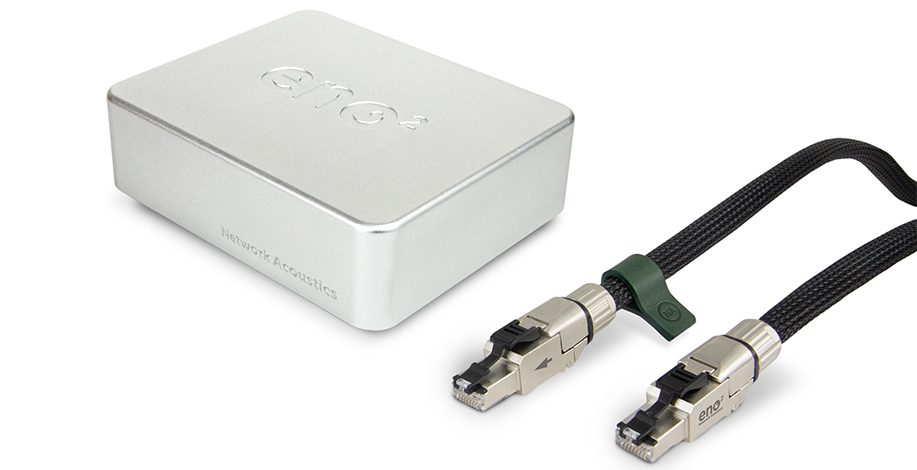
In 2019, Rich partnered with advertising creative and part-time cable maker Rob Osbourn. The two friends set about honing Rich’s prototype ethernet filter to produce the original eno. They formed a lockdown startup and christened it Network Acoustics. The eno2 I am reviewing here is a reworking of that original model. It’s redesigned to be compatible with 1Gb/s or 100Mb/s networks. It has an aluminium case instead of a plastic one. Network Acoustics also ditches the captive output lead, allowing users to choose their cable. It comes with one of Network Acoustics’ high-quality 0.75m streaming cables. It’s also available as a Streaming System, including an additional 1.5m cable.

Doubters gotta doubt

Trussell says some doubters will tell you the ethernet signal is digital and thus incorruptible. Still, he points out that it is, in fact, an analogue waveform, a bit like a sine wave. That noise can get into the cable, mix with the signal and adversely affect the sound. This noise is mainly RF, coming everywhere from sources such as wi-fi, mobile phones, TVs, satnav, Sky and many more. This noise, he says, can get onto the earth plane and interfere with the timing of the conversion process in your DAC.

The eno2 is a purely passive device. It uses a new version of its proprietary eight-core electronic filtering technology. The Network Acoustics eno2’s filter targets the electrical noise without interfering with the ethernet signal. Trussell found that the thickness of the aluminium case could also hamper the filter’s effectiveness. He tried many variations until he found the thickness most effectively shielded the circuitry from external RF interference. The box sports two high-quality Neutrik RJ45 ethernet sockets, and the 0.75m cable supplied uses high-purity silver/copper alloy.
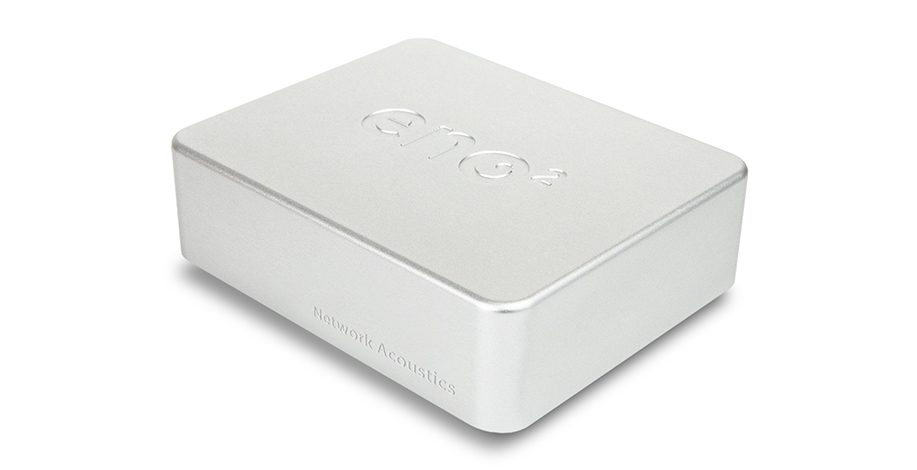
Network Acoustics eno2

As recommended, I connected the eno2 in the preferred configuration between my English Electric network switch and the Innuos Zenith MkIII streamer. Even though a network switch re-clocks the signal and has a degree of galvanic isolation, Trussell says they can add electronic noise, hence the need for a filter further down the signal path. I played the Innuos through a Pro-Ject PreBox RS2 Digital DAC, Avid Accent amplifier and Russell K Red 120Se speakers. 

Dramatic Tutu

I started with a little Miles Davis and searched Qobuz for the title track from his Tutu album. The difference the Network Acoustics eno2 made was dramatic. Instantly, the soundstage opened out; the bass line with its typical Marcus Miller growl was tighter, more tuneful and easier to follow. Davis’s trumpet had more presence, with a better insight into how he shaped and crafted each note in his devastatingly understated style. Percussion and drums were better focused and sharper, and they provided more insights into how the drummer hit the skins and cymbals. In other words, it all hung together better and made more sense musically.

You can’t beat a beautifully recorded vocal, so I turned to ‘Build Me Up From Bones’ from the Sarah Jarosz album of that name. Straight away, I could hear so much more detail in her mandolin play, its attack, body, note shape, and volume, while her voice took on a presence, openness and solidity that made her sound more like she was in the room. There was better separation, definition and voicing of the plucked and pizzicato violin backing, while the cello had more weight and bowing detail.

Presence and dynamics

I then searched Qobuz for one of my favourite guitarists, Peter White, and played the title track from Groovin’. The difference the eno2 made to the sound of his guitar was huge. It had so much more presence and dynamics, and there was a greater insight into his masterful technique and how he played each note. The trumpet in the background was also much better separated and easier to follow, while the reggae-style bass line was tighter and moved better. On the Network Acoustics eno2, you could explore each musician’s contribution to the piece. 
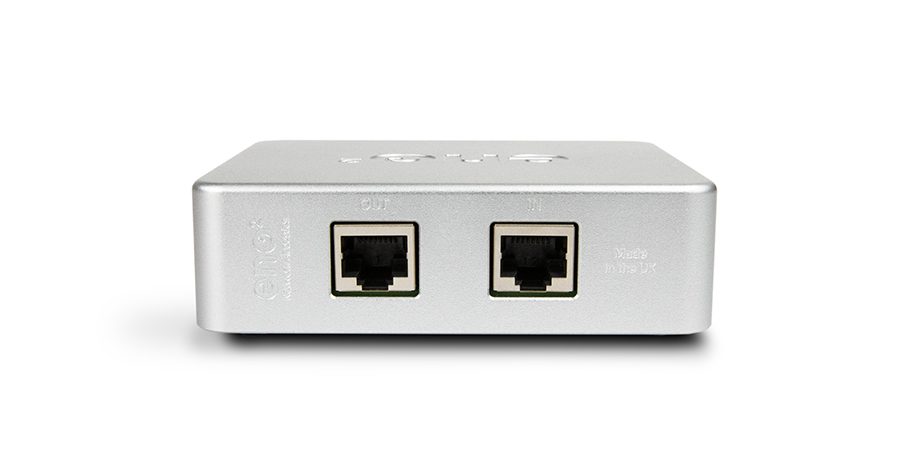
Network Acoustics eno2 Back Panel

I am a massive fan of the late, great Al Jarreau, and I next chose one of his favourite songs, which Chris Walker covered on his tribute album We’re in This Love Together, which is the track I decided to play. He is backed on this by keyboard legend Bob James and the amazing Gerald Albright on sax, and it was his sax opening that sold me on how good the eno2 is. It was better focused, more articulate and had more bite and graunch, while Walker’s vocals were much more open and had more space around them. The emotion in his vocals was palpable, and when Regina Belle joined him, the eno2 easily conveyed their distinctive characters. I also liked how I could hear better what Bob James was doing on the piano, while the bouncy bass line that helped drive the track along was tighter and more tuneful.

Comparisons

I also compared the eno2 with several lower-cost filters. I was undoubtedly convinced that the eno2 was worth the extra money. It greatly improves openness, soundstage, musical integrity and timing. 

Network Acoustics suggests that using an eno2 between the router and the network switch is also beneficial. I only had one sample to try. However, using it between the switch and the streamer significantly improved the experience. It makes the music make more sense, which, in turn, enhances enjoyment. 

Never underestimate this tiny, rather unassuming silver box. OK, it has no flashing lights, knobs or switches. But small as it may be, the improvement it brings in sound quality was tremendous. If you want to boost your streaming system’s performance without spending a fortune, the eno2 could be the answer. I strongly recommend it. 

Technical specifications

  • Type Passive 1Gb/s ethernet filter
  • Compatibility 100Mb/s, 1Gb/s, 2.5Gb/s
  • Filter Cleans all eight conductors in standard ethernet cable
  • Case Tuned shielded aluminium enclosure
  • Connections Two RJ45 sockets
  • Streaming cable High purity OCC with Telegartner Cat8.1 connectors with gold-plated contacts (0.75m length supplied)
  • Dimensions (HxWxD) 30mm x 105mm x 83mm 
  • Weight 550g
  • Standard Package includes eno2 Ethernet Filter and 0.75m Streaming Cable 
  • Price £995, $1,100, €995 

Manufacturer

Network Acoustics

www.networkacoustics.com

+44(0)23 8061 5627
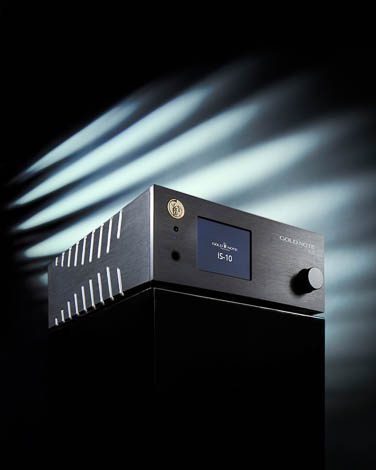
More from Network Acoustics

Back to Reviews

Paul Weller: 66

Paul Weller’s latest record – his seventeenth studio album and twenty eighth in total – takes its title from him turning 66 this year (2024). But, seemingly as a nod to his love of ‘60s music, the record’s cover art has been designed by English pop artist, Sir Peter Blake, who famously created the artwork for The Beatles’ Sgt. Pepper’s Lonely Hearts Club Band, as well as Weller’s 1995 album, Stanley Road. 

It’s been three years since his last album, 2021’s Fat Pop (Volume 1) – his longest gap between albums. “That sort of thing used to keep me up at night,” he says. “But it’s not like I haven’t been writing. For this album, I had at least 20 songs to choose from. It was a luxury to be able to spend time with them and let them tell me which ones needed to be on the record.”

The 12 songs on 66 were worked up in Weller’s Black Barn studio over the course of three years and several of the tracks are the result of collaborations. 

Its first single, ‘Soul Wandering’ pulls no punches, with its dirty, fuzzy and funky rock guitar, horns and ‘60s organ. It features lyrics penned by Primal Scream’s Bobby Gillespie, while the ‘70s Bowie-meets-Stones, glam-soul strut of ‘Jumble Queen’, with a horn arrangement from The Stone Foundation’s Steve Trigg, has words courtesy of Noel Gallagher.

The low-key opener, ‘Ship of Fools’ was inspired by a poem sent to Weller by Suggs from Madness. It contrasts a barbed lyric with a summery stroll of a tune – acoustic guitar, a jazzy vibraphone, and a touch of barroom piano. 

‘Flying Fish’ – one of the highlights – is lush, shimmering and funky disco-soul, with an anthemic chorus that sparkles like a mirror ball. And while we’re talking disco, ‘In Full Flight,’ has some delicious ‘70s-style liquid guitar and backing vocals by acclaimed female, ‘disco-delic’ Brooklyn trio Say She She, who popped into Weller’s studio while on tour and nailed their part in an afternoon.

‘A Glimpse of You,’ which is a collaboration with French producer and recording artist Christophe Vaillant (Le Superhomard), has a soaring string arrangement by Hannah Peel and evokes The Style Council’s cosmopolitan pop-soul. Peel, who’s now a regular collaborator of Weller’s, also arranged the strings for the joyous ‘Rise Up Singing,’ – a co-write with Blow Monkeys frontman and former Weller bassist, Dr Robert, which is a hymn to the healing power of music. 

The strings for ‘Rise Up Singing’ were recorded at Abbey Road, where The Beatles made most of their music for EMI in the ‘60s, including Revolver, one of Weller’s favourite albums, which, as it happened, came out in 1966… 

There are some lovely, reflective and laidback moments on 66, namely the pastoral and lullaby-like ‘Sleepy Hollow’ with flute by Jacko Peake; ‘I Woke Up,’ which has a folky, acoustic guitar intro and sweeping ‘60s pop strings, plus Richard Hawley on lap steel, and ‘Nothin,’ a romantic ballad with jazz trumpet, burbling retro synth sounds and warm, electric piano. 

On the latter, Weller sings: “Walking back through the silver trees, the light summer’s evening breeze across my face, to a time and place, and it was gone…” It’s truly one of the album’s most beautiful moments, as is the waltz ‘My Best Friend’s Coat’ – another co-write with Vaillant – which has exotic strings and comes across like an autumnal chanson that Scott Walker could’ve sung.

The record ends with the brooding, spacey and psychedelic ‘Burn Out’, Weller drifting like Bowie’s Major Tom, with a soundtrack of cosmic jazz saxophone and ominous strings.

When hi-fi+ reviewed his last album, Fat Pop (Volume 1), in 2021, we called it one of the strongest records Weller had ever made, saying: ‘It’s the latest in a purple patch that started with 2018’s True Meanings – his stripped-back and orchestrally-aided, introspective folk-rock album, which coincided with him turning 60.’

Now he’s turned 66 and he’s made his best album since True Meanings – that’s really something to celebrate.

Back to Home

Van den Hul Crimson Elite XGW

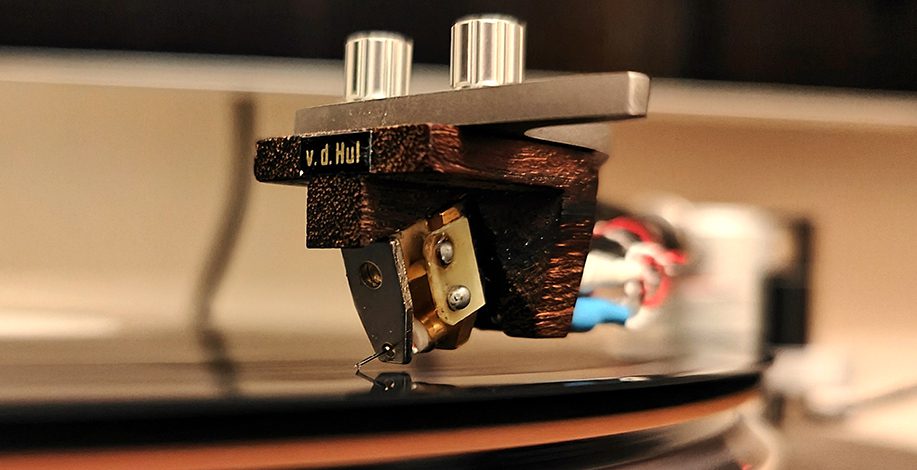
The last few years have been transitional ones for Van den Hul. Owner and founder AJ Van den Hul has taken a small step back from running the company to allow his sons to become more involved in both production and administration. Part of this process is that cartridge production is now undertaken by William Van den Hul, and the Crimson Elite XGW is the first new release since this changeover occurred. 

The Crimson Elite XGW is a development of the existing Crimson model and uses the ‘Stradivarius’ lacquer that appeared in 2018 as a covering for its CNC machined Koa wood body. Designed to mimic the lacquer of the legendary violins and control resonances, the multi-stage application process takes six months before any actual assembly can take place. 

As is traditional with higher-end models from Van den Hul, the generator that attaches to this body is completely nude. It comprises the company’s crystal gold wire in the coils, which are matched to each cartridge, combined with a solid boron cantilever mounting the company’s proprietary stylus profile. To elevate the Crimson to Elite status, the wire thickness is reduced, and the suspension is uprated to reduce the effective mass. 

Stradiwhovius?

The output from these revisions is a little lower than the Crimson Stradivarius but still unusually high for a moving coil design at 0.85mV. This means that gain isn’t an issue, but some care will need to be taken to avoid overloading the input of some phono stage designs. It isn’t the only quirky aspect of the Crimson Elite’s measurements either. The review sample tracked at a relatively low 1.35-1.50 gram window with minimal suggested anti-skate applied. It’s also only fair to point out that, as no stylus guard is supplied, fitting the Crimson Elite is somewhat terrifying, although the two pairs of mounting holes to handle different arms and well-spaced cartridge pins do help a little. 

Something that does warrant mention as a positive for the Van den Hul, though, is that the cost of ownership is more front-loaded than many premium rivals. Inclusive in the price is a check-up service at 250 hours to check the suspension after the burn-in period. Stylus life is quoted at around 2,000 hours, and tip and damper replacement would be £440 at December 2023 prices, which gives the Crimson Elite rather less horrendous running costs than many high-end carts. 

Clocking the hours

I suspect that many owners will clock up 2,000 hours pretty quickly though. Connected to a Vertere MG-1 MkII turntable and running into a Rega Aura phono stage, the Van den Hul demonstrates virtues that I have come to appreciate from the brand but mixed in with some new attributes at the same time. I’ve been using Every Day by The Cinematic Orchestra [Ninja Tune] as a test piece ever since I began reviewing turntables. The moment Fontella Bass began singing in All that you give it becomes abundantly clear that this is a startlingly vivid device. She is present in a way that bypasses any perception of mechanical process. And to achieve this startling ability to bring a sense of ‘live’ to any voice and instrument required a beautifully evolved version of a Van den Hul trademark.

Where the Van den Hul Crimson Elite XGW kicks on, quite literally, is when you move away from the audiophile and ask it to power its way though Blues Funeral by the Mark Lanegan Band [4AD]. The ballistic opening The Gravedigger’s Song would not traditionally have been a happy hunting ground for some of the Crimson Elite’s ancestors but here it simply grips and goes. It has a remarkable ability to decompress material like this, prying it open and finding space where previously there wasn’t any. It does this without impinging on the sheer musical fury that this track is supposed to possess. This newfound energy and rhythmic competence has meant that bits of my collection I might not have made a beeline for with older models are now completely fair game.  

Admirably

This is helped by all the basics being handled admirably. Bass response is deep and detailed, feeding into that effortless midrange and never letting up on the astonishingly tangible tonal realism throughout. In this setup, the presentation is very fractionally forward and the Crimson Elite will point out when a pressing isn’t the last word in fidelity without rendering the results unlistenable. Compared to the Platanus 3.0S that won our 2023 award and that was tested in the same basic setup, the Van den Hul is more perceivable in what it does and you can detect its presence in the performance that it creates in a way that the Platanus goes out of its way to avoid. It is wrong to say it’s coloured but there is a character to it that is a little more overt.

I make no bones about loving this overall performance, though. The Crimson Elite is a deceptively simple-looking device that delivers an out-and-out musical joy that marks it out as something special, even judged at its lofty price point. The Van den Hul makes all your vinyl listening an event, and this all-important ability has survived the handover of production from father to son. I’m very much looking forward to seeing what might come next. 


Technical specifications

  • Type: Moving Coil Cartridge
  • Stylus Profile Diamond/Proprietary line contact
  • Output: Voltage 0.85mV (5.6cm/sec)
  • Frequency Response:  5Hz-55kHz 
  • Channel Separation: > 36 / > 30 dB
  • Tracking force: 1.35-1.5g  
  • Recommended impedance: >20 Ohms
  • Price: £6,750, €6,450, $8,750 

Manufacturer

Van den Hul 

www.vandenhul.com

UK distributor

Decent Audio 

www.decentaudio.co.uk

Back to Reviews

Enleum HPA-23RM

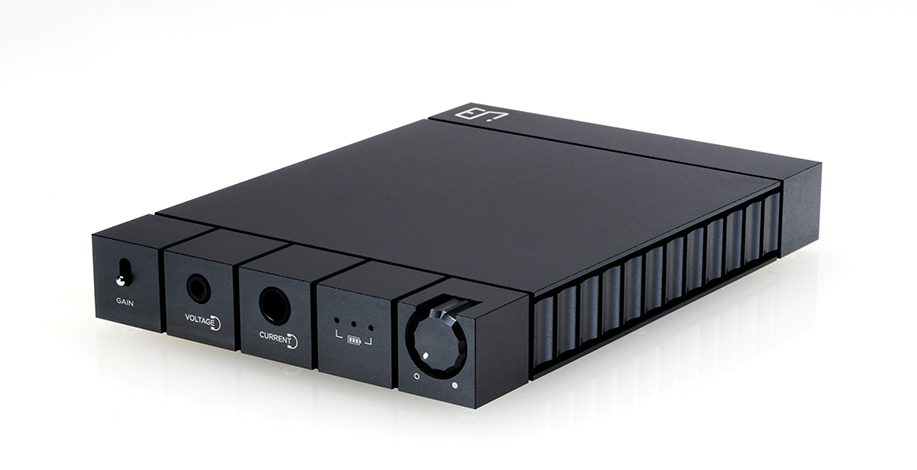
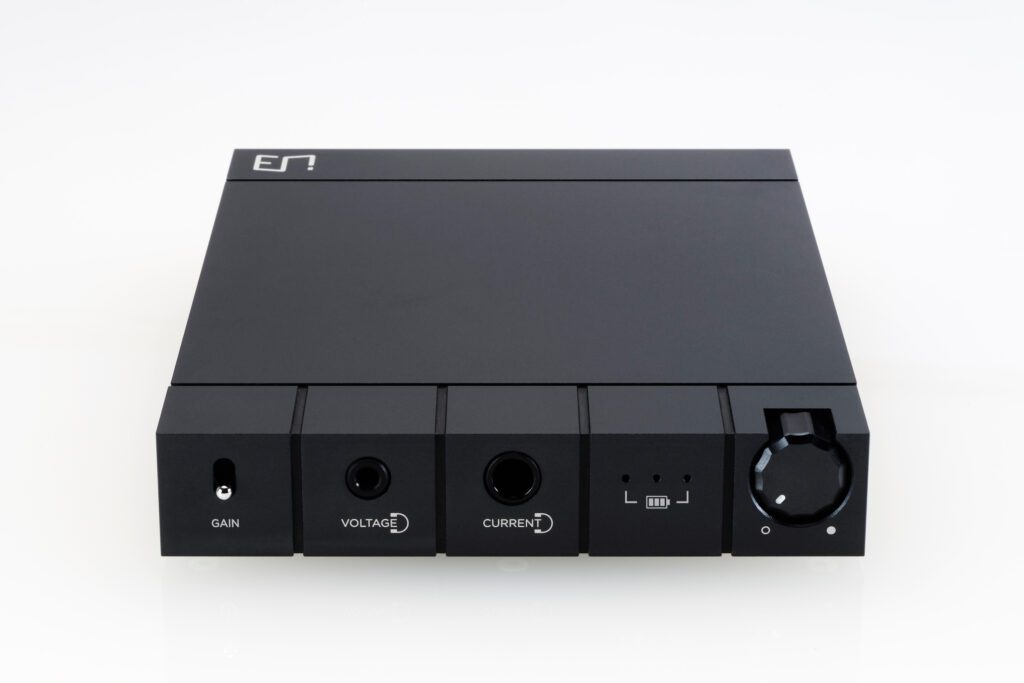
Small, but perfectly formed” are the words that come to mind on unboxing Enleum’s HPA-23RM. The new headphone amplifier is just 22mm thick, and in plan view no bigger than the palm of a large hand.

Like all of Soo In Chae’s audio products of recent years, first from his previous brand Bakoon International, and now from his current company Enleum, the HPA-23RM has elements of the Korea-born, California-resident audio wizard’s distinctive design language all over it; classic gunmetal finish, sculpted sides and deep chassis score lines. Pick it up, though, and expectations of a featherweight are instantly dispelled. At 762gms, the HPA-23RM is surprisingly dense for its size. Take to the streets after rubber-banding it back-to-back with a contemporary DAP of commensurate quality, and you’ll be lugging around over a kilo of tech.

In fairness, though, that’s undoubtedly not the kind of portability Enleum primarily has in mind. More likely, one of the brand’s target users is the music-lover who travels and who, upon arriving at their overnight hotel, might place the HPA-23RM and DAP on the bedside table and spend an evening in their room blissing out to hi-rez recordings.

The other target group for the HPA-23RM is what we might term the conventional user whose audio consumption is home-based. In this role, I evaluated the HPA-23RM, using it on the kit table for four weeks as my go-to headphone amplifier. By way of an up-front takeaway, I can report that the Enleum HPA-23RM delivers a sound quality with many – but not all – dynamic and planar headphones that give little to nothing away to top-of-the-line full-sized, mains-powered headphone amps. Moreover, it does it for up to five hours before needing a re-charge via its rear-mounted USB-C port.

Shine a light

Lid off, the HPA-23RM is a marvel of miniaturisation and build quality. There’s no chunky power supply; a pair of 18650 lithium-ion batteries juice Enleum’s mighty mite, the same type used by many domestic torches or flashlights. This is charged by a wall wart. Two amplifier circuits, with zero negative feedback and featuring surface-mounted discrete components, are sandwiched between the batteries. One is optimised for devices such as IEMs that want voltage drive. The other is for designs like planar-magnetic headphones that need current to perform.

We find the USB-C charging socket, a stereo mini-jack input, and a single pair of RCA inputs on the rear panel. Around the front, to prevent the volume knob being turned up to maximum by accident when the user is on the move, the control is sunk into the front panel. This can only be rotated by stroking a finger or thumb over a wide slot in the top surface of the chassis. Three LEDs indicate battery state, and 3.5mm and 6.3mm TRS sockets allow IEMs and headphones to be connected to the Voltage and current outputs, respectively. A miniature toggle switch allows gain to be set at 2dB or 17dB.

Bakoon re-emergence

Audiophiles who lamented the passing of Soo In Chae’s Bakoon brand had reason to cheer when he re-emerged with Enleum. The new brand’s first product was the AMP-23R, a compact integrated amplifier-cum-headphone amp in which combined MOSFETs by British fab-house Exicon with an innovative biasing circuit that enables the amplifier to deliver the kind of approachable warmth, some might say naturalism, we might associate with a Class A design. However, it also has exceptional precision and grip. Mains powered, and with a stiff internal linear power supply that allows it to output 25 Watts into eight Ohms, the AMP-23R was never intended to drive big speakers in big rooms. However, paired sensibly, it achieves such a sonic performance that some reviewers regard it as a benchmark against which other designs can be evaluated. 

HPA-23RM_1

When I reviewed the AMP-23R in 2021, I, too, was captivated by its performance. While many other integrated amplifiers treat headphones as an afterthought, using an add-on integrated circuit op-amp to drive them, the AMP-23R brings its complete speaker-driving circuit to bear but with the gain rolled back. The result, even and especially on tricky-to-drive loads, is properly top-drawer. Only my Puritan streak stopped me from buying the review sample exclusively as a headphone amplifier to fill a vacancy on the kit table.

Wait, Watt?

Soo In Chae says that the AMP-23R has heavily influenced the circuit design of his new dedicated headphone amplifier. However, his new creation is not immune to the laws of physics, so we should not be surprised that rather than its larger stablemate’s output of 4 Watts into a 60-ohm load, the HPA-23RM delivers just 0.5 Watts into the same impedance.

I’ve picked on 60 Ohms to get the Susvara question out of the way. As fans will know, that’s the load HiFiMAN’s flagship headphone presents to amplifiers, along with an efficiency that is distinctly on the low side at around 83dB. The mains powered AMP-23R breezes Susvara, but while the HPA-23RM generates perfectly acceptable sound with the headphone – very loud sound too on its high gain setting – it doesn’t have quite the weight, dynamic expression and tonal detail that the Susvara can deliver when more appropriately driven. But, really, what should we realistically expect, given the half-watt output? 

A particular aspect of design contributes significantly to this surprisingly strong level of performance. Enleum’s baby is single-ended, not dual differential, but that’s not unusual. What is unusual is that it operates as a current gain, not a voltage gain device. Rare in headphone amplifiers, this is never seen in commercial speaker amplifiers. Loudspeaker impedance curves vary as the multiple drivers track up through the octaves, pulling the gain of a current source amplifier all over the place. The tail wags the dog, making current gain the wrong tool for that particular job.

Current drive

However, planar-magnetic headphones have a generally flat impedance curve. Enleum’s HPA-23RM takes advantage of this, squaring up to the resultant stable load and using current to drive the headphone voice coils directly with greater precision for lower distortion and a faster, more natural response. If you wonder why the HPA-23RM can cope well with demanding loads using just half a Watt while some other amplifiers with more on-paper grunt can struggle… current drive is part of the answer.

With alternative, more amplifier-friendly headphones, the results were even more satisfying. Into a load of 16 Ohms the HPA-23RM’s current output punches out 1.8 Watts, and at 300 Ohms it delivers 100 mW (current output) 50 mW (voltage output). As I indicated in my earlier teaser, these metrics enabled the review sample to trade blows with much larger and more powerful mains-powered alternatives, including its bigger brand sibling.

That’s not to say that the HPA-23RM can only be used with headphones with a flat impedance. Depending on where an impedance dip or peak sits, the result might be offensive or not. Soo In Chae points to the Sennheiser HD800, which has a peak of 650 Ohms at 100 Hz, standing proud of a nominal impedance of 300 Ohms. The effect, in this instance, is a bass boost that some users might like. That’s not an admission of sloppy design on his part but a caution that we need to understand the design parameters of the HPA-23RM clearly and pair it accordingly.

Most of my listening was done via an Audeze LCD5 headphone, which exhibited its characteristic mid-band forwardness and slightly rolled off top end, just as it does with other headphone amplifiers. To that extent, what I heard was unexceptional.

Liquidity

What sets the Enleum HPA-23RM slightly apart from the alternatives is a sonic aesthetic that I found both winningly engaging and strongly reminiscent of the sound produced by the mains-powered AMP-23R. This might best be described as a relaxed warmth and liquidity that initially deceives us into thinking we’re not given the complete detailed sonic picture. Only upon more extended listening followed by back-to-back comparison with some alternative headphone amplifiers do we realise the detail is present after all. The HPA-23RM doesn’t mask it but offers a slightly different perspective. Listening to music becomes not an exercise in forensic examination of the source material but rather a cosseting bath in sonic balm. 

HPA-23RM_4

Some readers will link that observation to the fact that the HPA-23RM uses no negative feedback. I think they are right to do so; the little Enleum calls to mind the kind of relaxed yet particularly transparent presentation that we might associate with top-of-the-line zero-feedback single-ended triode amplification. 

What’s remarkable about Enleum’s achievement is that the HPA-23RM doesn’t combine this with the soft and loose bass and truncated top-end that experience tells us we might also expect. The HPA-23RM digs basement deep and reaches top floor high, adding texture and control to a rich palette of tonal colour and a generosity of energy transfer that is truly competitive and, indeed quite shocking given its diminutive size. It slams hard and fast when required by plucked, bowed and keyed bass, with just as much weight and transient snap as any number of mains-powered alternatives can muster. Human voices are rendered with believable diaphragmic air compression and timbre, while high-frequency material plays out with sweetness and satisfying texture.

Intimacy

Driving the LCD5, the HPA-23RM produced a more intimate sound stage than some other amplifiers. Musical events tend to be more in-head than external. Specificity and layering proved to be to a high standard.

Whether a slight perceived recess in the HPA-23RM’s midband shows on the testbench or not, its partnership with the LCD5 proved highly satisfactory. The amplifier tamed to a degree the headphone’s forwardness in that region, compensating for its rolled-off top end and beefing up the low end, all without the application of Roon’s excellent EQ. I loved the result.

Brief experiments were made with IEMs. I don’t own this type of transducer because I find it either uncomfortable or impossible to wear. However, I can report that the loaned IEMs exhibited zero intrusive hiss when connected to the HPA-23RM in low gain mode via its voltage output. A household member with more obliging morphology and therefore able to listen to multiple recordings on my behalf reported that the HPA-23RM’s IEM performance is of an extremely high standard.

While Enleum’s claim of up to five hours of operation on the internal batteries – three in current mode – is achievable, it depends on load and how loud we want to listen. I suspect many users with no interest in portability might just plug the HPA-23RM into the wall wart and leave it at that. Pursuing thorough enquiry, I ran the review sample that way for a day. Either the Raspberry Pi wall-wart supplied with the HPA-23RM is ultra-quiet, or the HPA-23RM incorporates effective EMI filtering, or, highly likely, both are true. The upshot was that I struggled to hear any zero sonic difference when the wall wart was connected.

Parity

Some may look at the battery-powered HPA-23RM and wonder if it is Enleum’s last word on the matter or whether a dedicated mains-powered version is in the works. He says that’s it for now, and he encourages potential purchasers to think of the HPA-23RM as his statement personal listening device.

Readers are free to distrust my audio memory since it is two years since I heard the mains-powered AMP-23R. However, after some four weeks of living with the Enleum HPA-23RM I was convinced that it may perform at the same level as its larger integrated amplifier sibling.

That it does this yet costs £3,000 less than the AMP-23R makes Soo In Chae’s dinky creation a shoo-in for any headphone amplifier shortlist. To potential buyers: suspend disbelief until you’ve tried one. 

Technical specifications

  • Power: 1 Watts (Current Output) / 500 mWatts (Voltage Output) @ 30ohms
  • Inputs: RCA and 1/8” Mini Jack (Analogue)
  • Outputs: 1/4” (Current) and 1/8” (Voltage) Headphone Jacks
  • Operation time: Continuous or depending on the external battery capacity up to 5 hours (Voltage Output) / up to 3 hours (Current Output)
  • Dimensions: 116mm x 164.5mm x 22mm (w x d x h)
  • Weight: 730g
  • Price: £3,300, $3,000, €3,000

Manufacturer

Enleum

www.enleum.com

More from Enleum

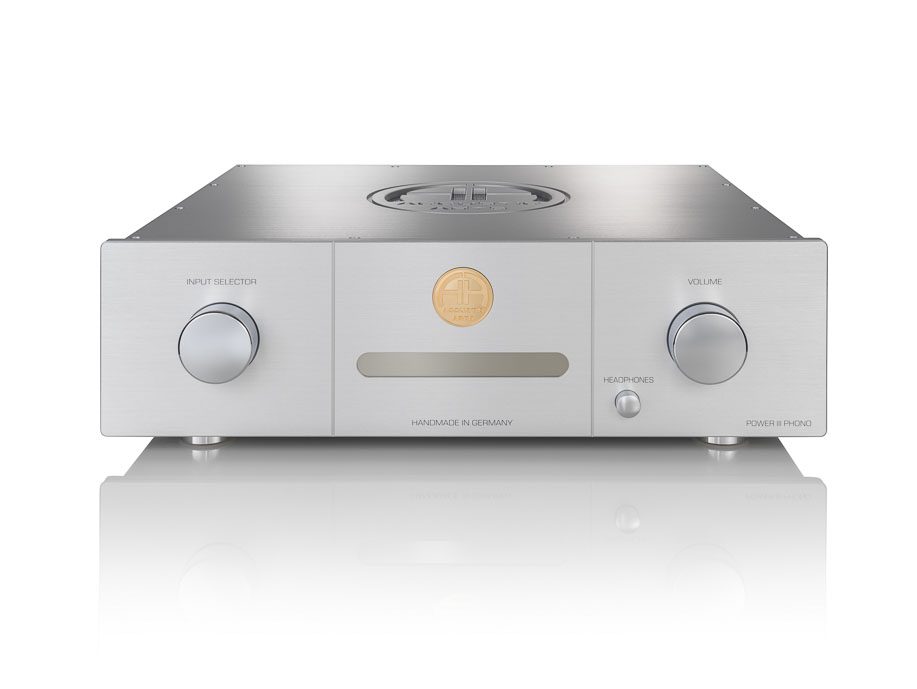
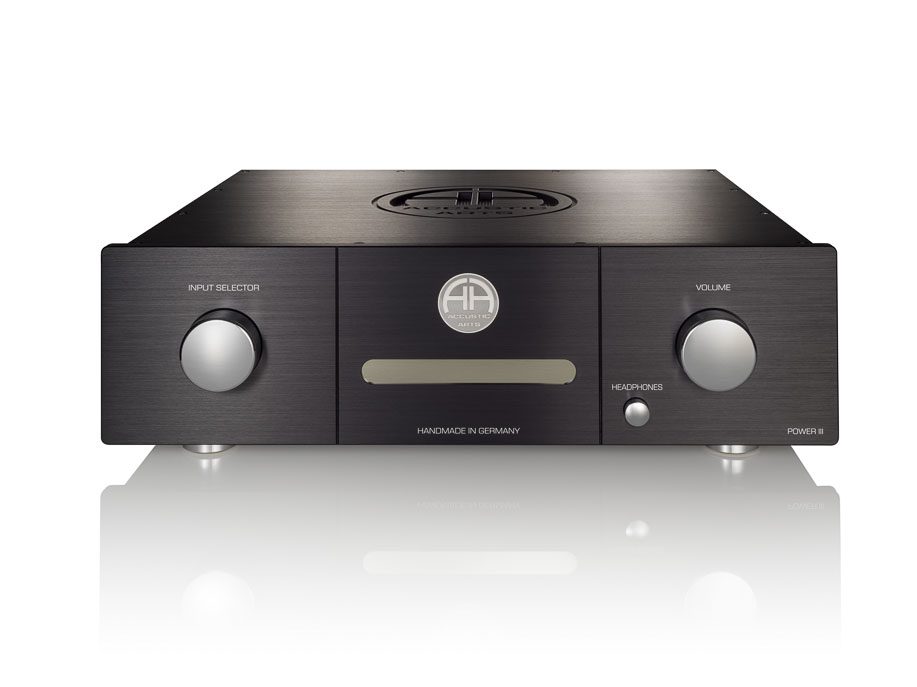
Accustic Arts Power III

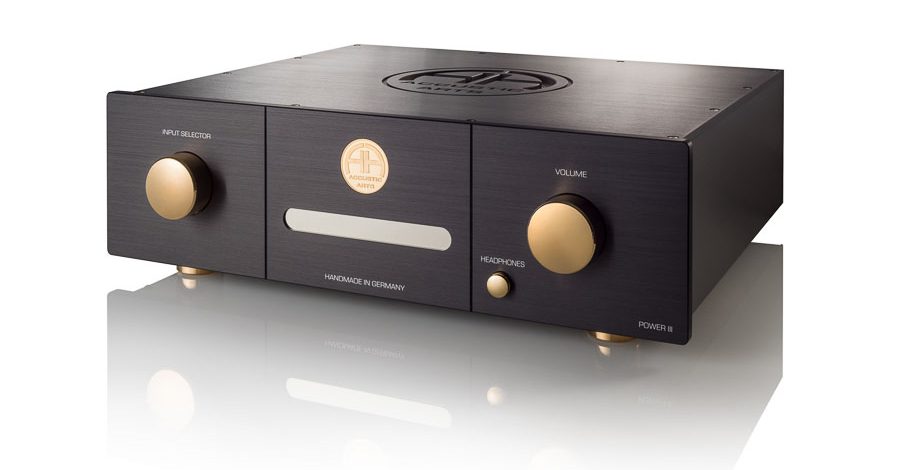
The Power III is the biggest integrated in Accustic Arts‘ range. A father-and-son team founded Accustic Arts in 1996. Twenty years later, Jochen Voss bought it. He employs a part-time roadie as head of engineering. The brand builds a wide range of electronics in southwest Germany near Stuttgart. Most are pure solid-state, but some combine transistors with tubes in hybrid designs. The company aims to make equipment as close to the original as possible. If this integration is anything to go by, they are having some success.

The Accustic Arts Power III is also physically quite big. However, the 23-kilo mass is manageable, as is the larger-than-average 48.2cm width. Just don’t expect to slide it into a shelf on a regular equipment rack. Build quality is superb, and the casework is as good as it gets if you like the machined-from-solid billet aesthetic. It would be a pity to place this amp on a shelf where you couldn’t appreciate the machining on the top and enjoy the red glow of the LEDs within. 

The simple array of twin chromium knobs on the front alongside a relatively straightforward display disguise the fact that the Power III offers processor-based features to those prepared to read the manual. There is the option to adjust input gain by plus or minus 12dB and thus match the level of a turntable and a streamer, which might otherwise be distinctly different. You can make an input operate in unity gain, which bypasses the volume control and effectively turns the Power III into a power amplifier, which is useful when used in a multichannel set-up. Balance can be adjusted as can start-up volume, and the pre/rec output can be defined as variable or fixed according to requirements.

Stream on

Accustic Arts equips the Power III exceptionally well. It has balanced and single-ended line connections and the option to add a phono stage to one of the three RCA inputs. The presence of a ground terminal above input three indicates which this is. Alongside the analogue connections are digital inputs in coaxial, optical and USB forms; the only thing missing is an ethernet connection. There is no streaming engine inside this amplifier, but the USB means you can connect virtually any separate streamer with minimal compromise. Accustic Arts uses high-quality WBT speaker terminals made with a minimum of metal for the best sound quality.

Accustic Arts Power III phono

The Power III’s phono stage is billed as ready for both moving coil and moving magnet cartridges. However, changing this via the front or rear panels is impossible. Instead, you must remove the lid to reveal the phono module within.

Selection

This allows MM or MC to be selected and offers three levels of capacitance for the former and four impedance settings for MC, ranging from 10 Ohms to 1 kOhm. Usefully, this amplifier is shipped with the phono stage set for MC cartridges that prefer a 100 Ohm input impedance, which suits most models, including my Rega Aphelion 2.

The onboard DAC chip is not specified but clearly up to date with a respectable 32-bit/384kHz rate for PCM and 512 for DSD. These are the sort of figures you will find with the majority of well-regarded DACs; they aren’t trying to push the envelope but are more than up to the job of easily converting bits into sinewaves. On the amplification front, the Power III lives up to its name, with a rating of 230 Watts into eight Ohms and rising to over 500W into two Ohms. Not many amplifiers are rated into such a low impedance, and this inspires confidence that this one will drive most loudspeakers without difficulty.

Go down easy

In my system, driving Oephi Immanence 2.5 loudspeakers, the Accustic Arts Power III is a big, cuddly amplifier by solid-state standards. It makes many alternatives sound hard and thin, and has a relaxed delivery that welcomes you into its presence and lets you go down easy. And this is a good thing; its why people love Quad amps of yore, not just the valve ones. It makes listening less of a challenge and more of a joy; it focuses on the music and gets out of the way. On the one hand, this means that you don’t get edge-of-the-seat excitement unless there’s plenty of it in the recording, but on the other, it’s a welcome change from more eager and excitable alternatives.

At least that’s how it sounded with Atlas Ultra Arran RCA interconnects. Switching to something slightly leaner produced a similarly tauter, more pacey sound. The Power III is a pretty revealing amplifier.

Lovely

The phono stage is very lovely too and encourages high-level playback because no edginess or glare is being added by the amplifier. Julian Lage’s jazz guitar playing grooved beautifully, the track ‘Omission’ (Speak to Me) has plenty going on, but the Accustic Arts delivered it in a relaxed, coherent fashion while making clear that vinyl still does things that digital cannot. Including very strong image depth and plenty of space where that is on the recording. The bass is controlled but not gripped. It flows naturally and extends as far as the loudspeakers can take it.

POWER-III-black

I really enjoyed some of the quieter, less obvious tracks on one album (Ville Blomster by the Andrea Hauge Trio), pieces where your attention is not necessarily as strong as it might be on the meatier tunes. The Power III reveals dynamics at low levels, which brings out the magic in the performance; the music draws you in and lets the artist communicate to a rare degree. The track ‘Asta’ was particularly beautiful with the Accustic Arts/Oephi combo. It’s also rare to get this quality of sound from vinyl in an integrated amplifier; separate phono stages don’t have to cope with a nearby power supply of this scale, so they usually have an advantage, but in this instance, you would have to spend a decent amount to better the onboard module.

More upbeat

The USB input is a little more upbeat than the analogue inputs. With a Lumin A2 mini streamer connected via Network Acoustics muon2 USB cable, this input was as revealing as the RCAs. Put on something splashy from a streaming service, and that’s how it sounds; put on something well-cut from your local library, and it’s a far more polished situation. I compared the Lumin with AURALiC’s VEGA S1 (also covered this month) and found some prototype Network Acoustics RCA cables. This revealed that both USB and analogue inputs have a very similar sound. There was a slight difference, but not one that would warrant purchasing one streaming source rather than the other. Both sounded harmonically rich with good ‘kick’ to bass lines and easy but controlled dynamics. The vocal on Ike White’s ‘Changin’ Times’ was particularly well rendered. 

I tried a tester in the form of ‘The Battle’ from the Gladiator soundtrack. This is a very dense, large-scale orchestral piece with plenty of processing. It can sound hard and flat through many DAC/amplifier combinations. I was pleasantly surprised to hear the Power III deliver the power and drama of the piece without the sense of compression that so often accompanies it. By this point, I had moved onto PMC twenty5.26i loudspeakers. These proved to be a very good match to the Accustic Arts. Their bass can be on the lean side with a lot of amps. However, the power on tap here made for low-end that was fully extended whilst remaining highly articulate. 

Relaxed

I also enjoyed how they delivered the easy tension of Michael Franks’ The Art of Tea (Speakers Corner) on vinyl. In the wrong hands, this album can become soporifically smooth. I was concerned that the Power III’s relaxed demeanour might have that effect. I was wrong. It tracked the transients and brought out the brilliance of composition and playing on this fabulous recording. I’ve heard it sounding pacier, but this system efficiently delivered plushness and definition. This made it easy to hear what each musician contributed to the mix.

You get a beefy aluminium remote handset with the Power III, albeit its functionality is not immediately apparent. This is high-end audio, after all. The high-quality finish on this Accustic Arts Power III amplifier might give the impression that it’s all about looks. But the proof is in the listening, which is even more attractive. It would seem that in Accustic Arts, we have another German electronics brand to keep an eye on. 

Technical specifications

  • Type: Solid-state, two-channel integrated amplifier with built-in DAC, phonostage, and headphone amplifier.
  • Analogue inputs: One MM/MC phono input (via RCA jacks), three single-ended line-level inputs (via RCA jacks), two balanced inputs (via XLR connectors).
  • Digital inputs: Four S/PDIF (two coaxial, two optical), one USB port.
  • Analogue outputs: One pre-/rec (via RCA jacks).
  • Supported sample rates: Coaxial and optical S/PDIF: up to 24-bit — 192kHz, USB: up to 32-bit — 384kHz, DSD512
  • Input impedance: High-level: 50kOhms, Phono: variable
  • Output impedance (preamp): 47 Ohms
  • Headphone Loads: > 25 Ohms
  • Power Output: 230Wpc @ 8 Ohms, 370W pc @ 4 Ohms, 510W pc @ 2 Ohms
  • Bandwidth: Not specified
  • Distortion: THD+N < 0.01% 
  • Signal to Noise Ratio: -97 dBA (ref. 6.325 V) – A weighted
  • Dimensions (HxWxD): 145 x 482 x 430mm
  • Weight: 23kg
  • Price: £16,200 as tested (£14,400 without phono module), $18,500, €16,500
  • Manufacturer

Accustic Arts Audio GmbH

www.accusticarts.de

UK distributor

Audio Emotion

www.audioemotion.co.uk

+44(0)1592 407700

More from Accustic Arts

Back to Reviews

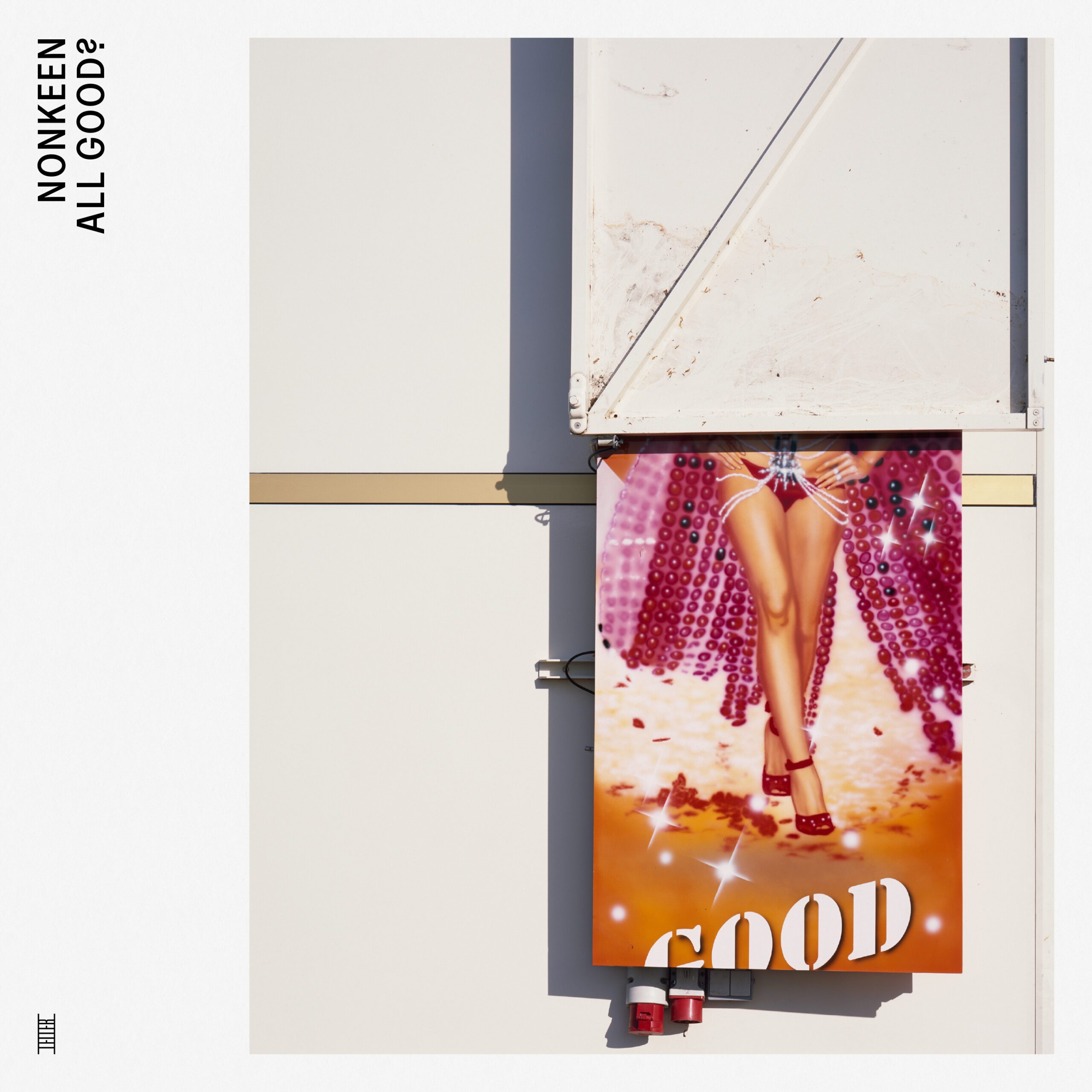
Nonkeen: All good?

Nils Frahm is the reigning king of ambient electronica. He has been releasing solo and duo albums for many years, but he has also worked with the Nonkeen collective. Nonkeen consists of Frahm on keyboards and synths with early ‘90s childhood friends, Frederic Gmeiner on bass and Sebastian Singwald on drums. It’s a modern variation of the jazz trio, even if that particular genre is avoided in the press release and largely absent in the music.

Whilst led by Frahm’s melodic and ruminative playing, the presence of a rhythm section makes All Good? into a different production than his usual work. It’s more relaxed and diverse, bringing out facets of Frahm’s playing that haven’t been heard on his releases for some time. It’s almost like he’s having fun rather than mining a deeper emotional and intellectual experience. Not that All good? is devoid of profound moments, but levity is thrown into the mix, making the eight pieces more human.

That said, All good? starts off in almost ecclesiastical fashion with ‘I’m sure’, where a slow build-up of drums and synth is joined by a swelling organ that expands upwards to summon the angels of electronica. It’s religious music for the faithless, inspiring ecstasy and enlightenment, albeit only briefly. ‘That love’ continues quietly with Rhodes keyboard, slow bass line and building drums, Frahm tapping out a lovely gentle melody. One benefit of drums is that they provide a real acoustic for this recording; it doesn’t depend on reverb, echo, or other effects to create a sense of space, and there is plenty of that to enjoy. Frahm doesn’t just provide the lead; he also conjures background textures with the occasional squiggles and blips, adding texture and body.

On ‘will never’, percussion and drums introduce synths that ebb and flow like the waves on a beach, over a low bass line that continues the down tempo theme established so far. However, the mood shifts when the bass line takes on a funkier tone and the keyboards respond with a higher pitch, building up to a climax before returning to the central theme. If this isn’t jazz, what is? ‘Be a’ continues the up-tempo vibe with a pulsing bass line and fx’d drums with lots of echo on the keyboard before Frahm’s signature wooden pipe organ brings a sense of serenity to the proceedings. But it’s not long before deeper, dirtier keys disrupt this tranquillity and take us into a bridge over Motorik beats that loses its way before finding a satisfying conclusion.

‘Product’ is the highlight of All good? It is perhaps the piece where Frahm sounds as good as he does on the best of his solo work. Here, he gains escape velocity without apparent effort and allows the listener to follow into a wider orbit before breaking things up and bringing it down only to take off again. Frahm is a very spiritual musician; at best, he matches Keith Jarrett’s ability to communicate on a different level, bypassing the intellect and revealing beauty that you cannot see with your eyes. ‘Of plasticity’ is reminiscent of his live work, with a percussive intro on the keys and drums, Frahm loves repetition and knows how to make it engaging but has the sense to add melody where needed.

‘Exclamation’ develops a pulse after a calm intro and gets into deep water before falling off a sonic cliff and rising again with string sounds that lift the spirit. On the final track, ‘mark’, the drums and bass build up a head of steam that inspires Frahm to loosen up and add some bottom end to his chords before the drummer unleashes a dramatic solo that provides the most dynamic sounds on the album. It sounds like someone is playing with phase and echo, and it soon becomes apparent that this is in a live situation where the audience’s excitement has spurred the band into action.

All good? ends with an exercise in low-end theory. No one does bass synth like Frahm, so this is a juicy workout for any system with decent extension. It rounds off an album that mixes ambience and engagement in good measure. It should appeal to Frahm’s fans and those less inspired by his more cerebral productions, and it sounds great.

Back to Jazz


Graham Audio LS3/5a Anniversary

There is more folklore attached to the LS3/5a’s than you can shake a stick at. This is surely one of the most iconic and long-lasting speakers in existence! 

When the BBC wanted to construct a studio in the now-sold Maida Vale studios in the early 1970s, they built an 1/8 size mock up of the studio, (a similar but more successful technique than was used in the Barbican Concert Hall design) and created the LS3/5’s to simulate the properties of the studio. 20 pairs later, the 110mm drive unit was swapped and the LS3/5a was born. The monitors found their way into BBC vans for monitoring live broadcasts due to their even frequency response, bass being limited by their diminutive size of course. It was shortly afterwards that the BBC licensed the speakers to a pool of manufacturers to produce with exact specifications. 

BBC Eleven

There were eleven companies given the license, only three at one time, and it was estimated in 2007 that over 100,000 pairs were constructed. This figure has increased since then as the speaker has found its way into the Pantheon of speaker classics. My awareness of the speaker happened at an audio show a decade or so ago, when I heard the LS3/5a’s fed by a passive pre and a high quality reel-to-reel, and I was blown away. It was the best sound at the show, and I was astounded that these tiny little speakers were sounding so articulate and persuasive, and so musical to boot.

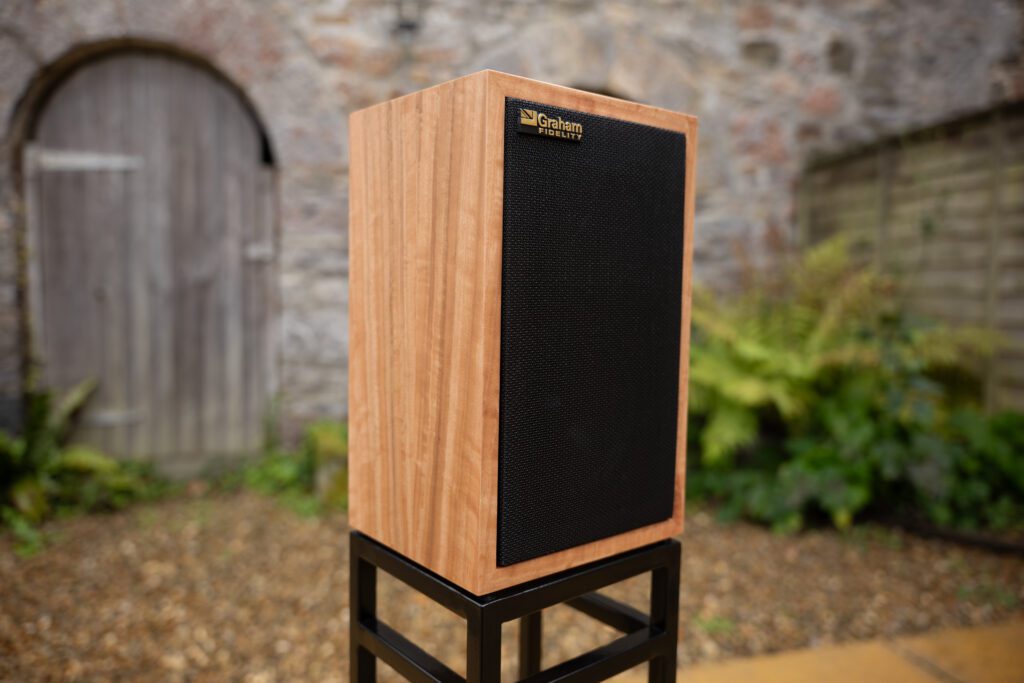
This anniversary pair comes from Graham Audio, based in Newton-Abbott, Devon. Graham Audio’s designer Derek Hughes is the son of of Spencer Hughes who was involved in the original BBC creation, and thus carries the torch of apostolic succession. The units are hand built and assembled with British or European parts, in the case of these anniversary edition speakers, there are a series of upgrades which include WBT German-made audiophile grade terminals, Van den Hul cabling for the internal wiring, and a redesigned crossover with upgraded components.

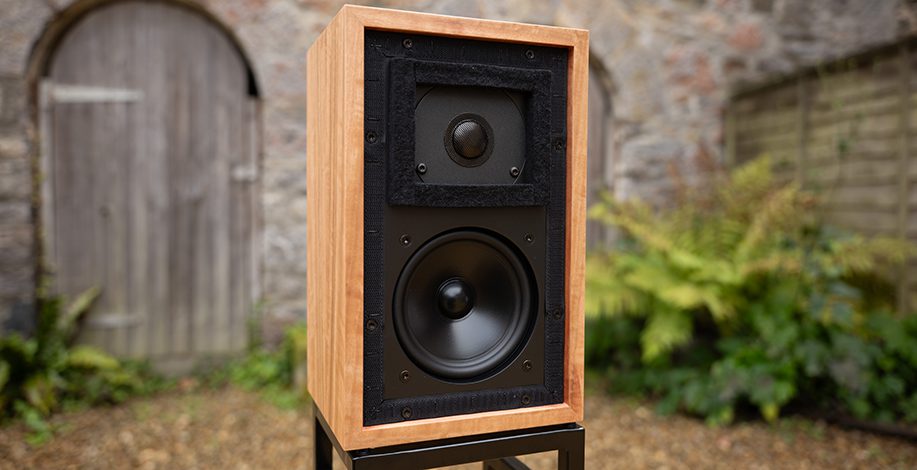
The tweeter is of the soft dome variety with a perforated metal grille, surrounded by thick felt pads – with velcro to hold the main grille in place. The bass unit is 110mm bextrene-coned, made by Volt to Graham’s specifications. There are also changes to the stiffness of the front baffle using higher density materials, said to result in a reduction of vibrations. Interestingly, there is a switch at the back to control the treble response. This came in handy as the speakers supplied had no hours on the clock, and were initially on the bright side.

Breaking in

The manufacturer suggested that a reasonable break-in time was around 50 hours, so I duly left the speakers to play for around seventy hours to be on the safe side. The finish of this pair was eucalyptus veneer, and a rather beautiful one at that. Graham Audio also supplied some solid metal stands for the speakers.

Listening through my VAC 200iq’s, Allegri Reference preamplifier, and dCS Bartók APEX DAC, the amplifiers had no problem in providing enough power for the speakers, at 83db sensitivity the manufacturer recommends 50 watts, this was comfortably exceeded.

Mozart’s Rondo for Piano and Orchestra K382, Barenboim conducting and playing with the Berlin Philharmonic is beautifully recorded, and presents the opportunity to show how a Steinway piano comes across, as well as being able to illustrate the orchestra at some distance back. To extract the detail here can sort out the wheat from the chaff. My first impressions of the sound is to marvel at the large and substantial soundstage these diminutive beasts are throwing out. The piano is lightening fast, I can really hear the attack on each note, the decay is precise and highly believable.

There is a roundness and generosity to the tone, even a complexity to the tone which speakers of this size more often than not miss. While the orchestra doesn’t present with the weight I’m used to with my reference pair of B&W 802d4, at many multiples of the size and price, the result is impressive for this concerto. There is oodles of detail coming from the woodwind and strings, I can see why these speakers were used in BBC vans as they give a lifelike picture of a orchestra, and with the exception of low bass they provide extremely useful information with which to create a mix.

Pleasantly Surprised

To some large and weighty orchestral music, Mahler 5th Symphony – 2nd movement as conducted by Solti on Decca with the Tonhalle Orchestra Zurich, I am really pleasantly surprised how the Grahams give a sense of space. Even though the bottom octave isn’t present, there is a real feeling of the presence of the orchestra. The rapid interchanges between the different sections of the orchestra come across amazingly convincingly and there is no ‘soupification’ when the textures merge.

These speakers are keeping the textures separate, in their own boxes. The cellos and basses whilst not having my B&W’s full range capabilities, do sound credible, and interact coherently with the other textures. When the climax arrives, the speakers don’t break sweat, they keep an orderly control on the unfolding musical hysteria. There is very much a sense that they are presenting the orchestral sound as is, not embellishing or colouring the sound. Masses of detail and I am dragged onto the Mahlerian rollercoaster. Really impressive!

In the box

Listening to Forcione’s “Tears of Joy” feels like sitting in the box for a live recording. There is such a vivid sense to the presentation. The guitar is fast and percussive, the rhythmic textures snapilly portrayed, with razor sharp precision. Again there are no congestion problems when the climax arrives, just a portrayal of the main players. There’s a phase-coherence which is maximising the 3d imagery, and I can hear exactly how the mix is constructed. Clearly, ‘Auntie Beeb’ was onto a good thing here when the Corporation stumbled on these speakers.

Switching to some some jazz, Kenny Burrell and ‘Chitlins con Carne’, a high res remastered on Qobuz, the percussion-work comes across like it’s in the room. The sound of the skins being thwacked is utterly convincing! There is an effortlessness in the timing of the track, and totally on the money. 

There is also a switch on the back, which has 0,-1 and +1 and gently boosts or cuts the treble.

Ohm is where the heart is

I have a pair of the earlier version of the Rogers LS3/5a which I listen to as a reference. These are 15 ohm versions and between forty and fifty years old. They have their share of magic and are the sonic equivalent of a pair of shoes that have been well-worn and are tatty but comfortable. There is a small difference in sound to their modern cousins: the Graham Anniversary speakers are much tauter, they are, to return to the shoe analogy like brand new handmade leather-soled brogues, more detail but a bit more uptight.

The treble cut control at the back serves to change the brightness when switched to -1, the bright and airy top gets attenuated, and the speaker sounds much more like its ancestor, but with more detail. Some of the air and space goes, but then so does a touch of the brilliance which works on some recordings but not others. Having switched between 0 and 1, I’d like a 4th option, a -0.5 which with the current state of break-in would strike me as ideal. This is a useful facility, a tone control by any other name, but one which changes the performance and presentation of the speaker in an intelligent way.

Rather miraculous

These speakers are really rather miraculous. For their size, they certainly pack a hefty punch, they make listening to music an utter joy, and it is reassuring to know that an idea that started life in the seventies as a BBC research project, still has legs and the power to go forward and and hold its head high in the world of rarefied small speakers and to be counted in the speaker hall of fame. This version of the classic has been intelligently developed and is stunning to look at and should be a high priority for someone searching for a compact speaker.   


Technical specifications

Graham Audio BBC Licensed LS3/5A Anniversary Edition

  • System: Two-way sealed stand-mount loudspeaker
  • Enclosure: Thin wall damped construction
  • Frequency response: 70Hz-20kHz +-/3db
  • Nominal impedance: 11 ohms
  • Sensitivity: 83db
  • Dimensions: 19cm by 30cm by 17cm
  • Weight: 5.3kg
  • Price: £1,945, $3,999, €2,750 per pair

Manufacturer

Graham Audio

www.grahamaudio.co.uk

+44(0)1626 361168

More from Graham Audio

Back to Reviews

Hegel H190v integrated amplifier

Here’s a ‘fourth wall’ secret: all audio reviewers have a Pile of Shame. Our equipment racks are filled to burst with benchmarking products, devices under test, and products running in before their test. Then, there’s the room full of boxes and crates, some empty, some not. And when this Pile of Shame gets to heroic proportions, there’s a burning desire to throw everything out. And with that comes the inevitable philosophical noodling: if you stripped everything away, what would we be happy with? What is your ‘desert island’ audio system, the no-fuss product you’d happily switch on time after time? For me, when it comes to electronics, that’s the Hegel H190v integrated amplifier. That’s the original H190 integrated amplifier with a built-in phono stage.

A what? Hegel crossed one of its own ‘no-no’ lines with the H190v. Until a few years ago, the company said, “Hegel will never put a phono stage in an integrated amplifier. It’s just not the Hegel way. If you want a phono stage, buy someone else’s phono stage. We’re just not that into vinyl.” That started to change with the V10 phono stage. And now, there’s the Hegel H190v integrated amplifier, a direct replacement to the H190, now including an MM phono stage. The reason for this is more than to reach the vinyl market. Although, admittedly, that has become such a fixture in modern audio. Demand for excellent phono replay circuits inside and outside the integrated amp has recently seen a renaissance. Hegel has an exemplary phono replay circuit. 

More Beef

Here’s the thing, though. In transitioning from the original H190 to the H190v, Hegel needed to do a bit of housekeeping. A beefier power supply and a minor re-think of the board layout are required. The result is a better-integrated amplifier all around. Adding that phono stage upgraded the line inputs, the DAC performance, the power amp stage… the works. So sometimes, if it ain’t broke, update it. 

The Hegel H190v integrated amplifier retains the company’s pithy descriptions of technologies that underline it’s unique way of making an amplifier. There’s the crossover-distortion cancelling ‘SoundEngine’. Then, there’s the physical separation of voltage and current gain stages known as ‘DualAmp’, each with separate ‘DualPower’ power supplies. It also features a ‘SynchroDAC’ (as opposed to asynchronous digital conversion, which Hegel suggests has lower resolution and more distortion). There is also a low impedance balanced linear phase ‘LineDriver’ circuit in the analogue side of the DAC.

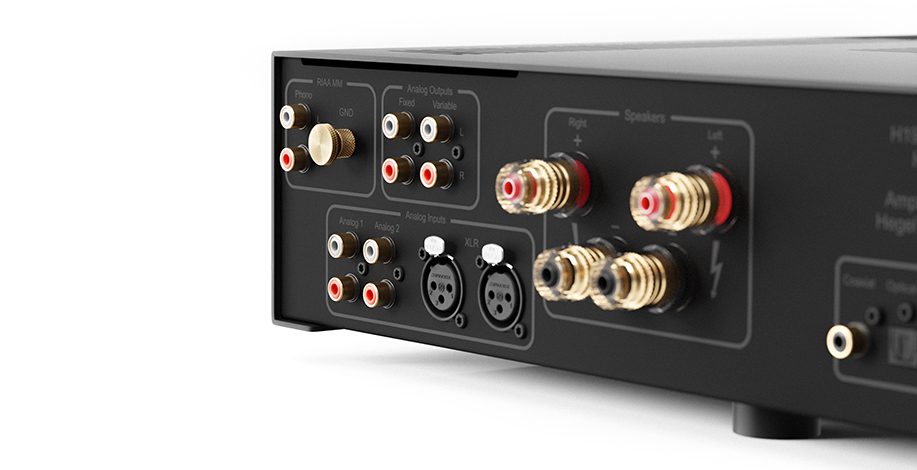
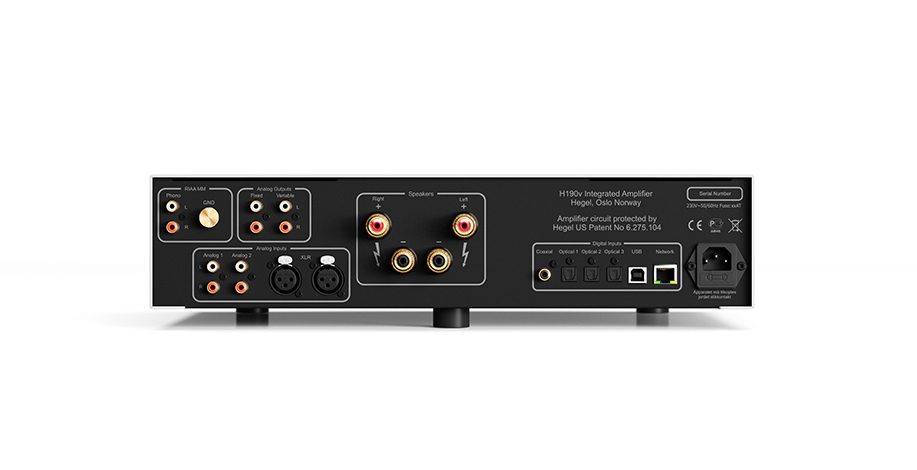
Hegel H190v rear close-up

There’s also an optimal sampling frequency for that DAC (known as ‘Hegel Optimized Clock’). This keeps the signal precise without the open-wallet surgery required to include a high-precision Master Clock. It has a ‘USB’ circuit that acts more like a computer’s sound card, all wrapped up in the company’s ‘OrganicSound ethos. OrganicSound treats the signal to minimal change and, therefore, sounds more like the recording and more ‘natural’ in the process. While these audio aphorisms are best considered ‘gnomic’, they at least point to what they relate to and do so far more elegantly than a collection of Three three-letter acronyms. It also means we can describe most of the inner workings of this 150W Class AB amplifier in a single paragraph.

Swiss Army Knife

I’ve described Hegel amps as audio Swiss Army Knives, which still holds with the H190v. There’s not much this amp can’t do in real-world terms. It supports AirPlay, is Roon Ready, likes almost anything with the word ‘Connect’ in the title (such as Spotify Connect) and will support UPnP local storage. There is a Hegel app (Android and iOS) for remote control and set-up, but it’s not used in the H190v, and the amp is one of the more ‘agnostic’ in terms of third-party apps. In a way, I prefer this approach to a more rigidly controlled app ecosystem because it allows the end user more flexibility. I also like that setting up is less ‘kid gloves’ and more ‘child’s play’ as you can get the amp up and running in minutes without a problem. 

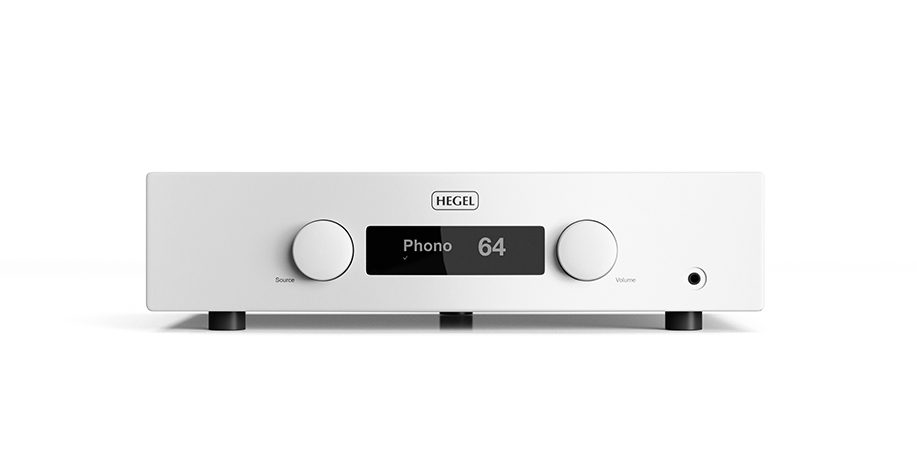
Hegel H190v white  

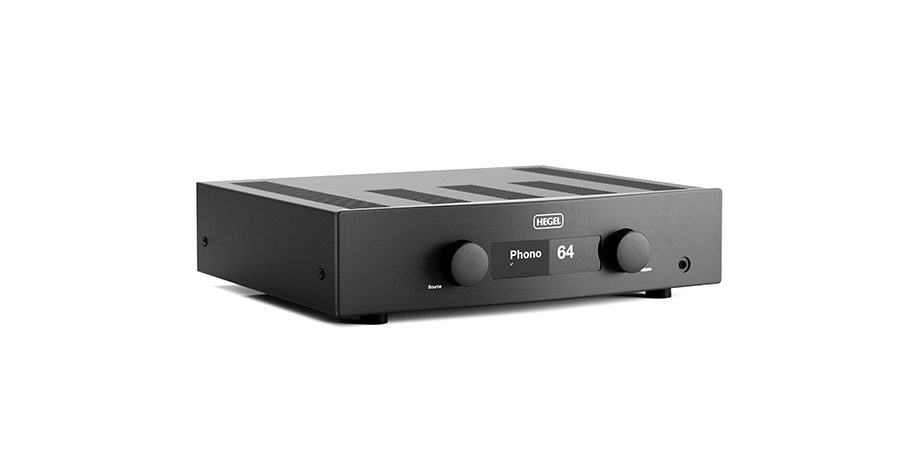
The amp sticks with Hegel’s well-known minimalist approach, although the H190v is available in black or white finishes as a concession to wild and crazy Nordic eccentricity. Two knobs, a central display and a headphone socket on the back, a good array of balanced and single-ended analogue and digital audio connections at the rear, and three feet and a central standby switch on the underside.

Wake up!

Hegel has made the H190v quick to wake up; play something from Tidal or Qobuz apps on your phone or tablet, and by the time the online service starts streaming the track, your Hegel amp will have woken up and be ready to play through the network connection, using a blisteringly fast ‘Wake on LAN’ approach. Couple that with an ability to work with standard TV remotes and IP control for smart home integration with brands like Control4, Crestron, and Savant and this amp becomes something custom installers looking for a good hi-fi system room can get behind, which no doubt contributes to the H190v’s success.

Of course, there are those two little phono sockets with a ‘GND’ terminal. The onboard phono stage is MM only, so most people using a £3,250 amp as the nerve centre of their system are likely using turntables with decent moving magnets or high-output moving coil cartridges. Few are going to use a cartridge that costs more than the amp—hopefully! 

Writes itself

A Hegel amplifier review almost writes itself, and the Hegel H190v integrated amplifier is no exception. The company is highly consistent in its designs. If you like the cheapest Hegel amplifier in the line, the more upmarket designs consciously add or subtract nothing but more power, authority and grip over the loudspeakers and a little more transparency. The tonal balance doesn’t change; adding the phono stage and headphone circuit highlights consistency. 

The amp is powerful, controlled, detailed, well-balanced, and neutral in the treble if slightly forward-sounding. This is not a treble ‘lift’ or even an ‘accent’, and that top end is refined as it is extended into the bat-eared regions of a recording. It’s more accurate to say the Hegel H190v has an otherwise black and rich presentation, and the treble matches modern loudspeakers well. ‘Detailed’ without being ‘forthright’ is probably the best way to describe it.

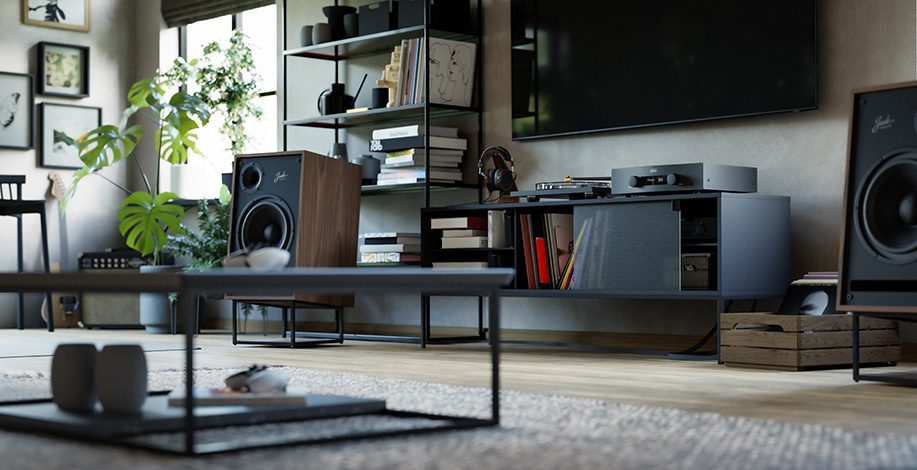
Hegel H190v lifestyle image

The part people latch onto first is the bass because it’s got the right combination of power, control, and rhythmic ‘bounce’. Playing ‘Hollow (16-Bit Remix)’ from Björk’s Bastards album [One Little Indian] is sensational, even on relatively small speakers. The amp’s incredible grip over the loudspeakers (thanks to that damping factor of over 4,000) means those almost unplayable low-frequency tones are kept in check and make some rhythmic sense. Neighbours thought I was trying to inflate an angry goose, but the track’s pace and depth were abundant.

Speaker-mashing

This holds outside of speaker-mashing dance music. As a complete contrast, the same bass control and top-end extension also made Pablo Casals playing Bach’s Cello Suites [Archiv] spring to life. In fairness, this recording has excellent potential to sound good. Still, the benefit of image solidity and space and the all-round ‘first, do no harm’ tonal balance turns this superb recording into a blood-pressure-lowering musical event. And, given the probable loudspeaker matches the H190v is likely to see, this makes that musical experience even more striking. I also have this recording on original pressings from the early 1960s, and the H190v’s phono stage nails it. As the Boy Scouts say… Job Done!  

This track also shows how much the slight changes to the circuit to add that phono stage pay dividends in the Hegel H190v integrated amplifier. I would put the amp at the top of Hegel’s ‘entry’ range but some distance from the big-hitter H390 and H600 integrateds. The H190v closes the gap a lot.

The big question

The big question, however, is whether an existing H190 owner should upgrade to the H190v. The OG version of the H190 was – and remains – an excellent performer. The H190v is more dynamic and detailed, but not so much that it will force your hand here. The one exception is if you have a record collection. Then, the H190v is all you need.

Hegel H190v rear

That ‘all you need’ is the core of the Hegel H190v. It’s such an obvious and elegant solution that meets most people’s audio electronics requirements. It’s hard to think of something with a better balance of price and performance. Sure, you can spend more, and sure, you can get more. But this does everything most people want or need from their audio equipment. 

Technical specifications

  • Type: Integrated amplifier with network, DAC, and MM phono connections
  • Analogue inputs: 2x RCA stereo pairs, 1x XLR stereo pair
  • Phono input: 1x RCA stereo input, for MM cartridge
  • Digital inputs: 1x Coaxial, 3x Optical S/PDIF, USB, RJ 45 Ethernet
  • Line level outputs: 1*Unbalanced fixed (RCA), 1*Unbalanced variable (RCA) 
  • Streaming: AirPlay, Roon Ready, Spotify Connect, UPnP
  • Streaming formats: MP3, WAV, FLAC, ALAC, AAC, PCM, Ogg
  • Frequency response: 5Hz-100kHz
  • Signal-to-noise ratio: More than 100dB
  • Crosstalk: Less than -100dB
  • Distortion: Less than 0.01% @ 50W 8 Ohms 1kHz
  • Intermodulation: Less than 0.01% (19kHz + 20kHz)
  • Damping factor: More than 4000 (main output stage)
  • Power use in standby: <0,5W
  • Dimensions/weight: 12 x 43 x 41cm (HxWxD),
  • Weight: 14.2kg
  • Price: £3,250, $4,200, €3,795

Manufacturer

Hegel Music Systems

www.hegel.com

UK distributor

Auden Distribution

www.audendistribution.co.uk

+44(0)7917 685759

More from Bristol

Back to Reviews

Gold Note IS-10/PA-10 EVO

Regular readers may recall that I reviewed the Gold Note PH-5 in Issue 219 and then the matching PSU, and was thoroughly taken with them. More recently, I hosted their stablemates, the IS-10 integrated amp and the matching PA-10 EVO power amp. In the interests of transparency, let me add that I had already bought and paid for the same company’s PH-10/PSU combination for my own system, and they formed part of the review system, but my reviews are not influenced by that buying decision.

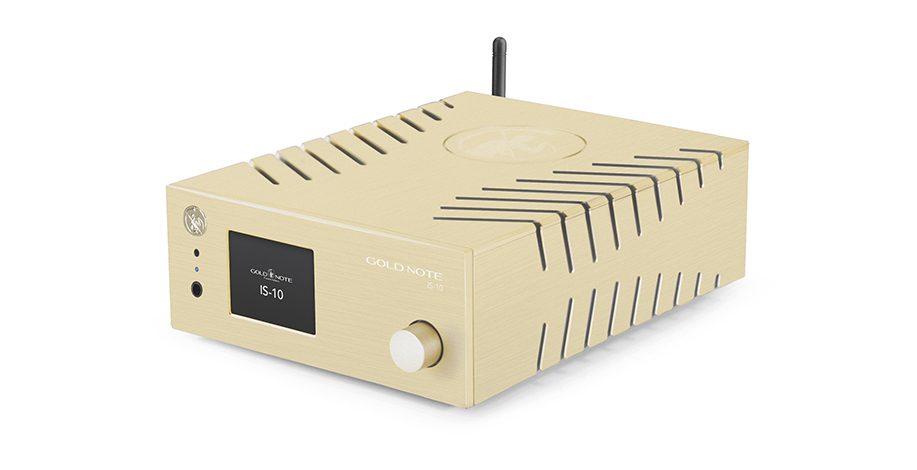
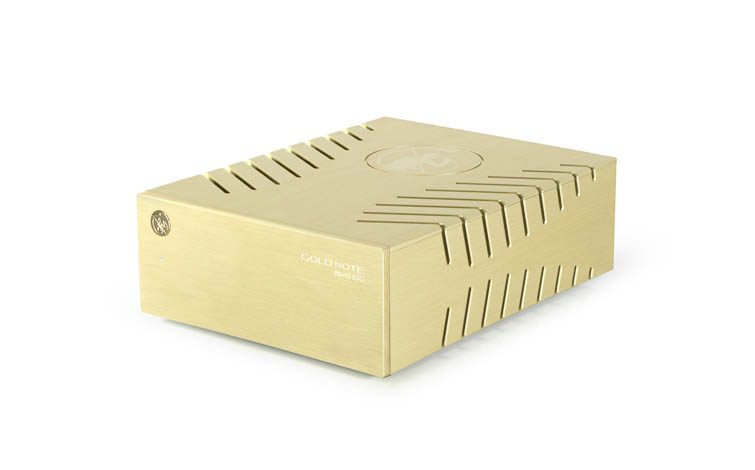
The IS-10 integrated amplifier is another in the half-width Series 10 components offered by Gold Note. The review sample was finished in the same black anodised aluminium as my two existing pieces, but there also silver and gold options available should the buyer prefer. It weighs in at just 4kg, with the usual Series 10 dimensions of 200x80x260mm (WxHxD). 

Layout

The front panel is laid out just like the PH-10, with a colour screen just left of centre and a control knob on the lower part of the right-hand side. To the left of the screen, at the top, is the now familiar Gold Note logo embossed in gold, then the IR receiver for the remote control and below that, a full-size 6.3mm headphone jack input.

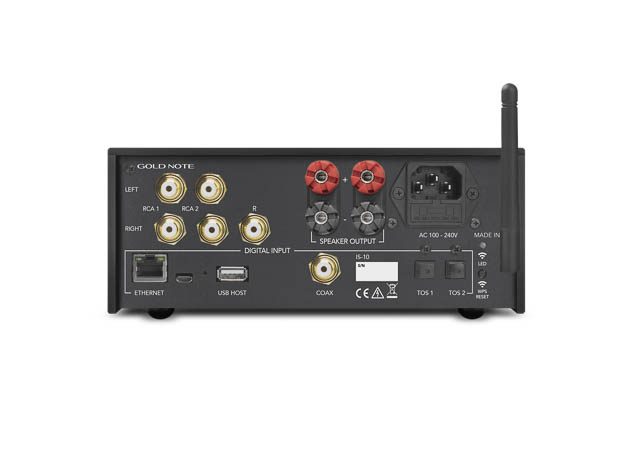
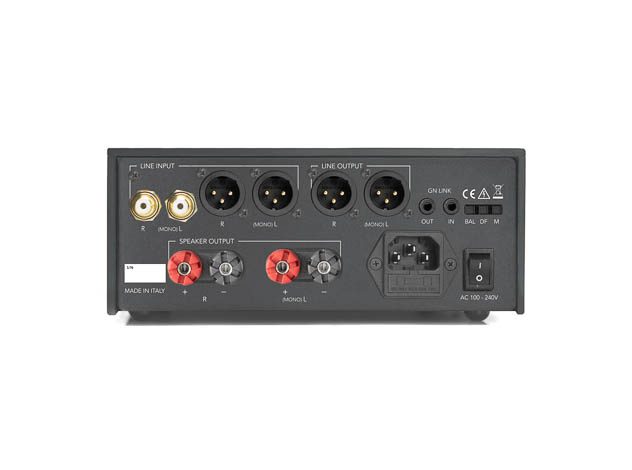
The casework has angled striations along the whole length to help dissipate the heat created within. The rear panel has a lot of socketry but does not feel overcrowded. Two pairs of analogue RCA inputs are in the upper half of the left-hand side. To the right of those is a single RCA, which allows the user to use the IS-10 as a mono amplifier in conjunction with a PA-10 EVO power amplifier, a configuration to which we shall return in due course. Next are two pairs of loudspeaker outputs that can accommodate banana plugs, spades or bare wire connections. The last item in the top row is the IEC power input.

Gold Note IS-10_rear

The bottom row of sockets gives access to the digital wizard within the chassis. From the left, we find inputs for Ethernet, USB-A, an RCA coaxial input and two Toslink optical receivers. In addition, there is a USB-C input (for firmware updates) and boss onto which the user can attach the supplied WiFi antenna.

Impressive

The technical specifications are impressive, too. As an integrated stereo amplifier, the IS-10 has an output of 90W into 8 Ohms, which rises to a very impressive 280W into 8 or 4 Ohms when used in mono mode with a PA-10 EVO. We shall return to that later.

The D/A Converter is an AKM AK4493 PCM. The quoted frequency response is 5Hz -50kHz, with THD of 0.001% (1kHz @ 1W). The LAN/WLAN wi-fi is 802.11a/b/g/n/ac Dual and (10/433Mbps). Bluetooth is the High Definition 5.0 (44/16).

All-in-one?

When describing this as an All-In-One device, Gold Note is not exaggerating. It is Roon Ready and supports the following streaming services – deep breath – AirPlay, MQA, Qobuz, Deezer, Spotify Connect, Tidal, Tidal Connect and vTuner. It also supports UPnP, which means that I can access the library of WAV files held on my Naim UnitiServe. I’ll spare you another long list of file-type acronyms – suffice it to say that it can handle almost anything you throw at it.

It is necessary to download the Gold Note app (GN Control) to your mobile device to use your smartphone as a remote and access some of the streaming services (Qobuz, vTuner, Deezer). I logged into my Qobuz account at the first attempt, and it never missed a beat thereafter. The only slight oddity with the app was that it would only run in the portrait orientation on the iPad. I generally use the device in landscape mode, and it took a few days for me to remember that the Gold Note app doesn’t switch between the two. This is more of a commentary on me than a critique of the app.

I plugged my PH-10 into the first RCA input pairs using Tellurium Q Statement II interconnects, with my modified Linn Sondek LP using a Vermeer Dark Sabre moving magnet cartridge in the Linn Ittok arm. My AURALiC ARIES Mini streamer was plugged into the coaxial input, and my TV was into one of the two optical inputs. These come with a protective cap installed. Be sure to put them somewhere safe if you need them later – they are small and easily lost.

My Harbeth P3ESRs, sitting upon Harbeth’s new bass enhancement stand, the Nelson, were the speakers in use. The speaker cable was Tellurium Q Ultra Black II.

Listening to the IS-10

It has taken me almost as long to write all that as it actually took to get the system up and running. My experience with all the Gold Note equipment that I have encountered has been that it is well made, easy to set up and easy to use. The user manuals are always well written, concise but with enough detail to be useful. Yes, I do actually read the user manuals of everything that comes into the house – experience has taught me that it usually saves me hours of frustration!

After letting the IS-10 warm up thoroughly for a couple of days I sat down to listen properly, and being lazy I grabbed the iPad, booted up the Gold Note app and got into my Qobuz account, specifically my Favourites section. Does anyone else do what I do, and keep adding albums to that list? It rapidly becomes an absolute hotchpotch, with no logical ordering. The latest selections go to the top of the list, but I can find no way to arrange them in any sort of order. However, I did manage to land on a perennial favourite, Stephen Stills and Manassas’ eponymous debut double album from 1972. I still regularly play my original copy on Atlantic Records.

Streaming

Through the IS-10’s streamer, it flowed from the Harbeth’s diminutive drivers, with every musical strand perfectly delivered and plenty of tuneful bass thanks to Nelson’s contribution and irresistible propulsive force. I have greatly admired Mr. Stills’ work since I first heard Buffalo Springfield a few years earlier than this release, and I think this album was an artistic high-water mark for him. Much credit must go to his Manassas bandmates, each of whose contribution was delivered with perfect weight by this system.

I roamed randomly through the unwieldy collection I have assembled on Qobuz and was never disappointed with the results. I navigated through the eclectic aggregation of albums, like a slightly intoxicated driver on an unfamiliar mountain road, from the Allman Brothers Band to ZZ Top, with excursions into classical, jazz, folk, reggae, dub, and all sorts of other weird and wonderful stuff.

Back to vinyl

Switching to vinyl replay a few days later, I revisited my 52-year-old copy of the Manassas album. Yes, the sound certainly had more depth. The Dark Sabre is astonishingly good at digging out vast amounts of information from ancient and modern grooves. The IS-10 and PH-10 are excellent companions, and I was utterly gripped by the music that flowed through them.

Evenings here tend to see music replay giving way to television as our source of entertainment. This gave the IS-10’s optical input a great workout, and it proved to be masterful there too. Spoken word voices sounded truly lifelike, and when the action kicked in, there was plenty of power behind gunfire and explosions.

The final stage of my extensive listening sessions with the IS-10 on its own was to try the headphone output. For this, I used my closed-back AudioQuest Nighthawks (long since discontinued) plugged into a QED extension cable with a 6.3mm jack at the amplifier end. I started by streaming from Qobuz through the IS-10’s streamer. I selected Jordi Savali’s magnificent recording of Beethoven’s Ninth Symphony with Le Concert De Nations. The climactic fourth movement evoked a profound emotional reaction in this listener, and as the last notes faded it took some minutes for me to regain my composure. The headphone performance was as good as every other department in the IS-10’s offering.

Listening to a record through headphones is always an intense experience for me. Listening to my original 1973 UK pressing of Pink Floyd’s peerless Dark Side Of The Moon was no exception. I whiled away an entire day playing through the headphone output on the IS-10, and since then, I have used headphones more often with whatever amplifier has been in use.

Adding the PA-10 EVO

The second phase of the review was to switch to a dual mono amplifier configuration. This was executed easily once I had got clarification on how to do it from the very helpful team at Airt Audio, the UK distributors for Gold Note products, who had supplied me with the review equipment. Using the RCA sockets on the rear of both boxes, I installed an AudioQuest Pegasus to link them. The IS-10 is smart enough to know that the presence of an RCA plug means that It has to reconfigure itself as the mono left channel, with the power amplifier beside it taking right channel duties. The part that caused me cognitive dissonance was that the right-hand speaker cable had to be moved to the left channel outputs on the PV-10-EVO. There are also three small push buttons on the rear panel, one of which configures the unit for mono.

GoldNote_PA-10_EVO_1

With that done, I resumed my listening chair and returned to the Manassas album on Qobuz. Holy Moly! We now had a pair of amplifiers, each of which could deliver more than 250W into an eight ohm load. Clearly, I was not going to jeopardise the welfare of my little Harbeths with injudicious use of the volume control, but I did advance it a little. The outcome was a noticeable increase in musical dynamics and in the precision with which notes stopped and started. The soundstage grew bigger in every direction without ever feeling overblown.

Powerhouse

Vinyl replay through this pocket-sized powerhouse amplification was remarkable. It could handle the shimmering, ethereal flute and synths of Shpongle with the same aplomb with which it delivered the down-and-dirty Texas crunch of ZZ Top. When Frank Beard’s drums burst into life on the classic track ‘La Grange’ I could feel the power hitting me right in my flabby midriff. This was a real exercise in controlled power. The last side of Pine Floyd’s epic post-Waters live album Pulse features some of David Gilmour’s finest guitar work, and through the dual mono Gold Note amplification, it had huge emotional and aural heft.

The final phase of the review process was to contrast and compare the built-in streamer of the IS-10 with the AURALiC ARIES Mini. In my system, the pint-sized streamer has been bolstered with a power supply from Network Acoustics, the same company’s ENO ethernet filter, and punches well above its size and weight would lead you to expect. Returning to some of the music I had already streamed, there was an added sense of realism to the sound, which I noted as being “more analogue sounding”. But the performance gap between the IS-10’s built-in streamer and the AURALiC would not have been enough to leave me feeling short-changed if I relied solely on the Italian machine.

Tour de force

The engineering design team at Gold Note has delivered another sonic tour de force with these System 10 components. I exhausted my Florentine imagery in my last Gold Note review, but I wish I had left some for this piece. The IS-10 is a wonderfully versatile single-box solution. For anybody coming new to building a great minimalist system, the IS-10 makes an incredibly strong case for itself. Add a pair of the loudspeakers of your choice, and you will have a genuinely impressive system. However… add a PA-10 EVO and you have a true aural heavyweight, in a rather dinky form factor.

This a great time to be a buyer – there is an embarrassment of choice out there, so when compiling a shortlist of components to audition, it would be easy to overlook the Gold Note offerings, which would be a severe error. If your current budget only stretches to the IS-10, you will not be disappointed, but start saving again because the PA-10 EVO deserves the small amount of shelf space it will occupy. Once again, I shall end like this – Bravissimo Gold Note. 

Technical specifications

Gold Note IS-10

  • Type: Integrated streaming Amp/DAC
  • Inputs: 4x digital, 2x RCA analogue
  • Power output: 90W/8Ω (Stereo mode), 280W/8Ω (mono)
  • Streaming supported: Roon Ready, Tidal Connect, MQA, Airplay, vTuner, Tidal, Qobuz, Deezer, Spotify Connect
  • Formats supported: PCM (to 32bit/384kHz), DSD to DSD256
  • Output: Loudspeakers, 6.3mm headphone jack
  • Finish: Black, Gold, Silver
  • Dimensions (WxHxD): 20x8x26cm
  • Weight: 4kg
  • Price: £2,900, $3,499, €2,850

Gold Note PA-10 EVO

  • Type: Power amplifier
  • Inputs: RCA (single-ended), XLR (balanced)
  • Power output: 2x 140W/8Ω per channel, 250W/8Ω mono
  • Finish: Black, Gold, Silver
  • Dimensions (WxHxD): 20x8x26cm
  • Weight: 3kg
  • Price: £1,699, $1,999, €1,750

Manufacturer

Gold Note

www.goldnote.it

UK distributor

Airt Audio

www.airtaudio.com

+44(0)1354 652566

More from Gold Note

Back to Reviews

LOUD & CLEAR EDINBURGH HOSTS ALL THINGS VINYL DAY

January 30th, 2025 – This Saturday, February 1st, Loud & Clear Edinburgh will host its annual All Things Vinyl Day. This year’s event promises to be the best one yet, featuring an exhibition of paintings by Kyle Blain.

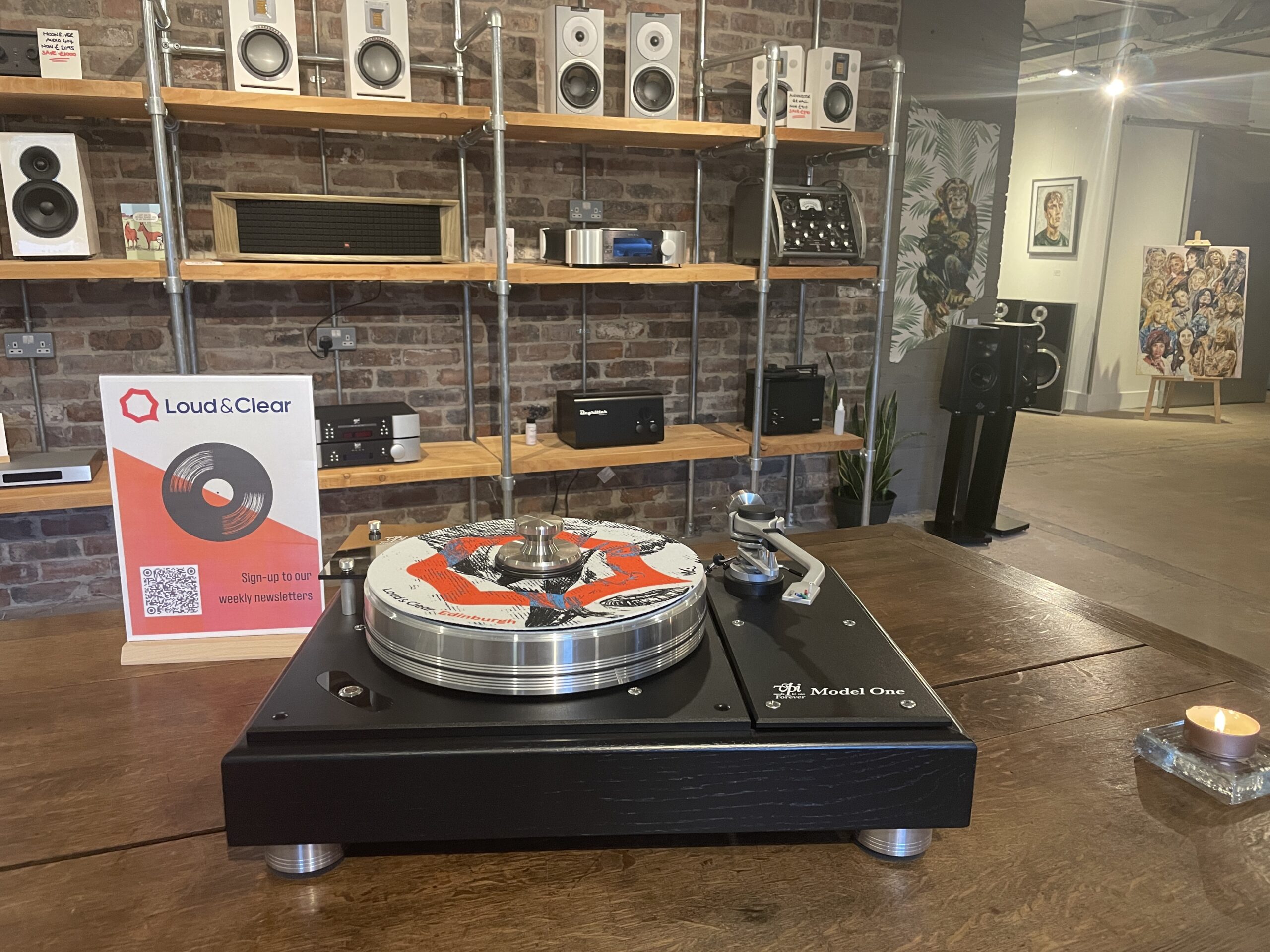
The All Things Vinyl Day is always a popular event at the store, and this year will be no exception. A wide selection of turntables from renowned brands such as Rega, Vertere, and VPI will be on display and playing throughout the day. Customers will also find an extensive range of vinyl accessories, including everything from phono preamps to cartridges. The store’s friendly and knowledgeable team will be on hand to answer any questions, and there will be special offers available.

Scottish artist Kyle Blain will showcase his artwork throughout the store, featuring unique paintings of artists including David Bowie, Billie Eilish, Eminem, Sam Fender, Fontaines D.C. and Dave Grohl. Blain’s art explores themes of music, identity, nature, and pop culture, using abstract brushwork to create expressive yet realistic pieces. His works have been exhibited throughout Scotland, as well as in London and Athens. Best of all, Kyle’s pieces are affordable, with originals starting at just £300.

Kyle will be in the store throughout the day, available to answer questions about his artwork. He will be happy to discuss his artistic methods, creative choices, and more. With Valentine’s Day just around the corner, he will also have extra prints available, specially created for the occasion.

In addition to exploring Kyle Blain’s artwork, customers can browse Loud & Clear’s extensive collection of vinyl records. The coffee bar will also be open, serving what is probably the best cup of coffee in the city, brewed on the brilliant Fracino machine.

Loud & Clear Edinburgh’s Managing Director, John Carroll, said: “We take great pride in our mission to be the world’s best hi-fi store, and events like All Things Vinyl Day are a key part of that. This year’s event, with the addition of Kyle Blain’s fantastic artwork, promises to be our best yet.”

Whether or not a special event is taking place, Loud & Clear Edinburgh is always worth a visit. The store offers a calm and welcoming environment in which customers can experience a carefully selected range of premium hi-fi products. Alongside major audio brands, the store also features smaller companies, including loudspeaker specialists Living Voice and YG Acoustics. Manufacturers trust the team to match products to customers’ individual needs through thoughtful consultation and detailed listening sessions in the perfectly calibrated demonstration room.

For more information, visit:

www.loud-clear.co.uk/edinburgh

www.kyleblainart.com

Trentemøller: The Last Resort

Great electronic music is very hard to find. To me, at least. There is lots of it, but it is seldom mainstream, which makes it hard to get exposed to and even harder to sort through the vast selection. Though far from an expert in this field, The Last Resort from 2006 by Trentmøller is an extraordinary album. 

Often, electronic music falls into one of two categories: either too monotonous or too annoying. The Danish DJ Trentmøller has managed to avoid both of those categories on most of the tracks on The Last Resort.

So the album is not entirely electronic; bass and guitars were used on some of the tracks, and while you sometimes might hear what could sound like static and/or distortion, it is simply part of the soundscape that Trentmøller lays out for us. And except for a few spoken phrases in one or two tracks, there are no vocals.

For listeners who need a label to define it, the closest would probably be a mix of many electronics genres, from Minimal and Ambient techno to Progressive House. Most of the tracks are long, over five minutes and some close to ten minutes, sonically waxing and waning and lots of time for the track to evolve.

The album opens with one of the best tracks on the album, ‘Take Me Into Your Skin’. It’s undoubtedly the most energetic, with many ebbs and flows in the music and significant tempo changes. Like on the whole album, this track features fantastic bass. This is a must-have album if you want to hear great deep bass or test how well a particular DAC or speakers can reproduce bass. Editor Alan Sircom uses ‘Chameleon’ from this album to evaluate gear. The tracks also feature high-frequency ambient pings, eloquently echoing back and forth between the channels – all these features make for a great dance track.

‘Evil Dub’ is another great track from the album. It is slightly darker and more subdued, with a low pounding bass line interspersed with various higher-frequency sounds. ‘Nightwalker’ is another track similar to ‘Evil Dub’; it is subdued, dark, melodic, and hypnotic, as if you’re in a trance while listening. ‘Miss You’, the final track, is probably the most easily accessible for people who are not well versed in this genre. It is melodic, low-key, and enjoyable, with a cool vibe.

‘Into The Trees’ is one of the only tracks where you feel like real drumming is involved, that is to say, where the drums stand out and almost dominate the bass. The aforementioned ‘Chameleon’ is probably the best track on the album and suitable for illustrating Trentmøller’s excellent way of constructing a track. He claims to have Depeche Mode as one of his inspirations, and ‘Chameleon’ (and several other tracks) share some traits in melody escalation that Depeche Mode often used on their 12-inch singles in the 1980s. It starts with a simple bass rhythm; Trentmøller then lets ambient sounds drip in and continues to add and escalate the bass and small ambient sounds on top of this essential rhythm. He then adds layers of sounds to underscore the growing intensity while keeping the original basic rhythm.

I imagine a high-end private lounge where this album plays in the VIP section. You chill and sip fancy cocktails while watching a glorious sunset over a suave metropolitan city’s skyline.

This album can certainly be enjoyed as excellent background music for hanging out, but it shines when you punch it! Viscerally feeling all that incredible deep bass moving through your body. As with most electronic music, you can certainly dance to most of the tracks on this album. But it also has a very mellow side, making it much more melodic than most electronic music I’ve heard. This album is recorded very well and has excellent sound quality. I’ve heard it both on vinyl and digital, and both sound great.

Highly recommended and the best electronic album I’ve heard!

Back to Contemporary

Kamasi Washington: Fearless Movement

Take a deep breath, cancel all your appointments, and get some wine and snacks for an epic listening experience: Kamasi Washington has a new album out. But what’s this? Washington’s debut, The Epic, came in at a triple-LP-hogging three hours – quite the statement for a first offering. His second, Heaven and Earth, was four LPs long – one was hidden in the elaborate sleeve! – and clocked in at two-and-a-half hours. But his third, Fearless Movement, is a mere double, running to an hour and a half across 12 tracks.

What’s happening? Has Kamasi lost his mojo, has he run out of epic tracks… or maybe, just maybe, he has developed a true sense of worth and managed to strip the album down to a dozen absolute bangers. No spoilers, but we are edging towards the latter.

The album is also more mixed than previous offerings: less epic jazz, more spirituality, hip-hop, and all-around funkiness – George Clinton even makes an appearance. In fact, a celebratory vibe runs through the whole record, at least part of which Kamasi himself credits to the birth of his first daughter. 

This is a sign of deep maturity in a musician. Even in jazz, there is a strong ‘stay in your lane’ drive, especially when your music is successful. But the greats never stop moving forward, they are always innovating and looking toward the next concept, the next collaboration, and the next groove. And here, Kamsai Washington shows greatness!

Reassuringly, Fearless Movement features a plentiful array of Washington’s reliable, highly talented sidekicks. These include Ronald Bruner Jr. and Tony Austin on drums, the exceptional Ryan Porter on trombone, Miles Mosely on upright bass, Brandon Coleman and Cameron Graves on keys, and the wonderful Patrice Quinn, whose vocals always lend Kamai’s albums a touch of feminine class. His dad also appears again on flute, although the headline flautist must be Andre 3000, more of whom later.

But let’s start at the beginning, with the opening Lesanu, which clocks in at over nine minutes and very much gives you the impression of business-as-usual. It’s a wonderful, spiritual jazz workout, with chanting featuring alongside shared piano freakouts and Kamasi’s highly recognizable sax style.

Asha The First is where things start to get a little crazy. For starters, it features long-term friend and collaborator Thundercat, who, as you would expect, does what Thundercat does best: lay down some incredible bass lines in an opening solo. This is followed by some sounds that, at least according to my ever-alert dog, sound exactly like a Ring doorbell going off! The middle section introduces a rapping segment that stands out from the rest of Kamasi’s previous output. We’re not saying it’s a bad thing – it just takes the listener who hasn’t studied the track credits by surprise.

Elsewhere, standout tracks include the Zapp cover Computer Love, which brings Patrice Quinn’s vocals to the fore, and The Garden Path, which is classic Kamasi and features, to my ears, some of the best soloing on the record, both from the band leader and his co-conspirators. But the true moment of wonder is Dream State, a blissful nine minutes that features the newfound flute skills of Andre 3000 and brings to mind the spiritual vibes of Alice Coltrane at her best.

The album closes, rather ironically, with the wonderful Prologue, which is a considerably more up-tempo piece than the rest of the album and is a fine closer to both this brave new record and, we would imagine, to his recent live shows.

Fearless Movement is a great album, but one where jazz traditionalists may feel he has strayed too far from the path of righteousness. Who knows, maybe we can all look forward to Kamasi’s fourth record being a 45-minute single album of funk workouts; we would not stand in his way.

Back to Jazz