Up to 37% in savings when you subscribe to hi-fi+
hifi-logo-footer

Begin typing your search above and press return to search. Press Esc to cancel.

DeVore Fidelity Orangutan 0/93 floorstanding loudspeaker

John DeVore has gained a great reputation of late. His company’s simian-infused loudspeaker range has attracted the right sort of attention from a wide range of audio enthusiasts. The Gibbon series, for example, picks up a lot of plaudits from the Rhythm Kings in search of the perfect partner to tidy-sounding Brit-Fi system. Meanwhile, the combination of a wide front baffle, paper-cone bass driver, soft-dome tweeter, and high efficiency has made the DeVore Fidelity Orangutan the perfect choice for Single-Ended Triode users.

The O/93 is the second Orangutan out of the monkey cage, and builds upon the strengths of the O/96 standmount. As the name suggests, the O/93 is slightly less efficient (93dB instead of 96dB) than the O/96, but 93dB isn’t exactly ‘inefficient’ and works well with many low-power SET amps. Strictly, it’s not ‘hi-eff’ because that label kicks in at around 95dB, but given there is nothing crazy going on in its 10 ohm impedance and that it will play well with the sort of products ‘hi-eff’ speakers work with, it’s no big deal.

DeVore isn’t big on audiophile magic beans. This is a sensible wide-baffle two way, rear-ported loudspeaker with stubby little wooden feet to keep the wide and tall box an inch or so off the floor. There is no provision for bi-wiring. The drive units are equally free from hi-fi buff nonsense. The O/93 uses the same horn-loaded twin-magnet 25mm silk dome tweeter, and a variation on the theme of the 250mm paper cone woofer with a phase plug, as found in the O/96 (the woofer is itself derived from the one used in the company’s Silverback reference design). The crossover is, however, hardwired using silver wire, and the caps are all paper-in-oil designs. No magic spells mean a fairly basic “it’s a loudspeaker” description on the website and a ‘feeding guide’ manual supplied in the box. Even the finish is limited to the ‘fiddleback mahogany’, walnut, and maple, with stained maple back and sides, with other finishes made to order, but there’s a simplicity and elegance to this kind of approach.

In truth, we intended to review the Tron Atlantic integrated amplifier before the Orangutan (which we will be reviewing in our upcoming amplifier issue), but the DeVore O/93 is a new and exciting addition in its own right and we decided it deserved being brought forward a few issues. But it’s also worth looking at both side-by-side as the O/93 is a perfect partner for the low-powered Atlantic and they regularly cohabit (Graham Tricker builds Tron and distributes DeVore).


Paper and silk need a little bit of running in, but positioning and amplifier choice are more important. In terms of positioning, there seem to be no hard and fast rules here, apart from the usual ones of away from the walls and a slight toe-in. How far from the rear and side walls, how far apart, and how much of a toe-in, however, make crucial differences in the O/93’s overall performance. This can’t be stressed enough: if you get poor sound when playing, then it’s probably down to placement.

The choice of amplifier is relatively easier, as this is a sure-fire case of quality over quantity. As it’s an easy load and a relatively efficient speaker to drive, the O/93 doesn’t need a powerhouse amplifier and is arguably best with Class A solid-state amplifiers or low-power valve designs. The UK distributor, of course, resolves this because Graham Tricker makes some of the nicest valve amps out there in his Tron range, but those with a power house amplifier looking for something a little out of the ordinary should note that they will probably end up with an entirely inappropriate gain structure. This will necessitate using a volume control like a safe-cracker where small changes in volume level create large increases in outright volume.

There seems to have been a continued trend in loudspeakers toward a forward and bright sound. This seems to have been going on for as long as there have been metal dome tweeters, and that zingy, immediately gratifying sound shows little sign of such a trend abating. The alternative is often seen (with some justification) as the ‘pipe and slippers’ style laid-back sound of older loudspeakers. In fact, there are a handful of loudspeakers that take a middle path; a sound that isn’t an immediate crowd pleaser and isn’t like musical Mogadon, but instead makes a sound that is more honest to the music itself. The O/93 is very much in this smaller, but highly valued camp.

The O/93 is very definitely rich, in that it has a distinct sense of fullness and warmth across the midband that is extremely alluring. This is at odds with those who want to strip their music apart, and is the diametric opposite of the analytical studio monitor. Instead, using the O/93 is like side-stepping the whole studio system and sitting in front of the musicians. At times, this can get eerie: listening to ‘Jubilee Street’ by Nick Cave & The Bad Seeds Push The Sky Away, Bad Seed Ltd] – a track never far from ‘disturbing’ – might make you want to get clean after listening, thanks to a presentation so vivid and visceral. But on most tracks, that ‘vivid’ and ‘visceral’ comes across as ‘realistic’ and ‘natural’ sounding.

The strange thing is the speakers don’t produce the kind of sound that you might imagine. They don’t give off the big, flubby, wobbly sound that you might expect from a 10” paper cone. They are actually quite taut and energetic sounding. They give good imaging – the wide baffle almost guarantees that – but don’t necessarily draw attention to that fact. Most of all, though, they are just so damn musical and enjoyable, and yes there is such a thing as a ‘musical’ loudspeaker: if you play ‘Love In Vain’ by the Rolling Stones from their live/studio tour album Stripped [Virgin] through the O/93 and compare the sound with that of many other loudspeakers, you’ll hear precisely what ‘musical’ is all about. It’s a sound that manages to convey ‘vibe’ as much as ‘information’, and that’s extremely alluring. Audio is in an entertainment business, and these are exceptionally entertaining loudspeakers, and that applies universally to all musical genres.

Perhaps the best thing about the DeVore Fidelity Orangutan O/93 is it is like a time machine for the listener. It winds the clock back to a time when music played through good audio was something new and exciting because it was new to you. We all remember that first, great audio system we experienced (whether it was your father’s hi-fi, or a friend’s system at college) and we tend to paint that experience in nostalgic colours. This isn’t a nostalgic view of the past, but it has something about it that will remind you of that first, great audio experience. Music is new and exciting through the O/93 and not only will you want to play those old favourites, you’ll probably enjoy them in a way you might have lost, too.

There’s a distinctly ‘turntable and tubes’ vibe about the O/93’s presentation. It does extremely well with solid-state amplification and digital sources, but those who think there’s some magic in vinyl and valves will see the Orangutan O/93 as the last piece in the jigsaw puzzle. While I don’t find the loudspeaker ‘fussy’ in terms of source components, digital audio replay needs to be exceptionally good when output through the O/93: otherwise it can sound either extremely ‘peaky’ or, paradoxically, rather dull sounding. When it’s good, though, it’s extremely good.


There is nothing special about the O/93, and that is the ace up its sleeve. People have been making two-way loudspeakers with soft-dome tweeters and ten-inch bass drivers for decades, to such an extent that the skills behind such products have come and gone and come back once more. Which means DeVore can draw upon huge field resources and the result is excellent. It’s not going to re-draw the musical landscape and it’s not going to start the next great audio revolution; the Orangutan O/93 is simply a loudspeaker that doesn’t monkey around (admit it: you knew that was coming) with a fine formula.

We live in a world of short attention spans. The DeVore Orangutan O/93 challenges that head-on, and that is its greatest strength and possibly its greatest weakness. If you are of a butterfly mind, the O/93 may well leave you cold, because you will not be able to give music the time to sink in, and something more immediate and upfront sounding will win you over. If, on the other hand, you take a more mature, more considered approach to your musical journey and are prepared to let your music reveal itself to you in appropriate time; the O/93 is the perfect partner. Highly recommended.

Technical Specifications

  • Type: Two-way, bass reflex floorstanding loudspeaker
  • Drive units: 1× 25mm soft silk dome tweeter, 1× 250mm paper mid/bass cone
  • Frequency Response: 30Hz–31kHz
  • Sensitivity: 93dB/W/m
  • Impedance: 10 ohms nominal
  • Dimensions (W×H×D): 38×90.1×25.4cm
  • Weight: 20.5kg each
  • Price: £8,000 per pair

Manufactured by: DeVore Fidelity

URL: www.devorefidelity.com

Distributed in the UK by: GT Audio

URL: www.gtaudio.com

Tel: +44(0)1895 833099

Back to reviews

Read more DeVore reviews here

Townshend Audio Seismic Podium

One of the biggest problems in the pursuit of high fidelity is establishing what exactly is in the signal and what the reproduction equipment adds to that signal. Essentially, this is ‘distortion’, and many forms of distortion are euphonic, in that they change the sound in an attractive way, almost by making up for aspects that get lost in the reproduction chain. As long as the distortions are harmonious, we don’t seem to mind them and even – in the case of valve electronics – positively love them. Valves are, of course, transparent in ways that transistors aren’t, but few would argue that they produce a linear tonal response.

According to Townshend, playing music through speakers on spikes is much like plucking a ruler in a vice, and the whole cabinet resonates as a result. If you have your speakers spiked to concrete, that resonance is at about 100Hz and about 50Hz on wood or carpet. Putting spikes under a speaker gives it a faster, sharper sound that has greater immediacy than a speaker on rubber feet for instance. The sharpness that spikes bring to the sound, according to Townshend Audio, comes from a separate, but perhaps more insidious, issue of microtremors, which constitute the background noise that you see on seismographs. These are constant tiny earth displacements of between 1 and 10 microns, which we don’t feel because they are too small. However, to a 25mm tweeter playing a signal at 5kHz at 35dB, which has a resultant amplitude of 0.7 microns, a displacement of 10 microns is huge. So these microtremors are bigger than the movement of a tweeter and often that of a mid/bass driver, too.

Townshend Audio has been making products that break the link between speakers and ground borne vibration since the 1990s, and these have been constantly refined. Earlier this year, Townshend came up with a whole platform ‘Podium’ solution that might not offer a great deal more isolation than its predecessors, but does the job in a way that is much easier to install: the previous Seismic Bars needed careful placement under a speaker in order to get it standing vertically in both fore/aft and side-to-side planes, and with heavier loudspeaker designs, this proved a challenge.

The Seismic Podium adds a mere 2cm to the height of a loudspeaker. This is important not just for obvious centre-of-gravity reasons, but because boundary proximity affects low frequency performance, so raising a speaker up too far will make for a leaner bass than originally intended. The Seismic Podium is also rather more professionally executed and finished than earlier designs. The central footplate is designed to withstand the abuse of spikes, but in most cases you are better off just placing the speaker on the platform ‘bareback’. The Podiums have adjustment for floor level and some adjustment for weight displacement. This last is useful because the weight of many loudspeakers is not evenly distributed.

Seismic Podia are available in a range of five sizes for speakers weighing between 12kg and 240kg, while for bigger speakers Townshend can make custom versions. You need to specify weight in particular because it’s the combination of mass and spring strength that provides the isolation. Next time you’re waiting for a train, have a look at what sits between carriages and bogeys – large examples of damped springs. I don’t know about you but I wouldn’t want long train journey with spikes in place of those springs!

The effect of putting a speaker on the Seismic Podiums is quite dramatic. I did the demonstration to the guys from DALI recently when they brought round a pair of Epicon 8 speakers for a forthcoming review. They couldn’t quite believe the improvement in coherence and timing it wrought, and the extent to which the sound is able to escape the boxes. Then there’s the bass, which is suddenly incredibly articulate, three dimensional, and powerful. This is true of every speaker that I have tried on these bases, and the irony is that the sound is faster and more fine detailed than it is with spikes. There is none of the edginess and emphasis on leading edges that spikes produce, yet there is greater immediacy. In all honesty, I’d say you don’t know how good your speakers are until you isolate them from the floor.


Given the thirty plus years of spike indoctrination that we have been treated to, this is a hard pill to swallow for many, but when you find out that Alan Sircom is using Townshend Podia under his Wilson Duette IIs and Paul Messenger, one of the earliest and most fervent spike enthusiasts, is also using Townshend Isolation under his Bowers & Wilkins 800 Diamonds, it makes you realise that anyone who really listens will appreciate their benefits. I took a pair of Podia to a friend with Wilson Benesch Chimera speakers a few months back; he didn’t like the bronze adjusters that the earlier models featured, but loved the sound and had to get some. It seems the bigger and more revealing the speaker, the more it benefits from isolation. My friend’s system literally came alive when we put them in; it opened up and started to do stuff that you wouldn’t believe achievable without a major component upgrade.

Genuine speaker isolation is hard to achieve, but thanks to decades of R&D, Townshend Audio has managed to make an isolation base that cuts out energy down to 3Hz and does so in a stable and easily installed fashion. Now all the company has to do is let the audio world hear the benefits. It won’t be an easy job, and there will always be those who prefer the character that spikes bring. But for anyone that’s genuinely interested in what’s on the recording, on hearing more music, they represent a major breakthrough in the pursuit of high fidelity, and that is what this game is all about. But don’t take my word for it, get a demonstration, see the light, and hear the difference!

Technical Specifications

  • Type: Loudspeaker isolation bases
  • Material: Steel and aluminium
  • Isolates from: 3 Hz upwards
  • Speaker weight range: 12kg to 240kg
  • Speaker base size: up to 604mm deep by 440mm wide
  • Dimensions (W×D): Size 3 – 549mm × 664mm
  • Weight: Size 3 – 16kg
  • Price: from £1,400

Manufacturer: Townshend Audio

Tel: +44 (0) 208 979 2155

URL: www.townshendaudio.com

Back to reviews

Read more Townshend Audio reviews here

Kronos Sparta turntable and Helena tonearm

There is something cool about older audio technologies – it’s the large spinning parts and the engineering. But there are levels of cool – few compare to an old Studer or Nagra. The Kronos, with its three layer construction and counter-rotating platters, is a notable exception. However, it’s a costly, limited edition affair: partner it with an arm, cartridge, and phono stage of similar standing, and you’ll have a bill somewhere north of £60,000 for the whole vinyl replay chain.

The Kronos Sparta is a more attainable proposition. In fact, it makes the whole counter-rotating platters concept attainable in stages, because you can start with a Sparta 0.5 and then purchase an upgrade kit that includes the additional subchassis, platter, and motor required to turn this into a full-blown Sparta.

As the name suggests, the Sparta is stripped-down. “We were inspired by the legendary city of Sparta in designing this turntable,” says designer Louis Desjardins. “Our goal was to embody its values of strength, durability, and unwavering efficiency.” Although presumably without going into battle naked. Joking aside, I think the pared-back Sparta looks more business-like and purposeful than its bigger brother, and in some ways I prefer that to the larger, more ornate Kronos.

The Sparta features a solid frame base with four suspension towers and the motor housing, from which hangs the subchassis and platter (or platters) off o-rings: two per tower in the basic model. The Sparta 0.5 sports a single subchassis, with a mounting plate for one tonearm.

If you are upgrading the Sparta, you need to replace the bars inside the towers to accommodate the extra platter and sub-chassis, double the number of o-rings, (from two per side to four) on each of the four tower heads, and then use these to bolt the upper and lower subchassis together. You also need to unbolt a plate on the underside of the base, releasing the power connecting cable for the second motor, and adding length to the main motor, swapping out the stubby chrome motor tower with a taller one on the far side of the deck in the process. This also gives you an understanding of just how well-engineered this deck really is, and the fact you can perform the whole upgrade armed with two Allen keys and a screwdriver (supplied) is a mark of how the project is so well thought through.

In fact, the only aspect that needs a little care is making sure the two decks counter-rotate at the same speed. The flat power supply (designed to be slimline enough to sit under the Sparta’s base-frame) has speed control adjustment, but here’s the trick for upgraders – get the main platter up accurate first, then strip back and add the second platter and attach a small piece of masking tape marked with a vertical line to both platters. If they cross at the same points in every rotation, the two platters are perfectly aligned. If that crossing point begins to move, adjust the speed control of the second platter.


Our deck came supplied with the new Helena arm. A 10” version of the 12” Black Beauty unipivot tonearm (also designed and built by Andre Theriault of Montreal), it’s an arm within an arm, with wood fairings between the inner and outer carbon-fibre arm tubes. Louis Desjardins is convinced this arm tube design is virtually indestructible, and given he has a habit of whacking one against the architrave of a nearby door at full force, leaving a tonearm-shaped imprint on that door frame in the process, he’s probably right. Regardless, it’s extremely light, extremely rigid, and critically damped… the Holy Trinity of tonearm goodness.

Like the Black Beauty, the Helena is also an inverted unipivot (actually I think it’s a ‘non-inverted unipivot’ as opposed to most unipivot designs), using a large ball bearing on the armtube and a large oil-filled metal cup on the arm base. The counterweight (also doubling as the azimuth adjustment) is underslung, in the manner of Vertere and the Michell Technoweight). It connects to the outside world using a top-mounted twisted quartet of lead-out wires, which mount to a terminal block on the base of the Sparta. This makes it essentially a one-deck arm and there appear to be no plans to supply the arm for other turntables. Anti-skate is not needed because the arm’s pivot point is on the same horizontal plane as the groove/stylus contact point, thereby removing vertical leverage: why add an unnecessary oscillating system?

Moving away from Kronos-based products, we used this with a vdH Crimson XGW cartridge moving coil cartridge into the award-winning Pass Labs XP25 two-box phono stage to complete the vinyl playing front end of the system. This ended up being one of those perfectly balanced systems, with the energetic and exuberant way the Crimson cartridge pulls information off the disc being in perfect step with the harmonic structure the Pass Labs bestows to the RIAA equalisation process. In effect, this combination (aided by Dr. vdH’s obsessive attention to detail, itemising every parameter of that particular ‘Stradivarius’ cartridge, and the XP25’s ability to attend to those parameters perfectly from its front panel) dials out any upsets in the phono replay chain, and anything getting in the way comes down to the turntable and arm.

This honesty of cartridge and phono stage could be a death sentence for the reputation of some turntables, exposing upper-mid blooms here and ringing top ends there. But not the Sparta 0.5 and especially not the Sparta. The latter took everything thrown at the turntable in its stride. Let’s dispense with the well-recorded, neatly manicured LPs that form audiophile listening tests – it does supremely well with these – but let’s be honest: Cantate Domino [Proprius] has been used to sell record players for decades because it sounds great on almost anything. Contrast this LP with Main Offender, Keith Richards’ solo project from 1992 [Virgin]; a very well-recorded album, but one cut to give a very live feel. As a consequence, it’s a trade-off between the rim-shots of Steve Jordan’s drumming and the almost ‘back of the studio’ vague sound of the backing vocals. It teeters on a number of edges: too bright and the percussion swamps the recording; too dark and the vocals begin to sound like everyone has a heavy cold (and Richards sounds more ‘medicated’ than usual); too rhythmically imprecise and it sounds like a rehearsal.

Main Offender is an album that gives no quarter to the audio signal chain. But get it right and the whole thing comes together brilliantly, and it makes you realise that ‘Keef’ is more than just a caricature of a drug-addled guitarist. He can pen a good tune, and controls a surprisingly tight band using just those five strings (he famously never uses a low E string). You’ll never know that with turntables that are simply ‘good’ or ‘great’ – it will all sound a bit of a cacophony and a mess. Kronos is beyond that. The Sparta 0.5 untangles the sound-knot of the track ‘Bodytalk’ well, without sacrificing the music or the information. But the Sparta itself teases out a surprising amount over and above that. It makes it ‘real’. There is also a distinct by-product that this album highlights – Sparta allows you more scope to turn the music up. Once again, this comes down to the hidden good recording within; it can easily sound thin and compressed just like most Rolling Stones recordings, which gives Main Offender a very precise volume ceiling – play it too loud and it quickly becomes aggressive it seems. However, this is a mark of how good the Sparta 0.5 is and how the twin-tub Sparta improves on the basic performance of the single platter – you can play an LP loud on the 0.5 and really, really loud on the full-fat Sparta. The recording delivers more headroom through the 0.5, and then still more as you upgrade.

The Sparta isolates the LP from the rest of the world. I know this is seemingly the goal of every turntable maker from the dawn of time, but the Sparta follows the Kronos in actually delivering the goods. The only vibrations here seem to be from the groove itself. The Sparta 0.5 retains a tiny amount of mechanical vibration inherent in most vinyl replay systems, which comes across as almost a smearing of bass notes that you can just about detect on ‘The Word Girl’ by Scritti Pollitti [Cupid and Psyche ’85, Virgin]. But you can only notice this when hearing what the full Sparta is not doing and working back, so used are we to this sound from LP. Even the exceptional The New York Scene from the Marty Paich Big Band [Discovery] shows this – and that is a true audiophile record. Through the standard 0.5, this album has pace and dynamic range aplenty, but there is a touch of blurring of the horn section when the band is at full tilt. This is what I’ve come to expect from the record, because you heard that on everything this side of an old Voyd Reference. The full Sparta just sweeps that away, and all that’s left is the vinyl.

When I played the Kronos, I felt it was like the best of all decks with none of the downsides. In fairness, that the full counter-rotating system is permanently in place on the big deck meant it’s hard to process what is going on and what the Kronos was getting so right. The step from Sparta 0.5 to Sparta explains this perfectly. What you are getting is convergence: the lack of resonance, vibration, or anything from the full Sparta sets this deck apart from the rest, and the result is simply full vinyl disclosure. You might spend two hours or more stripping back the 0.5, adding the extra platter, rebuilding it, getting the two belts in place (perhaps the most fiddly part of the whole process) and getting the speed of the counter-rotating platters in sync… and then know it was money well spent within two bars of music for that reason.


Sometimes there are ‘improvements’ that are more about spending money than actual performance benefits, and sometimes there are changes to the sound that don’t improve the performance in a linear fashion. These are the kind of changes that end with ‘hmmm… I’ll think about it’. That’s not how the two-deck Sparta pans out. You have one platter, you try two, you buy two. It’s that simple. If I were demonstrating this, I’d be happy to spend time installing that second platter on site, because I’d always go home with an empty van and a full wallet. But it’s not that the Sparta 0.5 is half a deck, or an obviously compromised stepping-stone to the full two-platter experience. Anyone could happily live with the Sparta 0.5 for years: right up until the moment you try the second platter; then there is no going back.

That arm is outstanding too. There’s little need for discussion about alternatives in this context, the Helena is the perfect partner for the Sparta and vice versa. Other arms – even ones considerably more expensive and with outstanding reputations – are simply not a consideration. You’d be hard pressed to find better.

There’s a fairly basic term in all this audio stuff, a signal that gets lost in all the noise. But it’s there at the bottom of every page of this magazine – ‘hi-fi’. And it’s short for ‘high fidelity’. The goal of every audio device should be an ever-higher fidelity to the original sound. The Sparta and Helena achieve that. Very highly recommended.

Technical Specifications

  • Sparta 0.5, Sparta
  • Rotational speed: 33.3 rpm & 45 rpm.
  • Tonearm length: 9” to 10.5”
  • Power supply: dual channel pure Class A linear DC
  • Motors: 2432 precious brushes DC motors (qty 1 in Sparta 0.5, 2 in Sparta)
  • Motor mounts: Delrin capped aluminium tubes
  • Platter type: Composite compressed phenolic/aluminium, balanced.
  • Platter weight: 12kg
  • Drive: 1 silicone/viton 2.3 string belt per platter
  • Service interval: 5 years (clean and re-oil)
  • Main bearings: dual hydraulic isolated inverted sleeve and ball.
  • Lubricant: 8 ml. variable viscosity synthetic oil
  • Service interval: 5 years (clean and re-oil)
  • Suspension: full floating top suspended
  • Elastomers: 317 o-rings, viton/silicone proprietary mix
  • Dimensions (WxDxH): 51 × 36 × 28cm (Sparta)
  • Weight: 32 kg (Sparta)
  • Price: £14,000 Sparta 0.5, £20,000 Sparta (upgrade £7,000)
  • Helena tonearm
  • Type: carbon fibre unipivot tonearm
  • Bearing type: proprietary ball and spherical mirror unipivot
  • Armtube: overall high modulus carbon-fibre composite, selected wood fairings between inner tube and outer shell
  • Effective length: 266.7mm
  • Effective mass: medium
  • Overhang: 15.4mm
  • Pivot-to-spindle distance: 251.3mm
  • Max. tracking error: 0.0159
  • Cartridge weight compatibility: 7–16g
  • Shipping dimensions: 42×14.5×11.5cm
  • Shipping weight: 3kg
  • Price: £6,500

Manufactured by: Kronos Audio Technology

URL: www.kronosaudio.com

Distributed by: Decent Audio

URL: www.decentaudio.co.uk

Tel: +44(0)5602 054669

Back to reviews

Read more Kronos Audio reviews here

Portrait of a musician: Enrique Mazzola, conductor

Editor’s Note: Branko Bozic of Audiofreaks has rarely been so animated and inspired as he is by conductor Enrique Mazzola. Bozic first contacted us about writing a feature on Mazzola about a year ago. On the 24th attempt, we finally caved! This is a very personal portrait of a conductor who clearly seems to captivate!

Born in Spain to a musical family, Enrique Mazzola started violin and piano studies at an early age, later graduating to conducting and composition at the Giuseppe Verdi Conservatory in Milan.

Mazzola’s recent seasons include many highly successful débuts, notably Wiener Symphoniker, Orchestra of the Age of Enlightenment, Oslo Philharmonic, London Philharmonic, Brussels Philharmonic and Swedish Radio Symphony Orchestra. Recent opera engagements include Glyndebourne Festival (L’elisir d’amore, Don Pasquale, Poliuto), Teatro del Maggio Musicale Fiorentino (L’italiana in Algeri), New National Theatre Tokyo (Don Giovanni), Opera du Rhin (Macbeth, La cenerentola), Théâtre des Champs-Elysées (Don Pasquale, Tancredi), Deutsche Oper Berlin (Barbiere di Siviglia, Falstaff, Le Vaisseau fantôme and Dinorah), Bolshoi Thetre (La sonnambula) and Teatro alla Scala (Don Pasquale).

He has conducted major European festivals, including an acclaimed new production of Falstaff at the Aix-en-Provence Festival, München Opernfestspiele, Festival de Radio France, Rossini Opera Festival, Biennale of Venice, George Enescu Festival, the Dvorák Prague Festival and Les Chorégies d’Orange. Between 1999 and 2003 he was the Artistic and Music Director of the Cantiere Internazionale d’Arte in Montepulciano, where he conducted many concerts and new operatic productions with the RNCM Symphony Orchestra.

An accomplished interpreter of contemporary music, Mazzola conducted the world premiere of Colla’s Il processo at La Scala, Il re nudo by Luca Lombardi at Teatro dell’Opera di Roma, Medusa by Arnaldo De Felice at the Bayerische Staatsoper, Isabella by Azio Corghi at the Rossini Opera Festival, and many other premieres with major European orchestras. As Artistic Director of ONDIF he commissioned many world premieres and founded a competition for young composers.

Plans for the 2015/2016 season include concerts with Wiener Symphoniker (China Tour and Bregenz Festival) and London Philharmonic, many and varied programmes with ONDIF at the Philharmonie of Paris and Festivals (Saint-Denis, La Chaise-Dieu). He also continues Meyerbeer cycle at the Deutsche Oper Berlin with new production of Vasco da Gama, debuts at the Metropolitan Opera (L’elisir d’amore), returns at Zurich Opera House (Don Pasquale) and Glyndebourne Opera Festival with new production of Il Barbiere di Siviglia.

Further engagements include concerts with the London Philharmonic Orchestra, Wiener Symphoniker, Quebec Symphony Orchestra and New Japan Philharmonic. Opera includes his debut at the Lyric Opera of Chicago and numerous projects with the Zurich Opera House, the continuation of a Meyerbeer cycle with the Deutsche Oper Berlin and a Rossini cycle at Théâtre des Champs Elysées.


Rarely is an artist ‘bio’ as useful to read as that of Enrique Mazzola. One would think the whole world has known, or at least known of, Maestro Mazzola for a long time. Alas, only the last few years have given us the privilege to uncover properly his musical, artistic, and creative wealth. But, best of all, he is going to stay in the limelight of the international operatic and symphonic scene for many years to come. The UK had and still has an important role in Mazzola’s emergence into the top league of contemporary conductors.

My first encounter with his artistry was back in 2011 when he conducted a production of Donizetti’s Don Pasquale for Glyndebourne on Tour (GOT). Immense raw talent and excellent musicality were immediately noticeable. It was no surprise that Glyndebourne engaged him for a full scale production of the same opera within the main 2013 Festival with Alessandro Corbelli, Danielle de Niese and Nikolai Borchev as the mainframe of the singing cast. What a delightful experience in every possible way. Once again at Glyndebourne this Summer, Mazzola created a masterpiece out of Donizetti’s rarely performed, gorgeous opera Poliuto.

Enrique Mazzola is an interesting and, in many ways, unique exponent of today’s classical music conducting scene. Rarely have we seen a conductor of such versatility and broad repertoire in almost every segment of musical history. On one hand, a brilliant specialist for Donizetti and Rossini. On the other, a truly emotional analyst of complex and rich texture of operas by Giacomo Meyerbeer. Not to mention a huge opus of symphonic pieces he mastered over the years.

His discography is not, for now, as extensive and vast as his repertoire and experience would suggest. But, that is going to change in the near future and that fact is one of the reasons why those in favour of first-class musical performance as well as the highest quality sound of a recording should keep their eyes open. Enrique Mazzola understands and pursues the best possible sound of his music equally on stage and when actively assisting the editing of every single CD, DVD, or Blu-Ray disc carrying his name. Watch his Glyndebourne 2013 Don Pasquale or listen to the recording of Paisiello’s overtures and symphonies and it all becomes clear within a few minutes.

What makes Mazzola noteworthy is his portfolio of simple and traditional ‘qualities’ professed by top musicians, but possessed by few. First and foremost, he ruthlessly insists on articulate precision and rhythmic perfection of any music played. And so he should – without those criteria met, there is nothing to create a great interpretation from. His tempi are a true and faithful reflection of the era of any piece of music comes from. While sometimes quite possibly near style extremes, they always remain well within boundaries of aesthetic beauty. His phrasing and melodic renditions are very natural and convincing without any exaggeration or artificial overdoing. His music flows and breathes with transparency and zest, but never at the expense of deep and layered emotion. Early classics, bel canto or late romantic; always the same approach and same basic postulates of how and what should be done and how it should sound. Most of all, he cares a lot about how the audience or listeners should feel while at the ‘receiving end’. Truly remarkable.

An intriguing aspect of Enrique Mazzola’s official biography is that there is no mention of his age. And, perhaps, for a good reason. Like a good wine and other best ingredients in life, nothing ever gets perfect (or close to it) until the time is right. It is never too late…for the best.

www.enriquemazzola.com

GIK ACOUSTICS EXPANDS ALPHA WOOD SERIES

 ATLANTA, GA (February 3, 2016) – Leading acoustic treatment manufacturer GIK Acoustics is proud to announce the expansion of the Alpha Wood Series to include larger panels as well as corner bass traps. 

GIK first introduced the Alpha Wood Series last fall with the launch of our 4A Alpha Panel. Last month at the NAMM Show we displayed the Corner CT Alpha Bass Trap, the large 2A Alpha Panel with freestanding supports as well as the 6A Alpha Panel. These products are now available for sale directly worldwide on all our websites. 

Changing the face of acoustic panels and bass traps, the Alpha Wood Series beautifully combines absorption with diffusion and enhances any room both aesthetically and acoustically with superior quality, high-performing, and stylish room treatments. 

There are three ranges of Alpha Panels: 

2A Alpha Panel is 2″ thick 

4A Alpha Panel is 4″ thick 

6A Alpha Panel is 6″ thick 

All Alpha Panels are available in two standard sizes: 23.75″ x 23.75″ and 23.75″ x 47.75″ 

Alpha Panels are easy to mount with sawtooth hanger (included). No glue or destructive adhesive when mounting. 

Customers have their choice of orientation. The Alpha Panel can be hung vertically or horizontally or in a combination of patterns. The choice is yours. 

Optional supports make any 23.75″ x 47.75″ Alpha Panel a freestanding gobo with both an absorption side and a diffusion side. It’s movable, reversible, effective, and beautiful. 

The Corner CT Alpha Bass Trap is designed to absorb pesky low-frequencies that build up in corners while diffusing the upper-frequencies leaving the room more lively. 

At 47.75″ tall, the Corner CT Alpha Bass Trap is freestanding and designed to be stacked for floor-to-ceiling coverage. 

The Corner CT Alpha Bass Trap effectively absorbs at 50 Hz and above resulting in a beautifully balanced room that will suit even the most critical listener. 

Company founder and president, Glenn Kuras says, “When we launched the Alpha Wood Series last fall, we knew there would be more products added to the line and the day has come. I am thrilled to bring these items to our customers. The Alpha Series is truly a game changer for GIK and for the industry.” 

With the Alpha Wood Series what you hear and what you see is beautiful. 


The Alpha Wood Series is available for sale direct from all GIK Acoustics websites. 

GIK Acoustics – U.S.A. http://www.gikacoustics.com/product-category/alpha-wood-series/ 

GIK Acoustics – Europe http://gikacoustics.co.uk/product-category/alpha-wood-series/ 

GIK Acoustics – France http://gikacoustics.fr/categorie-de-produit/alpha-wood-series/ 

GIK Acoustics – Germany http://gikacoustics.de/produktkategorie/alpha-wood-series/ 

About GIK Acoustics: 

Founded in Atlanta, GA, in 2004, GIK Acoustics understands the importance of great sound. GIK Acoustics-U.S.A. and GIK Acoustics-Europe (based in Bradford, UK) manufacture and sell bass traps, acoustic panels and diffusors direct to customers around the world. Dollar for dollar, GIK Acoustics’ products absorb more sabins (sound) than any other product on the market. It is clear that GIK Acoustics is the #1 choice in acoustic treatments for recording studios, listening rooms, home theaters, churches, restaurants, and live auditoriums. We proudly offer a large selection of highest quality products at affordable prices as well as provide clients with a professional design and support staff to achieve a quality acoustic space. 

Headroom Show 2016

Now in its second year, the Headroom show ran at the end of January at the Metropolis Studios in Chiswick, West London. With almost every exhibitor at last year’s show turning up again for this year, and more companies trying to squeeze into the limited studio space, the show was filled to bursting. No wonder – it’s a friendly, inviting show run by people who are genuinely passionate about their music and their products, and enthusiasts who are enthusiastic, not simply there to score points. For those more used to conventional audio shows, this is a more exciting and dynamic place: among the larger, more established audio shows, arguably only Bristol and Munich get close to providing the same buzz.

Once again, there were a lot of products that were already seen at CES or at previous shows, so we decided not to go over freshly trodden ground. Nevertheless, there were some surprises and new product launches, as well as some little-seen gems worth talking about.

It’s been a long time coming, but the ADL Stratos DAC/ADC recorder/headphone amp/preamp has finally made it! It changed a little since first seen in prototype form back in 2013, but the new £995 Stratos is densely packed, with phono input and up to QuadDSD replay performance.

Beyer Dynamic now has one of the strongest high-end ranges it has ever pitched, with a prototype of the revised T5p alongside the  T1 and DT1770 Pro. New drivers, removable headphone cables, a better headband and a host of ‘Gen 2’ technology learned from the T1 should filter through to the revised £849 headphone.

The Chord Company has developed a cable that is both flexible enough to work in a headphone setting, and yet offers the advantages seen in the company’s best loudspeaker cables. The secret seems to be that the twisted pair cable uses an extruded carbon-fibre shielding, is expected to cost between £200-£300, and fits all current conectors. Other cable brands at the show included Nordost and Vertere. 

Chord Electronics was running its popular demonstration of its trio of ‘good’, ‘better’, ‘best’ DACs with the Mojo, Hugo, and DAVE. But in the same room, Chord supremo John Franks was more taken by another Hugo, one that is owned and used by the studio itself. Ed Sheeran’s X (pictured just above the Hugo) was said to be mixed on that DAC in that control room.

Not a lot was known about these two new lower-cost headphones from Final, save that they bear a striking similarity in design, build, and even sound to the Sonorous VII and X models in the line that cost significantly more!


Headphone amps don’t come much bigger than the Fostex HP-V8. This £7,000 all valve design is bigger than most integrated amplifiers in the traditional hi-fi market!

A relatively new name on the headphone scene, the Kennerton brand from Russia makes a range of earphones, headphones, amps, and DACs that go from high-value to high-performance. 

Luxman had two models at the show; the seldom seen £4,500, all-analogue P-700U twin headphone amplifier, and the new DA-250. Expected in may, this £2,000 headphone amplifier/DAC supports a wide range of analogue and digital sources (up to DSD) and features the company’s ultra high performance attenuator in the signal path. 


Melco was showing off its £7,000 40th anniversary version of the N1Z. Just 40 models will be made, sporting a raft of improvements over the basic model, everything from twice the internal storage down to new feet. Good news for US Melco followers, too: although models bearing a SSD drive still cannot be sold in America, there will soon be a N1Z-H60 model, which includes 6TB of conventional HDD in the N1Z chassis. This is expected to cost £3,500. The existing 4TB HDD N1A and 1TB SSD N1A will continue.  

Electromod had hoped for a whole load of hot Schiit, with the latest new DACs and amplifiers from the brand. It’s perhaps an expression of the brand’s success that someone in the courier company had other ideas and the hoped for delivery was missing. Nevertheless, this gave the company the perfect opportunity t show off its high-performance, low cost line, including the £150 Vali 2 tube amplifier with matching £140 Modi 2 Uber DAC. Small, cute, and affordable… what’s not to like?

Sennheiser Orpheus (the old one… the new one was otherwise engaged!). No real reason to show this one and in an ideal world, I’d have corrected the white balance to make this look a little less old-world-charm, but this classic oozes old-world-charm!

With all the shouting about the new HD800S and the (new) Orpheus, the  HD 630VB has been almost overlooked. This £400 closed back addition to Sennheiser’s HD range is ‘all about that bass’, with a varible control on the left ear-cup to adjust bass boost or cut. 


Shure’s KSE1500 system is the world’s first in-ear sound isolating electrostatic earphone. It comes complete with its own energiser/amplifier with a mini USB input and 20 hour battery for £2,200.  

One of the most significant new products at the show, Stax announced a new Earspeaker and a wholly new combination Earspeaker/Energiser system, both at new price points. On the left of the picture above is the £1,395 SRS-5100 system, comprising SR-L500 earspeaker and SRM-353X energiser. The new SRM-353X (available separately for £895) is an new entry-point for Stax’ top line of electrostatic amplifiers. The SR-L700 Earspeaker features a new enclosure in the Lambda design, with technology first seen in the SR-007 and SR-009. All for £995!

With all the hyper over the re-release of the Technics SL-1200 turntable, the neat £799 T-700 headphones from the brand may have slipped under the radar, but these closed-back, twin driver designs are more than just a range filler. Using a full-range driver coupled with a supertweeter in each cup, the drive units are spaced and angled to give a more ‘unconstrained’ presentation than most headphones. The aluminium body and especially the headband allows the listener significantly more placement flexibility than usual, too. 

Ultrasone’s £699 on ear Edition M uses the S-Logic driver placement seen on the company’s more exotic models, but serves it up in a smaller, more sensitive package that is ideal for on the go listeners with smartphones.

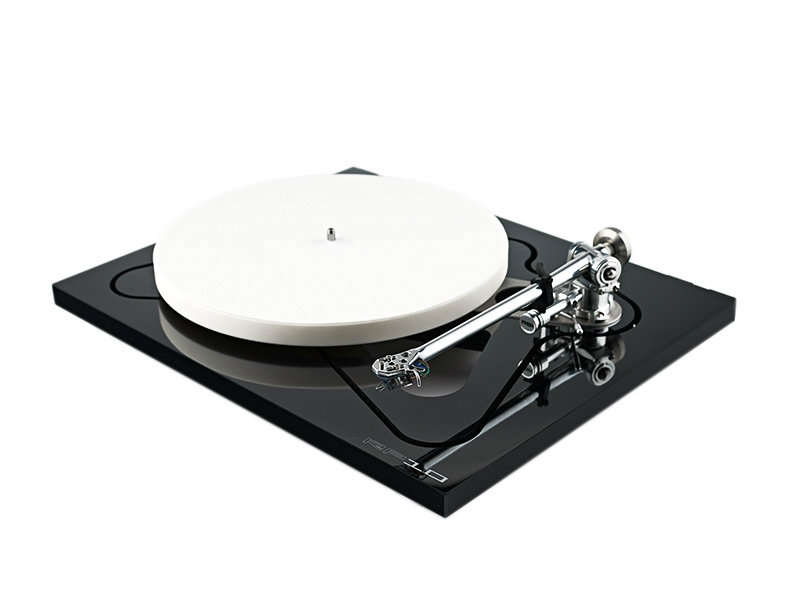
And finally… perhaps the one thing you might not expect at a headphone show – a turntable. This one is the entry-level Vertere MG-1, now available in a specially finished black acrylic. 

Aside from some extremely difficult photographic lighting conditions (I already take a tripod, but I’ll bring some white balancing tools with me next year), this show is an excellent example of how a good, small, highly focused show should run. There were far more brands on display and demonstrating at the event, and it’s fast becoming the go-to show for the London headphone scene!

Pryma 01 headphones

I’m not an audio writer; I’m an audio widow. I’m married to the editor and we live in a house seemingly made out of cardboard boxes. Usually, I’m the silent partner in all this audio stuff, but not this time. You see, when Alan opened the box for the new Pryma headphones from Sonus faber, I wrenched them out of his hands so fast I almost broke two of his fingers. And they aren’t going back. So this is the trade off.

Almost all of my music listening is on headphones now; sometimes to drown out the same piece of music being played over and over again as Alan reviews yet another black box, and sometimes when listening to a lunchtime podcast. But, I must admit, most headphones seem designed for a very male audience in their ‘functional’ black or silver finishes. The brightly coloured Beats and their kin are an alternative, but their looks only seem to work hanging off young ears. What is there in headphones for the more grown-up part of 51% of the population, like me?

Pryma headphones come in five finishes – black carbon fibre with silver fittings and a ‘marsala’ brown leather headband; gloss white with silver fittings and a coffee leather headband; two gloss black variants with a black leather headband; one with silver and one with gold fittings; and a dark, smoky, almost chocolatey grey one with rose gold fittings. We – that is to say ‘I’ – got the rose gold version. Replacement headbands are available to customise your headphones, and replacement magnetically-bonded ear-pads will follow suit.

The Pryma headphones come in a large, elegant presentation case with the kind of ‘blurb’ you might find on perfume bottles. If the style of the Pryma headphones themselves wasn’t enough, the words, “To the style of your shoes to the bag on your shoulder. It’s in the details,” say this is a product for the fashion conscious, and not necessarily the fashion conscious metrosexual man.


I understand that a hi-fi magazine has a mostly male audience, so the stiff and padded headband attaches to the ear-cups using an eyelet and turning clasp arrangement, held in place with a copper and stainless steel buckle. Women reading this have already sussed out how this works from the pictures, and will have at least two handbags that work in the same way. The only added information needed is that the headband is like a padded, oversized Alice band, with leather exterior and plush interior neatly and professionally saddle-stitched in place, complete with the Pryma ‘petal’ stamped into one side. The fit and finish is ‘Prada’ grade. The bottom of each ear-cup has a 2.5mm jack socket and one arm of the Y-shaped cable has a little red loop denoting the right ear, so stereo goes with the cable, not the ear-cup. The rubberised cables have an inline microphone on the right hand cable and meet in a little black Polo mint/Life-Saver. This acts as a great cable tidy and de-tangler, but it does sit very central to your body – as if it were painting a target on your cleavage! Depending on where you sit on the introvert/extrovert scale that could be a good or a bad thing. The headphones come supplied with three grey herringbone bags; one large one for the band and cable, and two small ones for the earcups.

The technical aspects of a pair of headphones like the Pryma are secondary concerns. And by that, I mean that practically everyone who buys a pair of Pryma won’t give a damn about its technical vices or virtues. They’ll buy them because they look great. They will buy them because they look good to be seen wearing, for those who wouldn’t be seen dead in a pair of Beats. They will buy them because the clasps and colour schemes match their handbags. The fact they sound great is chocolate sprinkles on the icing on the cup cake.

In fact, the technical specifications are fine… apparently. Here comes the Alan bit: it’s a closed, circumaural design, featuring a single 40mm full-range dynamic driver with a Mylar diaphragm, an oversized voice-coil, and a neodymium magnet. The cables, from the 3.5mm jack to the voice-coil, are made from high-purity oxygen-free copper. With a sensitivity of 118dB and an impedance of 32-ohms, they should be fine being driven from a smartphone.

The only word you need to understand in that is ‘smartphone’. I plugged them into my iPhone and they sounded great. The have a lot of bass – not in the thump-thump-boom too much bass of a pair of Beats, but good bass for sitting and listening to music in an al fresco café without the sound of the outside world encroaching on your own sounds (Editor’s note: the closed design helps here, but in the few moments I was allowed to listen to the Pryma, they do have a good, strong bass over and above the benefits of closed headphones in the open – and how come I am married to someone who eats al fresco in London during the winter?). And the little microphone barrel is great – it gives your voice a very clean sound, far better than the phone microphone and most handsfree devices, and it’s good going up against high winds. The one button on the microphone can end a call, or start and stop whatever track is playing on your phone, but there’s no volume control or track selection.

I’m a big fan of Carole King’s Tapestry album [Sony] and any pair of headphones that can bring out the lyrics are fine by me, and the Prymas do this extremely well indeed. But, over to Alan for the right terminology:

The Pryma 01 – the first headphone design from Sonus faber, a break-out and stand-alone division of the WOM (World of McIntosh) group – does have an extremely good midband, giving rise to excellent vocal articulation. This, coupled with a fine underpinning of deep bass, makes for a very controlled, precise, and deep bass with a good soundstage solidly located somewhere just outside of your head, suggesting lateralisation issues are minimised. This soundstaging benefits from using a really good headphone amp/DAC like the Chord Mojo, but the basic presentation works, as predicted, from a smartphone. The lack of a ¼” jack adaptor in the otherwise thorough packaging suggests the Pryma 01 is intended for portable and smartphone use. There is a distinct, and yet surprisingly agreeable ‘slope’ to the sound, with a distinct boost to the upper bass and gently rolled off treble, giving an overall sound as ‘chocolate’ and sophisticated as its looks. Those wanting a bright and extended treble should probably look elsewhere, but those who prefer their sounds less ‘forward’ will find these headphones extremely attractive. I’m hesitating at drawing parallels with Sonus faber’s loudspeaker range, but the comparison is irresistible and probably worthwhile – the similarities in sound quality between the Pryma and Olympica loudspeakers are fairly clear.

It’s probably a measure of the Pryma’s future success, but every time I’ve worn these headphones out in public, I’ve been asked about them, and usually asked where they can get a pair. And those who asked have that air of ‘the money’s not important’. Judging this purely on the reaction to my pair of Prymas, they will be the must have item for the ‘ladies who lunch’ set. If the company ever wanted them back, I’d just ask the company to put me on commission, I’d go for a coffee in Kensington, and I will have paid for my pair in an afternoon!


Like most audio widows, the subject of Alan’s work tends to pass by me in a haze. The rare exceptions have often been some of the more elegant loudspeakers from Sonus faber. So perhaps it wasn’t a surprise that the first set of headphones where I played the Wife card are from the Sonus faber design team. The Pryma headphones are not what I was waiting for, but I wasn’t waiting for the Apple iPad when it arrived, and I’ve been welded to one of those from the moment it appeared in the house.

The Pryma have been my headphones of choice since the box turned up because they sound good and look great. Highly recommended for anyone who wants more than just good sound on the move!

Technical Specifications

  • Type: circumaural, closed headphones
  • Transducers: 2× 40mm dynamic drivers, with Mylar diaphragms, and neodymium magnets with oversized OFC voice coils
  • Frequency Range: 10Hz–25kHz
  • Impedance: 32ohm @ 1kHz
  • THD: 0.1% @ 90dBspl
  • Rated power: 120mW (short term max power)
  • Sensitivity: 118dBspl @1kHz/1mW
  • Features: detachable earpads, interchangeable headbands, 1.3m connection cable made of 99.99% OFC, with tin alloy soldered gold-plated connectors
  • Finishes: See text
  • Dimensions (W×H×D): 18.6×20.5×7.6cm
  • Weight: 355g
  • Price: £380 (standard finishes), £410 (carbon fibre)

Manufactured by: Pryma

URL: www.pryma.com

Distributed in the UK by: Absolute Sounds

URL: www.absolutesounds.com

Tel: 44 (0)20 8971 3909

Back to reviews

Read more Pryma reviews here

Text Box:

Entotem Plato

Entotem is not your average hi-fi start-up. Rather than the one man and his dog in the garden shed that has been the traditional beginning for many in this business, Entotem consists of 10 men with a background in data storage who decided to combine their skills. Their goal was a product that did everything: ‘one box to rule them all’ if you like. It’s not hard to see the appeal of such a device in an age where space is in short supply but stuff seems to multiply. Audio enthusiasts are rare in being savvy enough to know that more is never enough when it comes to equipment, but our number is not growing. Entotem therefore set out to build a one-box solution for the modern age and, at the Bristol show in February 2015, showed Plato in prototype form, but that prototype was surprisingly close to the final production version.

Plato is a music and video streamer with a 2TB onboard hard drive and an integrated amplifier with an MM/MC phono stage. The device also features a modular construction, allowing for expansion to accommodate future upgrades or configurations. Crucially, Plato runs on the Android platform, which separates it from the herd as much as its UK build and some unusual features. By using Android, Entotem opens Plato up to work with any app that’s available from the Amazon store. This means Spotify, YouTube, Tidal, etc, are already available and any future audio or video format will launch through Plato long before most rival audio companies would be able to develop their own software. The limitation to this is that apps loaded onto the player can only be operated from the touch screen on the player and not the control app on your phone or tablet. Entotem will incorporate some key services into its own app, but having to use the relatively small (by tablet standards) screen on the device is somewhat restrictive, especially as apps like Spotify that run in portrait mode end up sitting sideways on the display. The Plato control app will run on any Android device, and there will be a version for iOS by the time you read this.

The few affordable one-box streaming solutions I’ve encountered typically had corners cut on amplifier quality. It’s very appealing to a manufacturer to opt for a switched mode power supply and Class D output stage because they are small, efficient, and are usually inexpensive. Entotem has avoided that pitfall by building a dual mono, linear powered Class AB power amp into Plato. The unit can be bought without the amp onboard and used as a source/preamplifier for a £900 saving.


The power supply itself fits into the central module on the back of the unit, and this has extra shielding for the toroidal transformer to help keep noise away from the flanking digital and analogue modules. The left hand module ‘block’ forms the preamp’s connector array and includes three line inputs, a preamp out, and a phono input for MM or MC cartridges. The latter is not included merely to cater for the latest fad for ‘vinyls’ but is the first stage of Entotem’s unique vinyl ripping facility.

As anyone who has tried to convert their record collection to digital knows this is usually a pain: you not only have to find an ADC to convert the analogue into digital, but also mark where tracks begin and end then type in all the metadata. Plato does all this for you, identifying the album and downloading metadata and artwork, so that you end up with a digital file as you might get from ripping a CD. It’s that simple.

The preamp gives and takes digital sources as well, in traditional S/PDIF coax and optical form at least; the second module is fully digital and is used for networking and video output via HDMI. Despite the impressive fact that Plato is capable of producing multiple video streams, there is just the one HDMI output; other video outputs can be accessed via the network connection, which after all is the way they would be sent to screens in other rooms. Given the Hi-Fi+ stance on video, I didn’t dwell too much on Plato’s video side, but it looked quite impressive.

The Plato takes the controversial route of using Neutrik Speakon speaker cable connections. This pro audio connector is not very common in domestic audio and means you can’t use your existing speaker cables without re-termination. Neutrik’s Speakon is a very robust connection, however, and Entotem supplies a three metre pair of Gotham cables with the amplifier equipped version of Plato.

The Entotem control app takes a bit of getting used to if you are familiar with more mainstream examples, but it’s not long before you can easily find and play whatever is in the library. There is a lot of control and information at your fingertips and sometimes finding it is intuitive, sometimes not. Getting your music into the library can now be done over the network by using a third party app on your PC. Entotem uses one called Acronis, but a library can also be imported from a USB drive. This requires a modicum of working out and has to be done via the screen on the Plato, but it does mean that (regular) computers are not a necessary part of the process. The hard disc drive itself is not the quietest I have encountered, and you can hear it whirring away if the Plato is within a couple of metres of your listening chair. But as the Plato doesn’t need to be on show, you could stow the whole device out of hearing. The one thing that I missed with Plato was an easy and quick way of stopping or pausing it, or changing volume. This is on the app, but when your tablet has gone to sleep and the phone or doorbell rings, it’s a bit slow to mute the thing. Apparently there are laser pointer remotes that could control it via a screen, if you are using a screen of course.

As Plato is linked to the web it can find artwork for albums that don’t have it and for vinyl records you play through it, and, even more impressively, it does so within a few bars. Entotem uses the Gracenote library for metadata retrieval and this managed to identify most of the vinyl I played, with only the obscure ones defeating it (Burnt Friedman anyone?); those that it doesn’t know you can tag manually. Converting vinyl to digital (currently to 96kHz in FLAC format) requires that you establish the dynamic peaks and set a recording level appropriately. Those of us of a certain age will remember doing this with cassette of course, but digital is a bit less forgiving if you set these levels too high. Once levels are right you put the needle in the run-in groove, hit the button and sit back while the unit does its stuff. You can also record in the same way via the line input but there isn’t so much sensitivity adjustment this way and in practice you need to stick with the onboard phono stage. Fortunately, the phono stage is a decent example of the breed that has gain and loading adjustments in software. If you have a good turntable, the Plato certainly won’t hide its performance and I made a few back ups in this way. The copies don’t retain the full dynamics or harmonic detail of the originals, but they are pretty close. As usual, the vinyl has more vitality, which is a reflection of the fact that you are comparing analogue with digital as much as anything.

Adding apps to Plato is currently complicated by the absence of the PlayStore, Android’s app store, but you can still do it. I managed to put SoundCloud on the unit with a little guidance from the Entotem guys and was able to search for and play music from that service via the Plato rather than its control app. The extra features that Entotem puts on its own app will depend on demand, but at present Tidal is in the pipeline. Currently it offers TuneIn for internet radio. I’ve seen better implementations of this and mentioned the difficulties I had to the company who said they would work on a search function, which if they are able to implement would be a real boon.

Using Plato with PMC fact.8 speakers, which are fairly current hungry beasts, made it clear that its 45 watt amplifier wasn’t quite up to offering the full dynamics of the various pieces I played. This is partly down to the supplied speaker cable, but mostly to the mismatch of power and the speaker’s characteristics in a larger than average UK room. It worked rather well with more restrained pieces, however: Entotem had a version of Chopin’s Nocturnes [Livia Rev, Hyperion] on the drive and this was utterly charming with lots of fine detail. But a shortage of bottom end encouraged a change of speaker to Bowers & Wilkins’ CM10 S2, which has a warmer balance and is an easier load. Now the sound had body, dynamics, and decent low end; words like ‘grip’ don’t really apply here, the Plato is more about fluidity and imaging. Doug MacLeod’s ‘Too Many Misses’ [Exactly Like This, Reference Recordings] sounded tonally natural and had good image depth if not the full dynamic range that the recording offers. It’s important to note, however, that I don’t usually play it on one-box source and amplification combos, and that dynamics are a strong point of the Townshend Isolda DCT speaker cables usually employed.

I also found Talking Heads’ ‘Blind’ [Naked, Warner Bros] on the drive and thoroughly enjoyed it on this combo – it brought back the fact that this band were solid right to the end. On a classical tip, the high resolution Mozart Violin concerto in D major [Marianne Thorsen, TrondheimSolistene, 2L] did its trick of soaring high above the speakers, revealing the amazing timbre of the violin and the scale of the venue to good effect.


Just to get to grips with the full potential of the Plato, I connected its preamp outputs to an ATC P1 power amplifier and brought the PMCs back into the room. This brought back the solidity I am used to and revealed that decent timing, dynamics, and image scale are available from the Plato when its own amplifier is bypassed or you use the unamplified version. It doesn’t have quite the finesse of a separate source and preamplifier, but it creates nice 3D imaging with tight and coherent bottom end, the better recordings producing a pretty special result. Patricia Barber’s ‘Subway Station #5’ [A Distortion Of Love, Antilles] is not actually one of her best recordings (they came a bit later), but it has a great guitar sound on it and some excellent ensemble playing. It might be a little sweeter with a system that smoothes over the upper mid, but the Plato ultimately produces a more honest sound.

If you take the video element out of the equation, Plato is up against stiff competition from the likes of Naim, Linn, and others. To me, both Linn and Naim offer better sound quality than the Plato, albeit for more money, especially if you consider factoring in the cost of networked storage. But if you are after a single box solution for all your home entertainment needs this neat player is probably the least expensive option on the market that has been designed with the end user rather than installers in mind.

The sheer flexibility of Plato is remarkable and its use of the Android platform genuinely ground breaking in the audio field. Plato is also a growing force in TVs along with Sony and others, and there is a range of set top boxes that run on the platform. Plato is capable of very decent sound quality with the right speakers or even active speakers combined with the pre only version, a pairing that would give you versatility, power, and the bare minimum of boxes. Text Box:

Technical Specifications

Type: Music and video server with built‑in storage, DAC and 45W amplifier

Storage: 2TB hard drive for music and video data storage

Analogue Inputs: Four unbalanced (via RCA jacks), MM/MC phono stage

Digital Inputs: One coaxial S/PDIF (via RCA jacks), one TOSLink

DAC Resolution/Supported Digital Formats: FLAC/ALC/wav/mp3, etc. Sampling rate for D/A conversion up to 192 kHz/24 bit

Analogue Outputs: One stereo unbalanced (via RCA jacks)

Digital Outputs: Four TOSLink

Frequency Response: Not specified

Distortion (THD + Noise): Not specified

User Interface: 5-inch touchscreen display (on main unit), Plato app for Android.

Other Features: Automatic tagging for vinyl rips

Dimensions (HxWxD): 130 × 370 × 300mm

Weight: 14kg

Price: £3,600

Manufacturer: Entotem Ltd

URL: www.entotem.com

Optoma NuForce DAC80 DAC and STA120 power amplifier

A few short years ago, NuForce was the audio industry’s enfant terrible: a new brand, growing at an exponential rate, with some of the best products in every category it touched. It couldn’t last, and the company burned out almost as fast as it appeared on the scene. But the name never quite went away.

Today, NuForce is back. Many of the original people behind the brand are still there, but it’s now the audiophile arm of Optoma, a company better known for making high-performance projectors. Optoma NuForce is still pursuing the goals of the original NuForce brand, with a range of earphones, headphone amps/DACs, and Class D power amps, but home theatre multichannel preamps and power amps replace the previous high-end stereo audio range. Optoma NuForce’s new core strength in the home is high value desktop-meets-audio-enthusiast models, like the DAC80 and STA120.

The £500 DAC80 is a DAC with a volume control. It has an optical, two coaxial, and an asynchronous USB input, and a single set of stereo RCA analogue outputs. It can support digital files up to 24bit, 192kHz with the appropriate drivers for Windows or Mac (these are easy to download from the Optoma website). The volume knob doubles up as the DAC’s power button and the red ‘U’, ‘C’, ‘O’, and ‘C’ indicators on the ultraminimalist front panel indicate the four sources. There is also a sextet of lights to denote sampling rate, which light sequentially if the input signal is not a multiple of 44.1kHz or 48kHz. DSD is not supported. Curiously, given Optoma NuForce’s continued link with the in-ear world, there is also no sign of a headphone socket on board the DAC80. The product comes supplied with a tiny remote control that operates every function on the DAC80 (that sounds impressive, but really that means power, volume, source selection, and mute), and Optoma NuForce also supplied the DAC80 with the £70 BTR100 aptX and A2DP friendly Bluetooth hub receiver, which slots into the Toslink input of the DAC80.

Setting aside the bluff exterior and the basic controls, there’s a lot of good under the skin of the DAC80. It features an AKM AK4390 32-bit DAC coupled to an AK4118 digital receiver chip, while filtration and jitter reduction is all coded onto a FPGA chip. The output stage is op-amp based, and the whole DAC is fed from a small toroidal transformer. Those armed with keen eyes and a screwdriver might notice the circuit is very similar to that of its more expensive DAC100 predecessor, except that the DAC80 no longer has a headphone amplifier stage. In fairness, that task is now handed over to the HA200 dedicated headphone amplifier.

The DAC80’s matching power amplifier is the £500 STA120, a stereo Class D chassis delivering 80W per channel into an eight-ohm loudspeaker load. NuForce of old (NuAuldForce?) was built around getting a very good sound out of a Class D circuit and its V3 amplifier was something of a game-changer for the switching amplifier circuit, and it certainly sounds as if that technology was passed on to new NuForce (NuNuForce?). Like the DAC80, that technology is the use of a linear power supply and a large toroidal transformer to drive the Class D switching circuitry. As the foil to the minimalist DAC80, the STA120 is similarly light on features. There are just two RCA inputs and a pair of basic multi-way loudspeaker terminals. There isn’t even a power switch, save for the rear-mounted one next to the IEC socket. There are two red-orange LEDs on the front panel, just above the laser-cut NuForce name, but that’s about it.


There are some operational ‘quirks’ with the DAC80 in use, that might prove hard to overcome. First, it has a power-up routine that on first use sends you into “I broke it” panic stations: all the lights come on, then it goes dark for six seconds before springing back into life. Once you are used to this, it’s no big deal, but being used to DACs that are up and running by the time you have finished pressing the ‘on’ button, this can be a little disconcerting. Then there’s the second or two of weirdly distorted sound when USB is selected: it’s as if the whole locking to a signal process takes place at a leisurely pace and not behind closed doors and muted outputs. It’s not a big deal – the distortion is not high gain and won’t damage anything – but describing it to a digital world might take some effort: it sounds exactly like an LP playing on a stylus that has a big ball of fluff on its end.

Once these start-up hiccups get out of the way, what follows is great. The DAC is one of those rare digital devices that is not bright sounding, but more importantly, doesn’t overcompensate by sounding too dark, bland, or dreary. This makes it a very natural-sounding digital device, at a price where such things are all too rare. It’s the perfect DAC for playing Frank Sinatra, for example; ‘You’re Nobody Till Somebody Loves You’ from his 1961 Sinatra Swings/Swing Along With Me album [Reprise] demands a digital device that can cope with The Chairman of the Board’s legendary passing tones, but at the same time doesn’t overstate Billy May’s brass harmonies behind that voice. Too many DACs at this price will push the brass forward in the mix, while the alternative is a sound that accents the lower registers of Sinatra’s voice. The DAC80 is rare in that it gets the balance right. It’s not just crooners; the same applies (although in a very different mix) to ‘Isolation’ from Joy Division’s Closer album [Factory] because either those late 1970s synth-dance sounds at the top end or Peter Hook’s dirty bass lines at the bottom can overpower Ian Curtis’ vocal on some DACs. Here, this track is portrayed in all its bleak, depressing glory. The company nailed the volume control too. This is a 32bit digital attenuator, but there’s no sacrificing bits on the altar of volume here!

The DAC80’s partner in crime has a slightly different balance, but one that paradoxically matches well. The STA120 is best used with fast, tight sounding loudspeakers that are not too threatening a load. I ended up using them with several loudspeakers pooled from our recent systems issue, but found them most at ease with Monitor Audio’s Gold 100 standmounts. This made for an extremely enjoyable combination; the pace of the Gold 100’s ribbon tweeter met its perfect match in the speed of the STA120. And yet, the natural tones of the DAC80 meant this combination was always in check, never wayward and never bright. OK, so the STA120 is no roof-raiser – it’s more ‘comfortably loud’ rather than just ‘loud’ – but what it lacks in sheer grunt it more than makes up for in quicksilver delivery. Once again, the STA120 stays on the right side of ‘bright’, and the upper mid detail on offer with the Gold 100 would highlight any brightness with consummate ease. Even with Brahms’ Hungarian Dances [Abbado/Vienna Philharmonic, DG], which are not the kind of music that one might naturally associate with the Gold 100, the DAC80/STA120 combination made those speakers sound truly inspiring.


Used without the DAC80 in tow, the STA120 does have a slight forwardness to its presentation; not quite ‘glare’, but a touch of ‘coolness’ to the upper midrange that – partnered with a ‘cold’, ‘forward’ sounding DAC – could tip the NuForce sound over the edge. Moreover, used in ‘cheapest component in the system’ mode, being fed by a dCS Rossini/Clock combination, driving Wilson Duette IIs with lots of Nordost Odin II cables throughout, the STA120 showed its limitations in dynamic headroom and ultimate drive, but this is an amplifier that was worth 1/27th the cost of the power cord it was hooked to, and under the circumstances acquitted itself well.

I suspect this is more ‘NuForce restored’ than ‘NuForce anew’. The sound, ethos, even circuit design of these Optoma NuForce products has a lot in common with products designed under the previous administration. Given that many of the original NuForce staff transferred over to Optoma, it’s likely Optoma bought the intellectual property of NuForce designs along with the name. This isn’t a bad thing at all, because these NuForce designs were years ahead of the game. However, not so many years ahead of the game, and the DAC80 especially looks outclassed on paper by similarly priced DACs with DSD replay, headphone amps, Ethernet connections and more. All this is merely ‘on-paper’ concerns, because in real life the DAC sounds great. And the power amplifier is easy to love, too. Despite those caveats, all in all, this is a great digital combination at a keen price! 

Technical Specifications

Optoma NuForce DAC80

Type: PCM DAC with USB and S/PDIF inputs

Inputs: 2× Coaxial S/PDIF, Toslink S/PDIF, Asynchronous USB

Outputs: 2× RCA, 4V, 100Ω

Maximum bit depth: 24-bit

Maximum sample rate: 192kHz

Volume Control: 32-bit digital attenuator

Frequency Response: 20Hz–25kHz ±0.25dB

THD+N: 0.005%, 0dB, 1kHz

S/N ratio: 96dB, 1kHz, A-weighted

Available in: Black or Silver

Dimensions (W×H×D): 21.5×5.1×22.9cm

Weight: 1.2kg

Price: £500

Optoma NuForce STA120

Type: single-ended Class D stereo power amplifier

Inputs: 2× RCA, 22kΩ

Output: 2× pair, five way binding posts

Power output: 2× 80W per channel (8Ω)

Peak power output: 300W

Gain: 22.5dB

Frequency Response: 10Hz–40kHz

THD+N: 0.008%

S/N ratio: 115dB

Available in Black or Silver

Dimensions (W×H×D): 21.5×5.1×22.9cm

Weight: 1.2kg

Price: £500

Manufactured by: Optoma

URL: www.optoma.co.uk

Tel: +44(0)1923 691 800

The Martens Miscellany

Wish lists not only tell us a lot about the kinds of objects we prize, but also help explain why we prize them. With that thought in mind, I’ve done a bit of head scratching to create an admittedly fanciful and highly personal audiophile’s wish list. Following a philosophy that holds that, if you are going to dream, it pays to dream big, my wish list begins with some extremely expensive audio ‘toys’.

Over the past year or so, one of the most inspiring audiophile moments for me came just after the Rocky Mountain Audio Fest when I took the opportunity to visit the YG Acoustics factory in Arvada, Colorado and to hear an extended demonstration of the firm’s Hailey 1.2 loudspeakers ($42,800/pair, UK price TBC).  The Hailey 1.2 is the middle model in YG Acoustics’ present line-up and is a three-way, three-driver floorstanding loudspeaker that uses a two-chassis/channel enclosure system. The bottom chassis of each Hailey 1.2 consists of a large, tall, and tapered woofer enclosure, while the top chassis provides a matching two-way monitor that perches atop the woofer. Both enclosures are precision machined from thick slabs of aircraft-grade aluminium. In turn, internal wiring, drive units, crossover boards, and crossover components are all of exceptional quality, so that saying that YG Acoustics speakers feature a high standard of build would be like saying that Fabergé made some ‘pretty nice Easter eggs’.

But candidly, awe-inspiring build quality is only part of the draw behind YG’s loudspeakers, because the main thing is their sound. In YG’s modestly appointed but very effective demonstration room, the Hailey 1.2’s made me think only in adverbs. It sounded arrestingly, blindingly, jaw-droppingly great, offering a brilliant combination of unfailing tonal neutrality, extraordinary top-to-bottom resolution and focus, with plenty of dynamic muscle and nuance on demand. As a result, the Hailey 1.2’s honoured the music in an uncommonly faithful and uncompromising way, yet without ever putting a foot wrong, musically speaking. The result is my idea of a ‘happily ever after’ loudspeaker—one I think I could savour for years and years to come.


Great loudspeakers call for equally great source components and one such component that has been calling out to me of late is Chord Electronics’ new DAVE (Digital Audio Veritas in Extremis) DAC, which sells for £7,995. Why crave the DAVE? The simple answer is that the DAVE represents a multifaceted and all-out assault on the state-of-the-art in digital audio sound quality—an approach that in many respects ventures into unexplored technical territory. Perhaps more importantly, Robert Watts, designer of a string of successful DACs for Chord (including the Hugo and DAVE), says the DAVE addresses three particular areas of sonic performance: the realistic recreation of depth information in recordings, the proper rendition of timing aspects of the music, and the reproduction of instrument timbre.

With these ends in mind, the DAVE incorporates an extremely sophisticated noise shaper with 48-bit resolving capability (meaning, says Watts, that DAVE “can resolve signals below -300dB)”, a massive FPGA-based tap length and interpolation filter (offering a staggering 164,000 tap length filter) backed by Watts’ proprietary WTA filter algorithm, and a host of other design features aimed at giving the DAVE a low noise floor and at eliminating noise floor modulation. In short, DAVE takes all of the design thinking behind the firm’s critically acclaimed Hugo portable DAC/headphone amp and elevates it to the highest level possible given the limits of contemporary technology. For more details, I encourage you to read Robert Watts’ interview in the Hi-Fi+ Guide to Digital Audio (download our guide for free at www.hifiplus.com), where he explains the design of the DAVE DAC in some depth. As I see it, the more you learn about the DAVE DAC, the more you’ll want to hear it in action.

Assuming the YG speakers I mentioned above are a bit much to hope for, then another terrific loudspeaker on my Christmas wish list is Magnepan’s flagship 20.7 dipolar, hybrid planar magnetic/ribbon-type loudspeaker, featuring so-called ‘push-pull’ magnet arrays (£16,500/pair). Frankly, the 20.7s have tempted me from afar ever since their inception and it is easy to understand why. Few loudspeakers—regardless of size, price, or type—do a more convincing job of coherently conveying the realistic scale of instruments, vocalists, and recording venues. The 20.7’s don’t merely place instruments ‘in your room’, as some speakers claim to do, but rather they transport you to the venue where the performance was captured, which is a rare and beautiful thing indeed. What is more, the 20.7 stands as one of those rare sub-£20,000 loudspeakers that can and do successfully compete on a level footing with speakers many times its price (did Magnepan forget and leave a zero off the end of the 20.7’s price tag?).

But let’s not forget analogue audio in this wish list. Some years back I once reviewed the Wilson Benesch Full Circle turntable for our sister magazine, The Absolute Sound and came to admire the WB design greatly. In fact, I debated buying the review sample, ultimately deciding to pass—a decision I’ve regretted (off and on) ever since. In the intervening years, however, Wilson Benesch has significant refined the original design to create a new and improved version of the Full Circle called the Circle 25, released in 2014 to commemorate Wilson Benesch’s Silver anniversary. What’s changed? Well, the chassis materials have changed and improved, adding density, damping, and about 3kg to the turntable’s weight, the main bearing has been updated, and the tonearm has been upgraded from the Full Circle’s A.C.T. 0.5 to the new A.C.T. 25, which is said to be 15% lighter and better damped than the original. Like the original Full Circle, the Circle 25 comes pre-fitted with Wilson Benesch’s carbon fibre-bodied Ply moving coil cartridge, which is a modified/enhanced version of the popular Benz Glider. Put these elements together and you have an artful and refined turnkey analogue system that sells for an as-yet-undisclosed but manageable sum, a sum which puts the Circle 25 in direct competition with Rega’s RP10 with Apheta 2 moving coil cartridge. The choice between them would be a tough one, but what has me leaning toward the Wilson Benesch is the sophisticated A.C.T. 25 carbon fibre pickup arm with its tapered arm tube, ingenious kinematic bearing system, and—this is a big one for me—its provisions for VTA adjustment (VTA adjustment is verboten at the house of Rega). I hope to be looking at the Circle 25 in a review soon.


But if all these cool pieces of audio gear sound enticing, and they shouldn’t let us forget about the thing that drew us to audio in the first place: the music.

I love new music especially in two forms: high-res downloads accessed via HD Tracks, and access to a huge variety of CD-quality (or better) content via a subscription to Tidal. HD Tracks, under the expert guidance of the Chesky team, has been offering high-res music downloads for longer than just about anyone, and the firm’s selection of titles reflects this fact. But how can one best discover new music? This is where Tidal comes into play. For me Tidal represents a flexible, high-quality vehicle for exploring new music or for resurrecting forgotten favourites, all at a sensible price (subscriptions for Tidal HiFi, which is the lossless version, run £19.99/month, which is money well spent).

Of course, some are sure to ask, “Isn’t there anything on your wish list apart from audio gear and music?” Actually, there is. As it happens, a great many of my audio colleagues turn out to share my secondary passion apart from hi-fi: fine, mechanical-movement wristwatches. I haven’t taken the plunge yet, but a watch that has caught my eye is the IWC Schaffhausen Pilot Automatic Chronograph (£4,600 and up). It speaks to my love of aviation, my fascination for precisely made mechanical objects, and my profound respect for engineering at its best.

The Kennedy Collection

Like most reviewers, I listen to about a shop’s worth of great audio kit in an average year, but inevitably some of it is just that bit better than the rest, making me wish that I had stuck with the day job and had enough in the bank to buy this stuff. Such is the reviewers lot; we spend a few weeks in nirvana and then come back down to earth with a bump that’s followed by a downward recalibration of expectations, or at least an attempt to do so.

On the affordable side of things, two products have proved their worth time and again. The first is the Blue Horizon Spirit Level. This is a cylindrical level that was designed for turntables. It has a hole underneath with a clever clamping mechanism that means it sits right on the spindle and makes set up quicker and easier than conventional bubble levels. It also works with just about any other piece of kit you’d care to mention, in particular speakers (if they have a flat top) that I like to mount on Townshend’s Seismic Podiums. The suspension in these platforms means you need to move the speaker around to get it upright, and the Blue Horizon makes it very easy to establish when the job is done. The other consistently good yet affordable piece of kit I’ve found is Vertere D-Fi cable. These come in pretty well all varieties, but I tend to use the USB and minijack to RCA or minijack to minijack varieties. When I first hooked one up between the Mac and an amp, it was clearly superior to some USB DACs available at the time. Combined with their slim and highly flexible nature, this mean that despite a wealth of high end cables to choose from, the Vertere D-Fi cables are rarely far from the system.

Of the more expensive, yet not quite mortgage inducing components I’ve used, the Melco N1-A has proved among the most essential. The Melco is a digital transport of sorts, it contains 4TB of HDD storage with an audio grade power supply and both network and USB connections. You could call it a server, but few of that breed have a USB out, and in an age of ever more intriguing USB DACs, that is a very useful feature. It also has a dedicated Ethernet output that will hook directly to a streamer. There is effectively a network switch inside the N1-A, which means you don’t need an external one, only a connection to the network. Some argue that this could be achieved with a NAS drive and a switch for a lot less outlay, but in my experience such combinations rarely sound anywhere near as good. This is because computer peripherals have switching power supplies that screw the mains for the rest of the system, and because Melco has gone to the trouble of building a low noise server.


The most exciting amplifier I have used this year is the Naim NAP 250 DR; in truth, it’s the first Naim amp I’ve had at home that really gripped me. By incorporating the discrete regulation technology developed for its power supplies two years back with the NA009 output devices created for Statement, Naim has turned the oldest power amp in the range into a giant slayer. It has all the timing skills that the brand is renowned for alongside new found transparency; speed and resolution is a rare combination, and one that makes all your music vital again. It won’t turn the heads (ears) of valve fans, but it will give Naim a higher standing among the high-resolution fraternity, and frankly should prove a hit with anyone that loves great music.

The product that has been most entertaining to demonstrate to visitors, especially those bearing loudspeakers, is the Townshend Audio Seismic Podium speaker stand. The earlier incarnation of this isolation system, the speaker bars, did the same trick of significantly increasing coherence, transparency, and solidity of imaging, but it was difficult to set up and not suited to heavier speakers. The Seismic Podium looks good, keeps the speaker very close to the floor, and allows for any size and weight of speaker. The improvement in timing it brings is quite uncanny, but so is the way that instruments and voices become solid and three-dimensional in the room. Spikes were a diversion – genuine decoupling is the way to audio nirvana.

At the top of the pile in terms of cost, three notable products come my way. The Music First Baby Reference is a passive TVC, a transformer volume control, which has been evolving for a while and this year it jumped into the must hear league. I have tried the Baby Reference in the past and was always impressed but never entirely convinced. The V2 update changed all that. It is now among the most transparent preamplifiers on the planet thanks to a new shielding arrangement and a different winding on the transformers. It still has the same compact box with high quality parts on the outside and miles of fine copper wire inside, but somehow it manages to reveal the details that few others do. It highlights recording techniques, playing skills, and ultimately the genius of the musicians and composers we listen to so effectively that I found it hard to put down and get back to the keyboard. It might seem expensive for a passive component, but you try finding something better with or without mains current running through it at the same price or less and it’ll be a long search.

The best loudspeaker I’ve heard for a while is the PMC fact.12. In truth, I don’t recall a more transparent dynamic loudspeaker. In other words, some of the best panel speakers have been slightly more revealing, but they cannot deliver the power and dynamics on offer from the fact.12. Neither do they offer genuinely extended, high power bass that stops and starts on a dime the way that this speaker does. This combination of qualities means that you hear so much more in very familiar recordings that it’s mind boggling. The low level resolution is extraordinary and contributes to the aforementioned transparency in no small way. Combine this with a fluency and coherence across the bandwidth, and you have a speaker to rule them all. This is one of the few products that have left a permanent impression on me, a speaker that provides a benchmark for everything I have used subsequently, and sadly few measure up to it.


One product that I have heard a few times in various locations yet have so far failed to incorporate in the listening room is the Naim Statement preamplifier and monoblock power amps. But every time I hear it the desire to do so gets stronger. It completely blew my mind on its debut at CES in 2014 and this impression has been reinforced on all subsequent occasions. Unlike all the high power amps that I’ve encountered in the past, it does speed, timing, boogie – call it what you like – and connects you to the music on a fundamental level. But because you have a horsepower of Watts on tap it also moves air with alacrity. This is a visceral experience the like of which one rarely encounters with reproduced music. What makes me want to hear it at home, apart from the opportunity to hear everything anew, is the fact that I’ve only ever heard it with a streaming front end. What might dissuade me is the fact it could possibly tear through my floorboards and end up in a cellar of its own making. And while the Naim NDS is undoubtedly one of the best streamers on the planet, streamers as a whole are not always the most enthralling sources. You can see where I’m going with this I suspect, and what needs to be done is for the Statement to be used with a fabulous analogue front end like the Rega RP10 and Apheta 2 moving coil hooked up to a great phono stage. That I suspect would be a sound to die for. Yet when I ask the Naim guys if they’ve tried a turntable with Statement the answer is no – what is the world coming to? Clearly I am going to have to put it to rights once again. I just hope I can still squeeze into my satin tights after all these years.

Outside the heady world of audio, I like to charge around the woods on a mountain bike, it’s an exhilarating pursuit that’s not without its dangers and one major contribution to trail safety is a seat post that you can lower on the fly. If you are riding down a steep slope, the last thing you want is a high centre of gravity. Hence the Gravity Dropper Turbo LP lets you drop the saddle by five inches with a bar mounted lever. It’s one of many such designs, but unlike most, does have user serviceable parts inside, and it seems to be a lot more robust than the non-user serviceable hydraulic types.

Ensemble INCANTO and DALVIVO cables

The Swiss audio brand Ensemble has set itself a huge task. It believes good music (played through good audio) promotes wellness in the individual. But good music through bad audio does not. The INCANTO interconnects and DALVIVO speaker cables and power cords are therefore a gateway to a nicer world.

INCANTO and DALVIVO reject the current trend for one expensive material wrapped in an even more expensive material as conductor, preferring instead healthy amounts of high-purity stranded copper conductors, individually screened and sheathed in a halogen-free copolymer outer layer. This layer is made up of a mechanical damping layer and three different shields, optimised in terms of transfer impedance, and virtually impervious to extraneous interference. Both are also extremely low capacitance cables (60pF/m/1kHz for the INCANTO, 105pF/m/1kHz for the DALVIVO), allowing for long interconnect runs, and the speaker cable is a 0.0005mH low inductance  design for easy amp-matching. The INCANTO interconnects are terminated in a custom ALLINO plug, a locking plug of extremely solid construction made of large amounts of gold-plated copper that makes ground contact before signal to ensure no accidental thumps when hot-swapping devices. The DALVIVO power cord is terminated in solid Furutech plugs and sockets, and the matching speaker cables are finished in solid spade lugs. The copper wrapped foil braiding is sheathed in copolymer throughout, giving the cables a look not dissimilar to a wrapped chocolate, and they come supplied in very nice gold boxes reminiscent of boxes of chocolates. Well, the company is Swiss, after all!

Ensemble is not strong on the whole ‘loom’ or ‘family’ cable ethos, believing that a cable should make a case for itself on its own. But ultimately, the wellness promotion concept does make for an inevitable migration toward an all-Ensemble cable system. I used a single power cord, one pair of RCA-based interconnects, and loudspeaker cables, and felt that the loudspeaker cable produced the biggest direction shift, followed by the interconnect, with the power cord less likely to create a sea-change in your audio listening environment.

These cables do create an effortless and extremely natural presentation of music. This comes across perfectly in a wide variety of musical genres, but particularly in recordings of acoustic instruments, where the sense of living, breathing musicians sitting in a three-dimensional space is presented accurately and honestly. That doesn’t mean the INCANTO and DALVIVO don’t ‘rock’, just that these cables really show their worth when facing more challenging material. The INCANTO and DALVIVO (apart or especially together) make a sound that is extremely organic in approach. I don’t think I’ve used this term in audio before, but these cables have an incredibly ‘gentle’ touch on the music played. The Ensemble cables might not introduce wham-bam dynamics or slam (unless it’s called for on the recording), but it’s all about refinement.


The Ensemble sound is not about detail or expansive soundstage, although it’s actually extremely good at presenting a wide and deep soundstage, made up of extremely detailed, solid-sounding instruments. Instead it’s more about the gestalt, the music as a complete, legato, flowing entity, where many of its rivals tend to go more for the fleeting musical moment.

So many cables ‘shout’ at the listener in some aspect or another, often with big, flowery, boomy bass, or peaky, accented treble. Others counter this by being rolled off in the top or bottom. While some of these ‘hyper-real’ cables (where the sound of a piano is more ‘piano-like’ than a real piano, for example) can sound very good indeed, Ensemble’s more intrinsically honest approach is rare, and well-received by those wise enough to hear it for what it is. The INCANTO and DALVIVO do that ‘honesty’ thing well.

Even though I really liked the EXPRESSIVO and LUMINOSO cables I tested previously, I prefer the INCANTO and DALVIVO. The reason for such a preference is the INCANTO and DALVIVO are a little more universal in approach; retaining that effortless, open, and dynamic sound common to Ensemble, but with an extra sense of energy and verve that makes them good partners with a wider range of electronics. Both cable groupings represent a taste of what Ensemble can do, but the INCANTO and DALVIVO ‘Ensemblise’ a wider range of electronics. I think the cables invite the sophisticated listener to explore Ensemble’s catalogue, but the INCANTO and DALVIVO make that more of a long-term goal than a necessity. In other words, the INCANTO and DALVIVO act as civilising forces on a system, rather than assuming an already-civilised sound from the system.

In truth, it’s hard to review ‘wellness quotient’ in audio. But, in listening to these cables I did find myself relaxing more into the music, especially if that music didn’t come from an amplified source. Better yet, that relaxation process lets you settle into the sound of systems that are ‘economically oriented’ (relatively speaking), too. I think that counts as ‘wellness’ in this context.

The Ensemble INCANTO and DALVIVO cables are probably not for those seeking instant gratification and the sharp, forward sound that seems popular at the present. They are for the more cerebral music lover, seeking a longer, more refined path to sonic happiness. If you are musically mature enough not to simply want fireworks every time you listen to music, and your music tastes extend beyond simply loud shouting noises, this cable system is a perfect stepping stone into a more refined world! Highly recommended.

Details

INCANTO interconnect cable: £690 (1m pair, RCA/XLR)

DALVIVO power cord: £680 (1.5m)

DALVIVO loudspeaker cable: £1,440 (2.5m pair, 4mm/6mm banana, 8mm spade)

Manufactured by: Ensemble AG

URL: www.ensembleaudio.com

Tel: +41 61 461 9191