Up to 37% in savings when you subscribe to hi-fi+
hifi-logo-footer

Begin typing your search above and press return to search. Press Esc to cancel.

AKG Acoustics N90Q headphones

Some reviews have a long gestation period, but this one takes gold. I first encountered the AKG N90Q back in June 2015, and received my review sample toward the end of the year. Almost immediately, the UK agency approached me and begged me not to review the headphones until the unprecedented order book had cleared a little. More than a year later, I’m still waiting for clearance, but if we don’t write about it soon, the product will be old enough to draw a pension.

AKG has a substantial reputation in the pro-audio world. That’s not an exaggeration because there are few studios that don’t have at least a pair of 414 microphones and several sets of the company’s headphones for engineering, mixing, and monitoring in the tool kit. So, when it was time for AKG to make a new flagship headphone for the domestic market, it was clear that the company should leverage at least some of that reputation. As a result, it looked for one of AKG’s power users in the music business – not simply as endorsement, but someone capable of bringing some serious input to the product design. And that explains the ‘Q’ suffix in the name, because the person who brought that serious input to the design was the ‘Q’ himself – Quincy Jones.

If you don’t know who Quincy Jones is and you are reading this magazine, I can’t really help you. Jones is a legendary polymath in the recording industry who received an unprecedented 79 Grammy Award nominations, and won 28 Grammys in the process. He has worked with everyone from Ella Fitzgerald and Frank Sinatra (he was conductor and arranger for Sinatra and the Basie Band on the 1966 album Sinatra at the Sands), and produced a couple of somewhat well known albums called Off The Wall and Thriller for Michael Jackson. He isn’t known for endorsing products (Jones is more likely to put his name to a charitable foundation), so his moniker on a pair of headphones means more than just a lucrative contract and a photo shoot. This is not the first pair of AKG headphones to carry his name as the Q701 brought the K701 studio model into the home, but this time, Jones was heavily involved in the concept more or less from first principles, in terms of voicing and choice of DSP options.

AKG could have made a flagship headphone that meets or exceeds the performance of the likes of the best from big name brands like Sennhesier and Beyerdynamic, or even take on the best of the newcomers like HiFiMAN. However, this kind of ‘best in breed’ approach is fleeting; what is best today is eclipsed tomorrow. So, instead, AKG moved the headphone market on by creating something genuinely unlike any other top-grade headphone, by making in essence a headphone system in one big, reassuringly expensive package. The headphone is a complete ear-adaptive, noise cancelling, DAC with DSP tone-shaping design, with a built-in amplifier, if you so desire. And it can be all of these things or (almost) none of them.


The full package comes in an elegant soft-edged hard metal travel case, complete with gold-on-black statement from Quincy Jones in the main packaging. Inside are the headphones (of course), a significant array of cables to connect the N90Q to different parts of the outside world, a bag, and even a matching power bar to charge the N90Q should the need arise. The first samples of the headphone were finished in black and gold, but a second finish is now available that replaces much of the gold finish with black. These are large headphones, however, and I kind of prefer the gold and black contrasts.

When first you use the N90Q (after a thorough charging of course), you are recommended to run through the TrueNote auto-calibration system, by pressing and holding a button at the back and side of the right ear cup. If you are playing music, it mutes for a few seconds, you get a quick chirp through both ears in quick succession, and then playback is resumed. What this TrueNote system does is fire a calibrating tone at your ear, then receive the feedback through microphones in the ear cup, and actively control the acoustics in the space inside the headphone for the shape of your ears. If you think this doesn’t make a profound difference, try this for size: find someone with a very different ear shape to yours (for example, if you have small ears close to your head, find someone who looks like Dobby the House Elf from the Harry Potter movies) have them run the software on the N90Q to suit their ears. Now hear your best-known music, re-run the TrueNote calibration again, and be impressed! The changes might not be as significant as applying the right degree of acoustic treatment to a room (because bass management and flutter echo control aren’t an issue in the gap between headphone and ears), but the control over internal reflections from the outer ear does make more of a difference than you might expect.

TrueNote also has benefit because it creates noise cancellation more tailored to the listener. The N90Q may be a fairly large proposition for drowning out the daily commute (the smaller, folding N60NC models from the same brand are the audiophile’s choice for commuters wishing to wave away the outside world), but as a noise cancellation system for a long-haul flight, they are little short of remarkable. The closed back headphone in its own right is good enough at attenuating the general background noise of an environment, but the noise cancellation system makes it considerably more potent. As the N90Q are surprisingly comfortable on the head (at 460g, they don’t feel heavy and the lambskin ear pads don’t get sweaty even after several hours of listening) they significantly help you overcome the rigours of hours in the air. Admittedly, I have a soldier’s ability to sleep through almost any flight at a moments notice, but during one flight I took wearing a pair of AKGs, I thought we were in a glider… that’s how quiet the noise floor is with these designs. However, the clever part of the noise cancellation system here isn’t just the sledgehammer use keeping a Boeing at bay; it’s the scalpel-like precision that cuts away a lot of the surprisingly high background listening levels of many listeners. Unless you live a cloistered life miles from anyone with no power lines, no devices humming away in the background, and the rest of modern life’s creaks, whirrs, buzzes, and groans, it’s surprising how much of that intrudes, at least until you find a way of quieting it.

Staying on the left side of your head, short presses of the TrueNote button put the N90Q into one of three DSP settings; ‘Standard’, which turns off all the digital processing, ‘2.1 Studio’ which is meant to replicate the sound heard by someone like ‘Q’ at the faders, and ‘5.1 Surround’, which gives a fuller, broader soundstage (albeit not without penalty). These are audibly indicated with different takes on a ‘tok, tok’ sound. There is a similar auditory signalling for the tone control, built into left ear panel; this is a slope setting, and moving the dial toward you means more bass and less treble, and doing the opposite, does the opposite.

The left hand ear-cup also houses both a micro USB input and a 2.5mm jack socket, the latter of which comes with two cables; with and without in-line microphone. A more interesting option is the micro USB input, as it acts as battery charger, a path for software updates should they arise, and – here’s the kicker – feed from a computer to the N90Q’s built-in DAC. AKG decided to cap the resolution of this DAC at 24-bit, 96kHz, but there’s something remarkably ‘right’ about having the digital to analogue circuitry in so short a signal path that it is physically housed inside the body of the headphone. It effectively makes the AKG N90Q a one-stop high-end headphone stop for someone wanting great sound, but unwilling to use separate DACs and headphone amplifiers. In a way, this makes the N90Q the ultimate transportable rig. Well, almost; because the N90Q sees a USB connected device as a potential source of both music and power, and it draws too much of the latter to allow an iPhone to be connected, even if an iPad and Android phone will work. The in-line microphone on one of the 3.5mm cables is MFI certified, however.


As the N90Q is an active design, and the ‘Q’ on the outer ear-cup of the right-hand headphone acts as a volume control. You will get around 12 hours of play between charges, and the power bar supplied is useful here. I’d love to see some form of power indicator on the headphone itself; even though the charger bar more than doubles its battery life, as the headphones effectively become a pair of 460g ear muffs without juice, knowing just how much is in the tank is fairly important. The volume control is a soft-touch device, and those used to high-grade volume knobs might prefer something with a bit more resistance, but the rest of us will prefer lighter weight. In many cases, you might want to experiment with the volume control on the source component and the one at your ear, and although traditionally I seem to prefer one of them ‘dimed’ (played at maximum) and the other acting as controller, in most cases the device turned to the max was the source. The amplifiers in the AKG are capable of being played flat out with no distortion, and the attenuation was good overall.

It seems like a lifetime ago now, but the N90Q does benefit from a few hours of playing in before it comes on song. At least according to the notebook before last! The tonal balance is hard to pick out, because the tone control is so damn effective and the DSP options change the sound fairly significantly. But in setting the N90Q to its centre points in all cases gave a sound that was extremely detailed, incredibly analytical, and possessed of a powerful bass. That deep bass might not be so surprising, given the large 52mm drivers (which use a unique and rare Japanese paper cone) are giving the sealed N90Q a lot of driver surface area. The AKG headphone stayed just to the right side of bass heavy, but turning the tone control into the bass soon delivered plenty of powerful deep bass. I preferred the overall tone setting one notch beyond the centre, which retained the insight and analysis of the sound, cleaning up the bass without making it too light or making the sound ‘etched’ or ‘pinched’ in any way. That being said, there was something oh so very alluring about the thwack of some dubstep  – I went for ‘Bangarang’ by Skrillex from the Big Beat EP of the same name – and the bottom end of these headphones when ‘giving it some beans’ in the bass was deep, satisfying, but still not blurry or over-exaggerated.

The DSP settings were interesting, too. These were great for classical enthusiasts who might prefer a front row of the stalls (‘Standard’) or mid-way to the back of the concert hall (‘Studio’) presentation, but in fact I liked the headphones on all kinds of music. The downside was the ‘Surround’ setting, which appears to slightly ‘overexpose’ the silences between notes (and no, I don’t have a better term for this effect), and seems to create more of an aircraft hanger than a concert hall. This is extremely impressive when watching ‘Deadpool’ from a seat-back, however, so I suspect ‘Surround’ might be a concession to travel movie watching.


This AKG N90Q is an impressive headphone design that pushes the boundaries of what a headphone can do, rather than simply making another top-end design. Whether the next generation of headphones will feature active DSP and built-in DACs remains to be seen, but certainly the likelihood is as more people turn to wireless portable audio, so the headphones will do more to help improve the sound they are fed from Bluetooth, so this might be an evolutionary step toward that goal. But, perhaps more importantly in the short term, the N90Qs more than deserve their place as the top of the AKG tree. The Q keeps on churning out the hits!

TECHNICAL SPECIFICATIONS

  • Type: Active, DSP, noise cancelling closed back headphones with built in DAC and amplifier
  • Drive unit: 52mm, Japanese paper cone
  • Frequency Response: 10Hz-25kHz
  • Sensitivity: 110dB SPL @ 100Hz/10mV
  • Driver impedance: 32 ohms
  • Maximum input power: 100mW
  • Features: TrueNote set-up system, tone control, three spatial settings, USB/HD audio (to 24/96 precision), with built in DAC, noise cancellation
  • Supplied: USB cable, flight adaptor, 3m straight cable, 1.2m 3-button remote/microphone MFI audio cable, 1.2m 3-button remote/microphone Android/Windows audio cable, Power Case, Battery pack, Travel pouch
  • Weight: 460g
  • Price: £1,299.99

Manufactured by: AKG

URL: www.akg.com

UK tel: +44 2070 845392

Back to reviews

Read more AKG Acoustics reviews here

iFi Audio Pro iCAN balanced, hybrid valve/solid state headphone amp/preamp

My very first exposure to the iFi Audio brand, which is a spin-off of the British high-end audio electronics manufacturer Abbingdon Music Research (AMR), came at an audio show a number of years ago. I still remember the experience vividly. Indefatigable brand ambassador Vincent Luke had invited some audio journalists to come hear his firm’s new phono stage, though he had cleverly neglected to say exactly which of his firms had produced the unit. We entered the room and listened to the suave, sophisticated sound of the new phono stage on some choice vinyl tracks, all the while convinced the phono stage on demonstration was surely some new, full-size AMR component. Only near the end of the demo did Vincent reveal that the phono stage we were hearing was not an AMR product at all, nor did it cost thousands of pounds as full-on AMR components typically do. Instead, Vincent explained, we were listening to a beautifully made but decidedly pint-sized and budget-priced component called an iFi Micro iPhono, which at the time sold for about $429 US. Right then and there a lasting impression was formed: ever afterward I came to expect that iFi Audio components would be small and beautifully made, and would somehow manage to deliver a big taste of the famously musical Abbingdon Music Research sound for a pence-on-the-pound price!

Now let’s fast forward to the present day. Over time, iFi Audio has created two ranges of compact components: the Nano-series models, whose chassis cases are about the size of an extra-thick deck of playing cards, and the even larger and more capable Micro-series models, whose enclosures look roughly like double-depth Nano models (still small, but a bit too long to be considered truly ‘pocket sized’). And both the Nano and Micro models hold true to the original iFi Audio design brief: they are small, offer fine quality of build, sound much like far more expensive AMR components, and remain extremely affordable—all of which are good things. But let’s face it; we audiophiles are an upward reaching, aspirational lot so that there probably has never been a set of sonic performance parameters that we have not yearned to see pushed to higher levels. And so it happens that many cast an appreciative eye at iFi’s Nano and Micro-series products, yet could not help but wonder what would happen if the firm ever decided to build a range of big (or at least bigger) components designed with the intention of pulling out all the stops so as to push the performance envelope harder than ever before. Apparently, iFi Audio was thinking along much the same lines as it has now launched a new range of Pro-series components, starting with by far the most ambitious headphone amplifier/preamplifier the firm has ever offered: namely, the iFi Pro iCAN, priced at £1,695.

The Pro iCAN is a half rack-width component (a component size commonly seen in the pro sound world) in which is contained some very sophisticated circuitry, lending credence to iFi’s claim that the Pro iCAN is at once “a Professional Headphone Amplifier” and a “fully fledged, High-end Preamplifier”. The headphone amp/preamp is a fully balanced, hybrid valve/solid state design that offers users a choice of three gain settings (0db, 9db, and 18dB) and three front-end operational modes (Solid-State, Tube, and Tube+). The Solid-State circuit, says iFi, uses J-FETs and is fully-discrete Class A, while the Tube and Tube+ circuits use dual NOS GE5670 valves that are “engaged with the J-FET circuitry switched out for an all-valve Class A operation.” iFi adds that the difference between the Tube and Tube+ mode is that the latter “reduces negative feedback to a minimum” meaning “a greater amount of the tube’s natural harmonics are produced.” The amp delivers very high power output (14,000mW @ 16 ohms in balanced mode or 4,800mW in single ended mode), admirably low distortion (<0.0004% THD when operated in Solid-State mode and <0.0005% THD in Tube mode), and impressive signal-to-noise ratio specifications (>147dB A-weighted in balanced mode and >137dB A-weighted in single-ended mode).


In keeping with its role as a serious high-end preamplifier, the Pro iCAN rear panel sports four analogue inputs (three single-ended inputs with RCA jacks, and one balanced input with dual 3-pin XLR jacks), plus two preamplifier outputs (one single-ended via RCA jacks and one balanced via dual 3-pin XLR connectors). Up front, the Pro iCAN faceplate presents three single-ended and three balanced headphone outputs, where the single-ended outputs are supported by two 6.35mm headphone jacks and by a 3.5mm headphone mini-jack, while the balanced outputs are fed through one 4-pin XLR jack, through a dual set of 3-pin XLR jacks, or through a 3.5mm balanced (TRRS standard) headphone mini-jack. Interestingly, both of the 3.5mm headphone jacks are equipped with iFi’s iEMatch circuitry, which matches the outputs specifically for use with very high sensitivity headphones, earphones, and CIEMs.

In keeping with past iFi practice, the Pro iCAN incorporates two signature circuits that have also appeared in earlier-generation iFi components: specifically, the XBass Bass Correction System and the 3D Holographic for Headphones and 3D Holographic for Loudspeakers Systems. The XBass System provides four settings (including an ‘Off’ setting) and is intended to correct bass deficiencies, if any, in headphones or loudspeakers, yet without adding garish amounts of low-end boost. In turn, the 3D Holographic System involves two separate circuits—one for headphones and the other for loudspeakers—that can be used to correct the problem of ‘in-head localisation’ that can occur when playing recordings mastered for loudspeakers through headphones. Alternatively, when used with loudspeakers the system aims to correct the “spatial distortion caused by the recording/ mixing/mastering process” and to restore “the original width of the soundstage’. I tried both systems at some length and found them admirably subtle and restrained in their effects, but most of the time I left the circuits switched off to better appreciate the rich, pure, and unprocessed sound of the Pro iCAN.

I tried the Pro iCAN with a bevy of top-class headphones including the ENIGMAcoustics Dharma D1000, the Focal Utopia, the HiFiMAN HE1000 V2, and the MrSpeakers ETHER Flow, and in every case iFi’s flagship amplifier behaved brilliantly. The amp offers a powerful, ultra-refined, and highly articulate interpretation of the unfailingly musical sound for which both Abbingdon Music Research and iFi Audio components are justly famous. This ‘house’ sound consistently expresses the natural and ‘organic’ warmth of live music, while at the same time delivering plenty of resolution, transient articulation, and extremely expressive dynamics.

The amp’s Solid-State, Tube, and Tube+ mode controls give you options for tailoring the sonic presentation either to fit your personal musical tastes or to match the demands of your chosen headphones or of the recordings in play. Happily, the Pro iCAN lets you switch modes on the fly (albeit with a brief tube warm-up waiting period when either of the Tube modes is engaged) so that you do back-and-forth comparisons to see which settings work best in any given context.

As a general rule, the Solid-State mode yields the most taut presentation with excellent linearity (that is, neutral tonal balance), quick and lively transient response, and crisp, sharp focus. Switching to the Tube mode gives similar linearity with a very slightly more softly focused sound, but with more vividly rendered tonal colours, superior harmonic richness, and even more expressive dynamics. Finally, the Tube+ setting is, as its name suggests, a bit like listening to the Tube mode on steroids (meaning that, on the right track and with the right headphones, the Tube+ setting can be positively enchanting).

One such combination revealed itself when I used the Pro iCAN with Tube+ mode engaged to play the title track of Mary Chapin Carpenter’s Come On Come On [SBME Special Markets, 16/44.1] through the ultra-revealing Focal Utopia headphones. The Utopia is one of those headphones some might accuse of being too accurate for its own good, but on the track I’ve referenced the Pro iCAN helped draw forth the Focal’s more magical side. Chapin’s voice sounded downright luminous and seemed to float gracefully upon the air, while the backing instruments—most notably the piano and bass—sounded achingly beautiful with rich, deeply saturated tonal colours and a veritable panoply of harmonics that made them sound, at times, almost breathtakingly realistic.


The Pro iCAN is, quite frankly, the accomplished and masterful headphone amp many have hoped iFi Audio might eventually build. Better still, the Pro iCAN will soon be joined by iFi’s upcoming Pro iDSD fully balanced DAC and a Pro iEnergiser electrostatic headphone amp. The Pro iCAN is, then, a superb headphone amp in its own right, and one ready to serve as the centrepiece of one of the world’s finest personal audio electronics suites.

TECHNICAL SPECIFICATIONS

  • Type: Fully balanced hybrid solid-state/valve-powered headphone amplifier/preamplifier
  • Valve Complement: Two NOS GE5670 valves
  • Inputs: three stereo single-ended (via RCA jacks), one stereo balanced (via dual 3-pin XLR jacks)
  • Outputs: Preamplifier: one stereo single-ended (via RCA jacks), one stereo balanced (via dual 3-pin XLR connectors)
    Headphone: three stereo single-end headphone output jacks (two via 6.35mm headphone jacks, one via 3.5mm mini headphone jack); three stereo balanced headphone output jacks (one via 4-pin XLR headphone jack, one via dual 3-pin XLR headphone jacks, one via 3.5mm balanced—TRRS type—headphone jack).
  • Distortion (THD): Solid-State: <0.0004% balanced/<0.004% single-ended
    Tube: <0.0005% balanced/<0.005% single-ended
    Tube+: <0.1% balanced/<0.01% single-ended
  • Signal-to-Noise Ratio: >147dB (A) balanced/>137dB (A) single-ended
  • Power Output @ 16 Ohms: >14,000mW balanced, >4,800mW single-ended
  • Accessories: IR remote control, one set stereo single‑ended interconnect cables, right-angle power cord adapter
  • Dimensions (H×W×D): 63.3 × 192.5 × 213mm
  • Weight: Not specified
  • Price: £1,695 UK; $1,699 US

Manufacturer: iFi Audio

URL: www.ifi-audio.com

UK Distributor: Select Audio

URL: www.selectaudio.co.uk

Tel.: +44(0)1900 601954

US Distributor: iFi Audio USA

URL: www.ifi-audio.com/sales

Back to reviews

Read more iFi Audio reviews here

Magico M3 floorstanding loudspeaker

It’s a harsh truth of the audio business, but a truly honest loudspeaker is as rare as a truly honest politician. The Magico M3 is a truly honest loudspeaker. And it’s only when you hear what the M3 can do with music – all music – that you realise not only how big a paradigm shift underlies that simple statement.

The Magico M3 is a direct result of the company’s M-Pro; a limited edition, 50-loudspeaker, six-figure thank you to Magico’s most loyal supporters over the first ten years of the company from the company boss, Alon Wolf. But more than that, the M-Pro (more accurately, M-PROject) was effectively Magico’s ‘concept car’. It was the project that developed ideas and concepts that would form the next generation of loudspeakers from the brand. We hear that a lot, but the reality is few companies walk the walk. Magico is one of the rare exceptions: the research that went into the M-Pro helped create the M3 in a clear trickle-down effect, and it’s likely that trickle-down effect will just keep on going through the Magico line. It’s also possible that the M3 is the start of a new M-Series line for the brand, one that could ultimately unseat the Q-Series in its position of King of the Magico Hill.

The talked about changes that the M-Pro brought to the Magico brand were all about the drive units, for good reason. The M-Pro was the first speaker to sport that combination Beryllium and diamond tweeter, the 28mm MBD28, and the first loudspeaker to use graphene in its midrange and bass cones. This forms a core part of the second generation S-Series models, and it now begins to permeate the upper eschelon in the M3, with its single 153mm MAG6004RTC Graphene Nano-Tec midrange unit, and trio of 178mm MAG7012RTC Graphene Nano-Tec bass drivers.

It’s worth reflecting on those drive units before moving on. There are diamond tweeters, and there are Beryllium tweeters. Making a Beryllium coated diamond tweeter is rather like trying to make an alloy out of iron and cookie dough. It’s not a ‘done thing’ in the audio world, even if the individual properties of each material in combination would make for a driver that combined the tonal honesty and reliability of Beryllium tweeters with the speed and precision of diamond. Most people – when faced with ‘can’t be done’ try a few times and give up, if we’re being honest about this. Alon Wolf didn’t give up, he just broke a lot of tools finding how to do it!


Graphene is a more ‘doable’ thing, with only the one caveat. At the moment this genuinely new material (invented in Manchester, UK 12 years ago) is extremely hard to source, and not – by any stretch of the imagination – cheap. It would be slightly cheaper to make those drive units out of Hermès scarves than it would choosing graphene at this time. But once again… Alon Wolf.

But now we come to the bit everyone forgets about the M-Pro. Magico’s loudspeakers are made of sheets of aluminium, hanging off an aluminium spaceframe that forms the loudspeakers ‘skeleton’. Magico hasn’t always been a conspicuous consumer of aluminium, as its first models all featured layers of raw birch ply. But in recent years, it’s been aluminium all the way… until we get to the M-Pro, and now the M3. With these designs, the loudspeaker becomes mainly aluminium, but with carbon-fibre sides, which allow you to create the curvature in an easier way than if Magico made it from pure aluminium. The carbon-fibre also adds a fair amount of damping: it’s basically a carbon wing, having a core of foam, which itself also acts as a good damping material to the aluminium enclosure. You still get to tighten the loudspeaker from the rear with a precise torque wrench adjustment to get the level of internal force just right.

The loudspeaker itself sits on a three-footed plinth, with oversized at the front of the M3 to aid stability. Although previous designs used four feet on individual outriggers, three is the magic number for optimum stability… just ask any photographer with a tripod, like Alon Wolf. There seems to be a theme, here!

At the base of each of these three corners is an ‘M-Pod’. This is essentially Magico’s Q-Pod constrained layer, low-pass filter foot used for audio equipment, built to a scale capable of supporting the M3. M-Pods are available separately for loudspeakers, and the Q-Pod remains for equipment, but the  best place for the M-Pod is under the M3, naturally!

Similarly, every last aspect of the M3’s design is treated to the same uncompromising gaze. Whether that’s the selection of high grade parts for the crossover, the use of the unique and proprietary Elliptical Symmetry Crossover technology, nothing is built down to a price, but instead up to a standard. Of course, a loudspeaker of this calibre deserves, demands, and gets partnering electronics of commensurate performance. Yes, you could run these loudspeakers from a single-ended triode amplifier, but the M3 is at its best when it hangs out with the best. You’ll likely hear the M3 on the end of systems that sport names like ‘Constellation Audio’, ‘dCS’, or ‘Soulution’, and it’s that performance grade that allows the Magico M3 to show precisely what it can do. Scrimp on the equipment, or the room, and the M3 won’t expose weaknesses like some kind of audio tyro, but it will Clark Kent its powers. Instead, let it be Superman!

There’s a medical condition known as ‘White Coat Syndrome’, where a person’s blood pressure increases simply because they are having their blood pressure taken. The parallel in audio reviewing is ‘White Page Syndrome’, where the process of writing up listening notes in audio are compromised by the listening test. In other words, you are too busy listening to write. This is a rare condition and only happens when you are sitting in front of products that push the envelope of what is possible in audio. Sitting in front of the Magico M3, I had to force myself to write notes between tracks. It’s a sign of the quality of the M3 that the drive was not to make more notes, but play more tracks. When you have gone through the fourth track in a row where the only time your pen sees action is to act as baton for a spot of air conducting, you know you are on to something really special.


How special? Whatever you play through the M3 sounds like you selected it specifically for the Magico M3, as if it were playing to its strengths. When you realise that you’ve looked at the same loudspeaker as being the ultimate Roots Reggae loudspeaker, the ultimate choral music loudspeaker, the ultimate soft jazz club loudspeaker, you realise that either someone’s been secretly swapping loudspeakers in front of you, or that the M3 is capable of playing everything, and playing it well.

A lot of this starts from the top down. That tweeter that changed the game in the M-Pro is back, and this time, it’s even better than ever. This tweeter manages to be at once extended up into the bat-eared regions, super accurate, and yet not ascerbic, sharp, or ‘etched’. And although practically every disc highlights this, it was playing ‘The Lover of Beiruit’ from Anouar Brahim’s The Astounding Eyes of Rita [ECM]. This atmospheric track, is always a room filler and a crowd pleaser, but here the interplay between oud and bass clarinet was both profoundly captivating and absolutely sonically focused. The combination of materials shines through here, although ‘here’ seems to apply universally to anything played on the M3; the mid and top end of this loudspeaker have the great mix of openness, extension, and just the right amount of richness and authority

One of the truly remarkable things about the M3 is just how undistorted it is, unless you are really caning the volume control. You can happily sit back, play ‘Georgio by Moroder’ from Daft Punk’s Random Access Memories [Columbia] relatively loud at the outset, then as the volume level of the track increases, you don’t notice it getting louder because it’s a ‘clean loud’. Pretty soon, you are playing at well over 100dB and don’t care. A lot of this comes down to that incredibly dead cabinet. Here’s a test: play something fairly loud, with deep bass and strong dynamic shading. The usual earth-mover stuff. Now walk up to the loudspeaker and gently rest your fingertips on its flank. In ‘most’ cases (practically every loudspeaker I’ve ever tried, and I’ve tried a lot), you will feel some degree of cabinet movement beneath your fingers. Sometimes, you’ll feel the cabinet resonance so profoundly, you could put your less sensitive palm down on the side of the loudspeaker and still feel the music pulsing through the cabinet like bone conduction. But not with the Magico M3; nothing, nada, bugger all. If you are careful, you can balance a coin on the top of the M3 (it’s a curved top, so it’s not easy), and it will stay in place no matter the sonic output.

It’s not just about playing impressively loud. In fact, that cabinet coupled with the drivers make this a deceptively subtle loudspeaker at all volumes. The tonality of the M3 doesn’t change whether you are playing at a whisper or at the point where you should be considering your hearing. Magico loudspeakers have always been good at delivering a consistent sound across the volume levels, but there was always a roll-off point where at very late-night levels, you began to feel like the bass drivers were in their ‘resting’ phase. Not so here, and this loudspeaker is outstanding even playing at a whisper. All the subtle textures and interplays between musicians that you usually hear at higher listening levels hold at more quiet levels.

But when it comes to ‘interplay’, you can’t get much better than King Curtis Live at Filmore West [ATKO]. recorded just a few days before his tragic death, the opening track ‘Memphis Soul Stew’ is a firm favourite of mine. It is a simple, untampered mix straight off the live listening desk, it starts relatively subtly (with just a bass line) and builds to a full touring funk band sized contingent taking the stage. The M3 takes this in its stride, to the point where the electronics and transducers simply melt away. This still isn’t the real thing, but it gets closer than most.

As mentioned before, the M3 is derived from the M-Pro, and precisely what do those lucky 50 owners get that edges out the M3? Simply this; bottom-end authority. The combination of a sealed box and a trio of 178mm drive units makes for a tight, ordered bass in the M3, but the M-Pro brings that tight, ordered bass into the bottom octave. Those used to the sort of grunt a ported cabinet with a 250mm paper cone driver will find that sort of air movement wanting in the M3, but equally, those used to more refined, dry, and precise bass control would find that kind of ‘phat’ sound flabby and uncontrolled. And yes, those obsessed by full-range demand sub-20Hz frequency response, and the M3 sets its lowest point at 24Hz, but if they thought about it a little more, many would rather have a more precise and controlled roll-off (because it tends to create less problems in room, and can be augmented by a good subwoofer) than something deeper but more wayward. Personally, I’d take that elegant midrange, effortless top end, and precise bass over deeper, but less well controlled bottom end any day. Is it possible to get both? I’d say yes (up to a point), but to get to yes doesn’t come cheap, and as we are already looking at a loudspeaker that costs £99,998 per pair, the term ‘doesn’t come cheap’ takes on some pretty heavyweight financial considerations.

The aforementioned ‘up to a point’ is key, though. Because what the mid and top of this loudspeaker does is near impossible to replicate in other loudspeakers. It has the combination of a seeming point source imaging, electrostatic-like clarity and openness, and dynamic loudspeaker energy and scale. In other words, the best of all possible worlds from about 35Hz on up.


My time with the M3 was all too brief, but it had a profound effect on me, and it should be heard by one and all to make that effect more commonplace. It was clear from the first bars that this is one of the most important loudspeakers I’ve reviewed recently. OK, so an almost £100,000 loudspeaker limits the significance of that statement, in the same way as what happens in the most important Ferrari isn’t as significant to most people as what goes on in a new Fiat. But, another way of looking at this is a product like the Magico M3 throws down a gauntlet to the rest of the audio industry. It says loudspeakers can be made with lower distortion than hitherto thought possible, and shows a way it can be done. Right now, those who benefit are those who have the depth of bank balance to cope, but it sets a standard that extends above and below that lofty price tag. It means, loudspeaker makers don’t have the excuse to dismiss distortion-laden designs anymore. And that will have a trickle-down effect, both within Magico’s own line, and without. Other makers will be forced to rise to the challenge. And that makes the Magico M3 deserve the highest recognition and recommendation!

TECHNICAL SPECIFICATIONS

  • Type: Three-way, five driver, sealed cabinet floorstanding loudspeaker
  • Driver Complement: 1× 28mm MBD28 tweeter, 1× 153mm MAG6004RTC Graphene Nano-Tec Midrange, 3× 178mm MAG7012RTC Graphene Nano-Tec bass units
  • Sensitivity: 91dB
  • Impedance: 4ohms
  • Frequency Response: 24Hz050kHz
  • Recommended power: 20-500W
  • Dimensions (HxDxW): 120×49×34cm
  • Weight: 145kg per loudspeaker
  • Price: £99,998 per pair

Manufactured by: Magico, LLC

URL: www.magico.net

Distributed in the UK by: Absolute Sounds Ltd

URL: www.absolutesounds.com

Tel: +44(0)208 971 3909

Back to reviews

Read more Magico reviews here

Stylus Show 2017

From the Chester Group press release:

The UK’s first show devoted to all things Vinyl, Stylus returns for a second year and moves to a new venue: the MacDonald Hotel & Spa in Manchester.

Taking place between 18 – 19 March, Stylus is for lovers of music and in particular analogue, and with that the extraordinary renaissance in Vinyl.

At this first-of-a-kind event, there will be a mixture of open stands and room demonstrations in a relaxed atmosphere: New and used vinyl with some show specials; huge range of turntables by type and price; state of the art cleaning systems, full size traditional Juke Boxes, stylus, bespoke hi-fi systems, classic album sessions, informative workshops, and other vinyl related show attractions.

The show also has a number of product launches by key manufacturers. This is a consumer show over two days, opening 10.00am both days, closing Sat/Sun 5.00pm and 4.00pm respectively. Tickets can be purchased online or on the day.

This is a unique event during a music dominated time for Manchester.

https://www.chestergroup.org/stylusvinylshow/2017

Densen Releases Its First Streamer: The CAST AMP

From the Densen press release, via Elite Audio UK ltd:

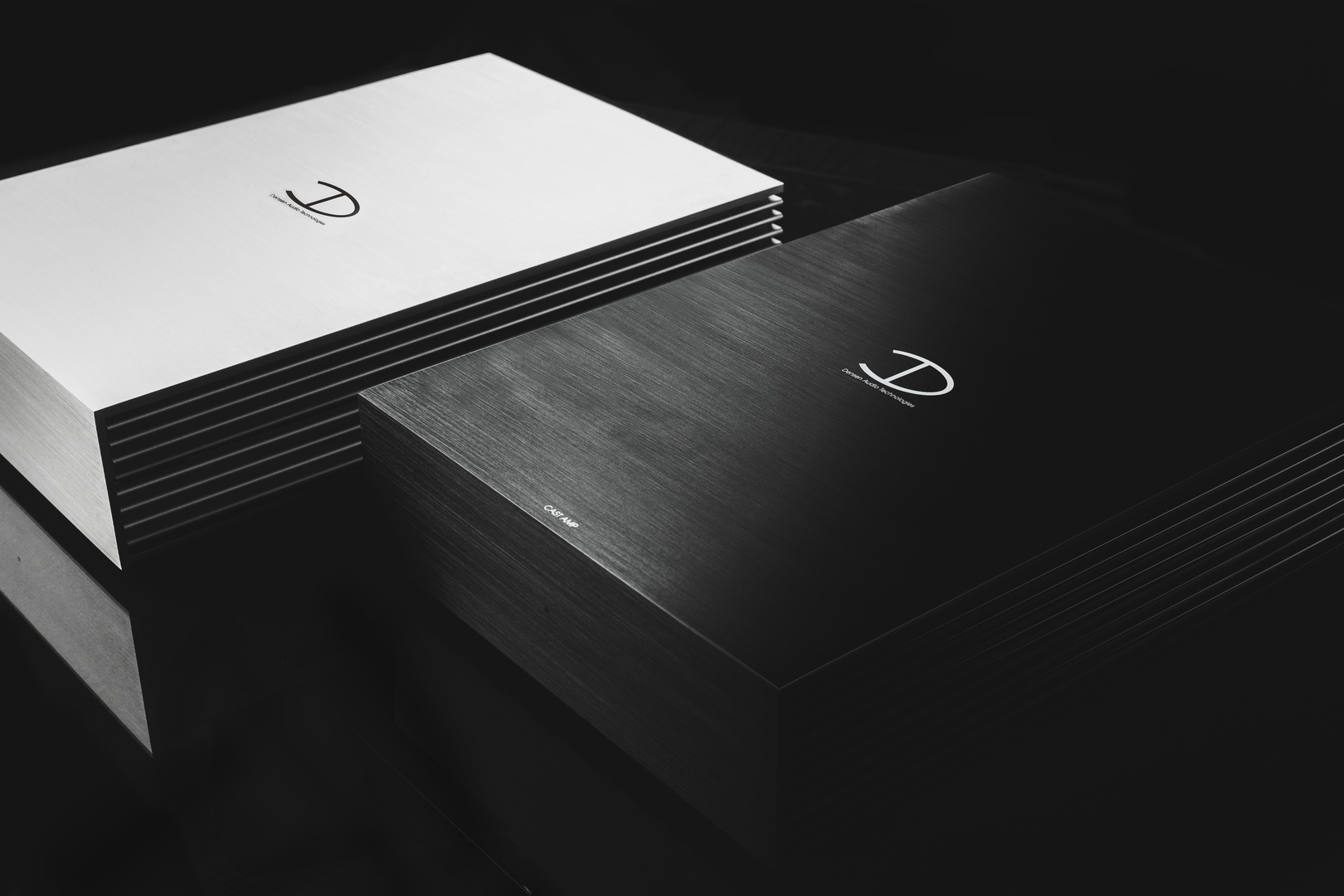
Danish manufacturers Densen have launched their brand-new CAST AMP Streamer, the first in their brand-new Dino range of products.

The CAST AMP is the first product from Densen to allow streaming. By using Google Cast Audio technology, users will be able to stream music directly from services such as TIDAL. The component can also be used with Google Home to implement multiroom listening.

Densen has carefully selected and crafted each aspect of the CAST AMP to ensure that it operates at its highest possible level. A specially shaped, pure aluminium cabinet encases the external Wi-Fi Source along with a high-end DAC that has been manufactured from over 20 years of experience.

The most interesting and unique feature of the CAST AMP is the internal Power Amplifier. This is a scaled down version of the upcoming B-390 Power Amplifier (set to be released in late 2017) that has been 15 years in the making. The delivery of the CAST AMP is an incredible 2 x 60 W in 8 ohm and 2 x 120W in 4 ohm. As such, the component can also be used a s a standalone power amp with a 5V trigger.

Densen’s CAST AMP uses already pre-established streaming software to ensure that no issues are created between Densen created software and Google Cast. Densen have said that this can often be an issue with streamers created by other manufacturers, where software updates can sometimes clash.

The non-magnetic casing adds to the CAST AMPS benefits and decreases magnetic distortion. The aluminium casing also creates a heatsink, ensuring that the CAST AMP does not overheat.

The first owner will benefit from Densen’s lifetime warranty which starts after the standard warranty ends. It is available for order now from Elite Audio and retails at £2,895.

Technical features:

·         Output power: 2 x 60 W 8 Ω / 2 x 120 W 4 Ω

·         Power supply: 400 VA and 20.000 uF

·         9 individual powersupplies

·         5 volt trigger for remote control, when used as pure poweramp

·         Upgradeable DAC

·         Controllable via GOOGLE CAST AUDIO

·         Size: Height: 64mm (72mm with feet). Width: 220mm. Depth:310mm (+cable connectors)

·         Available in both Albino silver and black

·         Manufactured in Denmark

Pearl Acoustics

A new British loudspeaker manufacturer enters the market

After more than thirty years of development, Pearl Acoustics have finally launched their Sibelius range of loudspeakers onto the market.

The philosophy behind the Sibelius design is simplicity, purity and sustainability. Built more like a musical instrument than an electronic component of a HiFi system, The Sibelius speaker boast no cross overs, filters or other electronic components. Just two, sliver plated, multi-strand cables link the drive units to their terminal posts.

Built to last a lifetime, the Sibelius speakers are designed for those that want to get as close to the original performance as possible.  The shallow drive cones are designed to give a naturally wide soundstage, while the enclosures massively thick walls (3.3cm) enable the creation of low frequencies by using the same techniques as an acoustic double bass or cello.

The reason, for the long development time was having to overcome the three main problems associated with single drive unit designs: Harsh upper midrange, which tends to make most single drive unit designs sound like they are shouting, boxiness and premature roll off at both the high end and low end.  The Pearl Acoustics Sibelius has conquered all three by using a custom built driver from Mark Audio for their ‘SG’ and ‘CG’ models.  Launched at the recent Bristol show, the first reactions from the public towards the Sibelius SG has been excellent.

“There were not many things at the Bristol to wow me this year – however, even if there had been, the Pearl Acoustic speakers would still have been best in show. Totally musical sound – especially in the room where they were being driven by a reel-2-reel and Astin Trew amplification – I could have stayed all day” Derek Cottrell.

The Sibelius comes in three drive unit variants: The acoustically identical ‘SG’ (Silver Grey) and the ‘CG’ (Copper gold) and the ‘P’ (Paper cone) for the traditionalists.  The cabinets can be ordered in a wide variety of natural stain finishes to the oak.  Prices in the UK start around £5000 including stands and VAT.

Sibelius SG & CG Specifications:


Impedance: 7.5 Ohm
Power handling: 35 Watts RMS – 70 Watts peak
Efficiency: 87.5db @ 1W @ 1 meter
Maximum output : 105db @ 1 Meter
Frequency range: 28Hz-30Khz (ten octaves)*
Dimensions: 1093mm (H) 225mm (W) 295mm (D)
Weight: 29kg each

Sibelius ‘P’

Impedance: 6.2 Ohm
Power handling: 30 Watts RMS – 65 Watts peak
Efficiency: 89.6db @ 1W @ 1 meter
Maximum output : 104db @ 1 Meter
Frequency range: 28Hz-30Khz (ten octaves)*
Dimensions: 1093mm (H) 225mm (W) 295mm (D)
Weight: 29kg each

For more information: www.pearlacoustics.com

HIGHRESAUDIO to stop offering MQA

From the HighResAudio Press Release:

HIGHRESAUDIO has stopped offering MQA. MQA is NOT lossless, the original signal is never recovered, estimate to recover at most 17bits (reduces the sampling rate), reduces the frequency range, SNR reduced by 3bit, aliasing with artifacts at 18kHz. MQA encoding filters manipulates drastically the original source. No analysis tools are available to verify the encoded MQA content. Therefore no quality control is possible. highresaudio.com stands for offering purity, original mastering source, none manipulated, tweaked or up-sampled content and codecs that are widely supported and offer use of freedom. 

“We hope that MQA will adjust all the above issues. We are truly disappointed, the way MQA has progressed in the past year. We have been mislead and blinded by trust and promises.”

MQA Claims:

– Compressing High Resolution Audio for Streaming Applications by keeping the audio quality.

– Applying adaptive filters to do “time domain optimization”

MQA Summary:

– MQA is NOT lossless!!! The original Signal is never recovered!

– We estimate that MQA is only able to recover at most 17Bits at 96kHz

– The primary MQA benefit is the reduction of the bit rate. We will prove that an alternative method can reach a similar reduction but keeps the “Sample Rate” and therefore the “Timing” of the audio signal.

– MQA is not usable for “Legacy Devices” because of heavy Aliasing causing increasing distortions beyond 18kHz.

– Applying adaptive filters that permanently change the original signal will most likely do more harm than good. Well, we want the original signal and not something that tries to resemble it as good as possible. It may sound different, but how can it be better than the original record?

I have asked MQA weeks ago to correct the marketing communication towards the end user and media. As long as MQA is not prepared to straighten the facts, we will not offer MQA any more. The customer needs to know what he pays for, and we have to be able to check technically what we offer and sell to our customers. We are in a very sensible and delicate niche music market. Over the past seven years we have established a very good market position, created a new business for the music industry and artists and customers that cherish the best audible sound reproduction. We moved the music and HiFi-industry into a new business domain, with very little support from anyone. Our USP is that we guarantee (and this is not just said and done) your customers, nothing but the true, native and original source. We can analysis and verify any other audio codec (with MusicScope even DSD and DXD). For MQA is nothing available to assure that the customer is getting our “promise“. We are in the first and front rule, selling music and technology to a new and established customer, that truly expects nothing but the real thing! 

Selling HighRes Audio files requires so much dedicated and detailed work prior in selling (download / streaming) the music. This time needs to be invested by qualified audio engineers and a team that understands the total reproduction path. An extensive quality control is therefore a „must-have“ and needs to be in place to fulfill the “promise“. 

If these parameters are right, than we can provide our customers with honest facts to purchase MQA, and then we will continue to only offer “Authenticated MQA” again. Since beginning 2016 we offer native Studio Masters for MQA encoded, where we can trace and verify the origin of the source. Meaning from Mastering Studios that use MQA in their production workflow and process and are personally signed off. 

No matter whether downloading or streaming. The perception and expectations of the customer is different. We can not sell and promote HighRes unless HighRes is supplied! For our customers, quality, trust and reliability are the top priorities.

Am I now the bad guy? No, I would like that we continue to offer in the niche, customer native and original high-resolution music. There are plenty of new and established customers that are looking for high-resolution albums every day. The HighResAudio market would have grown rapidly and successfully, if the awareness among the responsible people in the music industry were familiar with our target group. Since 2010, we have been a single player on a broad front. Our mission: to offer music lovers, artists, hi-fi enthusiasts and manufacturers of audio devices to offer a new perspective in the digital age for the perfect music reproduction for a unique listening experience.

Lothar Kerestedjian,

Managing Director, HighResAudio

A technical document, which analyzes MQA as deeply as presently possible has been produced by Dipl.-Ing. Stephan Hotto of XiVero GmbH, is available here.

Meet Your Maker: Mark Fenlon, from Markaudio-SOTA

Some engineers are best described as ‘laconic’. Some take that a stage further and are effectively monosyllabic. This is completely understandable, as their job does not necessarily include a social interaction element. However, Mark Fenlon of Markaudio and Markaudio SOTA is not that kind of engineer. He’s more on the ‘communicative’ almost ‘loquacious’ side. He’s neither prolix nor garrulous however, and what he says is interesting, rather than some sort of engineering word salad, but if you want to ask a question as an interviewer, you are in that weird place of having to force your way into your own conversation. However, this is the stuff of lazy journalist’s dreams – turn on your recorder and keep going until the batteries run down!

Alan Sircom: How did y…

Mark Fenlon: I built my first pair of speakers when I was a penniless student, but I’ve been making components for other people since the early- to mid-1990s. I guess engineering is in my blood; my father worked for Jaguar – he was one of the development engineers for the company’s V12 engine – and my grandfather was a boilermaker, so give me a spanner and some nuts and bolts and I’m happy.

As a loudspeaker driver guy with a mechanical engineering background, I have made anything from frames to housings… all sorts of stuff. But I’ve always been intrigued by the fact that there’s not a lot of attention paid to the method, design, and structure of components in the traditional loudspeaker manufacturing industry, and it remains largely unchanged over time.. Yes, there has been some dabbling with Kevlar and fibreglass and the rest, but it’s an amazingly stuck-in-the-mud industry. In part, this is because of mass production and the need to produce a reliable, tried, and tested formula. Even if that formula hasn’t really changed since the pioneering days of Rice and Kellogg back in 1932.

I come from the energy industry (I was an industrial gas engineer and a gas dynamicist), but it would be fair to say that I’m a devotee of the Colin Chapman/Lotus school of engineering – “Simplify, then add lightness!” Most modern manufacturing industries from making mobile phones to building ships are all trying to gain mechanical system efficiency, use more modern materials, and reduce mass in the process. These are fairly standard engineering practices, but they all seem to have passed by the loudspeaker industry. But in the mid to long term, I believe that even the loudspeaker industry will have to learn how to do more with less, and we need to get transducers to become more efficient and use materials more wisely, more efficiently, and able to be reliably made that way. This last point is important, as most drivers go through at least seven glue or bonding processes, but I’m developing a driver that is effectively snap-to-fit, with only three glued processes. That’s far better for the environment, if nothing else.

To get the bandwidth on a Markaudio driver, we end up using aerospace-grade mixed alloys, which are never more than 150 microns thick. That not only gives the performance we desire, but means we are physically using less material: we’re getting that sheet of mixed alloy to go farther and do more, lowering costs, and helping the environment in the process. That is an engineer’s dream – if Colin Chapman were here, he’d be nodding his head in approval! As would many British engineers, because we’ve been brought up on this problem-solving way! It’s the way we are trained, or at least the way we were trained when I was at university. You can go too far, though – there was a famous interview with the owner of TVR about why their high-performance cars didn’t have safety functions like ABS and his answer was “learn how to drive properly, and don’t crash!”

I actually sold Markaudio (the raw driver business) and Markaudio SOTA (the finished loudspeaker brand) three years ago, and the two have morphed into something entirely different than what we imagined. This has given me the time and space to come up with more developments on cone design. For example, there is a cone design I’ve come up with what I call a ‘negative camber’ cone, but forgive me if I can’t say too much more at this time, as we are going through patent application as we speak.

With our current drivers however, in effect we have a symmetrical layout, as the shape and radii of the small cone and large cone in our drivers are almost identical. This allows us to use a general crossover in multi-way designs, which is advantageous. The first example of this in a loudspeaker design is the Viotti One. The last year and a half we have been getting feedback on the Viotti One, and we plan to keep that feedback going.

Part of the reason for that feedback is because if someone asks me what is a ‘good’ sound, I can’t say for sure. That’s for people to decide for themselves. On the other hand, if they ask me what is needed to produce a sound with a bandwidth from 40Hz–14kHz, I’ll go away and tinker and do that. If they say, I’d like it to have 90dB efficiency and give me a rough size of the driver, I’ll design it and the chances are I’ll produce a driver they will like. And historically Markaudio – the driver side – has been built up on constant feedback from end users, often through various forums.

With a loudspeaker like the Viotti One though, we hope that we’ve been able to make a two-way system that gets a little bit closer to the 21st Century. It’s not that we’ve made anything especially new – it’s still a transducer, with a coil, and a cone, and a magnet, etc. – but what we’ve done is made it technically more efficient, and that is the core of what we’ve been doing for the last three years; symmetrical driver layout with a general crossover in what we believe to be a stylish box. We’re not stylists, though – that’s where Andrea Ponti comes in. As a driver designer, the whole process has been very good for me, and I’ve enjoyed it enormously and it will be interesting to see how it works in the market. 

Bristol: Best in Show!

We don’t have much to go on photographically, but there were some outstanding sounds at Bristol Sound & Vision. Some of them were outstanding for all the wrong reasons, but there were some really, really good ones, too. One of the best was the new Q Acoustics Concept 500. This £3,600 per pair tower design – from the drawing board of noted European loudspeaker designer Karl-Heinz Fink – was one of the real stars of the show. We saw this in prototype form in Munich High-End 2016, but the realised version is so much better than expected. 

The design features a pair of 165mm mid-bass units flanking a 28mm dome tweeter, and feature what the company calls its Dual Gelcore enclosure, This is essentially a MDF cabinet, wrapped in a MDF cabinet, which is then wrapped in yet another MDF cabinet, each one kept from the other by a thin constrained layer damping gel. The inner cabinet is point-to-point braced, too. Aside from making the loudspeaker weigh a massive amount for a relatively small tower, it also sets new levels in removing the cabinet from the sound at the price, some 30dB down on similar models.

That cabinet alone would make it worthy of note, but there is so much more. Such as the internal Helmholtz resonators, the inductor that weighs more than some amplifiers, the high-grade parts list, the mechanically decoupled tweeter, and more. This is a high-end loudspeaker with high-end aspirations that, if it didn’t have the Q Acoustics name on the front, should probably cost close to £10,000.

In listening tests, albeit tests undermined by the sheer weight of Arcam AV demonstration bleeding through into the room from time to time, it was clear that this is a ‘something special’ design. It has the extension, the soundstage, and the neutrality of bleeding-edge designs costing a lot more, and we hope to listen to these Concept 500 under less harsh conditions in an upcoming edition of Hi-Fi+. If they are as good as they were in Bristol, we’re onto a real heavyweight giant killer!

Bristol Sound & Vision Show 2017

The 30th annual Sound & Vision Show at the Marriott City Centre Hotel in the heart of Bristol is a unique event. It’s a dealer-run show, organised by Audio T (in association with What Hi-Fi magazine), and every year thousands line up around the block before the show starts, braving some of the nastiest weather Bristol can throw at them to pick up a bargain (the organisers ensure there are some good discounts to be had if products are purchased at the event).

This year, it seems, numbers were up (even if sales were possibly slightly down) on the previous year, and although the hotel itself is looking a little tired – the concrete building stands in stark 1960s contrast to the more modern Cabot Circus shopping development nearby – the show itself is very much in its own groove. Speaking of grooves, this year’s show was marked by a significant shift toward vinyl replay and away from both CD and home cinema/home theatre demonstrations. Although many companies were exhibiting record players, not all of them were making record players, and the few record player makers at the show were having something of a field day.

This year, the number of brand new exhibits was down slightly on last year. Indeed, there were many brands showing the finished version of the project in prototype form last year. That said, there were wholly new products on display. For reasons intimated elsewhere on the site (https://hifiplus.com/articles/what-could-possibly-go-wrong/), we are somewhat limited in the images we can provide to support this report, so we have reluctantly had to limit ourselves to the best new products at the show that we had images of. There were many more, and our apologies go out to those who have fallen victim to the diktats of the SD card!

AudioTechnica was showing its range of new headphones and earphones to great effect. It also had a new turntable on display. Perhaps the most exciting of the group is the £465 ATH-SR9 over-ear ‘Sound Realty’ high-resolution headphones, featuring 45mm drivers and bobbin-wound ‘7N’ copper voice coils.

We loved the DigiBit Aria Mini when we tested it a couple of years ago (https://hifiplus.com/articles/digibit-aria-mini-media-player/). The DigiBit part of the name might have gone, but the product is better than ever! The latest Aria 2 player includes a built in CD ripper, is fully DSD256 compatible, supports JRiver and its own app, and sports up to 4TB of storage. This complete digital front end starts from around £5,000.

AVM is a name relatively well-known to regular Hi-Fi+ readers, as we are big fans of the company’s CS2.2 all-in-one player. However, the German brand had some difficulty making it big in the UK, until now. The company is often distributed with PMC in other parts of the world, explained AVM’s Managing Director Udo Besser, and AVM is now distributed by PMC in the UK, too. PMC also imports Bryston to the UK, and that relationship remains unaffected. At present, only AVM’s  three strong range of disc-playing, streaming, integrated amplifier all-in-ones will be available. But expect more to follow.

The 75W Belles Aria integrated amplifier was first seen at CES 2016, but it took until Feburary 2017 for it to make its presence felt in the UK. Armed with a headphone socket, a fine MM phono stage, and the typical Belles giant-killing sound, expect to hear more from this small, but perfectly formed amplifier.

The Chord Company announced its new Sarum T cabling, which offers a marked upgrade over Tuned Aray. The latest design features its proprietary Taylon dielectric, said to be completely phase consistent across the frequency band. Prices start at £2,100 for a 1m pair of interconnects, and existing Sarum can be upgraded.


Dynaudio’s excellent, award-winning display showed the excellent Contour loudspeakers in an elegant space featuring a large picture of a Heroes-era David Bowie, but the new models in the group were the revised Focus line, including the £9,500 Focus 60 XD tower models.

Elipson was one of several brands showing new turntables at the show. This new Omega 100 RIAA BT Carbon is a complete £699 carbon-fibre turntable, complete with built in phono stage, Bluetooth transmitter, and an Ortofon 2M Red cartridge.

UK needle experts Goldring announced three new moving magnet cartridges in its new E-Series; the £60 E1 with a carbon-reinforced cantilever, the £80 E2 with an aluminium cantilever, and the £100 E3, which replaces the spherical diamond tips of the E1 and E2 with an elliptical stylus.

Kudos has another Titan in its range, with the £13,000 707. Taking the mighty 808 project as a foundation, this one box floorstanders retains the isobaric bass loading, distinctive cabinet shape, closely matched drive units, and low order crossover. It is designed to run in active and passive mode, too. Rumours of a still cheaper Titan 606 abound, too!

IsoTek was running regular demonstrations on the importance of good power, using its Reference grade power cords, the new EVO3 Corvus noise rejecting power block, and up to the improvements that can be had from the EVO3 Genesis One regenerator and EVO3 Titan One filter.

Alan Ainsley of Melco is seen here modelling the latest version of the N1Z music server. Both N1A and N1Z are now upgraded to mk II versions, with Ravenna music software support, improved connectivity, a new operating system, better power supply and (where available) larger SSD drives.

Quadraspire makes stands and gets frustrated when it sees people putting quality audio on sideboards and less-than-ideal furniture. To counter this trend, it has developed the Soundstage, a bamboo platform with bronze and bamboo feet that offers an easily-demonstrable boost in performance, for £99 per platform.


Rega has been very busy of late. The company recently revised the ever-popular Brio amplifier and announced two new lower cost turntables, the P2 and P3. At Bristol, the brand announced the new £248 Fono MC phono stage and a £198 TT PSU in the new Brio livery, its cheapest ever moving coil cartridge in the £498 Ania, a very smart £175 Atlas stylus gauge, and the Record Store day turntable for this year, which will include a limited number of custom unbraced RP3 turntables alongside the normal RP1. 

Sennheiser has moved with the changes in the earphone world, announcing its latest set of £170 Momentum in-ear headphones now come with a Bluetooth 4.1/aptX chummy powered neck-band, to accommodate jack-free iPhones.

Spendor has introduced a trio of new models in its A-Series; the £1,200 A1 standmount, the small £1,600 A2 and slightly larger £2,200 A4 floorstander. Pictured is the largest of the three, being ably driven by a modest system comprising the new Rega Brio amplifier and an AURALiC ARIES mini streamer.

Technics has been bowled over by the success of the reborn SL-1200 turntable, but in its latest guise, it’s not cheap. The new SL-1210GR brings the classic design down to a more affordable £1,299, and looks extremely cool in its new matt black livery.

We are hoping that even more images come through the extraction and recovery process. If and when they do, we will include a Part II version of the show report which will (hopefully) include new products from Epos, Exposure, iFi, Leema, ProAc, QED, Quad, REL, Ruark, Scansonic, Townshend, Wilson-Benesch and more!

The Clarity Alliance Awards

For the last five years, the Bristol Sound & Vision Show has also been home to the Clarity Alliance awards. The Clarity Alliance is a trade association within the UK for promoting the benefits of quality hi-fi and home cinema, and allowing the manufacturers, distributors, dealers, and press to work together to inform and educate. Although the position was a purely voluntary one, as the first Chair of Clarity, and then sitting as an ex-officio board member until the beginning of 2017, I felt unable to discuss the Clarity Alliance publically as it was a potential conflict of interests.

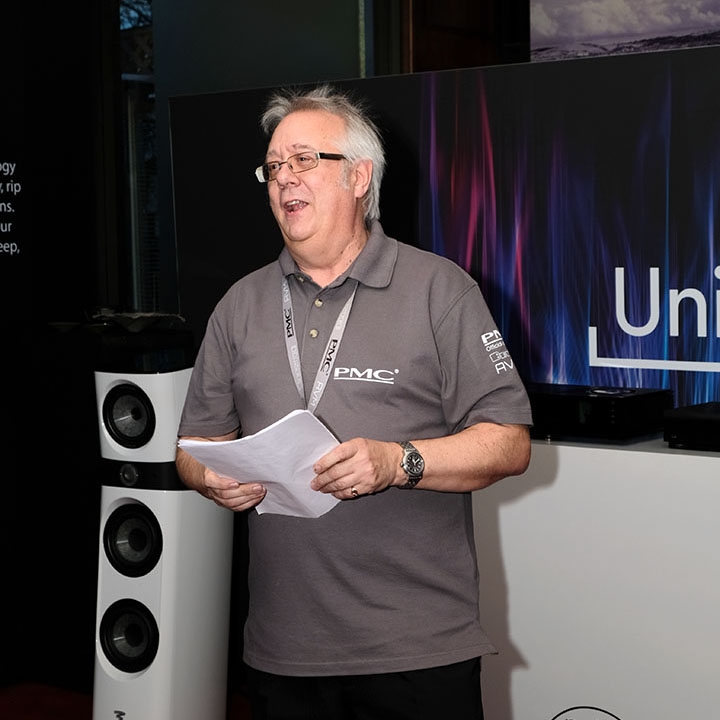
This year’s awards are the first in which I had no formal involvement, and were given over to ‘best in show’ exhibitions at the show, and the new Chair of the Clarity Alliance, Tom Barron of PMC, presented the awards. While Clarity has moved away from developing a public presence at this time, the judging process – performed by unnamed ‘secret shopper’ judges roaming the rooms in several key categories – the awards are prized as they are considered professional confirmation of the work done to bring a good exhibition to the public, and the winning certificates are frequently displayed in the winning rooms after being judged on the first day.

This year’s winners were as follows:

Best hi-fi demonstration: KEF Audio

Best home cinema room: Arcam

Best display: Dynaudio

Best Innovation: Devialet

Overall Best of Show: Naim Audio

Additionally, every year, Clarity presents a Lifetime Achievement Award to a member of the industry who has given decades of service to the advancement of high performance audio or audio/video. Past recipients include the well-known reviewer Paul Messenger, and Eric Kingdon of Sony. This year, the award was presented to Paul Stevenson, who spent 35 years working for Naim Audio, joining the company in 1981. Paul became Naim’s Managing Director in 2000 and Chairman of the company from July 2015 until the end of last year.

What could possibly go wrong?

Last week, the 30th Annual Bristol Sound & Vision Show took place, in its spiritual home of the Marriott City Centre Hotel in the middle of Bristol. I’ve attended probably 25 of those 30 shows in a reporting capacity, and while it’s a lot of work to pack into three days, it’s a know resource. Arrive with camera, notebook, and press pass, walk the halls, and find the new stuff. It’s a well-trodden path.

What could possibly go wrong?

The image at the top of this blog is of an ingenious little thing called a DoohicKey. It’s a key tool by a company called Niteize, and it has permanent residence on my key ring. It combines a flat-head screwdriver, small flat pry bar, bottle opener, a blunt but effective box-cutter, short ruler, and hex wrench (of sorts). It’s entirely airline-friendly (armed with this and the gaffer’s tape and a few paperclips that tend to live in my camera bag, I could MacGyver my way out of a number of sticky situations, without the indignity of having my pocket knife taken from me before I get to the departure lounge) and costs less than five dollars or pounds.

I use my DoohicKey a lot (mostly in the box-cutting and bottle opening department), so when I saw a bit of sticky ‘gak’ that had somehow attached itself to two contacts of my SD card and was proving hard to remove, I set to it with my key tool. The more correct course of action might have been to get some lighter fluid and a rag and remove said ‘gak’ with some elbow grease. But no, there was no time, and I knew better.

What could possibly go wrong?

Had I been a bit more on the ball, I would have performed daily downloads of my images instead of waiting until the show had ended. Had I paid a bit more attention to my camera’s settings, I could have set the data storage to either mirror the images to its second card, or place RAW images on one card and JPEG on the other, knowing that I’d have some back-up if I reached some kind of ‘SHTF’ scenario. Had I not simply smiled and nodded along to Alan Gibb of The Chord Company, when he described storage as either being broken, or being about to break, I would have seen this as sage advice, and even prophecy.

But no… what could possibly go wrong?

This week, I discovered precisely what can go wrong, discovering at first hand the implications of what looked like a tiny dent on the back-side of an SD card, caused by pressing a little too hard on a piece of sticky ‘gak’ with my extremely handy DoohicKey. This week, I discovered that when you try to upload images from a damaged SD card, they take a ‘little while’ to upload, and many of them end up as corrupted after that ‘little while’. So, by Wednesday of this week when I had managed to upload approximately three images, I also discovered I had achieved Peak Swearing, creating new and interesting portmanteaus of cursing. In fact, things got so sweary, I had to adopt a (bad) Glaswegian accent, because the cadence of Scottish is more geared toward swearing. Swearing profusely at a sliver of black plastic is, I discovered, profundity at an Eighth Dan level, and the slightly damaged local guy with Tourette’s syndrome gave me one of those knowing “one of us” smiles as a result.

I wasn’t the only one hit by a localised outbreak of Murphy’s Law at Bristol this year. Spare a thought for Anders Ertzeid of Hegel. He is the company’s vice president of sales and marketing, and travels the world putting on very good, refreshingly down-to-earth demonstrations at shows. He knows the highs and lows of shipping a complete demonstration system around the world, and – like most professionals in the field – factors in a healthy wiggle room in order to accommodate unexpected delays in shipping or customs.

Once again, what could possibly go wrong?

What could go wrong was the combination of a delay at customs and storm Doris: the British are new at naming their storms, having only started naming them a couple of years ago, and we are terrible at it. On the night before the show began, an unusually subdued Anders was still waiting on his shipment to enter the UK. On the first morning of the show, one of Hegel’s UK retailers travelled across the country with a delivery of enough Hegel equipment to get him started, and everyone pulled together the best they could to get his room up and running, but none of the promotional material, none of the display material, brochures, tables, cables, room treatment, and the rest of the equipment we all use to set up our rooms had arrived, and there was not enough spare equipment at the show at this last minute to construct a system up to Hegel’s normal standard.

The fact people rallied round Anders as best they could is in part a sign of just how well-liked the company – and the man – is within the industry. There’s some empathy there, because any company that runs the audio show ‘circuit’ knows that the same thing could happen to any of them the next time, but this was more than ‘oh dear, what a pity’, this was people rallying round a guy who has proved to be a bit of a mensch. That also shows something a little more professional and sympathetic than the industry has been capable of in past years, and maybe that we’re losing a touch of the ‘lone wolf’ mentality.

I am also pleased to say I had my own spot of being helped out in my quest for finding photos, in that my colleague Jason Kennedy ‘ganned’ me a few images for our belated show report (‘gan’ is an old news photographer’s term, where reasonably friendly rivals would help one another out with images; it’s short for ‘Give us A Negative’). And I managed to take the image of the DoohicKey with my shiny new SD card.

My next show reports come from Headroom at the end of March, and AXPONA in April. What could possibly go wrong?