Up to 37% in savings when you subscribe to hi-fi+
hifi-logo-footer

Begin typing your search above and press return to search. Press Esc to cancel.

VPI PLAYER – THE AFFORDABLE ALL-IN-ONE

The Player all-in-one turntable has been lovingly engineered in New Jersey by the US masters of vinyl replay, VPI. Equipped with a cartridge, a built-in phono stage and headphone amplifier the VPI Player is…ready to play!

Designed to be an all-in-one high-end, but affordable turntable solution, the VPI Player brings vinyl to sparkling life. Featuring a built-in phono stage, headphone amp, 9-inch metal gimballed arm, mounted cartridge, and machined aluminium platter, the Player is a plug ‘n’ play solution for all listeners. VPI have fully prepared the Player in their factory so that there is minimal set-up required and your vinyl can be spinning straight away.

The on-board headphone amplifier allows you to plug a pair of headphones into the turntable, and listen directly to your vinyl – no amplifier required! The built-in phono stage has been designed to work perfectly with the Ortofon 2M Red phono cartridge that comes pre-mounted in the VPI Player’s tonearm, and the headphone amplifier has its own volume control. If you’d prefer to use an external phono stage to link the Player to your hi-fi system, then you can simply bypass the one that’s built in.

The Player punches way above its weight class and delivers a reproduction of intense musicality. For those that have heard all the hype about the vinyl sound, but not listened to their records in years, the VPI Player will deliver more than they were hoping for.

Available in a striking pure-white finish, the Player is at home in any environment.

With an upgradable platter, tonearm, feet, and the ability to engage and disengage the electronics, there are a host of options to allow the VPI Player to be taken further into high-end audio territory.

No other manufacturer can produce such a musically engaging turntable at this price. The standard of construction, grade of materials and outstanding audio reproduction are usually found in tables that cost much more. 

VPI has not forgotten the simple and beautiful tactile joy of playing vinyl – let the needle softly drop into the groove to start the VPI Player performance.

RRP: £1,500 (with a three-year warranty)


The detail:

Table:

·      1.25’’ thick textured vinyl-covered non-resonant MDF chassis

·      16’’ x 11’’footprint

·      19” x 14” x 6” overall size

·      Aluminium Platter

·      Platter rotates on an oil bath bearing and fitted to shaft with a #2 Jacob’s Taper for a concentric rigidly mounted coupling

·      The bearing has a PEEK thrust disc and machined graphite impregnated brass bushings using a Thompson Engineering 60 Rockwell case hardened shaft

Tonearm:

·      New 9” vertical Yoke type tonearm with lateral turntable type bearing

·      Pivot to spindle: 223mm

·      Effective length: 240.7mm

·      Overhang: 17.7mm

·      Offset angle: 22.85 degrees

·      Average RMS distortion: .36%

·      VTA adjustable arm mount.

·      Damped stainless steel armtube.

·      Very pure copper wire, twisted with special insulating jacket

·      The armbase is upgradeable to a standard JMW 9 arm

Additional Specifications:

·      Type                           Belt drive (manual turntable)

·      Motor                          24v synchronous AC motor

·      Turntable Platter            Aluminium

·      Diameter                     11.81” (30.0 cm)

·      Turntable Speeds         33.3 RPM and 45 RPM

·      Wow and Flutter           .1% WRMS (in accordance with DIN specification)

·      Rumble                        < – 80dB (IEC 98A unweighted)

·      Cartridge                     Ortofon 2M Red

·      Output                        5 mV @ 1 KHz

·      Tracking Force             1.5 grams (recommended)

·      Input Load                   47K

·      Weight                        5.5 grams

·      Power Supply               10v VAC @ 60 Hz, 230v VAC @ 50hz

·      Power Consumption      7.7 watts at full output

·      Dimensions                  18.5” W x 13.5” D x 4.3” H

·      Weight                        12.9 lbs. (5.9 kg)

For more information visit:  www. www.renaissanceaudio.co.uk

Contact:

Angela Brown: 07975 907899                     Matthew Tasker: 07791 380267

[email protected]                              [email protected]

VPI Industries Inc. is a high-end audio American manufacturer founded in 1978. All VPI products are designed and built in the United States in Cliffwood, New Jersey. VPI’s sonic philosophy is to reproduce the dynamics of live music in the home and that the illusion of reality cannot be duplicated without a convincing resolution of low-level detail, along with a natural sense of acoustic space. VPI products are sold in over 65 countries across the globe.

August 2017

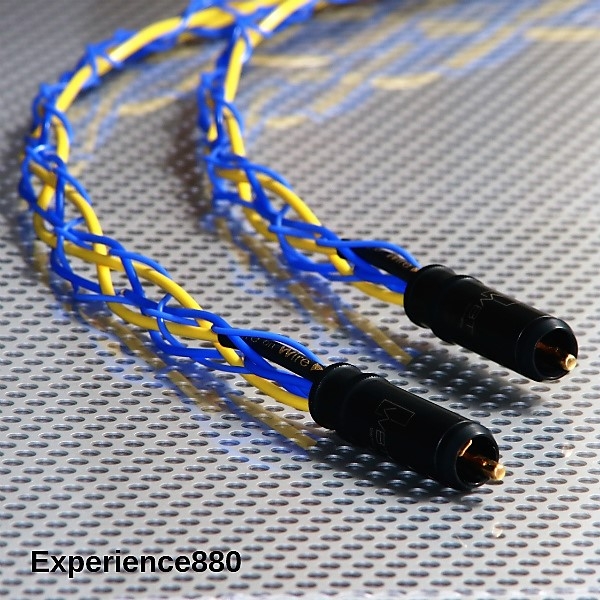
The Tuneable Experience880-more than one interconnect in a single cable

For a demonstration unlike any other, visit Wire On Wire’s room at Audio London 2017, where we will be launching our Experience880 audio cable. Why is it so different? Because it’s tuneable so you can access more than one high-end interconnect from a single cable.

Wire On Wire’s ground-breaking REDpurl™ adaptive asymmetric geometry is at the heart of its high-end Experience range. Unlike other audio cables, with their fixed geometry, they can be tuned to access the full potential of your listening room and audio system.

Every element of the new Experience880, designed and hand-built by Wire On Wire in Britain, has been specified without compromise after extensive listening tests. A new bespoke conductor within its REDpurl™ geometry brings levels of clarity and neutrality to new highs, whilst maintaining a deeply musical presentation.

Chris Bell, designer and owner at Wire On Wire, says “We will be demonstrating our new Experience880 tuneable interconnect and Experience660s speaker cable and how their adaptability brings out the best in a system. We look forward to meeting you in Room 6 on the third floor of the Audio London section at this year’s Indulgence Show where you will find some great offers on our cables.” www.wireonwire.com, www.indulgenceshow.com.

(REDpurl™ adaptive asymmetric geometry: UK patent pending GB1602578.5, EU Registered Design No.002544171)

Ends. 

Find out more

To find out more about Wire on Wire and its REDpurl™ audio cable range, please call 01372 800605 or email the team at [email protected]. Alternatively, please visit www.wireonwire.com. You can also contact the company via Twitter and follow @WireOnWire to find out up-to-date news.                                                                                                 

About Wire on Wire

Wire on Wire, established in 2016, is a Surrey-based company that hand-builds tuneable audio cables using its unique REDpurl™ adaptive asymmetric geometry.

Founder and designer Chris Bell developed the idea of a loose ‘bunch of wires’, free of the regular repeating geometries found in conventional audio cables that adapts to individual listeners and different hi-fi systems. He developed a new braiding technique to deliver a practical version of this asymmetric geometry.

Wire on Wire has an ongoing development programme designing a range of high fidelity audio products based on its REDpurl™ adaptive asymmetric geometry. All its audio cables are built by hand in Britain, the first of which was the Experience680 RCA audio interconnect delivering exacting standards of hi-fi music reproduction, which was awarded ‘Highly Recommended’ by HifiPig in 2016. The Experience680S, a reference-level speaker cable using our unique REDpurl™ design was launched in 2017.

For more information please visit: www.wireonwire.com.

Leema Acoustics Tucana II integrated amplifier

It doesn’t seem that long ago that I reviewed the first Leema Tucana, but the anniversary appellation added to this latest and third incarnation of the company’s first integrated amplifier suggests it is longer than I thought. Leema has been making loudspeakers since the late nineties but it wasn’t until 2006 that they got into electronics that featured heavily machined and heatsinked casework in the distinctive matte finish that remains to this day.

Made in Welshpool, North Wales, electronics is Leema’s bread and butter, although it still makes a range of loudspeakers with names starting with an X (alongside a range of cables that seems to grow on a regular basis), but the focus is on electronics: amplifiers large, smaller, and phono, a music server, an all in one streamer/amp, and a couple of CD players.

The Anniversary edition of the Tucana II integrated is a rather smarter looking and pricier version of the standard amp. While the shiny chrome logo and badge differentiate it aesthetically, the specs go a lot further. The circuit and power ratings remain the same, but the components used within the amp have been seriously upgraded. The PCB traces on the circuit boards, the ‘veins’ of the amplifier, have twice the amount of copper on them, all the critical capacitors have been changed to Nichicon Muse-series devices – the bees knees of caps – and the cable that connects the boards to the speaker terminals is now Leema Reference 2; the best cable that the company makes. This has silver-plated copper conductors, and with eight cores per side, it’s far more chunky than you will find in many power amps.

The output transistors are precision matched, which is crucial for both timing and imaging. Each power supply for this truly dual mono circuit is driven by a Noratel Xtra Quiet mains transformer, which made not the slightest hint of hum even with my higher than average mains voltage. If there was a picture of the inside, you’d see it gives you some idea of why this amplifier is so much heavier (18kg) than you expect of its fairly conventional scale.

As with the standard Tucana II, this amp is full of features that start with six line inputs, balanced in, tape in/out, and preamp out. Then there’s the minijack input on the front panel for smartphones and tablets, alongside a headphone output of the same size. You can adjust gain for each input and hook the Tucana Anniversary up to other Leema components using their proprietary bus system for intelligent control. The biggest physical difference between this and its less shiny brother is the machined aluminium remote; this is from the more expensive products in the catalogue and reflects the build and finish of the amp… it even has chunky rubber feet!

The Tucana II, with its 150 Watts into eight Ohms that nearly doubles into four, was always a pretty powerful amplifier – more so than most integrated designs – and that remains the case here. What has changed is that the grip that power delivery bestows on the music has been joined by something even more important to an engaging musical experience; speed. It’s difficult to combine these two qualities effectively, it’s one reason why the ‘pace, rhythm, and timing’ brands tend to stick to relatively low power outputs. But Leema has proved that ‘PRaT’ can be consistent with higher power and that is even possible with integrated designs, which makes this amplifier rather special indeed.

It’s a funny thing, timing: you can have immensely impressive systems that don’t do it very well, but what tends to happen is that when the initial excitement has passed and you’ve got used to the rock-solid imaging and/or room shaking low end, you don’t feel quite so compelled to play a lot of music. Timing is a fundamental part of the musical experience and arguably more important than distortion levels or bandwidth. You can spot a live band down a corridor because of the speed with which notes stop and start; in fact you can do the same with almost any acoustic instrument. And that comes down to immediacy, both of attack and decay. So the extra 25% asked for the Anniversary over the regular Tucana II is a small price to pay for such quality.


With some speakers though, the Anniversary can sound a bit forward. It doesn’t suit the PMC Fact.8 floorstanders that I generally use as a reference. The sound is a bit lean and lacking in warmth. But partnered with the Bowers & Wilkins 803 D3, it’s a different story altogether; this is a very good combination thanks to the Leema’s power and speed allied with the 803’s very low coloration, high power handling, and all-round detail resolving capabilities. With this combination and a Lindemann Musicbook:25DSD source, Nils Frahm’s Spaces [Erased Tapes], is absolutely mesmerising on every track. It’s not the cleanest of recordings, as most of it is live and some captured on cassette, but the Leema manages to keep music and audio quality in proportion, always putting the music first, and that’s’ what makes it so engaging. It’s a taut, open and rhythmically stable amplifier that sounds as fresh as you like with ‘Judas’ from Esperanza Spalding’s Emily’s D+Evolution [HD Tracks], the lyrics being intelligible despite the tempo with which they are sung and the bass lines remaining as sinuous as ever. Kraftwerk’s live version of ‘Radioactivity’ [Minimum Maximum, EMI] delivers plenty of scale alongside nicely resolved reverb, and suitably bowel-tickling bass.

Detail is never in short supply and if anything the Leema errs in that direction on the tonal balance front, it’s not for those looking to find a valve amp with grunt. It’s for anyone who wants to feel the drive of a rocking track at the same time as being able to tell which reverb effect the guitar player is using. The presentation is always refined though; those fat copper tracks and high quality components show themselves in a clean yet calm fashion by letting the subtleties through, while keeping a firm hand on the drive units. This is equally applicable to all music types: Amandine Beyer’s violin [JS Bach Sonatas & Partitas BWV 1001 – 1006, Zig-Zag Territoires] is both solid and lyrical in equal parts; in fact it sounds beautiful – a true ‘close your eyes and you’re almost there’ presentation.

In the spirit of getting with the now I also tried the headphone output on the end of some Bowers & Wilkins P9 cans, and it sounded pretty damn good. Better even than the headphone output on the Lindemann streamer that was supplying the analogue signal to the amp (and thus has a theoretical advantage). The Tucana has a more dynamic and muscular headphone stage that gave Gregory Porter considerably more presence, it also improved the timing on ‘No Love Dying’ [Liquid Spirit, Blue Note], which shouldn’t be a surprise I guess.

Another interesting comparison was to contrast the sound of the volume control on the Lindemann with that on the Tucana II. You can do this by using the Leema’s AV input, which is effectively a preamp input as well. Once again, the Leema made its qualities clear with a significantly more vibrant and revealing result when the full output of the streamer was connected to one of its regular line inputs. Using it thus with another loudspeaker system, the Eclipse TD510Mk2 and TD520SW subwoofer, proved a thrilling experience. This single driver speaker has phenomenal speed and paired with the Leema this proved virtually impossible to tear myself away from. Rarely have I been so thoroughly gripped by the muse that track after heavily rotated track rolled by, with absolutely no thought about the passing of time or the world around me. It was probably fortunate that a phone call broke the spell; otherwise this review would not have made the deadline.


The Eclipse is clearly a remarkable speaker, but it won’t perform like one with just any old amplifier; the Leema is fundamental to the result. It suggests as much with a number of other speakers, too. Add to this the serious build and finish, the massive feature count, and the sheer power, and you have an amplifier for all seasons. It pays to find a good speaker match and I would recommend warmer rather than leaner tonal balances on that front, but two out of the three speakers I tried worked rather well indeed, which is a good sign. If you’re looking for that balance of speed, power, and transparency that so few amps can deliver, the Leema Tucana II Anniversary could be just the ticket.

TECHNICAL SPECIFICATIONS

  • Type: Solid-state, 2-channel integrated amplifier with built-in headphone amplifier.
  • Analogue inputs: Six single-ended line-level inputs including AV direct (via RCA jacks), one balanced input (via XLR connectors), one tape input
    (via RCA jacks), one MP3 player input
    (via 3.5mm jack).
  • Digital inputs: none.
  • Analogue outputs: One pre-out (via RCA jacks), one tape out (via RCA jacks).
  • Input impedance: not specified.
  • Output impedance: 0.05 Ohms
  • Headphone Loads: not specified.
  • Power Output: 150Wpc @ 8 Ohms, 290 Wpc @ 4 Ohms
  • Bandwidth: Not specified
  • Distortion: THD (10 Watts RMS 4 Ohms) </+ 0.006%,
    THD (max output before clipping, 4 Ohms, 1kHz)
    </+ 0.006%.
  • Signal to Noise Ratio: -104dB
  • Dimensions (HxWxD): 110 x 440 x 320mm
  • Weight: 18kg
  • Price: £4,995

Manufacturer: Leema Acoustics

URL: www.leema-acoustics.com

Back to reviews

Read more Leema Acoustics reviews here

Hegel and Chartwell system

Some systems here are easy recommendations, because they are the output of a single brand. Others are more a reflection of listening tests along the way. This one is slightly different. It’s taking two known products that work in a predictable manner, and applying – sight unseen, and sound unheard – a third in the hope that they work together. It’s a little more than ‘throwing a system together’ because the idea here is that the character of player and amplifier works in dynamic and harmonic balance with the loudspeakers. Fortunately, it works entirely as expected. Phew!

The system here comprises Hegel electronics and Graham Audio-designed Chartwell loudspeakers. The Hegel equipment is not only ‘known’ to us, but is a firm favourite round these parts, and both products in this system have been reviewed in their own rights. Indeed, the Mohican CD player is presently our Disc Player of the Year.

As both the Hegel Mohican disc player and the Hegel H80 integrated amp have been reviewed by Hi-Fi+ (in issues 139 and 107 respectively), we’ll not go over too much old ground. Suffice it to say the CD player is a pure 16-bit, 44.1kHz design with a proper, dedicated CD-audio transport mechanism. OK, so it’s a pure CD player that draws heavily from the company’s top HD30 converter, and that means its own 32-bit AKM DAC chip is barely breaking sweat in handling CD-era PCM.

The Hegel H80 amplifier meanwhile was the first in Hegel’s redesigned approach to amp making, including more digital audio products at the deliberate expense of additional analogue inputs, making the amplifier more of a ‘now’ hub in the process. The 75W amp – codenamed ‘PIGLET’ in design – uses a 24-bit, 192kHz, AKM4399-based DAC sitting on top of the analogue line-stage, but in this context its the combination of XLR and RCA line level inputs that garner our attention, as these are how the Mohican and H80 work best. Personally, I prefer the single-ended options in both devices. Both devices benefit from common Hegel design practices, most notably Bent Holter’s SoundEngine local error cancelling system in the amplification sections of both devices. For more details on these two devices, see the reviews in issues 139 and 107, or on www.hifiplus.com.

Instead we’ll focus more on the Chartwell LS6 loudspeakers. Chartwell is one of those great names from audio’s past. It was also one of the original licensees of the BBC LS3/5a, and minty loudspeakers from the early 1970s change hands for breath-taking amounts, especially among Japanese audiophile collectors. The brand didn’t have quite the staying power of the likes of Spendor, however, and the name laid fallow, lost to the annuls of audio history until Paul Graham of Graham Audio picked up the brand, and restarted it with the LS3/5.

The LS6 is a sort of ideal ‘tweener’ product, coming between the LS3/5 and the LS5/9 in the Chartwell and Graham Audio ranges. And as ever, the BBC connection is kept by Graham’s use of the design services of Derek Hughes, son of Spencer Hughes, who worked in the BBC’s Research & Development centre at Kingswood Warren in the 1960s and early 1970s. Many of the classic BBC loudspeakers were ‘Spen’ designs (Hughes later co-founded Spendor with his wife Dorothy, the brand name being a portmanteau of ‘Spencer’ and ‘Dorothy’) and in Derek, the apple has not fallen far from the tree. Also, Chartwell continues to use Volt loudspeakers specially made for the company, and features those thin-walled cabinets that the BBC made so famous.


The LS6 is a cherry finished, rear-ported, 17 litre two-way standmount design, featuring a long-throw 165mm polypropylene mid/bass cone unit, coupled with a 19mm dome tweeter. That port is a big-un, and vents to the top half of the rear panel, with a single set of gold-plated speaker terminals at the lower half. There is a three-way switch on the front panel that allows a +1dB and +2dB treble lift, to accommodate for well-damped rooms or off-axis listening. This is next to the tweeter behind the grille, which is designed to be kept in place throughout listening (if you remove it, the lip surrounding the front baffle does give a noticeable baffle-step notch in the response).

The 165mm mid/bass unit is the perfect combination for a BBC-type loudspeaker in a world that has, somewhat regrettably in many opinions, moved on from Radio Three and a steady diet of classical music. It’s in the Goldilocks spot between the ‘taut but light’ output of the smaller driver on the LS3/5 and the ‘big but relaxed’ sound from the larger unit on the LS5/9.

The loudspeaker is a perfect partner for the H80, being rated at a somewhat below average 87dB sensitivity, but with an easy nominal eight ohm impedance. It is recommended to be used with amps from 50W-150W and the H80 fits perfectly in the middle of that range. The loudspeakers are designed to play at 100dB and beyond fairly comfortably with an amp of the H80s size. In a typical mid-sized 12’ x 16’ UK living room, this is more than loud enough to be uncomfortable, although if you are a true party animal who feels good sound only exists at the threshold of pain, other loudspeakers (and regular hearing tests) are recommended.

The traditional wadding within a BBC loudspeaker was Dr. Bailey’s Long-Haired Wool, but Rockwool has replaced that here. Sadly ‘Dr. Bailey’s’ is no longer in existence, and the alternatives are either impractical or not sonically superior to Rockwool.

With such a large rear port, the LS6 does require a lot of space between it and the back wall. It’s not the kind of loudspeaker that fits the term ‘bookshelf’ anyway, but if it can be at least a metre from the rear wall, that should be a good start, In fact, the closer it gets to 1.3m or more, the better. This is somewhat at odds with other designs in the Graham and Chartwell lines, which are either sealed box or front-firing designs and therefore can work reasonably close to the wall. Depending on your seating position, they work best on stands between 450mm and 550mm high, but can work well with 600mm stands, too. Fortunately, weighing in at 9.5kg each, and with a relatively low centre of gravity, the LS6 is not a stand-crushing weight. The choice of stand material doesn’t appear that important, although resting on lower mass stands seem more in line with the LS6 bass than being bonded to high-mass models. The latter, in extremis, can seem to add too much of a legato bloom over the bass and upper bass.

Careful installation is handy, but not to the point of obsession. Get them level, toed in, and in approximately the right position and the system will sound good. Spend two more days tweaking them until they are in the perfect position and they will sound ever so slightly better. This is a loudspeaker that works well with an installation that owes more to measuring the room and trigonometry, than it does to magic spells, numerology, and ley lines.


A word about cables. One word. Meh! That’s all you need to know. The high nominal impedance of the Chartwell design makes the differences in loudspeaker cables relatively minimal, and the justification for shooting the moon in audio cable terms is lessened. That’s not to say the quest for better audio simply goes away in this system, because it’s a great sounding system that can be improved through careful accessorising, but that the nature of the improvements cables, cones, and the rest are not as direct, as immediate or as necessary as heard in other systems. Hegel favours Nordost cable in its listening tests and demonstrations, and we used the company’s Blue Heaven-grade product line throughout the test, but there was no burning desire to explore the cable brand’s upper slopes here.

The reason for the pairing between Hegel and Chartwell was the concept of dynamic balance. The Hegel components are a little bit forward, while on past form from the company, the Chartwell should be slightly laid-back sounding. The two should, in theory, balance out. And that’s largely what happened.

In fact, the LS6 is not as laid-back as that past form suggested. It’s perhaps the most forward, dynamic, and exciting loudspeaker we’ve heard from the Graham/Chartwell stables to date (Graham Audio’s VOTU – Voice Of The Universe – flagship may well steal that crown, but it is as yet untried and untested by the magazine). It still holds to the character and charm of a classic BBC design, though. It’s just a little more forward, upbeat, and dynamic. And that really does fit in with the general tone of the Hegel pairing. However, as is common with many such BBC-inspired designs, the importance of that matching process is not pivotal.

The overall system has outstanding imaging properties, and this will probably be the first thing anyone notices in context. With a slight toe-in of the speakers, you get a true sense of three-dimensionality to the music played, especially when that music is live and unamplified. ‘Black Is The Colour’ by Christy Moore from Live At The Point [Frontline] is a live recording with an appreciative audience, and the sense of hearing someone sitting on a stage in front of a crowd is truly palpable. This recording is also used a lot by the ‘Rhythm’ crowd, because it’s simple and has a very good beat. And it’s here where the combination makes its deepest mark. The Hegel duo impose a fine sense of rhythm, without it descending into an overt, obvious, and plodding rhythm line. OK, if you want the kind of almost preternaturally fast, taut rhythmic precision of small, sealed boxes you need a small, sealed box (Star Trek rules: Ye Cannae Change The Laws o’ Physics, Cap’n), but this is a good compromise between the musical honesty and spatial integrity you get from more laid-back designs and the inaccuracy of fast, bass-light boxes.

Going deeper, where the system works well is its ability to tease out the component parts of the music. Not simply in terms of individual instruments within a soundstage, but in terms of blocks of melody, and harmony, and how they interplay in more complex works. A fine example of this is the classic Kleiber/Vienna Philharmonic renditions of Beethoven’s 5th and 7th Symphonies [Deutsche Grammophon]. The second movement of the Seventh is a remarkable interplay of themes that is so well-known we almost hear it unconsciously and fill in the blanks, but with this system in place, the individual themes ebb and flow around the orchestra with consummate ease. Moving across to some jazz, the same applies. As Cannonball Adderley starts blowing changes after Miles’ break on ‘Autumn Leaves’ [Somethin’ Else, Blue Note], the sense of fluidity is more than just tonal (his sax playing is very legato), it’s getting to the way he’s working chromatically, all brought back to some form of epic calm and sanity by Hank Jones’ piano playing. This is the kind of system that not only makes sense of this piece, but makes it enjoyable.

A final truly strong point of the system is its ability to render speech and vocals. While writing up notes on this system, I decided to pull out of storage the original BBC Radio version of The Hitchhiker’s Guide To The Galaxy on CD [BBC Publications], and was sucked back into the radio play like it was 1978 all over again. The sonorous tones of Peter Jones as ‘The Book’ were portrayed beautifully, and there was a sense of layering between the vocal talent and the slightly (deliberately?) cheesy radio sound effects, and quite a lot of Tomita, Ligeti, and Brian Eno’s ambient works.

The only significant downside to this system is not a consideration in context. However, if you decide you want something more than just CD replay, and end up relying on the on-board DAC, it will come as a bit of a let-down after the clarity and rhythmic drive of the Mohican. I guess that’s only to be expected (an on-board DAC on an entry-level amp is probably not going to sound as good as the flagship CD player that costs far more), but it means if you want other digital sources to match the Mohican’s performance in outright terms, you are going to have to use an external DAC, and that means using up valuable line inputs on the DAC.


This is a system that in no small part challenges the concept of synergy. OK, so the CD player and amp are from the same brand, but aside from sharing a remote control, the synergy aspect of this partnership is actually quite low. The player delivers a uniformly good sound, and the amplifier is good at making that sound loud enough to drive some loudspeakers. If you swapped player or amplifier brands, this system wouldn’t decompose as a result. Moreover, and probably more importantly, the expected match between system and loudspeaker didn’t ‘make’ or ‘break’ the system. A system can sometimes be only as good as the sum of its parts, but all of these parts are excellent in their own right, and this time that ‘sum of the parts’ aspect is simply not important.

This is one of those easy bets, a ‘fit and forget’ system that makes a damn good sound, but doesn’t leave you with the drive to improve upon that sound, through judicious tweaks and changes. It is what it is. Instead, what Hegel and Chartwell make here is a system that is easy to live with for the longest time, not some ‘pipe and slippers’ presentation and fun enough to rock out, but not something wild and unstable. In short, the kind of system you never need to fuss about. Best of all, for less than £7,500 all in, this system comes very highly recommended!

Prices and contact details

  • Chartwell LS6 loudspeakers: £2,195 per pair
  • Manufacturer: Graham Audio
  • URL: www.grahamaudio.co.uk
  • Tel: +44(0)1626 361168
  • Hegel Mohican CD player: £3,900
  • Hegel H80 integrated amplifier: £1,350

Manufacturer: Hegel Audio Systems

URL: www.hegel.com

Tel: +47 22 60 56 60

<attachment></attachment>

Back to reviews

Read more Hegel Audio Systems reviews here

Mark Levinson, Vienna Acoustics, Chord Company system

Hi-fi, just like any other arcane (and borderline obsessive) activity has generated its own set of ‘rules’. One that pretty much everybody seems to agree on is that the shortest route to sonic suicide is to assemble a system consisting entirely of the latest and greatest. Yet, look at the cast list for this system and you could be forgiven for assuming (admittedly within the context of our own reviews) that this is almost exactly what we’ve done.

Mark Levinson’s No.585 is only the company’s second-ever integrated amp. It steps straight into the shoes of the much-loved and highly respected No.383, a product that enjoyed a lifespan of over ten years, and remained a capable and competitive performer until the day it was withdrawn. Where a lot of companies have looked at reducing product dimensions, often by resorting to Class D output stages, MLAS have headed in the opposite direction. The 585 is an inch taller, an inch deeper and, at 200 Watts Class AB watts per channel, boasts twice the output of its predecessor. At 72lbs it is also around 15% heavier than the 383 it replaces and, if it’s lost one of the 383’s balanced analogue inputs, it’s gained a sextet of digital inputs instead, including the currently all-important USB. That’s ten inputs in all, with three single-ended and one balanced analogue connection, two S/PDIF (RCA), an AES/EBU and two TOSLink as well as the USB – and believe me, those digital inputs are a big, big part of the 585’s impressive performance.

Putting a DAC inside an integrated amp might seem like a good idea, but it’s remarkable how seldom it works, with one half of the partnership seemingly, inevitably upsetting the other, so you either end up with an underperforming DAC or an uncomfortable amp. The Levinson is the rare exceptions to that rule – and how – but as we’ll see that’s something of a theme with this particular system.

Which brings us to Vienna Acoustics’ Liszt, one of a series of recent speaker releases that have both redefined what’s possible for £10K and made it one of the most hotly contested price-points in the speaker market. The striking, slim, and beautifully finished Liszt is very much the conceptual, functional, and aesthetic offspring of the company’s flagship The Music, a speaker that is itself a considerable bargain when compared to the pricier and way-less pretty competition. The junior model shares the overall format, fit, finish, in-house drivers, and remarkable attention to detail of the flagship, at less than half the price. What you lose is a little sophistication in geometric adjustment and a lot of physical volume: what you keep is most of the bandwidth, as well as the same standout, unobtrusive neutrality, and sheer musical integrity. So great looking, with superb performance and domestically unobtrusive, the Liszt might as well have Best Buy carved on its baffle – except that would mar the beautiful piano finish.

The third element in this stellar, three-box, ‘source-plus’ system solution is the least obvious, but in some ways the most remarkable. Cables get a pretty rough time and the higher the price the denser the flak. Chord’s Sarum cables have long represented the sensible face of the silly cable spectrum. They are far from cheap, but they’ve always stood shoulder to shoulder with cables at two or three times the price. Except that now – and very much in the same spirit of ‘trickle down’ that informs the other components in this system – they’ve received a major material and performance boost in the shape of Taylon insulation, previously only (and by “only” I do mean ONLY) present in Chord’s flagship CHORDmusic cables. Nobody else uses this ultra hi-tech, high-performance (and high-priced) dielectric, with its claim of superior, zero phase shift characteristics – at least not in audio circles. Precision guided weapons are of course, another thing altogether. Sarum T looks set to raise the bar in this ultra-competitive sector of the cable market – and not by a little.


When it comes to the pairing of components and the construction of systems, it’s never long before the notion of product ‘synergy’ raises its head, as if putting systems together is a magical mix of proscribed knowledge and the dark arts. In fact, rather than being a case of creating a whole that’s somehow greater than the sum of its parts, great systems are simply the result of putting pieces together that don’t hinder each other, instead allowing each one to give of its best. It’s all a question of understanding the internal workings, the relationships between the various parts, their true nature, what they need, and the demands they place on each other. The problem is, that’s exactly what the marketing smoke and mirrors so often set out to blur and obscure. So here we have three best buys; three genuine trickle-down contenders and a trio of products that collectively tempt with their top-notch status, their heritage, unique technology, and the promise of genuine high-end performance at (almost) affordable prices. It’s a heady cocktail, but the real question is, for all the hoopla, the metaphorical shaking, and pink umbrellas, do they deliver the subtly seductive musical intoxication of perfectly blended ingredients – or does it all fall a bit flat?

In many ways the core ingredient in this system is the Mark Levinson 585 integrated amplifier. Not only does it offer a range of analogue and digital inputs to satisfy virtually any need, there’s the tantalizing prospect of an internal phono-option to come. Tantalizing because, if the sheer quality of the internal DAC’s performance is anything to go by, MLAS have actually achieved the undiluted incorporation of their impressive top-end digital technology into a one-box, do it all amplifier. Levinson’s DACs have always offered amongst the most musical of digital reproductions and the 585’s internal unit is no different. It delivers a sound that is spatially, dynamically, and musically coherent – warm and inviting with tremendous presence and impact when required, but with a beguiling intimacy and delicacy, too. Hooking it up to the digital output of several serious one-box CD players and comparing that to their analogue outputs quickly established its superiority to all but the best standalone DACs – and that’s before you factor in the amplifier itself.

Reputedly, beefy integrateds are ten a penny these days. Do-it-all amplifiers loaded with digital inputs are even more common, but a genuinely big, unquestionably beefy amplifier that really does it all and does it all really well – now that’s a rare beast. If that was all the 585 offered it would still be a steal. But the Levinson integrated has another trick up its sleeve – one that makes it very special indeed. Are there better sounding amps than the 585? Yes there are – but they are all, without exception more expensive and much more demanding (or fussy) when it comes to set up and partnering equipment, especially cables and speakers. In stark contrast, you can hook up the 585 with anything and everything and it never, ever sounds less than engaging, unflappable, and yes, downright fun! You remember fun: well, you will as soon as you start using the 585. This is a genuinely powerful and musically authoritative amp – and it likes nothing more than delivering that power, no matter what the situation, the source, or the speakers.

Talking of speakers, it’s time to factor in Vienna Acoustics’ contribution to the party. The Liszt is carefully considered and beautifully built, but in this day and age, it is seriously unusual in that it trades sensitivity for bandwidth. This speaker goes deep: much deeper than you expect – which in turn makes it very critical of placement and demanding of power. Fortunately, a large part of what makes the Liszt so impressive is the amount of thought that’s gone into optimizing its set-up and interaction with the room. Throw in the 585’s absurdly generous power delivery and ability to control a speaker’s bottom end, and you’ve got the perfect recipe for serious scale and musical impact in a whole range of different rooms.

But as impressive a pairing as the 585/Liszt combination so obviously is, the additionof Sarum T cables raises the system performance to another level entirely. Of course, cables can’t improve your system – they can only damage and diminish its performance. The question is how much damage they do to the fragile patterns and relationships that make up music and make up a great performance? CHORDmusic, the original Taylon cable, was notable for its utterly effortless and seamless continuity, both top to bottom and in temporal terms. It simply made other, comparably priced cables sound constricted, disjointed, clumsy and musically constipated – to such a degree that it offers a stern challenge to all comers, irrespective of price. Well, it turns out that Sarum T has inherited that character in full.


This cable really lets the signal breathe, pushing the musical performance to the fore and the system itself well into the background. So, the bigger the system’s performance envelope the more effectively it is able to disappear – and this system has a big envelope, both in terms of bandwidth and dynamic headroom: big is no problem, loud is no sweat. In fact, the presentation is so open, the tonality so natural and devoid of edge or harshness, and the dynamics so uninhibited and engaging that it likes nothing better than to have its volume control well advanced. Unlike a lot of systems, you don’t have to play this one loud, but boy are you going to get full value when you do.

Circumstances conspired to underline just how big a contribution the cables were making. Sarum T is new – so new that this system required the gathering up of all the existing product and the rapid manufacturing of some more. This meant I started off with a complete set of Chord’s next model down, the established and well-regarded Signature which served for a week or so as the system settled down and warmed up. The sound was comfortably familiar, impressively, big, bold, and fun. All of which made the transformation wrought by the arrival of the Sarum T all the more astonishing. A single example will suffice…

Around the same time that I put the original set-up together, the La La Land soundtrack [Interscope] dropped through the letter box, meaning that not only was it used for the burn in process, allowing me to hear how the system’s performance evolved, I’d only heard the disc on this system. Verdict? A nice enough recording, but a bit veiled, thin, and lacking presence and colour: pretty much par for the course for a modern CD. Emma Stone’s voice has been widely criticised as weak and you could certainly hear why – until I inserted the Sarum T! It wasn’t just like hearing a different recording, it was like swapping from a mediocre CD to a really good vinyl record: life, dynamic impact, presence, immediacy, tonal, and dynamic range – the whole thing just came to life. Stone’s voice is NOT weak – at least not on this showing. The dance numbers gained jump, pace, and drive; the band sounded like a much bigger and better band; the whole performance sounded more natural, more human, and way more engaging. The good news is that their hand-built nature means that original Sarum interconnect, digital, and power cables can be rebuilt to full Sarum T spec for around 45% of the price of the new cable. That’s not just unusual: once you hear the difference, that’s a slam-dunk.

Taking the system as a whole, I can reel off a laundry list of sonic attributes, from its dimensionality and a soundstage that’s expansive but not overblown, to its remarkable tonal differentiation, and the intimacy of its vocal delivery, its deep, powerful yet tuneful bass, and natural instrumental textures – but none of that is really the point. Time and again, playing familiar recordings, I was astonished just how readily this system fastened on and projected the quality, the sense of purpose, humanity, and common cause that drove the performers captured on the disc. It’s an object lesson in what happens when you take an excellent set of electronics and an equally accomplished set of speakers – and then wire them up with a product that eliminates a major error mechanism, one which afflicts most other set ups. The Chord Company’s Taylon cables demonstrate emphatically just how much damage most other cables (even pretty good ones – even their own) can do. That realization is far from pretty. Sarum T is a product that demands to be heard, by cable sceptics and advocates alike. In fact, I’d go further than that – this is a system that demands to be heard. It serves as a timely reminder of just how musically arresting and how thoroughly enjoyable great hi-fi can be. Really good systems have an all-embracing, “can-do” quality. This one goes beyond that: it’s a “will-do” system: a system that will do the business whatever you feed it – big, bold, small, or intimate. Sit back and enjoy the ride – it’s quite a trip!

TECHNICAL SPECIFICATIONS

  • Mark Levinson No.585 Amplifier: £10,500
  • UK Distributor: Karma AV
  • URL: www.karma-av.co.uk
  • Tel: +44(0)1423 358846
  • Vienna Acoustics Liszt Loudspeaker: £10,999 per pair
  • UK Distributor: Audiofreaks
  • URL: www.audiofreaks.co.uk
  • Tel: +44(0)20 8948 4153
  • The Chord Co. Sarum T Cables
  • 1m Interconnects (RCA): £2,100
  • 3m Speaker cables: £3,600
  • 1.5m Power cable: £2,400

Manufacturer: The Chord Company

URL: www.chord.co.uk

Tel: +44(0)1980 625700

Back to reviews

Read more Mark Levinson reviews here

MONITOR AUDIO LAUNCHES HIGH PERFORMANCE INVISIBLE SPEAKER

Monitor Audio, the premium British loudspeaker specialist, has introduced the IV140, a breakthrough speaker designed to deliver ‘best in class’ audio performance in concealed in-wall and in-ceiling applications.

“Architects, designers and clients are increasingly attracted to the benefits of an invisible audio soundstage,” says Monitor Audio’s Technical Director, Dean Hartley. “A completely concealed solution appeals where there  is demand for audio in the home, in hospitality, commercial and public applications but also where it’s paramount to preserve the integrity of the interior aesthetic. Using all our forty years’ experience, we’ve  built the IV140 to bring both ultimate discretion and high performance to the invisible speaker category.”

At just 95mm deep, (83.5mm fitting depth), the IV140 will fit into all conventional 4” stud bays within walls, leaving enough room for cabling, or within ceilings. Once skimmed with plaster, the speaker can be finished with paint, light wallpaper or fabric to ensure that it remains completely invisible in use.

Monitor Audio’s IV140 features a large low-frequency transducer for punchy, high power bass along with two high frequency transducers which are bonded to a flat, soft polymer membrane surface to produce sound vibration. This two-way transducer design also features an integrated crossover in the same way as a conventional high-performance speaker to generate a wider frequency range. The result is crystal clear sound quality with smoother overall balance and character.

The audio experience is further enhanced by Monitor Audio’s unique hybrid back box design for the IV140 which isolates sound and ensures consistent, controlled performance, regardless of placement. This rigid back box reduces sound emitted from the rear of the speaker, minimising leakage into adjoining rooms. When used in a home theatre application with an additional sub-woofer, Controlled Performance (CP) would always be the recommended option. However, the relatively small enclosure space limits low frequency below 75Hz. For applications where full-range is required, the rear cover can be removed to create an open back speaker. Bass response is now enhanced, but without the benefits of CP indicated previously.

Monitor Audio’s IV140 is protected against overload by automatic re-setting circuit breakers (PTC). These will attenuate output for a specific time period to allow the system to cool until normal operation can safely resume.


Key Features

2-way system with integrated crossover

Pre-construction speaker designed to be plastered in to create ‘invisible’ appearance

Low-frequency transducer, featuring high power ceramic magnetics and 40mm voice coil

Dual High-frequency transducers, incorporating high power Neo magnets and 30mm voice coils

Rigid MDF back box construction

Integrated ‘hybrid’ controlled performance back box system – Fully sealed or open-back

High quality crossover – including metallised film capacitors and low loss steel core inductors

Protected against overload by PTC’s (automatically re-setting breakers)

Ideal for home cinema, distributed audio, hospitality, retail and commercial background music applications where aesthetics and discretion are key factors

Ideal for home cinema, distributed audio, hospitality, retail and commercial background music applications where aesthetics and discretion are key factors

There is a pre-construction bracket available (WBIV140)

Driver Complement

1 x Low-Frequency transducer

2 x High-Frequency transduce

For more information please watch this video http://vimeo.com/monitoraudio/iv140

Monitor Audio Expands On Outdoor Entertainment

CLG160 steps up the sound quality for open air living.

Monitor Audio, the renowned British loudspeaker specialist, is ensuring installers can provide their customers with a premium quality, ‘al fresco’ audio experience, by adding a new outdoor speaker to its Climate Garden system range.

“More and more homeowners want to enjoy great quality music beyond the home,” comments Monitor Audio’s Technical Director, Dean Hartley. “Our current Climate Garden system range has already helped installers take advantage of this opportunity. But, we recognised a gap in the market for a slightly larger model that is capable of providing increased audio coverage in larger gardens. With the new CLG160, we now have the power combined with Monitor Audio’s signature quality to provide great sounding music in the great outdoors.”

The Climate Garden system CLG160 features a 6” bass driver and Monitor Audio’s 25mm Gold C-CAM dome tweeter to deliver clarity, punchy deep bass, mid to high frequencies and high sound pressure levels. The tweeter is co-axially orientated to ensure the audio is directed towards the listening zone.

Multiple speakers, including the CLG160’s little brother, the CLG140, can be connected using the integrated 70/100v line distribution system. This provides installers with a fantastic scalable system, which can feature a large number of speakers, connected to just a single amplifier with 70/100 volt line capability and crossover features. The speaker can be paired up with a Monitor Audio CLG-W12 subwoofer.

Installation is simple, thanks to the requirement for the speaker to be wired in a mono configuration and powered by one amplifier channel. The other amplifier channel can be used to power the subwoofer. This configuration allows the levels between bass and mid-high range to be easily equalized. Alternatively, the system can be designed to provide stereo operation if desired by creating stereo left/right zones.


Suitable for ground level installation within the garden and around decking areas or mounted onto a tree, pole or garden fence, the CLG160 speaker features a rigid cast polymer shell which ensures it is resilient to extreme weather conditions. The high quality and heavy duty casing is certified to a rating of IP55. A thermal overload protection (PTC) is integrated into each speaker to protect against accidental power overload. Once tripped, it will automatically reset when power is reduced, resuming the system to a normal condition.

Despite being installed outside, the aesthetics of the speakers are just as important. Finished in dark brown, the CLG160 blends seamlessly into this environment to provide high quality sound for outdoor entertainment, whilst not distracting from the landscape. The speaker casing can be painted a different colour, if required. Cables are kept out of sight by passing through the bracket and ground spike.

Key Features

• High performance, high quality

• Purposely designed 6” MMPII bass-mid range driver

• 25m C-CAM gold dome tweeter – coaxially mounted

• Optimised for high sensitivity and wide dispersion

• 70/100v line level operation –internal matching transformer

• Designed to operate under extreme climatic conditions (-20°C to 70°C)

• Cabinet constructed from rigid, high impact cast polymer for long life and durability

• Bracket mounting made from die-cast aluminium alloy

• Garden spike (CLG-SPIKE R) and mount (CLG-MOUNT) available separately

• Tree or pole mounting possible with additional fixings

• Certified to IP55 rating

• Encapsulated cable inside spike and mount for discreet appearance

• Dark Brown finish to blend into garden environment.

• Applications – garden, theme parks and deck areas

• Paintable to blend into alternative settings

• PTC overload protection against power overload

Specifications

For more information or to arrange a demonstration, email [email protected]

Additional technical details on the company’s comprehensive range of smart home solutions are available at www.monitoraudio.co.uk

Monitor Audio Ltd

24 Brook Road,

Rayleigh, Essex,

SS6 7XJ England

T. + 44 (0)1268 740580

F. + 44 (0)1268 740589

E. [email protected]

CLG160

Frequency Response (-6dB) 80Hz – 30KHz

Sensitivity (1W@1m) 89dB

Impedance (nominal) 70/100 Volt line level

Maximum S.P.L (@1m) 107 dBA

Power Handling 60 Watts (crossover set to minimum 80Hz@12dB/Octave)

Amplifier Requirements (RMS) 10-60 watts per speaker

Driver Complement 1 x 6” MMPII cone bass-mid driver

1 x 25mm C-CAM Gold Dome tweeter – Coaxially oriented

Crossover recommendation (high pass) 80Hz at a minimum of 12dB/Octave (24dB/Octave optimum)

External Dimensions: (Diameter x D) 19 DIA x 22 DEEP (CM)

Bracket Pivot Angle 180 degrees

Connection Encapsulated cable connection.

Environmental Protection Rating IP55

Operating Temperature Range -20° TO 70° C / -4° TO 158° F

Finishes Available Dark Brown

Dispersion 60 degrees

Artnovion – ACOUSTIC AESTHETICS

Artnovion combines art and innovation to create the most beautiful and effective acoustic panels. Artnovion’s High End collection is designed for residential and commercial properties, and delivers a dramatically improved audio performance as well as a stunning focus to any location.

Simple to install and with a selection of unique multi-dimensional finishes, Artnovion’s latest collection is ideal for home owners, architects and interior designers who are looking for uniquely beautiful visual effects. The range of panels include absorbers, bass traps and diffusers which are engineered to perfection as well as striking to look at.

Artnovion blends the best elements of luxurious design and engineering to offer a selection of products that bring art to the acoustic environment. The panels offer soundproofing by controlling sound levels and deliver improved sound quality by shaping the way sound interacts within the room. Artnovion’s exceptional understanding of the properties of sound waves ensures that the listener’s experience is greatly enhanced.

Artnovion has created an acoustics app called Impulso, which is designed to help users tune their rooms without requiring specialist training. With a user-friendly layout, room measurement is carried out in a few easy steps via the software’s intuitive interface. Configure the sound levels, and click ‘Go!’ for immediate results. As well as measuring the room, the app allows you to pick your desired Artnovion products, and then it automatically simulates how the room’s acoustics will improve, showing a reverberation time graph. 


The new Impulso Architect app

A high-accuracy acoustic app specially developed for the architectural market. This easy-to-use app provides all the information needed for designing and projecting an acoustic treatment, including target RT, acoustic metrics (D50, C80, STI and Bass Ratio), and a comprehensive Energy Time Curve plot and frequency plot.

‘Sound is an audacious and powerful living element. An element that shapes the perception of our universe and embraces our senses. Curious about this elegant interaction I have nurtured a passion for sound ever since I can remember.

Driven by the challenges of unravelling the mysteries of sound, I have been traveling through an extraordinary life journey of studying, imagining and creating acoustic innovation.

Artnovion has become my life’s mission, the canvas I created to share this journey with you.’ Jorge Castro, CEO, Artnovion.

Contact: [email protected]

www.artnovion.com

WIN! Every issue of Hi-Fi+ must be won in our celebration special

Hi-Fi+ turns 150 this issue, and it doesn’t look a day over 149! Since 1999, Hi-Fi+ has brought you the biggest and the best in high-end audio, and now’s your chance to win the complete collection of issues from  first to date. We’ve amassed a complete back catalogue of issues of Hi-Fi+ from its earliest days. We’ve lost count of how many products we have reviewed over those 150 issues, but here’s your chance to win every single one of those reviews in every issue sent to your door.

Competition Question

When was Hi-Fi+  first published?

A. 1789

B. 1999

C. 2009

Please send your correct answers to our dedicated competition email address at [email protected] Alternatively, send your answer on a postcard (including your name, address, and contact details) to “Hi-Fi+ 150 Competition”, Absolute Multimedia (UK) Ltd. Unit 3 Sandleheath Industrial Estate, Sandleheath, Fordingbridge, Hampshire, SP6 1PA, UK

Competition Rules

The competition will run from August 3rd, 2017 until October 10th, 2017 The competition is open to everyone, but multiple, automated, or bulk entries will be disqualified. The winner will be chosen at random from all valid entries, will be contacted via email (where possible) and their name will be published in the magazine. The Editor’s decision is  final and no correspondence will be entered into. Absolute Multimedia (UK) Ltd. is compliant with the Data Protection Act and UK laws apply. Our policy is such that we will not pass on your details to any third party without your prior consent.

WIN! A Pristine Vinyl ViVac RCS2 Record Cleaning System worth £1,995!!

Youu may remember back in HiFi+ issue 127 we ran a competition in collaboration with Pristine Vinyl. Now, to mark the launch of their new oak-nished Record Cleaning System, we have teamed up with owner Jason Walker once again to give one away (worth £1,995). Alan Sircom reviewed the ViVac RCS2 in HiFi+ issue 126, where he wrote, “The Pristine Vinyl is more than just another RCM. It brings record cleaning into the listening room without making the listening room look ugly and without making jet engine noises. It will make you clean records more often, and that will make you enjoy them more.” He concluded that the Pristine Vinyl comes, “Highly recommended!” by Hi-Fi+, as one lucky winner will discover.

Competition Question

The RCS is now availablein what new nish?

A. Maple

B. Leather

C. Oak

To answer, please visit Pristine Vinyl’s dedicated competition page at http://www.pristinevinyl.com/index.php/why-buy/competition Alternatively, send your answeron a postcard (including your name, address, and contact details) to “Pristine Vinyl Competition”, Hilcrest, Northlew, Okehampton, Devon, EX20 3PH, UK

Competition Rules

The competition will run from August 3rd, 2017 until October 10th, 2017. The competition is open to everyone, but multiple, automated, or bulk entries will be disqualied. The winner will be chosen at random from all valid entries, will be contacted via email (where possible), and their name will be published in the magazine. The Editor’s decision is nal and no correspondence will be entered into. Absolute Multimedia (UK) Ltd. is compliant with the Data Protection Act and UK laws apply. Our policy is such that we will not pass on your details to any third party without your prior consent.

Linn Products Klimax system

In a world filled with complete audio systems, Linn’s latest range-topper is perhaps the most ‘systemic’ of them all. The Klimax system does not have a high degree of mix-and-match potential; the streamer feeds the digitally active loudspeakers, and any substantial variations on that theme demand stepping back from that top-of-the range concept, using passive crossovers, separate power amplifiers, and so on. This runs counter to Linn’s ‘source is in the speaker’ ethos, which really has its ultimate expression in this system. We’ll come back to that later.

Last year, Hi-Fi+ looked at the latest version of the Linn Products Klimax DS/DSM network music player with its new Katalyst DAC architecture. As the streamer was partnered in many cases with the Linn Klimax 350 loudspeakers, with its own Exakt room compensating digital crossover network, there was a slight hole in the storyline where those with Linn’s top loudspeaker were missing out on the full benefits Katalyst can bring.

This year, the ‘architecture’ developments in Katalyst have now reached the Klimax 350 loudspeakers, and if the effect was exceptional in the DS/DSM models, it’s a total revelation in the Klimax 350. OK, so the name sounds a bit like the title of a rapper’s difficult third album (‘Klimax 350 Loudspeaker, featuring Katalyst DAC Architecture’), but it’s the only real way to explain how this works.

It’s hard not to extend the ‘remix’ idea out to the products, too, because both streamer and loudspeaker are not new products, but revised, updated, and – best of all – upgradable versions of existing models in the Klimax line. Essentially, as a system, what we have here is a hub-like version of the Klimax network music player, one that only features the RJ45 connections between DS and loudspeaker, with the Exakt – and now Katalyst – processing and the active power amplifiers built into the back of the Klimax 350 loudspeaker cabinets.

But what is Katalyst? Put simply, it’s a sophisticated series of power supply checks and balances to ensure the DAC is working as per the original and best intentions of the digital designer. Unlike many digital systems, where digital conversion is effectively dictated by the circuit design laid down by the application board of the chip design company, Linn sought a chip ‘fabber’ that produces a design that allows the company to drill deep into its power supply and logic feeds, and ended up with a board that doesn’t just supply a single voltage to the DAC, but provides two separate voltages for modulation and three for current to voltage conversion, all of which are fed from highly stable and isolated voltage sources. If you consider how important a power supply can be for a product like a preamplifier, the ability to control the power feed of the digital converter to this degree of sophistication makes the chip extremely flexible. Of course, it was handy that Linn liked the sound of that particular chip on audition!

The quality and consistency of that power feed alone makes a big difference to the performance of the DAC, but that’s only part of the Katalyst architecture. The signal is fed through a data optimization process (a 16x, 768kHz upsampler working at 35 bit precision, then to a 8x, 6.144MHz modulator) before being passed to an array of bitstream DACs, and finally passed to a revised analogue output driver. A high precision master clock governs the whole digital signal path from upsampler to the main conversion of the DAC array. This data optimization system largely obviates the need for super high-resolution files and DSD, because the upsampling process raises 16/44 to 24/192 PCM files up to such a high performance level internally. If you are keeping up with all things Linn, you may well find this has a lot in common with the Katalyst-strength versions of Linn Klimax DS and DSM digital players, because it’s the same concept, in a speaker!

Linn has not been shy to criticise and comment upon what it considers ‘closed’ formats like DSD and, more recently, MQA, so it’s perhaps little wonder that these formats are not supported through Linn’s system. In fairness, Linn is extremely consistent in its drive for open source, as it both welcomes third-party app designers and invites loudspeaker designers, engineers, and enthusiasts alike to explore Linn’s design tools. OK, so visitors to the factory never get past the entrance to the research and development floor, so ‘open source’ does not extend to ‘open to espionage’, but the company is surprisingly and refreshingly transparent in its stance on design. As a result, if you already have a Linn Klimax system with a pair of Exakt-ready active Klimax 350, you can upgrade them to support Katalyst, and you can even upgrade still earlier models with a set of complete Exakt modules. But if you haven’t gone down the Linn Klimax 350A route, there are also Exaktbox upgrades for users of some older Linn, Bowers & Wilkins, Kudos, and KEF models. There is even a ‘roll your own’ concept for designers and builders.

The simplest way of describing this raft of options here is if you have an existing pair of Klimax 350s with the Exakt module, the back plate with all the electronics is taken off, and the cruciform central circuit board (containing DAC and Exakt digital crossover, and associated power supplies) is replaced. The new board looks superficially similar to the old one, but the intervening years have radically improved FPGA designs, and this one now has double the digital horsepower but takes up half the size. This allows the individual subsystems in the board to be more physically isolated from one another, and also allows the Linn engineers greater scope for processing.

To discuss the Klimax DS or DSM network music player at length, we refer you to our review in issue 140, but the slimline version of that review is that of one of the first network players (dating back to 2007, which is equivalent to the early Jurassic era in networked audio terms) to take the format seriously. The Klimax DS player and DSM player/preamplifier were subject to one major revision a few years ago, and the Katalyst updates last year. The player is an elegant standalone streamer in its own right, and the Katalyst upgrades take the already excellent Klimax into new heights. For use in a full Klimax Exakt Aktiv system, though, the full-fat Katalyst Klimax DS or DSM is gilding the lily somewhat, as the digital audio conversion is performed inside the Klimax 350 loudspeakers. So, for the last year or so, the best Linn digital audio stream was not the best Linn system, but an analogue Aktiv system with a Katalyst-enhanced Klimax DS or DSM. The source – temporally – worked best outside the speaker.


Order is restored with the Katalyst-upgraded (Katalysed?) Klimax 350 loudspeakers. The Klimax 350 is a large, six-way floorstanders that can be run in part-passive operation (with active bass modules to drive the pair of 200mm active servo bass units), but really comes into its own in active digital ‘Exakt Aktiv’, and now Katalyst Exakt Aktiv operation. It’s possible to upgrade practically everything, thanks to a removable rear panel in all models. Those who wish to retain external amplifiers can opt for an Exaktbox, or the whole passive rear crossover panel can be removed and replaced with the latest specification active digital drive.

The drivers reflect the sophistication of the design itself, with a 13mm silk dome super-tweeter, 25mm polyurethane dome tweeter and 75mm polyurethane dome midrange in a single, die-cast ‘3K Driver Array’ chassis sitting above a front-firing port. A 165mm glass-fibre composite cone drives the upper bass, and then that pair of active servo-driven 200mm bass units bring up the rear. This makes for a very ‘physical’ loudspeaker, big and heavy, but surprisingly less large and unwieldy than many high-end designs. Even with the full amp package in place, the 71.2kg loudspeaker is a two-men-and-a-trolley lift, rather than a team-of-piano-movers dead-weight. When correctly installed, however, the loudspeaker is designed to have precisely zero movement, and a professional installation will make the Klimax seem cemented to the floor.

An advantage to the full Exakt (and now Katalyst) Aktiv system is it includes Linn’s Space Optimisation system. This is a graphical representation of the installation, which creates a set of mild DSP tailoring options to deal with room nodes and best suit your speaker to your room. The advantage to this is you no longer need to be pin-point precise in installation, as the Space Optimisation makes up for less-than-perfect room positioning. I’d argue that if you are spending north of £50k on a pair of loudspeakers, you want the installation perfect, but there are times when ‘perfect’ meets ‘domestic pragmatism’ and sacrificing the optimum position with Linn’s Space Optimisation takes less of a toll. And is cheaper than a divorce!

The Klimax system here is divided into three different potential owners. The first is stupidly easy to resolve. If you have a pair of Klimax 350 loudspeakers with the Exakt modules in place, you will soon have a pair of Klimax 350 loudspeakers with Katalyst DAC Architecture modules in place. This is not up for discussion. You have an already excellent pair of loudspeakers, but if you perform a comparison test between the two modules (which realistically means performing the test between two pairs of Klimax 350, at a dealer), you are about three seconds from placing an order. Seriously: play a piece of music. Play it again, swap the loudspeakers over. Play it a third time. Hand over credit card. The time it takes you to read this sentence is longer than you need to get what the Katalyst can do.

And what those six Katalyst DACs do is bring more composure, more authority, more space, and more, er, music to the music. And it does this to almost any music. I played Linn Records’ own Beethoven piece that was so musically satisfying a few months ago. This time, the space between the notes that lets the musicianship in was more to the fore (and yes, I am more than aware just how pretentious that sounded), giving not only a real sense of scale to the piano and orchestra, but an authentic sense of the amount of work and practice and musical skill that went into making the performance. If the Klimax system was like a textbook musical performance, then Klimax with Katalyst was the same performance with more high-fives and the musicians pulling a few congratulatory fist-pumps. And the system gets you right in the feels, too: you are moved by the music, and all its blood-pressure lowering musical mastery, but with that sextet of Katalyst DACs in place, the sense of being physically there with the musicians is brought tantalisingly close.

You really can throw everything at this system, rather than just the sanitised, curated output you often hear at audio shows. Yes, it can play all that stuff, and play it rather well (I gave the system a good burst of Buddy Holly’s ‘True Love Ways’ on Sony from TIDAL), but all the stuff that we don’t usually play in public; the guilty secrets, like Frankie Goes To Hollywood’s ‘Two Tribes (Annihilation Mix)’ [ZTT, through TIDAL], played at silly levels. Or how it sounded damn fine playing ‘Cold’ from Stormzy’s excellent Gang Signs & Prayers album [Merky, also through TIDAL] or the acoustic version of ‘Traktor’ on the deluxe version of Black and White by Wretch 32 [Ministry of Sound]. Maybe Grime isn’t your thing, though.  I also played everything from Abba, to Biber (the composer of the Mystery Sontatas, not Justin… I have some limits), to John Zorn.

In truth, I have to walk a fine line here. If I lay it on thick, you could mistake the tone to say that the existing Klimax 350 is some how a poor loudspeaker that suddenly got good. On the other hand, if I don’t lay it on thick, you’ll never quite get just how big a difference this makes. It’s a great speaker made greater, but that’s not enough. The fact is, however, I admit to ‘admiring’ the Klimax 350 more than ‘liking’ it in the past. I thought it detailed, precise, musical… and a little too dry sounding. With the Katalyst upgrades in place, it’s still ‘dry’ in character, but that dryness is more like a well-mixed Martini now (and as someone who invented the Three Martini Breakfast, I approve of this). It doesn’t have the lush soundstage of some designs, but where in the past you might kind of miss that broad, large presentation, here you just wonder why all the fuss about soundstage, because it provides all you need and no excess. For a 71.2kg loudspeaker, it’s surprisingly fat-free and fast, and that’s what you come to really like about these loudspeakers

I’ll finish up for the existing owners in saying this; get in quick! Once word gets out just how big a jump this makes in the Klimax 350 performance, every existing Klimax 350 owner will want the upgrade and want it right now, and if you aren’t first in line, you might be waiting. That will be extremely frustrating! You will go home after an audition to what was once the best loudspeaker you knew of, which is now the promise of an even better loudspeaker. See what I mean about walking a fine line?

Those wanting a damn fine system with no pre-existing Linn Konditions are a little more nuanced in approach, but not much. In a way, the complete Klimax system makes multiple arguments at once: it makes a case for the Linn way of doing things, it makes the ultimate expression of active, Exakt, and Katalyst performance, and it suggests why that “the source is in the speaker” tag line actually makes quite a lot of sense when you listen to the ultimate expression of that concept.


In a way, coming to the Linn system entirely ‘cold’ (as in, with no strong ‘dunking’ in the pre-conceived notions of what ‘good audio’ supposedly is and isn’t) is the best way of hearing precisely what this system does best. That way, you don’t get caught up and bogged down in ‘audiophile’ ideas of good sound and get lost in striving for ‘limpid pools of pellucidity’ instead of opting for equipment that sounds good on a more fundamental level. The full-on Linn Klimax system at its best asks difficult questions about what we want from a good system, and many seeming audiophile-friendly systems simply fail to answer those questions.

My expectations of how big a change Katalyst would bring to the Linn Klimax 350 speaker system were largely governed by the experience I had with the Linn Klimax DS digital player. I thought there would be a big change, but didn’t expect the significance and the instantaneous sense of ‘no going back’ it brought, arguably more marked than with the player. If you have Klimax 350 speakers, you will be buying into the Katalyst upgrade… it’s more a question of ‘when’ you can get the audition in, and ‘if’ you can afford it there and then. If you don’t have a Linn Klimax system, it’s now the best it has ever sounded and makes a stronger-than-ever case for you to own a Linn Klimax system. We haven’t had a chance to try it on non-Linn active speakers yet, but the chances are it will have a similarly powerful effect. Linn has realised something in audio in Katalyst that is very significant in the high-end, and comes highly recommended.

Details

Linn Klimax System

Full price: £58,700

Upgrade prices: £3,400 (Exaktbox upgrade),
£6,800 (Katalyst board only),
£24,000 (Exakt modules + KDSM/DSM package upgrade)

Manufactured by: Linn Products Ltd

URL: www.linn.co.uk

Tel: +44 141 307 7777

Tel (UK Freephone Only): 0800 001 5111

Back to reviews

Read more Linn Products reviews here

Cardas Audio Clear Beyond interconnects

Cardas Clear has remained one of my go-to cable systems since first I heard it. Its lyricism, precision, and just plain ease of listening keep me coming back to the design. There are faster and more exciting sounding cables, more immediate and more ostensibly detailed sounding cables, but few have that laid-back charm and almost graceful overall presentation.

Clear Beyond is more of the same, in every respect. This began with the loud­speaker cable and then the power cord, and the circle is complete with the interconnect. Like Clear, it’s made of strands of Cardas’ own copper (Cardas has its own smelting furnace). These are wound into a quartet of 26.5 AWG copper conductors, individually insulated using an enamel coating, and then arranged in a star-quad geometry. This geometry is suspended by carbon-impregnated air-tubes in Cardas patented Golden Section arrangement, while the conductor core itself is double-shielded, using a proprietary combination of both plated and bare copper. Between these is a pair of Litz drain wires.

In Clear, Cardas introduced its Matched Propogation technology, where the propagation rate of the copper is matched to that of the dielectric. The whole cable is terminated in a blue jacket of Alcryn. The cable is of an inherently balanced design, so for single-ended use, Clear Beyond is supplied with the company’s own XRCA adaptors, and a redesigned proprietary XLR connection for balanced use.

Cardas isn’t a fussy cable, and the run-in period seems to be about as long as it takes to remove it from its stiff plastic bag and plugging it in place. This is a refreshing change, given the product that was supposed to be reviewed this month is still in its ‘conditioning’ stages after several months of use. Naturally, I re-wired my whole system with Cardas Clear and directly compared Clear Beyond with Clear.

There are two schools of thought regarding Clear Beyond. The first – Cardas own, derived from the speaker cables and power cords – is that Beyond is the ‘heavy lifting’ version of Clear. Use it in situations that demand more meaty signal transfer (longer runs of cable between preamp and power amplifier, for example). The other is simply that it’s Clear, but a bit better. Ever the fence-sitter, I think probably both concepts are right.

Beyond is the perfect upgrade for Clear users, because it gives the listener all the things they like so much about Clear, and adds a little more separation, detail, microdynamics, and image depth, without any sacrifices in performance elsewhere. This doesn’t make for a massive change in many systems, in part because Clear is so damn good to begin with, but it simply gets you that bit closer to the musical intent of the musicians (in the way Clear does so well). If this sounds like hedging my bets, it’s because original Clear is so good, that it sets a very high standard. Clear Beyond betters this high standard in almost every manner, however. It doesn’t make mincemeat out of Clear, but instead adds a new level of Clear-style performance at the top of the tree. What Clear Beyond does that is so great, in my opinion, is it manages to better combine the two goals of ‘sounding good’ and ‘sounding accurate’ even better than Clear. This is no mean feat, as Clear was one of the few that did this without falling into the ‘warmth’ trap. Beyond does this to an even higher degree; it’s warm and easy to listen to, without being warm-toned – quite the achievement.


Moving over to the ‘heavy lifting’ claim, this rings true, too. This is great used between preamp and power amp, because it’s so good at rejecting noise, and because it’s incredibly natural sounding. This is often the link in the chain that can undermine those silent ‘black’ backgrounds so many crave, and Beyond is exceptionally good at those ‘inter-transient silences’, even better than Clear, which is excellent in its own right.

If you want to find a piece of music that showcases what Clear Beyond does in either instance, here’s what you do. Find a piece of music and play it. The piece of music is immaterial, what’s important is how well Cardas portrays that performance. Yes, of course well-recorded audiophile cuts sound truly inviting and insightful through Clear Beyond, but it is the absolute antidote to those ‘do not suffer fools gladly’ cables that highlight the flaws in all recordings. Clear Beyond does not mask such flaws, but neither does it paint them in fine detail. It doesn’t just get out of the way of the music, it just makes it sound as great as it can.

There’s one other big bonus, which unfortunately I didn’t have a chance to check. Original Clear uses just three 25.5 AWG conductors internally, where Beyond uses four. If you are running a balanced system, that additional conductor will make a fairly substantial difference in operation.

The good news – for those of us under the watchful eye of a domestic Sauron – is Clear Beyond and Clear look almost identical. Beyond has a diameter about 1.25mm thicker and it has the word ‘Beyond’ emblazoned on the side, but if you are looking for stealth interconnect upgrades from Clear (or even Clear Light), Clear Beyond sails in unnoticed. I know this sounds trivial in the extreme, but it’s one of the most common – if hushed – questions we get asked at shows: “what can I buy that the Other Half won’t notice?”

As with the power cord and speaker cables, Clear Beyond interconnects offer a step up on the already outstanding Clear. Clear remains one of the best interconnects we have ever heard, but Clear Beyond confidently improves upon that performance in almost all aspects, without any sacrifices in performance. It might be the most expensive cable Cardas has ever made, but it is well worth it. Very highly recommended!

Price and contact details

Prices: £3,750/1m pair RCA (as tested). No surcharge on XLR connection

Manufactured by: Cardas Audio

URL: www.cardas.com

Distributed in the UK by: Audiofreaks

URL: www.audiofreaks.co.uk

Tel: +44(0)20 8948 4153

Back to reviews

Read more Cardas Audio reviews here