Up to 37% in savings when you subscribe to hi-fi+
hifi-logo-footer

Begin typing your search above and press return to search. Press Esc to cancel.

1MORE Unveils QuietMax Technology Suite for ANC Series & Receives First THX Certification for True Wireless Headphones

SAN DIEGO, CA – September 8, 2020 – 1MORE, a globally distributed premium consumer audio company, unveiled today their QuietMax active noise cancelling technology suite, which is supported on the world’s first THX® Certified true wireless headphones, the True Wireless ANC In-Ear Headphones ($199.99). As the first ever true wireless headphones to earn THX Certification and now also feature 1MORE’s QuietMax technology, the 1MORE True Wireless ANC headphones deliver next level audio and ANC performance. Released earlier this year, the Dual Driver ANC Pro Wireless Headphones ($149.99), feature QuietMax technology for superior active noise cancelling alongside the signature 1MORE multiple driver design for the ultimate sound experience. With QuietMax technology the two marquee products are set to blaze a new way forward in HIFI ANC products.  Both products are available globally on Amazon, while THX Certified ANC TWS headphones are currently only available on the USA 1MORE website, and will be more widely available globally in Q4.  

1MORE’s QuietMax active noise cancellation technology is forever changing the way headphones deliver ANC by combining hybrid ANC technology, dual driver sound, precise audio tuning, dual band ANC + wind noise reduction in one suite, and employing these technologies in chorus to immerse listeners into a captivating HIFI audio environment. QuietMax technology solves the problems of current ANC solutions which otherwise cause havoc on sound quality, through technological innovation and proprietary sound tuning. QuietMax branded 1MORE products represent the best HIFI ANC has to offer and the only two-way HIFI ANC solution on the market. To learn more about 1MORE’s QuietMax technology, visit the website here

Since launching the True Wireless ANC earbuds in January, 1MORE has worked closely with THX, making sound profile modifications to further enhance the audio output performance and quality to become the World’s First THX Certified True Wireless in-ear headphones. THX Certified sound is available on units manufactured from June 2020 forward and with firmware version 3.62 or higher. To check whether your unit is THX certified visit the 1MORE website.


The continued partnership between 1MORE and THX highlights a mutual dedication to delivering the highest audio standards to consumers. With the seal of THX Certification, 1MORE listeners can be sure they’re gaining premium sound quality and a refined listening experience. By achieving and meeting the rigorous THX Certification process that gives special attention to frequency response and its consistency, low distortion and exceptional noise isolation, listeners will enjoy balanced, quality audio and hear entertainment soundtracks and music the way the artist intended.

“By collaborating with 1MORE and their engineers, we have seen first-hand their dedication and diligence to ensure their consumers get the best possible audio experience,” said Peter Vasay, general manager and vice president at THX in charge of the THX Certification program. “These True Wireless ANC In-Ear Headphones have undergone our rigorous testing process and are now THX Certified, giving proof of their quality audio performance.” 

“1MORE takes pride in delivering the very best audio products which can be seen through our awards, and the lengths we go through for industry leading validations such as THX Certification, and the addition of QuietMax,” says Frank Lin, chief executive officer, 1MORE.

In addition to now having QuietMax technology onboard the 1MORE True wireless ANC and Dual Driver ANC Pro have amassed seven industry and media awards just this year, further validating their supremacy in their respective classes.  The Dual Driver ANC Pro was the recipient of a 2020 CES Innovation Honoree award and 2020 iF Design Award.  While the True Wireless ANC headphone was the recipient of a 2020 VGP Award, 2020 CES Innovation Award, 2020 iF Design Award, as well as a 2020 Best Headphone award from the European Hardware Association.    

For more information on QuietMax and 1MORE’s ANC series of headphones, visit 1MORE.com. To get further details about THX Certification, please visit THX website.  Connect with 1MORE on Facebook at on Twitter, and on Instagram


ABOUT 1MORE

1MORE specializes in acoustic design and development, smart software and wearable audio products. Born with a profound mission to deliver superior quality audio at a consumer-friendly value, 1MORE has shipped 38 million headphones globally in over 25 countries in just the past 4 years. Additionally, 1MORE’s products have received multiple industry and design awards including prestigious CES Innovation awards, RedDot, iF Design awards and other major industry accolades. 

ABOUT THX

Founded by legendary filmmaker George Lucas in 1983, THX Ltd. and its partners provide premium entertainment experiences in the cinema, in the home and on the go. Over the past thirty-five years, THX has expanded its certification categories beyond studios and cinemas to consumer electronics, content, automotive systems and live entertainment. Today, THX continues to redefine entertainment, providing exciting new technologies and assurance of experiences which provide consumers with superior audio and visual fidelity and ensure an artist’s vision is truthfully delivered to audiences worldwide. For more information visit THX.com, find us on FacebookInstagram, and follow us on Twitter.

THX is a registered trademark of THX Ltd. All other trademarks remain the property of their respective owners.

German Physiks Art&Sound as London dealer

We are extremely pleased to announce the appointment of Art&Sound as our London dealer.

The owner of the company, Ajay Verma, has created a very comfortable and relaxed listening environment, which we regard as ideal for auditioning high-end audio products. We are also very impressed with Ajay’s knowledge of audio and his passion for music. When we demonstrated our HRS-130 loudspeakers to him, he told us:

“I was stunned at the realism of the German Physiks HRS-130 – it presents music in a real and completely natural way. You forget about the usual audiophile clichés; instead you simply sit back, enjoy, and appreciate the most important thing – your music.”

Art&Sound may be contacted by phone at 0203 488 6261, or by email at [email protected]. For additional information please visit the Art&Sound web site at www.artandsound.co.uk.


Further information about German Physiks

German Physiks is the brand name of the loudspeakers manufactured by DDD Manufactur GmbH. The company was founded in 1992 in Frankfurt, Germany. They manufacture a range of high-quality omnidirectional loudspeakers based around their proprietary DDD driver.

The DDD driver is a wide-bandwidth, omnidirectional driver that uses pistonic, bending wave and modal radiation. It typically covers the range from about 200Hz to 24kHz, so there is no crossover in the mid-range, which is where vocals are located. This yields a major improvement in coherency, naturalness and resolution. It also avoids the phase problems associated with conventional multi-driver designs. In addition, the low moving mass of the DDD driver provides an exceptional transient response and very fast dynamics.

The DDD driver is phase linear across its operating range, enabling it to render the tonal character of each instrument and voice very accurately. Because the DDD driver is omni directional, radiating the sound waves around it in a way similar to how ripples radiate outward from a central point in a pond and because it has a very wide operating frequency range, German Physiks loudspeakers produce a stereo image that is well-focused and has excellent depth. This can be enjoyed from a wide range of positions in the listening room – similar to what you would experience in a concert. This contrasts with the small “sweet spot” that most conventional loudspeaker designs produce. As an added benefit, German Physiks loudspeakers can be placed in positions and rooms that are less than ideal and still generate the expansive sound stage for which they are known.

For more information on the German Physiks loudspeaker range please see: https://bit.ly/3d9gvEp

For more information on the advantages offered by the DDD driver please see: https://bit.ly/36Kmygp

For information on the development of the DDD driver please see: https://bit.ly/2B6QSWF


German Physiks Emperor Electronics

The German Physiks line-up now also includes the Emperor range of high-end electronics. These have been designed to take advantage of the exceptional speed and transparency that the DDD driver offers.

The current line up comprises: a preamplifier; a 300W integrated amplifier; a 300W stereo power amplifier; a 550W mono power amplifier and a digital crossover.

Due to demand in the Far East, a CD player and media player are being developed. For information on the German Physiks Emperor electronics range please see: https://bit.ly/2ZHQg48

German Physiks Pion cable range

This currently comprises the Pion N3 ZF power cable, which features a unique conductor design that acts as a high frequency noise filter. It uses high quality Furutech IEC and wall connectors. Balanced and unbalanced interconnect and loudspeaker cables have already been manufactured and will be released in the near future.

For information on the German Physiks Pion N3 ZF power cable please see: https://bit.ly/2yACYLq

McIntosh Audio System for Grand Wagoneer Concept Will Make You Linger in Your Car

September 3, 2020, the Grand Wagoneer Concept debuted with a heart-racing, new McIntosh Audio System. The system is exclusively designed, and custom tuned to the vehicle’s luxurious cabin offering drivers and passengers an equally luxurious listening experience. 

The seamless design integration of McIntosh’s iconic styling cues with blue lights and aluminum frames will make the system instantly recognizable to McIntosh lovers worldwide. This is the only current concept vehicle in the world to showcase a McIntosh sound system and marks the high-end audio brand’s first automotive application in nearly two decades. 

Since 1949, McIntosh has provided its customers with high-end home audio equipment handcrafted in their factory in Binghamton, NY. Notwithstanding its legacy in home audio, McIntosh is no stranger to car audio having delved into both OEM and aftermarket fitments in the 1990s. In the new millennium, McIntosh developed custom solutions for Harley Davidson special editions, and the 100th anniversary edition of the Ford GT.

To bring the McIntosh luxury home audio experience into the concept vehicle, designers and engineers from both companies worked hand-in-hand to fuse form and function into the design of the sound system. The aim is to carry forward McIntosh’s sound philosophy from a static to a mobile environment with acoustics that are powerful, authentic, transparent and detailed. 


Like McIntosh, the Grand Wagoneer is a true American icon,” said Charlie Randall, President of McIntosh Laboratory, Inc. “Working with the Grand Wagoneer team to bring these icons together on a concept vehicle has definitely rekindled our passion for a high-end audio experience in an automobile. As a company, when we tap into our passion for audio excellence, the outcomes are plain to see…and hear.” 

The collaboration is a great American comeback story — the return of the original premium SUV and the return of the McIntosh luxury audio brand to automobiles. The prestige of the Grand Wagoneer was the perfect stage to showcase McIntosh’s first-ever automotive Reference system. It has been meticulously designed to deliver world-class audio performance for life on the road. McIntosh Reference systems have long been the gold standard in luxury home audio with an uncanny ability to transport the listener onto the stage with the performer. The McIntosh Reference system found in the Grand Wagoneer concept will reset the bar for luxury car audio, challenging perceptions on just what’s possible. And with screens for the rear passengers, having a McIntosh system in the Grand Wagoneer Concept just might make this car the best place for a great night in. 

About McIntosh 

Founded in 1949, McIntosh Laboratory, Inc. is known for offering distinguished quality audio products, superior customer service and the ultimate experience in music and film. All McIntosh products are handcrafted at the Binghamton, NY factory by over 150 employees with a passion for music and the McIntosh heritage. McIntosh continues to define the ultimate home entertainment experience for discriminating consumers around the world, with the iconic “McIntosh Blue” Watt Meters globally recognized as a symbol of quality audio. Since its inception, McIntosh has been powering some of the most important moments in music history and pop culture. From President Lyndon Johnson’s inauguration speech to Woodstock to the famous Grateful Dead “Wall of Sound,” McIntosh has not only witnessed history, it has shaped it. With McIntosh, customers have the ability to create their own premium audio experience – and truly live their music. For more information please visit www.McIntoshLabs.com

For Media Enquiries: 

McIntosh Group 

Khyati Kesarwani 

Marketing Program Manager – Automotive 

[email protected] 

FCA LLC (Jeep) 

Trevor Dorchies 

Manager, Media Relations and Communications – FCA Fiat Chrysler Automobiles 

[email protected]

Leben back in the UK

After years of sterling work of RT services with Leben (Japan) amplifiers 

We are so proud to announce that Midlandaudiox-change have now been appointed sole distributor for Leben Products CEO Yoshi Hontani has confirmed our appointment and looks forward to supplying 240v versions as soon as possible 

We are looking forward to supplying and supporting existing dealers along with suppling new dealers wanting hand made Japanese amplifiers in their portfolio 

Any interested parties should contact us directly 01562731100

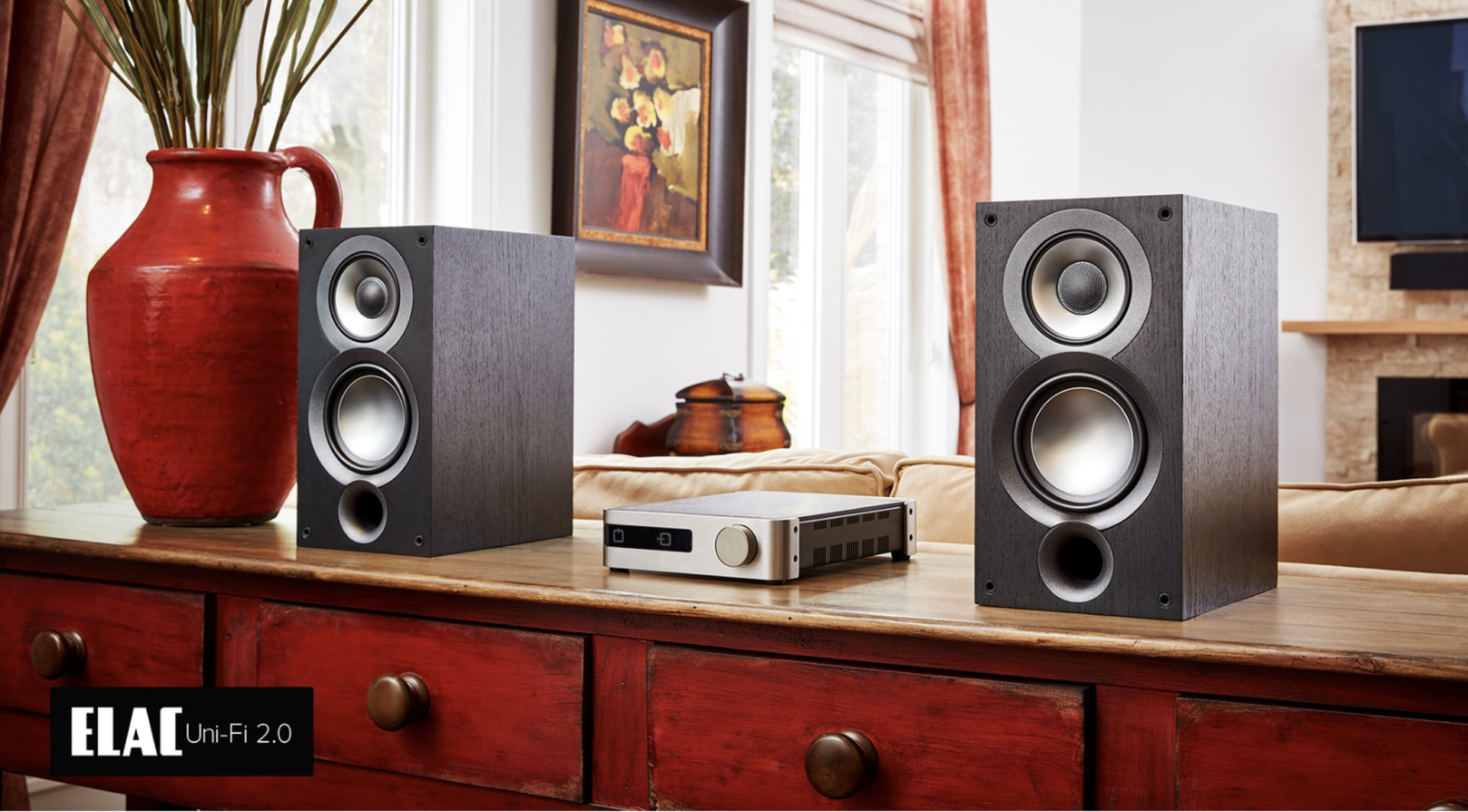
ELAC Announces the Uni-Fi 2.0 Line of Home Speakers

Cypress, CA September 1st, 2020 – ELAC, a leading global provider of high-performance speakers and electronics, today announced the Uni-Fi 2.0 line of home speakers. This new line builds upon the success of the first-generation Uni-Fi Family and incorporates a variety of new features and technologies. 

“Based on feedback from dealers and end-users, along with changes in the market, we have completely re-designed the entire line-up. Newly developed drivers, waveguides, cabinets, and networks result in a line that is easier to setup, offers greater compatibility, and delivers significant performance improvements” said Andrew Jones, vice president engineering, ELAC. 


Some of the notable new features of the Uni-Fi 2.0 line-up include. 

Newly Developed 4” Concentric Driver: A new wide-surround tweeter enhances it’s low and high frequency extension allowing for improved blending with the midrange driver. An entirely new mid-range design features a larger diameter voice coil, new aluminum cone profile, new low-profile surround, and an all-new neodymium magnet assembly. 

Single Piece Woofer: A newly developed single piece aluminum dished cone results in improved stiffness. Combined with an oversized magnet, large diameter voice coil, and extended pole piece, these changes result in improved accuracy and bass dynamics.

Sophisticated 3-way Crossover: An enhanced design improves response linearity, improves driver integration and delivers a true 6-ohm nominal impedance for compatibility with virtually all AV receivers.

Robust Cabinets: Every Uni-Fi 2.0 enclosure is engineered with thick MDF outer walls and a luxurious black ash vinyl finish. Specially located internal bracing adds stiffness and strength to the cabinet’s outer walls, reducing the cabinet vibration that causes unwanted coloration. 

Front Firing Ports – Relocating the vents to the front on the bookshelf and center speakers allows for greater freedom of placement, even in restricted places like a cabinet or up close to a wall. 

All three new models are available beginning today at ELAC retailers nationwide.

ABOUT ELAC 

ELAC is passionate about driving innovation and refining its existing products. Throughout the 90 years of our company history, we have crafted products of unmistakable quality and sound that stand out from the crowd. Our latest innovations complete the ELAC experience, enabling our discerning customers to experience the passion in our products in the form of music and film. 

ELAC.COM The life of sound ###

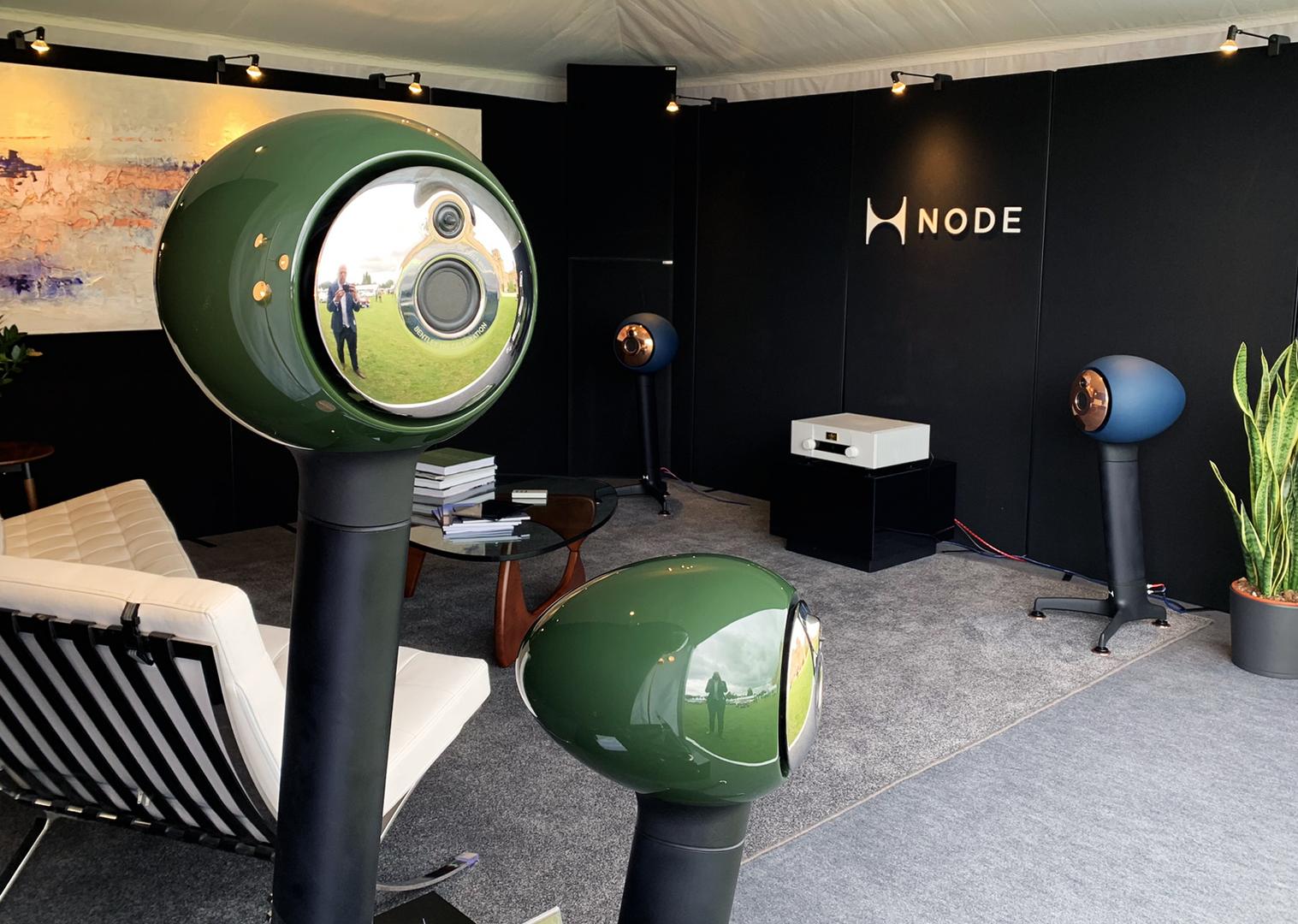
THE FINEST AUDIO JOINS THE FINEST CARS AS NODE RETURN TO BLENHEIM PALACE FOR SALON PRIVÉ 2020

In the midst of cancelled audio shows throughout the world, Node are demonstrating their Hylixa speakers at this year’s prestigious Salon Privé automotive concours and luxury event. Set on the lawns of the Britain’s iconic Blenheim Palace, the annual show brings together the finest automobiles and luxury brands regarded as the pinnacle of excellence in their field, for an unrivalled visitor experience. 

Node return as the shows’ luxury audio brand, celebrating the very best of British design and craftsmanship, which is distilled in their multi-award-winning Hylixa loudspeakers, as Node’s director Ashley May explains: 

“Like many of the automotive brands on display, we’re an engineering-led company. There’s a clear synergy between automotive and acoustic engineering challenges to create low-mass, stiff bodies that carefully manage air-flow and vibrational energy in pursuit of performance. 

The resulting streamlined, automotive aesthetic of our speakers is not coincidental, it’s absolutely driven by science and engineering, like many of the beautiful vehicles you see at Salon Privé. Guests not only covet quality materials and craftsmanship, but truly appreciate the design and manufacturing innovation beneath the skin, to advance the art of sound reproduction” 

The organisers of this year’s event have gone to great lengths to deliver a safe, Covid secure experience through limited guest numbers, temperature testing, and increased sanitation and distancing measures throughout. 

The show runs from Wednesday 23rd to Saturday the 26th of September, and promises to be a rare moment of safe, shared celebration in a turbulent year for global events. 

To book your fully refundable tickets, visit: www.salonpriveconcours.com

To find out more about Node’s speakers, visit www.node-audio.com

Stack Audio LINK II Debut

Stack Audio announces its new LINK II USB Network bridge for audiophiles.

The Stack Audio LINK, launched in early 2019 and was introduced as a high-performance USB audio reclocker and network bridge. The LINK’s design enabled users to seamlessly access their favourite music.

Boasting support for streaming music services like Qobuz, Spotify and Tidal, the LINK’s USB component was both isolated and optimised for use with the vast array of USB DACs on the market. 

The LINK, despite being in its infancy, received universal praise from customers and critics alike. This success has provided Stack Audio with both the confidence and resources to evolve and improve the LINK’s hardware and software design, ease of use, and most importantly its performance. The result being the new LINK II.

The LINK’s chassis design and finish remains the same. No sense fixing that which is not broken.” It is on the inside where the real changes were made:

  • The critical master clock circuit has been upgraded, the new “heartbeat” of the unit. This addition has reduced the clock’s noise levels by an astounding 50%, giving more clarity to the output than ever before.
  • Operating system software has been streamlined. With its smaller footprint fewer computing resources are necessary to better the performance.
  • For our many Roon users, the software has been further optimized for this much-loved application.
  • Open Home protocol support, this is so the LINK II appears as a OH zone.
  • The LINK OS previously worked with UPnP, Roon and Airplay®. In addition to the previously supported software, the new LINK OS now supports Squeezelite and Liberspot (Spotify Connect®). Furthermore, the new OS will soon support HQ player end point.
  • DSD256 now supported a step up from DSD128 in the original LINK.

The new LINK II is available now and will ship with the new software. Existing LINK owners can upgrade to the new software platform should they wish to. LINK customers should contact Stack Audio directly.

The LINK II is available now in Silver or Black for £725, €825, $895.     

Review requests and questions should be forwarded to Theo Stack at:

[email protected]

07710235333

Full details and specifications can be found at:

www.stackaudio.co.uk/link2

The image library is available here: https://drive.google.com/drive/folders/1eG4qPSp1FaAlzwz2df_YKRl4h7FDKNvX?usp=sharing

All trademarks remain property of their respective holders and are used only to directly describe the products being provided. E&OE 

Lana del Ray: Norman F***ing Rockwell!

I am late to the Lana Del Rey party I know but when Hi-Fi Choice alumni Del Gentleman played the first track of last year’s fellow NFR! the combination of fabulous production and potty mouthed yet intelligent lyrics made an impression. As pop musicians go Del Rey is clearly ahead of the pack, she sings like an angel but what she sings about is the rotten core of the glossy unreality that is spewed out of celebrity culture every day. The opening line of the opening song, the title song at that, almost sums it up: “You f…ed me so good I almost said I love you”, it’s almost punk disguised as what used to be called adult oriented rock. The voice takes centre stage on all the 14 songs on NFR! and the accompaniment usually enhances the polish of the production, only occasionally breaking out and letting rip. 

Del Rey has steeped this album in mythology of the seventies Californian music scene not least in her references to Laurel Canyon, Crosby, Stills and Nash and the Eagles among others. Yet while the sound is reminiscent of say Rumours the style of composition is very different, as are the lyrics which deal with the crumbling of the American dream rather than its reinforcement, I particularly like “Self-loathing poet, resident Laurel Canyon, know-it-all” from the title track. But this album is also a sonic fantasy, the voice sits in a velvet envelope on many tracks, highlit with reverb and other studio trickery it’s larger than life and just as polished as the fantasies that it sings about. That doesn’t stop Del Rey from sounding fabulous of course and when the backing ramps up to deliver some meaty synth bass you can easily forgive the manipulation that’s required to deliver such lush goods.

You want a walk in soundstage, put ‘Mariners Apartment Complex’ on at a reasonable level and you’ve got it, this is a wideband recording that’s not squashed by too much compression. The Dynamic range isn’t huge but it’s enough to give some contrast between voice and backing and seems to vary between tracks too. ‘Venice Bitch’ is the longest and most musically ambitious track on NFR! it also has some of the best words including “fresh out of f…ks forever” and “You’re beautiful and I’m insane, We’re American-made”. It’s the extended and largely instrumental second half that distinguishes it from the rest of the album, a fusion of distorted guitar, crazy synth noodling and general mayhem that is lightly sprinkled with Del Rey’s dulcet tones. 

It’s hard not to like the a title, and refrain, like ‘F… it I love you’, especially when it comes from such an angelic voice, this really is 21st century crooning at its most audacious. This tune is also one of the more inventive on the album with vocal lines overlapping one another in very effective fashion, it’s not just talking trash. ‘Doin’ Time’ has a raft of writing credits because it borrows lines from all over, opening with the first line of Girshwin’s ‘Summertime’, it was ‘written’ by Californian ska punk band Sublime and has the biggest beats of the whole album. ‘Cinnamon Girl’ has more than a nod to Neil Young in its grungy guitar although it’s not his song and Del Rey’s voice is at the opposite end of the spectrum to the legendary Kermit.

The languorous ‘How to disappear’ is another love song that differs from the rest in great lines such as ‘I watched the guys getting high as they fight, For the things that they hold dear, To forget the things they fear’. It’s not Dylan but by mainstream standards it’s creative. ‘The next best American record’ features a cleaner and more open vocal and sounds more real in both tone and content, with a powerful beat on the chorus and a raw honest feel that keeps things interesting. The last tune has the longest title in ‘Hope Is a Dangerous Thing for a Woman Like Me to Have – but I Have It’ and is perhaps the closest to soul baring that’s on the album, you get the sense that Del Rey has everything she could want but doesn’t really know what to do with it so seeks solace in romance. The voice becomes fragile towards the end which gives it an emotional punch that’s not found elsewhere. 

NFR! isn’t the most varied of albums but at its peaks it works very well indeed, this coupled with a fabulous production make it the best sounding album you are not likely to hear in a hi-fi dem anytime soon.

Métronome Audio Le DAC digital converter

In case you may have missed it, Métronome Audio is French; calling its digital converter Le DAC is a bit of a clue. Also, in case you missed it, Métronome Audio is the more attainable sister brand to the cost-no-object Kalista digital range, all a part of the same Métronome Technologie company. Based out of Montans in southern France, the company’s products have garnered a fantastic reputation for sonic performance, but – in fairness – Métronome Audio is often overshadowed by its more up-market stablemate. This overshadowing is at once understandable, unfortunate and unfair, because taken in and of itself the Le DAC is a truly stellar digital converter.

The reason why Kalista understandably takes a lot of the limelight is down to the distinctive tripod look – all chrome and methacrylate – the attention-grabbing price-tag and the fact it sounds extremely organically musical. That commands respect from those who’ve heard Kalista… and draws angst from those who don’t need to experience something to be angry about it. Meanwhile, Métronome’s Le DAC has a more traditional look, a price tag that puts it in the ‘attainably priced’ level, and a performance that has the same easy to like performance envelope of the Kalista.

Métronome Audio itself has three lines in its own right: the ‘Digital Sharing’ range comprising DSc1 digital converter and DSs1 network player and streamer; the AQWO trio of CD/SACD player, CD/SACD transport and DAC, and Classica, which comprises the popular Le Player 2S CD player and the Le DAC tested here.

‘Classica’ might suggest a product line that had been collecting dust as new ranges eclipse it, but in fact the Le DAC has been in production since December 2018. In this case, ‘Classica’ is related to its product design brief, which has visual cues that hark back to the power supplies for the Kalista line and many of Métronome’s more classic products. It’s not simply some back-of-the-storeroom rehash or a product that has been in production for decades.

As the entry-level converter for Métronome, it still packs quite a digital punch, sporting an AK4493 decoder chip that allows for decoding of PCM files up to 32bit, 384kHz and DSD512. The DAC is well specified in terms of digital inputs (AES/EBU, twin optical and two coaxial S/PDIF connections and a USB type B input) and analogue outputs (RCA and XLR), but there are no digital outputs. There is also a central blue ‘fluro’ display with tiny toggle switches to move through the inputs. There are no fancy tweaks, elaborate filter options, no provisions for clocks. Just the basics.

The basics do not include the build quality. This is a very solidly built DAC. Sitting on three decent feet, the case feels well-constructed in part because Le DAC weighs in at a very un-DACcy 14kg. In fairness, some of this comes down to the use of a trio of torioidal transformers feeding some 10 independent power supplies. The universal use of toroids is uncommon in digital audio circles, with many brands preferring to use either switch-mode power supplies universally, or a hybrid of switch-mode for the digital side and toroidal transformers for the analogue stages. Métronome uses a similar analogue-style power supply feed for other products in the line-up, including the mighty Kalista range, so the brand is clearly onto something good here.


Perhaps that analogue power supply layout explains – at least in part – why when Métronome claims it strives to make digital sound like analogue. Métronome Technologie (both in the Métronome Audio and Kalista lines) has long been the experts of the digital balancing act; managing to make digital sound more like analogue audio without it sounding too dark and attenuated in the process. It’s not alone in going after this kind of performance, but many rivals go for either an artificially rolled-off treble in the filter stage or a softer sounding valve output stage. While there is nothing intrinsically wrong with either approach, Métronome manages to convey that easy, attractive, tonally rich and inherently musical sound that makes people like vinyl replay but without that arch ‘analoguey’ sound of a digital source trying too hard.

I predominantly used the DAC in between a Melco N10 and a Mark Levinson 5805, using both the amp’s RCA and XLR inputs to evaluate both ends of Le DAC’s performance. To explore more than USB output, I also used the S/PDIF output of a Naim Uniti Core, and even the Toslink output of a generic Sony Blu-ray player (sadly, testing AES/EBU and testing with a more potent Toslink source are victims of the lockdown). Loudspeakers were Wilson Duette Series 2 and cables were Nordost Odin 2.

I’m one of the lucky few who has spent time with the Kalista system, perhaps the most effortlessly natural and musical sounding digital systems around. And while Le DAC is at least an order of magnitude away from the pinnacle of Kalista performance, it’s heading in the same musical direction. And that direction is big and wide and extremely brightly lit. It does have an analogue-like sound, and without the same ‘you are there’ feel of the Kalista, but it’s close.

The sound is big without bloom, colourful without being overblown, and impossibly easy to live with. This makes for an intense, yet intensely likeable, sound on tracks like the title track from Marvin Gaye’s seminal What’s Going On album [Motown]. We’re all extremely used to listening to this album, but typically on vinyl. The digital transfers are variable, but even the best ones don’t match the silken tones of a good LP pressing… but Le DAC goes some way to restore the balance. That big voice backed by an equally big production is given a sense of soul royalty here where the normal digital mix makes Gaye sound like a fairly good singer. Here, he’s a living, breathing presence in the room, large as life (actually slightly larger than life… one of the few concessions Le DAC has next to its bigger brothers).

Play something with a more rigid structure – how I got from Marvin Gaye to John Pickard is hard to say – but The Flight of Icarus [BIS] is modern classical music that moves from crescendo to crescendo. The music needs space and definition or it sounds like music from Planet of the Apes, and normally that means dCS-like precision and detail. With the Le DAC, music is synonymous with resolution of space and timbre. The detail is there, albeit not as emphasised, not as front-and-centre, but this DAC has a very different accent. It’s not ‘more natural’, just has that sort of ‘deep listen’ quality that only live music and the best LP can muster.

The sound in both cases is expansive, with the sort of soundstage that is both wide and extremely deep. It’s not a holographic ‘walk in’ soundstage because the sense of musical theatre puts you very much in the audience rather than in with the band, but the scale and dynamic drama of the soundstage, coupled to a rooted sense of instrument solidity, is paramount.

I moved through my collection, and then moved through Tidal’s and Qobuz’ collections for fun too. In every case, the Le DAC tugged at the heart strings more than tangled with raw intellect. And in every case, this wasn’t a problem. This doesn’t mean the DAC is no good for the cerebral, it’s just that if you play something really technical – like Zappa or Boulez or some really difficult King Crimson – you are more driven by the performance than the skills of player or composer. Nevertheless, it’s best when playing something with a bit of red meat.


There’s one last aspect of Le DAC’s performance that perhaps best sums the DAC up; music is never boring through this converter. It’s impassioned, it’s emotional, it drives you on and locks you in (maybe not the best choice of term during a time of lockdowns and quarantines) as it enthrals and entertains. That is what it takes from the Kalista, and what so few other DACs can do.

We’re used to a lot of functionality from our DACs, from remote control to streaming to a range of filters to suit the obsessive. Le DAC doesn’t do that. Instead. it’s just a damn good DAC. It makes music sound like music, and not some digital shaped noise. And once you hear that, you’ll likely begin to realise all that extra functionality might just be pointless if it doesn’t sound good to begin with. There is a distinct ‘family’ sound to Métronome’s products, from the Le DAC up right to the top of the Kalista tree. For those of us without a fortune to spend, this is as close as you get to real music done digitally.

TECHNICAL SPECIFICATIONS

  • Type: Hi-Res Music stereo digital-to-analogue converter
  • Digital inputs: S/PDIF 75 Ohms RCA connector, AES/EBU 110 Ohms XLR connector, Optical TosLink connector (all PCM from 44.1kHz-192kHz), USB Type B: PCM (44.1kHz-384kHz) and DSD512
  • Analogue Outputs: Unbalanced RCA 3V, balanced XLR 3V
  • Resolution: 32-bit/768kHz
  • Dynamic Range: 175dB
  • Distortion + Noise: -140dB
  • Internal Processor: 32 bit at up to 211kHz
  • Analogue Output: Class A
  • Frequency Response: 10Hz to 20kHz (+/- 0.1dB)
  • Dynamic Range: 123 dB
  • Power Supply: Three toroidal transformers with 10 independent regulation lines
  • Dimensions (D×H×W): 425 × 130 × 415 mm
  • Weight: 14kg
  • Price: £5,798

Manufactured by: Métronome Audio

URL: metronome.audio

Distributed by: Absolute Sounds

URL: absolutesounds.com

Tel: +44(0) 208 971 3909

https://hifiplus.com/reviews/

Introducing the New R 6-Series from Audiovector


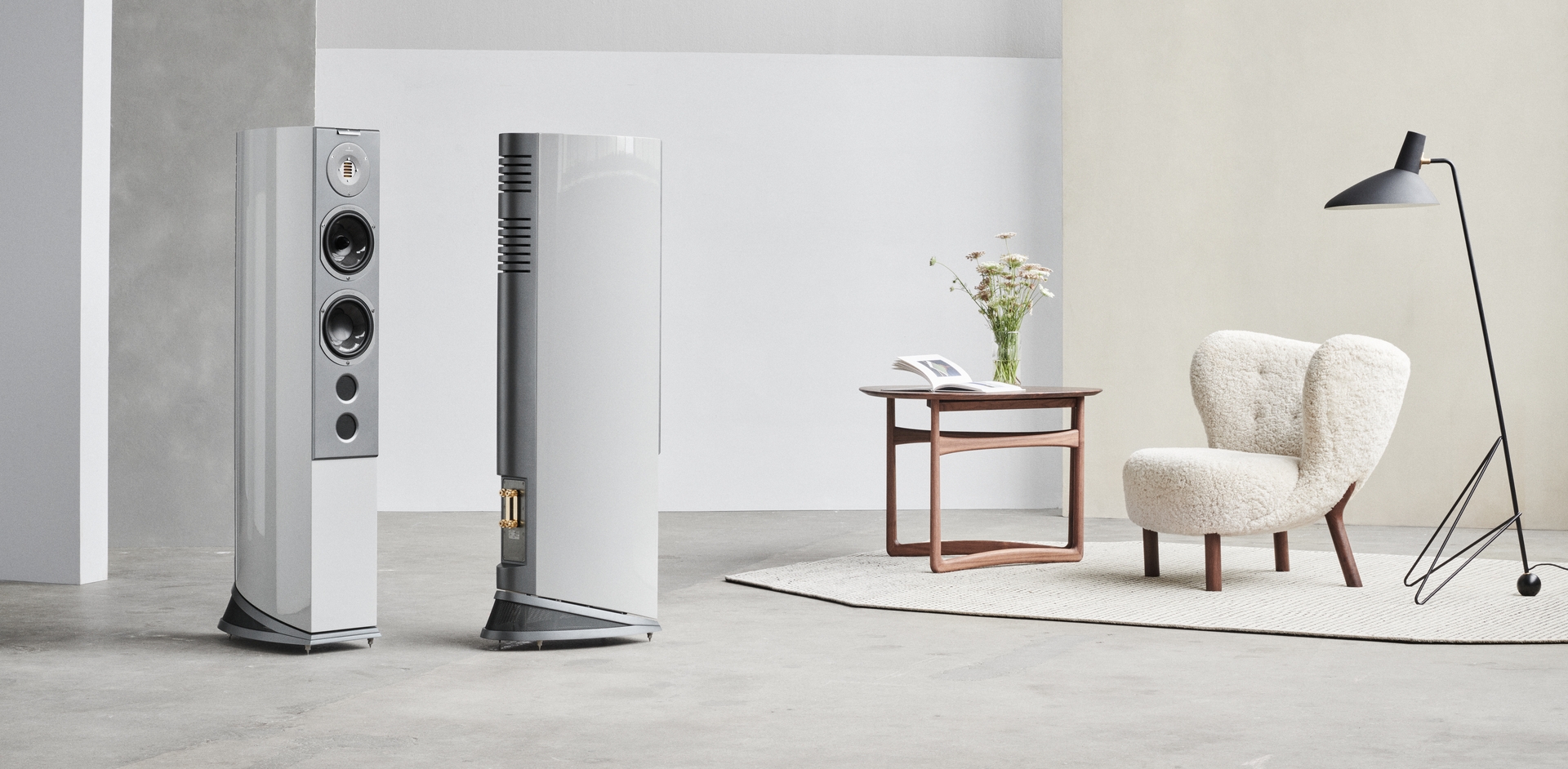
Since 1979 we have designed, developed, and handcrafted our Audiovector loudspeakers in Copenhagen, Denmark, and today we can finally announce the launch of the new Audiovector R 6-series. A series of loudspeakers based on a mixture of evolution and brand-new inventions. Everything we believe a pair of high-end loudspeakers should be able to deliver, speed, dynamics, and clarity.

THE AUDIOVECTOR FREEDOM GROUNDING® CONCEPT

The Audiovector Freedom Grounding® Concept in a truly original concept by Audiovector that eliminates distortion and improves overtones, lowers the noise floor, and increases image depth and focus. The Freedom Grounding® Concept is yet another step closer to perfection.


THE 3” REAR-FIRING MIDRANGE DRIVER

To further improve realism and 3D performance, the new R 6 Arreté now uses a rear-firing 3” midrange driver with its own dedicated crossover. The technology using a rear-firing driver is inspired by our reference R 11 and R 8 Arreté. The construction also adds a perfectly dosed level of midrange.
 

A NEW COMPOUND BASS SYSTEM

All R 6 models have been generously upgraded with a new bass system. All models use an isobaric compound bass system in order to go deeper, be more precise, play dynamic, and aperiodic in their response.

We use a hand-built 6,5” internal woofer and 8” external woofer and the system breathes through a perfectly tuned bass reflex on the front of the speaker.

PRICES

These are the Recommended Retail Prices in EUR incl. VAT

R 6 Arreté – 28.000.- a pair
R 6 Avantgarde – 20.000.- a pair
R 6 Signature – 14.750.- a pair
 

OUR LIFETIME MISSION IN AUDIOVECTOR

We strive to optimize the thrill of listening and the pleasure and pride of ownership.
 
We are devoted to our advanced principles and high-end technologies and we carefully develop and hand-build each of our products at our facility in Copenhagen, Denmark.
 
Innovation is always in the service of music. When a new concept or a new technology is introduced, it is because it allows us to optimize sound quality and listening pleasure.
 
We have since 1979 maintained a ´form follows function´ design philosophy in order to always be able to present a great sounding, timeless and elegant design.
 
We are actively promoting environmental conservation through long-lasting superb quality and the possibility to upgrade our products through our Individual Upgrade Concept (IUC).

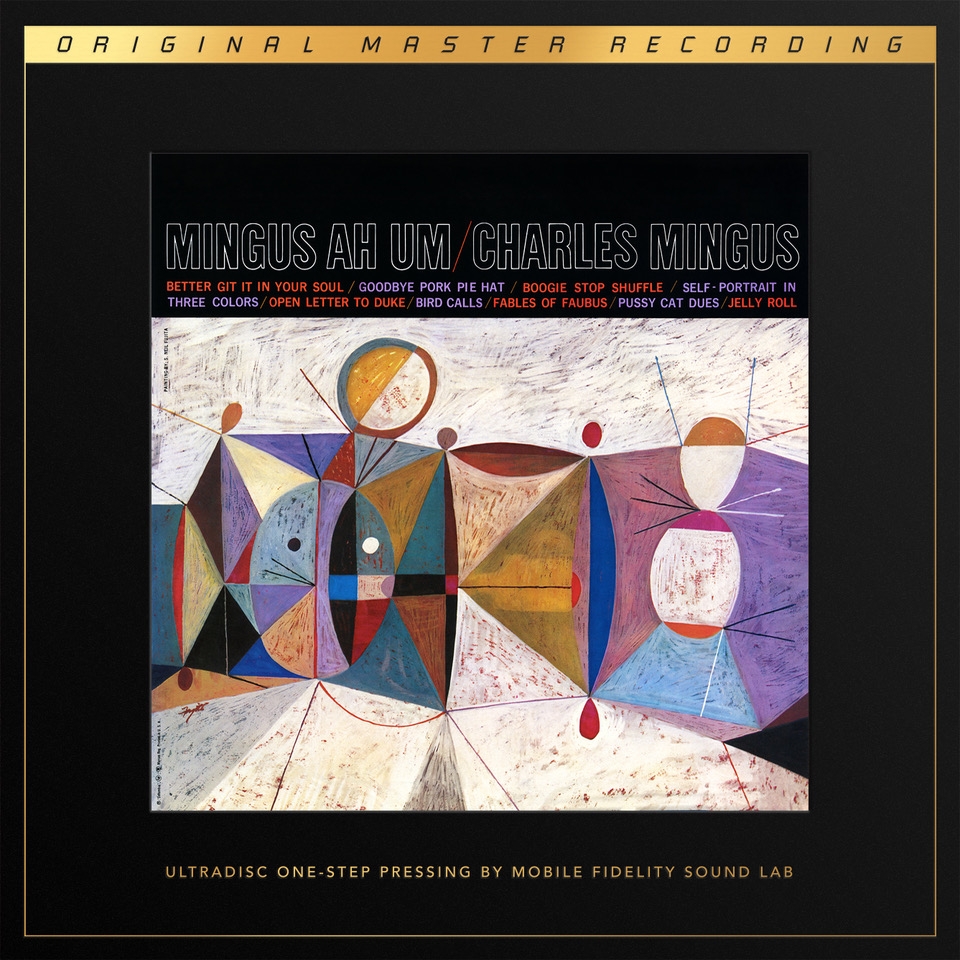
Charles Mingus: Mingus Ah Um

Mingus Ah Um, Mobile Fidelity’s latest Ultradisc One-Step release, like most of the prior One-Steps, the music needs little introduction.  If you have any passing interest in jazz music you’ve heard the music countless times.  From an audiophile perspective, it’s the best-known Mingus recording because it’s not only a musical masterpiece, but one of the finest jazz recordings made during the golden age of recording.  It is limited to 6,000 copies, and it might possibly be sold out by the time this reaches print.  If you already have yours, you have arguably the best combination of great music and improvement in sound quality yet released in the One-Step series.  If you lingered too long, expect to pay scalper’s prices for second-hand copies.

Mingus’ late 1950’s bands featured the greatest combinations of talent he ever assembled.  With John Handy, Booker Ervin and Shafi Hadi on saxophone, Willie Dennis and Jimmy Knepper on trombone, Horace Parlan on piano and Dannie Richmond on drums, Mingus Ah Um Mingus’ amazing mix of genius is topped only by something like his Mingus At Antibes where Eric Dolphy and Ted Curson add an intriguing spark to the mix.  Critics have split on rating either Mingus Ah Umor The Black Lady and The Sinner Lady as Mingus’ greatest work as a composer and recording artist.  However, Ah Um is a more accessible album than 1963’s Sinner Lady on Impulse Records, and is a significantly better recording, so for audiophiles, this is the one Mingus album in every collection.  It’s earthy and swings like crazy, and includes some of Mingus’ best compositions, among them ‘Better Get it in Your Soul’, ‘Goodbye Pork Pie Hat’ and ‘Fables of Faubus’.  Mingus’ music from this time period was way ahead of its time.  It still sounds surprisingly modern today and will never go the way of Dixieland.

Columbia’s original “6 eye” label release of Mingus Ah Um is legendary for its great sound.  It was recorded in May 1959 at Columbia’s 30th Street Studio by Fred Plaut.  The combination of one of history’s greatest studios, best recording engineers and most golden moments did not disappoint and remains a touchstone for the marriage of art and technology.  The session’s great sound, epitomizing along with Kind Of Blue the best of Columbia sound, made the record a valuable collectable.  Both Classic Records and Original Recordings Group gave it the audiophile treatment.  You can debate whether either one improved on the original.  Both versions were close, but near misses and neither version induced me to part with my very early first pressing.  This new One-Step edition comes out of the gate swinging and does everything right.  The soundstage is wider and perfectly integrated.  Anyone who quibbles about whether soundstage is important needs to hear this record—few recordings better capture the placement of musicians on a stage.  Perhaps, as some argue symphony halls recordings create an artificial soundstage, but in most jazz venues, you can pinpoint where each instrument resides.  Dynamics are more explosive than in the original.  Just listen to the drum kit on ‘Better Git It In Your Soul’.  Having heard this music countless times on the original and various reissues, when the drum kit enters for a solo I literally jumped in my seat from surprise.  Overall, the horn sound on this reissue makes the original sound thin by comparison.  When Jimmy Knepper comes in with a solo, I spontaneously blurted out (to no one in particular), “that’s what a trombone should sound like.”  I switched back to the original, and the loss of texture was apparent.  Booker Ervin’s tenor sax has never been better represented on disc.  His was a unique style and his tone quality was often described as hard, yet the immediacy and detail of this recording recalls some of the great Ben Webster recordings where you swear you can hear the air vibrating down the inside of the saxophone’s body.  Of the eleven One-Step reissues from Mobile Fidelity, I know the music and have originals of nine (Donald Fagan and Yes not being my cup of tea).  This reissue, along with Santana’s Abraxas, stands out from the crowd for its immense sound improvement over the original.  It’s expensive, and hopefully a full-fledged recession has not set in by the time this sees print, but this reissue is not to be missed.  I doubt there will be a finer audiophile reissue in 2020.

ATC CD2 CD player

Seeing a CD player launched at this stage in the game makes me wonder what’s going on. Does it symbolise an upwelling of desire for simplicity or perhaps a yearning to engage with a physical format that saw so many of us through a quarter century of listening pleasure? For all its apparent ease-of-use and breadth of choice, digital streaming is not always as straightforward and reliable as one might hope and there is such a thing as too much choice. Universal availability is one thing, making satisfying use of it is another; there’s a lot to be said for getting to know a manageable music collection rather than embarking on an endless quest for the next great thing.

When I asked ATC for the answer, they simply pointed out that there’s a demand from distributors in Far East markets for this type of product. In Japan for instance, streaming is not what audiophiles do, and Melco makes its servers to be used without recourse to a computer because few enthusiasts would want to do that. I use CD purely for the purpose of reviewing new music. If I am listening for pleasure, I prefer streaming from locally stored and cloud-based services, although when it comes to maximum audio delight I reach for the vinyl (we all have our peccadilloes). So, it was interesting for me to journey back to reviewing a CD player.

Even by CD player standards, the ATC CD2 is a low frills affair – if not back to basics, ‘back to what counts’ perhaps. The only luxuries on offer are balanced as well as single-ended outputs and digital outputs on standard S/PDIF terminals. It’s been a while since I saw a CD player that didn’t offer DAC functions or play SACD, but I guess that if you want to get the best out of a format then a device that’s dedicated to that job should deliver optimum results. One of the biggest problems with building a dedicated CD player is that there are so few transport mechanisms made specifically for CD as opposed to computer or video applications – and even these markets are disappearing. The only brand that really supplies such things is TEAC, which ATC has specified for the drive in the CD2, choosing it for “very useful improvements in error correction, mechanical noise, load speed and reliability” over the transports used in earlier ATC players. If disc spinners have a weak point it’s usually the drive, so reliability is a big plus.

The CD2 design is based on the development work that ATC did for its CDA2 CD/DAC/Pre, which is a remarkably good piece of kit and one of very few examples of the genre in production today. It shares the transport, DAC and analogue output stage of the CDA2 but omits the DAC inputs and volume control, using a smaller case that’s finished to the same high standards. ATC did a lot of research into digital-to-analogue converters for the CDA2 and chose the AKM4490EQ, also deployed by the CD2, which they felt offered “both outstanding measured performance and a neutral sonic character”. Along with ‘dynamic’, ‘wideband’, ‘linear’ and ‘transparent’, ‘neutral’ is a mantra to ATC’s engineers. But there’s more to successful D-A conversion than picking a few chips off the shelf and putting them on a board with a power supply. To partner the DAC the company has also developed a proprietary output filter using analogue circuits in a multiple feedback configuration to offer “lower high frequency noise gain compared to simpler arrangements”.

As you might expect from a brand with a solid background in amplifier design, ATC takes the power supply side of the D/A converter very seriously, ensuring that noise and interference are kept to the absolute minimum. The DAC has its own “highly decoupled” local regulator, plus hand soldered surface mount decoupling capacitors, in order that they can be placed as close as possible to the chip. Naturally the output stage is built in-house and uses operational amplifiers having discrete components with each stage using eleven transistors in order to produce a wideband with low noise and distortion output at low output impedances. Derived from ATC’s studio experience, the XLR outputs provide a balanced connection and can drive a 600-ohm load, which means, effectively, almost any length of cable.

After years of tapping the iPad for a musical fix, waving one of those remote control units at a CD player reminded me about what I’d missed. Ah, the nostalgia: uncomplicated, devoid of software updates or apps. Nothing too alien to learn. Even so the regular remote that comes with the CD2 is a little bit counter intuitive – it took a few moments to associate button with function. Then all I had to do was look out all my review favourites on CD. No search from the iPad, just a scouring through my disc archive, which is well ordered and understood, if only by me.


Remote transport functions include play/pause, next and previous tracks etc. The only shortcomings operationally speaking are the absence of an eject button on the handset and the rather well hidden ‘next’ and ‘previous’ buttons, but familiarisation is, as I said, pretty quick. And because the remote unit excludes some functions, you get to use the nice stainless buttons on the unit itself, and soon learn which ones are useful. The drawer mech is smooth but nothing special – a top-shelf TEAC mech would be too pricey for a player at this level. So with the CD2 under my command I used it with both a Townshend Allegri+ and, far too briefly, an Allegri Reference preamp, as well as assorted power amps including ATC’s P2 alongside several speakers, chiefly Bowers & Wilkins’ revealing 802 D3.

The characteristic sound of this player is very hard to pin down because actually it doesn’t exist. And this raises that ornery old hi-fi debate about truth versus consistency. It goes something like this: is hi-fi meant to embellish all music, however badly recorded, for greater listening satisfaction, or turn well recorded work transcendental, while brutally exposing the deficiencies of a rotten mix? I think I know which side I’m on and declare that the CD2 has been engineered to be neutral and transparent, without a sound of its own. For this reason it can come across as dull and uninspiring by comparison with the fruity balance of many DACs; there is no apparent voicing of the output stage to make it sound particularly open or tonally lush, as is often the case when engineers attempt to generate a ‘house’ sound. Adding character in this way can make a piece of kit sound exciting and impressive on first listen but after a while its coloration of the music becomes obvious and favours some music types over others. This ATC, like all other ATCs, is a ‘tell it like it is’ product, one that does its best to stay out of the mix so that you can hear more of what went into the recording. It’s enough to make you question whether the sparkle you get from some digital sources, or the analogue smoothness from others is merely a factor of output stage tuning.

In practice this means that the CD2 does not draw you in immediately with a big, shiny soundstage, rather it lets the music get under your skin and make its message clear. It’s less of the aesthetic treat you get with more polished players, from Marantz among others, and more of a direct emotional connection. For instance, through the CD2 it’s quite hard to sit still to music with a strong rhythm and plenty of energy, as I discovered when playing ‘16 Shells From a Thirty-Ought-Six’, a fabulous bit of jazzy blues from Tom Waits’ underrated Swordfishtrombones album [Asylum]. I should point out that I don’t usually resort to such extremes of activity but after the way the player belted it out there really was no other option. Another old favourite, La Folia [Atrium Musicae De Madrid, Gregorio Paniagua, Harmonia Mundi] is less ‘dance floor’ but has its own compelling traction. It reveals the only obvious characteristic of the ATC to be an unflappable foundation for any form of music – in the case of La Folia it’s a strange mix of ancient music fused with Indian tabla, the roar of a Land Rover, car horns and original instruments, revealing a broad range of tonal colours from the solid low-end of a big acoustic bass to the sparkle and reverberant ring of many tiny bells. I’ve heard more from far pricier streaming systems, which are better at revealing the finest detail, but the ATC allows you a close encounter with the essential drive of the music. It engages heart and soul in a way that more refined digital sources cannot always manage.

It does subtlety as well, especially with a decent recording like Jack de Johnette’s In Movement [ECM], where the drummer is joined by horn player Ravi Coltrane and bass/electronics meister Matthew Garrison. The ATC brings out the shimmering cymbals, glowering bass and full bodied tenor horn to full effect, the sax in particular delivering a blast of brassy goodness. Image depth could be greater by comparison with more expensive alternatives, but the emphasis here is once again on the spiritual message – the bit that bypasses intellect and goes straight for your endorphin generators. The title track on this album builds particularly well with a simple initial synth line providing the tempo for the band to work around and the sax to strike out in distinctly fluid fashion.

Timing from the CD2 can seem a little lacklustre at times but that’s because there is no emphasis on leading edges, and the way the player delivers rhythms straight to your beat detectors suggests that it has no trouble in keeping everything happening exactly as it should, when it should. Importantly you don’t get any sense of listening fatigue in the process, even though the ATC does nothing to soften or sweeten the sound. It’s as if the effort of many designers to deliver a plusher portrayal actually has a negative effect on the musical appreciation overall, sounding a little contrived and less obviously natural. Or maybe I’m just imagining this. It’s just that the CD2 has me questioning some of the things that I have hitherto taken for granted.

Keith Jarrett’s Testament Paris/London [another ECM] is one of his best sounding solo releases and the CD2 lets you know as much right from the start. Play ‘London VII’ and while the piano sounds solid, the stage has a hollow ambience when Jarrett’s fingers begin to tap. This machine’s ability to focus on the music means that the track remains transfixing throughout, despite Jarrett’s characteristically sporadic vocalisations. The emphasis here is firmly on the playing and the sound he gets from the instrument, which is full of dynamic subtlety.


The ATC CD2 is an understated CD player in both looks and sound. It’s purposeful and unfussy as you’d imagine a piece of studio gear to be. No coincidence there given ATC’s provenance. But few players get to the heart of the music quite so competently. So, if you hanker for a little silver disc simplicity, dust off your old CDs and find a player like the CD2. It does exactly what it says on the tin with an unusual degree of honesty.

TECHNICAL SPECIFICATIONS

  • Type: Solid-state CD player
  • Disc Types: CD
  • Digital Inputs: none
  • Analogue Outputs: One set single‑ended (via RCA jacks), one set balanced (via XLR)
  • Headphone Amplifier Output: none
  • Digital Outputs: One coaxial (via RCA jack), one optical (via Toslink)
  • DAC Resolution: 16-bit/44.1kHz
  • Frequency response: 20Hz–20kHz +/- 0.2dB
  • Distortion: 1kHz < 0.0015% (-96dB) 10kHz < 0.003% (-90dB)
  • Signal to Noise Ratio: Wide Band < 96dB DIN < 108dB IEC“A” >112dB
  • Dimensions (H×W×D): 77 × 315 × 315mm
  • Weight: 4.2kg
  • Price: £1,500

Manufacturer:
Loudspeaker Technology Ltd

Tel: +44 (0)1285 760561

URL: atcloudspeakers.co.uk

https://hifiplus.com/reviews/