Up to 37% in savings when you subscribe to hi-fi+
hifi-logo-footer

Begin typing your search above and press return to search. Press Esc to cancel.

Armour Home Electronics Ltd appointed exclusive UK distributor for head-fi innovators, Burson Audio

7 November 2025: Armour Home Electronics Ltd, a leading UK-based audio manufacturer and distributor, is delighted to announce its appointment as the exclusive UK distributor for Burson Audio, the renowned Melbourne-based manufacturer of high-performance audio equipment. This exciting partnership will see Armour Home bring Burson Audio’s acclaimed range of headphone amplifiers, DACs, pre and power amplifiers, and discrete audio components to audiophiles, music and head-fi enthusiasts across the UK.

Since its inception, Burson Audio has been at the forefront of the head-fi revolution, gaining a global reputation for producing meticulously engineered products that deliver exceptional sound quality. Their dedication to innovation and craftsmanship has cemented Burson Audio as a trusted name among discerning listeners and the wider audio community. The company’s award-winning product ranges include the flagship Voyager Series that embodies the ultimate Class-A performance, the Grand Tourer lineup balancing refinement with flair and the affordable, fun but high-quality Party Series.

The new distribution agreement reflects Armour Home’s ongoing commitment to curating a world-class portfolio of premium audio brands. By leveraging its extensive dealer network and strong presence within the UK market, Armour Home aims to significantly raise Burson Audio’s brand awareness, grow sales, and expand the brand’s presence among specialist retailers and end-users.

Jamie McKay, Director of Sales and Marketing at Armour Home Electronics Ltd, commented: “We are thrilled to be partnering with Burson Audio, a brand whose heritage and innovation perfectly align with our mission to deliver the very best in high-performance audio. Burson has a loyal global following, and we see enormous potential to grow its presence here in the UK. We look forward to working closely with the Burson team to ensure more UK customers can experience their outstanding products.”

Alex Xu, Director at Burson Audio, added: “At Burson Audio, we are passionate about creating products that allow people to hear music as it was meant to be heard. Partnering with Armour Home Electronics – a distributor with a proven track record and a deep understanding of the UK audio market – is an exciting step for us. Their dedication and reach will allow us to better serve UK audiophiles and grow our community in this important territory.”

The partnership officially launches this month, with Armour Home Electronics immediately offering the full Burson Audio product line to its network of UK retailers.

CHIEF AUDIOLOGIST ADVISES AUDIOPHILES ABOUT HOW NOISE CANCELLATION CAN HELP HEARING HEALTH

7 November 2025: With Black Friday around the corner and Christmas on the horizon, you might be thinking about a shiny new set of headphones this winter. With hundreds of options on the market, noise cancellation has become a common feature for premium models, but how important is it to your overall ear health?  

Hearing experts at Specsavers explain that most hearing loss develops gradually over time, and repeated exposure to loud noise can damage the delicate hair cells in the inner ear that are essential for hearing. Yet once these hair cells are damaged, sadly, they do not regenerate.

Safe levels of sound end at 85 decibels (dB), which means prolonged exposure to anything louder than a lawnmower is a risk to your hearing health. Turning up to max volume on a headset may feel euphoric in the moment, however if done too often – experts say it can have consequences.

Gordon Harrison, Chief Audiologist at Specsavers, advises:

“It’s important to consider opting for hearing protection like ear defenders when noise levels reach or exceed 85 dBA. For personal devices like headphones, a good rule of thumb is to keep the volume at no more than 60% of the maximum and take listening breaks every hour. Using noise cancelling headphones can also help because you don’t need to turn the volume up as high to overcome background noise.

“For those who often go to clubs, festivals, and concerts, it is entirely possible to keep your hearing health safe, while enjoying yourself. Standing not too close to speakers or using earplugs are great ways to avoid long-term damage while still ensuring you can hear the music.

“Ultimately, your hearing is closely linked to your brain’s overall health as well as your personal wellbeing – so protecting it today helps preserve not just your hearing, but also memory and cognitive function in the long term. The best way to monitor for any damage and keep your ears healthy is to visit a local Specsavers store and get your hearing checked by an expert.”

Regular hearing checks are important as it is easy to not notice any changes until they become severe. To find out more about hearing protection and getting tested head to: https://www.specsavers.co.uk/hearing/hearing-protection?srsltid=AfmBOoo6qGymz_dKqLbk5OugXtRsfXaIPok…

Protecting your hearing | Specsavers UK

Axxess Switch — Precision Engineering for Uncompromised Musical Performance

7 November 2025: Audio Group Denmark and Axxess proudly introduce the Axxess Switch, a high-performance network switch designed to elevate digital streaming systems with unprecedented clarity, stability, and musical authenticity.

The Axxess Switch is the result of meticulous Danish engineering and design by Michael Børresen and Flemming Erik Rasmussen, combining technical excellence with elegant aesthetics that seamlessly blend into any modern home environment.

Superior Network Performance

The Axxess Switch is crafted as the essential foundation of any digital streaming setup. By removing unwanted noise entering through the router, it serves as the first line of defense in preserving audio signal purity. Each unit is optimized to maintain data integrity and coherence, ensuring the listener experiences a soundstage that is vivid, detailed, and emotionally engaging.

Axxess Technology Foundations

The Axxess technology foundations embody the brand’s pursuit of pure, uninterrupted musical flow. Through meticulous engineering of power, noise control, and enclosure design, every detail works in harmony to preserve the integrity of the audio signal.

Key Technologies:

  • Resonant-Mode Power Supply

  • Advanced Enclosure Construction

  • Noise Rejection

  • Meticulous Quality Control

With its minimalist Danish craftsmanship, advanced technology, and dedication to musical integrity, the Axxess Switch redefines what a network switch can deliver. Built for discerning listeners and high-end streaming systems alike, it ensures that every note, every detail, and every emotion reaches the listener exactly as intended — pure, powerful, and beautifully authentic.

Pricing & Specifications

ModelDescriptionMSRP
Axxess Switch SEEnhanced with in-house Ansuz technologies for improved noise rejection and clarity.€1,400
Axxess SwitchSleek, essential design with superior network performance.€800

Technical Specifications:

  • Ports: 5 × RJ-45 (10/100/1000 Mbps)

  • Cable Requirement: Cat5 or higher-rated Ethernet

  • LED Indicators: Blue (Power), Green/Orange (Link/Activity)

  • Input Voltage: 100–240V AC, 50–60Hz

  • Weight: 6.65 kg / 14.66 lbs

  • Dimensions (H × W × D): 76 × 326 × 341 mm (3 × 12.8 × 13.4 in)

  • Anti-Aerial Resonance Coils: 0 (Axxess Switch) / 2 (Axxess Switch SE)

Tech Talk: Alan Gibb, Managing Director of Chord Company

Back in 2012, Chord Company MD Alan Gibb asked a question: ‘where do we go from here?’ He heard a modification to the Sarum cable that the technical director had been tinkering with. Seconds later, the ARAY concept was born.

What was the first ARAY product that Chord Company made, and when was it launched?

AG: The first ARAY product was the Sarum TunedARAY cable, launched in 2012. Up until then, cables were all about mechanical engineering and getting the impedances right. The most expensive part of manufacturing is when you want a cable braided. If you want that to be effective against high frequencies, you have to pack it tightly. Square-section braiding maintains its shielding better, but it also requires special machines, which are significantly slower. 

Sarum at that time was the best cable we knew how to make, so I started talking to [then technical director] Nigel Finn about what the next step could be. Nigel told me he’d been thinking about it, had done something to the cable, and asked me to have a listen. And it sounded excellent. That’s when the ARAY concept was born.

As with the GroundARAY products, the TunedARAY material was designed to address high-frequency noise. The ARAY components of the Sarum TunedARAY sit between the plastic and the outer braiding. The first ones took a lot of time to fit the Sarum. We also offered to take old Sarum cables back and fit them with the TunedARAY and new plugs, which was cheaper for customers than buying a new cable. We still do that.

The GroundARAY products came much later on.

Is the ARAY material the same in the cables as in the GroundARAYs?

AG: No. The material used in the TunedARAY cables differs significantly from that used in the GroundARAY products. 

The problem we’d always had with the ARAY technology was that it had to fit on a piece of wire. 

What problems do GroundARAY products address?

AG: They are dealing with high-frequency noise. Between 2012 and the launch of GroundARAY in July 2021, the amount of high-frequency noise in the average house had skyrocketed – with LED lights, Wi-Fi, mobile phones – the list is endless. 

And your hi-fi components can add to that, with RF noise coming from bridge rectifiers, digital processing circuits, switch-mode power supplies, microprocessors and some digital displays. If you get high-frequency noise on the clock circuit ground in your CD player or DAC, jitter goes up. It’s like driving a Ferrari over a ploughed field. 

If high-frequency noise were entering a hi-fi system, all our cables would be shunting it around the entire system with minimal attenuation. We could see this noise on the signal ground. Connecting the GroundARAY in parallel, any noise that enters it is converted into heat by creating an electrical potential gradient. 

So I started looking around for a suitable material. After a couple of years, we discovered a range of military-oriented materials designed to prevent spying or RFI emissions, but they were costly.

There was an obvious winner when we used it in the aluminium tubes of our GroundARAYs. Although it is not similar to the material used in TunedARAY cables, it is much more effective at pulling noise off the signal ground.

How has the range of ARAY products progressed over the years? 

AG: The materials used in the ARAY products have changed, and our assembly process has improved as we’ve become more skilled. The GroundARAY products are quite microphonic, and so the tubes are all filled with resin. We only connect the earth; we don’t connect the signal.

The EE1 network filter is the only serial product we have ever done, and we got a lot of help to do that. That is a common mode, and so it is like a balanced cable. The noise goes through galvanic isolation, which scrubs off DC and the lower-frequency stuff. Its insertion loss is around 0.2dB. On the EE1 Plus, it’s always better if the filter has less work to do. The idea was to put two GroundARAYs into it, one at the front end and one at the back end, and that reduces a lot of the clutter before the signal gets to the filter. It is also in a much heavier case with much better shielding.

A network switch reduces some of the noise, but it never eliminates it. Therefore, we recommend placing an EE1 or EE1 Plus immediately before the streamer to reduce noise further. 

Then we thought, what about the mains? We spent years trying to make distribution blocks, and with our PowerHAUS products, we have GroundARAYs inside. On the mains plug-style PowerARAYs, we don’t have as much space as in the PowerHAUS blocks. Although it’s not as good as using a PowerHAUS, it is still quite surprising and significantly better than not having it at all. It’s all well and good making something that is the price of a small plane, so we make sure we have entry-level products that are as affordable as possible.

We then decided to create the best PowerARAY possible, which led us to develop the PowerARAY Professional. This is loosely based on our work within the PowerHAUS M6 block. It simply plugs into the mains socket next to the outlet for your system.

And then I looked at my turntable and thought, ‘What would happen if I put an ARAY on the turntable earth wire?’ And it worked. We use a speaker terminal on each end of the PhonoARAY because they offer the best connections currently available.The tonearm earth cable goes on one side, and you run the cable provided from the other side to your amplifier earth. The PhonoARAY has a hand-wound device inside that cuts down very high-frequency noise. Again, it is passive, not active, but it makes a difference. Like every other ARAY product, it converts high frequencies into heat, creating a potential gradient that the noise follows as the path of least resistance.

How does ARAY tech manage to attack just the high-frequency noise you don’t want while leaving the high frequencies you do want and their harmonics unaffected?

AG: Because it’s way up there in MHz. And remember it’s only on the earth, not the signal wire, and it’s in parallel. So it doesn’t touch the primary audio signal itself. And we always listen to things. 

When you use an ARAY, it sounds like the guy has rehearsed the song, and you can hear the phrasing on the piano. Is that important to you? Of course it is. You want to play music.  

Where’s the best place to start with an ARAY product?

AG: If something is ‘boisterous’, that’s the one you tackle first! Especially routers and digital products. Many people start at the network switch. 

Manufacturer

Chord Company

www.chord.co.uk

+44(0)1980 625700

More from Chord Company


Chord Company ARAY

While we are getting used to having filters to deal with the noise generated by our streaming and network products, the Chord Company has been working over the past 13 years to develop a range of affordable, easy-to-use plug-in products that systematically help to eliminate the high-frequency noise that finds its way onto the signal ground across your entire system.

This noise comes from many sources, including your wireless router, wi-fi network, streamer, LED lights, mobile phones, and digital processing circuits, microprocessors and digital displays in your hi-fi.

I decided to check out some of these ARAY products in my system, to see what difference they really make. That system comprises an Audio Note TT3/PSU3 turntable with Arm Two, Io1 cartridge and S9 step-up transformer, Audio Note CDT Five transport with DAC 5 Special and Audio Note Meishu Tonmeister integrated amp, all feeding a pair of Russell K Red 150Se speakers hooked up with QED Supremus Zr cable. On the mains, I use a MusicWorks Reflex Ultra Gen 5 AcouPlex mains block and leads.

To assess the effectiveness of each ARAY product, I added them singly into my system, and then at the end, put them all in place to assess their cumulative effect.

Ground ARAY

I decided to start by trying two GroundARAY XLR ‘tubes’ into two spare XLR balanced output connectors on the back of the DAC 5 Special. I played the ‘Times Gettin’ Tougher’ track from Ben Sidran’s latest CD, Are We There Yet (Live at the Sunside). With the GroundARAYs in place, there was no doubt that Sidran’s piano was more solid with more note detail, while his vocals were more open and expressive. Drums and percussion had more delicacy, attack and inner detail and the guitar solo was better defined with more shape to the notes. A worthwhile improvement. 

Moving on to the title track from guitarist Peter White’s Groovin’ CD, I was again impressed with the effect of the ARAY. Percussion was better focused and snappier, timbales and congas were more solid and I could hear how White shaped each note on his guitar. The bass line was also more solid and tuneful.

Sticking with the GroundARAYs, I then inserted the phono tubes into the AUX sockets on my Meishu. It is recommended to get them as close to the sockets in use as possible and to avoid letting the aluminium cans touch. Use a sliver of paper between them if you need to. 

To assess their effect, I spun up Julian Lage’s track ‘Omission’ from his latest Speak to Me double album. It took only seconds to realise that his guitar was now more open, had more body and that I could hear more clearly exactly what he was playing. Drums and percussion were cleaner and I could hear more of the intricacies of what was being played. The track too had a better rhythmic impetus to it. All in all, the track just made more sense musically.

I then switched to a CD source and the track ‘All I See is You’ from Dave Koz’s Saxophonic album. Here, Koz’s sax was more sharply etched, better voiced and you could follow what he was playing better. The synth bass line was also tighter and it was easier to separate and tell apart from the electric bass. I could also pick out the trumpet behind Koz’s tenor sax better.

PhonoARAY

Although I had previously tried the GroundARAYs, this was my first time with the PhonoARAY. This connects easily in the ground lead from your turntable and should take no more than a minute to install. To assess its impact on the sound, I first listened to the track ‘Sun Pillars’ from pianist Fergus McCreadie’s latest album Stream. This features some great play on acoustic bass from David Bowden and I immediately noticed that with the PhonoARAY in circuit, bass was tighter, more nimble with more fingering detail. McCreadie’s piano had more body, his play was more fluid and you could hear more clearly how hard he struck each note or chord. The track also had a movement and swagger that diminished when I took the PhonoARAY out of circuit.

Chord Company ARAY

I couldn’t resist trying my favourite track from guitarist Larry Carlton’s amazing Discovery album, namely his cover of The Doobies’ ‘Minute by Minute’. This is a fantastic recording and has a sinuous, driving bass line that really lends the track momentum, and I could follow that more clearly when using the PhonoARAY. Carlton’s acoustic guitar was also cleaner and clearer, allowing me to hear how he shaped each note. Backing vocals too were clearer and easier to follow. The sax solo had more bite and inner detail, and on the whole there was more life and energy to the music when using the PhonoARAY. I’m convinced!

PowerARAY

Up next was the PowerARAY UK mains plug. This contains some ARAY material and plugs straight into your mains socket. I found myself wondering whether – since I am using the excellent MusicWorks distribution block, which brings a substantial improvement to sound quality in its own right – plugging the PowerARAY plug into that would coax any more improvements?

I needn’t have worried. When I played ‘Don’t Know Why’ from Norah Jones’s excellent Come Away With Me album, her voice clearly was more expressive and open and lost the slightly hard edge it had before when she pushed a note. 

And when I tried ‘Just Give It a Chance’ from guitarist Peter White’s Good Day CD, I could hear an improvement in the focus and phrasing of his guitar, with better leading-edge bite, while the percussion line was better focused and syncopated. The music also just moved better. 

PowerARAY Professional

The PowerARAY Professional is a far larger box and allows Chord Company to incorporate some of the tricks you’ll find in its PowerHAUS mains blocks. 

It’s advised that for the best results you should plug the PowerARAY Professional into the adjacent socket on the same wall outlet you plug your system into. So that’s where I put it. As on the PhonoARAY, they also advise slackening off the bolts holding the feet in place to help isolate it from the surface it is placed on.

chordco-poweraray-pro-sig-uk-1080px

First I played an old favourite of mine, ‘It Didn’t All Come True’ from Ben Sidran’s superb Bop City album. Straight away I could hear that his piano sounded more real, had more body and dynamics, while his nimble-fingered play was captured with greater detail and poise. Vocals were also more open and the bass line that really adds impetus to the track rhythmically was faster, tighter and more agile.

On the Fergus McCreadie track I mentioned earlier, again his piano was more solid, better voiced with a better sense of how he plays each note, while I could hear more note detail and fingerwork on that gorgeous double bass. Percussion too was more delicate and detailed. No doubt at all, the PowerARAY Professional brought an improvement that was well worth having.

EE1 Plus

Chord recommends putting the EE1 Plus between the network switch and the streamer, which is what I did, using decent quality Chord cables of course. I compared it against the standard EE1.

I went into mConnect on my phone and on Qobuz found Julian Lage’s Squint album. On the track ‘Boo’s Blues’, Lage’s guitar was much better voiced with the EE1 Plus and I could hear each note better and how he shaped it. Cymbals were more delicate and detailed and snare was sharper, better defined. The bass line too was tighter and more melodic.

Next I tried ‘Human Nature’ from Miles Davis’s You’re Under Arrest album. On the EE1 Plus, the strings, percussion and keyboard on the intro were better separated, while Davis’s trumpet was somehow more real, more focused and let me hear the nuances and subtleties of his play that make him the legend he is. The staccato rhythm of the track also came over better, helping it all make more sense musically.

All together now

The interesting part of all these comparisons is that no matter which ARAY products I plugged into my system, the ways in which it improved sound quality were always the same – sharper, cleaner, better focused and easier to hear what each musician is playing and how.

At the very end of my listening, I took them all out and systematically put them back one by one. Was there as noticeable cumulative improvement as there had been when I inserted them just one at a time? Yes there was. 

So in conclusion, I strongly recommend you give the ARAY products a try. They deliver worthwhile improvements without breaking the bank and they keep on delivering them as you add more. 

Learn more about Chord Company’s ARAY products here.

Prices and Contact Details

  • ChordOhmic Ground ARAY RCA: £620, $850, €746
  • ChordOhmic Ground ARAY XLR: £620, $850, €746
  • PhonoARAY: £1,030, €1,299, US price to be confirme
  • Power ARAY UK mains plug: £620 (UK only)
  • PowerARAY Professional (Signature X): £4,120, €4,888 no US version
  • EE1 Plus: £620, €799, $930

Manufacturer

Chord Company

www.chord.co.uk

+44(0)1980 625700

More from Chord Company

Back to Reviews

WiiM Ultra

The arrival of WiiM at the lower end of the market has been a cheerfully disruptive one. The WiiM Ultra shows no sign of changing that. For the price of a good night out (and a civilised ‘few drinks and a meal’ night out, rather than something that sees you waking up in an ice bath with a scar where your kidney used to be), the Pro and Pro+ streamers are seriously accomplished bits of kit. They sound good and possess functionality that devices at many times the price do not. 

This extensive functionality does mean that WiiM has its work cut out for them. They aim to build a streamer that can surpass the capabilities of existing models. WiiM’s solution in this case is the Ultra, which broadens its functionality. Instead of merely trying to enhance its streaming capabilities, the result is a device that defies easy description. It has the potential to be a key component in creating a completely different type of audio system.

UPnP platform

The WiiM Ultra is a UPnP platform device closely aligned more with the WiiM Pro than the Pro+. It utilises a pair of ESS ES9038Q2M DACs for decoding and supports PCM up to 192kHz but not beyond that. There is no DSD support on the streaming module. However, the WiiM app can detect DSD files and transcode them to PCM on the fly, ensuring seamless operations. 

The WiiM platform features extensive support for streaming services—essentially everything except Apple Music. It includes a commendable internet radio function along with Chromecast compatibility. Standard WiiM highlights, such as the ability to utilise your phone’s microphone for EQ adjustments and an excellent Amazon Alexa integration, are also maintained. 

WiiM Ultra underside

The Ultra is only getting started, though. It is a fully functional preamp that boasts an optical and analogue input, like the Pro and Pro+. The Ultra then sets about adding to this functionality. First up is an HDMI ARC connection for straightforward TV integration. This first appeared on the WiiM Amp, but the implementation here seems considerably more responsive and stable. 

The Vinyl frontier?

A notably unusual addition is the arrival of a phono stage. This supports both moving magnet and moving coil cartridges, elevating the WiiM Ultra to a distinctive product category. It’s very different compared to anything else in a similar price range. In terms of pure functionality (streaming, analogue and digital inputs, on-board EQ), the closest match for the WiiM is the NAD M66, priced at over ten times more. While I won’t claim that everything they do is executed at the same level, it is nonetheless immensely impressive. 

The Ultra also benefits from enhanced casework compared to the smaller Pro and Pro+ models. It shares a similar shape with the WiiM Amp but represents another step forward. The glossy front with a metal top plate is appealing. Additionally, the touchscreen display is genuinely useful here. It is sufficiently large to serve as a viable point of interaction with the unit. You can adjust functionality on the fly. This is complemented by a physical volume knob, making the Ultra less daunting to use as a preamp than relying solely on a software volume slider. The RCA stereo output is accompanied by a dedicated sub-out, featuring adjustable crossover and EQ settings. Additionally, the Ultra can also function as a streaming transport via optical, coaxial, and USB outputs. 

Extraordinary

This offers an extraordinary amount of functionality for the asking price. While I don’t believe the WiiM app is as appealing as some competitors for browsing and interacting with a large music collection, it has demonstrated consistent stability in testing and day-to-day use.

I initially connected the WiiM Ultra up to a Cyrus 40 AMP via the RCA outputs. This was done to get a handle on the on-board decoding. Like a few pieces of affordable digital, I have tested in recent times, I found myself making criticisms. Then I realized they are being applied to a device that, while pricier than most nights out, has still only reached the level of ‘pleasant weekend away.’ Listening to the Ultra power its way through The Greatest Love, the latest offering from London Grammar [Ministry of Sound], the effect, more than anything else, is to question why you would ‘need’ to spend more. 

With the opening ‘House,’ the Ultra showcases the drum and bass-adjacent lower registers. It has sufficient control, texture, and speed to keep them engaging. This ensures that Hannah Reid’s vocals above it possess space, clarity, and tonal realism required to capture your attention and anchor the track. It’s not overly flashy; there’s no prioritisation of any part of the frequency response over another. If you revert decoding back to the Cyrus, there is a noticeable jump in the three-dimensional space. However, it remains very listenable. 

Ultra Roon

If you disconnect the RCA connection, you can ask the WiiM Ultra to communicate with the Cyrus via USB. The differences between it and the Roon Nucleus—previously performing the same function—fade into the long grass of subjectivity. This is particularly true once you start using the Ultra as a Roon endpoint.

While listening to Hayden Thorpe’s gloriously odd Ness [Domino], one could convincingly argue that the Nucleus exhibits a slightly lower noise floor than the Ultra. This extracts a bit more nuance from this curious collection of tone poems. However, the difference is minimal.

WiiM Ultra rear panel

It’s unfortunate that the USB output’s addition hasn’t been accompanied by the formidable sample rate handling of the Pro+. However, for most available recorded music, the Ultra will serve as an excellent means of connecting those digital input-equipped devices to the outside world.

You can connect a turntable to it. In this case, I conducted most of the testing with a Pro-Ject Debut Evo2 that was available at the time. Listening to Labi Siffre’s Remember My Song [Mr Bongo] proves it isn’t just ‘good for a streamer digitising the signal on the fly’; it’s a genuinely enjoyable listening experience. Noise levels are impressively low, ensuring that fine details are released from the record, making it sound altogether more dynamic and believable.

Connecting a Vertere MG-1 MkII and switching to the moving coil function outperforms expectations. It might be fair to say that high-end phono stage manufacturers needn’t concern themselves quite yet. However, equally, if you had told me at the start of the year that I’d be testing a £350 streamer with moving coil cartridge support, I would have thought you were joking. Perhaps they don’t have as long as they think they do. 

Evolutionary leap

What the WiiM Ultra does rather well is serve as another evolutionary leap in affordable audio. Achieved without burning any bridges, if you seek a line-level streamer to connect to an amplifier, it still leaves most conventional rivals appearing somewhat feature-light. As a USB transport, it operates flawlessly too, providing the type of flexible front end for DACs and digital input boards that users are likely to find extremely easy to live with. 

Finally, there’s the intriguing nature of the next step. When connected to a power amplifier or a pair of active speakers, the WiiM Ultra can collate your likely existing inputs. This may include a TV and a turntable, and it manages them sufficiently well to prompt more than a few people to ask if they truly need anything more. WiiM’s relentless pursuit of affordable digital has expanded into a broader challenge against the entire entry-level audio market. Given the level of performance on display here, it’s very difficult to see them being halted anytime soon. 

Technical specifications

  • Type: Streaming preamp
  • Analogue Inputs: RCA Stereo pair (line), RCA Stereo pair (phono)
  • Digital inputs: HDMI ARC, USB-B, Toslink optical S/PDIF, RJ45 Ethernet
  • Analogue outputs: RCA Stereo pair, subwoofer RCA, 12V trigger
  • Digital outputs: Coaxial and Toslink optical S/PDIF
  • Supported Streaming Services: Spotify Connect, Tidal, Qobuz, Amazon Music, Deezer and SoundCloud,
  • Smart home support: Chromecast Audio, Google, Siri and Alexa, 
  • Internet radio support: TuneIn, iHeartRadio, vTuner and Radio Paradise
  • Roon Ready
  • Audio Codecs Supported: MP3, AAC, ALAC, APE, FLAC, WAV, WMA, AIFF, OGG 
  • Analogue Input (ADC): Fixed 192k, 24bit
  • Memory 512MB Flash + DRAM
  • Tone Control:  Adaptive EQ and Graphic Equaliser built-in
  • Bluetooth Version: Bluetooth 5.3
  • DAC Chip: Dual ES9038Q2M
  • App Control WiiM Home
  • Dimensions (W x H x D) 205 x 205 x 73 mm
  • Weight 1.3 kg
  • Price: £349, $329, €399

Manufacturer

WiiM

www.wiimhome.com

UK distributor

Henley Audio

www.henleyaudio.co.uk

+44(0)1235 511166

More from WiiM

Back to Reviews

Nils Frahm: Paris

Nils Frahm first made an impression on me thanks to a visit with the late Max Townshend. He played a Youtube clip of Frahm performing ‘Toilet Brushes – More’ live in London in 2011. Even though this was hardly a high fidelity source the performance was so powerful that I rushed out and bought Spaces, the 2014 album containing the only live version of this track, fully named ‘For — Peter — Toilet Brushes — More’ and have been something of a fan ever since. 

Spaces is the only live album that Frahm had released up until now and its quality is variable. But the performances are so strong that this doesn’t matter and in many ways Spaces remains the most enthralling album that he has released.

So it was with some excitement that I downloaded Paris, his first album recorded at a single concert and the first to be released on his own Leiter imprint. Recorded at the Philharmonie de Paris in December 2023 the set list includes material from across his back catalogue, with racks from 2009’s The Bells, 2019’s All Encores and his quiet 2022 album Music for Animals. 

The 24/44 digital sound of Paris is both consistent and of a high quality, the concert was clearly recorded with a release in mind rather than being a mish mash of pieces from different events as on Spaces, noise levels are notably low and the opening track ‘Prolog’ starts very quietly indeed. Frahm plays a glass harmonica which consists of glass bowls of varying sizes which rotate so that they can be played with wetted fingers a bit like a keyboard. This creates slightly ghostly tones that provide a calm introduction to the album as a whole. OK, nine minutes of long, ethereal high notes is a challenge. That said, you are rewarded in the final quarter with some lovely organ and a tempo that ebbs and flows from calm to crescendo and back to chocolately bass notes that warrant the biggest of systems.

‘Right Right Right’ is extended to twice its original length and to very good effect, as usual Frahm gives us a slow burn, he takes the opposite approach to the Ramones, and this beauty evolves at a gentle pace. It does so like a pulsating light that appears on the horizon and slowly comes toward the listener, turning into sculpted sound in the process with a full bandwidth climax that has the audience in raptures. Frahm speaks to the audience afterwards. He sounds like a quiet version of the German film maker Werner Herzog and asks them to make animal sounds; not monkeys or dogs but rather insects and other less easily imitated creatures. They respond enthusiastically and he records and loops the sound which is integrated into the piece ‘Briefly’ which seems like a misnomer for a track that stops one second short of 18 minutes, and which only really comes to life in the last four of them when Frahm unleashes some big low notes and intense high ones. Again the degree of engagement depends on level, the album can be enjoyed as both back- and foreground entertainment depending on the chosen volume of playback. But it always rewards the dedicated listener.

‘You Name It’ is a sublime solo piece on electric piano. It gently radiates calm and peace with plentiful reverb creating a strong sense of depth. ‘Spells’ is also a highlight and one that is more than usually reminiscent of Steve Reich, yet Frahm’s stamp is very clear in the way that it builds so gradually, taking a good half of its 5’14” to get into the room proper. He uses a voice like tone to add emotion and a percussive melody to build up to a climax that continues on ‘Spells’ where things get really lively thanks to rich, chewy synth that sounds glorious and inspires the audience erupt for a full minute. 

The final high point on Paris is the track that inspired me in the first place, ‘Hammers’, it sounds different here because the keyboard has changed but its repetitive piano notes are as entrancing as ever. Possibly because of its familiarity this piece brings a lump to the throat that few can achieve with such apparently simple composition, there’s even some burble from the man himself in true Jarrett/Gould style, I am blown away.

Back to Music

Warsaw Audio Video Show 2025

The annual Warsaw Audio Video Show is the last great European audio event of the year. Falling at the end of October and spread across two hotels and the country’s main sports stadium, it’s vast and impressive… and extremely well attended. And, perhaps more importantly, those attendees are a generation or two younger than those turning up at other shows in Europe and the Americas. It even has a ‘lads and dads’ contingent rarely seen in audio events elsewhere.

The show was larger than ever this year, with half a floor of larger rooms added to the stadium. With Munich High-End moving to Vienna in 2026 (and having to move from May to June for its first year in the new venue thanks to Austria winning Eurovision), there is fight for dominance between the two shows. Although there are fewer international representatives at Warsaw, those that attend are pleasantly surprised by the event and try to put it in the calendar every year.

A lot of this comes down to the quality of the organisation, and that results in the outstanding promotion that the show receives within Poland. There can’t be many audio shows where the country’s President rocks up to listen to a LampinzatOr DAC, or where national TV news turns up to cover ‘best in show’ products. The results came in a few days later: 14,881 visitors, seeing 230 exhibitors in 188 rooms, and 71 international press in attendance.

In fact, it’s such a success, it makes one person covering the entire event extremely difficult. Not only are there hundreds of rooms stretched halfway across Warsaw, but also during each day, the sheer number of people crowded into each room makes navigating the show virtually impossible during its peak hours. However, from a manufacturer or distributor’s perspective, that’s the kind of ‘impossible ‘you want! However, do note that many prices are quoted in PLN; we have tried to convert where no Euro, US dollar or Pound Sterling price was forthcoming. Here are some of the high points of the show…

Advance Paris

Setting a trend of products first shown at Munich High-End 2025 and demonstrated at Warsaw, the A-i190 Nova is the flagship integrated amp of Advance Paris’ new Nova series. A dual-mono, 190W per channel Class AB amplifier, the new design features a two-deck readout, a hybrid preamplifer stage (with tubes on show), a pair of chunky VU meters on the front panel and a quad ESS Sabre ES9017S DAC with custom DSP. All for €5,000.

Amphion

Unlike many brands that go with an ostentatious display at a show, Amphion took a more laid-back approach. The company had the simplest of demonstrations, with just the new €3,750 per pair Argon 3X stand-mount perched atop a pair of the new €5,000 per pair Argon 3LX, all running from a laptop into a  SPL Phonitor x headphone amp (as preamp) and unnamed power amp. No fancy cables, no excessive room treatment, and no loudspeaker stands for the bookshelf speakers. Just a good, basic system to showcase the similarities between two pairs of speakers. And yes, they were very similar, both with the characteristic Amphion studio-clean sound and with the 3LX having a shade more bass. As it should be.

Audio Group Denmark

Taking two rooms, one to show the more affordably priced Axxess loudspeakers and electronics, the other to showcase the more upscale Aavik, Ansuz and Børresen systems, the two Audio Group Denmark spaces were packing in the crowds across all three days. The most notable part of both demonstrations; filling a huge room with sound, using a pair of €35,000 Børresen T1 stand-mount loudspeakers and a pair of the company’s unique A3 bass modules (€18,000 each).

AVID, B.audio, Intrada

The Polish Intrada loudspeakers move fast. I was sitting listening to a system with a pair of the 29,400PLN Erik, and by the time I reached for the camera, the company had unhooked them and were wheeling out the 131,000PLN Maurice. The Erik sounded really good, however, aided by the 38,680PLN AVID Relveo turntable and Altus tonearm, with Goldring MM cartridge into an 22,360PLN AVID Accent phono stage. Digital and amplification was supplied by B.audio with the 85,950PLN B.dpr EX streaming DAC preamp and B.amp mono at 120,350PLN. All sitting on the excellent AEON Light X stands by Bassocontinuo.

Bona Watt

Like most new products at Warsaw, the Polish-based Bona Watt company launched its €9,995 Triton integrated amplifier at Munich High-End 2025, but was on demonstration here. The hybrid 250W amplifier combines an all-tube preamplifier stage with three RCA inputs and a resistor ladder volume control, a Class D power amplifier stage, and two expansion slot for an array of digital, phono and line-level expansion cards made by MugzAUDIO. Judging by the sound it makes from a LampizatOr DAC and through Oephi speakers and cables, Bona Watt is bona fide!

Crystal Cable and Estelon

Polish distributor Nautilus had two vast demonstrations at the Golden Tulip hotel. One featured an Ayon system with Lumen White Light III, while the other sported Estelon’s X Diamond Mk II floorstanding loudspeakers, driven by Kondo electronics. Both systems used Transrotor turntables with ZYX cartridges, with the Estelon/Kondo-based system running the mighty Orion Reference FMD turntable.

This system – one of the most expensive in the show – was topped off with almost €200,000 worth of Crystal Cable and Siltech cables, with Crystal Cable’s new Infinite Dream cable on display. First shown at Tokyo earlier this year, Infinite Dream interconnects start at a cool €34,000 for a 1m pair.

DALI

Sadly only on static display, but DALI’s new Kupid stand-mounts are taking the world by storm. Priced at just €338 per pair, these tiny two-ways are said to defy their size thanks their ability to entertain. They are also praised for their ease of set-up. For those who think audio is getting ever more expensive, these loudspeakers – coupled with something like the Eversolo Play (€699) or the WiiM AMP Ultra (€599) – make a refreshing and strong argument for low-cost, high-performance audio.

Delta Audio

Delta Audio, distributor for a range of products, had a fine system playing. With the Gold Note Mediterranneo X turntable and Donatello cartridge playing through a full top-line front-end comprising PH-1000 phono stage, CD-1000 disc player, and DS-1000 EVO DAC/Streamer. The DS-1000 EVO was connected to the network thanks to a Network Acoustics Tempus switch, Origin power supply and muon pro Ethernet filter. This was all hooked to a Mastersound Spazio valve preamplifier, a pair of Mastersound PF 200 litz power amplifiers, Brodmann Acoustics VC 7 loudspeakers, powered by a Tsakiridis Super Athena mains conditioner, Magaudio absorbers, and a combination of ZenSati and Titan Audio cabling. This was a fine example of each company bringing its A-Game products and creating an A-Game system.

Diapason

Thanks in no small part to loudspeaker design guru Paolo Tezzon – who joined the company earlier this year – the new €59,000 Didascalìa flagship from Diapason was one of the stars of the show. A two-way floorstander with twin side-firing racetrack shaped passive radiators, the Didascalìa uses real-wood side cheeks a cleverly designed crossover that can match bass to room and ‘floats’ on its four outrigger feet. Sonically, it has a lot in common with the classic Sonus faber Extrema stand-mount, and looks set to be a tour de force in the high-end loudspeaker world.

Dream Audio

One of several ‘open your wallet and repeat after me… help yourself!’ systems at the newly expanded PGE Narodowy national stadium, high-end distributor Dream Audio presented a truly international take on top-end audio. The pan-European side was taken up by a Taiko Olympus server (from the Netherlands), Ypsilon Electronics Silver Edition amplifiers (from Greece) and the world premiere of the Kroma Atelier Maribel floorstanding loudspeakers (from Spain). This was topped off by Stage III Concepts cables and Carbide Audio Isolators (from the USA) and rounded off by Telos Audio Design power products (from Taiwan) and a HIFISTAY rack (from Japan). The price? Don’t ask… and was in PLN. As a rough translation, the new speakers were around €425,000 per pair…

Dynaudio (Nautilus Poland)

Nautilus Poland (Dynaudio’s distributor) went bold this year. Taking several rooms, the star of the show was the vast London A room at the PGE Narodowy national stadium. Alongside the Confidence 60, the company played the stunning Contour 20 Black Edition in a room that should be far too large for a two-way stand-mount design.

However, aided by a Silent Angel digital front end (comprising Munich, Rhein, Forester, Genesis, and Bonn) and amplifiers from Polish company Circle Labs; the €5,490 P300 line preamplifier and the new M500 hybrid mono power amplifiers capable of delivering 600W into an eight-ohm load. There was also a new 75W AS100 integrated amplifier. Prices of these amplifiers are still to be determined.

EMM Labs, Magico

One of the nicer sounding rooms in the show – and one prepared to play more than just the standard audiophile musical options – Dwa Kanały’s larger room featured several prototype EMM Labs products alongside the mighty Magico S5 That being said, the company’s smaller room, featuring the Magico S2 with MSB and Pilium electronics was no slouch either. The EMM TXi CD transport fed the new DA2i DAC into the new PREi and MTRX2 V2 mono power amps. This was one of the most effortless and controlled sounding systems at the show, as reflected by the more varied musical being played. With the only colour coming from the dark wood and aluminium uprights of the finite elemente stands, this was also the ultimate in ‘none more black’ systems, perfect for playing some Spinal Tap…

ELAC/Linn

ELAC’s Concentro M807 (195,998PLN) loudspeaker was launched earlier this year. Featuring ELAC’s Jet 6 AMT-style tweeter, surrounded by six 40mm high-midrange drivers. This array is flanled by two 115mm low-midrange drivers, while bass is taken care of by dual 250mm, side-firing aluminium sandwich bass units. The speaker was partnered with Linn’s LP12 Selekt turntable and Selekt DSM Edition hub, and a pair of the new Klimax 500 Solo mono amps, as well as IsoTek’s V5 Aquarius conditioner and EVO 3 Optimum power cord, as well as Audioquest Pegasus and Thunderbird cables.

Eversolo

It’s easy to dismiss Eversolo as a low-end brand thanks to products like the €699 Play getting all the attention. Scratch the surface and there is a lot more depth to the company. The DMP-A10 is a perfect example; this €3,800 streaming preamplifier is the company’s flagship product is extremely comprehensively equipped, includes room correction software, an ESS chipset, large touchscreen and more. To get a similar specification would have been impossible a few years ago, and to find it from a European or American brand would likely cost many times more. One to watch.

Fezz Audio

The Fezz Audio Luna Mini EVO has no reason for being as good as it sounds! Replacing the Polish company’s Silver Luna integrated amplifier his simple, all valve design sporting two 12AX7 input double triodes and a pair EL34 power pentodes, the 10W per channel design is priced at 6,500PLN, or roughly €1,550. Playing through a pair of €1,400 Pylon Audio Diamond monitor 15 mk II stand-mounts, when you could get into this packed room, that was €3,000 worth of clean, dynamic magic!

Franco Serblin

The great man may no longer be with us, but Franco Serblin’s legacy lives on in the brand that carries his name. The new Accordo Unica (€39,000) is a three-way, four-driver loudspeaker capable of delivering down to 27Hz in room. It was sounding excellent on a Jadis JP80MC Mk II preamplifier and a JA200 Mk II mono power amplifier, all driven by a Revox B77 Mk III. The system had the perfect blend of old and new from a sonic perspective.


hARt Lab Tune Six

The new €26,000 Tune Six is the first integrated amplifier from the Athens-based tube-amp experts hARt Lab. The hybrid 150W amplifier comes with four line level inputs, a streamer and a headphone amplifier as standard, with a twin-input MM/MC phono module and twin input DAC module as optional extras. Its unique user interface allows precise control of the amplifier’s basic and deeper functionality, while its relay-based attenuator, zero feedback MOSFET output stage without transformers or coupling stages in the signal path makes it the amp to watch.

The amplifier was seen in two rooms; the first with a Reed front-end (more on Reed later) and Aretai Contra 100S loudspeakers. The second was featured in one of two Oephi rooms… and more on Oephi later, too.

Heed Audio

Those with unfeasibly long and detailed audio memories might recall the diminutive ION Systems Obelisk amplifier from the 1980s and early 1990s. The ‘transcap’ RC-coupled amplifier passed from Ion Systems in the UK to Heed Audio in Hungary. Both the Obelisk Is and two Obelisk power supplies – in the distinctive half-width case – are still in production to this day, but that narrow case prevents the Obelisk from answering the call of the modern audiophile. The new, full-sized Obelisk has sufficient space to include a streamer, a DAC, a headphone amplifier and a home theatre loop alongside the 2x50W Obelisk amplifier circuit. The new Obelisk will come in two guises; a €3,500 standard version, and a ‘Super’ version with a beefier PSU for €4,300.

Holborne

Swiss turntable maker Holborne has come back from the brink… literally. The original founder of the 35 year old brand had decided enough was enough, and having stalled the brand about five years ago. He was in the process of throwing out the original plans when he got a call from two people interested in restarting the company. The new owners – Swiss Analog – have made essentially the same Analog 2 and Analog 3 turntables, DualPivot Mk II tonearm and H1 moving coil cartridge. However, where possible they have simplified and refined the original designs; for example, offering aluminium as well as carbon in the tonearm, and more advanced electronics. They retain the unique floating point bearing (or ‘Sway Free Tip Bearing’) in the turntables.

New for Warsaw, the Holborne Analog 3 is available to Gold status (costing around CHF10,000, as opposed to the CHF8,250 of the Silver and CHF6,350 of the Black). The difference between each model is in improvements to arm and bearing materials.

Ideon Audio

Greek digital experts Ideon Audio were flipping between the company’s its all-in-one IΩN DAC and preamp and trio of EOS digital devices (DAC, Clock, and Streamer), with a ∑igma Wave USB isolator (passing into the preamp section of the IΩN into a suono Mk2 25W amp by Lab12 and hORNS Symphony 10 horn speakers). This effectively meant the difference between a €20,000 DAC (in the IΩN) compared to €6,000 worth of EOS DAC, plus a €6,000 clock. The EOS system more than held its own against the higher-end IΩN. And, from experience, both get close to the Absolute range from Ideon Audio.

Innuos

You might have thought, with its ZEN replacements and its new Nazaré flagship, Innuos would not have time to develop other products, but 2025 was a bumper year for the company and its Stream series was launched at AXPONA 2025. Stream1 and Stream3 are the company’s new entry-level streamer/servers. The Stream1 starts from €2,250, the Stream3 starts from €5,800, and the LPS1 linear power supply is €1,150 as a standalone or €950 if purchased with the Stream1. Apparently, they’d prefer us not saying too much about them because they can’t build them fast enough to meet demand, but the demonstration at Warsaw gave a pretty good explanation why that is!

Lockwood Loudspeakers

Lockwood

Scottish brand Lockwood Loudspeakers began making pro audio loudspeakers in the 1930s and many classic British albums from the 1960s onwards (including Let It Be and Dark Side of the Moon) were monitored and mastered using Lockwood LSU10 loudspeakers. A fire in the 1980s destroyed the factory but the brand resurfaced in 2017 (run by Daniel Timms, the grandson of Lockwood founder, Stanley). Where in the past it used Tannoy Dual Concentric drive units, Lockwood has switched to custom design Volt drivers made to the company’s Lockwood Green specification in all of its models. Lockwood recently took over Tannoy’s Hamilton factory and took on many staff from that 99-year-old brand.

Warsaw saw the brand add a new, smaller loudspeaker to the hitherto five-strong line-up; the new Mini-Major features a five-inch Lockwood Green point source driver with an Alnico magnet, stands smaller than ever and is priced at around €5,000 per pair.

OePhi

Alongside the company’s ever-expanding and highly-prized range of loudspeakers and cable systems, OePhi showed a prototype streamer and power conditioner at Warsaw. Details are ‘sketchy’ (as they are both works in progress and the end result isn’t finalised yet) but the as yet unpriced two wood-fronted boxes sounded good in both of OePhi’s rooms; one of which featured a Doshi Audio Evolution pre/power system and OePhi Immanence 2 stand-mount speakers, the other with a hARt Lab Tune Six integrated amp and Oephi Ascendance 2 stand-mounts, with OePhi Kala cables throughout. This last might seem like an imbalanced system (every other part of the system was more expensive than the loudspeakers) but both rooms worked extremely well.

Oneiros Audio

Oneiros Audio is a new British high-end company… sort of. The brains behind Falcon Acoustics – Jerry Bloomfield and Graeme Bridge – have moved up a notch from making LS3/5a into designing a three-way floorstander with twin 10” bass drivers, twin three-inch midrange and a one-inch diamond dome in a unique carbon-fibre monocoque enclosure. The £500,000 loudspeaker was being driven by a VPI Vanquish turntable and rack with a Fatboy arm, a DS Audio Grand Master cartridge with TB100 tube equalizer, Audio Research Reference 10 preamp and 330M mono power amps, all fed by Mythical Beasts – Dragon cables by Audioquest. The Oneiros team were playing complete albums from beginning to end, so the usual demonstrations do not apply, but people sitting and listening to a whole album at an audio show is a rare event, so they were clearly on to something.

Pylon Audio

Pylon Audio first showed the Amethyst Gamma at Munich High-End 2025, alongside the  €65,000 Fezz Audio Supernova Line of amplifiers and the mighty LampizatOr Pacific 3 DAC and KBL Extrema cables. The company replicated that system in Warsaw. The smallest of three models in the Amethyst line, the uniquely-shaped three-way floorstander uses top, custom-specified Scanspeak drivers, a sandwich-like construction. If this is the ultimate expression of Polish high-end audio, it’s certainly looking good and making all the right noises!

Raidho Acoustics

Raidho Acoustics showed two models, not seen in European shows before. The €21,000 Anniversary Edition X2t celebrates a quarter of a century of the brand (above right). It sports an upgraded crossover, one of three unique finishes, Furutech connectors and a Serial Number plate. Just 100 pairs will be made and they sounded great played through MOON by Simaudio‘s 681 Streaming DAC preamplifier and mono 761 power amplifiers from its North Collection. The Anniversary Edition X2t may have been ideal for the small room, but they were dwarfed by the new TD3.10 flagship (above left). First shown at this year’s Munich High-End, these €125,000 giant three-way, five driver full-range loudspeakers sounded fun and fast even when pounding out the bass!

RCM Audio

RCM Audio frequently takes the Platinum room at the Golden Tulip hotel, and that’s fitting because the company’s systems are always gold and platinum-class. These are profoundly – but not exclusively – analogue systems, fielding top-end turntables and extremely well thought-out systems from RCM Audio’s extensive high-end portfolio. The main room featured turntables from SME, Kuzma and TechDAS, with MySonic, Kuzma, and DS Audio cartridges and RCM Audio’s own phono stages, including Theriaa Mk II owned by this reviewer. Digital and amplification came from Vitus Audio and ended with a pair of Hailey 3 loudspeakers from YG Acoustics. Once again… effortless. This was matched by a second room that featured Thrax Audio electronics and Gauder Akustik loudspeakers. RCM is a distributor of depth and understanding, helped by the fact that RCM owner Roger Ademek doesn’t know how to make a bad-sounding system!

Reed

Reed’s new SF cartridge is the Lithuanian company’s €8,850 take on the optical DS Audio cartridge concept, coupled with a €29,500 DS Audio ready Reed EQ phono stage and matching power supply. Playing through a twin-armed Muse 3c turntable into a hARt Lab pre/power and Aretai floorstanders, this gave listeners a unique chance to compare convention MC and optical designs directly. The optical has the edge on detail, clarity, accuracy and lower noise floor, although, in fairness, some preferred the ‘romance’ of moving coils.

Revox

Announced at Munich this year, the 16,995 Revox B77 Mk III is a true rebirth of the iconic open-reel analogue tape recorder. The new version uses original Revox motors and tape heads improved and designed for long service life. The Mk III also sports all-new electronics to bring a design first seen in 1977 bang up to date. Revox can still service, repair and restore original A77 and B77 tape decks (and even older models), but for the latest in reel-to-reel technology, brought from the last quarter of the 20th century into the second quarter of the 21st, form an orderly queue, because just 20 of these future classics can be made each month.

Silent Pound

Last year, Silent Pound wowed us with its prototype of the Bloom stand-mount loudspeaker. This year, the €14,999 three-way constant directivity loudspeaker with its unique midrange enclosure that makes the loudspeaker almost act like a point source is in full production. Partnered with Metronome source components and a Vitus Audio integrated amplifier, these loudspeakers show a lot of promise. Silent Pound demands listeners sit in line with the sweet-spot (as befits a panel-type speaker) but the sound was great around the room.

Sound Club

Top-end high-end systems abounded at the PGE Narodowy national stadium. One of Sound Club’s mightiest systems comprised a complete Wadax Reference Server and DAC for digital, a Brinkmann Taurus with a 12.1 arm and Air Tight PC-1 Coda cartridge into a Soulution Audio 757 phono stage, with Soulution Audio 727 preamplifier and 717 stereo power amplifier.

This passed, via a series of Jorma cables and Franc Audio platforms, to a pair of Göbel Divin Noblesse floorstanding loudspeakers and Divin Sovereign subwoofers. The system was capable of spell-binding, captivating sound. Price? As it’s dependent on the cables, who knows… but it’s a lot!

Storgaard & Vestskov

Founded just two years ago from an island in Denmark, SV-Audio (also known as Storgaard & Vestskov) has developed a commanding reputation for making a trio of ultra-high performance loudspeakers. Warsaw this year was no exception. The company’s middle model, the €18,995/pair Gro loudspeakers, are a two-way, three driver rear ported loudspeaker use a HDF cabinet coupled with a machined aluminium front baffle, and the result is a loudspeaker that sounds far bigger than it has any right to, and is not troubled by rooms large or small. The Gro (and €15,750 Frida two-way stand-mount loudspeaker) were used with an impressive combination of dCS Lina and Accuphase electronics on a NEO stand and almost €200,000 of Zensati sILENzIO cables.

Technics

This was the big one at Warsaw! Technics called time on the evergreen SL-1200/1210 turntable with a final flourish!

Except for the four-year hiatus from 2010-14, the SL-1200 has been continuous production from the early 1970s to 2026. More than three million direct drive turntables bearing the 1200 banner have been sold and a MK2 is on display as one of the pieces of technology cited as ‘making the Modern World’ in London’s Science Museum. However, some externally-sourced components are no longer available, making the end of the SL-1200 inevitable.

Technics couldn’t just quietly drop this iconic turntable, so has instead announced the final version; the SL-1200/1210 GME, or ‘Grand-class Master Edition,’ The GME is a synthesis of all Technics direct drive turntable developments in one turntable include Delta Sigma drive and the latest power supply, and the Bulk Moulding Compound/Die-Cast chassis adding a lot of mass to the design. With a gold-plated magnesium tonearm and numbered limited edition plate, just 1200 of the silver SL-1200 and 1210 of the black SL-1210 will be made. With a price expected to be around €5,499 get in quick when the order book opens early in 2026!

Triangle

Although playing its Magellan 40th Anniversary through some excellent Canor components (Gaia C2 DAC and A3 Virtus integrated amp) and Melodika cables, Triangle (in the Rafko room) was showing its new €2,499 Capella Wireless 2 wireless loudspeaker, with matching Stereo Hub 2 preamp/streamer. The Capella 2 uses the company’s 25mm horn tweeter (this time a magnesium/aluminium alloy dome) and 165mm mid-woofer, a down-firing port and Triangle’s own Driver Vibration Absorption System. This is coupled with the new, colour-matched Stereo Hub 2 with a more powerful ARM processor. It comes in five new finishes, and we love the English Green!

Triode

In a not unexpected twist, the Triode company makes valve amplifiers, many of which use – you guessed it – triodes! What is surprising, however, is this range of integrated and headphone amps, pre/power designs, and both a phono stage and CD player, are all relatively affordable… and made in Japan. The company has been in business since the early 1990s, and if products like the €19,000 Junone 845SE integrated amp are anything to go by, they deserve more attention. This 845-based, 22W per channel has five line inputs (including one ‘main’ input), and remote, a dot display… and the most glorious piece of ‘Japlish’ mis-translation; a ‘ham balancer volume’. You may not want to balance any pork products through the Triode Junone 845SE, but it makes excellent sounds, especially through a pair of Peak Consult Sonora loudspeakers.

Unison Research and Opera

Unison Research’s Unico brand had two new models with a new look. But this is not some rebranding exercise; Unison Research has been working with the electronics engineering department of the University of Padua to create a new form of sliding Class A/AB operation, creating a Class AB design with almost zero crossover distortion (like Class A… but without the heat). The valve-based Unico Pre cost 24,999PLN and the 220W Unico DM costs 34,999PLN. Integrated amplifiers and streaming DACs will follow in this new range. There was also a new version of the Opera Grand Callas floorstander.

Vivid Audio

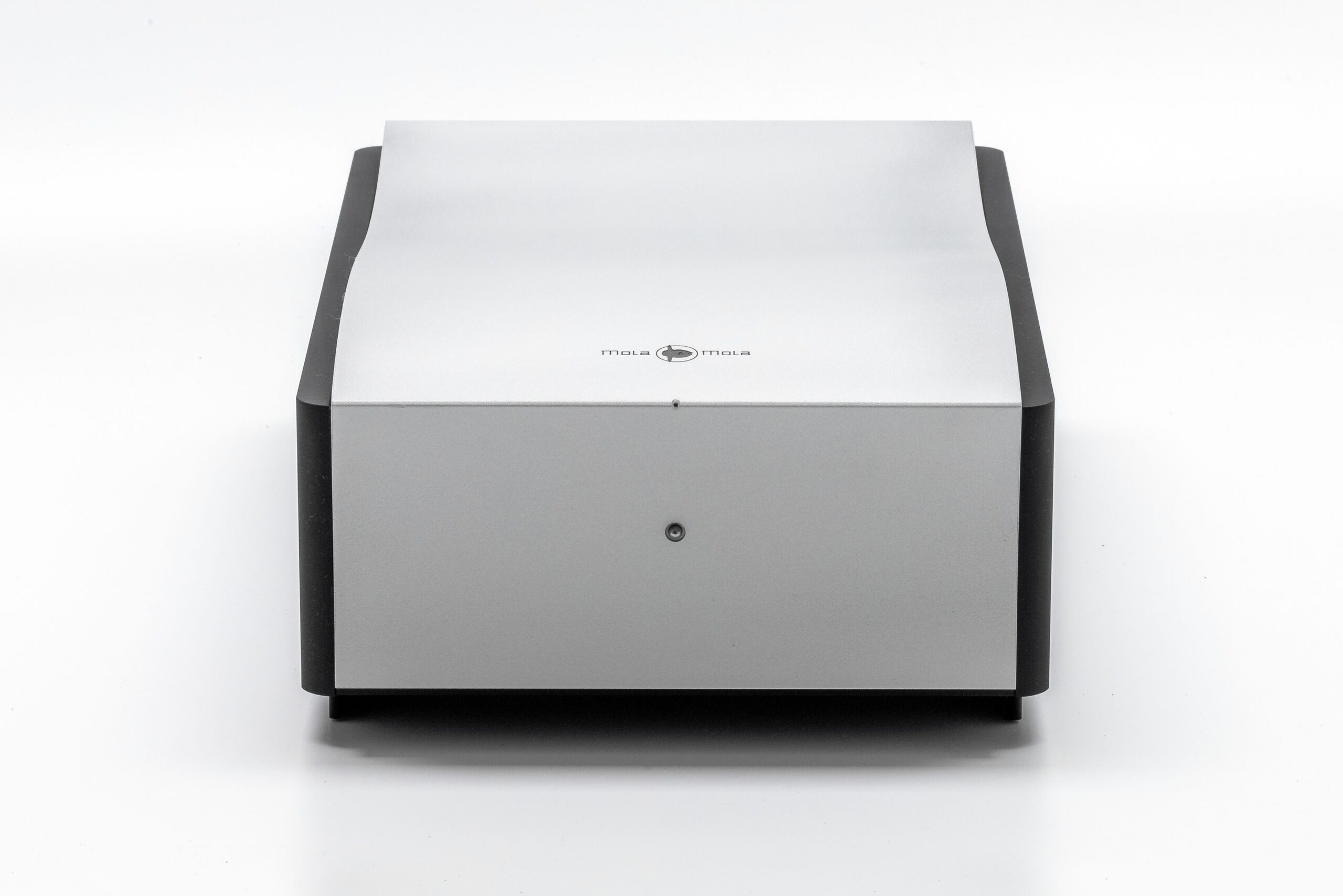
Quietly, Vivid Audio reworked its popular and distinctive Giya G1 for only the third time in its 18 year production life. The new G1 Spirit Cu features copper-clad midrange assemblies, a reworked cabinet that’s both lighter and stiffer, and improved grilles. Played through EAT and CH Precision sources and Mola Mola amplifiers, this new version sounds every bit as good as we’ve come to expect from Vivid, but it’s been some time since I heard a Giya G1 to compare. Vivid is unlike most companies in the audio business, as the new model does not come with a price increase!


WK Audio

We’ve been following WK Audio‘s cable systems for some years. The company’s top TheRed cable is one of the hidden gems in audio, and its speaker cables have recently been completely upgraded with better spacing systems. It might not be the smallest or most discrete cable on the planet, but it is one of the best, and in Warsaw it showed why once again. This remains one to watch!

There were many more. We try to focus on rooms where there is something new (or new to us), but there were dozens of other rooms making good or great sounds that therefore slip under the radar. Some of these were top-end systems. The dCS, D’Agostino, Wilson Audio combination is a well-trusted, good sounding system for a reason and nothing changed that at Warsaw. Similarly, the one-make high-performance system from Gryphon shone bright. And systems from Chord Company (with Audiovector), Cambridge Audio, Esoteric (with Fyne Audio), Hegel (with Indiana Line loudspeakers) and more were doing excellent service. And there were also local heroes like Unitra and more. The brand most seen in the widest number of rooms was (perhaps unsurprisingly) local hero LampizatOr. But this wasn’t just Polish people supporting Polish brands… it sounded consistently good too!

Warsaw Audio Video is one of the last shows in the European audio calendar… and what a great way to sign off the year!

Back to Home

Eversolo DAC-Z10 Unveiled — Precision Engineering for Authentic Sound

31 October 2025: Recently, renowned Hi-Fi manufacturer Eversolo unveiled their latest product, the DAC-Z10, a high-resolution audio DAC and headphone amplifier. Designed to “rediscover the true sound,” it employs precision engineering to reconstruct the signal path and refines every detail with musical warmth, bridging digital and analog with precision.

The DAC-Z10 is built on Eversolo’s proprietary Fully Isolated Architecture (Eversolo FIATM), which fully isolates the digital and analog domains to minimize interference and preserve signal purity.

The internal layout of the DAC-Z10 is meticulously engineered, featuring three custom linear power supplies dedicated to the left channel, right channel, and system circuitry respectively, each fully isolated to minimize interference. This innovative design delivers an exceptionally clean soundstage with precise imaging.

Another core element of the FIA design is the DAC-Z10’s dual AKM decoding modules. Each channel is handled by a dedicated set of AK4191 + AK4499 chips, meaning the left and right digital signals remain completely separated from input to conversion. This design not only eliminates channel crosstalk but also enhances dynamic range and resolution. Combined with AKM’s Velvet Sound™ technology, the DAC-Z10 delivers audio that is both precise and delicate. Even at high specifications—DSD512 and PCM 768 kHz/32‑Bit—it maintains ultra-low distortion (THD+N 0.00008%) and wide dynamic range (DNR 130 dB), letting the music flow with the energy and presence of a live performance.

The concept of “independent left and right channels” extends to volume control. The DAC-Z10 employs a high-precision R2R resistor network, with separate R2R modules for each channel. Unlike conventional digital volume, which can introduce quantization loss, the R2R network preserves signal integrity and phase alignment at every step. From very low to high playback levels, the sound remains pure and full, with every knob adjustment resulting in precise analog-level changes. This is the essence of the DAC-Z10—capturing every nuance of the music with the purest analog precision.

The DAC-Z10 also features a high-performance fully balanced preamplifier, supporting left and right channel XLR and RCA analog inputs/outputs, and offering +10 dB analog gain. Paired with the R2R volume control network, it delivers ultra-low distortion and a wide dynamic range. This makes the DAC-Z10 not just a DAC, but also a high-quality preamplifier capable of directly driving power amplifiers or active speakers.

The clock system is one of the most subtle yet critical components in any audio setup. The DAC-Z10 features the Eversolo Precision Core™️, a high-precision clock system composed of an OCXO temperature-controlled crystal oscillator, PLL(phase-locked loop) technology, and an FPGA clock reconstruction technology. Additionally, the DAC-Z10 supports external high-precision clock input.

The OCXO crystal oscillator is temperature-controlled to eliminate environmental effects on frequency, ensuring long-term clock stability. Meanwhile, the PLL technology provides secondary jitter suppression during signal reconstruction, achieving femtosecond-level clock precision. For audiophiles, this translates to more accurate phase, more natural transients, and significantly enhanced depth and imaging in the music.

Furthermore, the DAC-Z10 supports external high-precision clock inputs at 10 MHz and 25 MHz, with both 50 Ω and 75 Ω impedance options. For users with high-end master clock systems, this allows the DAC-Z10 to seamlessly integrate into larger audio setups. Such an external clock provides an even more accurate timing reference, further reducing system jitter and delivering a clearer soundstage. The impedance options ensure flexible compatibility, making it equally suitable for high-end home systems or professional studio environments.

The Eversolo Precision Core™️ features a built-in FPGA that handles clock reconstruction and IIS data shaping. Before digital signals reach the DAC chips, the FPGA precisely aligns their timing and phase. This processing ensures cleaner, more effortless decoding downstream. For high-resolution playback, this step is critical: it “cleanses” the digital signal, leaving only the purest musical information for conversion.

The DAC-Z10 offers extensive connectivity options to meet the demands of high-end systems. It features USB Audio in, dual coaxial in, dual optical in, IIS in, AES/EBU in, and HDMI ARC input. The USB input employs a multi-core audio processor, supporting DSD512 Native and PCM 768 kHz/32‑bit lossless transmission. The IIS input provides eight customizable modes to ensure compatibility with a variety of sources from different brands. All inputs use electrical isolation to fully eliminate ground loop interference, delivering every signal in its purest form.

The DAC-Z10 features a dedicated headphone amplifier module with a 6.35 mm output, capable of automatically detecting headphone impedance and adjusting gain accordingly. In high-gain mode, it delivers up to 1 W (16 Ω) and 1 W (32 Ω), easily driving even high-impedance planar headphones.

For home systems, the DAC-Z10 also supports HDMI ARC and eARC, allowing direct connection to TVs or home theater setups. It seamlessly integrates audio from movies, music, and games, extending the Hi-Fi experience from your desktop to the living room. Additionally, the built-in Qualcomm QCC5125 Bluetooth module supports high-resolution wireless streaming, delivering high-quality playback from your mobile sources.

The DAC-Z10 features an 8.8-inch IPS touchscreen with electromagnetic shielding. The interface is free of cumbersome menus, offering intuitive operation. Multiple VU meters and dynamic spectrum displays are built in, allowing you to choose between vintage or modern styles at will. In addition, the DAC-Z10 offers customizable knob colors—a small detail that reflects Eversolo’s commitment to aesthetics and user experience.

The DAC-Z10 supports remote control via smartphone or tablet. Using the Eversolo Control App, you can adjust volume, switch inputs, and manage all on-device settings directly from your mobile device.

The DAC-Z10 embodies a complete philosophy of sound—precision, warmth, purity, and balance. These are not mere adjectives in its design but an attitude. It shows that digital music can still have soul, and that behind every bit of engineering, emotion can resonate.

Eversolo DAC-Z10, rediscover the true sound with precision engineering.

Suggested Retail Price: 1980 USD / 1980 EUR.
The official on-sale date is coming soon. Learn more at: www.eversolo.com

Ultrafide Audio makes exceptional audio even more accessible with its state-of-the-art SP500 amplifier

31 October 2025: Ultrafide Audio is taking its pro sound, homebound revolution one step further with the launch of its SP500 stereo power amplifier, which is being officially launched at 2025’s Edinburgh HI-AV Show, 8-9 November.

As teased earlier this year, the SP500 is a sleeker, more compact and more affordable addition to Ultrafide’s range – but with the same power output, warm sonic purity and music-first ‘power with emotion’ engineering excellence Ultrafide is becoming known for.

Retailing at £3,990 (incl VAT) – SP stands for ‘squaredPOWER’ and a nod to MC2’s approach, the SP500 features Ultrafide’s Ultra Sigma output topology, the company’s premium in-house design that was first introduced in the U500DC – it delivers superior audio performance to rival anything on the market.

Its elegant, minimalist design and compact straight edge casework means that the SP500 seamlessly integrates with other hi-fi components and mixed systems, and is also perfectly suited to studio, reference, and residential applications with its ability to be rack mounted.

DC coupling input to output ensures clean and accurate signal transmission, a PURE timbre sonic signature: providing an incredibly transparent, but musically engaging experience. It also offers flexible configuration with RCA and XLR inputs, XLR passive link outputs, and both binding post and speakON outputs. A true nod to classic MC2 Audio thinking!

Ultrafide stands for ultra-fidelity audio and following parent company MC2’s pioneering work in live and studio sound for three decades, it is now laser-focused on the domestic market. No application constraints, no logistical hurdles, no compromises – just the best engineering, design and components to bring the finest possible sound to the home.

Lead product designer, audio engineer and pro audio legend Alex Cooper was given a blank canvas with which to operate for Ultrafide products and freedom to over-engineer, with the sole goal of audio quality, sonic purity and unrivalled stereo image – resulting in astonishing results, leaving plenty of headroom and delivering unparalleled high-end definition and low-end response.

Mark Bailey, product specialist at Ultrafide Audio and MC2, said:

“The SP500 is everything that’s loved about our U500DC Ultra Sigma amplifier, but with a more minimal approach to its casing that we really like and have been asked for on numerous occasions. We’ve added the additional ability to rack mount, and made some clear I/O connection differences to make it even more flexible and applicable to CI, studio, cinema markets, as well as traditional Hi-Fi. The internals of the SP500 are almost identical to that of the U500DC, with just a subtle change to input/output circuitry, so the performance is equally breathtaking.

“We can’t wait to formally unveil the SP500 at this year’s Edinburgh HI-AV Show and will have more exciting news within the region coming soon…

 “Remember, Pro sound is homebound!”

Alongside the SP500, Ultrafide will be setting up with Kudos 505 speakers at the Edinburgh HI-AV Show, forming a compact but formidable and high quality set up for visitors to the room to enjoy.

For more information on Ultrafide Audio, and where to buy from its expanding dealer network, please visit https://ultrafideaudio.co.uk.

British-made Fell Audio available at lowest ever prices this Black Friday

30 October 2025, Carlisle, Cumbria: Fell Audio, the British hi-fi manufacturer, today announced unprecedented pricing for its Fell Disc CD player and Fell Amp integrated amplifier as part of the November Black Friday retail period. https://fellaudio.co.uk/

The promotion will be available across a broad seller network, including leading UK retailer Peter Tyson’s three stores and website, Amazon UK, and, for the first time, the eBay platform, providing consumers with various purchasing options to suit their needs.

The Fell Disc CD player and Fell Amp integrated amplifier will be offered at their lowest-ever prices, including a groundbreaking bundle price for customers purchasing both units together.

From 31 October until the beginning of December, the pricing structure will be as follows:

  • The Fell Disc CD player will be reduced from £499 to £399
  • The Fell Amp integrated amplifier will be reduced from £599 to £499

Customers purchasing both components will benefit from a packaged price of just £849, representing a saving of £250 on the usual prices. The bundle promotion makes Fell Audio’s offering, which remains the most affordable British-made system available in the UK, accessible to a wider audience.

The pricing strategy puts Fell Audio’s hallmark made-in-Britain build, class-leading sound, and industry-leading five-year warranty, within reach of more customers than ever before; put simply, there has never been a better time to buy Fell Audio.

Commenting on the new Black Friday sale pricing, Fell Audio’s design team said, “At Fell Audio, we know that Black Friday is a crucial time for audio enthusiasts to invest in new hi-fi components. Although we’re a new company, we’ve always been committed to delivering the value our customers deserve and by participating in Black Friday events, we ensure everyone has the opportunity to experience our British-made quality and make Fell Audio their next hi-fi upgrade.”

More about Fell Audio

Launched in November 2024, the family-owned-and-run start-up Fell Audio debuted with two new products: the Fell Disc CD player and a feature-packed integrated amplifier, the Fell Amp. A matching music streamer is set to follow.

The company differentiates itself by offering British manufacturing at an entry-level price point, affording it a competitive advantage in terms of quality control. With unparalleled affordability and great sound, Fell Audio’s offerings are compelling for newcomers and established audiophiles alike.

Price and availability

The Fell Disc (£399*) and Fell Amp (£499*) are available in the UK only (European and wider international availability is planned for 2026) via the Fell Audio website, Peter Tyson (online, in-store, and via telesales), Amazon UK, and eBay.

*Special time-limited Black Friday event promotional pricing

Sonus faber Sonetto III G2

‘Sonus’ is Latin for sound. ‘Sonus faber’ translates to ‘handcrafted sound’ or ‘artisan of sound’ in Latin. Additionally, ‘sonetto’ is Italian for ‘little sound’ or ‘little song’; the English word ‘sonnet’, meaning ‘lyric poem’, is derived from ‘sonetto’. Meanwhile, ‘G2’ is universally understood marketing terminology for ‘second generation’.

The second generation of Sonetto loudspeakers from Sonus faber consists of a seven-model range, including a pair of stand-mounters, three floorstanders, a centre channel, and an on-wall design. Among them, the Sonetto III G2 stands out as the smallest and most affordable floorstander—though at £4,000 per pair, the term ‘affordable’ warrants careful consideration. Presumably, Sonus faber has its £100,000 Aida floorstanders in mind when it uses the word to describe the Sonetto III G2.

Flower Power

This speaker features a 2.5-way design, with a 28mm silk-damped apex dome tweeter positioned above a 165mm mid/bass driver and an identical-sized bass driver. Each of the larger drivers showcases the distinctive ‘flower’ pattern first introduced in the extraordinarily high-end Suprema loudspeaker system (yours for £695,000 – which we can all agree stretches the definition of ‘affordable’ beyond sensible limits). Each driver includes an aluminium demodulation ring, shares a 2700Hz crossover (hence 2.5-way), and is housed in a specially designed, die-cast basket.

The tweeter and mid/bass driver are housed in a discreet enclosure that features a rear-facing bass reflex port. The tweeter employs a closed motor system designed to prevent the mid/bass driver’s activity from affecting it. The enclosure itself boasts an organic, irregular shape and is made from recycled cork; Sonus faber is confident in the acoustic properties of this material, particularly regarding midrange fidelity. The bass driver, conversely, is situated in a separate enclosure and incorporates a bass reflex port that vents downwards onto the fixed boundary provided by the concrete plinth to which each speaker is attached. 

According to Sonus faber, this arrangement results in a loudspeaker boasting a frequency response of 38Hz to 40kHz, 88dB sensitivity, and a nominal impedance of 4 ohms. The company is confident that any amplifier with over 50 genuine watts of power should have no difficulty driving the Sonetto III G2.

Unusual Concrete

Concrete is undoubtedly an unusual choice for a plinth, but elsewhere, it’s the usual high-quality cabinet work from Sonus faber. As these are relatively affordable speakers, the cabinets (in the brand’s preferred ‘lute’ shape) are made from MDF. However, the wood veneer finish—available in walnut, wenge, or high-gloss black—is applied beautifully, giving it an undeniably luxurious appearance. 

Measuring 1068 x 287 x 350mm (HxWxD), the cabinet is well-proportioned, achieving a pleasing balance between ‘purposeful’ and ‘elegant,’ with a touch of luxurious decadence evident in Sonus faber’s signature leather driver surrounds. The quality of construction and finish is, as is typically the case with Sonus faber, beyond reproach.  

It’s fair to say that the Sonetto III G2’s sound is as recognisably ‘Sonus faber’ as its aesthetic. In the least prejudicial way, these speakers remain utterly faithful to the sonic philosophy that the company has devoted the last four decades to defining and refining.

Untroubled

The Sonetto III G2 is unequivocal. It is driven by a Cambridge Audio Edge W stereo power amplifier, with a Naim Uniti Star functioning as both preamplifier and network streamer. A Clearaudio Concept turntable (with a Chord Electronics Huei) and a Rega Apollo CD player offer alternative sources. The type of music you choose to listen to, the format in which it is stored, and its resolution do not seem to concern them. In every circumstance, they deliver a thoroughly musical account of themselves.

A vinyl copy of Everybody by Ezra Collective [Partisan Records] enables the Sonus faber to exhibit a notably deep, richly textured, and impressively detailed low-frequency response. The bass presence is substantial, and the Sonetto III G2 addresses the low end with genuine determination, yet there is control accompanying all the drive. The onset and decay of individual bass notes are keenly observed, resulting in speakers that present rhythms effortlessly. The balance they achieve between momentum and sheer impact is both assured and convincing.

Circumspect

The opposite end of the frequency range is somewhat more circumspect, though this does not imply it is in any way tentative or lacking in presence. It attacks just slightly less forcefully than the low end, and when the music demands it—such as when listening to a TIDAL-derived 24-bit/96kHz FLAC file of Al Green’s I’m Still in Love with You [Hi Records], for instance—the Sonus faber can invoke genuine bite and top-end crunch. However, even if you opt to turn the wick right up, the tweeter remains composed and controlled; there is no indication that the shine is ever likely to become edgy or harsh. 

It’s in midrange reproduction, however, where the Sonetto III G2 reveals itself to be genuine contenders for the fiercely contested ‘Best £4K-ish floorstanding loudspeakers’ crown. From the exquisite tone and technique of Al Green to the deliberately assertive amateurism of Mark E. Smith in The Fall’s I’m Going to Spain [Permanent Records], through to the forthright, close-mic’d imprecations of Roots Manuva’s Clockwork [Big Dada Recordings], the Sonus faber communicates eloquently and in an utterly naturalistic, unforced manner. Each of these vocalists possesses character and attitude in their own right, and despite their very different approaches, each aims to make a point. When provided with the Sonetto III G2 as a platform, their intentions are always clear.

Silky Conviction

The resolution and integration of the entire frequency range are achieved with silky conviction, likely aided by the shared crossover points of the two larger drivers. Nothing is exaggerated in the name of excitement, nor is anything diminished in the name of good taste; rather, the entire frequency range coalesces in a balanced and persuasive manner. Tonality, too, is strikingly believable; if any coloration is present, it is exceedingly mild. The Sonus faber are adept at identifying the fundamental tonality of an instrument or voice and presenting it without embellishment or omission.

These speakers are equally adept at extracting and contextualising the subtle harmonic variations expressed by a voice or instrument in real time. The dynamic fluctuations evident in an unaccompanied piano, even from keystroke to keystroke, are given due weighting, which enhances the impression of true musicality that Sonus faber conveys. 

Investing around £4,000 will significantly enhance the dynamic range regarding the broader ‘small/BIG’ or ‘quiet/LOUD’ variations that nearly every ensemble recording includes to varying extents. However, the Sonetto III G2 is certainly not lacking in power or straightforward ‘push’. That said, if you desire an element of shock and awe when a symphony orchestra ramps up into full ‘attack’ mode, you may find these Sonus faber somewhat more reserved and less vibrant than some similarly priced alternatives.

Compact

You might find their presentation somewhat ‘compact’ as well. The soundstage created by the Sonetto III G2 is solid, well-defined, and entirely credible. The spaces between elements in recordings are considered just as significant as the elements themselves. Control is undeniable, and even large-scale recordings provide the necessary breathing space to avoid sounding cramped. Yet, somehow, the Sonus faber do not quite transcend the limitations of their cabinets as readily as some competitors—there’s a subtle but unmistakable ‘in the box’ sensation that prevents them from sounding as expansive or open as the very best of their similarly priced counterparts. 

However, if you’re prepared to accept that nothing is perfect, regardless of how much you might be spending, then the Sonus faber Sonetto III G2 has a great deal to recommend it. Beyond their balanced, insightful, and thoroughly musical presentation, they rival any alternatives in terms of build quality and finish for your investment. Moreover, they make a strong case for being more decorative as furniture than any other £4K floorstander I can think of. The Sonetto III G2 is admirable in many respects, and they undoubtedly warrant your attention if you’re in the market for floorstanding speakers at this price point. This holds true in any language you wish to mention. 

Technical specifications

  • Type: 2.5-way; dual bass reflex port 
  • Driver complement: 1 x 28mm silk damped apex dome tweeter; 165mm ‘flower’ mid/bass driver; 165mm ‘flower’ bass driver
  • Frequency response: 38Hz – 40kHz 
  • Crossover frequency: 2.7kHz  
  • Impedance: 4 Ohms nominal
  • Sensitivity: 88dB/W/m
  • Dimensions (HxWxD): 31068 x 287 x 350mm
  • Weight: 25.8kg/each
  • Finishes: High gloss black; wenge; walnut
  • Price: £4,000, $4,499, €4,499 per pair

Manufacturer

Sonus faber

www.sonusfaber.com   

UK distributor

Fine Sounds

www.finesounds.uk 

+44(0)1592 744710 

More from Sonus faber

Back to Reviews