The road to Kilmarnock, just south of Glasgow, is often framed by the moody, low-hanging clouds that define the West of Scotland. It is a landscape of industrial heritage and rugged natural beauty—an apt setting for Atlas Cables. While the high-end audio world often conjures images of manicured technocrats with ornate systems, the reality at Atlas is far more grounded and tactile. Moreover, it is impressively industrious.
Walking into the Atlas facility, you aren’t met with the cold, clinical air of a tech startup. Instead, there is the hum of activity, the faint scent of high-grade polymers, and the unmistakable sense of a craft-driven factory. This is a place where Scottish engineering meets a boutique, artisanal sensibility. Here, the philosophy is simple yet demanding. Everything that can be done in-house should be done in-house.
The Heart of the Workflow: Vertical Integration
The methodology at Atlas is built on a refusal to be a “re-badger.” In the cable industry, some brands buy bulk wire from a massive, nameless factory, slap a fancy braided sleeve over it, and call it ‘high-end’. Atlas operates at the opposite end of that spectrum.
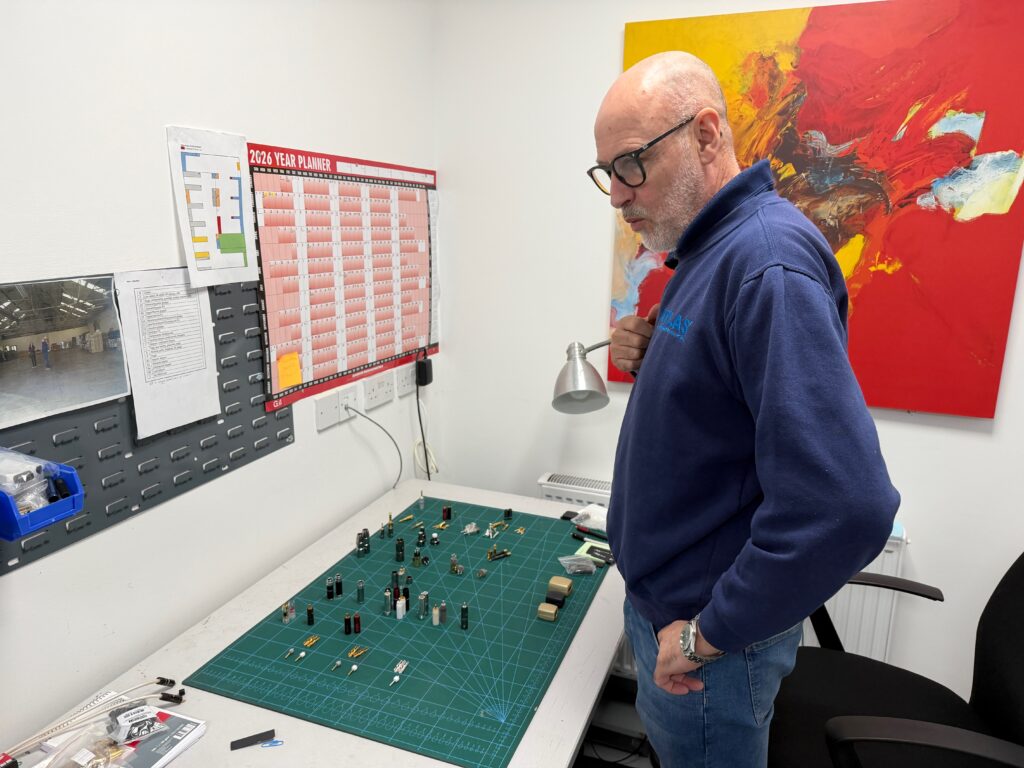
The workflow begins long before a single strand of copper arrives in Kilmarnock. Atlas controls the metallurgy, specifying the purity of its Ohno Continuous Cast (OCC) copper and silver. But the real magic happens once those raw materials enter the building. The factory floor is organised into specialised zones that follow a cable’s life cycle. These range from raw conductor preparation and dielectric insulation to the final, painstaking hand-assembly and testing.
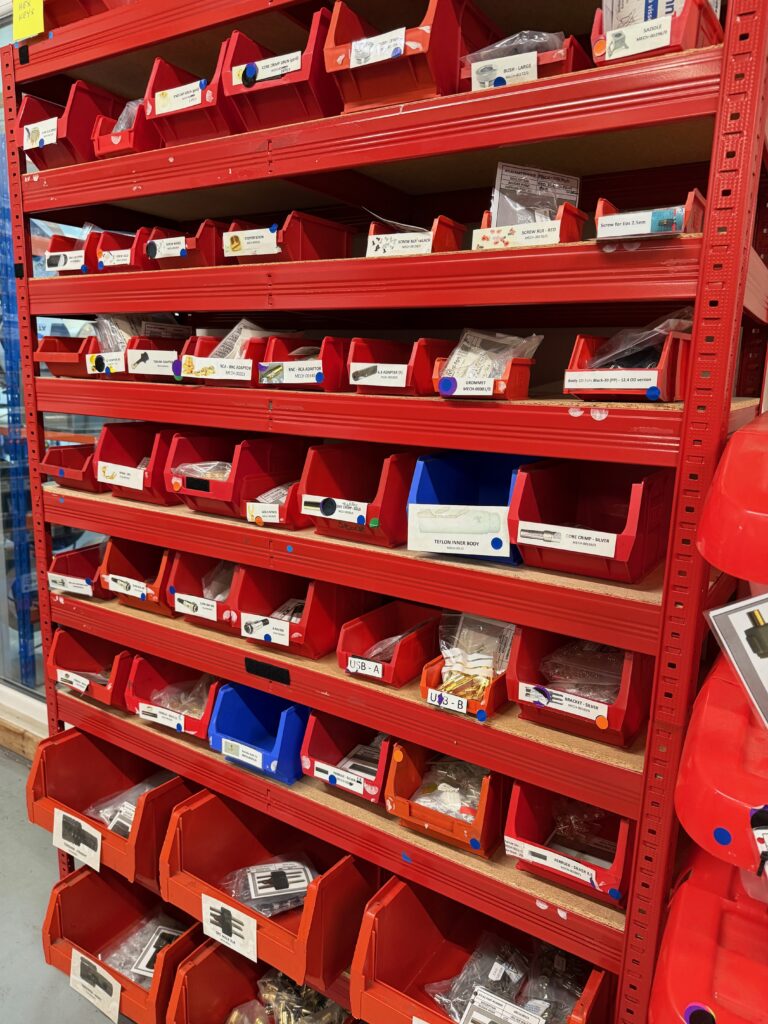
Atlas also ensures consistency by careful component stock control. The stock room has a series of stock control bins that give Atlas enough materials to build what it needs without huge inventory costs. Furthermore, this avoids relying on ‘Just In Time’ logistics. Simple colour-coding of parts bins means production delays are rare.
The Art of the Solderless Connection
As you move through the assembly area, you notice something missing: the acrid smell of soldering resin. This is a core pillar of the Atlas methodology. They are pioneers in ‘cold-weld’ technology.
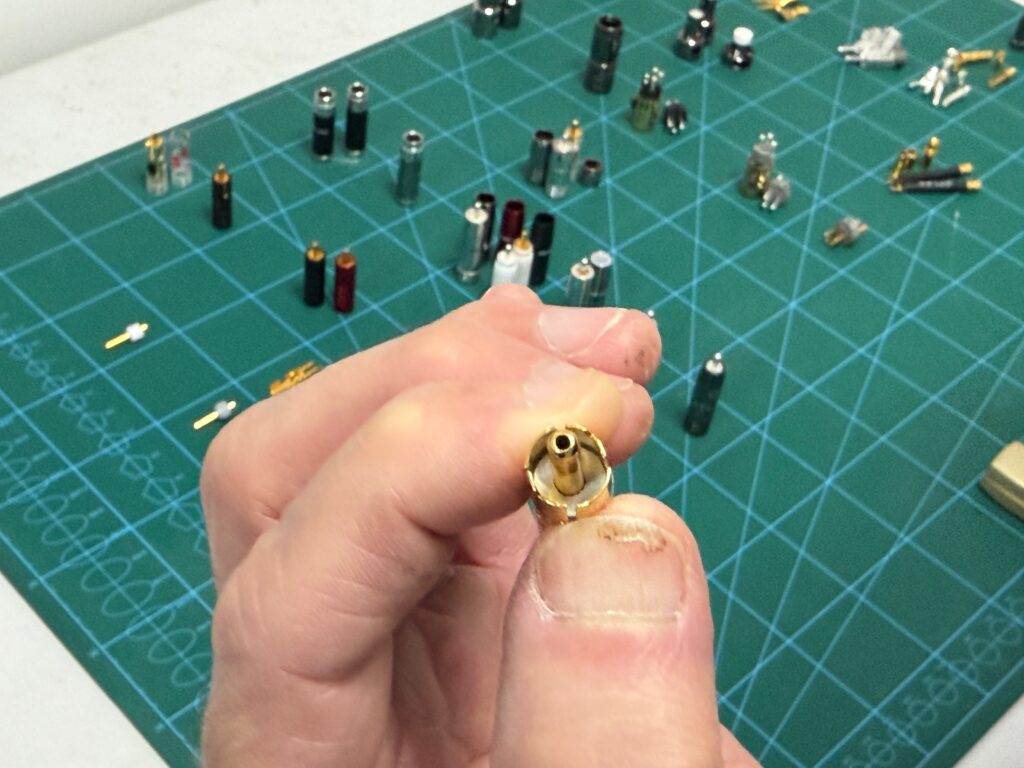
In most cables, the delicate copper strands are soldered to the plug. Atlas views solder as a barrier—an impurity that interrupts the signal flow. Watching the assembly team work is a lesson in precision. Using proprietary pneumatic tools and hand-calibrated presses, they cold-weld the connectors to the conductors. This process applies immense pressure to create a gas-tight bond. As a result, the metal of the wire and the metal of the plug effectively become one.
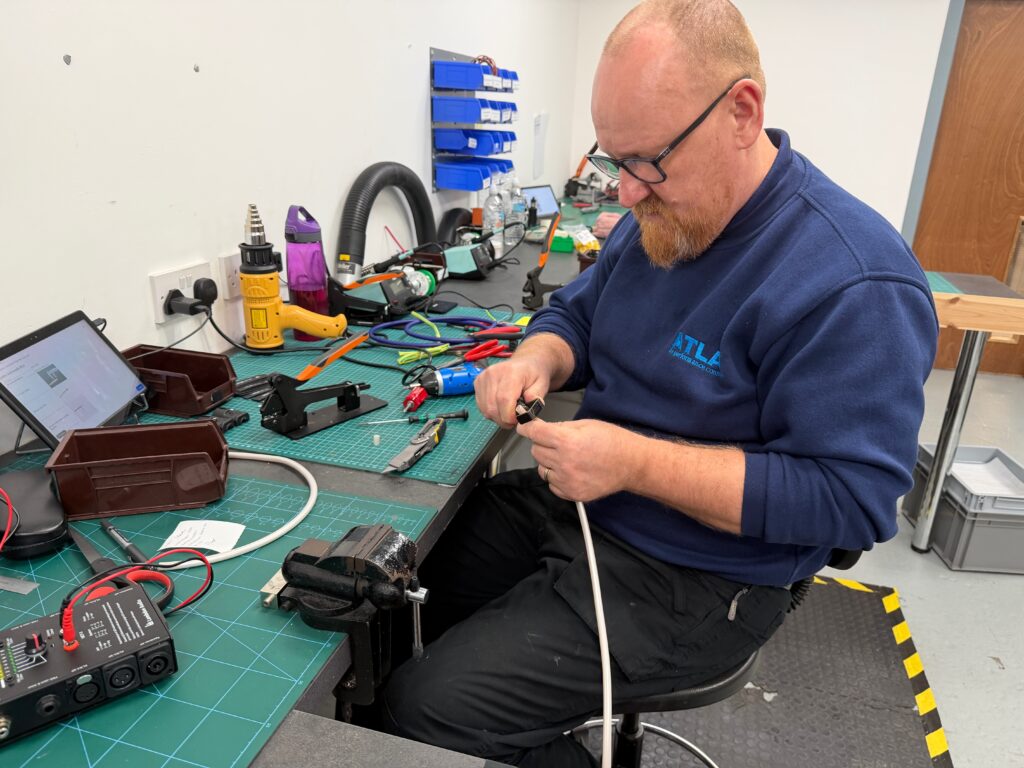
The technicians handle the delicate silver and copper filaments with the dexterity of watchmakers, ensuring that every strand is perfectly seated before the press is engaged. It is not a high-pressure environment — except for the cold-welding process. However, the result is a connection that is more durable and sonically purer than any soldered joint.
On-Site Printing: The Identity of the Product
One of the most surprising aspects of the Kilmarnock facility is its investment in on-site printing and finishing. In many factories, the branding on a cable is an afterthought—either printed by the bulk supplier or applied with a cheap sticker. At Atlas, the branding is integral to manufacturing integrity.
The on-site printing suite enables Atlas to print its own cable jackets with exceptional precision. Using specialised inks that bond permanently to the outer insulation, it can mark lengths, directions, and model names with total consistency.
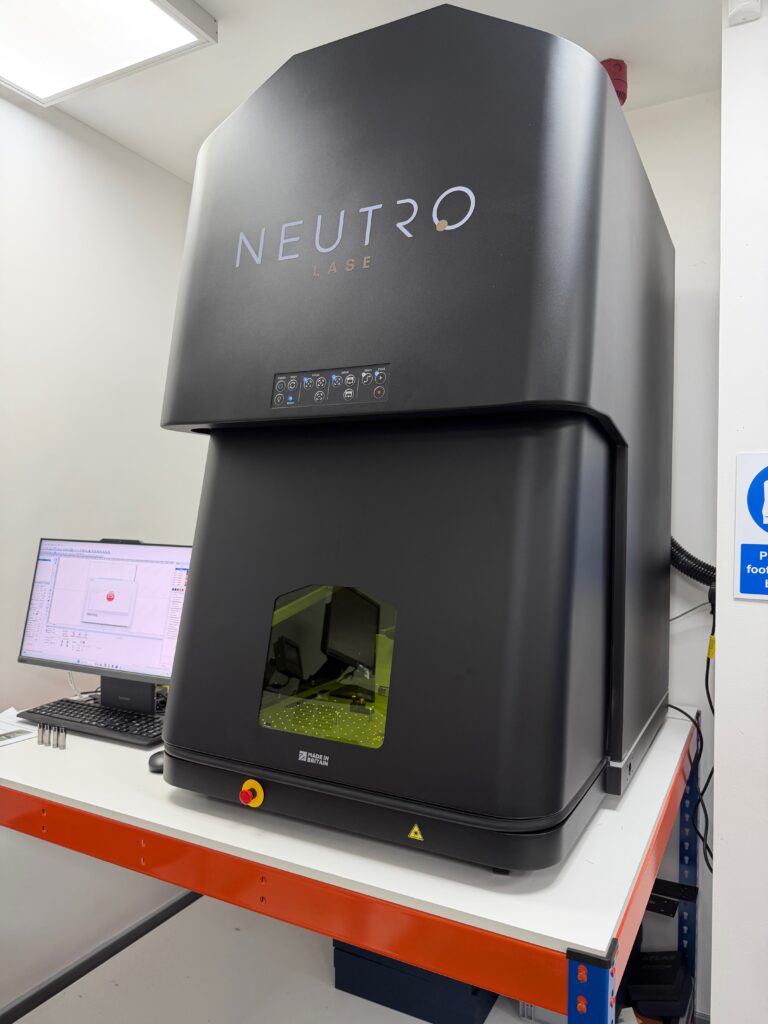
But it isn’t just about the name on the wire. This capability enables bespoke runs and ‘Custom Shop’ services. If a client needs a specific set of markings for a complex professional installation or a unique colour-coding system for a multi-room setup, Atlas can do it in-house within hours. This level of autonomy is rare in the industry and reflects their ethos of total control. By printing on-site, they ensure the inks don’t degrade the chemical properties of the cable jackets over time. This is a small detail that highlights their obsessive approach to longevity.
Hand-Assembly: The Human Element
Despite the high-tech presses and specialised printing machinery, the soul of Atlas remains in the hands of its staff. The assembly benches are where the individual components—the conductors, the foams, the shields, and the plugs—finally come together as a finished product.
Watching a pair of Mavros or Asimi cables being assembled is a slow, methodical process. These flagship products require hours of hand-braiding and the application of microporous Teflon dielectrics. The technicians use specialised jigs to ensure the cable geometry—the exact spacing between the positive and negative conductors—remains perfectly consistent from one end to the other. Even a millimetre of shift can change the cable’s capacitance. At Atlas, that is unacceptable.
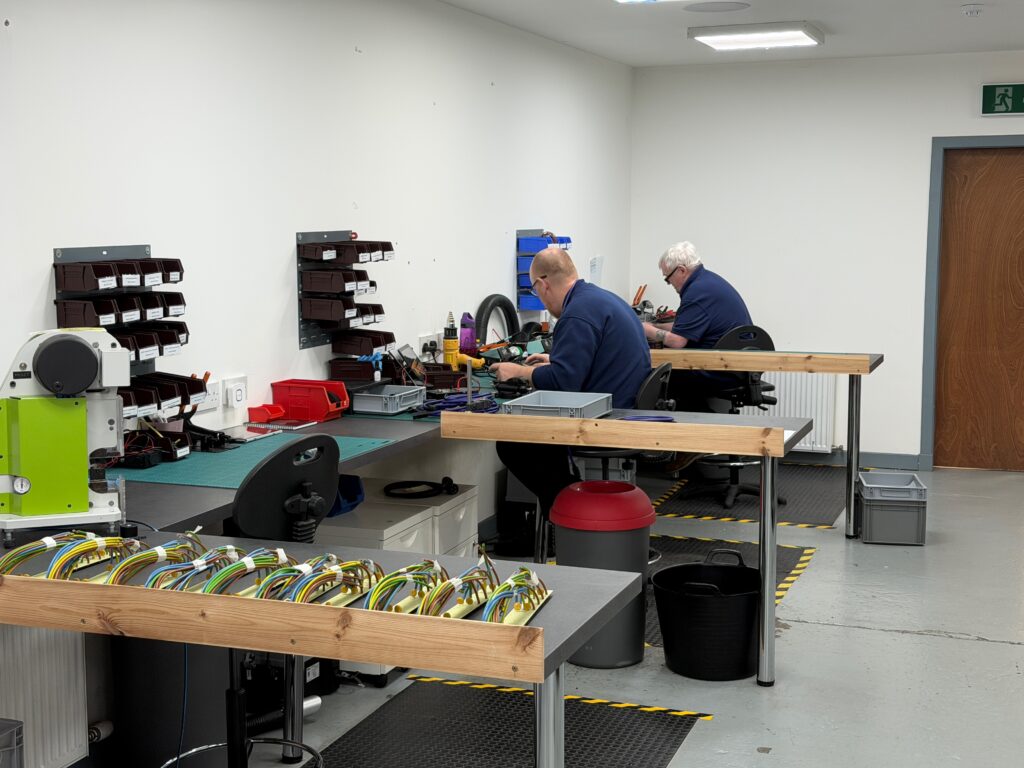
There is palpable pride on the factory floor. Many of the staff have been with the company for years, developing an eye for the mechanical feel of a perfect termination. They aren’t just following a manual; they are practising a craft. This human element serves as the final, most rigorous form of quality control. Each cable is visually inspected, mechanically stress-tested, and then electrically verified before it ever goes into a box.
The ‘Achromatic’ Revolution
A signature part of the Atlas ethos comes in the shape of the distinctive ‘Achromatic’ plugs. These are non-conductive, low-mass plugs that have become a hallmark of the brand. Traditionally, cable connectors are heavy, shiny, and made of gold-plated brass. Atlas realised that these heavy metal plugs acted as “heat sinks” for the signal, introducing unwanted interference. The Achromatic plugs are light, minimalist, and designed to stay out of the way of the music. In the factory, you see bins of these elegant, matte-finished components waiting to be mated to their respective cables. The assembly of these plugs is a dry-fit process that requires no heat, further reinforcing the company’s commitment to ‘cold’ assembly. Seeing these plugs fitted highlights the Atlas ethos. If a component doesn’t help the sound, get rid of it.
Testing and Validation
The final stop on the tour is the testing station. Every cable leaving the Kilmarnock factory is plugged into a diagnostic suite. It isn’t just a “does it work?” test. They check for continuity, resistance, and capacitance to ensure the cable meets the exact specifications of the design prototype.
For the higher-end lines, this process is even more stringent. There is a quiet gravity to this room; it is the final gatekeeper. The ethos here is that an Atlas cable is a ‘component’ in its own right, not an accessory. Therefore, it must be measured with the same seriousness as an amplifier or a DAC.
Refreshingly transparent
What stays with you after leaving the Atlas factory is the absence of ‘voodoo’. In an industry often criticised for ‘snake oil’ and magical thinking, Atlas is refreshingly transparent. Their methodology is grounded in physics, materials science, and –in particular –repeatable manufacturing processes.
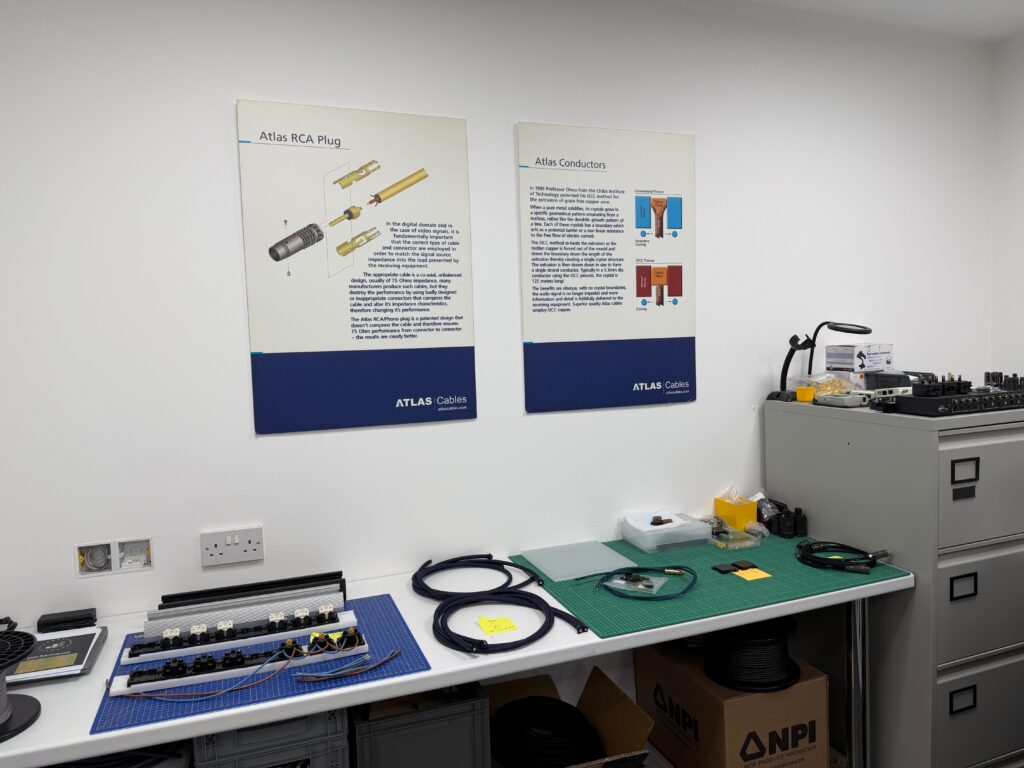
The ethos of Atlas Cables is “Quiet Accomplishment.” Atlas isn’t interested in being the loudest brand in the room or the one with the flashiest packaging; that doesn’t really fit in with the Scottish way of doing things. Instead, it focuses on the integrity of the connection. From the way they cold-weld their plugs to the way they print their own jackets in the heart of Scotland, every action is aimed at removing the ‘veils’ between the listener and the music.
They believe the best cable is the one that disappears. By controlling every variable—from the raw copper to the final print on the jacket—they ensure that when a customer plugs an Atlas cable into their system, they aren’t hearing the cable. Rather, they are finally hearing their music. As you walk back out into the Scottish rain, you realise that while the weather outside might be grey, the engineering inside those walls is vibrantly, brilliantly clear.
Contact details
Manufacturer
Atlas Cables
+44(0)1563 572666
Trending Articles
See all
By Alan Sircom
More articles from this author


Read Next From Blog
See all
Tech Talk: Nigel Bell of Reiki Audio
- Oct 06, 2026
Tech Talk: Nicolae Jitariu of Audiobyte
- Oct 06, 2026
Tech Talk: Wiktor Schulfer of Unitra
- Sep 29, 2026

Tech Talk: Daryl Wilson of Wilson Audio
- Sep 29, 2026