Classical


- Music

- Sonics

- A
- A
- A
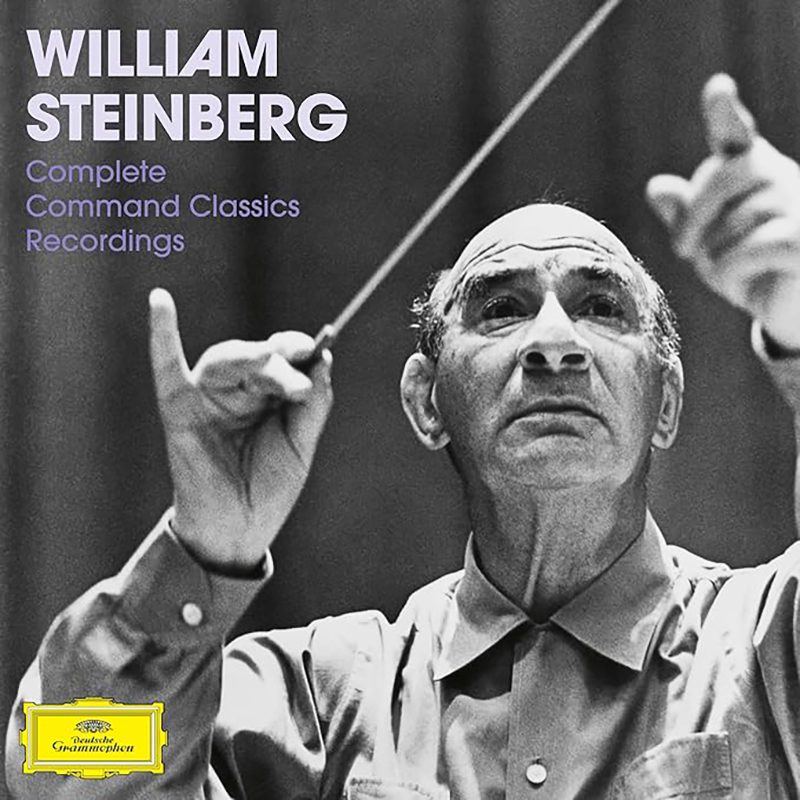
William Steinberg is the forgotten man among prominent post-war conductors in the USA. But at last, his Pittsburgh recordings on Command Classics have been issued on 17 CDs.
Command Classics was a small American label that used 35mm magnetic film as a recording medium. This gave its recordings superior dynamic range and lower noise than standard magnetic tape. Legendary Mercury Living-Presence engineer C Robert Fine was a big advocate of 35mm. Fine engineered many early Command releases. Given the Mercury team’s involvement, one assumes the same ‘Living Presence’ three-spaced omnidirectional microphone arrangement was employed.
For Command, Steinberg recorded the complete Beethoven and Brahms symphonies. DG has issued the Beethoven and Brahms cycles separately. So, if these are the principal recordings you want, you don’t have to buy the 17 CD box to get them. However, the rest of the set is well worth having and gives a more rounded picture of Steinberg’s art.
Other works include Tchaikovsky’s Fourth Symphony, Stravinsky’s Petrouchka, a disc of Wagner excerpts, plus suites from Copland’s Billy the Kid and Appalachian Spring. There’s even a disc of orchestral arrangements by Robert Russell Bennet from Porgy and Bess, My Fair Lady, and The Sound of Music. Rachmaninov’s Second Symphony is also included. This was something of a Steinberg favourite; he recorded for Capitol in mono in 1954.
Steinberg’s performances here are robust and sturdy, with plenty of weight and maturity. For example, there’s a fast Bruckner Seventh Symphony, which lasts around an hour. Many listeners in the ‘60s found Bruckner’s music heavy-going and boring. Steinberg’s brisk account—terse, dramatic, and forward-moving rather than spacious and relaxed—aims to demonstrate otherwise. While the Pittsburgh orchestral playing is not always refined and polished, Steinberg’s feisty performances exude a similar fire and urgency. There’s nothing routine or portentous here.
Rachmaninov’s Second Symphony is played in the ‘composer’s cut’. The cuts were seen as a travesty once the original version became established in the 1970s. But are they? For me, they tighten up the work. Steinberg’s account is taut, well-balanced, and clearly recorded. Another highlight is the coupling of Stravinsky’s Petrouchka (1966) with a lithe, if nervy, Shostakovich First Symphony (1968). Both receive crisp, straightforward readings, which are very nicely recorded. Command’s sharp, brusque sound suits the music.
The last disc of Wagner’s excepts brings the set to a thrilling, resplendent conclusion. Recorded in ’61 and ’63, Steinberg shows himself to be a disciplined but exciting Wagnerian who infuses the music with dramatic passion, nobility, and flair.
Capitol chose the Syria Mosque for all their Pittsburgh recordings, but C Robert Fine was unhappy with the acoustic, finding it too reverberant. So, Command recorded at the Pittsburgh Soldier’s and Sailor’s Memorial Hall, which had a drier ambience.
The Command Classics recordings are very good for their age – bright, articulate, and immediate – with low background noise. It seems recordings made after 1967 used noise reduction (presumably Dolby A), and the sound is slightly cleaner and fresher. Being critical, the Beethoven and Brahms symphonies are tonally thin at times, and the chorus in Beethoven’s Ninth Symphony sounds small. However, the ‘Eroica’ is slightly fuller and richer than the others, and Brahms’s Fourth Symphony sounds better than Brahms’s First, Second, and Third Symphonies. Finally, the chorus in Beethoven’s Ninth Symphony is oddly balanced and sounds small.
Steinberg’s Command Classics set features original LP jackets rather than a generic picture for each CD sleeve. However, as sometimes happens, the music listed on the front of the sleeve is not always found on the disc inside! This is a welcome addition for collectors.

By Jimmy Hughes
More articles from this author
Read Next From Music
The Teskey Brothers: Half Mile Harvest
- Oct 13, 2026
Emma-Jean Thackray: Weirdo
- Oct 06, 2026
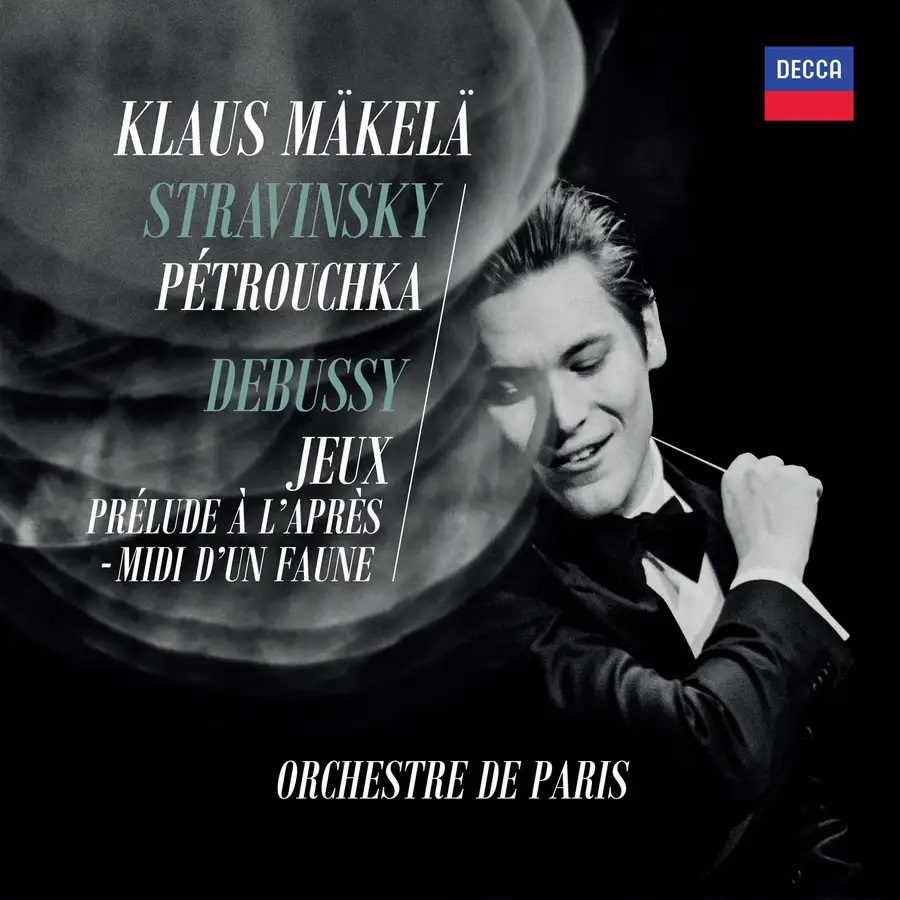
Klaus Mäkelä: Stravinsky; Debussy
- Sep 29, 2026
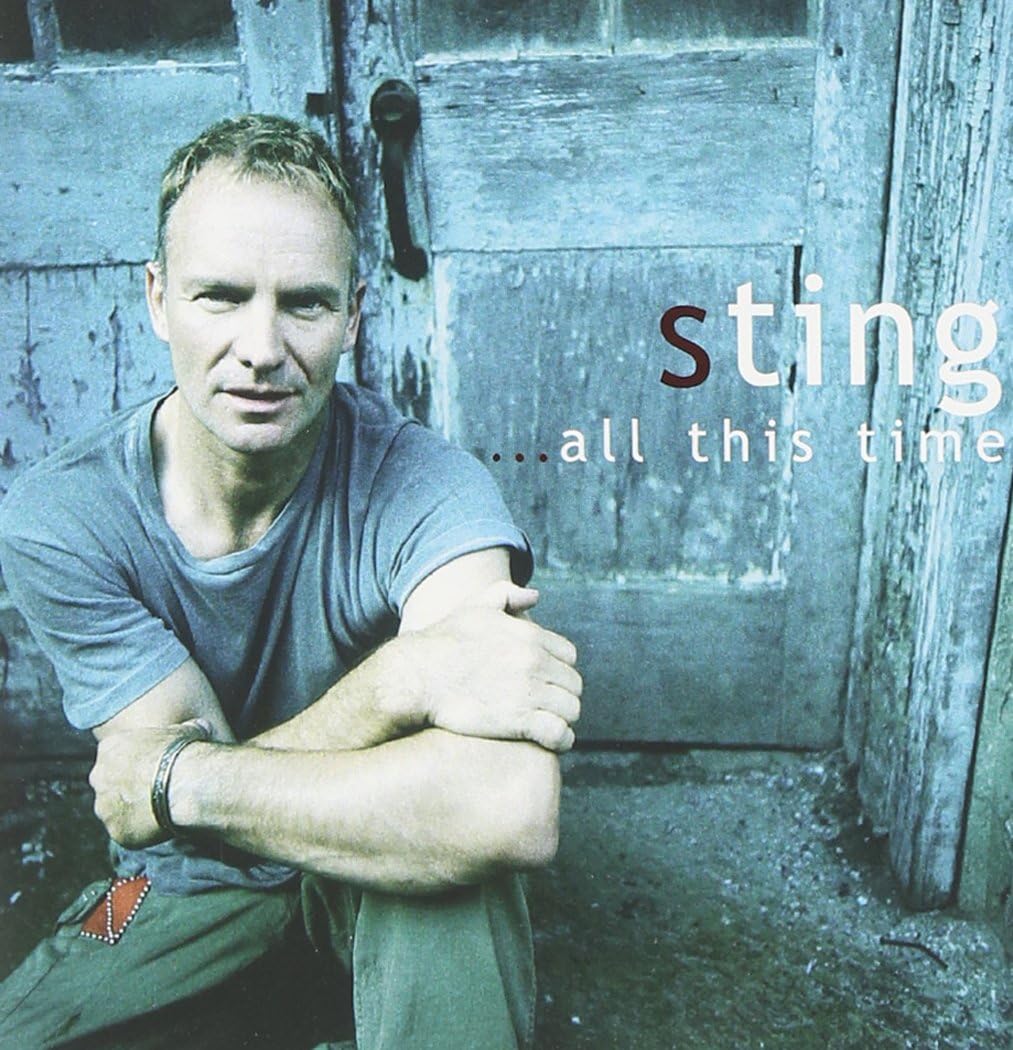
Sting: All This Time (Live)
- Sep 08, 2026