Up to 37% in savings when you subscribe to hi-fi+
hifi-logo-footer

Begin typing your search above and press return to search. Press Esc to cancel.

Bowers & Wilkins Announces New 600 Series 3 Range

Worthing, UK, 23rd August 2023 – How do you improve on a multi-award-winning loudspeaker range still considered as the best-in-category? World-renowned premium audio brand Bowers & Wilkins will build upon three decades of creating the reference standard in attainable yet high-performance loudspeakers with the launch of its new 600 Series S3. The eighth generation of one of hi-fi’s most acclaimed ranges features some of the most comprehensive upgrades the 600 Series has ever received.

The 600 Series has always played a critical role in the Bowers & Wilkins portfolio – not least as the company’s second-longest continuously available series after the iconic 800 Series Diamond. At a time when increasing numbers of listeners are demanding higher quality sound, either through vinyl or high- resolution streaming, the600 Series S3 represents the perfect first step to experiencing the ‘True Sound’ of the artist’s intent – making itthe ideal entry point into the Bowers & Wilkins brand.

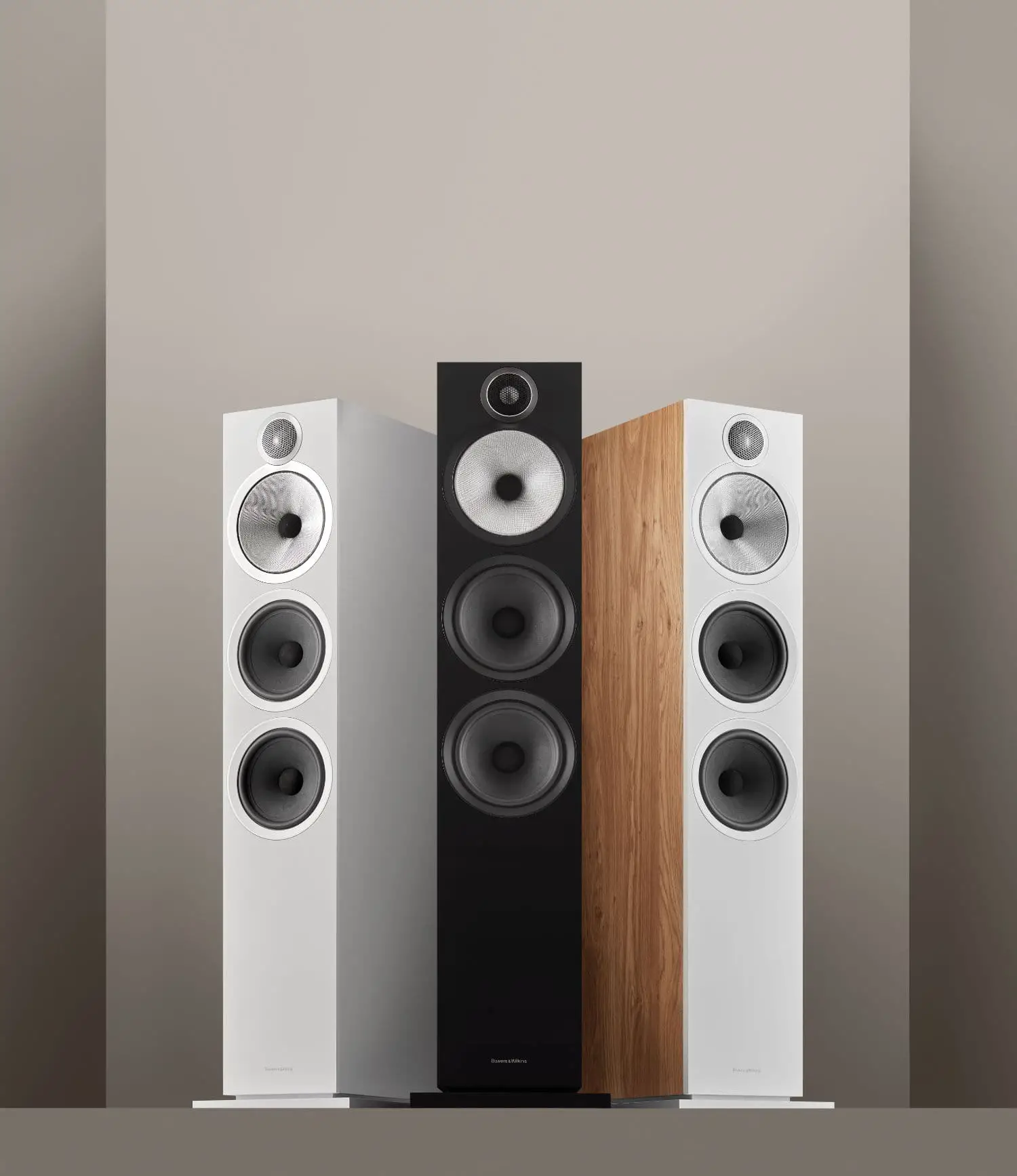
The new range includes four distinct models: the floorstanding 603 S3, the 606 S3 standmount, the 607 S3 bookshelf speaker plus the HTM6 S3, a dedicated centre channel for home theatre. Each model is available in a choice of finishes, including Oak, White or Black – with a fourth Cherry finish available in APAC markets only. A new FS-600floor stand is available in Silver or Black to complete the range.

All of the new models have been designed to work optimally together in various combinations as part of a 600Series S3 Home Theatre System, integrating perfectly with the dedicated HTM6 S3 centre channel and one of the existing ASW608 or ASW610 active subwoofers.

All-new Titanium Dome Tweeter adds refinement and resolution

Bowers & Wilkins develops and manufactures all key loudspeaker components in-house and cascades those innovative technologies down over time. This approach continues with the new 600 Series S3 models, all of which feature comprehensive changes to every aspect of their acoustic performance. Many of the new components are derived from the 700 Series S3 and are fitted into a redesigned and improved cabinet construction.

The most significant introduction to the new 600 Series S3 is an all-new tweeter dome technology, the TitaniumDome. The new tweeter is a two-part construction, with a very thin, light but rigid 25-micron main dome, braced by a second 30-micron titanium ring. This new design is housed in a significantly elongated tube-loading system, inspired by the design recently introduced in the new 700 Series S3. The longer tube loading system reduces the resonant frequency behind the dome and leads to a more open sound that is less impacted by the cabinet that houses it.

In addition, the new Titanium Dome benefits from a 700 Series S3-sized diaphragm mounting plate for better, more open dispersion and also includes the very latest, more open tweeter grille design taken directly from the recently introduced 800 Series Signature.

This combination of all these new technologies ensures that the new tweeter delivers a smoother, more refined sound without sacrificing resolution or detail.

Upgrades cascaded from the award-winning 700 Series range

Bowers & Wilkins’ proprietary Continuum Cones continue to feature throughout the new 600 Series S3 range with the addition of more powerful, lower distortion 700 Series S3 motor assemblies for midrange and bass/midrange drive units. The paper cone bass drivers in the 603 S3 also now feature 703 S3 motor systems. Crossovers are also updated with the inclusion of high quality, upgraded bypass capacitors from the 700 Series S3, delivering higher resolution and transparency.

The 600 Series S3 cabinets have also received extensive improvements. The tweeter and main drive units are now mounted closer together, using intersecting trim rings to improve integration and stereo imaging. On the rear of the speaker, a new terminal tray, taken from the 700 Series S3, is joined by a 700 Series specification bass port, improving performance and creating a stiffer cabinet. The enclosure’s rigidity is further improved by upgrading the internal bracing to a higher standard of wood. Finally, the bottom of the 606 S3 and 607 S3 now include metal threaded inserts so that the speakers can be more securely fixed to the top plate of the new FS-600 S3 stands.

By developing all of these key technologies in-house, Bowers & Wilkins has been able to offer significant performance upgrades to all of its new range while maintaining outstanding value for money. Put simply, the600 Series S3 continues to offer better quality components and technologies than any comparable competitor and is set to continue the legacy of the 600 Series as the reference standard in attainable yet high-performance loudspeakers. It’s the perfect first step into Bowers & Wilkins sound for music lovers everywhere.

Commenting on the launch, Dave Sheen, Brand President of Bowers & Wilkins said: “After nearly 30 years of continual evolution and improvement, we believe that the latest 600 Series S3 continues to set a benchmark in its category. Cascading key technologies down from our high-end loudspeaker ranges means everyone experiencing the new 600 Series will enjoy performance that genuinely delivers on our promise of True Sound and brings the listener closer than ever to the artist’s intent.”

The new 600 Series S3 range will be available from the 23rd August from bowerswilkins.com and select retailers.
Audio Research I/50 integrated amplifier

For the longest time, Audio Research was synonymous with brushed aluminium cases with slimline black handles. When, several years ago, the company shifted to larger brushed aluminium handles and an all-black finish option, the company’s many followers got enraged. A few years later, when the company started including a black inset and push buttons instead of toggle switches, the ARC supporters were incandescent. So, with the arrival of the new Audio Research I/50, its six colour options of black or silver casework and four – often contrasting – top plates, those traditional fans should be going thermonuclear. However, the I/50 isn’t for the traditional Audio Research fans; it’s for a new generation of listeners, who might have little or no previous experience with Audio Research and are just looking for a damn good integrated valve amplifier.

In fairness to Audio Research’s cognoscenti, the arrival of the I/50 appears to have been met with some encouragement. This isn’t a sovereign threat to Audio Research’s DNA; it’s a new addition to the family, presaging a new generation of Audio Research listeners. The amp is seen – rightly – as a new direction without sabotaging what’s already good about Audio Research.

The basics

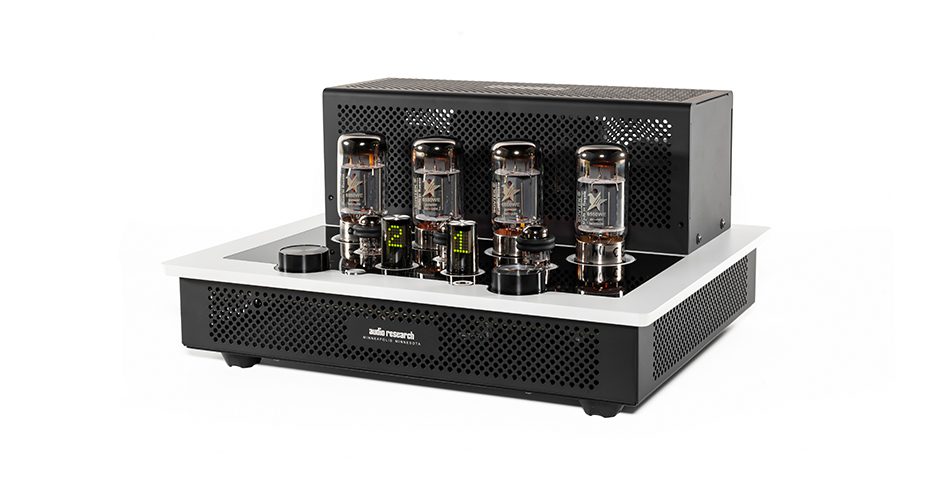
While the styling is a bold departure for the brand, the I/50 is every inch an Audio Research design. It uses a trio of 6922 tubes in the preamp stage (one as input and the other two as drivers), which feed into two matched pairs of 6550WE power tubes to deliver 50W per channel. The tubes are expected to give 4,000 and 2,000 hours respectively before they need replacement and that needs to be performed by a dealer (the power valves/tubes will need bias fine tuning and that requires getting into the internals of the I/50). Controls are limited to power, source selection, volume and mute on the top panel of the amp, but additional functions – including balance and display brightness – are handed off to the remote handset. The I/50 has three line and one set of balanced inputs as standard – with one of the single-ended inputs able to be configured as a home cinema pass-through input. Single-ended input one can be replaced by a MM/MC phono module, and there is provision for an additional DAC module that includes coaxial and TOSlink S/PDIF and USB inputs. There are multi-way outputs for four and eight ohm loudspeakers at the rear of the Audio Research I/50 and a 6.25mm headphone jack socket on the top plate. There are no preamp or tape-loop outputs.

The point of inflection between ‘engineering’ and ‘industrial’ design is the unique ‘LexieTube’ display. These stand in front of the array of tubes, giving an elegant ‘4:3:2’ formation (rather like a football team that’s had one of its midfielders sent off). LexieTubes stand about as tall as the 6922 tubes, have a green dot-matrix display that shows volume and input selection, and are reminiscent of the cold-cathode ‘Nixie’ display tubes that were popular from the 1950s to the 1970s. And that design-driven ‘retro chic’ is a big part of what the I/50 is all about.

The joy of Six

You can buy your Audio Research I/50 in one of six colour-ways. For Audio Research traditionalists, there ‘natural’ (brushed aluminium with a matching grey top-plate), while the other five all sport black casework with either a bright red, gold (I’d call it more a ‘creamy yellow’… but it looks good in the flesh), white, black or blue top plate, all with a contrasting black central insert. The colour of the top plate extends to little rings around the tubes and the LexieTubes. This is a very clever design as it retains many ‘retro’ cues without being too ‘homage’ or even a pastiche. You aren’t buying a 70 year old amplifier; you’re buying a modern amp with just the right kind of retro touches.

This speaks to a new audience; a cash-rich, time- and space-poor group a generation or two younger than traditional audiophiles. They want great performance without the ‘faff’ of lots of boxes and endless demonstration sessions. They are likely metropolitan apartment (flat) dwellers in their 30s and 40s and the audio world has (understandably, but somewhat erroneously) largely dismissed them as ‘personal audio buyers’. The pandemic and the post-pandemic world changed all that, and that generation are looking beyond the headphone socket now. They are still uninterested in knowing the chemical composition of equipment feet, what brand of resistor is used, or the astrological star-sign of the designer, but that doesn’t make them any less discerning, as the I/50 ably demonstrates.

Analysis Paralysis

So let’s get the downsides out of the way first. If a multiplicity of colour options give you a touch of ‘analysis paralysis’, remember these are not interchangeable colour-ways; what you buy today is what you live with. Also, if you are expecting to use the I/50 as a platform for upgrading, or to drive difficult loudspeaker loads at high volumes you are looking in the wrong direction. That’s not what the Audio Research I/50 is about.

Instead, what this is about is a breath of fresh air in the often stuffy halls of audiophilia. Partner this with a decent turntable and a streamer of some sort (or maybe a laptop if you opt for the DAC) and hook it to some good loudspeakers (it was designed with Wilson Audio SabrinaX in mind), and you have a system that doesn’t make you look to the next upgrade or hyper-scrutinise your music. It just sticks a smile on your face. Sure, it’s a fun machine and the first listening sessions could be a protracted dance through your music collection. But people often complain that once that honeymoon period is done, the equipment tends to sit unused. That just won’t happen with the I/50; it’s so musically engaging and fun, it will be the centrepiece of your music listening for years to come.

It seems inappropriate to play Old Git Music through the I/50. While the Audio Research sounds great with bands where the survivors hate one another (Pink Floyd, The Eagles), that’s not what its demographic is going to play; instead, I played For Emma, Forever Ago by Bon Iver [4AD] and Post To Wire by Richmond Fontaine [El Cortez]. These indie folk/Americana master-works from the later 2000s are far more likely to get airtime through the I/50 and they sound wonderful, if a little gloomy (as they should).

I made the mistake of turning the I/50 off at what I thought was the end of a session and immediately regretted it. I wanted to play some more Stormzy (I’d played Heavy Is The Head and wanted to try the more downbeat This Is What I Mean album). The I/50 gives you a three-minute time-out between power-ups (and a 50 second countdown from cold). Those three minutes were like an hour’s wait, so keen was I to start playing again. That’s what the I/50 does so well and how it makes you feel.

There are two key points defining what makes the I/50 sound so good; a lifelike vocal projection and articulation and a soundstage that is as holographic and inviting as the recording and speakers allow. These are perhaps the reason the Audio Research of old is in very safe hands in the shape of the I/50; these a key performance aspects of most Audio Research products and are echoed here. I’d even go so far as to suggest the reduction of that characteristic brightness and slight forward presentation of modern Audio Research designs makes the I/50 universally attractive.

A Storm(zy) is brewing

I realised that broken Stormzy session defined what makes the Audio Research I/50 so alluring. He’s not universally popular in the Sircom household. So, imagine my surprise when I heard ‘Vossy Bop’ being played by my wife. She’s never been ‘into’ Stormzy (she’s more into Burial and Lethal Bizzle) but started to enjoy his music through the Audio Research I/50. Yes, some of that comes down to the clarity, articulation and staging of the amp, its unforced dynamics and excellent overall tonal balance that is a perfect foil for the kind of loudspeakers a 50W amp that costs below £6,000 might partner.

I got the negatives out of the way early here, but there is another negative; no matter how good I make this sound, it’s understatement. Even if I filed copy that was so enthusiastic and rosy it read like fan fiction, it would still be playing down the I/50. Sure, some of that is entailed within the whole ‘new markets’ concept that I think is both the right new direction for the brand and, in a wider context, the whole audio industry. But if Audio Research just made another nice amp in a new box, it would be good… but it wouldn’t be I/50 good.

It’s probably no surprise that I’m deeply impressed by the Audio Research I/50 integrated amp. It’s an amplifier that anyone could live with and enjoy. Sure, there’s a lot more upmarket amplifier designs around, but many of them are just ‘more’ not ‘better’. The I/50 does ‘better’ superbly and that it combines good looks and a sound that is easy to like and extremely easy to live with all results in an amplifier that is as important as it is sonically great. I’m going to struggle to give this one back!

Technical specifications

  • Power Output 50 watts continuous from 20Hz to 20kHz
  • total harmonic distortion @1kHz typically below 0.1% at 1 watt
  • Power Bandwidth (-3dB points) 10Hz to 22kHz
  • Frequency Response (-3dB points at 1 watt) 7Hz to 30kHz
  • Input Sensitivity 1.25V RMS for rated output.
  • Input Impedance 100K ohms Balanced, 48K ohms Single Ended
  • Output Polarity Non-inverting. Balanced input pin 2+ (IEC-268)
  • Output Taps 8 ohms, 4 ohms
  • Tubes Required 2 matched pair 6550WE; 3–6922
  • Dimensions (W×H×D) 42×18×34cm
  • Weight 18.1kg
  • Price £6,998, phono module £898

Manufacturer

Audio Research

www.audioresearch.com

UK distributor

Absolute Sounds

www.absolutesounds.com

+44(0)20 8971 3909

Read more Audio Research reviews here

Back to Reviews

Qln Prestige One stand‑mount loudspeaker

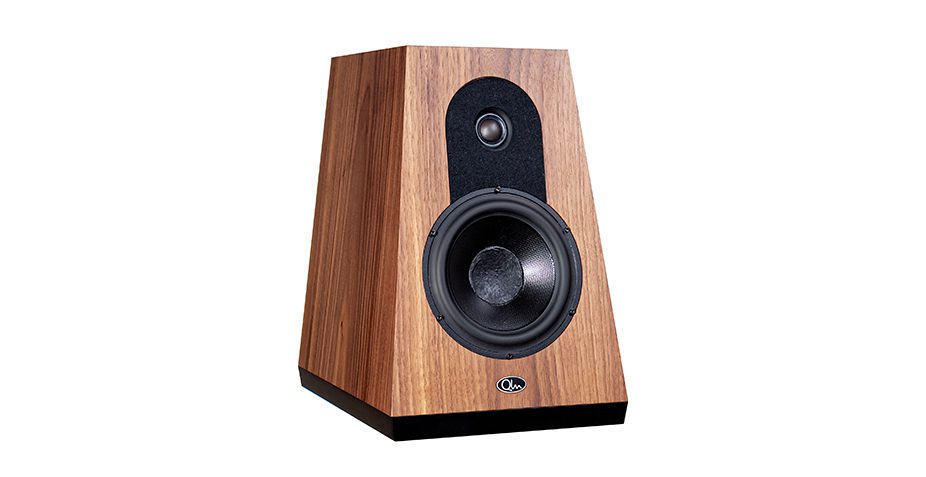
Qln is one of those slow-burn companies that make the audio world something wonderful. Based in Gothenburg in Sweden, the company has a small but perfectly formed range of loudspeakers. Perhaps the best-known model in the range is the evergreen Qln One, which first saw the light of day at a CES in 1981 and was re‑released by the brand 40 years later. However, the Prestige One design takes the design cues and development from that original loudspeaker and runs with it.

In fact, Qln has developed three very different models from that original loudspeaker; this Prestige model, the paper-coned entry-level Qln One and the upcoming ne plus ultra Signature.

Slanted and truncated

The Prestige One is a compact stand-mount monitor-style speaker not too dissimilar in aspect and configuration to the original Wilson Audio WATT, although comparisons fade on even the most surface comparison (the original WATT has an inverted metal dome tweeter and weighed almost twice as much as the Prestige One). The slanted baffle and truncated pyramid of the Qln Prestige One harks back to the company’s original design from the early 1980s, and like that early model, this cabinet shape helps time-align woofer and tweeter, keeps most extraneous baffle effects at bay and reduces internal standing waves, thanks to its non-parallel layout. The thanks for the absence of cabinet effects is not solely the result of a good cabinet design; the cabinet material itself contributes substantially. Unlike most ‘boxes’ at this level, the Qln Prestige One uses a simplified version of its 22mm Qboard design. This is made up of a viscoelastic layer sandwiched between two layers of high-density fibreboard. This scheme was first promoted by Qln’s Mats Andersen back in 1995 and, while constrained layer damping has slowly moved into some other cabinet designs, few have as much experience with the technology as Qln, and as a consequence few loudspeaker cabinets are as free from distortion as the Prestige One.

There is also a substantial rear port on the Qln Prestige One, but the loudspeaker has minimal port ‘chuffing’ and the internal faces of the 22mm Qboard cabinet are damped with organic wool. The concern with any large rear port is not simply ‘chuff-chuff’ sounds that sing along with bass notes; it’s that so many ports act like musical cornflour; they are a thickening agent to bolster up the sound of a smaller loudspeaker by exaggerating the upper bass. To Qln’s infinite credit, this has never been a function of its designs, and the Prestige One doesn’t suffer the tell-tale bass bloom; it uses the natural roll-off of cabinet and loudspeaker driver to deliver a good, honest bass instead of an artificially boosted one.

Speaking of drive units, the Prestige One sports a Scan Speak made, Qln selected 177mm Kevlar cone mid/bass design with a copper ring in the magnet system, and a 25mm soft, textile-dome tweeter also has a copper ring in its ‘Air Circ’ magnet system, has a large roll surround and a substantial rear chamber. The two drivers have been chosen not just because they integrate together well, but because both do what Qln considers to be ‘best of breed’ attributes for their respective tasks; the woofer is optimised to deliver low intermodulation distortion and max out midrange dynamics, while the tweeter is free from reflections and resonances that are magnified in a tweeter.

Integration between the two drivers is key and the crossover is hardwired with baked air coils (my favourite kind, especially those dusted in cinnamon before baking) and polypropylene capacitors. Internal attention to detail continues in the guise of Qln making its own solid-core internal wiring; none of which is externally visible, but comes to rest in a pair of high-grade WBT plugs. There are also a matching pair of stands that come pre-assembled and are about as near mandatory as it gets!

Manual mode

The manual for the Qln Prestige One is a fine one. It relies more on ‘tell’ than ‘show’ (there aren’t many diagrams), but is informative and clearly written. It gives good instructions on placement, stand-height and run-in that are eminently sensible and free from ‘first, peel your elf’ style magic fluff.

This also proved to be an extremely forgiving and pliant loudspeaker in terms of partnering electronics. Yes, of course the better the equipment, the better the performance, and it’s probably not the kind of loudspeaker that responds well to low-power single-ended triode designs (that Kevlar driver needs some solid-state damping factor if it is to play beyond whisper quiet levels) but is otherwise extremely electronics friendly.

The Qln Prestige Ones I received had already seen some miles on the clock, so I can’t speak to their manual-recommended 50 hours to sounding good and 200-300 hours to sounding great. They sounded great right out of the box. And ‘great’ in this context translates to ‘being extremely impressed by the precision and depth to the bass.’ The important word in that sentence was ‘precision’; the Prestige One has a tidy, ordered and precise bass. There is good depth (especially in a small room) that belies the claimed -3dB point at 42Hz, and I suspect this is due to a clean and fundamentally honest bass performance without any blooms, booms or thickening along the way. As something of a tribute to the sad passing of Maxi Jazz, I felt compelled to play ‘Insomnia’ by Faithless [Reverence, Cheeky] with that drop and Sister Bliss’ epic riff followed by some extremely deep dance beats. These bass notes can thunder and wobble where they should simply ‘boom’, and the Prestige One does ‘boom’ very well indeed. It also gets close to nailing the Trentemøller test [‘Chameleon’, The Last Resort, Poker Flat], which has successive deep, almost square-wave notes that choke up any port. The Qln Prestige One falls into that rare group of ported speakers where the degree of congestion is extremely low. All signs of an extremely well-engineered loudspeaker.

The fun doesn’t stop with the bass notes, and is not limited to electronica. As you move up the frequency range, the same precision and control apply and it’s here I have to be mindful not to damn the product with faint praise. Precision and control could be read as euphemisms for an undynamic or boring sound and it’s absolutely neither of those things. In fact, if anything, the Prestige One is one of the most dynamic-sounding stand-mounts in its class. It’s an exciting performer too. However, that precision and control means it’s only exciting when the music is exciting, and its as dynamic as the music you play through the speaker. This is a good thing, as loudspeakers are often either easily impressed by music (and therefore prone to over-exuberance) or dour and over-damped. The Qln Prestige One is one of the few that sits squarely in the middle; letting the music flow without constraint or adding its own fingerprint. This is the easiest part to hear in the Qln’s performance because so many recordings occupy this midrange; Bob Dylan’s voice, for example, springs out against the rest of the band on ‘Hurricane’ [Desire, CBS]. It’s always distinct and as articulate as Dylan’s nasal vocal gets, but here it occupies the song, making the intensity of the lyrics all the more poignant.

Dylan’s voice does highlight perhaps the only mild shortcoming of the Prestige One; the upper end of his adenoidal voice can get a bit too nasal at times. Not ‘strident’ or even ‘hot’… but maybe ‘warmer’. However, that aside, what applies at the lows and mids, also applies to the treble, which is effortless and never peaky, whatever the music played. And the whole package creates an extremely good soundstage too. But, I think what really shines with the Prestige Ones is that ‘whole package’ part; a reviewer’s job is to tease apart the performance of a product, and that is something the Qln Prestige One singularly fails to allow; you are listening to coherent, cogent music at all times, and while a reviewer needs to be drawn into discussions about aspects of the loudspeaker’s performance, the whole really is so much more than the sum of the parts.

Top performer

Given Qln’s heritage, I was expecting something good, and I wasn’t disappointed. However, I wasn’t expecting something this good. The top-end two-way stand-mount world is a heavily contended one, with players big and small wanting to make everything from an upscale book-shelf model to a full-blown studio monitor. As such, it’s difficult for any loudspeaker to carve its own niche. But, I don’t think Qln has that problem; the sound is so intrinsically ‘right’ and ‘enjoyable’ and that holds whatever music you play through the Prestige One. Put simply, if you like music, you’ll love the Qln Prestige One!

Technical specifications

  • Type two-way full-range rear-ported stand-mount loudspeaker
  • Drivers 25mm wide surround, AirCirc magnet, soft dome tweeter; 177mm Kevlar cone woofer
  • Sensitivity 87 dB SPL 1 Watt 1m, 100–10kHz
  • Low frequency performance -3dB at 42Hz
  • Impedance 8 ohms
  • Amplifier requirements 25–250 Watt RMS
  • Standard finishes Walnut Piano, Walnut Matte, White matte
  • Dimensions (H×W×D) 390 × 265 × 372mm
  • Weight 14 kg each
  • Price £6,800, piano lacquer £7,350, stands £880

Manufacturer

Qln

www.qln.se

UK distributor

Fi Audio

www.fiaudio.co.uk

+44(0)1563 574185

Read more Qln reviews here

Back to Reviews

Klipsch RP-8000F II floorstanding loudspeaker

The Reference Premiere series of speakers from Klipsch may only have been introduced into the UK in 2019, and the RP-8000F II updated even more recently, but there lies behind them an impressive heritage that I will take the liberty of briefly outlining for those who are not familiar with the story.

Klipsch is one of those legendary brands that have carved out their place in audio history. Variously described as a genius, madman and maverick, Paul W Klipsch started it all by creating and building the iconic Klipschorn loudspeaker by hand in a tiny tin shed in Hope, Arkansas, in 1948. Such historic milestones always seem to take place in the humblest surroundings and it was in the cellar of his house in Ilkley in Yorkshire that another of the pioneers of loudspeaker design, Gilbert Briggs, made his first loudspeaker. He went on to found Wharfedale in 1932. These are just some of the legendary figures that helped get us where we are today.

Of course, while Wharfedale are credited with producing the first domestic two-way [moving coil] speaker cabinet with a crossover unit in 1947, it was horn-loaded loudspeakers for which Paul Klipsch is famous. He patented his design for the full-range Klipschorn corner horn in 1945, took on his first member of staff in 1948 and now the company’s Indianapolis factory employs more than 200 people and has a turnover of around $58 million.

Silver Medal

Paul Klipsch received a Silver Medal Award from the Audio Engineering Society in 1978 for his contributions to speaker design and distortion measurement and was inducted into the Audio Hall of Fame in 1983 and the Engineering and Science Hall of Fame in 1997. He died in 2002 aged 98.

I had the rare opportunity of having dinner with Paul Klipsch while he was visiting London sometime in the late Eighties. I remember him being singularly unimpressed with the pathetic proportions of the crayfish we were served with in the restaurant compared with what he was used to in the States. He was a true Southern gent, sharp as a tack, spoke his mind and did not suffer fools lightly. I liked him a lot.

Although Klipsch now also makes wireless speakers, all-in-one systems and in-ear and over-ear headphones (counting the McLaren Formula 1 team among their users), it remains true to its past and still proudly sells the Heritage range, which celebrate the legacy of those first speakers made by the hand of Paul Klipsch himself. The range starts with the Heresy IV at £6,695 up to the Klipschorn itself at £22,599.

I recently got to borrow a pair of the Forte III (now in their fourth iteration) from the Heritage range and was so impressed with them that I promised myself I would check out the latest generation of speakers from Klipsch, the Reference Premiere series, from which I chose the RP-8000F II floorstander at £1,999 for my review here. This is the top-but-one model in a line-up that starts with the stand-mounted RP-500M at £659 and ranges up to the RP-8060FA II at £3,299, which looks nearly identical to the RP-8000F II but has Dolby Atmos speakers built into the top of the cabinets.

Horn-loaded heritage

Although the Reference Premiere series could hardly look more different from the Heritage range in their form factor, horn technology is still at their heart in the form of its 25mm horn-loaded titanium tweeter. Horn loading is said to maximise efficiency and increase detail while focusing high frequencies towards the listening area. The Tractrix horn geometry claims to provide the most efficient transfer of high frequencies. It uses a phase plug and compressed moulded silicon face to ensure smooth frequency response. In the MkII iteration of the RP-8000F, the size of the horn has been increased to produce a larger soundstage and enhance directivity. The tweeter uses a 25mm titanium diaphragm and has a linear travel suspension with a ceramic magnet housing. It is also vented to help reduce the standing waves that create unwanted harmonics.

Klipsch RP-8000F II

Horn loading is of course part of the Klipsch DNA. They say that the larger the radiating diaphragm of a speaker, the more air will be moved and the greater the sound energy. Large diaphragms, they say, are inconvenient and heavy and so by using a flared transmission channel, or horn, the effective radiating area can be increased to that of the mouth of the horn, creating “an imaginary, massless diaphragm at the mouth”.

The benefit, say Klipsch, is that while neither the electromechanical efficiency nor the power capability of the speaker is changed, the transfer of mechanical to acoustical energy is greatly increased, which, and I quote them verbatim here, “is why our speakers can produce louder sound efficiently, thus p***ing off your neighbours”.

A lot of speaker for the money

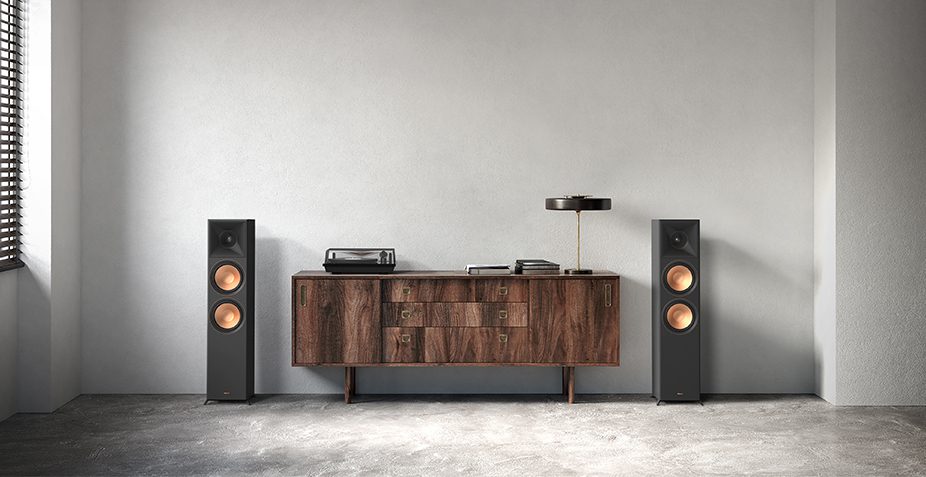
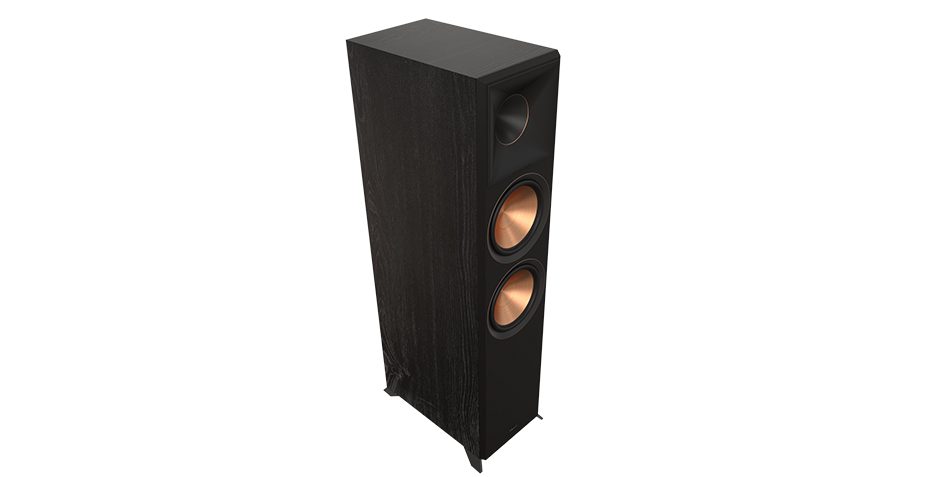
The horn-loaded tweeter sits in a large, floorstanding MDF cabinet almost 110cm tall, 27.5cm wide and 43.3cm deep. It is definitely a lot of speaker for the money. That’s doubtless why the cabinet is finished in a vinyl wrap in either ebony or walnut rather than real-wood veneer.

The horn-loaded tweeter is joined by two 203mm Cerametallic woofers. The cones are spun copper and are said to be extremely light and rigid. The dual-layer copper-wound voice coil is 70% larger than in the MkI model, which is said to improve power handling. They also have new aluminium shorting rings that are designed to reduce distortion and improve power handling, while the new motor system is claimed to offer improved transient response. The two woofers are housed in their own chambers, vented through two Tractrix reflex ports that are flared to allow the fastest air transfer from the cabinet and reduce port noise. Internal cabinet braces are used to help control internal resonances and vibration.

The RP-8000F II has connections to allow bi-wiring or bi-amping, and at the very top of the rear panel are two 4mm connections for a Dolby Atmos speaker, such as Klipsch’s own RP-500SA II, when using them in a home-cinema configuration.

The cabinet comes with fitted cast aluminium feet, which provide a stable base, and mean that you don’t have to faff about with Allen keys to fit spikes. The only drawback is that they cannot be adjusted for level, but a judiciously-placed coin would, I am sure, do the trick. They were fine on my floor without, though.

The Klipsch manual does not give much guidance on positioning or distances from walls. It suggests they should be 3m to 4.6m apart, toed in for better stereo imaging, with the listener sitting around 1 to 1.5 times the distance separating the speakers.

In my listening room, I ended up with them around 15in from the rear walls and 0.5m from the side walls of my listening room and this seemed to offer the idea balance for me. They were also toed in towards the listener.

How did they sound?

To evaluate the RP-8000F II, my chosen source components were an Audio Note TT3/PSU-3/Arm2/Io1 turntable combination played through an AN S-9 transformer, plus an Audio Note CDT-Five transport and DAC5. The amplifier was a Meishu Tonmeister integrated, which is a high-quality, single-ended valve design using Audio Note’s own 300B power valves and delivering around 10W per channel. I know these components well and the Klipsch speakers should make an ideal partner for the relatively low-powered Meishu, with their high efficiency of 98dB.

People often harbour misconceptions about horn-loaded speakers, assuming they will be brash, ‘honky’ and colored. So let’s see if that’s true.

First up was a track of Ben Sidran’s that I know inside out, namely ‘Sunny Side of the Street’ from his Enivré d’Amour CD. Immediately impressive was the openness and presence of Sidran’s vocals, which were articulate, intelligible and full of emotional impact, lacking in any tendency to shout and definitely very far from honky or colored. The same was true for piano, which was open and had beautiful body and detail. Bass was nicely weighted yet tight and tuneful. I would venture to say that very few speakers at this price would match the sheer weight of the Klipsch with its large enclosure volume. Yet, at the other end of the sound spectrum, cymbals were delicate, detailed and syncopated.

Dave Koz is one of my favourite sax players, so I reached for his excellent Saxophonic CD and played the opening track ‘Honey Dipped’.

The Klipsch voiced his sax beautifully with body, power and detail, while the bass line was weighty and moved well. The dynamics of the track were also nicely conveyed and the music had pace, power, excellent rhythmic ebb and flow and yet control and composure. No glaring saxophone here. These speakers were beginning to grow on me.

Next I spun up the TT3 turntable combo to see what the Klipsch could do with the superb Stephen Fearing album The Secret of Climbing, recorded and produced by Rega.


I selected one of my favourite tracks, ‘Red Lights in the Rain’, and was very impressed at how the Klipsch conjured up the image of Stephen playing and singing in my living room, as I’d heard him do live at a recent gig. His voice had presence, articulation and power where appropriate, without shouting, while his lovely Manzer Cowpoke guitar had all the delicacy and bite it should, as well as body, which is well captured on the Rega recording. The Klipsch sounded natural, detailed and dynamic.

I then played the excellent Johnny Nash song ‘I Can See Clearly Now’ from guitarist Peter White’s Groovin’ CD.

Nimble-fingered play from White was wonderfully captured by the Klipsch with all the nuances and twists and turns that I would hope for. Percussion lines were detailed and nicely separated, as was the accordion. And when that reggae-style bass line came in with a wallop, the Klipsch handled it well, with excellent weight and control.

Album after album and CD after CD served only to confirm my initial impressions of the RP-8000F II. Whether it was Luther Vandross, Bonnie Raitt, George Benson, Bruce Springsteen or Anita Baker, they conveyed vocals cleanly and without obvious vices or nasties. And they were as good at conveying the emotions and delicacy of slow ballads as they were the rhythmic power and push of uptempo tracks such as Al di Meola’s ‘Roller Jubilee’ (from Splendido Hotel) or ‘No One Emotion’ from Benson’s 20/20.

Mindful of the preconceptions people have about horn-loaded speakers being harsh, brash and colored, I lived with the Klipsch RP-800F II in my system for a couple of weeks. Don’t get me wrong, it took only a few bars of a couple of my favourite tracks for me to know that I liked them and decide how good they were, but now I can also say that at no time during that extended listening period did they do anything to change my initial impressions.

Four acoustic principles

Paul Klipsch defined the sound of their speakers by the four acoustic principles he set out a the very beginning. First, high efficiency with less power and less distortion; second, controlled directivity for a lifelike soundstage; third, a wide dynamic range and, finally, controlled frequency response without any frequency bias, unnatural highs or lows and reproducing sounds accurately and without coloration. I can confirm that to my ears the RP-8000F II ticks all of those boxes.

At £1,999, you get a lot of speaker for the money, but they deliver not only quantity, but quality too. They are dynamic, detailed, tuneful and present a large, open soundstage with a weight and quality of bass you’d struggle to better at the price. For all of those reasons, I recommend them most enthusiastically. They have got to be one of the best buys on the market at this price point.

Technical specifications

  • Type 2.5-way three-driver reflex-loaded floorstander
  • Driver complement One horn-loaded 25mm titanium tweeter, two 203mm Cerametallic woofers
  • Frequency response 35Hz–25kHz ±3dB
  • Crossover frequency 1.63kHz
  • Impedance 8 ohms
  • Sensitivity 98dB/W/m
  • Dimensions (H×W×D) 109.5× 27.5× 46.3cm
  • Weight 27.85kg
  • Price £1,999 per pair

Manufacturer

Klipsch

www.klipsch.com

UK distributor

Henley Audio

www.henleyaudio.co.uk

+44(0)1235 511166

Read more Klipsch reviews here

Back to Reviews

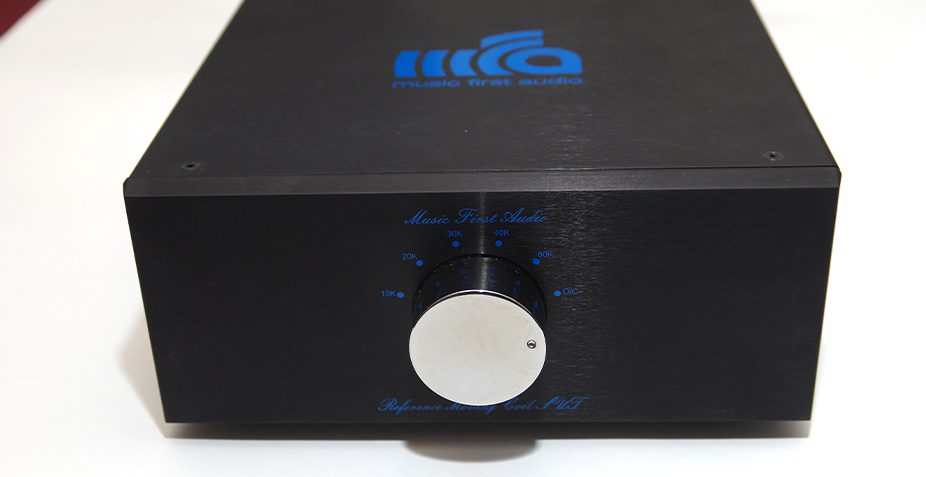
Music First Audio Reference SUT step-up transformer

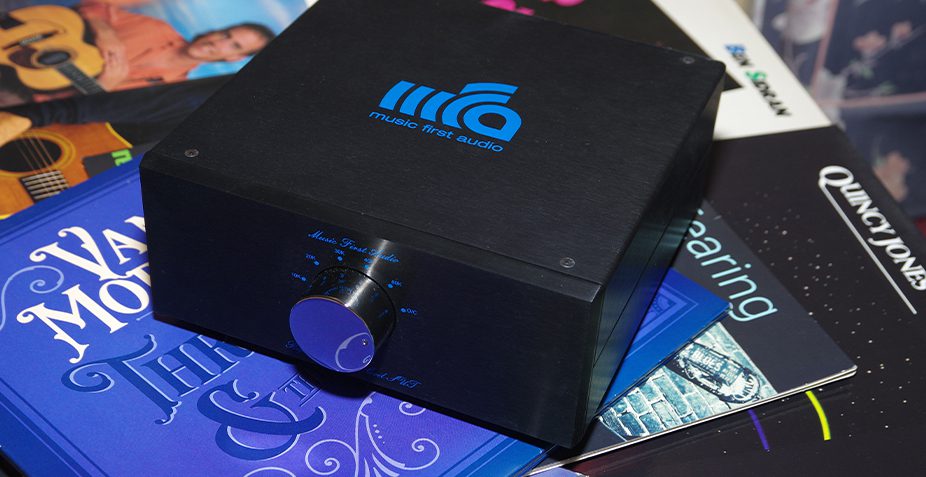
The output voltage from a moving coil cartridge is so low – typically 10 times lower than the average moving magnet – that a separate step-up device is needed. That could be an active head amplifier or, like the Music First Audio device I am reviewing here, a passive transformer.

There has always been a heated debate about whether a transformer is a better solution than a head amplifier. Many believe the transformer is a better way because it does it passively and without adding the noise that an active amplification stage will add. It is also argued that a transformer is preferable because you’re loading the cartridge with something that is similar to its own nature, rather than just loading it with a resistor and then adding as much gain as you can.

Primary Schooling

In a transformer, a primary coil is wound onto a ferromagnetic core causing a magnetic field to flow in the core. A secondary coil provides the output and the secondary voltage is in proportion to the ratio of the number of turns multiplied by the primary voltage. It’s as simple as that, except… it isn’t. Many regard transformer design as a bit of a black art. The choice of materials for, and configuration of, the core, the thickness of its laminations [laminated is regarded as superior to solid-core as they control eddy currents better], the insulation between the laminations and the choice of wire are all critical to the final sound quality.

If you look at professional studio microphones, they always use transformers. But expertise in transformers is difficult to find, which is where Music First Audio comes in, as it was ideally placed to pick up the baton and run with it.

Hastings-based Music First Audio traces its roots back to the specialist transformer winding company Stevens & Billington set up by MFA founder Jonathan Billington’s father and a Mr C St John Stevens in 1963. They were on the brink of being made redundant from a London-based electronics company and left to set up a business producing inductors and ferrite-cored transformers and mains transformers for many UK-based companies. Mr Stevens left the business in 1971 to pursue his interest in making and restoring musical instruments.

It’s a Family Affair

Jonathan’s father then went into business with Jonathan’s mother to continue making transformers, adding miniature models to the range for use in microphones.

After he completed a degree in electronics and communications engineering, which included acoustics, his mother handed the business over to him in 1990. In 2002, he designed the first of his transformer-based passive pre‑amp and decided to form Music Audio First as part of his plan to turn his hi-fi hobby into a business.

Music First Audio Reference SUT

Now Music First Audio, true to its transformer heritage, is producing a range of four transformer-based passive preamps, and four moving coil step-up transformers. It was when I got talking to Billington at a show last year that I decided to take a look his new top-of-the-range Reference SUT.

The MC step-up transformers start with the MC632 at £720, the Baby Classic at £2,034, the Classic V2 at £3,240 and then there is the Reference SUT I am reviewing here at £4,560.

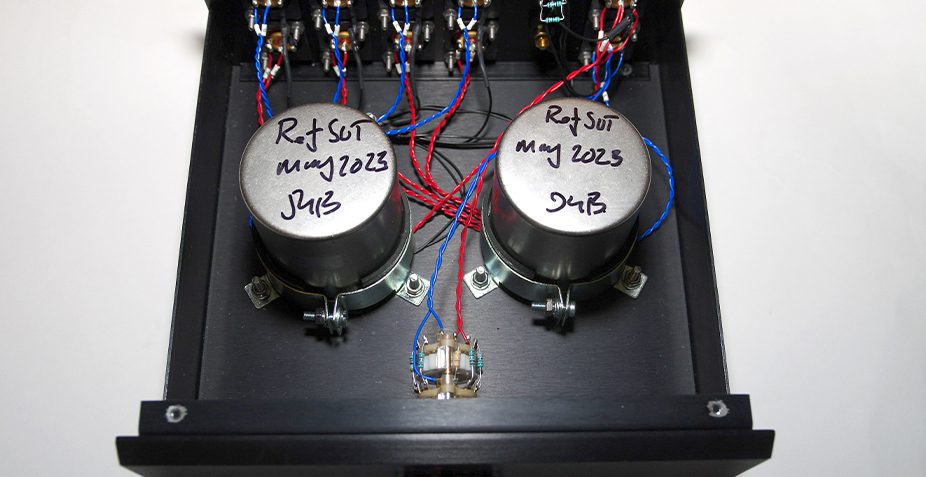
As standard, it offers four inputs with step-up ratios ranging from 1:10 to 1:100. Unusually, where many transformers do this by taking separate taps off the same winding, MFA’s Reference SUT has four completely separate primary windings for each input. This of course explains the stark warning in the manual that connecting more than one cartridge at the same time may cause damage as the one that is playing will generate a signal at the other inputs and that will be fed to the cartridge not in use.

Billington started work on the Reference SUT in 2021 and his goal was to provide flexibility for the user with four step-up ratios. He supplied mine with ratios to suit my cartridge, but the usual four provided are 1:10, 1:20, 1:40 and 1:100.

No taps on us!

Billington tells me that using four separate primary windings, one for each input, reduces resonances and the number of connections in the signal path as there are no taps, and no switch.

The transformer itself uses a large EI core construction and the laminations are made from mu-metal that is 80% nickel and 20% iron. The heat treatment used for the laminations, he tells me, is very important, as is the size of the laminations, and even the amount of paper interleaving between layers of copper as possible.

The coil windings are copper and he has selected what he believes is the ideal gauge to keep the DC resistance down, while also allowing him to leave an air gap between turns of the four primary windings.

Music First Audio Reference SUT internal

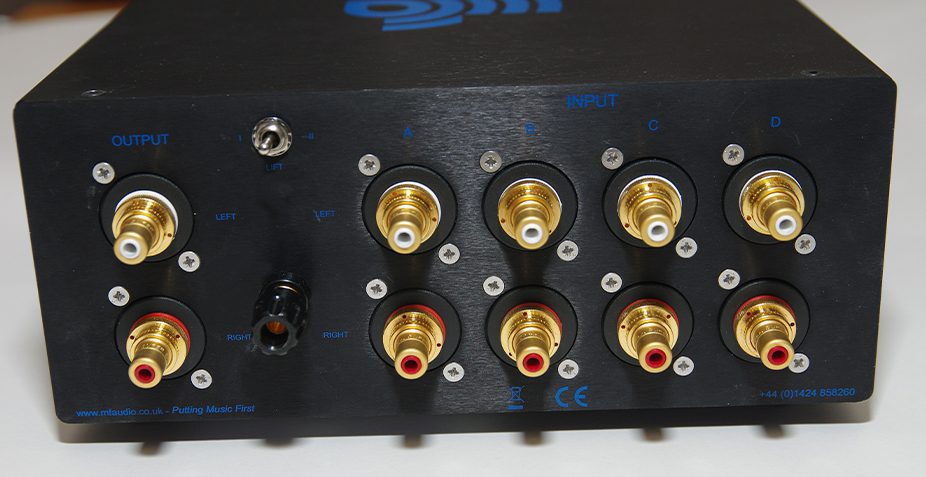
Using and connecting the MFA Reference SUT is simplicity itself. The single knob on the front panel selects the load and places an impedance in parallel with the amplifier MM stage’s input impedance. 10k, 20k, 30k, 40k and 80k are provided along with an OC (open circuit) option that does not use a parallel resistor. Billington suggested that for my cartridge, an Audio Note Io1, I would probably find OC was best and that 80k or 40k would ‘soften’ the sound. He was absolutely right, so I stuck with OC. Other than that, just choose the input that gives you the right step-up ration for your cartridge output, which for me was Input 4 at 1:40.

An earth terminal is provided and most times this must be used to prevent hum. It is always good practice to position a transformer as far away from big power supplies as you can to avoid any chance of hum, but the MFA was not too fussed and was pleasingly quiet and hum-free in operation sat between my Audio Note Meishu Tonmeister integrated amp and the TT3 turntable.

My listening was with the components already mentioned and the speakers were either the Russell K. RED 120Se or Audio Note AN-J LX Hemp.

Power and emotion

I started off with ‘Dark Night of the Soul’ from Van Morrison’s Three Chords and the Truth. Straight away I was pleased with the detail, control, power and emotion in his vocals captured by the MFA transformer. The bass line too was full and tuneful and Morrison’s vocal soared as he really used his range and there was no hint or harshness or forwardness. All in all, an excellent performance.

Going back a few years, Ben Sidran’s album Bop City was spun up next. This is a truly superb, dynamic and clean recording and the MFA captured the emotion and character of his vocals and his fleet-fingered piano play. Drums were dry, explosive and powerful and really packed the punch they should, while the bass line was full, fast and tuneful. The track has a very fast pace and the MFA conveyed its urge and impetus well.

A track I love and first heard at my local hi-fi retailer was next, namely ‘Build Me Up from Bones’ by Sarah Jarosz from the album of that name. It is a wonderful track and a great recording with an interesting mix of instruments from Jarosz’s mandolin to cello and pizzicato and bowed violins. The MFA captured the emotion and beauty of her voice, the delicacy of her mandolin play, the body and weight of the cello and the seamless backdrop of violins well.

Finally, I put on ‘Racing in the Streets’ from Bruce Springsteen’s Darkness on the Edge of Town album. This is an achingly beautiful, emotionally charged ballad from Springsteen that is probably my all-time favourite of his. The MFA conveyed the vocal and piano on the intro with excellent detail and integrity. Drum rimshots were clean and when that powerful, deep bass line kicked in it had impact, weight, power and tunefulness. The track was beautifully focused and articulated and signalled to me that we definitely have a class product here.

Taking nothing for granted

Not one to take anything for granted, I also had to hand another transformer I respect greatly at around this price to help me put the MFA into a market context and decide on what kind of value for money it offers. I am pleased to say the MFA passed the test with flying colours and more than held its own against a major competitor.

Music First Audio Reference SUT rear

The Reference SUT from Music First Audio impressed me greatly. It is a well-thought-out product, well made, has the versatility to be a good match for most cartridges out there and offers superb sound quality. I would say it has got to be one of the strongest contenders at this price. I have no hesitation in recommending it. Make sure it is on your list to listen to if you need a step-up transformer at the price/quality level.

Technical specifications

  • Type Moving coil step-up transformer
  • Inputs Four provided. As tested, these were
    Input 1 1:10 step-up ratio for 0.5mV cartridge output
    Input 2 1:20 for 0.25mV cartridges
    Input 3 1:30 for 0.16mV cartridges
    Input 4 1:40 for 0.12mV cartridges
  • Load switching 10kΩ, 20kΩ, 30kΩ, 40kΩ, 80k and open circuit
  • Total harmonic distortion (0.35mV, 1:20 input) 0.022% @ 40Hz; 0.01% @ 1kHz; 0.024% @ 10kHz
  • Dimensions (H×W×D) 100mm × 250mm × 216mm
  • Finishes Black or silver
  • Price £4,560

Manufacturer

Stevens & Billington Ltd

www.mfaudio.co.uk

+44(0)1424 858260

Read more Music First reviews here

Back to Reviews

Introducing Our Next Generation Compact True Wireless Earbud – Technics AZ40M2

August 2023 – We’ve upgraded In AZ60M2, we’ve taken the advancements in engineering that we’ve made in sound quality, call quality, and comfort, and dialed it up.

With true to life sound quality, the AZ40M2 Earbuds lets you connect to your music on a whole new level. Our signature rich Technics sound is supported by an 6mm free-edge dynamic driver and unique acoustic structure. LDAC compatibility lets you enjoy hi-res wireless listening.

Active Noise Cancelling helps hold your focus where you want it – so you can zone out during your travels and focus on the music or podcasts. You can customize your sound in the Technics Audio Connect app to make sure you always hear just the right amount of (and type of) outside noise.

When you’re working across as many as three devices—computer, phone, and tablet—you can now switch seamlessly. We’ve upgraded the AZ40M2’s with 3-device multipoint connectivity to keep all of your connections smooth and professional.

An improved in-ear drop design has just made it easier to wear your AZ40M2s for extended periods of time, too. The comfortable in-ear ergonomics, plus four earpiece sizes to choose from, help you get a snug fit that feels (and sounds) just right.

The AudioWorks ‘Open House’ with Kevin Wolff of CH Precision and Alan Sircom of Hi-Fi+ on September 28th

Thursday September 28th

2:00pm to 5:30pm
6:30pm to 9:00pm

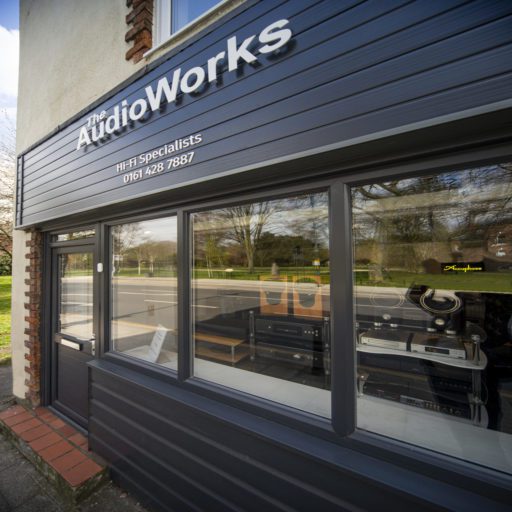
The AudioWorks in Cheadle, Cheshire will be giving interested listeners the chance to enjoy the CH Precision electronics in a relaxed and convivial atmosphere. Kevin Wolff of CH Precision will be on hand to take questions on the CH equipment, while Alan Sircom, the Editor of Hi-Fi+ Magazine will be fielding queries on any other topics you care to raise. During the afternoon you can either drop in or book your own slot if you prefer. In the evening, simply turn up to enjoy the system, the music and a glass of wine.

Equipment on hand will include:

Vertere MG1 (or possibly an LP12 with the Supatrac Blackbird Tonearm) and Lyra Etna Lambda
CH Precision P1 Phono-stage
CH Precision D1.5 CD/SACD/Transport/ Player
CH Precision L1 Line-stage
CH Precision X1 Power-supply
CH Precision M1.1 Power Amplifier
Finkteam Borg Loudspeakers


The AudioWorks, 14 Stockport Rd, Cheadle, SK8 2AA

Tel. +44 161 428 7887
E-mail: [email protected]

Call or email Larry Ogden if you’d like to make an appointment.

Gryphon EOS 5 – World Premiere

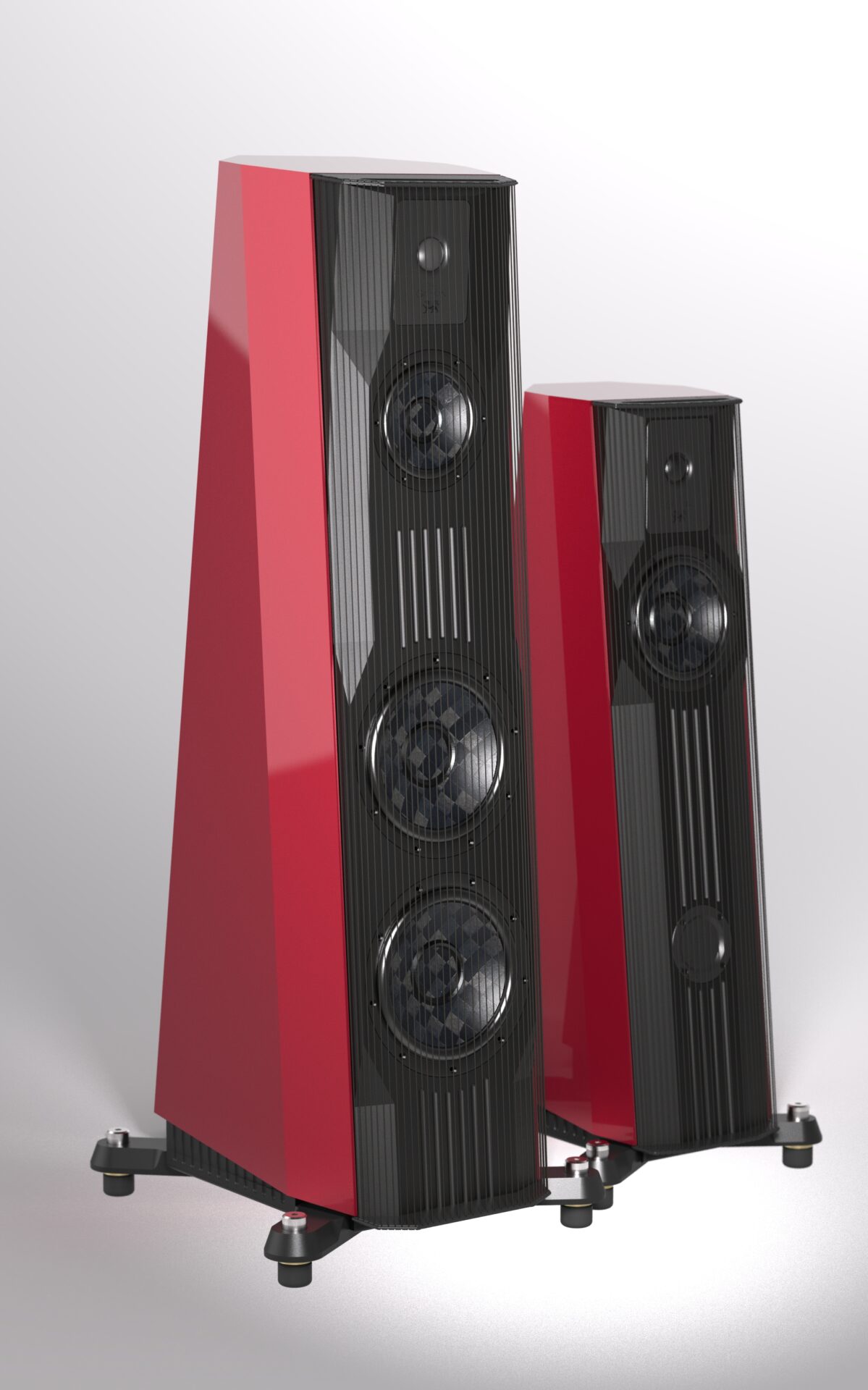
Woodcliff Lake, NJ | 18 August 2023 – Gryphon Audio Designs ApS, designer and manufacturer of Ultra-Luxe Audio Systems, introduced its EOS 5 Tower Loudspeaker on 11 August at HKAV (Hong Kong Audio Video) 2023.

Building upon technologies pioneered for Gryphon’s revolutionary EOS 2, the larger EOS 5 adds Full Frequency Range performance (20-40,000 Hz, +2 dB) and shattering dynamic capability. All four drivers are bespoke to EOS 5: the 6.5” Midrange and dual 9.5” drivers utilizing the TPCD™ (Thin-Ply Carbon Fiber Diaphragm) cone construction and Impulse Optimizer Rings which first appeared in EOS 2. As with EOS 2, the cones are manufactured by one of the world’s leading fabricators of Formula 1 components while a smaller (29mm) Beryllium Dome Tweeter has been purpose-engineered for EOS 5’s higher crossover point. Engineered to present an easy amplifier load, 90 dB sensitivity is coupled with a 4 Ohm nominal, 2.9 Ohm minimum impedance.

Visually, EOS 5 shares the faceted, jewel-like enclosure aesthetic created for its smaller sibling. Internally, however, the Line-Dampened porting system offers a unique solution to smoothing airflow in this larger, wider-bandwidth loudspeaker. Like the EOS 2, the new EOS 5 benefits from two design flourishes which enhance placement versatility across a broader range of listening environments. A three-position Tweeter Level Switch offers 0dB, +2dB or +3dB boost to optimize off-axis dispersion in the greatest variety of domestic spaces and seating arrangements. Once again, Gryphon’s custom-manufactured adjustable spikes are equipped with removeable, integrated dampers to provide the most stable speaker positioning on flooring either with or without carpeting.

The trio of colors—Soul Red Crystal, High Gloss Black and Stealth Grey—selected for EOS 2 are joined by a remarkable new finish: “S-Mat Black.” A next-generation, matte black paint used here for the first time in loudspeaker manufacture, S-Mat Black features a “Self-Healing” chemistry which, in the event of small scratches, can actually be repaired with the help of a piece of parchment baking paper and an iron used at low heat, which encourage the paint to re-flow and regain its normal, unblemished surface.

The new EOS 5 will be available in early 2024 with an MSRP of 42.800 EUR ($49.800 US MSRP).

Stack Audio: New AUVA EQ and AUVA 50

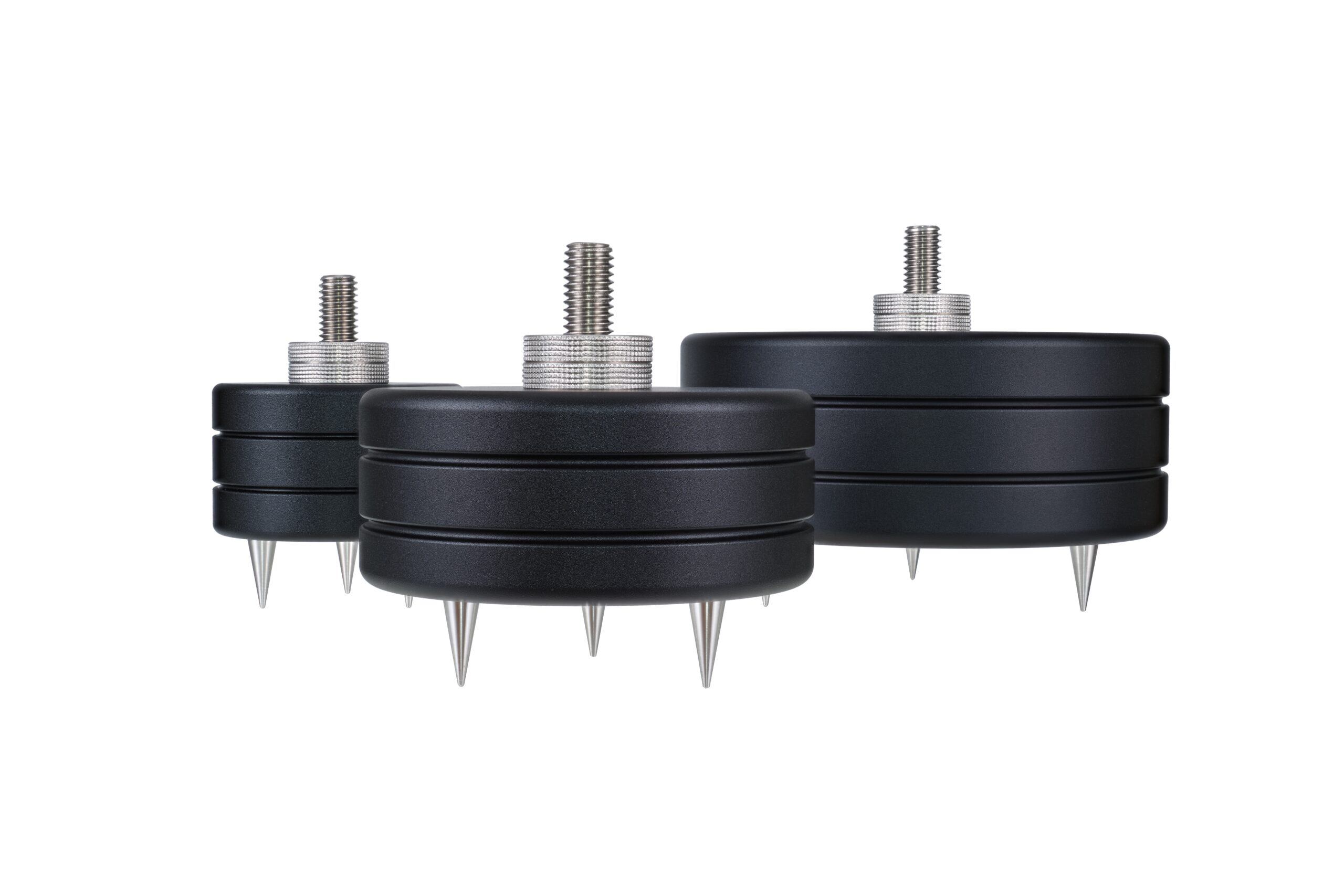
August 17, 2023 – Stack Audio is pleased to announce the next products in our expanding range of vibration- absorbing accessories, specifically designed to remove vibrations and reveal the music: the AUVA 50 loudspeaker isolators and the all-new AUVA EQ system isolators.

AUVA EQ

The AUVA EQ is a unique system isolator that combines two vibration absorbing technologies working in tandem for the ultimate level of equipment isolation. AUVA is our Particle Impact Damping technology. CSA stands for Custom Silicone Absorber – a new purpose-designed deformable suspension that provides Compliant Damping. Removing vibrations reveals more detail and texture in music; the AUVA EQs have been developed to enable your Hi-Fi system to perform at its very best.

The rigid machined aluminium shell of the AUVA EQ is designed to sit underneath the piece of Hi-Fi equipment in direct contact with the case. The silicone absorber sits on the Hi-Fi shelf or rack. As such, the case of the Hi-Fi equipment is directly coupled with the AUVA chamber of the EQ but de-coupled (or isolated) from the Hi-Fi shelf via the CSA suspension. Sets of EQs start from £125.00 EX-VAT for a set of 3.

  • (D) 50mm (1.7 inches) (H) 28mm (1.10inches)
  • Designed and manufactured in the
  • Compatible with most Hi-Fi equipment (0.3-60kg) / (0.66-132lbs)
  • AUVA Particle Impact Damping technology works across a broad frequency
  • CSA specifically formulated to absorb high levels of external
  • Enhanced soundstage, extended bass, more detailed
  • Easily interchangeable CSA inserts available for purchase separately for use with different weights of Hi-Fi.

AUVA 50

Following multiple awards from critics and positive feedback from customers for the AUVA 70 and 100 speaker isolators, Stack Audio set out to provide the AUVA quality and performance at a more accessible price point. This resulted in the AUVA 50s which are designed to do two things: hold your loudspeakers rigidly whilst simultaneously absorbing vibration.

Holding loudspeakers rigidly is critical to hearing spatial detail and the clarity and timing of musical notes. These are the essential elements that make focused listening a pleasure. The patent pending technology within the AUVAs paired with their solid outer shell enables them to remove vibrations whilst maintaining structural rigidity.

They are available to order from the Stack Audio website in sets of 3 or 4 with a choice of felt pads or spikes and a wide choice of fixing sizes to suit most loudspeakers. Set of 8 RRP £367.50 EX-VAT.

  • (D) 50mm (1.7inches) (H) 30mm (1.18 inches) w/o spikes, bolts, and
  • Designed and manufactured in the
  • Compatible with the majority of speakers (up to 275kg/606lbs)
  • Two tuned AUVA cells for broadband vibration
  • Suitable for both hard floors and
  • More defined bass, clearer vocals and high

We are now shipping from within the EU.

Stack Audio are also pleased to announce that European orders for all AUVA products are now being shipped from directly inside the EU. As such, country specific VAT will be charged when checking out on our website to avoid any unexpected import costs & duties.

Sendy Audio Peacock planar-magnetic headphones

I will fess up about some entirely wrong initial worries I had here regarding the name ‘Peacock’. I expected headphones made for a Regency dandy. As the rest of the range includes headphones called ‘Phoenix’ and ‘Robin’, my initial concerns about the Sendy Audio Peacock open-backed planar-magnetic headphones were just me being a bit bird-brained.

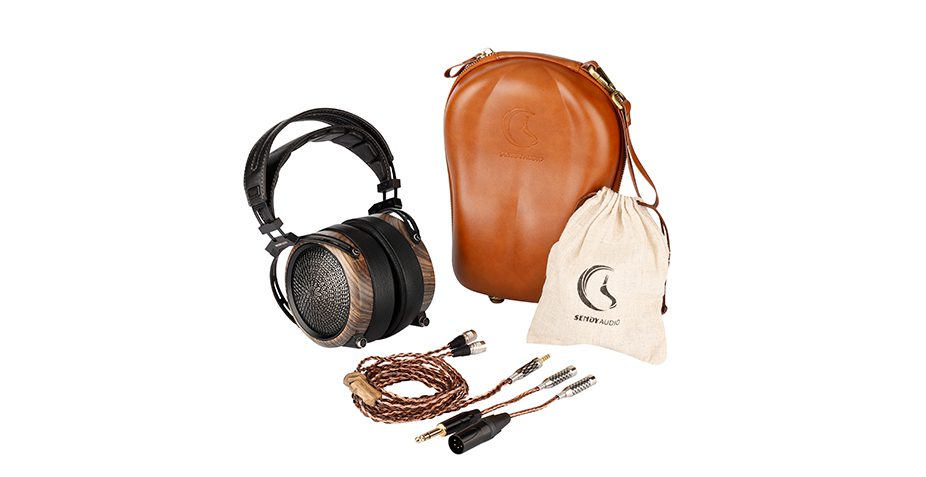
Naming them ‘Peacock’ means you should expect some finery, and Sendy Audio does just that. Its box is made of stiff card. Wood and anodized metal are everywhere, with goat leather cups and suspension headband wrapping. Lettters are etched into the wood of the earcup or marked with gold-on-black panels. The ‘Left’ and ‘Right’ channels are marked on the sides of the headband, picked out in huge lettering inside the earcup itself and engraved on the Hirose connectors on the supplied cable. This is reassuring as I’ve lost count of the number of headphones where such things are only revealed under almost microscopic scrutiny.

Terracotta chicken

A small, branded muslin bag inside the Sendy Audio travel case holds the supplied bi-colour copper braided cable and a set of adapters. This stiff, moulded tan leather case comes with a slightly too small carry handle and looks like you packed a terracotta chicken.

The gold-plated perforated metal grille is a second protective black layer, looking like a peacock’s tail. This grill protects the 88mm planar-magnetic dual-sided, double-magnet layout driver using proprietary material and a quad former layout. Sendy Audio claims a smooth and extended frequency response up to 40kHz.

There are some close similarities between products under the ‘Sviga’ brand and those known as ‘Sendy Audio’. In some markets, the parent company Sviga chooses to brand the products as ‘Sviga’ and ‘Sendy Audio’ in others. You’re getting two reviews for the price of one!

Get comfortable

First things first, the Sendy Audio Peacock is comfortable. Those ear cups are cool and allow for long, perspiration-free listening sessions. Articulated earcups and the suspension headband also make the Peacock feel relatively light on your head, especially given its 578g weight.

You never feel ‘pinched’ by a tight headphone band, but it might be too light a clamp for those with small heads. As a result, ear cups can move on your ears when leaning forward or back, but I prefer that to the ‘wandering headband’ effect.

The cable picks your choice of electronics… in a good way. Sendy Audio is making a statement about using the Peacock with lower-power amplifiers by using 4.4mm Pentaconn balanced connector as standard and including adaptors for 4-pin XLR and 6.35mm stereo jack. Ideally used in balanced operation, Sendy’s Peacock must be driven well to show what it can do.

U-shaped Peacock

The sound of the Sendy Audio Peacock has a mild U-shaped nature. It has a full and rich bass with just a hint of sub-bass enhancement, treble detail, and a subtle, relaxed midrange. This contrasts with the forward sound of many headphones in the same class. This isn’t a scooped-out sound; the midrange is detailed and articulate and very warm and inviting, making a particularly insightful but not pressured rendition of ‘Here’s the Tender Coming’ from the album of the same name by The Unthanks [Rabble Rouser]. This is sung with great precision and rhythm. An innate sadness in Becky and Rachel Unthank’s voices comes through perfectly.

These are songs of the wives, mothers and daughters seeing the coming of the press gang. These laments seem dull or focused on the players, not the music. The Peacock gets this perfectly right. It has a tonal balance that brings out the sorrow of hundreds of years of press gangs. Not everyone is going to like this tonal balance. Some will prefer stark neutrality over the Peacock’s more euphonic approach. It is hugely fun to sit and listen through these headphones all the same.

Space and scale

Staying with The Unthanks, this sparse recording is often just the two voices and reverb. Sendy’s Peacock has space and scale, which are surprisingly un-headphone-like. Images appear in front of your head with no sense of lateralisation, and excellent stage width and depth.

Moving over to ZZ Top’s Tres Hombres [London] and Hickox and Davis playing Vaughan Williams London Symphony [Chandos], the same pattern emerges; sonorous, deep bass, soaring treble, great imaging and an effortless, if mildly recessed, midrange. The ZZ Top track shows how good the Sendy Audio Peacock’s dynamic range is for a planar-magnetic headphone system. The sheer energy of the best dynamic drivers is lacking (although it wins in the bass). And a handful of planar magnetic designs can match or even exceed the Peacock’s performance. That balance is a very attractive one.

Sendy Audio’s Peacock is ‘Attractive’ in sound and looks. The sound has detail, good bass and a fine soundstage. Its performance is attractive and fun too. This makes the Peacock ideal for long listening sessions.

Technical specifications

  • Type Over ear, open-backed planar-magnetic headphones
  • Transducer diameter 88mm
  • Frequency response 20Hz-40kHz
  • Sensitivity 103dB ±3dB
  • Impedance 50Ω ±15%
  • Cable length 2m
  • Connectors 4.4mm balanced, adaptors for 6.35mm jack, 4pin XLR
  • Weight 578g
  • Price £1,499

Manufacturer

Sendy Audio

www.sendyaudio.com

UK dealer

Eden Audio

www.edenaudio.uk

+44(0)7864 727394

Read more Sendy Audio here

Back to Reviews

Vertere Acoustics DG-1 S turntable

We first looked at the Vertere Acoustics DG-1 turntable here. The review praised Vertere for its innovative approach. It uses elements of its more up-market turntables with a flat tonearm made of a laminate of materials. The DG-1 set a standard for ‘sensibly’ priced turn-key turntables that remains hard to match today. Engineers are an ever-interested bunch, however. Making the DG-1 showed how to improve it. All of which put Vertere on a path to create the DG-1 S. Unfortunately, the changes preclude an upgrade pat. However, while the DG-1 S is better than its predecessor, the original DG-1 is more than competent. Few would consider the move an upgrade.

That ‘not an upgrade’ position doesn’t completely hold water. If you conducted a side-by-side comparison, you’d choose the DG-1 S over the DG-1 every time. However, I think most who have already invested in the DG-1 are looking beyond simple replacement. Vertere turntables go from the ‘aspirationally’ to the ‘astronomically’ priced. So, Vertere might have that next turntable in line too.

Revision, revision, revision

To roll out that old cliché, the DG-1 to DG-1 S changes are more ‘evolution’ than ‘revolution’. Minor operational ‘quirks’ have been painstakingly ironed out. These are not bold changes, but subtle improvements to the design and construction of the DG-1. Even little details like a slight change in position of the on/off/speed control button. Now, it has further distance between that and the round belt.

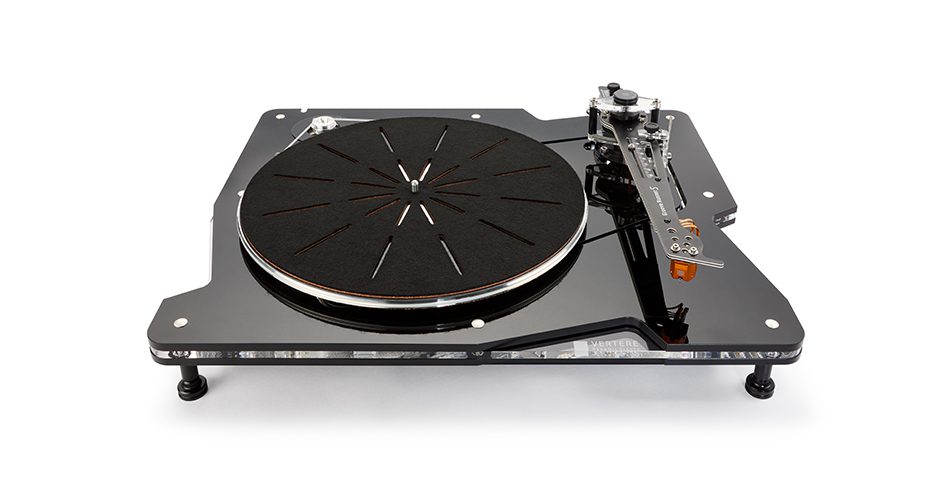
The signature aspect of the DG-1 receives a heavy share of upgrades, though. That ‘Groove Runner’ flat arm wasn’t just for show; it helps push resonances out of band that a conventional arm-tube just has to live with, but the original’s three-layer aluminium/polymer sandwich has been further stiffened and improved by the use of five polymer layers. This not only further reduces resonance, but prevents accidental deformation of the arm.

Meanwhile, the bearing now sports an adjustable Kevlar vertical bearing alongside the Nylon of the horizontal. In talking about five layers of flat polymer and Nylon/Kevlar bearing systems – not forgetting the ribbon flexible PCB as signal wires runs in between the two polymer arm beam layers, it’s pretty clear that we are definitely not in Kansas anymore, Toto!

Intelligently underslung!

The counterweight is underslung with two secondary weights, making the counterweight more ‘intelligent’ than most. Setting the counterweight downforce is slightly more complex than most as it requires the use of a (supplied) stylus gauge, but it’s easy to use and fully explained in the manual. This also allows for azimuth adjustment.

A pre-aligned Magneto moving magnet cartridge comes as standard. You can get it with a Sabre moving magnet cartridge design or without any cartridge at all. There are also several upgrades to the DG-1 S that can boost performance, but we limited our upgrade path to the Challenger power supply, some Redline cables, and the Phono 1 Mk II L phono stage (itself an update and worthy of a revisit review in its own right in a later issue).

While the upgrades can quickly rack up a pretty penny, most keep their feet (make that ‘optional support pods’) on the ground. No-one’s recommending an eleventy-thousand pound phono cable replacement for a three and a half thousand point turntable here. Even though the DG-1 S would be surprisingly likely to be able to take such an upgrade.

The turntable itself

A lot of the changes to the DG-1 S are under the surface of the turntable itself. The motor control software, for example, has been re-written to help improve smoothness and reduce rumble, as well as being more accepting of that Challenger power supply. The bearing is of a far higher tolerance than before. The means whereby acrylic joins hands with acrylic on the chassis has been improved, too. And finally, the feet are at once adjustable and more able to sit on Vertere’s own IsoPaw pods.

I’m trying not to make a get-out clause here, but almost everything else remains unchanged from the original as tested in Issue 184, so there’s no need to rehash things. Our original sample arrived before Vertere had picked out a natty line in cartridges, however, so the Magneto (essentially a Audio Technica AT-VM520EB moving magnet cartridge wearing a different Vertere-coloured coat) wasn’t part of the review. But, MM is very clearly the way to go with the DG-1 S and I felt little need to strip that Magneto off to jump up a few notches. Maybe that’s a long-term goal for DG-1 S listeners. Upgrading cartridges is made a little easier by handy guidelines on the arm itself.

Fair and balanced

What I liked about this turntable as a complete package is it doesn’t make things difficult for the listener. It’s the sort of turntable that could happily drop into a starter system or grace one where every single component costs twice as much as the turntable. Why it does this is simple; it’s got the ideal balance of ‘head’ and ‘heart’. Often turntables fall into one of two categories, extremely detailed (and a bit sterile sounding) or great fun (but a little inaccurate). It’s almost as if the reaction to the presence of digital audio was an over-emphasis of vinyl’s innate characteristics, or over-compensation to make them sound almost coldly precise. The better turntables at any price tend toward a dynamic balance between these two characteristics, and the DG-1 S just does this a lot better than most. Not simply ‘at its price point’ too.

A fine example of this is to play a copy of Neil Young’s After The Gold Rush [Reprise] and play ‘Only Love Can Break Your Heart’. You need the detail and precision to make sure it doesn’t sound like Kermit the Frog singing, but you also need the warmth and musicality to ensure you hear the intent and passion behind the song. It’s a tightrope walk, and one the DG-1 S gets wholly right. The clarity of the vocal, the weight of the instruments behind that voice and the pain that went into the music all shine through.

Young and bouncy

After that, the rest just falls into place really well. Staying with Neil Young, the bounce of ‘Southern Man’ shows just how good the DG-1 S is at handling the rhythmic elements of a track. And playing both tracks shows just how captivating the DG-1 S can be, as you feel no burning desire to track hop, and every time you change a record, you want to play a record. Right the way through.

I offered more records to the DG-1 S. They all sounded great. This wasn’t an endless revelatory experience. Not every album sounded like the first time I heard it. But every album sounded how I felt it should sound, in all the right ways. And I’ve heard a number of significantly more expensive turntables that fail to make that grade.

What I found on my listening notes was a complete absence of listening notes! Nothing about soundstaging or dynamics, vocal articulation or detail… effectively all of those important elements of sonic performance are folded into the sound. They aren’t ignored and in fact are all very good. Dynamics and vocal articulation in particular are excellent, with good projection of both male and female vocalists; staying with adenoidal singers, if the DG-1 S can tease out the lyrics from post bike-crash Bob Dylan with ease, it’s doing a lot right!

Just one more thing

Toward the end of the listening session, I added the Challenger power supply upgrade. This little DC power supply (best used with a Redline power cord) is claimed to reduce motor noise, but that’s already pretty low. However, it does give the turntable seemingly more accurate speed control and better ‘space’ between the notes, especially bass notes. Whether from the outset or as a Christmas present to your turntable at a later date, it’s a great addition to the DG-1 S performance.

The Vertere DG-1 S is an excellent performer, both at its price and in absolute terms. This is what you upgrade to from your Rega or ProJect, and it will keep you in vinyl until you are prepared to spend really big. Excellent!

Technical specifications

  • Type Belt-drive record player with fixed axis bearing tonearm and moving magnet cartridge
  • Motor 24pole synchronous AC motor with acetal spindle thrust bearing, axially decoupled
  • Speeds 33.3 and 45 rpm, electronically changed and adjusted
  • Tonearm Flat, multilayer polymer arm
  • Power supply optional upgrade
  • Finish Black and white gloss
  • Dimensions (H×W×D) 13 × 47 × 38cm
  • Weight 8.3kg
  • Price £3,550 (including Magneto cartridge)

Manufacturer

Vertere Acoustics

 www.vertereacoustics.com

+44 (0)203 176 4888

Read more Vertere Acoustics reviews here

Back to Reviews

Puritan Audio PCM‑156 Special Edition mains distributor

Many power conditioners and distributors stress the ‘magic beans’ side of AC power. The Puritan Audio PCM-156 Special Edition mains distributor takes a far more pragmatic line. There’s not much ‘fluff’ here, just good power engineering.

Puritan’s range starts with the eminently sensible Guardian. This sits outside your system and suppresses unwanted sinewave spikes coming into your power. That includes noisy refrigerators, computers, and that iPhone charger you’ve had sitting behind a sofa for the last five years. The company also makes a range of Strip Purifiers, ‘dissipative’ power cords (you don’t want your power cord as an aerial, do you?) and top of the tree – the Studio Master Series. This last uses independent, tuned filter elements to rebalance the AC sine wave, remove all DC components, and reduce transformer noise to allow them to perform more efficiently, delivering optimal dynamics and power range.

Differential Modes

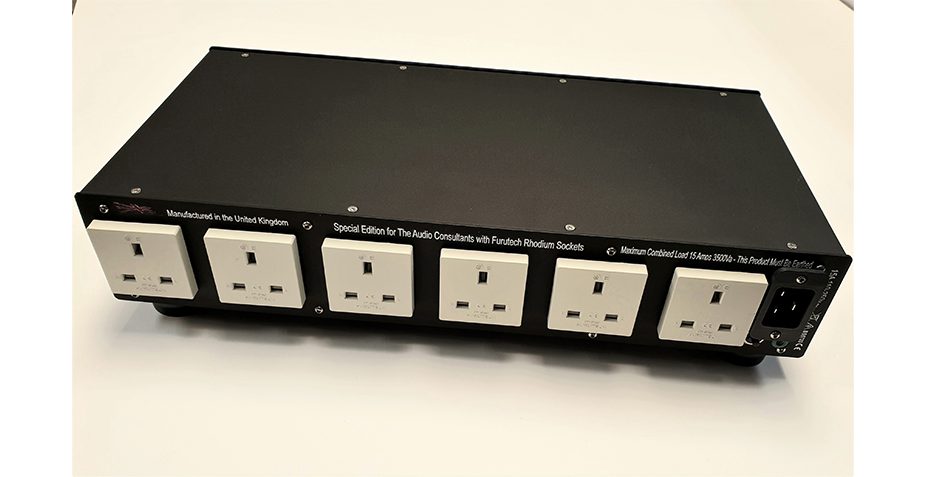
The Studio Master Series uses multiple cumulative and sympathetically tuned stages of purification to remove both common and differential modes of mains-born interference. And, unlike many distributors, conditioners and filters, Puritan’s deft touch improves the system’s performance, with only slight foreshortening of the soundstage. However, The Audio Consultants and its Puritan Audio PCM-156 Special Edition kicks in here. By using high-grade Furutech connectors throughout, this Special Edition physically grips the power cords more successfully than the standard version, and that –plus the extra contact surface area in those Furutech connections – makes even this minor ‘blip’ to the soundstage go away.

We received a ‘small’ care package from The Audio Consultants that includes both standard and Special Edition versions of Puritan’s PSM-136 and PSM-156 filter blocks, both having six 13A inputs with the meatier PSM-156 having many more stages of filtration (52 in fact) and ‘more filter’ means ‘more Puritan punch’. We also had a set of Puritan Classic power cords for the filters and standalone use with audio electronics. Ultimate versions seem to have their own little comfy sweater as outer shielding. No mandatory edict suggests you must use the Puritan’s C-19 power cords with products connected to the Puritan block. Still, the blocks’ filtration concept extends to the power cords and are an excellent physical, sonic and conceptual match.

The exciting part about the no-frills exterior of the Puritan Audio PCM‑156 Special Edition mains distributor is that it tends to tick a few ‘minimalist’ boxes. This isn’t some shiny brushed aluminium power conditioner full of exotic displays and fancy status indicators; it’s a no-fuss/’do exactly what it says on the tin’ kind of product. That is worthy of high praise because all the design expenditure is placed where it counts, on the inside.

Puritan Audio PCM‑156 Special Edition mains distributor: A Sense of Authority

The Puritan (Standard or Special Edition) bestows a sense of authority on the sound of the partnered equipment. This is no subtle change in performance; your equipment shifts up a gear, sounding more precise, focused, and authoritative. I want to differentiate ‘authority’ and ‘solidity’ here; the Puritan – especially the PSM-156 Special Edition – has both, which are very different here (often, these two blur into one). The difference is that the latter gives you a sense of an orchestra playing, while the former makes you understand the musicians’ intent.

There is also a markedly improved delicacy to the sound, with better inner detail in the midrange. And it’s here where the Special Edition pops up; that sense of detail and soundstaging is improved even more, taking the already excellent Puritan PSM-156 to a new level of refinement and dynamic shading.

Power products often give with one hand and take away with the other; clarity and detail improve at the expense of the dynamics or rhythmic qualities of the audio equipment. That’s not the case with any Puritan filters; they make the sound more detailed and authoritative but with little or no sonic downsides. As discussed before, where the Puritan Audio PCM‑156 Special Edition mains distributor improves matters still more is in soundstaging, but it’s not as if the standard version was ‘weak’ in this musical performance aspect.

Acid Test

My acid test on any power product is does it ‘open up’ or ‘close down’ my own musical listening. Some power filters and conditioners only want to direct the listener toward genteel music. I listened to ‘Dirty Rat’ by Sleaford Mods and Orbital. This is not ‘audiophile’ by any stretch of the imagination. However, the Puritan PSM-156 SE took it in its stride, retaining the punchy dance rhythm offset by the angry rant lyrics.

UK three-pin plugs have good contact area, and 90° plugs are unlikely to work loose over time. Puritan designs can be placed vertically or horizontally as they have two sets of feet. Therefore, straight 13A plugs are probably better. At this point, the relative ‘stiffness’ of the Furutech sockets makes much more sense, especially as they sound better too.

Do two things well

I want a power product to do two things well. They should improve the sound without throwing the baby out with the bathwater. The Puritan does that well, and the Puritan Special Edition does it better! It is that simple. You aren’t buying something that makes a fuss, or something that you must gently massage to make sound good. Play your system, put the PSM-156 in your system, and it stays there. Also, try to remove that Special Edition version, and there will be tears!

Puritan Audio PCM‑156 Special Edition mains distributor: Price and contact details

  • Puritan Audio PCM-156 £1,550
  • PSM-156 SE with Furutech FT-UKS Rhodium sockets and C-20 Rh IEC £2,150
  • PSM-156 SE with Furutech FI-E30 Rhodium NCF Schuko sockets and C-20 Rh IEC £2,100
  • All supplied with 2.0m Puritan Classic power cord

Manufacturer

Puritan Audio Laboratories

www.puritanaudiolabs.com

Special Edition versions only available from The Audio Consultants

www.audioconsultants.co.uk

Tel +44(0)118 981 9891

Read more Puritan Audio reviews here

Back to Reviews