Up to 37% in savings when you subscribe to hi-fi+
hifi-logo-footer

Begin typing your search above and press return to search. Press Esc to cancel.

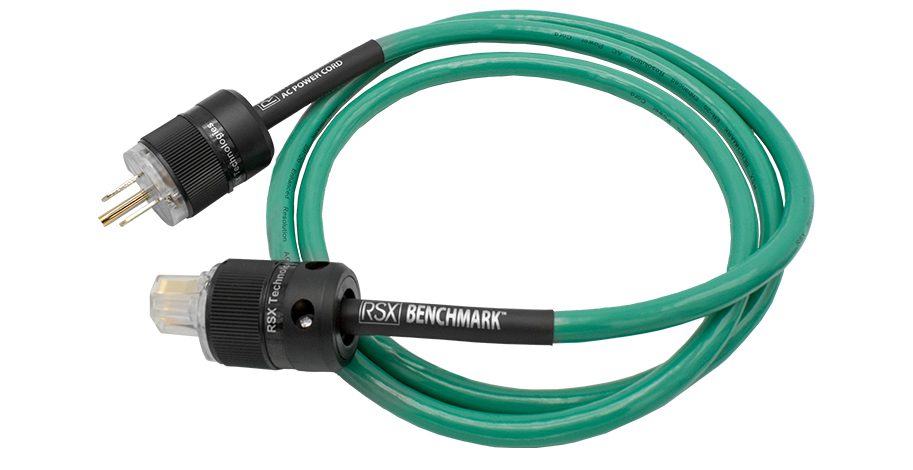
RSX Technologies Benchmark ER-20 power cord

This review is easy to write. If you need a solid and reliable yet eminently affordable, er, benchmark in power cords, the RSX Technologies Benchmark ER-20 fits the bill. It takes much of the technology that makes high-end RSX cables successful, boils those concepts down to the key salient points and retains many sonic benefits in the process. Job done!

RSX Technologies – brainchild of the originator of XLO cables, Roger Skoff – aims for maximum neutrality in all its cables; they should add nothing and subtract as little as possible while doing so. Many, many cable brands make the same claim, but it often ends as just that… a claim. Skoff’s designs remain secret but attempt to combat changes in cable capacitance and inductance caused by the geometry and insulation of the cable, and these changes to the base parameters of a cable alter both the phase and transient response of a system, and at worse can even distort the signal at source. Given that the root of all modern audio is effectively modulated current, whatever does the least harm, wins!

Automated assembly

In making Benchmark ER-20, RSX Technologies automated its conductor assembly instead of a more labour-intensive hand-building process, meaning it can make a cable that gets within striking distance of its more upscale cables at a fraction of the cost. Benchmark ER-20 uses ‘laboratory-grade’ copper, with what the company describes as ‘Balanced-Field’ geometry. This is met by a low dielectric constant, high dump-rate primary insulation, full coverage shielding, a special outer jacketing, and high-quality gold-over-pure-copper connectors.

The ’first, do no harm’ rule really does apply here. There’s a strong sense of the power supplies of your equipment having more scope to get out of the way of the music, letting that music have unattenuated dynamic and tonal accuracy. This brings out a lot in the music itself, from the harmonic structure of a piano piece through to those subtle string-squeaks and noises heard in classical guitar parts right through to some extra heft and drive when playing some cobweb-blowing Tool at a healthy level.

There are two stand-out aspects of performance here: solidity and detail. Sure, the solidity is wrapped up in the presentation of a good soundstage, but there’s something more to it than that. Instruments don’t just have a solid foundation, they appear more as physical entities in the room, relative to your standard system. If that system throws out a wide soundstage, it will be wide and solidly underpinned. If it’s narrower but deeper, that ‘solid underpinning’ applies equally. And it’s much the same with detail levels; unless you already have very high-end power cables, the Benchmark ER‑20 is your system, with more information on tap.

The downsides? You must like minty-green power cords and you don’t get the woven luxury of RSX’s more esoteric designs. You also need to factor a long weekend of bedding in before the Benchmark ER-20 lets you into its deepest caverns of bass. If you do some very tight-knit listening between this and those more exotic designs – through a suitably up-scale system – you’ll hear why spending more money is money well spent. Next, if you already have good, relatively esoteric power cords, you might get upset at how this relatively affordable cable wiped the floor with them. Especially as there’s a cryo-treated one coming that should be even better!

Yes, the RSX Technologies Benchmark ER-20 really is that good. Not just ‘good for the money’… just good, pure and simple.

Price and Contact Details

  • Price as tested £295/6ft

Manufacturer

RSX Technologies

www.rsxtech.com

UK distributor

Wollaton Audio

www.wollatonaudio.com

+44(0) 115 958 4404

Read more RSX reviews here

Back to Reviews

Synthesis Roma 117DC/Roma 98DC preamp/mono power amp combination

Certain audio technologies seem to appeal to some nationalities more than others and Italy is clearly in the valve camp. Synthesis has been making valve based audio components in Morrovalle, Macerata near the Adriatic coast since 1992, but that was not the beginning. Founder Luigi Lorenzon’s father ran a transformer business called FASEL which started in 1961 and specialised in electronics for guitar amplifiers including the Vox AC30 (as used by the Beatles) and the Cry Baby Wah-Wah pedal so beloved by one Jimi Hendrix. A good grounding in transformer design would have provided a great springboard for the fledgeling Synthesis brand in the early days, giving it an advantage over other companies during the valve amp revival of the early 1990s.

Today, Synthesis makes a broad range of amplifiers in both pure valve and hybrid forms as well as two CD players and a DAC. The Roma models are distinguished by wooden facias with a lacquered finish. But not necessarily in red, that just seems to be the company’s preferred colour. In fact, there are a variety of finishes to choose from including anodised aluminium rather than wood.

Synthesis Roma 117DC

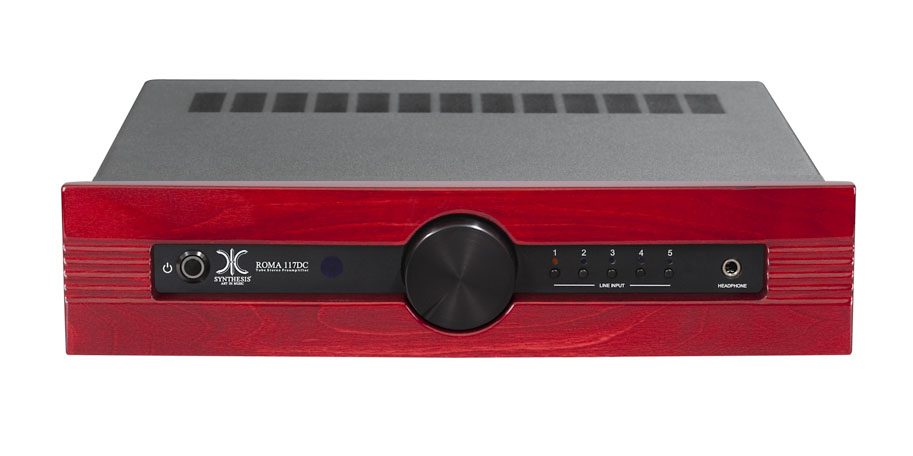
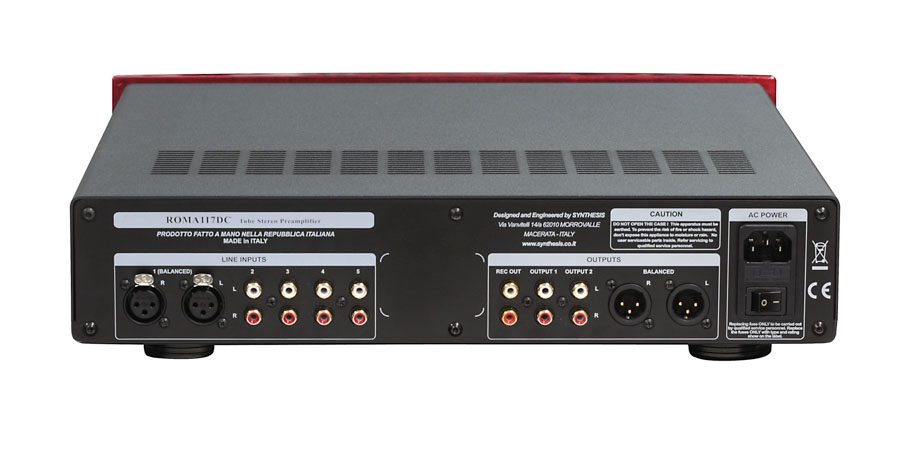
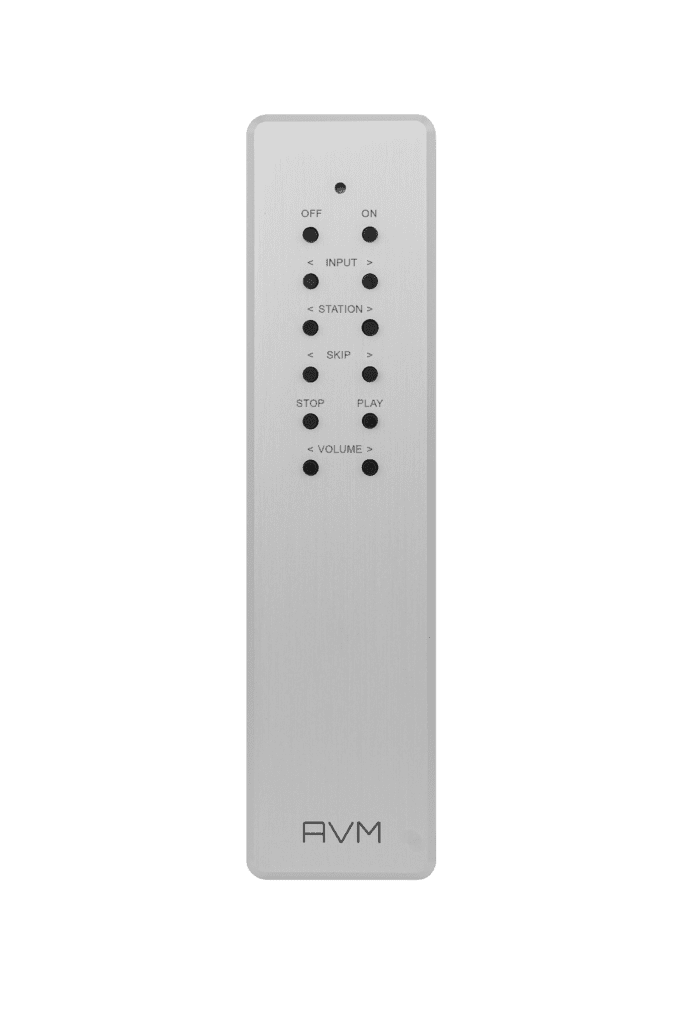
The Roma 117DC is a line stage preamplifier with both balanced and single ended inputs that runs two pairs of 6922/ECC88 double triode valves in order to offer gain should it be required. It has a transformer on the output in order to offer an impedance match with connected power amplifiers. This is not essential on a valve preamplifier, but if you are a transformer specialist like Synthesis it makes sense. The large volume control knob is attached to a motorised pot and can be controlled with a rather attractive aluminium remote handset, this will also change inputs and control functions on other Synthesis components. The circuit has been laid out with switching near the input sockets to keep signal paths short and minimise crosstalk, and precision components are used alongside valves selected for low noise and resistance to microphonics.

Window

The power switch is designed to confuse the unwary by virtue of the fact that when it’s illuminated the preamp is off, which is fine when you know what’s going on. Many years ago I had a DNM preamp with a similar peccadillo, I returned late one evening to find that my wife had nearly thrown it out the window because she couldn’t get it to work on account of the power being off when the light was on. The orange circle of light is attractive though and when you depress the button for a couple of seconds a relay clicks in and the circle flashes for 45 seconds whilst the preamp warms up, when the light is off the fun can begin.

Synthesis Roma 98DC

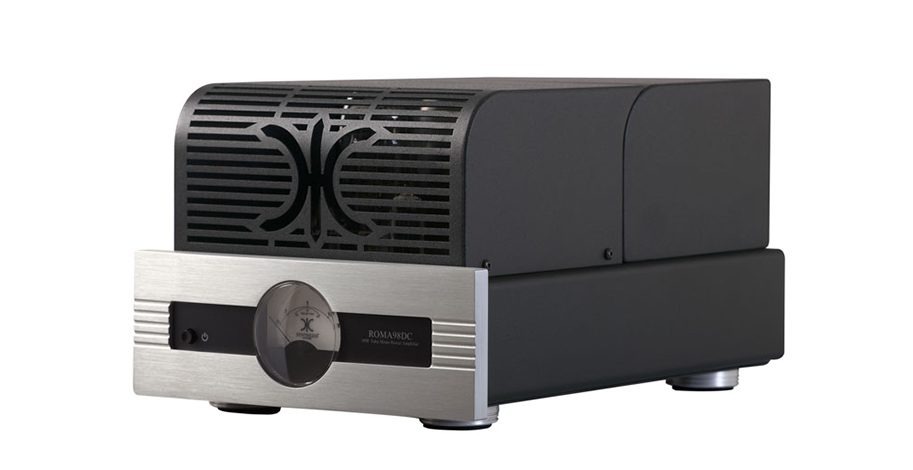
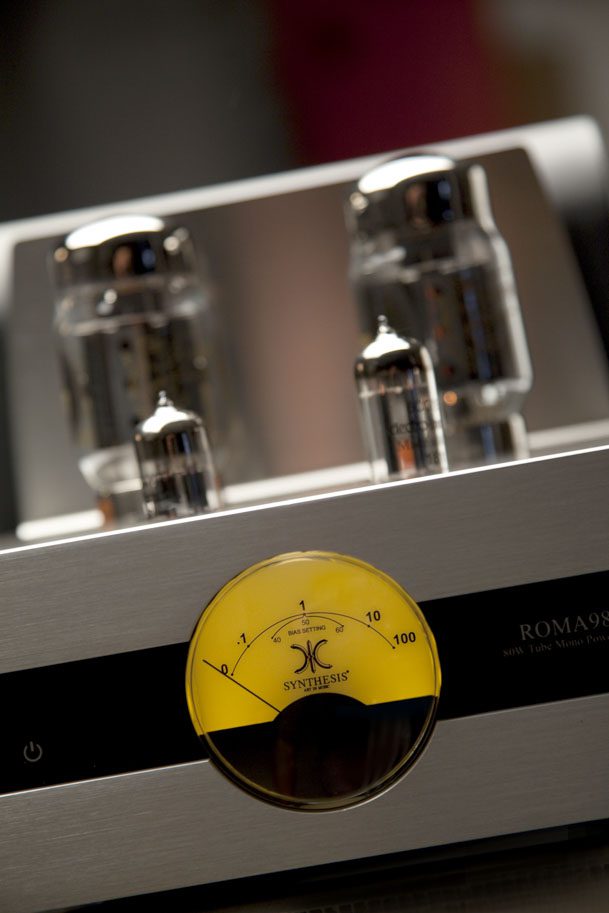
The Roma 98DC monoblock power amplifier is a chunky device that runs a pair of KT88 output valves and is specified to deliver 80 Watts. Its hefty 16kg mass indicates the presence of some serious iron in the output transformer, which is made by Synthesis in house; it claims that it delivers a wide response with low distortion. As output transformers are the most critical element in a valve amplifier, a company with so much expertise in the field inspires confidence no end. You can upgrade valves all you like but the bottleneck is often the output transformer.


I like the VU meters on the front of these monoblocks; they are backlit and twitch in response to demand from the signal. They can also be used to set the bias for the tubes which Synthesis encourage you to have done by a professional but also helpfully give instructions on how to do it yourself. Rear inputs extend to XLR and RCA sockets with two sets of speaker cable terminals for ease of bi-wiring. Unusually for a valve amp there are not alternative positive terminals for different impedance loads, presumably the output transformers have sufficient capacity not to require this. The power button illumination quandary also applies here but at least you can see the meter’s glowing when it’s on.

We need valves in our lives

Once the slightly crude nature of the volume buttons on the remote had been mastered I had an awful lot of fun with these amplifiers, once again prompting the question: why don’t I have a valve amp in my life at all times? These ones have the ability to reveal the heart and soul of the music and make listening to it that much more involving and enjoyable. Is this because they have great timing, an emphasis on the midrange or harmonic distortions that are different to those of transistor designs? It’s hard to say but very easy to hear. The Synthesis Roma pre/mono amp trio delivers the vitality and flair in all manner of musical styles and manage to bring out the good stuff in recordings that often sound crude when reproduced by more up to date tech.

Abdullah Ibrahim’s piano can sound hard and clanky but here his musical fluency takes centre stage and pushes the still slightly hard tonality out of the way, it’s less edgy but also more coherent, which means the melodies take centre stage and the music becomes truly enchanting. Steely Dan’s ‘Babylon Sisters’ is a staple of my reviewing playlist and one which in truth does not usually inspire much enthusiasm, it was chosen because it’s good but not a favourite. You don’t want to overplay the greats. Yet on the Roma powered system it came alive and induced something that, in the privacy of one’s own listening room, passes for singing. The mute trumpet is superb, Bernard Purdie’s shuffle drums irresistible and the horn section truly radiant, these amps put the joy back in this track in no uncertain fashion.

Sublime and substantial

If you stand back and stop playing music for a few minutes it becomes clear that there is some background hiss with these amps, this is not unusual with valve technology and in this case substituting a passive preamplifier indicated that the Roma 117DC preamp is the source. That said, once the music is playing it becomes irrelevant, drop Ryan Adams and the Cardinals playing ‘Hallelujah’ live and you are immersed in a sublime and substantial soundstage that draws the listener in. The balance is clearly on the warm side by transistor standards but this could also be interpreted as the cooler running technology producing a colder sound. The Roma 98DC amps are Class AB devices, hence their relatively high power, so there is muscle on tap when it’s required and their balance is in no way soft or wafty. You probably don’t get the transparency of Class A valves but most examples can’t control anything but the most sensitive loudspeakers, and there aren’t too many of those that will fit in the average metropolitan living room.

These amps are not shy when it comes to revealing the full glory of the music, this was apparent with all sorts of music but made itself obvious with Terry Callier’s ‘Lazarus Man’ (Timepeace), here the emotional power of the performance is enhanced by the Synthesis amplifiers to produce a degree of humanity that’s rarely achieved with recorded music. Valves are not tonally neutral but they have different harmonic distortion characteristics to solid state devices, and these favour what is arguably the most important thing about music, its ability to communicate emotion, and this Synthesis trio is effortless in this regard. You don’t get silent backgrounds or bone crunching bass, you get shivers up your spine and a warmth that makes the listening experience so rewarding. You also get clean, sweet treble and a degree of transparency that is hard to replicate.

Synthesis Roma 117DC

The Synthesis Roma components don’t go overboard on features but provide those that are necessary to do the job well, I for one would always prefer to have a separate DAC and phono stage as those onboard preamplifiers are usually compromised when it comes to power supply. The quality of transformer shines through in both preamp and power amps, the latter providing sufficient grip but always putting musical flow at the fore. But if you really want to know why they work, put on a great piece of music and try not to react physically or emotionally. An engineer might be able to do it but not a true music lover.

Technical specifications

Synthesis Roma 117DC

  • Type Valve-driven line-stage preamplifier with headphone output
  • Valve complement Four 6922/6DJ8/ECC88
  • Analogue inputs One pair of balanced inputs (via XLR connectors), four single-ended inputs (via RCA jacks)
  • Analogue outputs One pair of balanced outputs (via XLR connectors), two pairs of single-ended outputs (via RCA jacks), one pair of single-ended tape outputs (via RCA jacks)
  • Input impedance 100 kOhms (via XLR connectors), 47kΩ unbalanced (via RCA jacks)
  • Output impedance 1kΩ balanced (via XLR connectors), 500Ω (via RCA jacks)
  • Bandwidth Not specified
  • Gain + 22.5 dB (via XLR connectors), + 16.5 dB (via RCA jacks)
  • Distortion < 0.1% (20 Hz–20 kHz) 1VRMS
  • Signal to Noise Ratio > 90 dB (Weighted A)
  • Dimensions (H×W×D) 167 × 480 × 450mm
  • Weight 10kg
  • Price £4,249

Synthesis Roma 98DC

  • Type Valve-driven monoblock power amplifier
  • Valve complement Two KT88, one 12AY7, one 6CG7
  • Analogue inputs One pair balanced (via XLR connectors), one pair single ended (via RCA jacks)
  • Analogue outputs Two pairs of speaker taps (via 5-way binding posts)
  • Power output 80Wpc RMS @ 6 Ohms
  • Bandwidth Not specified
  • Sensitivity 600mV for max power
  • Distortion 0.07% at 1W/kHz, 1% at 80W
  • Signal to Noise Ratio > 90dB A weighted
  • Dimensions (H×W×D) 210 × 260 × 410mm
  • Weight 16kg
  • Price £3,249 each

Manufacturer

Synthesis

www.synthesis.co.it

UK distributor

Henley Audio

www.henleyaudio.co.uk

+44(0)1235 511 166

Read more Synthesis reviews here

Back to Reviews

Bowers & Wilkins 705 S3 stand-mount loudspeakers

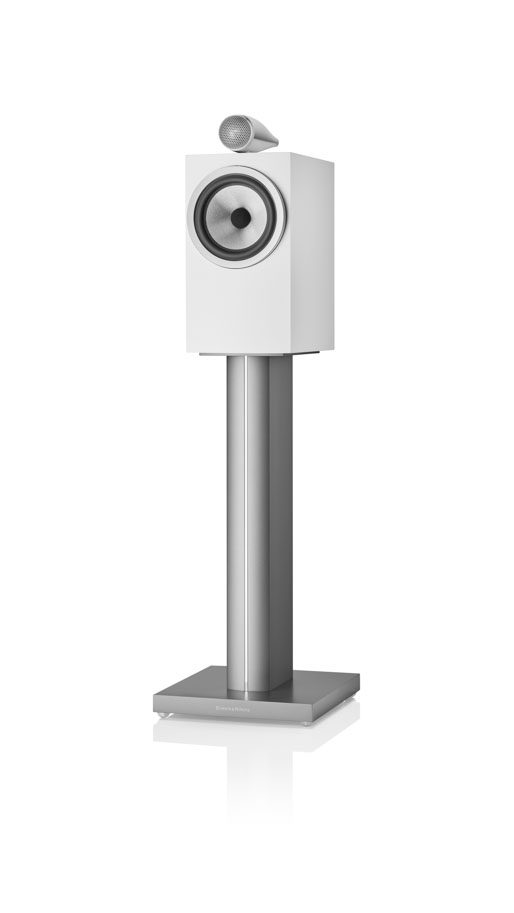
Getting to ‘Series 3’ of the Bowers & Wilkins 705 stand-mounting loudspeaker has been a more convoluted process than it might seem at first glance. You might imagine that ‘S3’ replaces ‘S2’, which in turn replaced ‘S1’ (or perhaps just ‘705’) – but you’d be wrong.

Getting to ‘705 S3’ initially required an original ‘705’, it’s true. But after this, the entire 700 range (for reasons no one cares to remember) became the ‘CM’ range. ‘CM’ didn’t remain a thing for all that long and was replaced by the ‘S2’ range of 700 models. Then the 705 S2 (and the 702 S2 floorstander) were singled out for the Bowers & Wilkins ‘Signature’ treatment – I reviewed the 705 Signature in issue 187 of this magazine. These ‘Signature’ editions ran alongside the ‘vanilla’ S2 models on which they were based.

The third is the fifth

This means that the 705 S3 that is under the microscope here is, in fact, the fifth version of this midrange standmounter that Bowers & Wilkins has launched. All clear?

It isn’t apparent at first glance, but the 705 S3 differs in numerous ways from the 705 S2 it replaces – and naturally, we’ll get to those differences in due course. But one difference that comes leaping out at the prospective customer concerns the asking price – and not, you’ll be less than staggered to learn, in a good way.
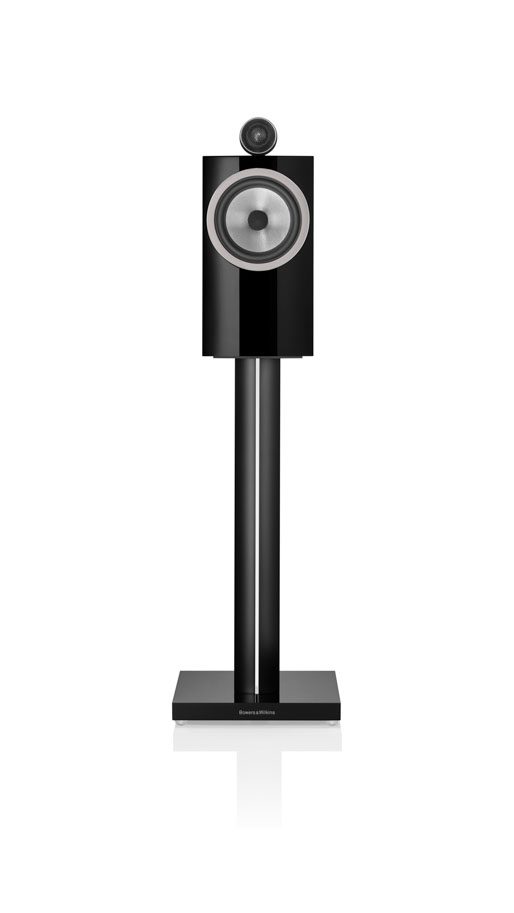
Bowers & Wikins 705 S3

Admittedly the world was very different when the 705 S2 launched in 2017. Nevertheless, the £2,599 Bowers & Wilkins is asking for this 705 S3 compares with the £1,799 the S2 cost in much the same way a UK citizen’s freedom of movement in 2023 compares with the same citizen’s 2018 freedom of movement, which is not well at all. Still, I should acknowledge that this is hardly the platform for banging on about the many and various ways the United Kingdom seeks to make life hard for itself – my obligations are much more loudspeaker-related.

No vintage here

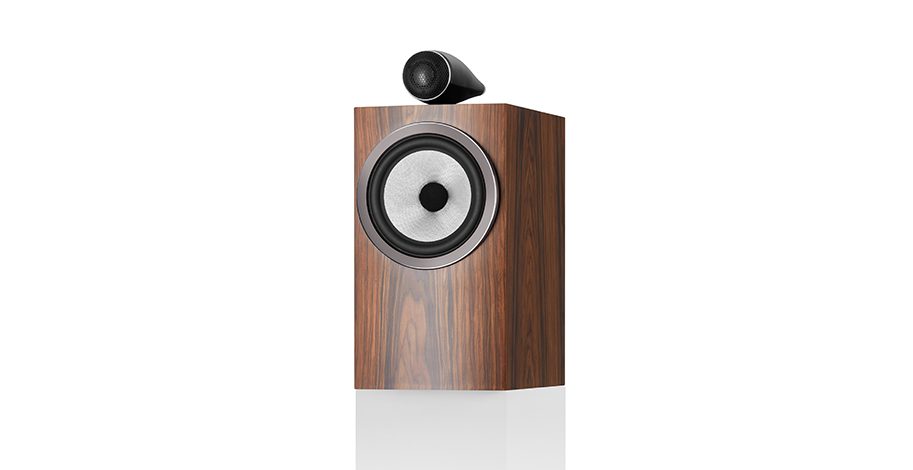
With the design of the 705 S3, Bowers & Wilkins has neatly avoided painting itself into the ‘vintage/retro’ corner that quite a few alternative loudspeaker brands currently occupy. Yes, these loudspeakers look exactly like a pair of moderately pricey Bowers & Wilkins standmounters, from their ‘tweeter-on-top’ enclosure on down – but they’re no lazy facsimile of previous glories, no exercise in nostalgia for its own sake. Instead, Bowers & Wilkins has examined its heritage and created a design with a prominent lineage that isn’t just a sentimental journey.

As far as the two drivers themselves are concerned, Bowers & Wilkins has taken the understandable and easily proven view that they weren’t broken and consequently require no fixing. So the 165mm mid/bass driver is made from Continuum, a material that the company spent a long time developing and that made its first appearance in the appropriately high-end 800 series of loudspeakers. It’s carried over unchanged from the 705 S2 and offers a bass extension down to 50Hz. The 25mm tweeter, too, is essentially the same design featured in the 705 S2 – it’s an example of Bowers & Wilkins’ wantonly complex ‘carbon dome’ arrangement. It comprises two sections: the front portion is a 30µm aluminium dome, stiffened by a vanishingly brief coating of carbon, and the second is a 300µm carbon ring (profiled to match the main dome) bonded to the structure’s inner face. The result is a low-mass tweeter that resists distortion resolutely – the first break-up point is a stratospheric 47kHz, and the upper end of the high-frequency response is 28kHz.

Reworked cabinet

But while the driver technologies are familiar, the cabinet in which they reside has been thoroughly, though subtly, reworked. For example, the ‘tweeter-on-top’ enclosure is still milled from a single, solid piece of aluminium – but it’s longer than the one fitted to the 705 S2, which allows for a longer internal tube-loading system. This reworked arrangement, which draws on learnings gleaned during the development of the 800 series, is designed to reduce soundwaves emanating from the rear of the tweeter and deliver cleaner performance. And while the decoupling between the tweeter housing and the main body of the cabinet is improved, it feels more secure (and less vulnerable) than it did on the 705 S2.

The front of the main cabinet is now gently curved. It doesn’t describe as dramatic an angle as the cabinet of the 805 D4, indeed, and the other five sides of this cabinet are flat – but then the heroically complex shape of the 805 D4 contributes no end to its asking price. The curved baffle of the 705 S3 adds strength, though, and internally it benefits from a variation on the ‘Matrix’ bracing technology the more expensive speaker enjoys. The curve also makes it apparent the 165mm Continuum mid/bass driver is sitting in a partially exposed ‘pod’ – the principle is taken to its logical, hang-the-expense conclusion in the 800 series. Still, Bowers & Wilkins intends to reap some of the same performance benefits without sending the asking price through the roof.

Flowport

The changes at the rear of the cabinet are less dramatic but, in their way, significant. The ‘flowport’ bass reflex port is of greater diameter than that featured on the outgoing model, while the speaker binding posts are now arranged horizontally on a nice shiny plate. They’re reassuringly chunky, too, and happily accept bare wire, banana plugs or spade connectors.

At 413 × 192 × 297mm (H×W×D) the 705 S3 is a little taller, a little narrower and a little deeper than the S2 it supersedes. The tweeter housing still overhangs the main body of the cabinet just a little, though, to provide ideal time alignment. Build quality is of a standard we’ve all come to expect from Bowers & Wilkins – it’s impeccable and an object lesson for many rival brands of many different sizes and levels of resource. Two of the three available finishes – gloss black and satin white – are carried over from the 705 S2, while the older model’s ‘rosenut’ is replaced by ‘mocha’. It’s a bit more brown, a bit less red. And as with build quality, the standard of finish here is beyond reproach. Making a product as functional as a pair of loudspeakers seem expensive, luxurious, or covetable may be challenging – but Bowers & Wilkins gets closer than most.

Once up and running, the Bowers & Wilkins 705 S3 prove, in some ways, to be remarkably laid-back and easy-going about the electronics in general, and the amplification in particular, they’re paired with. In other ways, though, they’re undeniably picky. It’s all to do with attitude.

No need for celebrations

Unlike a few rival designs at similar money, the 705 S3 doesn’t look down their nose at less expensive, more attainable or less celebrated electronics. During this examination, they are powered by Naim’s modest NAP100 power amp, the same company’s more robust Uniti Star whistles-and-bells all-in-one streamer/amp, and Roksan’s overachieving Attessa integrated amplifier. Rather than set about exposing any weaknesses in the more humble products here, the 705 S3 instead do what they can to make the best of their circumstances.
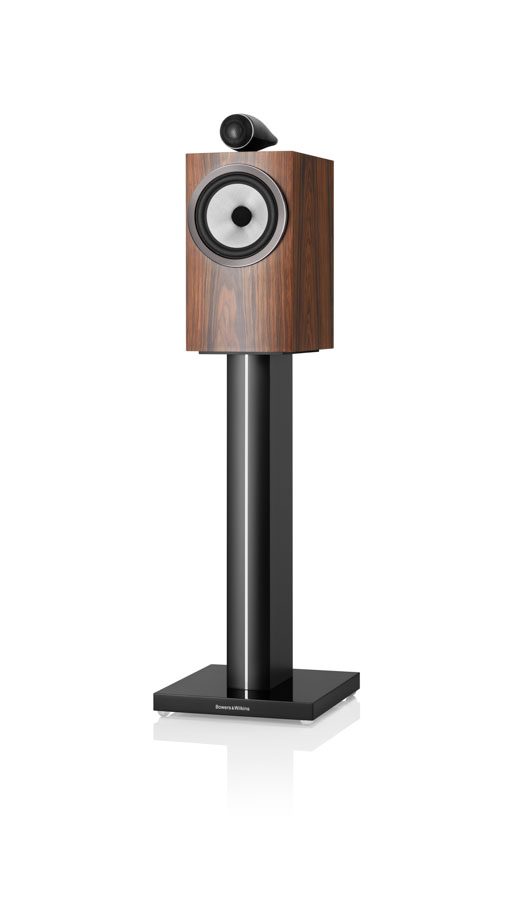
Bowers & Wilkons 705 S3

It’s worth noting at this point that all three of the amplifiers mentioned are, to a lesser or greater extent, an upfront, assertive and forward kind of listen. That’s the posture the 705 S3 thrive on. Pair them with something no less confident but a little less bold – the C3050 LE integrated from NAD, for example – and the 705 S3 can go into their shell just a little. So yes, where these Bowers & Wilkins speakers are concerned, it’s not so much about where in the hierarchy you sit but your attitude.

Nevertheless, of the amplifiers mentioned, the Uniti Star proves the best fit for the 705 S3. The speakers are mounted on a pair of Custom Design FS104 Signature stands (Bowers & Wilkins will sell you a pair of bespoke FS-700 S3 stands onto which the speakers fasten securely – but at £799 per pair, it’s not a purchase to be rushed into if you already own some competent stands), and linked to the amplifier using QED XT-400 speaker cable. The Uniti Star takes care of streaming from Bluetooth via a Nothing Phone (1) and a Buffalo TeraStation NAS device. Rega’s Apollo deals with CD content and is connected using QED Reference Audio 40 – a second pair of cables connects a Chord Heui phono stage to the Naim, fed by a Clearaudio Concept MM turntable.

Prodigiously detailed

It becomes apparent in reasonably short order that it doesn’t matter the source material or, to a lesser extent, its resolution – the Bowers & Wilkins 705 S3 are a full-scale, prodigiously detailed and thoroughly engaging listen in pretty much any circumstance. From a bog-standard MP3 of Richard and Linda Thompson’s ‘The Calvary Cross’ [Island] to a DSD64 file of Stevie Wonder’s ‘He’s Misstra Know-It-All’ [Tamla], from a compact disc of Patti Smith’s Land (1975 – 2002) [Arista] to a 180g reissue of Ride’s Going Blank Again [Wichita], these speakers are supremely even-handed – they strive to take themselves out of the equation as much as possible, and let the music do the talking.

The soundstage they create is large and convincing, with palpable depth and notable width. Low frequencies are confidently shaped, robustly textured, and decently rapid – without being pleased with themselves, bass sounds underpin a recording securely. Meanwhile, at the opposite end of the frequency range, the tweeter arrangement offers notable clarity, bite, and similar levels of detail – the top end fairly shines but never hints at edginess or hardness, even at significant volume.

In between, the midrange is articulate, eloquent and all the other words that suggest ‘communication’. Vocal technique, whether it’s the purity of Stevie Wonder or the confrontational perspective of Patti Smith, is given plenty of room in which to express themselves – and the amount of fine detail the 705 S3 reveals makes their character and competence plain.

Like cashmere

Cross-over is smooth in the manner of cashmere, and the top-to-bottom consistency of tonality makes the Bowers & Wilkins sound as natural or as processed as the source material demands. The low-end discipline means the speakers express rhythms with genuine positivity and can handle even the show-off time signatures and tempos of Joe Zawinul’s The Rise and Fall of the Third Stream [Vortex] without alarms.
Bowers & Wilkons 705 S3

There’s a similar sort of effortlessness on display regarding the dynamic aspect of these recordings, too. Whether the significant variations in volume and attack apparent in the Zawinul recording or the small harmonic fluctuations perceptible in Richard Thompson’s guitar-playing, the 705 S3 identify them, contextualises them and gives them precisely the sort of emphasis they demand. And such is the togetherness and unity of the presentation on offer here, the sense of ‘performance’, of a loudspeaker that would prefer to get out of the way of your music rather than impose itself on it, is tangible.

Or, at least, it’s tangible if you enjoy listening at volumes above those often described as ‘background’. The 705 S3 lose a good portion of their animation and drive at more modest levels, and they give away a lot of their conviction at the same time. They’re far from the only loudspeakers that give their best when pressing on, but their differences are quite pronounced. It would be stretching things too far to suggest the Bowers & Wilkins can sound ‘matter-of-fact’ at low volume levels – but they undoubtedly move further along that particular spectrum.

Still, it’s not as if these are the first loudspeakers to make a few demands of their owners – and I sincerely doubt they’ll be the last. And besides, when a speaker is as talented and straight-ahead listenable as Bowers & Wilkins, when you pander to it just a little, it’d be churlish not to. So for once, it turns out that the third time (or the fifth time, if you’re correctly keeping count) is a charm.

Technical specifications

  • Type 2-way, two-driver stand-mount monitor with rear-ported bass reflex vent
  • Driver complement 25mm carbon dome tweeter; 165mm Continuum mid/bass driver
  • Frequency response 50Hz–28kHz
  • Crossover frequency 3.5kHz
  • Impedance 8 Ohms nominal (3.7 Ohms minimum)
  • Sensitivity 88dB/W/m
  • Dimensions (H×W×D) 413 × 192 × 297mm
  • Weight 9.6kg/each
  • Finishes Gloss black / satin white / mocha
  • Price £2,599/pair

Manufacturer

Bowers & Wilkins

www.bowerswilkins.com

Read more Bowers & Wilkins reviews here

Back to Reviews

Rega Announces Naia Turntable

September 2023 – After previews across the worlds hi-fi shows, we are delighted to finally announce the official launch of the Rega Naia turntable.

Since we first previewed the Naia turntable at the Bristol Hi-Fi Show in February it has since been seen in Tokyo, Hong Kong and at the Munich High-End show, where it has received an exceptional response.

The term ‘groundbreaking’ is often used in our industry; however, we feel that this turntable is working on another level to anything we have produced before. Every demonstration has the same result, the Naia reveals unrivalled levels of detail with listeners being stunned by its performance all reporting they are hearing new things on recordings that they have played multiple times before.

The Rega Naia turntable is the result of years of painstaking development which was used to create the now famous ‘Naiad’ test bed turntable.

The Naia takes the best of this development and technology and transfers it into a production ready version without compromise and is packed with ground-breaking features, materials and technology developed by Rega over many years to reach new levels of vinyl replay.

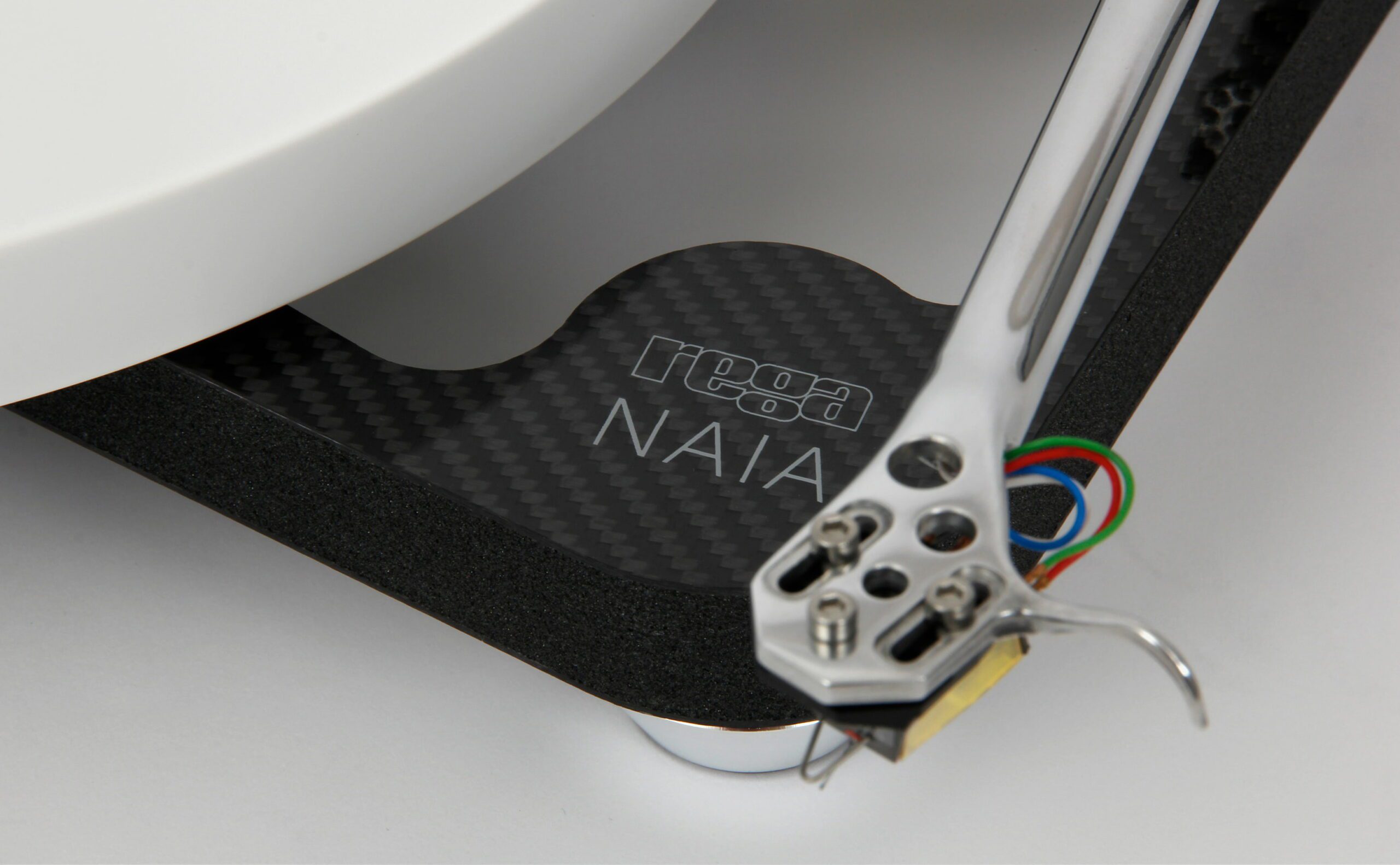
This reference level turntable takes our pioneering low mass high rigidity plinth technology to the next level by using a Graphene impregnated carbon fibre skeletal plinth with Tancast 8 foam core.
This ultra rigid structure is then strengthened further using two ceramic aluminium oxide braces, the same material used to create the redesigned, resonance controlled ceramic platter with improved flywheel effect.

Tannoy to Introduce Super Gold Speaker Range Building on the Heritage of the Classic Professional Monitor Gold

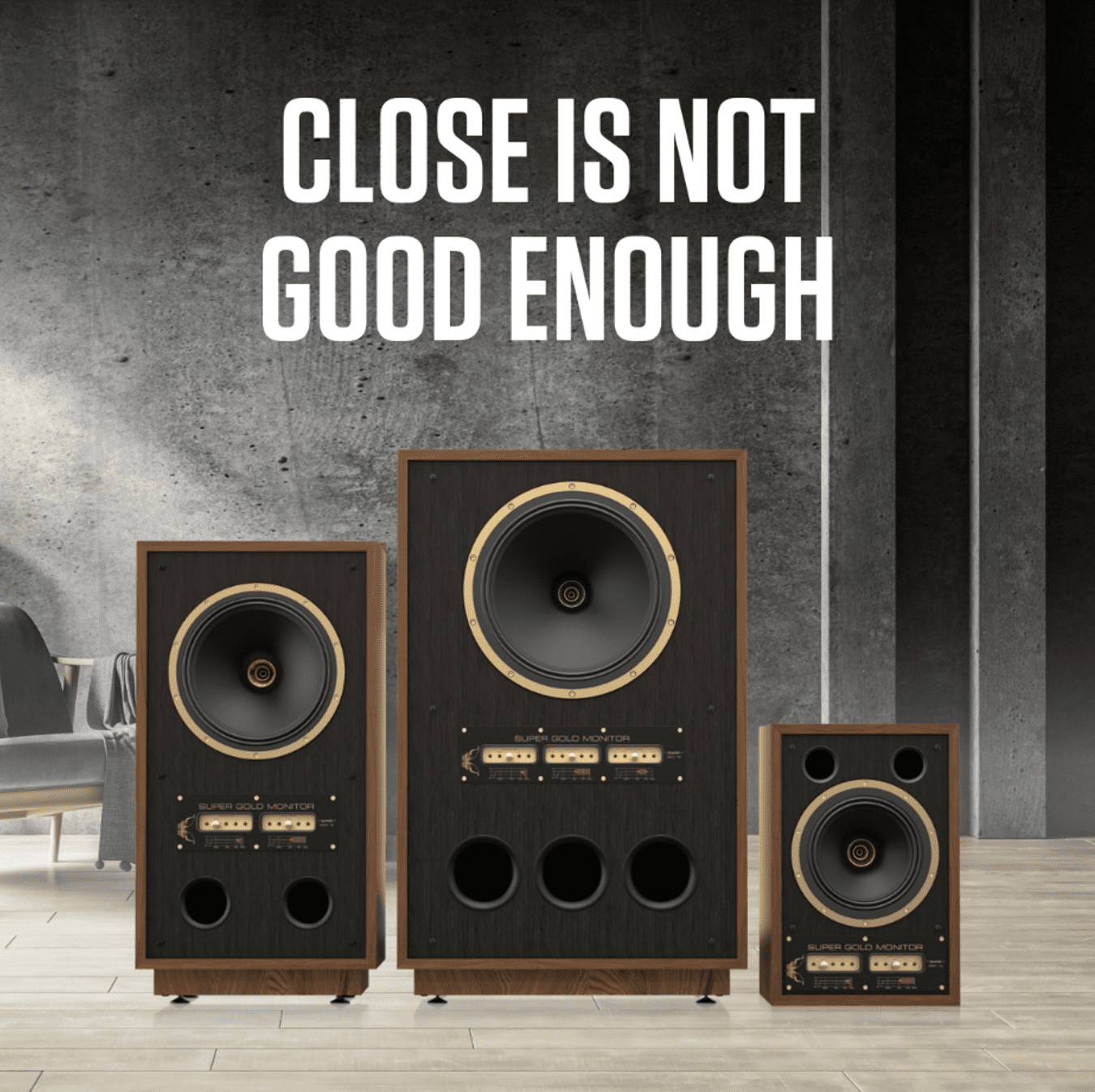
20-09-2023 Hamilton, Scotland – Designed and manufactured in the UK, the Tannoy Super Gold range of speakers comprises three models – Super Gold 10, Super Gold 12 and Super Gold 15. All of the speakers aim at reproducing music exactly as the artists intended it to sound. The direct link is the company’s Monitor Gold, which has been in use in professional recording studios since the 1960’s, and epic albums by artists like Michael Jackson, Elton John, The Eagles, Billy Idol, Depeche Mode, Christina Aguilera and many more have been mixed and mastered on Tannoy studio monitors.

The number for each model reflects the size of the driver, and all drivers share the same dual concentric design with the high-frequency driver merged into the center of the cone of the main driver. This design was invented by Tannoy in 1947 and it was also used in the classic Monitor Gold. With this true point-source concept, the entire frequency spectrum originates from a single point, as both drivers are on the exact same axis. This approach ensures unmatched off-axis performance, as well as pristine phase coherence.

In order to be able to compensate for acoustically challenged spaces, a 2-way energy control system is located on the front of the speakers* Also, with regard to placement, the Super Gold range has front-firing bass ports in order to be placed against walls or in corners without sonic compromises.

The cabinets are dense and rigid, offering balanced control of low-end performance, and Different Material Technology, as well as heavy-duty 24 carat multi-layer, gold-plated custom binding posts, ensures optimum signal transmission and integrity.

Also, on the visual side, Super Gold nods respectfully to its Monitor Gold predecessors, as they have a clear classic touch, but with a modern twist that makes them blend into modern living spaces naturally and gracefully.

“The unveiling of the Tannoy Super Gold Monitor speakers marks a momentous milestone in Tannoy’s History. With its rich heritage dating back to 1926, these speakers represent a harmonious fusion of vintage aesthetics and cutting-edge engineering, offering audiophiles a truly immersive listening experience.”

Andrew Provan, Tannoy Production Manager

Simply put, Tannoy continues to build on its 95-year history in speaker development, design and manufacturing with the brand-new Super Gold range of speakers. And just like the original Monitor GOLD, the Tannoy SUPER GOLD range of speakers are designed and manufactured in the UK. 

**SGM15 features a 3-way energy control system.

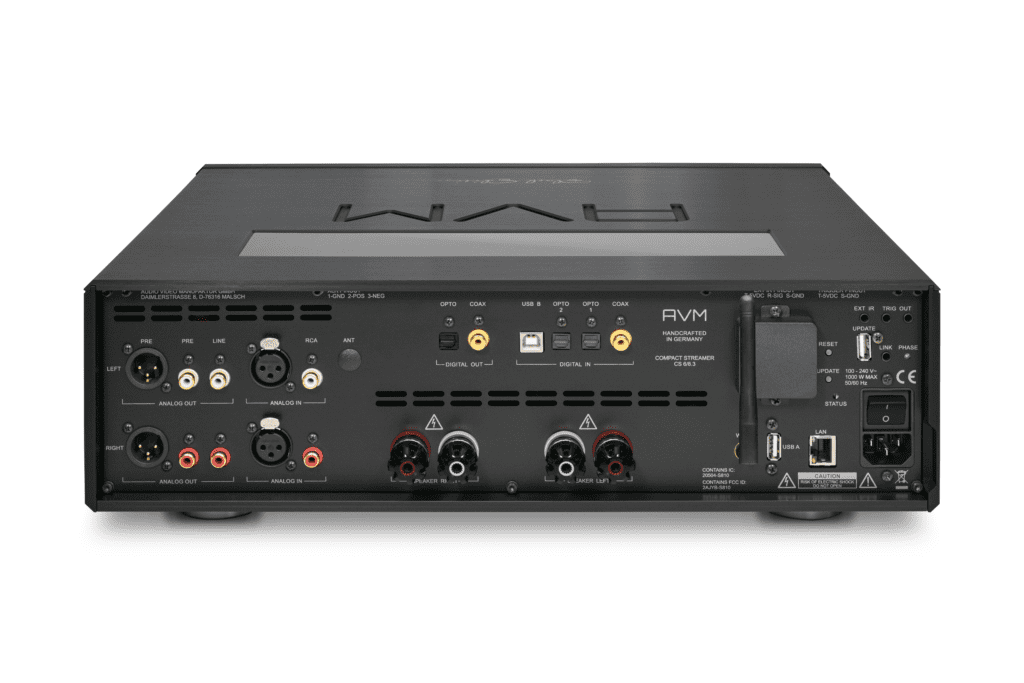
AVM Ovation CS 8.3 Black Edition integrated system

High end audio is at something of a crossroads today. I don’t mean that it will have to make a pact with the devil if it wants to succeed; that happened years ago. No I’m talking about the domestic acceptability of multi-box systems. There was a time not so long ago when you had to have at least half a dozen ‘hewn from solid’ aluminium facias staring out from a serious looking rack if you wanted to hold your head high among the cognoscenti. Nowadays things aren’t so clear, and many brands including those in the high-end are making one or two box systems that perform as well and offer the same features as the stacks of racks alternative.

Power without mass

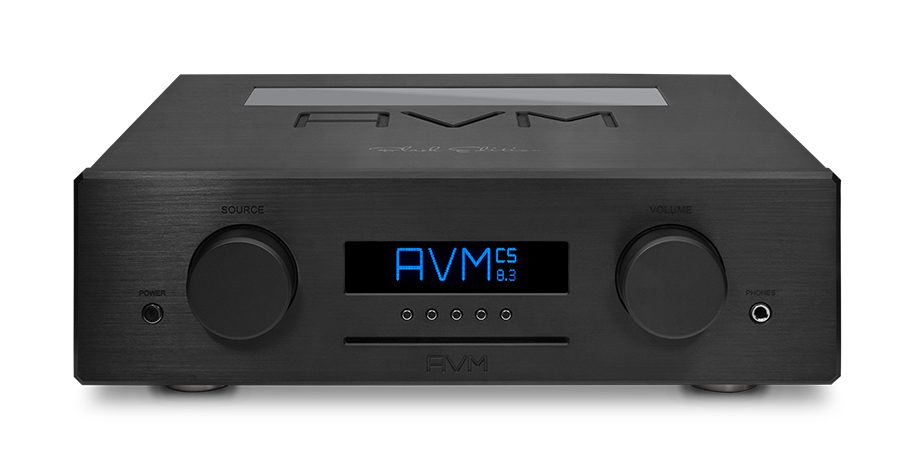
AVM covers both markets with a broad range of separate and integrated electronics as well as turntables, they still warrant their own box, for now. The Ovation CS 8.3 is AVM’s top all in one streamer, DAC, CD player and amplifier package, it has all the popular bases covered; those wanting to spin their wax will need to add a phono stage. There are more than a few streamer/DAC/amps on the market but the presence of a CD drive elevates the CS 8.3 into less densely packed terrain. Then there’s the fact that the amplifier has a specified output of 500 Watts. It doesn’t look like a muscle amp and doesn’t weigh in at that sort of poundage but by using a switching power supply AVM has managed to give the CS 8.3 serious power.

What differentiates this model from the near identical looking CS 6.3 is the presence of a valve line stage, the thermionic devices being displayed in the top of the case under a glass cover. The DAC section, which has most of the usual in- and outputs, is built around a set of four ESS Sabre chips that are capable of converting signals up to 32-bit/384kHz PCM and DSD 128. Useful in a ‘rather tricky to upgrade single box’ design, the DAC is modular, that is it can be replaced with an updated version when technology moves on. The X-Stream streaming engine is ready to be upgraded via firmware, and given that this unit sits on the network that should be fairly straightforward to achieve.

The amplifier technology appears to be up to the moment and thus should not need upgrading in the foreseeable future. Ditto the TEAC CD drive, which being a legacy format is unlikely to see any changes. The only issue with keeping discs spinning is drive reliability and here I would expect AVM to have the requisite transports ready for replacement. The aluminium casework is cleverly assembled without visible fixings and hides a carefully separated interior. Here you will find what AVM describe as a ‘Chinese Wall’, a mechanical partition that shields the signal carrying electronics from the high frequency radiations of the power supply.

Gruyere

The CS 8.3 Black Edition is not merely a black anodised version but an upgrade on the standard model with a premium price. The extra money buys special grade valves with a life expectancy of over 20,000 hours. AVM doesn’t specify the brand of valve or even the type but they appear to be double triode types a la ECC83 or similar. Valve quality varies about as much as that of cheese so having better ones is undoubtedly beneficial, unless you like your cheese processed of course. That’s not all you get, the digital to analogue converters are hand picked, which usually means that all the chipsets are measured and those with the finest tolerances are kept for the top flight products. When you have four DACs working together, or two pairs at least, the closer their match the better the end result. Apparently the power supply for these converters is also more refined in the Black Edition.


Connections extend to analogue in- and outputs on XLR and RCA sockets, optical, coaxial and USB digital inputs as well as network connections over wi-fi or ethernet. The speaker cable terminals are nice WBT types with minimal metalwork for better sound.

Control

AVM has its own streaming app, which means that you don’t need the optional remote control but that said when you’re using inputs other than the streamer it’s quicker and easier to use a handset. The volume slider on the app works well and offers fine control however, as does the app overall, it natively accesses Qobuz, Tidal, Highresaudio and Spotify and has a good selection of net radio stations with a search facility that makes tracking down favourites painless. It also allows input selection for mechanical and wireless connections including Airplay and Bluetooth.

The sonic character of the CS 8.3 is largely dominated by its Class D amplifier, the presence of valves in the equation brings a refinement and transparency to the result no doubt but the lightness of touch, speed and clean power without the usual Class AB distortion characteristics are what distinguish it. This is top notch Class D, like the aforementioned comestibles these things come in an ever increasing variety of types, from the slightly hollow to the rather too explicit sounding. This AVM is very well judged indeed; the music it produces bears little if any imprint of the amplification technology. High power amplifiers usually have a strong sense of grip, this can sound nice and gives you a sense of the muscle available, but this is essentially the character of the amplifier being imprinted on the music. Other big amps produce a thick, solid sound that is also appealing but again this is a form of masking, the technology is not transparent to the signal.

The absence of certain forms of distortion means that volume perception is different, there is no compression or loudness as the level increases which means that you can end up playing at higher volumes than is healthy for neighbourly relations, but boy is it fun, especially when the music has been well captured. I put it to someone who knows what goes on in the pro audio world that in order for end users to get the same sound that the artist hears in the studio, or the audience at a concert, they should be using the same amplification type. Adding that as Class D has taken over in both studios and PA this is why decent current recordings of recent years sound so good with Class D at home. He is of the opinion that yes this is a factor but that it’s not as big a factor as the quality of digital electronics used to make the recordings. It’s here that things have come on dramatically in the last couple of decades and the cleaner our systems are at home the more we hear it.

Suffice to say the AVM is very clean indeed which can be a way of saying that it’s clinical and lacks heart and soul. I’m happy to report that this is definitely not the case, there were several occasions when a piece of music brought a lump to my throat, not least the allegedly ‘unknown’ Bonnie Raitt’s ‘Too Long at the Fair’ [Give it Up]. This is a recent discovery but not one that hits home regardless of hardware, it can easily sound like a great song without the emotional impact that a good system can reveal. At the other end of the scale Rymden’s live ‘Pitter Patter’ [Space Sailors] developed so much scale and dynamic power that it was like sitting in the best seat at the concert.

The above experiences were delivered by the streamer but I spent some time with other inputs too, CD is a little sharper, smaller and flatter sounding but it has good leading edge definition and something about the more forward balance suggested it could be what was originally intended. That being Herbie Hancock’s piano in sharp focus on a Hancock album, the stream makes this piece seem more of an ensemble production. Switching to Qobuz from CD made a good case for the silver disc, which timed better and while being a little harder in tonal terms had better flow. I also tried the analogue inputs with a turntable and phono stage, the result here was also excellent, making less obvious material accessible and providing high transparency to the signal.

AVM has done an excellent job with the CS 8.3 Black Edition, it would hold its own against separates of the same overall value and quite likely beat all but the best of them. If other brands can get sources and amplification of this calibre into one box I see a bright future for the pared down high end system.

Technical specifications

  • Type Hybrid 2-channel integrated amplifier with built-in streamer, DAC, CD player and headphone amplifier
  • Analogue inputs One single-ended line-level input (via RCA jacks), one balanced input (via XLR connectors)
  • Digital inputs Three S/PDIF (one coaxial, two optical), one USB port
  • Analogue outputs One single-ended line-level input (via RCA jacks), one balanced input (via XLR connectors)
  • Digital outputs Two S/PDIF (one coaxial, one optical).
  • Supported sample rates
    Coaxial and optical S/PDIF 16-bit, 24-bit — 32kHz – 96kHz – 192kHz
    USB 16-bit, 24-bit, 32-bit — 32kHz – 192kHz – 384kHz, DSD64 — DSD128 — DSD256
  • Input impedance Not specified
  • Output impedance (preamp) Not specified
  • Headphone Loads Not specified
  • Power Output 500Wpc @ 4 Ohms
  • Bandwidth Not specified
  • Distortion Not specified
  • Signal to Noise Ratio Not specified
  • Dimensions (H×W×D) 130 × 430 × 355mm
  • Weight 13kg
  • Price £15,950

Manufacturer

AVM Audio Video Manufaktur GmbH

www.avm.audio

UK distributor

PMC UK Distribution

www.pmc-speakers.com

+44 (0)1767 686 300

Read more AVM reviews here

Back to Reviews
Triangle Magellan Quatour 40th Anniversary

Happy 40th Birthday, Triangle. Again! French loudspeaker brand Triangle was founded in 1980, and its range-topping Magellan series was to be the perfect vehicle for that 40th anniversary. The trouble is, that was 2020 and, well… you know!

However, a party delayed is still a party, and Triangle was keen to launch the three-strong 40th Anniversary line, of which the Quatour is the largest. There were two larger Magellan models still not given the ‘40th’ treatment; the flagship Grand Concert and Concerto, but the Quatour is still a pretty substantial loudspeaker… and that sentence was an example of ‘Schrödinger’s Comma’ where both the non-existence “pretty substantial” and existence “pretty, substantial” of the comma at once change the meaning of the sentence and are both relevant.

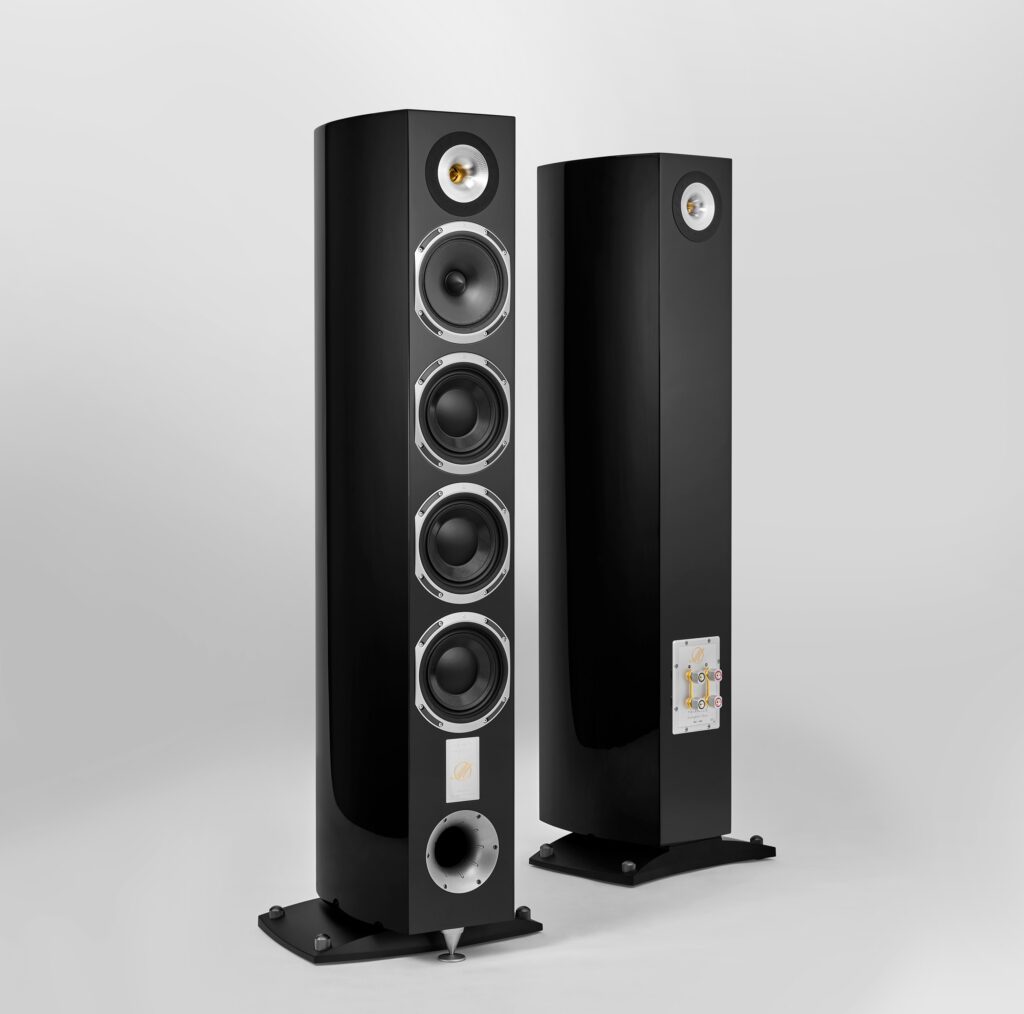
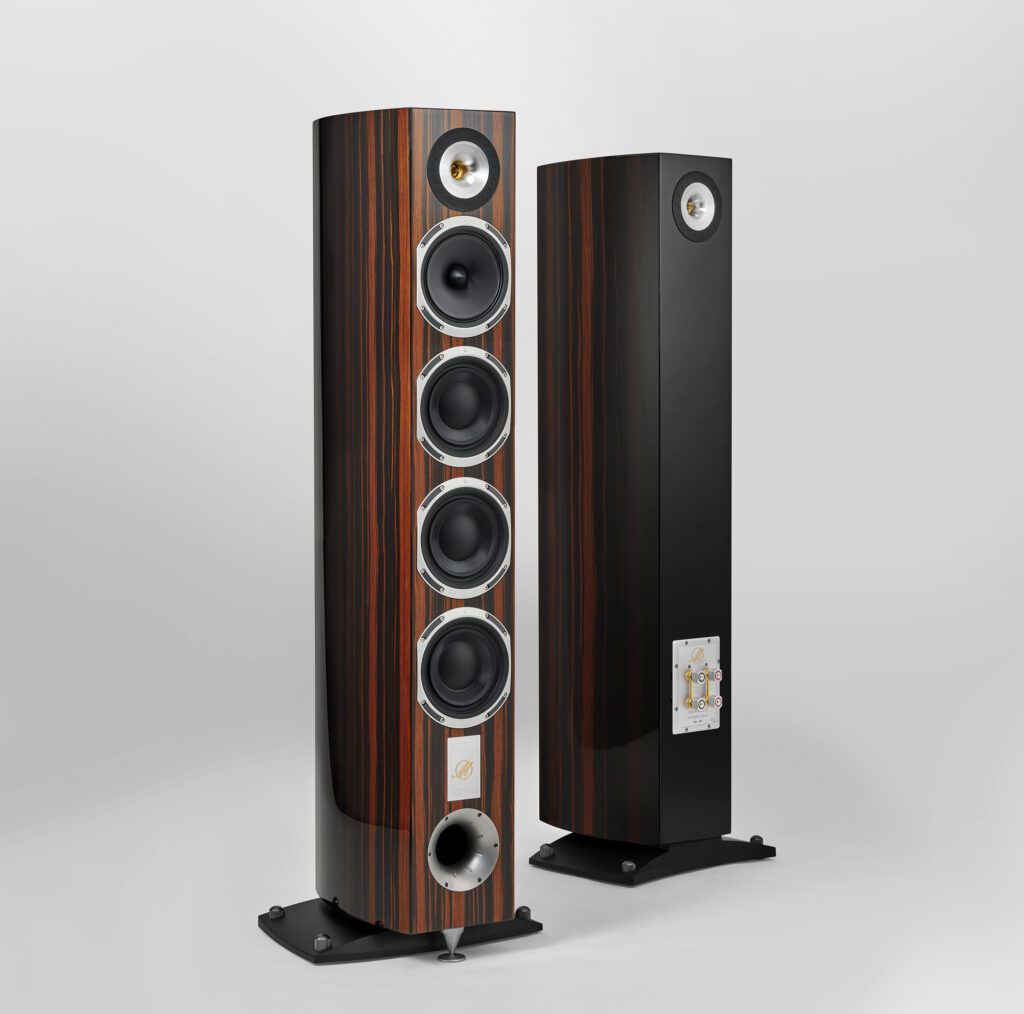
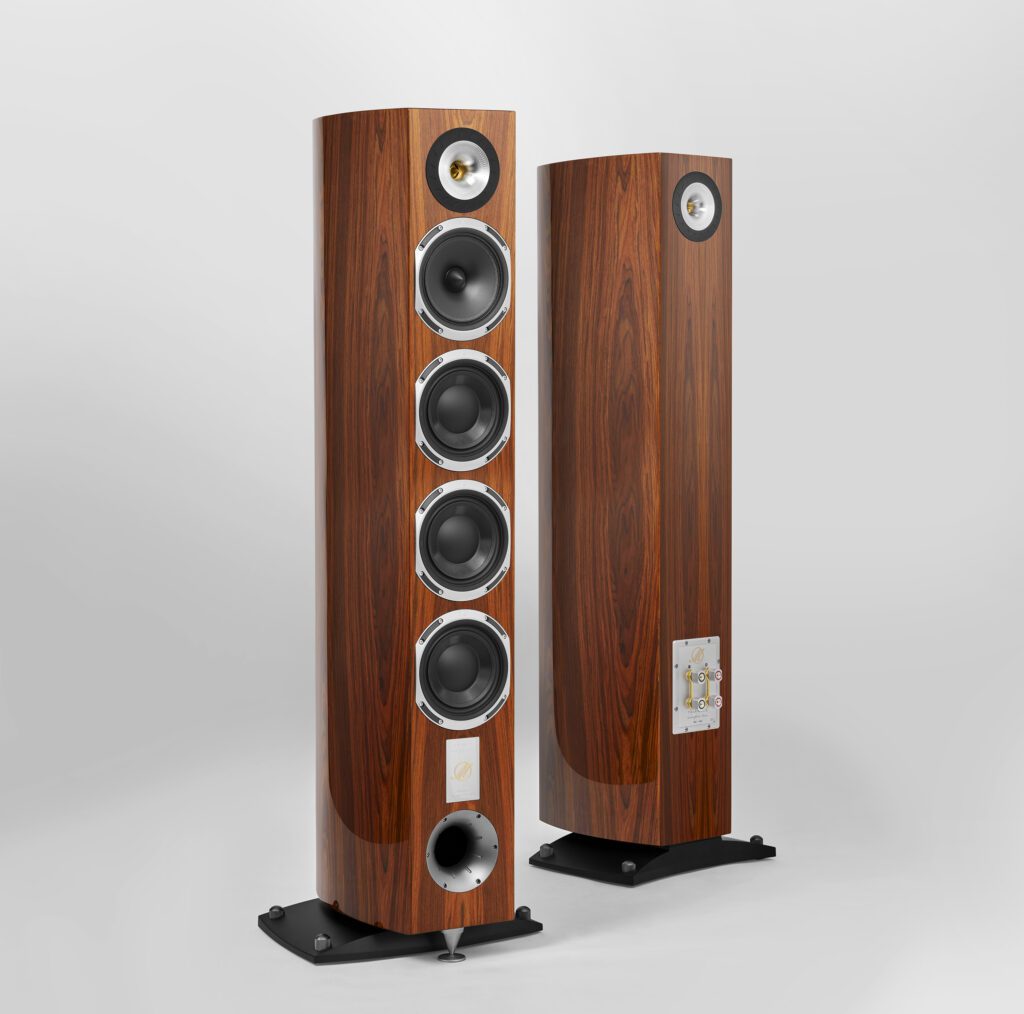
Let’s not fluff the issue here, the fit and finish of the Triangle Magellan Quatour 40th Anniversary is fantastic. There is a substantial piece of engineering behind that ‘Shadow Zebrano’ piano finish, the contrasting chrome driver surrounds, and that winged plinth with an independent front spike, but the looks get people first. It’s just the right mix of the conventional and the luxurious that really works, giving the loudspeakers a timeless appeal. So, perhaps it’s good that a 40th Anniversary model isn’t a short-lived concept, but the latest version of the Magellan Series.

Audio explorer

The Magellan line has long been Triangle’s premier range. Named after the famous Portuguese explorer, the range put Triangle on the map for many high-enders, who had hitherto discounted the brand. The range, from the two-way Duetto 40th Anniversary, through the Cello 40th Anniversary and the present range-topping Quatour 40th Anniversary and even up to the still bigger Concerto and vast Grand Concert have much in common. They all use Triangle’s own drive units and all have that beautifully finished, distinct lute-shaped cabinet.

The 135cm tall Quatour 40th Anniversary cabinet is made up of successive layers of high-density fibreboard, each 3mm thick. The combination of sophisticated cross bracing and chambering of the tweeter and tweeter/midrange units helps to reduce cabinet-induced distortion thanks to extensive studies of the micro-deformations of the cabinet itself on Triangle’s behalf.

Poking out of that cabinet shows what helps take Triangle’s research and development to its current acme. The three-way, six unit loudspeaker uses a trio of 160mm bass units with the company’s proprietary SVA diaphragm and cooling system. This is met with a similarly sized 160mm midrange unit that features a paper diaphragm and pleated surround, and further up the frequency register by two magnesium alloy horn tweeters; one firing to the front as usual, and a second used in what Triangle calls ‘Dynamic Pulse System 2’; a refinement of the bipole layout of the previous Quatour model. The additional rear-firing tweeter is wired in phase with the main tweeter, which creates a ‘null’ in the space between the drive units and adds ambience without the diffuse sound of dipole designs (this diffuse effect has its uses in some older surround sound systems).

Middle management

However, with Triangle loudspeakers, the midrange is the most vital component in the frequency range. Essentially, the T16GMF100-V2 driver (made by Triangle itself) is always the most important driver in a Triangle loudspeaker and the Quatour 40th Anniversary is no exception. The company moved from doped paper to a natural cellulose pulp in the latest model; that’s basically untreated paper!

 Suppose you think of the front and rear tweeters placing the loudspeaker in a medium to large room and the three bass drivers in series bringing the bass. In that case, you can think of the Triangle as a midrange unit placed in a loudspeaker cabinet that makes it work in rooms of 30 square metres and larger. The Quatour 40th Anniversary can work in smaller settings, but the amount of bass that array of 16cm woofers can deliver can overawe a smaller room. However, if you like that Triangle sound but want it in a smaller listening space, the Cello 40th Anniversary floorstander and Duetto 40th Anniversary stand-mount fit the bill.

The great thing about Triangle loudspeakers is that they are an easy load for an amplifier and the Quatour 40th Anniversary is no exception. With a claimed 91dB sensitivity and an impedance plot that never dips below three ohms, this is not a loudspeaker that needs a power station to drive it. This makes the choice of partners one of quality not quantity, and while I doubt anyone is going to partner a pair of £14,000 loudspeakers with a 35-year-old NAD 3020, the Magellan Quatour 40th Anniversary would be able to extract the best from it without destorying the amp in the process. Realistically, the Quatour becomes the perfect partner for the likes of the Audio Research I/50 (tested in this issue) and all those wonderful Luxman and Accuphase amps and small, deft-touch amps like Lavardin.

It is difficult to determine whether the loudspeakers need running in or how that run-in period changes the performance of the loudspeakers because they arrived as demonstration models with a good number of miles on the clock. However, from experience, Triangle loudspeakers need a few hours of bedding in, but sound good from the get-go.

Vive la différence

Triangle loudspeakers are unlike most designs in sound quality terms. As discussed previously, they stand or fall by their midrange. In particular, the speed of that midrange. It’s a sign of just how able Triangle’s design team is that the rest of the loudspeaker can keep up with that midrange driver sound. And, in a very real way, the Magellan Quatour 40th Anniversary is the ultimate expression of that Triangle sound.

That midrange-first sound is one of incredibly lithe and natural vocal projection. It’s no shrinking violet – the sound is forward and expressive and detailed in a way that is the exact opposite of that classic BBC sound that is laid-back, almost rounded by comparison. I played ‘Help Me’ from Joni Mitchell’s Court and Spark album [Asylum]; her voice was precise and in the room. This precision is very much at odds with her own vocal style, but it manifests as being able to make more sense of her little vocal trills and runs.

The further you listen into this recording, the more you hear past the voice, but in a way that’s Joni Mitchell. Moving across to a completely different recording – Carlos Kleiber’s masterful recording of Beethoven’s Fifth Symphony with the Vienna Philharmonic [DG] – you still get the intellectual lead of the music from the violins and can hear into the woodwind and brass effortlessly, but it’s overwatched by flutes and underpinned by percussion beautifully. That bass is lusty and dynamic (as said, it needs to be to keep pace with the midrange). Moving over to ZZ Top and then to Massive Attack and over to Trentemøller via the medium of Orbital (old and new) and the Triangle’s performance was extremely consistent; extremely fast, extremely open in the midrange and that openness extending up into the treble and down into the bass.

The rear-firing tweeter is more than just there for show, and it adds some expansiveness to the general sound. This comes into its own in the biggest rooms but doesn’t overpower those at the lower end of the room-size range. Returning to the Beethoven seems to give the strings a greater sense of scale and space.

Observations…

There’s not really a criticism here, but there is an observation. The Triangle sound is different and therefore not for everyone, and you discover that for yourself when you move back to the speakers you knew well after a long audition session. If you listen to your previous loudspeakers and think you hear a more balanced sound, the Quatour 40th Anniversary is probably not for you. On the other hand, if you listen to them and think your loudspeakers sound arch, false, slow and muddied – especially in the midrange – the Triangles just got under your skin. And at that point, you will probably not settle for anything else.

There are a few brands where you conclude that ‘either X is right or everyone else is’ and this is usually a veiled insult; it’s suggesting that the brand or designer has gone a bit off the rails and in making a distinctive sound, they are making something distinctively wrong. But not here; either Triangle is right with the Magellan Quatour 40th Anniversary about getting the midrange right, and getting it fast, or everyone else is and uniformity is there for a reason. I think it’s not about daring to be different… it’s about daring to be right.

Technical specifications

  • Type Bass-reflex three way, six-driver floorstanding loudspeaker
  • Drivers 2× TZ2900PMMG Magnesium dome tweeter (one front, one rear-firing), 1× T16GMF100 midrange driver, 3× T16GMMT15GS2 bass drivers
  • Sensitivity 91dB/W/m
  • Frequency response 33Hz–30kHz ±3dB
  • Low-frequency roll-off 350Hz, 12dB/octave slope
  • High-frequency roll-off 2.6kHz, 24dB/octave slope
  • Nominal impedance 8Ω
  • Minimum impedance 3Ω
  • Finishes Space Black, Golden Oak, Shadow Zebrano
  • Dimensions (W×H×D, with pedestal) 42 × 37 × 134cm
  • Weight 46.9kg
  • Price £14,000 per pair

Manufacturer

Triangle

www.trianglehifi.com

UK distributor

SCV Distribution

www.scvdistribution.co.uk

+44(0)3301 222 500

Read more Triangle reviews here

Back to Reviews
Revival Audio Atalante 3 stand-mount loudspeaker

There’s a popular school of thought in audio that says the world doesn’t need more speaker brands. However, I think it would be fairer to say the world doesn’t need any more clones of speaker brands. This paves the way for companies like Revival Audio from Alsace in France. Revival takes classic stand-mount loudspeakers and fills those cabinets with very smart technology. Revival Audio’s Atalante 3 is the result. It’s a fine blend of classic looks on the outside and cleverness on the inside. It sounds good too!

There are a lot of newbie brands that disappear almost as soon as the products ship. While there are no guarantees in business, Revival Audio ticks all the right boxes for being a ‘stayer’. First, while the paint is still drying on the company’s logo, Revival Audio’s co-founders have racked up many years in the industry in all the right places. Designer Daniel Emonts has worked with Altec‑Lancing and Focal. Recently he spent almost six years in a senior engineering role in Dynaudio’s acoustics R&D department. Meanwhile, Jacky Lee was the Chief Commercial Officer at Dynaudio, having led the creation of Dynaudio China in 2016. This is an almost perfect balance for a start-up. You need someone with a track record of design smarts and someone with the business acumen to keep the plates spinning.

On the surface…

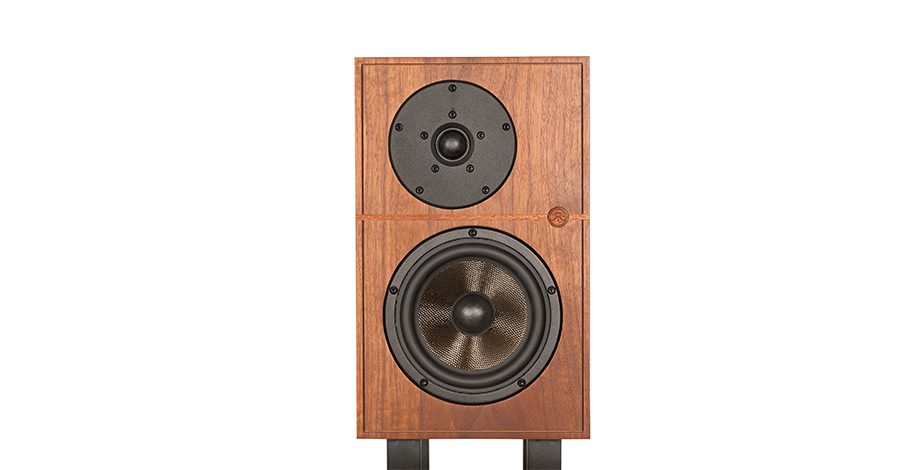
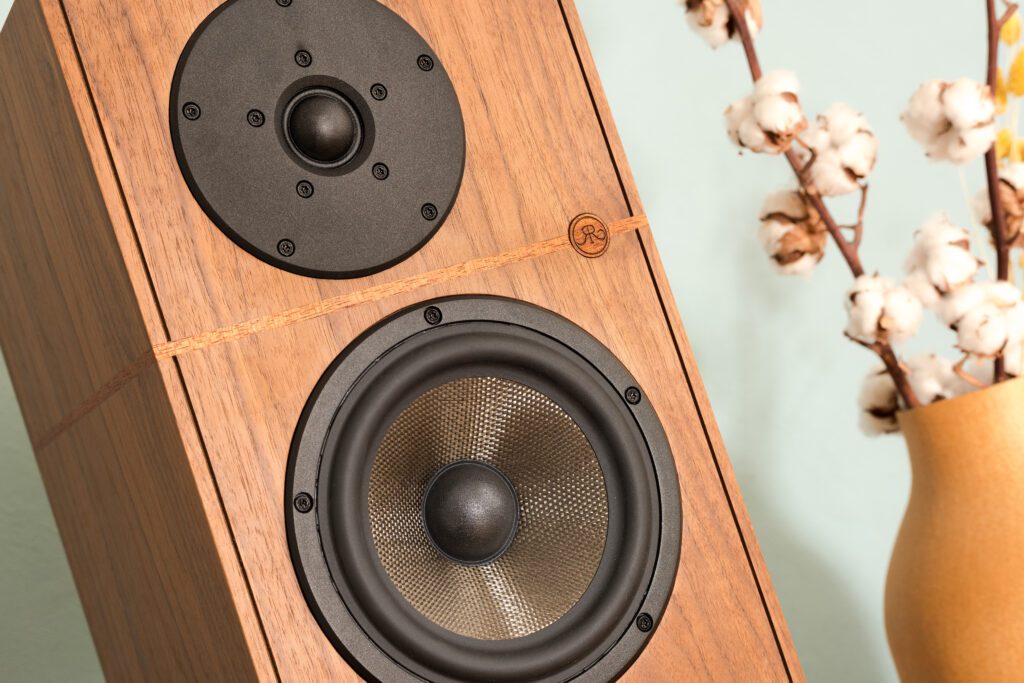
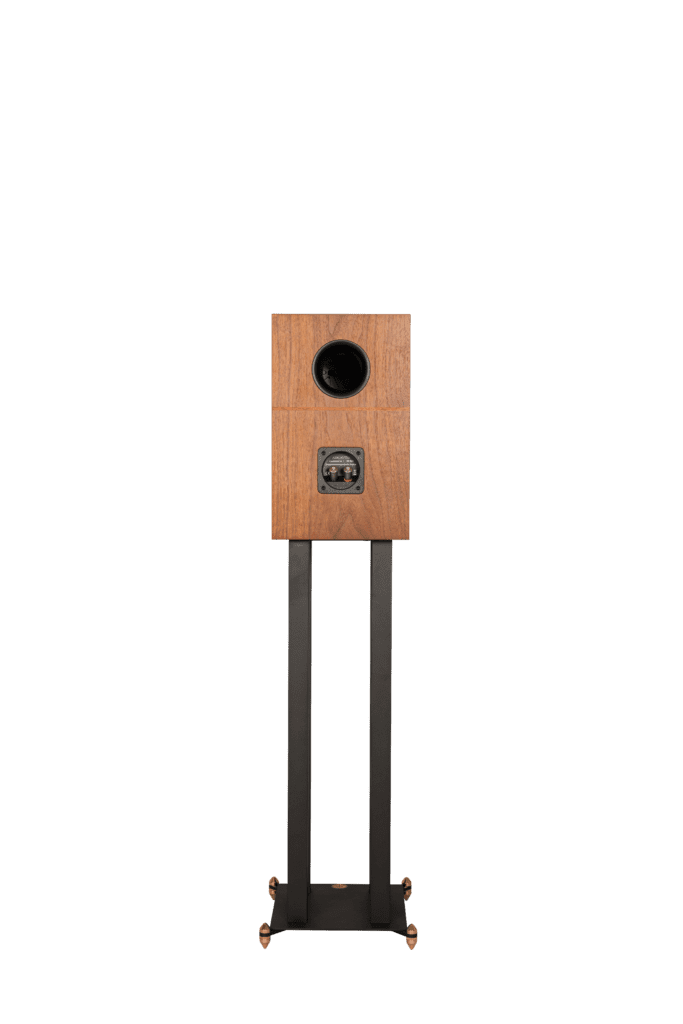
On a purely surface level, there’s nothing unconventional about the Revival Audio Atalante 3. It has a 28mm soft dome tweeter and a 180mm mid-woofer in a neatly finished wood-veneer cabinet. This has a large rear port roughly the same height as the tweeter. The company provides a matching stand with relatively thin uprights but does the job well.

Where the innovative part kicks in is in those two drivers. The tweeter has an asymmetric dome suspension with its own custom coating. This is called ‘RASC’. The acronym isn’t broken down, but it’s probably not the Royal Army Service Corps. This sits in an overlarge magnet with a clever back-chamber damping device, and an even cleverer Anti-Resonance Inner Dome, which sits close behind the dome itself and effectively shunts standing waves (that would otherwise propagate in that space behind the dome) into the yoke of the tweeter. In short, low resonance (a claimed low resonance frequency of 520Hz) without damping.

The mid-woofer is even smarter. Once again, it uses an oversized magnet, and there is an asymmetry in the design. This time it’s in the guise of the vented basket behind the cone. But it’s the cone itself that garners all the headlines, as it’s a Basalt Sandwich Construction, with woven fibres made of cooled-down lava on the outer layer, a glued felt middle layer and a foam-cone back layer. Revival Audio make much of basalt’s eco-friendly nature (wherever there are – or were – volcanoes, there’s cone material), but I’d argue that the other two layers counter the grey cone’s green credentials. Regardless, the BSC layout does end up with an extremely light yet rigid cone that is also well-damped; the ideal ‘power trio’ for any bass or mid-bass unit.

Handed

The loudspeakers are ‘handed’ meaning the tweeters are offset from the centreline of the baffle. Traditionally, this gives the listener the option of some degree of soundstage width control; have them closer to one another for a tighter ball of sound between the speakers; on the outer half of the baffle for a wider stage. However, Revival Audio notionally identifies ‘left’ and ‘right’ speakers, with the tweeters facing out.

Similarly, the rear port does necessitate some ‘breathing space’ between the loudspeaker and the rear wall. Not a great deal (30cm is fine, and there are bungs for close-to-wall settings), but pure boundary placement is out. The speakers are designed for small to medium sized rooms (15m2 to 35m2) and are happy with any amplifier from about 30W to a power handling limit of 150W. What’s more with a 87dB sensitivity and an impedance rating of 6Ω (with a mild 4.4Ω minimum at 175Hz), this is not a loudspeaker to trouble the kind of electronics it is likely to partner with; I used a Primare I35 Prisma to great effect, but the general consensus is ‘unfussy’ in amplifier partnerships.

Wider baffle

These are slightly wider baffle designs than most current ‘bookshelf’ designs. Not by much and it’s only noticeable when placing them side-by-side with something like the (admittedly smaller) ProAc Tablette 10 Signature. While it’s more of a concern with slimline floorstanding designs, I routinely prefer the dispersion and soundstaging properties of wider-baffle loudspeakers, and the Revival Audio Atalante 3 is a perfect demonstration of why I have that preference.

The Revival Audio Atalante 3 has excellent dispersion properties. This means less of a ‘hot seat’ in the listening room, making the sound more uniformly good for other listeners. In other words, if you listen more in a ‘living room’ than a ‘man cave’, others enjoy the performance. Even if you are the only listener, that wide dispersion makes the loudspeaker less demanding on speaker and listener position.

Hitting home

Over and above that, it’s the outstanding soundstage that really hits home first. These speakers act almost like electrostatics in their imaging properties. In a small room, this acts to belie their size; you think you are listening to a large-scale loudspeaker capable of separating out all the instruments in an orchestra. Granted when you throw the last movement of Mahler’s Eighth Symphony [Decca, Solti] at the Atalante 3, eventually, the size of the speaker begins to shine through, but in all other settings, you get a wide, deep and even high soundstage that feels like the real thing.

We live in a world where a speaker cannot be too fussy. It needs to shine with outstanding musical sources, of course, but it also needs to sound good when the provenance of file or even engineering isn’t quite so wonderful. And this is something the Atalante 3 does exceptionally well. It’s more than detailed and informative enough to make recordings like ‘Clara’ by Jarvis Cocker & Chilly Gonzales [Room 29, DG] sing with clarity and precision, but it also doesn’t make a dog’s breakfast of tracks like Public Enemy’s ‘Rebel Without A Pause’ [It Takes A Nation Of Millions To Hold Us Back, Def Jam].

Sonically everything

What is attractive about the Revival Audio Atalante 3 is that it manages to do everything sonically very well and one thing – soundstaging – supremely well. Too often, we find loudspeakers that are uniformly very good but fail to have that spark that makes them stand out in a hugely contended market. However, the alternative is often worse: a loudspeaker that does one or two things extremely well at the overall expense of the sound.

While the market of the 2020s tends to reward conformity over quirkiness, those of us who have been around the audio block a few times will have spent time with a speaker that ‘times well’ or ‘is exceptionally detailed’ only to find it become increasingly unlistenable as its myriad flaws come to light. The Atalante 3 does that rare thing of getting the basics right, and then builds upon that solid foundation of ‘good’ with first-class imaging.

Room size guidelines

Moreover, in the context of the room size guidelines by Revival Audio, there is enough solidity of image to bring that soundstage into even sharper focus. In a bigger room, you might find the underpinning of the bass too light to create the impression of image solidity. Still, in small rooms (where bass management is more about ‘taming’), this creates the perfect effect of room-filling staging. This is well met by a good tonality and the right balance of detail and precision without ‘brightly lit’ sounds. If your criticisms are trivial things like the absence of bi-wiring, you know you are on to a good thing.

It’s a bold move for a start-up to make its drive units, especially in a speaker that doesn’t cost as much as a Mercedes Benz. But it’s also a bold move that clearly pays dividends for the Revival Audio Atalante 3. I’d find it hard to name another small-brand speaker at the price that delivers the same outstanding performance. Even some of the big-name brands will struggle to match the Atalante 3’s overall strengths and absence of weaknesses. I think we are watching the birth of a new leader in loudspeaker design and with some real staying power.

Technical specifications

  • Type 2-way stand-mount, reflex-loaded loudspeaker
  • Drivers 28mm soft-dome tweeter, 180mm BSC (Basalt Sandwich Construction) mid-woofer
  • Frequency Response 44Hz–22kHz (-3dB)
  • Sensitivity 87dB/2.83V/1metre
  • Nominal Impedance 6Ω
  • Minimum Impedance 4.4Ω at 175Hz
  • Crossover Frequency 2.8kHz
  • Power handling 30–150W
  • Recommended Room Size 15-35m2
  • Dimensions (H×W×D) 39×24×27cm
  • Weight 11kg
  • Price £2,390, stands £399


Manufacturer

Revival Audio

www.revivalaudio.fr

UK distributor

Elite Audio

 www.eliteaudiouk.com

Tel (UK only): 0800 464 7274

Read more Revival reviews here

Back to Reviews
Clearaudio Smart Power 24V battery power supply

The Innovation turntable’s options have recently expanded to three different ways to power the platter motor. We looked at the Professional Power option back in Issue 208. Now it’s the time to explore Clearaudio’s top-spec PSU, based on battery power.

It shouldn’t be news that even small changes to audio power supplies can manifest as large changes in perceived sound quality, and so it was in the first part of this feature with the upgrade from basic wall-wart to the newest Professional Power 24V. Hitherto unreviewed, the Smart Power 24V here arguably deserves the closest look, introducing as it does a seismic overhaul to the deck’s already mighty performance.

Smart, in the classic sense

Despite the name, the Clearaudio Smart Power 24V is not that ‘smart’. And that’s a good thing. Smart is an overused prefix, applied to smartphones, smartwatches, and smart TVs. It’s typically a euphemism for a device that’s always chattering to a remote server, and all its benefits and abuses. The Smart Power blessedly does not have net access, and its ‘smart’ label likely comes from its quiet ability to automatically start recharging as soon as the batteries have run down.

The battery store comprises two 12-volt Ni-MH (Nickel Metal Hydride) packs rated at 5000mAh, each containing 10 Sub-C cells. That’s a total energy capacity of 120 Watt-hours, or about two large laptops-worth. When playing records for a few hours each day, I found the unit needed a full recharge every three or four days. Like all battery tech, the cells’ life is limited, and they will need replacing after about five years. These Vapex packs have Tamiya connectors and are designed for use in radio-controlled cars although in this larger specification are not especially easy to find from parts shops. Battery obsolescence is a concern, as I’ve been thwarted before when hunting down obscure and difficult-to-source batteries for kit several years after the manufacturer has discontinued the product. Clearaudio is currently selling the necessary pack of two for €178 in case you want to stock up.

The batteries are securely fastened to the lid inside, while the rest of the box is nearly empty, apart from a small control board PCB attached behind the front display and power supply fixed to the rear. That PSU lives in its own perforated Faraday cage, which along with the sealed metal case ought to confer good shielding to other components of radiation from the high-frequency switch-mode unit. And while this looks a good solution, I did find a smartly powered Innovation improved with box on a separate feed to other system electronics. Also note that while the turntable is running from pure battery DC, the unit’s electronics must remain active on mains power.

The Smart Power was also the first product I’ve found which didn’t enjoy the benefits of a Nordost Valhalla mains lead, instead preferring a humbler El Dorado.

Operation

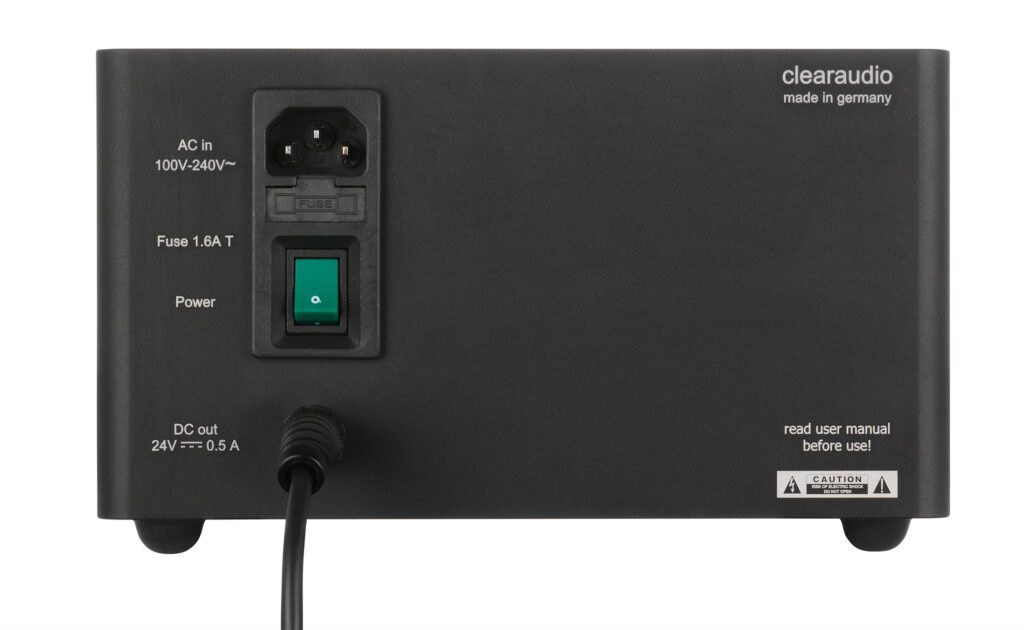
The Smart Power 24V is a drop-in replacement for either the basic plug-top switch-mode power supply or the intermediate Professional Power 24V reviewed in Issue 208. It takes a regular IEC C13 cable from the mains, while a tethered 1.65 m cable plugs into the deck’s rearmost turret.

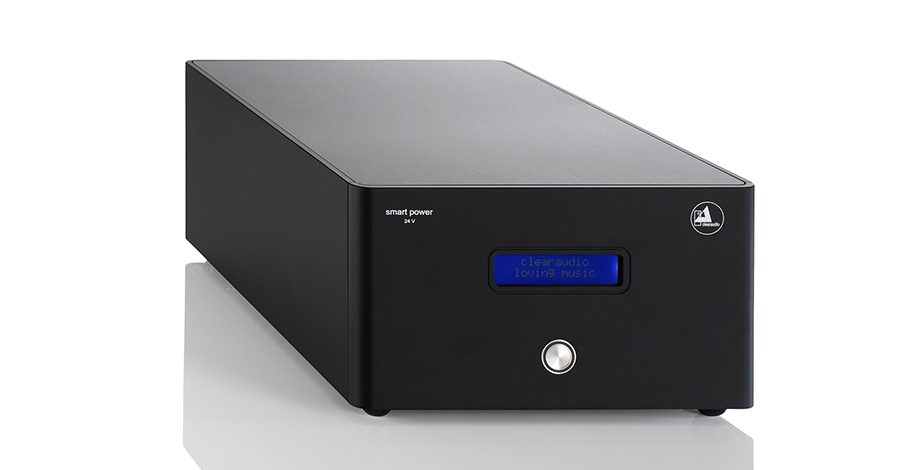
About the size of a shoebox and superbly crafted from solid CNC-cut aluminium plates, the Smart Power will need a shelf for itself – and it must be readily accessible to fly it from the single touch-sensitive button.

From cold, a long finger-press of two seconds brings it out of standby. The blue LCD display shows battery level with a horizontal bar graphic and a percentage figure. Besides automatically going into charge mode when flat, you can override any time by a short press on the button, answered with a ‘Start charging?’ message, which then requires a long press until it reads ‘Charging Active’.

Short finger taps will also cycle through a few screens that show the output current in playback mode, voltage and current when charging, and adjustment of backlight brightness, for both in-use and standby modes. It demands some thought to move around these options, given the single button and short/long-press logic; even after months of use I still found myself occasionally putting the unit into standby when trying to set manual charging. Usefully, Ni-MH batteries don’t suffer memory effect like older nickel cadmium batteries, so can be topped up anytime.

Annoyingly the Smart Power’s batteries will lose all charge if you leave the unit powered up with the platter static, so it’s best to put it into standby mode in longer breaks between records. A truly smart unit might sense a pre-set period of inactivity and go automatically into standby to save precious recharge cycles. Also rather distracting is the way the blue ring LED flashes when in charge mode. Blinking furiously at 90 bpm, you really don’t want it in your eyeline when relaxing to music. There is a small hit in performance though when playing and charging simultaneously, so it’s preferably to disengage charging when settling down to listen anyway.

Sound

If the Professional Power helps to tidy the final sound and secure greater atomic clock-like timing for the Innovation, the Smart Power builds on this upgrade further with a more meaty, solid, effortless, and unflappable sense of precision.

To my ears, the main transformation wrought by the Smart Power on the Innovation must be the way it brings a big magnifying glass to the entire bass region. Imagine the geologist’s view of the passage of prehistoric time as witnessed through layers of rock and sediment exposed in cross section. As we backtrack millions of years by looking down through the gradients of time, different shades and textures pick out the relative age of every layer. And so it was with the battery-fuelled Innovation, revealing layer by layer the contributions of different instruments in the previously homogenised underworld of low bass. Take the example of the rare phenomenon of dual bass guitars.

Plenty of rock music has two or more electric guitars playing rhythm and lead parts together, or even dual lead solos. But there’s a reason why only one bass guitar is needed – any more and it can quickly get blurred and murky in the nether octaves. And if two low notes only a semitone or two apart are sounded together there will be shuddering beating effects that can unsettle full-range systems.

Which is why it’s always nice to find the exceptions that prove the rule. Perhaps the most familiar example is Lou Reed’s ‘Walk on the Wild Side’ which sees session legend Herbie Flowers overdub glissando lines from two basses, acoustic and electric, simultaneously sliding notes in opposite directions.

Other songs previously filed under ‘a bit confused down below’ were easily understandable through the lens of Smart Power bass resolution. ‘One of these Days’ opens Meddle with an easy to hear dual bass setup, bounced along through Binson Echorec delays and separated into right and left stereo channels. That one’s easy, while the following track ‘Pillow of Winds’ has some odd bass parts, although it perhaps doesn’t take the Clearaudio combination to reveal this as a kind of portamento bass, using a heavy slide to glide between low notes. But fourth track ‘St Tropez’ has long been the puzzler with its slightly baffling bass line. This was now apparent as dual bass guitars from two multitrack takes: mostly in sync for the first few verses and instrumental break, then increasingly diverging by the second break and fade-out.

The jury’s out on ‘James and the Cold Gun’, where Kate Bush’s bass player also appears to have overdubbed, again with unison bass lines that subtly diverge in places.

Bass effects can get very murky where loops and samples are mashed up, say with just about any track from Portishead’s Dummy. ‘It Could be so Sweet’ was now revealed with a sub-bass pitched bassline making an alternate triplet pulse. And ‘Wandering Star’ delighted with its eery time-stretched organ below samples from War’s ‘Magic Mountain’.

In natural real-time recordings too, it’s so much easier to hear through the lower layers of pitch – like the Slovak String Quartet playing Shostakovich’s 7th, where the LF ‘sound’ of the room stands outside the lowest reach of the cello, and various ambient muted sounds from well outside the studio in Bratislava, 1966 – including the low thrum of passing cars or lorries that are working through the gears.

Conclusion

The Smart Power 24V builds the Innovation deep concrete foundations, enabling sublime clarity through the mid and top, and unheard-of resolution deep down below. Not just for shoring up rock and reggae, this insight into the very lowest octaves brings dividends to all manner of recorded sound, making it the single choice for the best-sounding way to power the Clearaudio Innovation.

Technical specifications

  • Type 24 V power supply for Innovation DC motor
  • Display Backlit LCD
  • Batteries 2 × 12 V 5000 mAh Ni-MH batteries (VapexTech 10VP5000SC-H10-T1)
  • Power 100–240 V AC SMPS
  • Finish Black or silver finish options
  • Dimensions (W×H×D) 209 × 124 × 303 mm
  • Weight 6.6 kg
  • Price £2,760

Manufacturer

Clearaudio

www.clearaudio.de

UK Distributor

Sound Fowndations

www.soundfowndations.co.uk

+44(0)118 981 4238

Read more Clearaudio reviews here

Back to Reviews
Meze Audio 109 Pro headphones

We’ve been following the fortunes of the Romanian personal audio company Meze since its first product was launched, the 99 Classics of 2015, which we reviewed in Issue 134. Since then, the brand has delivered high-performance headphones and in-ear monitors with a keen sense of design, an obsessive’s sense of detail, and an audiophile’s sense of hearing. And all that shines through in the new 109 Pro.

In fact, the 109 Pro shares design elements with the 99 Classics, just brought very much up to date and given a touch of elegance that larger price tag can bring. Those common design elements mean cynics might look at the 109 Pro and see an open-backed version of the 99 Classics, and those same cynics would be dead wrong, because this is a completely new design from the diaphragm on out; it’s just that those original lines of the 99 Classics still work well enough to be a good foundation for Meze’s latest designs.

Open-backed

The 109 Pro is the current top of Meze’s dynamic driver line; the Liric (reviewed in issue 204), Empyrean (reviewed in issue 171) and Elite (reviewed in issue 201) all use isodynamic (also known as ‘planar-magnetic’) drive units from Rinaro. It’s also the first dynamic driver headphone from Meze to feature an open-backed construction.

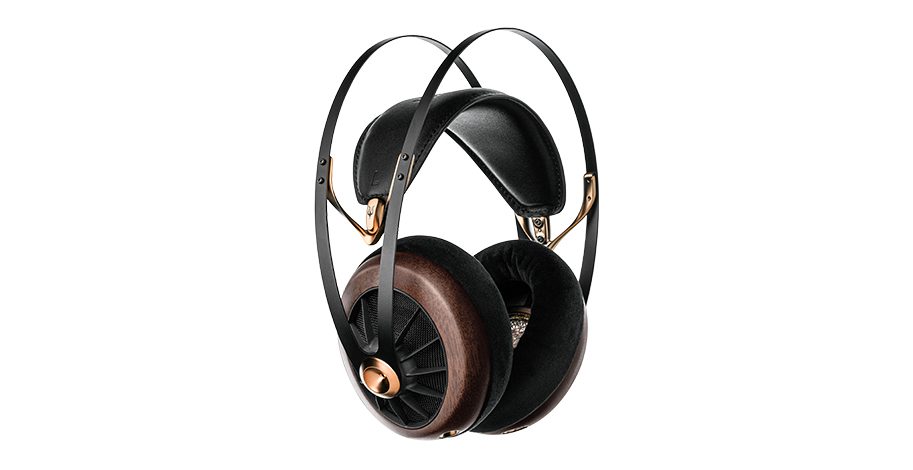
Meze didn’t just use the same 40mm drive unit found in the two current 99 models. It went the harder route, with a ‘clean sheet’ 50mm dynamic diaphragm. This unit features a lazy-W-shaped dome driver, surrounded by a torus of Beryllium-coated semicrystalline polymer, measuring just 22 microns. This veined torus helps damp resonance in the driver itself, aided by a copper-zinc alloy stabilizing ring around its outside. This all sits in a CNC milled aluminium frame, which also houses the neodymium magnets.

This driver sits in an angled frame to align the unit with the listener’s ears. This sits in what Meze calls a ‘spider shaped structure’ and an acoustically transparent grille allowing easy airflow around the driver. The ear is surrounded by a velour ear pad that is echoed in the sustainably harvested black walnut ear-cup surround. Note that black walnut is not black, but the rich semi-matt finish is a superb deep shade of, well, walnut.

A Meze touch common to all its headphones is the self-adjusting headband; a vegan leather padded headband that is floated off two side outriggers on the larger metal headband. While the metal bands can transmit some noise if struck, the overall design is remarkably comfortable, and unless your head is like a watermelon with ears, it really does automatically shape itself to your bonce.

This raw description does the 109 Pro no justice. From opening the elegant black and gold box, handling the moulded carry case to handling the headphones, the look and feel of the 109 Pro is outstanding. Put simply; it looks more expensive than it is! You can make the 109 Pro look and sound even more expensive by opting for one of Meze’s upgrade cables. As it is, though, the 109 Pro comes with two cables as standard; a 1.5m and 3m set, both with 3.5mm TRS jacks at the headphone end and a 3.5mm jack at the amp end. A 6.3mm adaptor is also provided.

The law of unintended consequences

An unexpected advantage to the 109 Pro’s open-backed nature is that it precludes commuter listening. This means most who listen to the 109 Pros will likely use audio systems or dedicated headphone amps. This is a real sonic benefit for the 109 Pro. It’s not a hard headphone to drive at all, but the more powerful the headphone amp, the more you get out of the 109 Pro… not all headphones act that way.

Now it’s time to address the other set of hair-shirted cynics; yes, a product that looks this good can sound good too! That new driver is a real honey, as it reacts super-fast and extremely precisely to the music playing through the headphones, and yet it does so without ever sounding bright or brash. I really like headphones that didn’t ‘shout’ detail in a way so many initially impressive headphones do. And the Meze 109 Pro have that easy to listen to performance without the etched, stark or forward sound so common to headphone systems today.

This is an articulate, lithe sounding headphone, completely free from stinging highs. That doesn’t mean the headphone rolls off at the top end, more that the new 50mm diaphragm is capable of great extension and any irregularities, distortions, dips or tilts in the high-frequency sound are far out of band. Nothing expresses that high-frequency articulation and brightness-free treble than Joyce DiDonato singing opera and operetta arias on Stella di Napoli [Erato]. Her pure, yet immensely powerful mezzo-soprano has bell-like clarity and her diction is nigh-on perfect, all things that the Meze 109 Pro’s sound absolutely take in their stride. There’s not a hint of brightness; in fact, if anything the 109 Pro is slightly warm. Not in a ‘rose-tinted’ way, just immensely satisfying sonically.

The clue is in the name

Dynamic drivers can be good at dynamic range and the 109 Pro is excellent in this respect. The power of the horn section on ‘Memphis Soul Stew’ [King Curtis Live at Fillmore West, ATCO] really shines through. You know it’s coming, but their close-mic’d power still makes you jump, and with a headphone free from brightness and etched sound, you get the full throat of the horns without any aggressive rasping from the headphones.

This track is also a great one to check soundstaging. And very open headphones are particularly good at determining soundstage as it was a simple feed off a desk and unsullied by too much processing. King Curtis introduces each member of the band in turn, and each appears in his own space around your head. That’s a wide and very full stage! Also, when the track whips itself into a frenzy toward the end, you should be able to switch attention from one instrument to another and follow their lines. The more instruments you can focus on, the better the replay chain.

Here, I could follow everyone as they were counted in, and in the end section, I could tease out everyone’s playing except occasionally that of the conga player, Pancho Morales. As his playing is hardest to follow (in part because one of the best drummers in history, Bernard Purdie, is also in the band), the conga part only really breaks cover on super-resolving systems, so ‘occasionally’ is excellent stuff. I’ve tried – and repeatedly failed – to try to play Cornell Dupree’s guitar part (it’s first rate rhythm guitar, with some incredible licks) and the 109 Pro shows you everything in an very easy-going manner, making it all the more frustrating that I just can’t play like that!

More subtle

You don’t buy open-backed headphones for their sonic isolation but even by this standard, they are akin to the Sennheiser HD800 models in their lack of isolation. You hear the world around you and the world around you hear everything you do. Also, those who want their headphones to pump out a heavy bass, this is a more subtle performer; bass is tight and tidy rather than big and bloated. And of course, there is more information and bandwidth to be had if you take the next step to planar-magnetics, including those in the Meze line. But, know that if you do, you’ll probably need to spend double the amount you spent on the 109 Pro to get a material improvement without compromise.

I’ve saved the best until last. What the Meze Audio 109 Pro does so well is create a sound that supports long-term listening. To be honest, I was surprised at this because I thought the velour pads would feel a little hot and uncomfortable after a few hours, but I could wear these headphones for hours at a time, thanks to both the easy way they hang on your head and the warm, inviting sound of the headphones themselves. These are not the headphones for the casual listener. They are for those who like to drink deep from their pool of music. So long as everyone else in the room shares your tastes, these are a joy to use.

Technical specifications

  • Type: open-backed dynamic headphone system
  • Transducer Size: 50mm
  • Frequency Response: 5Hz–30KHz
  • Sensitivity: 112dB SPL at 1KHz, 1mW
  • Impedance: 40 Ω
  • Ear-Cups: Black Walnut Wood
  • Weight: 375 gr (13 oz) without cables
  • Price: £769

Manufacturer

Meze Audio

www.mezeaudio.eu

UK distributor

SCV Distribution

www.scvdistribution.co.uk

+44(0)3301 222 500

Read more Meze reviews here

Back to Reviews
Musical Fidelity M8xTT

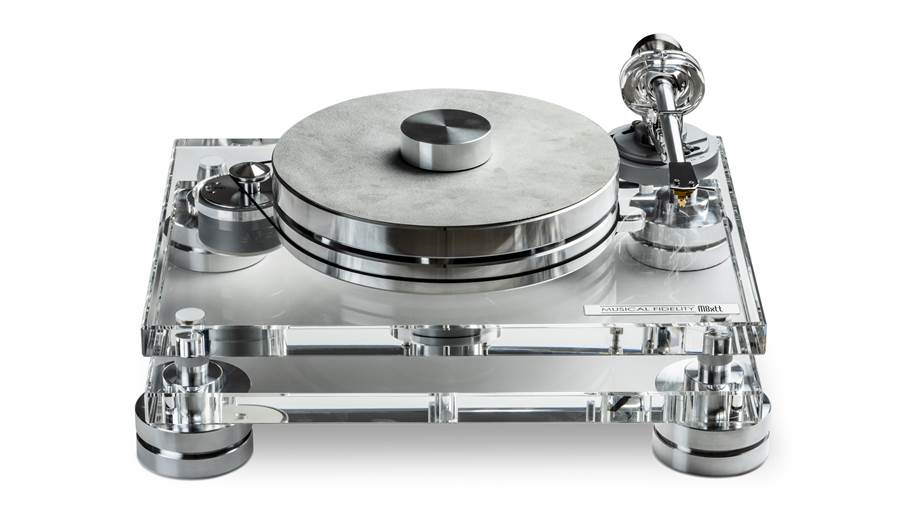
Didcot, Oxfordshire – 20th September 2023 – In 2002, then Musical Fidelity owner, Antony Michaelson, approached Heinz Lichtenegger for input on a new concept he was developing. The idea was to produce a true high-end turntable that matched the aesthetic, technical performance and sound characteristics of his amplifiers. The result was the M1, a substantial record player that employed first-class engineering in order to achieve the level of performance Michaelson expected.

Today, Heinz Lichtenegger is revisiting this project as the current owner of Musical Fidelity, and is seeking to bring back the legendary piece with the benefit of improved, modern skills and materials. The M8xTT (SRP £8,249.00) will begin shipping in October 2023 to vinyl aficionados around the world.

M8xTT product features include:

  • Dual-acrylic chassis isolates the motor support from the tonearm mounting
  • New Musical Fidelity 10” aluminium tonearm with azimuth and VTA adjustment
  • Decoupled motor assembly
  • Dual-layer main platter with aluminium joint inserts
  • Height-adjustable feet
  • RCA and XLR output terminals
  • Leather mat and heavy aluminium puck included
  • Handmade in Europe to exacting standards


M8xTT: £8,249.00 (SRP)

Stock will begin shipping in late 2023.

Turntable also available without a pre-mounted tonearm.

M8xTT in detail

 The M8xTT is a visually striking high-end turntable, combining high-mass and isolation design principles to produce a sound and technical performance capable of impressing any vinyl audiophile. From its bespoke 10” tonearm, through the multi-layered plinth and heavy aluminium platter, on to its height-adjustable feet, every part of the turntable is built to the highest standard.

The M8xTT’s dual-layer plinth is made of non-resonant acrylic, mounted on four height-adjustable magnetic feet with Teflon spacers between the layers. The top layer houses the main bearing spindle and the tonearm mount for complete isolation from the stand-alone drive motor, which rests on the bottom plinth, isolated from the structure by a special foam material. The result is a turntable that effectively eliminates the transfer of resonances from the surrounding environment and from within itself.

The drive motor is connected to the TPE-damped main platter by a silicon drive belt. The unique platter also boasts a dual-layer construction, joined together by aluminium inserts which effectively improve the flywheel effect as the platter begins to turn. This, in combination with the purpose- selected motor, which also features automatic speed changing between 33 and 45rpm, results in a turntable that is capable of exceptional rotational stability.

The new 10” tonearm is a completely new model from Musical Fidelity, developed for the M8xTT. The ultra-low resonance design benefits from a conical aluminium tonearm tube and a transparent acrylic bearing ring. The arm is fully adjustable for azimuth and VTA settings, and comes equipped with two TPE-damped counterweights to support cartridges ranging from 6 – 20g. On the back panel are standard RCA phono sockets as well as balanced XLR connections for flexible system building.

The M8xTT is a true high-end record player. Thanks to its use of mass-loaded materials as part of a decoupled chassis construction, it is capable of a rock-solid performance, so any connected pick-up cartridge can perform to its highest ability. Designed with the “Musical Fidelity sound” in mind, this is a worthy addition to any serious hi-fi system. For added convenience, the M8xTT is supplied with a leather platter mat and heavy aluminium record puck inside the packaging.

Technical Specifications

Speed: 33 / 45rpm (electronic speed change)

Drive Principle: Belt-drive

Platter: 10kg sandwich aluminium platter with aluminium inserts and TPE damping

Platter Bearing: Inverted bearing with ceramic ball tip

Tonearm: 10” Musical Fidelity tonearm

Effective Tonearm Length: 254mm

Effective Tonearm Mass: 17g

Overhang: 16mm

Wow & Flutter: ± 0.05% (33) / ± 0.04% (45)

Speed Drift: ± 0.11% (33) / ± 0.10% (45)

Signal-to-Noise: -78dB

Dimensions (W x H x D): 533 x 245 x 413mm Weight:    31.5kg

Lenbrook Extends Leadership in Hi-Res Audio with MQA Acquisition

PICKERING, ONTARIO, CANADA, SEPTEMBER 19, 2023 – Lenbrook Corp., a diversified, privately- owned Canadian enterprise with activities in brand development, technology, and distribution in both residential and commercial audio and the communication sectors, has acquired the assets of MQA, a UK-based industry leader in high-resolution audio encoding.

This acquisition enriches Lenbrook’s intellectual property portfolio with an assortment of significant patents and introduces two prominent audio codecs – MQA and SCL6. This merger further solidifies Lenbrook’s commitment to excellence and innovation in the evolving landscape of audio technology.

“Lenbrook’s vision is of a thriving hi-fi industry where technologies that promote both consumer choice and the pursuit of the highest sound quality are deserving of investment and nurture,” states Gordon Simmonds, Chief Executive Officer of Lenbrook. “We view this acquisition as an opportunity to ensure the technologies developed by the scientists and engineers at MQA continue to serve the industry’s interests rather than be confined to any single brand or company.”

George Massenberg, Grammy winning producer and recording engineer, reacts saying “I’m so relieved that MQA and SCL6 will continue under Lenbrook. MQA’s technology, with its faithful rendering of detail, complexity, and sound stage, gave us the reason to go back into the recording studio and reverse a 20-year decline in the quality of audio delivery methods.”

Founded from the insights and support of record industry executives, recording artists, and audio engineering experts, MQA sought to provide creators with the means to efficiently preserve the detail and nuance of their works in high resolution recorded formats, which at the time pushed directly against the trend toward heavily compressed music.

“I’m delighted that MQA will continue in good hands with Lenbrook,” adds Morten Lindberg, Grammy-nominated Master Engineer at 2L. “For 2L, using MQA has allowed us to enhance the experience of our recordings, beyond the raw capture, with increased access to sonic details, transparency and lower listening fatigue.”

“MQA is the only technology that considers the entire audio signal chain, from studio to listening room, to assure consistent quality of reproduction. The patents and research that underlie MQA represent significant contributions to digital audio quality due to their focus on time domain issues that have not been well understood until recently,” explains Greg Stidsen, Chief Technology Officer of Lenbrook. “We’re determined to continue to develop our marketplace and encourage the possibilities these technologies can achieve.”

Lenbrook has established a position as a stable and well capitalized organization that takes a long-term view of investments and market development. MQA had amassed over 120 licensees and several content partnerships, so Lenbrook’s primary objective in this acquisition was to provide certainty for business and technical developments that were underway prior to MQA’s administration. As a result, Lenbrook retained a core group of engineers and developers and sales and marketing personnel including Andy Dowell, previously the Head of Licensing for MQA who will continue to lead business development activities.

“As one of MQA’s most significant licensees and also the owner of the award winning BluOS high-res content platform, Lenbrook is well positioned to build on what was started,” reflects Dowell. “Its BluOS platform work has proven that the Lenbrook team understands it takes a certain amount of neutrality to be a licensor, but it can also take a customer view when it comes to the wants and needs from a product development standpoint.”