Up to 37% in savings when you subscribe to hi-fi+
hifi-logo-footer

Begin typing your search above and press return to search. Press Esc to cancel.

CES Preview

The annual CES in Las Vegas is a consumer electronics zoo. Tens of thousands of bloggers, TV crews, journalists and broadcasters descend on Sin City in early January every year to see what thousands of manufacturers have to offer. With all the excitement surrounding flexible phones, wearable tech and 4K cinema, audio can sometimes be overlooked. Although this year we have the push toward HDA (high-definition audio), this looks set to be all but forgotten by the mainstream media… again. But we expect exciting news from this important new trend in music replay.

However, here’s some of the other highlights we look forward to seeing next week:

Audio Research: Having concentrated on its Reference line recently, Audio Research turns its attention to its more affordable line with the announcement of the upcoming CD6 entry-level CD player/DAC.

Cambridge Audio: The low-cost, high-performance brand will be showcasing a range of new products under its Azur and Minx ranges, including a new 851E preamp, 851W and 651W power amps, 851D DAC and Minx XL satellite speakers.

Cary Audio: Tube experts Cary join the streaming club with its new DMS-500 UPnP/DNLA Network Audio Streamer. Cary will also prove it’s more than just a tube amp company with its HI-200-2 hybrid integrated amp, coupling tube front-end with 200W Class D power.

Chord Electronics: The Hugo reference grade headphone amp/DSD DAC will receive its first public outing at CES, with a press conference lined up for Tuesday afternoon. We’ve discussed the Hugo recently, and US distributor BlueBird Music will also have the new Jadis PA100 amplifier on show. Jadis replaces products in its line once in a Blue(Bird) Moon, and this replacement for the DA7 is also an exciting prospect.

Crystal Cable: Marking its tenth year, Crystal Cable is announcing its Cube integrated amplifier (using the Light Drive system seen first in sister company Siltech) and the Minissimo standmount speaker.

D’Agostino: Having wowed the audiophile world with its Momentum mono and stereo amps and more recently the line preamp, Dan D’Agostino will launch the new Momentum Integrated amplifier at the show.

Eclipse TD: The Japanese loudspeaker specialist will launch its wireless TD-M1 powered loudspeaker system at CES. The single-driver, time-domain oriented loudspeaker might be destined to be a lot more than just a desktop design


Genesis: Absolute Fidelity is a concept developed by Genesis CEO Gary Koh, moving beyond mere accuracy into a recreation of the musical event. This is an important year for the brand, now making a soup-to-nuts solution including source, amp and (what the company is best known for) loudspeakers. Don’t expect the word ‘budget’, unless it is prefaced by the word ‘big’!

Krell: The company is making big claims for this year’s launches, debuting what it claims is its “most radical and revolutionary amplifier technology in its 33-year history.” Krell suggests it has managed to deliver better than Class A performance from a rack-mountable technology.

Magico: Building on its popular S-series, the notorious speaker company will showcase its new S3 floorstander at CES, a midsize speaker designed to fill the gap between entry-level S1 and S5 big-boy.

Marten: Arguably the biggest audio launch at the show (in size terms at least), Marten will launch its new four chassis Coltrane Supreme II loudspeaker, an uncompromising design that replaces the company’s now eight year old flagship.

Naim: Teaser campaigns on the company’s website and a curious box of heatsink sent to UK journalists all point to a new über-amplifier from the Salisbury specialist. Real information remains sketchy until the official launch, but rumours abound of a product line designed to appeal to Focal Utopia Grande EM customers, with a sticker price to match…


Simaudio Moon: The Canadian specialist will showcase two new models at CES, the 720A power amplifier (a dual mono, balanced Class AB design in a slimline Evolution case) and the 820S power supply upgrade for several products in the Evolution range.

Simple Audio: The high-end, low-cost streaming solution launches its new Roomplayer HD system at CES, reputedly capable of delivering up to 24-bit performance, with all the multi-user, multi-library convenience of more mainstream network streamers.

TechDAS: The Air Force One turntable from the Japanese company has made a big splash in the top-end vinyl spinner market. This year, the company has announced a more affordable Air Force Two, said to bring the engineering of the top deck to a wider LP collector market.

Torus: The power conditioning experts will be showing its latest addition to the small TOT range, the 15A. It’s an ultracompact standalone device with claimed sag-free noise filtration.

Wilson Audio: The evergreen WATT/Puppy lives on in the guise of the new Sasha Series 2 loudspeaker system. As ever, this will be one of the off-show events at a nearby hotel .

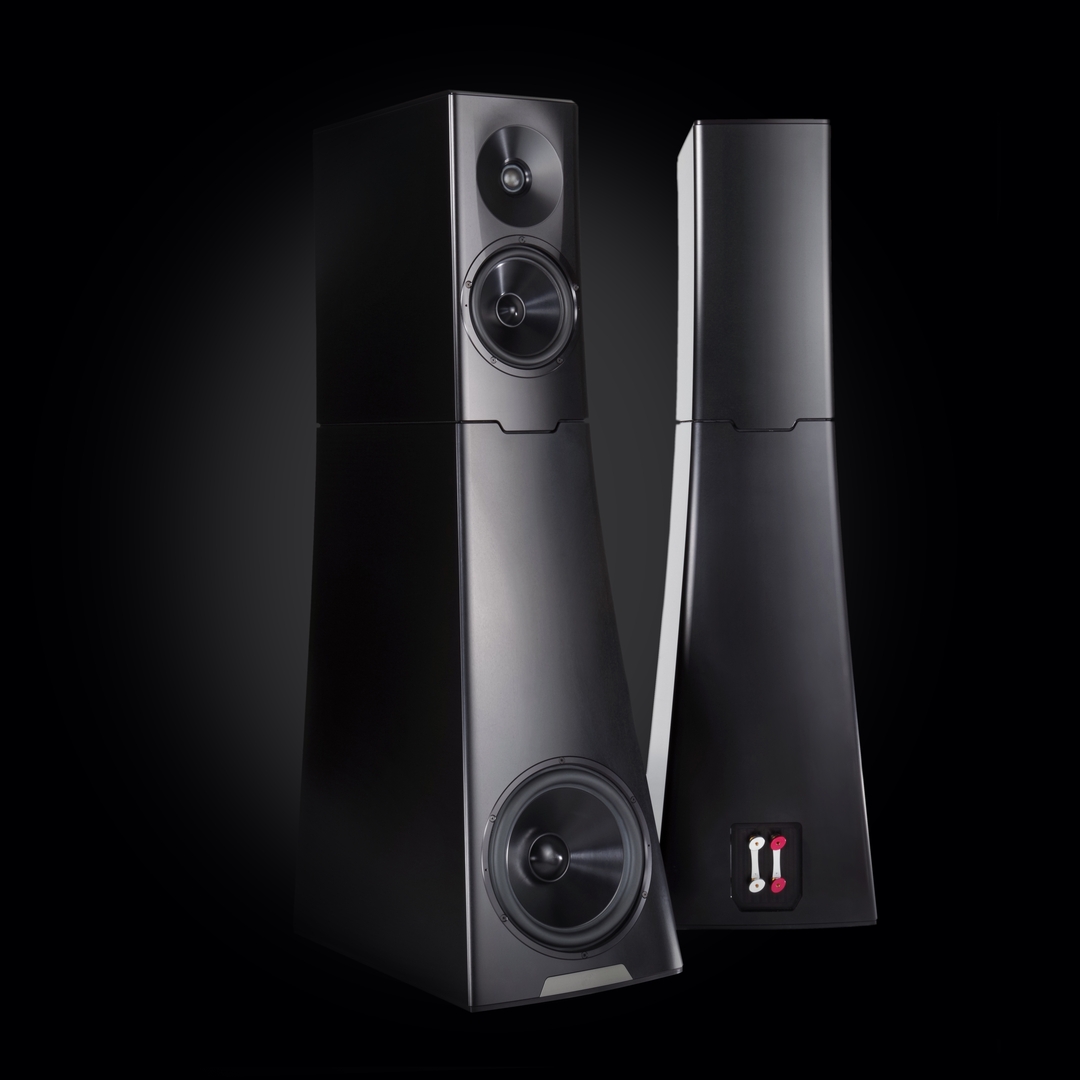
YG: YG Acoustics has been showing a preview of its Hailey floorstanding loudspeaker on its website. The company suggests this new model brings the design criteria of the Sonja flagship to a wider audience. A smaller, more accessible model.

Zanden: The Japanese über-high-end company is well known for its top tube phono preamp. This year, however, Zanden will show its new model 120 LCR-type phono stage, the first from the brand that is completely solid-state!

There’s more. Like the new DarTZeel LHC-208 ‘danalogue’ integrated amplifier or the MartinLogan Crescendo coffee table that poses as a AirPlay/Bluetooth speaker (… or is it the other way round?). Or the first outing for the Kingdom Royal Carbon Black, Tannoy’s most powerful speaker in its 87 year history. And even muso keyboard favourite Korg has announced a high-quality USB DAC for domestic users. 

First Listen – HiFiMAN HM-901 high-resolution portable digital music player

Over the past year, the firm Astell & Kern has garnered considerable press attention, first for its AK100 high-res portable digital music player and then for its even higher-res AK120 player. The A & K players made a big splash and for good reason; their arrival in the marketplace was timely and the products offer exemplary fit, finish, and stylistic panache, plus user interfaces that—by all accounts—work very well. But long before A & K ever appeared on the scene the famous Chinese headphone/headphone amplifier company HiFiMAN had begun a multi-year-long development effort on an extremely ambitious high resolution digital music player of its own: the HM-901 ($999).

What makes the HM-901 so ambitious? Well, for starters the HM-901, which is all about delivering serious high-end sound quality, is based on dual ESS Sabre ES9018 32-bit DAC chips—units similar to those used in Oppo’s top of the line BDP-105EU universal player (and in many other even more costly high-end audio components). This certainly isn’t the least expensive way to go in preparing a high-res player, but HiFiMAN argues that it is the best-sounding way to go. In fact, company founder Dr. Fang Bian claims that in blind tests (at least one of which I’ve had the opportunity to observe) the HM-901 compares favourably with multi-thousand dollar/pound dedicated full-size DACs. The HM-901 supports 16-bit formats (mp3, flac, ape, aac, alac, aiff, and wav) as well as 24-bit formats (mp3, wav, flac, and alac), with decoding for up to 192/24-bit files.


Second, the HM-901 provides very high-performance, user replaceable amplifier modules, with different variations for different types of headphones and earphones. At present the firm offers three amp options: a Balanced-output Amplifier

Card, an IEM Amplifier Card, and a special “HM-901 Minibox Amplifier Card” designed, says HiFiMAN, by “renowned portable amplifier designer, Three Stone.” The point, here, is that HiFiMAN give you options, offering different amp modules tailored to fit specific applications—something no other portable player maker we know of has seen fit to do. Our evaluation unit came with the Balance Amplifier Card already installed and that is what we have been using thus far.

However, the sound-quality oriented feature set doesn’t end here, in that the HM-901 provides a precision stepped attenuator volume control, a balanced/single-ended output switch, high & low gain setting controls, an HD/Vintage DAC response-shaping control switch and can—at the user’s option—be fed directly from an S/PDIF input. Most of the time, though, we imagine users will instead choose to run the HM-901 directly from its onboard SD card, which of course means owners can buy as much or as little digital file storage capacity as they desire. The player ships with a power charger, a 1600 mAh lithium-ion battery, a USB to multi-pin adapter cable (used in downloading music files from a PC to the HM-901’s SD card, and a combo S/PDIF input/RCA line-level output cable that facilitates use of the HM-901 as a traditional high-performance DAC.


In the relatively near term, HiFiMAN also plans to release a tabletop DAC/dock for the HM-901, where the idea would be to have the dock permanently connected to one’s full size hi-fi system and to plug the HM-901 into the dock for in-home use but to unplug and carry it along for the on-the-go listening. Where most portable players are geared almost exclusively for on-the-go use, HiFiMAN plainly envisioned a much more extensive set of possible “use cases” for the HM-901.

How does the HM-901 sound? I will have to proceed with caution, here, as I have learned that, quite by accident, HiFiMAN shipped us an HM-901 sample whose firmware was several revision levels out of date. Since at least one of the intermediate firmware revs had addressed a firmware updating issue, both the HiFiMAN team and I felt it would be best to get a sample with the latest revision software before contemplating a full review. Nevertheless, I can give you some off-the-cuff impressions of the HM-901 as run with down-rev firmware.

From the outset, it seemed to me the HM-901 wore its “high resolution” credentials on its sleeve, offering up a notably clear, crisp, and well-detailed presentation on the music files I tried (I used a mix of 44.1/16, 94/24, and 192/24 wav files for my initial listening). While I would not call the sound overtly bright in any way, it is a sound that definitely does not add even subliminal touches of warmth (which some of HiFiMAN’s larger desktop amplifiers tend to do). Thus, the HM-901 arguably qualifies as a higher accuracy component that offers a superior degree of neutrality and transparency, albeit at the expense of touches of comfortable warmth that some headphone listeners might find appealing. As I gain more experience with HiFiMAN’s available amplifier modules and with up-to-date firmware, I’ll no doubt have more to say about the unit’s sound. For now, though, let’s just say that first impressions seem promising.

One element of the HM-901 that tends to be a bit polarizing would be the player’s styling, which is sort of a 21st century, retro-modern take on the look of a vintage Sony Walkman. In this, you can see a deliberate homage to HiFiMAN’s very earliest days, where the company got its start by building what were in essence hot-rodded version of the then ubiquitous Sony players. Will you appreciate the HM-901’s look? Well, if you heft the unit in your hand, you can’t help but appreciate the beefiness and solidity of its build quality. On the other hand, if you put it alongside an Astell & Kern AK120, 10 out of 10 hypothetical viewers would probably pick the A & K as by far the more modern design. As one office mate put it, “The HiFiMAN is a strange unit, because its sound is modern as tomorrow while its appearance is definitely old-school.” You be the judge.

Watch for a possible Hi-Fi+ review of the HM-901 later in the year. Until then, happy listening and a happy 2014. 

TEAC UD-501 digital converter

The TEAC UD-501 is currently the cheapest DAC to support DSD replay across USB. It has fixed single-ended phono and balanced XLR outputs, and a volume control for the built-in headphone amplifier. There is no remote, but it does feature a range of filter options activated from a front panel menu button. 

This DAC is part of TEAC’s revamped Reference 500 series, a midi-sized but fully discrete range of components with silver ‘pro audio’ style side panels featuring integrated handles. The unit itself is available in an all-silver finish, or a contrasting matt black body with silver knobs, switches and side panels. Either way, the two-line display is an orange on black panel. 

Its two dials are not strongly resistive to the touch and both the menu button and the power on toggle should be more recognisably ‘thrown’ when engaged, but there is no play on any of the control surfaces. Overall, the metal-bodied DAC feels solid sitting on its four low feet. There is one odd ergonomic observation– the ¼” headphone jack is sited next to the power switch, while the volume control (which only works for headphones) is on the other side of the front panel. The logical panel order would be placing the headphone ‘group’ together, possibly on the right side of the front panel just after the display.

Its rear panel features a similarly odd choice of layout pattern. One part of the split digital input block itself splits the left and right analogue line level outputs. This relegates the two fibre-optic TOSlink inputs next to the IEC power inlet and a toggle switch to defeat the DAC’s power saving mode, while the two coaxial S/PDIF and USB digital inputs sit between the RCA and XLR sockets of the line out blocks. Fortunately, this is all clearly marked and covered in the comprehensive supplied manual, so this shouldn’t pose any functional concerns in everyday use. I used it single-ended exclusively.


Moving inside to the converter itself, the circuit is effectively a dual mono design, with everything from the two power transformers through to the separate output sections sharing only a common chassis. This includes one BurrBrown PCM1795 converter chip and a pair of made-for-hi-fi MUSES8920 operational amplifiers for each channel. The op-amps are connected in parallel with the RCA line-out terminals, acting as a buffer to ensure the signal arrives at the amplifier or preamplifier in good order. This levels the score somewhat between XLR and RCA on long cable runs.

The TEAC UD-501 supports PCM file playback through all its digital inputs; as standard through fibre-optic TOSlink, this is limited to 24bit, 96kHz files, while coaxial S/PDIF can support up to 24 bit, 192kHz files. The USB input takes this still further with a notional ceiling of 32 bit, 384kHz files (‘notional’ because no such files are currently commercially available). PCM files with a sample-rate below 192kHz can be upsampled to 192kHz, thereby allowing any data jitter to be folded into the signal itself. This can be switched off, however. There is also a three-setting digital filter for PCM: Slow, Sharp and Off. Both ‘Slow’ (gentle cutoff) and ‘Sharp’ (brickwall filter at half the sampling frequency) are standard options for the BurrBrown DAC, although unlike TEAC most implementations just use the Sharp option as standard.

The asynchronous transfer USB connector works to USB Audio 2.0 standard, meaning files beyond 24 bit, 96kHz PCM – or any DSD files – must be played through a compatible USB output from a computer. This comes as standard with any Mac computer running OS X 10.6.4 or later operating systems (you may need to adjust your computer’s Gatekeeper settings), but requires a driver for 32bit Windows XP or subsequent Microsoft Windows operating systems. As explained in the manual, this is downloadable from the TEAC website.

DSD over USB is a relatively new high-resolution pathway, an open standard developed across a range of platforms, but the notable partners include J River on the software side and dCS from the hardware manufacturers. The TEAC supports native DSD to 128x via ASIO 2.0 on Windows computers (with the software download) only and in DoP mode for Windows computers and Macs. DoP (DSD over PCM) ‘fools’ the USB controllers into thinking DSD files are PCM files. The TEAC is in on the deception and unpacks the file as true DSD. The TEAC UD-501 supports both ‘standard’ 2.8MHz and ‘double’ 5.6MHz DSD (DSD128) files, and these files can be downloaded from sites like Channel Classics, MA Recordings, Blue Coast, 2L, as well as a fascinating sampler from Opus 3 that comes in both 2.8MHz and 5.6Mhz file sizes. 

DSD replay has four FIR (finite impulse response) settings, which adjust the cutoff frequency and stage gain of the analogue filter. J River Media Center through a Windows 7 PC was used to support these files and the handling was almost as straightforward as any PCM file. These are massive files and downloading takes time even on fast fibre-optic broadband. Right now, I suspect few people have more than a couple of dozen DSD-based albums stored on a hard drive, but if the time comes where you have a couple of hundred such albums or more, you will have unwieldy terabytes of data to handle.


The TEAC UD-501’s menu system is remarkably comprehensive, for a DAC. It has a range of digital and FIR filter options and allows the automated PCM upconverter to be disabled. However, the TEAC UD-501 also includes options to dim or turn off the display, automatically power off the USB port when not in use, to allow the headphone socket to mute the line output, adjusting the ‘hot’ polarity of XLR, or even swapping between XLR and RCA.

The menu system controls filter options, and whoever had played with the filter options before me didn’t get them right. The PCM option sounded rolled off like a NOS DAC (because it was set to ‘off’) and FIR1 (cut-off of 185kHz, -6.6dB) sounded very slightly diffuse with a mildly exaggerated image size. Given the lower gain than other filter settings, this might be good for balanced operation. FIR2 (cut off at 90kHz and +0.3dB gain) performed more naturally, suggesting perhaps that the DSD stream passing unfiltered into an amplifier might not be a good thing! The other two FIR filter settings were indistinguishable from FIR2 in use. On PCM, I resorted to the Slow setting throughout.

Any DSD-supporting DAC needs to pass muster as a standard-resolution PCM DAC as well as making good with high-resolution PCM and DSD files. With the right filter settings, TEAC’s UD-501 did well in all three cases. I do not agree with the ‘all competent DACs sound the same’ ideology, but I think ‘all competent DACs converge on a similar sound’ and this DAC fits this profile well. I auditioned the converter with a range of musical samples, including acapella female vocals (‘Tom’s Diner’ from Solitude Standing by Suzanne Vega on 16/44.1 PCM) through to Big Band (‘You’re No Body Until Somebody Loves You’ on Sinatra Swings by Frank Sinatra in 24/192 PCM) to complex orchestral works (Beethoven’s 7th Symphony, Budapest Festival Orchestra, Channel Classics DSD download), and even Eric Bibb’s blues offerings in both DSD and DSD128 form on the Opus 3 sampler. In each case, the TEAC delivered a full, detailed and accurate rendition of the original recording, without any noticeable sins of omission or commission. At the extreme end (DSD128), the sound quality was extremely smooth and enticing in a manner normally reserved by vinyl-lovers for the best in LP. That being said, if you used this DAC with only 16/44.1 PCM files, you would be more than happy with its performance.

What applied to the line-level output also applied to the headphone socket, although I felt the UD-501 possibly could do with a touch more gain to enable it to drive the current crop of power hungry headphones. On my Sennheiser HD595s, it played to very loud levels indeed, but I have also used headphone amplifiers that aced this test with the volume knob less ‘cranked’.

The TEAC UD-501 is an extremely impressive DAC. It plays every audio file you could conceivably think of, and does so while cocking a rather large snook at companies that insist DSD replay is only possible at great expense. An integrated streamer aside, I can’t think why anyone would want anything more than this. Strongly recommended!

Technical Specifications

Digital audio inputs: 2x coaxial S/PDIF, 2x TOSlink fibre-optic S/PDIF, USB Type B (USB 2.0 compatible, asynchronous transfer mode)

Analogue audio outputs: RCA, XLR, ¼” headphone jack

Sampling frequencies supported: PCM (to 32 bit, 384kHz); DSD 2.8/5.6MHz

Upsampling: 192KHz

PCM digital filters: Slow/Sharp/Off

DSD Analogue filters: FIR1 (185kHz), FIR2 (90kHz), FIR3 (85kHz), FIR4 (94kHz)

Finishes: Black + Silver or Silver

Dimensions (WxHxD): 29×8.1×24.4cm

Weight: 4kg

Price: £699

Manufactured by: TEAC

URL: www.teac-audio.eu

Tel: +49 (0) 8142-4208-141

Burson Audio Conductor/Timekeeper amps

Coming out of Melbourne, Australia, Burson Audio set out its store from the get-go as a force to be reckoned with. Its first products were the little Soloist and Soloist SL; a pair of tidy, well made headphone amps, with built in DACs. But then came the Conductor, the brand’s modular high-end preamp/headphone amp design. This also comes in two headphone amp/DAC ‘flavours’ (without the preamp stage and with slightly less powerful head amps), but it’s the Conductor preamp that ticks all the boxes, on both sides of the headphone. And then, with the matching Timekeeper power amps, suddenly this headphone brand becomes a legitimate high-end audiophile player. And what a player!

I defy anyone not to want to take the top off these brushed aluminium honeys. The four recessed Allen bolts are just asking for you to pop the hood and peer inside. The first things you’ll probably notice on the inside is that custom made ladder volume control, made up of mil-spec DALE resistors, a hefty pair of screened toroidal transformers and stacked PCBs; the taller of which holds the 32bit ESS Sabre DAC, with a low jitter clock and a tailored FET output stage. The lower board houses the Tenor asynchronous USB chipset. 

In total, the Class A Conductor includes a pair of line level analogue inputs, three digital inputs, and a choice of variable output to a power amp or fixed DAC output to a full amplifier. If you go this route, the volume control works the headphone socket. Both preamp and headphone amp outputs are fed through a three-level output stage, so you can more accurately gain match your amps and headphones. A set of LEDs with touch buttons and a 1/4” headphone jack socket complete the Conductor. 

The matching Timekeeper is an elegant block of alloy, an 80W Class AB fully discrete FET input/bipolar output stereo chassis that allows very easy upgrading to bridged mono mode (in either balanced or single-ended operation), raising the power to 240W per channel. They have a set of heatsinks either side of the main body for good reason; they get quite warm in use. The rear panel has a switch that moves between stereo and the two bridged mono modes, and it’s as nicely put together as the Conductor.


Reviewing the Conductor is to review several products in one; DAC, headphone amp and line preamplifier. The easiest one is the headphone amplifier, because it’s damn fantastic. The ‘low-medium-high’ gain settings become all the more understandable with headphones, because if you are using a pair of headphones designed to play loud and not faze an iPhone, you’ll struggle to use the full travel of the volume control, while if you use a beast-load like a HiFiMAN HE-6, the volume will barely get past a whisper until you get half way round the dial. Those three little settings on the front panel make this headphone amp a more universal design.

Unlike loudspeakers – that tend to have a reasonably narrow band of impedance (very few loudspeakers have a nominal impedance below about three ohms and above about 16 in practice) – a headphone could present a load to the amplifier at anywhere between about five and 600ohms. Although that’s the lot of a headphone amp, few give so even-handed a performance across the board as the Conductor.

This has to be one of the most honest, natural and deep-down ‘right’ sounding headphone amplifiers out there. It has the kind of transparency we all crave, but without the characteristic ‘shiny’ or alternately ‘dark’ sound that most good headphone amps seem to bestow on the music. If there’s a central character to the sound through cans, it’s ‘big’. Not in an overstuffed, over large way, but just expansive and enticing. And that will prove to be extremely attractive for those who commonly listen in free space. It’s not ‘spacey’ as if it is adding DSP, but it does deliver an open and more than just in-head sound that is glorious.

As a DAC, it does very well too. There would be a tendency to describe this in ESS terms, but Burson has not simply followed the application notes. Instead, it has extracted a stunning performance from a well-known digital converter, adding a sense of musical flow and rhythm to its already noted detail and air. There’s an unpretentious sense of insight into the sound and the music that works wonders with Martin Simpson’s Vagrant Stanzas album, which is well recorded enough to sound almost audiophile-bland and meaningless, but in the embrace of the Burson, sounds memorable, moving and makes me wish I spent more time practicing my guitar.


The Conductor is about two more line inputs and a remote control from being a full-thickness preamplifier. Whether that’s a problem depends on how many analogue sources you still use and whether laziness wins out over performance. From a sound quality perspective, it was worth the effort of walking a few paces to adjust volume. The sound is full and detailed, putting the music slightly in front of the loudspeakers in imaging terms, but never is it an ‘upfront’ sound. It’s just good. If sheer laziness puts you off though, you are seriously missing out, because whether used as a preamp or a headphone amp (or for that matter, as a DAC) it’s at worst excellent, and at best a real revelation.

Now on to the Timekeeper. One 80W amplifier delivers a fine performance in and of itself, finely detailed and engaging, but it quickly transpires its merely a stepping stone to the mono amps. What begins life as a good stereo amp that will stand toe-to-toe with good, solid designs at the price, becomes a masterful renderer of audio chiaroscuro, an accurate depiction of the sort of dynamic shading and musical insight that used to be the sole preserve of brute-force amps in vast chassis. But where it wins over many of even these designs is it delivers a fundamentally ‘likeable’ sound. We don’t always listen to beautifully recorded audiophile discs and we all have our kick back and play Guns ‘n’ Roses moments. The Timekeepers do well with good sounds, but not at the expense of bad ones. It all sounds enticing and good.

I’ll be perfectly honest here. I began this review with the view that we are in the presence of a great headphone amp that doubles up as a good preamp, with some power amps in tow. And with one Timekeeper, that’s not far from reality. With two, however, the amplifiers spring into life, and you are faced with a complete reversal of fortunes; you have an outstanding mono amplifier pair with a fine preamplifier and an excellent headphone amp. And the only thing holding the preamp part back from hitting the same superlative high notes is the deliberate removal of a remote control for purist ‘it sounds better’ reasons. Very highly recommended all round, especially as a three-boxer.

Technical Specifications

Burson Audio Conductor

Three position variable output stage

Inputs:

1 x USB Connection

1 x Coaxial RCA (Support up to 24bit @ 192Khz)

1 x Toslink / SPDIF (Support up to 24bit @ 192Khz)

2 x RCA line level input

Outputs:

1 x headphone jacks 6.35mm

1 x RCA Pre Amp output

1 x RCA DAC direct line out

USB Specification:

OS Requirement: Windows XP, Windows Vista, Windows 7, Windows 8, Mac OS X

USB : 24 bits / 44.1K, 48K, 88.2K, 96K, 176.4K, 192KHz

Support up to 24bit @ 192Khz with 10ppm low jitter clock

Asynchronous Transfer Mode

Input impedance: 36.5 KOhms

Frequency response: ± 1 dB 0 – 50Khz

Signal to noise ratio: >96dB

THD: <0.03% at 30ohm with 1W ouput

Channel separation: >73dB

Output power: 4W at 8 Ohms

Input impedance: >8K Ohm @ 30 Ohm, 1W

Output impedance: <1 Ohm @ 30 Ohm, 1W

Dimensions (WxDxH): 26.5×25.5x8cm

Weight: 6kg

Price: £1,499

Burson Audio Timekeeper

Inputs:

2 x RCA line level input

1 x RCA line level input (For RCA bridge mode)

1 x XLR input (for XLR bridge mode)

Outputs:

2 x Stereo Speaker Blinding post

THD: (1khz @ 8 Ohm) 0.03%

Frequency response: 0hz – 50Khz (+/-3Db)

Signal to noise ratio: >98dB (CD , Line level)

Input Sensitivity/ Impedance: 240 mV / 20K

Output power: 80W @ 8 Ohm 

Bridge Mode (RCA & XLR):

Output power: 240W @ 8 Ohm 

Class AB

Dimensions (WxDxH): 26.5×25.5x8cm

Weight: 8kg

Price: £1,950

Manufactured by: Burson Audio

URL: www.bursonaudio.com

Distributed by: Karma AV

URL: www.karma-av.co.uk

Tel: +44(0)1423 358846

First Listen – iFi iCAN Nano portable headphone amplifier

In 2013, the tiny iFi Micro iCAN desktop headphone amplifier proved one of the most pleasant—and pleasantly affordable—discoveries of the year for serious headphone audio enthusiasts operating on real-world budgets. I’m not sure if I conveyed this impression as vividly as I ought to have done in my Hi-Fi+ review of the iCAN, but the simple fact of the matter is that the iCAN was and is just ridiculously good for the money (£225). “Surely,” I thought to myself, “one would have to wait a very, very long time before anyone offers a better value in the world of small, overachieving headphone amps.”

But then again, perhaps not. I say this because, as it happens, the mad geniuses at iFi Micro (aka the R&D team from Abbingdon Music Research) have been at it again and may have come up with an even greater, higher value achievement: namely, the new iFi Micro iCAN Nano portable headphone amplifier (£149 with VAT). At Rocky Mountain Audio Fest 2013, iFi Micro’s Vincent Luke kindly loaned me an almost-ready-for-prime-time, pre-production sample if the iCAN Nano to play with until such time as a full-product review sample could be made available.


Unlike the original iCAN, which was strictly a desktop unit that draws its power from a special, very low-noise wall-wart power supply, the iCAN Nano, which is about one half the size of the already compact iCAN, is a portable unit driven by a lithium-polymer battery whose playback time per charge is—get this—in the range of 70+ hours (no, that’s not a typographical error). Can you say “convenient”? Just think: You could charge up the iCAN Nano in England, fly to the ‘States listening to the Nano all the way, then listen to it some more during your trip, and finally return to England (again listening to the Nano all the way) and still have a little bit of charge left over. Cool, no?

Then there’s the feature set. Normally in audio products, and especially portable ones, making a product smaller equates to deletion of features, but with the iCAN Nano this isn’t precisely the case. Whilst it doesn’t have the exact same features as the bigger iCAN, it comes pretty close. Thus, like the iCAN, the iCAN Nano features iFi’s signature Direct Drive amplifier circuitry (no output coupling capacitors in the signal path), plus an updated though simplified version of the firm’s 3D HolographicSound circuitry (an attempt to give headphones more speaker-like soundstaging characteristics), and XBass circuitry (which allows users to dial in a judicious dab of very low frequency bass lift, if desired). 

In terms of output, the iCAN Nano is, as you would expect, less powerful than the drives-almost-anything iCAN, but it nevertheless puts out a very respectable 130mW into 32 ohm loads. In practice, the iCAN Nano probably cannot drive desperately power-hungry ‘phones such as the HiFiMAN HE-6, but it is perfectly adequate for powering the fast majority of “normal” headphones.


This brings us at last to the biggest question of all, which is, “How does it sound?” I have to tread carefully, here, because Vincent Luke made me promise I would withhold judgment until I have heard the final production unit (one is on its way to Hi-Fi+, but is not here yet).  So, take the following comments with a large grain of salt and the foreknowledge that the production unit is said to sound even better than the pre-production sample I have.

If that is so, then iFi will surely have a winner on their hands as the pre-production iCAN Nano sounds terrific (a lot like the original iCAN, but slightly less powerful). If asked to supply a two-word description of the iCAN Nano’s sound, the two words I would pick are “vibrant” and “robust.” If you drive headphones directly from a iPod, smartphone, tablet, or desktop PC and then insert the iCAN Nano in the signal path things immediately get better—a lot better. It’s as if the music has been suffering from anemia and then suddenly receives much needed transfusions of energy, dynamic muscularity, and natural, organic-sounding warmth. What is more, the 3D Holographic Sound and Xbass settings seem at once simpler than, but also more sonically subtle and usable than their equivalent settings in the original iCan. ‘Works for us.

In short, we can’t wait to hear the final production unit. Watch for a full review in Hi-Fi+. Until then, happy listening.

Vinyl goes from strength to strength

On the second of January every year, the BPI (the British Phonographic Industry, basically the RIAA of the United Kingdom) and the Official Charts Company releases details of music sales performance in the previous year. The 2013 sales figures are now in… and they show mixed blessings.

Overall, sales of new music in all its guises achieved in excess of £1bn, which is good news because it shows some stability in recent years (although the figure is markedly down expressed over the longer term). The headline figure from this is that digital streaming (services like Spotify and Deezer) now account for 10 per cent of the total value of the market (£103m, up from £77m in 2012). With these services accounting for a whopping 7.4bn songs played last year, it’s clear that access to music has never been more open for listeners. However, a simple calculation shows that each song played through streamed music providers generated a slightly less whopping 1.4p (technically £0.0135…) for the music business as a whole. The amount of music streamed does not include funds-free streams such as You Tube, but represents effectively a doubling in a single year (3.7bn songs streamed in 2012).

Downloaded albums showed a 6.8 per cent increase on 2012’s figures, with 32.6m albums downloaded, while downloaded single tracks showed a 4.2 per cent drop on last year’s record-breaking figure (175.6m tracks against 183.3m in 2012). Meanwhile physical CD sales were down by 12.8 per cent on the 2012 figures, but CD still accounts for 64 per cent of total music units sold in the UK.

The big success story in music sales continues to be the unceasing vinyl revival. 2013 saw more than 780,000 new LPs sold in the UK; that’s up a remarkable 101 per cent on 2012’s figure and represents the largest annual total vinyl sales since 1997. In addition, the 7” single market grew by 34 per cent in a single year and 12” sales increased by a healthy 60 per cent.

Moving over to the artists, the charts were dominated by compilations (Now That’s What I Cal Music 86 sold 1.1m copies last year) and One Direction (Midnight Memories sold 685,000 copies in six weeks), while the most successful digital album sold was Bad Blood by Bastille and AM by Arctic Monkeys was both the most streamed album and the best selling LP of the year. Blurred Lines by Robin Thicke, Pharrell Williams and T.I. was the most downloaded single of the year.

The BPI’s press release naturally puts a positive spin on all these figures, but there is some comfort to be drawn in places. First, the trend is shifting toward a subscription model, which means people like the idea of having seemingly infinite music to hand. Next is that for all the gloom and doom surrounding CD sales, they still account for the bulk of music sales in the UK. Finally, although a drop in the musical ocean in real world terms, the interest in vinyl seems determined to prove it’s something more than just a fad. A market doubling in a single year is possibly a cause for concern, as it might suggest the bubble is about to burst, but nay-sayers have been expecting the end of the vinyl revival almost as soon as it began, and LP keeps proving them wrong!

Thinking back, looking forwards

While Americans break their end of year celebrations fairly evenly between Thanksgiving, Christmas Day and New Year, we English pack them all together into one massive body-busting blitz. This begins half way through Christmas Eve, lumbers drunkenly through the million-calorie Christmas Day feast, crashes through the “you didn’t eat all 25lbs of food yesterday, so let’s fry it for lunch” excess of the Boxing Day celebrations on the 26th, leaving us unable to move until New Year’s Eve, which is the perfect excuse for binge drinking. All the while, The Great Escape and The Magnificent Seven are duty-bound to appear on TV and – for those few companies that don’t shut down between the breaks – absenteeism and ‘chucking a sickie’ are rife.

But, being unable to blink without medical supervision for several days gives us an ability to go a bit retrospective, and the impending New Year gives us a chance to gaze into the crystal ball.

Here are my personal highlights of 2013:

Vinyl goes from strength to strength

Sales of all things LP are continuing to buck the trend. Where sales of CD and even downloads continue to decline, the vinyl revival continues apace. The market remains relatively small (4.6m LPs sold in the US and 389,000 LPs sold in the UK in 2012) but has continued to increase even in the recent difficult economic conditions. While this is a largely Western phenomenon (the same interest in LP has not spread so dramatically across Asia), the interest in all things vinyl (which is aided and aids surviving specialist record stores) has been recognised even in the mass media. Vinyl-loving audiophiles are expected to be allowed to do their smug ‘told you so’ dance for at least another year or two.

New stores, new possibilities

Despite gloomy forecasts for the future of specialty audio, and the future of retail, this year has seen a number of new audio stores springing up all over the planet. Many seem to have the same outlook – revelling in the ‘boutique’ nature of modern retail, with a small, chic line of products that are in very much in the high-end audio market, but for once providing a service and a portfolio of products that is more geared toward the music lovers in the whole family, rather than the dyed-in-the-wool audiophile in his man-cave.

DSD is back from the dead

Although the format remained popular among some classical enthusiasts and Japanese collectors, the future looked bleak for SACD and the Direct Stream Digital format a few years ago. High resolution audio collectors were switching to downloads, and those downloads were 26/96 and 24/192 PCM in nature. Then, a group of digital experts (including dCS and JRiver) created an open standard that allowed DSD files to be handled as ‘fake’ PCM files, thereby permitting transmission across USB.

While the number of high-quality DSD recordings available are still small in number, this has become the year of DSD, because practically every new DAC priced beyond the bargain basement level now sports DSD replay capabilities. This has had a knock-on effect of making many non-DSD capable products considered ‘dead in the water’ by audiophiles, irrespective of their baseline performance on other formats. Time will tell if this is a fad, or if DSD becomes the de facto standard for high-performance digital audio.

There’s more to life than Beats

Audiophiles frequently dismiss Beats as a bass-heavy fashion-led headphone range, but the wider implications of the brand are beneficial for all. At a stroke, Beats increased tenfold or more the average amount spent on headphones, thereby allowing manufacturers the provision to build up to a quality instead of building down to a price. High performance headphones from specialist brands new and not so new, as well as products leveraging years of loudspeaker-building experience now abound.

Beats star is not exactly on the wane, but an increasing group of good sounding high-end rivals, have challenged its position of absolute dominance. This year may well be looked upon as the year the audio industry fought back the Beats, and the year that every speaker brand suddenly discovered the landscape between the ears.

Small is beautiful

Continuing a trend, 2013 saw wider approval of uncompromising products on a smaller scale. The new trio of slimline, do-it-all DAC/amplifiers from Devialet and the new Wadia Intuition 01, as well as top-line minimonitors such as the Raidho D1 are the latest products in the changing face of audio. While there will likely always be call for large, full range loudspeakers, the demands of the uncompromising city-dwelling audiophile without endless real-estate acreage are now being met, and brands like Wilson with its new wall-hugging Duette 2 are meeting that demand well.

Some of this desire for smaller products extends to sticker prices. Although the sticker price of the top-end of audio continues to soar, we’ve recently seen a slew of high-performance audio products without five or six-figure sums. A system comprising Arcam’s irDAC with the A18 integrated amplifier and a pair of KEF LS50s (for example) produces excellent performance in everything except ultimate deep bass without a price that sounds like it should be someone’s cellphone number.

KIckstart(er) your audio business

Although there aren’t a significant number of projects happening in audio, the rise in crowd-funded projects has seen changes – usually changes for the better in the way audio comes to market. Generally, such projects have been relatively low-cost, popular devices in the headphone and turntable domains, but the speed of funding such projects typically generate shows that audio is not a tired old backwater, after all.


Not everything in the garden is rosy, though. And there are some concerns that have developed recently:

Continental Drift

The demands of an audio enthusiast used to be relatively uniform, if sometimes so parochial they bordered upon xenophobic. We all wanted to get the best from our music; the way to that goal might vary as a function of disposable income and room size, but we all had more in common than not.

That could be changing, and changing on a fairly deep level. Just take formats for example – Asia is still very much CD and SACD based, Europe is the home of high-resolution PCM-based networked streaming, while the US is moving toward a computer+DAC DSD replay model. While these are not incompatible with one another, they move in different directions. The vinyl revival, too, varies from region to region, as does interest – or the lack thereof – in room treatment or correction, integrating multiroom or home cinema/home theater systems, and more. Even the size and type of speaker system, and the tubes-vs-solid-state debate take on broadly continental differences.

As we strive to take a global perspective on all things audio, this is a concern. Not just in terms of self-interest, but because right now the pursuit of good audio often lacks momentum in some countries, without some kind of universal appeal we all get that little bit smaller.

Price Myopia

The most common cry in audio today is one bemoaning the increased cost of it all. This is not without good reason, but is also a sign of a blind spot in audio. What seems to have happened in audio is more or less inflation-linked price increases, with two unique twists. First, the economies of scale that used to exist in making good, inexpensive audio have largely shifted to the headphone world, so genuinely value-led, high-performance two-channel audio has become increasingly hard to find. Not impossible to find, but where there might have been a dozen brands competing for that good first rung on the audio ladder, now there might be just two or three.

Second, and related to the first, is the relative lack of interest in that entry-level end by those who are interested in the hobby, and the magazines and websites that support the enthusiasm. This is a function of fewer new people starting on the ladder; enthusiasts who view the first rungs on the ladder in terms of ‘been there, done that’, are not interested in reading about such equipment.

At the other end of the scale, the high-end is now free from the constraints of ‘attainable’ and can pursue the highest possible performance irrespective of price. The difficulty in some respects is those who a few years ago could reach the pinnacle of performance, now look upon today’s acme of audio as completely unattainable, and are (somewhat justifiably) upset at their relegation. The problem with ‘cost no object’ is there is always a point where one objects to the cost.

Obsolescence comes as standard

With many more adopting computers as the source component, audio has suddenly had to cope with the increased speed of the market. Audio is a very mature branch of consumer electronics; we consider products in life-spans measured in decades. The computer industry thinks in terms of months. The concept of something like a Denon DL-103 (which has been in production for half a century) is not simply absurd, but almost unthinkable to those who assume their laptop is out of date as soon as they buy it.

This has changed the fortunes of audio companies, and not always for the better. A product like the Quad ESL-63 – which was in the R&D stage for two decades – is never going to happen again, because the end product might have a year or two of sales before the ‘but what have you done for me lately?’ dip begins to take its toll.

There needs to be some balance. Audio companies are often too small, and the products they make too well established, for massive reinventions of product performance every two years, but that is what is demanded of audio today. We have already seen this change in stance hit the DAC world – audiophiles insisted 24/96 DACs were obsoleted by 24/192 DACs, and now those DACs are themselves rendered obsolete by DSD-compatible devices. The brief popularity of gainclone chip-amps, the ‘special’ first-generation PlayStation as CD player and many more were short-lived audio fads in the first years of the 21st Century. There will be more.


Next, here’s what may just be the important audio trends of 2014:

Active monitors

The close of this year saw Quad announce its Compact 9AS active monitor loudspeakers. These join models from ATC, AVI, Audioengine, Bryston, KEF, Linn, Meridian, PMC and more who now form the domestic active speaker club.

Actives have seldom had a place in the audiophile’s listening room, in part because many audiophiles prefer to pick and choose their own amplifiers, rather than be forced into using the in-speaker amps of the manufacturer. However, the move toward smaller, desktop-oriented audio and semi-pro musicians has created a groundswell of active users, while the increased use of DSP at the top end of the domestic active market looks set to make 2014 a big year for powered speakers in all shapes and sizes.

The year of the headphone amp

The last two years have seen a plethora of loudspeaker brands turning their respective hands to headphones. Now it’s the turn of the electronics companies. An increasingly rich and diverse aspect of audio, the combination DAC/headphone amplifier is a market well tapped by specialists in the field, but recently more traditional brands better known for high-end separates have started making high-grade products in this field; Naim, Meridian and now Chord Electronics have already stuck their flags in this fertile ground. They will be joined by many.  

Elsewhere in the on-ear world, the trend in top-end headphones will be definitely geared toward planar magnetic designs, with hopefully more brands joining Abyss, Audeze and HiFiMAN at the top table. The in-ear world has possibly seen its peak with the $1,000 AKG K3003, but devices like this and the Sennheiser IE800 set a high price bar for non-custom IEMs that the custom market is rising to meet.

Taking the room seriously. Again.

The drive for improved room acoustics in the domestic environment is a cyclic thing. Enthusiasts invest in room treatment and correction for a while, then blow cold on the whole thing for a few years. It could even be argued that interest in room acoustics is inversely proportional to interest in cables. However, currently it seems as if the interest in room treatment is on the upswing.

Part of this does come down to more domestically acceptable room acoustic treatment and less confusing interfaces for DSP-based solutions, and part comes from the relative ease of introducing DSP room correction at source when that source is a computer, but it seems the room is returning to its rightful place as being an important consideration in the selection and enjoyment of music in the home.

All quiet on the Loudness front?

Although many chart recordings arrive pre-ruined with virtually no dynamic range and peak volume content delivery, the tide seems to be turning for clipped and compressed music. Some of this is a reflection of the music business trying to understand why people born years after vinyl should have been dead and buried prefer to listen on LP to downloads, because it’s all but impossible to cut LPs at 0dBFS without groove collapse. Some comes down to discussions and even legislation against peak loudness music, for fear of damaging our children’s hearing. And some of it is ‘an artist’s response to justified criticism’, but without Shostakovich’s equally justified fear of the Gulags.

Whatever the cause, the result has been an increasing interest in delivering music with something closer to a workable dynamic range. There’s still a long way to go, but the chances are stronger that if you buy an album recorded in 2014, it will be more dynamically acceptable than if it were recorded two, three or even five years ago. And with that increased dynamic range comes increased interest on playing the music on something better than the lowest common denominator of audio equipment.

Finally, it’s worth noting that the end of this year is when the last of the Baby Boomers turn 50. And traditional audio has been in lock-step with the desires, demands and requirements of Baby Boomers. Although there’s a whole new world out there – one that is being met by good vinyl and headphone systems – we Boomers are known for being self-obsessed and entertainment led, which may continue to cause a dichotomy in audio design. As Baby Boomers continue to age (dis)gracefully, will we allow what’s next in audio to thrive, or cast it out because it doesn’t fit our requirements, especially as increasing numbers of Boomers move into a post-consumer lifestyle.

And have a Happy New Year!

Do you agree, or is this complete nonsense? Will Pono revolutionise music in 2014, or will next year be a year of Nothing Special, with no great changes in the way music is heard? Your thoughts and comments are welcome…

Krell Connect Digital Media Player

Britain and Europe certainly lead the way in terms of Network Music players: Linn, Naim and recently Cyrus, Revox and Electrocompaniet have been extolling the virtues of UPnP  (Universal Plug n Play) players for some time, and many European audiophiles have recognised this as the ideal way to extract music from computers and networks. Our pals across ‘the pond’ still seem to favour the Mac’n’DAC approach – in which you store your music on a laptop, and use music player software to squirt your tunes into the USB input of a separate converter. The release of the Krell Connect suggests that high-end audiophiles in the USA have finally seen the light and are beginning to appreciate UPnP server as a music storage device working with a dedicated renderer to which the music is transported through Ethernet and an IP network: this methodology is so superior to storing music on a general purpose laptop and then squeezing it down a USB cable through a processor-hungry piece of player software into a hi-jacked DAC. All I can say at this juncture is Bravo, Krell! The 24-bit/192kHz-capable Connect is the first such streamer to be released  by the American company and the plan is that its release will be followed within one month by a DAC-equipped variant.

Although it has made some excellent CD players and was the first brand to take the iPod seriously as an audiophile source with its curiously-named Papa Doc, Krell is still best known for its amplifiers: these are recognised and respected for their outstanding linearity, their ability to drive virtually any loudspeaker to any SPL while maintaining the same consistent sound quality, detail, dynamics and openness. Krell’s history of source components suggest similar attributes from other electronics that the company might produce, including as this network player. It certainly has a similar ‘macho’ build quality to the current range of amplifiers, with its substantial aluminium fascia. The fascia, which has a three-dimensional sculptural element in the middle that conceals a dual colour lighting device that emits a red glow when the unit is in Standby mode, then glows blue when the Connect is fully operational. The fascia also hosts an elegant but simple 3.5-inch QVGA LCD colour screen, in which the control menu appears. One can command the Connect with the supplied substantial aluminium remote handset and there is an app that is freely available for Apple iOS in the Apple Store, to ‘drive’ the Connect.  Apart from a power on/off control that is the fascia described: there are only the connections on the rear panel breaking the Connect’s feature-free appearance. Along with the expected IEC mains receptacle and switch, RJ-45 Ethernet connection, and a USB input, there are co-axial and optical digital outputs alongside single-ended and balanced audio outputs. There is also a wi-fi aerial, but from experience of streaming devices, wired is the belt-and-braces, more robust approach.


The Connect features no internal storage and merely renders files that are stored elsewhere on the network to which it is connected. It also provides access to internet radio including use of the vTuner service, where, having registered your Connect, you can access the likes of hi-res stations along with ‘regular’ broadcasts and store them as ‘Favourites’.

Krell suggests using Twonky as the control software for your UPnP/DLNA server. I have a copy of this on one of my back-up music servers but rarely use it because I find its navigation cumbersome. On my primary server I use Illustrate’s Asset (version 4), whose operation I find flawless and wholly reliable. This worked perfectly with the Krell/iPad combination providing swift access to my music library.

I installed the Connect on top of one of my Quadraspire Sunoko Vent stands, wired it with an MCRU #85 mains lead and hooked it into my Gigabit network switch with Meicord Opal Ethernet cable. I then connected its output to my Naim DAC with a Chord Company Sarum Tuned ARAY digital interconnect. The DAC fed my Naim Reference system and pair of NAP250 power amplifiers driving Neat Ultimatum XL10 loudspeakers in bi-amp configuration through Chord Signature speaker cables.

I was eager to audition the Connect having read the company’s assertion that, with its easy-to-use interface, it represents “the pinnacle of network streaming audio gear.” Krell is certainly right about the interface, which I find slicker than the Naim iOS apps, even though I am extremely familiar with these and use them every day.

I am happy to report that listening to the Krell and a Naim side by side and switching their outputs through my reference system neither was truly better than the other. And this coming from someone with so much Salisbury-fi, I dream in black and green. That’s a fairly big feather in the cap for Krell right there; it’s in what could be classed as ‘enemy territory’ here and it doesn’t retreat and it doesn’t surrender. Of course there were differences between them, but ultimately, they all came down to a series of ‘how do you take your coffee?’ type differences of personal preference, and not the ‘this one is great, but this one blows’ kind.

The presentation of the Krell Connect compared to my Naim HDX is subtle but distinct. The Krell’s precise detail and especially its abilities at producing inherently correct tone and soundstage was clear throughout. This can be a double-edged sword with some music, such as a selection of Lou Reed and Velvet Underground tracks (and in particular the live recordings from the Bottom Line and Max’s Kansas City in New York). The Krell is adept at conveying the nature of these recordings, especially the excruciatingly poor quality of the mono, boombox, cassette tape from Max’s. The lack of fi – of any description – here is painfully obvious in both systems, but the Krell’s detail retreival affords the recording no forgiveness. With the Naim you can almost ignore the recording, whereas through the Krell one always has to listen to the music through the recording.


Listening to recordings not recorded through the medium of ‘biscuit tin’, such as Madeleine Peyroux’ “Standing On The Rooftop” and Cassandra Wilson’s “Belly Of The Sun”, the Krell brings out the pristine clarity of the recordings and highlights the precise nature and dimensionality of the soundstages. It clearly relishes the subtle dynamic contrasts and vocal detailing on the Wilson rip and delights in the rich instrumental tonality and vocal delicacy of the Peyroux tracks. Both rips sound wonderfully vivid and scrupulously candid – in the best possible way – through the Connect.

Listening to tracks from the Tedeschi Trucks Band album Revelator it was clear that the eleven-piece band had only three members who were not of Afro-caribbean descent, the streamer confidently relayed the rhythm that is fundamental to this band’s music-making. The Krell conveys the bass guitar and two drummers’ contributions to tracks such as “Bound For Glory” and forges a groove with alacrity and reproduces their funky swagger well.

The Krell Connect gives a wholly impressive performance here detailing Derek Trucks’ slide guitar on this and other tracks – you know, for example, that he is not using a steel slide from his tone and the sustain he achieves with his gloriously rich sounding modified 1961 Gibson SG Standard with PAF pick-ups that contrasts with his wife’s uncharacteristically fat-sounding Fender Telecaster. It is a wonderful combination and sounds magnificent in harmony with the accompanying keyboards. The Krell appears to extract tone like it is going out of fashion and it conveys the horn stabs with vigour and controlled enthusiasm – just the way the band plays them live.


The Krell also does a magnificent job of separating and then scrupulously detailing the voices behind Susan Tedeschi’s powerful lead in songs such as “Midnight In Harlem”. Their relative lack of volume – in the choruses, for example – does not affect the scrutiny with which the Krell inspects them and reveals how they are performing.

All things considered, in fact, it seems that Krell has a genuine and worthwhile winner on its hands with the Connect, its first network music player. A confident recommendation… and hopefully a welcome introduction to UPnP streaming for a continent.

Technical Specifications

Inputs: Wi-Fi, Ethernet and USB
Outputs: Toslink optical and coax digital, balanced XLR and single ended RCA analogue
Supported Formats: FLAC, Ogg, WAV, WMA, Apple Lossless, MP-4a, MP3. Up to 192kHz/24-bit playback
3.5-inch QVGA (320×240) LCD Display
Internet Radio UPnP/DLNA-compliant
iOS and Android apps for control. IR Remote optional.
vTuner equipped
Dimensions (HxWxD): 8.8×42.8 x43.3cm
Weight: 8.16kg
Price: £2,500 (As tested, £3,500 with built-in DAC)

Manufactured by:
Krell Industries
URL: www.krellonline.com

Distributed by:
Absolute Sounds
URL: www.absolutesounds.com
Tel: +44 (0) 208 971 3909

Back to reviews https://hifiplus.com/reviews

Audience ClairAudient The ONE loudspeaker

Audience’s The ONE is a desktop loudspeaker, with ideas way above its station. It’s a crossoverless, single full-range loudspeaker design (albeit with a rear-firing driver in passive radiator mode). There’s also a little wedge-shaped riser to point it upwards if sitting on a desk, or can be used without when on speaker stands. Although it obviously has limits in the bass due to its size and size of speakers, it is the kind of loudspeaker that is best used without anything like a subwoofer, because it will never be fast enough. Instead, just either sit very close or learn how to make bass not so important to you.

Audience has ‘form’ in full-range drivers. The brand’s ClairAudient speaker system sports line arrays of custom made full-range 76mm drivers known as the A3S. But this is the purist form of the concept, with just a single low-mass, high-excursion titanium alloy A3S drive unit to the front of the speaker and a 90mm bass driver to the rear, sitting just above the twin speaker terminals (even if there was a need for it, there isn’t room for bi-wire terminals, the cabinet is that small). It’s internally wired with Audience’s Ohno Continuous Cast monocrystal copper cable, and have magnetically attached grilles.

It’s a solid little beastie, too. The piano gloss finish might be a bit of a pig to photograph, but looks good and doesn’t pick up fingerprints too much. They feel very dead to the knuckle-rap test. It doesn’t weigh much because the speaker is about the size of a large coffee cup, but on the other hand given the small size of the speaker, it’s surprisingly weighty.

We are perhaps more used to the idea of a one-driver, point-source solution than our American counterparts, thanks to the likes of Ted Jordan and Bandor on the UK doorstep, and the popularity of Eclipse TD speakers here in Europe. So, we know almost instinctively that it’s possible to create a ‘full-range’ loudspeaker driver that covers everything from upper-bass to lower-treble without a problem, and that the treble and the high treble can be a problem (they get extremely directional), which can be resolved by a dustcap-shaped phase plug acting as de facto tweeter.


However, this means a loudspeaker that has a 84dB sensitivity, maxes out at around 98dB and places a recommended maximum power output of about 25W. Running in is also a lengthy procedure, with improvements still taking place after 100+ hours. However, it’s an easy eight ohm loudspeaker as standard (it can be specified with higher nominal impedance, if you are using the device with a low-heft amplifier). I used the speaker with a Sugden A21se, and the combination of the right power envelope and no crossover distortion from the Class A operation of that excellent amplifier made this a perfect partnership. I also used Audience’s solid-core monocrystal copper AU24e speaker wire to good effect.

The Audience speaker has the same fundamental limitations of all point source speakers – frequency extension, loudness headroom and both efficiency and power handling. In other words, it doesn’t go deep (although a lot deeper than you might expect if you put them close to a rear wall as recommended), and it won’t play that loud. And, if you get what it does, you won’t care!

It sounds like you have direct-coupled your ears to the amplifier terminals. Active or passive, we are used to a crossover in the signal chain and through the Audience The ONE you begin to discover just how much that gets in the way of the sound. The midrange is fluid and sublime, creating a sound far wider and far bigger than these boxes have any right to deliver… and they disappear. Close your eyes and listen; you will not be able to point to the loudspeaker box within the soundstage. Piano in particular is astonishingly ‘there’ and real.

The curious thing here is, you’d expect it to work well with small scale music (and it does – Beck’s Sea Change sounds uncannily like you have a living, breathing pained musician and his band physically sitting in front of you), but what you don’t expect is how well the sound works with bigger, orchestral works (the slow build of Ravel’s Bolero played by Barenboim and the Orchestra de Paris on DG is an acid test). It doesn’t break up under such stress; it simply hones the sound down at the extremes (the increase in dynamics comes to a halt about three minutes before the end of the Bolero). OK, so those who judge a system by the sound of tympani and piccolo will never be impressed, but the rest of us will find real music played here.


This is an extremely cogent and potent loudspeaker that will confidently upturn a lot of what many will hold as self-evident about audio. It might be a controversial statement in the high-end, but if more treble or bass comes at the expense of that midrange clarity, I’d take The ONE in an eye-blink!

The ONE has been receiving positive comments from pundits around the world. Almost all have begun by using the ClairAudient speakers as a desktop system and moved it into a full-blown setting. And almost all have come away wondering if full-range is vital, when something this small creates something this fantastic. The ONE isn’t going to be for everyone, but those who like it will struggle to find better from any loudspeaker with a crossover ‘in the way’. This isn’t just another small loudspeaker, it’s the start of a revolution!

Technical Specifications

Type: Sealed box loudspeaker with passive radiator
Main driver: 76mm full-range A3S unit. 90mm passive radiator to rear
Sensitivity: 84dB
Impedance: 8 ohms (optional 4 or 16 ohm models)
Frequency Response: -3dB at 80Hz, flat to 22kHz (in room listening position)
Dimensions (HxWxD): 17.8x14x17.8cm
Weight: 1.81kg (per speaker)
Price: £695 per pair (£745 per pair including loudspeaker riser)

Manufactured by:
Audience
URL: www.audience-av.com

Distributed by:
High End Cable
URL: www.highendcable.co.uk
Tel: +44(0)1775 761880

Back to reviews https://hifiplus.com/reviews

Raven Audio Nighthawk integrated amplifier news and comment

Raven Audio is perhaps best known for its all-tube pre and power amplifiers. It is not, however, well known for those amplifier products being considered ‘highly affordable’ (Raven’s cheapest preamp might cost $5,995, but the full Shaman Reference Mono amps leave little change from $35,000). The new Nighthawk integrated amplifier (at $1,595) is the exception. It’s relatively low-powered at just 20W per channel, but sacrifices little in terms of build. Only time will tell whether it sacrifices anything in performance terms.

We are seeing an increasing number of products filling in both the top and bottom ends of the audio price spectrum. At the top-end, increasing layers of hyper-high-end devices are being produced for the cost-no-object market, while those of us who spend our hard-earned on luxuries like bread and shoes, there are products that can be owned by real people. It’s all good.

The Nighthawk itself uses a quartet of 12AT7 tubes (a pair in the preamp stage and a pair in the power amp input stage) and a pair of 12AU7 acting as phase inverter and line-driver. A pair of self-biasing 6L6 per side complete the tube line-up. The six-input line amplifier appears not to use a remote control (and possibly no tube cover, making sales in Europe ‘difficult’), but does have seperate speaker ‘taps’ for four and eight ohm loudspeakers.

From the Raven Audio press release:

Raven Audio, manufacturer of tube preamplifiers, integrated, stereo and monoblock amplifiers, features its Nighthawk Integrated Amplifier.

Tubes Do It Better 
Raven Audio’s Dave Thomson, like many enthusiasts, is convinced that tubes do things better, especially when combining the best of classic tube design with contemporary technology, materials and composites to achieve a wideband, engaging, extremely musical sound that gets beyond the mechanics of playback.

Perhaps you’re a tube aficionado and need a second system for a smaller room. Or you love music and you just experienced a tubed audio system for the first time… and now you have to have one too! Many audiophiles are captivated by the sound of tubed components. But how do you buy into the tubular lifestyle without breaking the bank? You just need a pair of efficient speakers (87 to 96dB) plus your favorite source components and… a Nighthawk!

Integrated Advantages
The advantage of integrated amplifiers is that the preamp and amplifier sections are built into one chassis resulting in shorter signal paths. It also takes less space and eliminates the need for another set of cables. Plus all Raven Audio integrates and amplifiers are self-biasing so you never have to adjust tubes for a perfect match.

Quality Build
The chassis is manufactured of sturdy 14-gauge carbon steel with an aircraft-grade aluminum faceplate and a handsome small-signal tube plate on top. Even at $1,595 Raven Audio doesn’t skimp on quality; the handles are made of schedule-20 carbon steel with knobs machined from aircraft-grade aluminum.

The folded carbon steel plate gets a high-quality primer and several coats of high-grade automotive enamel that’s baked and clear-coated several times with aircraft-grade sealant. The result is a deep, lustrous finish that looks great and sounds awesome.

The Result
The 20wpc Nighthawk Integrated delivers a wideband, smooth, detailed and very present, very palpable sound with a polished look and feel. You’ll hear with your ears with the added dimensions of emotion and excitement, a nearness to the music that makes everything breathtakingly real.

Raven Audio preamplifiers, integrated, stereo and monoblock amplifiers range from the Nighthawk’s $1,595 to $34,950/pair.

http://www.ravenaudio.com

VPI and Furutech products that uncover the sound of your discs!

As a group we spend a huge amount of time and effort (and not a little money) on optimizing the performance of our systems. First comes selecting the equipment: then placing, adjusting and leveling it: and that’s before we consider what’s supporting it, the cables employed and the route by which power reaches it. Look at front-ends in particular and that behaviour starts to stray well into OCD territory. From visiting gurus who’ll breathe on your turntable to coloured lights that wash the CD as it plays; you really couldn’t make it up. But what about the discs themselves? With all that effort expended on the replay chain, how much care are we devoting to our software, ensuring that it too is in tip-top shape? One side effect of the rise and rise of file replay systems is a new concern with the actual nature of the software itself. When is a high-res file really high-res and when are the numbers nothing more than a marketing smokescreen. It’s not just about the original file, it’s about what’s been done to it since – and how it was done. But why should physical formats be any different. Just as a file can change, from analogue to digital or RedBook to something glitzier (and not necessarily better) so vinyl and optical discs can ‘change’ – although in this instance, these physical formats suffer rather more physical issues. Not that the sonic and musical results are any less audible… 

Muck you can see…

Let’s start with the most obvious and most easily understood example: cleaning vinyl records. With more and more listeners, old and new, appreciating just how much musical value record replay can still deliver, there’s been an upturn in both record sales and sales of the equipment to play them. In fact, in terms of physical music media, vinyl is just about the only area showing real, sustained growth. But the sales of new albums only represent the tip of the iceberg and it’s the availability of huge numbers of affordable secondhand records that is no small part of the resurgent interest in LPs. These records are a potential musical goldmine, especially for all those wanting to buy back the record collections they once had – or their kids getting into fossil finds; they are plentiful, generally cheap – and nearly always filthy. Which is where record cleaning comes in.

Nowadays there are nearly as many ways to clean a record as there are to play it. In the simplest and most affordable forms, they are represented by various solutions that are applied and rinsed by hand. Perfectly effective these are also laborious to use and in my experience that acts against them. The more involved and tedious the (optional) process, the less likely it is to get done. After all – hi-fi is supposed to be fun and all about the music. Hand washing records doesn’t really qualify…


Which is why you need that great, 20th century invention, the labour-saving device – or in this case, a record cleaning machine. These come in all shapes and sizes, with increasing complexity the more you pay. Top models come from VPI, Clearaudio and Keith Monks, costing well into four figures, but the benchmark is set far lower. It’s the VPI HW16.5, a machine that has been in production for over 30 years. It’s mix of motorized turntable, manual fluid application and vacuum drying offers just the right balance of cost and complexity, making cleaning records fast and effective. Fast enough in fact, to clean each new record as you come to play it. Each new record? Yes, because it’s not only secondhand records that benefit from a pre-play bath. Brand new pressings are often infested with Mould Release Agent (MRA) which lurks in their grooves, producing rustling background noise and gunking up the stylus. Cleaning your records will not just banish surface noise, the lower noise floor will reveal more information and the cartridge will track better. The end result is more of what makes records worth listening to, which along with the increased access to second-hand software makes a record cleaning machine one of the most cost-effective upgrades any vinyl junkie can invest in. Just don’t forget that a clean record needs a clean sleeve…

Don’t go thinking that just because you don’t use records you can ignore the problem. Optical discs suffer similar indignities in their production process, and a good cleaner (like the L’Art do Son fluid) can transform the sense of flow, body and colour from a disc. The good news is that the smaller dimensions of the problem mean that you can get by without a machine, but don’t let that make you overlook the issue.


…and muck you can’t!  

It is now generally accepted that the build up of static charges on the surface of CDs and LPs affects their sound quality. There are various steps you can take to minimize the problem, especially when it comes to storage, but by far the most effective anti-static device I’ve used comes from Furutech, their DeStat II. This small, self-standing blower washes a CD placed on it with a draft of ionized air, discharging static build up. It takes about 10 seconds and the results are jaw-droppingly obvious to hear: more space, more colour, more weight, body and dynamic range, much more natural tonality but most of all – more music. Few products receive genuinely universal acclaim from reviewers but this is one that does. At around £400 it has a remarkable impact on EVERY disc you play. Every disc? Yep, it works on records too. Just hover the DeStat over the disc in question and off you go. The Furutech DeStat II is so simple, so affordable and so darned good that it really should be a no-brainer. In the audio world where we seem to place a disproportionate importance on the weight and price of products it’s easy to overlook just how fundamental an improvement this little gem provides. 

Which brings us to the DeMag. It looks like a Gerry Anderson space station. A thick, smooth, heavy, silver-grey disc with conical feet and a flared ‘tail’ extension. A casual glance at the pictures will suggest the DeMag is about the same size as an LP. It’s not. It extends a good 3” on each side of an album placed on its central spindle, making it fully 18” across. That’s one big lump – and at 11kg it’s genuinely heavy too.

But, having found a (large) stable surface to place the DeMag on, the fun can begin. Play a record and get a feel for the way it sounds. Now place it on the DeMag and press the button. Wait for the machine to do its thing and play the disc again. It won’t sound like the same band or the same singer! The DeMag strips away grain from within the soundstage and between the instruments, removes glare from the high-frequencies and brings colour and body to the mids. The increase in immediacy, presence, attack, rhythmic integrity and intimacy is remarkable – a bit like the band stepping into the listening room from a space next door. There’s so much more purpose in the playing, voices are so much more natural and expressive that it really is hard to credit that you are listening to the same disc. 

Furutech suggest the DeMag degausses the record, dissipating residual magnetic fields residing in micro ferrous particles that are present in the black pigment and even the vinyl itself. I couldn’t possibly comment on the substance of that claim, but I’ll stand by the results, which are little short of stunning and once heard, hard to live without. Which brings us to the rub – don’t listen to the DeMag unless you are prepared to fork out the (considerable stack) of cash to keep it. At £1,980 this is not exactly a casual purchase, but the results more than justify the outlay – not least because, like all the other items listed here, it operates right at the start of the replay chain, meaning that the benefits are enjoyed by – and amplified by – every step in the system.

The good news is, that just like the DeStat, the DeMag works on more than just its intended target. Spectacularly effective on records, it’s nearly as impressive with CDs, which have printing on their surface, and many cables where ferrous contaminants can be present in conductors and even some insulators. Simply sit the CD, DVD, BluRay or cable on the DeMag and let it do its thing…


A whole that’s greater…

The best thing about all these devices is that their effects are cumulative. Used in conjunction they build on each other, lifting the performance of your physical software to a level you simply won’t recognize: all of your software that is – and all of the time. Just as those whose CD players sound better than their record players need to take a long hard look at their turntables, anybody whose file-replay chain is outperforming their more traditional sources should be asking themselves just how much more can be extracted from the software they already own. It really is quite remarkable how much difference even a little basic house-keeping can make. By all means play with a ZeroStat pistol and some manual cleaning, but if you think they make a difference, just wait until you do the job properly!   

Furutech products manufactured by: http://www.furutech.com

Distributed in the UK by: http://www.soundfowndations.co.uk

VPI products manufactured by: http://vpiindustries.com

Distributed in the UK by: http://www.renaissanceaudio.co.uk

Chord Electronics Hugo to preview at CES 2014

From the Chord Electronics press release:

To celebrate the 20th anniversary of Chord Electronics’ ground-breaking and game-changing DAC 64, the world- leading Kent-based audio expert will be launching something very special at CES 2014. Based on the same FPGA DAC technology that has helped establish Chord Electronics as an authority in digital audio, the company will be introducing a reference-level portable – a world first in audio history.

Called Hugo (because you can take Hugo wherever ‘you-go’), the new device offers studio-master-tape sound quality, advanced connectivity and uncompromising file playback capability, all from a palm-sized player. Hugo is the world’s most advanced headphone amp/DAC, offering five digital inputs including A2DP aptX Bluetooth, plus advanced 384kHz PCM and DSD 128 playback for today’s high-resolution DXD (Digital eXtreme Definition) music files.

The new Hugo, which can be used as both a portable headphone amp/DAC as well as a reference-level source component in a static system, brings the renowned digital audio expertise of Rob Watts and Chord Electronics to serious headphone listening, enabling users to experience a world of super-high-resolution music via their headphones.  It offers unsurpassed performance and technology and is unrivalled in the marketplace, thanks to its bespoke technology, FPGA circuitry and advanced file-playback capability.

Hugo is ready to take advantage of today’s advanced studio-master-quality (DXD) music files. It can decode sample rates ranging from 44.1kHz to 384kHz (PCM), allowing audiophiles to experience music in true high definition, along with the best possible reproduction of CD-quality music. Hugo also benefits from two advanced USB inputs: one driverless input for legacy USB devices and one asynchronous high- definition USB port for operation up to 384kHz. Thanks to two additional digital inputs, coaxial and optical, any connected component with a digital output will also benefit from Hugo’s advanced technology. 

Thoroughbred

Building on the strengths on the (two-years’-running) What Hi-Fi? Sound and Vision ‘Best DAC’ QuteHD, the new Hugo also has A2DP Bluetooth capability and uses a custom-made module with the aptX codec to feed a digital signal directly into the DAC circuitry, so even without cables, high-quality music can still be enjoyed.

In addition to 384kHz PCM files, the Hugo can also process DSD 128 data using the latest DSD-over-PCM standard (DoP). Whether using Mac OS or Windows OS, Chord Electronics’ own proprietary driver software is provided, removing the restrictions of current operating system audio playback.

Hugo has a built-in battery-charging circuit, with a full charge reached in approximately two hours. Hugo takes no power over its USB input (as this is severely limited with many partnering products) and only takes signal data, therefore, it is fully compatible with all iPhone, iPad and Android devices. Further features include an advanced reference-grade digital volume control that does not lose bits.

Like all Chord Electronics products, Hugo is built to last. The casework is precision- machined from aircraft-grade aluminium, with a bright silver hard-anodised finish (note: spotlight image shows titanium-finish prototype). Complementing the design is a top-mounted ‘porthole’ that gives users an intriguing insight into the internal circuitry, which changes colour with differing incoming sample rates.

Hugo is based upon Rob Watts’ and Chord Electronics’ famous bespoke DAC technologies and is the latest edition to Chord Electronics’ beautiful high-performance product range.

Specifications

Inputs

  • Optical TOSLink 24-bit/192kHz-capable
  • RCA coaxial input 24-bit/384kHz-capable
  • Driverless USB input 16-bit/48kHz-capable (designed for tablets/phones)
  • HD USB input 32-bit/384KHz and DSD128-capable (for computer/laptop playback; requires driver installation on Windows, others TBC)

Outputs

  • 2×3.5mm headphone jacks
  • 1×6.35mm (1/4 inch) headphone jack
  • 1x (pair) stereo RCA phono output

Technical specs

  • Advanced digital volume control
  • Crossfeed filter network
  • Battery powered for approximately 14 hours operation. The batteries are small and less than 20Ah so this means no shipping restrictions which can be found with other less efficient designs using larger batteries.
  • Input, sample rate and volume level indication by colour-change LEDs
  • 26K tap-length filter (more than double when compared to the QuteHD DAC)
  • THD: 140dB
  • Headphone output: 110dB SPL into a 300ohm headphone load

Price: £1,200

http://www.chordelectronics.co.uk/