Up to 37% in savings when you subscribe to hi-fi+
hifi-logo-footer

Begin typing your search above and press return to search. Press Esc to cancel.

Modwright Instruments PH-150 phono stage

Modwright’s founder, Dan Wright, started out modifying third party components, which makes the company’s name entirely appropriate. But while Modwright still modifies products, today it is better known for its own range of electronics that incorporate both valves and transistors housed in thick aluminium casework with blue lighting, such as the PH 150 tested here. The PH 150 is the only phono stage in the Modwright line, and it’s quite an ambitious beast, with a whole host of controls on the front panel. When you think that most phono stages are totally devoid of accessible controls, this makes a distinct change; it adds to the phono stage’s cost and signal path length, but it has the advantage of making positive changes to cartridge load and gain.

Having used phono stages with fiddly DIP switches, which can only be set by someone who has better than 20:20 vision and a friend to cross-reference the phono cartridge’s loading with the manual, this sort of user friendliness is very welcome. The PH 150’s feature set starts with moving coil or moving magnet cartridge inputs, and a mute position between the two on the left most knob. In true valve engineering tradition, the MC input has step-up transformers to bring the output up to a level where it can be amplified by a thermionic device without noise becoming an issue.

Next in line after the power button is a gain adjuster with three settings; 0dB, -6dB, and -12dB. These apply to both the MM and MC inputs. I used the 0dB setting that produced higher gain than most phono stages, at least with the two MC cartridges I tried. The next knob lets you dial in capacitance to suit specific moving magnet cartridges. Initially it seems a bit odd to include a MM input at all; after all who would use what many consider to be relatively crude technology with such a high-ticket phono stage. However, some cartridges require unusual impedances to show off their best, and it would be impossible to accommodate them all with onboard transformers.

The last controller on this extremely well-finished box is for selecting MC load impedance. This is useful if you are using the internal step-ups. Cartridges usually specify an optimum load, but in practice the best impedance tends to vary with the phono stage in use. So it’s really great to be able to try different settings on the fly. The most obvious difference that the ability to select a MC load impedance on the PH 150 delivers was to change the output due to increased impedance. But when that had been taken into account, I found that not only did it produce surprising differences in timing, but also altered the way that different instruments worked together;  and it wasn’t too difficult to find an optimum setting either. It’s inconvenient that being able to select a MC load impedance involves more than just picking the loudest option. I should also mention that the Modwright has a mono switch which is a luxury even at this price, and an increasingly useful one, what with the slew of reissues being made available in this surprisingly effective format.


The PH 150 has Lundahl step-up and output transformers offering both single-ended and balanced outputs, and proper line driving capabilities –  which is useful should you require long interconnects.  As is pretty much the norm with phono stages, the power supply is in a separate case, again with a chunky aluminium faceplate. The two are connected with a bright blue umbilical that Modwright calls ‘Truth’. The power supply itself is a solid-state type with a reasonably chunky toroidal mains transformer and no controls so its significant bulk can be stashed away, albeit no more than four feet from the PH 150.

Quite a lot of valve phono stages sound like valve phono stages, and not necessarily in a good way. I would rather not hear any character from audio electronics, but the popularity of valves would suggest that this is not a universal opinion. The PH 150, however, is not that way inclined, and while there are certain aspects of its sound that one associates with thermionic amplification, they are well controlled and avoid making their presence heard most of the time. The sound is not as precisely focussed as it is with a good solid-state stage, but it has plenty of power and decent, if not a floor-shaking bass extension. Its intrinsic sound can be described as natural; that is, it’s relaxed and tonally rich, making voices and acoustic instruments seem believable and real. Valves can create a soft, overly large, and refined but indistinct sound with poorly defined leading edges, which thankfully is not the case here. In fact, the presentation is quite similar to a good, solid-state stage.

Playing Joni Mitchell’s ‘Sweet Sucker Dance’ [Mingus, Asylum] with a Van den Hul Condor Gold MC on the Vertere SG-1 arm atop an MG-1 turntable from the same brand, I was struck by a slight dustiness to the snare sound, and the fact that the noise floor had risen compared to my Trilogy 907 phono stage. But what was also apparent was that the PH 150 ‘times’ well and can make Joni’s voice seem so real. The tonal transparency of the amplifier may not be as precisely etched in stereo image terms, but the vitality and vibrancy of the sound makes up for any lost transparency. The next track, ‘The Dry Cleaner From Des Moines’, has fabulous brass stabs that reveal the alacrity with which the Modwright can stop and start. While it may not be the quickest in this regard, the fact that the brass has so much brassiness is rather nice.

This inspired me to play a valve-era recording by the Marty Paich Big Band [The New York Scene, Discovery].Trumpeter Stu Williamson was one of the lesser-known players in this star-studded ensemble,  but ‘I Love Paris’ with its muted trumpet reveals why he was included. At the other end of the scale, you have Scott LaFaro’s double bass that sounds round and full. And then there’s Jimmy Giuffre’s clarinet, for which sublime is the only word that seems appropriate to describe it. The clarinet’s  tone is pretty close to the voice, for which the PH 150 offers superb delivery, as is proved with the way in which it handled Taj Mahal singing in Conjure’s Music For The Texts Of Ishmael Reed [American Clavé]. With the PH 150’s handling of this piece, it’s not so much that you get a palpable image in the room, but rather that you feel you are able to understand what that voice is really saying, and what the underlying message is all about. This is partly because the stage separates everything in the mix so well, making it easier to appreciate what each is doing.


With a Rega Apheta 2 MC on the RP10 turntable, the PH 150 revealed the extreme neutrality of the front end, and delivered a tight, yet vibrant version of events that was engaging, though perhaps less tonally rich. With such an arrangement, the immediacy was greater, and instruments and voices had more ‘body’. With ‘Postmodern Blues’ from Patricia Barber’s Modern Cool [Premonition], the low frequency backdrop is well handled, though not fully extended. The PH 150 clearly emphasises the way the bassist’s left hand slides on the neck of his bull fiddle, at least until Ms Barber joins the fray, and then every syllable of her voice in this complex passage is easy to comprehend.

The Modwright PH 150 is not your typical valve phono stage. It’s a bit more precise than that, but it does deliver many of the traits that make the technology appealing in the 21st century. The PH 150 is not as dynamic as the best in its class, but it is more tonally even than many; combined with its high quality build and ease of adjustment, this make for a very interesting option for those who want to hear more from their vinyl.

Technical Specifications

  • Type: Two-piece, valve, MM/MC phono stage
  • Phono inputs: Two pairs single-ended (via RCA jacks)
  • Analogue outputs: One pair single‑ended (via RCA jacks), one pair balanced (via XLR)
  • Input impedance: 10 Ohm – 47kOhm
  • Input capacitance: 0 – 680pF
  • Dimensions (H×W×D): Phono stage preamp 127 × 432 × 305mm
    Power supply unit (PSU) 127 × 267 × 216mm
  • Weight: 40.7kg
  • Price: £6,250

Manufacturer: Modwright Instruments, Inc.

URL: www.modwright.com

UK Distributor: BD Audio

Tel: +44(0)1684 560853

URL: www.bd-audio.co.uk

Back to reviews

Read more Modwright reviews here

KEF Reference 1 standmount loudspeaker

KEF’s Reference series is a stalwart and a fixture in our audio business. There has been a Reference model in the range since the Model 104 of 1973. Despite decades of leading-edge development, the Reference Series stays true to the original goals of that first model 42 years ago: using sophisticated analysis to define and control the loudspeaker environment, and building speakers with state-of-the-art production and quality control techniques. The means whereby these elements come together have changed radically over the decades, but the forces that created that Model 104 are the same that drive today’s new Reference 1.

Let’s unpack that first paragraph a little, because it’s more than just a throwaway opening gambit. Using computer design today is not such a big thing when practically everyone in the developed world over about 2 and younger than about 92 has at least one computer to their name. But just 42 years ago, using computers in the development of loudspeakers was NASA-grade engineering – four years later when I was one of the first teenagers at my school to study ‘computer science’, we were submitting our programs on Teletype and even Hollerith cards to the only computer in the borough. This was the horse and buggy era of computing, and yet KEF was already modelling its loudspeakers on computers, and this dedication to the application of science to technology has run like a red thread through the company and its products, but most pointedly through the Reference models.

This dedication to science-based audio was what sparked the company’s ‘total system design’ philosophy at the start of the 1980s, which saw the Model 103.2 incorporating drivers, cabinet, and crossover network as a complete project to be developed together, years ahead of its rivals. It was the impetus behind the Eureka/Archimedes project, which attempted to liberate the loudspeaker from the tyranny of the room it sits in (and which resulted in the Uni-Q drive unit, used in the Reference range in 1989’s Model 105/3). It was this uncompromising objectivity that developed technologies such as conjugate load matching for designs like the Model 103/4 of 1992, and ultrasonic improvements to the Uni-Q in the Reference Model 201 et al of 2001. Two things come out of this potted history; the Reference models all hark back to the laboratory-maintained scientific and manufacturing reference points, and that in more than 40 years of continuous reference points, KEF doesn’t feel the need to change that often.


But Blade forced a root-and-branch change in KEF. The technologies developed in the making of Blade are filtering through the KEF line, and that has now touched Reference. The obvious part of this is the latest iteration of the Uni-Q mid-tweeter, which formed such a key element in Blade’s single apparent source loudspeaker design and made the sophisticated LS50 loudspeaker an unalloyed international success. In the Reference 1, this 11th-generation Uni-Q model sports the distinctive tangerine wave-guide around the 25mm vented aluminium dome tweeter, which sits in the acoustic centre of the veined 125mm aluminium midrange cone. This Uni-Q design is joined by a single 165mm aluminium bass driver, set in the conventional position below the mid-tweeter unit. Bigger Reference floorstanding models add more bass units above and below the Uni-Q in a D’Appolito array, but all are essentially three-way loudspeaker designs. In a way, however, by eschewing the additional drivers, the Reference 1 represents the pure essence – the Platonic Form – of the current three-way Reference.

Describing the Reference loudspeaker simply in terms of drive units is like describing an aircraft by the number of engines; there’s a lot more going on than just that basic rubric. The ported cabinet has been analysed in every way imaginable to create the right waveguide, the right surround, the right cabinet thickness, the right bracing, how the crossover interacts with the magnetic flux from the bass driver, how the tweeter itself vents from the Uni-Q system, how components influence crossover distortion, even how the ‘Z-Flex’ ribbed speaker surround behaves under virtually every condition you can think of. The resulting loudspeaker comes with two kinds of bungs for the rear port, with the less husky one pre-fitted, and the more chunky fella designed for taming really wayward bass in a room (and yes, KEF looked even deeper into room integration). Even the bi-wire terminals have been re-appraised, and now possess clever soft-feel platinum-plated wing-nuts to engage or disengage internal bi-wire links.

In the past, some of KEF’s output has been the kind of equipment you like and respect rather than love. For a brief period around the turn of the century, it was one of those technically brilliant companies that forgot it was making a product to which people would end up spending years listening. Then something changed for the better a few years ago, and KEF started talking about ‘voicing’ loudspeakers, and conducting ‘listening tests’ alongside the technical expertise. A lot of this comes down to two of the sharpest tools in the loudspeaker box – Mark Dodd (Head of Group Research for KEF’s parent company GP Acoustics) and Jack Oclee-Brown (Head of Acoustics at KEF).

In truth, I have to be on my toes when discussing the technology behind the Reference, because KEF is not a company that leaves anything hidden. In fact, wannabe loudspeaker designers are recommended to download KEF’s white paper on the Reference series from its website. This also means I can hand over some of the gnarly concepts of the Reference design to KEF itself, should you wish to go deeper. Truth is, I only put “should you wish to go deeper” in there for good measure – go deeper. Normally a white paper is a marketing exercise with a few techy words thrown in for good measure, but KEF has basically condensed the sum total of loudspeaker engineering (albeit with a distinct KEF‑fy flavour) into 50 pages of graphs, charts, FEA diagrams, and thermography-esque flow diagrams of how air cavitates in a port. I have a paper version of that white paper that I found a non-audiophile friend flicking through, who summed this white paper up perfectly: “Total. Freakin’. Nerdgasm!”

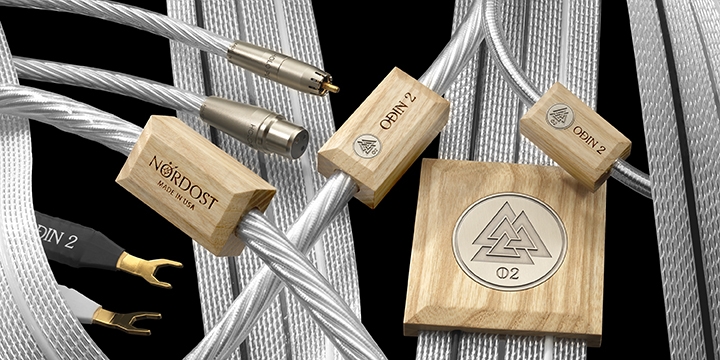
Normally, when it comes to loudspeakers, the process involves a relatively high degree of obsessive-compulsive behaviour. The speakers are roughed in, listened to, adjusted forward-back, left-right, listened again, fine-tuned, toed in, more listening, until either you give up in frustration of you have positioned the speakers to the nearest Ångström. Sometimes, you have to follow a pre-arranged pattern, sometimes a spoken word test, sometimes it’s a question of anchoring one speaker and tuning the other, and sometimes its all about the mirrors and lasers and tape measures. The KEF Reference 1 were more or less ‘plonked down’ roughly in place, and the job was done. They got a tiny wee bit better sounding through some real care and attention (as in, stopping one of them from wobbling a bit, and making sure they were level), but in audiophile installation terms this is criminal neglect. And they sang beautifully. I moved them around, and they sang beautifully. I swapped out cables, flipping between generic speaker wire from a hardware store that cost less than a couple of pints of beer to a full run of Nordost’s new Odin 2 that cost more than my mortgage, and they sang beautifully. Of course, they sang ever sweeter the better the upstream equipment, and the more care put into installation, but they didn’t put a foot wrong regardless. I tried practically everything in my power to not make them sing beautifully, but short of throwing the speakers in a lake or connecting them up to an aging clock radio, I’d struggle to find a way of making these loudspeakers sound in any way mediocre.


That’s what all the science bit is about with KEF. Uni-Q came out of a project to understand how a loudspeaker interacts with a normal room that isn’t acoustically perfect. Not an anechoic chamber, or a studio control room. The Reference 1 is the distillation of decades of trying to dial out the listening space, without having to call upon DSP or bass traps… and it works.

It works by creating a remarkable midrange, the kind of midrange you will struggle to find in a loudspeaker at any price. It manages to achieve the goals of sounding exceptionally honest, projecting well into the room, and just letting you listen deeper than usual into the recording. As an example of this, I played ‘Everyday’ from James Taylor’s 1985 disc That’s Why I’m Here [Columbia]. This was one of the staples of MP3 development cycle, and with its syrupy Yamaha DX7 synth-string sounds and OTT production values, it’s easy to turn hard or harsh in the midrange, despite Taylor’s soft, clear tones. Although the KEF speaker never once hides the overproduced 1980s recording techniques, it also clearly differentiates instruments within the mix, neither exaggerating nor underplaying any part of the mids. You really could replace the Reference 1 with practically any loudspeaker made and you’ll hear no better. The highest praise I could confer on these loudspeakers is that they could easily be used in the studio for mastering. They are that accurate.

The KEFs could also be used at a studio because they can take a real hammering, volume-wise. This is something often overlooked in audiophile magazines, but let’s be honest – when most of us get a new toy, we want to discover what it can do, and that means showing it off. Even to ourselves. In my case, that usually means a blast of ZZ Top’s ‘La Grange’ from Tres Hombres [London]. The Reference 1 played loud; a lot louder than I could take, in fact. If you want LOUDspeakers that are also capable of great subtlety, these join a select list, which typically comprises Focal, PMC, and Wilson models.

KEF has long been a master of good imaging, especially if you give the loudspeakers minimal toe-in. This is what happens when an engineering-led company makes a speaker with outstanding dispersion and off-axis properties. The soundstage is good-to-excellent even under less than perfect conditions, and exceptional when the system and room are working well with the Reference 1. Even the front-to-back complexity and dynamic range of Mahler’s Eighth Symphony [Solti, Decca] is portrayed superbly here.

And bass is well covered through the Reference 1. OK, a bigger room or demands for more bass are better met by bigger References, but in terms of delivering a good deep bottom end, these KEFs are the first standmounts that gave my resident Wilson Duette II a run for the money. Ultimately, the Wilsons have the edge when it comes to bass energy and effortless dynamic range, and it takes moments to hear why the bigger, more expensive loudspeaker justifies its place in the audio firmament. But let’s not make that undermine precisely what the KEF offers for a fraction of the price.


There will be people who choose another tonal palette, who demand a bigger, smaller, cheaper, more expensive, or simply more fiddly loudspeaker to justify their place in the audiophile diaspora. There will be people who don’t like the piano black or wood cabinet with contrasting brushed front baffle, or the solid boxy shape. These (and more) are reasons you’d buy or prefer another loudspeaker: understandable, justifiable reasons. But that shouldn’t preclude understanding what the KEF Reference 1 is trying (and mostly succeeding) to do. Although I get why people might like another speaker, I simply can’t see how someone could dislike this one. It’s astonishingly good. If these were any more highly recommended, they’d be locking me up in a rubber room!

Technical Specifications

  • Design: Three-way Bass Reflex standmount loudspeaker
  • Drive Units: Uni-Q driver array (HF: 25mm vented aluminium dome, MF: 125mm aluminium cone), 1× 165mm aluminium bass unit
  • Crossover frequency: 350Hz, 2.8kHz
  • Amplifier requirements: 50–200W
  • Impedance: 8 Ohm (min. 3.2 Ohm)
  • Finishes: Piano Black, Satin American Walnut, Gloss Rosewood
  • Dimensions (H×W× D): 44 × 20.5 × 43cm (with grille and terminal)
  • Weight: 18.2kg
  • Price: £4,500/pr (stands £1,000/pr)

Manufactured by: KEF

URL: www.kef.com

Tel: +44(0)1622 672261

Back to reviews

Read more KEF reviews here

JSA Type 2 Passive Headphone Conditioner

Vertex AQ, well-known purveyors of RF and microphony-busting devices to the discerning audiophile, doesn’t have quite the same traction in personal audio circles, but with the creation of its sister JSA brand, that looks set to change.

Currently, JSA has just two models in its line-up; the Type 1 and Type 2 Passive headphone conditioners with suggestions of a headphone amp to follow. We got the Type 2, with high-grade cotton insulated solid-core silver wiring, a labyrinth construction suggested to reduce microphony and vibration transmission, and a combination of Vertex AQ’s best EM and RF interference absorption devices. The cheaper, cut down Type 1 is 60cm shorter and a kilo lighter. There are optional more up-market input jack cables featuring the same solid core silver wiring in 0.6m and 1m lengths, which we also received.

The JSA is about as straightforward as it gets in terms of installation. There are two ¼” TRS stereo jack sockets – you plug the male-to-male input jack cable into one, you plug the other end of that cable into your headphone amplifier, then plug your headphones into the remaining socket on the JSA. That’s it. You could spend weeks fussing over which jack socket sounds better to the headphone, and which sounds better to the amp, and conclude it makes no difference. It’s a purely passive conditioner block.

There are two ways of testing this. The wrong way is to act like a 1920s telephone operator, moving jack plugs in and out and performing quick-fire AB comparisons. You will hear a difference, but may not be able to ascertain what that difference is, why the difference counts, and ultimately whether your headphones are materially better with the JSA ‘in’ or ‘out’. Instead, treat it as if it is a permanent fixture to your headphone listening for a week or two, then remove it and see whether you can live without it. Chances are, you can’t.


Where a swift move up the headphone amplifier market generally gives increased levels of detail and dynamic range, there can be a point where you are getting a lot of information and not a lot of musical integrity. The sound is precise, but lacking coherence. The JSA restores that coherence and musical clarity, but not at the expense of the extra information a better amp provides. It sounds like the JSA is bringing out the best of the equipment it slots between. This is hard to put into words, and takes some time for you to parse, but it makes more sense of the music, whatever music is playing. As I listen to quite a lot of modern classical that accents the need to work at a piece of music in order to understand it, before you get all the surface elements of metre and rhythm, the JSA’s ability to bring some order to the chaos is welcomed. It also works to open up avenues of music normally closed to the listener, because they simply make more sense. I’m not a big blues fan, but I could understand the appeal of Howling Wolf here, because his voice was raspy and visceral, and not simply yet another music entity.

The best thing I can say about the JSA is it made me more of a headphone listener. I remain huffily old-school in my audiophile aspirations, and think of headphones as a modern necessity than a go-to place for my music. After spending some time with the JSA Type 2, I’m more into the whole headphone experience. The JSA is that good!

Details

Dimensions: 220mm x 105mm x 45mm

Weight: 5kgs

Price: £330 (£350 in gunmetal)

Manufactured by: Vertex AQ

URL: www.vertexaq.com

Tel: +44(0)1554 759267

Back to reviews

Read more Vertex AQ reviews here

Celsus Sound Companion One DAC/headphone amp

While home audio systems have been steadily improving in performance for many decades, you only have to go back a few years to find a time when portable audio was a cruel joke that no audiophile would take seriously. This all changed with the introduction of personal music players like the Apple iPod, and has been progressing at a rapid pace with many new portable DACs, headphone amplifiers, and high resolution music players. Now the Celsus Sound Companion One looks to take that progression a few steps further.

Celsus Sound may be a new name, but the company was founded by a certain Jason Wei-Min Lim, the former CEO of NuForce, so there is a track record to back it up. What Lim has created for his new venture is a true Swiss Army knife of portable DAC amps, ticking off just about every box on the wish lists of on the go audiophiles.

For starters, the Companion One can connect to just about any type of device you might want to use for portable music listening, including Android, iOS, Mac, and Windows devices. It can also do this using either a wired, or a wireless connection. It can decode just about any type of file you want to throw at it including DSD64, DSD128, and PCM up to 384/32 using a wired connection, plus high res PCM up to 192/24-bit over a wireless connection.

Looking kind of like an Apple iPhone that went out on a fast food binge, the Companion One’s height and width fall right between the iPhone 6 and 6 Plus, although it’s a bit more than twice the thickness of either one. A quick check on my postal scale revealed that it actually weighs in at a little over 255g… about twice that of a standard iPhone 6.

Why all of these comparisons with the Apple iPhone? Basically, it’s because the Companion One appears to borrow heavily from the iPhone 6’s styling, and the two look like they were meant to go together. The front and rear surfaces are Gorilla Glass, wrapped with a slightly curved satin metal frame. Even the buttons and ports look familiar. In any, er, case, the fit and finish of the Companion One is exceptional, and the whole unit positively oozes quality and luxury. In addition to the Companion One itself, you get an extra luxurious leather carrying case that even smells nice, a screen protector, and a set of cables to handle connections to an Android with OTG, iOS Lightning device, PC, or Mac computer, and even a 30‑pin Apple cable for your older iDevice.

On the hardware side of things, the Companion One uses the ESS ES9018K2M DAC to convert all of those files, then delivers its output to your headphones via OPA1612 and AD8397 opamps. Celsus specifies the output voltage at 3Vrms in high gain setting and half that in the low gain setting, delivering 160mW into a 32 Ohm load and 28mW into a 300 Ohm load. While that doesn’t exactly make it a powerhouse, it should drive most headphones without problems.


The controls and ports on the Companion One are deceptively simple, starting with the two mini USB ports on the bottom, one for data and one for charging. Moving to the top you’ll find a pair of 3.5mm sockets covering line and headphone outputs, along with a 3.5mm S/PDIF digital output. Finally, along the sides there are a total of six buttons, three on each side. Those on the right side control volume up and down plus power, while the three on the left side are a bit more tricky. The lower button switches between the two gain settings, so you can match the volume range to the sensitivity of your headphones. A tiny red LED between the volume buttons lets you know when you’re in the high gain setting. The upper button toggles between the USB and Wi-Fi inputs, while the button in the middle has two functions. When the Companion One is in Wi-Fi mode it selects between the AP connect mode for a one to one connection with your source, and client mode where the Companion becomes a device on your home Wi-Fi network. Change to a wired connection and the middle button then allows you to toggle between full speed (12 Mbps) and high speed (480 Mpbs) connections. All of this presents a bit of a learning curve, not helped by the almost total lack of indicators to tell you what settings are selected. There’s no fancy display or touch screen, just a row of four blue LEDs to indicate the battery level, and a single multi-coloured function LED that blinks and flashes between four different colours in a cryptic set of coded messages to tell you what’s happening. There’s even an occasional voice prompt over the headphone output, but wouldn’t it be easier to add a few additional indicators next to each switch to spell things out a little more clearly?

Making a wired connection between the Companion One and my iPhone 5 proved to be a snap, with the supplied five inch Lightning cable allowing for an easy plug and play hook up. Best of all, you don’t need to use Apple’s camera adapter cable to make it all work. The wireless connection was also relatively straightforward after I switched my phone over to the Companion One’s Wi-Fi signal. I also wanted to play high res files, so I needed to make a wired connection to my Windows laptop. This proved to be trickier than expected, with a few hurdles to overcome. First, you need to install a set of drivers downloaded from the Celsus One website, and even this process proved to be kind of buggy. Once that was sorted, I found that because The Companion One uses ASIO rather than WASAPI drivers, it didn’t want to play nice with my Foobar 2K audio player. Apparently there are some plug ins you can add to make it all work, but I chose to take the easy way out and simply used the JRiver player instead.

I auditioned the Companion One with a pretty wide range of headphones, including the Sennheiser HD-650 (later version), Ultimate Ears UE-10 IEMs, HiFiMAN RE-600S, and the fairly tough load of the HiFiMAN HE-5s. Even with the HE-5s, I never felt that the Companion One was about to run out of steam, and the sound remained clear and dynamic.

All of this sleek loveliness and technical versatility would be for naught if the Companion One couldn’t deliver the goods sonically, but what immediately struck me was how the basically neutral tonality of the Companion One allowed the true character of the recording and connected headphones to shine through. The lower octaves from 300Hz down were particularly impressive, and on the Keith Richards track ‘Words Of Wonder’ the Companion One could take a headphone that tends toward a fat bass sound such as the Audio Technica ATH-M50X, and whip it into line so the bass remained tuneful and clear. When I played the same track over the UE-10s, the dynamic snap of drummer Steve Jordan’s snare drum came across with startling realism, along with the harmonic richness of Keith’s guitar.

For the high res experience, I listened to David Chesky’s ‘Jazz In The New Harmonic’ playing 192/24 files downloaded from HDTracks. This is an exceptionally natural sounding acoustic jazz recording, and via the Companion One it drew out all of the tonal colours from drummer Billy Drummond’s various cymbals, along with the power and detail in Peter Washington’s acoustic bass playing. I didn’t name a track here, because once I started listening, I just played the entire album, front to back.


With record after record, and through all kinds of headphones, I soon came to the conclusion that the Companion One was really more like a tool that allowed me to audition recordings and headphones, than a device with a sound of its own. It always remained neutral and simply let me hear the best of whatever it was connected to.

While $595 (US) might seem like a lot of money for a portable DAC amp, I know of many audiophiles who would happily spend more than that amount on tweaks where the sonic benefits are subtle at best. The Companion One is an auspicious achievement for a new company, and I’ll be eagerly waiting to hear what else they might have tucked up their sleeves.

Technical Specifications

  • Type: Portable digital-to-analogue converter and headphone amplifier
  • Digital Inputs: One Micro-USB B 2.0 input (asynchronous, OTG, supports ASIO); Wi-Fi (Supports uPNP, Airplay, DNLA, Qplay)
  • Digital Outputs: One Mini-TOSLINK optical S/PDIF
  • Analogue Outputs: Two; One line level, one headphone level, single-ended (via 3.5mm jacks)
  • DAC Resolution/Supported Digital Formats: USB; PCM files from 16-bit, 44.1kHz to 32-bit, 384kHz. DSD files from DSD64 to DSD128, DXD; Wi-Fi; PCM files from 16-bit 44.1kHz to 24-bit 192kHz .
  • Frequency Response: 20Hz – 22kHz, +0dB, -0.5dB
  • Distortion (THD + Noise): 0.001% (0dB, 10k Ohm load)
  • S/N ratio: > 115dB (at 2Vrms)
  • Crosstalk: < –110dB
  • Dynamic range: > 115dB
  • Output power: 160mW @ 32 Ohm, 28mW @ 300 Ohm
  • Dimensions (H×W×D): 145 × 76 × 17mm
  • Weight: 260g
  • Price: $595 (USA), €595 (EU, currently no UK distributor)

Manufacturer: Celsus Sound

URL: www.celsus-sound.com

Back to reviews

Read more Celsus Sound reviews here

Pendulumic Stance S1+ Bluetooth headphones

The worlds of Bluetooth and good audio have traditionally not been the best of bedfellows, although that’s all changing. In the traditional stereo world, companies like Chord Electronics have performed wonders with Bluetooth enabled DACs and the rest. In the headphone world, though, Bluetooth has been considerably more widely adopted, but mostly in a low to mid end manner, hooking smartphone to the headset for commuters and joggers who hate wires.

The Pendulumic Stance S1+ is different. It’s a legitimately high-end, studio-grade headphone that runs wirelessly through Bluetooth. It also has a wired mode, and can even be used to make calls. It runs along all the latest and greatest Bluetooth lines (Bluetooth 4.0, aptX, and A2DP), which means CD quality. It auto-pairs with devices, and has a 15m radius, even as a phone headset (with built-in microphone).

The battery part is really clever too, allowing a hybrid approach to long-term music replay. In the S1+’s left earcup is a small non-removable lithium-ion battery, charged periodically from a USB cable. This gives about 30 hours of listening and wireless audio, with about a three-hour charge to bring it back to life. However, the front of the ear-cup removes and has space for two AAA batteries. Put a pair of alkalines in there and you can extend battery life, or reboot your Stance S1+ for more play. It has to be alkalines, though – rechargeable AAA batteries seem to lose Bluetooth lock quickly. The left-hand earcup also has a slider for flipping between power sources or turning the headphones off completely.

The right-hand ear cup has a slider to switch between wireless, actively powered (with cord), and straight passive sound, with a rear dial (more like the crown of a wristwatch) to control volume and turn the headphones into a Bluetooth phone headset – you can use the dial to search through a list of tracks, play and pause, and answer calls (there’s a little grille to the front of the headset for the mic). Two small LEDs on the side of the earcup show battery and wireless status.


Pendulumic gives good case candy, too. The Stance S1+ slipcase comes away to reveal a stiff cardboard presentation case of good quality. Inside is a clamshell carry case for the headphones, a small cardboard box for the ‘legacy’ and USB connection cables, and an instruction manual/quick start connection guide. Although, if you need this quick start guide, you also really need a short course in what the 21st Century looks like to an outsider. Basically, you turn on Bluetooth on the device you want to connect to, ‘PDLM S1’ pops up in your list of devices, you press ‘connect’ and the Stance S1+ is visible to that device. That it isn’t ‘paired’ in a formal sense means if someone was feeling particularly nasty they could feed their Bluetooth signal into your ears, although they will not be able to even see the Stance S1+ on their list until you disconnect from the device to which your ears are bonded.

The overall feel of the headphones is good. The headphones have that unique plasticiser smell at first, but that quickly goes away, and the headband and earcups are of soft pleather, with hard plastic ear cups and metal bracing. They are light and comfortable and designed for long listening sessions. The 40mm driver in the ear cup is claimed to deliver 10Hz-22kHz frequency response, and I feel no need to question that.

I’ll admit to having mixed feelings about wireless headphone audio, but my negative first impressions were coloured (literally) by the performance of relatively primitive early RF and especially line-of-sight Infra-Red systems that were, at best, awful. The Pendulumic Stance S1+ is nothing like that. In fact, pointing to those bad old days of IR headphones next to the S1+ is like comparing a Model T Ford to a Tesla… that’s how far we’ve come.

The sound of the Stance S1+ is, frankly, incredible. The company posts blind tests on its site and you can do the same at home. Play a CD-grade file (possibly from Tidal) through a Bluetooth source (possibly a MacBook Pro) and have the headphone cable attached. Compare the sound of Bluetooth with wired over and over again and just when your victim is convinced they are listening to wired, hand them the other end of the cable. You can weasel word your way around this – near-indistinguishable, functionally-indistinguishable, practically-indistinguishable – but the operative word in all this is ‘indistinguishable’! You just can’t hear the difference. It sounds a lot better on an Android or MacBook than an iPhone, but that’s down to Apple, not Pendulumic.

The sound you get from the headphones is good, too. It’s slightly on the warm and rich side, but not so warm and rich that it undermines their openness and good upper bass. It’s the kind of sound that makes you like the sound music makes; full, thick, and fun. I don’t think it matters whether you are listening to Schnittke or S Club 7, the texture of the sound remains the same; inviting, rich, detailed, and open. I played ‘Get Lucky’ by Daft Punk [Random Access Memories, Columbia], and the combination of Nile Rodgers fine funk Stratocaster sound, and Pharrell Williams’s Northern Soul singer charm cut through perfectly.

The limitations are fairly easy to spot too, but they are mostly benign and entirely unrelated to the Bluetooth process. Perhaps the biggest is the relatively minimal sound isolation: although these are sealed, over-ear headphones, they don’t offer as much isolation (both to the listener and to those around the listener) as, say, a pair of Sennheiser HD-25s. As a result, out in the street you might find yourself wishing for some noise cancellation. The relative lack of isolation, however, does make up for a lack of feedback from calls – you can hear the person on the other end of the line, but not your own voice through the headphones. An ‘open’ microphone would be more useful. And American listeners please note, these are quiet sounding headphones because of us Europeans – EU legislation places a limit on just how loud phone headphones can get: Sorry. These would normally not be make or break elements in a headphone, even in combination, and here if you weigh all of these against what the S1+ does with wireless audio, the balance tips heavily in Pendulumic’s favour.

It might read like heresy in an audio magazine, but the Pendulumic’s sound is barely half the story. It’s what it lets you do with that sound that’s so ultimately brilliant about the Stance S1+. Unless you were militantly opposed to such things, cast your mind back to the first time you played with an iPod, or maybe even a Walkman. At one point in that early listening, you probably discovered the liberation of taking your music with you everywhere, and some of you at least were willing to put up with a few compromises in that music in order to have that music with you everywhere. The Stance S1+ has the same sense of liberation, but with some of the last compromises ironed out. Where before you were bonded to a player, now even that is at one remove. This is curiously a liberating feeling in today’s world, like the sense of relief if you switch your work phone off after a long week. I quickly got used to just doing things around the house with the headphones on, connected to the system in another room (and thanks to Pendulumic’s excellent and understated 15m range, that room can be some distance and a few thick walls from my headset). It’s only when you realise the action of chopping onions in the kitchen is now performed with high-fidelity sound that you begin to notice how far ahead the Stance S1+ is from the rivals.


The point of the Pendulumic Stance S1+ is it’s a genuine paradigm shift in headphone use. This is a device that works in the home every bit as successfully as it works on the go. You could commute with it, exercise with it, listen around the home with it, and sit back at the end of the day and listen intently to it, and in all cases it rises to the different challenges these tasks present. Even battery life is no longer an issue, thanks to that block that can be swapped out for some AAA batteries on the fly. The fact it sounds damn good should be central to this review, but you can’t help get the feeling it’s more the icing on the cake here. Pendulumic really does hold all the aces.

Technical Specifications

  • Bluetooth Version: 4.0 with aptX
  • Driver diameter: 40mm
  • Frequency response: 10Hz-22kHz (with aptX enhancement)
  • Sound Pressure Level: 121dB (1kHz/1Vrms)
  • Impedance: 32Ω
  • External battery: 2× AAA battery (alkaline recommended)
  • Wireless playback duration: up to 30 hours (with external AAA batteries)
  • Wireless operating range: up to 15m
  • Ear cup diameter: 70mm
  • Weight: 310g (without cables or accessories)
  • Price: $199/£169.95

Manufactued by: Pendulumic

URL: www.Pendulumic.com

UK contact: Audiologica Ltd

URL: www.audiologica.co.uk

Tel: +44(0)1403 336339

Back to reviews

Read more Pendulumic reviews here

In praise of challenging music

As a gaijin living in England, my experience of sushi has traditionally been very ‘western’: recognisable bits of fish (tuna, salmon) or seafood (crab, prawn, maybe octopus) with rice, seaweed, and wasabi. OK, so there is always ikura (salmon roe) with its little bright orange bubbles and unagi (eel), although this last is proving unsustainable (catfish sushi may be a handy replacement). But the really challenging sushi remained elusive. No way was I ever going to eat uni, those dark orange pillows made of the reproductive organs of sea urchins. Ugh!

Then I tried it. It has a creamy texture, with a surprisingly light, sweet, briny flavour with a long aftertaste of the sea. It’s like ocean-fresh custard. It also contains small amounts of a euphoria-inducing neurotransmitter called anandamide, although I doubt the phrase “stoned on sea urchin gonads” will ever make it into common parlance. But, the point of uni is that it’s challenging and it’s flavour is complicated – like a fine wine or a good cheese. It’s not ‘adult sweets’; not something that is an immediate taste sensation, but a thing you need to be more grown up about. Ultimately uni sushi is something a westerner approaches with a sense of excitement, interest, and open-mindedness… or the deal is off.

So it is with some music.

Whether through proliferation or commercialisation, for many people music has stopped being something to inspire, offend, impassion, and challenge people. We can do ‘moving’ and ‘stirring’ relatively easily: Beethoven’s Ode to Joy from his Ninth Symphony is stirring stuff and movie score composer Hans Zimmer manages to instil these emotions in almost every soundtrack he works on, even if sometimes he recycles the same melody (for example, compare ‘Roll Tide’ from Crimson Tide with ‘Battle’ from Gladiator, and then listen to the soundtracks of The Rock and Pirates of the Caribbean). But, we as music lovers should strive to dig deeper into our musical consciousness. We should seek out the challenging music.

The last century and a half of orchestral music has provided us with a number of powerful works that were not composed as a confection for a Hapsburg prince, or as background to an action hero movie. Music in the Classical era and before required patronage, and it’s only been the last 150 or so years that a composer had the freedom of writing music for a wider concert-going audience that we’ve been able to explore beyond the musical foundations laid down by Bach. But the free market has its downside – pandering to a lowest common denominator.

The classical recorded market is a perfect example of the best and worst of that free market environment. It’s possible now to collect great recordings of some of the most challenging works every produced, should you so wish. And yet, the shelves of surviving generalist record stores selling classical music are filled with non-threatening musical trivialities played by Bright Young Things. The hope was that a beautiful cellist on the cover will act as an introduction to classical music, but there seems to be little follow-up from these purchases.

I don’t think the answer is for music stores and classical music radio stations to put up a barrier of Stockhausen to protect against the hoi polloi from polluting classical music, but I think it behoves all music lovers to explore the outer regions of the music we love. It also behoves us to impart that love of music to anyone willing to share.

Despite my little dig at Hans Zimmer’s soundtracks earlier, I think film scores do introduce people to classical music more effectively than almost anything else today. More people have been inspired to delve deeper into modern classical music through hearing Ligeti’s ‘Lux Aeterna’ in Kubrick’s 2001: A Space Odyssey, Philip Glass’ soundtrack to Koyaanisqatsi (and more recently The Hours), or Carl Orff’s Gassenhauer as the haunting theme to Badlands, than through listening to classical radio stations. Sadly, the use of complex music in movie scores is in decline, replaced instead by powerful rock soundtracks to summer blockbusters.

For those of us already developing an interest in classical music, go deeper. Admittedly, some of the more structurally dense atonal and music concrete works of the 20th Century are extremely demanding (someone moving from Mozart to Pierre Schaeffer in one jump will very probably jump back to Mozart fast), there are transition points that introduce the listener to the complexity of more challenging music. Search out Béla Bartók’s Concerto for Orchestra, Shostakovich’s Leningrad Symphony, or Schoenberg’s Verklärte Nacht as good and accessible starting places, as they still call upon traditional concepts of melody, harmony, and rhythm, while introducing more intellectually challenging concepts of chromatics, modernism, serialism, key modulation, and dissonance. These pieces retain much of the beauty of Romanticism, but express darker themes without 19th Century polishing.

From here, music can take turns through jazz, folk music, experiments with different tonal structures or even atonality, introduction of more complex time signatures, non-standard orchestral instruments, tapes and treated instruments, and more. The middle-late 20th Century became a very strange musical place with experiments in tape loops, early synthesisers, and other experiments that make no sense to the uninitiated (and not much sense to the cognoscenti). And, to be fair, these almost unlistenable compositions from the 1950s and 1960s have largely faded as composers adopt a more synoptic view of composition in recent years. There is still much to be had in listening to the hypnotic exploration of resonance from Alvin Lucier’s 1969 composition “I am sitting in a room”, but it also is a work of minimalism very much in its own time, and the musical world has moved on. Arguably the ‘Earthrise’ image taken by astronaut William Anders on the Apollo 8 mission in 1968 was the most significant event to happen to modern classical music, because it turned composers away from decades of introspection and outward to contemplating nature and the universe. Whether directly or not, the difference between the introverted minimalism of Terry Riley’s ‘In C’ (from 1964) and Arvo Pärt’s ‘Fur Alina’ composed a dozen years later is marked.

Audiophiles have long been skirting around more complex music, as many enthusiasts’ collections include the ECM version of Arvo Pärt’s beautiful, minimalist Tabula Rasa or even Spiegel im Spiegel. These are powerful, contemplative works and well worth seeking out.

I guess we all have our limits, whether musical or culinary. Staying with Japanese food, that’s very likely konowata, or sea cucumber intestines. And with music, it’s probably listening to Penderecki’s Threnody to the Victims of Hiroshima. It’s a brilliant piece of microtonality, rightfully and genuinely disturbing, and sounds like someone torturing 52 stringed instruments to death over eight and a half minutes. Which is possibly entirely relevant and fitting given the subject matter, but something I find just too challenging. For now.

Audio Consultants Musical Event No.3 – October 17th & 18th

The Audio Consultants will be holding their next Musical Event No.3 on the 17 and 18 October at the Holiday Inn, Reading. This will feature a system based around the German Physiks omnidirectional speakers with Edge Electronics used to power them. The new SME Model 15 turntable with the radically different optical cartridge from DS Audio will also be featured.

This Holiday Inn is of a very high standard and conveniently located near Junction 10 of the M4 and for trains from London. It will be an opportunity to listen to a sound of high excellence in a more relaxed and quiet environment than at other hifi shows.

For more information please visit: www.audioconsultants.co.uk

Astell & Kern AK380 high-res digital audio player

When Astell&Kern brought out its AK240 Portable High Fidelity Sound system (£2,199) about two years ago, many of us assumed the firm has pushed the sonic and price limits of the high-end portable player genre as far as they could go, but as it turns out we were wrong. Enter the firm’s spectacular new all singing, all dancing, and all-conquering flagship model, the AK380 (£2,999), which in some respects takes up where the AK240 leaves off.

One point we should stress from the outset is that the AK380 is not purely a single purpose audio player. Instead, think of the AK380 as the platform for an expandable, multi-faceted digital audio playback system comprised of the AK380 plus any of several optional, dedicated accessories Astell&Kern has in the works.

Among these upcoming accessories will be the AK380 Cradle, which not only provides the expected USB data transfer and charging capabilities, but also incorporates a stereo balanced analogue output via a pair of three-pin XLR-type connectors, thus inviting owners to use their AK380s as the primary DACs in their full-sized audio systems, without compromising portability. The next planned accessory will be the detachable AK380 Amp said to increase the power output and of the AK380 for purposes of driving power hungry headphones—especially “high-impedance professional headphones.” Last but not least, the firm also plans to offer a compact, desktop AK380 CD-Ripper, which is a handsome little CD‑ROM drive that can rip CDs directly to the AK380’s built-in memory.

As you might expect, all three of these accessories are beautifully made and precisely matched to complement the distinctive design motif of the AK380. As of press time, however, Astell&Kern had not yet announced production release dates or final prices for the accessories (though having seen and tried them at recent trade shows, we can vouch for the fact that they look great and appear to work well). Stay tuned, and watch for further announcements from Astell&Kern.


Like most of Astell&Kern’s products to date, the AK380 features an angular and strikingly beautiful industrial design—one that perhaps answers the question, “What sort of digital audio player might M.C. Escher have designed?” I say this because the casework of the AK380, which is fashioned from aircraft-grade Duralumin finished in a tasteful matt bronze colour, presents a challenging optical puzzle of sorts. When you first hold the player in your hand, the illusion is that the unit’s 100mm touchscreen deliberately has been rotated a couple of degrees out of true in a clockwise direction, which seems a peculiar (though not unattractive) visual detail. However, after some study, it becomes apparent that the screen is in fact perfectly true to the top and bottom edges of the player, but that the left and right-hand edges of the case are skewed a handful of degrees past the perpendicular in a counter-clockwise direction. This is precisely the sort of clever, whimsical, and thought-provoking design that has made A&K players so appealing to audiophiles and other style-conscious consumers over time.

Controls for the player are elegantly simple. On the left side of the case are three pushbuttons supporting ‘Previous/Rewind’, ‘Play/Pause’, and ‘Next/Fast-Forward’ functions. On the right, one finds a neatly recessed, knurled thumbwheel-type volume control knob, plus a small slot where users can install an optional microSD card (with up to 128GB capacity), if desired, to supplement the AK380’s standard 256GB of internal storage.

On the player’s top edge, there is a rectangular power switch that also doubles as a ‘Screen On/Off’ control. There are also two audio output ports up top: a combination Earphone/Optical output port (via a 3.5mm mini-jack), plus a Balanced Audio output port (via a 2.5mm, 4-connector jack). The rest of the AK380’s control functions are for the most part handled by the unit’s WVGA touch screen and its associated control menus, which I found reasonably intuitive to use. Completing the picture is a pressure-sensitive, metal capacitive ‘Home’ menu touch switch embedded in the lower centre surfaces of the metal casework.

On the bottom of the AK380 one finds a Micro USB port that allows digital audio files to be transferred to the AK380’s built-in memory and that also enables the unit to serve as a ‘slave’ DAC/amp that can play files from USB-attached PCs, Macs, or music servers. There are also four recessed connector contacts that provide ‘Expansion Unit Balanced Outputs’, which are presumably reserved for use with the aforementioned AK380’s upcoming, clip-on accessories.

The rear plate of the AK380 features an inset carbon fibre back panel, plus a shallow, knurled-edge thumbscrew that serve to protect an inset threaded socket in the back panel where various AK380 accessories will lock on to the case of the main player.


The AK380 arrives with a useful and tasteful set of accessories including a Micro-USB cable, a microSD card slot cover, a form-fitted brown leather case, a set of protective film covers for the unit’s front and back panels, and the obligatory Quick Start Guide and associated Warranty Cards. Astell&Kern has also prepared an in-depth, 55-page Instruction Book/User Guide for the AK380, available online, which is pretty much required reading for those looking to take full advantage of the player’s extensive and multi-faceted capabilities.

While there are many similarities between the AK380 and the AK240 that preceded it, there are also several noteworthy differences. In particular, Astell&Kern emphasizes that in contrast to the AK240, “Every bit of the AK380 was designed for Pro-Audio in mind.” With this objective in mind, the AK380 uses dual AKM AK4490 DACs, whereas the AK240 uses dual Cirrus Logic CS4398 DACs. Both players support native decoding for DSD64/DSD128 files, which many audiophiles consider a ‘must-have’ feature, and both provide bit-for-bit decoding for high-resolution PCM files. However, the AK380 ups the ante with bit-for-bit decoding, supporting PCM files all the way up to 32-bit/384kHz resolutions, where the upper limit for bit-for-bit decoding in AK240 tops out at files of 24-bit/192kHz resolutions. Astell&Kern stresses that many competing DACs that notionally can handle high-res files turn out in practice to downsample those files to lower resolution levels for playback. With the AK240 and AK380, there is, of course, no need to resort to such digital shenanigans.

Another notable difference between the players is that the AK380 incorporates “a voltage-controlled crystal oscillator (VXCO) high-precision clock with a reference jitter value of 200 femtoseconds”—a feature the AK240 does not include. Accordingly, the AK380 offers noticeably lower jitter than does the already excellent AK240.

An even bigger difference, and one potentially very important for certain audiophiles and pro-audio customers, is that the AK380 dispenses with the AK240’s 10‑band graphic equalizer, instead providing an extremely high-precision 20-band parametric equalizer (PEQ). By ‘high-precision’ I mean that the AK380’s impressive equalizer allows both gain and ‘Q’ settings for each EQ band to be adjusted in 0.1dB increments. What is more, the player allows users to create, name, and store multiple EQ curves, setting them aside for future use. For example, a user could conceivably create custom EQ curve settings to improve the frequency response of each of his or her favourite headphones or earphones, holding them in the player’s memory ready for use when needed. Astell&Kern says that the AK380’s extensive equalization functions are so processor-intensive that the player must, as a matter of necessity, provide a dedicated audio DSD device to run them all.

One final differentiator between the AK380 and the AK240 is that the former supports a new Astell&Kern DLNA-compatible application called AK Connect, whereas the latter supported a similar but perhaps less elaborate DLNA application called MQS Streaming. The firm says that AK Connect allows the AK380 to “access or download music files stored on a computer on the same network (to which the AK380 is connected via Wi-Fi).” In turn, the application also allows music to “be played through Astell&Kern (network-attached) speakers.” It is almost impossible to overstate the sheer range of system configuration options that AK Connect makes possible. In fact, depending upon the intended use context it is possible for the AK380 to serve as a Digital Media Player, a Digital Media Controller, a Digital Media Server (or network server), or as a Digital Media Player (or network player).


Honestly, we could probably discuss the AK380’s many features and functions for hours on end, but now it’s time to focus on the aspect of the player many Hi-Fi+ readers will care about most: namely, its sound quality.

During my listening tests, I used the AK380 both as a standalone device and as a portable DAC/headphone amplifier connected to my reference Lenovo/jRiver Media Center-based music server. I also used a mix of reference earphones and headphones, including Noble Audio Model 4S CIEMs, JH Audio Roxanne CIEMs, Westone W60 universal-fit earphones, HiFiMAN HE1000 and HE400i headphones, and Oppo PM-1 headphones (with revised ear pads).

First and foremost, the AK380 consistently serves up a precise and firmly controlled sound characterised by transparency, openness, nuance, and an overarching sense of almost boundless attention to detail. Stated another way, the AK380 serves up clarity with a capital ‘C’ and an enchanting quality of musical lucidity that just won’t quit. In my experience, these qualities often caused even casual, first-time guest listeners to stop in their tracks and take notice of the pocket-sized player. I suspect this is because the AK380 tends to shatter preconceived notions of how a portable product will sound, instead delivering the sort of self-confident and self-assured sound that many would associate with premium-priced full-size components.

For instance, on ‘Again’ from Monty Alexander’s Calypso Blues: The Songs of Nat King Cole [Chesky, 24/192], the AK380 caught the fluidity and ease of Alexander’s piano, the woody richness of the accompanying acoustic bass, the restrained delicacy of the percussionist’s cymbals and snare rimshots, plus the almost evanescent low-level sound of Alexander humming along at times with the music (a detail so subtle that many DAC/amps miss it altogether!).

Similarly, on ‘Poison and Wine’ from The Civil Wars’ Barton Hollow [Sony, 16/44.1], the AK380 did a remarkable job with the passage where Joy Williams sings the lyric, “Your hands can heal/Your hands can wound”. As Williams sustains and extends the final word of the phrase, she is joined on that word—very faintly at first, and then more audibly—by Paul White, who deftly modulates his pitch so that his vocal line gently wraps around hers, eventually settling into a graceful harmony. Many DAC/amps can reveal such delicate moments to a point, but the AK380 handles them with far greater sensitivity and refinement than most.

Finally, the AK380 shows a good measure of dynamic swagger, provided you respect its overall output limits. I became a believer in its capabilities when listening to ‘Moten Swing’ from Clark Terry’s The Chicago Sessions: 1995-96 [Reference Recordings, 24/44.1 – HDCD]. In that track, the DePaul University Big Band establishes a powerfully swinging but also fairly subdued groove, only to have Terry and the band’s horn section fairly explode into action. It’s a dramatic moment, one that the AK380 captures with authority and verve.


How does the AK380 fare as a music server? To find out, I played a test group of tracks from my reference server through the AK380, using it as a DAC/amp, then played the same tracks from the AK380’s onboard memory to see what, if any, differences I could observe. What I found was that both sounded very similar, but that the reference server gave just a smidgeon more edge definition on transient sounds and—on good recordings—a hint of additional emphasis on the high frequency ‘air’ surrounding notes. In contrast, files played directly from the AK380 tended to sound a bit smoother and perhaps more rounded, but no less detailed. In short, I could live quite happily with either server (though I doubt I’ll ever get my Lenovo server and dedicated music drive to fit in my shirt pocket).

In sum, the AK380 is one of the most versatile, refined, and compelling personal audio products I’ve ever heard. It is undeniably expensive and may be priced beyond the budgets of many enthusiasts, this one included, but that doesn’t change the fact that it is a great performer and very desirable. Perhaps the strongest recommendation I can give is to admit that, down deep, I want one of these. And if you hear the AK380, you might want one, too.

Technical Specifications

  • Inputs: Built-in 256GB music library; USB Micro-B (32/384-capable); DLNA-connect servers, PCs, Macs, and NAS drives
  • Connectivity: Wi-Fi: 802.11 b/g/n
  • Bluetooth: V4.0 (A2DP, AVRCP)
  • Outputs: Optical S/PDIF, 3.5mm mini-jack, 4-conductor 2.5mm balanced mini‑jack, expansion for use with future, planned accessories
  • Software/Firmware: Windows: AK380 DAC driver Mac: MTP software
  • Storage: 256GB music library, standard; optional add-on microSD card at capacity up to 128GB
  • DACs: Dual AKM AK4490 DACs
  • Supported Formats: WAV, FLAC, WMA, MP3, OGG, APE (Normal, High, Fast), AAC, ALAC, AIFF, DFF, DSF
  • Sample Rates: PCM: 8 – 384kHz, 8/16/24/32-bits; supports bit-for-bit decoding up to 32/384, DSD Native: DSD64, DSD128
  • Frequency Response: 20 Hz – 20KHz, ± 0.053dB, single-ended and balanced 10 Hz – 70kHz, ± 0.56dB, single-ended; ± 0.055dB, balanced
  • Output Levels: 2.2Vrms, single-ended; 2.3Vrms, balanced
  • THD + N: 0.0008% @ 1kHz, single-ended; 0.0007% @ 1kHz, balanced
  • Signal to Noise Ratio: 116dB @ 1kHz, single-ended; 117 dB @ 1kHz, balanced
  • Battery: 3,400mAh, 3.7V Li-Polymer battery
  • Dimensions (H×W×D): 112 × 80 × 18mm
  • Weight: 230g
  • Price: £2,999, or $3,499

Manufacturer Information: Astell&Kern

URL: www.astellnkern.com

UK Distributor: Computers Unlimited

URL: www.unlimited.com

Tel: +44 (0)20 8200 8282

Back to reviews

Read more Astell&Kern reviews here

AudioQuest NightHawk headphones

AudioQuest, best known for its high-performance audio cables, has entered the high-end headphone marketplace with its new NightHawk headphone (£499, or $599). At first glance the NightHawk seems like a conventional design; it is a premium quality, mid-priced, dynamic driver-equipped, semi-open-back, over-the-ear headphone. But a closer look reveals distinctive design touches, some in unexpected places.

The first of these would be the NightHawk’s ear cups, which are made of ‘Liquid Wood’, an eco-friendly sustainable material in which, “actual wood that has been combined with reclaimed plant fibre, heated, liquefied, and processed in such a way that it can be injection moulded.” Importantly, liquid wood can be moulded into shapes that would be difficult to render through conventional woodworking techniques, while offering acoustic properties superior to those of conventional synthetic or plastic materials—a best-of-two-worlds solution.

The NightHawk ear cup housings are shaped somewhat like human ears for greater comfort and are constructed much like loudspeaker enclosures in miniature. Thus, the ear cups incorporate moulded-in support beams that increase rigidity and minimise unwanted vibrations, while interior surfaces are coated with a vibration-reducing elastomeric material. Further, the ear cups are loaded with a blend of wool and polyester damping material said to foster “extraordinarily smooth, natural frequency response.”

The NightHawk also features a rear-facing port fitted with an elaborate turbulence and resonance-reducing grille. AQ describes the grille’s complicated geometric latticework as a ‘biomimetic’ design patterned after, “the underlying structure of butterfly wings.” Because the grille’s structure would have been impossible to machine or mould, AQ instead produces the part via a 3D-printing process.

The NightHawk’s elegant frame consists of a flexible, arch-shaped rod with semi-circular ear cup support yokes attached at the ends. Instead of swivelling or gimbal-type ear cup supports, the NightHawk uses a patent-pending system of elastic bands to suspend the ear cups from the yokes (much like the isolation systems used to suspend delicate studio microphones from their frames). Then, an elastically suspended headband strap helps distribute the headphone’s weight, while also stretching to accommodate varying sizes and shapes of heads.


As a final ergonomic touch, the NightHawk is fitted with ear-shaped, protein leather-covered ear pads with padding thicker at the rear than at the front. AQ says the pads set the “NightHawk’s drivers at an angle optimised for precise, stable imaging,” while enhancing long-term comfort. I found the NightHawk exceptionally comfortable for long listening sessions though some might wish for fabric-covered pads to help wick away moisture.

AudioQuest fits the NightHawk with a 50mm, high-excursion dynamic driver equipped with a biocellulose diaphragm and a compliant rubber surround. This diaphragm provides a combination of rigidity and self-damping said to offer a more “accurate and musically pleasing” sound than that of today’s more common Mylar (or metal) diaphragms. In turn, the driver uses a patented split-gap motor to reduce, “intermodulation distortion to provide a clean, well-defined broadband response.”

As might be expected from such a well-known cable-oriented brand, AudioQuest provides the headphone with two carefully designed signal cables. The first is a thick audiophile-grade cable that uses AQ’s solid Perfect Surface Copper+ (PSC+) conductors in a so-called Double-Star Quad configuration and that is fitted with a pure red copper plug with heavy direct-silver plating. This is the cable of choice for critical listening. The second cable, featuring gold-plated plugs, is thinner and less sophisticated than the first, but better suited for rugged use, making this the go-to cable when taking NightHawk ‘on the road’.

Designer Skylar Gray acknowledges that the world doesn’t need another ho-hum, me-too headphone, and has this to say about his sonic objectives for the NightHawk:

“Rather than attempting to recreate the loudspeaker-listening experience through a set of headphones, I’ve judiciously incorporated elements of loudspeaker design that honour the headphone-listening experience…

“Compared to the sound of loudspeakers in a typical room, headphones can provide a dramatically lower noise floor resulting in unprecedented detail and clarity, significantly lower distortion, and imaging marked by exceptionally clear and present ambience cues.”

After days of run in, two of the NightHawk’s sonic characteristics quickly caught and held my attention. First, I was struck by the headphone’s warm, vibrant, and I would say ‘organic’ midrange sound—qualities that serve all types of music well. Listen, for example, to the third (‘Quia fecit’) movement of Kim André Arnesen’s Magnificat [2L, 96/24], paying close attention both to the solo soprano voice of Lise Granden Berg and to the supporting vocals of the Nidaros Cathedral Girl’s Choir. The NightHawk renders the voices with a pure, sweet (but definitely not saccharine-sweet), articulate, and beautifully rounded tonality that reveals both the power and emotion of the soloist, whose voice contributes a sense of profound reverence, and the delicate, unstrained, and multi-faceted intensity of the girl’s choir, which lends an ethereal quality to the recording. The NightHawk does a fine job of conveying the emotional (and not just the technical) content of good recordings, especially in the midrange.

To expand on this point, let me observe that the NightHawk’s midrange has something of the beautiful ‘self-illuminated’ quality exhibited by certain SET (single-ended triode) amplifiers, but without the colourations to which SET amps are sometimes prone. To hear what I mean, listen to ‘Your Latest Trick’ from Dire Straits’ Brothers in Arms [Warner Bros.], focusing on the horn solo heard in the instrumental break near the centre of the song. The NightHawk captures both the incisive attack and burnished glow of the horn but more importantly sheds light on the at once jazzy and melancholic vibe it contributes to the track. This sort of midrange excellence and sophistication is the centrepiece of the NightHawk sound.


Second, I could not help but notice the depth, power, well-defined textures, and weight of the NightHawk’s bass—bass that was superb, but that some might find slightly too prominent. As an example, listen to ‘Talking Wind’ from Marilyn Mazur and Jan Garbarek’s Elixir [ECM] through the NightHawk, and carefully note the crisp pitch definition, impact, and especially the transient ‘snap’ of the low percussion instruments. The overall effect is not unlike listening to a good loudspeaker with deep, powerful bass extension in a room that properly supports low frequencies.

The NightHawk’s upper mids and highs sound pure, delicate, and smooth, but in comparison to the voicing that I have observed in many comparably priced upper-end headphones (e.g., the HiFiMAN HE400i) they also sound somewhat more subdued. To observe this characteristic in action, try the NightHawk on well-recorded acoustic jazz where bass and brushed percussion instruments are used to establish a rhythmic foundation. Two good examples would be Miles Davis’ ‘All Blues’ from Ron Carter, Jimmy Cobb, George Coleman, and Mike Stern’s 4 Generations of Miles [Chesky, 96/24] or perhaps ‘Walter Pigeon’ from John Abercrombie, Eddie Gomez, and Gene Jackson’s Structures [Chesky, 96/24]. On both tracks, warm and evocative acoustic bass lines are counter-balanced by the quietly insistent pulse of brushed cymbals and snare drums keeping time.

Through the NightHawk, the acoustic bass lines of both tracks sounded superb, playing foundational (but not overbearing) roles. However, in both instances, the brushed percussion accompaniment, while pure and pleasantly extended, also sounded deep-set. As a result, the percussion instruments became ‘junior partners’ relative to the more dominant acoustic basses. In contrast, HiFiMAN’s HE-400i gave a rather different interpretation of both tracks—one where the basses and brushed percussion instruments were much closer to one another in relative output levels and thus sounded more like co-equal rhythm section partners. But which presentation is the more correct?

Possibly both. The HiFiMAN HE-400i is the more obviously accurate headphone of the two, owing to its more neutral tonal balance and its ability to retrieve more musically useful upper midrange and treble information. On the other hand, some listeners might prefer the NightHawk’s more evocative and emotionally communicative design thanks to its natural warmth, luminous midrange, and pure and clear (albeit somewhat recessed) upper mids and highs. Both models clearly have merit, so that the choice ultimately becomes one of personal tastes, preferences, and perceptions.

The NightHawk is technically innovative, beautifully made, and engaging to listen through. Its ergonomic design offers excellent long-term comfort, meaning listeners can wear the headphones for hours on end without a hint of fatigue. At the end of the day, the NightHawk is all about getting the ‘feel’ of the music right—in the process revealing the deep, sumptuous, and at times mysterious qualities of fine music.

Technical Specifications

  • Type: Circumaural, dynamic driver-equipped headphone
  • Driver complement: 50mm dynamic driver with biocellulose diaphragm and split-gap motor assembly
  • Frequency response: Not specified
  • Impedance: 25 Ohms
  • Sensitivity: 100dB/mW
  • Accessories: one 8-foot audiophile signal cable with solid Perfect Surface Copper+ conductors in a Symmetric Star-Quad configuration, foamed polyethylene dielectric, AQ noise dissipations system and direct-silver plated red copper adapter plugs; one highly flexible rugged-use signal cable with gold-plated adapter plugs; one heavily padded leatherette-covered carry case: manual
  • Weight: 346g
  • Price: £499 (includes VAT), or $599

Manufacturer: AudioQuest

URL: www.audioquest.com

Tel: 1 (800) 747-2770

UK Distributor: AudioQuest

URL: www.audioquest.nl

Tel: +31 165 541404

Back to reviews 

Read more AudioQuest reviews here

Audio Research Reference 75SE stereo power amplifier

Sircom’s First Law of Amplification states that the thermal output of any amplifier under test is directly proportional to the ambient temperature of the environment. In other words, when it’s freezing cold outside, all you get to review is Class D iceboxes, and the all-valve Audio Research 75 SE’s time in the sun was around Wimbledon fortnight. It’s a hot-running amplifier at the best of times, but with the sunshine outside the house pushing body temperature, and no air-con inside the house, those hours spent running in the Reference 75 SE were hours spent in a sauna.

There is little to distinguish the original Reference 75 from its new SE model from the outside, apart from a tiny badge on the top. It’s still the same classic Audio Research finish in silver (or black) with now-matching grab handles on the front and two big blue glowing meters on the front panel. It still uses the same hybrid solid-state/valve circuit with each channel featuring a JFET input stage feeding a 6H30 double triode line driver and it is still an all balanced amplifier, with not even the implication of a single-ended RCA input. It still needs a 20A IEC socket. The similarities sort of end there.

Something happened at Audio Research a couple of years ago, between the launch of the Ref 75 and Ref 75 SE. What happened was the GS range, and, in particular, the GS150 stereo power amplifier. Audio Research shares with Naim Audio a very conservative customer base, and any change to the exterior design is met with gasps of disapproval – even the move from black handles on a silver front to matching handles on ARC amps a few years ago was met with the sort of opprobrium normally reserved for impeached presidents and profligate hedge-fund managers. But after the inevitable feeding frenzy over the GS new look, when people began actually listening to these amplifiers, they seriously liked what they heard. A touch of ‘trickle down’ was required.

The Reference 75 stereo, the Reference 150 mono (the original design platform for the Ref 75), and the Reference 250 mono amps underwent some significant improvements, with changes to several active and passive components in the circuitry, and a move from two matched pairs of the 6550-derived KT120 to the two pairs of all new KT150 power tube. Despite the tube swap, power output remains unchanged at 75W per channel.


This change in output valves is significant: the KT150 is one of the biggest beam tetrodes (or ‘kinkless tetrode’, hence the ‘KT’ prefix) in production, and the biggest designed in recent years. Great big juicy 815 tetrodes the size of a football are all well and good, but aren’t really practical in most settings, and finding replacements is extremely expensive. The advantages of a beam tetrode over a pentode design (like an EL34) are its efficiency, its increased output power, and its relatively low harmonic distortion, however, they also require a larger input signal at the control grid, need to sit in a very well-designed circuit and have a tendency toward intermodulation distortion unless used in ultra-linear, push-pull circuits. All of which makes ARC’s background – and its use of a hybrid input stage – ideal for delivering amplifiers with beam tetrodes. And one of the reasons why the Reference 75 proved so popular was that it leveraged the advantages of those power tubes and eliminated the disadvantages. The Reference 75 SE does more of the same. A lot more.

In a run-up to the Ref 75 SE review, I looked over my review of the original Reference 75. The clean, clear, dynamic presentation, starting at the midrange on out is still there, and in most cases radically upgraded and improved. But the big change here is the bass performance. ARC has notably good bass, but on some of the smaller amps at least, it trades depth and power for speed. This was possibly the only functional shortcoming of the Reference 75, and it’s removed in the Reference 75 SE. It still holds the ‘big ARC amp power, little ARC amp pace’ sweet spot, but it’s made that sweet spot all the more wide and deep.

Musically, I started out simply, with Cat Stevens ‘Father & Son’ from Tea for the Tillerman [Island]. I’ve found this can either be entrancing or mawkish, depending on the purity of the signal path. Here it was entrancing, inviting ‘old head on young shoulders’ musing. Those simple, whisper quiet backing vocals from Alun Davies are not increased in volume, but they are more noticeable, more readily understood, and underpin the pathos of the track. It becomes profoundly moving, even for the childless among us. This is not a track to test broad-stroke dynamic range or instrument solidity, but even here it was clear the Ref 75 SE was rooting the singer in place.

Moving over to ‘Moanin’’ from the 1958 album of the same name from Art Blakey and the Jazz Messengers [Blue Note], the sense of grain-free insight into everything that was on the album was profound. You were there in the studio, listening enrapt; you take in the subtle sounds of fingers hitting keys and mallets hitting strings, the sound of the valves in Lee Morgan’s trumpet, and the most subtle of stick-work from Blakey. But you also take in the bigger picture, of a gloriously coherent group of musicians playing together in a set that 57 years later still sounds fresh. You always get to hear that freshness in the recording (you could play it through a broken clock radio and still hear that freshness), but the Reference 75 SE helps explain why this sounds so fresh.

Out went jazz, in came the more rockist end of the spectrum: AC/DC to be precise. Well, if you are bathed in heat, why not listen to a 60-year-old guitarist who plays gigs in shorts and a schoolboy uniform (but let’s not focus on that)? This was something that worked both good and ill on the original Ref 75 – good because it had the bass power and energy, but it didn’t have quite the pace to keep up with the steady pounding beat of ‘Back in Black’ from the album of the same name [Atlantic]. And it was here where the Reference 75 SE stepped things up a gear. It retained the bass depth but added enough pace and control to make you play it loud and long. Blasts of Led Zep, ZZ Top, Van Halen, and even the Sex Pistols followed, meaning the Ref 75 SE has mojo, and will put a smile on your face. Cliché – absolutely, but it doesn’t matter. The Ref 75 SE does all the things the Ref 75 did but then does them with a fine sense of keeping a beat, too.


By now, listening to classical and the obligatory well-worn test recordings was almost a formality. The Reference 75 SE harnessed that grace and fluidity of mid-range of great Audio Research amps, included the surprisingly powerful bass of its predecessor, and pulled everything together to make you want to bask in its presence for hours on end. There was nothing that fazed the Reference 75 SE and in partnership with the Wilson Duettes and especially with a Nagra HD DAC and ARC Ref 5 SE front end, this was the kind of sound you could listen to with no need to change for decades. Bigger, more upscale ARC buys you more power for bigger systems and rooms and gives you slightly more finesse to the top end, but as the best bang for your ARC-shaped bucks, you can’t get better than this right now!

Current owners of Reference 75 and Reference 150 amps can upgrade to SE status. And I can’t see any reason why those original owners would choose not to make the upgrade. OK, so KT150s are more expensive tubes when the time comes for replacements, but the sound the Ref 75 SE makes means you won’t care about tube rolling and will love those KT150s for every moment they are powered up.

The Ref 75 was (and is) a truly magical amplifier. It was one of those amps that are so good if a friend said “oh, I don’t like it” you’d question their sanity, their hearing, and maybe even your friendship. It’s that good and inspires that kind of passion from its users. And the Ref 75 SE does all that, raised to a higher power. Highly recommended? You bet!

Technical Specifications

  • Type: Balanced hybrid stereo power amplifier
  • Tube complement: 2× KT150 power tetrodes, 1× 6H30 double triode per channel
  • Power Output: 75 watts per channel continuous from 20Hz to 20kHz, 1kHz total harmonic distortion typically 0.6% at 75 watts, below 0.05% at 1 watt.
  • Power Bandwidth: (–3dB points) 7Hz to 60kHz
  • Frequency Response: (–3dB points at 1 watt) 0.7Hz to 75 kHz
  • Dimensions (W×H×D): 48.3×22.2×49.5cm
  • Weight: 21.3kg
  • Price: £8,600

Manufactured by: Audio Research

URL: www.audioresearch.com

Distributed by: Absolute Sounds

URL: www.absolutesounds.com

Tel: +44(0)20 8971 3909

Back to reviews

Read more Audio Research reviews here

The Clarity Alliance – Best of the National Audio Show

The Clarity Alliance (http://www.clarityalliance.co.uk) is a UK based association of retailers, manufacturers, distributors, magazines, and individuals from the audio and home entertainment industry, working together to raise the profile and standards of audio and video. So, it’s fitting that the Clarity team secretly walks the halls of shows like NAS to find those who are stepping a little taller to make a better demonstration and better products than their peers. 

At the close of the first day, Clarity presented the best companies at the show at an after-show party. The winners are as follows:

Best Demonstration

Mike Valentine (winner)

Queen

Entotem

Most Innovative

Townshend Audio (winner)

Devialet

Kog Audio – Melco

Best Presented Room

Queen

Audio Emotion

Devlialet (winner)

Best Stand in Open Areas

Harman Audio (winner – not present for awards)

High End Headphones

Snugs

Best of Show

dCS (winner – not present for awards)

Hi-Fi Hangar

Queen

Devialet

Best Pre Show Marketing – awarded by The Chester Group

Henley Designs (winner)

Images supplied by Clarity Alliance

Personal Best

Any audio show has good rooms and bad. Sometimes those rooms sound good for an all-too-brief period. Sometimes they are consistently good. Here are some of our personal highlights.

High-End Cable: Despite the name, High-End Cable also supplies a lot of audio equipment that isn’t just cable. This system, comprising Aqua La Diva CD transport and La Scala DAC, Norma IPA-140 integrated amplifier, and Scansonic 2.5 tower loudspeakers. Another great system in the room featured an Audience ClairAudient 1+1. 

Music First Audio: Alongside its new headphone amplifier, MFA has also launched its new MM phono stage, which sounded excellent in the context of an AudioNote/MFA/Howes Quad amps/Voxative speaker system. Of course, that lovely Nagra reel-to-reel helped.

The Audio Consultants: This Norma REVO DS-1, APL Pure DSD Reference DAC, Edge NL Signature 1.2 preamp/NL10.2 power amp, and Lawrence Audio Violin SE loudspeakers, all connected with GutWire, all sitting on HRS isolation and all treated with DAAD room treatment managed to sound good in a bad room, and didn’t overawe the sound of the room.

Chasing the Dragon: Mike Valentine’s demonstrations are entertaining, in part because the guy is extremely funny, as this poster outside the room demonstrates.

dCS: We mentioned the new Rossini before, but it was so good it’s worth saying it again! This was our best in show. And we weren’t alone!