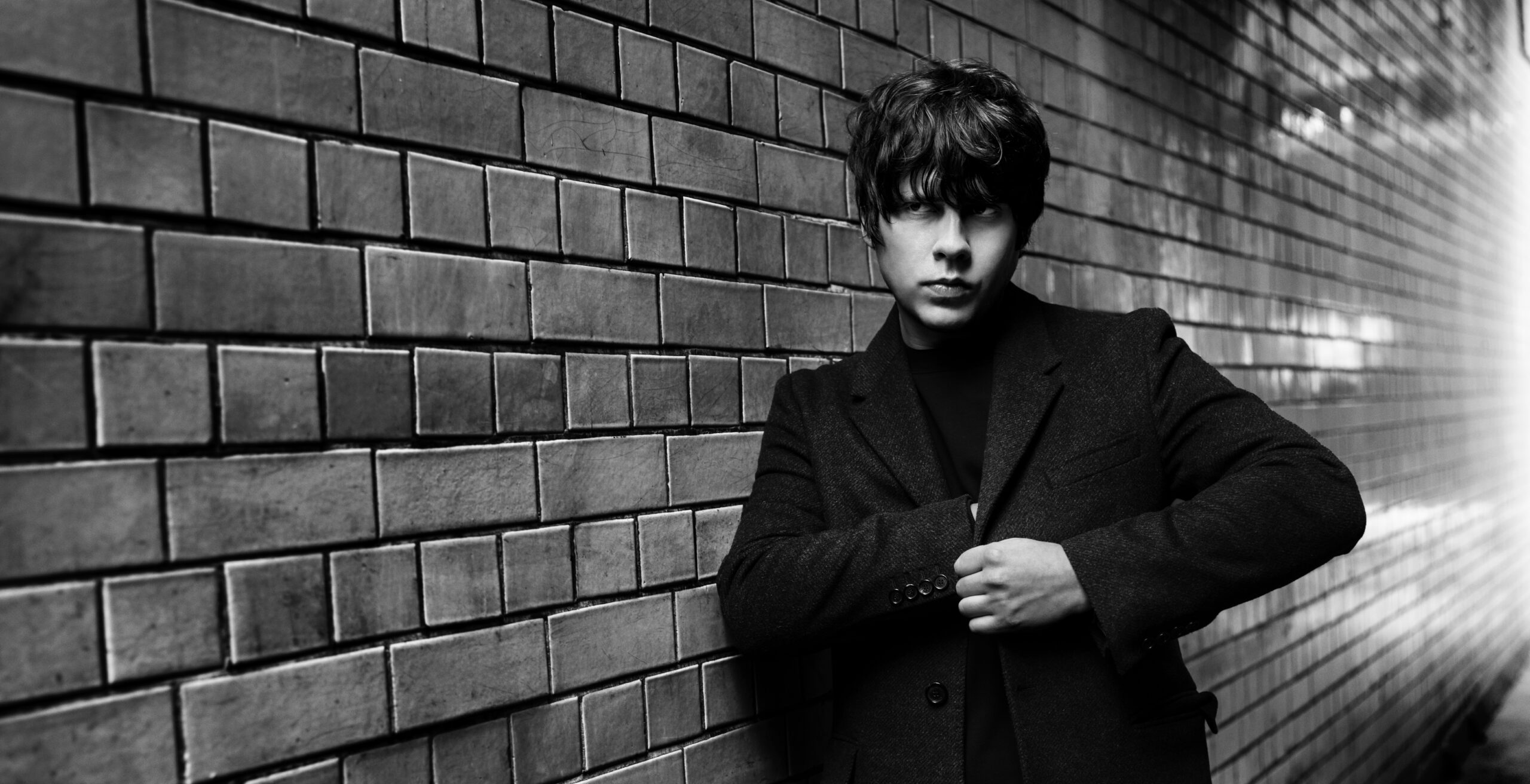
Jake Bugg’s new album, A Modern Day Distraction – his sixth – sees him going back to his Brit-rock roots after a flirtation with contemporary pop on 2021’s Saturday Night, Sunday Morning, which met with mixed reviews.
This time around, the 31-year-old singer-songwriter from Nottingham, whose self-titled debut went to number one in 2012, when he was only 18, has cranked up the guitars and recaptured the indie swagger of his youth.
First single and album opener, ‘Zombieland’, is a clattering, raw and primal, feedback-drenched social commentary with a twisted Beatles riff – the cost of living crisis and ordinary people’s everyday struggles is a theme that Bugg revisits throughout the record.
Elsewhere there’s the energetic, Jam-like punk / new wave of ‘All Kinds of People’; a poignant anthem about the loss of someone close to him (‘Never Said Goodbye’); a folky drinking song (‘I Wrote The Book’); the moody, ‘60s pop-tinged ‘Got To Let You Go’, and epic album closer, ‘Still Got Time’, with its strung-out Neil-Young-meets-Oasis guitar solos.
hi-fi+ spoke to Bugg, who had just returned from supporting Liam Gallagher and John Squire on tour last year, to find out why he’s gone back to more familiar territory for his latest record.
SH: After the contemporary pop feel of Saturday Night, Sunday Morning, the new album feels like it’s a return to your roots…
JB: Yeah – I would say so. I think it definitely feels like a natural progression from the first two records. In that time, there’s been experimentation, which is a great thing to do, but I’m really happy with how this record has kind of gone back to the start a little bit.
Was it a deliberate reaction to the previous album, or was it more organic than that?
You’ve experimented with quite a few different styles on each record – you worked with Andrew Watt and Ali Tamposi (Dua Lipa and Miley Cyrus) on Saturday Night, Sunday Morning, Dan Auberbach (The Black Keys) in Nashville for Hearts That Strain, and Rick Rubin in Malibu on Shangri La…
This definitely felt more organic. When you’re working with different people from different musical backgrounds things develop into different sounds – some things can be brought out and some things can be lost.
With this record, it felt natural. I wasn’t trying to chase the old sound or anything – it just kind of came out. I worked with the same guys for all the songs and the production, and it just felt like it happened organically.
On this record, you worked with Metrophonic at their studio in London. How did that come about?
When you’re looking to make a new record, A & R and other people have ideas – it was one of the ideas from A & R.
You never know what you’re really going to get to be honest, and seeing some of the work they [Metrophonic] have done, I was fearful that it was going to be a bit more poppy, but the guys – Paul Barry, Mark Taylor and Patrick [Mascall] – were great, and it just felt like we all had the same tastes and the same idea of what the record should feel like and what it should be.
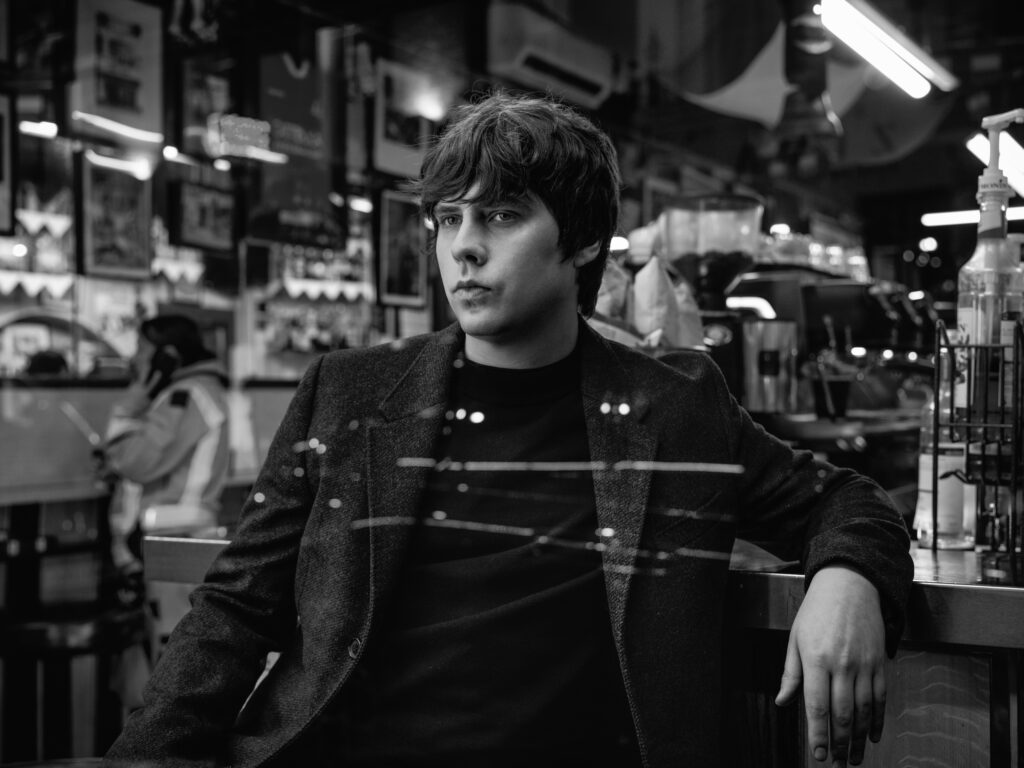
It was great to work with those guys – on my last record, it was very much a case of trial and error, and I worked with lots of different people – sometimes it worked and sometimes it didn’t. I didn’t have any of that on this record, which was great.
You’ve said in the press that the last album was one of the most fun records you’ve made. Was recording the new one an enjoyable process too?
Yeah – absolutely. Lyrically, it’s a better place for me to be and I think it contains some of the things that people liked on the first couple of records.
You co-wrote this album with the guys from Metrophonic you mentioned earlier…
We were all in a room together pretty much every day of the week – we worked really hard on it. I didn’t have many ideas left because I was doing soundtrack stuff during COVID, so it was good to go in with a fresh slate – it all just developed from scratch, which is what made it fun I suppose.
Every detail was considered – if it didn’t feel right, we’d work on it for a few hours because we really cared about it and wanted to make it the best it could be.
‘Zombieland’ was the first single and is the opening track on the album. It doesn’t mess around – it’s a loud, upbeat guitar song with a great, driving rhythm and feedback. I love the riff – it’s like a mutated ‘Paperback Writer.’ It’s very Beatlesy…
It’s a very simple riff, but it has that energy that drives it along. There is a little bit of that in there, which is kind of cool.
Lyrically it talks about people who are dealing with the drudgery of everyday life, and working their fingers to the bone just to pay the bills and stay alive…
Absolutely – it’s hard to avoid that subject in the current climate. A lot of people are suffering and it’s important to highlight those points – if it’s done in the right way.
That subject comes up throughout the course of the record. The song ‘Breakout’ feels like it’s coming from the same place as ‘Zombieland’ lyrically – it’s about a person who is trapped in a cycle they can’t get out of…
That is quite a common theme throughout the record – it’s been something that’s been playing on my mind, and I felt needed to be addressed.
I think a lot of people feel stuck and it’s scary to venture out without that sense of security – it’s a shame that people have been made to feel like that. I like to think there are opportunities out there for some people, but sometimes you’ve got to take a leap…
In the song ‘All Kinds of People, ’ you sing about how we’re trying to find our way every day. You grew up on a council estate in Nottingham and were lucky enough to be discovered and start a music career when you were 18. For a lot of people music has been a way to escape a difficult upbringing or a dead-end job. Do you feel privileged to have been able to do that?
Yeah – absolutely. I’ve been very fortunate to be able to have the life that I’ve had, and I owe it all to music.
I was very much one of the lucky ones. There are a lot of people who aren’t so lucky…
It’s OK to address those problems [in music] and if it comes from a good place and you’re not being condescending or patronising… For me, it’s more about observing and making a social comment.
I know how inspired I was by music, and it gave me that drive – if I can inspire anybody else to make that leap, then great.
‘All Kinds of People’ has a punky or new wave feel – it’s got a lot of energy and a great bassline…
Yeah – it has, and again, it’s really simple, but very effective. On this album, I used my own band to record in the studio again after a long time – it was great to have Jack [Atherton– drums] and Robbo [Tom Robertson – bass] back and it just felt like us and how we play live. That was an important element of the record.
‘Breakout’ has an unexpected flamenco guitar break, which I love…
(Laughs). It’s funny because during the COVID lockdown and in the last few years I’ve been obsessed with flamenco and classical music.
When I was writing the song with the guys and I played that bit they said it was great, but I was like, ‘Are you sure it’s not a bit too much?’ But they were like, ‘No – just roll with it…’
So, we kept it in, and then it comes back around to a more psychedelic, bluesy line, which takes it back to the song. I thought it might be too much, but people seem to like it.
‘Never Said Goodbye’ stands out because it addresses a different subject matter to some of the other songs – it deals with the death of someone you knew, and has a melancholy quality, but is also anthemic…
Yeah, but it also ties in with the record – for a lot of people, life is hard enough as it is, and then when they lose someone who meant so much to them, the only way is to try and be positive – that’s the reason for the anthemic chorus. It’s important because it’s the only hope that’s lingering…
‘I Wrote The Book’ is a stripped-back drinking song that sees you chatting to an old guy in a bar, and, again, it’s about trying to deal with daily struggles…
It’s about realising that you’re not the only one suffering – the guy says, ‘You think you know it all, but I wrote the book…’
I’m that guy who always gets talking to the old guy in the corner, but they have the best stories – I love it and I was inspired by that.
Growing up in our household, there was a lot of Irish folk music – The Fureys and The Dubliners were played, so there was a bit of that influence in there as well.
One of my favourite songs on the album is ‘Got To Let You Go’ – it starts off moody, dark and sad, but then unexpectedly goes into Beatles or Hollies-like, ‘60s pop in the chorus. Where did that one come from?
I was listening to a lot of Bee Gees at the time – there was one song, ‘And The Sun Will Shine,’ which is great. I was fascinated by how they go from major to minor in the same chords and how it’s possible to make a big chorus out of that.
It seemed like a good challenge for me, so, in terms of musicality, that’s what inspired me, but, lyrically, it’s about letting go of those older parts of yourself that made up who you were when you were younger. As we get older, we all change, don’t we?
‘All That I Needed Was You’ is one of the slower and more reflective moments on the album. It has a sad, late-night feel and could be a love song or about a breakup…
It’s reflective but it’s not specifically a love song – ‘all that I needed was you’ could be anything that saved you – for me, it was music.
I love that song – it feels like some of the older stuff that I used to play growing up, like ‘50s and ‘60s country things.
The album deals with some social and personal issues, but it ends up a hopeful note with ‘Still Got Time’, which has an epic rock feel, like Oasis or Neil Young, and on which you sing: ‘Don’t stop dreaming – we’ll make it out alive…’
Yeah – it’s one of those songs where the guitar solo keeps going on and on. We were like, ‘We should probably think about cutting this, but, no, why should we?’
These days, people are a bit scared to go on with a guitar solo, but as long as the notes are the right ones and they’re melodic enough, I think it’s OK.
It has a very simple chorus, but it does end on a positive note and I’m very pleased with it.
I think this album has all the things the fans like from me as an artist, and I hope it’s a road I can continue on.
So, finally, what’s your favourite modern day distraction?
The PlayStation and the pub – I’m definitely guilty of a few myself.
A Modern Day Distraction is out now (RCA Records).
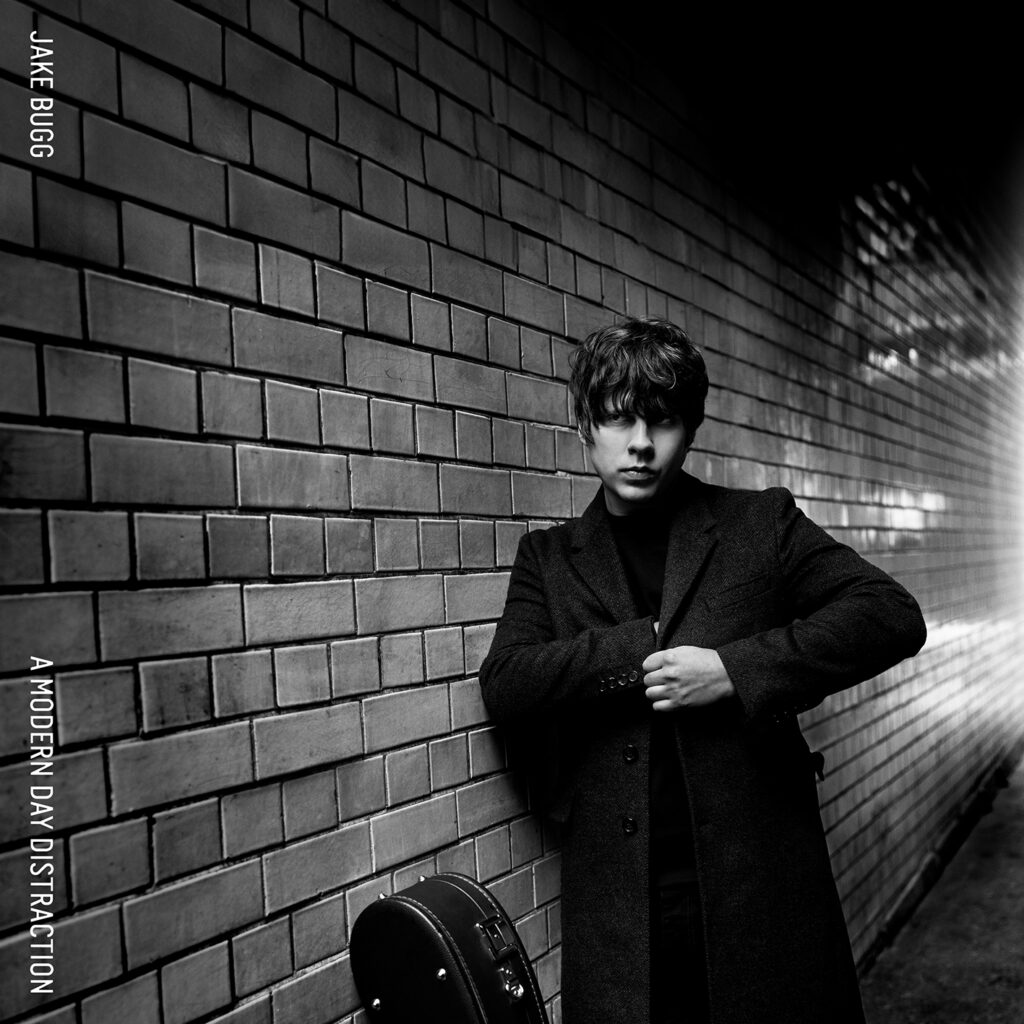
Jake Bugg is currently touring the UK.
Trending Articles
See all
By Sean Hannam
More articles from this author

Read Next From Music
See all
The Teskey Brothers: Half Mile Harvest
- Oct 13, 2026
Emma-Jean Thackray: Weirdo
- Oct 06, 2026

Klaus Mäkelä: Stravinsky; Debussy
- Sep 29, 2026
Sting: All This Time (Live)
- Sep 08, 2026