Americana, alt-country


- Music

- Sonics

- A
- A
- A
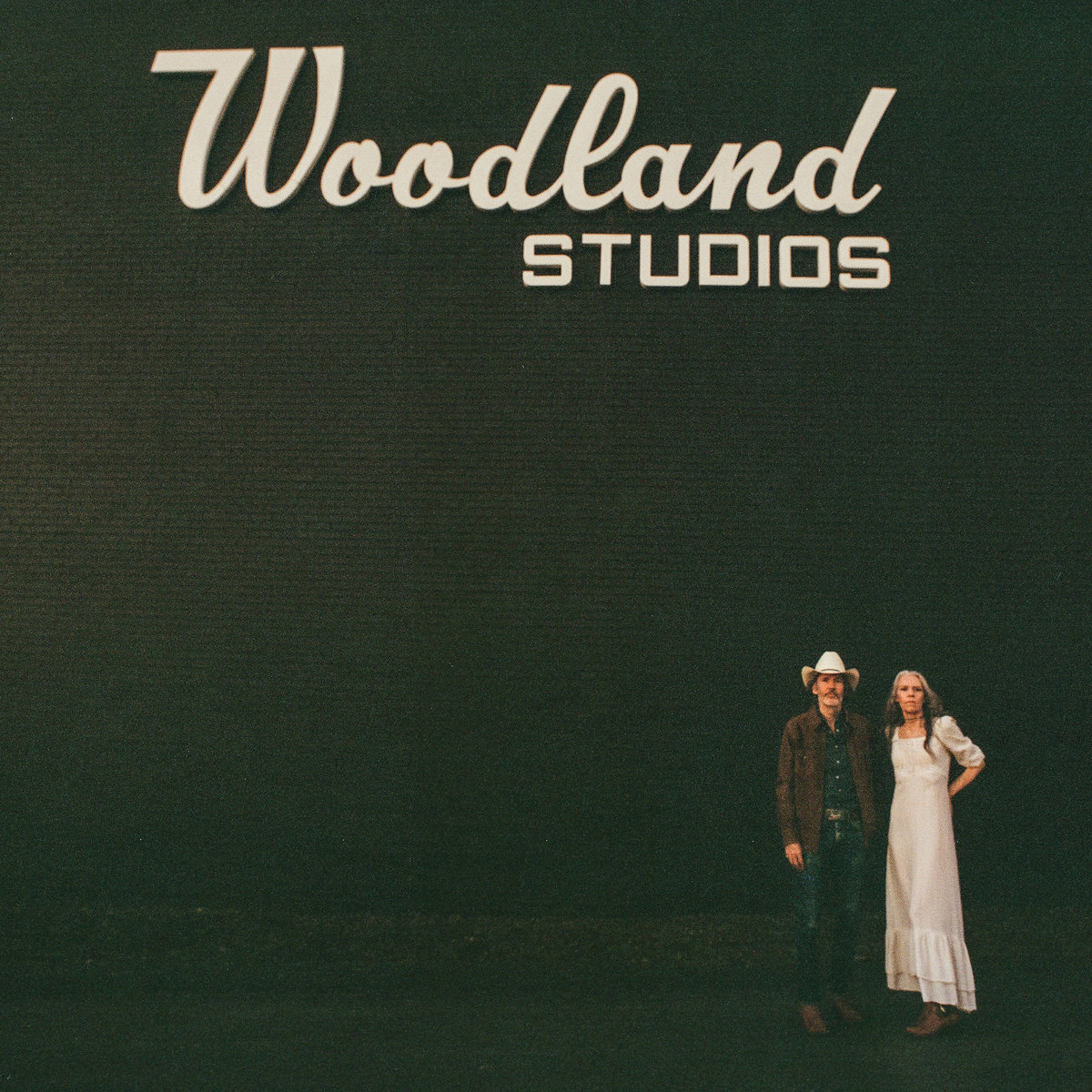
Gillian Welch is both a person and a duet. The majority of the albums released by Gillian Welch and partner David Rawlings have been in her name. This, their seventh album in nearly thirty years, is the first to give credit to both artists, and it’s also one of the finest. The style remains their trademark plaintive Americana, but with a rarely heard piquancy and nuance.
It’s also the first that they have recorded in their Woodland studio since it was nearly destroyed in the tornadoes that devastated parts of Nashville in 2020. Welch has said, “We were so relieved that the studio still existed, so we had an amplified desire to use it.”
While the ten songs retain the quiet, pared-back beauty of previous releases, they are imbued with a richness of feeling that hasn’t been so comprehensively presented since 2011’s The Harrow & The Harvest, or possibly even career highlight Time (The Revelator) from 2001. There appears to be a decade-long cycle between this duo’s finest works, studio rebuilding notwithstanding.
Woodland opens with ‘Empty Trainload of Sky’ which is typical of their oeuvre, one that continues a tradition that goes back as far as you can find recordings but gained a clear foothold with Neil Young, Crosby, Stills and Nash, Joni Mitchell et al in the sixties and has been revived and quietly evolved through the likes of Tom Petty, John Hiatt, Ryan Adams and Ryley Walker to name but a few. In this instance, it’s a combination of beautifully harmonised voices and perfectly plucked guitars, the sound of which opens up with a good system and inhabits the room. I was quite surprised to hear one track sounding fairly shut in during a recent demo of some relatively affordable equipment. Although this result cannot be guaranteed, it is well worth looking for with future upgrades.
‘What We Had’ is augmented rather beautifully with strings and pedal steel; both are restrained rather than lavish examples of the form, but provide enrichment by Gillian Welch standards that contrasts with Rawlings’ lead vocal. This is naturally a love song, a lament that’s full of yearning with a basic melody and rhythm whose central refrain is “Now I only want what we had”. On ‘Lawman,’ the guitars are particularly crisp, and the picking is good enough to listen to alone, but it’s the vocal harmonies that always stand out. They are what make Welch and Rawlings such a potent musical force on this, and most of the songs on Woodland, here the “Lawman gonna kill my honey” sums up a bleak situation without wallowing in pathos.
‘The Bells and Whistles’ is a standout thanks to the guitar harmonics that shine and ring out from the fretboard; they form a chamber work alone of high-pitched reverberation that is as open as the sky. The title is better reflected by the guitars than the song itself, but “listen how the birds are singing in the evening, what do they say to you, my love” is almost optimistic by Woodland standards.
‘North Country’ sees Welch and Rawlings back in the familiar lament territory that they do so well, here pedal steel is joined by bass and drums but not in any demonstrative fashion, because once again your ear is captivated by the way that the two voices weave such a finely etched tapestry. If Gillian Welch can teach the rest of the musical world anything, it is that less is more. ‘Hashtag’ is a tribute to Guy Clark, whose songs were recorded by a Who’s Who of country artists and inspired Welch and Rawlings. The chorus here is particularly mournful and enhanced by strings and French horns. Ketch Secor’s fiddle brings colour to ‘The Day the Mississippi Died’, an ode to ‘The Day the Music Died’ perhaps with the lines “I’m thinking that this melody has lasted long enough, The subject’s entertaining, but the rhymes are pretty rough” just to prove that Welch and Rawlings are not as po-faced as they sometimes seem.
‘Here Stands a Woman’, “where there once was a girl” is a lovely, slow number about the travails of ageing in an image-oriented world. Woodland is rounded off with the duet ‘Howdy Howdy’ and its banjo accompaniment, a song that leaves you wanting more by the mere fact of it giving you just enough.

By Jason Kennedy
More articles from this author

Read Next From Music
The Teskey Brothers: Half Mile Harvest
- Oct 13, 2026
Emma-Jean Thackray: Weirdo
- Oct 06, 2026
Klaus Mäkelä: Stravinsky; Debussy
- Sep 29, 2026
Sting: All This Time (Live)
- Sep 08, 2026