Contemporary, indie


- Music


- Sonics
- A
- A
- A
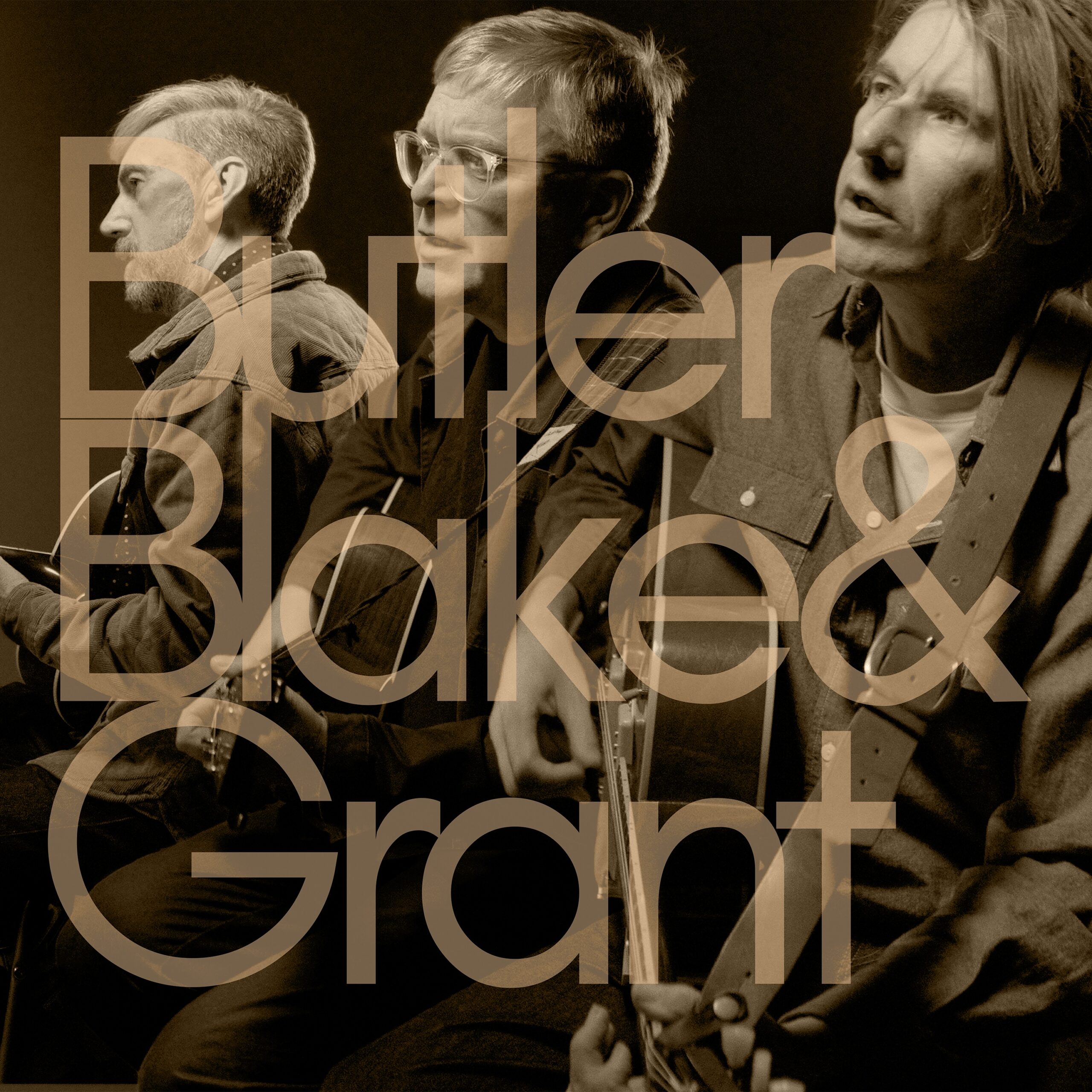
Butler, Blake & Grant may sound like a firm of solicitors, but it’s actually a new supergroup comprising singer-songwriter, guitarist and producer, Bernard Butler (Suede, McAlmont and Butler), Norman Blake (Teenage Fanclub) and James Grant (Love and Money).
The trio were formed when a mutual friend in the music industry suggested they play together for a concert in rural Scotland. More gigs followed and now the band have released their debut, self-titled album.
Writing and recording for it began at Blake’s home, on the banks of the River Clyde – the group were looking to capture the stripped-back vibe of their concerts, with guitars and vocal harmonies.
“We went up to Norman’s to hang out for a couple of days and see what would happen,” Butler tells hi-fi+.
“It really worked – there was no set way of doing it – we just sat around in armchairs playing, and James said, ‘I’ve got this tune…’, he started playing a song, and we joined in and started working it out together.”
He adds: “I asked Norman if he had any recording gear and he did, so we got out some mics and set them up in his living room – we had no headphones or isolation. There was no studio set up – just three microphones plugged into a computer. We said we would record everything we did – just press record and leave it. We did a song by James and one of Norman’s, then I wrote something quickly, overnight.” There were more sessions at Blake’s place, and then Butler took the recordings to his studio in London, where he added overdubs and mixed the tracks.
First single and album opener, ‘Bring An End’, which started out as a fragment of an idea on Blake’s phone, is a good indication of what’s to follow – a gorgeous and intimate, autumnal folk song with acoustic strumming, some delightful harmonies, and Butler playing some and inventive electric guitar.
It’s followed by the sublime, ‘One And One Is Two’, which is steeped in the chiming folk-rock sound of The Byrds, and was the first song the trio worked on together. It’s surprising to find out that it was written by Grant, as it has the sound of Blake’s Teenage Fanclub all over it.
Butler takes lead vocals on his own composition, ‘The 90s’, a wry commentary on his past, which is a jaunty tune with a retro-soul feel, thanks to its strings, Blake and Grant’s backing vocals, handclaps and some neat, ‘70s-style guitar work. It’s easy to imagine McAlmont and Butler recording it.
‘The Old Mortality’ – another of Butler’s songs – is one of the record’s moodier moments. It’s a dramatic and atmospheric track, with swelling violin by Sally Herbert, and would’ve fitted well on Butler’s excellent solo album from last year, Good Grief.
Grant’s ‘Girl With A Little Black Number’ complements ‘The Old Mortality’ well – it’s a dark and haunting folk-rock song that Grant says has a touch of Edgar Allan Poe about it.
Things lighten up, albeit slightly, on Blake’s ‘Writing’s On The Wall,’ which harks back to the comforting sound of the album’s opening track, ‘Bring An End’, but the lyric deals with a turbulent relationship, and the song is set in the distant past, in a seaport town in the far north of Scotland.
Butler, Blake and Grant will more than likely attract comparisons to Crosby, Stills & Nash, and they channel that on Grant’s, laidback harmony-laden ‘Seemed She Always Knew’, which was inspired by Joni Mitchell and has echoes of Laurel Canyon running through it.
The final song, the moving and partly acoustic ‘There’s Always Something You Can Change’, ends the record on a hopeful and positive note.
As you would expect from the coming together of three such talented musicians, Butler, Blake and Grant is a strong album of well-crafted songs that has a traditional charm to it.
The rural surroundings in which it was written and recorded have seeped through into the music – it’s ideal listening for when you’re sitting indoors by the fire on a cold night. Stick it on your hi-fi, pour yourself a wee dram and lose yourself in it.

By Sean Hannam
More articles from this author

Read Next From Music
The Teskey Brothers: Half Mile Harvest
- Oct 13, 2026
Emma-Jean Thackray: Weirdo
- Oct 06, 2026
Klaus Mäkelä: Stravinsky; Debussy
- Sep 29, 2026
Sting: All This Time (Live)
- Sep 08, 2026