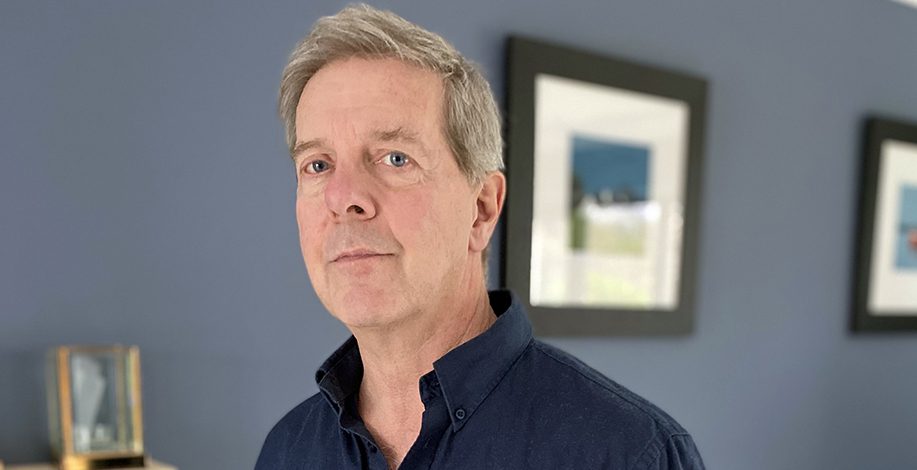
Back in 2012, Chord Company MD Alan Gibb asked a question: ‘where do we go from here?’ He heard a modification to the Sarum cable that the technical director had been tinkering with. Seconds later, the ARAY concept was born.
What was the first ARAY product that Chord Company made, and when was it launched?
AG: The first ARAY product was the Sarum TunedARAY cable, launched in 2012. Up until then, cables were all about mechanical engineering and getting the impedances right. The most expensive part of manufacturing is when you want a cable braided. If you want that to be effective against high frequencies, you have to pack it tightly. Square-section braiding maintains its shielding better, but it also requires special machines, which are significantly slower.
Sarum at that time was the best cable we knew how to make, so I started talking to [then technical director] Nigel Finn about what the next step could be. Nigel told me he’d been thinking about it, had done something to the cable, and asked me to have a listen. And it sounded excellent. That’s when the ARAY concept was born.
As with the GroundARAY products, the TunedARAY material was designed to address high-frequency noise. The ARAY components of the Sarum TunedARAY sit between the plastic and the outer braiding. The first ones took a lot of time to fit the Sarum. We also offered to take old Sarum cables back and fit them with the TunedARAY and new plugs, which was cheaper for customers than buying a new cable. We still do that.
The GroundARAY products came much later on.
Is the ARAY material the same in the cables as in the GroundARAYs?
AG: No. The material used in the TunedARAY cables differs significantly from that used in the GroundARAY products.
The problem we’d always had with the ARAY technology was that it had to fit on a piece of wire.
What problems do GroundARAY products address?
AG: They are dealing with high-frequency noise. Between 2012 and the launch of GroundARAY in July 2021, the amount of high-frequency noise in the average house had skyrocketed – with LED lights, Wi-Fi, mobile phones – the list is endless.
And your hi-fi components can add to that, with RF noise coming from bridge rectifiers, digital processing circuits, switch-mode power supplies, microprocessors and some digital displays. If you get high-frequency noise on the clock circuit ground in your CD player or DAC, jitter goes up. It’s like driving a Ferrari over a ploughed field.
If high-frequency noise were entering a hi-fi system, all our cables would be shunting it around the entire system with minimal attenuation. We could see this noise on the signal ground. Connecting the GroundARAY in parallel, any noise that enters it is converted into heat by creating an electrical potential gradient.
So I started looking around for a suitable material. After a couple of years, we discovered a range of military-oriented materials designed to prevent spying or RFI emissions, but they were costly.
There was an obvious winner when we used it in the aluminium tubes of our GroundARAYs. Although it is not similar to the material used in TunedARAY cables, it is much more effective at pulling noise off the signal ground.
How has the range of ARAY products progressed over the years?
AG: The materials used in the ARAY products have changed, and our assembly process has improved as we’ve become more skilled. The GroundARAY products are quite microphonic, and so the tubes are all filled with resin. We only connect the earth; we don’t connect the signal.
The EE1 network filter is the only serial product we have ever done, and we got a lot of help to do that. That is a common mode, and so it is like a balanced cable. The noise goes through galvanic isolation, which scrubs off DC and the lower-frequency stuff. Its insertion loss is around 0.2dB. On the EE1 Plus, it’s always better if the filter has less work to do. The idea was to put two GroundARAYs into it, one at the front end and one at the back end, and that reduces a lot of the clutter before the signal gets to the filter. It is also in a much heavier case with much better shielding.
A network switch reduces some of the noise, but it never eliminates it. Therefore, we recommend placing an EE1 or EE1 Plus immediately before the streamer to reduce noise further.
Then we thought, what about the mains? We spent years trying to make distribution blocks, and with our PowerHAUS products, we have GroundARAYs inside. On the mains plug-style PowerARAYs, we don’t have as much space as in the PowerHAUS blocks. Although it’s not as good as using a PowerHAUS, it is still quite surprising and significantly better than not having it at all. It’s all well and good making something that is the price of a small plane, so we make sure we have entry-level products that are as affordable as possible.
We then decided to create the best PowerARAY possible, which led us to develop the PowerARAY Professional. This is loosely based on our work within the PowerHAUS M6 block. It simply plugs into the mains socket next to the outlet for your system.
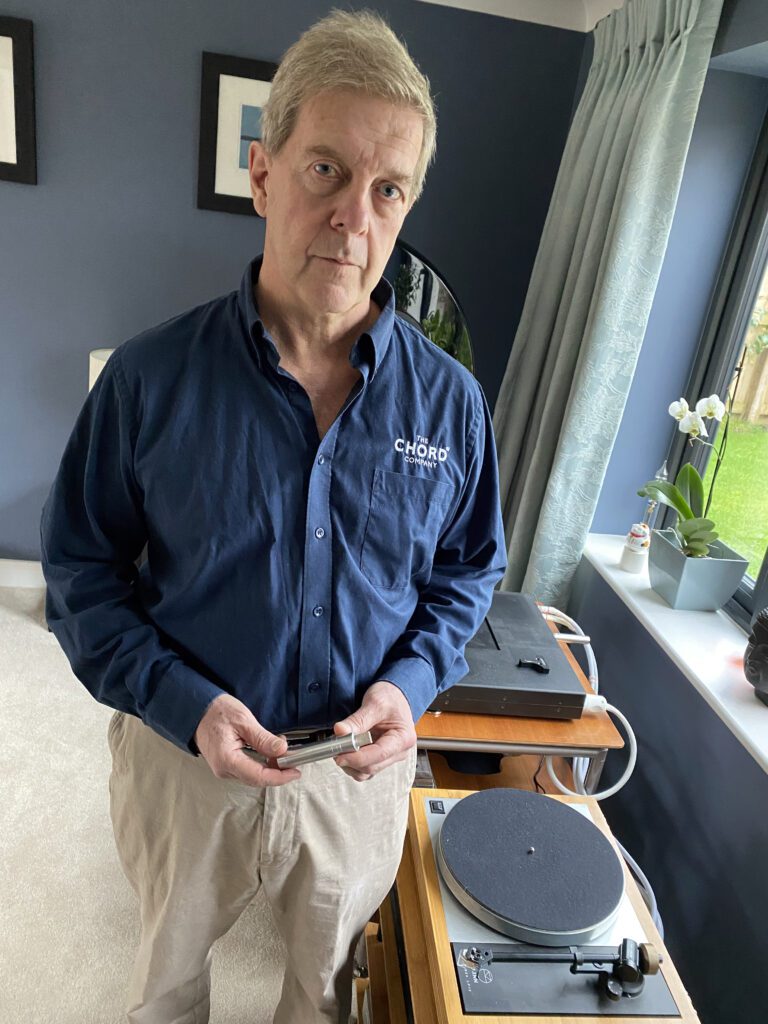
And then I looked at my turntable and thought, ‘What would happen if I put an ARAY on the turntable earth wire?’ And it worked. We use a speaker terminal on each end of the PhonoARAY because they offer the best connections currently available.The tonearm earth cable goes on one side, and you run the cable provided from the other side to your amplifier earth. The PhonoARAY has a hand-wound device inside that cuts down very high-frequency noise. Again, it is passive, not active, but it makes a difference. Like every other ARAY product, it converts high frequencies into heat, creating a potential gradient that the noise follows as the path of least resistance.
How does ARAY tech manage to attack just the high-frequency noise you don’t want while leaving the high frequencies you do want and their harmonics unaffected?
AG: Because it’s way up there in MHz. And remember it’s only on the earth, not the signal wire, and it’s in parallel. So it doesn’t touch the primary audio signal itself. And we always listen to things.
When you use an ARAY, it sounds like the guy has rehearsed the song, and you can hear the phrasing on the piano. Is that important to you? Of course it is. You want to play music.
Where’s the best place to start with an ARAY product?
AG: If something is ‘boisterous’, that’s the one you tackle first! Especially routers and digital products. Many people start at the network switch.
Manufacturer
Chord Company
+44(0)1980 625700
Trending Articles
See all
By hi-fi+ Staff
More articles from this author
Read Next From Blog
See all
Tech Talk: Spring Meng of Eversolo
- Oct 13, 2026
Tech Talk: Mat Spandl of Acoustic Energy
- Oct 13, 2026
Tech Talk: Nigel Bell of Reiki Audio
- Oct 06, 2026
Tech Talk: Nicolae Jitariu of Audiobyte
- Oct 06, 2026