Up to 37% in savings when you subscribe to hi-fi+
hifi-logo-footer

Begin typing your search above and press return to search. Press Esc to cancel.

Music Interview: Billy Valentine

Billy Valentine and The Universal Truth, the latest album by veteran US soul singer and songwriter, Billy Valentine, is the first record of new music on the iconic jazz label, Flying Dutchman, since 1976.

Started by Bob Thiele in 1969, the label put out music by acts including Ornette Coleman, Leon Thomas, Gil Scott-Heron, Count Basie and Lonnie Liston Smith.

When Flying Dutchman was founded, it was during the era of ‘60s counterculture and black power, so it seems fitting that for the label’s comeback album by Valentine – thanks to a collaboration with Acid Jazz – those involved have chosen a record made up of eight moody message songs, including Valentine’s stunning jazz-soul interpretations of tracks by Scott-Heron, Curtis Mayfield, Prince, Stevie Wonder, Eddie Kendricks, Pharoah Sanders and War.

 

Recorded at the legendary East‑West Studios in Hollywood, the album features jazz luminaries Immanuel Wilkins (saxophone), Theo Crocker (trumpet), Jeff Parker (guitar), Larry Goldings (piano) among others, as well as acclaimed session bassist, Pino Palladino.

Valentine is based in L.A. and, in 1982, as one half of the Valentine Brothers, with his brother, John, wrote and recorded ‘Money’s Too Tight (To Mention)’, which went on to become a hit for Simply Red three years later.

hi-fi+ asks him how his new album came to be released on the resurrected Flying Dutchman label.

“My dear friend and producer, Bob Thiele Jr, whom I’ve been working with for close to 40 years – we’ve written songs together – came to me during the pandemic and he said he wanted to relaunch his father’s label and that he wanted me to be the first artist on it,” he says.

“I was pretty honoured by that, and I’ve always thought that if anybody was going to be the perfect producer for me, it would be Bob Thiele Jr. 

“We’d just come out of isolation and there was the George Floyd thing and Black Lives Matter, so when he brought me the songs, like ‘Home Is Where The Hatred Is’ and ‘The Creator Has A Master Plan’, they truly resonated with me and seemed very fitting for 2019 /2020. Once we got in the studio, it felt like the perfect storm.”

SH: How were the sessions for the album?

BV: It was great doing this project, but when you’re dealing with your soul down there and you’ve just seen George Floyd get killed on television, and when you’re putting yourself into the songs, it burns you out.

It was a dark period – these were dark songs. I felt drained – I put the songs down for nine months before I picked them up again. 

Bob said, ‘Hey, man – I think we’ve got something very good here’, and eventually I started listening to them again and I was very surprised at how it came out. 

I’m very proud of it and I think it’s the best record I’ve done because of what it’s saying – I really had something to say. I had a voice and I wanted to use it. I wanted to scream out and say, ‘what’s going on now is unjust’. 

Had you worked at East-West Studios before?

Absolutely – I’d done a record for Atlantic there, produced by Stewart Levine, that didn’t get released. It was a solo album. 

I’ve done sessions there – I worked with Ringo Starr. I’ve been in that studio many times. 

The making of this record was so easy in terms of everyone being there for me – I was surrounded by brilliant cats.

The songs you’ve chosen to record on the album are still very relevant today even though some of them were written in the ‘60s, ‘70s and ‘80s. Does it make you sad that some things haven’t changed? Is it a case of history repeating itself?

Exactly – that’s the way I felt. I felt like I was back in the ‘6os – I was there during that era. I can remember when Gil was putting those songs out – I was about to be drafted for the Vietnam War. I avoided it because I’m my father’s oldest son – they wouldn’t take me.

You’ve put your own spin on the songs – your version of Prince’s ‘Sign of the Times’ is jazzy, but the original is much more electronic…

Yeah – I was just feeling it, man, those words and all – I hadn’t done that style before, with those kinds of words. I love a challenge and with Prince’s melodies, you can’t go wrong. 

It’s a great album – your voice and the arrangements are wonderful.

The musicianship… I give Bob Thiele Jr all the credit, man – he brought the right people in and he allowed us the freedom. 

He said, ‘Man, just let ‘em play’. Do you know what I mean? And that fitted with me, pretty much. I was singing a bit differently on this record than I’ve ever sung before. I am a bit more jazzy but my soul is still gonna be there. 

Your most famous song is ‘Money’s Too Tight (To Mention)’, which you wrote about the Reagan era in US politics. There’s always been a sociopolitical side to your music, hasn’t there?

Yes – I think that’s who I am. I look at myself as a messenger – there was social commentary with ‘Money’s Too Tight.’

I felt that was the wagon I was supposed to get on – most of my writing, which nobody has heard yet, is all social commentary. They’re songs that speak to the human condition. 

I’ve got a song called ‘I’ve Seen Enough To Know’ – I wrote that with Jeff Silbar, who [co-]wrote ‘Wind Beneath My Wings.’

Can you remember how you wrote ‘Money’s Too Tight (To Mention)?’

My brother, John, came up with the title. He started writing the song – we were in a musical called The Wiz. We’d travelled around the country with that show for three and a half years, and we got laid off from work, which is the first line of the song.

It was a real situation – we can only write about what we know. Money was too tight to mention at that time. When John and I write together, it comes pretty fast – it’s a family thing.

Did you like the Simply Red version?

Oh, are you kidding me? How could I not?

I guess when they had a hit with it, money wasn’t quite so tight for you…

[Laughs.]

You’ve co-written with Will Jennings, and written for Ray Charles and the Neville Brothers, and you’ve sung demo versions of tracks for songwriters like Bacharach and David and Gerry Goffin. Can you tell me how that came about?

That’s how Bob and I came together. John and I had started to drift and go our separate ways, so I hooked up with Bob and he and I started writing. We had another guy join us – Phil Roy. 

I was always singing songs for Bob because he had a publishing deal with Warner Chappell. 

All the other writers started to hear my voice and they started using me – that was a career in itself because you’d learn to initiate yourself into a song for five to seven minutes, and it becomes a part of you. Being a demo singer opened up many doors – it taught me how to sing differently. I sang songs I would never have sung because I was singing for pop writers. I did stuff with Gerry Goffin – I loved Gerry – and I did stuff with Burt Bacharach. There’s an album of Burt’s that I’m on.

Did you ever wish you’d become more of a household name? 

Somewhere deep down inside, I think I was always a bit afraid of that – of becoming really famous. I just wanted to be a part of the conversation.

I’ve done soundtrack work in films and television but most of that has been behind the scenes – I’ve enjoyed it immensely.

Has recording the new album persuaded you to make more records?

It has – and it’s got me into writing again. I’m thinking of the songs that I have in the can, and I’m writing a couple of songs with a friend in Paris right now. He’ll send me tracks and if I feel it and get into it, I’ll put a vocal on it and send it back. We’ll cut it – he comes to L.A. quite a bit.

Anyone you’d like to write for?

I got to write for my idol – Ray Charles. That was such a great gift, man, and he named the album after my single – ‘My World.’ 

I never thought as myself as a writer – I thought of myself as a messenger and a singer. I just got lucky. 


Billy Valentine and the Universal Truth is out now on Flying Dutchman / Acid Jazz.

www.billy-valentine.com

Back to Music

Scansonic expands L series

We are happy to inform you that Scansonic expands the popular L series with the following products:

L10 – Center Speaker

The L-10 is designed to match the L-series L7, L17 and L20. and shares the same core technology with a 25 mm soft dome tweeter in combination with two 5,25” bas/midrange drivers.

The slim enclosure allows for easy placement in a home cinema setup where space is limited, but without compromising sound quality. This center speaker provides powerful sound reproduction for even larger installations.

The MDF-enclosure is enforced with a 15 mm additional front baffle to reduce vibrations and resonances, and this also adds to a fuller sound with clear dialogue and sound effects.

The matching magnetic front grille with furniture grade fabric matches the L-series giving it a discrete and elegant look.

SPECS:

Speaker Type/Crossover 2.0 Passive / 2-Way

Tweeter/Midrange/Woofer 1x 1” Tweeter / 2x 5.25” Woofer Nominal Impedance 4ohm

Sensitivity 86dB

Nominal /Max Power 80W / 120W Frequency Resp. 60-20KHz

Size mm (W×D×H) 480x213x180

Carton Size mm (W×D×H) 545x290x260 Net Weight (KG) 4.7

Gross Weight (KG) 5.7 Finish: Black or Walnut Price in EU 450 Euro

L12 SUB – Active Subwoofer

The L12 SUB is the ideal match for a powerful L-series home cinema system. This very capable subwoofer is reaching down to 25 Hz with its 12” subwoofer. The long excursion custom built drive unit provides the foundation for high SPL and maximum dynamics.

The subwoofer is based on a class A/B amplifier with 200 watts RMS. This gives a nuanced, detailed bass reproduction in comparison to many class D subwoofers.

To scale your home cinema system further you can add multiple subwoofers to your setup. Making for even high SPL and powerful bass reproduction.

The elegant MDF enclosure is made with an additional 15 mm front baffle to reduce unwanted

vibrations and resonances. Itis placed on solid rubber feet, and a magnetic grille covering the woofer is included.

SPECS:

Amplifier: 200 W RMS Freq. response: 25-250 Hz

Crossover: 40 Hz – 160 Hz (adjustable) Enclosure: Bass reflex

Drive unit: 12” long throw woofer Size, mm. (W×H×D): 370x370x430

Weight, kg.: 14,6 kg

Finish: Black or Walnut Price in EU 1.350 Euro

L20 – Full Range Floor Stander

This loudspeaker can really pack a punch. The 3 x 6,5” bass driver makes this speaker able to drive higher SPL in either Home Cinema or stereo system at same time only occupying a small footprint.

The design is classic and elegant, offering beautiful walnut finish and the lines follow Scandinavian tradition.

Being a 3-way loudspeaker, it has a dedicated midrange that just deliver more insight and better imaging to the mix.

The 25 mm silk dome gives a light and airy high frequency, and the MDF enclosure with the additional 15 mm front baffle, helps reducing unwanted vibrations and resonances.

The matching magnetic front grille with furniture grade fabric matches the L-series giving it a discrete and elegant look. The terminals are five way binding posts allowing use with any kind of connections. Spikes are included as well.

SPECS:

Speaker Type/Crossover 2.0 Passive / 3-Way

Tweeter/Midrange/Woofer 1x 1” Tweeter / 1×5.25” Midrange/ 3×6.5” Woofer Nominal Impedance 4ohm

Sensitivity 90 dB

Nominal /Max Power 150W / 220W Frequency Resp. 35-20KHz

Size mm (W×D×H) 210x283x1090

Carton Size mm (W×D×H) 290x360x1210 Net Weight (KG) 18.75

Gross Weight (KG) 19.75

Cabinet / Surface Disposal MDF / Walnut Finish Price in EU 1.995 Euro for a pair

UK Audio Show 2023: Daventry

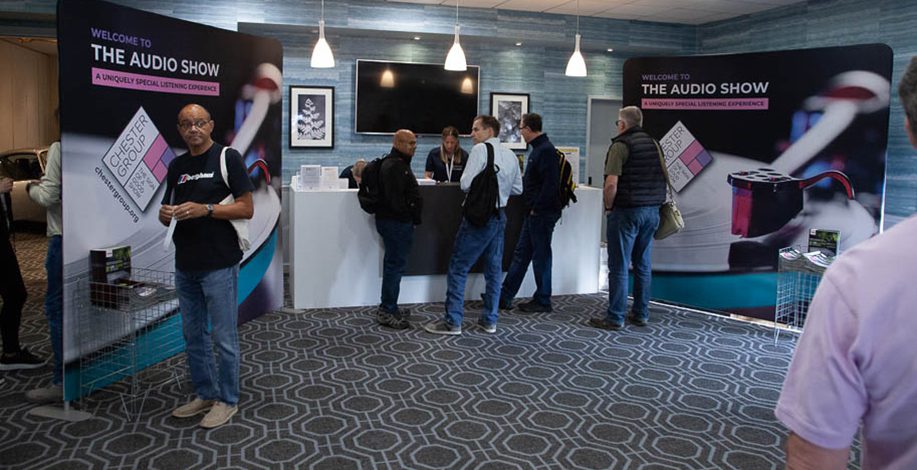
I’m not sure whether it’s the relatively down-to-earth setting in the Staverton Park Hotel near Daventry or the nature of the exhibitors at the UK Audio Show, but this event was more friendly and relaxed than many, not least the grandeur of the Ascot show the previous weekend. This event attracts a wide range of manufacturers and distributors, but on the whole, they are smaller brands; the products may be from around the world, but there aren’t many international representatives among the professionals manning the rooms. There were a few exceptions to this and a few product launches as well, with Bricasti making a comeback to these shores with a dedicated transport for CD as well as SACD, and the return of a British loudspeaker marque not seen for 50 years.

The sound that many exhibitors produced in rooms of various sizes was better than average, with some creating particularly enchanting results. Those looking to enjoy their music on the move had the opportunity to listen to a selection of cars courtesy of Driving Sounds magazine, and there was even an in-car amp specialist turning his hand to the high-end domestic market. All in all, Daventry was a good show in a handy location for many.


Editor’s note: This feature was supposed to have run some weeks ago. Instead, I got COVID-19 and parked it in my drafts folder. My apologies to all concerned.

Acoustic Energy Corinium

Acoustic Energy Corinium

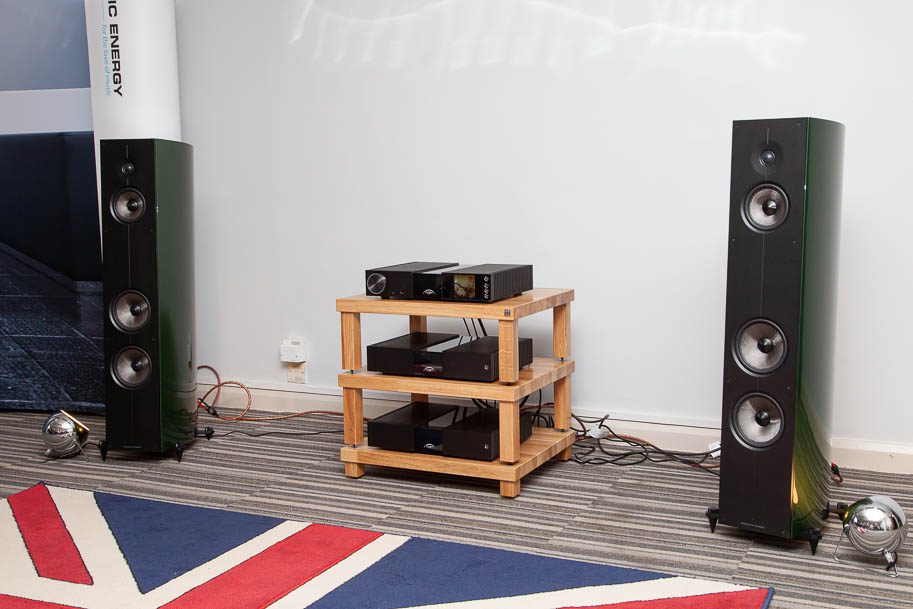
Acoustic Energy launched their most ambitious speaker for some time in the elegant Corinium. This is distinguished by a 6mm aluminium baffle that supports the tweeter while the midrange and bass drivers are fixed to the woodwork below. Corinium is the Roman name for Cirencester, where Acoustic Energy is based; back in the day, it was the biggest British city outside Londinium. The speaker of the same name has new carbon fibre drivers with long-throw voice coils and a new soft dome tweeter. The boat section cabinet is available in traditional finishes, but the racing green shown proved very popular; however, it adds a small premium to the £6,000 asking price.

Sigma Acoustics, EAM Lab, Chario

Sigma Acoustics, EAM Lab, Chario

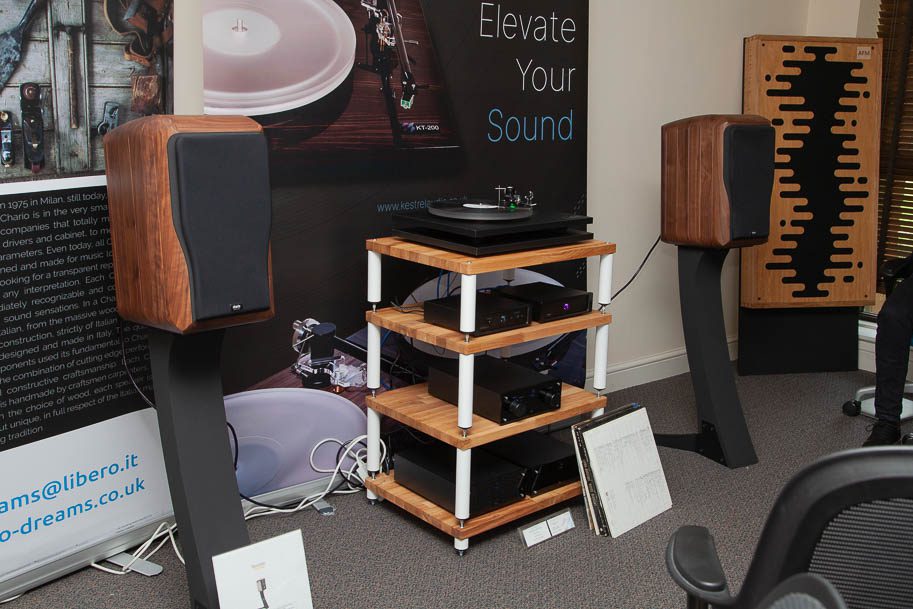
Audio Dreams is a new distribution company run by Italian Stefano Funes who specialises in brands from his homeland. Some are familiar names, such as Chario, while others are less well-known, including EAM Lab electronics and Sigma Acoustics loudspeakers. The latter showed the Monitor T 10 in the 25th Anniversary guise (£3,990); this is a stylishly faceted two-way with a Heil AMT tweeter and a custom-made six-inch mid/bass driver with an oversized voice coil and hybrid magnet system. EAM Lab was represented by the Element C201 line preamplifier (£2,700) and Studio 362 Ltd power amplifier (£4,000), which has VU meters and a 230W power rating that rises to 600W into two Ohms. Funes also demonstrated the Chario Sonnet Academy (£7,490) on dedicated curved stands (£1,719), this has a 32mm Silversoft dome tweeter and 170mm Rohacell woofer in a solid walnut or cherry and HDF cabinet and sounded rather good on the end of a Kestrel KT-200 turntable with Kestrel and Edwards Audio electronics.

IAS Beaulieu 40R

IAS Beaulieu

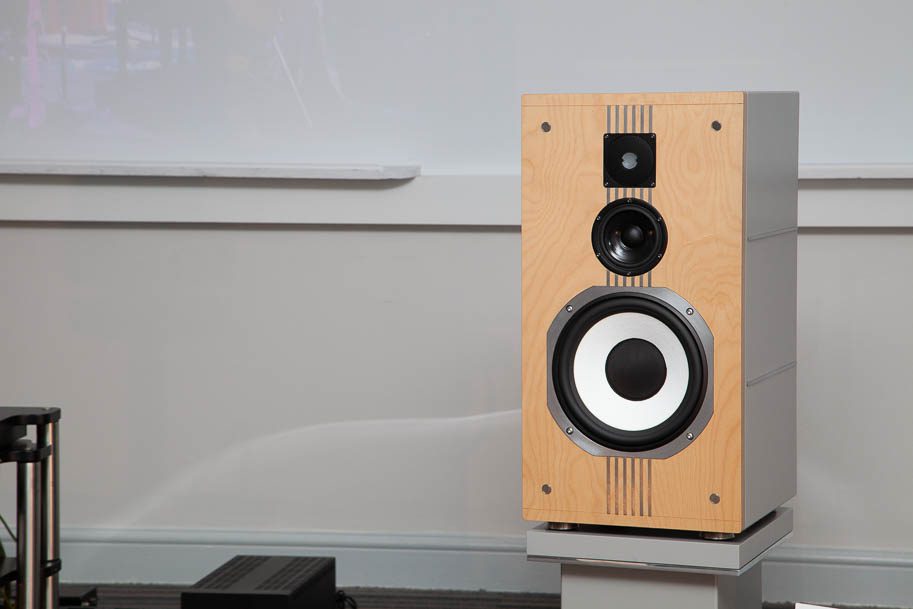
IAS launched its Beaulieu loudspeaker at the Cunard Hotel High Fidelity Spring Exhibition in 1980. Carl Beckwith, along with one of the company’s original founders, David Hall, has revived the brand and chosen the UK Audio Show for its debut. The Beaulieu 40R (£40,000, and pronounced ‘beww-lee’) combines an exclusive 10inch Volt bass driver, a SEAS midrange dome and an Accuton ceramic tweeter in a cabinet made from inch-thick birch ply with an aluminium damping plate on the back. A dedicated stand contains the solder-free crossover, which uses Duelund Cast components and offers tri-wiring connections. The latter has copper binding posts and a separate pair for single wiring.

Bricasti M19

Bricasti M19

Carlo Marengo has been picking up a bit of lingo from his chosen hometown of Edinburgh and had a selection of flyers fronted with slogans including ‘Ah Didnae Ken’, ‘Ya Dancer’ and ‘Pure Barry’. On the back of each was a translation and a way in which this particular saying pertained to the products he distributes. I like ‘Pure Barry,’ which expresses enthusiasm and approval.

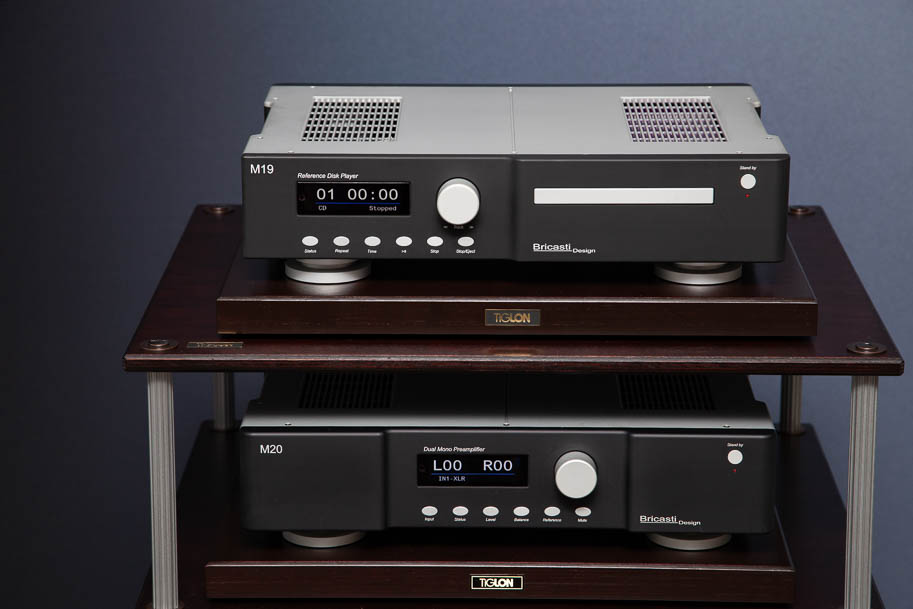
It’s an apt phrase for the Bricasti electronics that Carlo brings in, not least the M19 SACD transport (£12,000) that was unveiled for the first time outside the US. This is, as the name suggests, a CD and SACD spinner that emits PCM and DSD from outputs that include an I2S connection on an RJ45 socket; this uses DoP to get a DSD signal to Bricasti’s M1S2 DAC. The full suite of Bricasti electronics included an M20 preamplifier and M25 power amp and these were driving a pair of Art Audio Emotion Diamond 8 loudspeakers (£21,000) to impressive effect.

Classic Turntable Company 301

Classic Turntable Company 301

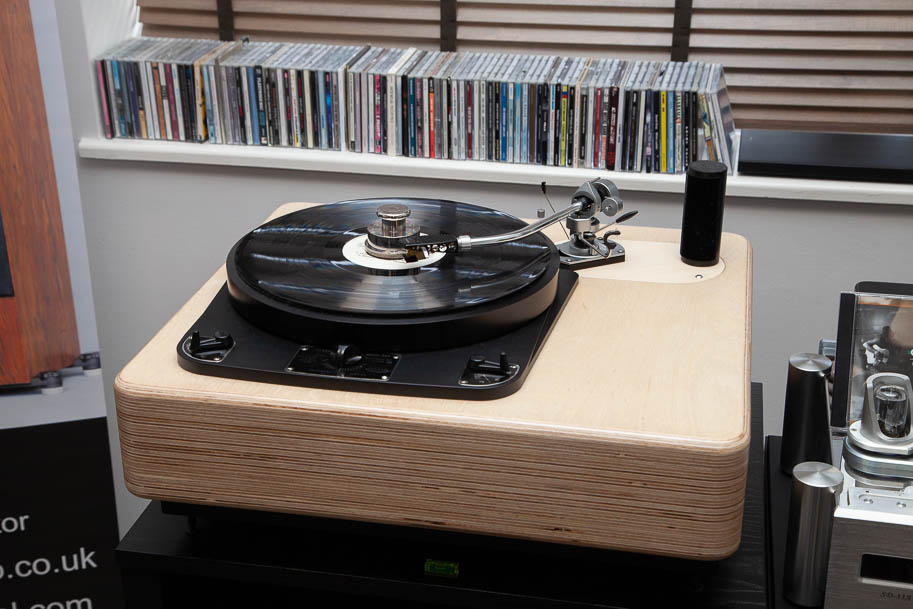
Alan at Alchris had brought along a Classic Turntable Company 301 which is a rebuilt Garrard that is totally refurbished and has a new aluminium chassis. This company offer a range of parts for the original idler wheel Garrard turntables and clearly knows their stuff; it was quite surprising that this example, which has a Shindo platter, solid laminated birch plinth and SME 3009 tonearm, only costs £5,000. The current owners of the Garrard brand have a similar package for six times the price.

Alchris V200 loudspeakers (£4,200) were making some fine sounds playing Greg Brown’s Slant Mind on a Yaqin SD-33A CD player via an Aavik U-380 amplifier.

Kerr K200

Kerr K200

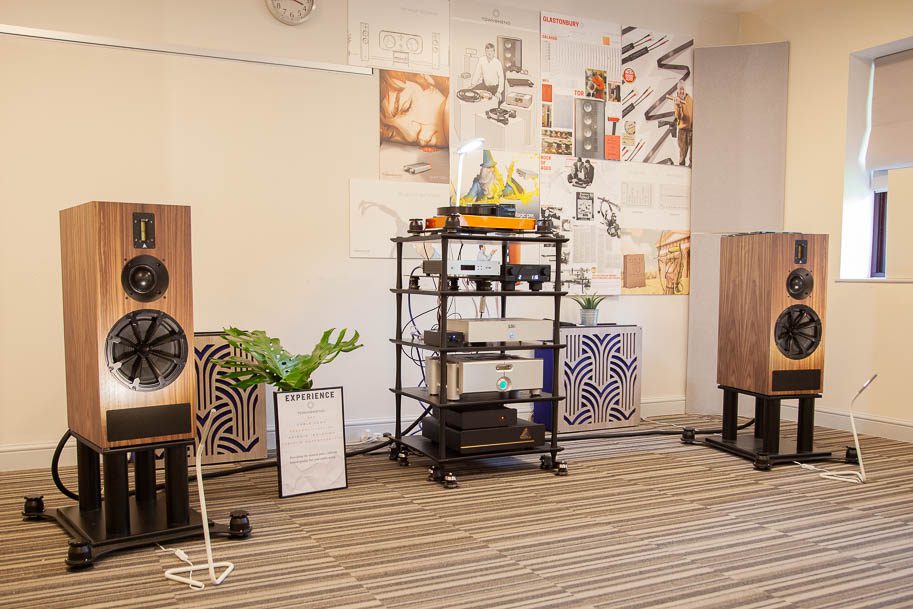
Transmission line speaker specialist Jes Kerr was sharing the Townshend Audio room where his substantial new K200 speakers (£19,995) made some good sounds despite the hubbub. This is effectively a stand-mount version of the K100 with a new 10-inch Volt bass driver that supports the spider and voice coil with an exoskeleton chassis, a 75mm midrange dome and a 60mm true ribbon tweeter. The cabinet is built from Baltic birch plywood and incorporates Kerr’s “unique transmission line loading”. At 43kg, this is a serious proposition designed to offer maximum accuracy and detail resolution; the dedicated stands are almost certainly a must.

Ultrafide U4/ U500DC

Ultrafide U4-U500DC

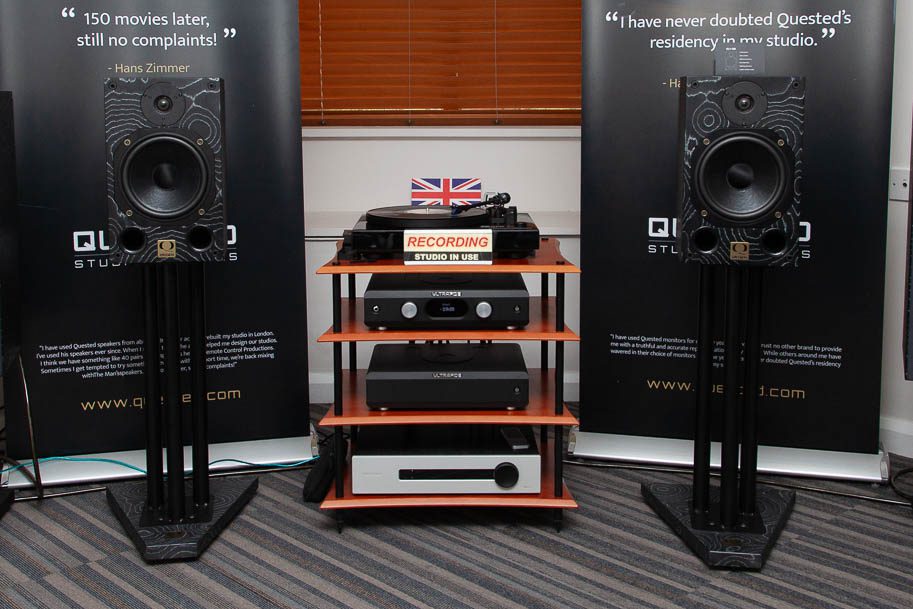
Two brands from the pro world chose this event to launch upon an unsuspecting audiophile public; Ultrafide is the creation of MC2 and XTA designer Alex Cooper, formally with Klark Teknik. Ultrafide has created its own Class D amplification modules and used them in the U500DC power amplifier (£4,500), a 300W design which accepts that many audio enthusiasts prefer the warmer sound of Class AB by including a switch marked vintage sound that mimics that balance. The U4 preamplifier (£4,500) has a ‘high quality’ phono stage for both MM and MC cartridges that offers loading and gain settings to match specific models.

Quested OLY-208

Quested OLY-208

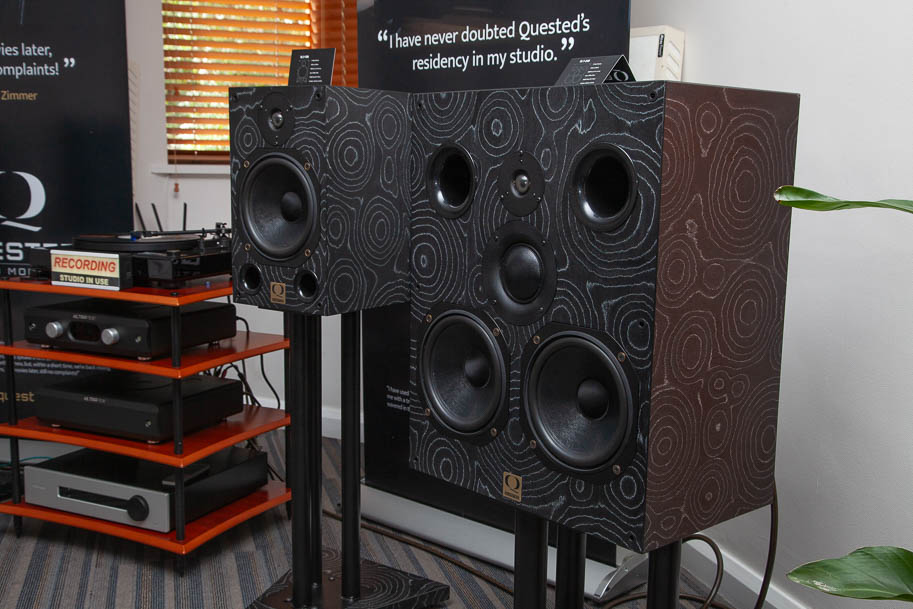
The other company to jump the divide between studio and home entertainment is Quested, whose loudspeakers are designed by Roger Quested, who worked with the Rolling Stones, Pink Floyd, Led Zeppelin and many other greats back in the day. The ethos he brings to domestic speakers is pretty much the same as for studio monitors; you hear the same sound as engineers do in the studio. It’s an approach that works for PMC and ATC, and the results heard from Quested OLY-208 stand-mounts (£14,400) on the end of the Ultrafine electronics mentioned above suggest that it works for this brand too. The OLY-208 is from the Olympic range and combines dual 8-inch bass drivers with a 75mm soft dome mid and 25mm tweeter; the more compact OLY-108 two-way omits the midrange yet has a specified 115dB peak SPL capability.

Coppice BG1

Coppice BG1

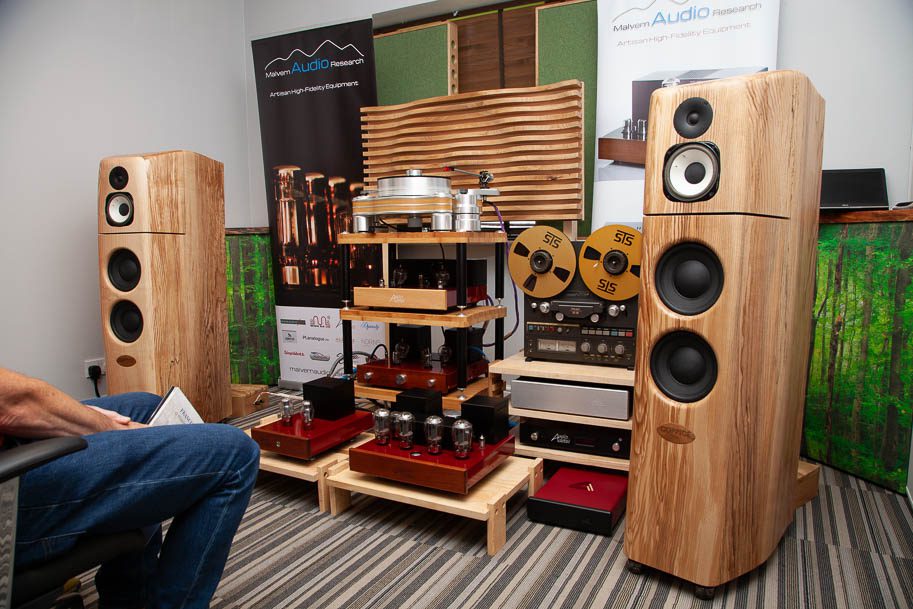
Coppice specialise in solid wood loudspeakers, which until now have been fairly sensible, even manageable affairs; this all changed at Daventry. Here, they introduced the BG1 or Big One (£19,995), which lives up to its name with a 150-litre bass reflex cabinet made from machined ash, the different figuring on the two speakers being a deliberate move intended to show that this is solid wood rather than the veneer found on 99% of the competition. Coppice have chosen a soft dome tweeter and a pair of 8-inch Beyma bass drivers to augment the Lowther full-range driver. The latter is a prototype that the recently reformed Lowther is developing, making it the first significant change to this classic driver in decades. The crossover is external so that these beasts can be tuned to different rooms without the need to move them around, which would clearly not be easy.

Kestrel KT-200 & KMM-1

Kestrel KT-200

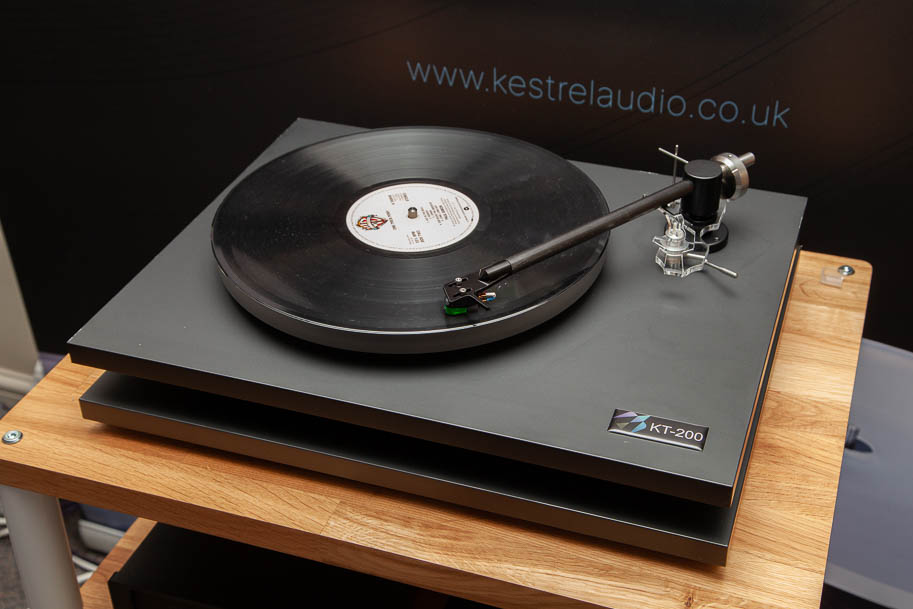
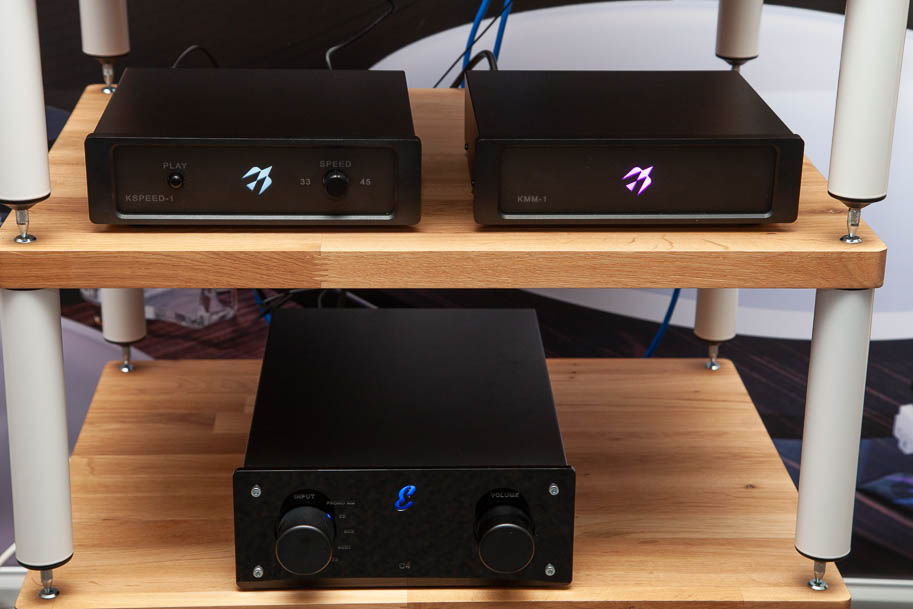
Record player specialist Kestrel Audio was sharing a room with Kevin Edwards of Talk Electronics fame and using a Talk A5 Carbon tonearm on their KT-200 turntable (£899.95). This has a larger-than-average plinth that’s available in satin walnut or high gloss Macassar veneered finishes and runs an 18mm acrylic platter on an aluminium sub-platter in the Rega style. The A5 Carbon arm is that rare thing a unipivot, a type usually only sold separately and regarded by some as the best bearing option. Kestrel also showed a dedicated moving magnet phono stage called KMM-1 (£699.95); this offers three levels of gain and a 47k Ohm impedance setting alongside a 1k Ohm option for high output MCs.

Kestrel KMM-1

Moor Amps Ascalon-8

Moor Amps Ascalon-8

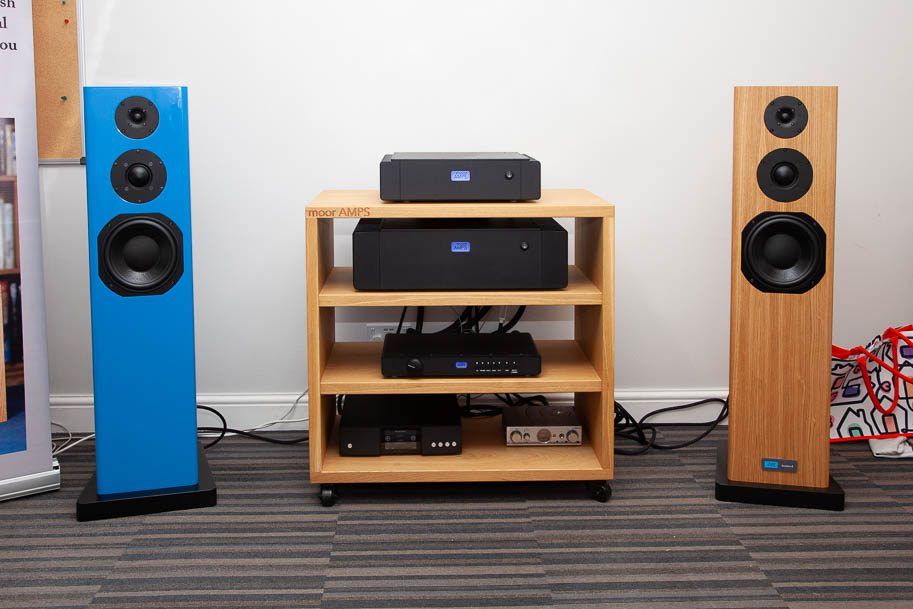
As the owner of a Moor Amps Angel 6 power amplifier, I was pleased to see that Tim and Ruth Narramore have finalised the Ascalon-8 loudspeaker (£11,500) shown in prototype form at Bristol earlier in the year. The Ascalon-8 has been designed to be used close to the wall to make it easier to accommodate in typical British sitting rooms. To this end, the reflex port has been tuned down for a gentle roll-off that is less likely to excite room modes whilst producing decent bass extension. The drive units selected for the 24mm birch ply cabinet are from Volt, which is based in the West country like Moor Amps themselves and consists of an 8-inch bass unit, 50mm midrange dome and 25mm soft dome tweeter. The veneered model on the right is the finished thing but blue is an option.

Etude EHSB

Etude EHSB

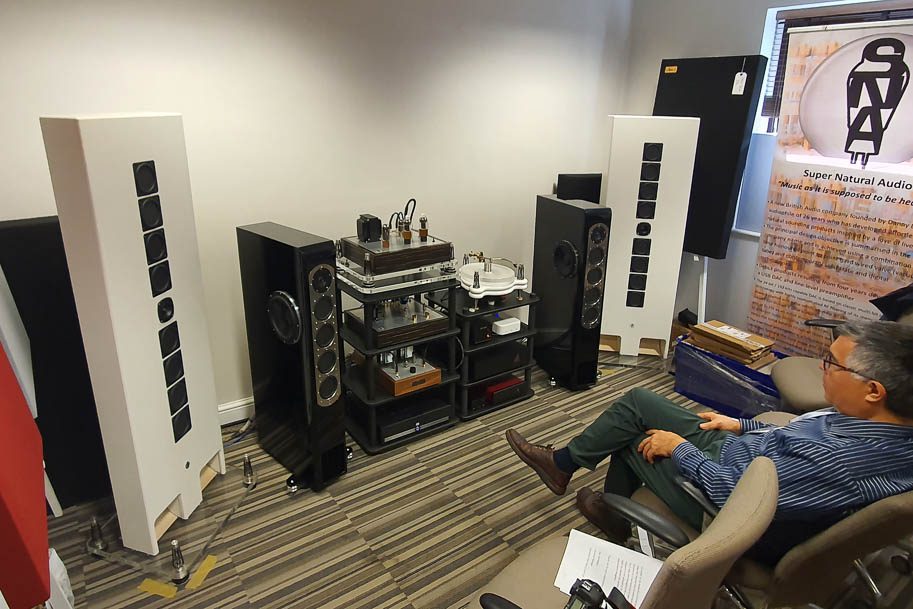
Chris Liauw had some shiny black examples of his Etude 5 speakers alongside a 1.55m high addition to the range in the form of the Etude High Sensitivity Bipoles or EHSBs (£6,500 per pair). These are dipoles with eight BMR drivers front and rear flanking a compression driver tweeter; they were created to work with single-ended amplifiers such as the Super Natural Audio (SNA) 2.3 SE power amp being used in the room and have a high 105dB/W sensitivity to suit. The examples on dem were sitting on the Clipaudio Mute Point isolation system that’s not a million miles from the towers on an SME turntable in design. The system sounded good and included a Clipaudio Dolomite turntable and 9-wave arm, SNA amplification and DAC alongside a Lucas Audio LDMS music server.

Zeiler PR-01 & PA-01

Zeiler PR-01 & PA-01

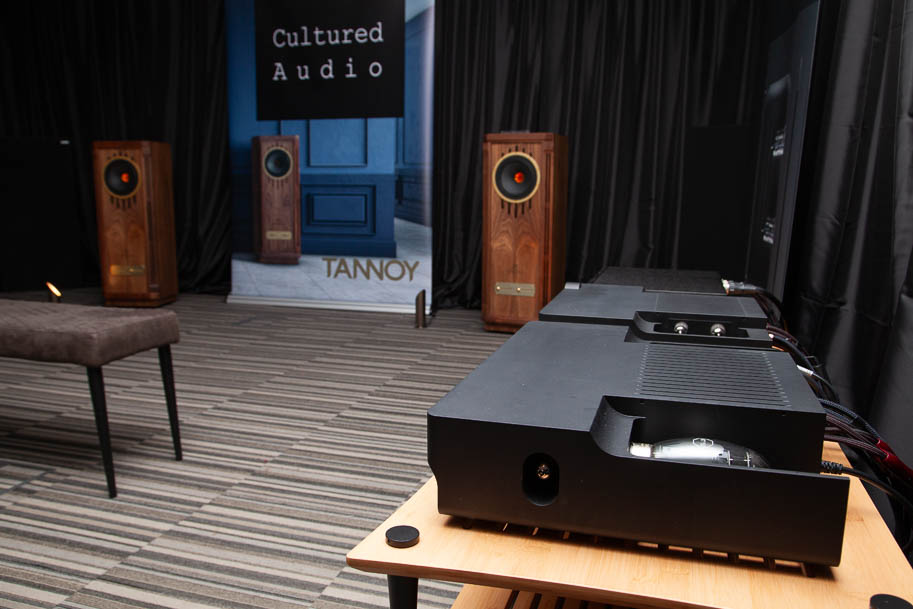
I came across Ralf from Swiss brand Zeiler at the High-End show in Munich and saw that his amplifiers have subsequently been reviewed by none other than Alan Sircom of Hi-Fi+, so it was encouraging to find him and his fabulously machined products in Daventry sharing a room with newly appointed agent Symphony Distribution. This company is in charge of Tannoy in the UK and realised that the superbly built Zeiler tube amps would be a great match. At the show, they paired the Zeiler PR-01 preamplifier (£30,000) and PA-01 KT150 equipped 10 Watt power amplifier (£30,000) with a pair of Tannoy Kensington GR Signature loudspeakers (£19,995) to highly entertaining effect.

Audio Wave CR-30X

Audio Wave CR-30X

While there were some fancy cars near the entrance at the UK Audio show I was surprised to find power amplifiers from the in-car entertainment world driving a system in one of the dem rooms upstairs. Audio Wave is a high-end player in that universe, and even in ours, the asking price is a pretty serious £32,000 for a pair of monoblock power amplifiers. These amps come in two variants: a Class A version offering 50 Watts and a Class AB alternative with 400W on tap. The high price is the result of handmade production in the UK, right down to the heat sinks, each of which is made up of 63 copper rods.

Dyptique DP 140 MkII

Dyptique DP140 mk2

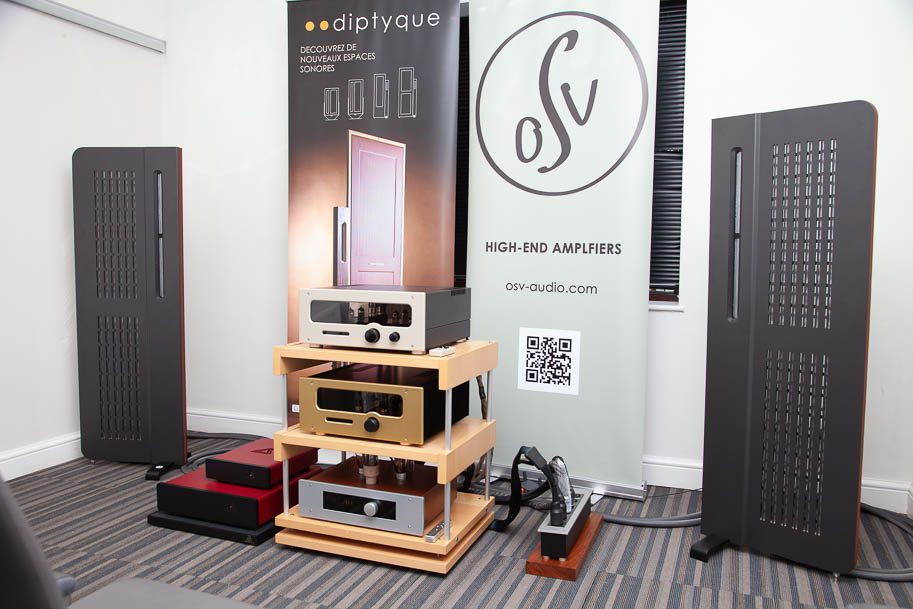
Greg at GPoint Audio brought the latest panels from France’s Dyptique as the DP140 MkII (£12,480). This mid model in the range stands 1.41m high and incorporates two mid/bass isodynamic cells allied to a 55cm ribbon tweeter. The isodynamic drivers combine large-section bipolar magnets and coils made of aluminium tape on a membrane to create a dipole driver that delivers as much energy to the rear as the front of the speaker. The cabinet such as it consists of a welded steel frame with MDF and felt elements to control vibration. The ribbon tweeter is likewise made of mylar film with an aluminium coil, and the pairing only requires a first-order crossover.

Leema’s new Quantum-range Neutron and Graviton amplifiers are here!

12 December 2023, Wales, UK: 25 years in the making, Leema Acoustics’ recently unveiled Quantum range has seen its first two offerings become officially available, with full details, specifications and UK pricing for the new Neutron preamp and Graviton power amp announced for the first time.

The new Quantum collection forms the first all-new Leema Acoustics range in over a decade and has been entirely designed, engineered and built in the Welshpool factory in Powys, Wales, overseen by Leema Acoustics’ co-founder and ex-BBC sound engineer, Lee Taylor.

Quantum borrows heavily from the company’s flagship Constellation series and has been repackaged in order to greatly improve affordability. The casework is simpler, single transformers replace multi-transformers, and the board assembly has been expertly simplified with no loss of component quality.

Leema Acoustics famously manufactures its own circuit boards at its UK factory, giving unrivalled quality at its price point. The majority of the PCB components are shared with the Constellation series allowing economies of scale to directly benefit the new Quantum range.

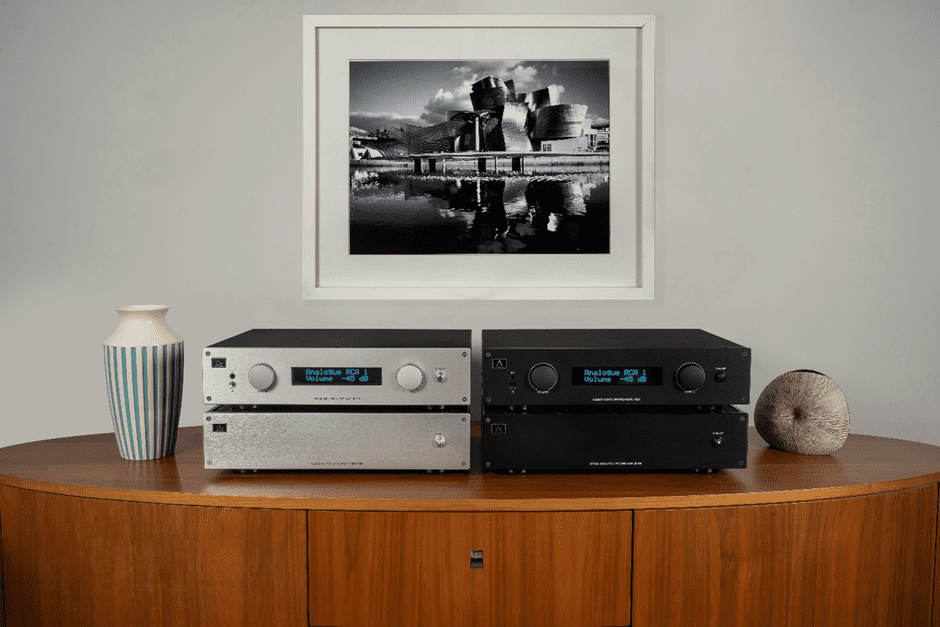
The Quantum amplifiers comprise the Neutron DAC/preamp (£1,500) and Graviton power amp (£1,500); bought together, the British-made pairing costs even less at just £2,800.

The Neutron is a thoroughly modern preamp that perfectly distils Leema Acoustics’ 25-year UK hi-fi manufacturing experience into an affordable audio ‘hub’. Designed to be as transparent as possible, while offering great flexibility with a colossal 13 inputs, the Neutron introduces Leema Acoustics’ latest circuit designs, featuring reference-standard low crosstalk for enhanced transparency.

For vinyl enthusiasts, the Neutron offers an exceptionally high-quality switchable MM/MC phono stage, based on Leema Acoustics’ proprietary design. The preamp also benefits from an advanced asynchronous ESS 24-bit/192 kHz USB DAC, a dedicated headphone amplifier, plus a high-end Burr-Brown analogue volume control.

Highly versatile, with wide-ranging connectivity, the Neutron includes a generous 13 (nameable) inputs: 4x RCA and 1x XLR; 1x MM/MC phono stage; 3x optical; 3x coaxial and 1x USB. Outputs include: fixed-level record; 2x dedicated subwoofer; a high-quality dedicated headphone amplifier, plus a 12 V trigger.

The Graviton stereo power amp benefits from what could be the biggest toroidal power supply ever seen at its price point! The generously specified device gives the Graviton effortless control over an enormous breadth of loudspeakers.

A Class A/B design, offering 150 watts per channel into 8 ohms and 260 watts into 4 ohms, the Graviton’s high-current topology deploys six output transistors per channel for huge dynamic ability coupled with unforced sonic detail.

Speaking about the new Quantum range Neutron and Graviton pre/power amp, co-founder Lee Taylor said: ‘Quantum takes much of the Leema Acoustics’ Constellation product design, yet simplified to meet a more affordable price point. However, no compromises have been made where it really counts: the onboard phono stage is cloned directly from the award-winning Essentials Phono, USB is handled via an XMOS interface rather than the Leema M1 module, signal switching is via gold-palladium relays, not solid state, plus volume is regulated via an analogue resistor ladder; Leema Acoustics has used this method for nearly 25 years.’

The Neutron preamp’s balanced (XLR) connection is included to maximise interconnection quality and with a startling 13 input sources, including USB, phono, optical and coaxial, balanced and unbalanced analogue are offered to facilitate easy system integration.’

The Graviton has an over-specified single transformer supply and six matched Toshiba output transistors per channel, allowing high instantaneous current delivery for superior transient capability and long-term reliability. Dual speaker binding posts are included to allow easy bi-wiring, plus line level loop through-outputs for bi-amping.’

All Quantum-range devices benefit from UK-made casework available in brushed black or silver finishes, with solid aluminium precision-machined front panels and control dials.

Bryston BP-19 Preamplifier Launches In UK

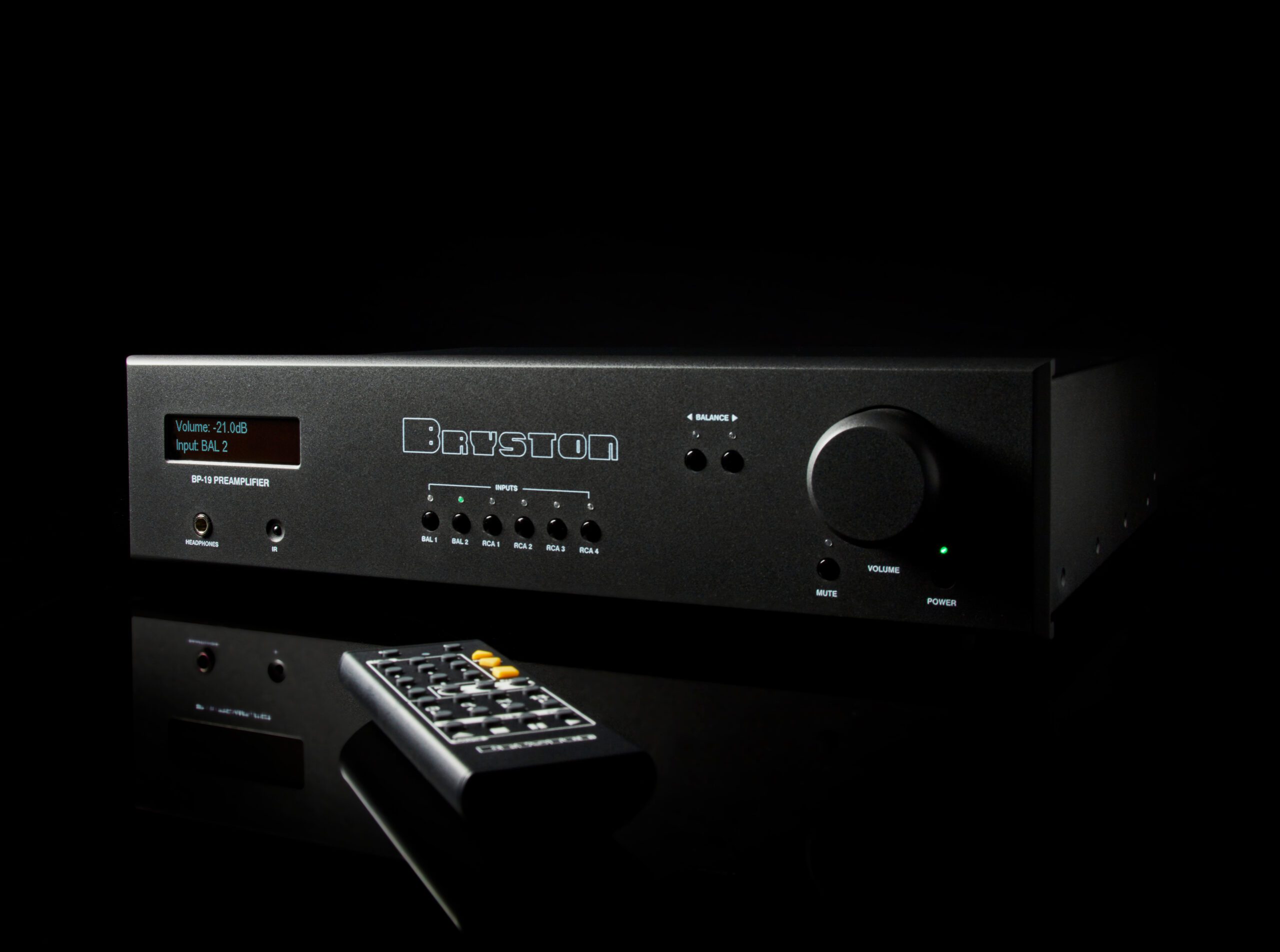
PMC Distribution UK is introducing the Bryston ultra-high-performance BP-19 analogue preamplifier. Leveraging years of R&D and many design innovations achieved during the development of the multi-award-winning BR-20 preamplifier, the BP-19 brings the renowned Bryston BR-20 audio quality to the UK audiophile customer.

Meticulously handcrafted in Canada, the BP-19 preamplifier reproduces music effortlessly thanks to the finest hand-selected premium components, an oversized toroidal power transformer. Its input array includes two pairs of balanced XLR input jacks and four pairs of RCA input connectors. There are two pairs of RCA (phono) outputs (one pair fixed, one pair variable), and two pairs of balanced XLR outputs (one pair fixed, one pair variable) for optimum connectivity.

The optimised discrete operational amplifier delivers a staggeringly low THD+N measurement at or below 0.0006%. The signal path features a fully balanced design from input to output, using an array of very tightly matched components and a compact circuit architecture, achieving the lowest possible noise and superior common mode rejection. The BP-19 also employs an advanced volume attenuator, ensuring long-lasting, quiet, linear performance. For the devoted music enthusiast, these innovations, combined with the legendary hand-built excellence from Bryston, translate to more lifelike performances, enhanced detail, and a greater sense of dimensionality and dynamics from all recordings.

For the first time, Bryston is offering the legendary BP-2 moving magnet (MM) phono stage circuit as an onboard option for the BP-19 preamp. The BP-2 is highly accurate, offers extremely low noise, miniscule distortion, and provides headroom margins sufficient to prevent overload from any known phono source. Bryston also offers specially designed, custom-made step-up transformers to accommodate low output Moving Coil (MC) cartridge designs. 

Each of the six analogue inputs can be controlled via the supplied remote, front panel or remotely using RS232 or IP when connected to a smart home ecosystem. HEX codes are available for use with a universal style remote control.

The BP-19 is available with 17” faceplates in Silver or Black or 19” to order.

Pricing retail inc. vat

Bryston BP-19 preamplifier                               £5,395 

BP-19 with built in MM phono stage               £6,395

BP-19 with built in MM and MC                       £7,395

The BP-19 is supplied with Bryston’s legendary 20-year warranty and will be available in the UK in December 2023.

VPI Avenger Direct turntable, arm and cartridge

When drafting this VPI Industries Avenger Direct turntable, arm and cartridge review, I struggled to convey my overall feelings about the engineering. Then a name came into my head one morning: O. Winston Link. Ogle Winston Link (1914-2001) was a 20th-century American photographer and sound recordist. He documented the last days of steam locomotives on the Norfolk & Western Railroad. Link famously photographed trains at night. He used large format cameras and extremely powerful flash units. Link created magnificent, almost film noir images of these thunderous pieces of engineering. O. Winston Link was cataloguing the last days of steam in the late 1950s. The sheer heavy engineering of the locomotives and the heavy engineering of the photographic project shines through.  

The reason for this lengthy preamble through 1950s black and white photography is not simply filler. VPI’s Avenger Direct evokes the same feelings of solid, powerful American engineering. You should be using a 10×8 field camera and lots of flashbulbs to photograph this turntable. The Avenger is the deck that should have a cow-catcher on the front! It summons up that no-nonsense ‘belt and braces’ approach. It speaks the language of that golden age of American engineering. Guys in plaid shirts wielding hammers should be building the Avenger Direct! 

Avengers… Assemble!

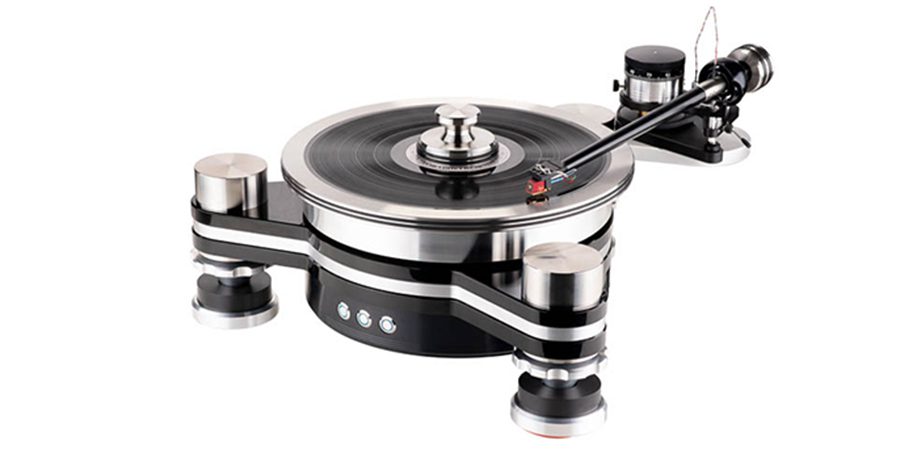
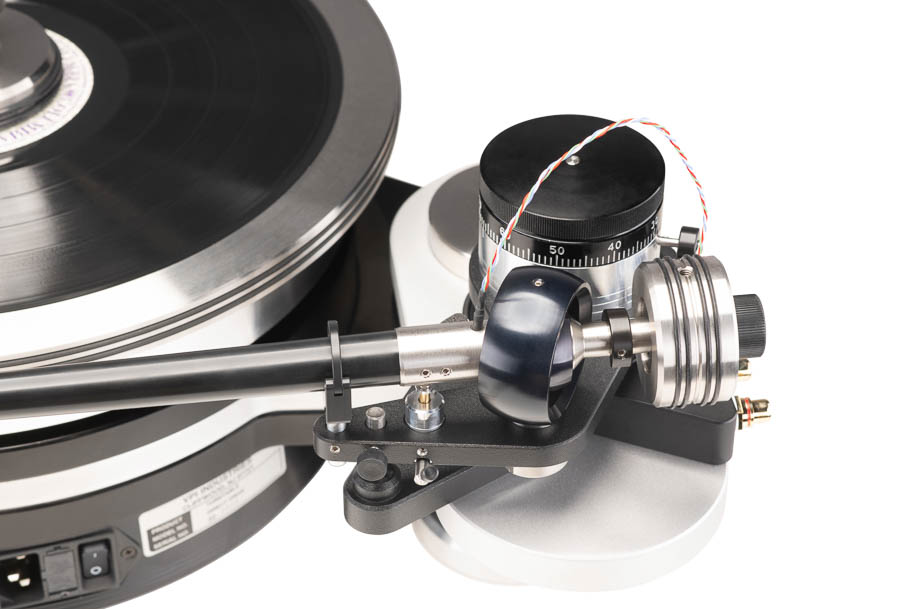
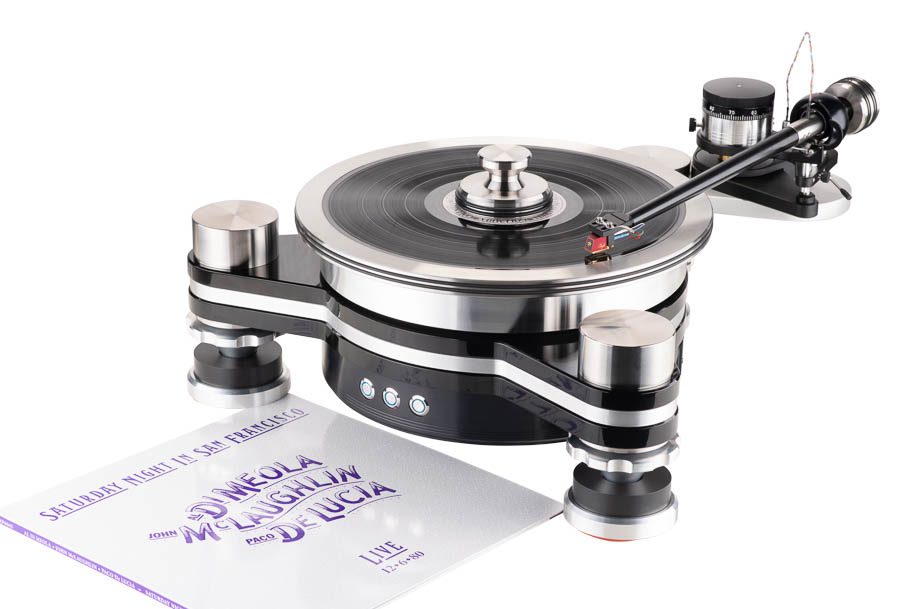
The VPI Avenger Direct turntable, arm, and cartridge is at the top of four-strong VPI’s Avenger line. All have the same three-pod design, with a three-layer acrylic/aluminium chassis. Damping material separates each layer, and it all sits on three aluminium corner towers. The Avenger, Avenger Plus and Avenger Reference beneath the Avenger Direct are all belt-driven or rim-driven designs with an outboard motor. 

VPI Avenger Direct

Moving the motor into the turntable’s body changes the feet’ position. The other Avengers all have a foot at the front and two at the rear, whereas the Direct has the three push-button controls (off/33/45) in front meaning it has two towers to the front and one to the rear. Why is this important? The top of the towers are designed to fit an outrigger for a tonearm.

The Three Towers

While it’s possible to add up to three tonearms to an Avenger (one per tower) if you use the more common single tonearm arrangement (it’s supplied with the 12” Fatboy Gimbal as standard), that tonearm is at the rear (or the right front) of the turntable. It’s not as big a deal as it first seems as the arm-plate outrigger and the fact that the Fatboy sits to the right of its VTA tower makes it almost in the usual position for a tonearm. Still, it feels further to the back of the deck than one might get from a larger chassis, such as the 40th Anniversary VPI HW-40 we tested in Issue 177, and still forms a part of the hi-fi+ turntable arsenal to this day.

The three feet also provide a clever and simple degree of level adjustment and isolation protection. The towers end in three knurled inverted cones, which can be adjusted to provide levelling. These cones sit in a two-piece cup-like foot that isolates the turntable from its surroundings. 

Back to big

That heavy American engineering I discussed earlier comes in the shape of a 2.68Nm/sec direct drive motor built into the underside of the main chassis. It has three push buttons on the front and the power inlet to the side. An exotic power cord is the last upgrade to the Avenger Direct as it makes comparatively little improvement.

Its stator is mounted in a solid billet of T6061 aluminium sitting under the platter. This makes the motor almost a sealed unit. The rotor is located in an aluminium sub-platter on the underside of that 25lb platter and speed is monitored 2,500 times per second. Suddenly all that torque makes sense… add in the Peripheral Ring and Record Clamp and you could be pushing close to 30lbs of platter around. Nevertheless, the start/stop time is around a second, not the instant start/stop of a DJ deck, but you probably aren’t scratching with a platter that weighs as much as an Icelandic Sheepdog!

VPI Avenger Direct

Unlike most direct drive turntables, however, the rotor joins with the lower part of the platter rather than extends up to the record spindle. Remember that American engineering? Making the spindle an integral part of the platter is at once useful for anti-vibration purposes (in a direct drive where the spindle is a part of the motor, and motor-borne vibration is transmitted directly to the LP itself) and is a lot harder to manufacture to get the concentricity of the spindle perfect. VPI’s Avenger Direct turntable, arm, and cartridge combination nails this!

Fatboy slim

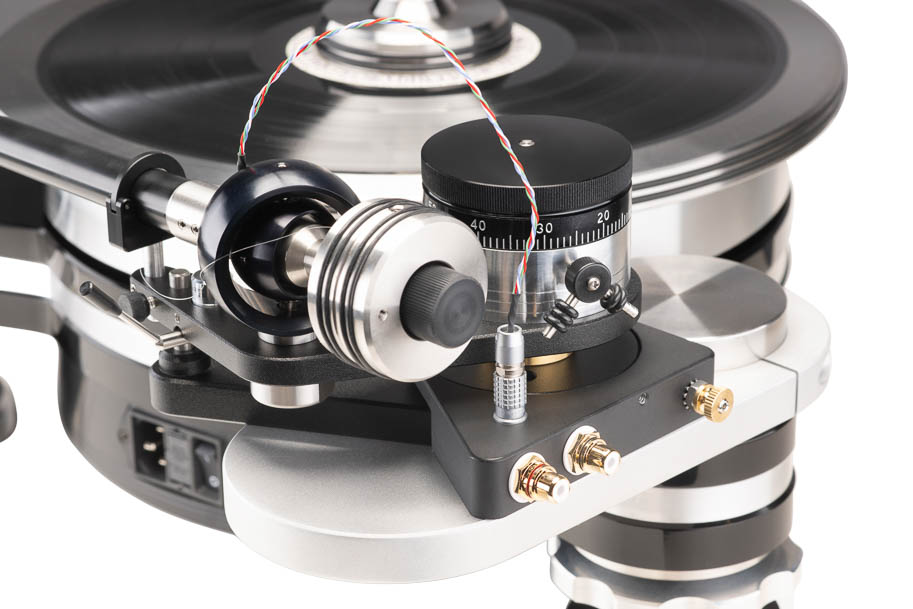
VPI’s top tonearms today are the Fatboy line, which uses the standard dial-adjusted VTA tower, offsetting from the armbase. The armbase is a classic, allowing a simple, yet effective way of adjusting cartridge rake angle even while a record is playing. It’s a known quantity as it’s been used in most higher-end VPI tonearms from the JMW series.

There’s a pragmatism to the Fatboy line, with 9”, 10” and 12” arm lengths available in ‘Gimbal’ and ‘UniPivot’ guise, all at the same price. Regarding turntables like the Avenger Direct, the decision is made for you in advance; it ships with a 12” Fatboy Gimbal (although you could order a second or even third tonearm in unipivot form). This arm is wired with Nordost Reference cable throughout and connects to a junction box built into the arm base using a small LEMO connector (usually found in high-end headphones).

No vampires harmed

As part of the package, we also went for a VPI Anniversary Cartridge, also known as the ‘Bloodwood’, although no vampires were harmed in making this moving coil design. Like VPI’s other cartridge designs, this is a £2,550 variant of an existing product, in this case, a Miyajima Takumi. This is almost 9g of cartridge that tracks at 2.3g, features an elliptic stylus profile, has a 16-ohm impedance, and has a very low 0.22mV output. This sets a challenge to phono stages, but a challenge always accepted by the Avenger’s price peers!

Setting up the turntable is remarkably easy, with the only real challenge is ensuring the free-standing isolation feet are in the right places to accept the attached feet. Everything goes together with the reassuring ‘thunks’ and ‘clanks’ that Brunel might like. The free-standing feet have surprisingly grippy O-rings, so moving them around isn’t as easy as it might seem. The turntable includes everything, including an alignment protractor and electronic scales. The only other issue would be to ensure the armplate is set at the right angle to the turntable itself before aligning the cartridge. Ask me how I know this! In my defence, the review sample is a demonstrator and was therefore missing a manual, but if it goes together reasonably reviewer-intuitively, that’s a good sign.

Effortless power

I’m still going with O. Winston Link regarding the sound quality. A sense of effortless power exudes from the turntable, and its sound quality reflects that. I had some trepidation that the differences between this deck and the HW-40 we use as a benchmark might be ‘nuanced’ at best. Given the Avenger Direct costs almost exactly a third more than the HW-40, that would be a damning indictment of this design. Any comparisons quickly showed how much more you get from the Avenger Direct.

It’s an extremely beefy sound, with clean and deep bass lines with the kind of control few other decks can muster. It’s also perhaps one of the most unflappable turntable designs I’ve encountered. You can play it at whisper-quiet levels and it sings. You can play it at jackhammer levels and it does the same. Other parts of the system – be it the phono stage, amp, speakers, ears, window panes, or the local noise abatement society – will fold long before the Avenger Direct runs out of puff. 

Piano attack

Back to bass. It doesn’t matter whether that bass is the left hand of Alexander Toradze hammering out Stravinsky’s Petrushka on an unsuspecting piano [EMI] or the classic rattle-gun techno bass lines of Orbital on ‘The New Abnormal’ [Optical Delusion, London]; the result is the same; energetic drive and dynamic power at all volume levels. And yet, it can do that too when something more subtle is called for – such as ‘Moon Princess’ from the same Orbital album. And does it just as effortlessly.

In a way, the combination of VPI Avenger Direct turntable, arm, and Bloodwood cartridge is perfect, with the soft-edged cartridge taming the energetic sound of the turntable and arm. Still, ultimately I found the Avenger Direct gets the better deal by far. Bloodwood expressed music’s beauty in an extremely refined and elegant way, but when I wanted to play something more graunchy and rock-oriented, it was a little too ‘beauteous’ in approach. I can see the joys of this cartridge, especially in context, but the deck has more up its sleeve. Swapping out the cartridge for something more Hana-shaped made a big difference, and showed the deck’s natural exuberance is not over-the-top. If the Bloodwood’s refinement matches your musical tastes, few cartridges sound quite as lovely!

The bold and the beautiful

Regardless of cartridge, the Avenger Direct has a bold, big sound that is incredibly easy to love. It’s a cogent, coherent performer without any peaks or dips in the sound, and the mix of deck and arm is near perfect. I can imagine the unipivot version of the Fatboy being a little more upbeat, but a lot less informative at the bottom end but I’d happily stay with the Gimbal option.

VPI Avenger Direct

This is probably where the rhythm kings begin getting hot under the collar. The sheer amount of information the Avenger Direct provides doesn’t emphasize the beat in the way a suspended turntable can. Those wanting a 4/4 beat to everything might find their bouncy castles have a greater sense of rhythmic energy. However, such decks often lack a lot of fluidity in the midrange, energy in the treble and especially precision (and depth) to the bass. This is a trade-off, but one where most would go with the widest range of strengths.   

The Big Stage

One of those great strengths is Avenger Direct’s soundstaging properties. It throws out a large, wide, deep soundstage, constrained only by the record and the rest of the system. Play something with a lot of staging to hear this. The overture to The Pirates of Penzance on Decca SXL is a fine example. The Avenger Direct brings music to life in a very natural and colouration-free manner. And when you have something with a lot of soundstaging on offer, the performance stops you in your tracks. Good hi-fi is supposed to do this, and the Avenger Direct does it in spade-loads.

Vocal articulation is a turntable’s last great test of strength. ‘Venice Bitch’ from Norman F***ing Rockwell by Lana Del Rey [Polydor] lives or dies by the quality of the vocals. The VPI doesn’t disappoint. The lyrics are reproduced with utmost clarity and finesse, standing proud of the backing instruments.

The bottom line

Arm position aside, there are not a lot of strikes against the VPI Avenger Direct turntable, arm, and cartridge. Yes, there are more ornate turntable designs (some bordering on the rococo). There are ones with brighter chrome, piano gloss finishes and little touches that justify their high prices. People will also trade bottom-end depth and overall bandwidth for a more up-front rhythmic presentation. Regardless, the Avenger Direct is an honest block of engineering that sounds very good indeed.

A turntable of the Avenger Direct’s calibre requires a similarly high grade of components to accompany it. The Bloodwood cartridge might be your choice if you listen to many easy-going sounds. The turntable and arm are capable of much more. 

The VPI Avenger Direct is a true high-end turntable platform. The combination of deck and tonearm make a product limited only by its medium and audio partners. The HW-40 is a great example of VPI making a direct-drive turntable. The Avenger Direct takes that direct-drive concept to astounding new levels. Also, it makes me wonder; if the Avenger Direct is this good, how much better is the flagship Vanquish? 

Technical specifications

  • Type: Direct drive turntable, arm and cartridge
  • Chassis composition: acrylic, aluminium acrylic
  • Platter: 12” aluminium (25 lb/11kg)
  • Tonearm: JMW 12 Fatboy Gimbal tonearm
  • Speed monitoring: 2,500 pulses/revolution speed monitoring
  • Motor torque: 2.68 Nm/sec
  • Start/stop time: 1 second
  • Dimensions: 55.9 × 43.2 × 25.4cm
  • Weight: 27kg
  • Price: £36,500

Manufacturer

VPI Industries

www.vpiindustries.com

UK distributor

Renaissance Audio

www.renaissanceaudio.co.uk

+44(0)131 555 3922

Back to Reviews

Read more VPI reviews here

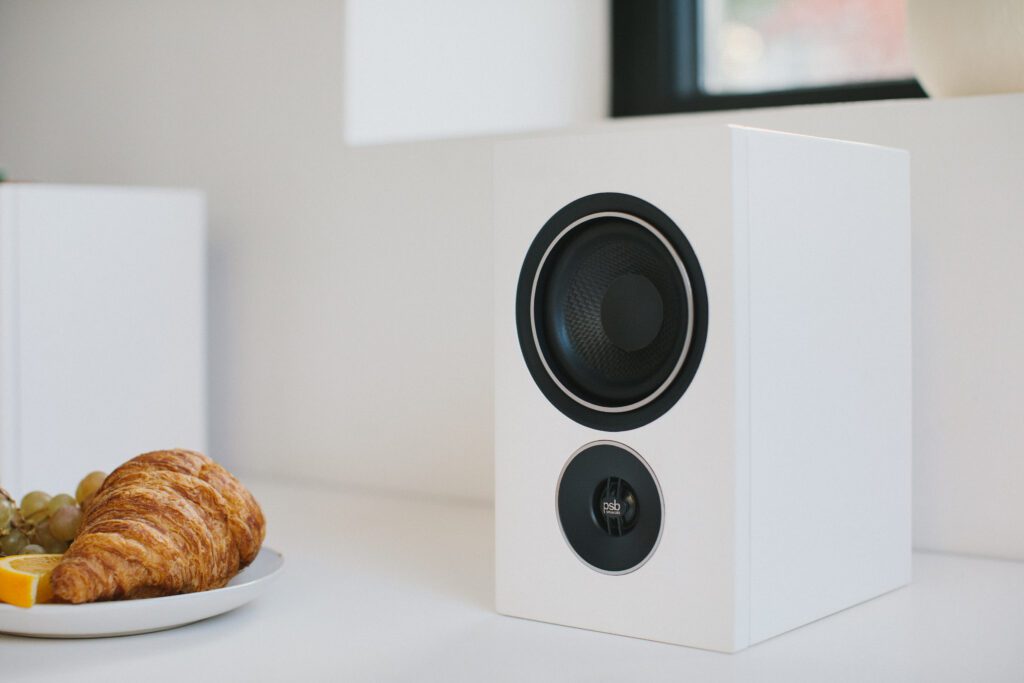
PSB Alpha iQ active loudspeaker streaming system

Despite what he sang in his song Helpless (“there is a town in North Ontario, with dream comfort memory to spare…”), Neil Young’s home town of Omemee is very much in South Ontario. In fact, it’s less than 100km from PSB’s base in Pickering, which in Canadian terms is basically next door. 

The abbreviation ‘PSB’ stands for ‘Paul and Sue Barton’ – and over fifty years since he established the company, Paul Barton remains the company’s chief designer. The Alpha iQ is the latest of Paul’s designs to emerge from Pickering, South Ontario. While he hasn’t altered his company’s philosophy of providing “high-performance solutions at a reasonable cost”, Paul is more than willing to embrace any and all technologies that will allow him to do so.

PSB Alpha iQ

So the Alpha iQ is that most modern of hi-fi propositions: a pair of powered loudspeakers with wireless streaming capability as well as a number of physical inputs. And its convenience credentials are only enhanced by the fact that each speaker is, at just 25 × 15 × 19cm (H×W×D), very helpfully compact. 

Each cabinet is constructed mostly from MDF, with the rear baffle made of aluminium and the front baffle aluminium with MDF on top. Each features a 19mm aluminium dome tweeter with neodymium magnet and ferrofluid cooling, below a 102mm polypropylene mid/bass driver with steel basket and rubber surround, and each is home to 90 watts of Class D amplification. Each tweeter is powered by 30 of those watts, while each mid/bass driver gets the other 60. And each cabinet features an active DSP-based crossover between its two drivers, along with 24bit/192kHz digital-to-analogue conversion.

No latency

Each cabinet features a rear-firing bass reflex port, and the aluminium rear baffle is also home to a mains power connection via a figure-of-eight mains lead. The connection between the two is wireless – PSB claims no latency or interference in the wireless connection in any ‘average-sized’ home (and the Canadian Paradigm applies to the word ‘average’ here). The Alpha iQ should, therefore, be happy enough no matter where you choose to place it – in fact, part of the reasoning behind positioning the tweeter below the mid/bass driver concerns optimising the speakers’ performance if they’re positioned high up (or you’re sitting low down).

Mind you, it’s worth bearing in mind that you’ll lose access to the touch controls positioned on the primary speaker’s top surface if they’re sited up high. The ‘primary’ speaker is the one doing most of the heavy lifting where functionality is concerned, you see – here’s where all the wireless and physical connectivity is contained. 

PSB Alpha iQ

Wireless connectivity includes Wi-Fi, Bluetooth with aptX HD codec compatibility, Apple AirPlay 2, Spotify Connect and TIDAL Connect. In addition, the Alpha iQ is a BluOS-enabled product – so the BluOS control app offers the ability to integrate as many of your favourite music streaming services as you’re prepared to pay for, as well as giving access to the entire planet’s internet radio stations. Because the Alpha iQ has full MQA decoding and rendering capability, you can enjoy Radio Paradise’s MQA-encoded content (as well as TIDAL’s, obviously). And if you fancy using your self-contained system with headphones, the iQ Alpha is a Bluetooth transmitter as well as a receiver. 

Physical connectivity, meanwhile, extends to an Ethernet socket, a USB-A slot (control of USB drives is available in the BluOS app), an analogue 3.5mm input, a digital optical socket and a pair of stereo RCA connections leading to a moving-magnet phono stage. And by way of an encore, there’s an HDMI eARC socket – so you can easily make a significant upgrade to the sound you’ve been tolerating from your TV all this time.

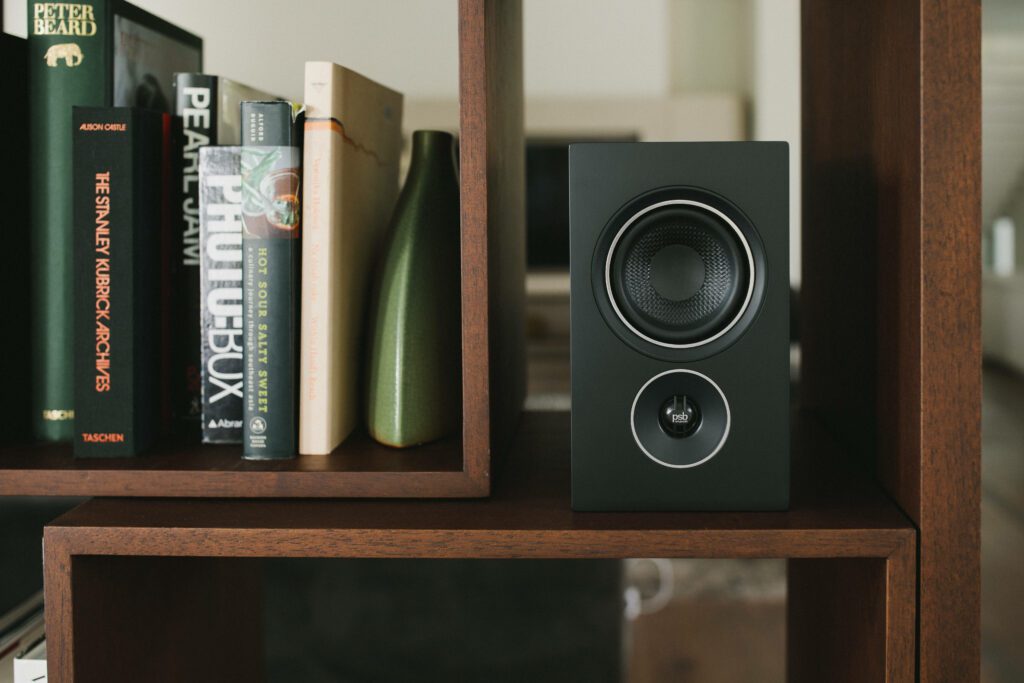
The standard of build and finish is well up to standard – the Alpha iQ has plenty of right-angles and pointy corners, but it’s properly put together and actually even mildly tactile. There are no grilles here, which seems like no kind of loss at all to me – the ‘PSB’ logo on the waveguide ahead of the tweeter is as decorative as the overall look is understated. Currently Alpha iQ is available in matt white and matt black finishes, although I had a sneaky peek at some rather more assertive colourways at CES in Las Vegas in January this year – they should be available sooner rather than later. 

PSB Alpha iQ

Despite the self-contained nature of this system – all you need is some mains power and a smartphone, and away you go – it’s possible to make it the centre of a quite expansive system. So for the purposes of this test, it finds itself playing host to a Clearaudio Concept turntable (via the phono input), a Rega Apollo CD player (into the digital optical socket), a Cowon Plenue D3 portable music player (into the analogue input) and a Philips 48OLED806 (into the HDMI socket). In addition, an Apple iPhone 14 Pro takes care of BluOS operation and TIDAL Connect action, while a Nothing Phone (1) uses its aptX HD compatibility to make a Bluetooth connection. The size of the Alpha iQ almost invites you to put it on a shelf – but I’m trying to do the right thing here, and so each speaker is supported by a Soundstyle Z2 stand.

Impressive and welcome

What’s initially most impressive (and welcome) about the way the Alpha iQ performs is the level of consistency it summons across each of its inputs, whether wired or wireless. The sound it delivers isn’t utterly identical, of course, but the overall signature has admirable commonality – and that’s when dealing with (among many other sources) a heavyweight vinyl reissue of Mogwai’s Come On Die Young [Chemikal Underground], a CD of Madvillain’s Madvillany [Stones Throw], a TIDAL Masters stream of Nina Simone’s Broadway-Blues-Ballads [Philips] or a Disney+ -derived stream of Martin McDonagh’s The Banshees of Inisherin [Searchlight]. 

In every circumstance, the PSB is an upfront and energetic listen. Low frequencies are perhaps just a little forward (in the name of ‘excitement’, no doubt), but they’re properly controlled where attack and decay is concerned, carry plenty of detail regarding texture and timbre, and despite their assertive nature are rapid enough to a) keep up the momentum and b) allow decent rhythmic expression. The opposite end of the frequency range is a little more circumspect and a little less assertive – but there’s nevertheless plenty of bite and shine to treble sounds, as well as similarly enjoyable levels of detail both broad and fine. In between, the Alpha iQ communicate in the manner of a garden-fence gossip – no detail, no matter how fine, eludes it, and vocalists get more than enough space to make their intentions and emotional condition absolutely plain. As a consequence, the Nina Simone recording sounds as eloquent and characterful as ever.

In fact, the sensation of ‘space’ is one of the true and unarguable strengths of the PSB system. The soundstage it summons is out of all proportion to the size of the speakers from which it emanates, and it’s properly organised and arranged. Elbow-room is significant, even in dense recordings or Madvillain-style cut-and-paste collages, and it makes for an informative and easy-to-follow listen. It doesn’t do any harm that the system is so tonality consistent, either – there’s an impression of unity and singularity from the top to the frequency range. Yes, the lowest frequencies are keen, no matter how far from a rear wall you attempt to keep those bass reflex ports – but they do at least sound of a piece with the rest of the frequency information.

PSB Alpha iQ

This is quite an intense-sounding system, even when it’s playing at lower levels – and there’s a definite lack of out-and-out dynamic headroom to its sound. Real volume dealers like Mogwai are made to sound quite loud even when they’re playing quietly, and the PSB doesn’t leave itself much room to manoeuvre when the band crank up the vehemence. But of greater concern and significance is the arbitrary nature of the control app – during the course of my testing it thought nothing of switching inputs (from ‘analog’ [sic] to ‘Bluetooth’, most commonly) entirely of its own volition. 

Ultimately, though, the PSB Alpha iQ gets more than enough right to make overlooking its little wrongs simple enough. If it’s convenience you crave, but are unwilling to make too many concessions where a) performance and b) your initial outlay are concerned, it’s a small and perfectly formed option. 


Technical specifications

  •  Type: bass-reflex loudspeaker system with integrated amplification, DSP, and wireless connectivity
  • Driver complement: 102mm polypropylene mid/bass; 19mm aluminium dome tweeter
    Amplification power (w)/type 180/Class D 
  • Frequency response: 64Hz–20kHz
  • Inputs: HDMI eARC; digital optical; 3.5mm analogue; MM phono; ethernet; USB-A
  • Wireless inputs: wi-fi; Bluetooth aptX HD; BluOS; Apple AirPlay 2; Spotify Connect; TIDAL Connect
  • Outputs: subwoofer
  • Digital audio sample rates: 24bit/192kHz
    File types: AAC; AIFF; ALAC; DSD; FLAC; MP3; MP4; OGG; WAV; WMA; MQA
  • Dimensions (hwd, cm): 25 × 15 × 19 
  • Weight (kg) 3.7
  • Finishes matte black; matte white
  • Price: £1,299 per pair

Manufacturer

PSB

 www.psbspeakers.com

+1 (905) 8316555

UK distributor

Sevenoaks Sound & Vision

 www.ssav.com

+44 (0)1732 740944

Back to Reviews

Read more PSB reviews here

Music Interview: The Long Ryders

US band The Long Ryders could lay claim to founding the Americana/alt-country movement when they formed in L.A. in the early ‘80s.

The rock ‘n’ roll and Paisley Underground outfit split up in 1987 but got back together several times in the Noughties and in 2019 released their first album in 32 years – Psychedelic Country Soul.

Its follow-up, September November, is out now and it’s a much more varied record than its predecessor, with a pounding, sociopolitical guitar-fuelled anthem  (‘Elmer Gantry Is Alive And Well’), haunting and stirring, ‘Desire’-era Bob Dylan folk-rock (‘September November Sometime’), the Gene Clark-like ‘Seasons Change’, cowboy country  (‘Hand of Fate’), Byrdsy and Beatlesesque psych-rock, (‘Flying Out Of London In The Rain’) and a McCartney-style ‘granny song’ (‘That’s What They Say About Love’).

The Long Ryders. Image by Ed Stasium.

Sadly, the group’s bass player, Tom Stevens, died in 2021 – there’s a tribute to him on the new album, the poignant, mandolin-laced ballad, ‘Tom Tom.’

London-based frontman, Sid Griffin, who, along with his current bandmates, Stephen McCarthy and Greg Sowders, is one of the three founding members, says of September November: “It’s two thirds the distilled alt-country genre we helped found back in the 1980s, one third Paisley Underground adventurism yet seasoned with a dash of our own crazed soulfulness thrown in.” 

hi-fi+ got him on the phone to find out more.

SH: September November is your first album in four years.

SG: I believe so.

The last one, Psychedelic Country Soul, was your first record since 1987, so you’re on a roll now…

Yeah – that’s true.

You’ve worked with producer Ed Stasium again. Why did you choose him?

Ed is the fifth Long Ryder, but now that Tom Stevens is deceased, he’s the fourth. When you go to his house, he has gold and platinum records on the wall for Living Colour, Soul Asylum, The Smithereens, The Jeff Healey Band…

And he worked with The Ramones…

Yes – they’re his biggest claim to fame. I don’t know why I forgot them! In the mid-‘7os, he started working with Phil Spector for 10 or 15 years. He was his main engineer – he took the place of the legendary Larry Levine, who worked with Spector in his 1960s glory days. Ed really knows his stuff, plus he has the same musical and cultural references that The Long Ryders do. Sometimes if you’re talking to a producer who has different musical tastes or a different background, what can happen is that you say to the guy, ‘I want it to sound like such and such a record’, and he doesn’t know it… That’s not a problem with Ed – he completely understands what we’re talking about. It’s a big relief and we’re very much at home working with him. 

You made the record at his Kozy Tone Ranch studio in California…

Yeah – it’s his home studio and it’s a really nice place. It just worked out really well – I don’t know what else you can say about it. We demoed the songs back and forth and we recorded the album in July last year. We learned the songs before we got there, so we didn’t waste any time. 

I got there really early on the first day. I thought the traffic would be bad travelling from Los Angeles, where I had stayed for a few days to visit people. I used to live in L.A. in the ‘80s. Ed wasn’t ready – he was in the shower – and his family were there. It was embarrassing. That afternoon we just mainly hung out and talked, getting to know each other again. Then we had a big jam session in the living room, with Ed on Hammond organ – that was a lot of fun. 

The Long Riders. Image by Henry Diltz

The next morning, we reconvened about 11 and started working – it’s the way to go. It was a bit like The Basement Tapes with Dylan – we were in someone’s home and you’re literally set up in his living room and parts of his house, like the den and the kitchen, for whatever sound it is.

After the sessions, if Ed doesn’t have anything else on for a few weeks, he tears all the stuff down and puts it in the closet, which must be a total pain in the butt. 

We’ve recorded in big-name, formal studios, like A & M in Hollywood and Chipping Norton in Britain, which I think is now a condominium, but now we’ve recorded in someone’s home with the same equipment lying around… There’s something about recording in a home that’s easier, warmer and better.

You mentioned Tom Stevens, your bass player, who died in 2021. How was it making the new album without him? Did you ever think that the band wouldn’t carry on after his death?

Yes – we were trying to figure out if we wanted to do it anymore. The guy had been our bass player since Christmas Eve 1983. Some bands lose a member and that’s it, but some crack on, like The Stones, who still have two of the original guys. There was something weird about it and we did have a long look in the mirror, but it just made sense to go on – everybody said we should keep going. I think we’ve made a really terrific record, partly inspired by the loss of Tom Stevens and wanting to honour his memory and not drop the ball. I argued for doing it and I told the guys that if we made a mediocre record we could either put the best songs out as an EP, or if we didn’t have any good songs, we could just skip it. We didn’t have to make a record – there was no gun to our head. Now that we’ve got Cherry Red Records behind us in the way in which they are, I’m pleased that we cracked on. It’s a really good record – everyone likes it.

What’s the band’s songwriting process like?

If I can’t finish a song, I give it to Stephen or he’ll give it to me – we don’t sit down and write together much anymore because he lives in the United States and I live in London. He might have half or three quarters of a song and he’ll ask me to finish it. He polishes some of mine and I polish some of his. If your name’s first [on the credits] it’s more or less your song.

Was the first single from the album, ‘September November Sometime’, a co-write?

I did the lion’s share of it and then Stephen took over. 

I love the lyric from it, ‘Calling out across the world, are you ready for a brand new tweet?’ It’s a twist on a line from ‘Dancing In The Street’ by Martha and the Vandellas, isn’t it?

It’s amazing how many people don’t get that. A lot of my songs have a pun based on a line from a previous rock song. You got that because you have a certain depth of knowledge about music. 

‘September November Sometime’ mentions social media and ‘Elmer Gantry Is Alive And Well’ is the album’s most political song…

‘Elmer Gantry…’ is mostly Stephen’s song. I just dotted some i’s and crossed some t’s.

The Long Ryders. Image by Henry Diltz.
It reminds me of ‘I’m Waiting For The Man’ by the Velvet Underground…

I thought that too.

And there’s a bit of vintage Long Ryders in there, some ‘60s electric Dylan and some mid to late ‘80s R.E.M, who were contemporaries of yours…

It’s funny – we’re probably the only band of our era who didn’t play with R.E.M. 

That’s surprising.

We were never on the same bill as them, but I saw them a bunch of times and I know Stipe and Buck. They’re the most social people on Earth – everyone knows them. I’m quite a fan of R.E.M and they are something of an influence. Their last album, Collapse Into Now, was terrific. It’s kind of odd when a band your age – or younger – is an influence, but you’ve got to open your ears and not have prejudices against things.

I love ‘Seasons Change’ on the new record – it has that classic Paisley Underground feel and it’s like The Byrds and Gene Clark…

It’s one of Stephen’s. We voted on which songs go on the album – I don’t think there was a vote against ‘Seasons Change.’ Everyone agreed it was just a great song and we had to put it on the record. It vaguely sounds like Tom Petty and the Heartbreakers. 

I think ‘Hand of Fate’ sounds like a Marty Robbins gunfighter ballad…

That’s a Stephen song and he’d be very flattered by that. We’re big Marty Robbins guys – we love his music.

This album is like a mini Exile On Main St. – we’ve got rock ‘n’ roll and we wanted to do some acoustic, stripped-down things, with Stephen and I, and Greg on a snare with brushes. We’ve never had time to do some lighter things before. 

The new album is more varied than Psychedelic Country Soul…

That was on purpose – we’ve done what we’ve done, people like it or they don’t. We’ll always have the ‘Looking For Lewis and Clark’ or ‘Elmer Gantry’-style pounding songs, but we wanted to expand the net.

‘That’s What They Say About Love’ is an uncynical, old-fashioned country song, but it almost feels like a show tune, or ‘When I’m 64’ by The Beatles…

Bingo! You hit it. Why are The Beatles more popular than The Rolling Stones? It’s Paul McCartney – or what the American record industry calls ‘the grandma effect’. At the end of the day, there are very few Stones songs that housewives or grandmothers like. The Beatles had ‘Your Mother Should Know’, ‘When I’m 64’, ‘Michelle’ and ‘Yesterday’ – grandmothers bought some Beatles songs. I thought, ‘why don’t we have any grandmother songs?’ There are three guys in the band who are still alive and kicking and each one’s happily married, so why don’t we have more songs about romance, love and devotion? The main subject matter of popular music is romance, so here we go – we’re dipping our toes into the water. I love the song – I’m very proud of it. 

The song ‘Tom Tom’, which is a tribute to Tom Stevens, is really touching. I like the lines ‘Tom Tom – the bottom end is gone… Tom Tom he was the quiet one.’

Greg, our drummer, who isn’t our main songwriter by any stretch, dreamed it – the lyrics came to him in a dream. Stephen got a melody together and I wrote the bridge. It was kinda like ‘Free As A Bird’ [by The Beatles], when Paul McCartney polished off a John Lennon song and added a bridge with George Harrison’s help.

The last song on the album, ‘Flying Out Of London In The Rain’ was written by Tom Stevens – it was on his 2007 solo album Home – and he sings and plays on it…

It’s a cracking record and it didn’t do nearly as well as it should’ve done when it came out. I said we should do one of Tom’s songs so he had a presence on the new album. I picked the four of five Tom songs that sounded the most Long Ryders and the guys voted for ‘Flying Out Of London In The Rain.’ It was written about him quitting the band in summer 1987, before we threw in the towel – we cracked on until December – so it was a hell of a poignant song for us to pick.

It’s very haunting and atmospheric, with a Beatles and Byrds-like guitar solo. It’s a psychedelic country rock ballad…

Psychedelic country soul – that’s our bag. We’re very proud of the new album but it is coloured or flavoured by the loss of Tom Stevens. You can’t get back together. Grimly enough, if another Long Ryder dies, that’s the end of the line. We recorded five more songs than we needed for September November, so we’ve got half of another album in the can. If Tom was alive, we’d probably have even more than that. 

Photos by Henry Diltz and Ed Stasium

September November by The Long Ryders is out now (Cherry Red Records) on CD and vinyl.

www.thelongryders.com

www.sidgriffin.com

Back to Music

OePhi Reference cables

Once upon a time, a very good friend of mine had a cat with the ‘somewhat’ pretentious name of ‘Ophelia’. ‘Ophelia’ soon got shortened to ‘Oofy’. So, whenever I hear this cable brand’s name, I associate it with a cat named after Hamlet’s wife. Especially as OePhi is a Danish brand designed by engineer and enthusiast Joakim Juhl.

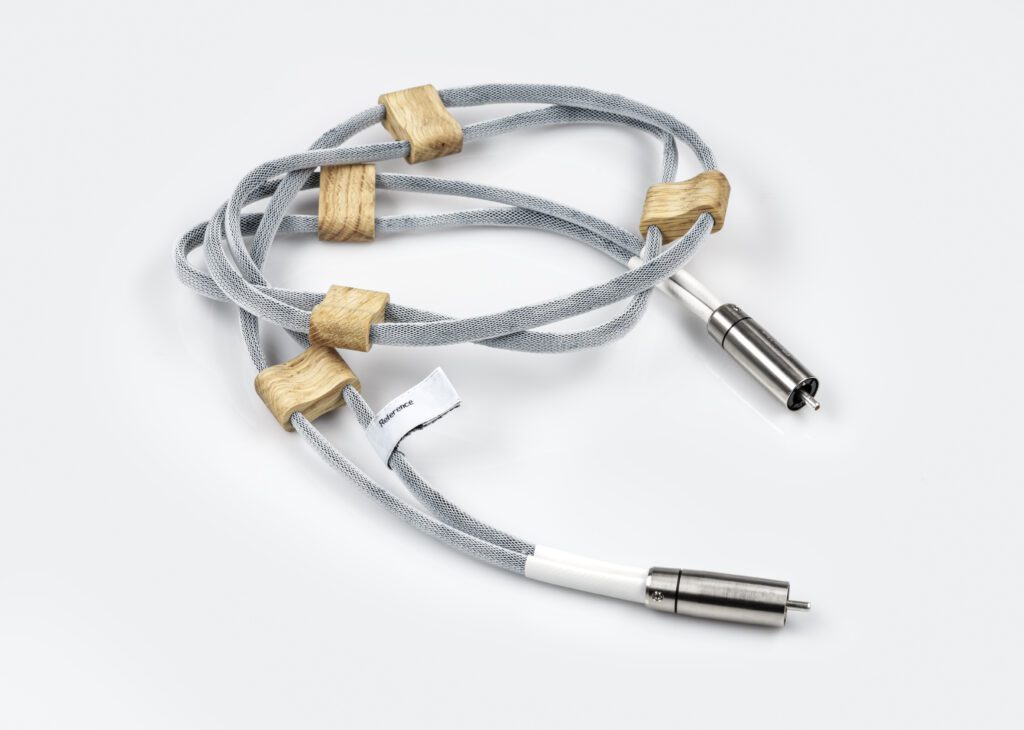
The company began with its Ascendance, Transcendence, and Immanence lines of cables. These were all notable by their distinctive wide and flat black sheathed cable layout. But, with the company’s new Reference line, the secrets beneath the sheath are revealed. Reference looks unlike any other cable, making a good case for being the sound of no cable. But without all the pseudo-Zen philosophical banter.

Yet there be method in’t

Sharing little more than a cotton-damped air dielectric, unlike previous cables in OePhi’s range, the Reference interconnects and digital cables use pure silver conductors. In contrast, the speaker and power cords use copper. For a while, presume every sentence begins with ‘unlike previous cables…’ because the OePhi Reference breaks a lot of new ground for audio cables.

OePhi Reference

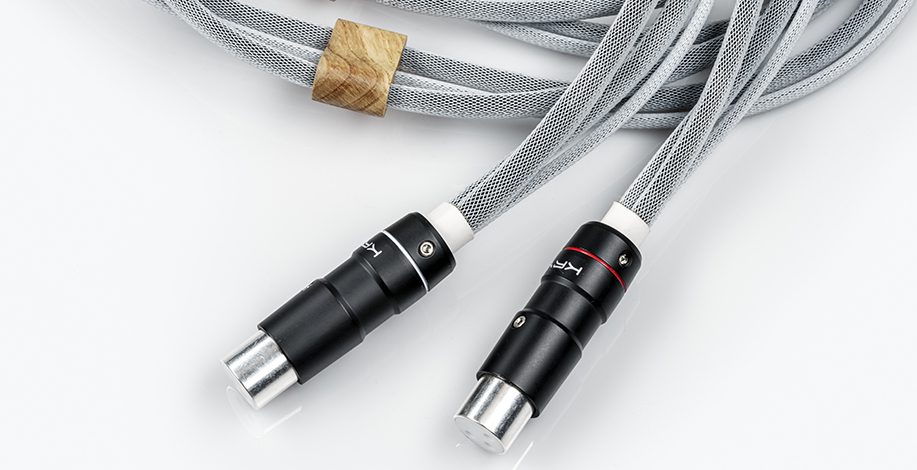
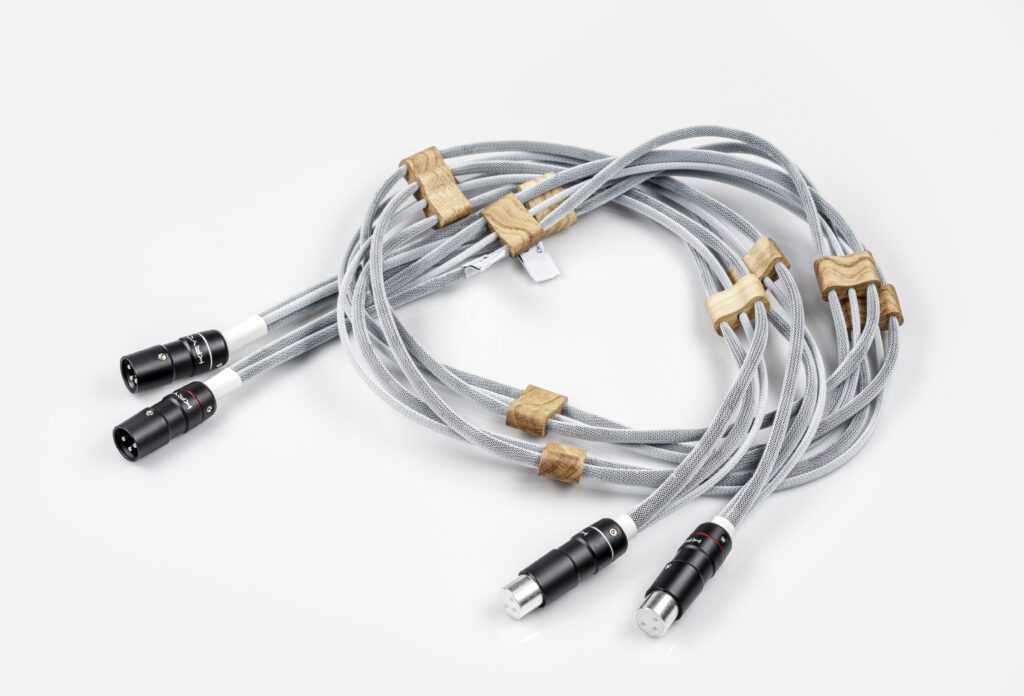
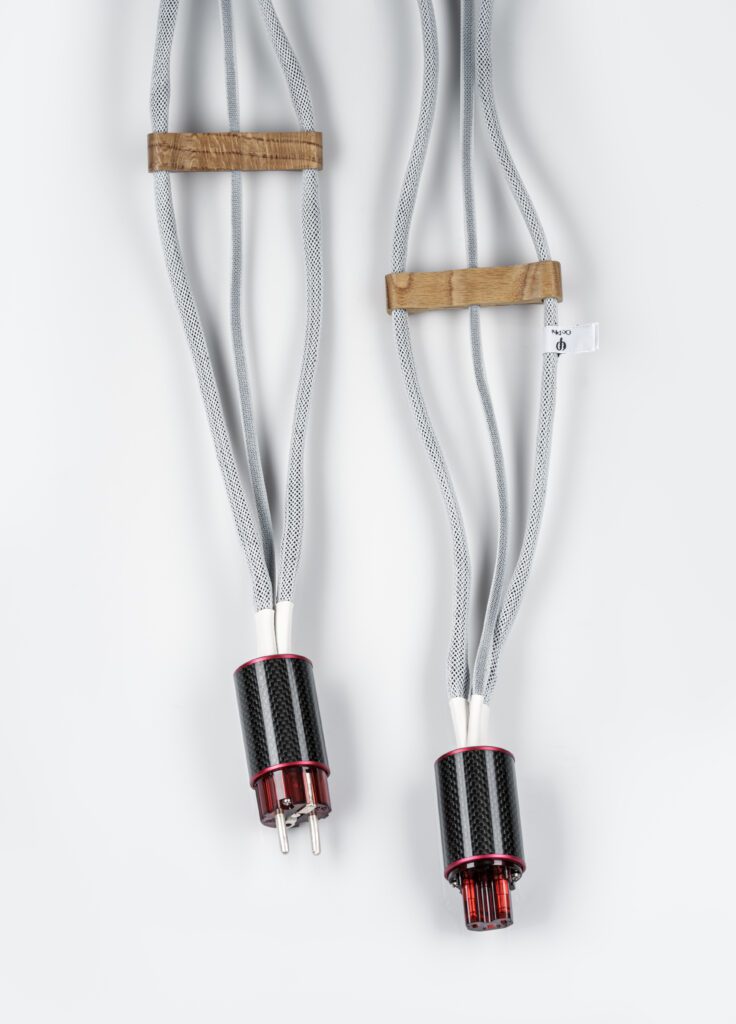
The correct spacing geometry is a big issue with the OePhi Reference and wooden spaces are placed at regular intervals across the whole length of each cable. This means entirely separate conductors and the nature of the outer braiding makes these grey cables look somewhat skeletal next to the giant audio hawsers from other brands.

This is amplified (pun intended) by the limited strain relief used in the custom connectors of Reference. Juhl maintains that one of the biggest limitations of a cable of this calibre is at the termination points, as connecting the conductor to the terminator and the terminator itself can often have more impact on the sound quality itself. The cable itself is the best terminator, but that’s completely impractical.

Give every man thy ear, but few thy voice

Instead, OePhi went for terminations with the softest and most conductive metal in the termination itself. This means the plugs – especially the banana plugs in loudspeaker cables – are less robust than in other cables (even other OePhi cables), but the results can be heard.

This, however, is one of the few marks against the OePhi Reference. To hear them at their best, they must be handled with the care that no demonstrator (or reviewer) can give long-term. The Reference can be provided with regular connections, but that somewhat defeats the object.

OePhi Reference

It also means the prospective owner must accommodate the cables rather than vice versa. If your equipment is too close to the rear wall, or the bend required to mate component to component is too acute, you risk damaging the cable or connector. But if you think this all sounds like ‘deal breaker’ material…

To thine own self be true

…guess again. Of all the cables I’ve heard in my system, I heard the OePhi Reference the least. Many high-performance cables play the, ‘your own system, but with more…’ game. Some are more detailed, some are faster, some are more expressive and so on. The OePhi Reference is ‘your own system’, ungarnished, unalloyed, and untouched by the cable ‘sound’ vagaries.

What then becomes clear is just how much we shape our systems by the nature of our cables. Given the Hamlet theme vaguely running through this review, even those who actively try not to use cables as tone controls will find that, “it is a custom more honoured in the breach than the observance.” OePhi Reference doesn’t make that tailoring unconscionable, but it does point to another way. You may find your system follows suit.


I promised a minimum of Zen noodling earlier, but resisting here is almost impossible. OePhi Reference answers audio’s Zen kõan, “What is the sound of no cable?”. Of course, such an ‘un-cable’ demands outstanding audio equipment partners (more accurately, outstanding audio equipment demands cable partners that do as little as possible to their sonic capabilities… but we are shining this light on cables, after all). However, with OePhi Reference, the sonic capabilities of each component in the signal chain are more sharply in focus.

This ultimately means you make better buying decisions in your audio system, without the cable lending its voice to the system. So, for example, you might look for a deliberate tonal balance elsewhere, maybe opting for a valve-like sound… tube-y or not tube-y, that is the question. Sorry.

The rest is silence

The OePhi Reference also redefines those silences between the notes we all crave; which calls into question the current thinking around cables; and the importance of eliminating radio frequency and electromagnetic interference. The design of OePhi cables (and Reference in particular) is more about preserving the signal’s electrical integrity while preventing mechanical vibration and resonance from one device in the system from interfering with another and the signal itself, rather than dealing with ‘Electromagnetic Invaders from Beyond’.

The music doesn’t have a background noise with OePhi, save for tape hiss or pops and crackles introduced by a record. This is especially true of ‘tube rush’. Unless there’s a particularly noisy valve on its last legs, OePhi Reference reduces that distinctive ‘whoosh’ behind the music to the bare minimum.

I’m picking out aspects of performance (or more accurately, aspects of an absence of performance). However, the gestalt is where you notice the OePhi Reference’s sonic ‘un-there-ness’. It’s the whole musical picture, not simply parts of that whole.

If we are true to ourselves

You find yourself drawn ever deeper into the music regardless of what that music is. The absence of signature imposed on the system and the cable’s ability to keep each component from singing along with the others makes for an intensely immersive, musically honest sound. Moving quickly through all those recordings I use to test audio, I found each to be musically enjoyable and sonically informative. I find myself saying ‘track six’ automatically at the first sign of the CD’s label. Yet the OePhi Reference opened the whole album to me once more.

An album like Stripped by The Rolling Stones [Virgin] has been in my review arsenal for years, but I only play track 12 (‘Love in Vain’). This time, I found myself playing the whole album end-to-end. The same happened with ‘test’ albums from Trentemøller, Joyce DiDonato, Cannonball Adderley, and the works of John Pickard, Rachmaninov, and Mahler. This rarely happens and, while I doubt it would happen with Porn at the Jazzshop, who knows?

OePhi Reference

In truth, though, I am at a bit of a loss to describe the performance of OePhi Reference because more than most cables, it doesn’t have a performance to speak of. I wrote a lengthy description of the performance, only to realise the listening notes were identical to those of the Wilson Duette Series 2 and the Hegel Mohican CD player I used in the system. Finding the sound of a cable that strives so hard not to influence sound is not easy!

Express and admirable!

Similarly, it’s hard to separate the performance of the individual OePhi Reference cables. They all do so well at removing their imprint from the musical mix. I’d argue that the interconnect cables nudge ahead of the others, but there is almost nothing in it. They all do a fine job of showing up the signatures of other cables.

I think it’s fitting that I bludgeoned Shakespeare’s finest play into the mix. OePhi Reference is both express and admirable regarding untrammelled signal delivery. It is also ‘to the manner born’ in its ability to work with the best in audio. It also brings out the best in a system like ‘a fellow of infinte jest’. Let’s hope it all ends a little better for this Prince of Denmark. Listen to many, speak to a few, and buy OePhi Reference!

Prices and Contact Details

  • OePhi Reference Interconnect cables From £4,000/1m DIN
  • OePhi Reference Loudspeaker cables From £3,595/1.5m (spade or banana plugs)
  • OePhi Reference power cords
    From £2,975/1m

Manufacturer

OePhi

 www.oephi.com

UK distributor

VAL HiFi

www.valhifi.co.uk

+44(0)333 577 2005

Back to Reviews

Read more OePhi reviews here

Elipson Heritage range now features the book-shelf XLS 7

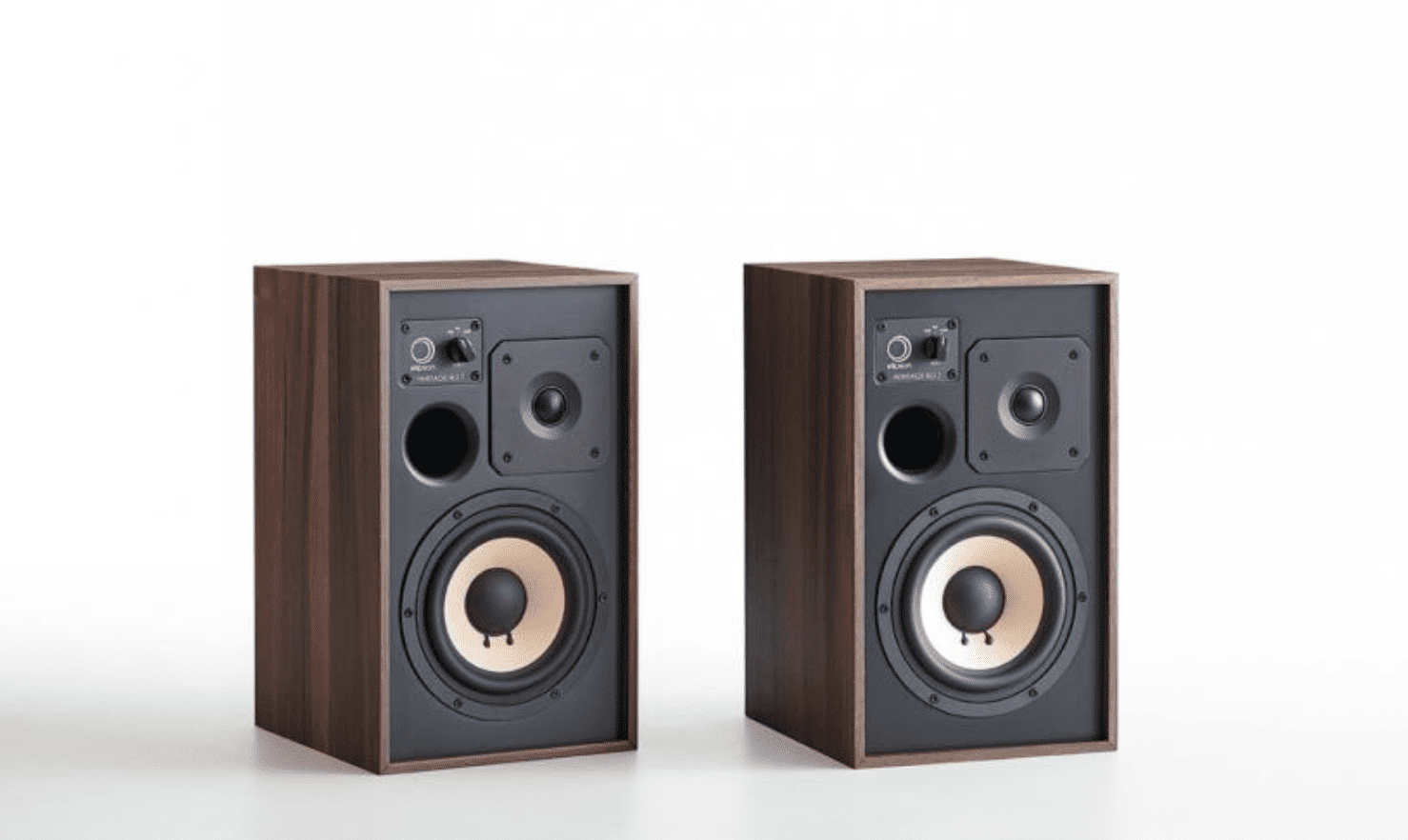
AV Industry, Paris, France 29th November 2023 – Elipson Audio is delighted to announce the final addition to their Heritage line of speakers. The brand new XLS7 book-shelf model joins its larger siblings, the XLS11 and XLS15 to create a complete family of speakers that reflect today’s vintage feel of styling and design. The XLS7 brings all the performance elements of the larger models and combines them with a highly compact form factor to give further flexibility when integrating into smaller rooms.

The XLS7 is definitely vintage in terms of styling and design however the performance side of this loudspeaker is anything but. Blending vintage aesthetic with a contemporary sound was key for the engineers in Paris. Therefore this 2-way speaker is a bass reflex design with a front-firing flared port. It features a 6.5” domed drive unit for the midrange and for the high frequencies the twin magnet 0.87” silk dome tweeter which performs so successfully in the XLS11 and XLS15.

As with the other Heritage models in the range the XLS7 has the additional flexibility of a fine adjustment on the front of the speaker. This can tune the amplitude of mid and high frequencies by + or – 2dB to allow for variables in the listeners room.

Musicality was key when developing the book-shelf XLS7, this is reflected in the speed and control of the drive unit across the frequencies giving a pleasure and enjoyment to all genres of music. A high quality, musical and cool looking solution for those with limited space!

Partnering stands have also been designed to match both the aesthetic and the performance required for these wonderful speakers.

The XLS7 speakers are designed in Paris and engineered in Burgundy.

Pricing XLS7 speaker – £799.00 per pair Stands – £TBC

The Elipson XLS7 speakers with stands (to follow) are available now from Elipson Heritage retailers or by contacting the UK distributor Avoke Ltd, 01628 857958

Introducing Audiovector QR Special Edition

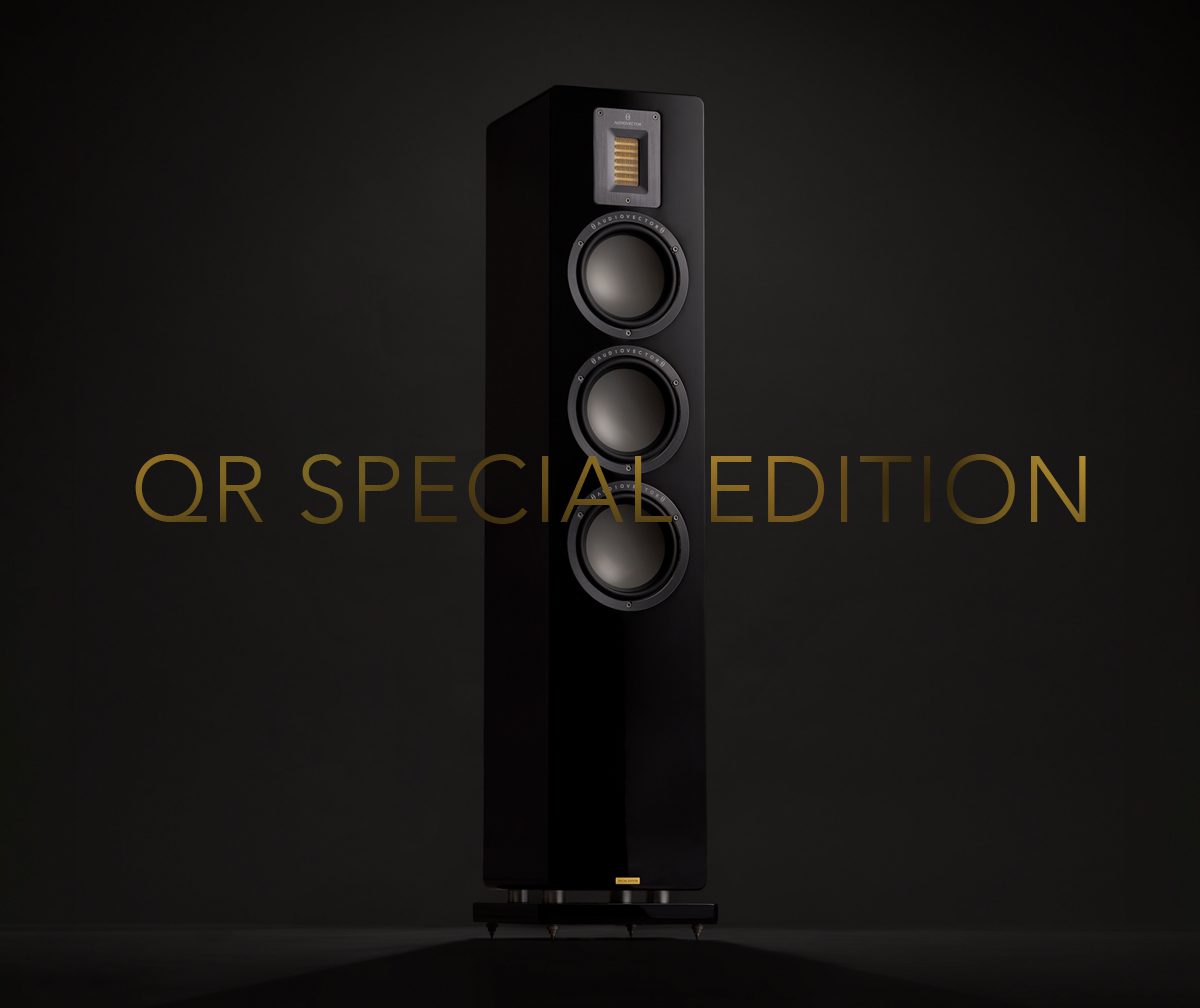
Audiovector’s brand new QR SPECIAL EDITION series has arrived. Representing a significant upgrade of the entire, highly acclaimed originals, the QR SPECIAL EDITION sounds even more open, even more dynamic, even more detailed – and even more musically satisfying.

MEET THE NEXT GENERATION OF ADVANCED SOUND

The QR SPECIAL EDITION is the result of continuous innovation that aims to bring listeners closer to the soul of the original music…and to make listeners really feel the music.

You’ll notice the improvements from the very first note

➝ New in-house designed capacitors result in a cleaner treble and improved detailing.

➝ Improved heat dissipation via metal housed resistors delivers even more stable high-power precision.

➝ Cryogenically treated internal wiring improves dynamics and detailing.

➝ Strategically positioned Nano Pore dampening material enhances midrange openness.

➝ Bass reflex optimization increases precision.

➝ Stainless steel high-end spikes with knurled nuts allows easier micro adjustment.

AUDIOVECTOR QR DRIVE UNITS Leaving convention behind

Rather than buying off-the-shelf drive units, even from the most respected manufacturers, we prefer to develop our own. This allows us to co-engineer drive units in sync with our crossover designs.

Low-hysteresis coil technology. Large powerful magnets. Rigid turbulence-suppressing baskets and sandwich membranes, crafted from two layers of aluminum bonded together with a light foamy glue. We combine all three to achieve a far richer, clearer, and more vibrant sound compared to conventional technology.

QR AIR MOTION TRANSFORMER TREBLE DRIVERS The fastest available

AMT drivers are the fastest treble drivers available. Based on the revolutionary technology invented by Dr. Oscar Heil in the 1960s, they have zero mass to accelerate or decelerate, reaching over 40.000 Hz with optimal dispersion in both the horizontal and vertical planes. The upper limit, meanwhile, is as high as 102 kHz.

The tweeters’ lightweight precision mylar-membrane resemble the bellows of a harmonica – only smaller, lighter, and way faster. The gold-plated grid in front of the membrane reduces unwanted sibilants while improving dispersion and integration with the midrange driver.

ENCLOSURES WITH ROUNDED CORNERS High strength, low resonance

Our enclosures are produced from high density hardwood HDF, generously braced for high internal loss to deliver the perfect combination of high strength and low resonance.

BASS REFLEX PORT Deep and detailed

The internal damping of our Q-port is higher than on conventional ports to offer a more precise, deep, and detailed bass performance.

BASS REFLEX OPTIMIZATION Punch with precision

We have carefully realigned the bass reflex systems to deliver more punch without losing precision.

3D SOUNDSTAGE Be there

Our goal has always been a superb 3D soundstage that precisely positions the musicians. The AMT, Pure Piston drivers, and precisely specified crossovers all help to make this a reality.

MINIMUM DISTORTION Ultimate precision

The concept of Dynamic Feed Forward reduces the losses in our crossover by up to 50%. And our proprietary Audiovector double- cryogenically treated capacitors and high precision components (<0.8% tolerance), combined with in-house drive units, allow us to use a minimum number of components to achieve a high precision linear phase roll-off profile on all drivers. This improves dynamics, decreases loss, and reduces heat build-up.

IN-HOUSE DESIGNED CAPACITORS A sweeter tweeter

Our new highly specialized double cryogenic polypropylene tin flash copper capacitors, are the result of constantly listening, measuring, and improving. They provide our AMT tweeters with the best possible conditions for sounding even sweeter, more detailed, and more open.

DESIGN ENHANCEMENTS Discreet style

The new models all feature subtle, elegant, yet highly recognizable gold brass badges on the front panels and cloth grills.

THE AUDIOVECTOR MISSION

➝ To optimize the pleasure of ownership and the thrill of listening.

➝ To innovate high-level technologies in the service of music. We only introduce a new material or technology if it allows us to optimize sound quality and listening pleasure.

➝ To carefully handcraft every single product in Copenhagen, Denmark.

➝ To maintain a ´form follows function´ design philosophy of timeless, elegant design and a sublime sound.

➝ To actively promote environmental conservation by creating the highest quality products that endure over time.

T+A Solitaire T wireless headphones

Recent price increases in flagship wireless headphones have been one of the more notable changes to that market. We’ve abandoned that long-lasting ‘natural’ cap of £500. Models are now arriving brandishing four-figure price tags. The £1,200 T+A Solitaire T is the most expensive wireless headphone I’ve yet tested. I imagine that won’t be the case for too long.

What makes the Solitaire T notable, though, is that the on-paper specification doesn’t appear especially remarkable. A Qualcomm Bluetooth QCC 5127 5.1 platform supports aptX HD and AAC codecs on top of the standard SBC. This combines with a Sony-derived noise-cancelling program. Unlike some rivals ‘ more advanced reactive options, it allows it to switch on or off. This suite acts on a pair of 42mm drivers made from cellulose. Once again, you find cellulose drivers at terrestrial price points. It’s a far cry from the flagship Solitaire T’s extraordinary planar magnetic units.

T Time

Look a little closer though and the T+A becomes more interesting. The decoding path listed above is not the only one the Solitaire T possesses. Select ‘HQ mode’ and the decoding configuration changes markedly. The Sony chip powers off, and the Bluetooth signal heads to an ESS DAC for decoding and volume adjustment. It then proceeds to different amplification stages to those used in Bluetooth mode. An interesting secondary feature of this mode is that USB sources can connect to the T+A. This works via a USB C cable and decodes the signal as a USB DAC.

T+A Solitaire T

Nor is the Solitaire T done there. It has USB C (for charging and signal) and analogue input as a 2.5mm connection. T+A supplies the Solitaire T with a balanced 2.5mm to 4.4mm cable and a more conventional 2.5mm to 3.5mm one. What T+A is at pains to stress about this arrangement is that it is both entirely passive and that the signal path is different again to the powered ones for noise cancelling and HQ modes. Connect the Solitaire T to a respectable headphone source; you will experience its performance and character.

The fact that the Solitaire T is effectively three headphones in one goes some way to explaining the asking price but a more definitive answer comes from unboxing them. Here, they are closer to the flagships regarding approach and aesthetics, and I think the decision is good. The Solitaire T is made from conventional substances rather than going after the more exotic ends of the material spectrum. Instead, it focuses on putting them together wholly confidently and inspiringly. The result manages to feel solid and ‘worth’ their significant outlay. A decent carry case is supplied as well as the two cables.

Reassuringly comfortable

How T+A assemble the Solitaire T gives wearers – and listeners – a reassuring feeling. Comfort is excellent, helped by a decent range of adjustments and well-judged spring force on the head. You can exclusively control the Solitaire T from the headphones, too. A control app is available but I prefer the means to make quick alterations without reaching for my phone and the Solitaire T is simple too.

The battery life is also impressive. T+A claims no less than 70 hours in standard mode (and a still pretty reasonable 35 in HQ mode) which should be enough for all but the furthest trips into the unknown. Bluetooth stability is also extremely good, and the re-connection is flawless when powered on. Crucial to the proposition the T+A makes is the Solitaire T doesn’t leave you wanting when you need to commute somewhere and limit your exposure to other people.

T+A Solitaire T

How Solitaire T blocks out voices is as mechanical as software-based. The noise cancelling is effective enough but the significantly less expensive Bowers & Wilkins PX8 is realistically better. The basics of drowning out cabin noise and avoiding altering the music’s tonal balance are all handled well, though. The frenzied piano work in Nils Frahm’s ‘Hammers’ on his Spaces live set keeps its richness and intensity, even in noise cancelling mode. Absolute bass extension feels slightly curtailed compared to the most talented rivals but is articulate, detailed and well-integrated into the upper registers.

No Processing Here

There is more to be had from the Solitaire T though. With no processing at work, the T+A does an excellent job of cutting ambient noise, and it makes more sense here. On a train with lower noise levels, you can switch the Solitaire T to HQ mode, still not hear the guy on the phone next to you and start to reap some of the benefits of the Solitaire T’s split personality. Frahm’s piano gains weight and presence and the space around him becomes something you are more palpably aware of.

T+A Solitaire T

With vocals, the effect is even more pronounced. Emily King’s acoustic version of ‘Can’t Hold Me Now’, has an immediacy and sheer realism enough to make you forget there’s no wire between you and the source. The standard caveat that not all Bluetooth is created equal applies. This means Android owners with aptX phones will be more impressed than iPhone owners making do on AAC. But it’s still a seriously impressive performance.

And there’s more…

And we still aren’t done there either. I have no idea what the size of the market where people come home and wire their cans to an existing system is, but the Solitaire T is exceptional. With most of the T+A’s significant rivals, the use of an analogue to USB cable tells the story the decoding of the headphones will be involved and, however transparent it seeks to be, that will have an effect. The T+A completely avoids this.

With a Chord Hugo2 and 2Go in play, how the Solitaire T handles Fink’s ‘Maker’ reflects the pair’s potency. Play the same track via the rather warmer Yamaha R-N2000A and this makes itself felt in the presentation without any alteration on the part of the Solitaire T. I suspect it would be possible to use it as a device to test a group of headphone amps and make an objectively sound decision as to which one is best.

Worth and Value

Judging the ‘worth’ of the T+A as a value proposition comes down to how many configurations you see yourself using. I’m willing to stick my neck out and say that, treated strictly as a passive, wired headphone, the T+A will keep Focal’s Celestee honest. Given that the Celestee is a significant chunk of the total cost of the T+A, that’s no mean feat. Both are closed-back designs that give enough of a feeling of space and three-dimensionality to their performance to make them viable for home use. The idea that the Solitaire T can mix it with the Focal – headphones I like very much – is deeply impressive.

T+A Solitaire T

Like the T+A, the Focal has more than respectable mechanical isolation. However, I do no doubt which of the two I’d pack for a flight. The Solitaire T has become the (current) peak of wireless headphone pricing. But that headline obscures that it isn’t the wireless functionality that is the real story here. T+A has built a headphone that genuinely warrants the term ‘multirole.’ Used passive wired or with wireless noise cancelling, the most talented dedicated rivals will realistically best it. But even they have no response to the T+A’s ability to switch to become something else entirely. Then, in its highest-quality wireless mode, the Solitaire T raises the bar further. It genuinely gives the best wireless performance I’ve yet to experience. This is a fascinating and deeply accomplished headphone that can do many things and excel in most.

Technical specifications

  • Type Closed-back, over-ear wireless and wired headphones with wired, wireless and ‘HQ Wireless’ modes
  • Weight 322g
  • Features 42 mm ‘Low tolerance’ dynamic driver
  • Supports Apt-X LL, AAC and SBC Bluetooth
  • Frequency response 4Hz 22kHz
  • Price £1,200

Manufacturer

T+A Elektroakoustik

www.ta-hifi.de

UK distributor

Kog Audio

www.kogaudio.com

+44(0)24 7722 0650

Back to Reviews

Read more T+A Elektroakoustik reviews here