Up to 37% in savings when you subscribe to hi-fi+
hifi-logo-footer

Begin typing your search above and press return to search. Press Esc to cancel.

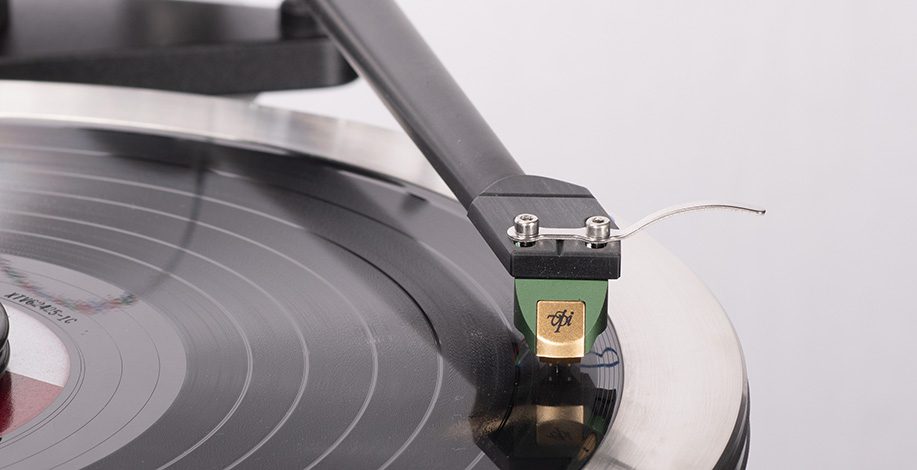
DS Audio launches new ‘third generation’ entry-level optical phono cartridge: the DS-E3

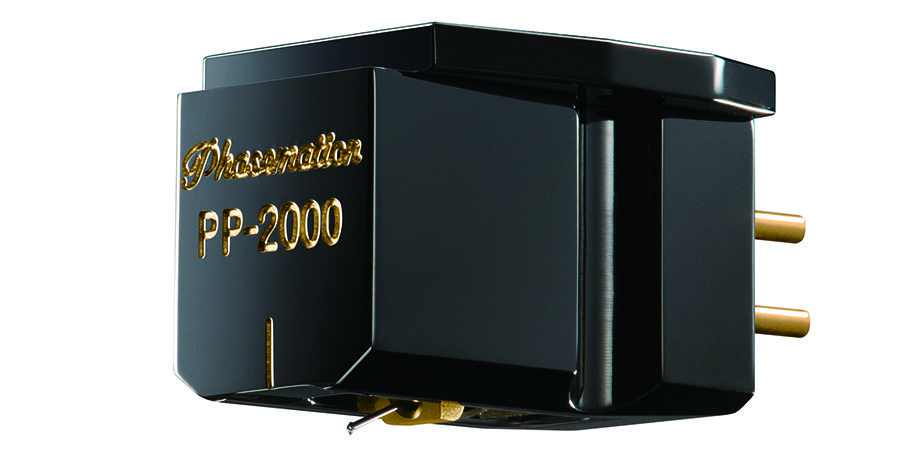
10 July 2024 – Japanese optical phono cartridge pioneer DS Audio continues to narrow the gap between game-changing performance and affordability with the new entry level DS-E3 model, featuring the company’s ‘third generation’ of optical cartridge technology.

Japanese innovators DS Audio launched their first optical phono cartridge in 2013. Since then, designer Tetsuaki Aoyagi has continued to advance and refine the state of the art, achieving level after level of groundbreaking sonic performance. At the same time, the company has equally strived to use trickle-down technology to make the benefits of optical cartridges available to a wider range of audiophiles and music lovers at multiple price points.

Still unique in the world, DS Audio’s optical cartridges dispense with the usual moving magnet and moving coil designs and instead use an optical system that converts stylus/cantilever movement into audio signals. This completely eliminates the electromagnetic forces that are rife in traditional MM and MC designs, resulting in an astonishingly lower noise floor.

The new ‘third generation’ entry-level DS-E3 replaces the earlier DS-E1, which was a true game-changer in its price/performance ratio. Now, the DS-E3 draws on technology developed for the company’s flagship models to take the design and performance to even greater levels, all while maintaining the same price as when the DS-E1 was first launched 5 years ago in 2019.

Independent LEDs and photo-detectors for the left and right channels deliver a significantly increased output voltage while eliminating crosstalk and greatly improving left and right channel separation. The cartridge’s mass is further reduced thanks to a new smaller and lighter shading plate, now made of beryllium rather than the previous model’s aluminium light-shielding plate. A fine elliptical diamond stylus is mounted on a rigid lightweight aluminium cantilever.

Like all DS Audio optical cartridges, the DS-E3 requires its own equalizer / phono stage, which this new design also brings up to ‘third generation’ level. In the new DS-E3 equalizer, the amplification circuit has been made symmetrical, while the voltage supplied to the cartridge has been stabilized to achieve a clearer and faster sound. The equalizer uses an operational amplifier as the amplifying element to minimize the signal path, thereby greatly reducing the number of components and achieving a smaller size, making the DS-E3 equalizer approximately one third the size of that of DS Audio’s next model up, the DS-003.

Like every DS Audio product, the DS-E3 phono cartridge and equalizer are hand-made and quality assured, with every component part-tested and evaluated by the company’s own in-house team of technicians in Japan.

Technical specifications

 DS-E3 optical cartridge

Body materialAluminium
CantileverAluminium
StylusElliptical
Signal outputPhoto-electric conversion
Output signal level> 70mV
Channel separation> 26dB (@ 1kHz)
Weight7.7g


DS-E3 phono stage/equalizer

InputsRCA
OutputsRCA
Rated output voltage500mV (@ 1kHz)
Output impedance120Ω
Pre-amp input impedance> 10Ω
Dimensions26 (w) x 6.9 (h) x 19.5 (d) cm
Weight1.86kg


Pricing & availability

The DS Audio DS-E3 optical phono cartridge and phono stage/equalizer are available now, priced as follows (inc. VAT):

Cartridge and equalizer package price                £2,295
Cartridge only                                                   £1,270
Equalizer only                                                   £1,270

DS Audio cartridges are fully compatible with any of the company’s accompanying phono stages/equalizers, allowing you to mix and match.

EDIFIER STAX SPIRIT S5 Wireless Planar Magnetic Headphones

July 10th 2024 – Edifier International, the award-winning audio electronics designer, announces the STAX SPIRIT S5 Wireless Planar magnetic headphones.

In the 2012, Edifier acquired STAX Ltd., a company with over 80 years history, and a specialist in electrostatic headphones. The brand name “STAX” is almost considered the benchmark of electrostatic headphones. Inspired by STAX’s pursuance of high-fidelity music and craftsmanship in the field, the STAX SPIRIT brand was created as a high-end sub brand for Edifier headphone products with the aim of developing more high-quality products for audiophile users.

The STAX SPIRIT S5 are Planar magnetic headphones. Planar magnetic drivers are commonly found in Hi-Fi headphones and other high-end audio equipment. With their unique way of operation, planar magnetic drivers can represent a superior audio experience with rich details and impressive transient response. With solid innovation and advanced features, the STAX SPIRIT S5 packs upgraded planar magnetic drivers and the latest Bluetooth® V5.4 technology into a compact and portable form-factor. The 2μm thin film and 2nd gen EqualMass™ wiring technology generate a performance comparable to legendary electrostatic headphones.

The Advantages of Planar Magnetic Driver

Dynamic driver reproduces sound with a cone-size diaphragm driven by a voice coil submerged in a circular magnetic field. The diaphragm has to be stiff enough to avoid partitioning during vibration, especially in high frequency band. The whole motor system is also heavy to move. The planar magnetic driver, on the other hand, features a flat, thin diaphragm with embedded wires, suspended in the magnetic gap. This design allows the diaphragm to move in a piston-like manner across the whole frequency spectrum. The diaphragm is light and has good transient response, which makes the planar driver a much better choice for sound reproduction by nature compared to dynamic drivers.

The 2nd Gen EqualMass™ Wiring Technology

In other headphones with planar magnetic drivers, it is common practice to address the uneven distribution of the magnetic field by using wires of varying widths on the diaphragm, aiming to achieve uniform driving force across the entire diaphragm, ensuring consistent performance.

Edifier take this approach a step further with EqualMass™. By connecting a different number of wires with the same width in parallel, EqualMass™ achieves a uniform driving force for all parts of diaphragm while keeping its weight evenly distributed. This allows the diaphragm to move back and forth with the same motion and momentum, reducing harmonic distortion to almost zero.  In the 2nd generation of EqualMass wiring, Edifier introduce a symmetric wiring structure, further enhancing the diaphragm’s stability across the entire frequency spectrum.

Production Phase Auto Calibrate

To ensure uniformity in the magnetic field strength distribution across each planar magnetic driver, Edifier have developed a proprietary automatic toolset for calibrating and compensating the magnet circuitry during production. This meticulous process guarantees that every set of S5 headphones delivers sound fidelity identical to the original unit crafted by the designer.

In addition to LDAC and LHDC, the S5 supports all audio codecs under the Snapdragon Sound Technology Suite, including aptX™ HD, aptX™ Adaptive, and aptX™ Lossless. It achieves a bit rate of up to 1.2 Mbps in Bluetooth® mode, delivering high resolution (24-bit/96kHz) and end to end low latency audio. It also supports the AAC codec, enhancing compatibility with a wider range of devices.

Thanks to aptX™ Adaptive codecs, the STAX SPIRIT S5 achieves end-to-end latency as low as 89ms in Bluetooth® mode, synchronizing your audio experience with the action you see on the screen. This can provide a totally immersive gaming experience.

The S5 supports simultaneous connection to two Bluetooth audio devices. Whether it’s a mobile phone or a laptop, switching between devices is more convenient and seamless, allowing you to work and listen to music simultaneously.

Wrapped in genuine lambskin earpads and adorned with top-grain cowhide earcups, the S5 epitomizes elegance and refinement in both form and function. Crafted with the utmost attention to detail, its ergonomic design ensures a snug and secure fit, giving hours of uninterrupted enjoyment with no discomfort.

Download the EDIFIER ConneX App and you can select from three kinds of preset EQs and customize your personal EQ to suit your music style.

Price & Availability:

£499.99 available from:  https://www.amazon.co.uk/dp/B0D2VJFCFX

Kham Meslien: Fant​ô​mes​.​.​. Futurs

There have been many masters of the double bass or bull fiddle, yet few have made great solo albums. That activity seems to get left to the electric bassists like Stanley Clarke, and even he rarely made music that was entirely one instrument. 

Kham Meslien’s Fantômes… Futurs is a rare exception, and by virtue of his talent and emotional honesty it a lot better than you might expect. I came across the album in the Supar Pie record shop in Antwerp, where the staff had labelled it as one of their top five albums of 2022 and described as a “Great haunted French jazz LP from start to finish. With a sensibility between Arthur Russell and Henri Texier”. Sensibility is the word, Fantômes… Futurs does not sound exactly like either of those artists although the latter is close. Texier is another French bass player who made his name in the 1970s with albums that have some of the feel found on Meslien’s solo debut. Meslien’s past includes a French world music band called Lo’Jo and backing some big names including Robert Plant, Archie Shepp and Robert Wyatt.

The key to the appeal of this album is that it is not solo bass in the basic sense. Meslien is a master of looping, that is recording a passage using foot pedals and repeating that whilst playing over the top. This is what allows him to add rhythmic and percussive lines, achieved by knocking the body of the bass, and thus build up what is effectively a band behind his improvisations. If that sounds like it could get a bit dense or cluttered this is not the case, the ten tracks on Fantômes… Futurs are sparse but enriched by the warmth of both the instrument and its player. It’s an excellent if slightly ‘hot’ recording but there are few compression or limiting artefacts and you get a strong impression of the scale and nature of the instrument and, more importantly, the way it’s played. This is helped by a silent background which gives the harmonics of the bass space to spread out and embrace the listener.

Opener ‘Ta confiance’ starts out with no clear time signature, just apparently improvised playing that intoxicates and charms the listener, drawing him or her in and urging closer listening. Just before the two minute mark Meslien adds a simple rhythmic bass loop and proceeds to play a melody over the top. It sounds simple but is so beautifully executed and flows so naturally that it would be hard to better. The denouement is a gradual reduction in tempo until the tune comes to a clear stop. 

On ‘La Couleur’ we get the distinctive voice of poet Anthony Joseph, a voice that has enhanced tracks by Italian band Mop Mop as well as albums of his own on the Heavenly Sweetness label behind Fantômes… Futurs. The phrases are clear but their meaning is not, they require the listener to absorb them in the same way as the music, without recourse to the intellect, to bypass that process and feel the meaning. This is easier with the bass playing alone, in fact it happens naturally, you experience what Meslien is ‘saying’ but it cannot be translated into conventional language. All the listener is aware of is a positive energy, a sense that there is more to existence than that which we are constantly confronted with.

Stand out tracks include ‘F Comme’ where a high plucking that could be mandolin is reinforced by deep bass bowing and enlivened by a kick drum like beat created by a looped thump on the body of the instrument. The following ‘A travers les orages’ is also a particularly good, here bowing and plucking are combined, the former creating a melody over the latter’s beat. The two lines keep shifting to very attractive effect, it’s a rhythm that evolves and keeps you interested all the way through. I also enjoyed the use of echo and synth like ambiance on ‘The alarm’, but in truth the whole of Fantômes… Futurs is eminently listenable either in the background or foreground. Meslien’s name deserves to be much better known; this album should make that happen.

Back to Music

dCS Lina Streaming DAC, headphone amp and Clock

The role of ‘most affordable device from a premium manufacturer’ is curious and challenging. The product in question must deliver a compelling taste of what you will receive in more prodigious amounts further up the pricing structure but do so on a budget capped well below what those premium products have available. At the same time, it has to hold its own against products that might be another company’s flagship, one that they’re thrown everything into, which can affect customer perception of the result.

The dCS Lina partially sidesteps this issue by offering something different from other dCS devices. It consists of a three-strong Lina range of products designed to provide the ultimate headphone listening experience when used together. To do this, it features the first utterly analogue dCS product, the Lina headphone amplifier. Designed to take a digital feed from the Lina DAC, it is a fully balanced Class AB device with a DC Servo and analogue volume control, offering balanced and unbalanced headphone outputs on the front panel.

Simple for a dCS

The Lina DAC is ‘simple for a dCS,’ which is a relative term because it is pretty astonishingly sophisticated if judged by any reasonable standard. Built around the company’s Ring DAC platform (which, for now at least, is in non-APEX configuration), which takes elements of a ladder DAC but combines them with a wholly unique custom mapper system that is intended to average out any value errors that might otherwise appear over time. The Ring DAC prioritises low distortion and limiting jitter over and above spectacular signal-to-noise measurements (although it is important to stress that the Lina is no slouch in that regard either) because that is what dCS’s data tells them matters more.

dCS Lina Network DAC

The sample rate handling of this DAC varies from input to input, but the headline figures are PCM to 24/384kHz and DSD128. In mid-2024 terms, where sub £1,000 devices routinely support 768kHz and DSD512, this is nothing to get excited about but still covers off one hundred per cent of my music library, and I suspect they will for most people reading this, too. The options available for adjustment are more straightforward than more elaborate dCS devices but still stretch to two PCM filters, four DSD filters and the choice of DXD or DSD upsampling. Although it was launched as a line-level device, the DAC now sports a digital volume control that functions like the Bartók, with fewer physical controls on the front panel. This is entirely transparent in use and allows the Lina DAC to front an all-digital system if you wish.

dCS Lina Network DAC (rear)

As befits its role as part of the headphone stack, crossfeed and the ‘Expanse’ system that dCS developed for headphone listening can also be selected which is how the Lina Headphone amp gets away with being exclusively analogue. This functionality is made available to one USB-B connection, a USB-A socket for reading thumb drives, two S/PDIF inputs, one on BNC, one on RCA, two AES connections and a network connection. Balanced and unbalanced analogue outputs are fitted.

UPnP Access

The network input of the Lina is wired only and makes use of the company’s Mosaic control app, giving UPnP access to local libraries and onboard support for Qobuz, Tidal (for which the Lina is MQA capable), Deezer and Spotify, along with internet radio and AirPlay. I like Mosaic a great deal; it’s utterly logical to use, and, on an iPad Pro, at least, it has been unconditionally stable under test. As you might expect, if you are a Roon user, the Lina DAC is configured to work as an endpoint, too. Control options available in the app are repeated on a menu system accessed via the front panel display, and only a few features are accessed there. Accessing the video mode setting on the optical input (necessary because without it, the Lina has latency you’d associate with Apollo mission telemetry when connected to a TV) is a pain. Still, it only needs to be done once.

dCS Lina Master Clock

For an additional £7,250, the duo can be partnered with the matching Master Clock. This connects via twin BNC cables and features dual oven-controlled crystal oscillators – one for multiples of 44.1kHz and one for multiples of 48kHz. The Master Clock is designed to minimise jitter and uses proprietary dCS thinking, which is now in its third generation. The Master Clock will also work happily with the Bartók (and anything else with a clock input) and offer the same benefits. As it comes in the identical half-width casework as the Lina DAC, the three units are compact, whether arranged horizontally or stacked vertically.

dCS Lina Master Clock (rear)

In styling terms, even the most luxurious photography leaves them looking slightly austere compared to their pricier relatives, and the lack of silver finish might be an annoyance for a few people. However, the experience of using them for real goes a long way to overcoming these reservations. Their simplicity gives them an elegance that makes more complex rivals seem fussy, and every aspect of their construction, from the packaging, through the casework and even the quality of the cabling supplied with them as standard, speaks to a level of care and attention to detail that is impressive, even judged at the asking price. Something that dCS is very accomplished at is avoiding the sort of buyer’s remorse that can accompany looking at a box that costs as much as a lightly used Vauxhall Corsa and thinking, “I spent how much on this?”

All the dCS things

And, so we can get this out of the way nice and early, it does enough of the things we associate with dCS to ensure that its role of the first rung on the ladder is met. For me, the dCS listening experience is not about shock and awe. This means there’s no attention-grabbing embellishment to the sound; it is simply an absolute clarity that takes a little time to appreciate. The glorious opening ‘Fists of Fury’ on Kamasi Washington’s Heaven & Earth [Young Turks] is the same rich and inviting presentation on my regular (and accomplished) digital front end. Still, you become aware that Lina is prying open that massed orchestra and making the whole experience easier to follow. The clever bit about that is that it is done without any loss of cohesion to the performance as a whole.

You don’t need a few dozen musicians going at it simultaneously, either. Mazzy Star’s sparse and lovely So Tonight That I Might See [Capitol] has far less need to be opened up, but the clarity and definition it lends to Hope Sandoval’s haunting turn in ‘Into Dust’ is still utterly arresting. It’s a time-honoured cliché to blurt out that listening to things you know well on the Lina is like hearing it for the first time again but stone me if it isn’t perilously close to the truth. What I have also found no less diverting is that for something as revealing as Reuters, the dCS is impressively forgiving with it. Language. Sex. Violence. Other? by Stereophonics [V2] is the mastering nadir of my digital music collection, but it’s still entirely listenable through the Lina trio.

dCS Lina Headphone Amplifier

The Expanse functionality remains a vital part of how dCS has gone from a standing start to becoming one of the most formidable performers in the headphone arena. The Focal Clear MG I used for the bulk of testing is a spacious and capable device, but the effect of deploying Expanse is still utterly arresting. The result isn’t ‘bigger’ or even necessarily more open, but the gains to the structure of the created space and placement of performers within it are still utterly revelatory. I am aware that there is a degree of resistance in some circles to the idea of digital manipulation of the signal, and dCS makes the process of turning it off entirely straightforward. Still, its effect is so utterly and unequivocally beneficial that I cannot imagine many people will do so.

What is also notable about the headphone amp is that despite being dCS’s first attempt at a completely analogue product, the same almost self-effacing transparency that the DAC demonstrates is present here, too. Running a short series of tests with a Chord Electronics Hugo TT2 and Mscaler combination as the source for the amp sees the more expansive and slightly more overtly dynamic presentation of the Chord Duo be faithfully recreated by the Lina. If you are a headphone listener for whom vinyl is your preferred source, I have every confidence that – so long as the source equipment is equal to it – the Lina Headphone Amp would be no less proficient used in this way.

If your perception of what the DAC and headphone amp does is gradual rather than immediate, then the clock is the very definition of a slow burner. Adding it is simple; if you can count to two, have opposable thumbs, and can see where you connect the BNC cables and then attach them, it should present no problems. Once in situ, it very pointedly does nothing to alter the overall balance of the Lina. Instead, it enhances and refines that incredible ability to deliver recordings with absolute clarity and lack of embellishment. Quite whether this careful enhancement of an already biblically talented device is going to be worth £7,250 to you is a decision that only you can make; the Lina is outstanding on its own, but it does have more to give even if it is subject to the laws of diminishing returns.

Emotional Response

So long as what you are listening to elicits an emotional response (and if it doesn’t, why are you listening to it?), the dCS captures it effortlessly. One extended listening session exited the more conventional ‘review friendly’ content category and wound up in a spirited rendition of Underworld’s Change the Weather [Sire]. Released before Underworld was objectively good, the dCS does nothing to hide the glossy late eighties production and lightweight to the point of banal lyrics but the utter joy I find in this little curio shone through. Midway through the track, ‘Original Song’ gives the first hint of the sound that would define the group and the Lina reproduces the heavy synth line and stacked vocals in a way that grabs you on an emotional level. I’m pretty confident that this has never featured as a test material for the dCS team but the Linas still behave like it was built for that song and that song alone.

dCS Lina Headphone Amplifier (rear)

It’s this effortless and undemanding brilliance that marks the Lina units out as something special both as a trio for headphones but also with the Lina DAC acting as a line-level source for my system. A vinyl fixation means I will always want to adjust my volume in the analogue domain, so the preamp functionality is less vital. However, for many, the scope to omit a preamp makes for a valuable potential saving. In either case, you have access to that peerless decoding in a form that does the things that I (and many of you reading this) will need with nothing more than the promise of extracting even more from it with the Clock later. Then, when the demands of family members, neighbours or a simple desire to shut the world out manifests itself, I can settle down to what is comfortably the best headphone performance I have had the pleasure to experience. This is the most affordable dCS device, and there’s no shortage of rivals, but the essence of what the company stands for is present and correct in every way, and the results are outstanding.

Technical specifications

Lina Network DAC

  • Digital inputs 2 × AES/EBU on 3 pin XLR, 1 × S/PDIF BNC Coax, 1 × S/PDIF on RCA, 1 × Toslink, 1 × USB Type B in Async Mode, 1 × USB Type A connector
  • Analogue outputs 1 x stereo pair 3 pin balanced XLR,
    1× stereo pair unbalanced RCA
  • Sample frequency and formats PCM 44.1–384kHz, up to 24bit, DSD 64, 128, Native DSD + DoP
  • Dimensions (W×H×D) 22 × 12.2 × 34cm
  • Weight 7.4kg
  • Price £12,500, $13,650

Lina Master Clock

  • Clock Accuracy Better than +/-1 ppm when shipped over an ambient temperature range of +5°C to +45°C
  • Word Clock Outputs 2 x independently buffered TTL‑compatible output on 75Ω BNC connectors
  • Output 1 fixed at 44.1kHz. Output 2 fixed at 48kHz
  • Dimensions (W×H×D) 22 × 12.2 × 34cm
  • Weight 7kg
  • Price £7,250, $7,750

Lina Headphone amplifier

  • Analogue Inputs 1 × stereo pair unbalanced RCA, input impedance 48kΩ. 1 × stereo pair unbuffered balanced XLR, input impedance 16kΩ. 1 × stereo pair buffered balanced XLR, input impedance 96kΩ
  • Headphone Outputs 1 × dual 3-pin balanced XLR, right and left channel. 1 × single 4-pin balanced XLR. 1 × single ¼” (6.35mm) headphone jack
  • Dimensions (W×H×D) 22 × 12.2 × 36cm
  • Weight 7.5kg
  • Price £9,000, $9,750

Manufacturer

dCS Ltd

http://www.dcsaudio.com

UK distributor

Absolute Sounds

www.absolutesounds.com

+44(0)208 971 3909

Back to Reviews
Shunyata Research Omega SP

We have been taking a run-up to this review for some time. Starting with the Everest 8000 power conditioner, followed by the Omega XC power cords. Now, it’s the turn of the newly released Shunyata Research Omega SP interconnect and loudspeaker cables in Shunyata Research’s top line.

The company makes more than power products. Most of the discussion about Shunyata Research is about its power products (particularly how reducing background AC-derived noise aids medical imaging). In fairness, our coverage of Shunyata’s range reflects that. We have concentrated almost exclusively on the power cords and conditioners in the brand’s line-up. However, the combination of innovative, science-led research coupled with a level of detail that ‘borders’ on the obsessive applies equally to Shunyata’s signal cables.

Johnny Mnemonic

Shunyata Research has categorised these research-led developments by helpful mnemonics and acronyms. KPIP (Kinetic Phase Inversion Process) is common to all Shunyata cables. This addresses the issues part-resolved by burning in and cryogenic treatment in other brands. KPIP remains a closely guarded secret. It’s in the same underground bunker as the Ark of the Covenant, and the recipe to – and correct pronunciation of – Worcestershire Sauce. Both also share Shunyata’s patented ‘Zi-tron’ design, developed to limit dielectric absorption and re-radiation in signal transmission.

Shunyata claims that Zi-tron “requires a special type of conductor with two signal paths and an electric field compensation circuit that creates a cancellation signal that prevents the insulation from developing a charge.” The loudspeaker cable has an even more advanced version of the Zi-tron design, allowing the technology to dovetail with other developments specific to the Omega cable.

XLR on VTX

Both loudspeaker cables and Omega XLR interconnects use Shunyata’s VTX layout, albeit using the VTX-Ag layout for the loudspeaker cables. VTX deploys conductors in a concentric ring around a hollow core, while VTX-Ag also includes a central conductor at the centre of that core. On the other hand, the RCA interconnects use Shunyata’s ArNi layout, which follows a highly improved coaxial layout.

"</p

In both interconnects those conductors are made from high-purity Ohno-cast monocrystal silver, with a 95% coverage silver-plated copper shield. The loudspeaker cable has a pure silver centre conductor, with an outer ring of copper conductors.

All Omega cables have a Transverse Axial Polariser (or TAP) device fitted in line, while the signal cables add a common-mode filter (‘CMode’). Meanwhile, the loudspeaker cable extends the research into ‘current drift’ and audio frequency-related current resonance started by Caelin Gabriel, Shunyata’s resident big brain. HARP is a way of diffracting current resonances that act like standing waves in a room. Unlike the single circuit in other Shunyata speaker cables, Omega HARP uses a four-element circuit.

Enter the Möbius

Designed specifically for the Omega speaker cable, the Möbius cable suspension system features five polymer bands that sandwich the speaker cable. The cable connects to a wheel-like arrangement that encircles it to raise the loudspeaker cable up. In so doing, Shunyata suggests they “dissipate vibrational energy that travels along the surface of the cable and through the floor.” Eight Möbius wheels are supplied as standard, with an additional one every half metre.

"</p

I’m going to hit one caveat at the outset. This is not a ‘Pick ‘n’ Mix’ cable design. Use this with other cable brands and what it does so well fades into the background. This contrasts with the power-side cables and conditioners, which play nicely with most brands. Put it this way; if you are coming at this from Shunyata’s power products and backfilling your way through your system, don’t even think about a piecemeal change. If you like what Shunyata did for your power, Omega does the same for your signals, so step up and make the change throughout.

Full fettle

With your system fully-fettled with Shunyata Research Omega SP interconnect and loudspeaker cables, there’s a profound change to the sound of your system. There are no spotlights or highlights, lumps, bumps, or impediments. There’s just a lot of music being played. It’s like the electronic hash that sits behind your recordings just got pushed aside. Not attenuated or kicked into a different frequency band. It’s like that hash got given its marching orders.

That’s not the clichéd ‘inky black silences’, although background system self-noise does seem reduced. Instead, it’s like your audio system was told to tidy up its room, get its life together, and start a fitness regime. Music is more cogent here; while that doesn’t mean I spent a few hours tapping my foot to Ligeti, it makes more sense of challenging music. Difficult passages of modern classical music often appear more like disparate musical sounds.

I often use John Pickard’s ‘The Flight of Icarus’ [BIS] for that ‘musical cogency’ reason. It’s a piece written about the Apollo Space Program. It should sound magnificent. However, it often sounds like bombastic incidental music from Planet of The Apes. It can sound like a flange of baboons started hitting instruments. The better the system, the more organised it sounds. And with Omega in place, the Apollo theme is so clear, I went hunting for my space helmet.

The real world

Of course, just saying ‘it sounds musical’ or even ‘it sounds cogent’ probably isn’t enough to justify the price of admission. And no matter how important that overarching musicality and absence of electronicky ‘hash’ sound, we live in an audio world that judges sound by specific quanta, so here goes. Each aspect of the frequency response sounded ‘right’ in absolute terms and relative to the overall performance. The bass is stentorian and well-controlled. Notes are deep and thunderous when called upon by Trentemøller and Mahler alike.

Shunyata Research Omega SP loudspeaker cables

The midrange was articulate, transparent, detailed, and equally well-controlled. Singers had their physical space in the soundstage, and their diction – even those to the extremes of the stereo mix – was first-rate. The treble was precise, inviting, detailed and well-controlled. This isn’t a cable for those who mistake zingy, shrill treble for detail, but the clarity of those higher frequencies was never in doubt. Overall detail, coherence across the frequency range and the soundstage’s size, shape and solidity were all in the very top league.

Extreme wrangling

Often, when wrangling extreme audio equipment, there is a requirement to have similarly extreme audio equipment. Using expensive cables with more attainably priced audio is usually an exercise in over-analysis. Worse, the limitations of the rest of the equipment are highlighted. Not here, Shunyata Research Omega SP is the tide that raises all boats. As Omega doesn’t either stress the system or accent the performance, it lets you see just how good the equipment can be. And that can be a delightful surprise. Granted, nobody is putting Omega between a 30-year-old NAD 3020 amp and a pair of AR18s that have seen better days, but that ability to bring out the good in all things audio does make Shunyata’s Omega sound really, really nice through the widest range of systems.

It also makes the best of less-than-optimum recordings. OK, it won’t pump up lost dynamic range for casualties of the loudness war or invent detail or depth. However, it will prevent those recording limitations from overpowering the performance. Once again, it sounds really… nice.

‘Nice’ is entirely positive and not a stealth pejorative. That absence of electronic hash and self-noise gives music its ‘shape’ and does so through an extensive range of systems. It’s a grown-up sound for those more attuned to the satisfaction of beguiling musical integrity than shrill, leading-edge detail.

The Alpha and Omega

Aside from curiosity about what acronyms like ‘HARP’ mean, how it works, and the physicality of the loudspeaker cables with their Möbius wheels (you aren’t hiding those away), I have nothing but respect for Shunyata Research Omega SP interconnect and loudspeaker cables. It’s a perfect match for Shunyata’s top-end power products. Omega SP works extremely well and makes music sound more like music. It does so more than many of the etched, hyper-detailed-sounding cables at the top end. Finally, it also sits comfortably with a wide range of high-end systems, which adds to that.

Many will follow the path I mentioned. Those who have recently discovered the joys of Shunyata Research’s power products – especially the Everest 8000 and Omega XC power cord – will be just as surprised and impressed by the performance of the signal cables that carry the same name. Just don’t be surprised if – sooner or later – every part of your system features Shunyata Research’s Omega cables!

Price and Contact Details

  • Omega RCA/XLR interconnect cables: £9,500, $9,500 per metre pair.
  • Omega SP loudspeaker cables: £24,995, $24,995 per 2.5m pair.

Manufacturer

Shunyata Research

www.shunyata.com

UK distributor

Boyer Audio

 www.boyeraudio.com

 +44(0)330 223 3769

Back to Reviews

Ophidian Incanto

We might assume that the size and quality of the cabinet and the number and type of drivers are the two primary factors that determine the retail price of a speaker. But there is a third and highly significant element in pricing: standing costs. For most audio companies these include product development, materials, manufacturing space and equipment, staff salaries and pension contributions, marketing, distribution and after-sales support.

It’s one reason why the audio industry occasionally throws up boutique, small-volume manufacturers. By avoiding most of the standing costs that drag on the major brands they are able to carve out a niche with products that punch way above their price point.

 So it is with Ophidian Audio based on the Wirral. Company founder Gareth James is Ophidian. He’s the sole full-time employee and all speakers are designed by him, assembled by him, shipped by him, and supported by him. Ophidian launched the first commercial Ophidian speaker in 2011 and today offers a range of five models from the appropriately named Minimo 2 micro-monitor at a retail price of £1,100 to the hefty Voodoos, 1.3m tall 60kg carpet-crushers that cost £16,000 a pair. Ophidian speakers are available through 12 dealers in the UK and 12 more internationally.

Ophidian Incanto

Currently one model down from the Voodoo, the £6,000 Incanto is a narrow-fronted three-way design, just over a metre high, with three woofers, a mid-range fabric dome that hides behind a dispersion grille, and a soft-dome tweeter. The internal crossover is a second order design using Mundorf components, with hand-over points at around 500Hz from woofers to midrange and 3kHz from mid to tweeter. The tweeter is from Norwegian manufacturer SEAS, but the 50mm mid-range dome and the 175mm woofers are designed in America-made in China units by Dayton Audio. The Incanto has a claimed -3dB frequency response of 36Hz to 25kHz, sensitivity of 89dB and a nominal impedance of 4Ohms.

Aeroflex

The cabinet is made for Ophidian in Sheffield, has an MDF integral spiked plinth and stands 1032mm high, 210mm wide, 300mm deep with a weight of 24kg. It is a square-edged rectangular box, with no sexy curves. The review pair in light oak (walnut is also available) exhibited crisp corners, matched grain in the veneer, and a flawless fit of the drivers in the baffle. If it wasn’t for the Ophidian badge they could easily pass as the product of a major brand.

Ophidian uses the term ‘Aeroflex’ a lot. This is the name Gareth James has given to his own method of loading the speaker drivers. He describes it as a hybrid of ported and transmission line whose aim is to achieve a low port velocity, a free-breathing dynamic response and well-timed bass. He stresses that Aeroflex is more of a design philosophy than a rigid blueprint since every Ophidian model looks different inside. He claims that Aeroflex allows better bass timing and more consistent dynamics than a port, and is easier and less costly to implement than transmission line.

Ophidian Incanto

It certainly gives Ophidian a different story to tell buyers, but there are plenty of ported designs that do bass, timing and dynamics very well, and while vendors using transmission line will agree that it is not an easy technology to work with, they too can show plenty of examples of highly-performing commercial designs.

The Incanto Aeroflex loading is tuned to around 36Hz to give reinforcement between 30Hz and 50Hz. The speaker’s specifications show that despite its three-woofer driver array and the sizeable cabinet dimensions the Incanto doesn’t quite have the bass extension that might be expected of a true transmission line. However, there are compensations, and we will come to them shortly.

The Incanto dips close to two ohms through parts of the mid-bass, so James does not recommend that it is teamed with low-output tube amps, but most solid-state power from 50 Watts per channel upwards should do just fine. During the evaluation the review pair were driven by Quiescent T100MPA 130 Watts per channel monoblocks, fed by a Jay’s Audio CDT3 MK3 and a Grimm MU1 streamer/network player via a Mola Mola Tambaqui DAC and an icOn 4PRO Balanced passive line stage.

Addictive energy

Gareth James very clearly understands that of the four musical pillars of dynamic agility, tonal detail, timing and dynamic expression, it is primarily the latter that tells our brain that we are in the presence of live music. He has designed the Incanto to move a lot of air, even at low to medium volumes, and deliver dynamic expression right across the audioband to a degree that is arresting and highly addictive. Only a few tracks into the first listening session I was left pondering how the Incanto had suddenly made some alternatives at up to twice the price sound in comparison rather restrained, more buttoned-up, smaller and, well, just less engaging, less believable.

Ophidian Incanto

Of course, the Incanto gets its energy levels in major part from those three woofers which have an effective pistonic surface area nearly as great as that of a single 300mm (12-inch) unit. In a comparatively sized conventionally ported speaker that might be a recipe for intrusive port chuffing and non-linearity, but Aeroflex results in a low air velocity through the port and no offensive noises-off, while providing sufficient loading to control the woofer cones. Subjective (rather than measured) distortion levels at sub-300Hz are low, and this results in a midrange performance that is substantially unobscured by unwanted harmonics from below, and that sounds open and vital. The 500Hz crossover point is notably higher up the audio band than many alternatives, and it enables the Incanto to maintain a high level of energy transfer right up through the region inhabited by the human voice and beyond.

Once they had been positioned well away from the side walls of the listening room and a little over one and half metres from the front wall, the Incantos threw a deep and well-defined sound stage that had pleasing solidity from different listening positions, testament to subjectively good dispersion characteristics. It has to be said though that with a baffle just over 200mm wide James would have to have done something particularly daft for them not to image well.

Acoustic response

I began the first listening session with Le Nozze Di Figaro, the Decca/LPO version under Sir Georg Solti, recorded in Kingsway Hall in 1981. The Incantos delivered the overture with a suitable sense of suspense-full energy, and then introduced the bass voice of Samuel Ramey as Figaro with a satisfying weight in his lower registers and a tantalising glimpse of the bel canto skills he goes on to deploy as the opera unfolds. The Incantos showed that Decca’s recording engineers did a fine job in capturing the acoustic response of the hall.

Particularly striking here was the level of energy the Incantos transferred to the air in the room. The speaker has an ability, not exceptional, but certainly uncommon enough to be notable, to deliver voices with a from-the-diaphragm power that enables them to sound more fully-fleshed, more organically believable. No surprises then that they handle cello in a similarly arresting way. Saxophone too. Like him or loathe him, Swiss tenor player Philippe Chrétien has an easy-listening style so laid-back it’s almost horizontal at times. The Incantos transcribed the louche track Bingi on the 2006 album Say What (Qobuz), bringing the delicious, sleezy, late-night vibe of the recording to the fore with the warmth and weight of Chrétien’s breathy tone.

Ophidian Incanto

James has clearly put a lot of effort into integrating the Incanto drivers, using the domed mid-range unit well within its comfort zone and achieving a subjectively seamless result through and either side of the presence region. As noted, the surface area of those three woofers has real benefits for the playback of other genres, but it’s inevitable that even on their visual impact alone at the price point they make the Incantos an obvious go-to speaker for bass-heads and rock fans. Most such buyers I think, will be well-satisfied with the result.

Four by six

In the four by six metre listening room, I played Hans Zimmer Live In Prague and felt the square-wave bass on many of the tracks palpating my chest in a way not many visiting speakers – some larger than the Incantos – have been able to do. With material that called for a more subtle, textured approach, for example Brian Bromberg’s 2002 album Wood (Qobuz) and the track ‘Dolphin Dance’ The Incantos did a very fair job of transcribing the strings, fingers and wood texture of Bromberg’s upright bass along with its power. No, they’re not the absolute last word in subtlety and sophistication, but come on. Let’s not be unreasonable.

Some people might struggle to get past the fact that the Incanto don’t have the stamp of a major brand. However, if we set aside whatever comfort might or might not attend the presence of a different badge, at £6,000 the Incanto represents extremely strong value. So much so, that from a sonic perspective I cannot think of another floorstander at or near the price that I’d rather own.

Technical specifications

  • Frequency response 36hz to 25khz (-3dB)
  • Sensitivity 89dB (2.83v)
  • Recommended power 50 to 250 watts
  • Impedance 4 ohms
  • Cabinet dimensions 1032mm H × 210mm W × 300mm D (inc. grilles)
  • Plinth footprint 270mm W × 342mm D
  • Weight 24kg
  • Price £6,000, $7,500 per pair

Manufacturer

Ophidian Audio Limited

www.ophidian.co.uk

Back to Reviews

Show Report: North West Audio Show, 2024

The North West Audio Show at the De Vere Estate in Cranage, Cheshire, has become a regular and popular fixture on the UK hi-fi show calendar. This year was particularly significant for the event as it marked its 10th anniversary.

Thousands of visitors flocked to the two-day show on June 22-23, where they could find 82 exhibitors over three floors representing more than 150 brands. Entry was free and every visitor was welcomed on arrival with a complimentary glass of prosecco.

I talked to organiser Kris Sawicki at the show to ask him about reaching that 10th anniversary. He told me: “It all started with a one-day show in 2014 and now we have grown to two days with around 2,500 visitors. We have seen a steady growth and numbers this year are up by around 20% on 2023. The reaction from everyone is very positive. Visitors are happy. Exhibitors are happy. And if they are both happy, I am happy.”

What’s the secret of its success? “Firstly, we try to make it as easy as possible for exhibitors,” he said. “Secondly, the show is free and finally I get great support from magazines such as Hi-Fi+ and the great staff I have working for me here. We aim to create a great, family-friendly atmosphere, not just for audiophiles, but for everyone.”

And that atmosphere was enhanced by live music performances this year from singer and pianist Sara Leanne on the Saturday and Cuban musician Iroel Pérez Abreu on the Sunday. And there was a large gathering of vinyl vendors in the courtyard area to tempt visitors, while outside as they arrived they could enjoy a demonstration of the Pink Floyd 1971 Pompeii Sound system and various other PA systems.

What follows are some highlights from the show (in alphabetical order)…

ATC / AURALIC

US streaming specialist Auralic and UK loudspeaker brand ATC shared a room this year. Auralic showed its new Vega S1 streaming DAC/preamp and separate power supply. Also new from them was the Aries S1 streaming processor with multiple digital inputs and coax and USB outputs. Joining these was the new Altair G2.2 digital audio streamer. These were playing through ATC 50SE active floorstanding speaker, which have six amplifiers built in.

AUDEN DISTRIBUTION

Auden used the show for the UK launch of its range of Luphonic turntables from Germany. These decks are belt-driven and use innovative chassis and platter materials, such as Corian. The H2 model was in one room playing through a Hegel H190V amplifier and Amphion Argon 3S speakers, while in Auden’s second room the Luphonic top-of-the-range R3 turntable was playing through a Hegel H600 amp and Amphion Krypton 3X speakers. 

AUDIO NOTE

UK valve specialist Audio Note was playing a TT2 turntable with Arm 1 and IQ2 moving magnet and CD2.1x CD player with an M2 RIAA phono stage, M2 Line valve preamp, single-ended Paladin Silver stereo valve power amp and AN-K LX standmount speakers. Audio Note always make an excellent sound and this year was no exception. Their products could also be heard in retailer Audiocounsel’s room, where they were running a TT2/Arm3/IQ3 front end with CD4.1x CD player, Meishu Tonmeister 300B integrated valve amplifier and AN-E SP HE high-efficiency floorstanding speakers.

THE AUDIOWORKS

This Cheadle-based retailer, which also imports Accuphase, had some interesting new products from that company. These were the DP770 SACD/CD player and A80 Class A power amp. The brand new pure Class A E700 was meant to debut at the show, but stocks did not make it into the country in time. Instead, an E800 integrated amp was used for their dem, along with a C3900 pre and C47 phono stage. Lumin provided the streaming source and for vinyl it was a modified Linn Sondek LP12 with a Supertrac arm, all playing through Fyne Vintage 10 speakers.

CAD / KERR ACOUSTIC / MUSIC FIRST AUDIO

In this shared room, visitors could see and hear the recently launched Kerr Acoustic K200 speakers, Music First Audio Baby Reference V2 preamp, CAD 1543 DAC and Ground Control units, with amplification from Chord Electronics and Trilogy, plus an Innuos Zen Mini streamer/server. It was all sounding very good too. MFA also had its new Reference V2 preamp in the Sound Fowndations room along with Kerr’s K100 speakers, while Kerr K300s could be heard in the Chord Electronics room.

CHORD COMPANY

This UK-based cable specialist has a history of staging excellent demonstrations to show visitors of the difference that good cables, plugs and mains filters/distribution blocks can make to a system. This year they were showcasing the brand new Epic Tuned ARAY Digital interconnect, which uses technology borrowed from its Signature Series and optimises performance for the length of the cable. They were also demoing the PowerHAUS P6 mains distribution block and EE1 network noise isolator, in a system comprising a Hi-Fi Rose RS150 streamer, Chord Electronics Dave DAC and PMC Twenty5 23i active speakers.

CHORD ELECTRONICS

The recently released Ultima integrated amplifier from Chord was at the heart of their demonstration, along with a TT2 DAC and M Scaler, all playing through a pair of Kerr Acoustic K300 speakers. The company also had on show one of their professional amps and highlighted the top recording studios they have worked with, including Abbey Road, Air, Metropolis, Atlantic, and many others.

CONNECTED FIDELITY / COPPICE AUDIO / MALVERN AUDIO RESEARCH

In their shared room, Connected Fidelity was showing the new TT Hub turntable in final production format, fitted with Sorane tonearm and Hana Umami Red cartridge. They also had the new SIX Star star-earthed, six-way mains distribution block on show. Malvern showed the brand new Audio Detail GM70 14W single-ended monoblock valve power amps on demo, with the new 101D valve phono stage and Chela Premium preamp. All of this was being played through Coppice Audio’s speakers. Coppice, which specialises in solid wood cabinets as opposed to chipboard or MDF, was showing the revised flagship BG1 floorstander, with new Scanspeak tweeter and new custom-made Lowther PM65CP driver alongside the smaller, recently launched BG3 entry-level model to the BG Series, which uses a bespoke Lowther CM45CP midrange unit and single Beyma bass driver. They were beautifully finished and the whole system was sounding very good.

G-POINT

Polish-based Destination Audio was making its UK debut here with a new two-box GM70 20W single-ended valve integrated amp, WE417A phono stage and striking-looking three-way horn-loaded Nika loudspeakers. G-Point also unveiled the new Lampizator Poseidon valve DAC. The system playing used the Destination Audio amp and speakers with a J. Sikora Standard MAX Ultimate 15th anniversary edition turntable with KV9MAX arm and Aidas Mammoth cartridge. 

KARMA AV

Karma’s room housed a large 7.3.4 home cinema system showcasing the brand new SVS Ultra Evolution Pinnacle three-way speakers, with curved, time-aligned baffle, which were playing very loud and very cleanly. What was surprising was their modest price tag. Karma see them being as much at home in a two-channel stereo system as in a multichannel AV setup. There are three models in the SVS range. Driving the speakers was a Primare nine-channel SPA25 amplifier/processor, backed up with a 35.2 two-channel amp. 

KEF

KEF chose to focus on a simple system using the Blade II Meta speakers to show off their new KC92 subwoofers, which were presented in a stacked stereo configuration, using four in all. The room was very tastefully presented and the speakers were driven by a Hegel H600 amp and Innuos Zenith MkIII streamer and Phoenix network switch.

LATERAL

Equipment stand specialist Lateral was showing the new Aria range of stands, which come in two-, three-, four- and five-tier configurations with shelf spacings of 160mm, 220mm, 320mm and 440mm. Shelves are available in oak, black oak, walnut and flat black finishes. Load capacity per shelf is 60kg. Some design details, Lateral said, have trickled down from the more expensive Counterpoint range.

NEAT

Two brand new speakers were playing in the Neat room – the Momentum Jet-6 floorstander and Momentum Jet-S standmount. The Jet-6 is a 2.5-way design with 170mm bass/midrange units, one on the front baffle with an Elac JET AMT tweeter, and two in isobaric configuration in the sectioned-off, reflex-loaded lower enclosure. The standmount Jet-S has the same Elac JET tweeter and 170mm bass/mid driver, which has a second identical driver mounted behind it inside the cabinet in isobaric configuration. They were driven by an Atoll ST300/IN400 amplifier combo and Well Tempered Labs Versalex turntable. Neat also unveiled a MkII version of the diminutive Iota.

NODE

Node used the show to debut the SS1 modular equipment support system. The support is designed to make metal-to-metal contact with the equipment it is supporting and uses an internal gimbal that feeds vibration down through a stack of ceramic balls. Adaptors are also available for to support speaker cables and lift them off the floor. In its room, it was using a Melco Reference Solidstate Transport, Schiit Audio Yggdrasil DAC and a Valvet pre/power amp combo to demonstrate the Node Hylixa speakers, which have always impressed me whenever I have heard them.

ORANGE

New in the room of guitar and bass amp specialist Orange was the Valve Tester MkII. This can now be used with a series of separate plug-in modules for such audio valves as the 300B, EF86 and GZ34. It has a one-button operation and automatically runs through a series of 19 separate tests, including a new microphony test. Orange was also showing its new Pyramid Bluetooth speaker system that features auxiliary and line inputs.

ORIGIN LIVE

UK turntable specialist Origin Live had one new product on show. It was small but it came with an interesting story. The Strata platter mat has a triple-layer construction using three different materials, as Origin Live believe no single material can adequately dissipate energy over the whole spectrum of frequencies. Interestingly, it is claimed to work with all turntables, irrespective of the material the platter is made from, and the low asking price shouldn’t break the bank. This was on dem on its Sovereign S turntable with Agile tonearm and Lyra Atlas Lambda cartridge. 

REEL RESILIENCE

Vinyl, it seems, is not alone in enjoying a revival. Open-reel tape is also seeing a resurgence in popularity. So says ex-BBC engineer Iain Betson, who has been running Reel Resilience since 2015, repairing, refurbishing and supplying reel-to-reel machines to enthusiasts. In his room, he was showing a Revox PR99 II and A77 II, plus a Studer A807 II, playing pressing masters (the tapes used to produce the stampers that press LPs) and direct-to-tape recordings through PMC Result6 active speakers.

RUSS ANDREWS

The Scottish retailer and cables/mains conditioning specialist had a static display and was showing their new DC Blocker, designed to remove any DC that gets onto the mains from other equipment in the house, which they say can cause transformer buzz and adversely affect sound quality. And as a long-standing Meridian retailer, they were also showing the new Meridian Ellipse wireless DSP network speaker for the first time in the UK.

SALTWOOD SOUNDS

This Spanish-based company was showing their brand new hand-finished Finisterre floorstanding speakers that were looking gorgeous with their solid French walnut fronts. The cabinets are made from layers of on-edge birch ply and they incorporate a floating, damped stand. They have an 8in Purify woofer from Denmark and an SB Acoustics Satori beryllium tweeter. Driving them was a Java Double Shot integrated amp from New Zealand (they are not importing this apparently), an Auralic Vega G2 streamer and Auralic Aries DAC.

SOUND FOWNDATIONS

In this room, we were treated to a dem of the new DS Audio E3 entry-level optical cartridge on a Clearaudio Concept Signature turntable. These were playing through the new Music First Audio Reference V2 transformer-based preamp (MFA were also sharing a room with CAD and Kerr Acoustic) and Gamut power amps driving Kerr Acoustic’s top-of-the-range K100 speakers. They were also showing Clearaudio’s new Unity 10in radial unipivot tonearm with magnetic stabilisation fitted on a Reference Jubilee turntable. As always, the sound in the room was excellent.

SYMPHONY DISTRIBUTION

Making some nice sounds in their room, the recently introduced Tannoy Stirling III LZ floorstanders were being driven by a Linn Klimax DS streamer with Organik DAC through a Sugden Sapphire pre/power amp combo. Tannoy’s high-efficiency, dual-concentric speakers were also on show in a room run by local retailer DNA Audio, where they were playing the standmount Super Gold Monitor SGM10s driven by a Naim Solstice turntable and Naim NAIT 50 amplifier.

VERTERE

Two new products were to be seen here. The new Calon dual-mono phono stage provides up to 30dB of input gain and selectable output gain of +2dB, +4dB, +6dB or +8dB. Capacitance and resistance can be adjusted to match a wide variety of MM and MC cartridges. It also has a built-in subsonic filter and uses separate power supplies for the audio and control sections. Also new was the SG-II HB PTA tonearm. This has a tri-point bearing with a tungsten carbide shaft running on three silicone nitride balls. Good sounds were to be heard in the room a system comprising SG-1 record deck with SG-II arm and XtraX cartridge through a Vertere Phono 1 phono stage, Naim 332 preamp through active ATC SCM40 speakers.

Back to Home Page

Music Interview: Howard Jones

To celebrate 40 years of his career, ‘80s pop star and pioneering electronic music artist, Howard Jones, is releasing a deluxe four-CD box set on Cherry Red Records.

Called Celebrate It Together – The Very Best Of Howard Jones 1983–2023, it’s available this month and across its 64 tracks, it showcases just how diverse Jones’s output and influences have been, from European-sounding synth-pop, to Cuban music, disco, soul, funk and dance, to more chilled and reflective moments.

Rather than in chronological order, the songs have been compiled across four different-themed CDs: Popular Hits, Electro, Chill and Curiosities.

There are some tracks that have never been released on CD before, plus some unheard rarities for the diehard fans, including brand new remixes and alternative versions.

“As it was going to be a comprehensive look at 40 years, I wanted to divide it up into four different themes,” he tells hi-fi+, speaking to us on the phone shortly after arriving back in the UK from a North American tour with Boy George/ Culture Club and Berlin.

Howard Jones
Howard Jones, Image by Simon Fowler

“It was a lot of fun fitting the songs into the different categories.”

He adds: “One of the things about the four-CD set is that it’s a combination of my own Dtox label and the Warner era. It’s the first time we’ve been able to do that.”

SH: How is it celebrating your 40th anniversary as a musician? Does it feel like 40 years?

HJ: It feels like longer because I’ve packed so much in over that time. I know everyone says, ‘It’s just flown by’, but, no, it hasn’t at all! (laughs).

It’s amazing – it’s great. I never thought I’d get to 40 years, and I’m looking forward to 50 now.

What’s kept you going for 40 years – what’s your secret?

I really love what I do – I always wanted to make records and write songs. That was always my passion and fortunately it’s still burning strong after all this time, and I’m looking forward to new things that I’m going to do – new songs and albums I’m going to write. I think that’s the secret – once the passion goes, you really should stop.

You’re always making new music, whereas some acts from the ‘80s just rely on their heritage. You’ve constantly changed and moved on…

That’s what I do – I write, I make records and I do shows. That’s the natural way to be for me. You’re right, and that’s why I’m still here doing it now.

Your music has been used on TV soundtracks, including Breaking Bad and Stranger Things, which helps to attract new fans, doesn’t it?

Yes – that’s really exciting for me because it means the music is reaching people who’ve never heard it before.

When Stranger Things comes out, I see a big spike in my streaming… All these younger people are starting to listen to my music, which is incredible.

Let’s talk about the new box set – Celebrate It Together. It’s not compiled chronologically – instead, the four CDs are themed: Popular Hits, Electro, Chill and Curiosities. What was the thinking behind that?

As it was going to be a comprehensive look at 40 years, I wanted to divide it up into four different themes, and, because my outlook has been so varied, you’d be thrown around by all these different emotions [if it was done chronologically], so I thought it would be good to have them in four different groups.

Howard Jones - by Simon Fowler
Howard Jones – by Simon Fowler

There are the popular songs, the electro-dance things, the more chilled work, which is ballad-based, and then curiosities – some really unusual things. It was a lot of fun fitting the songs into the different categories.

I have a fantastic adviser called Glenn Kelly – he’s been a fan from day one and he knows more about my music than I do. It was great working with him, as he would have suggestions that I wouldn’t have thought of. I got great support from him.

The title track of the box set, which kicks off the Electro disc, is a new song that was written at the time of the pandemic.

It has funky guitar and reminds me of Daft Punk’s ‘Get Lucky’, featuring Pharrell Williams and Nile Rodgers.

It’s musically upbeat and, like a lot of your music, it’s a positive song…

It was written during lockdown. I was thinking that once the pandemic was over, we could finally look into each other’s eyes and meet each other again – we could celebrate the fact that we’d got through it and survived.

I wanted to make it the most upbeat and positive song I’d ever written – I actually set out to do that.

A lot of my musical DNA is about great funk – I love it!

There’s an amazing French remixer who goes under the name Lifelike. He did a version of it and I absolutely love it – he stripped it all back to its basic elements. We’ve been playing it live on tour and it’s gone down really well – people think it’s one of the old songs, but it’s brand spanking new.

I was listening to some of the early songs in the box set.

‘Things Can Only Get Better’, which was a single from 1985, has a real US soul and R & B vibe, with slap bass and horns.

I tend to think of your music as being European and electronic, but there are lots of other influences too, like disco and funk…

Artists who emerged in the ‘80s had to be influenced by the ‘70s. I loved Earth Wind & Fire and Stevie Wonder – groove-based tracks using lots of keyboards. Nile Rodgers played on one of my songs, on the One to One album.

I’ve always had a big connection with that genre.

There’s a brand-new remix of your debut single, ‘New Song’, in the box set. I think it almost has a Kraftwerk feel to it…

I don’t generally like remixes people have sent me of my stuff – I normally say no to them, but this one I really liked. It had a fresh feel to it, so I decided to include it – it’s by Elephant Talk.

There are some interesting rarities on the Curiosities CD, like the Simlish version of Things Can Only Get Better that has you singing in a fictional language from the Sim video game…

(Laughs). That came about because one of my long-time American friends, Steve Schnur, who used to go round with me to radio stations in the ‘80s, when we were working the records, is now head of music for EA [Electronic Arts]. He asked me if I would do it and, of course, when one of your best mates asks you to do something, you always say yes. It was good fun to do it.

Image by Martin Shaw

There’s a song called ‘I Don’t Hate You’ on the Curiosities CD, which hasn’t been available before.

It was from 1998, around the time of the People album, and it’s a big tune, with a huge riff…

(Laughs). I went off it at the time – it didn’t fit, so I didn’t put it out.

Then I went back to it again and thought, ‘this is actually quite good…’, so I included it.

The Havana version of ‘Collective Heartbeat’ you’ve included is fun – you’ve been to Cuba a few times and been inspired by the local music scene, haven’t you?

Yeah. I love Cuban music – I listen to it a lot. When I’ve visited Cuba, I’ve been able to jam with Cuban bands – people play music everywhere there, in restaurants and hotel foyers.

It was amazing that they knew quite a lot of my songs. Florida’s only 90 miles away from Cuba – people were picking my music up on the radio. I was able to do songs like ‘Things Can Only Get Better’ with them. Cuban music is part of my DNA now.

A lot of your songs are themed around hope, positivity, and the human condition. Do you think a song like ‘Hide and Seek’, which you played at Live Aid in 1985, is even more relevant now because of the current state of the world, than it was when it was written?

I think ‘Hide and Seek’ is even more relevant now because of where we are as a world.

It’s very easy to give up on things and resign yourself to doom, but it’s very important to feel hopeful and positive about the future. That song is definitely about hope.

Revolution of the Heart, the title track of your 2005 album, has a similar theme, and saw you return to your roots

Yeah – I’ve been fortunate that my fans have been happy to follow me doing all kinds of different things through the 40 years.

Sometimes I feel like making a very electronic record and other times a more organic, acoustic-sounding set of tunes. It’s just part of me and I guess if I was with a major label, I wouldn’t have had quite so much freedom.

Cherry Red are such a great company and so supportive of my ideas. I love working with them – I don’t know if many artists can say that about their record label.

I have to say my time with Warner Bros was brilliant as well, because I had such good friends there and the team was behind me from day one. I’ve never really experienced a bad time with labels.

You’ve always embraced new technology. I know that many artists are concerned by their rights being  lost, but how do you feel about AI in music?

I’m very excited about it – I think it will be a huge, new creative source for artists. My friend BT, who I’ve collaborated with quite a lot, is building me a Howard Jones AI voice based on all my previous recordings, right back to the early days.

So, if I ever lose my voice, when I have a bad throat and can’t sing, I’ll be able to use the AI version.

I can also use it to create a choir from my own voice, or make it sound like a female. There will be people who use AI badly to rip people off – you’re always going to get that…

Just imagine when sampling first happened – everyone was freaking out and then it became an integral part of how people make music and it created new sounds that people had never heard before. When there’s something new, someone will always freak out and say, ‘This is the end of music…’

No – it’s only the end if people don’t see the creative possibilities in it.

You’re currently touring . What can we expect?

My thinking with this tour is to show people where I’ve got to with my live work – I’ve got the best band I’ve ever had. Nick Beggs is on bass and the Chapman Stick, and Robin Boult is on guitar.

We do an acoustic part of the set and I play stuff from pretty much my whole career. I’m saying to people, ‘It started with ‘New Song’ and this is where I’ve got to now.’ I try to tread a fine line between playing some new things but also all the things that people love, because they’d be disappointed otherwise. I think I’ve got it right.

So, you won’t be singing in Simlish?

Not on this tour.

Celebrate It Together – The Very Best Of Howard Jones 1983–2023 is out now on Cherry Red Records.

It’s available as a deluxe four-CD set (64 remastered songs), as well as a double LP and a two-CD version.

Howard Jones is touring the US in August.

www.howardjones.com

Back to Music

IsoTek V5 Sigmas power conditioner

OK, you know the score by now. Power specialist IsoTek recently launched its V5 generation upgrades to improve on the EVO3 technology it replaces. The company is systematically upgrading each product from EVO3 to V5. V5 products look very different from EVO3, and the performance gets a big boost under the hood. And now it’s the turn of the IsoTek V5 Sigmas power conditioner.

Before we look at the V5 Sigmas, remember what it replaces. The squared-off EVO3 Sigmas remains an excellent six-way power conditioner. It has two 16A outlets for the transient demands of power amplifiers. Both are driven by a pared-down version of the EVO3 Titan’s Direct Coupled conditioning network. These are met by four Adaptive Gating 10A medium-power outlets for sources and preamps. This technology – brought up to V5 standard – is common to both Sigmas. However, if you listen to the two side-by-side, you might never guess that.

Trickle-down Titan

The Titan arrived in V5 guise last year; we tested it in Issue 209 and gave it a 2022 Award. The technology in that big hitter filters down to the V5 Sigmas. V5 Sigmas is also the bigger brother to the V5 Aquarius, which we tested in Issue 200. So, this isn’t our first V5 rodeo.

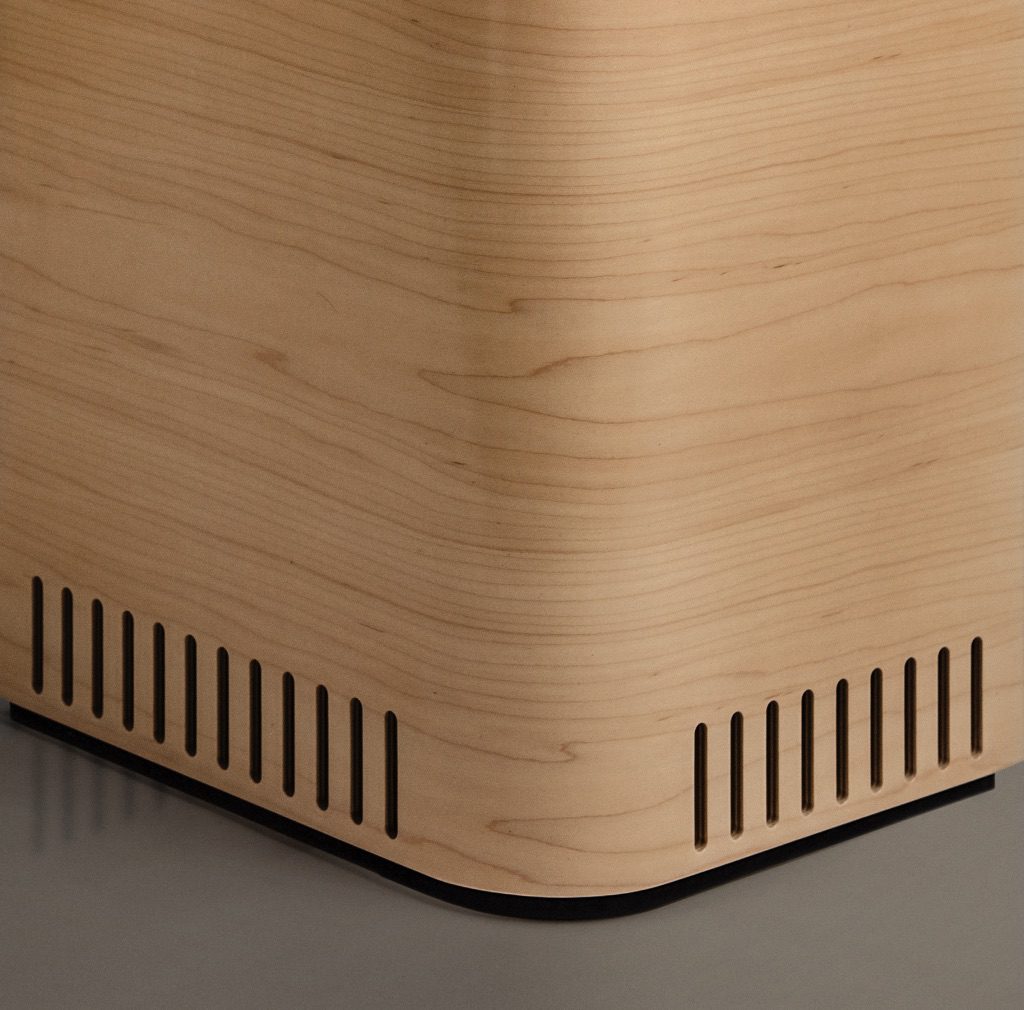
Although both share ‘trickle-down’ tech from their respective Titans, IsoTek’s V5 Sigmas distinctly differs from its EVO3 predecessor. Physically, it has a taller, more rounded cabinet with grooves cut into the top two-thirds of the front and side panels. This contrasts with the shorter, squarer 2009-era box of the EVO3 Sigmas.

IsoTek V5 Sigmas aluminium

Extra input and fancy case aside, what’s changed in the V5 version? IsoTek has decreased the resistance in the overall circuit design, resulting in a claimed 35% increase in amperage. It has also boosted current handling capacity by a suggested 40%. In addition, the direct current resistance (DCR) has improved. This brings the design closer to the notional ideal of zero ohms.

Physical change

The most notable physical change is an extra 16A high-power outlet. The V5 Sigmas has three, and the EVO3 Sigmas has two. These high-current, low-impedance outlets can deliver 3,680W (or 1,840W for 115V regions). If used on a dedicated 20A spur with an associated wall outlet. However, for transients, it is possible to pull more than 13A through a standard wall socket, and the V5 Sigmas circuit can easily handle the amperage. They use a ‘lite’ V5 Titan’s Direct Coupled circuit version. Three might seem like a waste of an outlet to die-hard two-channel fans. However, adding a third ‘big juice’ outlet significantly benefits active systems, home cinema/theatre applications and custom installations.

Like the EVO3 Sigmas, the V5 has four 10A sockets optimised for source components. These also feature IsoTek’s auto-load sensing ‘Adaptive Gating’ system, giving the optimal clean power feed based on power draw. The power cleaning network is more sophisticated than that of Aquarius.

If four 16A and four 10A sockets are insufficient, V5 Sigmas also sports a System Link outlet. This Neutrik connector is designed to connect multiple units. It also preserves a starred-earth reference and removes the need for numerous wall outlet sockets. All seven power cleaning sockets of the IsoTek V5 Sigmas are independent, and the network is star-earthed.

Independence Day

The independence of those sockets should be considered. Even some otherwise excellent power conditioners and filters join output sockets, running each in series. This, suggests IsoTek, is an error as Differential Mode noise created by your connected electronics will cross-contaminate from one output socket to the next. The IsoTek Sigmas joins other IsoTek products in giving each socket ‘Boston Tea Party’ levels of independence. Cross-contamination of connected components is also kept to a minimum due to the multiple power cleaning stages for each output socket. This helps the IsoTek V5 Sigmas power conditioner put Differential Mode noise in its place.

IsoTek V5 Sigmas rear

One of IsoTek’s flagship concepts from EVO3 Sigmas that still holds in V5 is KERP. Short for ‘Kirchhoff’s Equal Resistance Path’, KERP ensures equal resistance and power delivery to all outlets. The KERP concept demands close attention to internal cable composition and layout. It uses high-grade ultra-pure copper conductors – using the Ohno Continuous Casting process –  throughout. These are wrapped in a helix of Fluorinated Ethylene Propylene (FEP). This is then housed in a FEP dielectric to create a virtual air dielectric. The result is an internal architecture of extremely low resistance.

The IsoTek V5 Sigmas power conditioner is recommended to use its range of power cords for greater KERP-related synergy. The V5 Sigmas comes supplied with an IEC C19 EVO3 Premier power cord. IsoTek says that “one critical but overlooked area is maintaining commonality of design and material properties through an audio wiring loom, be it signal-carrying cables or your power cable network.” While Mandy-Rice Davies’s cutting response –“Well, he would, wouldn’t he?” – applies, using IsoTek cords throughout does prove out in the listening.

Last line of defence

If this is your first IsoTek product, powering up the V5 Sigmas might seem unusual. There is no front or rear panel switch, and the two switches on the underside look ‘electrical’. That’s a deliberate feature because there is 121,500A of instantaneous protection behind the switch. It uses IsoTek’s sequential protection system. A power filter is also your system’s last line of defence against significant power surges. Rather than put that position of trust into a simple fuse, IsoTek uses a resettable circuit breaker. This doubles up as a power switch for the low and high-power sides of the V5 Sigmas.

The jump from EVO3 to V5 might be considered ‘evolution’ and not ‘revolution,’ but only on paper. In real-world performance terms, it’s a honking great step forward in sound. We had EVO3 and V5 Sigmas samples to compare, but it quickly proved academic. The difference was so marked that the EVO3 returned to its box fast.

In the first line of this review, I said, “You know the score by now.” That also applies to the V5 Sigmas’ performance. The usual IsoTek boons of a more dynamic sound rising out of a blacker, less ‘hashy’ or ‘electronicky’ background apply. The sound is more balanced, more neutral, and, like your audio electronics, less flustered. The direct result of this is greater articulation and definition in the bass and less congested-sounding higher frequencies.

More air

More high-frequency air and precision also give rise to a broader and deeper soundstage. These improvements helped make the EVO3 range – including the Sigmas – stand out. The upgrades to the latest models make the V5 Sigmas stand out from the EVO3. All of those usual IsoTek sonic benefits apply, just more so.

The comparison between EVO3 and V5 Sigmas might be fair, but it doesn’t sound fair. Unless it’s used with an amp beyond the Sigmas scope, I’d argue the V5 is closer in performance to the EVO3 Titan. That’s how much better the V5 Sigmas sounds. There’s more to this, though. The IsoTek V5 Sigmas power conditioner makes your system sound more cogent and coherent in a way the EVO3 models only hint at. When using ‘cold’ (in a system with no power filter in place), the level of improvement is little short of a wonder.

The amount of performance I can extract from the Primare I35 Prisma continues to surprise me. However, the difference between the I35 yoked to the wall and harnessing the V5 Sigmas is like changing amplifiers. The Primare’s already good bass takes on greater precision and authority. The midrange becomes more natural and open. The treble loses that hint of Class D glare, making the ‘au natural’ I35 sound disjointed.

Earth to Sigmas

With most power filters and conditioners, there’s a trade-off. The added staging refinement comes at the expense of the music’s rhythmic and dynamic properties. IsoTek’s V5 Sigmas is a rare exception. It doesn’t undermine the rhythmic integrity of music. However, the more ‘earthy’ sound of the EVO3 Sigmas is closer than V5 to the sound of no filter. Those who like that more ‘earthy’ and ‘gritty’ sound might find the V5 just slightly too refined. Most, however, will either never hear that nuance, like their sound less coarse, or even prefer the V5 anyway!

There’s a question always asked; is it worth upgrading? Often, the answer is ‘no’; the change is incremental, and you aren’t going to get a big performance boost. That’s not the case with the IsoTek V5 Sigmas. The change on paper is not as big as the real-world boost in performance. The EVO3 Sigmas made decent systems sound more realistic, and the V5 Sigmas improves upon that realism significantly. The IsoTek V5 Sigmas power conditioner will improve the performance of a good medium-sized or larger audio system. It could be your first IsoTek product. If it isn’t, and you have an EVO3 Sigmas, a V5 Sigmas is your next upgrade.

Technical specifications

  • Type Power filter and conditioner
  • Number of outlets Seven (4× medium current, 3× high current)
  • Type of outlets UK, EU, US, AUS, CH
  • Mains Inlet 16A IEC C20
    Mains Voltage 100–240V/50–60Hz
  • Medium current outlets, 240V (10A 2.3kW total per outlet)
  • Medium current outlets, 115V (10A 1.15kW total per outlet)
  • High current outlets, 240V (16A 3.68kW total per outlet)
  • High current outlets, 115V (16A 1.84kW total per outlet)
  • System Link 1× Neutrik connector
  • Surge protection 121,500A
  • Finishes Black, Silver
  • Dimensions (W×H×D) 44.5 × 15 × 35cm
  • Weight 15kg
  • Price £4,795, $4,995

Manufacturer

IsoTek Systems

www.isoteksystems.com

UK distributor

SCV Distribution

www.scvdistribution.co.uk

+44 (0)330 122 2500

Back to Reviews

Read more IsoTek reviews here

PMC helps make the ‘Seal II’ immersive mixes a reality

June 2024 – Seal’s second album, Seal (often called Seal II), has been remixed in Dolby Atmos at PMC Studio London, making this yet another major artist release to have been remixed with a PMC engineer at the controls, cementing PMC’s position at the forefront of Dolby Atmos Music. 

PMC Studio London was previously chosen to remix Seals debut album by world renown producer and artist Trevor Horn,together with his engineer Tim Wiedner, as the Dolby Atmos format started to gain traction in 2022. When it came to the remixes of Seals second album, engineer Alex McArthur and PMC’s Phil Millross worked closely together to open up the album into a truly room-filling immersive piece of work, with Trevor Horn producing the project.

The studio, which is used to help educate artists, engineers and producers about Atmos and PMC’s product line, is a world-class mix studio equipped with a multitude of PMC monitors, including the MB3 XBD Active main monitors for the left, centreright and the Ci serieswhich has fast become the global reference for Dolby Atmos music mixing, for the surround and height channels.

Originally produced by internationally acclaimed producer and artist Trevor Horn, Seal II contained the international hit, “Kiss From A Rose” and many other fan favourites. The 30th anniversary edition, has been released as a two CD and Blu-ray box set containing ten previously unreleased recordings. The Blu-ray features both a high-res, 24/96, stereo version of the album and the Dolby Atmos immersive audio mix created at PMC Studio London. 

PMC’s Phil Millross, credited as the assistant mix engineer, says, “It was a huge privilege to work with Trevor and Alex on this legendary album. The resulting immersive audio mix is amazing and has to be heard to be believed, and I am sure it will help to convert even more people to the experiential benefits of Atmos music.”

Commenting on the process of taking this cherished recording and giving it the Atmos treatment, Alex McArthur says, “We very much wanted to stay true to the original mixes while bringing them into the Atmos format, which meant expanding the soundscape to fill the room and make it immersive, but there were also some nice moments where we could get a bit more creative. Having Trevor produce the project enabled us to retain the detail of the originals, which were mixed with such a specific intention.”

On the use of PMC Studio London, he adds, “The monitoring was exceptional. It really highlighted the differences between the original mixes and our current mixes, which helped guide the process in terms of matching the originals. In addition, having Phil’s expertise of the Atmos format and being able to listen to the Atmos demo material alongside our mixes was incredibly insightful.”

The Seal II Dolby Atmos mix is available now on Blu-ray and via Apple Music and Tidal.

Magico S3 floorstanding loudspeaker

There are two things to point out here. First, most companies name the replacements to existing designs with a suffix, such as “Mark II.” Next, Magico isn’t like most companies. The company has radically reworked its popular Magico S3 floorstanding loudspeaker and renamed it… S3. Not ‘S3’ or ‘S3.3’ or even ‘S3i’… just S3.

Next, Magico potentially adds confusion to the mix because the S3 replaces… the S3 Mk II. The two points are related. This latest S3 is the loudspeaker Magico always wanted to build. It’s the entry tower to the S-Series, stepping beyond the already deeply impressive A-Series and drawing technology and inspiration from the top M-Series. There’s no sense in calling it a Mk III version because it’s the point where Magico starts again. If anything, it’s the S3… rebooted.

From the flagship

It’s not hard to see where the Magico S3 floorstanding loudspeaker gets its inspiration: Magico’s top M-Series loudspeaker. In that Series, the S3 aims high, drawing inspiration and design criteria from the M9 flagship. Easier said than done, however. To get even close to that level of performance without the M9’s three-quarters-of-a-million-dollar price tag, Magico needed to start from scratch. To most companies, that means a clean piece of paper or ‘CTRL-N’ (new file). Magico went the long way around, starting with state-of-the-art research and development facilities and a new listening room that push the envelope of listening performance.

The combination affords Magico the ability to not only analyse every aspect of the enclosure, driver, coupling system, and crossover, even down to the screws and feet but each objectively analysed parameter could also be backed up by observation and listening test. Arguably, this is nothing new; companies have had both the R&D and the listening suites deliver results. But the difference is few have had the gumption to change up both R&D and listening room simultaneously, and even fewer already had state-of-the-art facilities in both and said, “Let’s spend a few million to make them even better!” That’s the drive and dedication that Magico keeps bringing to the party.

Klippel fight!

One of the most significant changes to Magico’s measurement process was using the Klippel Near-Field-Scanner (NFS). This uses a single microphone that rotates around a loudspeaker enclosure suspended in free air. The microphone analyses the environment space first and then takes fully automated 3D acoustic measurements (on and off axis) in a minimal amount of time without needing an anechoic chamber. The 360-degree sphere of measurement points is then calculated with the initial room measurements deducted from the equation. The Klippel Near-Field-Scanner provides Magico with an extraordinarily accurate data set, allowing the company to predict each loudspeaker’s in-room reflections and response in a standard listening room environment. Klippel’s NFS is a substantial investment for any company, but it paid dividends as the new S3 greatly benefitted from the technology.

Magico also invested in a new in-house 3D laser interferometry system, which can measure up to 1,000 points at a stroke. This highly accurate analysis enables Magico to compare an enclosure’s resonance contribution relative to the acoustic output of the transducers. This allows more precise application of internal bracing and damping to optimise the overall sound performance of the loudspeaker.

30% quieter

The result is that Magico claims the new Magico S3 floorstanding loudspeaker enclosure is 30% quieter than its predecessor.

Magico S3

At the same time, the continued use of Finite Element Analysis (FEA) allows Magico to assess acoustic, mechanical, electromagnetic and thermal properties of an enclosure or drive unit. Magico claims this testing protocol helps minimise distortions in the frequency and time domains.

Of course, this outlay on R&D and a listening suite means nothing if the company ‘knocks out’ a few mediocre products. In fairness, when a company makes a big ‘back office’ change like Magico did, you almost expect the first product out of the blocks to have a few teething troubles. This wouldn’t be forgivable at the high end, but it might be understandable. However, instead, Magico came up with the S3, a loudspeaker that delivered a performance that even outperformed the expectations of a company known for setting itself high standards.

Overnight success

One of the things we on the outside never really understand is just how much time and energy goes into these projects. We only get to see the result. Like all overnight successes, the Magico S3 floorstanding loudspeaker took years of effort to get there. In most companies, those ‘years of effort’ mean re-working and tweaking existing parameters. This is no easy feat; it’s like taking the same handful of ingredients that make up one meal to make a similar – but, hopefully, better – one. This design brief can produce exceptional products and is particularly useful in producing lower-end and mid-fi loudspeakers. You have a set of parameters fixed by price points, and working in such rigid conditions can produce remarkable results for the money.

Such developmental practices are less well received when the price is not such a restriction on the design brief. Unfortunately, making a pair of high-end loudspeakers by simply churning what went before is still seen even in some extremely high-end loudspeaker designs, but not in Magico’s line-up.

In Magico’s case, however, it’s more of a question, “What new methods of manufacture and new materials are coming, and how do we fold them into our next product?” The three years of engineering research into the new S3 meant developing a new generation of drive unit chassis design that improved on existing mechanical and acoustic parameters. It also meant new chassis profiles created for the S3’s midrange and bass drivers, which resulted in optimum damping and stiffness while reducing resonant modes and maximising internal airflow. So, no biggie: just relearning the mechanical engineering of loudspeakers and the physics of a sealed box enclosure. It makes you wonder what the slackers at Magico did for the rest of the three years!

Trickling down

The tweeter is one of the S3’s most apparent ‘pulls’ from the M9 flagship. The M9 used exceptionally clever modelling to create an almost-ideal tweeter diaphragm, and the lessons learned in producing that high-frequency platform trickle down to the S3. By sciencing beryllium hard, Magico increased the diamond-coated beryllium dome diameter from 26mm to 28mm without gaining weight. Upping the size of the diaphragm gives it greater power handling and lower distortion and gets it closer to that Platonic Form of tweeter in the M9.

This diaphragm combines a neodymium-based motor system, a new acoustically improved back chamber, and a customised shape that integrates into the curved front baffle. All of this makes the new tweeter far removed from the ‘off the shelf’ high-frequency drivers used by many of its peers. While the OEM route gets results, it doesn’t push the boundaries.

Taking the harder path

Magico deserves praise for taking this longer, harder path, but regardless, it justifies its place in the performance.

Magico S3

The single 127mm midrange driver and two 227mm bass units are both Generation 8 versions of the company’s Graphene Nano-Tec cone, a honeycomb aluminium core sandwiched between inner and outer graphene layers and carbon fibre. This enables broader dispersion characteristics and results in greater midrange transparency. In the midrange, the advanced cone is supported by a custom basket assembly and foam surround, with an all-new underhung neodymium-based motor system featuring two extra-large magnets and a pure copper pole cap. The new bass unit meanwhile incorporates oversized components, including a 127mm pure Titanium voice coil and copper cap with 13mm of linear excursion.

Strong and stable

The new S3 enclosure is assembled from four separate extruded aluminium panels ranging in thickness from 13mm to 50mm. Each panel, including the front baffle, is carefully machined to make the enclosure practically edgeless. A massive machined curved top plate has an upward pitch to limit enclosure diffraction and break up vertical standing waves. Then, a stronger and more substantial baseplate with a new three-point outrigger system and a new foot design helps lower the centre of gravity of the speaker and increases its overall stability.

All this is a long-winded way of saying that in the new S3, Magico has returned to its sources. It draws inspiration and technology from the flagship loudspeaker in the lineup, but the core of what has always defined Magico in the first place is a core of solid engineering.

The intervening years

The years since Magico was the enfant terrible of the high-end audio world have been well spent, and the technology used in developing not only its loudspeakers but also the research tools to investigate better that technology has helped create loudspeakers like the new Magico S3 floorstanding loudspeaker.

The S3 is a remarkably low-distortion loudspeaker. That single sentence should be all you need because every loudspeaker produces orders of magnitude more distortion than amplifiers or sources. So, a loudspeaker like the S3 that strips away a great deal of the resonance of an enclosure or the distortion of a drive unit is automatically on the side of the angels. And in listening to the S3, you can hear that lower distortion and absence of cabinet resonance in every note you play. The S3 images are like a point source but have a three-way midrange clarity and a gut-puncher bass. All the while, you are listening ever deeper into the music because you are unfettered by box, cone, and dome limitations.

Changing toothpaste

It doesn’t matter what music you play; you get the best. A midrange so open and articulate, you’ll know if the singer changed toothpaste brands between tracks. A loudspeaker that starts and stops so quickly, even the most delicate brushwork on a hi-hat, is easy to define. When driven well, its grip and authority instil a sense of wonder in the listener.

We’re all trying for that elusive dopamine hit that happened the first time we listened to a good system. We buy something new; we recreate that ‘first time’ audio feeling again, and then it fades all too quickly. But with the S3, it doesn’t fade. It moves from album to album, from track to track. The standard test recordings come out, followed by those you retired. Each one acquits itself well and shows you why you chose them.

So, out comes the music you like to play for you, not for assessment purposes. And it satisfies just as much as it ever did. Once again, the time machine effect of good audio is strong here, as you willingly rewind the clock to your earlier listening tastes. I rewound the clock to ABC’s Lexicon of Love and Quiet Life by Japan. They were some of the first records I bought, considering how they sounded and pure music quality, and again, they were as new.

Today’s standards

Sure, the over-produced early-80s mix is harsh and jangly by today’s standards, but the S3 reproduced them with such effortless clarity, dynamic range, staging and sheer ‘rightness’, I couldn’t help but smile.

Magico S3

Where the S3 improves upon the, er, S3 is in its incredible sonic disappearing act. The music is vibrant, dynamic, and very out-of-the-box. Voices—human and instrument—are articulate and rooted within a three-dimensional soundstage that sits around and yet also slightly forward of the speaker boxes. Its power handling is improved enough to play louder with a higher margin of safety and a lower overall distortion.

The Magico S3 floorstanding loudspeaker does ‘mellow’ but is informative ‘mellow’. And those who like a relaxed ‘pipe and slippers’ sound will probably take their dinner jazz elsewhere. While the Magico S3 resolves this music well, it draws you into the music, it doesn’t help you slip into a coma.

I tried to find fault with the S3, but it eluded me. But it’s part of the gig. So, to satisfy those who think no review is complete without criticism… the S3 has too many ampersands per metric parking space. Happy now?

Simply the best

We don’t have the vocabulary to describe the best loudspeakers. Their limitations constrain our terminology because we listen to all our equipment through loudspeakers. Reduce or remove those limitations, and the vocabulary closes down, too. We don’t discuss observational parameters about the system’s sound; we describe the music played on that system. The S3 is such a loudspeaker. Its low levels of distortion, coloration, enclosure resonance and improved power handling all combine to make something extremely special. You can get ‘different’, but to get ‘more’ of the same is difficult… and extremely expensive!

Magico S3

The Magico S3 floorstanding loudspeaker is an awesome product. It moves the needle of performance, not simply at the price point. It represents a significant step change over the previous models to such an extent that it’s no wonder this isn’t an S3 Mk III. It’s a full reboot of the S3—and it’s fantastic!

Technical specifications

  • Type: Three-way sealed box floorstanding loudspeaker
  • Driver Complement: 1.1″ MB5FP Diamond Coated Beryllium Dome (×1), 5″ Gen 8 Midrange driver (×1), 9″ Gen 8 Bass driver (×2)
  • Sensitivity: 88dB
  • Impedance: 4 Ohms
  • Frequency Response: 24 Hz–50 kHz
  • Recommended Minimum Power: 50 watts
  • Dimensions (H×W×D): 112 × 43 × 30cm
  • Weight: 101kg per loudspeaker
  • Price: From £56,998 per pair (M-Coat)

Manufacturer

Magico LLC

www.magico.net

UK distributor

Absolute Sounds

www.absolutesounds.com

+44(0)208 971 3909

Back to Reviews
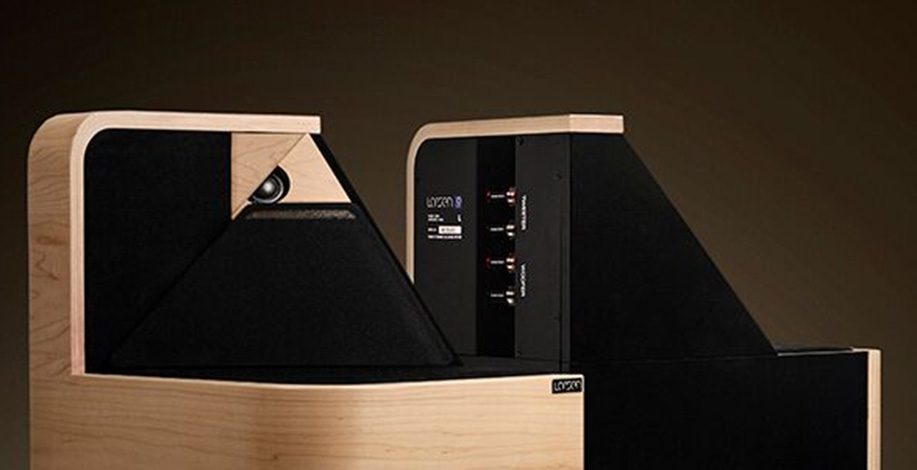
Read more Magico reviews here

Lowther Hegeman Sound Reproducer

Lowther’s legendary Hegeman Sound Reproducer loudspeaker dates from 1951. Large and impressively retro, it stands around 4ft tall, 4ft wide, 2ft deep – and weighs about 150kg. It was a collaboration between Donald Chave and Stewart Hegeman, who later developed harman/kardon’s Citation series.

Unusually labour-intensive to produce, the Hegeman’s horn and cabinet are hand-built from marine ply and takes around 16 weeks to construct. They’re handsomely vintage with superb book-matched veneers as befits a bespoke individually hand-crafted product.

As befits a speaker from the pre-stereo era, the Hegeman produces a broad spread of sound rather than being highly directional. The aim is to impart a sense of spatial breadth to the reproduction, thereby enhancing the impression of width – very important for single-speaker mono.

The Hegeman is quite unlike any modern loudspeaker. It uses a single internally mounted Lowther drive unit (pointing away from the listener) partnered with two horns. Efficiency is very high – around 100dB – and (of course) there’s no crossover.

Back to the 50s

The original 1951 Hegeman used a Lowther PM4 drive unit. But this new version features a driver with a field coil – an electromagnet where a DC current creates its magnetism. An ancient technology by audio standards, field coils were used back when permanent magnets had limited strength.

Lowther Hegeman

Nowadays, nearly all modern loudspeaker drive units use a permanent magnet for the motor – it’s a simpler, cheaper, more elegant solution. Consequently, the field coil has largely been consigned to the dustbin of history. Yet the field coil principle never entirely disappeared…

Advocates claim field coil drive units sound more transparent and musical, making their permanent-magnet counterparts seem compressed and veiled in comparison. But why should this be? After all, they’re both magnets.  Well, surprisingly, there are some important differences…

A permanent magnet creates an aligned electron spin. An electromagnet generates a moving electric charge which means the electron spins are not aligned.  As a result, a field coil driver’s flux density remains constant as the voice coil moves in the motor’s gap.

Flux density

Permanent magnets do not achieve this constancy and suffer from losses of flux density when the motive force of current is present. Field coils create a stronger more efficient motor. Power delivery, determined by current and voltage, is more constant and stable.

This is a key factor determining the superior sound quality of field coil drivers compared to permanent magnet drivers.  Certainly, the Hegeman offers exceptional clarity and a relaxed, effortless, likeable, and musically involving presentation.

The Hegeman is surprisingly smooth and integrated. It sounds richly organic and warm, subtle, and focused, without being tonally thin or antiseptic. The results are very cohesive and effortless; you get a strong, powerful sound, yet the total effect is never oppressive or overwhelming.

You can sit anywhere in the room, on or off axis, and the tonal balance remains much the same. The Hegeman extracts lots of inner detail from recordings yet does so without highlighting limitations or flaws in your source material. It’s an amazingly listenable loudspeaker.

Lowther Hegeman

If modern high-end systems are akin to a sports car, or a Formula-One racing car, the Hegeman is more like a limousine – built for comfort rather than speed. As befits the hi-fi equivalent of a Rolls-Royce Silver Cloud, you experience a smooth elegant luxurious musical journey.

But, while the early 1950s witnessed the birth of the vinyl LP, shellac 78s remained the dominant medium for some time. The BBC did not introduce FM broadcasting in the UK until May 1955, so radio sources would have been limited to AM with its 5kHz high frequency limit.

The 1950s might have been the dawn of the high-fidelity era, but most sources were distinctly low or mid-fi. Therefore, loudspeakers of the post-war years needed to get the utmost from whatever sources they were fed – emphasising strengths, rather than highlighting weaknesses.

A typical modern high-end speaker might impress on first-rate source material, but reproducing old recordings – those with a restricted frequency range, limited dynamics, and a degree of background noise – the end result often leaves you underwhelmed and disappointed.

The Hegeman always shows you more of what’s right with your recordings, rather than what’s wrong with them. Of course, superior wide-range recordings will sound better, but older more limited material remains musically engaging and rewarding to listen to.

This is partly because the higher frequencies are not coming from a small point source. Directional loudspeakers using small dome tweeters act like a searchlight, creating piercing concentrated highs. The Hegeman’s high frequencies are broader, more diffused, softer, and sweeter.

Phase coherent

It’s very phase coherent, with a full and articulate mid-band reproducing lots of detail. The Hegeman projects effortlessly, allowing you to enjoy vibrant vivid music reproduction – even on recordings with limited dynamics and/or a restricted bandwidth.

The Hegeman’s bass horn extends the lower frequencies to about 40Hz, which is very respectable. And while we’re not talking about trouser-flapping bass here, the bottom-end subjectively sounds impressively weighty and full-bodied.

Playing tracks from Roger Waters’ Lockdown Sessions album on vinyl, the result was very intimate and communicative – delicate yet powerful. Even using a 3W single-ended tube amp, the Hegeman effortlessly filled a large 16ft x 30ft room without seeming to break sweat.

The sound was surprisingly gutsy on ‘Blues for Will’ for solo double bass. It was hard to believe such a rich full-bodied sound could be achieved using a 3W amplifier! Yet, although the sound was big and powerful, it never threatened to overwhelm the listener. It was always comfortable and effortless.

The result was lifelike and natural in terms of timbre and scale, with a rich woody-fullness that sounded uncannily live and real. Yet your attention was always focused on the music – not the sound of the music, or the equipment reproducing it. Because of its broad diffuse non-directional dispersion, the Hegeman does not deliver razor-sharp stereo images. Soundstaging is reasonably precise, but not as pinpoint-focused as a more directional speaker. Nor is the central phantom image quite as crisply defined.

Those with space should try placing the Hegemans as wide apart as possible – certainly, more so than with a typical directional speaker. You might also want to experiment by adding a smaller (directional) centre-speaker to firm up centrally placed images.

Back to mono

The other possibility is – to ditch stereo altogether and go back to mono from a single loudspeaker! Of course, stereo adds an extra dimension. Yet good mono reproduction is very calming and satisfying – it’s very intimate and relaxing to listen to.

Lowther Hegeman

Strangely, this doesn’t need to be explained quite as much to Generation X and Millennials as it does to older generations of listeners. Many younger listeners are used to listening to music in mono. They enjoy the presentation that is at once as calming as it is energising. We often obsess about stereo imagery, but do so at the expense of the core of what music is all about. Mono – good mono – cuts through that, as is the case here.

Inevitably, this is reflected in the price. A pair of Lowther Hegemans in will set you back a cool £96,000 – or £54,000 for one. So, they’re not inexpensive.  But they offer a unique signature – both sonically and visually – and produce a beautiful sound that’s wonderfully pleasurable to listen to. Not bad for a loudspeaker design that’s in its 70s!

Technical specifications

  • Type: Single-driver horn loudspeaker
  • Drive Unit: Lowther Field Coil Unit, PMA4
  • Impedance: 8 or 15 ohms
  • Sensitivity: 98–100db
  • Frequency Response: 30Hz–20kHz
  • Finish: Olive Veneer. The Cabinets can be supplied with alternative premium veneer options
  • Dimensions: 1130w × 600d × 1140h (mm)
  • Weight: 150 kgs per loudspeaker
  • Price: £54,000 per loudspeaker, £96,000 per pair

Manufacturer

Lowther Loudspeaker Systems Ltd

www.lowtherloudspeakers.com

+44(0)208 300 9166

Back to Reviews

Read more Lowther reviews here