Up to 37% in savings when you subscribe to hi-fi+
hifi-logo-footer

Begin typing your search above and press return to search. Press Esc to cancel.

Graham Audio LS6 Anniversary

Graham Audio has re-ignited the BBC loudspeaker fire like no other brand. In ten short years, the company has stopped the BBC name from being just associated with LS3/5a mini-monitors. And Dr Who, but that’s a different story. It has recreated many loudspeakers that would have otherwise been consigned to Audio Jumbles and the memory bank. So, it deserves to celebrate its 10th birthday. We get to party thanks to loudspeakers like the Graham Audio LS6 10th Anniversary stand-mount.

Thanks to Graham Audio, people have come to admire again what those white-coated, pipe-smoking BBC engineers in its Research and Development team did in the 1960s. Back then, computer modelling and rapid prototyping were the stuff of sci-fi (see the Dr Who reference above). So, they did it the hard way. With slide rules, oscilloscopes (that drifted like crazy because they used valves), and lots and lots of tea.

The legend

Graham Audio produces its versions of the three BBC loudspeakers that became well known outside of ‘Auntie Beeb’s studios and Outside Broadcast vans: the LS3/5a, the LS5/9 and the LS5/8. But such is the audiophile passion for the first of that trio; the others just faded away. In fairness, spares for loudspeakers built more than half a century ago are hard to come by, which is why Graham Audio had a novel way of keeping these legends alive: it hired Derek Hughes – loudspeaker designer and son of Spencer Hughes who (along with Dudley Harwood) was heavily involved in the design process of those original BBC designs.

The company noticed that demand for ‘more than the LS3/5a’ was growing and found many other projects that fit the bill. One of them was acquiring classic BBC-making brand names like Swisstone and Chartwell. And one of the most popular loudspeakers under the Chartwell name today is the LS6.

Chartwell seating arrangement

The Chartwell LS6 sits somewhere between the LS3/5a and LS5/9, but it’s no ‘tweener’ loudspeaker that is never quite as good as the designs that flank it. The ported two-way stand-mount houses a 19mm dome tweeter and a 165mm polypropylene mid/bass unit. It also has a treble lift and tilt switch on the front panel. It uses a thin-wall damped enclosure, common to all the BBC extended family designs.

The Graham Audio 10th Anniversary Audio LS6 takes that Chartwell model and upgrades it significantly. More accurately, as precisely as you are allowed to change products within the tight parameters of BBC designs, the changes also apply to the 10th Anniversary versions of the LS5/9 and LS3/5a.

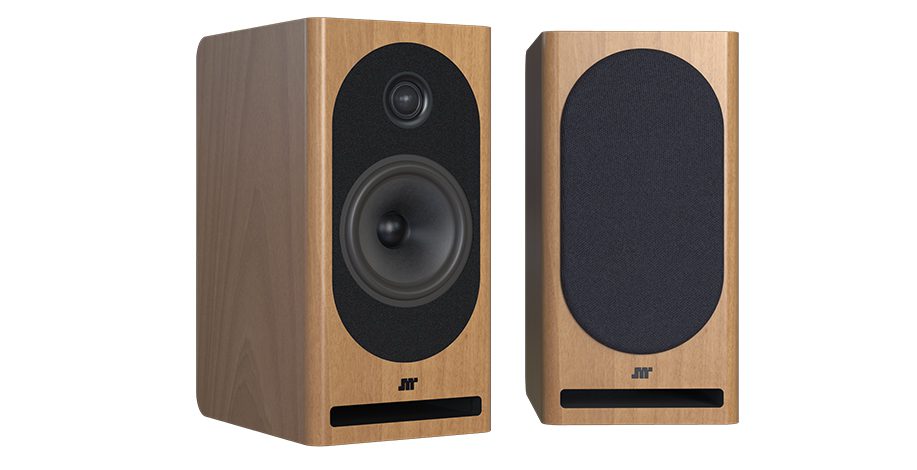
Perhaps the most significant change from the standard to the anniversary model is the eucalyptus natural wood veneer finish with a black front baffle. This is not simply pretty (although the contrast is excellent, and the veneer is rich and beautiful). It’s more that the black baffle means increased stiffness and vibration reduction because it is a higher density than the standard. This reduces drivers’ interaction with the cabinet’s internal walls as less resonance is transmitted into the speaker cabinet. For the other two designs, it’s just a thicker baffle, but in the LS6 it moves the port from the rear to the front, slightly increasing cabinet volume.

Cables and components

The other significant change is in the component list. The most visible change is the use of high-grade WBT 730.01 loudspeaker terminals. On the inside, the cabling has been changed for Van den Hul throughout, and the crossover has been redesigned for the occasion. It now features higher-grade polypropylene capacitors with improved thermal performance. Finally, owners get a special certificate of authentication, which helps combat speaker cloning.

These are strictly limited designs; after 100 pairs of each have been made… that’s it. This isn’t one of those ‘limited… but not really’ editions. So, get in quick.

While the BBC hard-core will grind their teeth at the notion, the loudspeakers improve after some settling down and running in time. This isn’t a ‘it will sound dreadful for the next 5,000 hours’, and if you play a few hours of music daily, they will be at their best in a week or so, but they benefit from some running in. They also benefit from resting on light, rigid stands instead of high-mass designs.

Easy and unfussy

Those minor caveats aside, the Graham Audio LS6 10th Anniversary is a joy. It’s easy and unfussy to install (six to eight feet apart, three feet from the rear and side walls, and a slight-to-medium toe-in). You’ll want to give yourself an afternoon to do the installation, but more so you don’t rush things and damage that sumptuous finish rather than messing around with positioning. Sure, the more you apply yourself to the speaker’s care and feeding, the greater the reward. And, in fairness, the Anniversary version rewards you more… so don’t be slapdash.

I used them with a Primare I35 Prisma integrated amplifier and had them sitting on some ancient and unfilled Kudos S50 stands. Lighter stands like those from Something Solid would be even better. But at no time did I feel any part of the system was letting the side down. I tried experimenting with cables, but their improvement to the 10th-anniversary LS6 was minimal. You could hear differences, but they were moved to the ‘not so important’ pile of things to do. Buy something reasonable and forget about it.

Not just a wayback machine

I like the 10th Anniversary LS6 because it has all the abilities and charm of classic BBC designs without all the baggage and adoration that comes along for the ride. It’s not simply a wayback machine replaying the 1960s all over again. It’s a good, easy-to-enjoy, effortless-sounding loudspeaker with excellent bass for its size. It is particularly good at vocals and piano music (but is no slouch elsewhere) and isn’t showing its age. Stereo imaging is excellent and detailed without being too forward or brash sounding. It doesn’t walk on water, heal the sick, or perform daily miracles, as those who drank deep of the LS3/5a Kool-Aid would like you to believe.

But what I really like about the 10th Anniversary LS6 is it gives you a taste of what might have happened if the BBC R&D team had kept going. As the technology and means of measuring loudspeakers evolved, that team would have developed more forward and engaging loudspeakers.

No pipe, no slippers

I find the ‘pipe and slippers’ insult thrown at such speakers unnecessary, but the 10th Anniversary LS6 shows there would be more high-frequency insight and a little more volume headroom, too. And, if they had access to improved baffle material, they would use it to make the next generation of loudspeakers. Fortunately, we have more than a good idea of what that next generation of BBC speakers would have been like with loudspeakers like the Graham Audio 10th Anniversary LS6.

It’s hard not to be smitten by this loudspeaker. The move from the rear to the front port makes it more room-friendly. It’s also a bit deeper in the bass and faster than other designs of its ilk. It also has greater volume headroom and dynamic range. Let’s temper that by stressing the word ‘greater’; compared to the room-buster high-end behemoths, no speaker of this size will raise the roof or shift a few organs about unless it’s cheating. And the LS6 is way too honest to even think about cheating. However, it does go louder and deeper than its peers.

The real joy

The real joy of the LS6 – Anniversary or not, but especially this 10th Anniversary model – is in listening to voices. My usual Joyce Di Donato track from Stella Di Napoli [Erato] speaks volumes here; the voice is beautifully legato and articulate. It soars as she unleashes that powerful mezzo-soprano but stays with her as the voice fades into silence. The deft accompanying orchestra, especially the French Horn player, are rendered in a three-dimensional space. The sense of harmonic richness and texture is palpable.

But that is bread and butter to a loudspeaker like this. Infected Mushroom isn’t. So, you might expect ‘End of the Road’ from Legend of the Black Shawarma [Perfecto] to be a bit of a soft-edged mess. But its dynamic range, bass depth and speed are all surprising. The loudspeaker never gets lost in the fast trance beat. Its leading-edge performance is more than good enough to give you a neck ache from moving your head to the rhythm.

Let’s say that again. The throbbing, psychedelic trance of Infected Mushroom played through a loudspeaker firmly in the BBC tradition. And the speaker makes it sound good. Either there is something in the water, or the Graham Audio 10th Anniversary LS6 has got it very right.

Technical specifications

  • Type: Two-way, reflex-loaded stand-mount loudspeaker
  • Drive Units: 19mm dome tweeter, 165mm polypropylene mid/bass
  • Enclosure: Thin-wall damped construction
  • Frequency Response: 45Hz-20kHz ±2dB
  • Sensitivity: 87dB/2.83V/1m
  • Nominal Impedance: 8Ω
  • Dimensions (WxHxD): 37x24x26cm
  • Weight: 9.5kg
  • Price: £4,022, $3,950, €4,022 per pair

Manufacturer

Graham Audio

www.grahamaudio.co.uk

+44(0)1626 361168

WIN! A pair of Graham Audio LS6 Anniversary loudspeakers worth £4,022!

Read more Graham Audio reviews here

Back to Reviews

Dynaudio Contour 20i

The last pair of Dynaudios to grace the Kelly living room was a pair of the company’s Special Forty stand-mounts. I thoroughly enjoyed them once I had run them in, which took a good few weeks. The brand’s UK Sales Manager offered me the chance to hear the Dynaudio Contour 20i. I was more than willing to host them. They arrived already run-in… bonus!

The Contour range has been a mainstay of Dynaudio’s model lineup for many years. The ‘i’ versions have enjoyed some significant improvements over the well-regarded previous generation of Contours from 2016. The announcement of a brand new finish, Nordic Silver, also caught my eye. I have only seen it in photographs, but it looks very handsome. As a demo pair has not yet reached these shores, I asked to review whatever was at hand.

On arrival, each Dynaudio Contour 20i comes in a separate box, and the first thing that struck me was its weight. Each enclosure tips the scales at 14kg. The physical dimensions are 215 mm × 440 mm × 360 mm (WHD), giving an immediate sense of their solidity. I have had floor-standing loudspeakers here that weigh less! The external fit and finish are exemplary, with a handsome walnut veneer blending well with a chamfered black aluminium baffle. This houses the Esotar 2i tweeter assembly and Magnesium Silicate Polymer woofer. In due course, we shall return to the technology within the rather sleek cabinet.

You little Beauty!

Beauty, of course, is subjective, but to my eye, this is a handsome loudspeaker. I played them for almost the entire duration without the magnetically attached black grilles. It’s possible to match the Contour 20i with an excellent third-party stand. However, the dedicated stands make perfect aesthetic and audio sense. Four chunky bolts attach the loudspeaker to the top plate. These give the combined unit a real sense of solidity. It also acoustically obviates the need to experiment with different materials between the surfaces. The Contour 20i looks as elegant on its matching stand. It even got the all-important approval of Mrs. K, who is very tolerant of the ever-changing look at the far end of her lounge.

Dynaudio Contour20i Nordic Silver

The sides of the cabinet are slightly elliptical, tapering slightly towards the rear. The veneer wraps right around, including the rear, which is delightfully uncluttered. Towards the top is a circular port. Near the bottom sits a pair of high-quality multiway binding posts on a square aluminium plate that designates the model. However, all the goodness of the design lies out of sight within the cabinet mentioned above.

Starting at the top, the 28mm Esotar tweeter has received significant engineering investment to give it the ‘i’ status. An enlarged rear chamber improves internal damping. Meanwhile, the expensive Confidence range provides the Contour with 20i with its Hexis inner dome. The design goal was to flatten the frequency response and reduce unwanted resonances, leading to a cleaner, smoother treble. Dynaudio also reworked the 180mm woofer.

Aramid spiders

Dynaudio’s Contour ‘i’ series retains the last generation’s lightweight aluminium voice coil and vented dual-ferrite magnet system. However, it now uses aramid fibres to improve the spider suspension. The ribs are of varying width, giving even better control of the speaker cone’s excursion. This removed the need for additional impedance-correction circuitry. That resulted in a tweaked and simplified crossover network, which leads to a shorter signal path and cleaner sound.

The Contour 20is’s technical specification quotes a sensitivity of [email protected]/1m, a 4Ohm impedance, and an IEC power handling capability of 180 Watts. The crossover frequency is 2200Hz.

I set up the loudspeakers in the spot I found to be the best starting point for placement. I gently toed in towards the listening seat so that the imaginary line from each tweeter intersected slightly behind the listener’s head. Based on previous experience with rear-ported designs, I allowed 54cm from the corner of the cabinet closest to the rear wall.

I had a NAD C3050 amplifier/DAC at the installation, so I hooked the Dynaudio Contour 20i up to it with an AudioQuest Robin Hood loudspeaker cable. The sources that I used were my modified Linn Sondek LP12, with a Dynavector XX2 cartridge fitted to the Linn Ittok arm, amplified by a Gold Note PH5/PSU phono stage plugged into the one pair of analogue inputs on the C3050. My AURALiC ARIES MINI streamer was connected to the digital coaxial input, and my Panasonic television to the optical input.

Fire up the playlist!

I fired up one of the playlists in Qobuz on the ARIES MINI and left all the units to warm up while I returned to my study to crack on with some other reviews. After about an hour, I was intrigued enough to venture back into the lounge, in a pause between tracks. As luck would have it, the first track to play was ‘One Of These Days’, from Pink Floyd’s Meddle [Harvest]. Oh, my goodness. That insistent bass riff came thundering, and as the band joined in, I turned up the volume and was engulfed in the music. Nick Mason’s distorted voice was chillingly conveyed. “One of these days, I’m going to cut you into little pieces”. As the track ended, I took control of proceedings, switched to the analogue input on the C3050, and slipped my original copy of Meddle onto the LP12’s platter.

The soundstage created by the Contour 20is, aided and abetted by an amplifier that was really supposed to be from a lower league, was extraordinary, and I played both sides of the album. ‘Echoes’ was magnificent. The ASDIC/SONAR beeps, the ethereal vocals, and the squalls of guitar made the 20 minutes or so of the song seem to pass in a flash.

Listening critically?

As I was supposed to be trying to listen critically, I swapped out Meddle and cued up my original early release of Dark Side Of The Moon [Harvest]. The cash register opening of ‘Money’ was extraordinary and as the song sequence unfolded I noted “sounds far bigger than the stand-mounts in front of me”.

Switching to one of my favourite jazz records, Bass On Top by the Paul Chambers Quartet [Blue Note], the band leader’s double bass, recorded by Rudy Van Gelder in July 1957, had an incredibly realistic timbre, whether bowed or plucked. The resonance from within that large wooden body was excellently portrayed, as were the other fine band members’ piano, guitar, and drums. The whole album was recorded in one day – a rare day off from Chambers’ main gig, playing with Miles Davis. I have to credit the C3050 for some of the magic I heard then, and throughout the time, it was paired with the Contours 20is.

It’s time for Love

I have a few tracks and albums that form the core of my critical listening for a review. One is the 1967 masterpiece by Love, Forever Changes [Elektra]. It was widely overlooked here in the UK in its release year, but a friend of mine had a copy, and we played it so often on his Dansette that it was probably ruined, but we 16-year-olds listened to it in awe.

Dynaudio Contour 20i Black front no grille

I cued up side one, and the opening notes of Bryan Maclean’s lovely ‘Alone Again Or’ washed over me. The late Arthur Lee, leader of the band, produced with the help of Bruce Botnick, who was the Elektra record label’s go-to control room wizard (he also worked on every studio album by Love’s label-mates The Doors) and between them, they conjured up an extraordinary melange of folk, rock and even managed to work in mariachi trumpets.

Through the Dynaudio Contour 20i, the music seemed truly three-dimensional, allowing me to hear deep into the production. I have played the same album through some very highly regarded floorstanding loudspeakers in the same room, and this two-way stand-mount device gave as a full-blooded rendition of this album as I have ever heard.

Exquisite

The timing was exquisite. The delicacy of the quiet, reflective passages and the full-throated noise of a band giving it some serious wellie were both handled superbly. I hardly left the room during the next few days as I randomly selected albums for the joy of hearing what this system could achieve.

Because my music system coexists with the television in the same room, I use it for television sound. All the characteristics that marked it out as a unique music maker with the Contour 20is in play carried over into our televisual experience. Dialogue came through with outstanding clarity, as did small sounds off-camera that sometimes get lost. When the going got explosive, the Dynaudios never failed to deliver a visceral experience. Not for one moment did it occur to me to bring my REL305SE sub‑woofer into play.

Although equipped with a rear bass port, I think I had initially sited the 20is in an optimal position because at no time during music or movie playback did I detect a hint of the irritating chuffing noise that can be the bane of such a layout. I put my hand across one of the bass ports when playing another perennial favourite, Colosseum’s 1969 masterwork Valentyne Suite [Vertigo]. There was no hint of bloated or flabby bass in the listening area. So, the amount of air driven through the port was surprising.

Corrective faff

In due course, the NAD’s time with me ended. NAD uses Dirac room correction, but I didn’t use it because I was so impressed by the uncorrected sound. It’s a task which I find a bit of a faff. There’s a reason why Dirac set-up specialists are in high demand. I replaced the NAD with my own Lyngdorf TDAI3400. This comes equipped with Lyngdorf’s proprietary room correction software, RoomPerfect.

RoomPerfect is a much less complicated tool to set up, so I did it with the Contour 20is. I streamed some music from Qobuz again and switched between the Bypass, Focus, and Global options on the Lyngdorf. To my surprise, there was very little to choose between them. This means the 20is’s frequency response in a reasonably acoustically benign room is spot on. Bravo, Dynaudio.

Sometimes, I am asked which loudspeakers are suitable for a particular genre of music. The Dynaudio Contour 20i does not care what you play through them. They will faithfully yet dynamically turn whatever signal they are fed into the best version of itself. I played everything from the Allman Brothers Band to ZZ Top. I played classical, choral, baroque, romantic, modern, easy listening, blues, jazz and avant-garde music. That last has bordered on the unlistenable through other loudspeakers, and it all sounded terrific. I might have tried one of the floor-standing Contour models if my room was bigger. In my 15 × 12 × 8 modern living room, the 20is were just perfect.

Final Thoughts

Dynaudio concentrates on a small, select group of dealers in the UK. These dealers appreciate the unique qualities that the whole range of Dynaudio models bring to the party. Their clientele is also sufficiently discerning to enjoy Dynaudio’s effortless musicality. It is possible that they do not make it onto potential buyers’ audition lists as often as they should, which is a great shame.

Dynaudio Contour 20i Black Rear

The company is passionate about quality. It develops and manufactures many of its essential products in-house. Dynaudio’s design engineers, product marketers, sales, and manufacturing specialists are as sincere about their loudspeakers as possible. Details matter to them, and that shines through in their products. But all that would count for nothing unless they sounded fantastic. The Dynaudio Contour 20i tick that box with a golden tick.

Range toppers

The range-topping Confidence loudspeakers and a top Naim system produce sublime sounds. The Contour 20is, which lived here for a few weeks, sounded not far short of that when partnered with somewhat less exotic electronics. When I was in the retail end of the audio world, we used to encourage customers to allocate about 30% of their budget to loudspeakers, the same to amplification and sources, with the 10% left on cables, which is probably still true today.

A pair of Dynaudio Contour 20i will see you right for many years. When you arrange an audition, ensure the dealer has done justice to the loudspeakers. A lengthy run-in before you listen is mandatory. That done, they can be as exciting or as relaxing as your musical choices demand. These are utterly engrossing loudspeakers, however long that listening session lasts.

Technical specifications

  • Type Two-way, bass-reflex rear-ported stand-mount loudspeaker
  • Drive units 28mm Esotar 2i with Hexis tweeter, 18 cm MSP mid/woofer
  • Frequency Response 39Hz–23kHz ±3dB
  • Sensitivity 86dB @ 2.83V/1m
  • Rated Impedance 4Ω
  • Crossover frequency 2.2kHz
  • Finishes Black High Gloss, Walnut, Nordic Silver
  • Dimensions (W×H×D) 21.5 × 44 × 36cm
  • Weight 14kg
  • Price £4,500/$5,750 per pair

Manufacturer

Dynaudio A/S

www.dynaudio.com

UK distributor

Dynaudio UK

+44(0)7852 867661

Read more Dynaudio reviews here

Back to Reviews


Cyrus Audio Stream XR

The last ten years have been interesting ones for two-channel audio. The word ‘interesting’ can be used in whatever context you wish here. Take the Cyrus Audio Stream XR, for example. Ten years ago, a network streaming device was uncommon. Not any more. The elimination of physical media as a requirement has changed the shape of audio systems more than anything else. This has some unexpected side effects. Cyrus Audio is a case in point. The company was commendably early into network streaming. It showed considerable prescience in its hardware choices. The brand leaned into the possible changes and created an all-in-one streaming preamp and streaming transport. This was exceptionally early on in the evolution of these devices.

These changes have also required the software that makes everything happen to be capable and stable. Here, Cyrus was less fortunate. Their streaming platform was competitive with other early arrivals but didn’t evolve as fast as some rivals. Rather than continue to try and play catch-up, Cyrus ended development and considered their options. The result was to license the BluOS streaming platform developed by Lenbrook, owners of NAD and Bluesound. This created a new generation of streaming products.

Unconditional stability

The advantages of this approach are easy enough to understand. BluOS is as close to unconditional stability as any streaming front end as I’ve ever tested. It also balances this ruggedness with a handy feature set. BluOS supports every streaming service except Apple Music and can work across an impressive 42 zones. To help with this stability, BluOS is slightly more limited in format and sample rate handling. It supports Lenbrook-owned MQA and PCM to 24/192kHz. There is no support for larger file sizes and no native DSD or DXD streaming. BluOS converts DSD and DXD to PCM.

Compared to the innovative designs of those first-generation Cyrus streamers, the Stream XR is relatively conventional. It offers a variable-level RCA output, which could be connected directly to a power amp. It also provides an optical and coaxial output with matching optical and coaxial inputs. These inputs will be of dubious use for owners of the matching XR integrated amps (which have plenty of inputs) but give some extra flexibility to people with line-level-only amps. The Cyrus Audio Stream XR supports AirPlay 2 but not Bluetooth.

All Cyrus’ work

The decoding hardware and supporting electronics are all Cyrus’ work and comprise a version of the ‘QXR’ digital board built around an ESS ES9038Q2M DAC. In the longstanding Cyrus tradition, this is fastidiously implemented with components chosen by the company. Cyrus also pays careful attention to the isolation and power supply. You can then add the matching PSU XR external power supply at any time, which connects via umbilical and splits the analogue and digital sections of the Cyrus Audio Stream XR for increased performance.

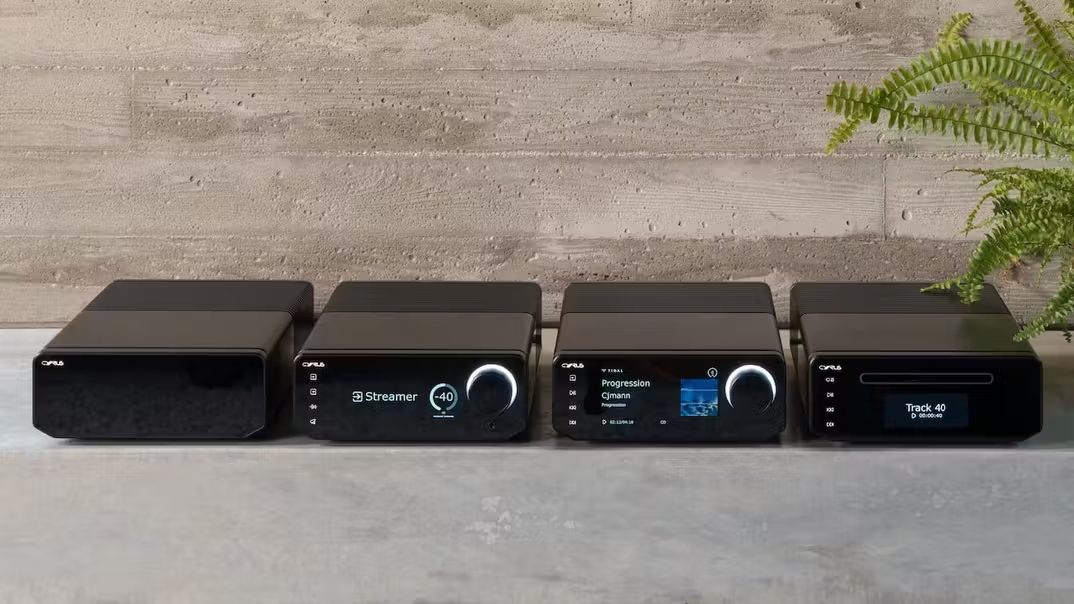
Cyrus Audio Stream XR and PSU XR

The chassis is finished in the darker ‘phantom’ black of the XR Series, which helps it look and feel commensurate with the asking price. I’m not entirely sold on the display; it doesn’t add much to the functionality, but it’s easy to read at a distance. A helpful addition is the inclusion of the Cyrus system driving remote, which is no looker but offers helpful flexibility.

Critical to the offering that Cyrus is making with the Stream XR is that this is not a poor relation to BluOS devices developed in-house. If you have existing Bluesound or NAD products, the Cyrus will appear on the same list of devices, boasting the same functionality as everything else. My testing of the review unit coincided with having an unusual number of BluOS zones running, and it joined them to do everything they could. It also means that if you buy a Stream XR as your first BluOS product, your choice of hardware for your kitchen is not dependent on Cyrus bringing something to market. The Cyrus Audio Stream XR is Roon Ready.

Not just a Node

No less significant is that the Stream XR doesn’t simply sound like a Bluesound Node in a smart metal box. I had one of the Node X special edition units, which also uses an ESS chipset (albeit not the same one as the Cyrus) and could run the two units side by side. It’s an oversimplification to say that the Cyrus sounds like a Cyrus. Still, its fundamental attributes are utterly in keeping with what we might expect from the brand.

This manifests itself in the speed and agility of the consistently invigorating performance. Listening to R.E.M’s Dead Letter Office [IRS], a collection of offcuts and b-sides mapping the group’s progression from solid pub band to label-worthy act, the Cyrus Stream XR takes the hectic, almost punky ‘Carnival of Sorts’ (Box Cars) and delivers it with a visceral urgency. In the years that streamers have been evolving, so have sound signatures, but Cyrus remains a company committed to speed and articulation.

Potency cost

Interestingly, the costs of this potency seem to have become somewhat less pronounced. In times past, some of the perceived speed of Cyrus equipment stemmed from limitations to the out-and-out bass extension, but this is no longer the case. The bombastic opening Fists of Fury on Kamasi Washington’s Heaven & Earth [Young Turks] has the weight and scale commensurate with the size of the band delivering it, and this heft integrates beautifully with the upper registers. The presentation is not as airy as some digital sources can muster but it would a stretch to describe it as congested at any point.

Another Cyrus behavioural trait speaks to different aspirations from its creator. You can use the Cyrus Audio Stream XR for Spotify and Internet radio, and it’s tractable, forgiving, and wholly listenable. Compared to the Bluesound Node X parked alongside for most testing, the Cyrus clarifies that the compressed feed has limitations. The payoff for this pickiness is that the Stream XR rewards with decent mastering and high res in a way neither the Node X nor some other more closely priced rivals can touch.

Liquid fluency

A case in point is the stunning take on ‘All Around You’ on Sturgill Simpson’s Cuttin Grass Vol I [High Top Mountain]. It’s delivered with almost liquid fluency and is free of any trace of a digital fingerprint. Sturgill and his absurdly talented assembled musicians are perceivable as individuals. Still, they perform as a group, and the musical joy of the whole album is something the Cyrus effortlessly extracts from the files. The absence of emphasis on any one point of the frequency response is harnessed to produce a performance that feels unfailingly accurate without ever being joyless. This ability to reward the use of halfway decent content is something that Cyrus uses to consistently brilliant effect.

Cyrus Audio Stream XR rear

What makes the Cyrus so tractable is that this auditory brilliance is controlled by an app and software that requires you to make no allowances. I am sure that a few people reading this will discount the Stream XR because the absence of DSD and telephone number sampling rates puts it at a notional disadvantage to some rivals.

User error

This is a mistake on the user’s part. Every minute you regret not accessing some native DSD, you’ll enjoy hours of utter satisfaction. The Cyrus Audio Stream XR works flawlessly and plays nice with a portfolio of other equipment most rivals can only dream of. The choice will ultimately be up to you.

I feel it’s worth making in favour of the Stream XR, though. I am hugely impressed with how Cyrus has combined its newly licensed front end with its hardware. The result looks, feels, and, most importantly, sounds like Cyrus. The ongoing evolution of audio can be a cruel and unforgiving space. However, some careful selective breeding results have put Cyrus Audio back at the forefront.

Technical specifications

  • Type Network Streaming DAC
  • DAC chip ESS ES9038Q2M 32 bit (Cyrus XR tuned)
  • Inputs Optical and coaxial digital inputs, RJ-45 Ethernet (GigE 1Gbps), Wi-Fi 5(802.11ac, 2.4/5Ghz), PSU-XR upgrade port, MC Bus
  • Outputs Line-level analogue, Optical and coaxial digital outputs
  • Supported audio formats MP3, AAC, WMA, WMA-L, OGG, ALAC, OPUS, FLAC, MQA, WAV, AIFF, MPEG-4 SLS
  • Supported digital formats PCM up to 192kHz, DSD
  • Control software BluOS, Roon Ready
  • Signal to Noise Ratio -113dBA
  • THD+N 0.002%
  • Dimensions H×W×D 75 × 215 × 355mm
  • Weight 3kg
  • Price £2,495, $3,400

Manufacturer

Cyrus Audio

www.cyrusaudio.com

+44(0)1480 410900

Read more Cyrus reviews here

Back to Reviews

Music Interview: Matt Deighton

When hi-fi+ calls UK singer-songwriter Matt Deighton at his home in rural Wales to talk about the writing and recording of his new album, Today Become Forever—his seventh, the first since 2018, and one of his best—he tells us he has just finished fitting a mono cartridge to his near-mint Thorens T160 turntable, which he recently bought for £200.

“I’d been living with Pink Floyd’s The Piper at the Gates of Dawn in mono through a stereo headshell – it now sounds gorgeous and really focused,” he says, delightedly.

“I’m going down a rabbit hole with hi-fi. You know what it’s like. If you’re not careful, you end up on your knees, penniless. It’s the curse and the beauty of eBay.”

Vintage hi-fi fan and vinyl lover Deighton is the former frontman/ guitarist of ‘90s English acid jazz outfit Mother Earth.

He has played and recorded with acts including Paul Weller, Dr Robert (The Blow Monkeys), Mick Talbot (The Style Council) and Squeeze’s Chris Difford – he was even briefly in Oasis when Noel Gallagher quit a European tour in 2000.

Deighton has made several brilliant, soulful, and rustic solo albums steeped in folk-horror, mod-rock, and pastoral beauty, yet he remains one of Britain’s best-kept musical secrets.

The Observer Music Monthly once said of him: ‘His true spiritual ancestor is Nick Drake,’ while the Sunday Times wrote: ‘It is impossible to imagine fans of Nick Drake and John Martyn not falling in love with him.’

Today Become Forever, the follow-up to 2018’s Doubtless Dauntless, features Weller-like anthemic rock, gorgeous folk songs, a touch of jazz, soulful brass, string arrangements, and a Hammond organ.

As hi-fi+ said in its review of the record in the November 2023 issue, ‘High Time (Figured It Out)’ features splashes of country piano. ‘Stringless Heart’—acoustic guitar and strings—is a great showcase for Deighton’s playing and his aching vocals, while ‘Letting Go’ has a flute on it that gives it a Nick Drake circa Bryter Layter feel.

Today Become Forever was partly produced by Ken Scott (The Beatles, David Bowie, George Harrison) and Deighton himself. 

“It’s from three album sessions spread about a year apart,” he explains.

“We recorded some of it at a place in Leeds and the bulk of it was at Monnow Valley [in Monmouthshire, Wales]. Doubtless Dauntless was done from start to finish at Monnow Valley in two weeks, which was exhausting – I didn’t want to do that again. I enjoyed it but it did my nut in because I had to produce it… You had to have a certain amount of songs done by the Tuesday because the string section were coming in… Oh my God.

“The new record was done how I like it, as and when I had something to put down in the studio. I picked the recordings to see which ones worked with each other.”

SH: Can you tell me about the recording of the new album?

MD: I worked with Callum Marinho, who is now at Noel Gallagher’s studio at Tileyard [in London]. The majority of the album was engineered by Callum and I produced it – I basically just said, ‘More reverb.’ I was stuck on Callum’s monitor mixes right until the eleventh hour because I loved the sound of them.

For about a year I was adamant they were the ones but then my manager said they needed mixing again, so we got Dave Lynch from Echo Zoo in Eastbourne to do it – he put it all through original gear, like a desk from Trident [Studios, in Soho, London], which was really fitting, as Ken Scott used to work there. His stuff came home.

How was Ken Scott to work with?

He was brilliant – he used to cut the lacquers at Abbey Road.

I worked with him for about a week. We did three songs live. We were talking about the benefits of mono – I enjoy mono recordings. 

He was lovely and he’s got a similar view to me on digital – if you start overdubbing with Pro Tools, I think it starts to show its limitations, as opposed to two-inch tape. I don’t think I’m going to do another album – that it’s now – but if I do, it will be on tape. I won’t be doing anything digital anymore. I like tape.

But the new album was recorded digitally, wasn’t it?

Yeah – partly because of budget. Doubtless Dauntless was going to be done strictly on two-inch tape until we saw the price of a reel. It was two grand for four reels – it just wasn’t right…

I prefer seeing a reel-to-reel in a room… Ken said an important thing – now with Pro Tools, sometimes people are looking at the music and not listening to it. If there’s a tape booth, you’re just listening to two speakers – you’re not looking at soundwaves. That’s kind of where I come from. 
I like the new record’s sound – it’s warm and intimate…

It’s live, other than overdubbing vocals – that was down to the practicalities of getting the vocals separate from the acoustic guitar. All the band recordings were one or two takes.

Which musicians did you play with?

Lucy Morgan, who is a really good viola player – she was in Dexys and I knew her through [arranger] Ben Trigg, who works with Richard Ashcroft and is my secret weapon as far as strings go – he’s brilliant and he’s also a great bassist and a Hammond player, so he’s invaluable. We had a brilliant drummer called Conor Lawrence and an amazing flautist, Jacko Peake, who works with Paul Weller – he’s a lovely bloke. It was a mixture of people, but not many – everyone I work with is just down to earth.

This is your first album in five years…

Something like that – it’s been quite a while. I don’t put albums out every day – I’ve got nothing to say until I’ve got something to say… In some ways it’s fortunate not being on a major label – I’m not pressed to literally press records every year.

It’s taken a while – there are a couple of songs on the new album that were written 15 years ago. Some of the songs weren’t right for the last album, Doubtless Dauntless. 

There’s a song on the new album called ‘Stringless Heart’ – I’ve had that since 2002 or 2003. It just didn’t seem to fit the running order of whichever album I was putting out. 

Why do you think this record will be your last one?

I’ve done enough. I know this isn’t a great promotional interview…

I don’t understand it when people are putting out records all the time because they have to. They run out of titles and eventually they just call their album the name of the band they’re in – I’m not into all that. If I’ve got nothing to say, I’d rather shut up. That’s why my albums take a while – it’s not because I’m perfecting them in some sort of magical way, but I’m not inspired. I stop for a while but then all of a sudden there’s a bloody tune in my head and I think ‘I’d better record it…’ There’s a song on the new album called ‘Letting Go’, which is as it came out when I made it up.

It’s a beautiful song with a stripped-back, jazzy acoustic guitar…

Yeah – it’s nice that one. I came up with it when I was in a band called The Family Silver.

I saw The Family Silver play in London, with Steve White on drums and Damon Minchella on bass…

Blimey – we didn’t do a lot of gigs, so you were lucky to catch us. I miss being in that group – I loved it. I’d do that again anytime, but it’s quite a hard thing to keep together.

I did ‘Letting Go’ at BluePrint Studios in Salford – I just picked up a guitar and played it… It’s weird – I had it happen recently too. I picked up a guitar at home and came out with a complete song, with the words. It does blow your mind sometimes when it happens. 

Are you a prolific songwriter?

I’m really f***ing lazy! Saying that, I’ve got three albums I’ve co-written that are unreleased. One I co-wrote with Dr Robert – it needs mixing but it’s going to come out next year. I’ve written an album with Kathryn Williams – that’s not been recorded – and I’m working with Gary Carpenter and Andy Tompkins, who were on the soundtrack of The Wicker Man. It’s folklore stories from around the British Isles.

There’s a lot of great new music out there now. Who do you like?

I don’t have any idea who’s well known or who’s got a record out – I haven’t got a clue. That’s not deliberate but I don’t listen to modern music – I haven’t got the time. 

I’ve got so many old albums I’m still investigating again. You get that thing where there’s an album you know, but five years later you play it again and it makes you feel different – you grow around music or it grows around you.

I’m happily dwelling a bit in the present but mostly in the past – I just love all that. 

Today Become Forever is out now (Karousel Buried Treasure & Matt Deighton). 

www.mattdeighton.co.uk

Back to Music

Hana Umami Blue

The Japanese Excel Sound Corporation has made cartridges for other companies for decades. However, since 2016, the brand has made its range of moving coil cartridges under the Hana name. It hit the ground running with some excellent and affordable models. Then, it changed up and produced the superb flagship Umami Red. Today, the Hana Umami Blue joins that flagship. The Umami Blue sits between the ML and Umami Red in price and technology.

Both Umami models feature a boron cantilever and end in a Microline nude diamond stylus. They also share high-purity copper coil wiring, PEEK terminal plates and 24k gold-plated terminals. Both use a permalloy armature, but the differences emerge here. The Blue uses a cross-shaped armature compared to the square one used in the Red. The Red also has a Samarium Cobalt magnet, whereas the Blue uses AlNiCo (aluminium, nickel, cobalt). Both generators are cryogenically treated.

Red meets Blue

There are also slight changes in coil impedance, output level, and compliance between the two. The Hana Urushi Blue weighs 0.3g more than the Red, although I defy anyone to notice. Hana’s Umami Red has a Duralumin body faced with ebony and finished in a red Urushi lacquer. The Hana Umami Blue has Duralumin, POM, and a more conventional blue lacquer.

And anywhere the Umami Red can go, the Blue can go too.

I have the Hana Umami Red. It’s one of my go-to cartridges. The Red is a cartridge that joined the top end of the high-end without a price tag akin to paying five quid in cartridge wear for every LP played. It’s a giant killer, especially if you like a spot of dynamic range and musical energy. The Red is not exuberant but is exceptionally good at digging rock out of the groove. It’s also a subtle and gentle performer with excellent detail resolution.

Hana Umami Blue moving coil cartridge on tone arm

The Hana Umami Blue has the same subtlety and grace. It has the same degree of detail and precision and an outstanding sense of imagery, image placement and organic-feeling solidity. You get that sense of musicians performing in a three-dimensional space reserved for super-high-end cartridges. Perhaps most significantly, it handles bass lines with depth, power, authority, and charm. Like the Red, the Blue topples giants.
I also like the overall balance of the Hana Umami Blue. The best cartridges are often slightly warm or cool at this level. The Hana Umami Blue is more natural and neutral-sounding than its rivals. The usual trade-off for neutral-sounding cartridges here—honest but a bit veiled—doesn’t count here. It’s just honest and neutral.

I Got Rhythm

The Umami Red justifies its higher price point thanks to extra dynamism and rhythmic drive. I played ‘Are You Alive’ from Orbital’s Optical Delusion LP [Orbital], and the voice is beautifully rendered in both. The Hana Umami Blue plays the ambience, bass, and space around this track exceptionally well. The Red does the same but tightens up the performance, making it sound like an old-school Techno track.

The Umami cartridges more than justify their places in the pantheon of moving coils. The Hana Umami Blue brings that high-end cartridge ‘wow’ factor at a stunning, attainable price. It looks great, and it sounds great. If it were any more Umami, you’d probably want to eat it!

Price and contact details

  • Hana Umami Blue: £2,149, $2,500

Manufacturer

Excel Sound

www.youtek.jp

UK distributor

Air Audio Services Ltd.

www.hana-cartridges.co.uk

+44(0)1491 629629

Read more Hana reviews here

Back to Reviews

Salisbury Cathedral to Premiere Film Of Holst’s ‘The Planets’

Salisbury Cathedral to Premiere Film Of Holst’s ‘The Planets’ Featuring organ Arrangement And Breathtaking Drone Footage of the Interior of the Cathedral at Night

The Planets: Out of Darkness will premiere on Salisbury Cathedral’s YouTube channel on September 18 at 8pm, available to view for free by everyone. An accompanying audio recording will also be available for purchase as a CD and download.


John Challenger
John Challenger


Arranged for the organ and performed by John Challenger, Assistant Director of Music at Salisbury Cathedral, and filmed by Salisbury-based Ben Tomlin, The Planets: Out of Darkness is a full-length filmed performance, recorded at night in the stunning interior of the empty Cathedral.

John Challenger believes there is something very special about combining the majestic Cathedral with the famous Father Willis organ and Holst’s deeply spiritual music. He said “It is at night time that I find the Cathedral especially remarkable. It is not the pipe organ alone, but the stones which surround it, the feelings evoked when such music emerges from the shadows, that contribute to the overall effect. These meditative moments (a job perk for the very lucky organist who gets to practise at the dead of night) is something I have long wanted to share through the medium of film.”

The Planets is a perfect example of a large-scale ‘classical’ work that everyone can relate to. Written between 1914-1917, each of its seven movements relates to the character of a planet from the Solar System. Its most famous movements are Jupiter – The Bringer of Jollity, Mars – The Bringer of War and Neptune – The Mystic. The latter features ethereal voices, in this recording sung by the choristers of Salisbury Cathedral.

Cathedral Interior
Cathedral Interior

The film and recording are the conclusion of a two-year long community project, initiated by John Challenger and aimed at sharing the music creatively with young people. Working with the Cathedral’s Education team and local music charity La Folia, the project has included a concert performance to a packed Cathedral audience and music workshops with four local schools, including Exeter House School, Salisbury’s school for children with severe, profound and multiple learning difficulties.

Salisbury Cathedral YouTube

Salisbury Cathedral Website

Chord Co. launches next-gen Clearway AOC HDMI cable

Wiltshire, England, 22 August 2024: Chord Company has launched a next-generation HDMI AOC interconnect into its multi-award-winning Clearway range, priced from just £120 (for a 3 m length) and backed by a lifetime warranty*.

The new AOC (Active Optical Cable) interconnect joins the existing copper Clearway HDMI (which offers high-res performance up to 3 m) and introduces a high-quality next-generation chipset at both ends of the cable for advanced performance over longer runs of up to 20 m.

The new 48GBps-bandwidth Clearway HDMI AOC cable benefits from the highest OM3 grade (over 10-Gigabit-bandwidth glass fibres), rather than the typical OM2 (1 GB).

Resolution is up to 10K (30 Hz) from the four-fibre/seven-wire configuration which is protected with foam/Polyethylene insulation, a dual aluminium foil shield and a PVC jacket.

Alongside full 4K/8K/10K HDR picture quality, the high-speed Clearway HDMI benefits from improved audio performance and is heavily shielded against unwanted HF noise.

The cable supports: eARc (Enhanced Audio Return Channel ); ( SBTM (Source-based Tone Mapping); Variable Refresh Rate (VRR); Auto Low Latency Mode (ALLM); Quick Frame Transport (QFT) and Quick Media Switching (QMS).

Further features include a gold-plated copper HDMI connector shell with 19 gold-plated copper connector pins, hand soldering and fabrication to the terminations, and protection from a zinc-alloy connector backshell.

Despite the legendary affordability of Chord Company’s Clearway range, the Clearway HDMI AOC cable is sold with a lifetime warranty* against defective materials and workmanship.

Additional information: about Chord Company HDMI AOC

Following concerns that copper-only cable is being stretched to the limit of its capability, for several years, Chord Company has been exploring optical technology for carrying the ever-more demanding signals required by the latest (and future) players, processors and screens.

Unlike TOSLINK cables, where the entire signal is carried down optical fibres, HDMI AOC cable is a hybrid of seven copper cables and four optical fibres.

The advantage of optical fibre is that it doesn’t pick up HF noise; the same cannot be said for the copper cables. This potential weakness, coupled with the longer cable lengths involved, means that HF noise on the signal earth is inevitable.

Even though this is a digital ‘optical’ cable, Chord Company has ensured that the copper cables are fully protected from external HF noise pollution, hence the external PVC jacket with double aluminium foil shielding system.

*Full details of the warranty and any exclusions can be found at: chord.co.uk/product-warranty-general-user-guide/

Price and availability

Chord Company Clearway HDMI AOC is available now priced from £120 (3 m).

Available in 3 m, 5 m, 8 m, 10 m, 12.5 m, 15 m and 20 m lengths.

Oephi Acoustics Transcendence 2

Go to the Oephi website and its cables, cables, and more cables. However, scroll down to the bottom of the home page, and you get to special-order products. Here, there are not only custom cables but amplifiers and loudspeakers. Joakim Juhl was a speaker guy long before he became a cable guy.

Today, Joakim builds a range of loudspeakers, including stand-mount and tower varieties, several of which employ his tweeters. The Oephi Acoustics Transcendence 2 is the mid-model stand-mount below the flagship Immanence models. The names mirror those found on Oephi cables, with which these loudspeakers are naturally designed to be partnered. I couldn’t do that, but I got some rather exciting results.

Purifi drive

You may have heard about Purifi drive units. One of the designers of Purifi is audio guru Bruno Putzeys. He’s behind Hypex Class D modules and Kii Audio, among others. Purifi drivers have created quite a buzz as a result. However, there are not many loudspeakers on the market that use them yet. The first we saw was the Lyngdorf Cue 100s. This is the first time I have had the chance to hear about them at home. If Transcendence 2 is any indication, the hype was not for nothing.

An uneven or irregular suspension surround distinguishes these drivers, but this is only a tiny part of the equation. Purifi claims its Ushindi drivers have ultra-low harmonic and intermodulation distortion. They also feature constant force factor and constant inductance relative to voice coil position. Ushindi displays ultra-low current distortion relative to amplitude and smooth response with ‘excellent’ dispersion. This is probably why these drivers cost considerably more than most of the alternatives on the market. Oephi has a custom Purifi driver made for its loudspeakers that omits the polypropylene coating of the standard unit. This leaves the paper cones bare, which is common among conventional drivers.

No braking

As mentioned, Joakim makes his tweeter for the Transcendence models, this starts as a SEAS metal dome design, which is stripped down and rebuilt with a non-conductive voice coil former that is said to “decrease mechanical losses and improve transient handling, leaving the diaphragm’s movement to the motor and amplifier rather than having a constant ‘braking’ caused by the voice coil former’s movements in the magnetic gap”. It’s a technique used by other brands, but generally, only larger ones build their drivers from the ground up.

Oephi Transendence 2

The crossover has been designed for the most accurate phase-tracking between the drivers as Oephi considers the time domain the most critical parameter and “general tonal integration”. They have opted for a flat response rather than the dipping high-frequency response favoured by many manufacturers for its forgiving nature. They use unusual crossover parts, including wax-damped copper foil inductors and a proprietary capacitor technology where multiple parts are combined to emulate a single capacitor. I also asked Joakim about the unusual placement of the tweeter on the baffle, which delivers the best diffraction pattern and a more uniform power response of up to 20kHz. The cabinet is relatively light because Joakim feels that mass slows the sound, while the tweeter is placed lower than usual to close to the main driver and ‘sees’ an asymmetrical baffle.

Thrill power

I dropped the Oephi Acoustics Transcendence 2’s into the system atop 60cm Hi-Fi Racks stands and connected them to the Moor Amps Angel 6 power amplifier. I was concerned because they followed Bowers & Wilkins’ mighty 801 Signatures in the system, with speakers ten times the size and weight, if not the price (just nine times that!). However, it wasn’t long before I was hooked by the most compelling timing I had encountered in a loudspeaker for many a moon. Along with this came a degree of exposure, even ferocity, that meant a bit of positional tweaking was needed to calm the balance. It seems that these speakers are only supposed to be gently toed in to avoid sitting directly on axis. Once that was done, the thrills came pouring out of virtually every piece of music that I played.

The Oephis need a bit of driving. They sound significantly better at higher levels; those looking for background listening should look elsewhere. Transcendence 2 is immediacy incarnate and not for the faint of heart. They have a somewhat uncanny coherence, presumably a result of the driver selection, but Oephi has done everything it can to deliver this crucial quality, and it has succeeded.

Fast substance

They aren’t just about mid and treble either, it’s easier to make a speaker with limited bass extension sound fast but that is not the case here, in fact they have surprising power and extension. This gives the recordings authority and substance, allowing the immediacy and clarity of the mid and treble to captivate the listener in uncertain terms. When the voice comes in on Ryan Adams’ ‘Magnolia Mountain’ after a long intro (live version) it’s genuine magical realism, voices are so well handled it’s uncanny.

Transcendence 2 is very sensitive to tension because of this, you feel what the artist feels if that person knows how to communicate as much, and many do when the conduit is this clear. Tom Waits’s ‘Swordfishtrombones’ is magnetic, its vivacity captivating, and the poetry of the song unusually well defined. You can hear deep into the mix and appreciate what all the instruments are doing, but the message is placed front and centre; this Oephi Acoustics Transcendence 2 combines extreme transparency with perfect timing in a way few others can.

Oephi Transendence 2 pair

It’s not just about high energy, either. Fragility is equally well served, and an artist’s emotional vulnerability is as clear as day. But the temptation to put music with drive on is powerful. A good example is the Gary Burton New Quartet’s ‘Open Your Eyes, You Can Fly,’ where the brilliance of every musician’s playing is as clear as the genius of the composition and the excitement it generates.

Twisted folk

Modern recordings benefit from the monitor style balance that the Oephi presents. Everything from Nils Frahm’s All Melody to Felix Laband’s The Soft White Hand has a presence and physicality so real and solid that you can’t help but be drawn into the music. I particularly enjoyed a somewhat leftfield album of twisted Scandi folk by the Erland Apneseth Trio (Salika, Molika) that has always had some appeal but seemed to gain a new lease of life.

I tried an Ayre AX8 2.0 integrated amplifier that’s less powerful than the Moor Amps but managed to drive the Oephi Acoustics Transcendence 2’s without trouble. The result was equally compelling, the song and the tune taking precedence over the sound in the best Rega tradition. I was surprised at how convincing the thunder sounded on Michael Chapman’s ‘Rainmaker’ and beguiled by his guitar playing over it, the scale and clarity of the delivery made the tune sound pretty damn special for a streamed CD rip. I found a few tracks where the limitations/character of the recording did not gel with the exposure on offer from the Oephis, synths can sound a bit crunchy for instance and Frahm’s live album Spaces reveals the limitations of cassette recording that are often smoothed over by more forgiving designs.

Who’s right?

The Oephi Transcendence 2 lets you hear a lot more than most but this inevitably shows shortcomings in some recordings. Yet most of the many pieces I played through them made me want to sit up and take notice. The music was given a primary place in the room, just as it should be. Some will find the Oephi’s edge-of-the-seat style challenging. However, no one who loves music will find this anything less than fabulous. They confound expectations and deliver the musical message in all its ragged glory.

Technical specifications

  • Type: Two-way, two-driver stand-mount monitor with rear-ported bass reflex enclosure
  • Driver complement: In house developed metal dome tweeter, one 6.5 inch uncoated Purifi mid-bass driver
  • Frequency response: 40Hz–27kHz (in-room)
  • Crossover frequency: 3kHz
  • Impedance:8 Ohms
  • Sensitivity: 87dB (in-room)
  • Dimensions (H×W×D): 350 × 185 × 300mm
  • Weight: 8kg/each
  • Finishes: Oil treated oak real wood veneer standard. Walnut and custom finishes at additional cost
  • Price: from £4,995

Manufacturer:

Oephi Acoustics

www.oephi.com

UK distributor

Airt Audio

www.airtaudio.com

+44(0)1223 344053

Read more Oephi Acoustics reviews here

Back to Reviews

Phasemation PP-2000

Phasemation has been hi-fi+’s most recent analogue ‘find.’ The Japanese company’s entry-level PP-200 cartridge impressed us and the EA-350 phono stage did the same. Now its three for three with the Phasemation PP-2000 moving coil cartridge.

Following the recent introduction of the PP-5000 flagship, the PP-2000 is now second from the top. It has a ‘five + one’ cartridge range; the ‘+ one’ being a dedicated mono model.

The PP-2000 features a DLC (Diamond Like Carbon) coated Duralumin body with vibration damping built-in to keep noise low.

Its line contact diamond stylus has a boron cantilever that attaches to 6N oxygen-free copper magnetic coils. The magnet is made from samarium cobalt with a Permendur (cobalt/iron) yoke, an expensive option but one that combines high energy density and saturation, permeability, and temperature stability. Phasemation also reshaped the yoke to increase the uniformity of the magnetic field.

Internal impedance

The PP-2000 produces a 0.3mV output with a four-ohm internal impedance, which is on the low side but nothing to trouble a decent phono stages. Phasemation’s own EA-350, for example, had no problems, even though that meant we never got to play with the company’s step-up transformers. Weighing in at 14.3g and with very low compliance of 8.0 × 106cm/dyne, the PP-2000 is ideal with moderate to high mass tonearms, such as an SME V or similar. My Kuzma 4Point 9 arm worked perfectly.

Setting up the cartridge is aided by the squared-off shape and the sightline at the front of its body, which is useful because the cantilever is short. The PP-2000 follows the Japanese trend of eschewing threaded inserts in the mounting holes. Downforce of between 1.7 and 2g is recommended.

This is a real beauty of a cartridge, in more ways than one. It looks beautiful on the tonearm; all rich blacks and gold in a ‘restrained bling’ that makes sense in the flesh. It tracks beautifully; only an old Decca ‘1812’ foxed it, and it has grooves so wide you aren’t sure if it’s music or tramlines. And, most of all, its sound is always beautiful and elegant.

Gliding is cool

Some cartridges are ‘edge of the seat’ stuff; all leading edges and aggression. This is the opposite and it’s all the more wonderful for being just that. Music just glides out of this cartridge with a rare refinement and grace, and a lot of tonal balance. You will play jazz through this cartridge; it’s not that it is tailoring the sound to make it a jazz-only design, but you will just find yourself playing cool jazz for the sheer beauty of the sound.

The soundstage is full and focused, the individual instrument voices are perfectly portrayed, and the whole musical event is simply played with such panache that it makes the pull of those late 1950s jazz standards irresistible. And playing ‘Summertime’ from Porgy & Bess [Verve] puts Ella Fitzgerald in the room. It can do rock and dance music and classical – especially classical piano – extremely well, but that ‘hairs on the back of the neck’ moment when listening to ‘Summertime’ just sets the Phasemation apart.

The more you listen to the PP‑2000, the more you want to listen. The Phasemation PP-2000 doesn’t exaggerate or understate the music and makes many cartridges sound peaky and uneven by comparison. This is the real deal. If you like music played with elegance and beauty, this is one of the best-sounding cartridges you can buy!

Price and contact details

  • Price: £4,595

Manufacturer:

Phasemation

www.phasemation.com

UK distributor

Select Audio

www.selectaudio.co.uk

+44(0)1900 601954

Read more Phasmation reviews here

Back to Reviews

dCS Varése: First Listen, the email response!

Editor’s Note: Our contributor, Paul Soor, was fortunate enough to have an exclusive first listen to the dCS Varèse system at the dCS factory in early June. He was under a Non-Disclosure Agreement which meant he couldn’t even discuss that he’d seen the product until the press release dropped earlier this week. He asked me if he could write his findings, but instead, we decided the unedited ‘Thank You’ email he sent describes those early listening experiences.


First of all, thank you. I feel privileged and honoured to be the first to see and experience the mind-blowing Varèse. It was a wonderful presentation. I had no idea of the magnitude and significance of what I was going to see, understand, and experience.

The Music

The Vivaldi was always the reference. No one could have any complaints about its musical reproduction. But it was immediately clear that Varèse has redefined “reference” and taken musical reproduction close to real musical performances that I had never dared to imagine, because that would be crazy, yes? Well, the answer is clearly no! What I heard was a step change.

What struck me was timing information that completely changed a good, but not outstanding musical performance, into one that was engaging, involving, and demanded my full attention. In some magical way, the Varèse presented micro-timing information that was, previously unknown to me, multilayered with colour and texture dramatically elevating my emotional response to the music. Until today I did not know that level of timing information towards a new level of communication existed. I’ve certainly never written that before!

That performance is no mean feat. It just goes to show there are so many technical barriers that inhibit musical communication, yet somehow you and your team have identified those and, with great success, eliminated them. You have achieved your goal of letting the music speak for itself. Not only have you achieved your goal you have knocked it out of the park.

The Engineering

This is another step change. I must also congratulate you on the technical achievement and the engineering. It is the definition of innovation. I can see that you’ve truly taken an open minded and creative approach to every aspect of the design towards the goal of the technology not getting in the way of the music. I mentioned that making something simple is complicated and I can see you’ve done that. For example, the new connector protocol I think is fabulous engineering that you would only really see in high-end defense, aerospace, and communications. And in common with those environments, those solutions require the best talent, a lot of time, and millions of pounds of investment. Again, it is super clear that’s what has resulted in the success of the Varèse.

The mono DAC’s using a balanced architecture in the phase domain to cancel errors is wonderfully elegant and applied with great ingenuity. I wonder (do let me know) if the amazing musical timing and intelligibility have something to do with that.

I’m still digesting and giddy about what I saw and experienced, so, perhaps a little selfishly, I’d love to spend more time with the Varèse.

The Varèse is a true step change in high-end audio. The sort of thing that only happens once in a generation. I think your challenge is how to get across the significance of the Varèse to the world.

I’ve been involved in technology development and delivery. I know it takes an enormous amount of blood sweat and tears. From my perspective, it’s now time for you and your team to breathe and celebrate a bright future at the forefront of high-end audio for many years. Huge congratulations.

We look forward to testing the dCS Varèse – Ed.

Manufacturer:

dCS

https://dcsaudio.com

UK Distributor:

Absolute Sounds

www.absolutesounds.com

+44 (0)208 971 3909

Link to the original news item

Back to Home

Arctic Monkeys: The Car

Arctic Monkeys exploded upon the music scene in 2006 with Whatever People Say I Am, That’s What I’m Not. Quickly achieving record numbers in sales and hailed by the press as one of the greatest rock bands ever. I remember that first album filled with fast-paced, energetic short tracks – the same intense eruptive energy as when The Ramones burst upon the scene. Whatever… was a progressive (but not Prog) rock album with punk elements that perfectly fit when it was released. 

The Car is a huge departure from the early days. You will be sorely disappointed if you are looking for more of the same good ol’ fast-paced alternative rock from The Car.

Imagine a once glorious, faded beach hotel. Inside is a peeling fake-gold past-its-prime small venue, filled with retiree couples eating. A small band with old has-beens performs on the stage, wearing gold suits and trying – and mostly failing – to wake up the disinterested retirees. The gold-clad band performs sentimental romantic tracks in classic Frank Sinatra/Nelson Riddle style.

Faded hotel

Arctic Monkeys are a gifted band and by no means past their prime. But the image of a lounge band in a faded hotel is one of the images the album calls forth for me. Or some of Elvis’ last concerts in Vegas when he performs sentimental ballads instead of Rock n’ Roll. 

The Car is filled with sugar-sweet sentimental string sections, soft keyboards, and lead singer/songwriter Alex Turner crooning on every track. A few rare glam-style guitars burst onto the tracks, like on Big Ideas. Their fast-paced, guitar-packed tracks of the past are nowhere in sight. But more importantly, any Rock n’ Roll element seems to have been deliberately removed from The Car. The lyrics recall images of a faded travelling cabaret act. Images of backstage pre-concert recollections mixed with childhood memories. Lead singer Alex seems to have chosen – on purpose – to parody old-fashioned crooning lounge music with the frequent string sections and his over-the-top crooning and soft background keyboards.

‘There’d Better be a Mirrorball’ starts us off. The title sets the mood for the album. A spinning disco ball. I’d like this track were it not for the annoying soft rolling keyboards in the background. ‘Big Ideas’ is another track with lyrics and soft romantic music that feels like a disillusioned past-his-prime superstar. 

Plucky guitar

‘Mr. Schultz’ is my favourite track, with its plucky acoustic guitar, cool drums, and less crooning from Alex. Lyrically the track seems to recall past backstage memories. ‘Perfect Sense ‘is also enjoyable, although I strongly dislike the super-sweet string sections on this and most of the tracks.

Some tracks could have been great with fewer string sections and soft organs and with some evolving forward momentum instead. The Arctic Monkeys seem to deliberately reign in their thunderbolt musical energy on all the tracks. Where normally less is more for the Arctic Monkeys, on The Car they seem to opt for way too much fluff.

I applaud the Arctic Monkeys for their courageous departure from their early sound and albums into new unknown territory. And in their defence, they have never feared a change in direction. However, The Car sees them move ever further from their post-punk roots and even from the psychedelic lounge pop of their previous Tranquillity Base Hotel & Casino album into a baroque, art-rock presentation that is a radically different direction to their earlier work. 

I wanted to like this album. And while I like a few sporadic elements and sections, overall, I remain confused about why they made this album in this fashion. The songs are too similar in mood and style and lack direction, punch and grounding. 

I remain a fan of the Arctic Monkeys, and for hardcore fans, The Car will be interesting to see this new direction. But if you expect good ol’ rock ‘n’ roll – or good ol’ Monkeys – you will be disappointed.

Back to Music

Raidho Acoustics X1.6

We all know Raidho Acoustics. The company makes stand-mount and floorstanding loudspeakers that cram a lot of technology into their cabinets. And that technology… costs. A pair of TD1.2 two-way stand‑mounts will set you back £23,000 with their stands. But what if you could get most of that performance for less than a third of that price? Then, you have the Raidho Acoustics X1.6 stand-mount loudspeakers.

The specification sheet of the Raidho Acoustics X1.6 is admirable. The rear-ported design has a 20mm thick aluminium front baffle. Mounted on that baffle are Raidho’s ribbon tweeter and a 165mm Ceramix mid-bass unit. It’s the same tweeter throughout Raidho’s loudspeaker ranges. Meanwhile, the mid-bass driver featured in the brand’s former top line of loudspeakers before it got into diamonds! The new X1t entry-level stand-mount and the X2t floorstander also use tantalum-coated Ceramix cones.

Clever Ceramix

That mid-bass unit is very clever. Raidho makes all its drivers easy to swap out for repair purposes. Raidho’s Ceramix technology uses a thin aluminium cone to which an aluminium-oxide ceramic is bonded to the outer surface. That bonding process features a liquid plasma and requires high voltages to achieve. Meanwhile, its motor system sports two rows of neodymium magnets in a push-pull configuration. These are focused around a very open system, allowing ventilation to the driver while also cooling the titanium voice coil.

Mid-bass driver aside, what’s the big difference between the X1.6 and the TD1.2? From the outside of the Raidho Acoustics X1.6 stand-mount loudspeaker, that’s easy to spot. The rear panel of the X1.6 is squared off, compared to the elegant boat-backed TD1.2. It has a standard port behind the tweeter without the fin arrangement of its bigger brother. The terminals sit in a panel in the rear of the enclosure. However, this is not a custom back plate.

Raidho X1.6

The other big difference is how the stand mates to the loudspeaker cabinet. The two connect through a single bolt and a piece of dowel. It’s simple and effective, although accessing the bolt when the uprights of the stand are so close together is ‘challenging’. From a ‘don’t drink and drive loudspeakers’ perspective, you won’t knock these speakers off their stand. This is a welcome boon as the TD1.2 sits on its stand like a coconut in a shy in comparison.

Why compare?

There’s a reason why I keep comparing the X1.6 to more up-scale Raidho models. Before the TD1.2, there was the D-1.1. We could even reverse-begat the range back to the Eben C1.1 reviewed in Issue 91. All this history of Raidho two-ways is because I’d place the X1.6 above all of them except the current TD1.2. Given a second-hand pair of D-1.1 costs about the same as a new pair of X1.6, the comparison is valid. A mint D-1.1 in one of its luxury finishes slightly level the playing field.

Raidho suggests giving the loudspeaker 250 hours of run-in before they come on song. As a UK demonstration pair, they had already been put through their paces before I received them. As ever with Raidho, they benefit from careful care and feeding. The more time spent on precision installation, ensuring the optimum cable choice and layout, and the right electronics… the better. But, unlike the demanding TD series, the X1.6 is more forgiving. You can start with some relatively modest audio equipment and the Raidho’s will make the most of them. Or you can max out the system and the X1.6 will rise to the challenge.

Room integration

Similarly, the Raidho Acoustics X1.6 responds well to careful room integration but – unlike its bigger brothers – isn’t so highly strung that molecular-level installation is required. This is more an ‘adjust over time’ tuning-in process; you’ll find the ideal degree of toe-in and distance from the room gradually, as the loudspeaker sounds fairly good in the standard ‘at bases of a six-feet wide triangle’ with the loudspeakers a couple of feet from the rear and side walls. And after you have acclimatised yourself to that, it’s easy to experiment because the speakers rest on cones and not armour-piercing, floor-shredding spikes. One point to note here, however. The placement of the loudspeakers is sensitive to its upstream equipment choices. Even a cable change might result in moving those loudspeakers slightly to react to that change in the system profile.

That might sound like the Raidho Acoustics X1.6 is a bit of a diva, but it speaks to their ability to resolve details. And it’s here where that comparison with other Raidho models kicks in. The company’s best loudspeakers need the same adjustment after system changes because they are detailed and nuanced enough to highlight system differences so well. That the X1.6 continues that trend shows just how well-engineered and resolving this loudspeaker design gets.

Jaw-drop

I have always admired the Raidho design concept, even when it missed the mark. A loudspeaker that resolves musical information with such intense precision and clarity can be a jaw-dropping experience; jaw-dropping enough to overcome a distinct dip between treble and midrange in older models. That was ironed out long ago, and instead, you get incredible detail, clarity, and absolute focus across the frequency range, with a naturally extended-sounding treble. Even the bass is good; the Raidho Acoustics X1.6 resists the temptation to ‘sex up’ the bottom end (no giggling, please), instead opting for a clean, honest roll-off. In most small to medium-sized rooms, unless heavily bass is trapped into deadness. most people today prefer that frequency response honesty.

Raidho X1.6

There is a trend in audio – even in very high-end audio – to opt for a bright, almost etched, and zingy high-frequency response. The cynical might claim this is being passed off as ‘detail.’ The highs of the Raidho Acoustics X1.6 never fall into this trap; another trait common to Raidho designs in general.

Never peaky

That treble is highly detailed and extended but never peaky. Joyce DiDonato’s mezzo-soprano voice [Stella Di Napoli, Erato] highlights this well; it’s powerful and articulate but never strident or bold on the X1.6… as it should be.

If the Raidho Acoustics X1.6 were just about the detail and the frequency response accuracy, that would be good enough to make it an outstanding performer. But it’s the tonality and staging of the X1.6 that sets them apart from the pack. The soundstage is a truly holographic thing; when playing a track with a simple vocal and piano in a natural environment, such as ‘Clara’ by Jarvis Cocker and Chilly Gonzales [Room 29, DG], you get the sense of listening to the two of them in a well-appointed hotel suite, with the reverberant field extending in front, behind and to the sides of the cabinets. This also highlights that tonality, Jarvis Cocker’s distinctive baritone voice with its occasional vocal fry, is easy to get wrong, the piano is notoriously tricky to get right, and the two together are a challenge, that the X1.6 rises to well.

Sweet taste

The X1.6 gives you a sweet taste of what Raidho does so well. The jump – and it is a jump – to the TD1.2 brings more precision, even more clarity, and more depth without notable downsides, but with great power comes great responsibility, and that loudspeaker is more demanding of upstream products and installation. The impressive part of the Raidho Acoustics X1.6, however, is it covers its tracks extremely well; unless you compare it to one of the big-boy flagship models (like the TD1.2), the only differences you’ll notice are cosmetic; the boat-backed design, beautiful burr wood finishes, and a better stand. And for those not wanting to devote the time to fettling a thoroughbred, the X1.6 comes very close.

I like the idea of the Raidho Acoustics X1.6. It doesn’t shout ‘giant-killer’ but offers the sort of performance that puts it close to some of the best two-way stand-mounts (a lot of) money can buy. I also like that it gives much of that Raidho sound and resolution without being as demanding of room, system… and wallet. And I like the fact that for all their cerebral imaging, detail, tonal precision, and clarity, they never sound like they are taking music too seriously and can also bring the fun back to music.

Technical specifications

  • Type: Two-way, rear-ported stand-mount loudspeaker
  • Drivers: 1× Raidho Ribbon tweeter, 1× 165mm Raidho Ceramix mid-bass
  • Crossover point: 3.5kHz
  • Frequency Response: 45Hz–50kHz ±3dB
  • Sensitivity: 87dB (2.83V/m)
  • Nominal Impedance: > 6Ω
  • Finish: Piano black, piano white
  • Dimensions (W×H×D): 20 × 36 × 26.5cm
  • Weight: 11.5kg
  • Price: £7,300, $7,300 per pair

Manufacturer

Raidho

www.raidho.dk

UK distributor

Decent Audio

 www.decentaudio.co.uk

+44(0)1642 267012

Read more Raidho reviews here

Back to Reviews